Maiores bancos privados no Brasil: um perfil econômico e sociopolítico
Ary Cesar Minella
Universidade Federal de Santa Catarina (Federal University of Santa Catarina). Email: minella@matrix.com.br
Translated by Marcelo Otto Severo
Translation from Sociologias, Porto Alegre, n.18, p. 100-125, July/Dec. 2007.
]]>
ABSTRACT
This study examines elements of the power of financial institutions, emphasizing control over capital flow – characterized as financial hegemony – the constitution of economic or financial groups, the structure of representation of the segment's class interests, and its participation in the political process and in State decision-making mechanisms. Considering the economic restructuring undergone by Brazil in the 1990s, the work draws a profile of the ten largest private banks based on selected economic and sociopolitical indicators. Beyond their stance as mere financial intermediaries, it indicates the degree to which those banks become economic groups and, especially, larger organizational units, which is shown in connections with the State and in the class's actual organization and actions in the corporate and political realms.
Key words: Financial system, bank concentration, financial groups, financial hegemony, class representation.
RESUMO
O trabalho analisa elementos do poder das instituições financeiras, destacando o controle sobre o fluxo de capitais – caracterizado como hegemonia financeira –, a constituição dos grupos econômicos ou financeiros, a estrutura de representação dos interesses de classe do setor e a participação deste no processo político e nos aparatos de decisão do Estado. Considerando a reestruturação financeira ocorrida no Brasil na década de 1990, o trabalho traça um perfil dos dez maiores bancos privados a partir de indicadores econômicos e sociopolíticos selecionados. Para além de sua posição como meros intermediários financeiros, identifica-se em que medida esses bancos configuram-se como grupos econômicos e, especialmente, como unidades de articulação mais ampla, que se revela em conexões com o Estado e com a própria organização e atuação de classe nos âmbitos corporativo e político.
Palavras-chave: sistema financeiro, concentração bancária, grupos financeiros, hegemonia financeira, representação de classe.
Introduction
]]> To discuss the theme of this issue's dossier, it is important to consider the role of the financial system in the process of wealth concentration in Brazil in recent years. With a relatively high degree of concentration of financial operations in a few state and private institutions, the financial system has made use of several mechanisms to accumulate wealth. The importance of each mechanism has varied in the last fifteen years, in accordance with the many economic and political contexts. In the periods of high inflation, the so-called inflationary gains acquired great importance. High interest rates on credit operations and large volume of investment in public bonds are essential components, as well as the great difference between the fees that are charged and those that are paid by financial institutions (the so-called spread banking). Recent trends point to a higher relative growth of personal and consumer credit characterized by high interest rates, and also to the increase in earnings due to the charging of bank fees. The whole process takes place within the context of a restructuring of the work in the financial sector, mostly since the mid-1990s, whose main characteristics are the growing instability of employment relations, changes in social security, outsourcing, reduction in the number of bank employees, and increasing problems to the union organization.Even though there seems to be no doubt that the financial sector has been one of the greatest (if not the greatest) beneficiaries from the economic situations and policies of recent years (including the current administration), what is curious is the fact that this situation has endured and achieved legitimacy, maintaining a social, economic and political order that benefits only a particular segment of the current capitalist society in this country (LEILA, 2005; GRÜN 2004).
At this moment, capitalism is characterized by a predominance of financial accumulation (CHESNAIS, 2003) based on an unprecedented speculative scale that makes possible, by means of diverse mechanisms and financial innovations, the renewal of the degree of indebtedness (of households, companies, governments) and the instantaneous execution of all types of operations around the world. It also seems clear that this accumulation becomes possible within the context of a productive restructuring of capitalism, which has imposed higher instability in the world of work, through the combination of both new and old forms of exploitation, the appropriation of the employees' income via consumer credit and financial services, and by fiscal appropriation through the public debt.
In this context, the analysis of the financial system, its institutions – private and state – and the complex relationships in which they are inserted is a major challenge. This work presents a contribution, minimum for sure, but it tries to bring to the discussion a few comments and data, arranged in order to permit a sociopolitical view of the question.
Considering these general aspects, it is necessary to analyze the financial system and its institutions within the broad context of power that these financial institutions have in contemporary capitalism. Since it is not possible to examine all aspects of the question, this study emphasizes the following aspects: a) the control over the flow of capital; b) the existence of conglomerates and financial groups; c) the structure and dynamics of class representation in the financial sector; and d) participation in the political process and the decision mechanism of the government. Subsequently, the article works to develop an economic and, more specifically, sociopolitical profile of the ten largest private financial institutions active in Brazil, taking 2005 as the reference year. Therefore, this analysis intends to provide elements that will permit (at least this is the intention) a better understanding of the condition of the banks in Brazil and the privileged place they currently have in the accumulation of capital and in the political sphere.
Control over the flow of capital and financial hegemony
One of the key factors that cause the power of banks and financial institutions is the control they exert over a substantial part of the resources and the flow of capital in the economy. In certain circumstances, this control allows them to constrain the decision making process of government policies and strategic decisions of companies, revealing a process that some authors identify as "financial hegemony" (MINTZ and SCHWARTZ, 1985). Since they control a significant flow of capital, the financial institutions, including institutional investors, have the power to dictate some of the general lines of the economy in which the non-financial corporations work, because they can improve the development of certain areas in detriment of others and also reduce the commitment with a particular sector, company or country.
The implementation of this hegemony, however, is somewhat problematic, because it is inserted in different economic (and political) scenarios and regional contexts. In periods of crisis, when there is less capital available, this hegemonic power is more evident. Countries and companies with a high degree of indebtedness and urgently needing to renew their credit are more intensely subjected to the constraints of these financial institutions, which include, in the case of countries, financial organisms such as the International Monetary Fund and the World Bank. Therefore, it is necessary to keep in mind that the possibility of imposing constraints on the decision making processes of companies and governments is subject to different conditions of the economic cycle, the companies' capacity of self-financing, the degree of development of the capital market, the possibility of alternative credit, the degree of concentration of credit supply, and the general conditions of indebtedness of companies and governments.
One of the most important aspects to emphasize is the high concentration of resources in the hands of a few institutions. Today in Brazil, there is a clear division between some institutions under state control – especially Banco do Brasil (Bank of Brazil) and Caixa Econômica Federal (Federal Economic Bank) – and some foreign and Brazilian private banks (MINELLA and FERREIRA, 2006; MAKLER and NESS, 2002). This degree of concentration of resources in a few hands creates both economic power, due to the fact that they control a huge flow of capital, and also political interest in the definition of macroeconomic policies that can affect this universe. The final result is that a small number of financial institutions and, consequently, their supervisors, exert influence on the business and government world beyond that exerted by other social forces, including business segments.
]]>Economic groups
Another aspect to be taken into account is the existence of economic groups that even though they constitute a wide and central phenomenon in contemporary capitalism, they still have not received sufficient attention from the social sciences (GRANOVETTER, 1994; GONÇALVES, 1991)1. It seems that since the 1990s the interest in the subject has grown, resulting in several empirical studies and theoretical discussions published in Latin America. For example: COMIN et al., 1994; ALCORTA, 1992; PORTUGAL JUNIOR, 1994; STOLOVICH, 1993, 1995; SCHVARZER, 1995; AZPIAZU, and BASUALDO KHAVISSE, 1989; BASUALDO, 2002. In Brazil, the resumption of studies concerning the economic groups points to a better understanding of the economic and political dynamics in the period (COMIN et al., 1994).
Although there are some conceptual differences and operational difficulties in the empirical procedures of analysis, in general terms two aspects have been emphasized: the first is the importance of the economic groups, not only as privileged agents in the global sphere of economic operations, but also due to their direct and indirect influence or potential influence on government policies; and the second is the role they play in the world of culture and entertainment, establishing themselves as the great supporters of the world's culture at the end of the Twentieth Century (ORTIZ, 1994, p.147-182).
An economic group can be defined as "a group of companies that are legally independent of each other but intertwined through contractual relations or capital, and whose ownership (of specific assets and more particularly the capital) belongs to individuals or institutions that exert effective control over all of these companies" (GONÇALVES, 1991, p. 494). Thus, "the economic group expresses relations of power and force around which the individuals, classes, and social groups in general move to form networks of solidarity and fields of conflict" that involve shareholders, managers and employees (PORTUGAL JUNIOR, 1994, p. 17). Therefore, the economic group is like a locus for the accumulation of capital and a locus of power (GONÇALVES, 1991, p. 494).
It is necessary to acknowledge that there is a wide range of economic groups, characterized by different types of ownership. Some groups are controlled by individuals, a family or a group of families directly or indirectly related. In other cases, the ownership may be held indirectly by successive share dealings or through holding companies. According to Granovetter (1994), agreements and combined share dealings can result in an extremely complex structure, involving several companies, articulated through networks of combined boards of directors.
The relationship between government policies and economic groups involves many aspects, such as regulation and deregulation, antitrust policies, nationalization, industrial and technological policies, means of financing the State, and regulation and control of the workforce (GONÇALVES, 1991, p. 494). Thus, the relationship between the economic groups and the State deserves plenty of attention, not only to better understand the problems of power and public policies, but also for the analysis of the forms, characteristics and behavior the groups assume. Therefore, in accordance with Granovetter (1994) and Gonçalves (1991), the issue of the organization and configuration of economic groups depends of economic factors and the interaction between political and socio-cultural factors. At the same time, it is necessary to acknowledge the power these groups have over market and society, their potential to establish values, to become a political instrument and to control substantial flows of capital that provide them with conditions to veto decisions of public regulation, reduce the power of the state and affect the economy of many countries (PORTUGAL JUNIOR, 1994, p. 55-56). An evaluation of the extent to which the banks operating in Brazil participate or even form the core of the economic groups is essential to a better understanding of the subject of this work.
Structure and dynamics of class representation
In the analysis of the financial institutions' power, some aspects of its class organization must be considered, such as the existence of bank associations and other financial institutions in developed capitalist countries and also in Latin America, where its most important formal representation, in the case of the banks, is the Latin American Banking Federation (FELABAN – Federação Latino-Americana de Bancos). Another indication of the internationalization process of Latin America's financial system is the significant presence of foreign institutions in the direction of class representation organizations in many countries (including Brazil), especially the large international groups from the United States and Europe. Citibank (Citigroup), Banco Bilbao Vizcaya Argentaria (BBVA) and Banco Santander Central Hispânico (BSCH) are the most representative examples. In 20002 each bank was simultaneously present in class associations of the financial sector in seven countries. Citibank, in particular, was present in 11 associations, five of which in Brazil.
]]> The present data reinforces the hypothesis of the formation of what has been termed transassociative networks, interpreted as networks that are formed from the simultaneous participation of the same company or economic group – in this case, an institution, a conglomerate or a financial group – in several class associations, in different countries. Thus, it would be possible to discuss a transassociative network within the financial system and the possibility of coordinated actions among these groups to search for common strategies for the bank associations of Latin America. The meaning of these networks may be interpreted in many ways: a) it points to and reinforces asymmetries of corporate power within the international financial system; b) it expands the possibility of coordinated positions and actions in Latin America; c) it creates a privileged channel to the flow of information, especially to the large international financial institutions. In addition, foreign banks make use of local class associations to internalize their interests and gain representation in negotiations with the government and other business segments (MINELLA, 2003, 2005). In Brazil, the structure of class representation has many associations, which articulate the interests of the many segments of the financial system, most of them formally centralized in the National Confederation of Financial Institutions (CNF – Confederação Nacional das Instituições Financeiras). In the case of the banks, the most prominent is the Brazilian Federation of Banks (FEBRABAN – Federação Brasileira de Bancos) (MIRANDA 2004). The Brazilian Association of Banks (ABBC - Associação Brasileira de Bancos) represents the small and medium banks. There is also an association of foreign banks operating in the country, the Brazilian Association of International Banks (ABBI - Associação de Bancos Brasileiros Internationais). Among other entities, it is worth mention: The National Association of Financial Market Institutions (ANDIMA - Associação Nacional das Instituições do Mercado Financeiro) and The National Association of Investment Banks (ANBID - Associação Nacional dos Bancos de Investimento) (MINELLA 2005).
Participation in the political process and the decision mechanism of the government
To analyze the relationship between the state and the financial system is a major challenge to the understanding of the dynamics of contemporary capitalism. In Brazil, the connections and interests that result from the public debt are a key aspect of this relationship. In addition, the importance of the decisions and actions of the Central Bank of Brazil to the economic policy has turned it into a strategic institution for the continuation of the financial hegemony, thus, essential to the interests of the financial sector in the country. The fact that there are governors and directors of the Central Bank associated with the universe of private banks is another aspect of this relationship. At the same time, the new role that the legislative power assumed after the political democratization was acknowledged by the financial system, and the financing of electoral campaigns is only one of the indicators that the financial sector is interested in the political process3. The author is aware that this is a very specific delimitation, but one that is essential to understand the dimensions of the relationship between the state and the financial system, and so, this work makes use of the indicators mentioned in the assessment of the sociopolitical profile of the ten largest private banks in the country.
Economic and sociopolitical profile of the ten largest private banks operating in Brazil
The restructuring of the banking system that took place in Brazil, mostly since the mid-1990s, has been widely reviewed, especially in the economic literature. Among the characteristics of this restructuring, this work would like to emphasize the following (MINELLA and FERREIRA, 2006): a) during this period the process of bank centralization-concentration was increased and the financial operations were concentrated within a small number of state and private institutions (ROCHA, 2001; VIDOTTO, 2002; CARVALHO et. al., 2002; PAULA and MARQUES, 2004; JACOB, 2003; CINTRA, 2006); data from the Central Bank demonstrates that in 2005 thirteen banks – three were federal and ten were private banks – controlled 83.29% of all credit and leasing operations of the entire national financial system; b) the financial openness, which increased the presence of international financial institutions and conglomerates in the country (FREITAS and PRATES, 2001; VIDOTTO, 2002; CINTRA, 2006; CINTRA et. al., 2001; PASSOS, 2001; SICSÚ, 2006); c) the process of privatization of state-owned banks (VIDOTTO, 2002; PAULA and MARQUES, 2004; FERREIRA and ALVIM, 2001; SALVIANO Jr., 2004); and d) the restructuring of bank work (JINKINGS, 2002; JUNCKES, 2004; Druck et al., 2002; LARANJEIRA and FERREIRA, 2000; GRISCI, 2002; RODRIGUES, 2004).
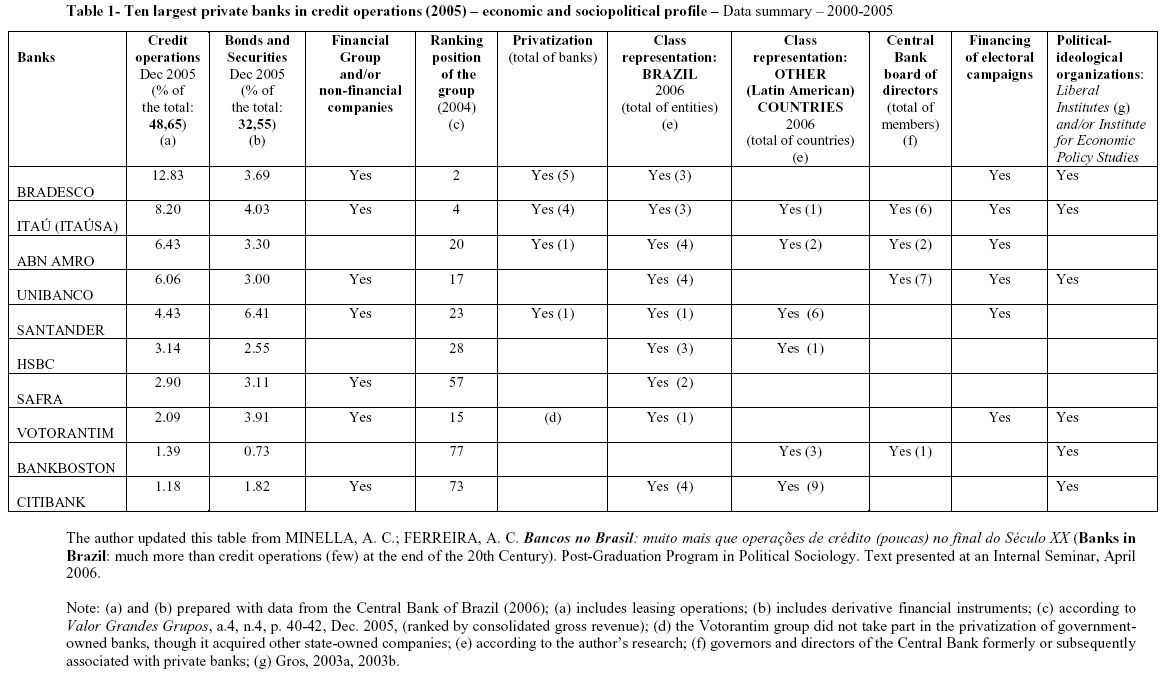
In view of this restructuring, the author focuses on a set of indicators that place the largest private financial institutions in a broader context of economic and, more specifically, sociopolitical relations. The ten largest private banks have been selected by the volume of credit operations in December 2005, in accordance with data from the Central Bank of Brazil (2006): Bradesco, Itau, ABN Amro, Unibanco, Santander, HSBC, Citibank, Safra, Votorantim and BankBoston. Together, these banks controlled, in 2005, 48.65% of the total volume of credit operations and 32.55% of the bonds and securities of the whole financial system (see Table 1). There are four national private banks, one that is classified as associated with foreign capital (Unibanco), and the others are large foreign financial institutions, that is, among the ten largest private banks in the country, five are foreigners.
In this context of analysis, taking the recent period as reference, the author has prepared a profile of the largest private banks in the country, considering the following characteristics and indicators: 1) the formation of an economic or financial group is characterized by the control of a bank and other financial institutions – defining a financial conglomerate – together with companies operating outside the financial sector; 2) share dealings in companies of other sectors, which are not controlled by the group; 3) control over the public debt, considering the volume of assets in bonds and securities as an indicator; 4) participation in the process of privatization of government-owned banks; 5) involvement with the representation of class in the financial sector – the indicator used here is the presence of banks in the board of directors of class associations in Brazil and Latin America; 6) strategic positions within the decision mechanism of the government, with professionals transiting between private financial institutions and the direction of the Central Bank of Brazil, particularly since the mid-1990s; 7) participation in the political process, providing financing for electoral campaigns; and 8) connections with ideological-political organizations, such as the Liberal Institutes.
Other relevant indicators have been considered, in addition to the ones mentioned above, but, due to the delimitation of this work, they will not be included in the analysis: a) the participation of the banks in the foreign debt, as creditors to the government and private companies established in the country; and b) the connections with the media and the presence in the cultural sphere, especially by means of specific foundations. The survey could not achieve the same extension with all indicators, thus, some comments have an analytic character. The achieved results are discussed below and summarized in Table 1.
]]>Economic groups and other share dealings
In line with the focus of this study, the author tries to find to what extent the banks form or integrate the economic or financial groups that are transformed into a locus of economic and political power, as indicated in the previously mentioned literature. It is suggested that this broader perspective allows for a better assessment of the financial institutions and their power in the current phase of capitalism in the country. A study on the origins of bank capital in Brazil found out that the large Brazilian banks "were part of groups that included dozens of companies, not only in the financial sector, but also in other fields of activity." According to that study, "these companies did not belong to the banks, at least not directly, but the control of the shares was held by families of bankers, if not, they had shares or relations of interest with the banks" (COSTA, 2002, p. 21).
The four largest private national banks (Bradesco, Itau, Safra and Votorantim) and the bank classified as associated with foreign capital (Unibanco) are integrated into economic groups that control and/or participate in the share capital of non-financial companies from diverse fields, especially Bradesco, Itau and Votorantim, ranked among the fifteen largest private groups in the country (according to Valor Grandes Grupos, 2005).
In 2000, Bradesco created Bradespar to accommodate companies operating outside the financial sector, and kept substantial share dealings in other companies, such as Usiminas, Petrobras, Perdigão and Gerdau (VALOR, May 23, 2005, p. C1). According to Costa (2002, p. 21), Bradesco invested considerable values from the technical reserves of its insurance branch and private welfare in minority shares of other companies, mostly industrial, looking for a seat in the board of directors. This strategy guaranteed participation in 41 non-financial companies, valued at about $ 1.5 billion4.
In the period under review, the holding company Itausa (part of the Itau group) controlled companies operating in such diverse fields as wood, furniture, paper, computers, chemical and petrochemical, some of which are among the largest in their respective areas. Safra Bank is part of an international network of companies controlled by the Safra family, or companies in which the family holds shares, including banking, telecommunications, paper and pulp production, and livestock. Votorantim Bank is part of the Votorantim Group, one of the largest industrial groups in the country, involved with metallurgy, siderurgy, paper, pulp, chemical, petrochemical, building and decoration materials, electric energy, processed foods and agribusiness (VALOR GRANDES GRUPOS, 2005, p. 252-255). Unibanco is controlled by Unibanco Holdings, which in turn is controlled by the Moreira Salles family through its E. Johnston holding company. The Moreira Salles Group consists of a complex network of companies and associated companies with a diversified participation of foreign capital. A more detailed analysis of this group's participation in the non-financial sector should track the holding companies, especially the E. Johnston5. Among the examples of this participation, this work points out Blockbuster Inc., the largest chain of video rental stores in Brazil, connecting the Moreira Salles Group to the Viacom Group, one of the world's largest entertainment companies; and the group's investments in the mining sector through the Brazilian Company of Metallurgy and Mining (CBMM – Companhia Brasileira de Metalurgia e Mineração), the world's largest producer of Niobium (Moreira Salles Group controls 55% of the company), with subsidiary companies in Europe (Niobium Products Company GmbH), North America (Reference Metals Company Inc., Pittsburg) and Asia (CBMM Asia Co. Ltd., Tokyo), in addition to the participation of subsidiary companies of Unocal Corporation and the Union of Petrochemical Industries S.A. (Unipar – União das Indústrias Petroquímicas S.A.) (ARAÚJO, 2003, p. 24).
Concluding, at least in five cases (Bradesco, Itau, Votorantim, Safra and Unibanco-Moreira Salles), in varying degrees, there is, directly or indirectly, a diversified network of share interests that involve control and participation in non-financial companies. The five foreign banks (ABN Amro, Santander, HSBC, BankBoston and Citibank) are among the world's largest financial institutions, operating in many countries, some of them integrated into financial groups with branches of control or share dealings in companies of different fields, as in the case of Citigroup, which controls Citibank, and Santander, which includes shareholders from diverse sectors of the Spanish economy.
Control over the public debt
The indicator to the amount of assets the banks direct to the market of public bonds is the volume of assets in bonds and securities, composed mostly of federal public bonds. In 2005, the 10 private banks selected for this survey controlled 32.55% of this volume, while at same time two federal institutions (Banco do Brasil and Caixa Econômica Federal) were responsible for 35.92%6. This situation indicates that the public debt is concentrated in the power of a few large banks (state and private) and that it has become an important source of profit for these institutions. Besides, it is a useful factor for the banks to constrain the strategic decisions of economic policy (FERREIRA, 2005).
]]>Privatization and the large private banks
The process of privatization of government-owned banks was particularly beneficial for two large national private banks and two foreign banks. Bradesco acquired five banks: the State Bank of Bahia (Baneb – Banco do Estado da Bahia), in 1999, Credireal of Minas Gerais, in 1997, and federalized banks formerly owned by the states, such as the State Bank of Amazonas (Bea – Banco do Estado do Amazonas), in 2002, the State Bank of Maranhao (BEM – Banco do Estado do Maranhão), in 2004, and the State Bank of Ceara (BEC – Banco do Estado do Ceará), in 2005. Itau acquired four institutions: the State Bank of Rio de Janeiro (Banerj – Banco do Estado do Rio de Janeiro)7, in 1997, the State Bank of Minas Gerais (Bemge – Banco do Estado de Minas Gerais), in 1998, the State Bank of Parana (Banestado – Banco do Estado do Paraná), in 2000, and the State Bank of Goias (Beg – Banco do Estado de Goiás), the following year, this one a federal institution since 1999. Foreign institutions acquired the State Bank of Pernambuco (Bandepe – Banco do Estado de Pernambuco), bought by ABN Amro in 1998, and the State Bank of Sao Paulo (Banespa – Banco do Estado de São Paulo), which was under control of the federal government and was purchased in 2000 by the Spanish bank Santander (which had already bought Meridional Bank in 1997, a federal bank previously acquired by Bozano-Simonsen Bank).
Class Organization
Participation in the structure of class representation in the Brazilian financial system is a marked characteristic in eight of the ten largest banks. In 2006, eight of them, including four foreign banks, were in the board of directors of FEBRABAN (Brazilian Federation of Banks). Besides, six of the ten selected banks were also present in class associations of other Latin American countries. In addition to Brazil, Citibank was operating in nine other countries, Santander in six, BankBoston in three, ABN Amro in two, and Itau and HSBC in another country.
Central Bank and private banks
The relationship between the financial sector and the Central Bank of Brazil has been the subject of many analyses in literature. One aspect of the question is the fact that members of the bank's board of directors (governor and directors) come directly from private financial institutions and, on the other hand, members of the board leave Central Bank for private banks or to start their own financial companies (NEIVA, 1995; FERREIRA, 2005, p. 96-100; CARVALHO, 2005). The nomination of some of the governors of the Central Bank is emblematic. In 1985, President Sarney appointed a banker who was the chairman of the Brazilian Association of Commercial Banks (ABBC, presently known as Brazilian Association of Banks). One of the governors of the Central Bank during the government of Fernando Henrique Cardoso came from the international financial universe, a characteristic also maintained by the current administration. Analyses on the professional origins of the directors of the Central Bank throughout the 1990s found out that a significant number of these professionals had careers in private institutions and mixed careers, which combined activities in private companies with bureaucratic and academic careers (OLIVIERI, 2001; NOVELLI 2001; MORAIS , 2005).
As for the ten largest private banks, it can be noticed that two of them are more prominent in this private-state relationship, taking into consideration the last decade of the twentieth century and the beginning of the twenty-first century. At least six members of the board of directors of the Central Bank were related to the Itau group, and no less than seven were associated with Unibanco. Governor of the Central Bank since 2003, Henrique de Campos Meirelles was once associated with BankBoston and, more recently, there are two directors of the institution related to ABN Amro8.
]]> In June 1996, the Monetary Policy Committee (Copom – Comitê de Política Monetária) was created to define the guidelines of monetary policy and interest rate. Composed of the governor and some directors of the Central Bank (a total of eight members), Copom's importance has increased since June 1999, when the government implemented a systematic of "inflation-targeting framework." The decisions of the Committee affect the financial system, the economy in general and the public debt in particular, since most of it is indexed by the SELIC (Sistema Especial de Liquidação e Custodia, i.e., Special System of Clearance and Custody) rate, set by the Committee.
The ten largest banks and the political process: the financing of electoral campaigns
Financial institutions have been prominent in the financing of electoral campaigns, especially for the federal executive. As it is widely known, the funds officially declared by political parties do not necessarily represent the total cost of the campaign, but they make possible to identify at least some of their sources of funding. Banks and companies associated to financial groups were among the major sponsors of the campaigns for Congress and the Presidency in 1994, 1998 and 2002. In the list of the ten largest banks, at least five provided money for electoral campaigns: Bradesco, Itau, Unibanco, Santander, Votorantim and ABN Amro.
The banks and the political-ideological organizations
In addition to the union, associative and partisan structure, the businessmen and the financial bourgeoisie also articulate their interests through diverse organizations. The Liberal Institutes, for example, were civil entities created by a group of entrepreneurs in the early 1980s to diffuse neoliberal principles, especially as a basis for public policies (GROS, 2003b, p. 275). Sponsored by large national and foreign economic groups operating in the country, the institutes are part of a global network that includes "intellectuals, academics, politicians, research institutes, and media and liberal publications, mostly in Britain and the United States" (GROS, 2003b, p. 275-276). Connected to an international network of think tanks, the institutes were more active during the 1990s (see GROS 2003b and GROS 2003a for the 1980s, in particular). In Brazil, six of the ten banks selected for this work were in some way associated with the Liberal Institutes. More recently, the Casa das Garças Institute for Economic Policy Studies (IEPE/CDG – Instituto de Estudos de Política Econômica Casa das Garças), in Rio de Janeiro, has assembled an important group of researchers, including economists and businessmen connected with the financial system, to develop and propose liberal-oriented policies.
Final considerations
Considering the variables discussed and the researched data, it is possible to notice that, as a rule, the ten largest private banks represent much more than financial intermediaries that control a significant volume of credit (expensive and reduced, in comparison with parameters of other capitalist countries) and a large part of the bonds and securities, which is where the government bonds are, i.e., the public debt. Within the borders of the collected data, at least seven banks expand their interests to a wide range of non-financial companies. The assessment of this intricate network of control and share dealings becomes a requirement and a major challenge to the understanding of the economic and political dynamics of the country.
]]> All of the major banks are involved in the direction of the class representation associations of the financial sector, eight of them within FEBRABAN. There is a significant participation of international banks or financial groups in the direction of class associations both in Brazil and in other Latin American countries. Operating simultaneously within these organizations, they produce an enormous potential for, among other things, coordinated actions and information exchange. In almost half of the cases studied, the involvement with the political process and government policies is manifested in the privatization of government-owned banks, the financing of electoral campaigns, and in operations within political-ideological organizations that articulate public policies and neoliberal-oriented policies. Less, but not less important, this interest is reflected in the search for the strategic control of the Central Bank.The analysis presented in this work, which restricted the universe of the financial system to the ten largest private banks, considered certain characteristics and indicators that allow for a better understanding of the power the financial institutions have in this country, as a locus for the accumulation and concentration of wealth, and as a sociopolitical presence and power in a society marked by deep economic, social and political inequalities.
References
ALCORTA, L. El nuevo capital financiero: grupos financieros y ganancias sistémicas en el Perú. Lima: Fundación Friedrich Ebert, 1992.
ARAÚJO, E. R. W. A liderança de qualidade, de mercado e excelência operacional da Companhia Brasileira de Metalurgia e Mineração: o caso do prometo de redução de finos para o departamento de britagem. 2003. Monografía (Engenharia de Produção) – Universidade Federal de Ouro Preto, Ouro Preto, 2003.
AZPIAZU, D.; BASUALDO, E.; KHAVISSE, M. El nuevo poder económico en la Argentina de los años 80. 3. ed. Buenos Aires: Editorial Legasa, 1989.
BANCO CENTRAL DO BRASIL. Sistema Financeiro Nacional, Informações cadastrais e contábeis, Informações Contábeis, 50 maiores bancos. Disponível em: <http://www.bcb.gov.br/fis/top50/port/default>. Acesso em: 20 jul. 2006.
BASUALDO, E. Concentración y centralización del capital en la Argentina durante la década del noventa. Buenos Aires: Editorial Universidad de Quilmes, 2002.
CARVALHO, C. E. Ocultamento e mistificação nas relações do Banco Central com os bancos: notas sobre a experiência brasileira. Política & Sociedade: Revista de Sociologia Política, Florianópolis, v. 1, n. 6, p. 195-220, 2005.
CARVALHO, C. E. et al. Desnacionalização do setor bancário e financiamento das empresas: a experiência brasileira recente. Textos para Discussão, Brasília, IPEA, n. 882, p. 1-75, maio 2002.
CHESNAIS, F. A "nova economia": uma conjuntura própria à potência econômica estadunidense. In: CHESNAIS, F. et al. Uma nova fase do capitalismo? São Paulo: Xamã, 2003. p. 43-70.
CINTRA, M. A. M. A reestruturação patrimonial do sistema bancário brasileiro e os ciclos de crédito entre 1995 e 2005. Política Econômica em Foco, Campinas, UNICAMP, Boletim n.7, p. 292-318, abr./nov. 2006. Disponível em: <http:// www.eco.unicamp.br/asp-scripts/boletim_cecon/boletim_cecon7.asp>. Acesso em: 30 maio 2006.
CINTRA, M. A. M.; CASTRO, E. M. M. de. A tendência à dolarização dos países latino-americanos. Novos Estudos, São Paulo, n. 60, p. 27-42, jul. 2001.
COMIN, A.; OLIVEIRA, F. de; SARAIVA, F.; LINO, H. Crise e concentração: quem é quem na indústria de São Paulo. Novos Estudos Cebrap, n. 39, p. 149-171, jul. 1994.
COSTA, F. N. da. Origem do capital bancário no Brasil: o caso RUBI. Texto para Discussão, IE/UNICAMP, n. 106, março 2002.
DRUCK, G. et al. Bancário: um emprego de múltiplos riscos. Cadernos CRH, Salvador, n. 37, p. 217-233, jul.-dez. 2002.
FERREIRA, A. C.; ALVIM, V. (Org.). A trama da privatização: a reestruturação neoliberal do Estado. Florianópolis: Insular, 2001.
___. Os donos da dívida. Um enfoque sociopolítico da dívida pública interna durante o governo FHC. 2005. 111 f. Dissertação (Mestrado em Sociologia Política) – Programa de Pós-Graduação em Sociologia Política, Florianópolis, Universidade Federal de Santa Catarina, 2005.
FREITAS, M. C. P. de; PRATES, D. M. A abertura financeira no governo FHC: impactos e conseqüências. Economia e Sociedade, Campinas, UNICAMP, n. 17, p. 81-111, dez. 2001.
GONÇALVES, R. Grupos econômicos: uma análise conceitual e teórica. Revista Brasileira de Economia, Rio de Janeiro, v. 4, n. 4, p. 491-518, out./dez. 1991.
GRANOVETTER, M. Business groups. In: SMELSER, N. J.; SWEDBERG, R. (Ed.). The handbook of Economic Sociology. Princeton, N.J.: Princeton University Press, 1994. p. 453-475.
GRISCI, C. L. I. Tempos modernos, tempos mutantes: produção de subjetividade na reestruturação do trabalho bancário. SOCIUS Working Papers, Lisboa, Universidade Técnica de Lisboa, n. 3, p. 1-19, 2002.
GROS, D. B. Institutos liberais e o neoliberalismo no Brasil da Nova República. Porto Alegre: Fundação de Economia e Estatística Siegfried Emanuel Heuser, 2003a. (Teses FEE, n.6).
___. Organizações empresariais e ação política no Brasil a partir dos anos 80. Civitas: Revista de Ciências Sociais, Porto Alegre, v. 3, n. 2, p. 273-300, jul./dez. 2003b.
GRÜN, R. A evolução recente do espaço financeiro no Brasil e alguns reflexos na cena política. DADOS – Revista de Ciências Sociais, Rio de Janeiro, v. 47, n.1, p.547, 2004.
JACOB, C. A. Crédito bancário no Brasil: uma interpretação heterodoxa.. 160 f. Tese (Doutorado em Economia) – Instituto de Economia, UNICAMP, Campinas, 2003.
JINKINGS, N. Trabalho e resistência na "fonte misteriosa": os bancários no mundo da eletrônica e do dinheiro. Campinas: Editora da Unicamp, 2002.
JUNCKES, I. J. O sindicalismo novo dos bancários na reestruturação financeira dos anos noventa no Brasil. 2004. Tese (Doutorado em Sociologia Política) – Programa de Pós-Graduação em Sociologia Política, Universidade Federal de Santa Catarina, Florianópolis, 2004.
LARANGEIRA, S.; FERREIRA, V. Excluídos e beneficiários dos processos de reestruturação: estudo comparativo da regulação do emprego no sector bancário em Portugal e no Brasil. Revista Crítica de Ciências Sociais, Lisboa, n. 57/58, p. 53- 85, jun./nov. 2000.
LEILA, C. D. Por que os bancos são o melhor negócio no país? In: ALBUQUERQUE, E.S. de. Que país é esse? Pensando o Brasil contemporâneo. São Paulo: Globo, 2005. p. 27-62.
MAKLER, H. M.; NESS, W. L. Jr. How financial intermediation challenges national sovereignty in emerging markets. The Quarterly Review of Economics and Finance, n. 42, p. 827-851, 2002.
MINELLA, A. C. Globalização financeira e as associações de bancos na América Latina. Civitas – Revista de Ciências Sociais, Porto Alegre, v. 3, n. 2, p. 245-272, jul./dez. 2003.
___. Grupos financeiros e associações de classe do sistema financeiro. In: MENDONÇA, S. R. de. (Org.). O Estado brasileiro: agências e agentes. Niterói: EdUFF; Vício de Leitura, 2005. p.159-178.
MINELLA, A. C.; FERREIRA, A. C. Bancos no Brasil: muito mais que operações de crédito (poucas) no final do Século XX. Florianópolis: Programa de Pós-Graduação em Sociologia Política da UFSC, abr. 2006. Seminário Interno.
MINTZ, B.; SCHWARTZ, M. The power structure of American business. Chicago: University of Chicago Press, 1985.
MIRANDA, E. Federação Brasileira de Bancos: uma análise sociopolítica do período 1994-2001. 2004. Dissertação (Mestrado em Sociologia Política) – Programa de Pós-Graduação em Sociologia Política, Universidade Federal de Santa Catarina, Florianópolis, 2004.
MORAIS, L. A evolução institucional do Banco Central e as mudanças da política monetária no Brasil no período 1964-1998. Política & Sociedade: Revista de Sociologia Política, Florianópolis, v.1, n.6, p. 221-253, 2005.
NEIVA, P. Estrutura de poder e processo decisório na regulamentação do sistema financeiro nacional: uma proposta de análise sob a perspectiva da não-decisão. 1995. Dissertação (Mestrado) – Instituto de Ciência Política e Relações Internacionais, Universidade de Brasília, Brasília, 1995.
NOVELLI, J. M. N. Instituições, política e idéias econômicas: o caso do Banco Central do Brasil (1965-1998). São Paulo: Annablume; Fapesp, 2001.
OLIVIERI, C. A política de nomeação do alto escalão do Banco Central do Brasil (1985-2000). 2001. 91 f. Dissertação (Mestrado em Ciência Política) – São Paulo: Universidade de São Paulo, 2001.
ORTIZ, R.. Mundialização e cultura. 2. ed. São Paulo: Brasiliense, 1994.
PASSOS, D. D. dos. A internacionalização do setor bancário no Brasil após o Plano Real: divergências de interesses dos banqueiros com a ação do Estado e mudanças nas negociações com os trabalhadores bancários. 2001. Dissertação (Mestrado em Sociologia) – Universidade Federal do Paraná, Curitiba, 2001.
PAULA, L. F.; MARQUES, M. B. L. Tendências recentes da consolidação bancária no mundo e no Brasil. In: ENCONTRO NACIONAL DE ECONOMIA POLÍTICA, SOCIEDADE BRASILEIRA DE ECONOMIA POLÍTICA, IX, Uberlândia, 2004. Anais... Uberlândia: Universidade Federal de Uberlândia, 2004. Disponível em: <http:// www.sep.org.br/eventos.asp?evento=s_nove>. Acesso em: 4 nov. 2004.
PORTUGAL JR., J. G. (Org.). Grupos econômicos: expressão institucional da unidade empresarial contemporânea. São Paulo: FUNDAP/IESP, 1994. (Estudos de Economia do Setor Público, 2).
RIBEIRO, A. Bancos lideram contribuições a FHC. Folha de São Paulo, São Paulo, p. 1-13, 6 de jun. 1999.
ROCHA, F. A. S. Evolução da concentração bancária no Brasil (1994-2000). Notas Técnicas do Banco Central do Brasil, Brasília, n. 11, p. 1-42, nov. 2001.
RODRIGUES, L. Metáforas do Brasil: demissões voluntárias, crise e rupturas no Banco do Brasil. São Paulo: Annablume; Fapesp, 2004.
SALVIANO JR., C. Bancos estaduais: dos problemas crônicos ao PROES. Brasília: Banco Central do Brasil, 2004.
SCHVARZER, J. Grandes grupos económicos en Argentina. Formas de propiedad y lógicas de expansión. Revista Mexicana de Sociología, v. 57, n. 4, p. 191-210, oct./dic., 1995.
SICSÚ, J. Rumos da liberalização financeira brasileira. Revista de Economia Política, São Paulo, v. 26, n. 3, p. 364-380, jul.-set. 2006.
STOLOVICH, L. El poder económico en el MERCOSUR. Montevidéu: Centro Uruguay Independente, 1993.
___. Los grupos económicos de Argentina, Brasil y Uruguay. Revista Mexicana de Sociología, v. 57, n. 4, p. 173-189, oct.-dic. 1995.
UNIBANCO. Informações trimestrais, referentes ao trimestre findo em 31 de março de 2002. 2002.
___. Relatório Anual, 2004.
VALOR GRANDES GRUPOS, ano 4, n. 4, dez., 2005.
VIDOTTO, C. A. O sistema financeiro brasileiro nos anos noventa. Um balanço das mudanças estruturais. 2002. Tese (Doutorado em Economia) – Instituto de Economia, UNICAMP, Campinas, 2002.
* This work is related to the research project "América Latina: uma visão sociopolítica das transformações e das perspectivas do sistema financeiro – III etapa" (Latin America: a sociopolitical view on the changes and prospects of the financial system – stage 3), with support from CNPq (Brazilian National Council of Research). This paper is an updated version of the work presented at the Latin American Political Science Association (ALACIP – Associação Latino-Americana de Ciência Política) Congress in Campinas, 2006. ]]>
1 The phenomenon has different names throughout the world: Grupo Economico (Latin America); Zaibatsu, later keiretsu (Japan); Chaebol (South Korea); Twenty-two families (Pakistan); Indian business house (India); Business Group (England) (GRANOVETTER, 1994).
2 Earlier versions of this work presented the following data referring to the years 2000 and 2006.
3 An interesting analysis of the Brazilian reconfiguration of the financial sector and its relationship with the political scene, considering the sociology of finance, was developed by Grün (2004).
4 Brazilian law does not authorize loans to companies in which a bank owns more than 10% of the capital. Thus, there is an advantage in the strategy of share dealings below this value, which would keep the company a client of the bank (COSTA, 2002, p. 21).
5 Unibanco is part of a shareholding network (data referring to early 2002). The Moreira Salles family (Fernando, João, Pedro and Walter Jr., in equity) controls E. Johnston Participações Ltda, which controls 85.52% of E. Johnston Representações e Participações S.A., which in turn controls 66.72% of Unibanco Holding, a company associated with foreign capital (Caixa Box SGPS, from Portugal, with 10%; Commerzbank Aktiengesellschaft, from Germany, with 8.98%; and The Dai-Ichi Kangyo Bank, from Japan, with 6.16% – totaling 25.14%). This holding company controls (96.59%) Unibanco (See UNIBANCO, 2002, p.105).
6 Data from the Central Bank of Brazil for the year 2005 include derivative financial instruments in this value, what hinders a more precise analysis. In 2000, the ten largest private banks (at that time, Sudameris was in the list, instead of Votorantim) controlled 44.7% of the total bonds and securities of the banking system. It seems that the private banks have reduced their participation in this value in favor of the federal banks, while at the same time they increased their participation in the volume of credit operations.
7 Banerj was cleared in 1996, and its bad assets were socialized, while a distributor of the group led to the solvency of the bank, which was acquired by Itau in 1997 (VIDOTTO, 2002, p. 241).
8 According to preliminary data, the following professionals left the Central Bank (BC – Banco Central do Brasil) for Itaú: Pérsio Arida, BC governor from 11/01/95 to 13/06/95; Gustavo Loyola, BC governor from 13/11/92 to 29/03/93 and 13/06/95 to 20/08/97; Fernao Bracher, BC governor from 28/08/85 to 11/02/87; Tereza Grossi, deputy governor of Supervision from 30/03/00 to 14/03/03; Sérgio Werlang, BC director under governor Armínio Fraga; Sergio de Freitas, BC director March/April 1985. Professionals formerly or subsequently associated with Unibanco: Pedro Malan, BC governor from 09/09/93 to 31/12/94; Armínio Fraga Neto, BC governor from 04/03/99 to 01/01/03 (also international adviser to JP Morgan Chase); Daniel Gleizer, BC director from 04/03/99 to 21/01/02; Francisco Gros, BC governor towards the end of Fernando Collor administration; Armin Lore, BC director from 1988 to 90; Alexandre Schwartsman, chief economist of Unibanco, was appointed BC director in 2003 and then moved on to ABN Amro; in the second half of the 1990s, Demósthenes Pinho Neto was the chief economist of Unibanco, and later the BC deputy governor for International Affairs. Pedro Malan became chairman of the Board of Directors of Unibanco in May 2004. Professionals associated with ABN Amro: Mario Carvalho Mesquita, the chief economist of ABN Amro for Latin America, became the BC deputy governor for Special Studies in June 2006; the above mentioned Schwartsman left the BC to replace Mesquita in the private bank. Professionals formerly associated with BankBoston: Henrique Meirelles, BC governor since 2003 (FERREIRA, 2005, p. 99; OLIVIERI, 2001; UNIBANCO, 2004).