Uso e abuso dos conceitos de tradição e direitos de propriedade na conservação de recursos naturais na Mata Atlântica, Brasil
Fábio de CastroI; Andréa D. SiqueiraII, *; Eduardo S. BrondízioIII; Lúcia C. FerreiraIV
IKluwer Academic Publications- Netherlands. fdecastr@indiana.edu
IIAnthropological Center for Training, Research and Environmental Change (ACT). Center for Latin American and Caribbean Studies. Indiana University. asigueir@indiana.edu
IIIDepartment of Anthropology. Center for the Study of Institutions, Population, and Environmental Change (CIPEC). Anthropological Center for Training, Research and Environmental Change (ACT). Indiana University. ebrondiz@indiana.edu
IVNúcleo de Estudos e Pesquisa Ambiental (NEPAM). State University of Campinas, Brazil
ABSTRACT
The relationship between resource management, local populations, and property regimes has long puzzled researchers and policy-makers. The constant failure of conservation policy reliant upon privatization and statization, has led both policy makers and researchers to recognize the importance of customary practices to achieve conservation. Yet, the overemphasis on "traditional populations" and "collective property regimes" as the way to promote conservation can be misleading. In this paper, we discuss the debate on local populations and resource conservation in the Southeastern Atlantic Forest, Brazil. The analysis focuses on 1) the concept of traditional populations; 2) the complexity of overlapping property regimes; 3) the potential for a loose relationship between "traditional populations" and "collective property regimes," and; 4) the implications of this approach for "non-traditional populations." We conclude that the bias toward "tradition" and "collective property regimes" threatens the entire range of local communities along what might be called a traditional-non-traditional populations gradient.
Keywords: traditional population, collective property, conservation units, Atlantic Forest, resource conservation, community-based management.
RESUMO
O entendimento da inter-relação entre as formas de manejo de recursos naturais, o papel das populações rurais na conservação ambiental, e os regimes de propriedades para controlar o uso de recursos tem sido um grande desafio para pesquisadoes e administradores públicos. Exemplos de insucessos de políticas ambientais baseadas no sistema de propriedade privada ou estatal tem levado ao reconhecimento da importância de práticas locais de uso de recursos naturais para atingir o objetivo de conservação. Entretanto, a ênfase apenas em "populações tradicionais" e "regimes de propriedades coletivas" como solução para a conservação de recursos naturais tem criado alguns problemas conceituais e práticos. O presente artigo discute o debate sobre populações locais e as propostas de conservação na Mata Atlântica, enfocando quatro aspectos deste debate: 1) o conceito de populações tradicionais; 2) a complexidade de sobreposição de regimes de propriedades; 3) os limites da correlação entre populações tradicionais" e "regime de propriedade coletiva"; e 4) as implicações da abordagem "tradicional" para as populações rurais "não-tradicionais". A discussão acima, baseada na revisão da literatura e ilustrada com dados de campo, revela que a ênfase no conceito de "tradição" e "manejo comunitário" pode, na verdade, ameaçar o sucesso de iniciativas de manejo ao ameaçar o modo de vida das próprias populações rurais, que fazem parte do gradiente população tradicional-não tradicional.
Palavras-chave: população tradicional, propriedade coletiva, unidades de conservação, Mata Atlântica, conservação de recursos naturais, manejo comunitário.
]]>
INTRODUCTION
Resource conservation, management systems, and local populations are central issues in recurrent debates between preservationist and conservationist groups. Preservationists advocate the protection of nature through the establishment of protected areas free of human interference, ruled by a central government (TERBORGH, 1999). Conservationists, on the other hand, argue that human populations have always influenced nature, and contend that natural systems should be managed by accounting for local rights to land and resource (CULTURAL SURVIVAL, 1991).
The polarization between "pro-nature" and "pro-people" stems from two different interpretations on the depletion of natural resources. In the late 1960s, the model of "the tragedy of the commons" led the pro-nature ideals, and strongly influenced the conservation policy towards the establishment of state-based conservation units with little attention to local residents (IUCN 1980). In the 1980s and 1990s, numerous case studies revealed evidences against "the tragedy of the commons", and pointed to successful community-based management vis-à-vis fallacious state-based policies (e.g., McCAY & ACHESON, 1987; OSTROM, 1990; BERKES & FOLKE, 1998). Conservationists called for local contextualization of resource management in order to understand how local populations develop strategies of resource use that are consonant with the ecological and social systems (OSTROM, 1990).
In policy terms, the recognition that community-based property regimes has been fundamental to reconsider policy strategies toward privatization and statization of natural resources. International NGO's and donor agencies recognized the role of local management systems in conserving natural resources and launched several financing programs supporting the local management approach. The debate on "peoples and parks" illustrates this process. The tone of the World Conferences on National Parks shifted from proposals of expulsion and resettlement of local population in the 1960s and 1970s (ADAMS, 1962; ELLIOT, 1974; DESAI, 1974) to proposals of implementing conservation policies in cooperation with local populations in the 1980s and 1990s (e.g., DASMANN, 1984; IUCN, 1996).
On one hand, social scientists succeeded to bring about the importance of the local dimension of resource use; on the other hand, a tendency to romanticize local communities has created major conceptual problems. Criticisms of assumptions in the Hardin's model such as individualist, isolated, and economic-oriented users were replaced by assumptions of group-oriented, homogeneous, conservationist users (AGRAWAL & GIBSON, 2001). The simplistic use of concepts such as "traditional populations" and "community-based management" in many conservation projects failed in cases where local populations were not ready to manage their local resources alone (BRANDON et al., 1998). Unsurprisingly, a new wave of radical preservationist discourse emerged in response to failures of many "community-based" initiatives (WILSHUSEN et al., 2002).
The "peoples and parks" debate is pervasive throughout the world and clearly more research is needed to settle the discussion. The goal of this article is to give a modest contribution to the current debate in Brazil, specifically to the rights of access to use of natural resources in conservation protected areas. We focus our discussion on the case of environmental conservation in the Ribeira Valley, southeastern Brazil. Data were obtained from literature review and from primary information from nine local communities and eleven municipalities scattered throughout the region. Informal and semi-structured interviews were carried out with local residents and officials of NGOs and GOs during 1999 and 2000. The cases reported here are used only to illustrate some of the topics we raise. They should not be taken as empirical evidences of a methodologically designed research to answer those specific questions. It is important to mention that the authors have extensive past and current research experience in the area, which has given them confidence about the relevance of the cases reported. Therefore, the goal of the discussion presented in this article, based on a mosaic of data collected in several sites at different levels of details, is to bring some elements overlooked in the debate.
We argue that the relationship between local populations, resource appropriation, and degrees of conservation should be held as empirical questions rather than assumptions. We focus our analysis on the pitfalls of the conservationists' arguments that claims for "traditional population" criterion to hold rights to nature, and argue that assumptions behind this criterion have theoretical and policy implications. Theoretically, the assumption of "conservationist, harmonic, traditional populations" ignores the internal politics of the community as well as the historical dimension of rural populations whose livelihoods have been under constant change due to local and regional factors (AGRAWAL & GIBSON, 2001; CUNHA & ALMEIDA, 2000, 2001). In policy terms, it plays both "traditional populations" and "non-traditional populations" against each other. "Traditional populations" may be trapped in a static life style with no room for change in their "traditional" behavior (REED, 1997), or be blamed for the inability to achieve sustainability due to their customary practices (STEARMAN, 1994; CONKLIN & GRAHAM, 1995; BRANDON et al., 1998; McDERMOTT, 2001). "Non-traditional populations," on the other hand, are often denounced as resource wreckers with no socio-political or cultural contextualization to justify their behavior (SLATER, 2000; WOOD & SCHMINK, 1978).
The critical discussion presented in this article is by no means to reject the important contribution of the "pro-people" approach, but to add some overlooked elements in the discussion. We also agree that conservation is a social issue and participatory strategies for management of conservation units are essential for successful environmental policies and social justice. However, the assumption of "conservationists" local population can lead to major problems in the participatory process.
]]> THE RIBEIRA VALLEY
The Ribeira River Valley covers 22,500 km2 between two Brazilian states (Paraná and São Paulo), and encompasses the largest continuous remnant of the Atlantic Forest. This region holds major ecological value as the original vegetation of the Atlantic Forest, estimated to 1,300,000 km2 prior the Colonization Period, has been reduced to 8% of that figure.
The Ribeira Valley presents the lowest population density (18 inh/km2) and the highest infant mortality rate in the State of São Paulo (31.7 deaths per 1000 live births) (Hogan et al. 1999). As one of the oldest colonization regions in the country (since the 16th century), the region hosted promising economic activities until the 19th century, such as mining between the mid-17th and mid-18th centuries, and floodplain rice cultivation until the mid-19th century. Later, the shift of economic focus toward other region, such as coffee plantations as well as the relocation of the regional harbor, cast the Ribeira Valley out of the economic mainstream. Japanese and European immigrants arrived in the region in the early 1900s as an attempt to revitalize the regional economy. However, poor infrastructure and lack of political support turned the region into an island of stagnated economy surrounded by two major metropolitan areas in Brazil — São Paulo and Curitiba.
In the 1970s, infrastructure was improved with construction of roads, bridges, schools, and health centers in order to minimize the level of isolation of the region. Economic and conservation issues, however, did not receive the deserved attention until the mid-1980s, when a new socio-political scenario emerged in the region. International pressure to conserve one of the biodiversity hot spots hit the region by means of initiatives of NGOs and governmental agencies leading to the establishment of several of conservation units. Today, twenty-five conservation units with a total area of approximately 1,462,504 ha cover approximately 50% of the region's area (ISA 1998), three-fourths of them established after 1980. The conservation units are managed at both Federal (seven) and State (eighteen) levels, under both direct and indirect use systems. At the same time, the Ribeira Valley regained attention for economic development programs to infrastructure improvement (e.g., road, power plant constructions, and tourism industry), leading to land speculation and strong cultural and economic impacts.
The dual process of conservation and economic development has increasingly squeezed the rural populations. At one side, the regional development model, based on large-scale single crops (such as banana plantations) and tourism, leads to land conflicts; at the other side, the establishment of conservation units turns local residents into invaders of their own land. In this complex situation, the government, local residents, and large farmers contest their rights to land and to nature.
The Ribeira Valley encompasses fairly high percentage of rural population (between 35% and 51% compared to the country average of 15%). The presence of six major social groups reflects the complex history of human occupation in the region – Amerindians, caiçaras, caipiras, quilombolas, settlers and squatters. Guarani is the major Amerindian group, living in scattered communities along the coast (LADEIRA & AZANHA, 1988). Caiçaras and Caipiras are populations descending from Portuguese, Amerindians, and African Brazilians – the former lives on the coast; their life strategy is based on both maritime and terrestrial resources, and their production system is assumed to be communal (DIEGUES, 1998); the latter lives in the interior, and are often implicitly defined as smallholders, living in "rural villages" with closer links to urban centers (CÂNDIDO, 1964). Quilombolas are rural communities of black populations, encompassing slave descendants, whose life is based on subsistence agriculture and cultural manifestations are strongly tied to the past (SÃO PAULO, 1997). Settlers and squatters are defined as smallholders - the former has a diverse background, including European descendents who arrived in the early 1900s and holds land title; the latter is migrants who have arrived from other areas of the State after the 1950s and occupied unclaimed lands with no land titles.
Despite of social differences, all rural residents have been affected by the establishment of conservation units in the 1980s and by the economic development projects in the region. Conservation units of indirect use do not allow for human occupation within their borders. By the same token, conservation units of direct use do not guarantee land security to local residents, who are squeezed out by pressures from the tourism industry and from large-scale farmers (DIEGUES, 1998). As part of an international debate on conservation policies and the fate of local populations in protected areas (WEST & BRECHIN, 1991), a decree to unify categories of conservation units and to recognize rights of use to land by local populations was proposed in Brazil. The National System of Conservation Units (SNUC) has been partially approved; yet, the most contentious issue involving local populations remains unsettled due to the debate between preservationist groups who argue that maintenance of local populations threatens the conservation goal of protected areas (GALETTI, 2001) and conservationist groups who argue that "traditional populations" have socio-ecological features that will ensure the sustainability of natural resources (DIEGUES & VIANA, 2000).
Despite the important role of conservationists to bring the local population to the center of the debate, misconceptions of traditional ecological knowledge (TEK) and community based management in their arguments mislead the discussion to assumptions such as compatibility between local practices and conservation of ecological systems, community-based arrangements based only on collective property regimes, and homogeneous distribution of resource among users. Certainly, TEK and collective property regimes are part of the so-called "traditional populations." However, overemphasis on "tradition" masks human agency under rapid and complex socioenvironmental change. In addition, social groups not eligible to "tradition" are indirectly marginalized in the debate on rights to nature (SLATER, 2000). Similarly, the overemphasis on "collective management systems" by local populations hides the multi-layered property rights systems crafted by local populations, and implies a long-standing collective commitment to resource conservation in a socially harmonic setting. These two conceptual problems are discussed in detail below.
TRADITIONAL AND NON-TRADITIONAL POPULATIONS
]]> Although the term "tradition" includes historical (temporal placement), cultural (knowledge, customs, perceptions), and political (right to land) dimensions, it often masks the dynamic process of cultural change and connectivity to other spheres of social relationship. Often times, "tradition" is used to contrast to "modern" while implying conditions of backwardness or "irrational" decision-making processes (SCHMINK et al., 1992), or to relate to the cosmology of noble savages in harmony with nature (CONKLIN & GRAHAM, 1995). In general, economic flexibility and social change is understated, while social homogeneity and conservative practices, avoidance to risks and innovation is overstated.Assumptions of conservation-oriented, isolated, static, and homogeneous populations limit the analysis of resource use in a changing environment. In situations where local populations encompass a large array of social groups that emerged in different historical periods, the relationship between "traditional management" and resource conservation becomes even fuzzier and may affect the criteria used to determine who is and is not "traditional."
The emphasis on the conservationist behavior of "traditional populations" in the Atlantic Forest (DIEGUES, 1998; ARRUDA, 1999) has strong political implications. In the Ribeira Valley, for instance, only 13% of the estimated rural population of 166,000 has been currently recognized as "traditional" - an estimated population of 12,200 of Caiçara and 9,570 of Quilombola (ISA 1998). Vianna et al. (1994), however, estimate that 37.5% of the area of conservation units in the Atlantic Forest is occupied by local residents, including "traditional" and "non-traditional" populations. In other words, despite the large proportion of non-traditional groups living in the region, discussions on "traditional populations" and resource sustainability have dominated the conservation agenda, and eclipsed the socioeconomic and political problems related to "non-traditional" groups and their rights to land and use of resources (see ARRUDA, 1999).
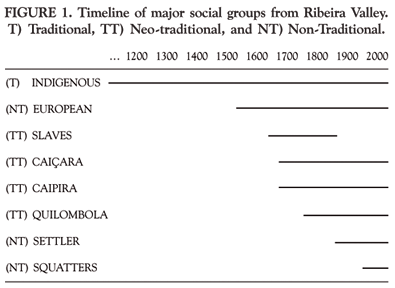
The polarization between "traditional" and "non-traditional" populations emphasizes the contrast in identities while veiling social and economic similarities resulting from social patterns of interaction during their existence. A clear-cut division between traditional and non-traditional populations fails whenever complex social interactions take place. "Traditional" populations are constantly influenced by internal and external social factors. When pressure is too strong (e.g., colonization), disruption of cultural continuity may take place and, eventually, neo-traditional groups, as defined by Berkes and Folke (1998), will emerge. According to this model, the Guarani Amerindians represent the only traditional group in the Ribeira Valley, whereas Caiçaras, Caipiras, and Quilombolas are "neo-traditional" groups, and settlers and squatters are "non-traditional" (Figure 1).
Interesting enough, Caipiras, is usually left out in the traditional populations literature, together with settlers and squatters. The neglect of Caipiras unveils inconsistencies in the "traditional population" model of the Atlantic Forest, since they hold similar history as Caiçaras, share ethnic heritage, and have applied local knowledge in their strategies of natural resources. The bias of portraying "Caiçaras" as somehow more traditional is perhaps the result of a romantic idea of this social group as one that has resisted assimilation and maintained a "communal" and "isolated" lifestyle, in contrast to Caipiras who have supposedly assimilated urban values and embraced a "rural village" lifestyle based on small private properties (Cândido 1964; Diegues 1998). Quilombolas, on the other hand, treated as "traditional" groups in the literature, emerged later than Caipiras in the regional scenario, and only a few decades prior to the arrival of the first migrant settlers in the Ribeira Valley (QUEIROZ, 1983).
Despite cultural variations, geographic differences seem to have played major role in defining socioeconomic paths among the rural populations in the Ribeira Valley. In the past, coastal populations were similarly involved in swidden agriculture, extraction of forest products, fishing, and tourism business, while populations living in the interior carried out swidden agriculture, mining activities, and heart of palms extraction. As a result, the same social group may vary in their strategies of resource use if they live in different socioenvironmental settings. For example, residents of one Quilombola community located on the coast lack access to agricultural land, but have access to mangrove and external support from researchers and government offices. An oyster cooperative was created in order to boost their economic activity and increase household income. In contrast, Quilombola communities in the mountain area extract heart of palm, subsistence agriculture or rely on seasonal out-migration to work in tomato plantations. Therefore, although claiming the same cultural background, distinct socioenvironmental contexts appear to foster variations in the local practices with respect to natural resources.
]]> The emphasis on "traditional populations" in the Ribeira Valley is not a conceptual problem only; it also creates a political bias in setting boundaries on a continuum consisting of three cultural categories (traditional, neo-traditional and non-traditional populations). The social and economic discrimination generated by these distinctions forces local populations to split into subgroups, while political actions reliant on the participation of all rural populations are diluted. Groups eligible for "traditionality" become politically stronger but indirectly weaken the political power of "non-traditional populations" suffering from similar problems. The Movement of the Populations Affected by Dams (MOAB) is a case in point.The threat of land flooding due to the construction of four hydroelectric dams in the region led to the organization of the rural populations including Quilombolas, Caipiras and settlers to be affected by the project. With the increased political visibility of the Quilombola movement nationwide, the populations belonging to this social group chose to claim their rights through another political venue unrelated to MOAB. Based on the Brazilian Constitution, which guarantees the provision of land titles to Quilombola populations (Article 68, 1988), they pressured the State government to recognize their rights to land. Since 1996, 713 families have been granted with land titles and many others are on the way (SÃO PAULO, 1997; ISA 1998). In contrast to the success of the Quilombolas, claims from rural populations lacking "traditionality" have been ignored. Less empowered groups resent the special attention from the government devoted to "traditional" populations. During one of our visits to one Caipira community, the leader expressed how unfair he thought it was to allow Amerindians to extract heart-of-palm, cut down trees, and even threaten park directors just because they are "traditional populations," whereas residents of his community have no rights to anything.
Quilombola populations base their claims on ancestral background. Although many communities hold on strongly to cultural features of African culture such as language, religious practices and oral history, some others resemble more of a "Caipira" village, with individual property systems, catholic religion, kinship ties, and little attachment to Afro Brazilian rituals. This is the case of one community located within the boundaries of a conservation unit, comprising of approximately 16 houses scattered in individual lots and gardens. Collective activity has become rare and is currently limited to local education and church-related celebrations. This community has recently been invited to join the Quilombola movement, and some inhabitants have attended meetings to learn more about the movement. Although many residents are reluctant to the Quilombola movement, a resident who at the time was of the leaders of the movement has argued that their participation represents a way to fight against the restrictions imposed by the establishment of conservation units in their land. The lack of cultural connection with other Quilombola community becomes clear when she says "... their mass is different, they use drums, they sing and dance (authors' emphasis)." However, the political opportunity offered to Quilombolas is an asset, as she explains, "...since we are all black, and we have been living here for quite a long time, we can also be a Quilombola", and adds, "...we can learn it fast". In other words, regardless her cultural connection to the movement, this resident use the discourse of Quilombola culture as a political venue to claim rights to land. This same group of residents — who have occupied the area for generations, long before the creation of the conservation unit — have struggle without success for years with local and state park authorities to have their rights to cultivate the land recognized. Claiming of a cultural identity seemed to be a legitimated and savvy political strategy in guaranteeing their rights to land.
The examples above illustrate how land insecurity is a problem shared by most of the rural populations in the Ribeira Valley. The eligibility of "traditional populations" to claim rights to land has empowered one subgroup but, indirectly, narrowed the political channels for other groups who are not eligible for "traditionalism."
The discourse of "traditionalism" comes along with the conservationist discourse, linked by the concept of traditional ecological knowledge (TEK). Often, TEK in the Atlantic Forest is portrayed as environmentally friendly (DIEGUES, 1998). However, most studies addressing TEK in the Atlantic Forest suffer from inconsistent analysis of customary practices with regard to the management of ecological systems (ADAMS, 2000). The few studies attest detailed ecological knowledge among Caiçaras (BEGOSSI et al., 1993; SANCHES, 2001; ADAMS, 2000). Yet, these studies also raise concerns that customary practices that were adaptive in the past such as swidden agriculture, when land was abundant (ADAMS, 2000), may be mal-adaptive in a modern context, under land scarcity (SANCHES, 2001).
The limitation of swidden agriculture within protected areas has become the most paradoxical issue regarding TEK in the Atlantic Forest. On one hand, long-fallow swidden system is a major trace of "traditionalism" of these communities, based on the "symbiotic" relation to forest cover through generations; on the other hand, the swidden system is the very target of conservation policies. An informal rule recognized among park directors, rangers, and park residents allows cultivation in conservation units only in plots of secondary succession vegetation lower than 1.5 meters. In other words, while supporting the maintenance of swidden agriculture, it promotes shorter fallow cycles by limiting farmers to areas with young fallow vegetation, dominated by saplings. Shorter fallow cycles are associated with the intensification of agricultural systems, which is only possible when a decrease in the biomass stock input from short-fallowing can be substituted by an increase in other inputs, such as fertilizer, labor, pesticides, and/or technology (NETTING, 1993). Such a model is not possible in the region due to limited access to technology and artificial inputs, and poor infrastructure, processing, and market structure.
The idea that local practices are free of external influence is another misconception. Despite their high degree of isolation, local populations from the Ribeira Valley have acquired exogenous knowledge in periods of economic boom of rice plantations, mining activities, and extractivism (ADAMS, 2000). Therefore, many "traditional practices" may have been replaced, and descriptions of TEK captured through interviews may actually prove to be manipulations of discourse, in which local populations report "sustainable" practices which are not necessarily confirmed by direct observation and appropriated field experiments. The analysis of the local practices is necessary to evaluate how they affect the biophysical environment in the short- and long-run. Therefore, the political contextualization of local discourse is fundamental to any evaluation of the "self-recognition" of traditional populations and their practices with conservationist goals (COCKLIN & GRAHAM, 1995).
In sum, a polarized view of "traditional" and "non-traditional" practices masks the understanding of how local practices can help to sustain natural resource under socio-environmental changes. Because the socioeconomic and biophysical environments are dynamic, it is unwise to assume that resource sustainability can be achieved only by returning control over resources to traditional populations. In this sense, by turning the discussion toward all rural populations, based on a negotiation process of rights and duties, both "traditional" and "non-traditional" will be integrated in an endeavor that accounts for similarities and differences across groups with respect to their role in resource use. It is not to say that the so-called "traditional populations" should not be recognized by their cultural identity. However, unless the discussion are grounded in a broader social and historical context, in which any rural populations can participate, rights to nature will be condemned to a static view of "tradition" in which returned political power will trap the users in a discourse of the past.
PROPERTY RIGHTS
]]> Natural resources are common-pool resources (CPR), which are difficult to exclude from other users, and their use implies subtractibility from other users (FEENY et al., 1990). Natural resources can be exploited under open access if no effective rule is present; or under private property (e.g., individual titling system); state property (e.g., conservation units); or collective property (e.g., community-based arrangements). Property regimes, however, are often more complex and encompass overlapping property rights according to attributes of each resource as well as to the social features of each user group.Property rights to natural resources is complicated by the notion of global commons, in which pattern of resource use by the local populations has major implications on the environmental pattern at the global scale (BUCK, 1998). In opposition to preservationists who claim the rights to state in order to control the use of the natural resources, conservationists look for alternative small-scale production systems to achieve sustainable use of natural resources (DONAHUE, 1999). As a result, the governance of forestry systems usually encompasses a multi-layered property system, which may differ across products, since individuals have different interests in each of the resource items available in the system. In addition, political influences regulating the use of each resource may affect how each item can be used. Thus, an understanding of the "combination of property rights" is essential in order to contextualize resource use according to the social and ecological features of each system. Instead of asking under what property regime a system or resource is exploited, questioning under what circumstances a system or resource is appropriated by each property regime may lead to a more realistic picture of the system.
The acknowledgement of multiple property rights systems is particularly important in order to avoid the panacea of collective property rights. In cases where "traditional collective property regimes" are assumed, internal variations in property rights toward products is often overlooked. It is not to say that collective land ownership cannot accommodate different rights toward products; yet, it is fundamental to address the set of rights to products in order to avoid distributional problems, particularly in cases where the strategies of resource use and the local political structure are heterogeneous (McDERMOTT, 2001).
Most of the forested area in the Ribeira Valley, for example, is officially defined as state property (conservation units), with large portion overlapping with private farms and community areas. Based on the discourse of "traditional communal tenure", Amerindians, Caiçaras, and Quilombolas claim collective property rights to land, even though they hold private lots (e.g., house lot and gardens). By the same token, Caipiras, settlers, and squatters claim private land titles (through the agrarian reform movement), although some may maintain collective access to forest and aquatic products. With the exception of the Amerindians, which maintain group-based social structure, the remaining rural inhabitants are organized in household units who combine private property oriented towards agriculture with a joint open access and collective regime for use of the forest and the water systems. Therefore, the generalization of collective property regimes among "traditional populations" and private property regimes among "non-traditional populations" obscures the complexity of property rights that individuals hold to specific products.
The model of bundles of rights proposed by Schlager & Ostrom (1992) is helpful to understand multiple property rights. According to this model, individuals (or groups) have different levels of control over particular resources — they may have only access to a given system, or also right to withdraw resources, or also right to make management decisions, or also right to exclude others, or also alienation right (or any combination of these rights). The "bundle of rights" model reveals specific levels of access and control to particular resources based on their value in the Atlantic Forest. Table 1 lists a few important natural resources used by the rural populations with their respective property rights. The official arrangement is very restrictive and does not make the distinction between local populations and outsiders. Traditional and non-traditional groups enjoy right of access to most resources. In contrast, the unofficial appropriation system encompasses a more complex combination of rights according to each product. Rights to land for cultivation and settlement are the most well-defined, and include alienation rights. Local governance of aquatic systems, including fishing territories, seems to be more elaborate than that of forest products. Perhaps the less developed institutional arrangements for the forest system at the local level is due to state-based restrictions on forest use, which has restrained local populations from engaging in collective action under limited decision-making control. Therefore, the claim for collective property rights to natural resources by "traditional populations" does not reflect local practices of resource use, which are actually based on a combination of private (e.g., land), collective (e.g., fish) and relatively open access (e.g., forest products) regimes.
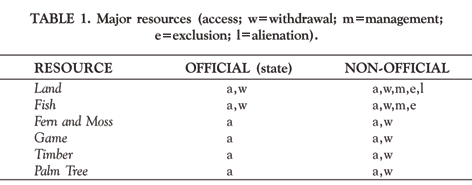
Interesting enough, the strong advocacy for collective property regimes among "traditional populations" in the Atlantic Forest is based on examples retrieved from maritime systems (e.g., CORDELL, 1974; BEGOSSI, 1995; DIEGUES, 1995), while collective use of forests has been poorly studied (ADAMS, 2000). Most of the work describing the use of forests does not provide information about local rules regarding management strategies at the community level. Although some authors assume that forests are held collectively in local communities (DIEGUES, 1995), three examples of forest use in the Atlantic Forest illustrate how the appropriation of forestry resources by local populations varies according to local socioeconomic factors.
]]> Agriculture, for example, is prohibited in conservation units, but informal agreement permits land clearing in early fallow stages (vegetation up to 1.5m height). Park residents in the Ribeira Valley are aware of this rule, but, those who maintain agricultural plots sometimes violate the rule to clear vegetation above the permitted height. A second example is related to heart of palm extraction. The palm tree Euterpe edullis is an endangered species whose remaining populations in the Ribeira Valley are found mostly within the boundaries of conservation units in the mountain area. A clear appropriation system defined for state parks and private farms is supposed to protect this species from extraction. However, in one of the oldest park of the region, one single family has been enjoying informal rights to extract palm trees within a conservation unit, by threatening local residents, park rangers and even the forest police. Extraction of fern and moss provides the third example. These plants have long been exploited by Caiçara residents in the Ribeira Valley under open access regime. Recently, as part of a strategy to create economic alternatives for the local population, incentives to organize a collective property regime of this product by local municipalities are taking place in order to define rules of use among commoners. In sum, three forest products – land for agriculture, heart of palm extraction, and ferns/moss – presents distinctive appropriation systems according to the social context the exploitation takes place.Collective property regimes may hide not only different appropriation systems to resources, but also unequal allocation of rights to local subgroups based on power relationships (RUTTAN, 1998; McDERMOTT, 2001). The fact that a given area is held collectively does not ensure equal property rights distribution among users. The unequal distribution of rights among community residents is illustrated by the ecotourism activity in the region. Ecotourism has become a major solution presented by policy makers as an economic alternative for local populations in the Ribeira Valley. Despite the best intentions of governmental and non-governmental programs, this is not always the case. Initiatives frequently mentioned as successful may have different evaluations when looked closer. In one of the famous regional conservation units, local residents were trained as tour guides, and an association was created to coordinate their work. However, some guides complain that only a few people are constantly called for work. By the same token, other ecotourism-oriented activities such as park rangers and hostel owners are usually limited to a few local families who, due to some specific economic and demographic structure, were able to take advantages of the new economic opportunities during the park implementation. In other words, the incentives for a new economic activity and the creation of a local association were not enough to avoid unequal access to the community-based ecotourism.
Distributional problems are related to the level of social organization and how local institutions are designed to encourage participation in each step of the decision-making process. A few studies have shown that so-called "traditional" populations in the region (e.g., Caiçaras) are poorly organized, and decisions lay mostly at the household level (SANCHES, 2001; ADAMS, 2000). Although it is too broad a statement, many Caiçara populations have limited community capacity to make collective decisions, even in the presence of strong economic incentives when compared to their Amazon counterparts (BEGOSSI, 1998). In sum, heterogeneous social and ecological factors may lead to unequal distribution of access to resources among households in poorly organized communities. Examples of unequal allocation of rights in community-based management systems reveal that much care should be placed on how "collective actions" account for democratic local decisions (RUTTAN, 1998). Therefore, the assumption of collective property regime may represent partially the appropriation arrangement — and in some cases, not at all. Whenever rights to land and resources are guaranteed purely on "traditional" grounds, the discourse of collective property regimes may simply represent a venue for strengthening the political power of local elites. Here, instead of "tradition," concepts of democracy, civil rights, and social equity should prevail in carrying out decisions regarding land use/land tenure issues.
FINAL REMARKS
Social scientists have been major advocators for the local social and ecological contextualization of resource management in the "commons" debate, by presenting numerous cases where local populations were able to craft sustainable resource use strategies under collective property rights. Ironically, efforts to refute the assumptions of the "tragedy of the commons" model led to other misleading assumptions. Discussing resource conservation policy in the Ribeira Valley on "traditional" and "collective rights" grounds has underlined the "misconceptions" of conservation-oriented "traditional populations". This approach hides fundamental questions related to a broader strategy for conservation and development in the region. The recognition of rights to land to traditional populations as well as the establishment of collective property regimes should not replace - but rather complement – a broader model, including non-traditional groups and other property regimes.
Being traditional does not ensure resource sustainability as much as being non-traditional will not necessarily lead to resource depletion. Likewise, collective property rights alone may not be the most suitable solution for all "traditional populations," just as private arrangements may not be the best solution for their non-traditional counterparts. In other words, it is not the cultural background of a population or the property regime that ensures or jeopardizes resource conservation. Rather, the consonance of the rules with the ecological and social systems is the core issue to address both local and regional interests.
The concepts of "traditional populations" and "collective property rights" are too broad to underlie conservation policies for at least two reasons. First, the criteria for making such distinctions are hard to define in complex systems. Social boundaries of traditional, neo-traditional and non-traditional populations are often biased according to the political context, and claims to land rights are often grounded in political factors than cultural ones. Second, collective property rights are useful for resource governance, but not sufficient to define rights and duties among several stakeholders. Distribution of power, rules of access, and monitoring system may strongly vary among users, and the social sustainability will heavily depend upon the group organization.
Thus, trying to determine who has the right to nature and how resources should be appropriated is a two-edged sword. While defending the rights of minority groups, advocators indirectly assign a static behavior based on imaginary eco-communities and outcast non-traditional populations and other property regime options. Some authors recognize the danger of this approach (AGRAWAL & GIBSON, 2001; REED, 1997). We suggest a constructive approach by contextualizing specific conservation problems on a systemic basis by including all the actors, natural resources and appropriation patterns, in order to define a negotiation process. Only by shifting away from the cultural grounds will the assignment of rights to resources begin to account for the diversity of interests and users involved, including all stakeholders and management options.
]]> REFERENCES
ADAMS, A. (ed.) Proceedings of the first world conference on National parks, Seattle, June 30-July 7. Washington, D.C.: National Park Service, 1962. [ Links ]
ADAMS, C. Caiçaras na Mata Atlântica: Pesquisa científica versus planejamento e gestão ambiental. Master thesis, PROCAM, University of São Paulo, São Paulo, Brasil, 2000. [ Links ]
AGRAWAL, A. & GIBSON, C.C. (eds.) Community and the environment: Ethnicity, gender, and the State in community-based conservation. New Brunswick, NJ: Rutgers University Press, 2001. [ Links ]
ARRUDA, R. "Populações tradicionais" e a proteção de recursos naturais em unidades de conservação. Ambiente e Sociedade 5: 1999, p. 79-92 [ Links ]
BEGOSSI, A. Extractive reserves in the Brazilian Amazon: An example to be followed in the Atlantic Forest? Ciência e Cultura 50: 1998, p. 24-28. [ Links ]
BEGOSSI, A. Fishing spots and sea tenure: Incipient forms of local management in Atlantic Forest coastal communities. Human Ecology 23:1995, p. 387-406. [ Links ]
BEGOSSI, A.; LEITÃO-FILHO, H.F. &. RICHERSON, P.J. Plant uses in a Brazilian coastal fishing community (Buzios Island). Journal of Ethnobiology 13: 1993, p. 233-256. [ Links ]
BRONDÍZIO, E. et al. Atlas dos Remanescentes Florestais do Domínio Mata Atlântica. Fundação SOS Mata Atlântica, Instituto Nacional de Pesquisas Espaciais e Instituto Brasileiro de Meio Ambiente. São José dos Campos: INPE, 1990. [ Links ]
BERKES, F. & FOLKE, C. (eds.) Linking social and ecological systems: Management practices and social mechanisms for building resilience. Cambridge: Cambridge University Press, 1998. [ Links ]
BRANDON, K.; REDFORD, K.H. & SANDERSON, S.E. (eds.) Parks in peril: People, politics, and protected areas. Washington, DC: Island Press, 1998. [ Links ]
BUCK, S.J. The Global Commons: An Introduction. Island Press, 1998, 225pp. [ Links ]
Cândido, A. Os parceiros do Rio Bonito: Estudo sobre o caipira paulista e a transformação dos meios de vida. Coleção Documentos Brasileiros, 118. Rio de Janeiro, Brasil: Livraria José Olympio, 1964. [ Links ]
CARNEIRO DA CUNHA, M. & ALMEIDA, M.W.B. Indigenous people, traditional people and conservation in the Amazon. Deadalus 129(2): 2000, p. 315-338. [ Links ]
CARNEIRO DA CUNHA, M. & ALMEIDA, M.W.B. Global Environmental changes and traditional people. In: HOGAN, D.J. (ed.) i Campinas: UNICAMP/NEPO, Brasil, 2001. [ Links ]
COCKLIN, B. A. & GRAHAM, L. R. The shifting middle ground: Amazonian Indians and eco-politics. American Anthropologist 97(4): 1995, p. 695-710. [ Links ]
CORDELL, J. C. The lunar tide fishing cycle in Northeastern Brazil. Ethnology 13: 1974, p.379-92. [ Links ]
CULTURAL SURVIVAL QUARTERLY. Parks and people 9 (1), 1995, Special Issue. [ Links ]
DASMANN, R. The relationship between protected areas and indigenous people. In: McNEELY, J. A. & MILLER, K. R. (eds.) National parks, conservation and development: The role of protected areas in sustaining society, Pp. 118-123. Washington D.C.: Smithsonian Institute Press, 1984. [ Links ]
DIEGUES, A. C. S. Povos e Mares: Leituras em Socioantropologia Marítima. São Paulo, Brazil: NUPAUB- Universidade de São Paulo, 1995. [ Links ]
DIEGUES, A. C. S. The myth of untamed nature in the Brazilian rainforest. São Paulo, Brazil: NUPAUB-Universidade de São Paulo, 1998. [ Links ]
DIEGUES, A. C. S. & VIANA, V. M. (orgs.) Comunidades tradicionais e manejo dos recursos naturais da Mata Atlântica. São Paulo, Brasil: NUPAUB, LASTROP, Universidade de São Paulo, 2000. [ Links ]
DOLSAK, N. & OSTROM, E. The Commons in the New Millennium: Challenges and Adaptations. Politics, Science, and the Environment. The MIT Press, 2003, 393pp. [ Links ]
DONAHUE, B. Reclaiming the Commons: Community Farms and Forests in a New England. Yale University Press. 1999, 352pp. [ Links ]
FEENY, D.; BERKES, F.; McCAY, B.J. & ACHESON, J.M. "The tragedy of the commons: Twenty-two years later". Human Ecology 18: 1990, p. 1-19. [ Links ]
FERREIRA, Lúcia. A floresta intransitiva: conflitos e negociações na Mata Atlântica, SP. Tese de Doutorado em Ciências Sociais, IFCH/UNICAMP, Campinas, Brasil, 1996. [ Links ]
FERREIRA, Lúcia et al. Conflitos sociais em áreas protegidas no Brasil: moradores, instituições e ONGs no Vale do Ribeira e Litoral Sul, SP. Idéias 8(2): 2002, p. 115-150. [ Links ]
GALETTI, M. Indians within conservation units: Lessons from the Atlantic forest. Conservation Biology 15: 2001, p. 798-799. [ Links ]
HOGAN, D. J.; CARMO, R.L.; ALVES, H.P. & RODRIGUES, I.A. Sustentabilidade no Vale do Ribeira (SP): Conservação ambiental e melhoria das condições de vida da população. Ambiente e Sociedade 3-4: 1999, p. 151-175. [ Links ]
IUCN. World conservation strategy: Living resource conservation for sustainable development. Gland: IUCN, United Nations Development Program (UNDP), and World Wildlife Fund (WWF), 1980. [ Links ]
IUCN. World Conservation, special issue on collaborative management, n.2, 1996. [ Links ]
ISA (Instituto Socioambiental). Projeto diagnóstico socioambiental do Vale do Ribeira. Anexo 3. São Paulo, Brazil: Instituto Ambiental, 1998, Mimeo. [ Links ]
LADEIRA, M. I. & AZANHA, G. Os Indios Guaranis da Serra do Mar. São Paulo: Nova Stella, 1988. [ Links ]
McCAY, B. J. & ACHESON, J. M. (eds.) The question of the commons: The culture and ecology of communal resources. Tucson: The University of Arizona Press, 1987. [ Links ]
McDERMOTT, M. H. Invoking community: Indigenous people and ancestral domain in Palawan, the Philippines. In: AGRAWAL, A. & GIBSON, C.C. (eds) Communities and the environment: Ethnicity, gender, and the State in community-based conservation, pp. 32-62. New Bunswick, N.J.: Rutgers University Press, 2001. [ Links ]
NETTING, R. Smallholders, householders - Farm families and the ecology of intensive, sustainable agriculture. Stanford: Stanford University Press, 1993. [ Links ]
OSTROM, E. Governing the commons: The evolution of institutions for collective action. The political economy of institutions and decisions. New York: Cambridge University Press, 1990. [ Links ]
QUEIROZ, R. S. Caipiras negros no Vale do Ribeira: Um estudo de antropologia econômica. São Paulo, Brazil: FFLCH, Universidade de São Paulo, 1983. [ Links ]
REED, R. Forest dwellers, forest protectors: Indigenous models for international development. Boston: Allyn and Bacon, 1997. [ Links ]
RUTTAN, L. M. Closing the commons: Cooperation for gain or restraint? Human Ecology 26: 1998, p. 43-66. [ Links ]
SANCHES, R. Caiçara communities of the southeastern coast of São Paulo State (Brazil): Traditional activities and conservation policy for the Atlantic Rain Forest. Human Ecology Review 8(2): 2001, p. 52-64. [ Links ]
SÃO PAULO. Quilombos em São Paulo: Tradições, direitos e lutas. São Paulo: Secretaria da Justiça e Defesa da Cidadania, Instituto de Terras do Estado de São Paulo, 1997. [ Links ]
SCHLAGER, E. & OSTROM, E. Property-rights regimes and natural resources: a conceptual analysis. Land Economics 68: 1992, p. 249-62. [ Links ]
SCHMINK, M.; REDFORD, K. H. & PADOCH, C. Traditional peoples and the biosphere: Framing the issues and defining the terms. In: REDFORD, K.H. & PADOCH, C. (eds.) Conservation of neotropical forests: Working from traditional resource use, pp. 3-10. New York: Columbia University Press, 1992. [ Links ]
SIQUEIRA, A. D. & VIANA, L. Projeto Agro-Ecológico, Juréia-Itatins. Proceedings 1st Meeting of Sustainable Development, World Wild Fund, Conservation International and São Paulo State Environmental Agency. São Paulo, SP, October, 1989. [ Links ]
SIQUEIRA, A. D. & RUSSO, R. A compatibilidade humana em áreas de conservação. Apresentado no Simpósio: Opinião Pública, Comunicação e Questões Ambientais nas Universidades. Escola de Comunicação e Artes, Universidade de São Paulo, Agosto, 1990. [ Links ]
SLATER, C. Justice for whom? Contemporary images of Amazonia. In: ZERNER, C. (ed.) People, plants, and justice: The politics of nature conservation, pp. 67-82. New York: Columbia University Press, 2000. [ Links ]
STEARMAN, A. M. Revisiting the myth of the ecologically noble savage in Amazonia: Implications for Indigenous land rights, 1994. [ Links ]
TERBORGH, J. Requiem for Nature. Washington, D.C., Island Press, 1999. [ Links ]
VIANNA, L. P.; ADAMS, , C. & DIEGUES, A. C. S. Conflitos entre populações humanas e unidades de conservação em Mata Atlântica. São Paulo, Brasil: NUPAUB-USP. 1994, Mimeo. [ Links ]
WEST, P. C. & BRECHIN, S. R. (eds.) Resident peoples and National parks: Social dilemmas and strategies in international conservation. Tucson: University of Arizona Press, 1991. [ Links ]
WOOD, C.H. & SCHMINK, M. Blaming the victim: Small farmer production in an Amazon colonization project. Studies in Third World Societies 7: 1978, p. 77-93. [ Links ]
WILSHUSEN, P. R.; BRECHIN, S. R.; FORTWANGLER, L. & WEST, P. C. Reinventing a square wheel: Critique of a resurgent "Protecting Paradigm" in international biodiversity conservation. Society and Natural Resource 15: 2002, p.17-40. [ Links ]
Received in 02/2005 – Accepted in 11/2005.
NOTES
1. For an example, see http://iucn.org/2000/communities/content/index.html
]]> 2. FC has worked in the region as a pos-doctoral fellow at UNICAMP in 2001-2002; AS has worked in the region between 1985-1991 as part of state agencies land tenure conflict resolution programs and park implementations; between 1987-1991 EB has worked in a NGO in the region and co-authored the 1st Land Cover Diagnostic of the Atlantic Forest ; and LC, as a UNICAMP faculty member, has been working in the region continuously for the last decade.3. For the pitfalls of the "pro-nature" part of the debate, see WILSHUSEN et al. 2002.
4. This figure is overestimated because several conservation units overlap.
5. Direct use involves restricted consumptive use of natural resource (e.g., gathering, land clearing), and allows human residency (e.g., Environmental Protection Areas (APA), which implies zoning with different levels of restrictions). Indirect use implies only non-consumptive use of natural resource (e.g., appreciation, research) and prohibits human residency (e.g., Ecological Station, National Park, Forest Reserve) http://www.unep-wcmc.org/cgi-bin/padb.p
6. Sistema Nacional de Unidades de Conservação da Natureza.
7. Estimates of the Amerindian population are unclear.
8. In a Symposium held in the region in 2001 to discuss conservation and local populations issues, representative of Caipiras and Japanese communities were presented for the first time. Whether their claims as legitimate participants in this agenda will prevail, it is to be seen.
9. The discussion of global commons is extensive and is beyond the scope of this article. For more detailed discussion on this topic see DOLSAK & OSTROM (2003).
]]> * Correspondent author ]]>