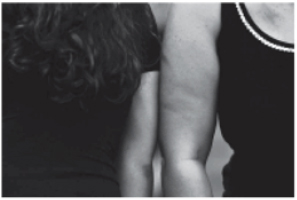
The Body as a pulse
O corpo como pulso
El cuerpo como pulso
Flavia LibermanI,i
ICurso de Terapia Ocupacional, Departamento de Ciências da Saúde, Universidade Federal de São Paulo, Campus Baixada Santista. Avenida Dona Ana Costa, 95 Vila Mathias, Santos, SP, Brasil. 11.060-001. <estudiofla@uol.com.br>
Translated by Carolina Silveira Muniz Ventura ]]> Translation from Interface - Comunicação, Saúde, Educação, Botucatu, v.14, n.33, p. 449-460, Jun. 2010.
ABSTRACT
The body is the focus of many studies and interventions. Some paradigms conceptualize the body only in relation to its motor-sensory characteristics, while others prioritize its psychological dimensions. With the aim of contributing towards formulating other perspectives within this field, some aspects of Stanley Keleman and Regina Favre's conceptualization of the body are presented here. Starting from clinical situations during seminar groups, we can take the body to be a multifaceted multimedia pulse that is continually [de]constructed through encounters. Together with the author's clinical experiences as an occupational therapist and teacher or undergraduates, these conceptualizations serve as a guide to clinical practice that is thought out, constructed and balanced by the body, using body approaches to promote encounters molded by affections and events, in an attempt to create bodies capable of sustaining the lived intensity of experiences, and which enable self-observation, closeness to other people and production of singularities.
Keywords: Body conceptualization. Occupational therapy. Clinical practice. Group device. Subjectivity.
RESUMO
O corpo é foco de muitos estudos e intervenções. Alguns paradigmas o concebem apenas em seu aspecto sensório-motor, enquanto outros transitam prioritariamente por uma dimensão psicológica. Procurando contribuir para a formulação de outras perspectivas no campo, apresentam-se aspectos da concepção de corpo de Stanley Keleman em ressonância com os estudos de Regina Favre. A partir de cenas clínicas em grupos de seminários, podemos pensar o corpo como pulso, multimídia, multifacetado, que se (des) constrói permanentemente nos encontros. Articulando experiências clínicas da autora como terapeuta ocupacional e docente da graduação e em grupos de estudos, essas concepções servem como guia para uma clínica pensada, construída e balizada pelo corpo mediante utilização de abordagens corporais para a promoção de encontros plasmados por afetos e acontecimentos, na tentativa de criar corpos que possam sustentar as intensidades vividas e permitam a observação de si, a aproximação com o outro e a produção de singularidades.
Palavras-chave: Concepção de corpo. Terapia ocupacional. Clínica. Dispositivo grupal. Subjetividade.
RESUMEN
]]> El cuerpo es foco de muchos estudios e intervenciones. Algunos paradigmas lo conciben sólo en su aspecto sensorio-motor mientras otros transitan prioritariamente por una dimensión psicológica. Tratando de contribuir para la formulación de otras perspectivas en tal campo, se presentan aspectos de concepto del cuerpo, de Stanley Keleman en resonancia con los estudios de Regina Favre. A partir de escenas clínicas en grupos de seminarios, podemos pensar el cuerpo como pulso, de muchas facetas, que se (des) construye permanentemente en los encuentros. Articulando experiencias clínicas de la autora como terapeuta ocupacional y docente de la graduación y en grupos de estudios, estas conceptuaciones sirven como guía para una clínica pensada, construida y orientada por el cuerpo mediante el uso de planteamientos corporales para la promoción de encuentros plasmados por afectos y acontecimientos, en la tentativa de crear cuerpos que puedan sustentar las intensidades vividas y permitan la observación de sí mismo, la aproximación con el otro y la producción de singularidades.Palabras clave: Conceptuación del cuerpo. Terapia ocupacional. Clínica. Dispositivo grupal. Subjetividad.
Introduction: first beats
Man is an organism under self-construction1.
Keleman (1992, p.16)
]]>
The body shrinks, bends down and closes itself by the front, producing pain, sometimes unbearable, on the back. Following this position of a certain crushing of oneself, the palms of the hands press the face and knees, which get close to each other as if to hide, conceal something of the nature of intimacy. In addition to all this movement, we see an arm, as if it were punching, trying to squeeze the viscera of the belly, in a trace of aggressiveness against that body, against that life that wants to express itself, talk about itself, become a presence.
Through the body, the participant can feel a very intense emotion of shame, making other remembrances emerge, intense memories of scenes in which she was teased, little valued in a family dynamics in which men think and act as if they knew everything, and women (still girls) have little to say.
"Try inhibiting a little these hands that squeeze""try inhibiting this state gradually", suggests Favre2.
The proposal is to approach the deepest layers, what affects, erodes and constructs in this particular existence. "Note that you contract your belly so much that your pulse slows down", adds Favre.
There is no space left; the movement is reduced, producing a sensation of emptiness, of disempowerment that reverberates in different situations of encounter with oneself in one's productions and in placing oneself in the world.
The entire group follows attentively that event that triggers the emergence of other scenes:
]]>Felícia3, for example, tells that when she was a child she was a skinny, foreign girl; she recalled moments when she was at the school break and she was also teased by her colleagues due to her strange name, her "foreign" characteristics. This situation is related to a dream that had emerged in one of the previous meetings, about fear of dogs of the Rottweiler breed, a metaphor of an experience connected with violence and aggressiveness.
Based on this account, the participant talks about her fear of getting close to, of mixing with, of relating to others, which sometimes produces a distant body that fades because it is afraid of falling apart, of falling into emptiness, of "being eaten by the dogs".
These are two among so many scenes that take place in the so-called Experienced Seminars4, which enable, once more, by means of the follow-up of experiences of different subjects in that group, to think, live and reflect on how people relate to one another and express themselves through their bodies, the encounter with other bodies, with other worlds.
Considering the emotional aspect as a relational or bond element, Keleman's theory (1996, 1992) is quite powerful to explain it, as we can understand - as exemplified in the scenes presented at the beginning of this text - that the construction of an anatomy happens based on the types of bonds and degrees of lubrication of relationships that produce the most varied bodies through experiences in the world.
The construction of these bodies, or rather, their modes of functioning are effects of many factors: culture; genetics, with its aspects connected with heredity; the subject's life and the experienced events; the types of bonds established throughout an existence; and the subjectivity that accompanies, molds and guides certain modes of functioning of the bodies and of life in a certain time/space, among so many other aspects.
We highlight the singularity of the so-called formative thought of the author: what sustains the production of the most varied bodies is the human form, heir of evolution, of embryogenesis and of experience, "constituting somatic forms that are, in themselves, operators of environmental, physical and affective conditions" (Favre, 1987, p.13).
As Keleman (1996, p.9) would say: "according to my somatic perspective, human afflictions, emotional and psychological, emerge from a somatic-emotional basis, which is evolutional by principle - and not strictly social or parental in its origin".
Favre also highlights the need to apprehend the world as a relational ecology, characterized by bonds and affectivity, inaugurated, according to the author, by the warm-blooded animals.
It is necessary to remember that the bond is related to the connective capacity of the subject and his surroundings, a capacity that extends in many directions, paths and ways, producing bodies that are live expressions of a continuum of these processes.
]]>Events in the Formative Process Laboratories
The television screen displays a group participant delivering a speech to an audience about some elaborations made from her experiences in the Seminars. After the end of the projection, the participant says that she does not recognize herself in those images: "It is as if I were in a trance. I can't recognize a dimension that is closer to the size of my body in space: sometimes I feel bigger than I am, and sometimes I feel smaller, much smaller in certain environments and situations." The group comments on how difficult it is to inhabit a body, to be present in this body, here and now. To be present in the body and in life5.
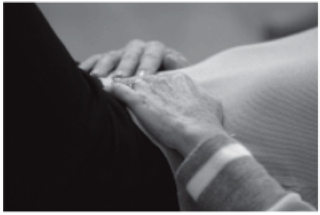
How not to belittle oneself in a restrained body while coping with some of life's situations? How to potentialize this body through encounters that enable, step by step, a greater appropriation of oneself, like someone that goes towards the worlds seeking to construct them and tear them apart permanently, in search of more power? How not to be more, but also not to be "less", as exemplified in this particular case?
The analysis of this account reveals the important contribution of Keleman's perspective to the access to solidly constructed forms, in the attempt to, minimally, tear them apart and, from this, create bodies that can support the experienced intensities, which allow, above all, approaching the other.
That is, it is impossible to conceive bodies and behaviors separately from the environments that produce them and that are produced by the subjects and their actions and presences in the world.
]]>The body as a pulsating pump
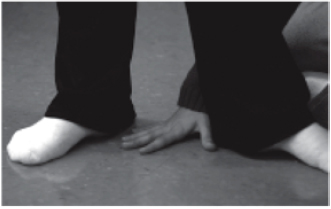
To understand the density of Keleman's ideas it is necessary to experience the method, or at least to exercise what he calls act of bodying, which means to make oneself present in an experience. However, it does not mean "being conscious" of acts or states lived in the body as something that happens separately from me - an object to be watched by the subject/spectator -; rather, it means living and incarnating here as an intense form, the fruit of the excitatory processes that happen in this body.
To Keleman, the body functions as a pulsating pump, and the pulse is the fundamental principle in the organization of the organism and in the maintenance of life. To him, there is, in the living being and in the human body, a pulsating pattern that organizes the tissues as pumps: one tissue connected with another one creating tubes, cavities and spaces that communicate with each other by means of membranes and layers, which are also open to connections; the body is a process constructed in a rhizomatic architecture.
One of the fundamental elements that can be perceived in living matters is their pulsatile organization, their capacity to expand and retract, to elongate and to shorten, to swell and to wither. In fact, when we observe a unicellular organism, we can already verify a pulse. A unicellular organism that originated the multicellular one that will maintain the same pattern, producing a more complex organism (man) who continues sustaining a vital pulsation. "This is our metamorphosis: from rhythmically pulsating cells to a multimedia, rhythmically pulsating organism" (Keleman, 1992, p.19).
So that the beings organize themselves in this pulse, the body is made around a series of spaces that allow the passage of liquids, where the circulation of nutrients and substances takes place, substances that will be processed, transformed by the metabolism, retained or expelled - if they are useless or dangerous to the organism.
These exchanges, in the body and in the relationship with the environment, refer to chemical elements, but also to affections, to everything that is formed by means of experiences and encounters - an idea that is fundamental in the clinic.
]]> Keleman (1992, p.16) says:We bathe ourselves in an ocean of liquids to perform the exchange of chemical nutritional elements and to return to the world what has been transformed. In the same way, we absorb emotional nutrition from the world that surrounds us to nourish ourselves and exchange with the other what we form. We exchange germinal cells and experiences, as well as carbon dioxide and oxygen.
To perform these exchanges with the world, the body also has mobile passages and tunnels that generate an interior and an exterior. These passages contain spaces for specific activities, like the mouth for chewing or decomposition. There are also spaces and cavities that have other functions, with a diverse type of motility or peristalsis that transforms what passes through them, like the lung-breathing, where gases circulate; the stomach-digestion, where the nutrients circulate; or the brain, where information circulates.
The body is constituted, in fact, by a series of tubes and layers: the vascular one, the neural tree, the digestive tract, among others. To avoid the collapse and ejection of our internal contents, expansion and contraction need a support that is performed through chambers and valves that maintain the peristaltic rhythms against gravity and, thus, allow exchanges with the environment.
We are excitation, attempts to deal with the force of gravity (atmospheric pressure) and with all the affections of all bodies.
According to Keleman (1992), based on the view of embryogenesis, the body is composed of three types of layers: an internal one, an external one and an intermediate one. The external layer, of skin and nerves - ectoderm - is responsible for communication. The intermediate one, formed by muscles and blood vessels - mesoderm -, provides support, enables locomotion and, above all, molds the inherited and lived forms; the internal layer, of organs and viscera - endoderm -, is responsible for nutrition and basic energy. These layers are in contact, enabling a connection between interior and exterior, clearly revealing the interconnection of the tissues.
An image of these exchange processes is in a video5 that approaches life on Earth and the paths taken in evolution, from the unicellular organism to man. One of the scenes of this documentary shows a frog that, when it passes its foot in front of its face/body, it extracts a layer of skin/membrane, constructing another body to itself. Our body also experiences permanently this process of change of skin, membranes, modes of existence.
This image also stresses what the perspective does not point as a question (skin loss, for example): the eternal process of becoming, movement understood as flow, becoming present at each new encounter, changing skin, always having the possibility of incarnating new modes.
In relation to the subjectivation processes, it is the encounter with the other in his alterity and the disturbances caused by this other as a living presence in me, based on permeability, availability, on the most varied conditions and, especially, on the possibility of bearing the turbulences produced in these processes, of engendering new modes that ask for passage, expression and invention.
]]> In view of the complexity of these processes, it is important to highlight that they are, many times, very slow in their temporality, which makes their effectuation in contemporary subjectivity become complex. This requires from the subject, more and more, speed and the creation of the new at any cost, causing a symptomatology that is typical of our time.In response to all these demands, the instantaneous time of the global world offers us easy solutions called fast forms, which are all types of objects and services that are for sale, subjective edges - modes of dwelling, dressing, thinking, relating to others, imagining, loving, functioning and generating life histories. These models are as easily assimilated as fast food. They apparently save anguish, effort and the required time to construct one's own repertoires (menus) of being and living in the world from the necessary digestion of events (Favre, 2007).
Thus, Stanley Keleman's idea of Emotional Anatomy needs to be understood simultaneously as a philosophy, a biology, a pedagogy, an ethics, a clinic, an esthetics, a possible ally in the micropolitics of resistance against the capture of the industry of behaviors (Favre, 2007).
The body: expansions and contractions, breathings of the living being
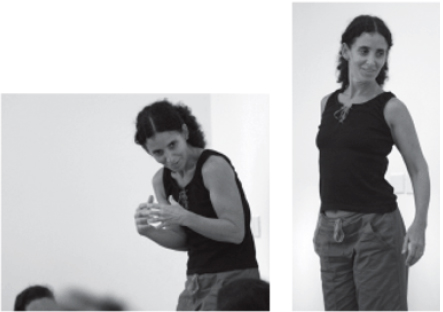
To Keleman (1992), a conflict in the processes of approaching and distancing in relation to the world can happen. For example: we can overexpand ourselves and lose the capacity to retreat, or we can recoil and lose our capacity to expand. In these conditions, the amplitude of cellular pulsation starts to decrease, affecting what he calls feelings, thoughts and actions and, therefore, determining our modes of functioning in the world, our relationship with other people, our production of subjectivity.
According to the author: "We go out towards the world and come back in an unending cycle […]. We move towards it to project and we retreat to introject" (Keleman, 1992, p.29).
]]> In a very poetic way, Safra (2004) reiterates that it is necessary to meet the other, but it is fundamental to return to loneliness. It is necessary to reach and retreat, to come and go, to live in order to die.Another idea inspired by studies that reflect on the pulse refers to the fact that the shades and, therefore, the degrees of power (Rolnik apud Liberman, 1995) of a body depend on feelings, states, actions that are performed in the encounters, on the body's capacity to make connections, on the capacity to, based on experiences, create bodies, sustaining intensities, redesigning and scripting itself continually.
More than perception, these processes are linked to a state of presence in the production of events, where self production and body production are inseparable processes.
A body crystallized in a certain form, for example, too stiffened or too dismantled, fixed in a certain "place", impedes that it receives and becomes sufficiently porous to the affectations that can establish richer forms of responding and co-creating the events experienced during an existence. Inversely, the bodies can be so excessive and continuously porous that they are swept by events without being able to assimilate and sustain the experience. The effect of these encounters, of the exchanges that are performed, enables the bodies to format themselves in line with the singularization processes.
A clinic of encounters among bodies: articulations with Keleman's and Favre's perspective
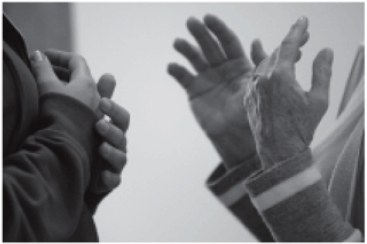
In the searches that emerge in my professional practice as an occupational therapist, I have found, in Keleman's perspective - particularly in the book Emotional Anatomy (1992), the work that guides the Seminars coordinated by Regina Favre -, some instruments that bring a comprehensive and complex conception of body, contributing to the questioning, reflection and reading of the bodies that are observed and followed up in my clinic. This conception is materialized by means of laboratories, courses or workshops which, independently of their formal designation, are held in different configurations that vary according to the participants' number and characteristics, to the duration and number of encounters, repertoires, etc.
]]> Among the several problematizations, we can highlight: how can the clinic provide the people we follow up with experiences that enable to amplify the encounters, expand connections with the world and the experience of other modes of functioning in the environments?In these groups, different experimentations are carried out, sometimes individually, sometimes in groups, utilizing dynamics that involve music, photography, literature, dance movements and role playing, among other resources, aiming to produce a sensibility change: greater attention to the vital pulse, to the contacts with oneself and the others, to the permanent construction of more singular modes of existing, which resist the attacks and social models that restrict and/or impoverish what the body can do, its potency.
Influenced by Keleman's and Favre's conception - besides a repertoire connected with dance and body studies, occupational therapy, philosophy, psychology and arts, among others -, I attempt, in my clinic, to enable different states, body postures, proposals, positions in the spaces and relationships among participants. A fertile field to experience varied situations is produced.
In a workshop, the participants walk across the room in different directions. Every time the music is silenced, a way for the bodies to touch themselves is proposed: hand with hand, foot with head, head with knee, back with back, buttocks with buttocks and so on. Encouraged by the encounters, some participants start to suggest other improbable possibilities of closeness, causing laughter, strangeness, confusions. Each time, new compositions of bodies are formed, in pairs, groups of three, four or even larger groups. This dynamics, as in other moments, resemble a kaleidoscope, which can surprise us at every new combination6.
In another context, the participants, while walking across the room, experiment different forms and rhythms, change the eyes' position, looking ahead, looking at the floor or at the ceiling, closing and opening their eyes at each situation. It becomes clear that each change in form changes the experience.
I also ask them to exchange impressions, to talk about their sensations, in this and in other exercises, showing, at all times, that the responses the bodies delineate at each affectation are singular, as well as each experimentation of oneself with/and in the environment. To Favre, the body is a processor of environments, that is, focusing on its form always produces some kind of mobilization, altering the power game that crosses that event and creating other developments.
Sarah says, like in other encounters, that she is tired of being treated as a crazy, sick person. She says she wants to change. Her body, which has been bent down by life for a long time, shows that the events have been molding it little by little. When Sarah speaks of her anguishes and fears, she lowers her eyes to the floor. She finds it difficult to look me in the eyes. As she narrates facts of her relationship with her sister, who keeps telling her all the time that she does not do anything, that she stays in bed, she only smokes, etc., Sarah bends her body more and more over herself.
Little by little, in the midst of so many other procedures and suggestions, I ask Sarah to try and raise her chin a little bit. A small gesture of movement, a change in position. Sarah is able to look at me. She fixes her feet on the floor and hits them in a kind of tap dance. "I need to strengthen my legs". She adjusts her shoulders, landing them on her body, and delicately raises her chest. In this position she is able to look at me and at her surroundings.
]]> We tried many times to raise and lower the chin. To look at the floor, to look ahead, to look at the floor, to walk across the room arm in arm like two old friends, observing the objects, feeling our feet on the floor, trying other ways of making the body function and, maybe, of handling life. At one point, Sarah says: "I'm afraid" of changing places. We make a pause.
I think that it is in the encounters that different degrees of opening, different degrees of intensity are expressed and produced; turbulences happen, other existential repertoires are generated and solidified. Small events can reverberate in other ways of functioning, living and presenting oneself in the face of the other, creating realities.
As we can observe by means of the presentation of the scenes, with the experimentations that I have been making in laboratories, courses and workshops, I am not satisfied by a reading of the events that cross the bodies based on a paradigm that conceives the body only in its sensory-motor aspects, nor by readings that conceive the body mainly or only in its psychological dimension.
The stories that emerge from certain exercises, and which enable the subject to get closer to himself - for example, touching himself or slowing his own gesture to be able to incarnate it as an act that expresses a body - show that, in some situations marked by a certain opening, it is possible to access very deep layers of the subject.
In many moments of the work of students' education, and even in moments at the clinic with different populations, the participants reanimate, many times, intense sensations that make them "remember in the body" very strong events from other moments of their life. Or they revisit experiences in which they felt affected and involved by the group atmosphere, by the proposal and by the possibility of getting close to less rational territories. The body proves to be surprising, producing original responses evidenced by speeches, astonishments and contacts with an entanglement of emotions, which allow the subject to recognize himself as being alive and under permanent transformation.
To analyze a series of clinical events, I approach Keleman's ideas again. In his clinical practice, he observes the relationship between emotional conflict and distortion of body posture. These postures are constructed from the experiences and contacts that are established throughout a lifetime.
In Emotional Anatomy, Keleman offers another paradigm: "the body as the headquarters of every experience and the (trans)formation of the organism as a strategy of vital pulsation in view of existence" (Favre, 1992, p.10).
To Favre, the author understands the organism not based on the organs - which would restrict the understanding about the processes by means of which a particular existence takes place -, but as an environment that constructs form permanently in the maintenance of a vital pulse. This also means that we construct and lose body during our whole life.
According to the author,
]]> Keleman thinks of the body as a tissue architecture, genetically programmed, finite, under permanent construction and deconstruction, pulsating according to affections, with its chambers and valves, always looking for more life, inflating, thickening or hardening according to the degree of tolerance to the rhythms of the excitement generated by the experiences of love and disappointment, fear or aggression, agony or pleasure. (Favre, 1992, p.10)
Due to all this, I am convinced that a perspective that investigates the encounters among bodies is necessary, through what is visible and what is invisible, what is perceptible and what has not become expression yet, that is, considering the body a crossing of stories, intensities, affections, forms that are permanently dismantled and configured, always in the future, always in peregrination.
Based on these considerations, we can understand the world as a plural place, the stage of happenings in the body itself, based on the relations that are engendered in the space/time context, permeated by the affectations and relationship modes produced in the encounters. In addition, the body is seen as an environment within an environment, which, in turn, is inside another environment; layers infinitely intertwined in communication networks.
In this context, it is necessary to agree with Keleman when he states that the anatomical studies tend to use two-dimensional images, losing what has been lived. On the other hand, psychology, which is committed to the study of emotions, commonly lacks anatomical comprehension. Without anatomy, there are no affections. Events, in us, have a somatic architecture. Therefore, thinking of the body means trying to touch it in its different dimensions, understanding it as processes that try to give shape (always transitory) to intensities, embodying experiences.
Moreover, we can say that Keleman allies the study of biology, of the body-matter, to the questions of life - from the unicellular to the multicellular, an organism is understood as alive and continually affected by the other (human or not), whom/which continually obliges it to alter the maps that guide the forms of living, doing things, relating, creating other modes and repertoires which, in turn, constitute other maps that are once again affected, dismantled, reconfigured.
Considering the strength with which subjectivity imposes certain modes of functioning that involve, among many aspects, the subject's relations with himself, with his body, in view of the other, in the individual and collective scope, the subject many times sees himself meeting certain demands in relation to his image in the world. However, according to Keleman, there is no "normal" or ideal subject, but singular experiences; and each subject, having a mixture of all the dimensions mentioned above and with the genetic tendency of formatting him and creating a body, fulfills his own existence.
This proposition seems to be theoretically evident, but in the clinic, in the groups I follow up, in the contact with undergraduate students, I observe that it is very important to inaugurate, in the interventions, the need to perceive the other, to recognize the multiplicity and singularity of bodies/lives and of modes of existence that oppose the homogenizing notions of regulation - which produce idealizations about the modes of being, thinking and acting in the world, sometimes producing uneasiness or diverse symptoms, when one lives in difference, in turbulence and, particularly, when we let themselves be affected by everything that touches us in the production of lives that are more interesting, more potent, closer to our desires.
According to Favre (2004, p.76),
]]> Furthermore, to the author, this other, the different, has the characteristic of presenting himself (or itself) as a stranger, a problem, sometimes an excessive challenge, which makes you experience something that does not fit the so-called repertoire of existential forms with which to respond, and which obliges you to create a self that did not exist before so that you can relate to others, do things, survive (Favre, 2004).We start to perceive that the other is not only someone or something that you respect or not, in a democratic attitude or not, in the same way that reality is neither a background nor furniture within which you move and place yourself. Rather, the other are events of every sort, economic, political, social, cultural movements, technological innovations, modes, fashions, behaviors, values, war - everything being done and undone, everything mixing.
In this direction and in line with the experiences conducted in the Experienced Seminars, I can say that the laboratories that I hold as an occupational therapist function as a place that provides the experience of the encounter with the other, and, simultaneously, one's experience of oneself as a living and present body, because many times, it is the body, before anything else, that is revealed as the other, the stranger in us.
Thus, the diversity and production of difference, through the resources that we have, serve as an opportunity to create resistance against serialization. The body, too, due to its "concreteness" and its creative and self-construction capacity, continually allows us to experience these questions very clearly.
The forms that the bodies assume in every moment and in every situation, the different manners of the subject's participation in one proposal or in another one, the words that accompany his experiences in the world constitute elements that reveal and, at the same time, produce diversity and realities.
When we are able to experiment, in the body, HOW we do, feel, shape in our mold the events that affect us, and when these are supported by the subject, by the group and by the work that is constructed there, significant changes can be produced in the modes of functioning.
It is necessary to mention that this group work represents powerful and effective intervention ways. After all, small actions, gestures, approaches, words and, above all, sharing with a group can reverberate, sometimes with great intensity, in a kind of contagion, transforming the entire group in a "resonance box", as the occupational therapist Maximino (2001) tells us, and can function as a device, as analyzed by Barros and Benevides (1996) - when they produce an active effect, discharging something at each participant, at the relations between them and in the group, they give rise to individual and collective productions, expressed in diverse elaborations: text productions, questionings, production of images and dreams, the will to engage in some project, changes in relation to the reading of people and the world, experimentations in relation to the modes of relationship in different spheres of existence, among others.
Final remarks: living is always a bodily act
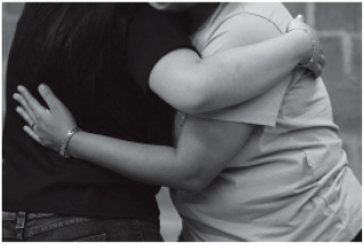
We can say that everything we live is somatic activity, amplifying the restricted and split view according to which working on the body means only doing a physical activity, like gymnastics or sports, towards an understanding that we are all the time dealing with bodies in formation, constructed and reconstructed in detail, with subtlety and in a refined way in each experience, in each encounter.
The ideas presented here and strongly supported by Keleman's thought about emotional anatomy require that we make a reading of the body as multimedia, multifaceted, strongly implicated within a contemporary conception of life; but the most important in this perspective is the disruption of any dualism that we have already inherited: mind/body, body/words, empirical/intensive, organic/field of forces, among others. Perhaps it is exactly due to these provocations that many times we feel estrangement, uneasiness and unrest concerning some of his conceptions.
This is an existential practice; otherwise, it would not make sense adopting it as reference to reflect on the practice I perform, which has, in its core, the importance of the group, of the other, of encounters as a practice that is mainly relational. It would be like theorizing about life, without in fact living. Therefore, the power of a clinic based on encounters among bodies, supported by the idea of living, dynamic and mutable processes, is precisely in this condition of thinking, creating, giving possibilities to the subject for him to form other realities in this world based on his relations, his capacity of establishing connections and producing realities that are closer to desire and affirmation of life.
REFERENCES
BARROS, R.D.B.; BENEVIDES, R. Dispositivos em ação: o grupo. Cad. Subjet., n.esp., p.97-106, 1996.
FAVRE, R. Um agenciamento conceitual para honrar e estimular a biodiversidade subjetiva: um modo político de ensinar e experimentar a Anatomia Emocional de Stanley Keleman. Laboratório do Processo Formativo, julho, 2007. Disponível em: <www.laboratoriodoprocessoformativo.com>. Acesso em: 31 mar. 2009.
]]>______. Viver, pensar e trabalhar o corpo como processo de existencialização contínua. Rev. Reichiana, v.12, n.13, p.75-84, 2004.
FAVRE, R. Apresentação In: KELEMAN, S. (Org.). Anatomia emocional. São Paulo: Summus Editorial, 1992. p.9-10.
______. Apresentação. In: KELEMAN, S. (Org.). Corporificando a experiência: construindo uma vida pessoal. São Paulo: Summus Editorial, 1987. p.11-14.
KELEMAN, S. Amor e vínculos. São Paulo: Summus Editorial, 1996.
______. Anatomia emocional. São Paulo: Summus Editorial, 1992.
]]>LIBERMAN, F. Delicadas coreografias: instantâneos de uma terapia ocupacional. São Paulo: Summus Editorial, 2008.
______. Danças em terapia ocupacional. São Paulo: Summus Editorial, 1995.
MAXIMINO, V.S. Grupos de atividade com pacientes psicóticos. São José dos Campos: Editora da UNIVAP, 2001.
SAFRA, G. A po-ética na clínica contemporânea. São Paulo: Idéias e Letras, 2004.
i Address: Avenida Dona Ana Costa, 95 Vila Mathias, Santos, SP, Brasil. 11.060-001. ]]> 1 All the quotations were translated into English for the purposes of this paper.