Transgênicos: a competitividade internacional do Brasil e novas formas de coordenação
John Wilkinson
Translated by Enrique J. Romera
Translation from Estudos Sociedade e Agricultura, Rio de Janeiro, v.12, n.1, p.95-127, Apr. 2004.
This article compares Brazil's export competitiveness with both the US and Argentina in the second half of the '90 when both these latter countries had widely adopted transgenic crops, particularly in the case of soja and to a lesser extent for corn. It demonstrates that even without using GMOs, Brazil increased its international market share and showed itself competitive in both yields and costs. A review of the available literature further shows that there is no conclusive evidence of the benefits to be derived from this first generation of GMOs. These conclusions suggest that, rather than lobbying for the use of GMOs, Brazil should focus on impact studies and the development of segregation and identity preservation systems which would permit co-existence between GMO, conventional and organic production systems.
Key words: GMOs, international competitiveness, regulation.
RESUMO
Este artigo compara a competitividade internacional do Brasil, Argentina e Estados Unidos na segunda metade dos anos 90, quando os dois últimos países tinham adotado largamente transgênicos em soja e, em menor grau, em milho. Mesmo sem transgênicos, o Brasil aumenta a sua parcela do mercado internacional nesse período e mostra uma competitividade tanto em rendimentos quanto de custos. Uma resenha da literatura indica, ao mesmo tempo, que não existe evidência conclusiva das vantagens dessa primeira geração de transgênicos. Assim, em lugar de o país se concentrar num lobby para liberar transgênicos, seria melhor se focalizar em estudos de impacto e na montagem de sistemas de segregação e preservação de identidade que permitiriam uma coexistência entre transgênicos, convencionais e orgânicos.
Palavras-chave: transgênicos, competitividade internacional, regulação.
Introduction
The Brazilian Government and almost all sectors of the Executive, most of the scientific community and the associations representing agribusiness (Abrasen, Abia, Abag) defend the legalization of GMOs as a precondition to Brazil's continued export competitiveness in the cereal and vegetable oil markets (and other productive chains, such as cotton, which we will not analyze here). Groups opposing GMOs defend the non-legalization of GM seeds even for reasons of competitiveness, pointing to the European and Japanese increasing preference for conventional grains.
]]> In this article, we analyze surveys that deal with costs, productivity and access to markets. At the same time, we try to put arguments into the widest of contexts, regarding the transition to quality agri-food markets and consequently the segmentation of large commodity chains.Opponents of GMOs see the pressure exerted by large agrochemical companies and traders in favor of the liberation of GMOs in Brazil as a strategy, which aims at irreversibly mixing the conventional and GMO cereal and vegetable oil markets, making choices of supply impossible, and at the same time avoiding the cost of segregation systems and identity preservation. In the short term, declarations by agricultural federations/unions and the evidence of strong lobbying tend to confirm this point. However, two factors must be taken into account, which point to a new dynamic regarding the reorganization of the commodity market in the medium term.
First of all, European resistance to GMOs - and to a lesser extent the resistance of many other countries (35 countries now have some type of labeling for GMOs) – is increasing, not diminishing with the passing of time. We are not only dealing with opinions obtained from surveys, but with proactive decisions about alternative supply methods by large processing companies, cooperatives, the food industry and distribution companies. Brazil is favored as still being a supplier of conventional soy beans. However, faced with loss of its market share, North America, where GMOs were "invented", has started to experiment with segregation systems and offer bonuses for conventional soybean producers. The increase of smuggled GM soy or that which is planted in conditions of provisional legality in Brazil, particularly in the southern states, also stimulate certification systems aimed at maintaining market benefits.
This conjuncture trend in the commodity market regarding grain and vegetable oils destined for livestock meal and food is combined with the development of speciality crops, such as grains with specific qualities, which demand segregation systems for being differentiated products. This segmentation of the commodity sector is stimulated by the market (nutraceuticals of all types and specialized inputs for industrial purposes) and by advances in genetic improvement techniques, which include (but are not restricted to) genetic engineering. If in the meantime there is still no strong opposition to GM soy in the U.S., the fear of bio-terrorism and the contamination of the food system by the proliferation of seed trials for pharmacological GMOs (more than 300 since 1991) is beginning to worry activists and the government itself.
This combination of factors speeds up the transition to post-commodity coordination forms. Environmental and food safety considerations are causing urban regulation standards – best practices, ACCP, ISSO, zoning – to be rapidly adopted by rural businesses. Advances in biopharming have led to the speeding up of controls on rural production, which in turn, have strengthened coordination standards based on traceability, segregation and identity preservation. The United States is undergoing a new agricultural challenge regarding its competitiveness in commodities, involving both push and pull factors, which, however, does not imply the "End of American Farming".
This all represents a great challenge to Brazil. Although the large traders in the United States complain of the cost of identity preservation and segregation, even claiming their unfeasibility, they are now beginning to implement such practices due to the demand for special varieties. Brazil has also adopted such initiatives, stimulated by European and Japanese importers, and is expanding certification in certain states, such as Paraná. However, opposition groups are pressing strongly for an embargo on GMOs, and they allege that the practice of segregation systems is unfeasible. At the same time, domestic demand to stimulate the development of specialized crops remains weak. Thus, the danger lies in Brazil focusing all its energy on competitive strategies regarding commodities, while the United States, apparently badly positioned in terms of competitiveness and in its capacity to produce non-GMOs, is gaining ground in implementing segregation systems which will allow a transition to the new market of differentiated products and specialties.
Comparative performance of cereal and vegetable oil chains from the second half of the1990s
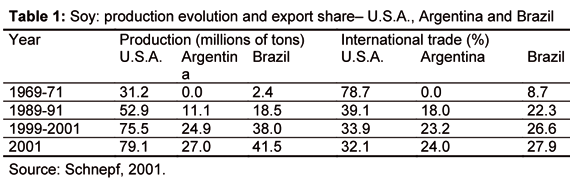
At the beginning of the 1970s, the U.S. accounted for almost 80% of the worldwide soy trade. Nowadays Brazil and Argentina are progressively increasing their share of this 80% (see Table 1). The most striking factor during the second half of the 90s, was the decline of the U.S. share in the international soy trade, despite a significant increase in the planted area. Soy is the second largest crop in the U.S. in terms of planted area, and its international trade is crucial, accounting for more than 40% of total production. North American soy was benefited by strong subsidies during this same period, which perhaps in part explains the imbalance between competitive performance and expansion of area.
]]>
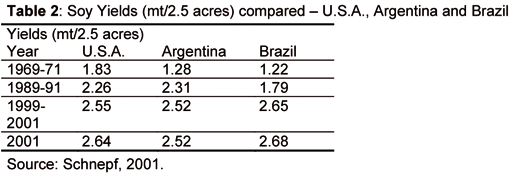
A recent study by the Economic Research Service of the USDA: Agriculture in Brazil and Argentina: Development and Prospects for Major Field Crops by R. D. Schnepf, E Dohlman and C. Bolling (November 2001) presents a clear analysis of the loss in competitiveness of North American soy. U.S. soy yields are surpassed by Brazil as Table 2 indicates, and are only slightly higher than Argentina's, despite having used GMOs for five years.
The evaluation of production costs shows a far more complex picture, but even so, confirms the problems of competitiveness faced by North American soy. Variable costs in the mid-west remain competitive, above all in relation to Brazil, but fixed costs, especially the price of land, make total production costs significantly higher than their South American neighbors, as we can see in Table 3.
]]>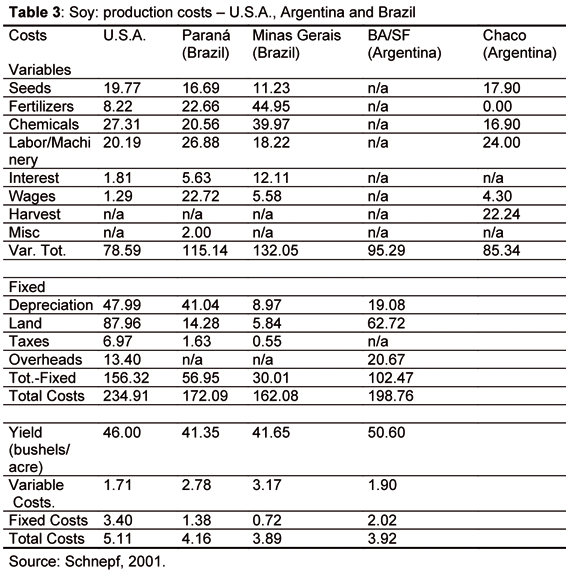
Regarding variable costs, the US has a strong advantage over Brazil, but much less of an advantage compared to Argentina. The factors, which weigh in Brazil are the high costs of chemicals and the very high interest rates. Regarding fixed costs the pattern is inverted, and the figure for Brazil is five times lower than for the United States. Argentina on the other hand, has a high fixed cost rate for the same reason as the United States – land costs. In the United States, this is worse due to the impact of subsidies, but Brazil has a qualitative advantage due to its vast plains. While a halt in US subsidies could cause a slow down in the pace of production, ever high costs of land are the result of urbanization and the competition caused by other uses of land. In contrast, in Brazil, there are still over 247 million acres of land, which can be incorporated for planting grain. Based on these yield and cost evaluations, the previous study concludes that the net income, not including subsidies, is only US$ 0.05/bushel in the American mid-west compared to US$ 0.65 in Paraná, US$ 0.69 in Mato Grosso and US$ 1.06 in Argentina (calculations for the year 1998).
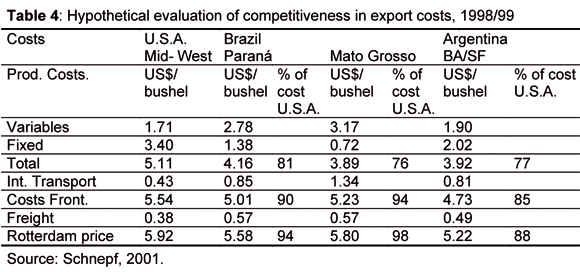
These domestic advantages of costs and yields in Brazil and Argentina have always been eroded by the inefficiency of their port and transport systems. During the 90s, however, such situation changed considerably and these systemic costs started to fall, increasing competitiveness in the export costs of both countries, as Table 4 demonstrates.
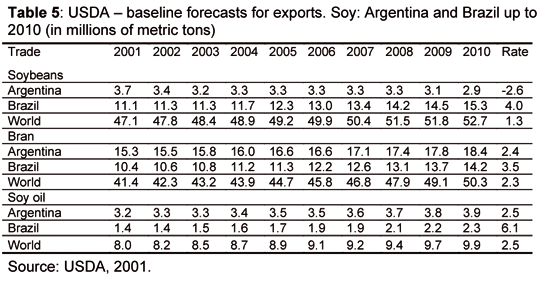
Long term forecasts by the USDA elaborated in 2001 for soy were considerably favorable for Brazil and Argentina. In the case of Brazil, the rate of growth for exports up to 2010 was estimated at 4% per year compared to a world-wide growth of 1.3%, a significant increase in market share: soybeans, rose from 22% to 29%; meal, from 26% to 28% and soy oil, from 17% to 23%. In Argentina, while soybean exports were forecast to fall and its market share to go down from 10% to 6%; meal and soy oils were forecast to maintain their market share, with 37% and 39%, respectively.
]]>
GMOs were first commercialized in the U.S.A. in 1996 and the rate of adoption was notable, reaching 68% of planted soy in 2001, and 85%, in 2004. Hence, even though this first generation of transgenic varieties with agronomic characteristics might have lowered costs, it had little impact on yields. Nevertheless, the United States' lack of competitiveness is due more to the disadvantage of fixed costs, which seem to be irreversible in the medium term. We will now deal with the motivation and adoption rates of this generation of GMOs, as well as their impacts on costs and yields in greater detail.
To understand the dynamics of international competition better, we need to take into consideration two aspects: destination and type of market. Even dealing with the commodities market, price imperfection and elasticity vary from country to country. Thus, with a given price variation, the U.S.A. maintains its markets in Mexico and Japan but loses in other Asian markets. Competition from other suppliers is much stronger in Asia where the costs involved in establishing and monitoring new contracts are lower. Proximity and the consolidation of commercial relations create immunity to price fluctuations even in the case of commodities. However, in the second half of the 90s, the U.S.A. lost part of its international market share (between 1997-98, exports dropped from 26 million to 20 million tons, in a period when total volume of commerce remained constant), basically due to lack of price competitiveness. The effect of opposition to GMOs in Europe started to be felt only at the end of the decade, and soy varieties planted and exported during the period were those approved for commercialization in the European Union before the de facto moratorium on approval of new varieties in 1998. In Table 6, which follows, we present a comparison of the development of soy imports by the European Union according to country of origin.
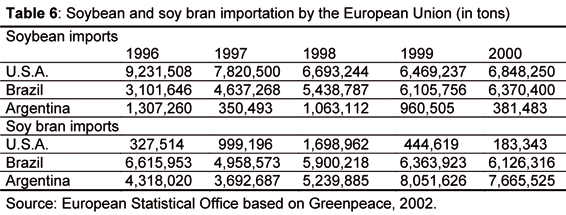
Although a more detailed analysis could highlight other factors, there is a noticeable loss of ground by the U.S.A. to both Brazil and Argentina. Argentina's advance in soy production, where more than 90% of soy is planted with GMOs, points to the preeminence of the price factor. Table 7 shows the distribution of soy exports per country and destination.
]]>
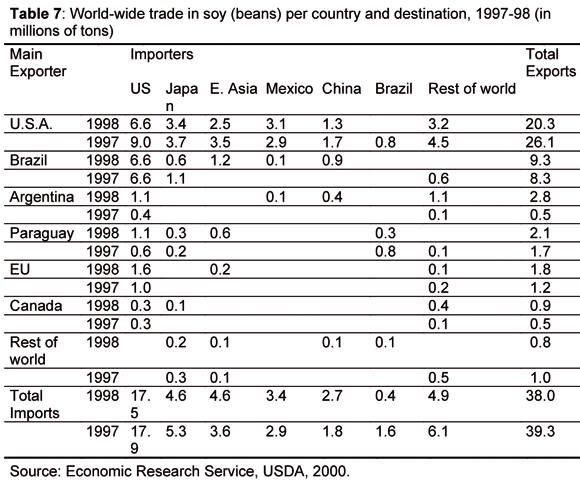
Almost the entire soy trade is concentrated between the European Union, Japan, South Korea and China and these regions are beginning to demand qualitative changes in the product. For a long time in Europe the increasing opposition to GMOs was mitigated by the authorization of imports of the main crop varieties planted in the U.S.A. and Argentina, and by the non-extension of regulations on their "derived products" (meat and milk). The opposite occurred during the "mad cow" disease crisis when demand for soy increased with the banning of livestock meal which contained animal parts (creating an additional demand estimated at between 3 and 5 million tons). From 1998, however, opposition to GMOs began to cause impact with the moratorium on the authorization of new varieties of GMOs. At the same time, a proposal by the European Commission on legislation regarding compulsory traceability and labeling was published in 2001 and approved with amendments, by the European Parliament in July 2002, becoming law in 2004. The amendments (a lowering of 1% to 0.5% of the labeling threshold) made these proposals more stringent and the organizations opposed to GMOs tried to gain even more ground (inclusion of labeling of beef and dairy products from cattle fed with livestock meal containing GMOs). This pressure for more regulation stimulated the voluntary acquisition of non-GMO supplies. Hence, during the latest harvests the soy market began to be segmented between GMO and "conventional" varieties, with bonus prices offered and the promotion of certification systems and production segregation.
In Asia, bilateral commitments to the US, such as in the case of Japan, assured the access of GMOs to these markets. However, labeling systems are being adopted by Japan and South Korea, as well as Thailand, Indonesia, Hong Kong and China which is becoming the world’s largest importer of soybeans. In all, 35 countries have already adopted GMO labeling systems, from New Zealand and Australia to most eastern European countries. There is concern in Asian countries about soy varieties because of the high human consumption of soy. Thus, before GMOs are consolidated once and for all as a single irreversible product base in the soy chain, the market is implementing segmentation categories such as: GMOs, conventional soy, varieties for human consumption and organic soy. At the same time, this segmentation is also based on the development of segregation systems for the production of special varieties (high content of soy oil and protein), whose markets are expanding.
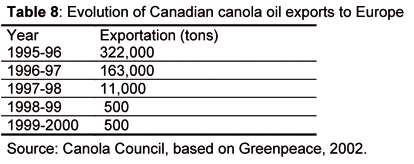
The decline in Canadian exports of canola oil appears to be in response to opposition to GMOs due to the fact that we are dealing with a more sensitive product, or one destined for human consumption. European food companies have opted to purchase non-GMOs from domestic sources.
]]> In the United States, corn is the product with the largest planted area. Unlike soy, 80% is for domestic use (61% livestock meal, 8% foods, 13% ethanol and sweeteners), with only 20% accounted for by exports. Even so, the U.S.A. dominates international trade, and is responsible for two-thirds the total volume. In the corn productive chain, the U.S.A. also lost part of its market share in the 1990s and its exports fell from 60 million tons, in 1995, to 41 million, in 1998. According to analysis from the Economic Research Service, North American corn lost market share in markets most susceptible to variation of price and less regulated by bilateral relations. Hence, while the Japanese and Mexican markets remained steady, the U.S.A. lost the Malaysian market to China, which became an exporter once more during that period.
Corn is a key-product for the GMO market and, even though it lies far behind soy in terms of adoption, around 26% of the total area was planted with BT corn in 1999, falling to 20% in the two subsequent years. Corn exports to the European Union are of little significance, but it is possible to see the direct impact of EU regulations on the reduction of American exports to Europe, and total exportation dropped from 4% to almost 0%.
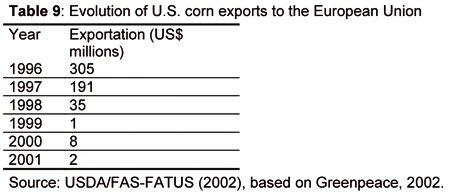
Unlike soy, some transgenic varieties of corn planted in the U.S. are not approved by the European Union. Although they represent a very small share of the total volume, exports of non-authorized transgenic varieties was the motive for delays provoked by the regulatory system, preventing this product from being shipped. The fact that Brazil is known as being a country producing non GM corn was crucial (together with its record harvests) in the expansion of corn exports, which was until very recently entirely destined for the domestic market. Brazil exported 6.2 million tons of its 2001-2002 harvest compared to 1.8 million the previous year, a volume equivalent to 60% of Argentinean corn exports. According to Pablo Molinhari, a Safras analyst : "There is a huge amount of corn in the United States at the moment. Japan and Iran can easily go to the U.S. for corn, but they prefer to buy Brazilian non-transgenic corn." (Cf. Greenpeace, 2002).
We can conclude that the loss of international market share in soy and corn by the U.S.A. during the 1990s, even with their GMOs, was mainly due to prices, reflecting a loss in cost competitiveness, which is partly hidden by the increase of subsidies, which were strengthened under the latest Farm Bill (Jank, 2001). On the other hand, at the end of the decade it was apparent that GMOs provoked segmentation in the commodities market, strengthened by trends towards organic and specialty produce. So much so, that Monsanto, faced with previously declared opposition, announced that it would not launch genetically modified wheat until regulations had been more clearly defined and until segregation systems were implanted. Such opposition comes not only from activist groups and consumer representatives, but also from the milling sector in the U.S.A., the EU and Japan. Other products already removed from the market are: Flavr Savr tomatoes, Endless Summer tomatoes, BT potatoes, herbicide resistant beetroot, Starlink corn and rice in the near future.
(www.organicconsumers.org/gefood/gewheat0802.cfm.)
Despite their strong opposition to legislation and restrictive regulations on GMOs in international forums and bilateral negotiations, traders and large primary processing companies in the commodities sector in U.S. have already began to implement segregation systems, such as the exportation of special quality soy and corn to the Japanese market (Cf. Economic Research Service, 2000). Efforts in this direction in Brazil remain weak due to lack of a strong domestic demand. Nevertheless, new competition in the international commodities market will increasingly result in ensuring segregated produce and Brazil needs to speed up its measures in this direction. Until this objective is obtained, however, not legalizing GMOs makes sense because Brazil's incapacity to meet the demands for differentiated products would restore the competitiveness of the U.S., which is advancing more quickly in this direction, despite all the support given to GMOs.
The stance not to approve GMOs in Brazil is also justified by the inconclusive results of the first generation of GMOs regarding costs, yields and resistance, given that they are varieties being planted with only provisional legal backing. As we have seen previously from the USDA analysis, Brazil has maintained its competitiveness in yields and costs. There is no need, therefore, to speed the legalization of this first generation of GMOs, and if Brazil has to approve GMOs, it would be better to wait: i) for improved varieties and ii) until after the implementation of segregation systems.
]]> The study by the OECD, Modern Biotechnology and Agricultural Markets: The Discussion of Selected Issues (2000) summarizes a series of analyses on the questions of adoption of the first generation of GMOs, and the benefits and costs to producers. Many experts have already drawn attention to the speed and widespread adoption of GMOs such as RR soy, which in four years, surpassed the rate of adoption of hybrid corn during a seven year period (Kalaitzandonakes, 1999 based on OECD op.cit). In 1999, the U.S. accounted for over 70% of all GMOs planted worldwide, and if we add Argentina (17%) and Canada (10%), the percentage reaches 97%. Table 10 indicates the increase in area planted with the main varieties of GMOs in the United States. In Argentina, around 95% of the soy planted is genetically engineered, and the product is not patented there which is an added advantage in that country, as there are no technological fees to pay and it is also possible to retain the seeds for replanting. In the case of corn the percentage is much smaller, around 20%, and all the approved varieties have been legally accepted in the main export markets.
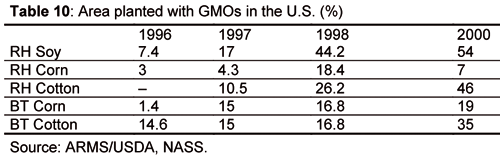
The Monsanto and Dupont companies control more than half the corn seed market and over 40% of soy in the U.S.A. Meanwhile, the CR4 for field trials on GMOs is 80%, and, in the case of patents, 44% for corn and 53% for soy. Thus, we should not ignore this concentration of the supply base while evaluating options for adoption.
The data on performance need to be treated with caution because many studies have been made by already committed researchers and much of the data is gathered from experimental fields, which do not necessarily reflect the real conditions of the crop. Taking this into account, we can summarize the conclusions of the OECD survey on soy, canola and corn. In the case of soy, the Roundup variety substituted the use of other herbicides, but although these were used in smaller doses they were applied in a combined form, which led to greater soil contamination. A study by Monsanto concluded that soil contamination was reduced with the transgenic variety and that more than 70% of those using it require only one application of Roundup. Other studies suggest that pre and post emergent herbicides continued to be used (Carpenter and Gianessi, 2000). A study by the USDA identified an important reduction in the use of herbicides in 1997 (ARMS/ERS/USDA, 1997).
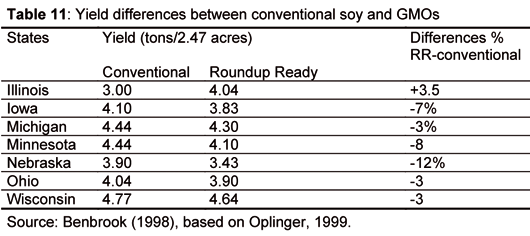
In relation to yields, a study by the University of Wisconsin covering 3,000 experimental fields involving 40 universities in eight states, showed that, on average, transgenic varieties had a yield of 4% less than conventional varieties (Oplinger et al. , 1999). The Benbrook analysis(1999) covering 8,200 university experimental fields concluded that:
a) The difference in low yield drag, between the best RR varieties and the best conventional varieties was 4.6 bushels/acre or 6.7% ;
b) An average comparison of the five best varieties in eight states resulted in a yield drag of 4.1 bushels / acre or 6.1%;
]]> c) For all the tested varieties, the yield drag was on average 3.1 bushels or 5.3%; andd) The best varieties produced by some seed companies produced average yields which were 10% higher when compared to Roundup Ready varieties.
The following Table presents the research data for eight states in more detail.
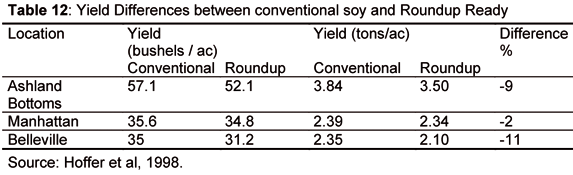
A survey carried out in Kansas by Hofer et al. (1998) showed the following results.
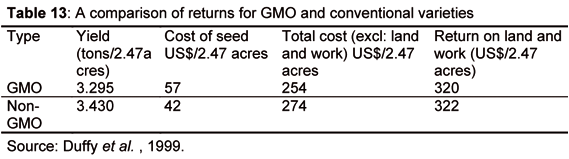
]]> Duffy and Ernst, in turn, led a survey on 800 farms in Iowa and the average soy yield was between 3.43 tons/2.47 acres and 3.29 tons/2.47 acres for those using RR soy.On the other hand, a USDA comparison of national yield estimates made from a Monsanto survey points to a slightly higher yield regarding RR varieties - around 0.3 tons/2.47 acres. The OECD concluded: "At the moment there does not seem to be any increase or decrease in yields when using RR varieties in comparison to the conventional package" (OECD, 2000: 20).
Talking on the issue of yields, Benbrook (1999: 5) makes the following comment:
Let's place the RR soybean yield drag in perspective. Soybean yields rose on average about 0,5 bushels per year from 1975-1994. The university data reviewed above suggests that in 1999 the average yield drag was at least 5%. Applying this yield drag to the approximate one-half the nation's soybean acreage that was planted to RR varieties would result in about a 2,5 percent reduction in national average soybean yields. This drop in soybean yields, if not reversed by future breeding enhancement, could emerge as one of the biggest steps backward in crop productivity in the history of the United States.
In profitability terms, the survey by Marra et al (1998), based on experimental fields, estimated a profit of US$14.82 per 2.47 acres based on calculations where less was spent on herbicides with equal yields. Furman and Selz (1998), representing consultancy firms, arrived at similar conclusions. These calculations did not include the cost of not storing seeds for replanting and the possibility of gene drift creating resistant weeds. Such profitability estimates would justify a high rate of GMO adoption, but the cost differential depended on a single application of Roundup. The net profits, calculated on the basis of a survey carried out by the Statistics Service on 800 producers in Iowa, showed equal results for transgenic and conventional varieties because the lower cost resulted in lesser yields. Another survey carried out by the USDA-ARMS found no significant statistical differences (Fernandez - Cornejo and McBrides, 2000). Table 13 explains this issue of comparative returns to the producer in the case of Ohio.
]]> GMOs account for more than 50% of canola planted in Canada but surveys revealed an unclear picture regarding costs and yields. A study by Fulton and Keyowski (1999), based on data from a survey on farms, concluded that cost reduction did not compensate for lower yields. To explain adoption under those conditions, the authors draw our attention to heterogeneity and practices carried out by farmers, which the data do not reveal.
Adoption of BT corn involves even more uncertain calculations because pesticides have difficulty in eliminating the European corn borer, once this insect has penetrated the plant, reducing the effectiveness of traditional treatments. Higher yields are obtained when this pest is better controlled, as it reduces the total production of U.S. corn by an average 5%. However, in years when there is a low rate of infestation, the motivation for adopting BT is also low. Moreover, the use of BT does not prevent the eventual need for the use of other pesticides and herbicides, which led to the development of stacked varieties of BT and RH.
Several surveys confirmed the benefit to yields of BT corn and even a reduction in pesticide use (the Universities of Illinois, 1998; Minnesota, 1998 and Iowa State, 1997). Estimates of economic benefits, taking into account yields, levels of infestation and the price of corn, vary between US$7.41 and US$39.53 per 2.471 acres, according to Marra et al. (1998). A survey which took into account accurate levels of infestation concluded that the return on the adoption of BT corn in 1997, was around US$44.48 per 2.471 acres, but in 1998 results were negative - US$4.55 per 2.471 acres (Giannessi and Carpernter, 1999). Table 14 shows the conclusions of the survey by Furman and Setz on BT corn profitability.
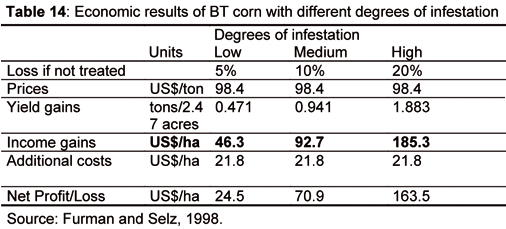
Here the surveys also showed differences in profitability calculations, but the conclusions are more positive than those for soy. How can we explain the lower rate of BT adoption and its stagnation from 2000 on? Uncertainties about infestation levels could be an answer. Another, perhaps more important reason, is the regulatory requirement of the Environment Protection Agency (EPA) which imposes the need to plant 20% conventional corn, so as to limit genetic mutations of pests (Cadot, 2001).
Based on its survey, the OECD (2000: 27) arrived at the following conclusions:
]]> At this stage strong conclusions on the economic impacts of genetically engineered crops cannot be drawn. Though expected profits are often considered a major factor in the adoption of genetically engineered varieties, available studies do not, in general, give consistent evidence of profit increases for adopters compared to non-adopters. Results vary across regions, crops and years. Increased costs of the technology are not uniformly compensated for by yield increases or reductions in pesticide and herbicide use.
Faced with these inconclusive results, the author points to the ease and flexibility of the technology in question as a probable explanation. At the beginning of the essay, the author cites the work of Fernandez - Cornejo and McBride (2000) which mentions "crop management and ease of cultivation", as an important reason for adoption (even though the main reasons identified were yields and costs). Reduction in the number and type of inputs (saving time and work) and the greater possibility of crop rotation can strongly motivate adopters, but the studies considered here do not regard such motives as being any more than complementary. Benbrook, in his aforementioned survey (1999: 8), confirms the importance of weed management in adoption decisions:
If RR soybeans cost more why are they so popular? Many farmers are tired of dealing with the complexity, cost and periodic failure of other soybean weed management systems. Despite spending more on weed management, their problems are getting harder to deal with and more frequent. Compared to other systems, the RR system is simple and resilient. It can cost more, but in some years when weed pressure is light and applications are well timed, it can save money
The advantages and disadvantages of RR soy in terms of herbicide use, however, involved several factors: ease of use, cost and impact on the environment. From the producer's point of view, many factors point to ease of use as being the most tangible benefit, although the promise of higher profits also generated expectations. As we have seen, profitability when it exists, depends on a single application of Roundup.
In relation to the environment, studies on RR soy outline the low level and shorter time of soil contamination of the active ingredient glyfosate. Studies have already shown that the use of other herbicides fell significantly when GMO varieties were planted. In the case of imazetaphyr (Pursuit), used in 17% of the soy planted area in the U.S., the decrease was over 50%. The level of active ingredient in some herbicides is much higher than Roundup. Thus, producers using soy treated with alachlor use twice the amount of active ingredient than producers using Roundup. We must take into account, however, that only 2% of the total soy planted in the United States is treated with this herbicide. The following USDA data shows the use of herbicides on soy in 1998.
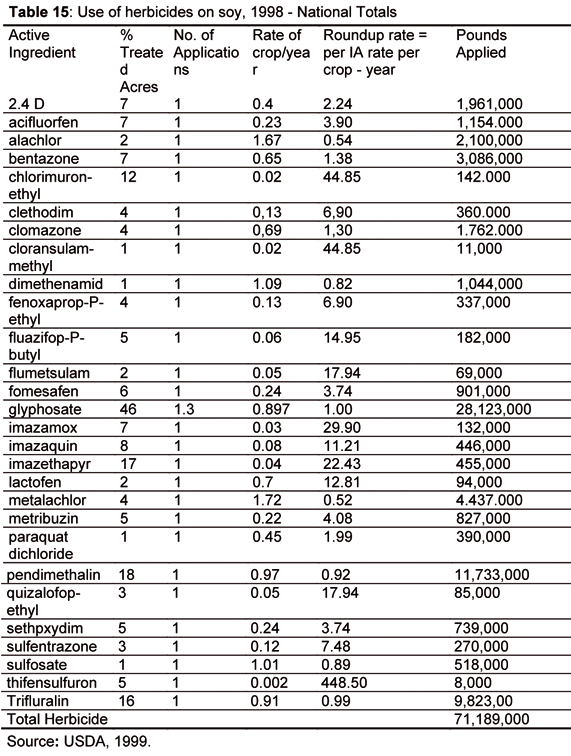
Analyzing this data, Benbrook (1999) concludes:
]]>Most farmers growing RR soybeans in 1998 applied 2 to 5 times more herbicide measured in pounds applied per acre than their neighbours growing conventional soybeans and sticking with "industry standard" imidazolinone and sulfonylurea herbicides. RR herbicide use exceeds the level on many farms using multitactic Integrated Weed Management systems and/or very low dose herbicides by a factor of 10 or more.
In Brazil, as previously mentioned, genetically engineered soy is being planted both with seeds of Argentinean origin, and ones produced illegally in Brazil. Here we show a full report (without amendments) from the internet on a study carried out in Palmeira das Missões (RS), during the 2001/2002 harvest, by the Federal University of Santa Catarina and State University of Londrina, which was based on surveys carried out at nine farms and on the information obtained at a meeting with farmers from the region, in March, 2002.
The main reason for choosing the RR transgenic soy was that it is easy to handle in weed infested areas. The farmers always cultivated a separate area with non-genetically engineered soy, and the area planted with RR soy was always more weed infested. Many of them hoped that the RR system would result in reduced weed infestation in the area planted. In some cases, farmers concluded that the RR system would be cheaper than growing conventional soybeans. In others, they concluded that due to the need for larger doses and number of applications of herbicide, that perhaps costs would not be so different. The preliminary analysis indicates that studies should be carried out to evaluate the issue of production costs in more depth.
Adaptation of supposedly genetically engineered soy: the cases of 'Mercedes 70', 'Maradona' (or Ligeirinho – "fast one") and 'FT8', developed in Argentina and evaluated at five farms, produced plants with a height of approximately 50 cms, which shows that these types do not adapt in Rio Grande do Sul. Cultivation of these types causes enormous productivity losses for the rural producers, as they are not suited to the climatic conditions of the region. This low plant height is an indication that these types were developed for regions located farther south, namely Argentina. Thus, when cultivated in more northern latitudes (in this case, Rio Grande do Sul), as the period of daylight during the cultivation period is shorter, the plants respond by budding prematurely than they would if they were being cultivated in places with longer daylight hours (Argentina). Hence, its development is reduced and the productivity low.
However, the GM soy plantation surveyed on a farm in the district of Santa Rosa, supposedly of the 'Maradona' type, was probably another type suited to the State of Paraná, with the gene resistant to Roundup (GMO) already incorporated. This is explained by the fact that the average height of the plant was 103 cms. We know that the average height of a well adapted plant varies between 70 and 100 centimeters. Therefore, soy suited to the State of Paraná, when cultivated in Rio Grande do Sul should be taller.
At the first farm visited it was seen that the Mercedes 70 soy had splits in the stalks. The splits were deep and a significant percentage of plants showed their stalks to be folded or broken. These symptoms were also observed at other farms.
A producer stated that, when Roundup was applied to the transgenic soy, the majority of plants folded by the tractor wheels ended up breaking. But he did not note the same in the case of conventional plants. These facts back up what had been observed at farms in the United States. When the soil temperature reaches 45C and during drought, RR plant stalks split more frequently compared to conventional types. This is due to a greater presence of lignin in RR soy.
The price paid for seeds varied between R$ 0.50 and R$ 4.00 per kilo. The price of Mercedes 70 and Maradona seeds was cheaper, probably due to lack of adaptation, and low productivity. However, in the meeting held with the farmers, they mentioned prices paid which reached R$ 200 per 50kg sack. We were not allowed access to this farm, because the owners would not agree to our visit. We can thus raise the hypothesis that in this case we are dealing with adapted Brazilian seeds of high productivity.
]]> At all the farms visited, two applications of the herbicide Roundup were necessary. At the meeting with the farmers, they mentioned that a single application could control only few of the weeds present. Therefore, the need for two applications of Roundup is common. The doses applied varied between 2 and 3 liters per 2.271 acres, and two herbicide formulas were mentioned: one was the conventional type, the other, a granulated formula, mentioned by a farmer. He said he was informed that the latter herbicide had to be used on genetically engineered soy, costing double the price of the former. The price of the herbicide varied from 8 to 10 Reals per liter, while the granulated formula cost 17 Reals per liter. As such, the cost of weed control in a system using GM soy is variable, however, it is not as low as is normally published by the press. Considering that the operation cost reaches 6 Reals per 2.471 acres (in that region), the cost of two applications of 2.5 liters would be 35 Reals not considering the initial cost before sowing. If we take into account that the application of Roundup causes plant breakage, at least according to those aforementioned, then the cost becomes even higher due to the low yields. However, at some farms, the applied doses are greater: 3 liters per 2.471 acres. The reason is that at least three species are not susceptible to the recommended doses of Roundup. Thus, the cost can easily go beyond 70 Reals per 2.471 acres.Another aspect that draws our attention, is the proximity of different crop types being planted on the same farm. In most cases, we noted that the cultivation of transgenic soy resistant to the herbicide Roundup, was being cultivated side by side or a few meters from conventional varieties. That is sufficient to allow crossovers between both types, and the degree of crossover between varieties of soy can reach 3%. Crossovers between GM and non-GM varieties have also been proven in experiments by researchers from Embrapa. That is, it is possible that the transfer of the gene resistant to the herbicide Roundup has already spread to thousands of plants which were not genetically modified.
In Argentina, adoption rates are still higher than in the U.S. Argentina was very precocious in the creation of institutional support mechanisms for biotechnology, when they established the Comisión Nacional Asesora de Biotecnologia Agropecuária (Conabio), the National Advisory Commission for Agricultural and Livestock Biotechnology, in 1991. The soy sector is very well structured along its chain, with top technology in the industry, active participation of the large traders and wide diffusion of advanced agricultural practices, such as direct planting. Compared to the U.S., Argentinean farmers have benefited from the non-payment of the technological fee imposed by Nidera, a subsidiary of Monsanto, and which was suspended by the Argentinian Federation of Agriculturists on the basis of the Cultivation Law. Perhaps the size of the Argentinian blackmarket in seeds is also an important factor making it difficult to impose the contractual conditions which prevail in the U.S. Nevertheless, the price of RR soy fell significantly, from US$ 25 in 1997 to US$ 9 in 1999 per 50 lb sack (GAO, 2000). During these two years, the price of RR seed came close to the price of the conventional seed. Galperin et al (2000) suggest that, in the case of Argentina, RR soy caused improvements in productivity and also had positive effects regarding the amount of agrochemicals. The report by the Commission for the Organization of Cooperatives in Paraná (Ocepar), although confirming the low cost, pointed to an increase in the use of herbicides due to the sprouting of weeds resistant to glyfosate and a rise in seed prices of approximately 20%, with the beginning of royalty payments of US$ 2.50 per bag to Monsanto (Gazeta Mercantil, 17th May, 2002).
In the case of BT corn, the adoption rate is around 20%, limited perhaps by the higher seed price and by lower rates of infestation occurring during RR soy rotation. The planted varieties are all approved by the main export markets (Schnepf et al. , 2001).
Conclusions
The literature available which we considered on the adoption of GMOs presumes that markets are predominantly competitive, players are rational and that information is both available and transparent. Another paper mentioned above (Benbrook) focuses on the oligopolization of seed supplies by an extremely reduced number of global companies. The combination of a new technical base (molecular genetics) and clear systems of ownership (patents) have led to an increasing subordination of the public sector involved in agricultural research, both in universities and Land Grant Colleges, to the priorities of private companies in relation to GMO varieties (Kenny, 1986). According to James Quick, head of the Soil and Crop Sciences Department, Colorado State University: "Most land Grant universities with wheat breeding programs, including Colorado State University, are working with Monsanto to engineer the Roundup Ready gene into adapted wheat varieties for their region." A survey carried out in the State of Iowa in 1994 discovered that, of the 545 scientists involved in corn improvement, 510 worked for the private sector. The other 35 were divided between the State experimental agricultural station and the Service of Agricultural Research of the USDA. At the same time, leading companies were buying up traditional seed companies. These two trends raise doubts about the availability both today, and even more so in the future, of non- GMO, conventional and organic varieties.
It is also obvious that the predominance of the private sector is affecting the way in which information is being spread on the availability and performance of different varieties. In the words of C. Hagedorn, professor at the Technical University of Virginia:
Traditionally, companies in the US introduce a new variety, and our Extension crop specialists (in each state where the crop is grown) then field test the new variety for at least 3 to 5 years. During this field testing process the Extension crop specialists introduce the new variety to farmers in their region and give them unbiased information (the good points and the bad points) about growing the new variety. The Ag companies get good information about the performance of their new varieties from this traditional crop evaluation process as well.
]]> With the GM crops, this traditional process has been largely bypassed mainly due to the rush to try and establish market share with the GM crops. Now the Ag companies are going directly to the farmers with contracts for growing their GM crops, and the Extension crop specialist is "out of the loop". In the US, sales of the GM crops to farmers have gone wild, and farmers all want them whether they need them or not. This is a classic case of what has been described in the literature as a situation where commercial development and marketing is ahead of the science. (www.btinternet.com/-nlpwessex/Documents/gmlemmings.htm).
Thus, both the independent testing system and the traditional flow of independent information is put to question. The same source argues that most of the data on performance is withheld by biotechnology companies and that the information transmitted is rarely accompanied by primary data. Even those who carry out performance tests on the different varieties at universities do not know if the varieties are GMOs or not. According to DeVillez, of the University of Purdue: " To determine if a hybrid (in our trials) is transgenic you would have to contact that company. That information is not supplied to us . (www.btinternet, op cit).
The issues of independent access to trustworthy information, and the choice between transgenic and conventional crop varieties, as well as the issue of the availability of conventional varieties, acquire strength as opposition to GMOs in the main consumer countries gets stronger and acquires greater institutionalization. More than 30 countries have already adopted labeling for GMOs and the EU, as well as having introduced compulsory labeling, which even applies to ingredients in 2002, is imposing traceability requirements on the major food commodity chains. Thus, the market for conventional, non-transgenic, crops will tend to grow which will demand major adaptations on the part of the main producing countries , and the need for further reflection on the role of agricultural research carried out by public bodies.
Bibliographical references
Boland, M. e Bowden, R. "Issues with Genetically Modified (GM) Food and Feed Grains", in: Agricultural Experiment Station and Cooperative Extension Service Economic, Kansas State University. [ Links ]
Benbrook, C. "Where is the Biotechnology revolution Taking Oklahoma Agriculture and will Farmers be happy when they get there?" www.biotec-info.net/okla.pdf, 1999. [ Links ]
Cadot, O. "Trade-related issues in the regulation of genetically modified organisms", INRA e Delta, dezembro, 2001. [ Links ]
Carpenter, J., Felsot, A., Goode, T., Hammig, M. e Onstad, D. "Comparative environmental impacts of biotechnology-derived and traditional soybean, corn, and cotton crops". Council for Agricultural Science and Technology Ames, Iowa, 2001. [ Links ]
DG VI. "Economic impacts of genetically modified crops on the agri-food sector: a first review". Working Document. Directorate-General for Agriculture Commission of the European Communities, Bruxelas, 2000. [ Links ]
Ekanem, E. et al Economic Risks of Genetically Engineered Foods in International Trade. Symposium: International Food and Agribusiness Management Association, Austrália, 2001. [ Links ]
Galperin, C., L. Fernandez e Doporto, I. Los Productos Transgénicos, El Comercio Agricola y el Impacto sobre el Agro Argentino, Centro de Economia Internacional, Buenos Aires, 2000. [ Links ]
Garcia, A. A. "O comércio exterior do RS em 2001". In: Indic. Econ. FEE, Porto Alegre, v. 29, n. 4, 2002. [ Links ]
Hin, C. J. A. Schenkelaars, P. e Pak, G.A. "Agronomic and environmental impacts of the commercial cultivation of glyphosate tolerant soybean in the USA", Centre for Agricultural and Environment, Utrecht, junho de 2001. [ Links ]
Lehmann, V. e Pengue, W. A. "Herbicide Tolerant Soybean: Just another step in the technology treadmill?", Biotechnology and Development Monitor, n. 43, 2000. [ Links ]
McNichol, J. e Bensedrine, J. Multilateral Rulemaking Transatlantic Struggles Around Genetically Modified Food. In: Globalisation and Institutions: Redefining the Rules of the Economic Game, Edward Elgar, 2002. [ Links ]
Marra, M. C., Pardey, J. M. e Alston, J. M. "The payoffs to agricultural biotechnology: an assessment of the evidence". EPTD Discussion Paper n. 87. Environment and Production Technology Division International Food, janeiro de 2002. [ Links ]
Moschini, G. "Economic Benefits and Costs of Biotechnology Innovations in Agriculture". Working Paper Center for Agricultural and Rural Development, Iowa State University, janeiro de 2001. [ Links ]
Nodari, R. O. e Destro, D. "Relatório sobre a situação de lavouras de soja da região de Palmeira das Missões (RS), safra 2001/2001, cultivadas com cultivares convencionais e com cultivares transgênicos", 2002. [ Links ]
OECD "Modern biotechnology and agricultural markets: a discussion of selected issues" Directorate for Food, Agriculture and Fisheries Committee for Agriculture. Working Party on Agricultural Policies and Markets, 2000. [ Links ]
Oehmke, J., Maredia, M. e Weatherspoon, D. "The effects of biotechnology policy on trade and growth", Michigan State University, 2001. [ Links ]
Parcel, J. "Economic Issues and Trends with Transgenic Crop Production", University of Missouri, 2001. [ Links ]
Pekaric-Falak, I., Meilke , K. e Huff, K. The Trade Effects of BT Corn, CATRN paper 2001. [ Links ]
Pessoa, A. S. M e Jank, M. S. "Grain Markets: a South-American Perspective", USDA, 2002. [ Links ]
Saak, A. E. e Hennessy, D. A. Planting Decisions and Uncertain Consumer Acceptance of Geneticcaly Modified Crop Varieties, Amer. J. Agr. Econ, 84, 2002. [ Links ]
Scatolin, F., Gabriel J. e Meirelles, P. e Paula, N. de. "Arranjo Produtivo Local – o caso da soja", em Projeto de Pesquisa Arranjos e Sistemas Produtivos Locais e as Novas Políticas de Desenvolvimento Industrial e Tecnológico, Coordenação dos Estudos Empíricos, Universidade Federal do Paraná, julho de 2000. [ Links ]
Schnepf, R. D., Dohlman, E. e Bolling, Christine. "Agriculture in Brazil and Argentina: Developments and Prospects for Major Field Crops", Market and Trade Economics Division, ERS, Agriculture and Trade Report n. WRS013, 2001. [ Links ]
Silveira, J. M. da. "Avaliação das Potencialidades e dos Obstáculos à Comercialização dos Produtos de Biotecnologia no Brasil", Brasília, 2001. [ Links ]
Zylbersztajn, D. "Perspectives of the application of biotechnology on the brazilian agroindustrial system: the case of round up ready soya", Pensa/USP, 1999. [ Links ] ]]>