O senado e as aprovações de autoridades: Um estudo comparativo entre Argentina e Brasil
Le sénat et l'approbation de hauts fonctionnaires: une étude comparative entre l'argentine et du Brésil
Leany Barreiro LemosI; Mariana LlamosII
IPhD, Legislative Analyst, Brazilian Federal Senate
IIPhD, Researcher, GIGA Institute of Latin American Studies
ABSTRACT
This paper assesses empirically how the Argentine and Brazilian senates performed their confirmation prerogatives between 1989 and 2003, arguing that both senates did not merely deferred to the executive branch, a common assumption on the scholarly works on oversight in new democracies. Instead, they had a more active role in which anticipation, consultation and oversight has taken place. We analysed all nominations in the two countries regarding outcome (confirmed, rejected and withdrawn) and length of process (number of days of the bill on table), and advanced some explanatory hypotheses based on political factors (divided government) and institutional features (statutory rules).
Key words : horizontal accountability ; nomination process ; Latin America ; legislatures ; oversight
RESUMO
Este texto avalia empiricamente o modo como duas câmaras altas latino-americanas – os Senados argentino e brasileiro – fizeram uso de suas prerrogativas de confirmação entre 1989 e 2003, isto é, se assumiram uma postura de deferência ante as propostas do Executivo ou um papel mais ativo, incluindo tanto a consulta como a supervisão. Para fazer isso, o artigo primeiramente analisa todas as indicações no que diz respeito ao resultado (confirmadas, rejeitadas e retiradas) e a duração do processo. Depois, as semelhanças e diferenças são usadas para apresentar algumas hipóteses explicativas. Dá-se atenção especial ao impacto de fatores políticos, principalmente as regras internas dos senados para a organização dos trabalhos legislativos.
Palavras-chave: Aprovação de autoridades; Confirmações senatoriais; Senados argentino e brasileiro; América Latina; Congresso; Controle legislativo; Accountability horizontal.
Ce texte évalue empiriquement le mode selon lequel deux hautes Chambres latino-américaines – les Sénats argentin et brésilien – ont fait usage de leurs prérogatives dapprobation de hauts fonctionnaires entre 1989 et 2003 : sils ont assumé un rôle de déférence face aux propositions de lÉxécutif ou un rôle plutôt actif, considérant non seulement la consultation mais aussi le contrôle. Nous avons, pour cela, analysé toutes les indications par rapport au résultat final (approuvées; rejetées et retirées) et le temps de toute la procédure (nombre de jours de démarches). Nous avons souligné limpact des facteurs politiques, surtout les règles internes des Sénats pour lorganisation des travaux législatifs, comme des explications par rapport aux différences et aux ressemblances dans les deux cas.
Mots-clés: Approbation de hauts fonctionnaires; Sénats argentin et brésilien; Contrôle législatif; Nominations.
1. Introduction
Along the last twenty years, a process of power concentration in the executive has taken place in Argentina and Brazil. As a consequence, the presidents of these two countries are today considered among the most powerful in the region, especially because of the proactive legislative powers that the constitutions of 1994 and 1988, respectively, have granted them.1 In effect, they are not only entitled to legislate unilaterally through decrees, but have the power to initiate legislation as well as other prerogatives, such as vetoes, urgency calls (Brazil) and agenda setting.2 Thus, there is little scholarly contention on who holds the legislative initiative in these countries.
In contrast, the characterisation of the Argentine and Brazilian congresses as reactive legislatures was not established without debate. There are different patterns of Congress reaction, ranging from subservient legislatures (and dominating executives) to a more active congressional role, one that forces presidents to make concessions, bargain, and anticipate congresses' preferences.3 Initially, the subservient view prevailed in the analyses of both countries, but recent empirical studies suggest that the executive domination hypothesis might have been overstated.4 Most of these studies, though, focus on one of the congressional functions –the production of laws-, while leaving aside the second, and equally relevant, congressional prerogative of oversight. In this area, evidence is scarce and less conclusive. O'Donnell's works have emphasized the weakness of the mechanisms of horizontal accountability.5 Others have marked the difficulties of Congress to exercise control on the executive power and the bureaucracy.6 More recently, some suggest that Congress may be actually controlling more than initially thought.7
Given the increasing concentration of power in the executive in the last years, it is our understanding that more attention should be put on the Congress's ability to use its control prerogatives. In other words, a thorough picture of the executive-legislative relations requires a deeper analysis of the control function of the legislatures.8 In this article, we intend to shed light on this under-explored area of research by analyzing how the Argentine and Brazilian legislatures have performed the senatorial confirmation of authorities. This is an important congressional function of control –invariably performed by upper chambers in the bicameral systems of the region9-, which also constitutes an interesting arena to explore the reactive character of legislatures. In effect, regarding nominations, the president holds the initiative to submit a proposal (a name) to Congress (the Senate). The upper chamber is, then, entitled to respond by approving, rejecting or delaying the proposed appointee, or even by discouraging the president to nominate. A subservient Senate would normally react automatically to the president's initiative, but a non-subservient reactive upper chamber would make use of any of the above-mentioned prerogatives. When this is the case, an inter-institutional dialogue takes place, and the president needs accommodate his/her strategies (consultation, anticipation, negotiation) to the supports he/she estimates can raise in congress. The presidential strategies, and the degree of their success, will depend on both political and institutional factors.
The lack of empirical work on this important control area of the constitutional designs of the region, has tacitly consented to the hypothesis of senatorial deference and executive domination: "executive domination of the legislature has usually turned the requirement (of senatorial confirmation) into a formality" in Central and South America.10 From then onwards, this view has only been confirmed by the works dealing with congressional oversight in the more general sense, or in normative ones, that only state, with no empirical evidence, that the Senate does not comply satisfactorily with its function. 11 In the following pages, we challenge the rubber-stamping conception of the Latin American Senates. By analyzing data on confirmation processes in Argentina and Brazil between 1989 and 2003, we demonstrate that these chambers have actually made presidents anticipate or negotiate preferences, or even defeated presidential choices for authorities.
]]> The comparison of the Senates of Argentina and Brazil is worth exploring for several reasons. First, it adds substantial empirical evidence on the topic and, in more general terms, on the functioning of the Latin American upper chambers, which have been very much neglected in the legislative studies. Second, the two countries offer a good opportunity for comparative binary studies, as both are presidential and federalists; have strong bicameral legislatures and upper chambers with comparable confirmation prerogatives; have strong presidential institutions --with veto and degree powers- coexisting with reactive legislatures. Third, the two cases coincide in organizing the legislative work on the basis of partisan alignments, but differ in the Senate's internal rules framing the legislative processes as well as in other president-centred features, such as term duration and how coalitions are built in Congress to favour legislation approval. Because of all this, the similarities and differences encountered in the performance of the two selected Senates help to advance some explanatory hypotheses regarding confirmation of authorities, as well as to improve our knowledge on the reactive role of these legislatures.We have divided this paper into five parts. The one that follows this introduction presents a revision of the related literature and explains the framework of analysis. The third section shows how senatorial confirmations are regulated in the constitutions and laws of the two countries, and presents quantitative evidence on outcome (proportion of nominations confirmed, withdrawn and rejected) and process (duration of the process from the day of presidential nomination until the day of senatorial confirmation). The fourth section concentrates on the explanations about similarities and differences of Argentine and Brazilian Senates in confirming nominations. The fifth section concludes.
2. Framework of Analysis
Senatorial approval of presidential appointees was designed as a safeguard against the danger of abuse of power and as a guarantee of stability. As Hamilton stated in The Federalist Papers No. 76,
… a man who had himself the sole disposition of offices would be governed much more by his private inclinations and interests than when he was bound to submit the propriety of his choice to the discussion and determination of a different and independent body, and that body an entire branch of the legislature12.
If the Senate's power to advice and consent to executive nominations was thought to be "an excellent check upon a spirit of favouritism in the president", it would also act as "an efficacious source of stability in the administration". In other words, the nomination process is consistent with the system of checks and balances established by the US constitution, according to which every branch of government has the power to veto the others' decisions in case of absence of agreement. Within this framework, change is only possible under the formation of ample coalitions where minority actors have an important negotiation power. 13
The practice of senatorial confirmation has been a matter of debate among scholars, particularly in the U.S., where most work on this topic has been produced. Since the vast majority of presidential nominations are rarely rejected or withdrawn from consideration in the Senate, for many years prevailed the view that the Senate did not comply with Hamilton's idea, but rather showed deference to the presidential wishes.14 More recently, however, the conventional wisdom has been challenged both theoretically and empirically. In effect, new theoretical work has concluded that both the Senate and the president have a fundamental role in the politics of appointments. This suggests that the presidents' rational anticipation of the Senate's preferences or the strategic competition between the branches best accounts for the rare rejection of the appointees. 15
In addition, recent empirical work has shown that, while it appears that presidents get their way most of the time, they do not always get it when they want it. By examining the duration of the confirmation process – that is, the number of calendar days extending from the president's nomination to the Senate's confirmation of the nominee – these studies have proved that there exists considerable variation in the process length.16 The underlying idea of these works is that increases in the length of the selection process reflect the additional time that presidents spend negotiating, bargaining or simply consulting with senators over the final choice of nominees.
]]> Also, scholarly literature identifies three groups of reasons why the Senate delays the treatment of nominees. The first one stresses the characteristics of nominees, namely, how unknown they are for the Senate, their qualifications for the position, their age, gender, ethnic or racial origin and, finally, their ideology or policy preferences.17 This line of research explores, for instance, whether increasing candidate quality makes confirmation more likely and decreases the duration of the confirmation process; or similarly, whether the confirmation of women and ethnic minority nominees face more obstacles and delays than other confirmations.However, most of the studies focus on the other two groups of explanations: political factors and institutional features.18 From this point of view, it is examined, first, whether the strength of the political opposition in the upper chamber and the partisan composition of the senate committees are likely to affect confirmation processes: delays will occur in case of divided government and, particularly, when parties are polarized.19 In other words, the Senate will proceed more slowly as it diverges ideologically from the president. By the same token, threatened by an ideological foe's potential to block the nomination, a president would have an incentive either to negotiate with that senator or to defer action on filling the vacancy – both strategies that would result in lengthy delays before a nominee was announced. 20
Second, several studies stress that the opposition's opportunities to act against a nominee depend to a greater extent on the institutions framing the confirmation process. For instance, the use of committees to examine the qualifications for nominations provides opportunities to engage in institutional heel dragging. Similarly, legislators who have agenda control are in the position either to delay or speed up confirmations, or to press for the rejection of a nominee. By enhancing or constraining the opportunities of the opposition, the role played by some institutions such as committees' chairmen, seniority, and senate majorities (whether simple, absolute or unanimous) in the appointment process influences both process and outcome.21 Finally, some presidential centred institutional characteristics – such as the year of the presidential term and the term in which the president is serving – should also have an impact on the confirmation processes.22
These studies are of particular relevance to understand the role played by the two Latin American Senates analysed in this paper. On the one hand, they invite us to pay attention not only to the final outcome but also to the confirmation process. Since the vast majority of nominations are confirmed (and we shall see that our cases are no exception), by studying the confirmation processes we avoid embracing the senatorial deference hypothesis too soon. This also allows us to grasp better the differences between the two countries. For this reason, we have collected data on all nominations taking place in the two countries between 1989 and 2003 regarding outcome (confirmed, rejected and withdrawn) and length of process (number of days extending from the arrival of the executive proposal in the Senate to its final approval).23 The descriptive statistics are presented in following Section three, together with the rules that govern the confirmation process in both countries.
On the other hand, the studies revised in this section provided us alternative explanations to understand the Senates' performance. We have reasons to expect a politicized process of confirmation in the two countries, rather than a process of Senate rubber-stamping. Certainly, in the case of coalition governments such as Brazil's, there is in principle no ground to believe that the practice of accommodating coalition interests excludes the area of nominations. In Argentina, divided governments (the Senate has been controlled by the Peronist opposition during Radical governments) and the heterogeneity of the Peronist Party (normally holding the Senate's majority, this party resembles a confederation of provincial bosses) also suggest that presidents cannot avoid consultation with the legislative branch and that senators have incentives to involve themselves in confirmation processes. Section four will show that political factors seem crucial to understand the Argentine and Brazilian cases. Additionally, as shown above, the rules and procedures used by the Senate to confirm appointees give or restrain the opportunity that the opposition has to intervene.24 Then, Section four will also show that Argentina and Brazil differentiate considerably in this respect. So, if we find variations in the confirmation processes and outcomes of the two countries we shall be able to sustain that institutional factors are crucial explanatory features as well. Let us now begin the following section by commenting on the scope of the nomination politics in the two countries.
3. Senatorial Confirmations: Rules and Practice in Argentina and Brazil
The Argentine and Brazilian constitutions mirrored the US model and created a very similar Senate in terms of structure and functions, including the Senate's role of confirming presidential nominations.25 Despite this, there are important differences between the two Latin American constitutions and their model. The most relevant for our study is that, whilst the US Constitution orders the Senate's participation in all nominations (except those forbidden by law), the other two constitutions proceed conversely: they require the Senate's agreement for a limited number of offices and leave the rest to the President.26 In both Argentina and Brazil, the Senate has no prerogatives to participate, either confirming or dismissing, in appointments in the cabinet. Article 83 of the Argentine constitution of 1853 (Article 99 after the 1994 reform) determined that the president appointed and removed por sí solo the ministers (in the new version, also the Chief of Cabinet), officers of the presidential secretariat, consular agents, as well as other officers whose appointment was not otherwise regulated. The same maintains for cabinet appointments in the Brazilian case, as Article 84 of the Constitution stipulates, though some studies have demonstrated that the cabinet nominations in Brazil are used for building a stable coalition in Congress.27
Despite the virtually exclusive appointing and dismissal powers presidents have within their cabinets, the Argentine and Brazilian senatorial confirmation prerogatives in other areas are remarkable. According to the Argentine constitution, the consent of the Senate is necessary for three types of nominations: firstly, for the appointment of all federal judges, inclusive those of the Supreme Court. The constitutional reform of 1994 modified this clause ordering the creation of the Magistrates Council (Consejo de la Magistratura), which presents three candidates to the president who has to select one and, in turn, to submit his selection to the Senate's approval. In particular, the appointment of the Supreme Court judges requires the vote of the two thirds of the senators in session. Secondly, the consent of the Senate is demanded for appointment, dismissal and promotion of personnel of the foreign affairs ministry (ambassadors and plenipotentiary ministers). Thirdly, senatorial confirmation is required for the appointment and promotion of the higher officials of the Armed Forces. Besides the constitution, different laws order the Senate's confirmation of an array of positions. These laws have varied throughout the years28, but they currently involve the directors of the Central Bank (since 1993)29, and the main officials of the Public Ministry (since 1998).30
In Brazil, the Constitution states that it is a private prerogative of the Senate to approve presidential appointments for the upper courts (Federal Supreme Court, Military Superior Court, Labour Superior Court, and Justice Superior Court); National Council of Justice; one-third of the Ministers of the Superior Accounting Institution (TCU)31; president and board of directors of the Central Bank; General Attorney; ambassadors; and others established by law. The newly created regulatory agencies that arouse in mid 1990s (and are still coming up) have their directors, presidents and counsellors nominations considered in the Senate. That also stands for the Brazilian Agency of Intelligence – ABIN, linked to the presidential office.
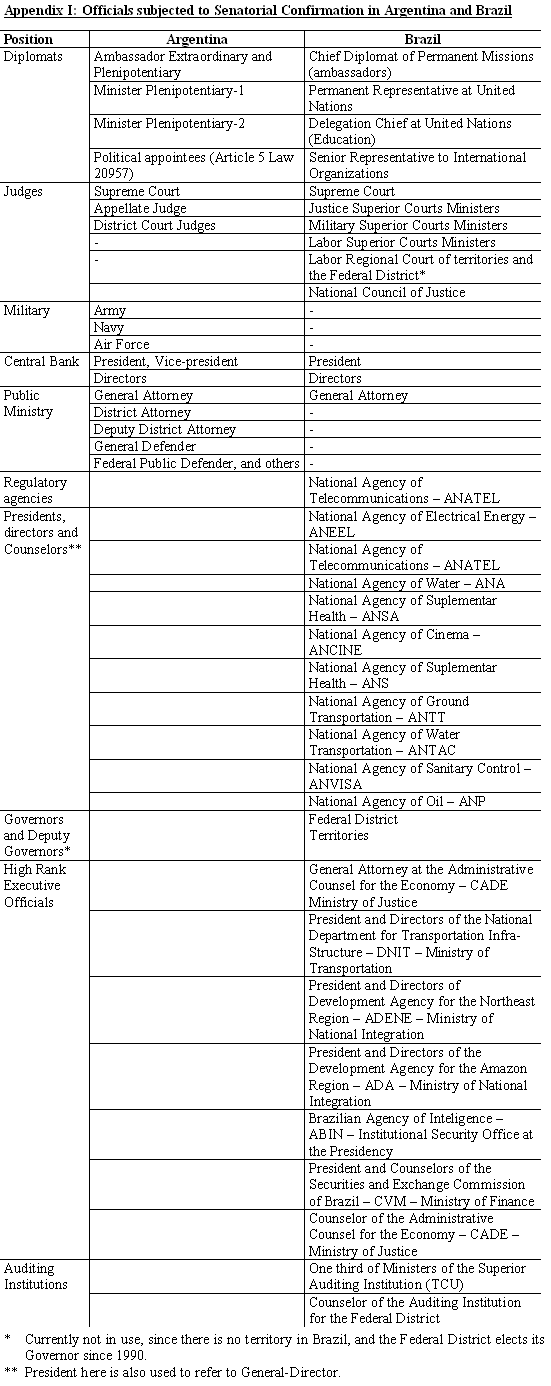
]]> In comparison to Argentina, Brazilian federal judges are not submitted to confirmation, as theirs is a career that starts with public exams. As a consequence, judicial nominations subject to Senate approval include only the superior courts judges and ministers. The same is true for the Foreign Service, where only Chief Diplomats of Permanent Missions – ambassadors – and high rank officials to some international forums, as United Nations, have to undergo the nomination process. Thus, promotion and dismissal in the Foreign Service and federal judges is not a prerogative of the Senate, but a matter of interna corporis decisions. Concerning the Armed Forces (military), it is a private prerogative of the President to nominate high rank officials, and no nomination is subjected to the Senate's consent. As a result, there is a much greater variety of positions in the case of Brazil (a minimum of 37 against 22 in the Argentine case) and not much overlapping between the two cases (Appendix I). It seems that Brazil has managed to diversify the senatorial control on the agencies related to economic issues – and social ones, more recently –, while the Argentine Senate has control over more traditional sectors (such as the military). The more salient feature in the Brazilian case seems to be how the military are not subjected to confirmation, and how bureaucracies that in other countries have to comply with legislative control, as the Foreign Service, in Brazil have a discretionary nature.Let us now turn to our data and see how the two Senates have performed in practice between 1989 and 2003. Our descriptive statistics show that, although the Brazilian Senate confirms a larger variety of nominations, the Argentine Senate deals in practice with a higher number of nominees. In Brazil, from 1989 to 2003, there were 882 nomination processes initiated.32 Argentina's numbers are instead much higher: for the period 1989-2003, the total of nominations reached 4,432.33 To see the differences more clearly, the Argentine Senate dealt with an average of 317 nominations/promotions per year, whilst the Brazilian Senate with 59 only. That is due to the broader powers that the Argentina's Senate holds regarding promotion in military careers. Military promotions in Argentina represent 58 percent (2,579 cases) of the total. However, these promotions excluded, the Argentine average of 132 nominations per year is still more than twice that of Brazil.
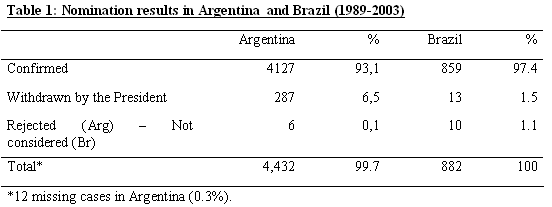
In spite of the difference in scope, both countries exhibit similar approval rates (Table 1). In Brazil, 97.4 percent of the nominations were confirmed (859 cases out of 882), while in Argentina the corresponding rate is 93 percent (4,127 cases out of 4,432). Therefore, in both countries nominations are confirmed in more than 90 percent of the cases – rates that are comparable to those of the United States. As for disapproval rates in Brazil, Table 1 shows that the 2,6 percent of the cases (N=25) refer to ten cases that were not considered within the deadline,34 and 13 withdrawn by the President35. No rejection was registered. In Argentina, 6.5 percent (287 cases) were withdrawn by the presidents, while the number of rejections has comparatively no significance (6 cases).36
In short, considering these high confirmation rates, it could be argued that presidents do not face much trouble to get their candidates confirmed in the senates - these could well be portrayed as subservient chambers. Further, given than Brazil's confirmation rates are higher, this legislature would be even more subservient. However, this indicator does not say much on the relative difficulty presidents face to get their nominations confirmed. It could happen that presidents do not get their appointees when they need them, or that some appointees are not so easily approved as others, or even that presidents avoid submitting appointees which are supposed to raise disagreement in Congress.
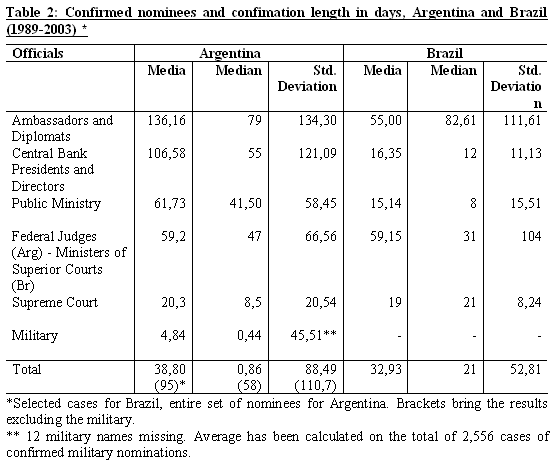
In order to find out whether all this has been taking place in Argentina and Brazil, we have considered the length of the confirmation processes as a second indicator. By analyzing the legislative process of the confirmed cases, we intend to provide an understanding of what constitutes more than ninety percent of our universe. A first assessment shows that in both countries confirmation processes are actually quite speedy: an average of 39 days in Argentina and 66 days in Brazil means that it takes about five and nine weeks, respectively, for the presidential message to lie in the calendar, the public hearings be held, and the voting take place in both committee and floor. If we consider that senatorial committees meet once a week during nine months (approximately 36 weeks/year), the picture we get is again that presidents get their way easily in these chambers.37 However, a deeper analysis may change this view. Our data show a great deal of dispersion (Table 2). In Argentina, it stands out that the process of military promotions exhibits important differences with respect to the other nominations. Military confirmation processes take an average of about five days, so being the only category of nominations placed well below the media. This happens because the confirmation process for military promotions is different from the others. In effect, to promote military, the Executive normally submits in the Senate a 'collective' message with a large number of names. This message is considered and normally approved altogether, a reason why the process results much faster than for other cases.38 This fact, and the fact that confirming military promotions is not a prerogative of the Brazilian Senate, makes probably sensible for our comparative purposes to calculate average days excluding the military, as it skews results for the large number. Militaries excluded, confirmation length in Argentina jumps to an average of 95 days in Argentina, and confirmation process result much slower in this country than in Brazil. Further, for almost every category of officials, with the exception of federal judges and Supreme Court nominations, confirmation processes are slower in Argentina.
In Brazil, we can see that regulatory agencies and Central Bank directors – key actors for the market – have the least extensive process, taking about two weeks to be approved. Ambassadors are the ones who take longer (median=83 days), and they represent the absolute majority of nominations – 60 percent. It means that, in Brazil, the Foreign Service career is the one subjected to the most delays, and this can point to two explanations: either it is more politicized, having to face more bargaining; or, because it works more as a bureaucracy. As appointments are not for the operational employees but for the head of missions only, delay is not as damaging as it would be the uncertainty of not having a Central Bank president for months. These extremes might point to the accommodation hypothesis in Brazil: as for the faster cases, the president would anticipate Congress' reaction and send a name that could raise the necessary support. That holds true for both the market-oriented and the top judiciary positions, especially those at the Supreme Court, which take about 19 days, average, to be approved. Top judges and ministers of superior courts also hold a high average, but that is due to the controversial nature of labour representation at the Superior Labour Court.
In Argentina, judicial nominations are more irregular, with much faster Supreme Court confirmations than those of the rest of federal judges and members of the Public Ministry. The shorter periods that concern the Supreme Court's nominees suggest that, in highly 'political' decisions (with very few positions to 'distribute'), the accommodation hypothesis may be also explicative.39 That is, this hypothesis may hold true for both countries, the only difference residing in which are the key positions, as the top market-oriented ones seem far more important in Brazil than in Argentina. That is an important issue: although we work with the more general category of "nomination process", it is clear that there is a hierarchy of political appointees, and that hierarchy is reflected in the way Congress and presidents negotiate. We will not tackle these differences in this paper, as its purpose is to give a more general picture, but seems an interesting research agenda.
]]>
In short, the results suggest five important conclusions for our comparative analysis:
]]>1. the Argentine Senate has broader powers in terms of confirmation process, which this is reflected in the higher number of appointees;
2. the two Senates exhibit a similar performance in terms of confirmation outcome, which is characterized by high confirmation rates;
3. there are different patterns of confirmation length in the two cases, being the Argentine Senate slower than Brazil's;
4. there is a similar internal pattern of confirmation length in the two cases characterized by a great variation in the duration of the processes, with some nominees demanding days and others years to be confirmed;
5. there is a hierarchy among political nominations, the most important exhibiting faster approval processes. In this case, presidents would anticipate congresses' reactions, sending more consensual names. Negotiations may start far before the formal process takes place.
4. Explaining Confirmation Practice in Argentina and Brazil
We sustain in this section that political factors are crucial explanations for the points in which our cases coincide (second, fourth and fifth conclusions in the previous section). In other words, they help us to understand why the two senates confirm most of the appointees, but also why confirmations do vary throughout the period. Two are the political explanatory factors considered here (see Subsection "The Political Factors"): divided government (whether the president holds a majority or not in the upper house) and presidential term (whether the nominating president is serving in the first or the second presidential term). Regarding divided government, our period of study only offers one short example in Argentina: Radical President De la Rúa (1999-2001) had to face a Peronist majority in the Senate. Similarly, in Brazil, Collor (1990-1992) was the president with the lower level of congressional support.40 The other explanatory factor is only suitable to clarify what happens in longer governments. Although it has been regarded as an institutional variable in some studies, in our view it is a good indicator of the political difficulties a president face to manage the political forces that support him in Congress. In fact, second terms are particularly difficult for presidents because alternative leaderships begin to emerge and to prepare for the presidential succession. These difficulties usually translate into the congressional arena, creating delays and obstacles in the legislative (and confirmation) processes during these periods.
For the points our cases do not coincide, we believe that institutional factors are the best explanations. Subsection "The Senates' Internal Rules for Confirming Nominations" shows the importance of considering whether the procedures are open (public) or closed (secret), and whether nominations are approved by simple or special majorities. In the case of open procedures, nominations are exposed to interferences from different actors and, consequently, to delays in the confirmation process; in the case of special majorities, they require a previous political agreement. Both situations confirm the presence of inter-branch negotiations.
The Political Factors
It is well known that the presence or absence of presidential majorities in congress is important to explain presidential success in terms of legislative outcomes. 41 Would it be also crucial for explaining senatorial confirmations? Data presented in the following paragraphs suggest a positive answer to this question.
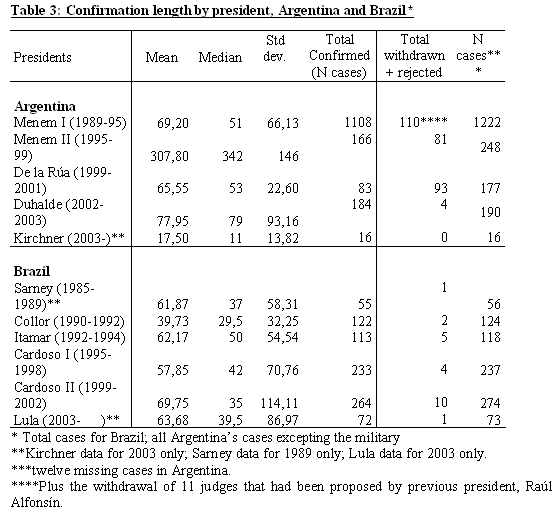
Table 3 brings the distribution of nominations by president in Argentina and Brazil. It includes the total of nominations in the Brazilian case, whilst in the case of Argentina we have excluded the military to make the confirmation length measures more comparable. Throughout these fourteen years, both countries exhibit an increasing number of nominees. In the Brazilian case, this is due to institutional changes during Cardoso's terms (1995-2002), when many new regulatory agencies were created as state companies were privatized. In Argentina, the increasing tendency is notably strong in the area of judicial nominations, particularly after the creation of the oral courts in 1992, during Menem's first presidency, and the consequent nomination of 256 new judges. For this reason, and because of their longer stays in power, Presidents Cardoso and Menem embrace the highest number of nominees.
Concerning confirmation length, there are two striking features here. First, the two presidents in a minority situation in the Senate (De la Rúa in Argentina and Collor de Mello in Brazil) had the shortest confirmation processes for their appointees. Furthermore, De la Rúa's presidency includes 20 nominations passed in less than a week and even four nominations (judges) passed in zero days (presented and approved in session, sobre tablas), whereas Collor's presidency had ten nominations approved in less than one week. These two cases show that presidential accommodation is taking place under divided government situations. As explained above, presidents who anticipate a non-cooperative assembly will avoid submitting controversial names, or even nominating. This finding reinforces the results of other studies on unilateral action and presidential law initiative,42 as well as confirms, in more general terms, the preventive power of legislatures, that is, the power to discourage the submission of proposals that might be rejected. In other words, the confirmation length indicator allows us to grasp a feature of legislative behaviour otherwise difficult to observe empirically.
Second, presidents with a majority in the Senate behave differently from those under divided government: since they anticipate the support of their majority, they send their proposals more confidently. Before the presidential initiative, the Senate reacts supportively, though neither automatic nor uniformly. In effect, both Menem and Cardoso, presidents who stayed in office for longer periods, experienced this variation. In Menem's first period, it is striking that, with an absolute majority in the Senate, the duration of confirmation processes is slightly higher than that taking place with President De la Rúa, who relied on a much smaller contingent in this chamber (33 % of the total of senators). Further, Menem's first presidency also exhibits the largest number of withdrawals –a total of 110 (80 percent of which were judges). Withdrawals may stand for "silent rejections", when processes become so conflictive that presidents would rather give up so as protecting themselves and the appointees from excessive public criticism. Then, these two features –duration and withdrawals- suggest the presence of an inter-institutional dialogue more than the application of the executive's will under majority rule. In Menem's second term, also a majority government, these indicators pointed at the presence of an inter-institutional conflict. During these four years, confirmation processes were not only considerably longer, but also the number of nominations dropped, from a total of 2,231 in the first presidency to 995, being most of them (747) military promotions. Further, a large number of diplomats (74) submitted in December 1999, at the very end of the mandate, suggests that Menem intended to pass the burden of nominations –probably in response to pressure from the diplomatic bureaucracy- to the next administration.
]]> Some of these features are shared by Cardoso's administrations. Table 3 shows different confirmation patterns for his first and second administrations. As in Menem's case, both the length of the confirmation processes and the number of withdrawals increased during the second term. Particularly, in 1999 and 2002, the first and last years of his second term, did nominations get more conflictive, with falling congressional support rates. In short, there is no honeymoon effect for re-elected presidents. Once more, difficulties not only occur in times of divided government, although the pattern of inter-institutional relations seems to differ: if divided governments find preventive presidents who avoid conflict by refusing to submit polemical nominees, unified governments find reactive assemblies that impose some degree of negotiation.Finally, confirmation processes in Argentina and Brazil share another feature that confirms their political nature. It concerns the politics of withdrawals, since evidence points out that it is a common practice that coming presidents withdraw nominations pending from the previous government. At the moment of assuming power, in July 1989, Menem withdrew eleven judges that had been proposed by President Alfonsín, while three days before leaving office, in 1999, Menem presented 74 diplomatic nominees that were immediately withdrawn by De la Rúa. In Brazil, Lula withdraw three ambassadors nominated by his predecessor, Cardoso, who had done the same thing, withdrawing two ambassadors and one labour court minister (employers representative) proposed by Itamar Franco. Franco had also withdrawn a nomination that Collor de Mello had sent to Senate.
The Senates' Internal Rules for Confirming Nominations
Why do confirmations take longer in Argentina than in Brazil? At a first sight it could be argued that the Argentine Senate workload is the answer to this question: having to approve a much higher number of nominations demands more time and delays the whole process. However, as we shall see below, the Argentine Senate counts on a special committee, the Committee of Agreements, created with the only purpose of dealing with presidential nominations. This structural advantage does not exist in the Brazilian Senate, where no committee is particularly specialized on nominations. Then, this section will show that the answer seems to lie on the different internal institutions framing the confirmation processes in the two cases. The underlying idea is that the higher the number of people involved in the screening of nominees – or the heightened level of scrutiny placed on nominees –, the longer the duration of the confirmation process.43 In this sense, the Argentine Senate's institutions allow a more participative process than the Brazilian Senate.
There are two important differences between the two countries regarding the institutions framing confirmation: they concern the locus and the publicity of these processes in Congress. Regarding the first point, in Argentina the process takes place primarily at the Senate Comisión de Acuerdos (Agreements Committee). This committee was created in a secret session in 1906, and became a permanent committee of the chamber in 1914.44 Until that time, the executive's nomination proposals were distributed among the standing committees according to the topic: the committee of Legislation debated on the appointment of judges; the Committee of War and Navy considered the military promotions; financial agencies officials were a matter of the Committee of Finance; diplomats were one of the Committee of Constitutional Affairs. Nowadays, the importance of the Agreements Committee is widely recognized. In a survey undertaken in 2002, the 52 interviewed Argentine Senators were asked to mention which were, in their opinion, the three most important committees of their chamber. The Agreements Committee was mentioned seventeen times, only after the Committees of Constitutional Affairs and Finance and Budget, which received forty mentions each.45
There is no special committee for confirmations in Brazil, whose system works similarly to the old Argentine one. The President sends a message to the Senate, the message is read and published, and afterwards sent to the committee with the respective jurisdiction, according to the statutory rules of the Senate: the Constitution, Justice and Citizenship Committee considers the nomination of Courts Ministers and Judges; the Economic Issues Committee receives the Central Bank nominations and some regulatory agencies nominees; the Foreign Affairs and Defence Committee considers diplomatic nominations; the Education Committee confirms the Director of the National Agency for the Cinema, so on and so forth.
The second major procedural difference between the countries concerns publicity of the confirmation processes. In Argentina, the process used to take place in secret sessions in both the committee and the floor for over hundred years. The secrecy decision was taken by the Senate in 1877 and lasted until 1992, when it was revoked by a new version of the Senate's rules.46 Presently, the Senate's regulations dictate not only that the executive's proposals for nominations (or promotions) are introduced and approved in public sessions, but also that the whole confirmation process must take place in public hearings. According to Article 22, any citizen has seven days to examine – and, if appropriate, to object to – the merits and qualities of the proposed candidates, although objections are also allowed during the time proposals lie in committee. The confirmation process publicity is even more stringent for judicial system nominations. In 1994, the publicity of these confirmations acquired constitutional status (Article 99, inc. 4), and a recent amendment of the Senate's rules ordered the publication of the candidates' names in the Official Diary, the national and local press and Internet. It also rules on the terms and conditions for the presentation of objections that individual citizens and organizations can bring about.47
]]> Indeed, these features of the confirmation process enhance opportunities not only for lobby activism (such as an organized group of diplomats pressing for their promotions), but also for NGO's supervision (such as a human rights organization overseeing the records of military staff to be promoted). According to a former president of the Agreements Committee, it is a current practice of the committee to send the military's CVs to the most important human rights NGOs for examination before confirmation.48 There is evidence that NGOs have objected to some military promotions, by presenting evidence of their participation in the "dirty war," during the military regime. As a result, their promotion was not approved. Our data show that two military promotions were rejected by the Senate, and at least another two were 'postponed', that is, never received approval. Further evidence on the delays and constraints that this procedure brings has been the quest for inter-party compromise on avoiding the committee. Although floor procedures in Argentina dictate that nominations are approved by simple majority (with the notable exception of Supreme Court members and the higher officials of the public ministry, whose confirmation always requires a special majority), a special majority of two thirds of the senators in session is required if they are to be discussed directly in the floor without previous committee resolution. This has been taken place in the Argentine senate despite the minimal requirement of seven procedural days.49 In effect, between 1992 and 2003, 171 nominations (3.9 percent of the total) were confirmed in less than seven days and there are even six cases that were confirmed in the same day of their presentation (0 days procedural time). These cases can be found in all governments50, which, on the one hand, suggest that all parties accept the practice of violating the seven- day- publicity rule in order to speed up the confirmation process. On the other, political agreements are a prerequisite to bypass committee rules and discussion. In other words, given an institutional framework that favours interferences and delays, speedy confirmations only take place when consensus has been achieved.Institutional features are rather different in Brazil. Indeed, the Constitution sets the publicity of nomination meetings hearings, as well as the secrecy of votes both in committee and floor. In the case of ambassadors, part of the hearing is also closed to the public. Some constitutionalists argue in favour of the vote secrecy as a way of guaranteeing the Senator's free will without bringing conflict (Bastos and Martins 2002). On the other hand, the Senate Statutory Rules states that the presidential message must bring the justification for the choice, and attach the nominee curriculum vitae, that will be made public. The candidate must attend a public hearing for answering senators on related issues to his/her future responsibilities, and the committee can investigate the candidate and request extra information from the executive branch. The floor procedure is standard for every nomination: public session, closed electronic votes, and there is no way the public can participate formally in the process, as the objection works in the Argentine.
Usually, when one candidate brings a questionable personal or professional issue, it is made public by the press or interest groups, or even a single citizen, who brings the issue to an individual senator. That was the case for Arminio Fraga, former Central Bank President during the Cardoso Presidency, who had worked before for private financial institutions and international investors. Some senators contended he might have some conflict of interest. Other notorious case was of the Supreme Court Judge Joaquim Barbosa Gomes, who in the past had an aggression suit from his former wife. Although the courts have decided for his innocence, and he affirmed that it was an event from his private life that at that point was of no relevance, women's organizations pushed against his nomination, posing he was not suitable for the Supreme Court. A third very famous case was of a nominee for the Military Superior Court, Jose de Alencastro, who was accused by human rights organizations of knowing about torture performed by the police force under his command during 1997 and 1998, in Rio de Janeiro. They were all confirmed, in spite of the bad press they have got.51
In summary, it could be argued that the differential features of the confirmation processes in the two countries could well explain the different performance in terms of institutional checks. In Argentina, the process is characterized by its centralisation in a committee, the minimal processing times stipulated by the Senate's rules (seven days for presentation of objections), public hearings and public sessions. These features enhance the opportunities of individual senators, citizens and organizations for obstruction and delay. Meanwhile, the features of the confirmation process in Brazil (decentralized in the committee system, with minimal processing times, public hearings and sessions and vote secrecy) are structuring a more expeditious process. Therefore, we argue, Argentine presidents face more failures and delays than their Brazilian counterparts or, in other words, the institutional checks work more efficiently in the Argentine case. Indeed, expeditious processes take place in Argentina as well. When this is done at expenses of the committee's debate, confirmation processes resemble Brazilian case: they are close and less transparent but done on the basis of previous political agreements.
5. Conclusion
This article is an exploratory analysis on confirmation processes in two new democracies, Brazil and Argentina, an area neglected by Latin American legislative studies. A comparative perspective on how both countries perform oversight is a good way of providing evidence on reactive legislature behaviour. Argentina and Brazil are good examples of reactive assemblies that are not absolutely subservient to presidents. As data have pointed out, both congresses made presidents anticipate or negotiate preferences, and legislatures can even defeat presidential' choices.
We aimed at raising questions that might direct the research in the near future rather than building a broad explanatory scheme. However, some important and even unknown features of these processes and their results were brought up. In the first place, Brazil has a wider range of positions to be confirmed, whilst Argentina has less variety in the positions but a lot more quantity. In this sense, Argentina is keeping a watchful eye in the administration that, in Brazil, is very restricted. This holds truth especially for the military, Foreign Service officials and federal judges, which are confirmed by the Argentine congress, but out of hand in the Brazilian case.
Another important finding is that, as expected, there are high confirmation rates in both countries, over 90 percent. Approving executive nominees seems to be the practice in presidential democracies – be it in the United States, Argentina or Brazil. But these confirmations do not necessarily mean the Senate does not exert the control it is supposed to: the very fact that there is a margin of highly contentious nomination processes points to the existence of negotiation in the Senates. Furthermore, the high confirmation rates may direct us to the accommodation or bargaining hypothesis, in which the Executive branch anticipates the possibility of veto and nominates a candidate that might be accepted by the Senate's majority. This anticipation has proved to be important not only during divided governments, but also in majority governments such as the Peronists in Argentina.
As literature points out, approval rates may not be the best indicator of Executive success, and can be misleading as the sole variable. The complementary indicator used – process length – shows some differences between Brazil and Argentina, with a more expedite process in the first. In Argentina, the average varies whether we consider or not the military promotions among our calculation. Military excluded, it is above the average in Brazil. We have argued that these time differences can be interpreted as a consequence of different institutional confirmation frameworks. The Argentine process is centralized in a committee, there are more veto points, with civil society participation, and the votes are open – an optimization of the legitimacy, working against efficacy. Adding the workload, concentration is a way of keeping the agenda unresolved. On the other hand, the Brazilian process, decentralized, with few veto points, no civil society formal participation and closed votes takes the other way round – with efficacy working against legitimacy.52
]]> Nevertheless, in Brazil there are still cases in which public debate is brought to the table whilst in Argentina expeditious processes do take place as well, in which inter-party negotiations seek to bypass the interferences of the committee's discussion. Thus, our two-case analysis shows that political agreements do not necessarily translate into transparency in the confirmation processes. They can take place sometimes against the rules, sometimes hindering society's participation.The question is here what is good or at least better. A very important consideration in Congress is time – for legislation, representation, control. Legislative processes are supposed to be slow, so as to bring about the best debate and ideas, and cool down passions. Confirmation procedures, although similar in structure, are supposed to be expediting, as there are decisions to be taken or policies to be implemented in the courts, agencies, institutions. A vacant position might bring a lot of burden for the government – or even for the opposition, that can be stereotyped as 'stopping the country'. Thus, the old debate about the necessary balance between legitimacy and governability is present in the nomination process controversy.
BIBLIOGRAPHY
ABERBACH, Joel D. (1990), Keeping a watchful eye: the politics of Legislative oversight. Washington, D.C., The Brookings Institution. [ Links ]
Amorim Neto, Octavio. (2000), "Gabinetes presidenciais, ciclos eleitorais e disciplina legislativa no Brasil". Dados, 43 (3): 479-517. [ Links ]
Bastos, Celso Ribeiro & Martins, Ives Gandra. (2002), Comentários à Constituição brasileira. 3. ed. Rio de Janeiro, Saraiva, vol. 4. [ Links ]
]]>Binder, Sarah. (1999), "The dynamics of Legislative Gridlock, 1947-96". American Political Science Review, 93 (3): 519-533. [ Links ]
_________. (2003), Stalemate: causes and consequences of Legislative Gridlock. Washington, D.C., Brookings Institution Press. [ Links ]
Binder, Sarah & Maltzman, Forrest. (2002), "Senatorial delay in confirming federal judges, 1947-1998". American Journal of Political Science, 46: 190-199. [ Links ]
_________. (2004), "The limits of Senatorial Courtesy". Legislative Studies Quarterly, 29 (1): 5-22. [ Links ]
Blondel, Jean. (1973), Comparative legislatures. Englewood Cliffs, Prentice-Hall. [ Links ]
]]>Caldeira, Gregory; Hojnacki, Marie & Wright, John. (2000), "The lobbying activities of organized interests in federal judicial nominations". The Journal of Politics, 62 (1): 51-69. [ Links ]
Castro Santos, Maria Helena. (1997), "Governabilidade, governança e democracia: criação de capacidade governativa e relações Executivo-Legislativo no Brasil pós-Constituinte". Dados – Revista de Ciências Sociais, 40 (3): 335-376. [ Links ]
Chang, Kelly. (2001), "The president versus the Senate: appointments in the American system of separated powers and the federal reserve". Journal of Law, Economics, and Organization, 17 (2): 319-355. [ Links ]
Chase, Harold. (1972), Federal judges: the appointing process. Minneapolis, University of Minnesota Press. [ Links ]
Dagrossa, N. (1991), "Los acuerdos del Senado, 1854-1877". Revista de Historia del Derecho, 18: 139-184, 2°. Parte, pp. 133-208, Buenos Aires, Instituto de Investigaciones de Historia del Derecho. [ Links ]
]]>_________. (1996), "Los acuerdos del Senado durante la primera presidencia de Yrigoyen (1916-1922)", in G. Mackinson, M. Ortega e H. Sandler, Avances de investigación en derecho y ciencias sociales, Buenos Aires, Facultad de Derecho y Ciencias Sociales de la Universidad de Buenos Aires. [ Links ]
Eaton, Kent. (2001), "Fiscal policy making in the Argentine legislature", in Scott Morgensten, e Benito Nacif (eds.), Legislative politics in Latin America, Cambridge, Cambridge University Press. [ Links ]
Etchemendi, Sebastián & Palermo, Vicente. (1998), "Conflicto y concertación : gobierno, congreso y organizaciones de interés en la reforma laboral del primer gobierno de Menem (1984-1995)". Desarrollo Económico, 38 (148): 559-590, Buenos Aires, Instituto de Desarrollo Económico y Social. [ Links ]
Figueiredo, Argelina Cheibub. (2001), "Instituições e política no controle do Executivo". Dados, 44 (4): 689-727. [ Links ]
Figueiredo, Argelina Cheibub & Limongi, Fernando. (1999), Executivo e Legislativo na nova ordem constitucional. Rio de Janeiro, Editora da FGV. [ Links ]
]]>Hamilton A.; Madison, J. & Jay, J. (1999), The federalist papers. Nova York, Penguin Putnam. [ Links ]
Hammond, Thomas & Hill, Jeffrey. (1993), "Deference or preference? Explaining Senate confirmation of presidential nominees to administrative agencies". Journal of Theoretical Politics, 5 (1): 23-59. [ Links ]
Harris, Joseph. (1968), The advice and consent of the Senate. Berkeley, University of California Press. [ Links ]
Hartley, Roger e Holmes, Lisa (2002) "The Increasing Senate Scrutiny of Lower Federal Court Nominees". Political Science Quarterly, vol. 117, no. 2, pp. 259-278. [ Links ]
JAMES, Martin O. (2002), Congressional oversight. Nova York, Nova Science. [ Links ]
]]>Johnson, Timothy & Roberts, Jason. (2004), "Presidential capital and the Supreme Court confirmation process". The Journal of Politics, 66 (3): 663-683. [ Links ]
Jones, Mark. (2001), "Political institutions and public policy in Argentina: an overview of the formation and execution of the national budget", in S. Haggard e M. McCubbins (eds.), Presidents, parliaments, and policy, Cambridge, Cambridge University Press. [ Links ]
Lemos, Leany Barreiro. (2004), "El sistema de comisiones en el Senado brasileño: jerarquía y concentración de poderes en los 90". America Latina Hoy, 43: 155-182, Universidad de Salamanca. [ Links ]
Llanos, Mariana. (2001), "Understanding presidential power in Argentina: a study of the policy of privatization in the 1990s". Journal of Latin American Studies, 33: 67-99. [ Links ]
_________. (2002), Privatisation and democracy in Argentina: an analysis of president-Congress relations. Houndmills, Palgrave (Palgrave/St Antony’s College Series). [ Links ]
]]>Llanos, Mariana & Mustapic, Ana María (orgs.). (2005), Controle parlamentar na Alemanha, na Argentina e no Brasil. Rio de Janeiro, Konrad Adenauer Stiftung. [ Links ]
Llanos, Mariana & Nolte, Detlef. (2003), "Bicameralism in the Americas: around the extremes of symmetry and incongruence". The Journal of Legislative Studies, 9 (3): 54-86, Inglaterra, Frank Cass Publishers. [ Links ]
Loureiro, Maria Rita. (2001), "O controle da burocracia no presidencialismo". Cadernos Adenauer, 3, São Paulo. [ Links ]
McCarty, Nolan & Razaghian, Rose. (1999), "Advice and consent: Senate responses to Executive branch nominations 1885-1996". American Journal of Political Science, 43 (4): 1122-1143. [ Links ]
Martinek W. L.; Kemper, M. & winkle, S. R. van. (2002), "To advise and consent: the Senate and lower Federal Court nominations, 1977-1998". The Journal of Politics, 64 (2): 337-361. [ Links ]
]]>Mayhew, D. (1991), Divided we govern: party control, lawmaking, and investigations 1946-1990. New Haven, Yale University Press. [ Links ]
Moe, Terry. (1987), "Interests, institutions, and positive theory: the politics of the NLRB". Studies in American Political Development, 2: 236-299. [ Links ]
Molinelli Guillermo; Palanza, Valeria & Sin, Gisela. (1999), Congreso, presidencia y justicia en Argentina. Buenos Aires, Temas/Cedi. [ Links ]
Moraski, Bryon & Shipan, Charles. (1999), "The politics of Supreme Court nominations: a theory of institutional constraints and choices". American Journal of Political Science, 43: 1069-1095. [ Links ]
Morgenstern, Scott & Manzetti, Luigi. (2003), "Legislative oversight: interests and institutions in the United States and Argentina", in S. Mainwaring e C. Welna (eds.), Democratic accountability in Latin America, Nova York, Oxford University Press. [ Links ]
]]>Morgenstern, Scott & Nacif, Benito (eds.). (2001), Legislative politics in Latin America. Cambridge, Cambridge University Press. [ Links ]
Mustapic, Ana María (2000) "Oficialistas y diputados: las relaciones Ejecutivo-Legislativo en la Argentina". Desarrollo Económico. Revista de Ciencias Sociales, vol. 39, no. 156, enero-marzo 2000, pp. 571-595. [ Links ]
Mustapic, Ana María. (2001), "Oscillating relations: president and Congress in Argentina", in S. Morgenstern e B. Nacif (eds.), Legislative politics in Latin America, Cambridge, Cambridge University Press. [ Links ]
Negretto, Gabriel. (2003), "Diseño constitucional y separación de poderes en América Latina". Revista Mexicana de Sociología, 65 (1): 41-76. [ Links ]
Nixon, David C. (2004), "Separation of powers and appointee ideology". Journal of Law, Economics, and Organization, 20 (2): 438-457. [ Links ]
]]>Noken, Timothy & Sala, Brian. (2000), "Confirmation dynamics: a model of presidential appointments to independent agencies". Journal of Theoretical Politics, 12 (1): 91-112. [ Links ]
O’Donnell, Guillermo. (1998), "Accountability horizontal". Agora, 8, Buenos Aires. [ Links ]
_________. (2003), "Horizontal accountability: the legal institutionalization of mistrust", in S. Mainwaring e C. Welna, Democratic accountability in Latin America, Nova York, Oxford University Press. [ Links ]
OLESZEK, Walter J. (1995), Congressional procedure and the policy process. 4 ed. Washington, DC, CQ Press. [ Links ]
Palanza, Valeria. (2005), "Delegación y control congresional en Argentina", in Mariana Llanos e Ana María Mustapic (orgs.), Controle parlamentar na Alemanha, na Argentina e no Brasil, Rio de Janeiro, Konrad Adenauer Stiftung. [ Links ]
]]>Pereira Carlos; Power, Timothy e Rennó, Lucio. (2005), "Under what conditions do presidents resort to decree power? Theory and evidence from the Brazilian case". The Journal of Politics, 67 (1): 178-200, fev. [ Links ]
Pitt Villegas, Julio César. (2004), "Reglamento de la Cámara de Senadores de la Nación Argentina: su articulado concordado con antecedentes históricos nacionales y ancestrales (años 1822-2003)". Buenos Aires, Centro de Capacitación Superior del Senado de la Nación. [ Links ]
Sánchez, Francisco; Nolte, Detlef & Llanos, Mariana. (2005), Bicameralismo, Senados y senadores en el Cono Sur latinoamericano. Barcelona, Parlament de Catalunya/Institut de Ciències Polítiques i Socials. [ Links ]
SARTORI, Giovanni. (1987), A teoria da democracia revisitada. São Paulo, Ática. [ Links ]
Shipan, Charles & Shannon, Megan. (2003), "Delaying justice(s): a duration analysis of Supreme Court confirmations". American Journal of Political Science, 47 (4): 654-668. [ Links ]
]]>Siavelis, Peter. (2000), The president and Congress in postauthoritarian Chile: institutional constraints to democratic consolidation. Pennsylvania, University Park. [ Links ]
Smith, Steve. (1989), Floor politics in the House and Senate. Washington, DC, Brookings Institution Press. [ Links ]
Stratmann, Thomas & Garner, Jared. (2004), "Judicial selection: politics, biases, and constituency demands". Public Choice, 118 (3-4): 251-270. [ Links ]
1 Scott Mainwaring and Matthew Soberg Shugart (eds.), Presidentialism and Democracy in Latin America, (Cambridge/New York, 1997). See also Gabriel Negretto, 'Government Capacities and Policy Making By Decree in Latin America. The Cases of Brazil and Argentina', Comparative Political Studies, vol.37, no. 5 (2004), pp.531-562.
2 Argelina Cheibub Figueiredo and Fernando Limongi, Executivo e Legislativo na nova ordem constitucional, (Rio de Janeiro, 1999); and Paolo Ricci, 'O Conteúdo da Produção Legislativa Brasileira: Leis Nacionais ou Políticas Paroquiais?', Dados, Rio de Janeiro, vol. 46, no. 4 (2003), pp. 699-734. ]]>
3 Scott Morgenstern and Benito Nacif (eds.), Legislative Politics in Latin America (Cambridge, 2001); and G. Cox and S. Mongerstern, 'Latin America's Reactive Assemblies and Proactive Presidents', Comparative Politics, Vol. 33, no. 2, (2001), pp. 171-190.
4 See Maria Helena Castro Santos, 'Governabilidade, Governança e Democracia: Criação de Capacidade Governativa e Relações Executivo-Legislativo no Brasil Pós-Constituinte', Dados, vol. 40, no. 3 (1997), pp. 335-376; Kent Eaton, 'Fiscal Policy Making in the Argentine Legislature', in Scott Morgensten and Benito Nacif (eds.), Legislative Politics in Latin America (Cambridge, 2001); Mark Jones, 'Political Institutions and Public Policy in Argentina: An Overview of the Formation and Execution of the National Budget', in S. Haggard, and M. McCubbins (eds.), Presidents, Parliaments, and Policy (Cambridge, 2001); Mariana Llanos, 'Understanding Presidential Power in Argentina: a Study of the Policy of Privatization in the 1990s', in: Journal of Latin American Studies, vol.33 (2001), pp.67-99; Ana María Mustapic, 'Oficialistas y diputados: las relaciones Ejecutivo-Legislativo en la Argentina', Desarrollo Económico, Revista de Ciencias Sociales, vol. 39, no. 156 (2000), pp. 571-595.
5 Guillermo O'Donnell, 'Horizontal Accountability in New Democracies', Journal of Democracy, vol. 9, no. 3 (1998), pp. 112-126; and 'Horizontal Accountability: The Legal Institutionalization of Mistrust', in S. Mainwaring and C. Welna (eds.), Democratic Accountability in Latin America (New York: 2003).
6 Argelina Cheibub Figueiredo, 'Instituições e Política no Controle do Executivo', Dados, vol.44, no.4 (2001), p. 689-727; Eaton, 'Fiscal Policy Making in the Argentine Legislature'; Ana Maria Mustapic,'Oscillating Relations. President and Congress in Argentina', in Morgensten and Nacif., Legislative Politics in Latin America pp.23-47; Peter Siavelis, The President and Congress in Postauthoritarian Chile. Institutional Constraints to Democratic Consolidation. (Pennsylvania, 2001).
7 Scott Morgenstern and Luigi Manzetti, 'Legislative Oversight: Interests and Institutions in the United States and Argentina', in Mainwaring and Welna (eds.), Democratic Accountability in Latin America; and Mariana Llanos and Ana Maria Mustapic (eds.), Controle parlamentar na Alemanha, na Argentina e no Brasil (Rio de Janeiro, 2005).
8 Further, control is a significant share of Congresses workload: it represented an average of 36% of all activities performed in the Brazilian congress during the 1988-2004 period. Some years reached up to 50 percent of congress workload (Lemos, 2006).
9 Inspired by the American constitution, although with differences concerning the extent and the type of positions involved, the nine current bicameral systems (Argentina, Bolivia, Brazil, Chile, Colombia, Dominican Republic, Mexico, Paraguay, and Uruguay) grant the function of confirming nominations to the upper chambers. This function is performed by the national assembly in the unicameral systems of the region.
10 Joseph Harrys, The Advice and Consent of the Senate (Berkeley, 1968), p. 7.
11 Celso Ribeiro Bastos and Ives Gandra Martins, Comentários à Constituição Brasileira, (Rio de Janeiro, 2002).
12 A. Hamilton, J. Madison, J. Jay, The Federalist Papers (New York, 1999). ]]>
13 Gabriel Negretto, 'Diseño constitucional y separación de poderes en América Latina', Revista Mexicana de Sociología, vol. 65, no. 1 (2003), p. 42.
14 Harold Chase, Federal Judges, The Appointing Process (Minneapolis, 1972); Harrys, The Advice and Consent of the Senate; Terry Moe, 'Interests, Institutions, and Positive Theory: the Politics of the NLRB', in: Studies in American Political Development, vol. 2 (1987), pp. 236-299.
15, Thomas Hammond and Jeffrey Hill, 'Deference or Preference? Explaining Senate Confirmation of Presidential Nominees to Administrative Agencies', Journal of Theoretical Politics, vol. 5, no. 1 (1993), pp. 23-59; Bryon Moraski and Charles Shipan, 'The Politics of Supreme Court Nominations: A Theory of Institutional Constraints and Choices', American Journal of Political Science, vol. 43, no. 4 (1999), pp. 1069-1095.
16 Roger Hartley and Lisa Holmes, 'The Increasing Senate Scrutiny of Lower Federal Court Nominees', Political Science Quarterly, vol. 117, no. 2 (2002), pp. 259-278; Nolan McCarty and Rose Razaghian, 'Advice and Consent: Senate Responses to Executive Branch Nominations 1885-1996', American Journal of Political Science, vol. 43, no. 4 (1999), pp. 1122-1143; Thomas Stratmann and Jared Garner, 'Judicial Selection: Politics, Biases, and Constituency Demands', Public Choice, vol. 118, no. 3-4 (2004), pp. 251-270; Charles Shipan and Megan Shannon, 'Delaying Justice(s): A Duration Analysis of Supreme Court Confirmations', American Journal of Political Science, vol. 47, no. 4 (2003), pp. 654-668.
17 W. L. Martinek and M. Kemper and S. R. Van Winkle, 'To Advise and Consent: The Senate and Lower Federal Court Nominations, 1977-1998', The Journal of Politics, vol. 64, no. 2 (2002), pp. 337-361; David Nixon, 'Separation of Powers and Appointee Ideology', Journal of Law, Economics, and Organization, vol. 20, no. 2 (2004), pp. 438-457; Shipan and Shannon, 'Delaying Justice(s): A Duration Analysis of Supreme Court Confirmations', pp. 654-668.
18 Sarah Binder and Forrest Maltzman, 'Senatorial Delay in Confirming Federal Judges, 1947-1998', American Journal of Political Science, vol. 46, no. 1 (2002), pp. 190-199; Hartley and Holmes, 'The Increasing Senate Scrutiny of Lower Federal Court Nominees', pp. 259-278; Martinek and Kemper and Van Winkle, 'To Advise and Consent: The Senate and Lower Federal Court Nominations, 1977-1998', pp. 337-361; McCarty and Razaghian, 'Advice and Consent: Senate Responses to Executive Branch Nominations 1885-1996', pp. 1122-1143; Shipan and Shannon, 'Delaying Justice(s): A Duration Analysis of Supreme Court Confirmations', pp. 654-668; Stratmann and Garner, 'Judicial Selection: Politics, Biases, and Constituency Demands', pp. 251-270
19 McCarty and Razaghian, 'Advice and Consent: Senate Responses to Executive Branch Nominations 1885-1996', pp. 1122-1143; Shipan and Shannon, 'Delaying Justice(s): A Duration Analysis of Supreme Court Confirmations', pp. 654-668; Sarah Binder and Forrest Maltzman, 'Senatorial Delay in Confirming Federal Judges, 1947-1998';
20 Sarah Binder and Forrest Maltzman, 'The Limits of Senatorial Courtesy', Legislative Studies Quarterly, vol. 29, no. 1 (2004), pp. 5-22.
21 Sarah Binder and Forrest Maltzman, 'Senatorial Delay in Confirming Federal Judges, 1947-1998'. According to the authors, the degree of delay on judicial nominations varies directly with the senators' ideological incentives (as the Senate diverges ideologically from the president, it will proceed more slowly) and the institutional opportunities. Regarding the latter, two are the critical institutional actors for confirmation processes in the U.S. Senate: the panel chair, who has significant control over the committee's agenda (so that differences between him and the president will increase delays) and the Senate's majority leader, who holds the right of first recognition on the Senate floor and has effective veto over executive session (thus, if the opposition party is in the majority delays will occur).
22 W. L. Martinek and M. Kemper and S. R. Van Winkle, 'To Advise and Consent: The Senate and Lower Federal Court Nominations, 1977-1998', 337-361 ]]>
23 Due to restrictions in the availability of data, our information on the length of process is restricted to the confirmed proposals. It nonetheless covers more than 90 percent of the cases and, in our view, is where time differences are particularly worth exploring. Additionally, we would like to point out that our initial intention was to cover the whole democratic periods in both countries, but then we left Alfonsín's government aside (Argentina, 1983-1989) because of the difficulties we faced with the data collection. Excepting military promotions, data on Argentine nominations are available online (www.senado.gov.ar) for 1993 and onwards. For the military promotions as well as for the rest of the period considered here (1989-1993) we rely on information from Congressional Reports, the Senate's Committee of Agreements and the Parliamentary Secretariat. In the case of Brazil, we built our data base with information from the Senate Informatics Service (Prodasen) also available online (www.senado.br).
24 The impact of the internal organization of Congress on legislative outcomes is well documented in the case of Brazil (Limongi and Figueiredo are the most well known researchers in this area). Again, it seems sensible to predict an impact of this variable on confirmations as well.
25 The American constitution gives the president the prerogative of nominating officials and to the Senate that of confirming the presidential nominations which means, in practice, the right of approving these proposals dictates (Article 2, Section 2). In fact, the Constitution says ambassadors, public ministers and consuls, judges of the Supreme Court and other officers are subject to confirmation. And by law, federal judges, all military promotions of officers, and many high-level civilian officials must also be confirmed. As a result, in the last 20 years, the Senate processed an average of 35 thousand nominations a year, most of them for military positions (around 90 percent). From 1995 to 2003, the number of nominations has declined sharply, and has stayed under that average (Senate Daily Digest, Office of the Secretary).
26 For the Argentine case, see N. Dagrossa, 'Los acuerdos del Senado durante la primera presidencia de Yrigoyen (1916-1922)', G. Mackinson, M. Ortega, H. Sandler (eds.), Avances de Investigación en Derecho y Ciencias Sociales ( Buenos Aires, 1996).
27 Octavio Amorim Neto, 'Gabinetes presidenciais, ciclos eleitorais e disciplina legislativa no Brasil', Dados, vol. 43, no. 3 (2000), pp. 479-517.
28 For instance, at times of Yrigoyen's first presidency (1916-1922) a wave of laws initiated in 1876 also demanded the consent of the Senate for the appointment of a large number of administrative officers such as, the capital's major, the governors of national territories, and the directors of the National Mortgage Bank and of the Nation Bank. All dispositions of this kind were eliminated by law in 1974. For some specialists, these laws and the similar ones recently passed in the 1990s are unconstitutional. See N. Dagrossa, 'Los acuerdos del Senado durante la primera presidencia de Yrigoyen (1916-1922)', G. Mackinson, M. Ortega, H. Sandler (eds.), Avances de Investigación en Derecho y Ciencias Sociales ( Buenos Aires, 1996).
29 The Central Bank is governed by a Director Body formed by a president, a vice-president and eight directors appointed by the president with the agreement of the Senate. Half of the body is renewed every three years, but its members have six-year mandates and can be re-elected indefinitely (consult www.bcra.gov.ar).
30 The Public Ministry is composed by two organisms, the Procuración General de la Nación and the Defensoría General de la Nación and has functional and financial autonomy. It was created by the constitutional reform of 1994 (Article 120). The General Attorney and the General Defender are appointed by the Executive with the consent of Senate (which has to approve them with the vote of the two thirds of the senators in session). For the appointment of the rest of the magistrates, the General Attorney or the General Defender proposes three candidates to the executive power, which has to select one. The nominations of these candidates require the Senate's confirmation by simple majority of the members in session (Law 24946, Articles 3 and 4, Subsections b, c, d, e and f).
31 Two thirds are appointed by the Senate itself.
32 The absolute number is very modest if compared to the US Senate workload, which summed up more than seven hundred thousand nominations from 1984 to 2003 (Legislative Statistics, US Senate, Library of Congress, 2005). Because of the workload with the Executive demands, the US Senate holds two calendars: the business calendar, for legislative business, and an Executive calendar, for treaties and nominations. ]]>
33 Our data for 1989 include only the nominations presented by President Carlos Menem to the Senate. Since he assumed power in July 1989, we are only covering half of this year.
34 Legislature length is four years, from 15 March of a given year after elections to the 15 March of that year+4. Every piece of legislation not considered within this time bracket dies at the end of the period (prejudicados).
35 By the time we closed the dataset, Dec. 2005.
36 Five of the six rejections correspond to military promotions, but in three of these cases the Senate was actually not showing disagreement with the proposed names, but with the proposed dates for promotion
37 Only ordinary sessions considered. Extraordinary sessions can be called by the President or by the Senate itself.
38 Due to the collective nature of the executive messages, the length of the confirmation process for each of the proposed individuals was calculated as the time length divided by the total of names proposed. Although military promotions are not individually proposed, it is difficult to sustain that the Senate is rubberstamping them in block. In fact, some of the names proposed in collective messages have been postponed and even rejected by the Senate, as section four explains.
39 To see the extend to which judicial nominations are political in Argentina, see Gretchen Helmke, 'The Logic of Strategic Defection: Judicial Decision-Making in Argentina Under Dictatorship and Democracy', American Political Science Review, vol. 96 (2002), pp.291-303. In our database, we identified 12 changes in the Supreme Court (out of a total of 919 judicial nominations in this country) between 1989 and 2003. Seven of them took place in secret sessions, during the first two years of Menem's administrations, and were very much questioned for irregularities in the procedures and the application of the majority rule. This does not hold for the rest, which were much more negotiated (though not necessarily transparent) cases, with the resulting names being more acceptable for the opposition party.
40 Amorim Neto, 2000. Though his conclusions are for the lower chamber only.
41 David Mayhew, Divided We Govern: Party Control, Lawmaking, and Investigations 1946-1990 (New Haven, 1991); and Sarah Binder, Stalemate: Causes and Consequences of Legislative Gridlock (Washington, D.C., 2003).
42 For unilateral action see Carlos Pereira, Timothy Power and Lúcio Rennó, 'Under What Conditions Do Presidents Resort to Decree Power? Theory and Evidence from the Brazilian Case', The Journal of Politics, vol. 67, no. 1 (2005), February, pp.178-200; for presidential law initiative, see Llanos, 2001. ]]>
43 Hartley and Holmes, 'The Increasing Senate Scrutiny of Lower Federal Court Nominees', p. 264.
44 Villegas Pitt and César Julio, Reglamento de la Cámara de Senadores de la Nación Argentina: su articulado concordado con antecedentes históricos nacionales y ancestrales (Años 1822-2003) (Buenos Aires, 2004).
45 The survey was undertaken by the researchers of the project 'Bicameralism and the Senates in the Southern Cone', GIGA Institute for Ibero-American Studies (IIK), Hamburg.
46 According to the first Senate regulations, appointments were considered and approved in public sessions between 1854 and 1877. However, Senator (and ex-president) Sarmiento recommended to follow the example suggested by a digest of the American Senate, which he himself had translated into Spanish, stipulating that these decisions had to be taken in secret sessions. The amendment was passed by the chamber in 1877.
47 The amendment of the Senate's regulations incorporated several new articles (22bis, 22ter, and 123bis, ter, etc.) and was passed by the plenary on the 2 July 2003.
48 Senator Busti, interview with authors, Oct. 2002.
49 Article 22's amendment concerning the publicity of nomination processes was passed on 12/13 Aug., 1992. The amendment was unanimously approved as a result of a previous political agreement between Radicalism (in opposition) and the Peronist government. The Radical party had expressed its concern for recent judicial appointments (particularly, for Menem's six new appointments to the Supreme Court) and demanded more transparency.
50 Menem I, 17 cases (mostly judges); Menem II, 124 cases (all military); De la Rúa, 20 cases (mostly judges); Duhalde, 3 cases; Kirchner, 7 cases.
51 Federal Senate Daily Digest, 22 May 2003 (Joaquim Barbosa Gome testimony); 4 March 1999 (Arminio Fraga testimony); 9 Dec. 2003 (Alen Castro testimony).
52 An interesting consequence of the decentralization in Brazil is that some committees specialize in nominations, and have most of their activities linked to the executive business. In 2000, the Foreign Affairs and National Defence Committee held 19 meetings, 18 of which were nomination hearings. Also, the Infra-Structure Committee, in the same year, held seven nomination hearings, in contrast with six legislative meetings (Lemos 2006). As we already stated, in Argentina, the Committee of Agreements, responsible for the nominations, is considered to be the third most important committee in the Senate hierarchy. In the institutionalization of the Senate, that might be a new and relevant feature.