Gelson PelegriniI; Marcio GazollaII
IProfessor at High Uruguay and Missions Regional Integrated University (URI), Frederico Westphalen. Campus. E-mail: gelsonpelegrini@fw.uri.br
IIProfessor at Santa Maria Federal University (UFSM), Frederico Westphalen Campus. E-mail: marciogazolla@smail.ufsm.br
Translated by Celina de Castro Frade
Translation from Estudos Sociedade e Agricultura, Rio de Janeiro, vol. 17 no. 2, p. 332-378, Novembro 2009.
The article discusses the process of agroindustrialization of the family agroindustry production in northern gaucho with focus on Medium High Uruguay territory in Rio Grande do Sul (RS). The aim is to discuss the so-called family farm in this place from its historical process of emergence and establishment, potentialities and current problems such as legislation, production of raw material, income generation, produced products etc. The study concludes that the family agroindustry constitutes an important strategy of social reproduction and rural development as it is responsible for the settlement of families in the field, the diversification of productive activities in rural properties, families' income generation among other roles.
Key words: agroindustry - family agroindustry - social reproduction - rural development.
Introduction
The territory of Medium High Uruguay (RS) is a typical region colonized by European immigrants, in particular Italian, German and Polish, among others. It is a recently colonized region if compared to the others in Rio Grande do Sul, as these colonies were established from 1925 on while the constitution of the Land Commission in Palmeira das Missões in 1917, which was responsible for land demarcation. This feature allowed the north of Rio Grande do Sul to develop productive systems with the predominance of the logic of the family farm as a social form of production and labor.
The development of the family farm in this territory went through various stages from which we can distinguish three quite different moments of colonization. The first one comprised the forests' tameness and the start of agricultural activities developed almost exclusively for the families' own consumption. The second one included more market integration and the beginning of the productive specialization process from 1935 to 1969. And, finally, the period from 1960 to early 1990s is marked by intense the family farm commoditization and its continuous economic and social impoverishment.
Therefore, until mid-1990s, the family farm reproduction of this territory was clearly based on commercial relations leading it to a growing fragility. Due to the growing dependency on external inputs and technologies, the small property was obliged to turn itself almost totally to the market of these factors of production. Only after the 1990s was there a modest, though continuous, movement of economic and productive diversification within the rural families of the territory. We can notice the start of family agroindustries and other productive activities, services, non-agricultural activities and others which develop in the rural area.
In this article, we understand the family agroindustry as a strategy of social reproduction within the great empirical universe of what was called family farm as from the 1990s. By definition, the family farm has multiple reproductive strategies. Here, we are only concerned with the agroindustrialization of primary production and the role played by the family agroindustrial businesses in the larger process of rural development. Therefore, our main focus is the strategies of rural families around its agroindustry throughout the chain of in natura and processed products with the analysis of aspects related to the production of raw material, product processing and manufacturing, etc.
]]> The family agroindustry we refer to in this article is one of the strategies of social reproduction of the family farm in Medium High Uruguay of Rio Grande do Sul. By family agroindustry we mean an activity of production of agricultural products and their consequent transformation in several kinds of food byproducts occurring, in the process, the aggregation of value to the final product. Moreover, it is worth pointing out that, in these activities, there is great relevance of work and management by the own family nucleus, which grants senses and meanings to the strategies adopted.As defined by Mior (2005), the rural family farm is a form of organization in which the rural family produces, processes and/or transforms part of its agricultural and/or cattle production aiming particularly at the changing of value production accomplished in commercialization. While food processing and transformation often occurs in the farmers' kitchens, the rural family farm constitutes a new space and a new social and economic business (IDEM: 191). It is worth noticing that the family farm referred to in this research deals strictly with food production and processing even though there are a few comments on other types of farms, which are less represented here.
The research which resulted in the data here presented is called 'Characterization and Analysis of Family Agroindustries in the Region of High Uruguay' and was conducted in 2006 and 2007, with database collection from January to December 2005. It results from an institutional partnership between Santa Maria Federal University (UFSM- Frederico Westphalen Campus) and Integrated Regional University of High Uruguay and Missions (URI- Frederico Westphalen Campus). This research is distinguished in particular by its innovative and pioneering character as, according to inquiries, except for Pelegrini (2003) localized study and the sample study of Markoski and Calegaro (2006),1 no relevant research or analysis (in a territorial scope) had ever been conducted about family farms in this northern part of the gaucho territory. The database included 106 family agroindustries investigated by means of a questionnaire with open and closed questions in the 30 municipalities which belong to High Uruguay Development Council Region (Codemau).2
On the whole, the 'Characterization and Analysis of Family Agroindustries in High Uruguay' (CAAF) research made an attempt to identify and analyze the family agroindustries of the territory of High Uruguay in search of explaining the potential and constraining factors involved in the agroindustrialization process. More particularly, the research aimed at: a) registering the existing family agroindustries in High Uruguay (active and inactive ones); b) creating a family agroindustry data base available for development institutions and social actors; c) analyzing the potential factors of development of family agroindustries in the territory; d) determining the constraining factors of the family agroindustrialization process: and e) pointing out possible alternatives to a process of agroindustrialization strengthening.
In order to reach these goals, the approach intrinsically contains a critical, reflexive and dialectic sociological analysis of the social processes explained in the light of what some 'rural-world' scholars currently call 'critical sociology'. That is, a way of approaching and conducting the analysis of social, economic and cultural processes among others taking into account their multiple aspects embodied in its explanation, making use of both basic theoretical concepts such as the notion of practical explanation and learning in the research field. Therefore, the result is an analysis which is sometimes able to deal with a plausible explanation of the phenomena by means of theoretical concepts and sometimes making use of practical categories of analysis.
The study is divided into five parts. First, we present a brief background of the development of agriculture and the family farm in the territory. Second, we provide a definition for family agroindustry within the empirical context of the CAAF research. Third, we explain the methods and material used in the research and in the last two sections we approach the agroindustrialization process in the territory.
Background and description of Medium High Uruguay
Geographically seated in the north of the state of Rio Grande do Sul, Medium High Uruguay has a relief of irregular surfaces and altimeter changes ranging from 400 to 800m (PIRAN, 2001). These relief forms do not allow full mechanization of the agricultural surface, occurring mainly in the properties located in the flattest areas due to a less rough relief and a better soil quality as well. As far as High Uruguay vegetal cover is concerned, Piran (2001) states that it presents two distinct aspects: in the north, the predominance of the subtropical forest intermingled with araucaria and, in the south, a rural vegetation sometimes trimmed by the penetration of the subtropical forest.
According to IBGE, in 2000, the micro region of Frederico Westphalen had a total population of 184,762 inhabitants, being 45.3% urban and 54.7% rural.3 By using a similar spatial cut, Statistics and Economy Foundation (FEE) of Rio Grande do Sul shows that Corede (Regional Development Council) of Medium High Uruguay had, in 2004, a 32.9 inhabitants/km2 demographic density, 12.7% illiteracy rate and 71.25 year-old4 life expectancy at birth (for 2000). Recent studies show that High Uruguay can be considered one of the most depressed areas of the gaucha economic geography5. Based on 2002 socioeconomic data, FEE shows that Medium High Uruguay Corede was last in relation to the others, presenting low indexes of income, sanitation and education and good health indexes.
]]> The description and timeline of the family farm in the territory can be set in three distinct stages, as we shall see next.Genesis and metamorphosis of the family farms in High Uruguay
High Uruguay is regarded as a region of recent colonization where the so-called "new colonies" established as from the first decades of the 19th century. The demarcation of the new properties by the private colonization companies intensified and encouraged the arrival of populations descended from Italian, German and Polish immigrants, among others.
The family farmers were called 'colonists' until recently (in fact, this nickname still predominates in common sense today) due to the fact that the family farm of High Uruguay had its origins in the larger colonization process of the north of Rio Grande do Sul. The colonization took place from 1900 and intensified in the following decades due to the availability of the properties to be occupied, which continued until the middle of the 20th century. From the 1970s on, the techno-productive and socioeconomic changes resulted in a considerable decrease in the rural families' autonomy, the social reproduction became more and more subordinate to and dependent on commercial links and there was also a social and productive differentiation among the family farmers.
Stage 1: The occupation of the territory and the first productive activities (1900-35)
This first stage includes the arrival of the farmer and his family who settle themselves in purchased lots. The lot demarcation, which invariably was not more than the dimension of a 'colony' (around 24 acres), was made from natural borders, such as rivers, stretching in straight line until higher areas, watersheds and meeting the borders of the other lot. According to Rückert et al. (1999), in some regions of High Uruguay where the municipalities of Três Palmeiras and Ronda Alta are seated, the dimension of the lots sold to the colonists have not been more than 15 acres since 1920, which turned out an important economic-productive constraint in relation to the installed culture systems.
Due to the hostile natural environment, the first thing to do was to cut down the forest, build the first installments and develop the first cultures providing for the needs of the family members. The farmers carried with them some animals, such as cows, pigs and horses for transportation, corn, potato and pumpkin seeds and the necessary tools to start productive practices.
In this stage, the productive system installed by the colonists could be described as the system of primitive land rotation, as defined by Waibel (1949). It was based on the falling and burning of trees which would serve for the cultures of corn, black beans and manioc and where the farmer used tools such as axes, sickles and hoes. The productive surplus was used in pig breeding by selling live animals or sub-products, such as fat, which were exchanged by essential commodities not produced in the property, such as salt, sugar, coal oil, coffee, etc.
In this period, the farmers preferably produced for their self-consumption but also sold some products to the growing local market at the time. In terms of self-consumption production, one may distinguish products such as corn, beans, sequeiro rice, pork, fowl and manioc (GAZOLLA, 2004). At that time, they already had a relevant production of some typical household products, transformed by the family farm, such as salami, cream, cheese, bread, crackers, tutti-frutti and brown sugar. Therefore, what we shall evidence further on, the habit of transforming food by the colonists is part of their cultural and historical background, which was reproduced and preserved through the generations of farmers in the territory.
Stage 2: The beginning of specialization and the increase in market relations (1935-1960)
]]> From the 1930s, the family farms of High Uruguay were already characterized by the establishment of an increasing and differentiated process in relation to the former period, which, however, did not result in great changes in the system of cutting and burning with the commercialization of the agricultural surplus. This period can be seen as the one in which productive specialization became common practice among the farmers, particularly in the case of corn production, which would serve as food for pig breeding then with commercial objectives. The increase of cultivated areas in the properties resulted from the need to commercialize larger amounts of production and the increase of market relations and the demographic expulsion of the surplus population, which moved towards the agricultural border for other states like Santa Catarina and Paraná.In this stage, the rotation system of improved land was developed. With the increase of productivity, retail stores emerged buying the production originated from the small rural properties which, besides subsistence, increased the production aimed at the commerce. It consolidated then pig breeding as one of the first traces of productive specialization which would increase in the following decades though based on other activities.
It is worth pointing out that in this stage there was the consolidation of important consuming markets of regionally produced products, such as São Paulo, which consumed an important part of fat production and other pork products. The improvement of the transport system and commercial channels was essential for the consolidation of a family-based agriculture which was more and more guided by market circuits to strengthen its strategies of social reproduction. Likewise, it consolidated the situations of social and productive differentiation among the farmers also due to the availability conditions to the new commercial channels. At the end of this stage, there was the emergence of the first production cooperatives and cereal commerce of High Uruguay, creating important outflow channels for the consolidation of the standard of the agricultural development in the territory.
In this stage, the family farm was still turned to handicraft production and established in family units to provide domestic groups with food articles for its nutritional self-provision. Its development in market terms was almost incipient, if not for the direct sale of some of its products in rural retail stores, 'bodegas', or strict sales for some friends or urban residents. It is worth pointing out, however, that the large cereal and food agroindustry, such as pork, fowl and tobacco, started in this period in the territory and that, from this time on, it started integrating the farmers.
Stage 3: Modernization and farm 'soyacization' (1960-90)
From the 1960s, to cope with the process of division of the properties, impoverishment of soil fertility and closing of the state agricultural border, among other aspects, the agriculture of the region found in the cultivation system specialization a real chance of increasing its market insertion. This gradually resulted in the emergence of a family farm turned to a set of few products (soya, corn and wheat) pointing at a growing specialization of the market-based productive activities even more identified with the competition by means of indexes of growing productivity demanding more and more the use of inputs and industrialized products.
The main characteristic of this stage was the introduction of the soya culture, symbol of the modernization of northern gaucho agriculture. The soya monoculture caused an increase in the consumption of industrialized products (fertilizer, pesticides, fungicides etc.), the commoditization of production relations, as put by Ploeg (1990; 1992), a growing dependency on international markets in relation to the setting of prices of agricultural products and the search for association for the creation of commercialization channels among other aspects.
Other authors (CONTERATO, 2004; GAZOLLA, 2004) call this process the "soyacization" of agriculture. This happens until the moment when, as we shall see later, local initiatives emerge in the region to cope with the problems faced by the regional family farm. In situations like that, political action, through the organization and mobilization of the family farmers, became an important means of social visibility in High Uruguay in face of an adverse regional economic-productive context. For the 'success' of the so-called 'soyacization' we must refer to the role played by the cooperatives of production which emerged and were consolidated in the region from the 1960s. Initially fomenting wheat production, these cooperatives became a safe flow channel for the farmers for their growing soya production.
Nowadays, the process of "soyacization" of agriculture has been losing strength due to the low price of the oil in the international market. Thus, the territory started to go through a continuous, but slow and gradual, process of diversification of economic and productive activities. Besides the activities already mentioned, some others gained importance, such as fruit growing, viticulture and milk production and aggregation value by means of the start and strengthening of several food chains of the family farms. In the 1990s, the family farms grew in number and diversified their activities encouraged by the good prices of their products, the large acceptance and acknowledgement of the products linked to the family farm's historical traditions by the consumers (OLIVEIRA et al., 1999; MIOR, 2005) and the existing public policies in that decade (Agricultural State Program, Agroindustry Pronaf, resources from MDA Rural Territories Program, resources from Mercosul Great Border etc.).
]]> A brief conceptualization of the family agroindustry
A brief theoretical delimitation about the meaning of family agroindustry in this article is needed to better explain the empirical object of the research. So, besides the authors' definitions which conducted research on the subject, we will try to state some aspects which contextualize and define the meaning of agroindustrialization in family farm production.
According to Prezotto (2001), the family agroindustry is a transformation and/or improvement unit of agricultural products produced by family farmers. Run by the own farmers, the family farm is constituted of adequate installments and tools of the traditional non-industrial scale production, that is, large agroindustries. Therefore, we understand family agroindustry as a strategy of social reproduction within the large empirical universe of what was called family farm from the 1990s.
Therefore, the family agroindustry referred to in this analysis is one of the strategies of social reproduction of the family farm in Medium High Uruguay of Rio Grande do Sul. It is an activity of production of agricultural products with its consequent transformation in food by products of various kinds and occurring, in this process, the aggregation value to the final product. Moreover, it is worth pointing out that labor and management of the own family nucleus have great relevance in the businesses, conferring sense, meanings and strategies to be used in this activity.
As for Mior (2005: 191), the rural family agroindustries a form of organization in which the rural family grows, processes and/or transforms part of its agricultural production aiming particularly at producing the change value accomplished in commercialization. While food processing and transformation usually happen in the farmers' kitchens, the rural family farm is a new space and a new social and economic business (IDEM: 191).
We worked with this concept adapting it to the territory of the study which, understanding agroindustry as family, main elements were the following:
It is understood 'family' in agroindustry of an individual family, a group of farmers and a group of farmers associated in networks or cooperatives which have, in their own way of living, working and managing, the family way of running s business;
The enterprise has to produce most of its raw material in the own rural property. This raw material should be used in food processing and can, sometimes and in small amounts, be purchased from other farmers close to their properties, relatives or third parties but not in high proportions;
In regard to the labor force used in the business, it should be mostly from the own family, that is, the tasks in the activities, management, commercialization and daily work should be accomplished by people from the household group in question. However, there may be some work force hired outside the agroindustrial units as long as in small number;
The rural family is the one whose kinship and blood bonds among its members are historical, hereditary and that the process of the agroindustry work and management is performed by the own members of the household group as a whole.
Investigative techniques and procedures
The research "Characterization and Analysis of Family Agroindustries in High Uruguay Region" (CAAF) aimed at studying the process of family agroindustrialization in this territory. The demand arose out of actions of High Uruguay Development Council Region (Codemau), identified by the Management Committee of Qualification of Agroindustrial Chains. Thus, a research group was formed with researchers from two teaching and research institutions - Santa Maria Federal University (UFSM- Frederico Westphalen Campus) and Integrated Regional University of High Uruguay and Missions (URI- Frederico Westphalen Campus) – and also with the collaboration of ASCAR/Emater through the regional agroindustry technical assistants and municipal offices.
There were meetings with the institutions and farmers representatives of the main agroindustry chains to delimit the stages of the research. The group defined the method and aims of the research and the needs, in the beginning, to identify and register the existing family agroindustries under Codemau range, as shown in Figure 1.
By choosing the whole survey of family agroindustries allowed us a more concrete analysis of the reality as well as the elaboration of a data base of the family agroindustries in the territory.6 Also, a survey and analyses of existing studies were made for theoretical deepening with the amount of information collected to avoid redundancies of research and studies.
]]> Next, a previous survey was conducted in the number of family agroindustries linked to the institutions of technical assistance and rural extension of each Codemau municipality. In this stage, it was also observed the information referring to inactive family agroindustries, that is, the ones which agroindustrialized and commercialized products for some time and do not process any product nowadays with the aim of analyzing the real reasons which made the agroindustrialization process impossible to carry out.7A semi-structured questionnaire framework was conducted with the thirty Codemau municipalities, consisting of open-ended and closed questions with a combination of quantitative and qualitative information. The questionnaire consisted of four sets of questions: (a) the first one asked about the identification data of the agroindustries; (b) the second one asked about production and income; (c) the third one asked about commercialization and market and; (d) the last one about the process of agroindustrial business management. The questionnaire numbered 106 researched agroindustry units.
The design of the questionnaire was also made through the research group which took into consideration the information needs of each institution, either potential or constraining elements of the family agroindustry process. The questionnaires were conducted to each owner of the agroindustry units by researchers and technicians from Emater municipal offices. This direct contact with the farmers was important as the research dealt with people from various levels of education and also to keep the same interpretive approach at the moment of applying the questionnaires.
The next step was building a data base and the analysis of the information collected during the research thus allowing an integral interpretation of the reality of family agroindustrialization. These primary data, added to the information collected from development agents of each municipality during the administration of the questionnaires and the bibliographic review of available studies in and out of the territory, were considered in the quantitative-qualitative analysis and the explanation of the social processes around agroindustrialization. Some of the findings will be presented next.
Agroindustrialization and the social reproduction of the family farm
In the first part of this section, we present a general approach about the situation of the family agroindustries in the territory of Medium High Uruguay. The family agroindustries are described based on relevant data, such as historical origin, situation as to sanitary legislation, agroindustrial unit lifespan, main productive chains etc., in order to make the reader familiar with these businesses situation.
The historical origin of the family agroindustry
The territory of Medium High Uruguay is marked by its European colonization origin. It stands out as the last border to be colonized in the state while the colonist come from several areas of Rio Grande do Sul. Thus, they brought with themselves the practice of the transformation of colonial products aiming at their improvement, conservation and storage. During the historical process, this practice of transformation and/or improvement was seen in a different way as, from that moment on, the beginning of a new alternative of diversification of small rural properties. Nevertheless, the transformation and implementation of new technologies derived from the modernization of agriculture put the family farm in threatening situations. Some kind of dependency was created in relation to the large corporations' disseminators of modernity.
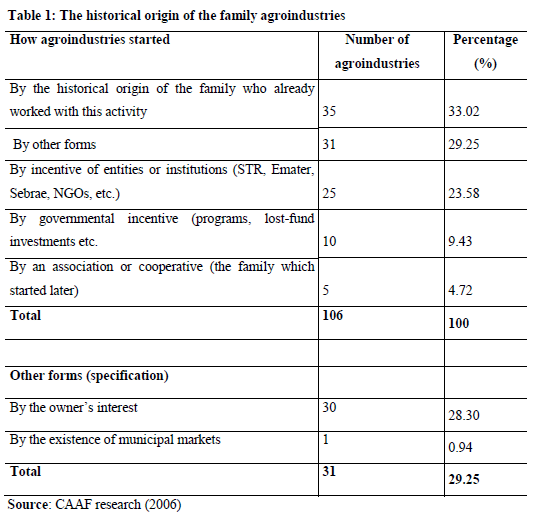
When the industrial revolution eliminated the handcraft manufacturing of the colonists' working tools and they had to turn to the market to buy the products they did not produce any longer, it started a process of transformation of the technical-productive basis of agriculture and also the predominance of the capital over the agricultural activities. At first, it was the predominance of commercial capital and later it became agroindustrial capital. We can say that the transformation consolidated the Green Revolution in the 1960s and 1970s and completed itself with the current globalization of economies (ALTMANN, 1979). However, the farmer was not deprived of the transformation practice of its products let alone the production for its self-consumption. So the agroindustrialization practice resulted from a cultural process lived by these families and passed again from one generation to another, as shown in Table 1.
]]>
The data show that 33.02% of interviewed agroindustries have their origins from the family's history, that is, their constitution is bound to the knowledge inherited and persisted from one generation to another in the interior of the familiar group. This is what Woortmann and Woortmann (1997) called transmission of "the body of knowledge" which occurs among the family farmers in Brazil. These data corroborate with other studies conducted in Rio Grande do Sul and Santa Catarina (RELATÓRIO DE ESTUDO ESPECIAL, 2002; MIOR, 2005; OLIVEIRA et. al., 1999) which also found a significant number of family agroindustries originating from the farmers' historical traditions and knowledge. The ratio of 29.25% of agroindustries have their origin in different forms, integrating the owner's own interests (the leader of the family group) and the wish to take part in the municipal commercialization fairs of the products of the family farm which already existed in the municipalities as a strategy of access to this kind of local market.
On the other hand, 23.58% of agroindustries was created through incentive on the part of entities or institutions linked to the family farm, such as syndicates, Emater, NGOs, etc., showing the relevance of these development social actors in the rural area and technical assistance, as shown in Santos et al (2006) in the case of Mercosul Great Border. Moreover, the action of associations and cooperatives and governmental incentive (public policies) also contributed to 4.72% and 9.43% respectively.8 According to Pelegrini (2003), the incentive for the creation of small family agroindustries to search for aggregating value to agricultural products is a way of providing the region with socioeconomic development. This is a development process based on the already existing alternatives in the rural area where practically each unit of family production is a potential agroindustry, resulting in a considerate increase in the Gross Added Value (VAB) and, consequently, increasing the rural families' income.
The productive chains of the agroindustries
In this paper, we could analyze the reality of all the production systems involving the agroindustrialization of the family farm's products. Therefore, in the analysis of each agroindustry productive chain we could point out which products were more developed by agroindustry in the territory. As shown in Table 2, 74.55% of the studied agroindustries belong to the vegetal production chain, being most of them (46.23%) sugar cane and byproducts, fruits and byproducts (11.32%) and fewer chains of vegetables, cereals, manioc and byproducts, medicinal plants and porongo. This confirms with other studies conducted in the territory (GAZOLLA, 2004; CONTERATO, 2004) which showed the great importance of vegetal production to agricultural development.
]]>
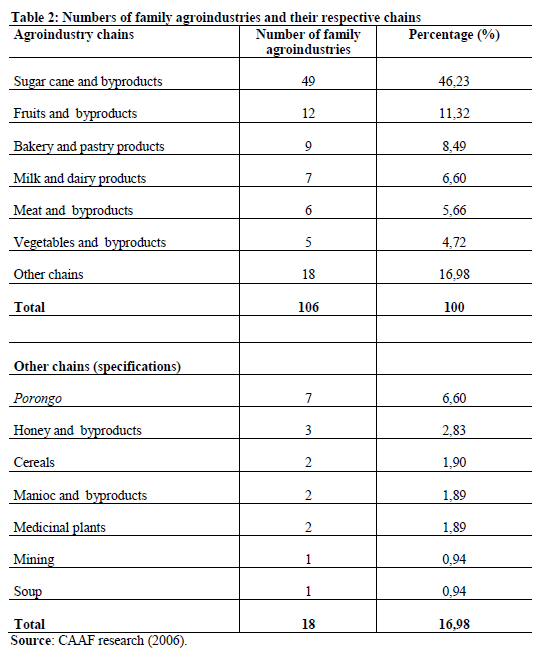
It is worth pointing out the share of the chain of meat and byproducts with only 5.66%, which may be explained by a more difficulty in complying with sanitation legalization of these kinds of businesses if compared with other chains. The meat chain, mainly pork and fowl, is dominated by large food corporations in the territory which makes these initiatives made by the family farmers limited by the strategies of the large agroindustries. The data show an opposite situation from other studies conducted in Rio Grande do Sul (RELATÓRIO DE ESTUDO ESPECIAL, 2002) where the chain of meat and by products were second in relevance, only behind the sugar cane chain9.
Thus, agroindustries usually operate in informality causing problems to the commercialization of their products. In some cases, this also results in the closing of most of agroindustry units by inspection. With this limitation due to the lack of public policies which encourage the de-burocratization of the control system, the agroindustries do not grow and do not take advantage of new markets and commercialization channels. It is also clear the presence of chains other than in the food area, such as stone extraction (0.94%) and soap production (0.94%).
The process of legalization of the agroindustries
The process of legalization requires the agroindustry to keep documents and working licenses updated for the state. This system involves environmental, legal and sanitary licenses with the aim of conforming the agroindustries units to the current legislation so as to guarantee hygiene and sanitation in food production, processing and commercialization and also to comply with the preservation of natural resources, as it is the case of the environmental license. Among the researched agroindustries it was possible to see that their owners find it difficult to get information about this process. As other studies had already pointed out (RELATÓRIO DE ESTUDO ESPECIAL, 2002), legalization is the second main problem of family agroindustries of Rio Grande do Sul. Thus, it is also pointed out that these agroindustries do not process in bulk, which makes the total legalization of the productive unit unfeasible. Moreover, they face a lot of difficulty in accessing the formal market channels due to the informality of their commercialized products.
According to Prezotto (2001), the implementation of small rural agroindustries depends on several factors, particularly the ones related to their legalization. In this case, many kinds of licenses are needed related to both the legal form of the farmers' organization and sanitary and environmental issues. All these licenses follow a set of laws which state for and guide the process of legalization.
The situation of the researched agroindustries is displayed in Table 3. It shows that most of agroindustries are informal (61.32%), which is worrying because in this situation the main problems are two-fold. On the one hand, the businesses cannot access new markets and consolidate as an alternative to the families' income and, on the other hand, their products are being commercialized outside the production area, which may offer potential risks for the consumers as there is no guarantee of their origin, hygiene and nutritional and microbiological quality.
]]>
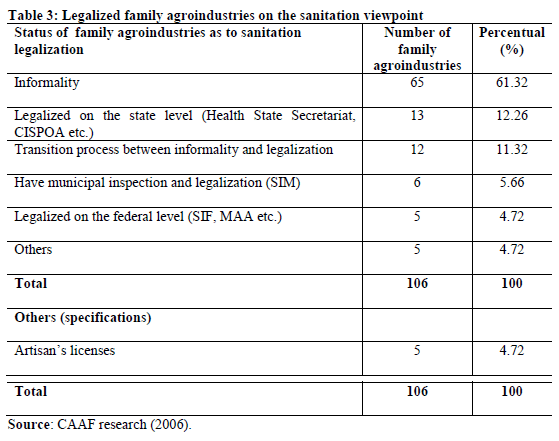
Besides the informal businesses, 11.32% are in transition process between informality and legalization, which confirms the difficulties faced by the farmers in this process. By adding these two percentages, we can say that 72.64% of agroindustries are not legalized on the sanitation viewpoint, which is very worrying, demanding that the development institutions and social actors of the territory mobilize themselves in an attempt to reverse this discouraging picture.
Moreover, 22.46% of agroindustries are legalized in some state levels: state level (12.26%), federal level (4.72%) and municipal level (5.66%). These businesses are legalized in different state levels depending on the type of chain/activity they belong to and the legislation and technical rules of manufacturing each processed product.10 There are 4.72% of the porongo productive chain which have artisan's license and are exempt from any of these legislation as they belong to a practice of the product's handicraft improvement.
Agroindustrialization, production and income generation
In this second part of the article, we will discuss aspects and registers related to production, processed products and incomes generated by the agroindustries in the territory as a way to explain the mainly economic and productive aspects of the businesses. To do so, we analyze some aspects of the agroindustries' raw material (their own production and purchase), the origin of agroindustrial inputs and generated income.
The origin of the raw material
It is important to know the origin of the raw material processed in the agroindustrial business because, depending on whether it is bought outside the unit or produced in its interior, we can have an idea of the degree of contribution of the family strategy to its production and so know if the agroindustry really has a family character or not. In relation to the origin of the raw material bought by the researched agroindustries, it is worth pointing out their potentiality since 45.30% declared that the raw material is totally produced in the rural property (Table 4). This figure is important as it shows that the production of the own raw material by the units is a factor that leads to their autonomy in the face of the market (purchase of raw material) and also to a strategy of reducing production costs. These figures concur with other studies in the area (RELATÓRIO DE ESTUDO ESPECIAL, 2002; MARKOSKI and CALEGARO, 2006) in which the own agroindustry also produced most of the raw materials, showing the relevance of the family logic to this kind of business.
]]>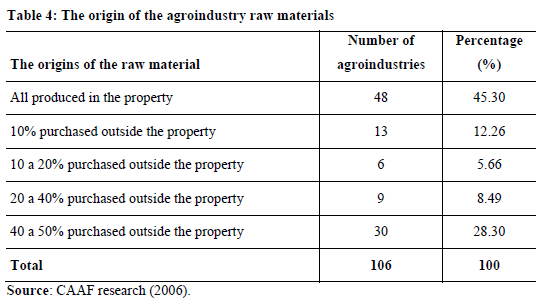
We can see that 28.30% of the agroindustries purchased between 40% to 50% of the raw material outside the property, which makes them not only dependent on the market but also running the risk of not having a proper supply, in the required amount and with raw material of quality. It is also relevant the number of units which purchase up to 10% of the raw material from other rural properties (12.26%). On the other hand, 8.49% and 5.66% of the agroindustries purchase their raw material from 10% to 20% and from 20% to 40% respectively. Some agroindustrial units purchase part of the raw material outside the unit, regardless of the percentage purchased, being 54.70% of the researched businesses purchase some raw material outside the production unit. The concern with the purchase of raw material is also recurring in other studies which sought to evaluate the potential of the family farms, as in Santa Catarina (OLIVEIRA et al., 1999; BRDE, 2004) and Rio Grande do Sul (RELATÓRIO DE ESTUDO ESPECIAL, 2002), this being one of the main problems the small rural agroindustry sector is to face in the next years.11
This can be worrying in a strategy of agroindustry social reproduction in long term and also in the cases in which the percentages purchased outside the property are close to half of the produced raw material. On the other hand, it may not be worrying in those cases in which the purchases have low percentages – 10%, 20% or 30%, because in such cases there is not a great dependency on the agroindustry in relation to the supply of raw material. The raw material of the family agroindustry in these cases is sometimes purchased by neighbors who live next to the unities, relatives, friends and other farmers from the same community or nearby communities. Then this is not a problem because in most cases the prices of the raw material is not arbitrated by the market but rather by the relations of friendship, partnership and kinship among the families.
However, when a great part of the raw material is purchased outside the agroindustrial unit, the family farmer gets into a dangerous market logic on the viewpoint of its social reproduction, since, as to Ploeg (1990; 1992), this commoditization is growing and so is its social and economic dependency on the suppliers. In this case, the farmer can start facing several problems, such as the high cost of this raw material, the loss of autonomy in the productive and decisive process, the degradation of raw material prices, the lack of raw material, the supply of inappropriate raw material (without microbiological and nutritious quality, without standardization, etc.).
Nevertheless, the greatest problem in this case is the loss of the family logic of the the farmer's social reproduction because if he purchases most of the raw material to process and produce food outside the productive unit, he, on the sociological viewpoint, does not bear all of the predominant traces of family's work and management any more, which is what gives its own sense and meaning. That is, the character of the family agroindustry ceases to exist and we can even call it a business, as in the neoclassic theory.
The non-production of raw material is a way for what Ellis (2000) called the vulnerability of the farmers' autonomy and social reproduction, which happens when agroindustries weaken their autonomy as long as they purchase the raw material from any unknown market, which in turn is arbitrated by the real prices of production. This represents a vulnerability to the strategies of the agroindustries' social reproduction since they will depend on the market on the one hand and, on the other hand, they do not have guarantee of supply and, in some cases, they will also depend on the quality of the origin of the purchased raw material to be processed in their businesses.
The origins of the inputs used in the agroindustrial units
The origin of the inputs used in the agroindustries is important to provide for the degree of externalization in the family business, as referred to by Ploeg (1990; 1992),12 because this is the degree of externalization of the productive process, in this case represented by the index of the use of external inputs, which will reveal the degree of the commoditization of the researched agroindustries. Thus a larger externalization of the inputs purchased by the agroindustries is directly proportional to a larger level of commoditization of this unit for the social and economic context and to a larger dependency on their social reproduction in relation to the exterior, that is, outside their 'gate'.
]]> Based on the data displayed in Table 5, we can see that most of the farmers purchase part of the inputs outside the production unit and part are produced in the own establishment (56.6%). If we also consider the percentage of 35% of the businesses which purchase all the raw material outside the property, most of researched agroindustries have a high level of commoditization (Ploeg 1990;1992) because they purchase in the market, at market prices, the necessary factors for the production and processing of elaborated and commercialized food. This causes the vulnerability of many businesses since they become dependent on the market to accomplish the basic steps of food manufacturing, Likewise, social reproduction of the agroindustries starts to be threatened because the more commodified the family business is, the bigger the chances of its losing the productive autonomy, the capacity to face eventual crises and the bigger the production costs and smaller the family domain over the process of work and management of the own business.
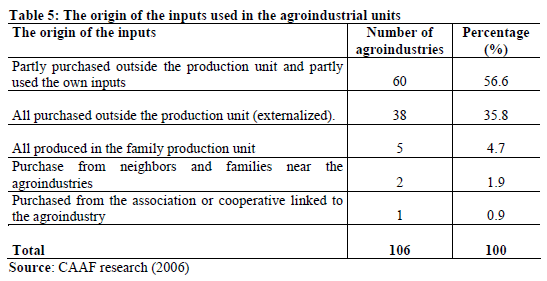
In a less significant process, 4.7% of the family agroindustries produce all the inputs used in the business, showing their autonomy in relation to their productive process and food manufacturing. These are cases of large artisan-based agroindustries since the production of raw material production, their own agroindustrial equipment and machinery, the inputs used in food processing and their own agroindustry premises built by the family, showing a unique control over the process of work and management.13 This kind of situation is more common in agroindustries of vegetal production because the farmers have more handcrafted processes and inputs in their system of food production and processing.
Some other 1.9% of the agroindustries declared that they purchase inputs with their neighbors, which means that they still bear this cooperation character as a way to face the difficulties during the agroindustrialization process. Only 0.9% of the agroindustries declared that they purchase the inputs from the association and/or cooperative they belong to.
In the case of the agroindustrialization of the family farm production, it is common to find higher levels of commoditization than the in the family farm productive systems. The reason is simple: in the agroindustrialization production, in most of the processes of food processing and aggregation value of raw material, they use additives, chemical substances, enzymes, nourishments, special salts, microorganisms, etc. so as not to allow the family farmer to have its own manufacturing process because he does not have the necessary knowledge and techniques for such.
After this viewpoint, legislation states, in many cases, that some of the mentioned substances should be added food so as the product can comply with sanitation, hygiene and microbiological stability rules and, as far as specific legislation is concerned, as is the case for example, of some stuffed food like Italian salami, frankfurters etc. Thus, family farmers are almost 'obliged' to commercialize and purchase these additives to produce and sell their foods.
The incomes in the agroindustrialization process
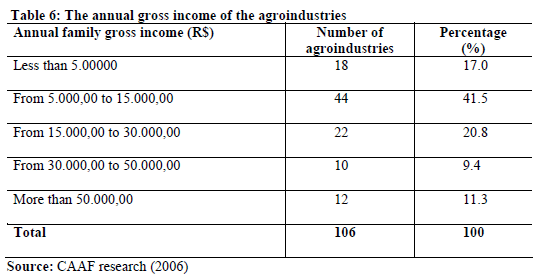
]]> A very relevant index in the viability and role of the family agroindustries refers to their incomes, that is, the businesses' annual gross and net incomes14. Table 6 shows the entrepreneurships' annual gross incomes. Most of the agroindustrial units (41.5%) have incomes from R$ 5.000,00 to R$ 15.000,00. Other 20.8% of agroindustries have an annual gross income from R$ 15.000,00 to R$30.000,00 and 17% of the units have incomes inferior to R$ 5.000,00. These are small businesses with little production scale and which work food processing in a very artisanal way. If we still add the agroindustries which have up an annual gross income of up to R$ 30.000,00,we can see that most of them, that is,79.3% of the researched units are placed not beyond this level of annual gross income. This income is considered a high one, which reaffirms that on the economic viewpoint, the agroindustrialization of family farm primary production is a viable and sustainable alternative for the rural families of the territory.
Let us compare, for example, an agroindustry which has an annual gross income of R$ 20.000,00. Considering that the average working members of family farm in the region numbers in four, according to previous research conducted in the territory (Research AFDLP, 2003)15 and that the value of the minimum salary at the time of the research was R$ 300,00, this family earns 66.66 minimum salaries per year. Or rather, considering the income per family member, each member would earn 16.66 minimum salaries per year, that is, R$ 5.000,00, which is considered a good income for the conditions of social reproduction of most units of family production in the territory, which are marked by a large social and economic fragility.
Comparing this income with the AFDLP (2003) research, which was also conducted in the territory, we can have some interesting inferences. In the AFDLP research, the total income per family unit researched was on the average of R$ 10.911,51 per year, which is considered low for the total income, that is, the income of all existing activities in the interior of the productive unit.16 The annual gross income of the agroindustries, on the other hand, according to the example shown previously, is almost twice the amount, showing that the family farm alone in a property is able to generate more income than a traditional family unit which produces, for example, cereals and agriculture commodities, as usual in the territory.
Still, according to Table 6, 9.4% of agroindustries have an annual gross income between R$ 30.000,00 and R$ 50.000,00 and 11.3% have more than R$ 50.000,00 per year. These agroindustrial units are very important and have quite high annual gross income on the viewpoint of the conditions resulted from the social reproduction of the family agriculture of the territory as, according to the previous comparisons, these units have a more comfortable financial situation in economic terms. If an agroindustrial unit gets an annual gross income of R$ 50.000,00, for example, it will be earning around 166.66 minimum salaries per year at the time of the research, that is, R$ 12.500,00 for each member of the agroindustrial unit, considering the average number of four family members per agroindustrial business17.
Table 7 shows the percentage relation between the net incomes declared by the famers of the researched agroindustries and percentage their gross incomes. The net income is understood as the one coming any from animal, vegetal or household transformation production which results in an agricultural productive process, after discounting the production costs of the family business (GAZOLLA, 2006).18
]]>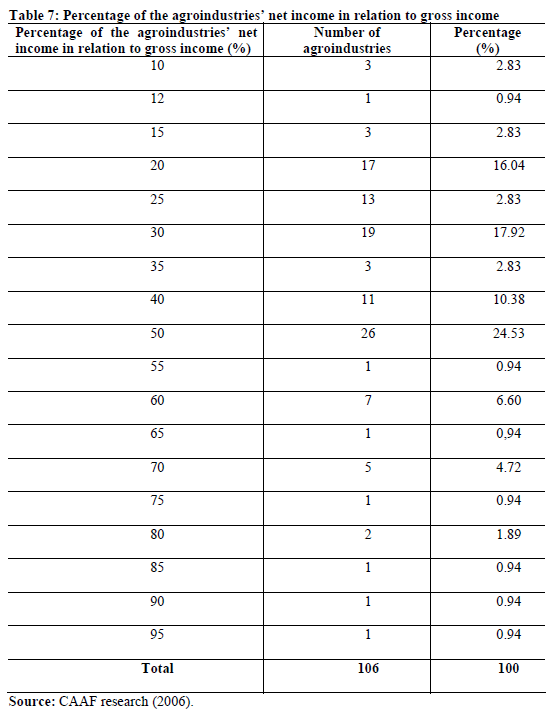
In Table 7, we can see that 24.53% of the agroindustries have a net income equivalent to 50% of the gross income, that is, the agroindustries have a net income which is equal to half of the businesses' gross income. On the other hand, 17.92% of the agroindustries have a net income of 30% of the gained gross income and 16% have a net income which is equal to 20% of the gross income.
Few researched agroindustrial units have high net incomes, that is, over 50% of the gained gross income. Only 6.60% of the units have a net income which is equal to 60% of the gained gross income and 4.72% have a net income which is equals to 70% of the gained gross income in the year. In short, 81.13% of the agroindustries researched have a net income which may reach up to 50% of the gained gross income. On the other hand, over 50% of the gained gross income is equals to 18.87% of the net income the units can reach.
On the viewpoint of rural administration and financial management, most of the units are in a comfortable financial situation as they are reaching high incomes (81.13% have net income up to 50% of the gross income) after discounting the main production costs, which shows that food production and processing and products based on family farm are innovative and profitable forms of social reproduction of agriculture in the territory.19 Thus, family agroindustry is, on the viewpoint of income generation, jobs and maintenance of man in rural spaces, a very important strategy of social reproduction and should be one of the 'pillars' on which any rural development program or project should be based for this social section on local or territorial level.
Final remarks
The first conclusion we can withdraw from the study is that the agroindustrialization process started with the process of colonization and development process of High Uruguay territory (RS). The agroindustrialization of raw material of the family farm arises initially out of the colonists' knowledge and needs to feed themselves and preserve their products. This process should be understood because besides bringing with themselves the knowledge and techniques of the production of processed food, the colonists also had nutritious needs based on their own production and consumption of both in natura and processed food.
What happens in other situations is the development of processed foods which could be preserved for future consumption, as is the well-known case of pork preservation in its own fat. This was a very important aspect in the beginning of agroindustry though the process of agroindustrialization of the family farm production had perhaps not been triggered if the crisis of the development of productive pattern in the territory had not worsened. Therefore, if on the one hand the capitalist development of the agriculture gave rise to the fragility and impoverishment of the rural families, on the other hand, it made the farmers search for alternatives, among them, agroindustrialization. So, the same social process created different effects on the social actors embodied in it.
]]> A growing concern should be with the development and the large number of informal agroindustries. Informality, that is, businesses dealing with processing and commercialization of food products which are not licensed by control bodies, is one of the greatest problem of this economic and productive activity in the territory, as shown in the research data. On the one hand, the informality of any kind of activity (environmental, healthy, fiscal etc.) is a constraining factor to the growth and expansion of the strategy of the social reproduction of family agriculture while, on the other hand, it embodies the lack of guarantee of quality to consumers who buy the products and who can even develop health conditions. Moreover, it is crucial that the development social actors, food technicians and political leaders of the territory and outside it include in their commitment agenda the aid to the process of legalization so as family farmers have a support and a reliable source of information about what to do to legalize the agroindustries units according to the legislation.Another problem faced by the agroindustries is the lack of enough raw material for making their products because the family group who works in the family farm is often small and many times there is lack of work force in the units. Therefore, the family group cannot cope with all the operations and processes involved in food production even in those cases where employees are hired. This happens because the agroindustrial activity is, by definition, an activity which demands a longer period of time and more skills and knowledge than the practice of agriculture. Moreover, the family has go work in several stages, from the production and acquisition of the raw material, the processing of different elaborated products to their commercialization and the management of all property where the activity is developed.
So, the production of the own raw material is quite difficult in the units, which makes them search for different sources. The purchase of raw material outside the agroindustrial units is characterized as an externalization of the production process, as defined by Ploeg 1990; 1992), and make agroindustries over and over more dependent on this exogenous phenomenon. Besides, the purchase of raw material make the units directly rise their productive costs once family agroindustries, as units with low floating capital and small scale of production, cannot afford, for example, a process of raising the price of raw material by their suppliers.
This is so much true that the high production cost is the greatest problem faced by agroindustries on the productive level. So, these two processes, externalization and high-priced raw material bought outside the agroindustrial units, in medium and long term, can jeopardize the process of social reproduction of the businesses. However, the most important is that, when the family farm buys a large amount of raw material used in the manufacturing of processed food, it becomes less and less a family farm, that is, it loses its family logic and can be seen even as a business or industry which buys goods to be changed, aggregating value and reselling them differently.
Besides these problems, the family agroindustry is a very important strategy of social reproduction for the rural families of the territory, particularly on the economic, social and productive viewpoint. On the economic and productive viewpoint, this activity is synonymous of exchange value and income and job generation for the territory and the farmers who practice it. The CAAF research data are quite clear about that and show that the activity has a huge potential of income generation for the families, much more than other agriculture activities, for example, if compared to the agriculture of cereal producers. This confirms the family agroindustry as a consistent economic and productive strategy of social reproduction of the families and places it in the centre of the debate as a strategy of sustainable development in medium and long term for the rural spaces of the territory.
On the other hand, by generating income, jobs and occupations for the rural population of the territory, this activity helps to stop the intense migratory flows from the mid-1970s with the increase of the process of commoditization of family agriculture and its consequent social fragility. Thus, agroindustry plays its very important social role to keep the man in the rural space working, producing food and living with his family.
Still on the productive viewpoint, the research shows that the family agroindustry is a potential resource of production of unprecedented flavors, scents, tastes and differential products. Much of the food processes are so-called ecological, organic or agroecological as they have, in many cases, all the productive process based on the non-utilization of pesticides, chemical inputs and other products derived from the industry of agriculture modernization. On the viewpoint of the preservation of food naturalness and health benefits, they are an invaluable source of wealth. Moreover, the research showed that 75 different products were collected, made and processed among the 106 agroindustries researched. This confirms the great diversity of products that agriculture and family agroindustry can produce and supply for the population of the territory, playing an important role within a larger scheme of local development as, for example, helping to guarantee food security for the population who buys and eats their products.20
References
ALTMANN, R. A agricultura familiar e os contratos: reflexões sobre os contratos de integração, a concessão da produção e a seleção de produtores. Florianópolis, 1997.
BRDE. Redes de agroindústrias de pequeno porte: experiências de Santa Catarina. Florianópolis: Banco Regional de Desenvolvimento do Extremo Sul, Gerência de Planejamento de Florianópolis, 2004.
CODEMAU (Conselho de Desenvolvimento do Médio Alto Uruguai). Available at www.fw.uri.br/codemau in March 2007.
CONTERATO, M. A. A mercantilização da agricultura familiar do Alto Uruguai/RS: um estudo de caso no município de Três Palmeiras. Dissertação de Mestrado. Programa de Pós-Graduação em Desenvolvimento Rural/UFRGS. Porto Alegre, 2004.
ELLIS, F. Rural livelihoods and diversity in developing countries. Oxford: Oxford University Press, 2000.
FEE. (Fundação de Economia e Estatística). Núcleo de Contabilidade Social, 2001. Available at < http://www.fee.tche.br> on 09/04/2004.
GAZOLLA, M. Agricultura familiar, segurança alimentar e políticas públicas: Uma análise a partir da produção para autoconsumo no território do Alto Uruguai/RS. Master Dissertation. Programa de Pós-Graduação em Desenvolvimento Rural/UFRGS. Porto Alegre, 2004.
GAZOLLA, M. Apostila didática de Gestão Rural I: Conceituação básica. Universidade Federal de Santa Maria (CAFW-UFSM). Unpublished. Frederico Westphalen, 2006.
HOFMANN, R. et al. A administração da empresa agrícola. Pioneira: Economia-Estudos agrícolas, 7ª ed. São Paulo, 1987.
IBGE. Censo Demográfico, 2000.
MARKOSKI, A., CALEGARO, C. A. Perfil socioeconômico e mercadológico das agroindústrias da Região do Codemau. Série Pesquisas Sociais Aplicadas. Editora da URI: Frederico Westphalen, 2006.
MDA. Estudo da matriz produtiva do território do Médio Alto Uruguai. Diagnóstico para elaboração do plano safra territorial. Apresentado durante plenária do território do Médio Alto Uruguai. Frederico Westphalen, 2007.
MIOR, L. C. Agricultores familiares, agroindústrias e redes de desenvolvimento rural. Chapecó: Argos, 2005.
OLIVEIRA, J. A. V. et al. Avaliação do potencial da indústria rural de pequeno porte (IRPP) em Santa Catarina. Florianópolis: CEPAGRO, 1999.
RELATÓRIO DE ESTUDO ESPECIAL. "Diagnóstico e potencial das agroindústrias familiares do estado do Rio Grande do Sul". Cooperativa dos Engenheiros Agrônomos de Santa Catarina. Florianópolis 2002.
RÜCKERT A. A. et al. A construção do território na região de Ronda Alta: ocupação e colonização: 1831-1996. Porto Alegre: Secretaria Municipal de Educação e Cultura de Ronda Alta, 1999.
SACCO DOS ANJOS, F.; SCHNEIDER, S. Agricultura familiar, desenvolvimento local e pluriatividade no Rio Grande do Sul: a emergência de uma nova ruralidade (AFDLP). Pelotas, 2003. [Relatório Final – Projeto de pesquisa CNPq-UFPel (PPGA)/UFRGS (PGDR)] .
SANTOS, R. C. et al. Caracterização das agroindústrias familiares localizadas na área de abrangência da Messoregião Grande Fronteira do Mercosul. In: Revista da Emater: Extensão Rural e Desenvolvimento Sustentável. Porto Alegre: v. 2, n. 1/2, jan./ago., 2006.
SCHNEIDER, S.; WAQUIL, P. Caracterização Socioeconômica dos Municípios Gaúchos e Desigualdades Regionais. Revista de Economia e Sociologia Rural, v. 39, n. 3, jul../set., 2001.
PELEGRINI, G. Estudo dos fatores condicionantes do processo de formação e atuação das associações de agroindústria familiar. CPGEXR/UFSM: Master Dissertation, Santa Maria, 2003.
PELLEGRINI, G., GAZOLLA, M. Caracterização e análise das agroindústrias familiares da Região do Médio Alto Uruguai (CAAF, 2006). Relatório Final de Pesquisa. Edital FAPERGS 001/2005 – PROCOREDES, Frederico Westphalen, 2007.
PIRAN, N. Agricultura familiar: lutas e perspectivas no Alto Uruguai. Erechim: EdiFAPES, 11, 2001. (Série Pensamento Acadêmico).
PLOEG, V. D. J. D. Labor, markets, and agricultural production. Boulder, San Francisco/ Oxford: Westview Press, 1990.
_____________. El processo de trabajo agrícola y la mercantilización. In: GUZMAN, E. S. (ed..) Ecología, Campesinato y Historia. España: Las Ediciones de La Piqueta, 1992.
PRESIDÊNCIA DA REPÚBLICA. Grupo de trabalho interministerial de inspeção e fiscalização sanitária de alimentos. Relatório final, Portaria Interministerial n. 220, de 29 de março de 2005.
PRESOTTO, L. L Principais procedimentos para registrar uma pequena agroindústria. Ministério de Desenvolvimento Agrário. Secretaria da Agricultura Familiar. Brasília, janeiro de 2001.
WAIBEL, L. Princípios de colonização européia no sul do Brasil. In: Revista Brasileira de Geografia. Ano 11, n. 2. IBGE, Rio de Janeiro, 1949.
WOORTMANN, E. F.; WOORTMANN, K. O trabalho da terra: a lógica e a simbólica da lavoura camponesa. Editora da UNB: Brasília, 1997.
1 Pellegrini study (2003) was conducted in the municipality of Palmitinho-RS whereas Markoski and Calegaro (2006) conducted their research in the territory of High Uruguay with a sample of 13 agroindustries though not all of them are family ones.
2 The CAAF research (2006) was supported by Fundação de Amparo a Pesquisa do Estado do Rio Grande do Sul (Fapergs), through Edital Pró-Coredes n. 001\2005, to which we acknowledge the available resources.
3 The 2000 Demographic Census data show that 81.6% of the population of the state of Estado do Rio Grande do Sul was urban and 18.4% was rural, a considerable inequality compared with the universe researched here. By observing the data published by IBGE, we can consider that the micro region of Frederico Westphalen is the second "more rural" in relation to the other micro regions in no Rio Grande do Sul. The first position is held by the micro region of Restinga Seca, where 57.2% of the population was considered rural and 42,8% were considered urban. ]]>
4 These data were collected at www.fee.tche.br, available on June 6 2005. Coredes are the 24 regions of planning and development of the state of Rio Grande do Sul.
5 See Schneider and Waquil (2001).
6 At first, the choice was for a complete survey of the agroindustries. However, the survey was conducted in the municipalities based on information provided by Agriculture Secretariats and/or Emater. Thus it is possible that there are some mistakes, as it is the case of several agroindustries in some municipalities which were not included in the research.
7 The information about inactive agroindustries is beyond the scope of this article since this is not the main focus of the analysis conducted here.
8 Most of the agroindustries were said to be created in the last five or eight years in the territory, which coincides with the existence of the Family Agroindustry Program of Rio Grande do Sul, in force from 1998 to 2002. This program brought many benefits to new agroindustrial businesses, such as the prospects of financing, the production sale with the so-called Producer Invoice, some tax exemptions and quality standard of the products (known as 'Gaucho Flavor').
9 It is worth pointing out that that study was conducted by sample research in some regions of the state and not only one region belonging to a Corede, as it is the case of this research. And, also, in northern RS covered in the research of the Agriculture Secretariat. And also, in the north region of RS included in the research of the Secretariat of Agriculture of RS comprised only the Microregion of Erechim.
10 Nowadays there is more flexibility on the level of commercialization and inspection of agricultural and agroindustries with the implementation of the Unified System of Agriculture Health (SUASA).Wit this system, there was a more weakening of the borders among the federal, state and municipal levels of inspection and hygiene of the products, facilitating the operations of legalization and the access to the market by the farmers and owners of family agroindustries. For example, a product manufactured on the municipal level and which has de Municipal Inspection Service (SIM) can now be commercialized within the same state, which was not accepted previously. For more details about SUASA, see Presidência da República (2005).
11 In the Relatório de Estudo Especial (2002: 15) made in Rio Grande do Sul, when the agroindustries were researched about their main problem, 68,9% of the interviewed answered that they were related to the production of raw material.
12 According to Ploeg (1992: 170 ), "the externalization is the [...] multiplication of commercial relations. The tasks which were initially organized and coordinated, under the farmer's command, will now be coordinated through commercial interchange and by means of a newly system established of technical-administrative relations. This growing externalization not only affects the production activities, but also results in a complete transformation of the reproduction process.
13 In many cases it is widely known the creativity character some farmers have in relation to agroindustrialization. There are cases in which the farmer builds almost all his machines and equipments for the processing of sugar cane byproducts (syrup, rum, sugar, brown sugar etc.), as found in the municipality of Caiçara. The most usual is to buy these equipments in São Paulo, a large producer region, but they are over-dimensioned for the production scale of a family agroindustry. Thus, the solution created by this farmer was to create most of his machinery and equipments for the processing of sugar cane in his agroindustrial unit, keeping a high level of autonomy of his productive process and showing that, in some cases, it is possible to work keeping internally in the property the resources used in food production and processing. ]]>
14 According to Hoffman et al. (1987), the gross income of a production unit is the income got from the sales of animal and vegetal products, by a certain price, in one-year time. That is, the income got only from the production originated from agriculture stricto sensu. On the other hand, the net income is the result of the subtraction of all the productive costs of the productive unit during the agrarian year, from the gross income it got. It is worth saying, it is the resultant income after discounting the production expenses.
15 Research AFDLP means the research project called "Family Agroindustry, Local Development and Pluriactivity in RS: The Emergence of a New Rurality", conducted in 2003. This project focused on the territory of High Uruguay (RS) and so it is used for specific comparative purposes in this article.
16 The definition of total income, by the AFDL research (2003) is the one composed by the totality of the incomes extracted in the production unit. By incomes were considered agricultural, retirement and alimony incomes, from other sources, other jobs and non-agriculture incomes. It is also worth pointing out that, in the concept of total income, the production costs are already discounted which, in the CAAF research (2006), the income is declared, that is, the production costs were not calculated and discounted from the annual gross income. But even so, we have chosen to keep the comparison as a way to show the potential of income generation that family agroindustry represents for the territory.
17 It is clear that, with this level of annual gross income, there should be not only the four family members but also some hired labor force working in the family business. However, even so, we have chosen to keep the comparison as a way to show the role played by the income in the family agroindustry.
18 In the case of family agroindustries, the net income is the one got after being discounted the fixed and variable costs of production. The main fixed costs are: the depreciation of the agroindustry's premises, machines and equipments, the payment of insurance and taxes, financing, investments and permanent employees, etc. The main variable costs are: the purchase of raw material, food additives, packaging, non-permanent work force, energy, water, financing of expenses, etc.
19 A MDA study (2007) shows that while a traditional culture of the territory, such as corn, soya, wheat etc., can generate at most R$ 400,00 per ha, family farms of fruits and sugar cane can reach up to R$ 4.000,00 per ha.
20 This is so much true as many of the researched businesses sell these products for the Federal Government Zero Hunger Program which, in turn, sends them to needy kindergartens, schools, hospitals etc. from various municipalities of northern gaucho.