Planificación y Control, la relevancia del Estado en la conducción de las redes de políticas (policy networks)
Federico Traversa
B.A on Political Science from University of the Republic. Research Assistant in the State Reform Program from the Political Science Department from the Faculty of Social Sciences from University of the Republic
Translated by Rafael Piñeiro
Translation from Revista Uruguaya de Ciencia Política, Montevideo, n.14, p.43-65, 2004.
]]>
ABSTRACT
Over recent years the State has progressively included the private and tertiary sectors in the implementation of public policies, creating, thus, true "policy networks". However, the effects of this new style of policy management are not limited to the manner in which public policies are implemented, but also affect the global logic of those policies and their outcomes. The role of the State in this new order is unclear, in particular following the strong attacks on the Public Administration that took place during the final quarter of the last century. This article analyzes the policy network that has developed around the Ministry of Housing, Ordenance and the Environment's housing programs since 1991. The research concludes that transparency and equity in public policies are not achieved by the simple creation of a policy network. The State therefore has an important role to play in the new forms of management, but the author has the view that efficient action on the part of the State depends on the existence of a technically qualified Public Administration with personnel policies that must be defined independently of party politics.
RESUMEN
En los últimos años el Estado ha incorporado progresivamente al sector privado y el tercer sector en la ejecución de las políticas públicas, conformándose verdaderas "redes de políticas". Sin embargo los efectos de estos nuevos modos de gestión no se reducen al modo de implementar los programas públicos, afectan también la lógica global de las políticas y sus resultados. La función del Estado en este nuevo esquema no es clara, sobre todo luego de los fuertes ataques recibidos por la Administración Pública durante el último cuarto del siglo pasado. Este trabajo analiza la red de políticas desarrollada en torno a los programas de vivienda del Ministerio de Vivienda Ordenamiento Territorial y Medioambiente desde 1991, y los resultados a que arriba la investigación permiten afirmar que la transparencia y equidad de las políticas públicas no son alcanzadas por la mera conformación de una red de políticas. El Estado tiene entonces un papel importante que desempeñar en los nuevos modos de gestión, pero, en opinión del autor, un accionar eficaz requiere una Administración Pública calificada técnicamente y con políticas de personal definidas con independencia de la política partidaria.
Introduction
The decade of 1990 witnessed a renewed discussion regarding the role of State. Once the pressure for privatization in the 80's slackened, a second wave of changes was verified. This focused more on new ways of management for the public sector rather than the size of State. Thus, during the last fifteen years public agencies stopped acting as the only direct providers of goods and services, to start working in a coordinated way with private businesses and the tertiary sector. In this scheme, steering functions are still under State responsibility while rowing functions are carried out by others.
A new theoretical concept has arisen to report on this change in the way to manage public issues: policy networks.1 Many authors refer to the change in the role of State with the progressive introduction of private agents in public policies, and use the concept of policy networks to discuss and illustrate these transformations (Mayntz 1994; Marsh 1998; Rhodes 2001). However, we are still in a period of revision and discussion of the last years' experiences of reform. According to many authors, the role of State in policy networks should be marginal, which has generated bitter attack on public administration and its traditional ways of acting and internal organization (Hughes 1994).
]]> This article analyses the results of a policy network that emerged with the creation of the Ministry of Housing, Ordenance and Environment (MHTOE) in 1990. Taking this experience as a starting point, this work is inserted in the debate connected with the role of State in policy networks, reaching two conclusions. Firstly, a successful development of these new ways of management crucially depends on State action in policy planning and controlling the activity of those private agents that participate in their execution. Secondly, it is stated that an adequate State performance in functions of planning and control is only possible within the framework of such an organization of public administration that assures technical competence and political neutrality of civil servants.This work is structured in three parts. First, there is a description of the policy network that has been created around the MHTOE, the functions that the Ministry carries out are studied and some of the results this network has generated with regard to housing policies are analyzed. Secondly, there is a discussion of what functions the State should carry out in the running of a policy network. This is a theoretical debate where the case of MHTOE contributes with key data as an example of certain failures which can take place when no sufficient importance is given to control or planning technical planning in the public sector. Lastly, in the third part, there is an argument stating which characteristics the administrative machinery of the State should have to provide better running of public policies and some general deficiencies the Uruguayan central administration has when carrying out these duties are analyzed.
2. MHTOE and housing policies in Uruguay (1991-2000)
Uruguay has perceived itself as "a middle class country", this valuation has had influence in the expected role of public policies; according to Carlos and Fernando Filgueira (1994: 86): "The extension of State assistance to the poorest sectors is admitted. But these selective policies are not well viewed if they imply, in exchange, the suppression of a benefit to the middle sectors". Regarding MHTOE, it has to be said that since its creation (1990) its housing plans have adopted a different perspective, concentrating its resources in the poorest sectors of the population. This orientation is exposed in the first National Plan of Housing of MHTOE: "Housing policies have to have awareness that resources will always be limited as a starting point [...] Thus, policies should be selective, giving priority, on equity and solidarity grounds, to areas or sectors devoid of resources" and decides "to make substantial changes in the orientations still in force in this subject" (MHTOE 1990: 1-2)
This was not the only innovation that accompanied MHTOE's creation; a new way of acting for the public sector was also inaugurated: "the Ministry's function has to be orientating, giving priority to the articulation of contributions from private and public organisms, and supporting the development of private initiative and free competence among economic agents, to optimize the results of investment". Busquets (1996: 9-10) analyzes these first transformations in housing policies and states that the changes coincide with the recommendations made by international organizations (BM, PNUD, BID-PNUD) in those years which underlined the need to focus social public expenditure on economically vulnerable groups, and promoted participation from the private sector and civil society in the management of public policies. As we will see, both recommendations were adopted from the beginning by MHTOE.
2.1 Brief description of MHTOE's housing programs
MHTOE's housing policies are composed of different courses of action that work in coordination with various organizations and businesses, mainly from the private sector. In the year 1993 started a programme called SIAV consisting of a system of direct subsidies to beneficiaries, aiming at the acquisition of new or used houses in the market. The implantation of the second Five-year Plan for Housing (1995-1999) implied an important change as it continued financing directly the families for them to purchase houses, but at the same time it priorized the building of new houses, giving the families a house built by private promoters and paid with resources from the National Fund for Housing (NFH), administered by the Ministry.
Appart from this policy of direct subsidy to families, the Ministry also carries out the so called "Transition Program", which finances Housing Cooperatives, builds houses coordinatedly with some Town Halls, and partially sustains the activtiy of MEIRH (Movement to Erradicate Insanitary Rural Housing). In the case of housing cooperatives, MHTOE finances those whose members have incomes lower than 600 dollars per family, being them saving and lending cooperatives or voluntary work. MHTOE gives in these cases direct subsidy of 3740 dollars to each family, independently from their income or the house's value.2
In 1995, an agreement was signed with MEIRH where MHTOE undertook to subsidy in 80% the value of the house built, in a total amount that could not be more than 13 million dollars a year until the year 2000. finally, together with the Town Halls, MHTOE agreed to subsidy the building of Evolving Basic Nucleuss (EBN's onwards) to mitigate the effects of floodings in 1997, the Town Halls of Artigas, Salto, Paysandú, Soriano and Cerro Largo undertook to provide the sites and minimum infrastructure for building. MHTOE also celebrated agreements with the Department of the Interior (housing for police officers), Montevideo's Town Hall (relocation of 200 families from Miguelete) and Bargain and Planning Office (building of EBN's to relocate families after relocating shanty towns). Lastly, since law 16.736 from 1996, MHTOE is in charge of building houses for retired people and pensioners with monthly allowances below two minimum salaries (resources come from a single account that collects a percentage from IRP over pensioners and goes to the NFH)
]]> In spite of not having outlined in detail all the policies that MHTOE carries out, it is highlighted the existance of some general characteristics shared by all of them. Firstly, public expenditures focuses on sectors devoid of resources: the target population of these policies is formed by Nuclear Families with Incomes lower than 600 dollars Secondly, all the courses of action foresee a strong component of direct subsidies (in the case of some programs there is a full subsidy to the beneficiary, in other cases it is less, buy it always exists in a certain extent). Thirdly, the Ministry always has a role as articulator and orientator in management of housing policies, where other private and public organisations play an important role.2.2. Housing policy seen as a Policy Network
The way to manage the policies of MHTOE, which involves a variety of organisation in their execution, seems to perfectly fit the characteristics of what academic literature has called "policy networks". Marsh (1999: 8-9] explains this concept: "policy making in networks is about cooperation and consensus building; it involves an exchange of resources between the agents. Policy failure may result from the absence of key agents, the lack of commitment to shared goals by one or more agents or insufficient information or attention. Thus, the key to effective governance is the effective management of the network".
The elaboration of public policies within policy networks implies an exchange of resources among agents, who, apart from having an active role in the materialization of public duties, try to satisfy their own interests. We are going to number some of the agents that take part in managing the housing plans from MHTOE, and clearly state the benefits they gain from their interaction in this policy network.
a) First, the role political parties and politicians, who run the activity of the Ministry, play has to be clearly stated. They have a favourable impact on public oppinion due to housing building. If we take the assumption that being part of a governmental coallition under a presidentialist regime implies a series of costs and some benefits as a starting point, we have to suppose that the National Party has had at least the oppotunity to calculate the possible beneficial effects after having accepted to occupy the Ministry during three consecutive administrations as a minor partner in the last two colorado governments.
The importance of housing plans in connection with political- electoral objectives seems to be clear; at the end of Julio Maria Sanguinetti's second administration the web page "CSI" (Citizen Information Service of Presidency) highlighted the achievements obtained regarding housing during his period in office, referring, as well, to the concession on the part of the previous administration (Lacalle) of numerous solutions to the problem of housing in the months previous to the election: "The first important difficulty came from the concession from the previous Administration, between September and November 1994, of rights of access to housing, being them new or used buildings, to an important group of families that compromised almost all two- year resources for housing from the MHTOE (1995-1996) and from the Mortgage Bank of Uruguay (MBU) during 18 months (until May 1996). The objective was, then, to comply with the duties assumed by the previous government, affecting important resources, but destined mainly to buying used buildings, when they were also required to reactivate construction".
On its part, the Society of Architects of Uruguay also underlines how affected housing policies are by political- electoral cycles, and their importance to the construction sector: "[...] if we analyze the budgetary execution of the period 1990-95 (we use this period because it is the one for which we have data) we realize the impossibility to plan and the risks that are run when investing in the construction sector [...] In the year 1990 72% of what had been approved to invest in housing was executed, in 1991 9% was executed, in 1992 10%, in 1993 23%, in 1994 (year of election) 79% and in 1995 24%. If the budget was already insufficient, its partial and random execution leads to distortions impossible to overcome without severe consequences for the sector" S.A.U. (2000).
b) A second group of agents of great relevance to the network, is the one composed of private enterprises of the construction sector, favoured by the expected investment of nearly U$S 300.000.000 (between undertaken and programed projects) for the period 2000-2004. The importance of public investment for the Board of Construction of Uruguay (BCU) was clearly stated, for example, when the national day of construction was cellebrated. There - in front of the Secretary of the Treasury, Minister of Housing, and the President of the MBU- the president of the BCU Walter Otegui, clamed for tax reduction, highlighted that the activity of the MHTOE allowed to maintain the activity in the sector of construction, and formulated different claims to the government for it to be careful when reducing public expenditures, as on this "depends in a great extent the creation of thousands of formal jobs".
The effects of pressure on construction businesses, is clearly reflected on the privilege that has been given to the construction of new buildings, to the detriment of loans to buy used buildings3 (graphic 1). During the first years of work, the view of the technicians who planned the course of action of the MHTOE was favorable to giving direct subsidies to the beneficiaries, more than negotiating and working with private enterprises for the construction of EBN's. Numbers show how that initial project was reverted: starting from similar levels, along the years the number of subsidies to buy used buildings has been falling dramatically while the construction of new buildings has grown constantly.
]]>
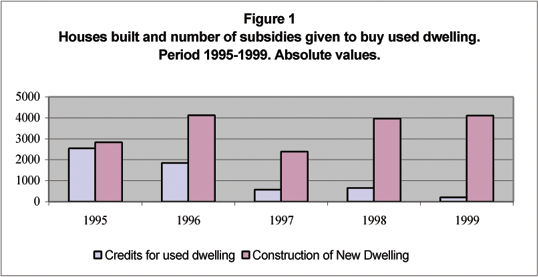
Magri (2002) deeply analyzes the housing policy in the last years and collects valuable testimonies from chiefs officers from the Ministry and leaders form the BCU, that confirm these data. A technician from the Ministry mentioned that "The proposal of taking the State away from direct contracts and construction was not that way, because the weight of the BCU had strong influence, this is great business for them, the advantage of negotiating directly with the State and having established contracts, against operating with market risk as main factor". On his part the leader of BCU admits that: "There is no doubt that there was pressure and there is, because, if economic housing is profitable worldwide, why not here?" (Magri 2002:25)
c) Finally, we can include an heterogeneous group of institutions that take part in this policy network, which benefits from an important proportion of the resources from the NFH administered by the MHTOE: Town Halls, Cooperatives, and MEIRH. To have an idea of the relevance these housing programmes have, it can be said that in the case of MEIRH, investment anticipated by the last National Plan for Housing was U$S 50.388.245 (9,8% of the total five - year investment foreseen for MHTOE). At the same time the Cooperatives had foreseen investment around U$S 60.000.000 (11,8 % of the total programed investment).
So far, we have numbered the main agents taking part in the policy network, and the benefits they obtain from the execution of housing programs. However, we have to verify a fundamental instance in any policy network: to find the existence of instances of interaction between the institutions named. This is possible due to a decree passed by the Executive in the year 2000 (Decree 90/000), which stated planning for the reduction of public expenditures, through which corresponded to MHTOE to present a program of cut down on investment in housing (a reduction of expenditures in 50% had to be reached for some time). If we start from the hypothesis that many agents participate in the network for an opportunity to influence in the distribution of the NFH, then, the context of reduction of investment must have been critical and affected the expectations of almost all participants4, interactions must have been multiplied as a result of this new scenery.
In this context it was possible to detect the interaction and existence of a policy network even in official documents. A resolution from Tribunal de Cuentas studies the programming to cut down on expenditures, and there it is stated that: "the programming made (of expenditures) resulted from conversations held by that Office of State (MHTOE) with representatives from all the units that execute the different programs of housing supply, such as delegates from the union that groups the cooperatives, institutes of technical support, authorities from MEIRH and from BCU5". It is possible to verify, then, the existence of the network; in terms of interaction among agents that affects the result of policies (the reduction implied a complex negotiation that affected future programming).
2.3. Policy communities: a stable policy and actor network
To their analysis, policy networks are characterized and studied in connection with the extent of interests they are made of, their stability, their permeability to participation of new agents in the interaction, and the results, in terms of policies, they produce6 (this is how the concepts of "sub-governments", "iron triangles", "issue networks", "policy communities", etc. arise). The terms are, many times, parochial, but those of "issue networks" and "policy communities" are relatively universal and they offer the advantage of being opposing terms: "policy communities" are strong networks, with few participants, that share some basic values and exchange resources. They have continuity with regard to their members and the results they produce. On the other hand, the "issue networks" are more open, with a great number of participants, access to the network fluctuates and there is dispute among their members, with little stability in their components and the results produced.
The network constituted around the housing policies of MHTOE presents all the characteristics of a "policy community", the components exchange resources, negotiate among them (for example, towards the need of reducing investment), they share basic values (negotiation is the best example). The same members have been interacting for some years, and relative congruence of interests allows the most general characteristics of policies, strategic global outlines, to be stable in time. A clear example of this stability and the capture of the housing policies that many organizations have obtained is that 55, 6% of the budget7 for 2000-2005 had already been assigned when the present period of government started. This means that there are no margins for important changes in housing policies until at least the second half of the period of government is reached, and in the same way the possibility for new agents to put pressure successfully on the currently constituted network does not exist
]]> 3.The role of the State in managing policy networks. Reflection with grounds on the experience of MHTOE.
The previous section, described how the management of MHTOE's housing policies resulted from the articulation of activities with the private sector and social organizations, being an example of what is usually called a policy network. The management of a public policy within a policy network has, undoubtedly, some virtues; it generates active participation from important sectors in civil society, and at the same time, it allows the State to reduce the structures necessary to implement policies (rowing functions).
However, in spite of its advantages, this way of management also implies important challenges, as many public decisions now depend on agents that do not belong to the structure of the State. As it was seen, there are organizations that run public resources directly (MEIRH, cooperatives, private businesses of construction). What mechanisms does the citizen have to claim for functions to take place according to these institutions? What resources exist to influence in the public decisions these organizations take? who is accountable and responsible for their actions?. There is no single answer to these questions, at least in theory, it is possible to find different points of view on this problem.
Some authors, for example, think that the new ways of public management - based on more interaction between the State and external organizations- give the system a differential and superior legitimacy. The common citizen has the guarantee that those sectors that are more specifically affected by public policy have the possibility of influencing8 their elaboration and practice. Owen Hughes claims: "policy communities give those most affected by specific policies an opportunity to influence them. Agencies can then argue that their policies are a product of consensus within the affected sector", and quoting Pross "policy communities was defined as that part of a political system that -by virtue of its functional responsibilities, its vested interests, and its specialized knowledge -acquires a dominant voice in determining government decisions in a specific field of a public activity, and is generally permitted by society at large and the public authorities in particular to determine public policy in that field" (1994: 224-225)
However, the argument is arguable, Narbondo and Ramos (2001) think that the differential legitimacy of the network model can be discussed in two ways; first, because not all of the directly interested in a policy necessarily take part in the policy network; secondly, because each of the groups involved can have variable degrees of plurality and openness, this way, participation within them can be in some cases, little democratic. In the case of MHTOE, the network created around housing policies does not seem permeable to participation of new organizations, the agents and policies have remained practically unchanged; these characteristics belong to policy communities. The members of the network may obtain particular margins of benefit in this interaction. However, the general result of the policy could be erratic, only subject to a negotiation to obtain resources that does not consider a strategy or global objectives9.
Suppose the case of an anonymous citizen, he contributes to the NFH through the IRP whose interest is a rational assignation of resources to the effective and efficient solution of the problem of housing. What guarantees are given to him by the way of interacting lead by the MHTOE? It is possible that decisions made within a policy network represent the interests of cooperatives, MEIRH and businesses of construction, but perhaps the results are not those the majority of citizens desire. And as many decisions that affect public policies are negotiated with external organizations, there is a fragmentation of public power in the hands of all those agents, which can make coordination and control of housing programs difficult.
If we accept these critics to the model of networks, it seems clear that the State should play some role in the running of policy networks. Success of these new ways of management, finds as a key factor public administration's capacity to develop functions of strategic planning, control and coordination (steering functions) that ensure the coherence of public policies. This view of the problem does not imply throwing away policy networks as a feasible alternative to manage public issues; it only recognizes the central role of the State in its run.
Next, the functioning of the network of housing policies of MHTOE will be analyzed in connection with two aspects; in particular the actions of MHTOE regarding control of external agents and planning of public policies are described. The empirical analysis allows us, in this case, to reject the hypothesis stated by those who consider that a policy network can regulate itself getting round State presence as the conduct of interaction within the network. MHTOE has not developed a leading role in planning or control of housing policies and the result has been an arguable use of public resources, with irregularities in the actions of the participant organizations, and a global result of the policy that states serious queries.
3.1. Control of external organizations that implement policies
Accepting for a moment the hypothesis that control of all those external agents that take part in a policy network, results in a fundamental activity to assure efficiency and credibility in the use of public resources. Under this supposition, disorder or lack of attention to these duties of control would be a dangerous alternative; it would compromise the results of the policy network. Those problems relating to controlling external organizations are well illustrated by the experience of MHTOE, which has not had a shared criteria to supervise the institutions and businesses that build houses with public funds.
]]> MHTOE only follows the process of building directly in one line of policies: the Basic Evolving Nucleus (this control is carried out by the Department of Construction from the Division of Architecture). In the other cases control is made basically by a third agent, and even in some instances there have not been controls. Control of the external agents' activity has not had, then, the character of central activity and experience shows that some important irregularities happen.From the great variety of criteria to control policy lines MHTOE has, the two most problematic examples are mentioned below. One of them is the plans to subsidy cooperatives; in this case the monitoring of construction is outsourced, and it is carried out by the Mortgage Bank of Uruguay. This outsourcing has been questioned and discussed publicly since an Institute of Technical Support (enterprise that was in charge of building houses for cooperatives) was accused of an important fraud by the particulars beneficiaries of the subsidy. This lead to an investigation from the Committee of Housing in Parliament and it was confirmed there that the Division of Architecture from DINAVI was not carrying out its duties of control or monitoring constructions directly, but it was hiring MBU.
Further investigations from the own Ministry clearly stated the existence of serious irregularities. When practiced by MBU, controls were faulty because they were limited to monitoring the development of constructions, without evaluating the quality of materials or the conditions established in the contract. After the first case was registered, at least nine more reports on irregularities in cooperatives were presented before the House of Representatives. Among other problems, the ITS have been accused of not contributing to social security obligations (tens of thousands of dollars that members of cooperatives were responsible for, as they were the proprietors of the houses); in some cases houses that had not been finished were given to their owners, or approval was given to build houses in places that had not been included in the original project, even grounds where floods could occur (as it is the case of a cooperative on Empalme Olmos)10.
After having verified those irregularities, the first ITS reported (which administered funds equal to some millions of dollars) was eliminated by the Judiciary because, as the Ministry remarked "on grounds of preliminary reports carried out by technicians from the Mortgage Bank and from that Agency of State, by now, severe irregularities were spotted, specially in the area of architecture, (and) in the accomplishment of legal and regulation functions of that ITS".
All the problems found could have been prevented with stricter control over the actions of the Institutes of Technical Support. Besides, tercerización of these functions with MBU caused an additional problem: responsibility for the omission of control is very difficult to outline, since competences have been blurred due to outsourcing. This problem is illustrated by the fact that, first, the President of MBU was appointed to Parliament to reply to denounces. Later, he marked out the limits of his responsibilities and pointed at MHTOE as the agency in charge of facing irregularities produced by the business that built the houses for the cooperative.
Also in another line of policies of MHTOE -agreements signed with municipalities- there have been problems that could have been avoided with greater control of external organizations. These irregularities are stated in official documents from Tribunal de Cuentas, which observed MHTOE's expenses through the agreement signed with Cerro Largo's Town Hall to build EBN's as a solution to the problem of families affected by floods. The agreement was subscribed to in July 1998 (receiving C.L.T.H the agreed amount), after, the same Town Hall asked for $ 1:168.664 more; for this reason, Tribunal de Cuentas studied the results of the previous agreement. From that study comes out that "a great part of the funds were destined to other activities, for that reason, it is asked to inform of the measures taken in that sense, to make clear the cause and destination of the diverted funds"11.
That is to say, starting from a decision taken by the political will of the Ministry, funds collected for the NFH were diverted to Cerro Largo's Town Hall, being unknown their last usage.
According to interviews with employees from MHTOE, the assignment of funds to Cerro Largo's Town Hall (as well as other Town Halls due to floods) took place under political criteria: once funds were given to one Town Hall others also claimed for help, and a variety of agreements spread where MHTOE did not monitor adequately, resulting in a deviation of funds that could have been prevented.
To summarize, it is highlighted the lack of an established criterion to control external organizations in all the lines of policy. In the case of the line to cooperatives we found outsourcing with a public entity (Mortgage Bank), which resulted problematic due to the absence of control to avoid frauds of private businesses and led to the blurring of responsibilities between MHTOE and MBU regarding the problems found. On their part, Town Halls have come to agreements where not even minimal control was implemented to guarantee the construction of houses with the assigned funds. The problems found show that an efficient and transparent runningion of public issues requires some mechanism of control over the organizations in charge of implementing the policies.
3.2. Policy planning: Technique and Politics in policy networks
]]> According to some authors, the model of policy networks implies radical news in the management of public issues. Owen Hughes, for example, explains how the creation of policy networks represents the development of a new kind of State and new ways of governance: "The notion of policy networks does not so much represent a new analytical perspective but rather signals a real change in the structure of the polity [...] Instead of emanating from a central authority, be this the government or the legislature, policy today is in fact made in a process involving a plurality of both public and private organizations" (Hughes 1994: 164-165). It is interesting to find that from these perspectives, changes are so big that they represent profound consequences to the roles traditionally preformed by the State, among them, planning public policies.As public decisions no longer emerge from a single power centre, technical planning is left in a secondary position and what really matters is the political game which opens out among the organizations that take part in public policy. An efficient government performance would be reached if the participant actors satisfied their objectives. In this sense Hughes states that: "Net benefit maximization is now the express aim of governments, but the methodology of managerialism is that of economics rather than of policy analysis. At the same time, groups have been brought into policy-making to a greater extent than before. But rather than mediating between groups, public managers [...] try to persuade groups that there are advantages for them in net benefit maximization. All parties in the process realize what the nature of the game is; it is that of politics".
Following this reasoning, more than materializing in a concrete result or goal in public policy (reaching a certain impact planned beforehand by the State), efficiency would depend on the participants obtaining dividends and therefore maximizing global benefits of the network - an interesting point of view, as it is not easy to evaluate policy results in terms of efficiency. It is because of this that "policy analysis" (analytical planning of public policy by the State) is now questioned as a method to take decisions: "Policy analysis looks for one best answer from a set of alternatives and has a battery of statistical weapons at its disposal to do so", but in fact "There is no single best answer, there is only an answer that survives the political process" (Hughes 1994: 164-165). The importance of the role of the State would not take root in technical planning to imprint a certain route to policies, but simply to favor negotiation among the agents involved.
Let's analyze from that perspective the case of MHTOE. There we find a stable distribution from NFH, which lets us think that all the agents that participate (cooperatives, MEIRH, private enterprises, etc.) obtain some benefit from the interaction in the network. For that reason, the matter seems to be solved and we can assume that the functioning of the network has been satisfactory. Notwithstanding, following the previous reasoning we could also consider efficient a decapitation to the effects of eliminating a headache, it would be enough with an agreement among some of us.
The consensus that takes place among the agents that participate in MHTOE's network, comes from the competence this Ministry has over the administration of subsidies financed by the NFH; the existence of these resources eases the generation of a network with confluence of interests among the organizations involved. The State has developed, then, successfully the first duty of involving numerous organizations in the execution of policies, apart from reaching a stable distribution of funds for housing. But, does this consensus eliminate the possibility of technical discussion of policies?
The previous question seems reasonable, that is why the policy network is being analyzed next, in connection with two variables. First, MHTOE's role regarding planning of housing policies is studied; second, some impacts produced by the policy network after ten years are analyzed. Regarding the first of the variables, MHTOE has done, in general terms, without policy planning. With regard to the results achieved by the policy network, there are still some doubts on their efficiency to solve the population's housing problems. The only inclusion of different enterprises and organizations in the execution of the policy does not seem to assure that it reaches the desired impacts.
3.3. Planning and impacts of housing public policies.
Despite Hughes's statement: "there is no single best answer, only an answer survives the political process", in our opinion the adoption of a certain policy does not exclude the existence of alternatives and the aggregation of the particular interests of some agents does not imply that to the eyes of any citizen results are the desirable ones12. Even when policy networks seem to give certain special legitimacy to their decisions, there is no network, however, so ample and agreed that can abrogate the absolute representation of "general interest".
Some organizations that do not take active part in the policy network could then manifest their discomfort with the results and impacts reached. Something like that has happened with the Society of Architects of Uruguay, which recently stated its criticism with regard to the results of housing policies. According to Arch. Ricardo Muttoni (president of S.A.U.) Uruguay is facing a problem of big dimensions, as "Despite the investment made during the last years (98 - 99) supply did not consider the sectors of greater demand. Whereas sumptuous housing supply surpasses 200% of demand that of popular and economic housing does not reach 20%. [...] The tendency, when manipulating these massive numbers is to resort to massive solutions. Great extensions of land with basic nucleus or, simply, services. Those are generally entrusted, also, to big construction businesses. However, far from being solved, this problem is growing dramatically. Besides, with these modalities also social and urban problems get worse. These massive solutions only face the problem partially" (S.A.U. 2000: Editorial)
MHTOE has its own evaluation of the problem of housing. The last Five- year Plan for Housing estimates that the quantitative deficit of housing in the year 2000 is of nearly 62.868 units, and announces that at the end of the period of government it will diminish to be some 39.681. To make this projection it uses the analysis of statistical information that comes from the last Census of Population and the Continuous Home Survey. However, the analysis of qualitative deficit reports a contradictory reality with the above mentioned: the number of homes under conditions of overcrowding has risen 150%, the number of houses not connected to sewage systems is rising, and the number of houses built with waste or light materials, not admitted within the minimal standards of housing (MVOTMA 2000: 43-56). The five-year plan does not intend to give an explanation to these phenomena so contradictory with the projection of the quantitative deficit, being left aside the possibility of finding a comprehensive evaluation to the problem of housing.13.
]]> In case of lacking an integral evaluation of the problem, MHTOE could not plan complex objectives and goals Esther, or project the global impact of its actions on the sector14. In a great sense this is not so, because, as it was stated in the five-year plan (MHTOE 2000: 72) the Ministry's goals are summarized in a number of housing solutions and other products to be given out during those five years. There is a detailed description of the quantity of products to be provided, but there is no discussion on what the expected effect of those measures on the global problem of the sector is, in groups with income lower than 600 dollars.The analysis of activities of policy planning of MHTOE generates similar results to the ones obtained when studying its performance in functions of control of external organizations. It is believed that the interaction and global performance of the network will lead to a positive impact, without giving more importance to the role the State has to play in its acquisition. But, what guarantees that interaction among agents imprints an adequate route to housing policies? In this case, organizations negotiate and discuss each one on their part with MHTOE, and this one has margins and resources to comfort all the organizations that take part. However, with this kind of interaction, each organization is only worried about the conditions of the programs where it has a role, as a result, policy lines of MHTOE are turned into watertight divisions, not coordinated among them.
Given the characteristics of negotiation and decision processes, the global logic of housing policy could only be assured by the technical capacity of analysis from the Ministry and its will to imprint the strategic route it considers most adequate. Even so, there are examples of the way how political hierarchy have assigned funds to some policy lines, without any foresight or technical consideration that assures minimal controls to the efficiency of the programs. With regard to planning, there are also arguable impacts and results. A basic element of the efficiency and rationality of the programs is that they give fair access to housing for the population, independently of the geographic area where they live and whenever they have deficiencies in their houses. MHTOE, however, carries out policies that show a great separation between territorial distribution of housing supply and the volume of demand for housing solutions, depending on the geographical area.
The study of numbers reveals for example, that after ten years of functions of the SIAV program, in some districts such as Montevideo, only nearly 26% of the registered asking for dwelling had access to it, while in others like Lavalleja this percentage raises to 58% (data given by the Social Division of the National Office of Housing). These differences do not seem justified, since through the National Register of Candidates the Ministry has global knowledge of the demand for housing in each district, and the possibility to satisfy those queries in the way it considers fairer.
Meanwhile, if we study the total amounts of dwelling built by MHTOE in its diverse programs (SIAV, Cooperatives, MEIRH, Town Halls, etc.) we find that neither geographic distribution obeys to any technical criteria considering housing deficiencies of the different districts. If we analyze the numbers from the National Office of Housing (2001) together with the data from the National Census from 1996, we find out that the districts with more critical deficiencies -people living in substandard houses, made of waste materials- have not been favored with the provision of a greater number of houses15.
In some districts, such as Flores, during the period 1991-2001 more than three houses were built per person with critical deficiencies (Census, 1996), while in others like Rivera, 25 times less (1 house per 8 people with deficiencies) and many more examples could be provided16. This situation does not represent a minor problem, as it shows at least an erratic route of the policy, which does not assure the citizenship a fair access to housing. Besides, it makes equilibrated development in the different areas of the country difficult, which, according to experts analysis, is far from being geographically homogeneous in terms of well-fare and human development of its population (Pellegrino and González 1995; Calvo 1998).
To sum up, the interaction among politicians, businesses of construction and other organizations may produce results they consider satisfactory, but they are not necessarily the best for citizenship in its all17. This questions strongly Hughes's (1994) position on the correspondence between the well- being of agents' taking part in a policy network and global society's welfare; and shows the importance of technical planning to reach positive results and desirable to citizenship in general.
4. Public Service and efficiency in policy network management
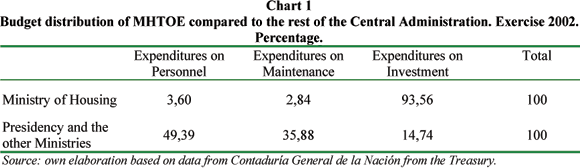
Perhaps what has been said so far regarding the policy network model and the experience of MHTOE could be summarized in a couple of numbers. According to the Law of Rendición de Cuentas from 2001, MHTOE is the subsection which has the greatest ratio between Investment and Personnel and Maintenance Expenditures. From these numbers it is possible to draw two conclusions, not necessarily contradictory. With 93, 56% of expenses destined to investment (the relation could have been even higher if the Executive would not have cut down on the investment foreseen for the whole period) MHTOE shows the potential of the policy network model. This kind of management allows to reduce the necessary structures to implement policies (rowing functions) diminishing expenses for the State. However, this so outsourced structure implies strong challenges for the public sector.
]]>
The experience of MHTOE reassures that to optimize the benefits that can come from new kinds of management, active and efficient participation of the State is needed. This participation supposes a State with technical capacity to plan public policies and their effects, to negotiate with external organizations bearing in mind theses objectives and controlling efficiently their actions, later. Devoting, as MHTOE does, only 3, 6% of its expenditures to the personnel in charge of these duties, may be a symptom of an administrative structure not strong enough to manage very important investment expenditure.
In the previous part of this work, we saw that sometimes there is excessive emphasis in considering politics as the only logic that interest in managing a policy network. The role of the State, as strategic leader in public policies, is then reduced. MHTOE is an example in this sense; politicians have even financed public institutions that do not fulfill their contracts and private businesses that committed fraud. In both cases there was lack of the necessary technical controls, because the political chiefs did not implement them, or they did it inadequately. Politics cannot, then, do completely without technique, though technique and politics are not easily joined within the State.
Some authors have recently remarked that the fundamental tool to build up equilibrium between technique and politics is to count on a group of civil servants dedicated to activities of strategic planning (steering functions) within the State. Regarding this Prats y Catalá says: "public function as an institution or bureaucratic system of merits has a main ambit [...] inside the public sector [...] coinciding today with what authors call high state functions, strategic nucleus or exclusive functions of the State to provide public goods. Within this ambit, properly articulated, not only does the bureaucratic system of merits guarantee efficiency in assignation but also the maintenance of legislative commitments, social trust and juridical safety, and above all, it is the institution that guarantees internal efficiency of administrative organisms and agencies" (1988: 61).
The main point of this argument is that there is a sector of state activities (the strategic core of planning) which has to be developed by civil servants. The civil servant would have two main characteristics: first, he would only be hired and promoted regarding his merits and capacity to do his job; second, the conditions under which he is hired would be special, assuring some kind of stability in his post, which prevents his withdrawal from the public service due to party politics matters. In connection with the first, if civil servants were selected and promoted according to their capacities and merits, they would generate for the State public policies of high technical level, which allowed a better negotiation with external agents in charge of implementing them.
On its part, stability on post provides two main advantages. Firstly, it assures institutional memory, generating on bureaucrats wide knowledge, experience and qualifications very important to implement State policies. On the other hand, stability is the instrument that allows the existence of technical criteria in the processes of elaboration of public policies and there will not be extreme partidization of the administrative corpus. It is true that these characteristics proper of public jobs could generate some frictions between politicians and bureaucrats. But those frictions constitute a wholesome tension where lays the equilibrium between technique and politics, able to generate positive results for the State.
In Prats y Catalá's words, meritocratic public service in strategic activities is "the institution that guarantees internal efficiency of administrative organisms and agencies". Now, what is the Uruguayan public administration's situation regarding this? It would be important to know what the existing dynamic between political and technical factors is within the Central Administration; the case of MHTOE contributes with evidence that shows lack of technical precautions in the execution of public policies, but may be beneath this specific case lies a more generalized problem of institutional configuration.
]]> 5. Politics and bureaucracy in Uruguayan Central Administration
It seems clear that in the Uruguayan Central Administration exists a notorious unbalance in the relationships between technicians and politicians, because there is, in general terms, absence of a force of bureaucrats of the kina Prats y Catalá supports. As it is highlighted by numerous experts who have analyzed our State apparatus, Uruguayan civil servants were never recruited or promoted within public service bearing in mind their capacities or merits, political considerations have always prevailed in the organization and running of the State18 (Oszlak 1972; Nickson 2002)19. But the only problem does not lie in the fact that the administrative career is undermined by party-political factors; besides, the posts of greater responsibility in the Central Administration are not filled with civil servants (flatten administrative career) and are appointed directly by political hierarchy. This generates a high rotation in those posts, with the following loss of institutional memory, necessary to generate State policies and, eventually, correct them.
The analysis of MHTOE's structure (Traversa 2002), confirms what experts such as Oszlak have studied on Uruguayan public administration. It is added to this the almost absolute absence of civil servants in those areas of the Ministry in charge of elaborating housing policies. The Unit of Studies and Policies, in charge of these duties, is composed of a reduced number of technicians. Due to their strategic post and accumulated knowledge, some of these technicians are key factors in the elaboration and implementation of policies; but these technicians -apart from being very few- are not in the position of carrying out their duties independently of political hierarchy, because they are not civil servants and their stability on post is subject to periodic renewal of their contracts on the part of politicians.
It happens, then, that at MHTOE politicians have such a discretional margin that they even subsidy external agents to build houses without implementing the necessary controls to assure that the funds are correctly invested. If the ideal is the existence of some kind of equilibrium in the staff of civil servants and politicians, the Uruguayan Central Administration is, then, very far from this point. In discourse, meanwhile, there is claim for the need of a technically qualified public service. As it is stated in the Decalogue of public duties from the National Office of Civil Service "civil servants have to act in a responsible and competent way, with dedication and critical thinking, aiming at their professional significance". Notwithstanding, the possibility of working on strategic planning duties is forbidden to those bureaucrats due to the flattering of administrative career and the development of critical thinking is limited by the influence of partisan factors in personnel policies.
In the last years, the tendency of the policies carried out in connection with human resources confirms many of the points marked. The admission of new civil servants is denied today due to the need of cutting down on public expenditure, but the State still needs highly qualified human resources to function, especially in strategic activities, such as policy planning. As a solution to these needs, political hierarchies have chosen to hire technicians to carry out specific duties in the State (through the so called "contratos de obra y servicio"). These hiring strengthen the historical tendency to set public employees aside from strategic posts that can determine the route of a public policy. Secondly, they confirm the opinion on the part of politicians that public service is not under conditions of carrying out duties which require high degrees of technical capability20, which would be a severe institutional weakness not likely to be solved by means of temporary contracts.
The incorporation of technicians that do not belong to public service presents the already discussed deficiencies. En primer lugar, si bien es una vía rápida para permitir al Estado cuente con personal de alta calificación técnica, con la misma celeridad se puede producir la salida de este capital humano dado el carácter eventual y precario de su situación (contratos a término). This means an important loss of information, qualification and institutional memory which these technicians acquire throughout the development of their functions. Secondly, with those contracts not only is institutional equilibrium between technicians and politicians not restored, but also the unbalance is worse due to direct appointment by government.
6. Conclusions
This study identifies MHTOE as one of the public agencies most adapted to the models of public management proposed by the second generation of State reforms. Its housing policies are implemented with participation of private businesses and other organizations that create a real "policy network". The network shows stability in connection with the agents involved in the execution of policies and in the distribution of the budget destined to housing, with 55, 6% of the budget21 for 2000-2005 already compromised when the present period of government started.
Political management has been successful in the inclusion of diverse actors; according to some authors (Hughes 1994) this is the main symptom of an efficient action in the public sector. The experience of MHTOE shows, however, that without a process of planning of public policies and control of the organizations that take part in their execution, results are arguable. MHTOE has not given enough resources to these planning and control, having irregularities in policy execution by third persons, while global impact leaves some important doubts, such as the distribution of houses built according to the geographic area.
]]> This weakness of technical factors in the Uruguayan public administration does not represent theoretical news (Oszlak 1972); perhaps the most likely explanation to these deficiencies is the excessive influence of partisan factors in the administrative career. To sum up, the public sector is now facing important challenges, as a result of greater participation of the private sector and the tertiary sector in public policies. The experience of MHTOE proves that, in this context that implies more relationships with external organizations, to establish an adequate relationship between technical and political factors within public administration is a priority and it was never done in the Uruguayan Central Administration. The revaluation of public functions and implementation of a public service where merit and technical competence play a central role in access and promotion of civil servants can result in a plausible way out.
Bibliography
- Aucoin, Peter (1996): "Reforma administrativa en la gestión pública: paradigmas, principios, paradojas y péndulos", en Brugué, Q., Subirats, J. (comps.), Lecturas de Gestión Pública, INAP-BOE, Madrid.
- Butcher, Tony (1995): Delivering Welfare, Open University Press, Buckingham -Philadelphia.
- Calvo, Juan José (1998): Las Necesidades Básicas Insatisfechas en Uruguay de acuerdo al Censo de 1996, Universidad de la República, Montevideo.
- Dirección Nacional de Vivienda, División Arquitectura (2001): Informe Mensual, Diciembre de 2001. Ofertas, sección obras, MVOTMA, Montevideo.
- Hood, Christopher (1991): "A public management for all seasons?", Public Administration vol.69, Basil Blackwell.
- Hughes, Owen (1994): Public Management and Administration, St. Martin's Press, New York.
- Magri, Altair (2002): "Una reforma exitosa: análisis de las políticas de vivienda en Uruguay 1985-2000", Documento de Trabajo Nº 30, Instituto de Ciencia Política, Universidad de la República, Montevideo.
- Marsh, David (1998) (ed.): Comparing Policy Networks, Open University Press, Buckingham-Philadelphia.
- Narbondo, Pedro y Ramos, Conrado (2001): "Reforma administrativa y capacidad estatal de conducción", en Con el Estado en el corazón: el andamiaje de la gobernancia, Instituto de Ciencia Política, Ediciones Trilce y Voces, Montevideo.
- Niskanen, William (1980): Cara y Cruz de la Burocracia, Espasa Calpe, Madrid.
- Nickson, Andrew (2002): "Transferencia de políticas y reforma en la gestión del sector público en América Latina: el caso del New Public Management", Revista del CLAD Reforma y Democracia, Nº 24, Caracas.
- OECD (1999): Synthesis of Reform Experiencies in Nine OECD Countries: Government Roles and Functions, and Public Management, OECD.
- Oszlak, Oscar (1972): Diagnóstico de la administración pública uruguaya, s/d.
- Pierre, Jon (ed) (2000): Debating Governance, Oxford University Press.
- Pellegrino, Adela y González Cravino, Santiago (Coord) (1995): Atlas Demográfico del Uruguay, Fin de Siglo, Montevideo.
- Pollit, Christopher (1990): Managerialism and the Public Service, Basil Blackwell-Cambridge, Massachusetts.
- Zurbbriggen, Cristina (2002): "El Análisis de los 'Policy Networks' y de su utilidad para el estudio de las hechuras políticas", Documento de Trabajo, Nº 31, Instituto de Ciencia Política, Universidad de la República.
* This article synthesizes some results of the final monograph from the Degree course on Political Science (Traversa 2002), oriented by PhD. Pedro Narbondo. ]]>
1 A detailed analysis regarding the creation and development of the concept of policy networks can be found in Zurbriggen (2002).
2 The minimum contribution from the cooperative has to be 15% of the value, this can be financed through voluntary work, savings, sites, materials, etc. The remaining part of the value consists of a mortgage loan financed by the NFH.
3 Usually housing policies have been thought of as capable of fulfilling the double function of providing housing solutions and invigorating economy. IBD, in exchange, has emphasized subsidy to demand of houses (more than direct building); this seems to have been the strategy during the Plan 91/94 (which had a strong stamp from the IBD), however, during Sanguinetti's government the focus changes to the construction of new buildings. It is worth mentioning the quotation on the web page "CSI" that underlines this change of perspective in the period 95-99 regarding the Plan 91-94 "The objective was, then, to fulfill the compromise assumed by the previous government, affecting considerable resources, but primarily destined to buying used houses, when they were needed to reactivate construction".
4 The cut down on investment expenditures resulting from the passed regime, had as an axis the assignment of a maximum monthly share to the different executive agents from the Ministry (Businesses from construction, Cooperatives, MEIRH, etc.), this implied taking from fiscal year 2001 an important share of the investment programmed for fiscal year 2000.
5 Folder 188342. E.2567. 01/06/00, "Program to cut down on expenditure on investment in housing supply in the present fiscal year". In fact, this is not, obviously, the only instance of interaction that can be mentioned. The pressure made by the BCU to raise the number of resources destined to the construction of new buildings has already been mentioned; we can also mention instances of arguments with cooperatives, like the presentation of the last Housing Plan at Fucvam, to be analyzed before being passed. However, the document quoted above, has two important characteristics: it is an official document and it recognizes a space for interaction that involves all the actors numbered as participants in this policy network.
6 These characterizations hide behind them an old debate between the State theory of pluralism, corporativism, elitism, marxism, etc. The network theory is sometimes seen as a mid level of analysis (Rhodes 1995: 55) in the discussion about the interrelation between State and groups of interest.
7 U$S 283.516.316 out of a total of U$S 509.834.498.
8 Who are those directly interested in a public policy? I think any citizen can eventually be, and there is the public character (even a non- citizen, the dispute over the extension of civil and political rights shows that the quality of citizen is politically built). In what sense could we say there are "differential" interests and rights to participate in the definition of a public policy? These discussions that are undoubtedly connected with Democratic Theory are wide and almost unapproachable. It would be very difficult to try to state that the model of policy networks is more legitimate; even when we could come to an agreement on what is "legitimate" or "democratic", Political Science could discuss and evaluate the way how participation takes place in a wide variety of policy networks.
9 With regard to this, Narbondo and Ramos state "each public policy is defined in a negotiation among various actors, and in that negotiation the State is represented by a specific agency, which has to act, not through imperative means, but through negotiations with the members of the network. Thus, given the fact that the essence of the network system is the negotiation in each policy network, in its implementation and formulation, the State loses capacity of imposing its global view, because it has to adapt to each specific negotiation [...] Since leading duties of the State became more complex there is a tendency to concentrate those duties in budgetary issues [...] Now, the rise and perfection of budgetary control is, undoubtedly, necessary, but the exclusive or main concentration on that means of control is a poor substitute for a real activity of coordinating public policies, as what it establishes are limits to expenditure but substantive objectives are not coordinated".
10 Brecha edition of 28/5/1999 page 4, and Brecha edition of 17/7/2003 pages 2 and 3. ]]>
11 Tribunal de Cuentas, Folder 179980 E. 5916, 04/12/00, "Agreement subscribed with Cerro Largo's Town Hall to solve housing problems of families evacuated due to floods".
12 This statement has a fatalist character which does not seem to correspond to reality. It is not true that only one answer has possibilities of surviving after political process, every political process is dynamic and politics (in an abstract sense) could be interpreted as a battle to change the result of political processes (some times with support of technical statements)
13 Other times, important data are simple missing, it does not exist, for example, any estimation of the number of population and houses in shanty towns, or where they are located. At the same time, in the Five - Year Plan the amount of houses built by the public sector and private enterprises is calculated, however, there is no amount of houses built by their owners (very common practice among sectors of low income, object of action of MHTOE). DINAVI states it is very difficult to quantify the volume of this modality of construction because it belongs to the informal sector and the data from the National Census and the Continuous Home Survey do not allow knowing their importance either. Starting from the absence of relevant numbers in the five-year Plan (such as the volume of self-construction, and that of houses in shanty towns) and taking into account some contradictory numbers already mentioned (raise in population under conditions of overcrowding, buildings made of wastes, without drains, estimations of the population in shanty towns) it seems very difficult then to be able to take seriously the projections on housing deficit made by DINAVI for the year 2004. It is not clear that quantitative deficit of many houses is taken into account in the calculations and it implies building 30000 by private agents over the foreseen dejection of absolute deficit, many of which are product of self -construction and are possibly placed in shanty towns or present other kind of chronic lack.
14 Further on it will be argued that this lack can not be the fault of the technicians in charge of these duties due to lack of dedication or training (that seems to be adequate even when there are very few in comparison with the size of the duties of planning). There are institutional problems that go further on. Really, it is not clear that political hierarchy -that is where power to run policies is- are very interested in investing more human and economic resources on planning activities. Maybe their main worry and interest is to build the greatest number of houses possible and not to improve the quality of the building or the impact on the global problem of housing.
15 Results are very similar if we consider a more ample indicator of deficiencies, which includes homes with situation of overcrowding.
16 In Florida 1532 houses were built whereas in Salto 1382 were built, though in this district there are almost five times more people with critical housing deficiencies according to 1996 census. At the same time in Colonia 1700 houses were built, existing 1418 people with critical deficiencies and in Cerro Largo, with 5589 people with deficiencies, only 1195 houses were built.
17 This work does not analyze the complex dimension of the architectural quality of popular housing; studies Publisher by the magazine Vivienda Popular, from the Faculty of Architecture, reveal that the different alternatives applicable for construction can present significant differences of quality and user satisfaction (some beneficiaries of subsidies from MHTOE have made complaints on their part with regard to the quality and cost of their houses to the House of Representatives). Everything indicates that this is another aspect where the State has to have capacity to evaluate the quality of policies and to imagine improvements if they are necessary.
18 Oszlak's investigation (1972: 128-143) reached conclusions like these: "The elaboration of data collected in the National Census of Civil Servants allows us to sustain that within Uruguayan public administration practically does not exist an administrative career, in the sense that the promotion criteria do not adjust to foreseeable rules which create reasonable expectations of development, but they respond to considerations where merit, capacities and vocation play a secondary role. [...] Just like personnel recruitment has been identified with adscriptive orientations expressed in personal recommendation and political patronage, also promotion has suffered this kind of interference."
19 The latter even extended these considerations to Latinamerica in general: "The key element of the public administration system in Latin America, which distinguishes it from its counterparts in the rest of the world is the centralist tradition of caudillismo (political chief). This political culture of favours, is successful in absence of labour stability and due to constant rotation of a badly paid bureaucracy and overwhelmed. Employment in the public sector is not viewed as a required element to reach results for citizens in the shape of service supply [...] systems of personnel continue being weak and highly fragmented along the region and recruitment and promotion are still based on patronage more than merit [...] the career is cut at the level of the chief executive officer because just above him are political appointed posts, whose officials change very frequently as a consequence of changes in the political level. The absence of a permanent staff of high administrators has generated a raise in negative aspects within the system of public administration in Latin America.
20 In July 2000 it was revealed the existence of 1.664 contratos de obra y servicio, the director of the Agency of Planning and Budget (APB), Ariel Davrieux, justified the mechanism of contratos de obra y de servicios because "civil servants do not have training on Administration to carry out those projects", At the same time, in Parliament, Davrieux stated his position against making public calls to hire technician, "because they have to be trustworthy people to carry out those projects" Latitud 30/35 10/08/00, La República 29/07/00. ]]>
21 U$S 283.516.316 out of a total of U$S 509.834.498.