Marcel Vaillant
Professor of International Trade and Economic Integration of the Department of Economics, School of Social Sciences, at Uruguay's Universidad de la República
Translated by Cristina Cafferatta
Translation from Cuadernos Del CLAEH, nº 94-95, pp. 91-120, 2007.
ABSTRACT
]]> The paper discusses the reasons why Uruguay should develop a new framework of trade negotiations with the United States of America (USA). The initial argument starts with a critical assessment of the economic integration performance in the Southern Cone during the past decade. The South-South orientation for common trade negotiations with third parties are not aligned with the small countries interests in Mercosur, this is particularly the case of Uruguay. The second point is a description of the USA administration trade negotiations strategies of competitive liberalization. During the current decade, this global stance justifies the sign of many number of Free Trade Agreement (FTA) by USA government. This year the evolution of the Congress composition and other political events show a change in the trade policy that also is characterized in the article. In the third part there is a specific story about the trade flow and the evolution of trade policy between both economies. In an eventual free trade area with the North American market in the tradable sectors, Uruguay has not a defensive position and on the contrary it has many opportunities to exploit. The comparatives advantages of this developing small country are concentrated in the agriculture sector. In the industry sector Uruguay is currently intensively open to its major neighbors in Mercosur. Moreover, to open the Uruguayan economy to USA in tradable sectors could diminish the trade deviation cost associated with the regional agreement. This benefit from the Uruguayan perspective implies a small deterioration of the Brazilian position. In relation to the service liberalization and the other complementary trade rules of the FTA the country must define what he want to obtain with the agreement. It is possible to reserve some sectors and measures from the general rules of the liberalization process. In all this beyond the borders issues is basically a domestic discussion to define the orientation of the reform process associated with the agreement. The FTA gives the choice to develop some economics reforms that could have an adverse political economy in a conventional contractive adjustment.Key words: Uruguay, United States, international relationships, Mercosur, regional integration, international agreements.
1. INTRODUCTION
Three elements illustrate the complex situation that Uruguay faces from the perspective of its international insertion in general and its regional insertion in particular.
In Uruguay, the dominant political perception is that integration within Mercosur has not performed well;
A clear bilateralism prevails between Argentina and Brazil over the framework and institutions of the Mercosur agreement;
Bilateral relations with Argentina, Uruguay's closest neighbor, have clearly deteriorated2;
The bilateral conflict between Argentina and Uruguay is not independent of these two phenomena but, to the contrary, is a manifestation of them. It is a conflict that brought to light new information by revealing the preferences of the most important national actors in Mercosur.
In this article, I will argue that the departures from Mercosur norms have gone beyond small and specific deviations whose cumulative effect would erode the agreement's credibility. Instead, they have become flagrant violations that call into question the very basis of the agreement. Uruguay's vulnerability in the region has increased. I am not referring to a specific situation that affects the short term conditions. I argue that the result of the current situation in terms of relations with third countries would have an impact that would condition Uruguay for a longer period. For that reason, today's decisions have a critical importance.
Within this context, Uruguay needs to revise its international insertion policy. It is necessary to establish a more balanced set of liberalization channels that allow Uruguay, as a small economy, to fit in a more stable manner in the global movements of goods, services and factors of production associated with the specific form that the globalization of the international economy takes today. From the perspective of Uruguay's national interest, it is imperative that Uruguay is able to negotiate other preferential agreements. Among them, an agreement with the United States is very important. However, it is important to point out, this is not the only option available in this respect.
It is also important to consider this situation from the United States' perspective. Taking into consideration the new political configuration of the US Congress and given that the evolution of the Doha Development Round is facing a possible failure, it is foreseeable that a new wave of preferential agreements will come about, albeit along different lines.
This will not be about stepping away from Uruguay's neighbors and from the regional integration process that has slowly and laboriously been developed, but the contrary. It is about building solid foundations for a better international insertion. The excessive regional dependency, in the current conditions of Mercosur, jeopardizes the stability of Uruguay's growth, a necessary condition for the country's development.
In its uneven relationship with its neighbors it would not be a new strategy to use the relationships with third parties to strengthen Uruguay's bargaining power. Examples of this strategy can be found in Uruguay's history since its birth as an independent nation, from its relationship with the British Empire in the nineteenth century to its relationship with the United States in the first half of the twentieth century. Resorting to agreements with powerful countries to counterbalance regional conflicts has been a constant characteristic of Uruguay's international relations (see Oddone, 1990 and 2004). Oddone (2004) specifically cites the agreement between the United States and Uruguay3 in the context of great political tension with Argentina at the outset of the Second World War, given the conflicting alignments of Uruguay and Argentina. This tense situation lasted for more than a decade and coincided with the period when the commercial agreement with the United States was in force.
This article consists of this introduction and four additional sections. The next section discusses the evolution of the state of Mercosur and focuses on the extent to which the current state is unfavorable for Uruguay. Understanding the regional problems is part of the construction of a long term strategic vision that looks for complementary alternatives that compensate the shortcomings of the agreement and even collaborate to its solution. The third section analyzes the perspective of the United States and the evolution of the policy of competitive liberalization. Uruguay has a very limited capacity to influence the conditions of reciprocal agreements. For that reason, it is critical to understand the evolution of the position of its potential partners. In the fourth section, I present a chronological summary of the recent evolution of the relations between Uruguay and the United States since the negotiation of the BIT (Bilateral Investment Agreement) to the evolution of the recent meetings that took part with the TIFA (Trade and Investment Framework Agreement) framework. The fifth and final section highlights the most important conclusions of this paper.
]]>2. DISSATISFACTION WITH MERCOSUR
2.1 The Desired "Deep Integration"
Ideally, Mercosur would enable Uruguay to have preferential access to a large and adjacent market. Measured in terms of gross domestic product (GDP), the regional market is 45 times larger than Uruguay's domestic market. In terms of population, Mercosur is 65 times larger. This preferential access means that while goods originated in countries outside the agreement have to pay an import tariff, goods originated from Uruguay can be exported in free trade conditions to the rest of Mercosur countries. Of course, the reciprocal is also true. Imports from Mercosur member countries take place free of tariffs. It is reasonable to presume that Uruguay's neighbors, by virtue of size, have economies more vertically integrated. Therefore, they will be better equipped to exploit the economies of scale and will be more efficient in the production of goods and services for which these characteristics matter.
From a conventional perspective, the beneficial effects for a small economy are materialized when it substitutes domestic inefficient production for more efficient production from its regional partners (the so-called "trade creation" effect). In this case, the effect is similar that resulting from unilateral trade liberalization. A contrary and negative effect takes place when imports from the region substitute more efficient imports from the rest of the world (the so-called "trade diversion" effect). This can take place by virtue of the tariff preference that is granted to regional partners vis-à-vis providers from the rest of the world.
A small economy also benefits when it obtains preferential access to large and neighboring markets, because it is possible to obtain better export prices, resulting in greater demand. This demand, moreover, is protected in relation to third countries by the tariff levied on extra-zone products. In this case, the trade diversion effect benefits the small economy at the expense of third countries. For example, if in the basket of agricultural products of temperate climates, where Uruguay has a great comparative advantage, Mercosur has a preference for greater protection, then domestic prices in the region will be high, so long as the quantities exported by the small economy do not affect these prices. As a consequence, the small economy (Uruguay) would enjoy higher export prices. In this sense the small economy would capture part of the tariff revenue previously collected by other member countries for imports originated in third countries (who had no tariff preference).
In the world of modern manufactures characterized by economies of scale (in other words, average costs descending as production levels at firm or industry level increase), countries with a greater market size have a greater potential to attract investments in manufacturing. Being a large player in modern manufacturing implies having an enhanced capacity for the accelerated incorporation of technical progress. In addition, there are dynamic aspects that may lead to even greater benefits.
Regional integration is a tool that enables members to overcome the fundamental asymmetry between countries that exists as a result of having different market sizes. In other words, small economies can cease to be so when they are deeply integrated to a greater space. This effect can be reinforced by the particular characteristics of the small economy. In the specific case of Uruguay, which is geographically located in the epicenter of the River Plate basin (almost equidistant and close to the two biggest regional markets, San Pablo and Buenos Aires), this argument has great importance.
Another argument to support the value that regional integration may have for an economy like the Uruguayan highlights the remote location of the country and the region vis-à-vis the large and most dynamic markets in the international economy. In this sense, there is a broad spectrum of goods and services whose trade is characterized by high transportation costs and therefore whose trade occurs, essentially, among close neighbors.
All these arguments illustrate why Uruguay has in Mercosur a reasonable bet in terms of its expectations of development. These expectations also circle around the fact that, as a result of Mercosur, Uruguay can become an attractive location for firms from third countries. Uruguay's capacity to become an attractive location for third parties is directly linked to its capacity to be fluently integrated to a larger economic space.
]]> The characteristics of an ideal commercial agreement for a small economy like Uruguay therefore are: (i) deep regional integration; (ii) trade liberalization with third parties (preferential or unilateral) to reduce the negative "trade diversion" effect; (iii) preservation, to the maximum extent possible, of important margins of preference in sectors important to the country's export economy to increase the "trade diversion" effect imposed on third countries. This is a unilateral and mercantilist perspective. It is clear that in the search for a negotiated cooperative agreement as economic integration must ultimately be understood, all these objectives based on an exclusively national preference will not be achieved. Curiously, the current status quo represents the opposite scenario, with an unbalanced distribution of the "trade diversion" effects that favor the largest economy in the block."Deep integration" is the process where countries eliminate tariffs and establish the free flow of goods in the integrated space, harmonizing domestic policies, which enables the construction of a leveled playing field for all the economic actors in the block. Such an agreement, moreover, would not only entail the liberalization of trade in goods but also extends to the areas of services and a series of complementary policies (in the so called "new trade issues") such as: investment policy for within-block and outside-block actors; competition policies to discipline both private and public sector actors, with the objective of maintaining competitive markets; government procurement policies; and intellectual property policies.
2.2 The Real Integration
Regional integration also presents important threats that need to be considered. In addition to the conventional problems associated with "trade diversion", it is possible that in the intermediate stages of regional integration agglomeration forces in the larger markets prevail, producing de-industrialization in peripheral markets and regions. This phenomenon will be more intense in the manufacturing sector, where specialization is determined by the size of the market. On the other hand, this effect will be amplified if there is an asymmetric movement of factors of production, and if the capacity to accumulate physical capital in the industrial sector deteriorates. In sum, the effects of integration for small and peripheral economies are different depending on the degree to which integration is carried on. "Little" integration de-industrializes and "lots" of integration contribute to small economies ceasing to be so, in the sense that they start to be included in industrial location decisions as they are inserted in larger markets. There is evidence that agglomeration effects have taken place in the countries of Mercosur. The preferred option in terms of commercial policy is obvious: the "deep integration" agenda is the agenda that theoretically best corresponds to the interests of small countries in integration processes.
Being integrated with economies that have historically had high levels of macroeconomic instability also generates a potential negative effect for small economies, which are frequently subjected to the macroeconomic earthquakes of their neighbors. It is true, however, that in the last decade the largest economy in the region (Brazil) achieved more solid levels of macroeconomic stability that in the past.
The dissatisfaction with Mercosur is based on the fact that the agreement that has been built has a configuration opposed to one that would be beneficial for economy like Uruguay. In fact, the national policies of the larger countries are not negotiated and remain unchanged, even when they contradict what has been agreed in Mercosur. This stance is not compatible with an economic integration agreement such ambitious as Mercosur, which implies sharing sovereignty in a wide range of public policies.
Up to now, what has been achieved has been a free trade area (with some sectoral exceptions in the sugar and automotive sectors) in addition to a series of policy harmonizations in very isolated fields. The free trade area is in addition affected by a high level of uncertainty. The proliferation of non-tariff barriers shows the low level of adherence to commercial disciplines. This phenomenon acts like an effective break to productive specialization and to the development of intra-regional trade.
But Mercosur adopted the format of a Customs Union (CU) as its economic integration structure. In comparative terms, considering the trade agreements currently in place, the CU is a modality rarely used in the international economy.[4] This modality is associated with a greater level of commitment between member countries, because it requires the development of common policies and institutions. The choice of this modality was consistent with the original ambitious objectives of the original treaties subscribed between countries in the Southern Cone.
In terms of the construction of the Customs Union, in 1994 a Common External Tariff (CET) was established, as well as a path of convergence of the national commercial policies toward a common commercial policy for Mercosur. This convergence was based on two tools. First, on the sectoral lists (Capital Goods list and Information Technology and Telecommunication list) where the preferences of tariffs with third countries were different between countries and a path to convergence toward the CET was agreed. Secondly, national lists existed, including the products where member countries could deviate from the CET5. The process of convergence to the CET, however, did not follow the deadline established originally (2006) and continues to be subject to successive postponements.
More than a decade after the CET was agreed on; the degree of compliance of national trade policies with the common trade policy is low. As a consequence, the aspired universal free circulation that should characterize a Customs Union has not been achieved, and the circulation rules are instead those of a free trade area. Even though progress was made in establishing the principle of free movement rule, this has had a very restricted scope of application, because in fact a common trade policy is lacking6. Beyond the unconcluded convergence process, there are other aspects of the common trade policy that are far from being harmonized. Among them, the intense usage of special commercial regimes by all member countries stands out, which amounts to another source of non compliance. On the other hand, the preferential agreements reached with third countries "outside" Mercosur haven't been harmonized and the new "common" agreements have maintained a bilateral logic and are an additional source of divergence.
]]> In effect, we observe that in Mercosur negotiations with third countries have been taking place with great intensity in the last ten years (Vaillant, 2006). The results obtained, however, are worst than what was expected and diverge from the broad "open regionalism" approach. An account of the agreements reached is eloquent, as it reveals that what was carried on was an inconsequential strategy of preferential negotiation of South-South agreements (between developing economies), restricted to goods and with a format more bilateral than regional. The incentives for negotiation with third parties have been markedly different for the different partners. In the largest economy (Brazil) a more defensive vision prevailed which found support in the current Argentinean vision of trade policy issues. The bilateralism observed in the South-South negotiations was also manifested in the negotiations with the industrialized economies or economies with greater potential markets. This bilateralism hasn't yet materialized in specific trade agreements, but is not inconsequential. Brazil is the country that leads this mode of negotiation, having taken important actions and obtained some significant achievements in this area.7 This bilateralism is a fact and is even justified in the different capacities and interests, as well as the different situations, of each member. However, it contradicts the will to build a Customs Union and the common disciplines that such a project entails. As I will explain bellow, there is a gap between what countries agree to and declare and what they finally do. It is what we refer to as "Mercosur syndrome".In the last three years a series of bilateral free trade agreements have been reached between the United States and individual countries and groups of countries in the region (Chile, Peru, and Colombia, among others.) This phenomenon accentuates the isolation of the Mercosur countries in the sense that they will access in conditions of unfavorable discrimination both the US market as well as the markets of many of its commercial partners. This is the case because the depth of the agreements signed by these countries with the US is much greater than that of the agreements which the Mercosur signed with them. This phenomenon, in addition to the Mercosur's own uncertainties, drove Uruguay, one of the small economies in Mercosur, to initiate a process of bilateral negotiation with the US.
In other areas, the "Mercosur syndrome" has led to a negotiation on all the new trade issues and to have protocols signed in each of those areas. However, none of those protocols is fully in force and has an adequate level of commitment. The four most important new issues that should have common disciplines are: competition policy; intellectual property policy; investment policy; and government procurement policy.
It is in these new trade issues where the "Mercosur syndrome" of approving norms that never come into force is more acute. Countries sign texts they don't agree with or which face severe restrictions to be incorporated in their domestic legal systems. A perverse dynamic is generated where an issue is registered as discussed and negotiated, but with no practical implications. After a period without results and the clear evidence of failure, new norms are approved in an attempt to refocus the negotiation, generally norms that do not require to be incorporated through domestic law. In some cases, specific groups are created to reestablish the negotiation process. As a result of this process, we can argue that Mercosur has recognized the importance of new trade issues but, nonetheless, hasn't made any relevant progress in achieving a common regime for any of them.
A very relevant issue linked to the creation of public goods resulting from integration is the preservation of the environment. This issue has current relevance given that is linked to the conflict between Argentina and Uruguay. If the administration of joint resources is not an issue in the integration agenda, it is hard to think which issue is. The comparative experience and the accumulated regional norms were sufficiently rich, at the outset of the conflict, to deal with the controversy and turn it into an opportunity to strengthen the block. That was not, however, the chosen path. To the contrary, the conflict was circumscribed to the bilateral relation between Argentina and Uruguay and it was taken for dispute settlement to the International Court of Justice. This way, problems were not reduced but amplified and are now patently present in Mercosur's current gridlock.
All the characteristics outlined about the poor performance of real integration in Mercosur are linked to the gap between what is said, what is agreed, and what is effectively applied by countries in their domestic legal systems. Part of the confusion that currently exists is precisely due to this phenomenon. This is natural, given that this is intrinsic to the dynamic of a process under intense transformation. However, the gap between what is agreed and what is applied is worrisome because it illustrates the degree of compliance and commitment (or lack thereof) to integration rules that countries actually have. The fact that this gap is wide and growing erodes the credibility of these agreements and has consequences for production and trade decisions.
Integration is a process that is associated with the design of an institutional framework that constitutes the tools that countries have to achieve the commitments achieved. This institutional design has to bear some relationship with the objectives established originally. It is precisely there, in the institutions that are created, the resources assigned and the powers that are granted where countries manifest, in concrete terms, the level of commitment they have with the integration process they seek to establish.
Mercosur needs new institutional mechanisms that adjust to the existing challenges. It is required that countries behave more sincerely about the disciplines they effectively apply and start to rebuild the process on more solid foundations. Mercosur developed all its overloaded structure based purely on an intergovernmental mode of governance. This method hasn't simplified the functioning, is not economical from the point of view of the resources that are assigned to it, and is not efficient in generating the level of political commitment that the design of these institutions intended to promote.
The history of Mercosur reveals that countries systematically deviated from the cornerstone premise that should promote the cooperation between its members. This premise has a double formulation: believing in what is agreed upon and reached agreements that are based on what is genuinely believed. In the first sense, it is about giving value to the commitments once they are reached: what has stemmed from a complex and costly negotiating process, expressed in a group of norms, must be complied with. Then, in the second sense, the agreements must include norms whose implementation is feasible and desirable for each of the actors involved. In order to be able to fulfill with this norm it is necessary to recognize which of existing norms fulfill this credibility test.
]]> 3. NEW BILATERALISM IN THE US: THE POLICY OF COMPETITIVE LIBERALIZATION
In the present decade, the United States developed an active strategy of preferential agreements with several countries based on a common format. However, this format has evolved. The first of these free trade agreements (FTAs) was with Israel (see Table A3). The new TLC agreements have followed the NAFTA format, which in turn was based on the US-Canada FTA signed at the end of the 1980s.
Evenett and Meier (2006) have characterized this policy as one of "competitive liberalization"8. The United States induces competition for liberalization between countries by offering them preferential access to its market (essentially in a basket of sensitive protected goods) and as a counterpart seeks to achieve favorable conditions in terms of the objectives that it tried, unsuccessfully, to promote at the multilateral level. These objectives relate to the commitments over the new trade issues that transcend the standard trade issues relating to border measures (tariffs and custom harmonization). This is why FTAs establish commitments on the liberalization of services (international provision, investment, telecommunications and financial services) as well as on a series of complementary issues (government procurement, intellectual property rights, labor and environmental protection, etc.) Another important characteristic relates to the intention to link trade agreements with broader foreign policy and security objectives, looking to promote what in the US jargon are called "American values" (Evenett and Meier, 2006).
In addition to the development of this policy a change has taken place in the relationship within the US Congress and with the Executive branch. In effect, the power of Congress in terms of trade policy has been decentralized at the same time when its power has been enhanced, both developments well received by the private sector. This has intensified the action of interests groups in several arenas.
Bilateral agreements currently in force in the US9 represent 37% of its foreign trade. If the agreements currently being negotiated or up for ratification are included, this figure reaches 40% (Schott, 2004). This numbers have given grounds to the argument that the US' diversified agenda of bilateral negotiations is of marginal commercial significance. In fact, the US has not focused on negotiating with larger markets, as the private sector in the US has requested (Schott, 2004).
In 2002, the US Congress granted the Executive branch Trade Promotion Authority (TPA) to negotiate trade agreements until the year 2005. The TPA was subsequently renewed until June of 2007. The Executive branch needs to notify Congress -90 days in advance- of its intention to start negotiations towards and FTA, and has to notify the Legislative again 90 days before the agreement is sent to Congress for ratification. Currently, the US government does not have TPA. However, in several forums activities are still taking place, particularly in relation to processes that were already in motion. At the multilateral level, for example, it is understood that if the conditions to achieve an agreement were reached, this would precipitate the political process necessary for the US Congress to grant the Executive branch negotiation authority. However, other restrictions may arise from the electoral calendar in the US.
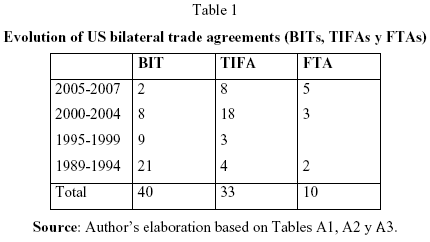
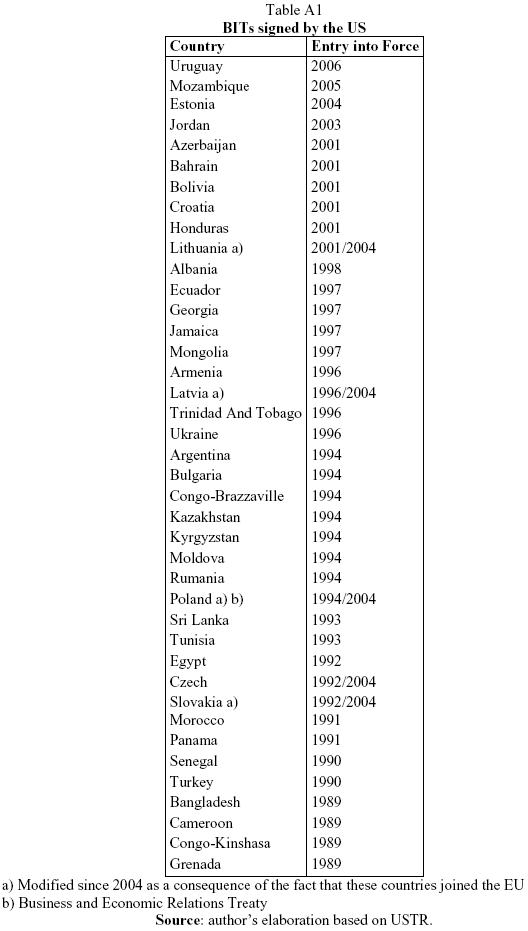
As it is shown in Table 1, there has been a progression in terms of the kind of bilateral agreement that the US has sought to negotiate. First the focus was placed on bilateral investment treaties (BITs), which were very relevant in the past decade (30 of the 40 BITs the US has signed were subscribed in the 1990s). Subsequently, in the first five years of this decade almost two-thirds of the Trade and Investment Framework Agreements (TIFA) were signed. Finally, in the last two and a half years, half of the ten FTAs entered into force.
The BIT agreements involve greater commitment, given that they establish reciprocal disciplines in terms of investment. TIFAs can be the step taken before starting negotiations towards FTAs. However, there are many countries with which TIFAs have not evolved in this direction (see Tables A2 and A3). In the bilateral sequence specific to each country no clear pattern of first BIT, then TIFA and finally FTA emerges. To this moment, only one case follows this path, and this is the case of a country in the Arab peninsula (see Table A3).
However, if any of these agreements (BIT or TIFA) is considered as the precedent of an FTA, then it is indeed possible to establish an association. Half of the current FTAs in force was conducted with a country with which either a BIT or and FTA was signed before (see Table A3). In the case of agreements that have been signed but haven't yet entered into force, in two out of five cases some agreement existed before (see Table A3). In the case of agreements being negotiated, this relationship jumps to 4 out of 5.
Globally, in half of the twenty cases being considered (where an agreement has either been reached or is being negotiated), previous agreements existed. If the cases of NAFTA and Israel are included –which were longer processes but where previous agreements existed- we can safely conclude that in most cases signing a BIT or a TIFA is a necessary condition to sign an FTA.
The countries that have a BIT and a TIFA and that are not being considered in the list of countries that are negotiating an FTA are five: Egypt, Kazakhstan, Kyrgyzstan, Tunisia and Uruguay. In this sense, they can be considered as potential candidates to negotiate a more ambitious agreement in the future.
Some of the processes to reach an FTA have been really long. This has been the case, for example, with Chile, with a negotiation that expanded for 5 years and consisted of 14 negotiating rounds. Other cases have been really fast, as it was the experience with Jordan and Bahrain, where in a year or less and few negotiating rounds an agreement was reached. After the period of negotiation with the Executive branch, the result is presented to the US Congress for consideration. In many cases, this stage gave rise to amendments that had to be reconsidered. In other words, the TPA does not inhibit the influence of Congress in the final stage of the agreement.
The US parliamentary elections of 2006 brought about a new configuration in the US Congress characterized by a higher share of Democratic legislators in both Houses of Congress. The first assessment conducted (Evenett and Meier, 2006 b) characterized the change in Congress pointing to the fact that the new members had a lower level of preference for free trade policies and a critical position vis-à-vis the recent performance of the Executive branch on this issue. In this sense, a great level of uncertainty regarding the existing trade negotiations emerged, both at the multilateral and bilateral (FTA) levels.
A more detailed analysis shows that in the Committee specialized in trade policy matters in the House of Representatives, most Democratic members could not be characterized as free trade skeptics, but in favor of trade agreements that give greater emphasis to some specific issues, most importantly labor standards (Destler, 2007). The first months of 2007 were very dynamic and the necessity to achieve a bipartisan agreement on trade policy matters was established. Four highly advanced processes of FTA negotiation (Panama, Peru, Colombia and Korea) needed an answer from the United States and in all cases Legislative intervention was required.
On May 5th, 2007, after a long and arduous negotiating process under the leadership of the Chairman of the Ways and Means Committee10 (the committee in the House of Representatives that is in charge of trade issues), a bipartisan agreement was reached. The agreement also involved the agency in the Executive branch specialized in trade negotiations, the Office of the United States Trade Representative (USTR). The agreement was titled "A New Commercial Policy for America" and it contains an emphasis on labor and environmental standards. It incorporates language about cooperation and capacity-building, and some directives are established to reduce the stringent requirements in terms of intellectual property. The agreement began to be operative for the Peru and Panama FTAs. In the case of Colombia concerns about the violation of human rights remain, and in the case of Korea the remaining problems relate to disagreements around issues of market access.
Up to this moment, this new agreement hasn't had other consequences beyond those already mentioned. In any case, it illustrates the fact that in light of the new power configuration in the US Congress, future trade negotiations would require bipartisan support to move forward. In June of 2007 the TPA expired. According to the US Constitution, trade policy is in the domain of the Legislative branch, which can in turn delegate that authority to the Executive. In the absence of this delegation of power, it is the Legislative branch which has jurisdiction over trade matters. This is the current situation.
]]> According to Destler (2007), renowned specialist on the issue, there are three options regarding what can happen with the TPA in the future:a. An extension, for a long period of time and with broad coverage in terms of negotiating arenas, similarly to the one granted to the current administration in 2002;
b. An extension granted exclusively for negotiations at the multilateral level. There is a precedent for such an approach, in case of the Uruguay Round;
c. A third option is an extension that not only contemplates the Doha Development Round but also the conclusion of existing FTA negotiations.
The first option is judged to be unlikely and unnecessary given the current situation. Between the second and third the differences lie on the extension of the agenda that is covered and the timeframe required to do so, as well as the need to further establish the objectives of the negotiation and the demands for further consultations with the Legislative. Nowadays the engine of trade negotiations is the Doha Round, given that it establishes concrete costs and benefits of having the TPA. However, it is possible that some other option may open. We can speculate that the Bush Administration will work towards expanding the mandate with an authorization that goes beyond Doha. The bipartisan agreement reached in May is a precedent in this direction. However, it is clear that a definition on this issue should take place by the end of the first session of the 110th US Congress (December, 2007).
4. STORY OF A RECENT RELATIONSHIP
4.1 Trade and Investment
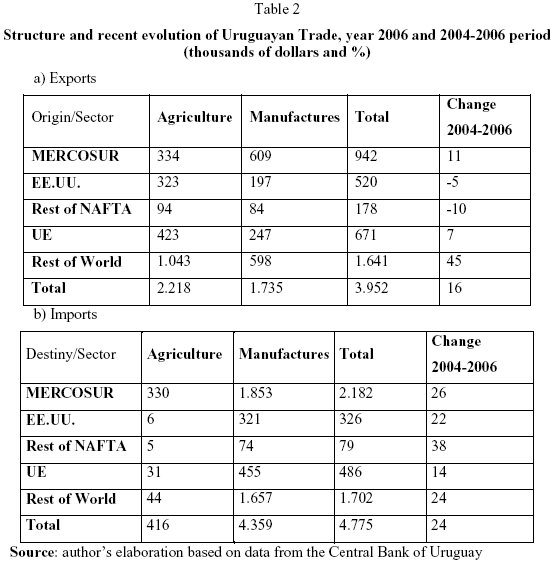
In the last decade, it became clear that the United States and the rest of the NAFTA countries had become an increasingly relevant market for Uruguay's exports. In this decade, they reached a similar level of magnitude that Mercosur partners. In part, this was due to a process of market substitution as a result of the regional crises that started at the end of the 1990s. The most important export product to the United States is bovine meat, which accounted for half of exports in 2006.
]]> Exports to the United States and the NAFTA countries represented less than a third of total exports in 2004 and did not reach a fifth in 2006. On the other hand, Mercosur also lost important as a destiny for exports, representing less than a fourth in 2006, when it had surpassed this level in 2004. Between 2004 and 2006 exports to the European Union grew as exports to the US were reduced. The process of recent revaluation of the Euro vis-à-vis the dollar explains to some extent this phenomenon of market substitution within industrialized countries. As figures in Table 2 show, the recent dynamism of Uruguay's exports was essentially oriented to other markets in the world, showing a process of multilateralization of export destinies.
There is consensus among the few studies that have been conducted about the fact that the basket of Uruguayan offensive products in trade with the United States is concentrated in some agricultural products (meat, dairy, rice) and a few manufactured products in the garment and textile sector (mainly based on wool and leather)11. The pattern of Uruguay's comparative advantage coincides to a great extent with the products that are considered "sensitive" in the US import basket. Being sensitive products, they are generally highly protected products. For this reason, achieving preferential access to the US market would be very important in changing market access conditions for these sectors.
Improving market access conditions in these products would enable Uruguay to obtain important advantages that would very likely be expressed as an improvement in export prices for this basket of goods, promoting investment and the subsequent expansion of exporting capacity in these sectors12. The processes of expansion of the export supply will only be triggered based on these long term signals (secured access to a large market). This dynamic perspective of access, investment, and expansion of export supply and employment makes the effects of preferential access relevant and definitely attractive13.
In terms of imports, the countries of Mercosur and particularly Brazil have become a dynamic source. In 2006 little less than half of Uruguay's imports (46%) were originated in Mercosur countries, and this regional orientation shows a growing trend. The excessive regional dependency on imports increases the likelihood that a trade diversion effect is taking place in response to the Common External Tariff and that is not reflective of Uruguay's trade preferences. In terms of trade in goods, Uruguay doesn't have noticeable sensitivities in trade with the United States, and lowering trade barriers with an industrialized country would enable to foster competition with regional providers, improving the quality and price of the products purchased.
In terms of trade in services sufficient data is lacking, but it is presupposed that in a series of new activities linked to trans-boundary trade (information technology, professional services) the United States is a relevant destiny. It is necessary to study these sectors in depth given that they present novel characteristics relating to export dynamism and the labor market, because they are intensive in skilled labor, and can foster the creation of high quality jobs.
There is consensus in the literature that the conditions established in the intellectual property chapters of free trade agreements are not beneficial for developing countries, particularly for the pharmaceutical sector. Some preliminary studies, not yet published, show that this is also the case for Uruguay.
]]>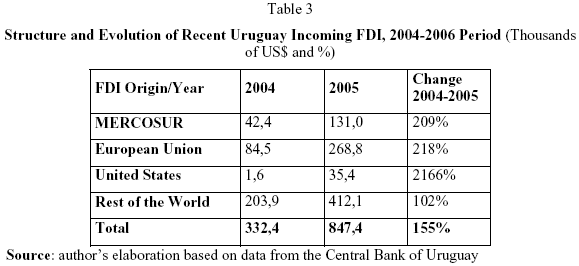
Another relevant dimension relates to foreign direct investment (FDI). Although the US hasn't been a relevant source of FDI in recent years, its importance has been growing. There is also evidence that the US influence may be undervalued. Some regional investments have been made by companies with a majority of US capital. We presuppose that the positive effects that a free trade agreement may have over FDI are linked to Uruguay's capacity to maintain existing conditions in the process of regional integration.
4.2 Agreements
Generalized System of Preferences (GSP)
Uruguay enjoys benefits with preferential access to the US market under the Generalized System of Preferences (GSP) framework. The GSP, established in 1971, is an exception to the principle of non discrimination (most favored nation clause), based on the "special and differential treatment" granted to developing countries. Through this mechanism, developed countries grant developing countries preferential access with the aim of promoting the latter's economic growth. This is a liberalization scheme that is non-reciprocal and therefore it is subject to the discretion of the country granting the preference. In the United States, the GDP was incorporated in the judicial system, for a ten year period in the 1974 Trade Act that came into force on January, 1976. However, the program has been periodically renewed, most recently in December of 2006 and is currently in force until December of 200814.
The US grants important tariff preferences under this program (around 100%) in a list of products, if those products are originated in a developing country. If those products are subject to a quota, then the 100% preference applies only to the in-quota imports. Out of quota exports pay the regular MFN tariff. Therefore, for meat and dairy –which is further discussed bellow- Uruguay pays 0% of tariff for in-quota imports within the GSP framework and pays the MFN tariff for its out-of-quota exports.
In 2006, a little more than 11% of Uruguay's exports to the US took place within the GSP framework (see Table A4). The basket of products that enjoys GSP benefits is diversified and includes a wide variety of manufactured products.
Treaty for the Encouragement and Reciprocal Protection of Investment
]]> In February of 2002 the United States and Uruguay established a Joint Commission on Trade and (JCTI). According to USTR press releases, on February 15th, 2002, Uruguay President Jorge Batlle and Ambassador Robert Zoellik (US Trade Representative) analyzed how to promote trade between the two countries. They also considered frameworks for trade liberalization complementary to the multilateral negotiations (WTO), at the plurilateral level in the continent (FTAA) and in the context of a possible bilateralism with Mercosur (the so-called "4+1" mechanism)15. In this occasion, they announced the creation of the JCTI as a means to enhance coordination among countries in issues of trade and investment of mutual interest. The first meeting was scheduled for March of 2002.At the 8th FTAA Ministerial Meeting in Miami in November of 2003, Uruguay and the US announced their intention to negotiate a bilateral investment treaty16. This was one of the results of the work of the JCTI.
Later, in May of 2004, negotiations towards a BIT begun17. This negotiations concluded in September, 2004. The agreement was signed on October 25th, 2004. During the Fourth Summit of the Americas (Mar del Plata, Argentina) on November 4th, 2005, Uruguay and the US signed a new Bilateral Investment Treaty that modified the one previously negotiated. It is important to highlight that in March of 2005 a new government came into office in Uruguay. A coalition of left-wing parties managed to win the government after more than 30 years in its pursuit. The new government reaffirmed its will to sign the BIT but under the condition that some changes were made18. The United States accepted the modifications. On December of 2005 the Uruguayan Parliament approved the agreement and the US Congress followed suit almost a year later, in August 2006. The treaty came into force on November, 2006.
The BIT consists of the standard elements of the investment chapters of the free trade agreements negotiated and signed by the United States. It is important to highlight that it is similar to Chapter 10 of the text of the Trade Promotion Agreement (TPA, a free trade agreement) that the United States signed with Peru19. The BIT consists of three sections. Section A has 22 Articles20. In this section the fundamental rules regarding national treatment, most favored nation treatment, transparency and others are enumerated. The three annexes that contain the standard negative lists of each party. The next to last Article (20) deals with financial services, a subject that is not usually dealt with on the investment chapter of free trade agreements. This chapter, in the case of the Uruguay BIT, is a combination of the content of Financial Services chapters in FTAs21 and includes general exceptions to the application of the established rules, as well as a special dispute settlement procedures for investments in financial services. Sections B and C of the BIT deal with the consultation, arbitration, and dispute settlement procedures regarding the agreement's enforcement.
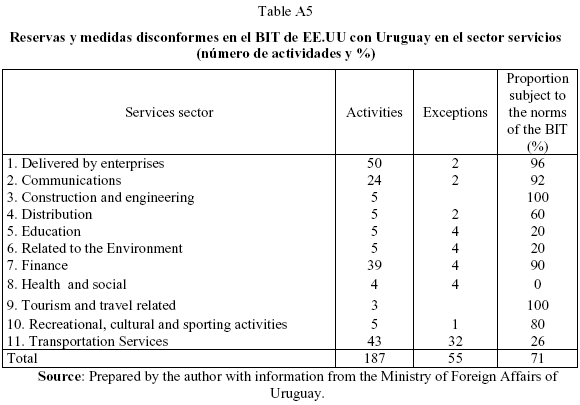
On Table A5 we present a summary of Uruguay's negative list in the BIT with the United States affecting the services sector. In the group of non-conforming measures and exceptions that are listed in the annexes, each country is allowed to subject itself to national treatment rules stipulated in the agreement. The negative list approach is common in FTA-type agreements and is the technique used to agree on commitments. In some sectors (health services, education, environmental services and transportation services) Uruguay established a high number of exceptions (74% of these activities) to the national treatment rules of the BIT (see Table A5). In the rest of the sectors, the level of commitment was much higher (less than 20% of activities were exempted).
TIFA
Within the framework of the 6th meeting of the JCTI, which took place in Montevideo on October of 2006, the United States and Uruguay agreed to start negotiations of a framework agreement to strengthen bilateral trade and investment relations. On January 25th, 2007, a TIFA (Trade and Investment Framework Agreement) was signed in Montevideo. The agreement establishes the United States-Uruguay Council on Trade and Investment and sets up an agenda.
The first meeting of the Council took place in Washington in April, 2007. The US delegation was led by Deputy U.S. Trade Representative John Veroneau and Uruguay's delegation by Secretary of the Presidency Dr. Gonzalo Fernández.
In the agreement an agenda was set aimed at strengthening of deepening bilateral trade and investment relations. The areas included in the TIFA agenda are wide and involve almost all the issues involved in an FTA, with the exception of preferential treatment of goods22. The next meeting was scheduled for the end of 2007.
For Uruguay, following this work agenda will entail a big effort on the part of the public sector. This process may allow the construction of a specialized team fully oriented to give content to the agenda. The only previous experience that Uruguay has on the broad agenda characteristic of FTA-type agreements (including "new trade issues") relates to the agreement with Mexico. This agreement, in the services area, is in the stage of defining the list of non-conforming measures (negative lists). It is a new kind of negotiating exercise, similar to the one that would be undertaken if Uruguay decided to negotiate and FTA with the US.
]]> The facts seems to confirm that both parties have agreed that, given the uncertainties that characterize the multilateral scenario (extension of the multilateral round of negotiations) and the domestic scenarios (political restrictions on both sides, though manifested differently), the current stage must be considered as a transition period towards a future negotiation. On this stage, a knowledge accumulation would happen based on the mutual sharing of information. It is a possibility that specific negotiations on trade facilitation and technical barriers to trade may be improved on the TIFA stage.
5. CONCLUSIONS
The starting point of this analysis is an evaluation of the performance of Mercosur. It is necessary to understand the limitations that it confronts and the time needed to solve each one of these limitations. The positive and negative aspects mentioned above happen simultaneously and to different degrees. It is the specific assessment of a given historical reality that enables a value judgment on the virtues or shortcomings of the process. In sum, this result depends on the trajectory and the pace with which progress is made in each area.
It is clear that, in the current regional context, most domestic policy challenges in Mercosur member countries take absolute priority and there are no common disciplines that would help to address them. In addition, for the most important economy in Mercosur (Brazil) the bilateral relationship with Argentina is one of the most important variables that determines its behavior vis-à-vis Mercosur.
The facts clearly show that the current Brazilian government has no rush to improve and to achieve a full functioning of Mercosur. It prefers a gradual trial and error approach, were the conditions of integration are incrementally and qualitatively changed while domestic norms are adopted without adding too much pressures to domestic equilibriums and without adding tension, particularly, to the relationship with Argentina, which is seen as having greater priority. The Mercosur status quo, which is unlikely to change in the upcoming years, is not favorable to the interests of Uruguay. Looking for more flexibility in the negotiation with third parties, starting from a sincere recognition of the current state of Mercosur, does not weaken but strengthen the process, by making it more real and not a game of appearances. Moreover, it is an effective and serious way of dealing with the issue of asymmetries in market size for small countries.
It has been pointed out that a technical objection exists in the fact that a Customs Union necessary entails a common trade policies vis-à-vis third parties. The common tariff policy entails a similar Common External Tariff and identical trade preferences with third countries. However, the current functioning of Mercosur does not respond to this premise and there are multiple deviations from these rules. For this reason, Mercosur functions in intra-regional trade as a Free Trade Area and only goods originated in the member countries are benefited with the intra-region tariff preference. This situation justified the adoption of a mechanism of gradual adaptation that will enable Mercosur to reach a greater level of compliance (albeit still incomplete), in a long transition to a full Customs Union23. In other words, Mercosur acknowledges the existence and future maintenance of "wholes" to the Customs Union.
In the liberalization of services and other disciplines the Mercosur countries have agreed, in general, to the rule of most favored nation meaning that, any deeper agreement reached with a third country must be extended to Mercosur partners. In sum, contrary to what has been said, in a broad range of the new issues, a deeper agreement with a contrary outside the block would actually deepen integration with Mercosur partners.
Uruguay should promote the granting of a Mercosur authorization to small countries to accelerate negotiating processes with third parties. This authorization could be restricted to those agreements that are or have been in Mercosur's agenda but for some reason have not been able to be completed. This authorization could be granted, if necessary, for a limited period of time.
To reach a successful conclusion of this negotiation, it is necessary to build a wide national political agreement that involves the political parties as well as most important social actors. For all the external and internal constrains highlighted, this will be a complex undertaking that would not resist a fissure in the domestic political spectrum. It is necessary to avoid falling in the trap of faming the debate along ideological lines and, contrary, to focus it along pragmatic lines. While all problems will not be solved with this agreement and not all domestic policies will be conditioned by it, it is possible to collaborate to lay stronger foundations for the construction of a stable path of long term growth. It is hard to believe that this is not a widely shared purpose in the country.
]]> The expectations generated around an agreement with the US are not beneficial because they are not realistic. It would be useful to negotiate it and it is possible to obtain good results from this undertaking. Finally achieving an FTA with the US depends on a wide variety of issues beyond the political will of the government. What is indeed clear is that the change in the composition of the structure of the US Congress is likely to change the structure of FTAs. The new emphasis towards a greater consideration towards labor and environmental standards does not imply, for a country like Uruguay, additional constraints in its domestic institutions. The multilateral agreements undertaken in these areas and the compliance with these rules are wider and deeper in Uruguay than in the US. Moreover, the suggested changes in the intellectual property area are aligned with the complaints of developing countries in terms of achieving consistency with multilateral agreements at the WTO level24. In sum, a new modality of FTAs would generate much less resistance in a country like Uruguay.In the short term, the possibility of a window of opportunity opening depends on what happens in the US Congress in this semester. It is critical to have a framework for bilateral exchanges between both governments, and the TIFA agenda provides this framework. In addition, it would be beneficial to have direct contacts with new Democratic legislators that appear to be closer in their political sensitivity to Uruguay's left wing government and that have a different perspective regarding the format of the FTAs that the US may sign in the future. Uruguay is not a country that generates threats in the US market, a sensitive aspect for Democratic legislators, and could even serve as a trial experience for the new FTA format under construction. Even new innovative negotiating spaces may be opened, such as for example a negotiation to achieve a services agreement that does not clash with multilateral nor with Mercosur rules. This path has the clear disadvantage that it is the liberalization of trade in goods where Uruguay's gains would be greater.
There are many positive aspects about having an active negotiation with the US. Firstly, there is a learning aspect for Uruguay's government negotiating teams and a positive institutional effect on Uruguay's negotiating structure. Secondly, it provides the opportunity to improve the strategic positioning of Uruguay in regional and international negotiations, particularly in terms of obtaining Mercosur authorization to negotiate with third parties, even if only for a limited period of time. It is critical for Uruguay to address this issue in the second semester of 2007, to be able to start negotiations with the US or with other third countries if the opportunities arise.
Finally, if the agreement were to be reached, there will be at least three positive effects. The first one would be to improve market access for a series of sectors for which Uruguay has a traditional comparative advantage. The second would be the development of new sectors of specialization, particularly in the services sector, with the creation of new high quality jobs. Both circumstances would enhance Uruguay's attractiveness to foreign investors and its domestic supply. The third positive effect is the reduction of the trade diversion effect of Mercosur with a CET design to fit the preferences of the largest economy (Brazil).
To finish, it is important to summarize some important aspects of the political economy of a potential FTA with the US. In the tradable sectors, Uruguay does not have relevant defensive issues and it is only possible to identify opportunities. It has strong comparative advantages in the agricultural sector and in manufacturing its economy is already open to imports from its Mercosur partners. Opening Uruguay's economy to the United States would reduce Mercosur's trade diversion costs without entailing major domestic adjustments. This benefit to Uruguay would constitute a small damage to Uruguay's neighbors, particularly to Brazil. In terms of other reforms, in sectors usually considered non tradable –services liberalization and other disciplines- the country needs to decide what it wants. The structure of FTA-type agreements enables countries to exempt sectors and establish different kinds of exceptions. It is essentially a domestic discussion and the choice is therefore between sealing the current status quo –particularly regarding state owned enterprises- without promoting many changes or, on the other hand, attempting to move forward in areas were reforms seems necessary and possible. In this case, the agreement provides an opportunity to develop the reforms in an environment of growth, something that always eases the political restrictions that may be triggered.
Bibliography
Blanco, Herminio y Zabludovsky Jaime, 2001: "Hacia un tratado de libre comercio entre Estados Unidos y Uruguay", Estudios CERES, Montevideo.
Evenett, Simon and Meier, Michael, 2006 a): "An interim assessment of the US trade policy of competitive liberalization", Working Paper Swiss Institute for International Economics and Applied Economic Research, Switzerland.
Evenett, Simon and Meier, Michael, 2006 b): "América votes: what next for the WTO", Swiss Institute for International Economics and Applied Economic Research, Switzerland.
Destler, Mac, 2007: "American Trade Politics in 2007: building bipartisan compromise", Peterson Institute for International Economics, Policy Briefs.
Moncarz, Pedro y Vaillant, Marcel, 2007: "Measuring the role of MERCOSUR on the Regional Pattern of Import of its Country Members", GEP Research Paper 07/27, The Leverhulme Centre for Research on Globalisation and Economic Policy, University of Nottingham, England.
Oddone, Juan, 2004: "Vecinos en Discordia, Argentina, Uruguay y la política hemisférica de los Estados Unidos. Selección de documentos 1945-1955", Universidad de la República, Facultad de Humanidades y Ciencias de la Educación, Departamento de Historia Americana, Ediciones El Galeón. Montevideo.
Oddone, Juan, 1990: "Uruguay entre la depresión y la guerra 1929-1945", Fundación de Cultura Universitaria, Facultad de Humanidades y Ciencias, Montevideo.
OMC, 2003: "Acuerdos Comerciales Regionales: un panorama cambiante", Sección de Acuerdos comerciales regionales, División de Examen de las Políticas Comerciales, Secretaría de la OMC.
Schott, Jeffrey, 2004:"Free trade agreements US strategies and priorities" edited by Jeffrey j. Schott, Institute of International Economics, Washington, DC.
Secretaría del Senado, 1995: "Tratados y convenios internacionales Suscritos por Uruguay en el período de 1941 a diciembre de 1946", Documentación y antecedentes legislativos, Tomo X, Montevideo.
Vaillant, Marcel and Ons, Alvaro, 2005: "Winners and losers of a FTA between USA and MERCOSUR", in "The MERCOSUR and the creation of the Free Trade Zone of the Americas", edited by Marcel Vaillant and Fernando Lorenzo, Woodrow Wilson Center/RED MERCOSUR, Washington, USA.
Vaillant, Marcel, 2007: "Objetivos, resultados y restricciones de la Negociación Común con Terceros en el MERCOSUR", en MERCOSUL quinze anos, organizador Rubens A. Barbosa, Fundacao Memorial, Imprensa Oficial, Sao Pablo.
]]>
1 This paper was written for the Chaire MERCOSUR, Science Po within the framework of the OBREAL project on Commercial Policy in Latin America, under the coordination of FUNCEX's Ricardo Markwald (Brazil), who made important contributions and suggestions to the publication of this study. I also thank the comments of Gustavo Bittencourt (DECON). As usual, the responsibility for the contents of this article is exclusively mine.
2 A phenomenon that is continuously expressed thorough the controversy over the location of the paper pulp mills on the eastern shore of the Uruguay River. The conflict, however, can be interpreted from a broader perspective that is not developed in this article. Currently, the diplomatic effort seems to be oriented to prevent the further escalation of the conflict.
3 Commercial Agreement and Final Act between the United Status and Uruguay, celebrated in August, 1942 and ratified in December of the same year (see Secretaría del Senado, 1995). This was a pre-GATT commercial agreement where the parties agreed to treat each other under the most-favored nation principle within a group of tariffs that are mutually consolidated. The agreement ceased to be in force in 1953.
4 Of the 215 Regional Trade Agreements (RTA) in place by 2003, only 14 have been notified to the WTO as Customs Unions, of which only some fully function as such (see OMC, 2003). By the end of 2007, RTAs would reach four hundred, involving little less than 200 countries.
5 The definition of products is established in the Common Nomenclature of Mercosur (CNM) and compromises around 10,000 items.
6 Articles 9 and 10 of the Treaty of Rome establishing the European Economic Community (EEC) define a general free movement rule (Libre pratique in French, libre práctica or libre circulación in Spanish). Pursuant to Article 10, Paragraph 1 of the EEC Treaty, "products coming from a third country shall be considered to be in free movement in a member state if the import formalities have been complied with and any customs duties or charges having equivalent effect which are payable have been levied in that member state, and if they have not benefited from a total or partial drawback of such duties or charges." This stipulates that goods move freely from third countries where import formalities have been complied with and all customs duties or charges with an equivalent effect have been levied in a member state, if the goods have not benefited from a total or partial drawback of duties or charges. Freely moving goods are treated like goods originating in the region.
7 In November of 2004 Brazil granted China market economy status, which has consequences for the definition of some trade remedy instruments that should be subject, theoretically, to common practices with the other Mercosur members. In March of 2006 the United States and Brazil signed a biofuel cooperation agreement that may have consequences in the commercial policy of access to the US market, which currently levies this product with a specific tariff. In July of 2007 the European Union granted Brazil the status of strategic partner, status that the EU grants very rarely, generally to those who would become new members. Brazil has observer status at the OECD and is seriously considering the possibility of becoming a full member, as Chile is in the path of becoming. In addition, already in 2002 Brazil and Mexico had signed a very relevant agreement (ACE No 53) in the automotive sector.
8 This policy was carried on by Robert Zoellick, who was in front of the USTR starting in the first George W. Bush administration in 2001.
9 There are ten FTAs (Table 1). An comprehensive list is provided in the Annex (see Table A3). ]]>
10 The Chairman is Charles Rangel, who is considered a "liberal" left-leaning politician within the US political spectrum (see Special Report: 2006 Vote Ratings", National Journal cited by Drestler, 2007).
11 See Blanco and Zabludovsky (2001), Vaillant and Ons (2005).
12 Given the existing asymmetry between Uruguay's supply capacity and the US' demand for imports, it is assumed that Uruguayan exports that benefit from preferential access to the US market would enjoy amplified protection, that is, Uruguayan exporters would receive the high domestic price existing in the protected market (Vaillant and Ons, 2005). On the other hand, US exports to Uruguay would enter under a regime of reduced protection, obtaining the desired effect of reducing the trade diversion cost of Mercosur.
13 In order to have an idea of the magnitude of the potential improvements in access to the US market, see in Table A4 the tariff paid and the share of US imports that Uruguay represents for each product.
14 See USTR (http://www.ustr.gov/Trade_Development/Preference_Programs/Section_Index.html).
15 In June of 1991 the United States and the four Mercosur member countries signed a framework agreement called "Agreement on Investment and Trade Advising". The agreement is known as the "Rose Garden Agreement" and has a 4+1 format. The objective was to create a framework to discuss ways of deepening the bilateral relation. The agreement has had a very erratic life since its inception, and only a few meetings under this umbrella have taken place.
16 According the USTR Press Releases (2003) Zoellik said that: "Foreign Minister Opertti and I are pleased at the accomplishments of the Joint Commission between Uruguay and the United States. The Commission has worked to resolve bilateral trade issues and to achieve joint objectives in the WTO and FTAA…..Today, we are pleased to announce that discussions in the Joint Commission have led to an agreement to initiate negotiation of a US-Uruguay Bilateral Investment Treaty. We have also instructed the Joint Commission to explore additional possibilities for sectoral bilateral agreements that will lead to a further deepening of the US-Uruguay trade relationship through increased market access. Uruguay has been a good partner with us in seeking to open markets in both the FTAA and the WTO".
17 By that time, the US had 36 BITs with other countries. It hadn't negotiated any BIT in the last 5 years. The decision to involve Uruguay in the first negotiation showed US interest in its relationship with Uruguay.
18 The text of Article 17 was modified as was the procedure for the selection of arbitrators for dispute settlement tribunals. In addition, Uruguay annexed a declaration that clarifies the extent of the Most Favored Nation clause included in the treaty.
19 This agreement is still under consideration by both parliaments, in light of the recent amendments made. ]]>
20 Article 1 is about definitions. Article 2 about the scope and coverage, and it is worth noting that financial services investments are not exempted. Article 3 is the standard text regarding national treatment for investors and their investments. Article 4 is about most favored nation treatment, where non discrimination vis-à-vis third parties is established. Article 5 deals with the so-called "Minimum standard of treatment". Article 6 about expropriation and compensation. Article 7 guarantees transfers resulting from investments. Article 8 relates to the prohibition of performance requirements to the other parties' investments and the conditions under which the grant of some advantage may be conditioned to a reduced set of investment practices by the other party. Article 9 is about senior management and boards of directors and establishes that no restrictions may be imposed that undermine the control of investments by any party. Articles 10 and 11 relate to the transparency in the publication of norms and rules, as well as administrative procedures. Articles 12 and 13 deal with environmental and labor standards, respectively. Article 12 of the Uruguay BIT is more developed that Chapter 10 of the US-Peru TPA. Article 13 referring to labor law is not included in the Chapter 10 (Investment) of the US-Peru TPA. Article 14 contains the text relating to non-conforming measures that are listed in the three annexes to the agreement, using the procedure of negative lists. Article 15 is about special formalities and information requirements. Article 16 establishes different procedures under which the agreement cannot be derogated. Article 17 relates to the denial of benefits when certain investor requisites are not fulfilled, in terms of its relationship with the country party to the agreement. Articles 18 and 19 deal with essential security and disclosure of information. Article 20 is about financial services. Article 21 is about taxation The last Article (22) is about entry into force, the duration (10 years) and the termination of the agreement.
21 In particular see, in the US-Peru TPA, articles about exceptions (Article 10) and over disputes regarding financial services (Article 19) in the Financial Services Chapter (Chapter 12).
22 According to the information available in the web page of Uruguay's Presidency the issues involved are: facilitation and liberalization of bilateral trade and investment (including agricultural issues); cooperation in terms of sanitary and phytosanitary measures; technical obstacles to trade; intellectual property rights; information technology and communications, e-commerce, commercial and technical capacity building; trade in services; government procurement and other issues that the Council may decide. In particular, the council agreed to include in the agenda issues relative to environmental and labor norms, biofuels and innovation.
23 See Decisions 54/04 y 37/05 of the Council of the Common Market.
24 It is widely accepted that the intellectual property chapter is the most bothersome of all, particularly in terms of its provisions regarding pharmaceutical patents and their effects on the prices of drugs.
]]>
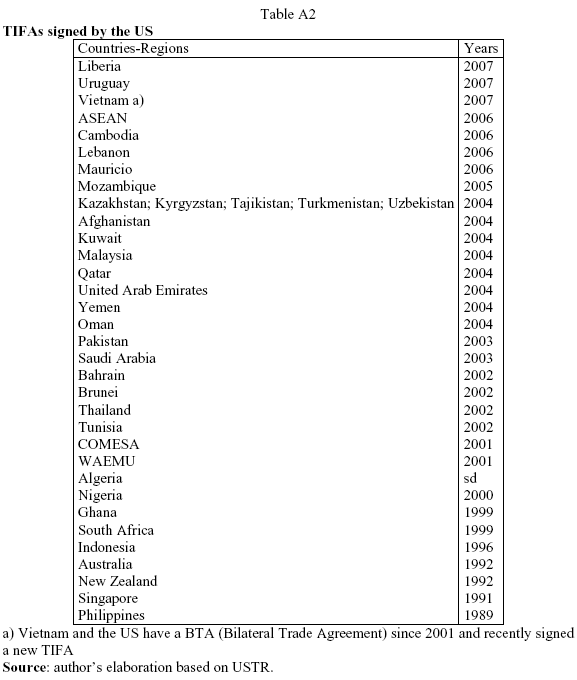
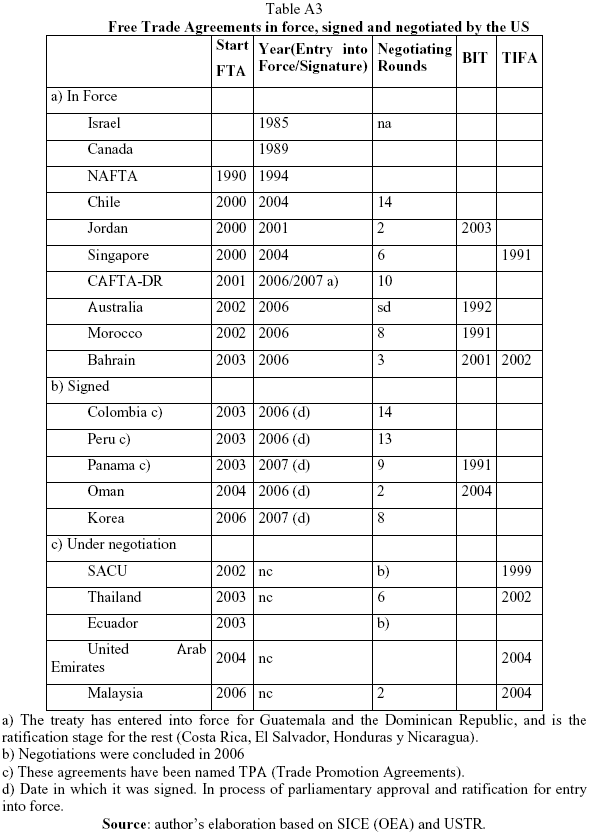
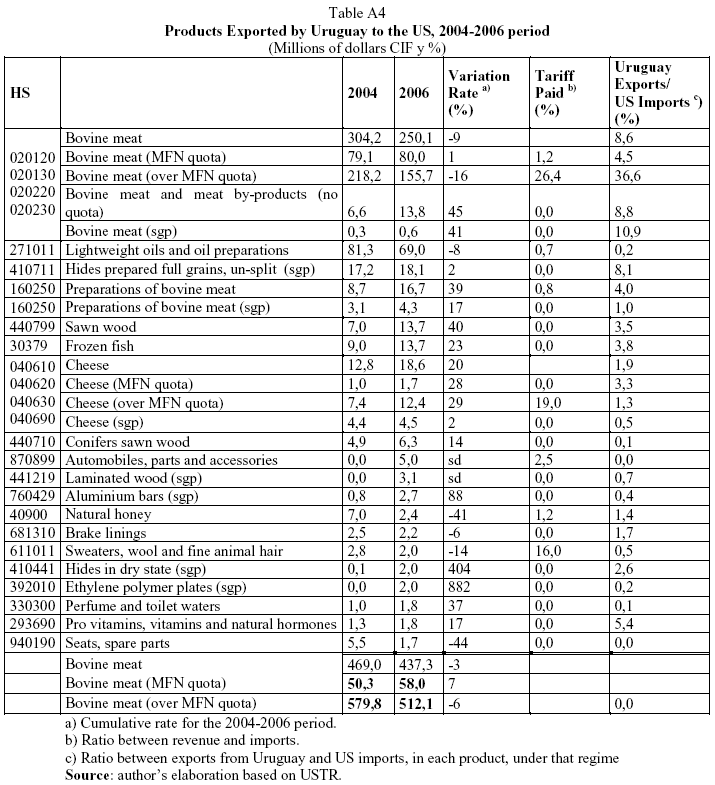
Table A4 - click here to enlarge it
]]>