Gênero e a distância entre a intenção e o gesto
Genre et distance entre l'intention et le geste
Clara Araújo; Celi Scalon
Translated by Arlete Dialetachi
Translation from Revista Brasileira de Ciências Sociais, São Paulo, v.21, n.62, p. 45-68. Oct. 2006.
ABSTRACT
This paper analyses the perceptions of men and women on the compatibility between paid jobs and family, from the standpoint of gender relations. Based upon the results of a survey carried out in Brazil in 2004, it is examined whether there is a rapport between more equalitarian perceptions regarding gender and more shared attitudes regarding household work. There is also an attempt to identify the weight and the extent to which various factors (e.g. cultural, socioeconomic, and demographic) are relevant to the existence of values and routine practices that entail the perception of more balanced and symmetrical marital relations.
Keywords: Gender and family; Household work; Women and labor market.
RESUMO
Neste artigo analisamos as percepções de homens e mulheres a respeito da conciliação entre trabalho pago e família, tomando como referência as relações de gênero. Com base nos resultados de um survey realizado no Brasil em 2004, procuramos investigar se há correspondência entre percepções mais ou menos igualitárias em relação ao gênero e atitudes mais compartilhadas no cotidiano do trabalho doméstico. Procuramos, também, identificar qual o peso e em que medida diferentes fatores - culturais, socioeconômicos e demográficos - são relevantes para a percepção de relações conjugais mais compartilhadas e simétricas nos valores e em certas práticas cotidianas.
Palavras-chave: Gênero e Família; Trabalho doméstico; Mulher e Trabalho
RÉSUMÉ
Dans cet article, nous analysons les perceptions des hommes et des femmes à propos de la conciliation entre le travail rémunéré et la famille, en prenant comme référence les rapports entre genres. Sur la base de résultats dune enquête réalisée au Brésil en 2004, nous avons recherché lexistence dune correspondance entre les perceptions plus ou moins égalitaires par rapport au genre et aux attitudes qui sont davantage partagées dans le quotidien du travail domestique. Nous avons également cherché à identifier le poids et dans quelle mesure les différents facteurs culturels, socio-économiques et démographiques sont importants pour la perception de relations conjugales davantage partagées et symétriques dans les valeurs et par rapport à certaines pratiques quotidiennes.
]]> Mots-clés: Genre et famille; Travail domestique; Femme et travail.
Presentation
The purpose of this article is to present some results of the research "Gender, Labor and Family in Brazil", based on a survey performed in the end of 2003, with a representative sample of the Brazilian population.1 The survey is a portion of an international research that the ISSP - International Social Science Program – conducted in order to identify the transformations that have been occurring with regard to gender, based on the reconciliation dynamics between family life and paid work. The research sought to investigate the perceptions that women and men have of such reconciliation and involved aspects related to the exercise of motherhood and of fatherhood; conjugality, the division of home work and the satisfaction with family life and with work. A set of questions addressed specifically to the inquired that lived with their spouses sought to gather the perceptions of such individuals regarding the division of home work, by means of questions on home tasks and activities with the children.
In previous works (Araújo and Scalon, 2004 and 2005), more general results of that research were presented. In this article, we selected the questions that we regarded as more directly associated to the complex of problems of reconciliation between family and paid work in order to try and answer the following questions: Has the presence of women in the job market changed the traditional gender division of labor in the family, in such a way that the gender relations in Brazil could be regarded as more equal? Do the perceptions correspond to the values expressed by the inquired on female labor, competences of men and women in the family and marriage sphere and their attitudes2 in the everyday life at home concerning the tasks involved in the reproduction and care of the children?
In the first part, to the light of a succinct descriptive analysis, we present the core features of the perceptions of the interviewees regarding gender equality and the reconciliation between paid labor and family life.3 Then, we analyze how some domestic practices involved in such reconciliation are conducted in the everyday life of the interviewed couples. The second part seeks to establish possible correlations between the different factors that influence the perceptions, values and practices reported by the interviewees, based on the use of multivariate analyses. Finally, we conclude indicating the main features that are currently valid in Brazil with regard to the topic.
Profile of the Studied Population
Briefly, we will present some general figures that allow for a characterization of the studied sample. The average age is 39 years. School education is low: 67.8% have only enjoyed basic education and only 10% entered universities and only 6% actually graduated from university. With regard to color or ethnic background, 46.3% defined themselves as white, 11.2% as black, 37.6% as brown, 1.9% as yellow and 3.1% as indigenous. Among the interviewees, 45% stated that they were the head of the family and 26% that they were the spouse. With regard to the sex, 68% of the men and 32% of the women stated that they were head of the family. Among the interviewees, 59.4% said they had been living for less than 17 years in the house. By sex, also considering the persons that said they were unemployed for over twelve months, 53.9 % of the women were included in the category of active workers, 30.5% defined themselves as housewives and 11.3% as retired. Among the men, such percentages were 81%, 0.6% and 13.6% respectively. Contrary to what is usually said, the figure of the hours worked per week is high: 59% of the interviewees work more than 40 hours. Among women, 30.2% work up to 30 hours, 23% between 30 and 40 hours per week and 46.6% work more than 40 hours. Among men, such percentages are 14.2%, 18.7% and 67.1% respectively. With regard to the marriage situation, 63.8% of the total sample lived together with a spouse at the moment of the research, a category defined by the sum of those that stated they were married and not married, but living together with someone. Only in 7.6% of the domiciles there was a housemaid.
]]> And the religious profile reveals what other researches have already indicated: although the majority of the population is catholic (75.2%), the proportion of protestants in the population has grown (13.7%), which seems to be higher among women.
Gender and Family: Recent Tendencies
The changes in the characteristics of marriage and cohabitation in terms of composition and affective configuration have been analyzed by a vast array of literature (Gornick and Mayers, 2004; Torres, 2001, 2002, 2004; Bozón, 2004; Aboim and Wall, 2002; Castells, 2000; Jelin, 1995; Vaitsman, 1994). In general, such analyses indicate a deep change of the family organization patterns with regard to the decrease in the family size; in the conjugality patterns, with the increase of one parent families and couples made up of same-sex couples; with more plasticity of the relations and affection becoming a central element that guides the creation of love relationships and of conjugality; and also patriarchy as hierarchic and power reference is weakening, although this aspect is quite polemic. Such changes, also arising out of the massive entry of women into the job market, indicate evidences that the reconciliation models between paid labor and family life based on the classic couple of "male breadwinner" and "female carer" have been changed towards a dual model in which women remain the main "carers", but the traffic between domestic and public spaces has become a contemporary feature.
It should be stressed that such reconciliation dynamics are also measured by the growing centrality that the market acquires in contemporary social life (Dedecca, 2004; Gornick and Mayers, 2004), that is, by structural imperatives and not only by those typical of the family relationships. This is also a global transition process, although the intensity varies from culture to culture and depending on the contexts (Norris and Inglehart, 2003; Hirata, 2002).
Many of those tendencies that present themselves more or less intense in the different countries depending on the specific contexts, have had favorable effects on women, at the same time in which also changes in their positions in other spheres occur, foremost in the labor environment. In the case of Brazil, an aspect that deserves particular mentioning refers to the family size and composition (Berquó, 2002). Although there are not many long-term studies, the analysis of some more historical works suggests that the intensification of the entry of the women into the job market since the seventies has contributed to such substantial change in the family sets in Brazil.
In fact, compared to the scenario some decades ago, the sense of rupture that many of such changes acquire is stronger for women. This, however, does not define the nature of the relationships as less conflicting. As Torres et al. (2002) highlighted, the family spaces are places where material and symbolical assets circulate that are not always subject to consensus among the pair. Not only the individuation gives space for more personal demands, but also the conditions of use and access to the resources tend to be the subject-matter of conflicts.
In return, the intra-family relationships do not only derive from subjective senses granted by its members or also by the internal dynamics to the domestic environment. They are also measured by exogenous aspects, deriving from the organization modes of public life and of the places in which the individuals occupy and dispute those spheres. The organizational dynamics and the access to certain kinds of resources have an impact on family and marriage life to such an extent in which they influence the availabilities and chances of the individuals in public life. In that case, such dynamics particularly influence the life and the chances of women, as has been shown by countless empiric studies. As opposed to men, the satisfaction possibilities of women, in addition to the external imperatives typical of the "world of work", are also measured by its conditions inherent to the family. One of the most evident aspects when analyzing the relations between family and public space is that "the domestic" space remains a main element to measure the life of women, even if this occurs involuntarily. Therefore, the aspects "internal" to family – care or reproduction activities of domestic life -, as well as aspects involving women in the job market need to be observed also from the perspective of interaction between the domestic / family sphere and the public sphere, focusing on the relations with the market and with the State, following the example of several authors, such as for example Esping-Andersen (1990), Fraser (1999) and Crompton (1999), Gornick and Mayeres (2004), Torres (2004), Arriagada (2004), among others.
In those and other analyses, it has been highlighted that women, different than men, are subject to two types of dependency – on the market and on family -, and this has an impact on their autonomy and the way they organize and direct their actions. The mediation degree of the State, in its turn, could have more or less positive effects in accordance with the intensity of change: from the more traditional model with firm roles – male breadwinner / female carer – towards more egalitarian dual reconciliation models, even if mainly characterized by unequal involvement of men and women with domestic life.
Together with those requirements, culture arises as relevant when thinking about changes and recurrences in the dynamics involving gender relations and, with that perspective, seems to us particularly relevant for the comprehension of the survey information of the work of Norris and Inglehart (2003). The authors include structural and cultural factors to study and explain the variations in the attitudes regarding gender equality among societies and among men and women. Considering the positions of the individuals and also the different geographic regions to reflect about cultural traditions, the authors suggest that gender inequality/equality varies systematically depending on the political and socioeconomic development level and on the religious and cultural standards of a certain society. In general, they hold that the modernization of the societies causes the weakening of the traditional gender-based roles. Modernization brings about the entry of women into the job market, which leads to changes in several aspects of social life, family and public and labor spheres. The changes in the lifestyles of men and women, especially during the post-industrial development phase, also generate inevitable transformations in terms of cultural values. Such values act as decisive impulse generating sources within the same societies and also of differences according to the different political and economic development levels.
]]> Inglehart and Norris rely on the relevant variables of age, education, income, market share, religion (frequency with which one goes to church), conjugality condition and motherhood / fatherhood. In the context of countries as a whole, they consider human development and the democracy level. In addition to this, they take into account the geographic region as reference base for the different cultural traditions. The authors concluded that women tend to be slightly more open towards gender equality than men, but the differences between the genders are less than the differences between societies. In this case, in addition to the socioeconomic and political indicators, also the indicators of different religious traditions were considered. Variables as education, income and job market share correlated positively with gender equality. In contrast, age (being older), religious frequency, conjugality (being married) and having children correlated negatively with more egalitarian gender positions. The authors conclude that there is a kind of modern gender inequality, called gender gap theory.There are some problems with this theory that cannot be duly discussed in the restricted space of this article. In any case, they are explained in their own theoretical designation - "gender gap" -, a term that grants a linear and progressive direction to the changes. However, those problems do not take the validity away from the central argument, that is, gender equality and inequality are measured by multiple factors, particularly culture, and socioeconomic and cultural dimensions.
With this work, we intend to verify to what extent gender, compared to other variables, proves relevant for the creation of values and of practices that organize the everyday life of the families in Brazil. Although the set of variables that we can define as "moral" or cultural is not very big, it is possible to combine variables of "perception" with those of opinion, such as factors as religiosity to think about the dimension of culture and its relation with the socio-economic elements. Subjacent to this exercise, is the comprehension that the modernization process – with its structural and symbolic dimensions – produces changes in the cultural values and attitudes, and such changes have been indicating gender equality.
The Sense of Domestic Work for Women and Men
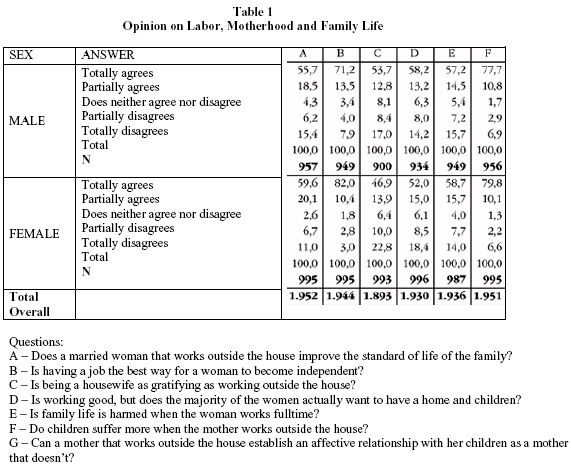
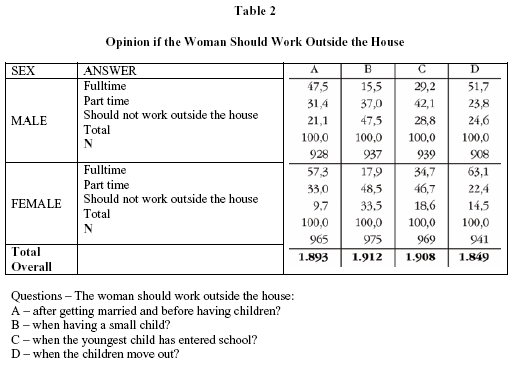
As previously discussed, the switch between paid labor and the everyday household activities is verified among the majority of women. In addition to being an imperative for survival, paid labor can and tends to constitute an aspiration of self-actualization. Indeed, such switch occurs predominantly among women from home to work. At the same time, the domicile and family remain as main material reproduction and symbolic production spaces of everyday life. So how can the desired or necessary work be reconciled with the actual fact of the domestic activities and motherhood, and what are the dimensions that legitimize or tension such reconciliation? The answers to the questions involving the relation between maternal affection, quality of life and paid labor, as well as those regarding the individual aspirations of women, are interesting leads concerning the perceptions of both genders of motherhood and the place of the woman. The analyses of the information contained in Tables 1 and 2 (Annex) suggests that there is an increased acceptance of work as constituting part of the life of a woman; higher among women, but equally increased among men. As can be seen, such acceptance is accompanied by the perpetuation of the appreciation of female domesticity, particularly of its maternal aspect, and, as can be noted, this occurs foremost among men. The answers indicate an appreciation of labor, but suggest another aspect, perpetuation or reconciliation of the traditional space – home and motherhood. Men and women agree with regard to the importance or need of paid labor for women, but not with the same intensity. The perception of men of what women want is more associated to domesticity than the perception of women themselves.
Foremost with regard to the children, female absence from the domestic space and the reconciliation possibility prove more problematic for both, but most of all among men. It may be supposed that, in the perception of the interviewees, the absence of the women would tend to generate a certain lack of affection, which could be associated with the time dedicated to the exercise of motherhood, and not to the quality of that relationship.
In Table 2, the centrality of motherhood is revealed once more. The construction of another female identity seems to be still conditioned to that maternal place, foremost when related to the phase in which the children are small. For men, however, in addition to the exercise of motherhood, the place of the "wife" also remains relevant. Although there is a reasonable differential between the answers of men and women when it deals about working outside the house before having children or when they already go to school or have left home, with regard to young children, there is a certain consensus among the sexes that women should not work fulltime during that period. The reconciliation with work that allows them to develop childcare activities constitutes an ideal for a significant portion of the interviewees.
The data suggest that, with regard to values, the affirmation of individuality of the subject and of autonomy to move within the social spaces tends to contrast with an identity that transforms a person into wife and mother. As we will see below, for women such tension seems to be determined not only by value dimensions, but also by concrete time dimensions. In that case, the tension refers to something concrete: the demands concerning the dedication foremost to the children and the need to work with the purposes of financial gains and / or the difficulty of the exercise of a profession without other requirements. A look at the male answers indicates that men still value more a female identity characterized by the roles of wife and mother, and their expectations regarding the couple relationship tend to be measured by such values.
]]> Men and Domestic Work
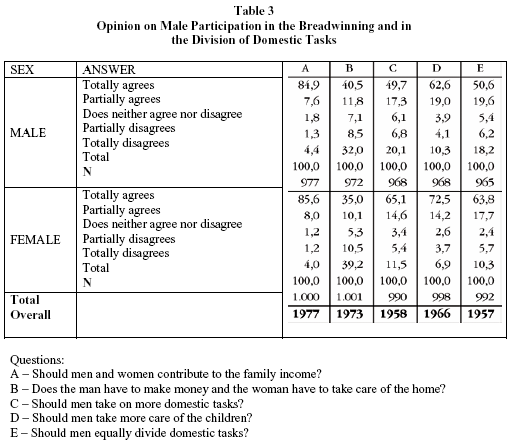
Up to what point do less traditional concepts regarding the kind of male participation in family and everyday life correspond to more egalitarian perceptions regarding the access of women to work and their professional actualization as a right? To what extent is the already mentioned transition of women in a direction – from domestic to public space – corresponded by male transition in the opposite direction? The answers contained in Table 3 allow analyzing the opinions of men and women on the traditional gender role division with the focus on men, with regard to the domestic tasks and to the breadwinning figure.
The acceptance of the idea of family expense division is quite high – 92.5% of the men and 93.6% of the women totally or partially agree with that statement. The most symbolic question regarding the traditional role division is if the man should earn money while the woman takes care of the home (question B). Although the percentages are reduced a lot, it is symptomatic that 52.3% of the men answer that they agree with the traditional role division. It is also surprising to find that 45% of the women accept such statement. How can the share of both in the income and, at the same time, the continuation of the dichotomic roles as they are presented be defended? The answers suggest the following interpretation: most notably among the men remains as a perception a pragmatic necessity related to scarce budgets and an idea of work that is accepted, but with the connotation of "auxiliary", although indeed it is not. Such perception accompanies the acceptance of female labor, but that does not necessarily mean a change in the symbolic and effective representations regarding the priority places of men and women when leading the everyday life. In other words, the transition remains under strong influence of the traditional dual "male breadwinner" and "female carer", although the first area is in fact not anymore predominating among the sets.
Perceiving female labor as auxiliary is nothing new. Pioneer researches have already indicated such results (Bruschini, 1990; Hirata and Humphrey, 1986). Maybe what needs to be stressed is exactly its continuation as a still strong value, but no longer predominating, as already more than 40% of the Brazilian EAP is made up of women. The most accentuated continuation of the breadwinner idea is confirmed through the answers to the question on the ideal income for the man. While 59% of the women answered that it should be equal to the one of the women, among the men that percentage was 50%. On the other hand, 47.9% of the men thought they should make more than women, but among the women there is still a significant portion (38.3%) that agrees with such statement. The fact should be highlighted that women and men present high approval rates concerning the need of more male involvement with children and the division of household tasks. The care of the children is the most approved item among both sexes. The division of household tasks does not obtain similar approval rates, although they remain high. In that case, the border between the sexes is quite clear. Mainly women have that more egalitarian perception regarding the division of the tasks. Without any doubt, we cannot consider that in Brazil we still have the traditional macho man as we used to think. But the faces of more egalitarian relations and more traditional relations mingle and become evident, indicating "modern" and "conservative" aspects that reveal the ambiguity of the expected modernization.
Marriage as Value and the Quest for Happiness
Considering the contemporary tendency towards the creation of relationships guided by affective choices, and not by merely pragmatic choices based on the sense of honor, we will analyze next the place that the interviewees grant to some of such choices for the creation of conjugal relationships, for the structuring of families and for the ideal of happiness.
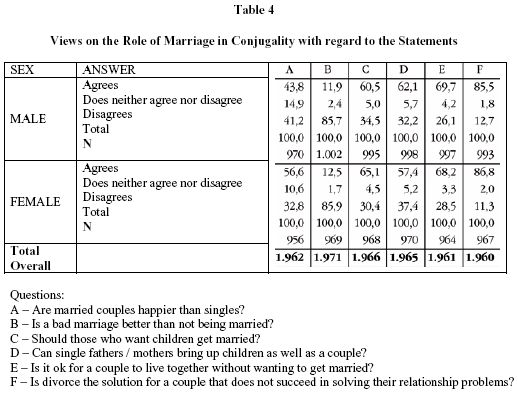
The answers contained in Table 4 suggest tendencies of an institutional weakening of marriage and the appreciation of conjugality based on individual satisfactions, with higher maneuver margins for women. The most important information to be highlighted is that, as opposed to what is generally voiced by the common sense, in this research it is more the women than the men that tend to reject the formal character and to agree that marriage does not necessarily constitute the ideal of happiness.4 This tendency is also stated in answers that refer to what we could define as the moral sense of marriage (questions E and F). Comparatively, women tend to accept more that marriage can be important for the upbringing of children, but this is conditioned to a satisfactory individual conjugal situation. This and other questions, thus, indicate that it is in the spaces of affective relations and of choices that individualism, as modern value that makes personal life "an open project, creating new demands and new anxieties" (Giddens, 1991, p. 83), proves more evident in the context of this research.
"Moral" Values: Authority, Hierarchy and Individual Rights
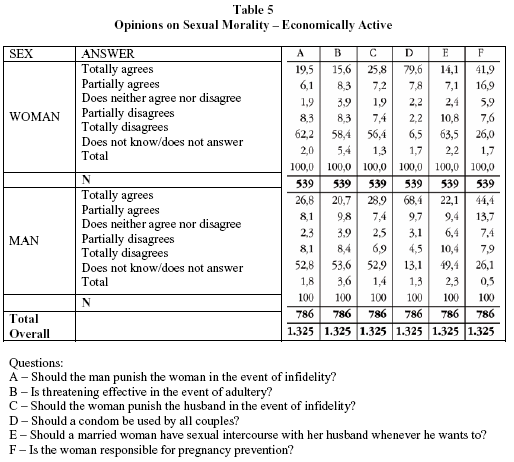
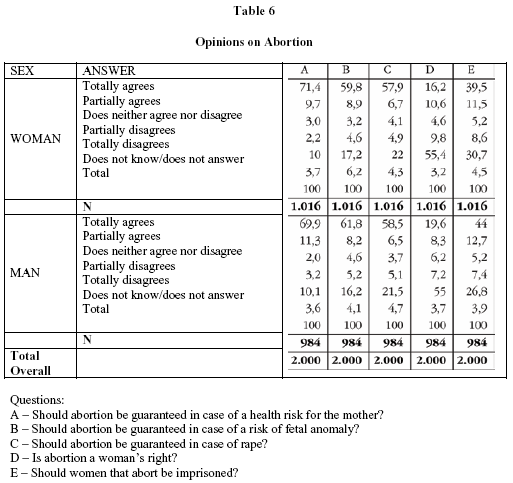
]]> Following the sense proposed by Giddens (1991) with regard to the "democratization of the private sphere" as a project that is on the agenda, some items of the block of questions will be briefly analyzed5 that we define as "moral values". This designation is due to the fact that such items are not linked to sharing, but to individual rights with regard to sexuality and the dimensions of authority and possession in the gender relations. The use of authority and of punishment as resource of family control is one of the characteristics of the patriarchic family model that involves also a sense of fidelity and obedience, included in the conjugality and perceived as the belonging to the other one. Due to the tendency of more symmetry among the family members, we expected that the interviewees would tend to reject the use of force as conflict resolution method. Considering the hypothesis that older generations – that, therefore, are in general not working anymore – would tend to be more conservative with regard to such aspects, we selected only those that defined themselves as actively working. The first thing to stress, as some of the figures of Table 5 show, is that, in this research, the majority of the men and women refuses the use of punishment or threats as form of marital control. However, it should be noted that women tend to have slightly more modern views than men, with higher rejection percentages. On the other hand, it should be said that the percentage of women and, foremost, of men who still consider such methods valid is not negligible, which probably helps explain the high percentages of records of inner-family violence and gender violence. But as a tendency, such answers indicate a weakening of male authority and more reciprocity with the "other one". With regard to sexuality, the answers reveal more open-minded views with regard to sexual rights as choice, and, once more, such views are mainly among women. However, in general, they suggest that in this aspect the relations tend to be more measured by mutual desire and not so much by power, although the percentage of women and, foremost, of men should not be disregarded that still hold the male right and authority as decisive for the relationships.Among the questions that we define as "moral", the topic abortion remains, without any doubt, as symbolic for the debate on modern values and gender relations, as it refers to the individual right of women to their body and, at the same time, is strongly characterized by religious aspects. As we supposed, Table 6 shows that abortion as a question of women's rights – items A and E – is still predominantly refused and subject to punishment. Although more men than women tend to be favorable towards prison, the refusal of the idea of the woman's right tends to be higher among women themselves. In contrast, in view of the taboo that the issue is still in Brazil, the approval rates in question E may not be disregarded, as well as the high abortion acceptance rates in cases of risk of life of the mother and fetal anomalies.
Men and Women in the Everyday Domestic Life
As was shown, the activities related to the reproduction of life that involve the division of a set of activities necessary for the organization and the functioning of the domiciles, the care for the children and the use of "free" time, that is, time on the weekend, formally reserved for recreation, need to be seen under the perspective of cultural changes. In this sense, they encompass needs that are being changed in time and in space. The reproduction of life and how this happens historically vary between cultures and in accordance with the socioeconomic contexts. To think how the domestic work division occurs implies considering that the conditions of the individual's actions are measured by their values and choices, but also by the structural contexts and access to resources, aspects that must be contemplated as drivers or restrainers of determined tendencies. On the other hand, the analysis of the work division under a gender perspective shows that those factors can be more or less relevant; however, they are not so determinant to substantively change the almost universal characteristics of the gender division of domestic work.
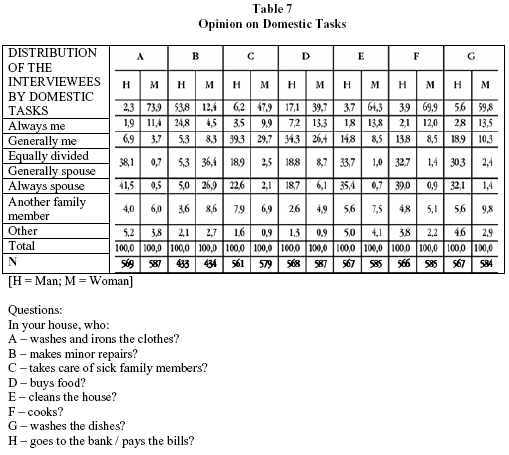
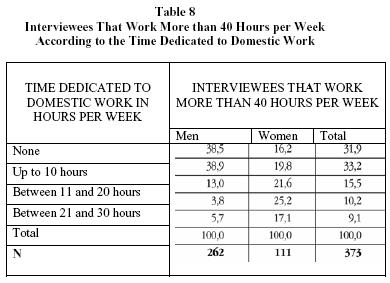
Table 7 condenses the set of domestic activities about which the interviewees were requested to answer. The data reveal that the gender division of domestic work (without considering the children) still remains widely dominated by the traditional standard for both genders. The only activity men respond for with over 50% are minor domestic repairs. Some activities, as washing and ironing clothes and / or cooking have been territories practically unexplored by men and seem to remain so. Although the percentages change under certain circumstances, they are not sufficient to indicate that paid labor, even full time, leads to a situation that may be considered balanced in the division of the domestic activities, as per the information in Table 8.
"Care" and Activities with Children
As we indicated, the place of care in the life of women has been determinant for their possibility of choices with regard to life in general. In fact, as Duran (2000) observed, excluding the biological limits related to function of pregnancy, all other aspects involved in the care can be effectively developed by men or women. This is, however, not what is going on in everyday life.
In the research, care could be observed from two angles: it referred to ill families (Table 7) and, foremost, to the involvement / sharing of the activities necessary for the upbringing of the children. With regard to the first aspect, the proportion of individuals that did not answer this question was very high. Here we indicate possible reasons therefore: because not necessarily a single person takes care or also because the question could have been associated to the idea of someone sick in the moment of the interview.6 Anyway, what we can observe in item C of the Table is that such continuous activity is predominantly female and, according to the answers, male involvement remains very small when compared with the involvement of women.
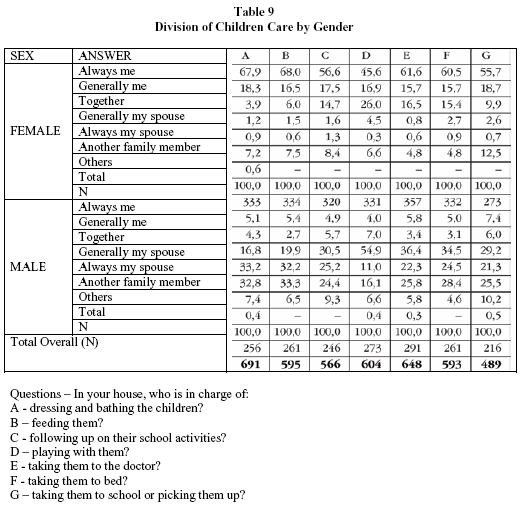
]]> Regarding the second aspect, the data of the research confirm what was said before. Children under ten years of age receive care, when they are not at school, fundamentally by the mother – 57.6% - and, secondly, by the grandparents – 12.1% -, which should almost totally correspond to the figure of the grandmother. For women without partners, support by the grandparents is even more relevant. Public care is residual – only 14.4% of the interviewees with children of up to 2 years answered the question if the children went to a day-care center with yes, and only half goes to a government day-care center.The division of domestic work among couples, aiming at the care of the children, suggests few changes in the traditional standards and confirms what has been found in other studies. In practically all activities, 70% or more women answer that it is them who perform the listed activities, to the extent that they impute an inexpressive share to the spouse. The only exception concerns the activity of playing with the children, in which male participation increases a bit as can be seen in Table 8. Finally, it should be recorded that also on the weekends, women, much more than men, had their spare time activities associated to the children and / or visit to parents, or also used their free time to take care of the house.7
A certain pattern of interesting and, at the same time, revealing answers and aspects emerges from those information, which makes us think about the ways how men and women experience and live such activities and the coherence with their opinions. First, when comparing the answers according to the gender, we note that, systematically, the percentage of men that answer that they are always the ones that carry out the tasks is higher than the one of the women that attribute the responsibility for such tasks to the spouse. There is also a standard in the answers about egalitarian division: the percentage of men that answers that they equally divide is systematically higher than the percentage of women. Finally, we verified that this occurs when it deals about attributing the responsibility for the activities to the housemaid: systematically men attribute more tasks to housemaids than women do. This patterns indicates an important distinction between the female and male perceptions and will be better visualized when dealing about the feeling of justice or injustice with regard to domestic work, but herewith reveal that there is no consistency between what men think they do and what they think their wives do and vice-versa.
Relations between Values and Attitudes
After presenting some descriptive data, out target in this moment is to understand to what extent the perceptions about the role of the woman in public life and in private life have an impact on the division of domestic tasks. Therefore, we resort to a multivariate regression model. Beforehand, we know that such impact has been very low. Some of the researches mentioned previously, based on temporal series and on more direct comparisons of the use of domestic time, have shown that in a decade the increase of the number of hours dedicated to domestic work by men has changed little, around some minutes (Hirata, 2002). That statement reinforces the perspective discussed above that the gender division of domestic work is strongly rooted in culture, in addition to being influenced by other structural and economic factors. Based on those considerations and understanding that that kind of analysis helps better visualize the different dimensions that the research allows capturing, we consider as a subliminal hypothesis that more conservative values tend to produce more conservative gender perceptions, which consequently are reflected in a more unequal division of domestic work. In that sense, we sought to understand to what extent some more general values that transcend the gender and are not related only to women, have effects on how the individuals perceive the gender relations and the family practices. The variables used in the construction of each index are listed in the Annex 3.
Firstly, the bivariate correlations8 between the three indexes created to translate moral values, perceptions and practices showed that there is a positive association between moral values and perceptions about the place of the woman in the dynamics between paid labor and family, for both men and women (see Table 1, Annex 2). This means that the more modern the "moral values" are the more egalitarian are the perceptions about gender, labor and family. However, the correlation between modern values and egalitarian practices is only significant in the case of men. One hypothesis that could be drawn based on that result is that women, regardless of their values and their gender perceptions, make a homogenous assessment of the division of domestic work, that is, they equally perceive the inequality of such task distribution. The domestic practices may be measured by means of an indicator, called "practice", built based on a set of variables that describe the activities that the individuals perform and their frequency, already presented in the first part of this article.
The difference per gender in the average weekly hours spent on domestic work should be observed, in accordance with the answers of the interviewees: 17.33 hours for men and 37.37 hours for women. As expected, the opposite also happens, that is, when referring to the average of the spouses, this relationship inverts: men say that their wives spend 35.59 hours, and women say their husbands spend 16.00 hours. The averages recorded for the index "practice" repeat the pattern observed in the variables of time, as higher averages indicate a perception of more egalitarian distribution of the domestic tasks. Men recorded averages of 30.57 hours, as opposed to women with 24.27 hours. That is, men have the perspective that the tasks are much better distributed, while women believe that the distribution is more asymmetric and unfavorable.
In view of what has been discussed until now and based on the information, let's refer to the hypothesis that differences in the domestic practices are linked to the more or less traditional perceptions regarding the place of the woman in the world of work and also in the private sphere. On their part, and without disregarding the previous observations, we assume that the variations in the perceptions could be explained by moral values; thus, more liberal and modern moral values would lead to more egalitarian perceptions, and those more egalitarian perceptions to the practice of better distribution of the domestic tasks. Sociodemographic variables would, on their part, explain moral values. Those hypotheses allow structuring a causal model that approaches the dimensions analyzed by Norris and Inglehart (2003). Although that model is far from being exhaustive regarding the complex multi-causality existing in the social gender construction and in its practices, it allows operating with two different dimensions of the variables included in the survey, going beyond the simple description and trying to understand the different correlations that are established between such dimensions. What best adjusts to this kind of hypothesis construction is the path analysis model. Among the sociodemographic variables, the following were included: gender; age; school education; urban / rural area of residence; frequency of religious cults and employment capacity (works or doesn't work). The nominal variables were transformed in dichotomic ones with the values 0 (zero) and 1 (one). In the case of gender, the value 1 (one) was attributed to the women; in a residential area, the value 1 (one) corresponds to urban; in the labor variables, the value 1 (one) was attributed to those that work.
The first regression has "moral" as dependent variable and the following as independent variables: gender, residential area, frequency of religious practice, age, years of education and employment condition. Although the value of R square is low, 6.4%, the model is relevant to the extent in which the results of the standardized Beta-coefficients9 indicate gender, residential area, frequency of religious practice and school education have significant relevance with moral values in the sense that persons that live in urban areas, are better educated, female and with less frequency of religious practice have more modern views with regard to moral values. The question whether somebody is included or not in the job market has no influence on opinions about moral values, and neither has the age of the interviewees. The variable with the highest impact is school education, followed by the gender, frequency of religious practice and residential area. In accordance with other researches that have been suggesting a certain conservatism among youths with regard to moral values, we also state that being young or old does not significantly influence the moral values that the individual assumes.
]]> Then, the tested hypothesis was the relation of the sociodemographic variables and of the index that measures the moral values with the index that reports perceptions about gender, labor and family – named "perceptions". In that index, not only perception items are included, but also those referring to opinion. In this case, the value of R square is 16%, which can be considered good as it deals about sociological analyses. The "moral values" represent more influence on perceptions – the more egalitarian they are, the more egalitarian are the perceptions. Gender and school education also show a significant relation with the perceptions, in the same direction that they showed when the dependent variable was "moral values" – that is, women and better educated persons have more egalitarian perceptions. Age recorded a negative correlation, that is, when the value of the age variable increases, the value of the perception variable decreases. In this case of gender perception, age is significant: younger people record more modern ratios. The fact of being a woman, as was to expect, does not only have more relevance in the case of perceptions than in the case of moral values, but also presents as independent variable the highest degree of significance. However, religiosity and residential area seem not to have a direct influence on perceptions, but only influence the moral values.Last, the model that includes the index called "practice" is presented, which refers to the division of domestic tasks. The higher the index, the better is the perception or the judgment of the interviewee about the distribution of the tasks, thus, translating the feeling that they are more egalitarian practices and domestic tasks better divided among the couple.
There is a relation between perception and practice, which indicates that egalitarian opinions translate into less conservative attitudes, always considering that it is the way how the distribution of domestic work is perceived and felt by the interviewees. However, in this case, only the sociodemographic variable has a significant relation with the distribution of domestic work, that is, gender; and the sense of this correlation is negative. That is, the opinion about the distribution of the practices is directly associated to the gender: being a woman means the acknowledgment that they do most of the domestic work. It should be highlighted that this variable is also based on perception and opinion as the interviewees give their opinions on how much they do in the division of domestic work.
The fact is revealing that the question whether or not being employed has no effect on the perceptions and practices. But that phenomenon can be explained by the high employment ratio of men in the workforce, which represents practically the totality of interviewees of male sex, thus influencing the index. Therefore, the analysis would not be complete without applying the models only to women, also because the interest of this research is not only to study the perception differences between men and women, but also the perception differences between women with different sociodemographic profiles. In this senses, it is necessary to verify whether the fact of being employed or not has an impact on the perceptions, such as the differentials in education, generation, residential area, among others. That is, the question does not only refer to what explains the differences in opinion and perception of the population as a whole, but especially to what explains the differences among the female population, that is, what makes women differentiate themselves in this dimension of the practices, values and perceptions about their place in the public and private spheres.
Again, the regression R square is low (6.5%) that includes moral values as dependent variable and gender, residential area, frequency of religious practice, age, years of education and professional activity as independent variables. Still, the standardized beta analyses indicated that the residential area, frequency of religious practice and school education have a significant relation with the moral values in the sense that women that live in urban areas, are better educated and have lower frequency of religious practice tend to have more modern views with regard to moral values. The question whether or not being included in the job market continues not to have an influence on the opinions on moral questions, as had occurred for the population as a whole. Among women, the variable with the highest impact is school education, followed by residential area and frequency of religious practice. In the first model, the result for the figures of the women was similar to what was observed for the population in general. However, when regression has the perception index as dependent variable, some differences arise. R square is 16%, and the variable "working activity" proves to be explanatory: women that are included in the job market have more egalitarian and modern perceptions. Yet, the variable "moral values" continues to be the one with the biggest weight in the model, whereby age and school education have less impact than the inclusion in the workforce, in that order.
Here it is relevant to stress that in the last regression no variable has a significant relation with the opinion on equality or inequality in the division of domestic tasks. That opinion solely and exclusively depends on one factor: the gender of the answerer. That is, this result indicates that women with different educational levels, of different residential areas, generations, in different situations concerning the question of working outside the house or not, with different perceptions of moral values share one common experience: the asymmetry of domestic tasks. In a more detailed work on the results of this research (Araújo and Scalon, 2004), we showed that, in percentage terms, there were some differences between the involvement indexes of women with domestic work depending on their activity. And there is a certain logic in it. Working outside the house tends to imply a determined number of hours available for those activities. However, what this part of the analysis shows is that such factor does not constitute a significant and sufficient condition to substantially change the positions of both genders with regard to domestic work. On its part, as the index "perception" proved significant for the population total, we may conclude that such effect is due to the opinion of the men; that is, men with more egalitarian perceptions and opinions tend to perceive their domestic practices also as more egalitarian.
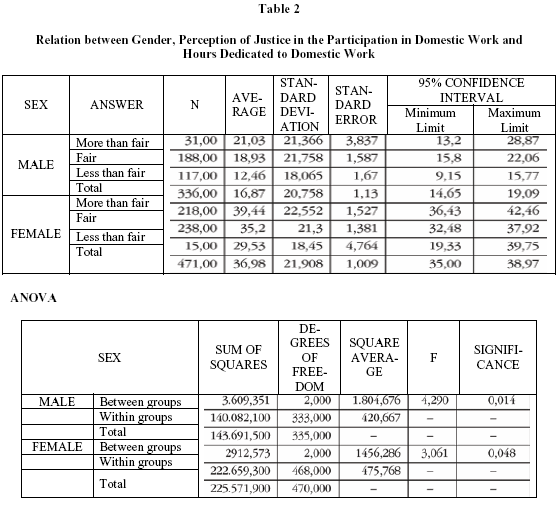
It is also relevant to analyze the relation between the amount of hours per week that men and women answered to dedicate to domestic work and the perceptions of the interviewees about doing the fair part of the domestic tasks, as shown in Table 2 (Annex 2).
In this point, men and women are being analyzed separately. Thus, the variance analysis shows that there is a significant association between the hours actually dedicated to domestic work and the feeling of justice regarding the participation in domestic work. That is, men who reported that they did more than what is fair actually dedicated more hours than those that say they did what is fair, and they, on their part, dedicated more hours than those that acknowledged they did less than what is fair. What draws attention is the discrepancy in the hour averages worked between the genders – women dedicate, on average, more than twice the hours that men dedicate to domestic tasks – this occurs in all three groups, namely among those that do more than is fair, do what is fair and do less than is fair.
It is interesting to observe that the number of women that report that they do more than or what is fair is much higher than the number of men. In fact, the number of women that say they do "less than what is fair" is quite reduced – fifteen cases-, and likewise the number of men that say they do "more than what is fair" is small - 31 cases. When considering the actual number of hours spent on domestic work, it can be seen that men that believe they do "more than what is fair" work, on average, less hours than women that acknowledge they do "less than what is fair", although we have to be careful with the analysis of the figures, as the number of cases is small. Anyway, the hour averages already indicate the discrepancy between the dedication of women and of men regarding domestic activities. But the results also suggest a certain discrepancy between what they say they actually do and the sense they attribute to that responsibility. This is so, although they recognize they work much more, a sense of injustice is not predominant among women, which reveals an even stronger naturalization about their domestic responsibilities. With regard to men, although they acknowledge they do a lot less and the proportion of those who report they do "less than what is fair" is a lot higher than among women, which indicates some critical look; it is a fact that the sense that predominates among them is a sense of justice, which also seems to reveal the continuation of a breadwinning ideal according to which the domestic activities are seen as help and assistance and not as constituting fact for the reproduction of life.
Finally, we sought to analyze also the answers regarding the frequency with which the interviewees say they disagree with their spouses about the division of domestic work.10 The answers reinforce the suspicion of the above-mentioned discrepancy, given the low frequency of recorded conflicts: 78.8% of the women and 81.2% of the men answered that they never or rarely have conflicts about the division of the domestic activities.11 It is interesting to observe that, even among the women that identified themselves as active on the job market, 77.8% say that they almost never or rarely have conflicts with their spouses. Although such figure suggests a low tension degree, the figures related to the number of hours, distribution of activities and the assessment of justice allow considering the possibility that such tension, caused by the previous answers about the perceptions and the growing female involvement in paid labor, is higher, even when not translated into explicit conflicts.
]]>Conclusion
How can the relation between family life and work improve? This was one of the questions asked to the interviewees that offered answers in order of preference with regard to a strategy set. Men and women answered, as first option, being able to work more to make more money. The choice seems to indicate a more pragmatic and money-driven feature that social life has acquired recently and a fluid model of the need of immediate satisfaction as element associated to satisfaction in general, within the patterns suggested by Bauman (1994). In the case of Brazil, also the precarious conditions of life that characterize the everyday life of a good share of the population should be considered. But what is interesting is that the first options made by women that are similar in terms of kind of activity to the options of men are related to work and, secondly, to free time. Indeed, in the different situations the answers, particularly of the women, indicated an activity of paid labor as constituting basis and also valued as identity construction of social life.
The multivariate analysis, based on the path analysis model, indicates that given socioeconomic factors contribute to moral values and more egalitarian perceptions. Education level is also important for the creation of more modern moral values. The analysis of the perceptions showed that, in general, women tend to have slightly more egalitarian views than men with regard to: a) to role of labor for professional actualization; b) the capacity of exercising motherhood outside a marriage; c) the role of marriage itself for the construction of happiness; and d) sexuality. But not all women think the same way. As for the overall population, being from an urban area, having a low religiosity and high school education are important when it comes to more modern values. Paid labor influences the construction of values and of perceptions. If with regard to men, work does not change their values much, among women, we realize that, in addition to school education, work activity – the question of being included in the job market or not – reveals the importance of an activity of paid labor as element of redefining values. In general, women that work have more critical perceptions about the traditional practices and have opinions that are more favorable towards gender equality. On the other hand, with regard to what we define as "practices", the results corroborate researches made in other countries that indicate a weak relation between perceptions and practices and between working capacity and practices. The basically more egalitarian opinions do not translate into more shared practices on the part of men. Of course there is conditioning to the extent in which time dedicated to domestic work increase a bit when both spouses work, but not significantly. The dimension of gender proves extremely relevant, and gender determines the limits of the practices. In other words, the gender division of domestic work and the competences of men and women related to the daily reproduction work of the social life remain as one of the less permeable aspects towards changes that characterize the contemporary society.
Bibliography
ABOIM, Sofia & WALL, Karin. (2002), "Types of families in Portugal: interactions, values and contexts". Social Analysis – Magazine of the Institute of Social Sciences of the University of Lisbon, 37 (163): 475-506.
ARAÚJO, Clara & SCALON, Celi. (2004), "Practices and perception of men and women on the reconciliation between family and labor". Research report, Rio de Janeiro, Faperj, Nov.
]]>_________ (orgs.). (2005), Gender, family and labor in Brazil. Rio de Janeiro, Fundação Getulio Vargas Editora.
ARRIAGADA, I. (2004), "Family structures, labor and welfare in Latin America ", in _________, Cambio de las Familias, Santiago, Cepal / UNFPA.
BAUMAN, Zigmunt. (1994), Liquid love: on the frailty of human bonds. Rio de Janeiro, Zahar.
BATHYÁNY, Karina. (2000), "State, family, social policies: who is in charge of the family care and responsibilities?". Revista de Ciencias Sociales, 18: 83-95, set.
BERQUÓ, Elza. (2002), "Demographic profile of the female headships in Brazil ", in C. Bruschini and S. Umbehaum (orgs.), Gender, democracy and Brazilian society, São Paulo, Fundação Carlos Chagas / Editora 34.
]]>BOZON, M. (2004), Sociology of sexuality. Rio de Janeiro, Fundação Getulio Vargas Editora.
_________. (2003), "Sexuality and conjugality: the redefinition of the gender relations in the contemporary France". Cadernos PAGU, 20: 131-156.
BRUGGER, Silvia M. (2005), "Divorce and marriage in the nineteenth century". Revista Nossa História, 2 (22): 68-71.
BRUSCHINI, Cristina. (1990), Woman, home and family. São Paulo, FCC / Vértice.
CASTELLS, Manuel. (2000), The power of the identity. Rio de Janeiro, Paz e Terra.
]]>DEDDECA, Cláudio. (2004), "Time, labor and gender". Campinas, IE / Unicamp (mimeo. ).
DURAN, María-Angels. (2000), "Usage of time and non-paid labor". Revista de Ciências Sociais, 18: 56-69.
ESPING-ANDERSON, G. (1990), The three worlds of welfare capitalism. Princeton, NJ, Princeton University Press.
FRASER, N. (1999), "The struggle for the needs: outline of a socialist-feminist critical theory of the political culture of the late Capitalism". Debate Feminista, special issue, São Paulo, Metis Productos Culturales.
CROMPTON, R. (1999), Restructuring gender relations and employment: the decline of the male breadwinner. Oxford, UK, Oxford University Press.
]]>GIDDENS, Anthony. (1991), The transformations of intimacy. São Paulo, Editora da Unesp.
GORNICK, J. & MEYERS, M. (2004), "Welfare regimes in relations to paid work and care", in J. Giele and E. Holst (eds.), Changing life patterns in Western industrial societies, Netherlands, Elsevier Science Press.
HIRATA, Helena. (2002), "Reorganization of the production and transformations of labor: a new sexual division?", in C. Bruschini and S. G. Unbehaum (orgs.), Gender, democracy and society, São Paulo, Fundação Carlos Chagas / Editora 34.
HIRATA, Helena & HUMPRHEY, J. (1986), "Sexual division of labor within the Brazilian industry", in N. Aubert, E. Enriquez and V. de Gaulejac (orgs.), Le sex du pouvoir, Paris, EPI.
JELLIN, Elizabeth. (1995), Family and gender: notes for the debate. Estudos Feministas, 3, (2): 394-413.
]]>NORRIS, P. & INGLEHART, R. (2003), Rising tide: gender equality & cultural changes around the world. New York, Cambridge University Press.
TORRES, Anália. (2001), "Marriage and gender: changes in the contemporary families based on the Portuguese case". Revista Interseções, 3 (2): 53-70, Jul.-Dec.
_________. (2004), Conjugal life and labor: a sociological perspective. Lisbon, Celta.
TORRES, Anália et al. (2002), Men and women between family and labor. Lisbon, Cies / ISCTE.
VAITSMAN, Jeni. (1994), Flexible and plural: identity, marriage and family under post-modern circumstances. Rio de Janeiro, Rocco.
]]>Notes
1 The national, domiciliary and representative sample of the Brazilian population was made up of 2 thousand individuals defined by quotas based on characteristics of gender, school education, age and region - urban and rural. The collection of the information was made by the Instituto Sensus de Pesquisa, in the months of November and December of 2003 based on an international standard questionnaire set up by ISSP, increased by local questions. In addition to the authors, who coordinated the research, also another eight researchers of different academic institutions participated. The more general results, as well as the contributions of those researchers are found in Gender, Family and Labor in Brazil, 2005, published by the Getúlio Vargas Foundation. In the Research Report (2004) the set of the results analyzed more in detail can be found. This article consists of a synthesis of some of the main information and empirical conclusions obtained through the research.
2 Here, the attitudes refer to the questions that report the performance of domestic tasks, that is, what the interviewees say they do when being asked. For analysis purposes, we define those activities as "practices".
3 Considering the already exhaustive debate on gender and sex relations in the literature of the field, we assume that this concept does not require further explanations.
4 According to historical studies in Brazil, "during the nineteenth century until the 1870s, mainly the wives filed for separation" (Brugger, 2005, p. 69), which suggests that this is not a fact that only derives from this modernization process.
5 According to the nature of the questions, this block will be the subject matter of brief comments and has been better analyzed by Araújo and Scalon (2004) and in other specific articles yet to be published.
6 In this sense, we consider that the question could have been better elaborated, although in the pre-test this aspect has not been relevant.
7 In this regard, see the data of the report (Araújo and Scalon, 2004).
8 Bivariate correlations are those that include the relation between two variables. When the number of variables exceeds two, the analysis is called multivariate. ]]>
9 They are coefficients resulting from the regression analysis that express the relative weight of each variable over the dependent variable.
10 The alternatives varied from "several times per week" to "never".
11 The question did not include the activities with the children.
Article received in January / 2005
Approved in April / 2006
Clara Araújo is PhD in sociology and associate professor of the Social Sciences Department of the State University of Rio de Janeiro (UERJ). She coordinates the research line on Justice and Inequalities, developing researches directed to the issues of citizenship, gender relations and family. She is author of several articles in books and magazines. E-mail: cmaraujo@superig.com.br.
]]> Celi Scalon is PhD in sociology, titular professor of the Federal University of Rio de Janeiro (UFRJ) and visiting researcher at the Centro de Estudos da Metrópole [Metropolitan Studies Center] (CEM / Cebrap). She has developed researches in the areas of social stratification and inequalities. She is author of Mobilidade social no Brasil: padrões e tendências [Social Mobility in Brazil: patterns and tendencies] (Rio de Janeiro, Revan, 1999) and organizing editor of Imagens da desigualdade [Images of Inequality] (Belo Horizonte, Editora da UFMG, 2004), and other publications and articles. E-mail: cscalon@iuperj.br
Annex
]]>
]]>
]]>
]]> Annex 2

]]> Variables that compose the indexes: moral, perceptions and practices
Moral
It is a good idea to live together before getting married.
Corporal punishment is an acceptable form of educating children.
The man should punish the woman in the event of infidelity.
Threatening is effective in the event of adultery.
The woman should punish the husband in the event of infidelity.
Women that abort should be imprisoned.
Abortion should be guaranteed in case of a health risk for the mother.
Abortion should be guaranteed in case of a risk of fetal anomaly. ]]>
Abortion should be guaranteed in case of rape.
The woman is responsible for pregnancy prevention.
A condom should be used by all couples.
A married woman should have sexual intercourse with her husband whenever he wants to.
Abortion is a woman's right.
Perceptions
A mother that works outside the house has a lower life standard.
Having a job is the best way for a woman to become independent.
Being a housewife is as gratifying as working outside the house.
The majority of women wants to have a home and children. ]]>
Family life is harmed when the woman works fulltime.
Children suffer more when the mother works.
A mother that works outside the house can establish an affective relationship with her children as a mother that doesn't.
Men and women have to contribute to the family income.
The man has to make money and the woman has to take care of the home.
Men should take on more domestic tasks.
Men should take care more of the children.
Men should equally divide domestic tasks.
The ideal income would be the man making more money than the woman.
The woman should work after getting married and before having children. ]]>
The woman should work when having a small child.
The woman should work when the youngest child enters school.
The woman should work after the children move out.
Married couples are happier than singles.
A bad marriage is better than not being married.
Those who want children should get married.
Single fathers / mothers can bring up children as well as a couple.
It is ok for a couple to live together without wanting to get married.
Divorce is the solution for a couple that does not succeed in solving their relationship problems.
Families should receive financial aid for daycare.
Cleaning and ironing clothes.
Making small repairs.
Caring of sick family members.
Buying food.
Cleaning the home.
Cooking.
Washing the dishes.
Going to the bank/paying the bills.
Deciding how to educate the children. ]]>
Deciding on the weekend activities.
Deciding on the purchase of big things for the home.
Being responsible for dressing and bathing the children.
Being responsible for feeding them.
Being responsible for following up on their school activities.
Being responsible for playing with them.
Being responsible for taking them to the doctor.
Being responsible for taking them to bed.
Being responsible for taking them to school or picking them up.