Partidos, ideologia e composição social
Partis, idéologie et composition sociale
Leôncio Martins Rodrigues
Translated by Plinio Dentzien
Translation from Revista Brasileira de Ciências Sociais, São Paulo, v.17, n.48, p.31-47, Feb. 2002.
ABSTRACT
The article analyzes the relationship between the ideological orientations of the main six Brazilian parties and the occupational composition of their rank-and-file. Two right-wing parties, two from the center and another two left wing ones were selected, defined according to the standard concept used: PPB, PFL, PMDB, PSDB, PDT and PT, respectively. The relationship between the social composition and the ideological orientation of these parties was done by investigating the profile of the parties'members for the 51st Legislature in the Lower House, elected in 1998. The analysis showed a marked difference in terms of occupational composition and in the patrimony dimension of the members. The parties classified as right wing recruited their rank-and-file mainly from managerial segments and high ranked public administrators whereas the left wing parties, among the liberal professionals, intellectuals, teachers, white and blue-collar employees (the latter being generally former trade union members). For the parties considered to be centerist, the presence of managers is important but they form a minority inside these parties and, at the same time, there are no members from the popular classes. The article shows, on the other hand, that the present Brazilian political class in the current legislature comes, in its almost totality, from four occupational segments: managers, liberal professionals, teachers and former public servants.
Keywords: Parties, ideology, congressmen, political class, right-center-left.
RESUMO
O artigo analisa as relações entre as orientações ideológicas dos seis principais partidos brasileiros e a composição socioocupacional de suas bancadas. Foram selecionados dois partidos de direita, dois de centro e dois de esquerda, definidos segundo a conceituação usual desses conceitos: PPB, PFL, PMDB, PSDB, PDT e PT, respectivamente. A relação entre a composição social e a orientação ideológica dos partidos foi pesquisada por meio do levantamento do perfil das bancadas partidárias na 51a. Legislatura da Câmara dos Deputados, eleita em 1998. A análise mostrou forte diferenciação na composição sociocupacional e na dimensão do patrimônio das respectivas bancadas, com os partidos considerados de direita recrutando seus parlamentares principalmente entre os segmentos empresariais e os altos escalões da administração pública e, os partidos de esquerda, entre as profissões liberais, intelectuais, professores, empregados não manuais e trabalhadores manuais (geralmente ex-sindicalistas). Nos partidos considerados de centro, a presença de empresários é importante mas minoritária no interior das bancadas enquanto inexistem parlamentares originados das classes populares. O artigo mostra, por outro lado, que a classe política brasileira presente na atual legislatura vem, na sua quase totalidade, de quatro segmentos ocupacionais: empresários, profisionais liberais, professores e ex-funcionários públicos.
Palavras-chave: Partidos; Ideologia; Deputados; Classe política; Direita-centro-esquerda.
RÉSUMÉ
Cet article aborde les relations entre les orientations idéologiques des six principaux partis brésiliens et la composition socioprofessionnelle des groupes parlementaires. Nous avons sélectionné deux partis de droite, deux de centre et deux de gauche. Ces partis ont été définis selon la conceptualisation usuelle : PPB, PFL, PMDB, PSDB, PDT et PT, respectivement. La relation entre la composition sociale et l'orientation idéologique des partis a été recherchée par l´établissement du profil des groupes parlementaires de la 51e Législature de la Chambre des Députés, élue en 1998. L'analyse a démontré une forte différence en ce qui concerne la composition socioprofessionnelle et la dimension du patrimoine des groupes parlementaires respectifs. Les partis considérés de droite recrutent leurs parlementaires principalement parmi le secteur des entreprises privées et des hauts fonctionnaires de l'administration ; tandis que les partis de gauche recrutent parmi les professions libérales, les intellectuels, les professeurs, les travailleurs non manuels et les ouvriers (généralement les anciens syndicalistes). Dans les partis considérés de centre, la présence de chefs d'entreprises est importante mais minoritaire à l'intérieur des groupes parlementaires, tandis que les parlementaires originaires des classes populaires sont inexistants. L'article démontre, par ailleurs, que la classe politique brésilienne présente à l'actuelle législature est issue, dans sa presque totalité, de quatre segments professionnels: les chefs d 'entreprises, les professions libérales, les professeurs et les anciens fonctionnaires.
]]> Mots-clés: Partis; Idéologie ; Députés ; Classe politique; Droite-centre-gauche.
Introduction
Political scientists have evaluated the Brazilian party system that came to life after the country became a democracy in a number of conflicting ways. "In a comparative perspective, Brazil is a case of partisan underdevelopment," say Bolivar Lamounier and Rachel Meneguello (1986: 9), and their opinion is shared in almost the same terms by Scott Mainwaring: "Brazil may be a unique case of partisan underdevelopment in the whole world" (1995: 354) 1.
Recently, however, other studies minimize the criticisms and give our parties a new evaluation. These studies have been mostly of an institutional nature, centering on the parties’ role in legislative bodies and the electoral arena (party coalitions, changes, discipline and cohesion, electoral results, distortions in the apportionment of seats due to federative constraints, etc) 2. This article does not intend to evaluate the Brazilian party system; neither does it intend to discuss the literature about it. It simply wants to add some new elements to the discussion, focusing on the parties from the point of view of their relations to social groups and, to some extent, to society. To be more specific: my objective is to study differences between parties in terms of their representation of interests and relationships to the parties’ respective ideologies, and I shall do this through the analysis of the social and occupational composition of an important part of the parties’ hierarchy (the parties representatives in the Federal House of Representatives).
The Research
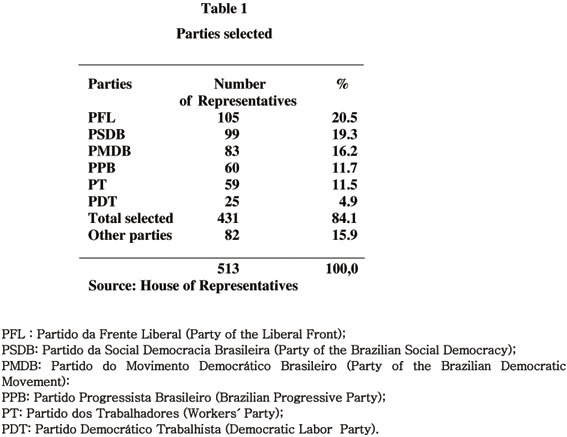
Of the eighteen parties that conquered at least one seat in the House of Representatives in the 1998 election, I selected six through a combination of two criteria: their relatively high number of seats (at least around 5% of the total), and their having a relatively clear and consistent programmatic and ideological profile 3.
By the criteria used, I classified the parties by three sets of ideology, each set being formed by two parties. On the right, the PPB and PFL; in the center, the PMDB and PSDB; on the left, the PDT and PT. Such ideological classification is the dominant one used by both Brazilian and foreign political scientists and corresponds to that used in the media. I do not want to discuss its "intrinsic" meaning or the "scientific" correctness of such a classification. For the purposes of this article, I simply follow the classification of most specialists, media commentators and well-informed voters4.
]]> There are slight disagreements as to such an ideological mapping. According to Maria Dalva Kinzo, the PT was the only party "really in the left". This observation looks correct in the light of the party’s program and of the social composition of its group of representatives in the House. Kinzo considers the PDT and PSDB to be parties of the center-left; the PMDB (with the PTB) occupies the spectrum’s center and the PFL is classified as being on the right (with other parties which are not included in our analysis) (Kinzo, 1993:79). Carlos Alberto Novaes also locates the PDT and PSDB as center-left, but classifies the PMDB as center-right (Novaes, 1994). Another uncommon classification is Lima Jr’s: in 1993 he located the PMDB on the right, together with the PDS (Democratic Social Party — Partido Democrático Social, now the PPB), PFL and PTB. The PSDB, on the other hand, was located on the left, with the PCB (the former Brazilian Communist Party) and the PDT (Lima, 1993b: 61).5 Those descriptions of the parties were made some time ago. Parties have come to be perceived in a different way as the party system has become more institutionalized and as programs and political orientations change, especially when they reach power or at least when access to power becomes a realistic possibility. It is thus possible that some of the authors referred to may today evaluate some parties in a different manner to the past.In this research, the main hypothesis was that there would be significant differences in the social composition of the groups of elected representatives of the six parties — differences which would be empirically verifiable through examining the distribution of social and professional categories— and that these observed differences would be related to political, programmatic and ideological positions conventionally considered as belonging to either right, center or left. The almost intuitive, and logical, supposition was that, ceteris paribus, according to their origin and socioeconomic status, the representatives would be members of parties closest to both their ideological beliefs and personal interests.
I did not expect the groups of party representatives to be socially homogeneous and entirely differentiated from one another. Indeed, as data from other studies indicated, each party’s parliamentary recruitment occurs in various social and occupational settings but this does not exclude the overrepresentation of certain occupational groups (Fleischer, 1981; Rodrigues, 1987; Braga, 1998; Marques and Fleischer, 1998; Santos, 2000 and Istoé/Senhor/Editora Três, 1991; Folha de S. Paulo, 1998 and 1994). The expectation was that different occupations and professions would be found in all groups of party representatives, but in different proportions, proportions correlated with each party’s political and programmatic orientations.
From this point of view, schematically, the parties on the right should have (in relative terms), a larger proportion of businessmen, employers, owners, managers (from now on I shall refer to them using the term businessmen) among their representatives, while the leftist parties should exhibit larger proportions of representatives coming from the middle and working classes. In the centrist parties we should find proportionally less businessmen than in the rightist ones and less workers and employees than in the leftist ones; and more representatives originating in other intermediary strata; they should be less wealthy that than those who belong to the rightist parties and more wealthy than those belonging to the leftist ones. This indeed was what the data showed.
Occupational and professional categories
From a list of all professions/occupations found among members of the 51st. Legislature of the House of Representatives, I formed some occupational and professional categories or groups; these are shown in Table 2, below.
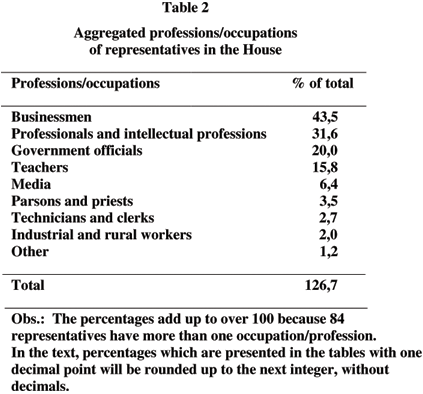
This table, with its aggregated categories, allows for a quick understanding of the main occupational groups in the House. We can easily see that the politicians in the House of Representatives at that particular time come mainly from four occupational groups: 1) Businessmen (mainly from the urban sector); 2) Professionals ("profissionais liberais" in portuguese), especially lawyers, if we count on the basis of their University diploma; medical doctors, if we consider their professional activity before entry into the political class); 3) Government officials (all sectors and levels of the Brazilian state bureaucracy), and 4) Teachers (of all sectors and levels).
The businessmen are the largest single group. If we count all sectors and types of economic activity and ignore the size of their businesses, 44% of the representatives had (or still have) activities of an entrepreneurial nature. Together with professionals and members of others professions and occupations that require a high level of education (from now on I shall refer to this group as intellectual professions), they add up to 75% of the House.
Disaggregating the categories
In order to have a detailed view of the House’s composition, the professions/occupations in Table 2 were disaggregated; this resulted in eighteen categories (Table 3). Representatives who were (or still are) urban businessmen and professionals are the most numerous of all professions/occupations. Together, they comprise more than half of the House. The proportion of teachers is also fairly high in all parties, but especially so in the PT.
]]>
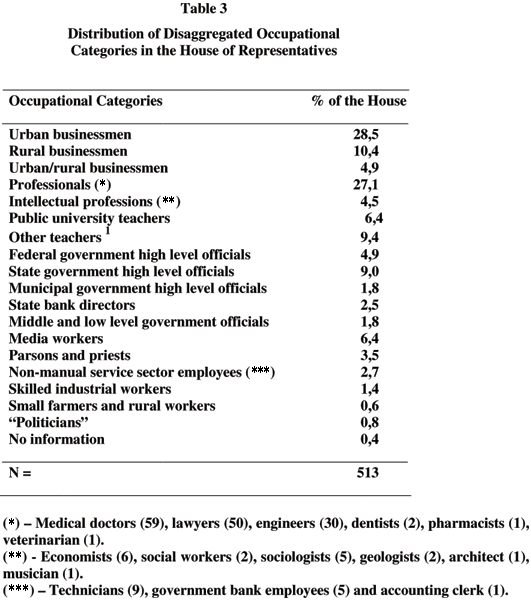
The next section shows the occupational/professional distribution of the representatives by party. When interpreting the data in Table 1, we should keep in mind that the occupational classification is derived from the last professional/occupational activities reported by the representative before adopting politics as profession. When more than one profession was reported, they were marked without a hierarchy in terms of importance. This is the reason why the percentages in the tables add up to more than 100% (see the Appendix).
The occupational groups we saw earlier refer to the House as a whole, and they are to be found in different proportions in different parties. In an almost linear way, socio-economic groups normally seen as more likely to support rightist positions (principally, businessmen) are heavily represented in the PPB and PFL. The space they occupy in the parties decreases gradually, almost disappearing, as we move from right to left. A similar observation, in the opposite direction, may be made for the social groups generally associated to leftist options, such as workers and wage earners. A similar phenomenon occurs with the variable "wealth rank" measured by the representatives’ formal declaration of property and goods ownership: its value decreases significantly as we move from right to left.
Parties’ social composition
This section analyses the parties’distribution of the categories shown in Table 3. As will be seen, the cross-tabulation of occupation and party revealed socially differentiated party profiles that are congruent with the level of wealth (and probably income) indicated by the goods and property ownership declaration made by each representative to the State Electoral Court (Tribunais Regionais Eleitorais) of his constituency.
Businessmen
]]> In the PPB and PFL, more than half of the representatives have entrepreneurial occupations (both rural and/or urban). In the PPB they are 68%, and in the PFL 61%. The same group has strong representation in the PMDB (47%). In the other center party, the PSDB, they reach 38%. They are less represented on the left: 20% in the PDT and only 3% in the PT.Differences within the right are small in this particular case, but they increase slightly when we compare those PPB and PFL representatives without any occupation other than businessman. In the PPB 50% were exclusively businessmen, while in the PFL the figure is 44%; this is because 24% of this party’s businessmen had another occupation, as against 14% in the same situation in the PPB. In the PFL 8% of the businessmen were employed in high level positions within government bureaucracy and another 8% were professionals; equivalent occupations amount to 6% in each case in the PPB. (These particular data result from specific research that I conducted and which do not appear in the tables).
The PPB, PFL and PMDB have larger percentages of representatives that were (or still are) businessmen than the House average. Some significant differences separate the parties on the right from those in the center. In the PMDB, only 35% were exclusively businessmen; in the PSDB, the proportion is still lower (22%). In the PDT, of the five businessmen elected only one was also a professional. (These data also come from a specific study that I conducted and do not appear in the tables).
In the disaggregated analysis of the kind of business activity undertaken (urban, rural, or both), the PPB has the highest proportion in each and because of this, as well as because of its weak links with government, the PPB may be seen as the most purely "bourgeois" party. However, as will be seen later, the PFL has the highest proportion of wealthy representatives. In the PSDB, the percentage of rural businessmen is only 8%, the lowest except for the PT. In the PMDB the figure grows to 12%, and to 15% in the PFL, reaching 17% in the PPB. In this last party, the proportion of representatives who were both rural and urban businessmen is by far the largest: 12%, as against 6% in the PFL, and is much larger than in all other parties (Table 4).
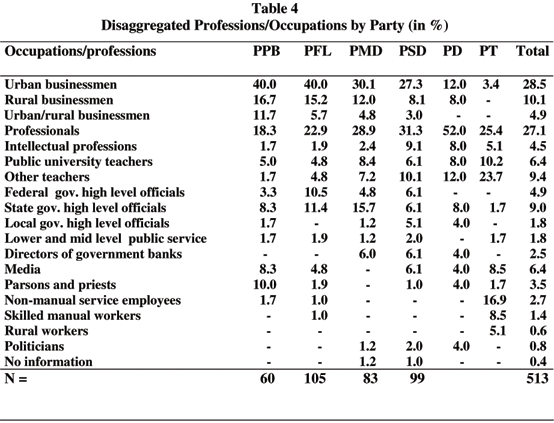
As for urban businessmen, the PMDB comes close to the PSDB.7 Among parties on the left the difference between the PDT and the PT is large because 12% of the former representatives were (or are) businessmen, as against only 3% of the later.
In a comparison between types of business activity within each party, the rural sector has the lowest representation in all parties taken individually.
]]> ProfessionalsThe professionals (lawyers, physicians and engineers) constitute an important category in all parties, from a minimum of 20% in the PPB to a maximum of 60% in the PDT. As was the case of the public university teachers and other teachers, the proportion of professionals and intellectual professions tends to increase as we move from right to left, in spite of the relatively low proportion of professionals in the PT (31%), lower than that in the PDT and in both centrist parties. But it still looms over the PPB (20%) and the PFL (25%).
The proportion of each occupational category in a party obviously varies as a function of the participation of members of other occupational categories. If businessmen, for instance, are heavily represented in a particular party, there is less space for other occupations. This is the case in the rightist parties. On the other hand, in the PT the space for other professions and occupations is reduced because of the great number of representatives who were formerly teachers, technicians, clerks, skilled workers and small farmers. A strong presence of professionals (mainly doctors and lawyers) and intellectual professions (economists, sociologists etc.) is an indicator of leftist political and ideological orientations, although a weaker indicator than the proportion of representatives originating from the wage earning groups (who, in most cases, are former union leaders).
Among the elected representatives the number of these traditional professionals, as we saw, exceeds all other professionals with higher level education, here called intellectual professions. The PPB and PFL are parties that have lower proportions of "intellectual" representatives than the House’s average. This would indicate a trend for a linear, although not strong, increase in the proportion of professionals as we move from right to left, with the exception of the PT, which has a small proportion of such professionals, lower than the PDT (52%) and the PSDB (31%).
A similar trend may be seen, in a slightly more marked way, with regards the intellectual professions. This professional group has almost no expression in the PPB and PFL nor in the PMDB (around 2%), but it increases to 9% in the PSDB and 8% in the PDT. In the PT it has 5.1 %, below the last two parties mentioned, but more than in the two rightist parties.
Teachers
This is an important group in all six parties, but there are large differences between them. In contrast to businessmen, and in the same direction as the professionals, but in a sharper way, the importance of teachers increases as we move from right to left along the ideological spectrum. We can declare that the larger the proportion of all teachers among a party’s representatives in the House the further left the party’s position. Among PT members (before entering the political class) a third were teachers, in the PDT, a fifth were 8.
These two are the only parties with a proportion of former teachers above the House’s average (16%). In the PFL and PPB only 10% and 7% respectively belonged to his group. In the two centrist parties the proportion increases to 16%; in other words, to a proportion higher than found on the right, and lower than that of the parties on the left. The larger proportion of former teachers among PT representatives is probably linked to the high level of union activism in public sector education. For major leaders, union organizations serve, in the beginning, as a way into non-parliamentary political activity and, afterwards, as a way of gaining access to an elected position, thereby entering into the political class and, consequently, leaving union activity9.
This observation should not be seen as a value judgment about the change from professional representation to political representation. A good argument for such a change (certainly endorsed by union leaders who have bridged the gap between these fields) is that the election of union leaders increases the strength of worker representation in legislative bodies, and such an argument seems reasonable. The opposing argument is that unions thereby lose their most experienced leaders. Another argument would have it that faced with the chance of moving into the field of politics, a good many decisions made by the union leader could be taken (although generally not explicitly) in preparation for future entrance into the political class. In other words: the actions of union leaders (especially those who attract the media’s attention) may be motivated more by their projects of individual social mobility than by the interests of the group they purport to represent.
The division of the group ‘teachers’ into ‘public university teachers’ and ‘other teachers’ does not alter the general trend that concentrates teachers in leftist parties, but permits us to observe some differences between the parties. The PT has the largest percentage of representatives who were formerly public university teachers (10%) and of those who belong to the group "other teachers" (24%); in the latter case the proportion is twice that of the PDT and many times the percentage found in the PPB (2%). As a whole, a third of the PT’s representatives were former teachers.
]]> Intellectuals professionsThe greater weight of intellectual professions in left wing parties in the legislature we are examining does not seem to occur by chance. Leaving aside teachers and considering an earlier study where intellectual professions are seen as composed only by those with university degrees in the social sciences, humanities and in journalism, in the House that was elected in 1990 these categories amount to 19.2% of the PDT, 18.9% of the PSDB and 20.2% of the PT. On the other hand, it amounts to 8.5% of the PFL’s representatives, lower than in the House as a whole (11.3%). (The PPB is not mentioned because it did not exist at the time). In the House that was elected in 1994, these were 12.2% in the PDT, 16.2% in the PSDB and 24.5% in the PT. If we consider only those with university degrees in the social sciences and humanities elected in 1990, they were 13.5% of the PSDB and 17.4% of the PT, by far the largest percentages among the medium and larger sized parties and more than double the percentages found among all the representatives (6.7%). Among those elected in 1994, the proportion in the PSDB declined to 8.1%, still higher than in the other relevant parties. In the PT, that proportion rose to 16.3%, almost two and a half times the House’s average (6.6%). In the PFL, such proportions were 7.3% and 3.3% respectively in each legislature (Marques & Fleischer, 1999: 106-107).
Government occupations
There are great differences among the six parties with regards to governmental occupations as a source of recruitment. The PFL, PMDB and PSDB groups of representatives have more government officials than the other: approximately one quarter of their representatives comes from that sector (teachers are excluded and former directors of state banks included). In the PPB, the proportion of government officials is low (15%), in the PT it is still lower (3%). However if we were to count public university teachers, the proportion of government officials in the PT would increase10. The number of former government officials decreases in an almost linear fashion from right to left, with the PPB being an exception.
Occupations in the public sector bureaucracy reveal differences among the parties within the same ideological groups when decomposed by the three levels of government. With regards the federal government the difference between the rightist PPB and PFL lies in the high proportion (11%) of the latter’s representatives who had high level federal positions; this is more than double their proportion in the House (5%). This occupational group (high level federal government officials) did not have a single representative in the PDT or in the PT and only 3% in the PPB. In state governments we also find that the PFL has a large proportion of representatives in high level positions (11%); here only the PMDB has more (16%). Within the PT, the overall proportion of government officials is very low and it is worthwhile remembering that none of its representatives had high level positions in the federal bureaucracy. From this specific viewpoint, the PFL is the most "bureaucratic" of all six parties studied. The large proportion of PFL representatives who have held high level positions in federal and state governments before being elected for the first time — and in the case of the PMDB in state governments — is probably due to these two parties having been governing parties for longer periods than the others. Anyway, whatever the reason, this fact shows that the PFL is very familiar with high level public administration (only 2% of its representatives came from the lower government levels).
Religious occupations
Parsons and priests are 10% of PPB representatives, but were only 2% of PFL’s. The PPB’s proportion is very high, especially when we consider only 3.5% of the members of the House had religious occupations. In the other parties studied, their proportion is low, with the exception of the PDT (4.0%). Parsons form the vast majority in this occupation: there are 14 parsons and only two priests.
Popular classes
In the non-manual service sector employees category (mostly bank clerks and technicians) there is not a single representative in the PSDB, PMDB or PDT. Within the PFL and PPB the proportion is below 2%. It increases to 17% in the case of the PT. In this party, the percentage of skilled industrial workers is 9%, as against 1% in the PFL. In all other parties there is not a single working class representative. If the proportion of these categories of workers is low it is even lower in the case of small farmers and rural workers for they comprise only 0.6% in the House. In absolute numbers there are three representatives, two of whom (PT) were union leaders before being elected.
These groups form what we could call the "popular representation" in the House, which do not even reach 5% of all parliamentarians. Their party distribution, as we have seen, is very unequal. The PSDB, PMDB and PDT do not have any representatives who were rural or urban workers or employees in the service sector11. In the two right wing parties, representatives with "popular origins" or from the "lower middle class" (a very general classification) are almost inexistent. In the leftist PT this proportion is 31%, around six times the average percentage in the House (5%). It should not come as a surprise that this proportion increases as we move from right to left. However, we should observe that, although the PDT was classified as a left wing party, none of its representatives belonged to these groups12.
]]> Professional politiciansFinally, professional politicians designate representatives who never had another occupation, entering political activity very early. Some entered before concluding their university courses, or soon after having concluded them. Family connections and/or relations with political clans frequently allowed them to obtain an influential public position that served as their point of entry into politics as a profession.
Wealth and party
Each representative must file a personal declaration of property and goods ownership to their home state’s electoral court (Tribunal Regional Eleitoral – TRE). I used these documents to calculate a ‘wealth rank’ which reinforces previous data on the social composition of the six parties. The party distribution in terms of wealth rank built up from the representatives’ declarations was very consistent with their occupational/professional distribution. I used 401 declarations from 21 states. Unfortunately data is missing from six states whose electoral courts did not reply or refused to send the requested data13. While the data includes all members elected in 21 states, it cannot be taken as statistically representative of the whole House. It must be treated with caution, as an indication that suggests trends and situations subject to a certain degree of error which is difficult to estimate, but which appears to be low and to not undermine the trends shown. With this in mind, we can place the 401 cases within four wealth ranks using the data found in the 1998 declarations that refer to the 1997 fiscal year.
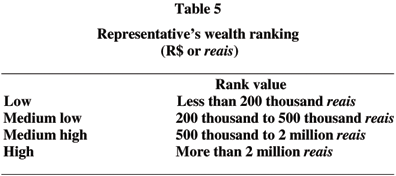
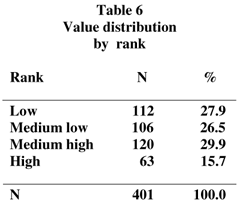
The next table shows that more than 80% of the 401 representatives for whom we have data are ranked as having medium high wealth or less; 28% declare wealth below 200 thousand reais (low wealth rank). In the rank above 2 million reais, we find a little less than 16% of representatives.
]]>
The differences shown in Table 7 closely resemble the occupational/professional distributions seen earlier and thus reinforce links between the parties’ social and ideological composition. As we move from right to left, the percentage of representatives in the higher wealth rank tends to decrease.
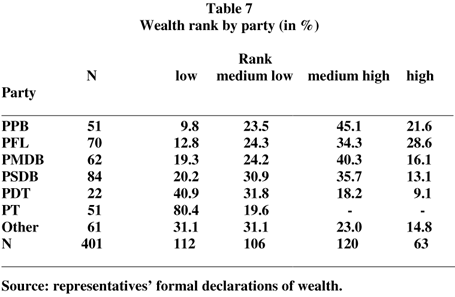
In general terms, parties’ with a larger proportion of businessmen also have a larger proportion of representatives in the higher wealth ranks (Table 7). When compared with the PPB, the PFL has a larger proportion of representatives in the highest rank (29% versus 22%). Both center parties occupy an intermediate position, with the PMDB representatives being ranked higher than their counterparts in the PSDB. But the difference between the two parties is small: 16% and 13%. The same cannot be said of the difference between the two left wing parties. In the highest wealth rank we find 9% of the PDT representatives, and none from the PT. From this point of view, the PDT is closer to the PMDB and PSDB than to the PT, and this again suggests that the PDT should be classified as a ‘center left’ rather than as a ‘left wing’ party. One significant difference between the two parties on the left has to do with the percentage of representatives in the lowest wealth rank: 80% of the PT’s representatives and 41% of the PDT’s 14.
Taking as a criterion the proportion of representatives in the high and high and medium high wealth ranks, the parties can be placed in the following hierarchies15:
]]>
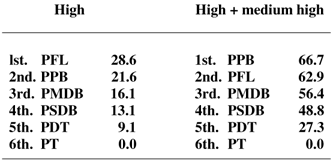
Once again there is a correspondence between the parties’ ideologies, their occupational/professional composition and the wealth distribution among their elected representatives. The level of wealth decreases as we move from right to left; the parties with the wealthiest members are those with larger proportion of businessmen. In their turn, both wealth and entrepreneurial activity are more closely related to ideological positions on the right 16.
Dominant social composition
As we saw earlier, parties recruit their followers from many social groups, but not from the same groups. The result is different group compositions in each party. Although some occupational and professional groups may be present in all parties, a very small number of social groups constitute the majority of each party’s representatives. The majority groups give the parties a profile and locate them ideologically in the political space. For this reason some socioeconomic groups form not only a numerical majority but are also dominant in the sense that they determine party policy. In some parties the predominance of a single group can be observed. In others, there is more of a balance and a division of forces between two or three occupational categories, which reveals that the party recruits in more social milieux, and indicates that it tends to represent wider groups of interests.
The relative space that each of these groups within the party’s parliamentary representation reveals its dominant social composition17. This expression designates the combination of socioeconomic categories that constitute majorities within the group of party representatives (and probably within the parties’ governing bodies) and that have a decisive role in determining the party’s ideology, program, goals and strategies. When only one social or occupational group, because of the space it occupies within the party, may be understood as largely dominant, the party’s ideological profile is clearer. When there is a greater balance in the division of space and power between more than one social group, ceteris paribus, the result tends to be divergences and/or stronger internal conflicts, weaker party discipline and a less clear ideological profile.
In spite of the risks of an overly sociological analysis, it appears possible to characterize the parties in social terms, in other words, in terms of the external groups that tend to be preferentially represented within the party system.
The Brazilian Progressive Party (PPB) parliamentary representation has a relatively homogeneous profile: businessmen constitute the vast majority among occupational groups. They are 68% of PPB representatives, the largest percentage of businessmen among all parties studied. In the opposite direction, it has the lowest participation of the professionals among all six parties: only 18%. It has six representatives (10% of all party representatives) that, besides being businessmen, had other activities, and this indirectly reduces the importance of the other professions/occupations mentioned in the tables and increases that of the group of businessmen, for such activity tends to be the most important18. Without the relevant counterweight of other social groups, the dominant group in the PPB is made up only of businessmen.
In the Party of Liberal Front (PFL) representation, similarly to the PPB, businessmen also form a large majority (61% against 68% in the PPB). The difference between the two right wing parties comes from the fact that the PFL has recruited more from the upper level government bureaucracies (22% against 13% of the PPB). In fact, the aspect that singles out the PFL, and separates it from the PPB and the other parties, is the very high proportion of its representatives who began their political careers when they had high level positions in the federal and state public administrations.
]]> The PFL’s professional/occupational distribution shows a party with deep roots in the state apparatus, particularly in the federal government. Besides, the PFL is also the party with the largest proportion of businessmen who were also professionals (8%) and who had important jobs in the public sector (8%). (These data are the result of a specific survey I conducted and are not to be found in the previous tables). Thus, businessmen followed by upper level government bureaucrats (activities which are not mutually exclusive) are the PFL’s dominant social groups.The social composition of the Party of the Brazilian Democratic Movement (PMDB)’s parliamentary representation is more heterogeneous. In this party, the group of businessmen is, in relative terms, the most important, but is not the majority. The proportion of professionals, of intellectual professions and of teachers is relatively high, higher than in the PFL and in the PPB, but lower than that in the left wing parties. In the high wealth rank, the PMDB comes third (16%), distant from the PFL (29%) and the PPB (22%). Some studies of the PMDB (Kinzo, 1988; Melhem, 1998) suggest that that party’s relevant positions are controlled by a recently formed entrepreneurial group, one without a tradition of authority and participation in national politics, unlike the PFL. Thus, probably the PMDB’s entrepreneurial sector, which does not have a clear majority, has more difficulty in imposing itself and defining the party’s orientation. Such a division of forces among social and occupational categories inside the PMDB suggests an organization with more problems in defining its political direction, in maintaining parliamentary discipline and, consequently, with greater internal conflicts19. As in the other parties of the right and the center, the PMDB does not have working class representatives. The party’s dominant composition thus involves businessmen, professionals and upper level officials in the state bureaucracy, with a slight predominance of the first group.
The dominant social composition of the Party of Brazilian Social Democracy (PSDB)’s representation is a result of an alliance between a sector of the high intelligentsia20 and an important, even though minority, entrepreneurial group. The intellectual face — an upper middle class or upper class sector depending on the criteria adopted — is an aspect of the party ever since its foundation. As Jales Ramos Marques and David Verge Fleischer observe, analyzing the social composition of the 40 representatives and 8 senators who belonged to the party at the end of the National Constitutional Assembly, among the PSDB’s group of "founding fathers" there were few rural businessmen and government officials and "many lawyers and judges, and a slightly greater proportion of professionals from the areas of health, education and journalism than the average in the Assembly." (Marques & Fleisher, 1999:105). At the time (June 1988) the proportion of lawyers and judges among PSDB politicians was 30% against an average of 9% in the Assembly as a whole.
Economists have continued to hold an important position within the PSDB. In the House that was elected in 1990, economists were 8%, a percentage well above that of other parties, with the exception of the PDT (19%). In the House that was elected in 1994, 11,3% of PSDB’s representatives were economists, more than twice the percentage found in the other parties and in the House (4.7%) (Marques & Fleischer, 1999: 107). Another difference that singles out the PSDB and highlights its intellectual content lies in the percentage of representatives with degrees in Humanities and the Social Sciences: 14% against, for instance, 7% in the PFL, 5% in the former PDS (Democratic Social Party, which later became the PPB) in the House elected in 1990. Considering the same kind of educational background, the PSDB only lost out to the PT, which had 17%. Considering these data, two segments form the dominant group within the PSDB: that of high level intellectuals (professionals, intellectual professions and teachers in particular) followed by businessmen (mainly from the urban sector).
The Democratic Labor Party (PDT)’s representation has few businessmen, few representatives recruited from the government bureaucracy and none from the working classes. Professionals form the majority. From this viewpoint, at least in this 51st Legislature, professionals, especially lawyers, are the PDT’s dominant group. Only a small proportion of representatives comes from the productive sector. Professionals are predominant vis à vis the small group of businessmen. In this aspect the PDT’s composition resembles that of the PPB in which a single category (businessmen) also predominates.
In the Workers' Party (PT), as in the PSDB, the group formed by intellectuals (in a very wide sense) is also the majority. Teachers in all levels and sectors of the educational system make up one third of all PT’s representation; this is more than twice the percentage found in the PSDB (and among those of all other parties). But an important difference separates PT and PSDB: the group of PT intellectuals shares space with an important group of former union leaders, whose origins are working and middle class (small farmers, industrial workers, technicians and government bank employees), groups that do not exist in the PSDB. Another relevant difference comes from the very small proportion of businessmen in the PT (3%) in contrast with the PSDB (38%). Therefore, the dominant social composition of the PT is a combination of the intelligentsia (especially ex-teachers) with members of the working and middle classes who have been upwardly socially mobile through public and private sector unionism (mainly teachers, metalworkers, bank employees and technicians). Besides, if wealth is taken as an indication, the PT’s intelligentsia, when compared with that in the PSDB, comes from further down the social hierarchy21. A hypothesis that could be developed here is that it is a group which had undergone a process of loss of status and income, be this absolute or relative, before its members’ entry into the political class; this would explain its preference for a left wing party and its alliance with parts of the working class involved in a process of upward political, economic and social mobility. This hypothesis is based on combining the analysis of the following variables: occupations/professions, wealth rank and educational achievements of the majority of PT’s representatives. Of course, this hypothesis might be rejected through a more detailed study of the individual biographies of parliamentarians22.
Conclusion
The data relative to social and occupational composition, to the dimension of wealth (and to educational levels of the representative that were not shown in this article) indicate that Brazilian parties differ not only in terms of ideology and political orientation (the most visible aspect of party organization) but also in terms of the social segments found in them. This sociological aspect allows one to suppose — without ignoring the internal dynamics of parliamentary disputes and the individual ambitions of politicians — that the conflicts and party choices made in the House of Representatives cannot be adequately understood without reference to the interests that the parties’ dominant composition represent.
Certainly such a conclusion does not involve anything new, but to accept it, in the Brazilian case, also implies attributing a certain consistency to the representative nature of our party system, even though one may have a negative evaluation of its functioning.
]]>BIBLIOGRAPHY
ABREU, Alzira Alves; BELOCH, Israel; LATTMAN-WELTMAN, Fernando; LAMARÃO & NIEMEYER, Sérgio Tadeu de (2001), Dicionário histórico-biográfico brasileiro. Rio de Janeiro. Centro de Pesquisa e Documentação de História Contemporânea do Brasil/ Fundação Getúlio Vargas.
AMES, Barry (2001). The Deadlock of Democracy in Brazil. Michigan. Michigan University Press.
AMORIM NETO, Octavio (2000). "Gabinetes presidenciais, ciclos eleitorais e disciplina legislativa no Brasil". Dados.
BRAGA, Sérgio Soares (1998). Quem foi quem na Assembléia Constituinte de 1946. Brasília. Centro de Documentação e Informação da Câmara dos Deputados, vol. 1.
COELHO, Ricardo Correa (1999). Partidos políticos, maiorias parlamentares e tomadas de decisão na Constituinte. S. Paulo. PhD Thesis, Political Science Department, Universidade de S. Paulo.
DOGAN, Mattei (1999). "Les professions propices à la carrière politique. Osmoses, filières et viviers", in Michel Offerlé (org.), La profession politique. XIXe.-XXe. Siècles. Paris. Belin.
FERNANDES, Luís (1995). "Muito barulho por nada? O realinhamento político-ideológico nas eleições de 1994". Dados, v. 38 (3).
FIGUEIREDO, Argelina Cheibub & LIMONGI, Fernando (1994). "O processo legislativo e a produção legal no congresso pós-constituinte". Novos Estudos Cebrap, 38, março.
________ (1999). Executivo e legislativo na nova ordem constitucional. Rio de Janeiro. FGV / Fapesp.
HAGOPIAN, Frances (1996). Traditional Politics and Regime Change in Brazil. Cambridge. Cambridge University Press.
KINZO, Maria D’Alva (1993). Radiografia do quadro partidário brasileiro. São Paulo. Konrad Adenauer Stiftung.
________. (1988). Oposição e autoritarismo. Gênese e trajetória do MDB (1966-1979). São Paulo. Idesp/Vértice.
LAMOUNIER, Bolívar (1989). Partidos e utopias: o Brasil no limiar dos anos 90. São Paulo. Edições Loyola.
LAMOUNIER, Bolívar & MENEGUELLO, Rachel (1986). Partidos políticos e consolidação democrática: o caso brasileiro. São Paulo. Ed. Brasiliense.
________ (1993a). "A reforma das instituições políticas: a experiência brasileira e o aperfeiçoamento democrático". Dados, 36 (1).
________ (1993b). Democracia e instituições políticas no Brasil dos anos 80. Rio de Janeiro. Edições Loyola.
MAINWARING, Scott. (2001). "Para brasilianista, sistema melhorou mas ainda é frágil". O Estado de S. Paulo, 21 de novembro, p. A6.
________ (1995). "Brazil: weak parties, feckless democracy" in Scott Mainwaring & Timothy R. Scully, Building democratic institutions: party systems in Latin America. Stanford. Stanford University Press.
________ , MENEGUELLO, Rachel & POWER, Timothy (2000). Partidos conservadores no Brasil contemporâneo. São Paulo. Paz e Terra.
________ & LIÑAN, Aníbal Pérez (1998). "Disciplina partidária: o caso da constituinte". Lua Nova, 44 .
________ & SCULLY, Timothy R. (1994). "A Institucionalização dos sistemas partidários na América Latina. Dados 37 (1).
MARQUES, Jales Ramos & FLEISCHER, David (1999). PSDB – de facção a partido. Brasília. Instituto Teotônio Vilela, Editora Positiva.
MELHEM, Célia Soibelmann (1998). Política de Botinas Amarelas: o MDB-PMDB paulista de 1965 a 1988. S. Paulo. Hucitec/ Departamento de Ciência Política da USP.
MELO, Carlos Ranulfo Felix de (2000). "Partidos e migração partidária na Câmara dos Deputados". Rio e Janeiro. Dados, 43 (2).
________ (1999). Retirando as cadeiras do lugar: migração partidária na Câmara dos Deputados (1985-1998). Belo Horizonte. PhD Thesis, Federal University of Minas Gerais.
MENEGUELLO, Rachel (1998). Partidos e governos no Brasil contemporâneo (1985-1997). São Paulo. Paz e Terra.
NICOLAU, Jairo Marconi (2000). "Disciplina partidária e base parlamentar na Câmara dos Deputados no primeiro governo Fernando Henrique Cardoso (1995-1998)". Dados, 43 (4).
________ (1996). Multipartidarismo e democracia. Rio de Janeiro. Fundação Getúlio Vargas.
NOVAES, Carlos Alberto Marques (1994). "Dinâmica institucional de representação". Novos Estudos Cebrap, 38, março.
PANEBIANCO, Ângelo (1988). Political Parties: Organization and Power. Cambridge. Cambridge University Press.
RODRIGUES, Leôncio Martins (1999). Destino do sindicalismo. São Paulo. Editora da Universidade de S. Paulo.
________ (1997). "PT: a new actor in Brazilian politics" in Fernando J. Devoto & Torcuato Di Tella (eds). Political Culture, Social Movements and Democratic Transitions in South America in the Twentieth Century. Milano. Fondazione Giangiacomo Feltrinelli.
________ (1990). "A composição social da liderança do PT" in L. M. Rodrigues, Partidos e Sindicatos. São Paulo. Ática.
________ (1987). Quem é quem na Constituinte: uma análise sócio-política dos partidos e deputados. São Paulo. OESP-Maltese.
SAMUELS, David J. (1998). Ambassadors of the States; Political Ambition, Federalism and Congressional Politics in Brazil. PhD Thesis. University of California. San Diego.
________ (1997). "Determinantes do voto partidário em sistemas eleitorais centrados no candidato: evidências sobre o Brasil". Rio de Janeiro. Dados, 40 (3).
SANTOS, André Marenco dos (2001). "Sedimentação de lealdades partidárias no Brasil: tendências e descompassos". Revista Brasileira de Ciências Sociais. 16 (45), fevereiro.
________ (2000). Não se fazem mais oligarquias como antigamente: recrutamento parlamentar, experiência política e vínculos partidários entre deputados brasileiros (1946-1998). Porto Alegre, PhD Thesis, Universidade Federal do Rio Grande do Sul.
________ (1997). "Nas fronteiras do campo político: raposas e outsiders no Congresso Nacional". Revista Brasileira de Ciências Sociais, 33, fevereiro.
SCHMITT, Rogério (1999). "Migração partidária e reeleição na Câmara dos Deputados". Novos Estudos Cebrap, 54, julho.
________ (1998). Coligações eleitorais e sistema partidário no Brasil. Rio de Janeiro. PhD Thesis, IUPERJ.
SINGER, André (1999). Esquerda e direita no eleitorado brasileiro. São Paulo. Edusp/Fapesp.
TAVARES DE ALMEIDA, Maria Hermínia, and MOYA, Maurício (1997). "A reforma negociada: o Congresso e a política de privatização" . Revista Brasileira de Ciências Sociais, 12 (34) junho.
Other sources
Deputados brasileiros –Repertório Biográfico 1999/2000 – 51ª. Legislatura – Câmara dos Deputados. Brasília. Centro de Documentação e Informação.
Os Cabeças do Congresso Nacional –Pesquisa sobre os 100 parlamentares mais influentes no poder legislativo. Brasília. DIAP, ano II – 2000. Os "prefeitáveis": radiografia dos deputados e senadores candidatos.
Perfil parlamentar brasileiro. Isto é/Senhor/Editora Três, 1991.
]]>
* João Carlos da Silva and Maria Liene de Melo were essential for the research in which this article rests. It is no exaggeration to say that, without their effort and care, this article would show more problems than it does. For computation problems, I counted on Fernão Dias de Lima's competence and professional sense. This study would be more limited and less interesting, however, were it not for my colleague Antonio Octavio Cintra's suggestions, and for minister Walter Costa Porto (the then Tribunal Superior Eleitoral (TSE, or SuperiorElectoral Court) President) and Dr. Ney Andrade Coelho's (TSE's secretary) help, that allowed me to contact the Regional Courts. Dr. Mauricio Delgado, professor of Minas Gerais Catholic University, helped with the goods and properties ownership declaration of Minas Gerais' State Representatives.
1 - It should be noted, however, that Scott Mainwaring, author of major studies on the Brazilian party system, over time has reduced his earlier criticisms, especially if we take into account that his observation on the risks for Brazilian democracy due to the weakness of parties’ had been exaggerated (see his interview in O Estado de S. Paulo, 21/10/2001, p. A6). Other critical opinions on Brazilian parties are to be found in: Ames (2001), Mainwaring and Liñan (1998), Samuels (1998), Hagopian (1996), Mainwaring and Scully (1994), Lima Jr (1993a), and Kinzo (1993).
2 - Among those taking a less negative view, see: Nicolau (2000), Figueiredo and Limongi (1999), Coelho (1999), Singer (1999), Schmitt (1998 and 1999), Tavares and Moya (1997), Nicolau (1996), and Figueiredo and Limongi (1994). In some of the “critical” authors, I believe their more recent works contain a less negative evaluation. See: Meneguello (1998) and Mainwaring, Meneguello and Power (2000).
3 - I hesitated on the inclusion of the PTB (Partido Trabalhista Brasileiro - Brazilian Labor Party) in this study. In 1998, that party obtained 31 seats, six more than the PDT. It filled, then, the quantitative criterion. But its ideological profile was not as clear, especially with regards to the alliance it established with PSDB in 2000, and the high rate of migration of its elected representatives to other parties. In the 1990’s 43% of the PTB representatives moved to others parties. In the 1991-1995 legislature, of the 45 representatives that passed through the PTB, 22 left the party (Melo 2000: 224). In the legislature examined in this article, the PTB had only 26 representatives; on June 18, 2001, five of its representatives had moved on to other parties.
4 - On the parties’ ideological definition, see, for instance, Santos (2001 and 2000), Ames (2001), Mainwaring, Meneguello and Power (2000), Amorim Neto (2000), Figueiredo and Limongi (1999), Melo (1999), Singer (1999), Schmitt (1999 and 1998), Meneguello (1998), Samuels (1998 and 1997), Lima Jr (1997), Fernandes (1995), Novaes (1994) and Lamounier (1989).
5 - I referred to some works after a literature survey that probably did not include other relevant authors. I ask those authors who were not included to accept my apologies.
6 - Among the 81 teachers, in 13 cases it was not possible to identify the form of employment and the teaching level. Among the 68 identified cases, 57 came from colleges (33 from public schools and 24 from private schools); eight teachers came from high-schools (five from public schools and three from a private one). Other three came from other educational institutions.
7 - Taking into account the large number of businessmen among the PMDB’s representatives, their relative wealth and the association of these variables with political ideology, the PMDB would be most adequately situated to the right of the center.
8 - Teachers, some of them part of the Brazilian academic elite, have always been well represented in the PT, both as elected representatives and as simple party members. Of the 16 representatives elected through the PT to the House in 1986, five were teachers – the largest group. The proportion of the representatives elected is the same as that of candidates. In that election, approximately 20% of the PT’s candidates to the House were teachers (11% were metalworkers) (Rodrigues 1997 and 1990). ]]>
9 - The increase in public sector unionization, mainly among government officials in education and health services, increased the number of teachers and physicians in the PT. This phenomenon is not limited to Brazil. Everywhere, as unionization in private enterprise has decreased, public sector unionization has increased, especially in the sectors mentioned (Rodrigues 1999).
10 - André Marenco dos Santos found, in the House elected in 1994, that 3.4% of the PFL representatives were government officials and observed a constant decline of this group among elected representatives (Santos 1997: 93). In other work this same author shows that the proportion of government officials in the House that declined from 20.3% in 1954 to 8.3% in 1990 and 9% in 1994, increased significantly in the 1998 elections (Santos 2000). For the 51st legislature the percentage of government officials found by Marenco dos Santos is very close to our own: 17.9% and 17.3%, respectively.
11 - It could be better to classify most of these cases as “unionists” or “union officials” since, immediately before becoming members of the political class, they were top level union officials. According to DIAP figures (Boletim, October 1998), 39 top unionists were elected to the House: 34 by the PT, three by the PC do B, one by the PFL and one by the PPB. The vast majority of them could be classified as being middle class. Among these union leaders, seven were teachers, five were metalworkers and five were bank employees, the three most important union recruitment sources to the House. The DIAP list includes as a “union leader” a representative who had defined himself in the Repertório Biográfico of the House as a lawyer and businessman. Using the criteria I established, he has to be classified as a businessman (he probably is a small one). So, in this way, the number of union leaders in the PT decreases from 34 to 33.
12 - In the light of this fact to classify the PDT as a center-left party, as Kinzo (1993) and Novaes (1994) have done, would seem to be correct.
13 - I thank the twenty-one state electoral courts (TREs) that cooperated with this research by sending copies of the declarations of property and goods ownership for the elected representatives. By region, they were: South: Rio Grande do Sul, Santa Catarina and Paraná; Southwest: São Paulo, Rio de Janeiro, Espírito Santo and Minas Gerais; Center-West: Distrito Federal, Mato Grosso do Sul and Mato Grosso; Northeast: Alagoas, Pernambuco, Rio Grande do Norte, Ceará and Piauí; North: Pará, Rondônia, Roraima, Tocantins, Amapá and Acre. The State Courts that did send their data (for various reasons) were: Amazonas, Goiás, Sergipe, Bahia, Maranhão and Paraíba.
14 - The fact that 80% of the PT representatives fall in the lowest wealth rank is probably explained by the high number of them who were clerks, skilled workers and small farmers (31%), besides the high number of teachers.
15 - This ranking has to do with the percentage of representatives of each party that belongs to each wealth rank and has nothing to do with the average levels of wealth.
16 - If the data relating to the wealth of Bahia’s representatives had been provided, it is probable that the proportion of PFL representatives in the upper wealth rank would have increased, because among the twenty representatives elected by the PFL in that state ten were businessmen. Of the 39 Bahia representatives a total of seventeen were businessmen.
17 - Semantically, the expression dominant social composition is close to Panebianco’s (1988) idea of “dominant coalition”, but with a different content. For the Italian author, “dominant coalition” refers to party organization, identifying the groups that, belonging or not to the party, control the most important “zones of uncertainty”, such as party finances, communication systems, relations to external milieu etc.
18 - I recall that for the tables and calculations I considered the number of professions/occupations and not the number of representatives. For this reason, the 10% of PPB’s representatives who combined their activity as businessmen with other activities should be considered basically as businessmen, probably also ranking high in wealth. ]]>
19 - I am suggesting that the coefficients of party discipline and cohesion are influenced by their social and occupational heterogeneity. My hypothesis is that those parties that have less discipline (and are less united) are those that are socially and occupationally more heterogeneous, especially when there is no dominant group capable of defining interests and imposing them on the other groups. According to this hypothesis a party where businessmen, professionals, teachers, workers and other groups of wage earners have relatively equal representation in their ruling bodies would tend to have little cohesion and lack discipline. But the example is absurd because – if it is true that a party can try to win votes in a heterogeneous range of sectors and groups in the electorate — its dominant group cannot contain, in an equivalent manner, representatives of social groups that compete strongly with each other socially and within the economic system, as for example, businessmen and unionists.
20 - I use the term in its Russian meaning, where it designates those with a superior educational level and includes not only intellectuals in a strict sense but also some professionals, such as lawyers.
21 - The wealth rank of the PT´s representatives is markedly lower than that of other parties’ representatives. In the case of teachers, of the twenty PT representatives who were formerly teachers I was able to analyze twelve declarations. Through these data, eleven representatives were found to be in the lowest rank and one in the middle lower rank. The wealth rank variable, however, has to be controlled by the number of terms the representative has spent in office. This is because an increase in the terms in office tends to be correlated with an increase in the amount of wealth. In the PT, 48% of the representatives were in their first term as against 20% in the PPB and 29% in the PFL, the two parties with highest wealth rank.
22 - In order not to increase the size of this article, I chose not compare educational achievement of the representatives of each party. In a general manner, some degree of education in the Social Sciences and Humanities tends to be found in the PT, as it is generally found in other left wing parties.
The main source of data for this article was Deputados Brasileiros. Repertório Biográfico da 51a. Legislatura [Brazilian Representatives. Biographical Report of the 51st. Legislature] Centro de Documentação e Informação da Câmara de Deputados [Documentation and Information Center of the House of Representatives]. Besides these data I used the Dicionário Histórico-Biográfico Brasileiro [Brazilian Historical and Biografical Dictionary] (1st. and 2nd. ed., 1984 and 2001), Centro de Pesquisa e Documentação de História Contemporânea do Brasil (CPDOC), Fundação Getúlio Vargas (Center for Research and Documentation on the Contemporary History of Brazil, Getúlio Vargas Foundation). When the representative classified himself as a "professional", I was interested in trying to find out his exact income source: if he was an autonomous, wage earner or employer; if a wage earner whether this were in the private or public sector. In elaborating the tables, I redefined the profession declared by the representative in his official biography (published in Repertório Biográfico), when my research of his curriculum and declaration of property and goods did not show that he practiced a profession compatible with his university degree. The criterion used for defining each representative’s professional/occupational status was a combination of the following variables: profession, occupation and employment relation.
I also tried to discover employment relations with the government bureaucracy. Thus, for example, in defining their professions/occupations, those representatives who had been awarded a law degree, but who in their last occupation were public sector officials, were classified in the government professions/occupations category and not in the professional category (lawyer, in the case). Finally, I also used information from the declaration of property and goods that, besides being useful to classify representatives in terms of wealth, was also useful to control for the professional/occupational classification made.
]]>