Fabiana Luci Oliveira
Federal University of São Carlos (UFSCar), São Paulo, Brazil
Replicated from Brazilian Political Science Review (Online), Rio de Janeiro, v.2, n.2, July/Dec. 2008.
ABSTRACT
This study analyses interactions between Law, professionalism and politics. The primary intent is to understand the judicial behaviour of Brazil's Supreme Court in the development and consolidation of democracy, by analysing how its justices voted in decisions regarding the constitutionality of laws (judicial review) in the 1988-2003 period and investigating factors that influenced the Court's decisions. These decisions are analysed both quantitatively and qualitatively in search of: a) voting differences corresponding to the career of each member of the Court; b) justices' attitudes as either Constitution interpreters or reproducers of legal texts; and c) the rapporteur's profile, as well as the profiles of the justices that voted with him/her. ]]> I conclude that although political factors do shape the decision-making process of Brazil's Supreme Court to some extent, professionalism plays a central role in determining its judicial behaviour.
Keywords: Brazil Supreme Court; Professionalism; Law and politics; Judicial politics.
Introduction
The paper is divided into six sections. The first section introduces the discussion, theoretically and methodologically. The second focuses on decisions on the constitutionality of laws by means of ADIN (Ação Direta de Inconstitucionalidade) cases, observing the role played by professionalism in these decisions — here I use justices' career before being appointed to the Court and justices' orientation as a proxy for professionalism. The third section discusses how justices' career path and orientation can influence in the alliances and group formation inside the tribunal. Section four is about the construction of arguments in ADINs, analysing how justices try to build consensus despite differences in terms of career and orientation. In section five, I explore examples of political and technical decisions, evincing the association between a justice's career and the decisions he/she makes. In the last section, all the findings are summarized and the main argument that pervades the paper is spelt out. It concludes that the unique role that Brazil's Supreme Court plays in the national political and legal systems is supported by the differentiation of its justices from other political actors. This distinction is based on the legal authority of knowledge and professionalism — a professionalism that distinguishes and legitimates justices, distancing them from private political and economic interests.
The question at the core of this study is "How does Brazil's Supreme Court decide cases?"1 I intend to develop a model that analyses the judicial behaviour of the court to determine the most influential elements in the decision-making process. Analysing judicial decision-making processes is a key aspect in formulating an understanding and discussion of judicial independence, transparency, security and more presumable decisions. Such issues are of vital importance, especially vis-à-vis recent trends towards strengthening the rule of law in Latin America, which accompany the promotion of free market economics, democratization and alternative conceptions of justice (Domingo and Sieder 2001; World Bank 2003 ; Garth and Dezaley 2002; Shapiro and Sweet 2002).
In order to understand the decision-making process of Brazil's Supreme Court, I look at the way justices practised constitutional control and effectively decided ADIN cases (direct unconstitutionality suits of federal or state laws or normative acts), during the period from the promulgation of the 1988 Constitution to March 2003. I examine the elements of most influence over justices' practical activities, make remarks on how these elements interrelate and assess the role they play in the decisions of the Court.
The theoretical problem that pervades this discussion is determining how law and politics relate to each other. Among the diverse possible answers, I sought one that places professionalism as an active element within this relationship.
My approach integrates different perspectives that approach this theme, associating elements of sociology of professions, judicial politics and, to a lesser extent, jurisprudence. These approaches complement each other and are vital in the construction of a model that analyses and interprets the judicial behaviour of Brazil's Supreme Court during the period in question.
]]> In the discussion of the constitutional control of laws, the process by which judges arrive at decisions is often questioned. The debate is generally around the classic option: whether there are legal-judicial or extralegal, extrajudicial factors that mostly influence decisions. The practice of judging is classified as either restrictive or activist (some authors use conservative versus liberal). In this study, the attempt to integrate various factors into the analysis leaves some of that duality behind, because the assumption is that the Supreme Court's decision-making process is determined by a combination of factors: legal, extralegal and the ideology of professionalism.It is also assumed, as suggested by Ronald Dworkin (2001), that all judicial decisions are political at some point, ruled by general political laws or by convictions that involve concepts of common welfare. Therefore, the distinction is between "matters of political principles" and "matters of political procedures (political policies)". I assume that the Supreme Court justices' decisions are political because they have the power to invalidate laws and other actions of the government (when declaring a law/decree unconstitutional). In addition, the decisions they make are fundamental to the protection of rights and constitutional principles that allow the operation and stability of democratic institutions. When making decisions, justices can legitimate their votes using political arguments (taking into consideration the political, economic and/or social consequences of their decision) or technical arguments (not considering the consequences of the decision).
The Judiciary and the Supreme Court are part of the political system because they interpret laws. However, it is necessary to consider, as Elliot Slotnick (1991) states, that values, type of training, personality and individual preferences can influence how judges decide cases. Hence, decisions can be seen as a hybrid of "law, politics and policy" (Slotnick 1991, 72). Slotnick suggests that judges are not completely free agents; their choices are guided and restricted by the Constitution, by precedent, by fear of sanction and other environmental forces. Their decisions are influenced by other judges and the institution to which they belong. Slotnick takes up Gibson's idea that judges' decisions "are a function of what they prefer to do, tempered by what they think they ought to do, but constrained by what they perceive is feasible to do" (Gibson 1983, 9).
Judicial behaviour has been vastly studied in American judicial politics (Tate 1981, 1999; Slotnick 1991; Shapiro and Sweet 2002; Segal and Spaeth 2002). Four main approaches deal with the explanation of judicial behaviour in the literature: the legal, attitudinal, institutional and strategic models.
Briefly, the legal model states that judicial decisions are based on the plain meaning of the Constitution, the intent of the framers and the precedents, balancing these factors with societal interests. The attitudinal model states that Supreme Court justices determine decisions based on their own personal and political preferences and ideological convictions (Segal and Spaeth 2002), while the strategic model states that justices' decisions are constrained by social and political forces (George and Epstein 1992; Mishler and Sheehan 1993; Epstein and Knight 1998). The institutional model affirms the need to recognize that judicial decisions are structured by the Court as an institution and are influenced by its relationship with other institutions in the political system (Feldman 2005; Clayton and Gillman 1999).
I favour a balance between these four models, considering that legal factors (legal procedures and constitutional principles) interact with extralegal factors (justices' political preferences, economic, social, political and institutional constraints) in the way Brazil's Supreme Court decides cases. In addition, I highlight one element not emphasised by these models, namely, professionalism.
I argue that law and politics are imbricate in the decision-making process and professionalism operates in this relationship as a source of distinction and legitimation; professionalism differentiates Supreme Court justices from other political actors.
Elliot Freidson's (2001) theory of professionalism is used. According to Freidson, the ideology of professionalism establishes expertise as a differential, bringing together liberal education and specialized training, which qualifies professionals to organize and control their work, free from the interference of managers and consumers (Freidson 2001, 121).
This ideology vindicates devotion to values of justice, truth and prosperity. These values add moral substance to the technical content of professions. The key elements of professionalism are independence of judgment, freedom of pursuit, monopoly, credentialism and professional ideology. According to Gloria Bonelli (2002), law-related professions are made up of careers reserved for individuals with a degree in Law. As this study deals specifically with law-related professions, it is important to add politics to these elements, which is of major importance in delimiting the boundaries of these careers.
Politics within a profession is different from conventional politics because its meaning is entwined in anti-politics. It is in the distinction of expertise that professionals seek authority to obtain influence in the political sphere. Their political discourse lies in constitutional arguments, in techno-judicial formalities and in the institutional framework of the judicial system. Another concept that distinguishes professionalism is the notion of moral mandate that requires professionals to act in the defence of social interests (Halliday 1999a).
]]> Law professionals have, according to Terence Halliday (1999b), a peculiar capacity to convert their technical expertise into moral authority. In order to maintain this capacity, they need to maintain a certain ideological unity and certain argumentative neutrality, thus avoiding an excessive politicalization of their issues. If they opt for politicalization, distancing themselves from legal solutions, they make their authority fragile and cause tension in the boundaries that demarcate profession and politics (Halliday 1999b, 1056-1058).The symbolic efficiency of the politics of professionalism is deep-rooted in the capacity of professionals to perform politically, and to influence political strategy without being identified as designates of private interests. By arguing in defence of interests believed to be universal and democratic, law professionals place themselves above conventional politics.
Within this line of interpretation, my model supports the argument that while to some extent political factors influence the decision-making process of Brazil's Supreme Court, professional commitments and ideology are the most important elements determining judicial behaviour. Professionalism legitimates justices by distinguishing them from other political actors and distancing them from private economic and political interests. In order to test my model, 300 ADIN cases decided by the court during the 1988-2003 period were analysed.
The Judgment of ADINs
From the promulgation of the Constitution of 1988 until March 2003, the Supreme Court judged 1,666 constitutional cases — ADINs. Considering these 1,666 cases as a reference population, and using random sampling procedures, a 300-case sample size was selected.2
The decisions of ADIN cases include: 1) a claim memorandum; 2) a report, written by one of the justices selected as a rapporteur;3 3) the vote of the rapporteur; 4) the votes of the justices who participated in the trial (justices can either agree or disagree with the rapporteur); and 5) the summaries of the proceedings and decision.
Given that one is concerned with the process by which the Supreme Court decides cases, the chief interest is in the outcome of the decisions. Decisions will either declare a law unconstitutional (which will be referred to as a positive outcome, approved) or constitutional (which will be referred to as a negative outcome, rejected). Our empirical question is: "What factors most influence the Supreme Court to consider a law unconstitutional?"
I argue that legal and extralegal factors influence court decisions. However, it is impossible to incorporate into my model all the complexities involved in judicial behaviour.
The dependent variable is whether the outcome of the ADIN is constitutional or unconstitutional. As independent variables, the factors that I felt could best be measured and that could have a correlation with the outcomes were selected.
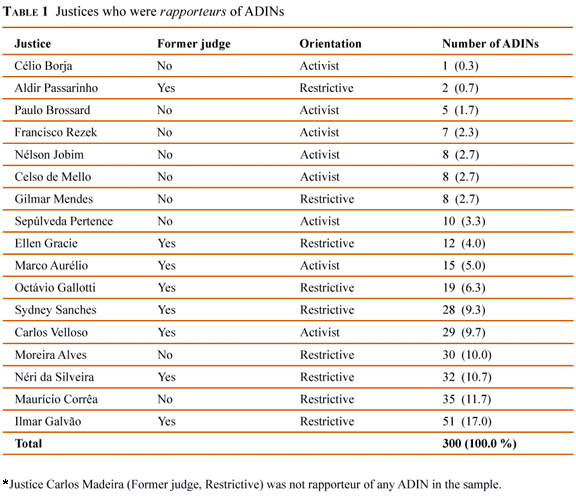
]]> The following 10 independent variables were tested as predictors of the decision outcome: 1) President who appointed the justice (1 = military, 0 = non-military);4 2) Origin of contested law (1 = federal government, 2 = state government, 3 = judiciary); 3) Petitioner (1 = state government, 2 = Prosecutor-General, 3 = political party, 4 = associations (confederative unions or nationwide professional bodies), 5 = Brazilian Bar Association and Brazilian Judges' Association (OAB/AMB)); 4) Object of the law appealed (1 = public administration, 2 = partisan political issues, 3 = economy and tax, 4 = civil society); 5) Justice's orientation (1 = restrictive, 0 = activist);5 6) Justice's tenure (years he/she has spent on the Court); 7) Justice's career before being appointed (1 = judge, 0 = prosecutor or politician); 8) Administration – Government during which the case was decided (1 = José Sarney, 2 = Fernando Collor, 3 = Itamar Franco, 4 = Fernando Henrique Cardoso – 1st administration, 5 = Fernando Henrique Cardoso – 2nd administration, 6 = Lula); 9) Vote of the rapoteur (1 = approved, 0 = not approved); 10) Temporary injunction (1 = approved, 0 = rejected).6Our sampling involves 18 justices who were on the Court between 1988 and 2003. They were classified by considering whether they used to be judges and by their orientation.
The analysis of the decisions reveals that 52% of the outcomes were positive (approved — text was considered unconstitutional) and 83% of the cases were decided unanimously. Regarding the object of the law appealed in these cases, 63% referred to public administration, 20% to economic and tax policies, 13% to regulation of civil society and 4% to partisan political issues. The origin of the contested law was predominantly state governments, with 62% of the cases, the Federal Government, with 26%, and the Judiciary, with 12% of the cases.
In the cross-tabulation of the origin and the outcome of the decision, it was found that there is a tendency for a negative outcome (rejected — text was considered to be constitutional) when the Federal Government is the origin of the law. This tendency is reversed when state governments and the Judiciary are the origin of the contested law.
State governments petitioned 28% of the cases, the Prosecutor-General 25%, political parties 23%, associations 18% and OAB/AMB 6%.
Comparing petitioner with thematic type, it was found that state governments, the Prosecutor-General, political parties and OAB/AMB have predominantly challenged laws referent to the public administration. Associations tend to contest issues associated with economic and tax policies.
The outcomes of cases petitioned by the Prosecutor-General, state governments and OAB/AMB were predominantly positive (73%, 63% and 56%, respectively), while those petitioned by associations and political parties were negative (71% and 68%, respectively).
]]> Logistic regression was used (Table 2) to determine the most influential elements in the outcomes of the decisions. One is interested in the odds of a case having a positive outcome. It is assumed that when the Supreme Court declares a law or act unconstitutional, it is acting in an activist direction. This is because the court is taking an active role in the exercise of constitutional control of the legislation. In contrast, a restrictive direction is associated with the traditional view of juiz funcionário (the judge as a bureaucrat), restrictive in the exercise of constitutional control of laws.
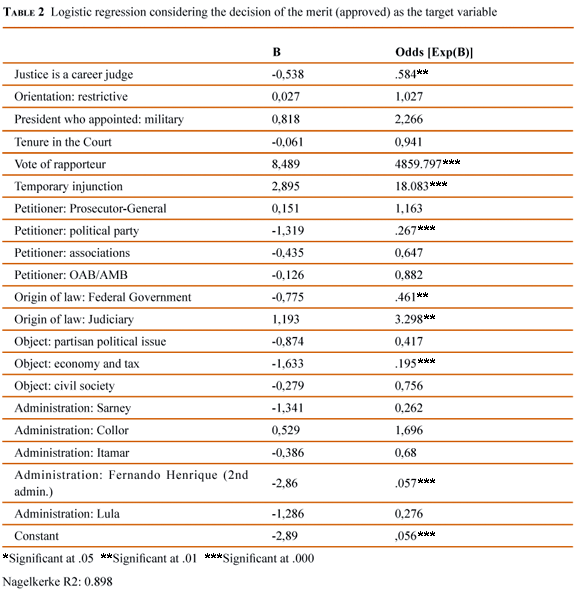
Justices who used to be judges make the decision outcome less likely to be positive when compared to justices who were prosecutors or politicians. This conclusion gives support to the idea that justices who used to be judges tend to be more restrictive and conservative than justices with a different career background.
The vote of the rapporteur is by far the most influencing variable in the result of the decision. The fact that the rapporteur votes for the unconstitutionality of a law makes it more likely that the decision outcome will be positive. Additionally, it is more likely that the outcome will be positive if the suit had a temporary injunction approved.
Looking to the external variables, one sees that the petitioner influences the result of a suit: when compared to state governments, the petitioner being a political party, the outcome is less likely to be positive. However, as stated by Taylor (2004), political parties are less likely to win a case because they use the court not only for legal purposes but also as a way of showing their disagreement with public policies, even when they know that the odds of winning are low (Taylor 2004, 170).
When the object of the law, compared to public administration, is economic and tax policies, it is less likely that the decision outcome will be positive.
The origin of the law or contested diploma shows that, compared to state governments, when the origin is the Federal Government, it is less likely that the outcome will be positive, suggesting that the court is acting with precaution when it comes to review federal policies. One also has to consider that 43.6% of the suits that question federal laws were petitioned by political parties.
]]> If the origin is the Judiciary, it is more likely that the result will be positive. This indicates that the Court is reviewing the decisions taken by lower courts, exercising its role as the higher instance of the judicial branch of government.Considering the government during which the suit was decided, one sees that in comparison with the first Fernando Henrique administration, the suits decided in the second administration were less likely to have a positive outcome. In the first Fernando Henrique administration, political parties were petitioners in 14% of the suits, and in the second administration, 30% — which can help one understand this tendency of more negative outcomes in the second administration compared with the first.
These results indicate that internal factors (vote of the rapporteur, temporary injunction and justice's career) exert significant weight on the outcome of decisions. This does not mean that external factors have no significance. The political environment is indeed a profound factor, as we have seen from the significance of the variables "Administration" and "petitioner". Nevertheless, in order to understand these external factors better, it is necessary to cast aside other methodologies of analysis, and focus instead on how justices' arguments are organized. Firstly, though, we will look at the relationships between justices, and consider if these relationships are affected by whether or not they were judges previously.
Justices: Judge versus Non-Judge
Starting with the finding that the rapporteur's vote has the greatest impact on case outcomes, I observed the degree to which other justices conform to the rapporteur's vote, using a similarity measurement. The similarity index calculated showed that justices agreed with the rapporteur more than 90% of the time. The justices that agreed less than 90% of the time were Francisco Rezek (89%), Sepúlveda Pertence (86%); Marco Aurélio (83%) and Paulo Brossard (74%). Justices Aldir G. Passarinho, Carlos Madeira and Célio Borja did not participate in a significant number of judgments and were thus excluded from the analysis.
In addition to calculating the percentage of times each justice voted with the rapporteur, I established a similarity percentage among the justices to group them by their voting tendencies in the 300 cases. To this end, the following similarity measurement was created: 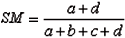 , where a = number of times in which 2 of the 18 justices both voted for the unconstitutionality of the law in the case; d = number of times in which 2 of the 18 justices both voted for the constitutionality of the law in the case; b = number of times in which, of 2 of the 18 justices, one voted for the unconstitutionality and the other for the constitutionality of the law in the case, c = number of times in which, of 2 of the 18 justices, one voted for the constitutionality and the other for the unconstitutionality of the law in the case. Using this measurement, three exclusive groups of justices were created.
Those justices that rank above 0.95 compose the first group. This group is the most explicit and has high cohesion. It is composed of four justices who were not judges previously (Moreira Alves, Maurício Corrêa, Nélson Jobim and Gilmar Mendes) and two who were (Sydney Sanches and Ellen Gracie). The justices' orientation was deduced in a previous study, based on articles published in the main newspapers of the state of São Paulo (Folha de São Paulo and O Estado de São Paulo). However, it is important to take into account the fact that these orientations attributed to the justices came from editorials, journalists and jurists who wrote in the newspapers Folha de São Paulo and O Estado de São Paulo during the period from 1979 to 2002. It is possible that the descriptions have changed over the time.
According to these newspapers, Moreira Alves is a restrictive and technical justice who usually votes alongside the government. Nelson Jobim is another identified as one who gives support to the government; he is activist and technical. Maurício Corrêa is restrictive and technical. Sydney Sanches is restrictive and technical. In the previous study, no information was gathered on Ellen Gracie and Gilmar Mendes, but later articles in these newspapers tend to classify both as restrictive and technical.
]]>
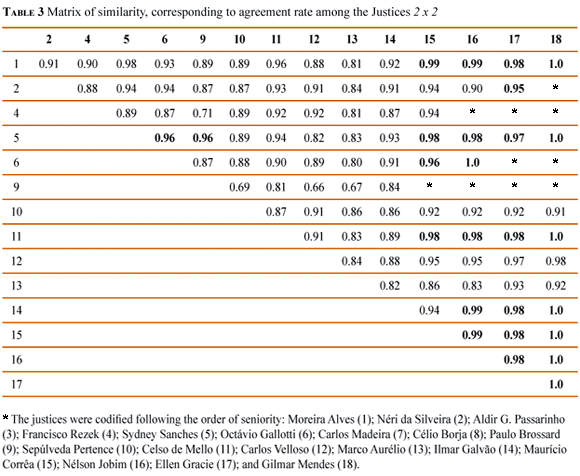
This group is explicit, but not too rigid, as some combinations could be possible but are not in the grouping, such as high rates of agreement found between Justices Moreira Alves and Celso de Mello, Sydney Sanches and Octavio Gallotti and Sydney Sanches and Paulo Brossard. In general, it may be said that this grouping is made up of the justices with the most restrictive and technical profiles on the Court.
The other two groupings are not as explicit as the first, as their categorization was less precise. The second group is made up of three former judges (Néri da Silveira, Octávio Gallotti and Ilmar Galvão) and one justice who was not a judge previously (Celso de Mello). Justices Néri da Silveira and Octávio Gallotti are considered restrictive and technical. Ilmar Galvão is restrictive and political. Celso de Mello is activist and technical. This group can be considered a little less restrictive than the first, but technical nonetheless.
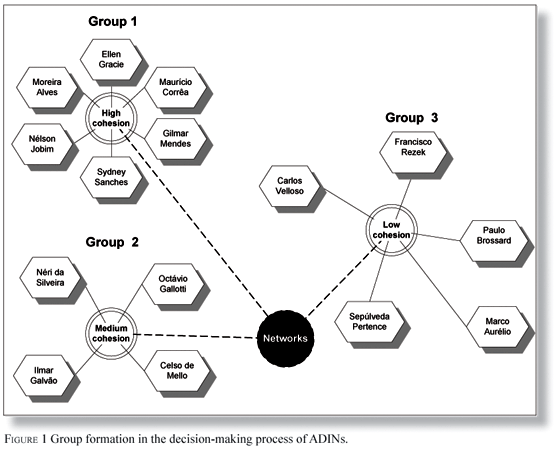
The third group is made up of three justices who were not judges previously (Francisco Rezek, Sepúlveda Pertence and Paulo Brossard) and two who were (Carlos Velloso and Marco Aurélio). We can consider this group as being composed of the most polemical, activist and political justices.
Justices Francisco Rezek, Sepúlveda Pertence and Carlos Velloso are classified as activist and political. Paulo Brossard is activist and is considered a justice who acts in opposition to the government. Marco Aurélio, the most polemical of the justices, is activist with a performance classified as independent and political.
The fact that judges are not neutral agents, that their values influence their performance, is easily acknowledged. It even appears in the debates justices have during judgments. One example is ADIN 171, where Justice Francisco Rezek states: "The analysis of this problem, with all of its possible technicalities, essentially has to do with our own ideological stances regarding the substantial theme" (ADIN 171, 1993, 30).
]]>Argument Analysis of the Justices in ADINs
The high number of ADINs with unanimous decisions shows that, despite the differences in justices' career paths and consequently in their orientation and ideological positioning, in their practical activities they seek to reach consensus. (This can justify why ideology was not significant in our logistic regression model.) This becomes evident when some justices vote alongside the majority in order to maintain decision unanimity, yet they acknowledge their own contrary points of view. Justices' attempt to seek consensus is justified by the need to create uniformity in the Brazilian Supreme Court's interpretation of the law. This finding emphasises our argument that regardless of their political orientation, the ideology of professionalism is strong and prevails in the orientation of justices' behaviour. The high rates of unanimous decisions can also be explained by the fact that Brazil's Supreme Court does not have discretion in the selection of the cases it is going to judge. Often, the court must decide cases concerning "technical" issues and the application of unequivocal commands of the Law, where the margin for interpretation or consideration of extralegal factors is reduced.7
After identifying this tendency, I sought the arguments on which the tendency is erected, in order to perceive the motivations of the justices: guaranteeing judicial consistency and security (acting as "guardians of the Constitution" — a more technical and professional performance), or interpreting constitutional rules and principles to accommodate current government policies (a more political performance).
Of the sample cases, 6% were clearly based on political arguments, and of these, only two resulted in unanimous decisions. Thus, the outcomes of the Supreme Court are preponderantly built on technical arguments. This shows the importance of professionalism in court performance. As Halliday (1999b) states, to transmute technical knowledge (expertise) into moral authority, it is necessary that ideology has some uniformity and impartiality in argumentation; when justices are politicalized, this is undermined.
Despite not basing its decisions primarily on political interests, Brazil's Supreme Court does not deprive itself of the role granted by the Constitution of being the arbitrator of political issues:
Contrary to what has occurred in the United States of America, where the Supreme Court hesitated to judge cases of a political nature, excluding the political from judicial control, in Brazil, the Supreme Court has asserted its competency to judge such matters. (Moreira Alves, ADIN 830, 1993, 15).
Although only 6% of cases resulted in politically oriented decisions, many justices did vote politically yet remained in the minority, thus not affecting the outcome.
Economic or governmental interests (which would denote politicalization of justice) do not generally orient the political motivations behind these justices' votes. Rather, these motivations lie in a search to amplify the Supreme Court's scope, allowing for more encompassing interpretations and more efficient constitutional norms (expressing a judicialization of politics).8 The justices who pronounced most votes considered political were Marco Aurélio, Paulo Brossard, Carlos Velloso, Sepúlveda Pertence and Maurício Corrêa. Aside from Corrêa, all are considered activist, and the first four are in the third group, characterized as the most activist and liberal in orientation in the Court.
]]> Researchers who have studied the Supreme Court's decisions tend to focus on cases that are widely known. My objective is different, hence the use of a random sample to study the corpus of decisions as a whole.The most frequent argument used in the Court is related to the defence and maintenance of federalism and the separation of the branches of government (34% of the cases were decided based on this argument). This shows that one of the most important roles of the Court is the ability to solve disputes between the branches of government and to limit suits between state and federal laws. Thus, Brazil's Supreme Court plays an important role in supporting political stability.
An illustrative case is ADIN 234, petitioned by the governor of the state of Rio de Janeiro against a decision of the state Legislative Assembly. The Assembly determined that public corporations with shares on the stock market could not be restructured or privatized without legislative authorization. This case was unanimously decided, and the law was considered unconstitutional. In this same case, it also becomes evident that the justices are concerned with their image in the media. Justice Marco Aurélio reminds us of this, saying that if the Court judged the case invalid, the media would broadcast that the Supreme Court is against privatization.
All the justices share this concern with the Court's image. In the voting of ADIN 830, Justice Moreira Alves defended the court against criticism in the media. This case was petitioned by two political parties, PSB (Brazilian Socialist Party) and PDT (Democratic Labour Party), to challenge the decision of the National Congress9 to bring forward the referendum that would decide the form and system of the Brazilian Government. Justice Moreira Alves prefaced his vote by stating:
I would like to briefly mention, considering the harmful campaign that has been launched against this Court, that the Court is in agreement with the legal procedures; the decision's delay is due to the tardiness of the interested parties in petitioning the ADIN […]. I hope that the media divulges these facts, as they did with the unfounded criticisms of this Court (Moreira Alves, ADIN 830, 1993, 14).
The argument that is most frequent in routine decisions of the Court (often unanimous) is the one related to the juridical impossibility of petition (28%). It is especially prevalent when an accusation relies on a law or decree that has already been revoked, or has already been judged in another ADIN. Impossibility is also granted when it deals with an already re-edited Medida Provisória (an Executive provisional act, which goes immediately into force, but must be further approved by the Brazilian Congress). In addition, it is invoked when the Supreme Court does not recognize the right of the postulant to sue by means of an ADIN (petitioner is not recognized as one of the capable authorities).
The protection of rights is supposed to be the primary function of judicial review, but in Brazil's Supreme Court, it is a secondary one. This is because the questions that arrive at the Court are mainly referent to federalism, the separation of powers and policy-supporting issues.10 Arguments that refer to social and political fundamental rights are responsible for only 4% of the grounding of the decisions. In ADIN 1459, the political party PT (Workers' Party) questioned the constitutionality of an electoral rescission law, which states that in cases of political ineligibility that arise after a candidate has been elected, the candidate is not allowed to act in his/her elected position until a judgment has been passed. Justice Sydney Sanches stated that this case involved frontal contradictions, not only to the literal disposition of the text of the Constitution, but to the spirit of the Constitution, as it seeks to safeguard the legitimacy of elections and, above all, the ethical sense of the democratic base of the regime" (ADIN 1459, 1999, 12-15).
One often finds arguments that relate to limits to and possibilities for Supreme Court action. Most of these occurrences deal with acts with concrete effects rather than abstract effects, and thus the Supreme Court is not able to judge. In other cases, the petitioner questions only one aspect of the law, which would require the Court to act as a legislator, which is impossible. In 12% of ADINs, the Supreme Court did not approve the cases based on the argument that it was beyond its competence to judge them.
Additionally, there are times when the discussion of limitations to the Supreme Court arises in which this is not a central point, as in ADIN 83. The governor of the state of Minas Gerais petitioned against a state law regulating government employees' wages. The intent here is not to argue this case, but rather analyse the discussion that occurred between Justices Paulo Brossard and Sepúlveda Pertence regarding the limitation to the Supreme Court's action.
Justice Paulo Brossard questioned if the Supreme Court should act restrictively, according to what was put in the initial petition, or if it should assume the freedom to judge the proposed issue in all its plenitude.
]]> Justice Sepúlveda Pertence took the position that the Constitution gives the Judiciary exceptional power that is both juridical and political, but it can only exercise this power when others bring cases - i.e. the Judiciary cannot initiate a case (Pertence, ADIN 83, 1991, 35-37).Despite the fact that both justices are more activist than most of their peers (they are members of our third group), and that both define less rigidly the limits of the Supreme Court, their differing positions indicate that career paths influence values and attitudes.
While Paulo Brossard defends a ample performance, Sepúlveda Pertence defends a more limited one. Neither was a judge previously. Paulo Brossard came from politics (he was a congressman, senator and minister of justice) and Sepúlveda Pertence came from a career in Law (he was a lawyer and prosecutor-general).
It may be deduced that justices that came directly from politics to the Court more readily support the Supreme Court's role in addressing political questions, while those who came from legal careers are more restrained in their acceptance of this role.
In Brazilian judicial review, when the court identifies a lack of laws or regulations, there is the possibility of contacting the branch responsible and giving it a 30-day period to adopt the necessary measures. While the Supreme Court does take this action, it is unable to provide legislation, and is thus limited in its ability to influence the lawmaking. This kind of case is known as ADIN by omission, and 4% of the decisions were based in this argument.
Of the remaining arguments, 10% referred to the impossibility of admission into a civil service career without previous approval in the civil service entrance-examination and 8% were referent to the rejection of the case (corresponding to a negative outcome) due to lack of consistent reasoning by the petitioner.
Analysing the arguments used by the justices in ADINs, the conclusion is that Supreme Court justices play an important role in the politics of the country and, because of this, are concerned with the maintenance of their image of authority and recognize the need to be distinguished from politicians. Because they are concerned with the tribunal's image, they try to maintain a certain level of interpretation uniformity and build consensus, which reinforces the affirmation that the judges do not solely make decisions based on their own policy preferences, but have some constraints to their action. I conclude following Epstein and Knight (1998): in order to maintain the legitimacy of their decisions, justices need to balance their preferences with the preferences of their peers (institutional constraint), the other branches of government (political constraints) and society and public opinion (social constraints).
"Political Principles" versus "Political Policies"
Vilhena Vieira (2002) affirms that three criteria should characterize the judicial decision process: 1) normative observation; 2) obedience to the due process of law; and 3) maintenance of judge's impartiality (Vilhena Vieira 2002, 229). Like Dworkin, he believes that a court must decide cases by conforming to ethics that are based on a shared sense of morality rather than ethics that are determined by results. However, when Vilhena Vieira analysed the Supreme Court's performance, he detected a certain duality in the processes of decision-making. Hence, according to him, there is a slight polarization within the Court, separating liberal and conservative justices. The justices who base their decisions solely on the text of the Constitution tend to be conservative, while those who take into account the economic, social and political repercussions of their decisions tend to be liberal.
]]> From our findings, it is possible to assume that among the justices, former judges have a more restrictive and conservative discourse than the others. Looking at the data analysed, one can infer that there is an association between a justice's career and the decisions he/she makes. Thus, when justices are former judges, they are more likely to vote in strict accordance with the text of the Constitution, evincing the normative principle. Their resulting restrictive decisions indicate a more technical-juridical performance by the Court.The analysis of the ADINs and of the justices' votes proves that the relationship between career and resultant decision is not entirely rigid. Although the justices who used to be judges are usually most restrictive, this is not always the case. When the cases with which the justices deal address political questions, I observed that, indeed, former judges, as well as justices from other legal careers, tend to feel that the matters are outside Court discretion. When, on the other hand, the cases addressed are less controversial and considered technical, the justices tend towards consensus, in an attempt to affirm the importance of the Supreme Court as a powerful institution of the State.
One must remember that justices tend to vote according to their habitus, which is constructed not only by their career path but also by other factors (Bourdieu 1990). Thus, it is necessary to consider that justices tend to vote as a team with those who share their values, postures and opinions.
ADINs 252 and 384, judged collectively, are good examples. The first case was proposed by the Prosecutor-General of the Republic and the second one by ANDA (National Association for the Diffusion of Fertilizers and Agricultural Correctives). Both challenged the governor and legislature of the state of Paraná regarding the law that mandates the State Agriculture Department to approve the production, distribution and commercialization of fertilizers. The petitioners alleged that the jurisdiction to impose such a law belongs to the Federal rather than the State Government. Although the justices believe that the Court must maintain uniformity in interpretation to safeguard judicial security and avoid the potential for numerous trials that challenge the same issues repeatedly, the justices' degree of conservatism separates them. The cases had a negative outcome, with Justices Sydney Sanches, Octavio Gallotti, Ilmar Galvão, Maurício Corrêa and Nélson Jobim voting in agreement with rapporteur Moreira Alves, who claimed that the cases proposed were not validly ADINs, and thus outside the Court's discretion. In order to fully analyse the cases, the Court would need to appraise both infra-constitutional and constitutional laws, and it is unable to do this.
The dissident justices were Sepúlveda Pertence, Carlos Velloso, Néri da Silveira and Marco Aurélio, who defended the possibility of a broader performance by the Court in an attempt to avoid numerous possible trials that could arise, challenging the same subject.
In this case, the debate that surfaced between Moreira Alves and Carlos Velloso, questioning the appropriateness of the Court deciding certain issues, makes clear the opposing attitudes of the justices. While Moreira Alves's view is technical and restrictive, holding that it is impossible for the Court to decide these cases, Carlos Velloso's view is practical; he states that by not judging these cases, the court would be abdicating its primary role, assigned by the Constitution, of keeping in check the other branches of government. "The Court must not decide this issue definitively" (Carlos Velloso 1997, 25).
In Carlos Velloso's statement that the decision must not be definitive, and thus, that it must not establish a precedent, he is cautious, believing that the Court needs to be able to change its position in future cases. His attitude reveals an ideology that widens the Court's political role.
Justice Marco Aurélio's stance is even more practical, claiming that "pragmatism is advisable, as much as possible, to resolve this problem in an abstract, linear, ample form, not waiting for the cases that, in the diffuse control of constitutionality, may appear as a result of controversy regarding the constitutional jurisdiction of state versus federal governments" (Marco Aurélio 1997, 14-15).
Marco Aurélio is the justice whose opinions most distance him from the others, as he, more often than not, takes into account the political consequences of court decisions. Yet it is important to emphasise that although more "politicized" than the average justices on the Court, the fact that he is a former judge becomes evident in some of the positions he takes. An example is his vote in the judgment of ADIN 830, posed by the political parties PSB (Brazilian Socialist Party) and PDT (Democratic Labour Party), countering the decision of the National Congress to bring forward the referendum to decide the form and system of government in Brazil. This referendum was established by the Constituent Assembly in 1987. In the judgment of this ADIN, considered unfounded (negative outcome) by the majority, Justice Celso de Mello, reapplying the ruling of the Prosecutor-General, stated that "the proposals that compose the ADCT (Act of Constitutional Transitory Dispositions) are constitutional in nature and, as the permanent text, can be amended by the very processes established for them". He adds that "the rigidity of the constitutional precepts does not perpetuate the Constitutions; the juridical documents are essentially mutable, and need to take into account changing political, economic, cultural and ethical demands that arise in our complex social world" (Celso de Mello, ADIN 830, 1992, 56-60).
Marco Aurélio vehemently opposed this viewpoint, claiming that such an alteration was almost an act of tyranny. Although the media considers Marco Aurelio to be the most political justice because of his stance in this and other cases, the analysis shows that he is more likely to accept and defend "political" arguments that affect the country as a whole than those that are a part of partisan politics or government interests; this reveals that he is in "harmony" with professional values.
]]> In ADIN 1103, the CNI (National Confederation of Industry) challenged the federal law altering the social security contribution made by employers in industries of agro-industrial production. In his vote, Justice Marco Aurélio stated that the financial interests of the government should not be placed above judicial security and other constitutional issues.It is important, in this analysis, to note the fact that the Supreme Court deliberates publicly. Because of this, it is possible to see clearly the divergent ideologies of the justices as they decide cases. Those most involved in heated debates were Moreira Alves, Carlos Velloso, Sepulveda Pertence and Marco Aurélio.
These debates are frequently manifested in cases where Justices purport, both subtly and overtly, competing hierarchies of their technical and social characteristics. One such example is ADIN 613, dealing with the conversion of the FGTS (employees' social security). In this ADIN, Moreira Alves counters Carlos Velloso with a tone of sagacity and mild irony. As dean of the Court, Moreira Alves is the most experienced of the justices. Since the length of time a justice has served on the Court is one of the most valued and respected characteristics, Moreira Alves's assertions carry a lot of weight.
The 1994 elections led a large number of cases to be brought to the Supreme Court, including ADINs 956, 958 and 966. The first deals with the regulation of free electoral advertising. The petitioner was PT (Workers' Party), challenging the President of the Republic and the National Congress. The claim was the by forbidding the use of outdoor recordings, settings or artifices, the law was an affront to the principle of free speech. The case was judged unfounded (negative outcome), by the majority, while Justices Marco Aurélio and Celso de Mello agreed with the petitioner that the law illegally restricted their freedom of expression.
ADIN 958, petitioned by political party PRONA (Party for the Reconstruction of National Order), and ADIN 966, petitioned by political party PSC (Social Christian Party), were judged in unison. They challenged the same law that required parties wishing to nominate candidates to run for president or state governor to have received at least 5% of the votes in the previous election. A majority of justices affirmed that such a law is unconstitutional. Justice Marco Aurélio stated that the law is an affront to democratic values and citizenship, preventing the representation of minorities in political elections. In the Court minority, Justices Francisco Rezek, Carlos Velloso and Sepúlveda Pertence considered the law constitutional, and asserted that requiring a percentage of votes in the previous election ensures that parties are representative of the nation's people and will.
A final example of the ways in which justices construct their arguments is ADIN 2306. This case was petitioned by the Federal Council of the Brazilian Bar Association (OAB) challenging the law (promulgated by the National Congress) that waives fines for failure to vote in elections — since, in Brazil, voting is obligatory. The case was judged unfounded (negative outcome) by the majority of the Court (Justices Moreira Alves, Celso de Mello, Carlos Velloso, Ilmar Galvão, Maurício Corrêa, Nélson Jobim and Ellen Gracie), defeating Justices Sepúlveda Pertence, Sydney Sanches, Néri da Silveira and Marco Aurélio. The debate between Justices Néri da Silveira and Moreira Alves further illustrates the opposition between technical arguments and arguments that can be considered political:
SILVEIRA: Justice, the things that are not in accordance with the principles of the Constitution do not deserve protection.
ALVES: What are these principles?
SILVEIRA: Does your Excellency understand that democracy is not the basic principle of the Constitution?
]]> ALVES: Incidentally, does democracy rely on the obligation to vote? Why do other democratic countries not have obligatory voting? . . .SILVEIRA: (The problem of the law at hand) lies in securing the principles of the Constitution . . . It seems to me that this case will not be resolved by technicalities that determine whether or not it is constitutional . . .
ALVES: If we are a court that has to judge juridically, it is obvious that we must follow juridical principles to verify if the law is or is not constitutional. (ADIN 2303, 2002, 21- 28).
In all that we have been discussing here, it is possible to see confrontation between technical, conservative arguments and political, liberal arguments (noting that there are varied reasons for arguments being political: these reasons can be economic, governmental or referent to the political powers of the Supreme Court).
The data put forth makes it possible to infer that jurisprudence, professionalism and politics are truly interrelated in the performance of Brazil's Supreme Court. Values of autonomy, justice and judicial security permeate the justices' arguments. Despite behavioural differences due to diversity in training, varied career paths and conflicting values, justices defend a uniform representation of the Supreme Court and its jurisprudence in an attempt to edify and consolidate the Court's authority and legitimacy.
Thus, it is possible to conclude that the decisions of the Supreme Court are influenced by judicial formalism, by the principles of autonomy and justice, and by the justices' creativity and discretion.
Conclusion
I have developed a model to analyse the judicial behaviour of Brazil's Supreme Court justices to determine what elements are most influential in their decision-making process. My model combines elements of sociology of professions, jurisprudence and three different approaches of judicial politics, the legal, attitudinal and strategic. So as to test the model, I analysed 300 ADIN cases decided by the Court during the 1988-2003 period.
By means of logistic regression, I determined the internal factors of ideology and professionalism to be the most influential. With these findings, I then focused on the interactions between justices on a case-by-case basis. I found that, despite the tendency of justices to vote alongside other justices with whom they share similar ideological dispositions, professionalism prevails in uniting justices in a common decision. The fact that more than 80% of the decisions were unanimous further supports professionalism as a key element in understanding justices' behaviour.
]]> In order to get a closer look at the motivations behind these decisions, I examined the arguments put forward by justices. I found that most decisions were based on technical arguments that guarantee judicial consistency and security — indicating a professional influence. However, when justices' arguments were politically based, most of the time they were found to support a broader performance of the Court in the political arena, instead of the typical view of supporting government policies. This further supports our premise that professionalism is the most important factor in determining Court decisions.Understanding the factors that influence Supreme Court decisions is of central importance because of the powerful political influence it exerts. It is up to the Supreme Court to determine if the methods of the political system are in accordance with constitutional rules. Looking at the cases decided by the court, we see that it played an important role in the resolution of conflicts between the branches of government and between government and society.
Although justices have considerable political power and strength, because they are appointed rather than elected, this power is not enough to secure their positions — especially when they have to face legislative majorities when declaring laws and acts unconstitutional. The fact that justices are not elected both strengthens and weakens the Supreme Court's power. Justices are immune to partisan interests because they are not concerned with elections, yet when they decide political questions, they are easily labelled as biased because they cannot claim public support. Ultimately, the Supreme Court must legitimate itself through another source of authority. Thus, it incorporates professional values as the means to this ends. Munitioned with this authority, Supreme Court justices are able to provide a politically stable atmosphere that helps with economic and social growth, as well as offering an alternative arena through which political and social actors may exercise democratic control over the actions of government.
The results of this study show that my approach, which seeks to integrate different perspectives on judicial behaviour, has succeeded, confirming that these perspectives are not contradictory. The results also indicate that, if made to cohere, the legal, attitudinal, strategic and institutional approaches, including professionalism, significantly account for the variation in the decision-making behaviour of Brazil's Supreme Court justices.
In conclusion, it may be said that the voting behaviour of justices, as well as the final decision of the court, is highly influenced by institutional context and professionalism. However, legal and political factors also play a role in these results. Attitudinal variables have a lesser impact on behaviour.
This investigation of Brazil's Supreme Court reveals that professionalism and politics are interrelated factors in influencing Court decisions. The fact that professionalism plays an imperative role in judicial decision-making is positive, for it favours justices' independence from political and governmental interests. This provides credibility and legitimacy to the Court, which favours the rule of law and therefore strengthens and supports democracy. There are two other factors that cannot be ignored when talking about the importance of professionalism in the Brazilian Supreme Court: Brazil's legal tradition (Civil Law, in contrast with Common Law) and the Court's need to build its legitimacy in the new democracy.
Notes:
1 The Brazilian judicial review system is considered hybrid because it combines elements of the decentralized (diffuse) and centralized (concentrated) models. The diffuse system is similar to the American legal system, in which any private party can bring constitutional issues to be tried by ordinary courts. On the other hand, in the Brazilian system particular authorities are able to question constitutional issues directly to a constitutional court, a practice characteristic of concentrated judicial review systems such as many European legal systems. The Supreme Court is the highest tribunal for decentralized review and is the only court for centralized review. It is composed of eleven justices chosen among citizens over thirty-five years and under sixty-five years of age, with reputable legal knowledge and unblemished reputations. The President of the Republic appoints the justices after the absolute majority of the Senate approves their selection. The court has administrative and financial autonomy and the justices remain in the post until they are 70 years old. The Supreme Court is primarily concerned with exercising judicial review, judging the constitutionality of laws or regulations in abstracto (by means of ADINs — direct unconstitutionality suits — of federal or state laws or normative acts). Authorities allowed to bring constitutional questions to the court include: the President of the Republic; the Executive Committee of the Federal Senate; the Executive Committee of the Chamber of Deputies; the Executive Committee of state legislative assemblies; state governors; the Federal Council of the Brazilian Bar Association; political parties represented in the National Congress; and confederative unions or nationwide professional bodies. For more details, see: Boechat Rodrigues 1977; Arantes 1997; and Macaulay 2003.
2 Since the whole universe could be identified, I used a simple random sample, ordering all the decisions according to their specific numbers in the tribunal, and using a table of random numbers. Three hundred cases were randomly selected. URL: http://www.stf.jus.br/portal/cms/verTexto.asp?servico=estatistica&pagina=adi
]]> 3 The role of the rapporteur is to coordinate and lead the case. He/she writes the briefs (the report) that reflect his/her opinion in the case. This report is made available to all the justices before the trial. The rapporteur is also the first to vote.4 I tried to use as a predictor the president that nominated the justice, but when I tested the correlations the only variance noted related to the nature of the regime, military and non-military — so I opted to use it in the model.
5 Justice's orientation refers to the postures assumed by justices concerning the extension of the Supreme Court powers: an activist supports a more ample performance of the court (oriented to a broad and active role in political issues), while a restrictive supports a more restricted attitude, defending a narrower role in political issues.
6 Note that when the variables were not binomial, they were transformed into dummy variables — suits can be approved, rejected or partially approved. When a decision was partially approved, it was considered approved.
7 This is the case for many constitutional courts in Europe, such as the Portuguese (see Magalhães and Araújo 1998).
8 See Tate and Vallinder (1995); Werneck Vianna (1999) and Shapiro and Sweet (2002).
9 The National Congress consists of the Federal Senate and the Chamber of Deputies.
10 According to Sato (2003), in Brazil, the diffused system carries out the function of rights protection more effectively in comparison with the centralized system.
Bibliographical References
]]>Arantes, Rogério Bastos. 1997. Judiciário e política no Brasil. São Paulo: Ed. Sumaré/IDESP. [ Links ]
______, and Fábio Kerche. 1999. Judiciário e democracia no Brasil. Novos Estudos Cebrap, no. 54:27-41. [ Links ]
Bonelli, Maria da Glória. 2002. Profissionalismo e política no mundo do Direito. São Paulo: EdUFSCar/Sumaré [ Links ].
Bourdieu, Pierre. 1990. Poder simbólico. São Paulo: Difel. [ Links ]
Clayton, Cornell W., and Gillman, Howard. 1999. Supreme Court decision making: New institutionalist approaches. Chicago: The University of Chicago Press. p. 344. [ Links ]
]]>Domingo, Pilar, and Rachel Siede. 2001. Rule of Law in Latin America: The international promotion of judicial reform. London: University of London. [ Links ]
Dworkin, Ronald. 2001. Uma questão de princípio. São Paulo: Martins Fontes. [ Links ]
Epstein, Lee, and Jack Knight. 1998. The choices justices make. Washington, DC: CQ Press. [ Links ]
Feldman, Stephen M. 2005. The rule of law or the rule of politics? Harmonizing the internal and external views of Supreme Court decision making. Law and Social Inquiry 30 (1): 89-135. [ Links ]
Freidson, Eliot. 2001. Professionalism – The third logic. Cambridge: Polity Press. [ Links ]
]]>Garth, Bryant, and Yves Dezalay. 2002. The internationalization of Palace Wars - Lawyers, economists, and the contest to transform Latin American States. Chicago: University of Chicago Press. [ Links ]
George, T. E., and L. Epstein. 1992. On the nature of Supreme Court decision making. American Political Science Review 86 (2): 323-37. [ Links ]
Gibson, James L. 1983. From simplicity to complexity: The development of theory in the study of judicial behavior. Political Behavior 5 (1): 7-49. [ Links ]
Halliday, Terence. 1999a. The politics of lawyers: An emerging agenda. Law and Social Inquiry 24:1007-1011. [ Links ]
______. 1999b. Politics and civic professionalism: Legal elites and cause lawyers. Law and Social Inquiry 24 (4): 1013-1060. [ Links ]
]]>Macaulay, Fiona. 2003. Democratization and the Judiciary: Competing reform agendas. In Brazil since 1985: Politics, economy and society, ed. Maria D'Alva Kinzo and James Dunkerley, 84-104. London: Institute of Latin American Studies. [ Links ]
Magalhães, Pedro, and Araújo, Antonio, 1998. A justiça constitucional entre o direito e a política: o comportamento judicial no tribunal constitucional português. Análise Social 145 (1): 7-53. [ Links ]
Mishler, W., and R. S. Sheehan. 1993. The Supreme Court as a countermajoritarian institution? The impact of public opinion on Supreme Court decisions. American Political Science Review 87 (1): 87-101. [ Links ]
Rodrigues, Leda Boechat. 1965,1968,1991, 2002. História do Supremo Tribunal Federal. Tomos I, II, III e IV. Rio de Janeiro: Civilização Brasileira. [ Links ]
Sato, Miyuki. 2003. Judicial review in Brazil. Nominal and real. Global Jurist Advances 3 (1). http://www.bepress.com/gj/advances/vol3/iss1/art4/ (accessed April 15, 2009). [ Links ]
]]>Segal, Jeffrey, and Harold Spaeth. 2002. The Supreme Court and the attitudinal model revisited. Cambridge: Cambridge University Press. [ Links ]
Shapiro, Martin. 1995. The United States. In The global expansion of judicial power, ed. C. Neal Tate and Torbjörn Vallinder. New York: New York University Press. [ Links ]
Shapiro, Martin, and Alec Stone Sweet. 2002. On law, politics, and judicialization. Oxford: Oxford University Press. [ Links ]
Slotnick, E. E. 1991. Judicial Politics. In Political science: Looking to the future, ed. Willian Crotty, vol. 4. Evanston: Northwestern University Press. [ Links ]
Tate, C. Neal. 1981. Personal attribute models of the voting behavior of US Supreme Court justices: Liberalism in civil liberties and economics decisions, 1946-1978. American Political Science Review 75 (2): 355-367. [ Links ]
]]>Tate, C. Neal, and Torbjörn Vallinder, eds. 1995. The global expansion of judicial power. New York: New York University Press. [ Links ]
Taylor, Matthew MacLeod. 2004. Activating judges? Courts, institutional structure, and the judicialization of policy reform in Brazil (1988-2002). Ph.D. diss., Georgetown University. [ Links ]
Vilhena Vieira, Oscar. 2002. O Supremo Tribunal Federal: Jurisprudência política. São Paulo: Malheiros Editores. [ Links ]
Werneck Vianna, Luiz, Maria Alice Rezende Carvalho, Manuel Palacios Cunha Melo, and Marcelo Baumann Burgos. 1999. A judicialização da política e das relações sociais no Brasil. Rio de Janeiro: IUPERJ/Ed. Revan. [ Links ]
World Bank. 2003. Brazil: equitable, competitive, sustainable – Contributions for debate. http://www-wds.worldbank.org/external/default/WDSContentServer/WDSP/IB/2004/03/22/000090341_20040322152517/Rendered/PDF/278320PAPER00Brazil.pdf (accessed April 15, 2009). [ Links ]
]]>
Submitted in October, 2008.
Accepted in December, 2008.