Simone DinizI; Cláudio Oliveira RibeiroII
IFederal University of São Carlos (UFSCAR), Brazil
IICatholic University of São Paulo (PUC-SP), Brazil
Replicated from Brazilian Political Science Review (Online), Rio de Janeiro, v.2, n.2, July/Dec. 2008.
ABSTRACT
]]> The article aims to contribute to the debate on Legislative participation in Brazil's foreign policy. The research is based on presidential messages referent to international agreements forwarded to Congress for deliberation between 6 October, 1988 and 31 December, 2006. We find that the Brazilian institutional model does not totally restrict the decision-making process concerning international acts to the Presidency of the Republic and to the Ministry of External Relations. We submit that by analysing presidential messages referent to international agreements forwarded by the Executive to Congress for deliberation, and how these make their way through the Chamber of Deputies, it is possible to identify the existence of a broader spectrum of political participation than much of the literature tends to point out.Keywords: Legislative; Executive; Foreign policy; Decision-making.
Introduction
What role does the Brazilian Legislative play in the decision-making process of international agreements negotiated by the Executive? Are parliamentarians political actors with the ability to exert influence on such agreements? These questions guide the approach we develop in this article.
Since the 1990s, there has been significant progress in analyses of the dynamics of the Brazilian political system, especially with regard to relations between the Executive and the Legislative, and to legislative organization. Such studies were developed by following up domestic politics, relegating to a secondary plane the analysis of the articulation between the decision-making process and foreign policy.
The distancing between these two fields of knowledge (decision-making process and foreign policy) has been largely motivated by the predominance of analytical approaches that, based on the construction of the concept of national interest where the state is seen as a unitary actor, have inhibited research into the decision-making process. As a result, research has centred on evaluating international factors conditioning the action of states, underestimating domestic variables and actors.
In the field of international relations, there predominates a tendency to state that the Brazilian Legislative is apathetic and/or indifferent to foreign policy questions. The following factors are commonly cited to explain this lack of interest: the insulation and level of excellence of Itamaraty (the Ministry of External Relations); the complexity of international themes, which would require a level of expertise that parliamentarians do not have; the assumption that members of the Legislative are only interested in issues that might result in electoral gain, which would not be the case of foreign policy; and, lastly, the fact that the Brazilian Constitution (CF-1988) itself attributes prerogatives limited to ex post deliberation to the Legislative.
Some recent studies (Alexandre 2006; Neves 2003; Maia and César 2004) have begun questioning the assumptions both of those who argue that the Legislative should not have more say in foreign policy, and of those who in spite wishing for greater participation, state that the position of parliamentarians is one of subordination to and endorsement of the policies defined by the Executive.
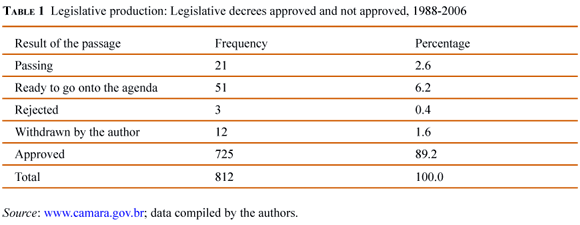
]]> This article aims to contribute to the debate on the role of the Legislative in the approval of international acts. In order to conduct the research, we gathered all the mensagens presidenciais1 referent to international agreements forwarded by the President of the Republic to Congress for its deliberation between 6 October, 1988 and 31 December, 2006.The database contains 812 presidential messages. We followed them up as they made their way through Congress and arrived at the following results: 725 (89%) were approved; 51, at the time the data were gathered,2 were yet to be included on the agenda of the Plenary of the Chamber of Deputies (Lower House of Congress); 21 were making their way through the permanent committees; 12 were withdrawn by the Executive, leading to a suspension of the agreements' passage through Congress; and only three messages were rejected. Table 1 presents these results.
We thus identified two main groups of international acts, those that were fully processed and became legislative decrees, and a group of "not approved". Regarding the latter, we stress that many of the proposals waiting to be included on the order paper of the Chamber were not deliberated upon due to the presence of provisional measures "locking" the agenda of the House, since they have priority.3 In other words, there is an agenda external to international acts, specific to the Brazilian presidentialist system, that has consequences for the rite and speed with which such matters make their way through Congress.
As for the messages withdrawn by the Executive, one should not assume a priori that the withdrawal was motivated by potential resistance, or even a veto, on the part of the Legislative to the agreements. However, this possibility cannot be discounted either. In our view, the motives leading the Presidency of the Republic to request a withdrawal constitute an empirical question requiring investigation.4
In this article we concentrate our analysis on projetos de decreto legislativo (PDLs) ("proposed legislative decrees") actually approved, i.e., those that have made their way through the Chamber of Deputies fully and have become legal norms. The path taken by them in the Federal Senate, as well as the decrees not approved, will be analysed at another occasion.
Our objective is to present possible indicators to measure the participation of the Legislative. Hence, we initially quantified parliamentarians' actions in the process of deliberation of international accords in Brazil. Then, with the aim of providing a more qualitative treatment to the analysis, we selected those messages whose records indicated that parliamentarians had made comments or suggestions, by means of the opinions presented by the rapporteurs of the matters in question.
]]> We have organized the text as follows: in the first section we briefly review the literature on the theme in question. Next, the focus is on the Congress in action: we analyse the process by means of which the Legislative acts on foreign policy matters, i.e., the presentation of and deliberation on legislative decrees. In the final remarks, we review the main results of the research.
The Brazilian Congress and Foreign Policy: Notes on the Literature
From the late 1980s, there appeared studies questioning the assumptions of the realist school, whether regarding the "ineffectiveness" of democratic regimes in ensuring international commitments, or the analytical rigidity in relation to elements of causality in foreign policy (Lima 2000).
The point was reviewing the weight of domestic conditioning factors on the foreign policy decision-making process, which the literature traditionally tended to identify as negative aspects, since they allegedly create a diversion or turbulence in the conduct of the foreign policy led by the statesman (Morgenthau 2003; Kennan 1984).
Authors such as Hill (2003), Hudson (2005), Milner (1997), Martin (2000) and Putnam (1988) have presented alternative analytical perspectives to the more traditional theories of international relations, which cling to the premise that the foreign policy of states, seen as unitary and rational actors, is a reflection of risks and opportunities derived essentially from the international system. As highlighted by Hill (2003), this movement brought a new dynamic to the field of reflection about what foreign policy is and how it is formulated.
A work of reference within this new perspective is that by Putnam (1988). This is so firstly because it emphasises the causal dimension of domestic policy on the formation of international policy; secondly, because it indicates the need for domestic ratification of international commitments when the latter involve domestic distributive questions, in turn generating costs that lead to the mobilization of actors positively and negatively affected.
With the proposition of two-level games, Putnam's pioneering study demonstrates that the success or failure of states' external action is linked not only to the phase of international negotiation (level 1), but also to the capacity to satisfy domestic pressures and interests (level 2). An approach that questions the very belief in the distinction between the domestic and the international, which ended up disturbing the supporting pillars of realism, is derived from Putnam's proposition.
According to Putnam's argument, at the domestic level, societal groups pursue their interests by putting pressure on the government to adopt certain policies. As a consequence, political decision-makers hanker after power and build coalitions among these groups. In the case of the international environment, national governments make efforts to maximize their ability to satisfy domestic pressures whilst minimizing the adverse consequences of foreign policies. Neither of these two games can be ignored by the decision-maker. Consequently, in the two-level game the movement of the actors is simultaneous.
The essential assumption of this reasoning is that the state cannot be conceived of as a unitary actor. The realist metaphor of the state as a pool ball (Waltz 2004), representing a single interest in the international setting, loses its efficacy and explanatory capacity. In this case, what matters is unravelling the black box of the state. The main aim is knowing how, at the domestic level, the different national interests are formed, what the relevant factors are, why this process occurs and, lastly, how this question is processed at the international level (Kubálková 2001).
]]> Within this line of argument, the works by Milner (1997) and Martin (2000) draw attention to the complexity inherent to the process of foreign policy-making with its domestic conditioning factors as the starting point. They stress the interests, perceptions and values of those who, to a greater or lesser extent, are affected by the international acts signed up to by the state and are therefore concerned about influencing decisions to be made by negotiators on the international plane. Parties, unions and other political players able to influence the state decision-making process are mentioned as fundamental actors.In her work, Milner (1997) remarks that the analysis of states' international negotiation processes must take into account the institutionally established form of interaction between the Executive and the Legislative. This proposition is based on the premise that only by means of a careful examination of the competencies, limits and functioning of these two actors in decision-making processes relating to international questions, is it possible to identify and evaluate the weight of domestic institutional arrangements on the country's international action.
The basic assumption of this approach is that the relationship between the Executive and the Legislative, as regards the state's external action, is conditioned by a Constitution. Given the constitutional attributes that the Executive and the Legislative have in foreign policy matters, it is correct to state that Congress ends up playing a legitimating role in relation to the political decisions of the Executive referent to the international arena. This role is largely consequent on the fact that Congress is, in the last instance, the locus of the political parties and, hence, a legitimately constituted channel of representation for societal interests.
In Milner's (1997) reading, cooperation between states tends to be substantially affected by the consequences of the distribution of power at domestic level, where three types of actors would be able to define foreign policy: the Executive, the Legislative and interest groups.5 Hence, the place taken up by domestic policies, i.e., by the domestic actors, acquires a notable standing in international negotiations, since both success and failure in such negotiations are owed to interest groups of the domestic plane, in the last analysis.
Starting off from the assumption that the preferences of these three actors differ, the author proposes to analyse them on a one-dimensional scale, considering that the position taken on by each is able to influence the others' and thus to determine the foreign policy. In this aspect, Milner considers it necessary to identify which is the more dovish actor (i.e., more conciliatory towards the government) and which is the more hawkish (i.e., the one with a harder position vis-à-vis the government). Given this diagnosis, one arrives at the conclusion that the more a dovish domestic actor supports the government, the greater are the chances of there being international cooperation.
Martin (2000), on the other hand, began applying the assumptions of the theory of delegation to studies of the foreign policies of the USA and European parliamentary countries. A key hypothesis of her work is that in the US case, there is delegation of powers from the Legislative to the Executive with regard to foreign policy, but due to the institutional characteristics of the political system, the Legislative safeguards for itself the prerogative of influencing foreign policy all the same.
According to Martin, in the event of a convergence of interests, the Legislative does delegate. In the event of a divergence, the Legislative will seek to increase its participation. The Trade Promotion Authority fits perfectly well into this kind of analysis. The flip side of delegation is abdication. The Legislative delegates authority to the Executive, but does not safeguard for itself any mechanism that allows it to influence the policy in the event of a conflict of interests.
Along the lines of such perspectives, foreign policy is conceived of as the result of initiatives taken by different actors, resting with the state — principally, but not exclusively — the competency and legitimacy to interact with the international environment. Therefore, the analysis of foreign policy requires a set of instruments capable of incorporating the study of its decision-making process. The point is re-affirming the centrality of the decision-making process and rejecting the separation between foreign and domestic policy, highlighting the importance of the former to understand contemporary international relations (Kubálková 2001).
Martin's study has become a reference for much of the work developed in Brazil. Some analysts, using the author's theoretical arguments, have begun searching Brazil's institutional arrangement for mechanisms that might express or materialize delegation.
It so happens that the country's institutional arrangement, as regards international acts, provides for ex post Legislative action. There is no explicit delegation mechanism, as in the US case. As remarked by Neves (2003, 117):
]]>The difficulty in analysing the convergence and divergence of interests between the Legislative and the Executive branches in Brazil occurs because there is no mechanism of delegation of authority as in the United States (TPA). Furthermore, the absence of a clear mechanism of delegation of authority is the main cause of the perception that the Legislative is alien to international questions.
In the absence of constitutional prerogatives setting out parliamentarians' ex ante participation, those who study the relationship between the Brazilian Executive and Legislative as regards foreign policy face the difficult task of finding an indicator that would allow them to ascertain whether parliamentarians participate in international acts or not. What kind of indicators may be used? How could one measure the participation of the Legislative? How might one evaluate whether there is a convergence of interests between the branches in relation to foreign policy?
In a study that evaluates parliamentarians' participation in matters of foreign trade, Lima and Santos (2001) argue that the Legislative went from a position of delegation of powers to the Executive during the Juscelino Kubitschek presidency (1956-1960) to one of abdication, exempting itself from making any kind of decision with regard to the commercial measures implemented over the course of the 1990s.
Oliveira (2004) analysed party programmes with the aim of checking the position of political parties as to the creation of the Mercado Comum do Sul (Mercosul). According to the author, Mercosul negotiations were concentrated on the Executive, discouraging the participation of legislators, and even of parties, in regional integration. His conclusion indicates that the participation of the Legislative and of parties in the process of integration only takes place when a specific conflict occurs between the bloc's two main countries, Argentina and Brazil, as happened with the sugar sector.
On the basis of these studies, one concludes that greater participation on the part of the Legislative, though desirable, has not yet reached significant levels in Brazil's polyarchical system.
Research by Alexandre (2006), Neves (2003) and Maia and César (2004) emphasises precisely the fact that a new trend of widening participation of the Legislative in foreign policy matters is taking shape. In the eyes of these authors, the Legislative is not a mere spectator of the foreign policy formulated by the Executive.
Neves (2003) sought to evaluate the relationship between the Executive and Legislative branches in Brazilian foreign policy formulation, in a study encompassing the regional economic integration accords of the Mercosul and the Free Trade Area of the Americas (FTAA) . The author takes up Martin's (2000) theoretical structure, concluding that in the case of the Mercosul there was a delegation from the Legislative to the Executive and a convergence of interests between the two branches, thus making a direct legislative participation unnecessary. In order to demonstrate the convergence of interests, the author resorts to the constitutional review process of 1993-1994. According to Neves (2003, 120), six constitutional review amendments were passed. Given that none of them dealt with foreign policy, the convergence would thus be proved.
In this case it is worth recalling, as documented by Melo (2002, 76), that the constitutional review process "suffered the devastating impact of contextual factors such as electoral constraints, the polarization of the public agenda and the structure of incentives with which the Executive and Legislative were faced in the context of the Parliamentary Committee of Inquiry into the budget."6 Restricting oneself to analysing six amendments deliberated upon in the context of a transitional regime — it is worth remembering that the calendar of the constitutional review coincided with the immediate aftermath of President Collor's impeachment —, in a turbulent period, may not be enough to demonstrate the convergence of interests between the two branches.
The other two studies tackled more forcefully the challenge of evaluating Legislative input in foreign policy.
]]> Maia and César (2004, 364) draw attention to the fact that "congressional influence in foreign policy design may not be restricted to the mere exercising of constitutional prerogatives". There are other forms of participation (hearings with ministers, requests for information, participation in delegations etc) that may be used as indicators of participation and/or interest in foreign policy on the part of the Legislative.By analysing the involvement of the Brazilian Congress in the Treaty on the Non-Proliferation of Nuclear Weapons and in the agreement about Alcântara base, the authors describe the major backroom action conducted by parties in opposition to the Fernando Henrique Cardoso government, which does not square with the diagnosis of disinterest. They also draw our attention to the mechanism of recording separate votes, activated by some parliamentarians as a way of manifesting their dissenting views explicitly.
However, the empirical analysis remained circumscribed to two international acts, the abovementioned treaty and the agreement between Brazil and the United States on technological safeguards related to the latter's participation in launches from the Alcântara Launch Centre (CLA).
The authors' conclusion is that "treaties related to national defence have brought to the surface the tendency of the National Congress not be contented with approving the agreements in full, putting forward conditions under which such treaties will be approved" (Maia and César 2004, 380).
What follows from this conclusion is that the greater or lesser participation of the Legislative is conditioned by the issue put up for discussion by means of the international act in question.
The latter aspect is taken up in Alexandre's (2006, 89) research. According to the author, the aim of her work is to investigate to what extent the National Congress has sought to increase its institutional participation in the foreign policy-making process. She also raises the question of whether this attempt at increasing participation occurred as a function of a certain matter or as a function of a convergence or divergence of interests with the Executive.
With regard to the first objective, the author takes up the discussion had during the work of the National Constituent Assembly, emphasising the efforts made by parliamentarians to ensure a larger role for themselves, especially in connection with international acts related to the foreign debt.
Alexandre (2006) refutes the argument of Maia and César (2004) by analysing seven international acts relating to the commercial use and safeguards of the CLA and to the signing and ratification of the Comprehensive Nuclear Test Ban Treaty.
The author demonstrates that the greater participation of the National Congress does not result from a specific theme. Participation was intense around certain international acts involving security, but not others:
]]> Congress did not have an interest in manifesting itself about every issue of security and national defence. The institution follows a rational logic that means it manifests itself only when it does not agree with the understanding proposed by the Executive, at least as regards the cases presented (Alexandre 2006, 120).
Once again, Martin's (2000) argument is taken up. The relationship between the branches is one of delegation and for it not to be classified as abdication, "it is necessary for there to remain an efficient control mechanism for the National Congress" (Alexandre 2006, 120). Which mechanism would that be? Says the author: "[...] faced with the impossibility of total control ('police patrol'), the cases brought up here seem to evince the existence of a 'fire alarm'-type control mechanism". In this sense, the interest of the National Congress in supervising certain foreign policy questions would be as a function of the "activation of this alarm by certain social groups" (Alexandre 2006, 120).
If the central argument of Alexandre's (2006) analysis is that the Legislative manifests itself when the "alarm" goes off, having been triggered by certain social groups, one may infer that parliamentarians are only interested in foreign policy themes if so motivated by society. In a way, the author endorses — even though unintentionally — the argument she tries to combat: the supposed disinterest of the Legislative in foreign affairs.
The analysis we present sets off precisely from this point. We will not resort to the arguments of delegation versus abdication. Our understanding is that if there was delegation, it manifested itself during the work of the National Constituent Assembly, which established the current prerogatives for the actions of the Executive and Legislative branches of government. However, we use the distinction made by Martin (2000) between "action" or "activity" and "influence" for the analysis of Brazilian Legislative participation in the deliberation process of international accords.
Martin (2000) alerts us to the mistakes we can make if we assume "activity" and "influence" to be synonyms, or even that there should be a correlation between them. If we make them synonymous, we are easily led to conclude that the Executive is the main actor in the foreign policy field.
According to the author (Martin 2000), parliamentarians' influence is greater than generally considered by specialists. At times, the Executive may anticipate possible negative reactions of the part of the Legislative and conduct the negotiation of the accord in such a way as to incorporate parliamentarians' preferences. In this case, there would be an absence of "activity" but not of "influence". Legislatures can also exert a significant degree of influence through indirect mechanisms of control, stopping or stalling deliberation of an international act.
The test of the "hypothesis of influence" (Martin 2000, 48), could be formalized by checking the (in)existence of mechanisms at the disposal of the Executive that would allow it to interfere in or diminish the ability of the Legislative to influence the deliberation of international acts. The alternative hypothesis is the "hypothesis of evasion", i.e., the existence of an institutional structure that allows the Executive to take evasive action, thus avoiding a possible obstruction by the Legislative.
In this sense, an aspect to be investigated is whether the legislature's organizational structure and/or rules that establish the parameters for legislative deliberation allow parliamentarians to utilize such procedures.
It is well known that the Executive branch in Brazil holds significant agenda-setting powers (Figueiredo and Limongi 1999; Santos 2003; Rennó 2007, among others), which allows it to control legislative work as regards ordinary legislative production (that is, ordinary bills and provisional measures). It remains to be seen whether this control of the agenda is also manifested in deliberations of proposals related to international acts.
The survey of the parliamentary process undergone by PDLs has revealed that mechanisms of agenda-control, such as the possibility of requesting urgency, thus evading the prerogative of the permanent committees to deliberate upon proposals under their jurisdiction, also apply to the deliberation of PDLs. This means that the possibility of the Legislative influencing international agreements through procrastination or obstruction at permanent committee level is bound by the limits established by the organization of the legislative process in Brazil. We thus stress that as with the domestic plane, the format of legislative organization and/or way the decision-making process is organized is a fundamental variable to understand the participation of the Legislative in the deliberation of foreign policy.
]]> The results arrived at indicate that the Executive, with the support of the leaders of parties that support the government, can undermine or even remove the room for manoeuvre leading to potential Legislative influence.Our conclusion is that the analysis made here does not permit an endorsement of the diagnosis of parliamentarians' indifference in relation to foreign policy questions. If on the one hand the level of participation and influence of the Legislative is lower than expected for a polyarchical regime, on the other, the institutional space for parliamentarians' activity is a variable that one must not fail to take into account.
Having made these initial remarks, in the next section we will deal with the deliberative process of international acts in Brazil.
The Legislative Process in the Approval of International Agreements
The 1988 Constitution (CF-1988) attributes to the President of the Republic the exclusive prerogative of signing treaties, conventions and international acts subject to ratification by Congress (article 84, section VIII), and confers upon the Legislative the exclusive competency of resolving definitively about treaties, agreements and international acts that lead to heavy burdens or commitments upon the national finances (article 49, section I).
The legal literature dealing with the role of the Legislative from the perspective of the capacity of this branch of government to deliberate on international acts tends to highlight the following aspects: first, the action of the Legislative is ex post, i.e., parliamentarians manifest themselves about a certain international act after a previous negotiation conducted by the Executive with foreign agents; second, the constitutional precept does not allow the Legislative to alter the text agreed by the Executive; third, the final decision about the negotiated act is an exclusive prerogative of the Presidency of the Republic.
In relation to the third aspect, with regard to the constitutional text about the Legislative prerogative of "resolving definitively", some studies tend to consider this an inadequate expression, since the effectively definitive decision belongs to the President of the Republic. This is because after the National Congress deliberates on a legislative decree (the instrument by means of which the Legislative expresses its agreement, or lack thereof, with the international act negotiated by the Executive) it is up to the President of the Republic to ratify (or not) the international act in question. The legislative approval simply translates the absence of opposition to the international treaty (Medeiros 1995; Rezek 1973).
On legislative approval for international acts, Mazzuoli (2001, 89) argues:
]]> The ad referendum competency of Congress is limited to the approval or rejection of the text of the convention, with any interference in its content being inadmissible. Should Congress agree with the signing of the international treaty, by means of the legislative decree, carte blanche is given to the President of the Republic to ratify the signature already deposited, or even to join, if this is not yet the case.
As for the possibility of amending, according to Mazzuoli (2001, 99), it refers only to alterations in legislative decrees, never to the text of the treaties submitted, which are not prone to any change whatsoever.
The prerogatives of the Legislative established by article 49 of the CF-1988 have also led to doubts on the part of parliamentarians themselves: is "resolving definitively" restricted to approving or rejecting international acts or would a partial approval be legal? In other words, does the Legislative branch have the prerogative of formulating reservations, introducing conditions and even presenting amendments to the international acts submitted to Congress for deliberation?
These questions were tackled on three occasions by the Constitution and Justice Committee (CCJ) of the Chamber of Deputies. Below, we reproduce the opinion of the rapporteur, Deputy Aloísio Nunes Ferreira (Partido da Social Democracia Brasileira - PSDB [Party of Brazilian Social Democracy]), in response to consultations made to the CCJ:
If by amending one means the power or ability by the National Congress to present amendments directly to the text of an international act submitted to it, then the answer will be no [...]. If one considers the power to amend in the broad sense, i.e., as an expression of the conviction of the National Congress about the matter, resulting from parliamentary deliberation, by means of which it establishes the terms and conditions under which it agrees or even advocates the assumption of certain international obligations by the country, then the answer is positive.7
The abovementioned opinion makes it clear that the possibility of presenting amendments directly to the international act does not exist, but stresses that this does not mean that Congress, its committees and members must abdicate from the analysis and, "if necessary, from intervening in the content of the obligations inserted in the text of international acts under its consideration, during the course of the process".8
Legislative participation in the process of deliberation of international acts, bearing in mind that it is forbidden from intervening directly over them, is manifested by means of PDLs, expressing agreement or disagreement with the terms and content that make up the international act. Hence, the possibility of amendment or of partial approval is restricted to that proposition.
According to the CCJ report, the PDL may thus display the following contents:
]]>a) total approval of the international act;
b) partial approval, a case in which approval will be conditioned;
c) rejection, a case in which the legislative decree is not published.
The PDL constitutes and serves as an instrument of legislative process under which the international act makes its way through the National Congress but in the end, in the face of the rejection of this act, the PDL does not advance and is not converted into a legal norm. In this case, it is up to the National Congress to convey the rejection to the Executive, by means of an official letter. (Rapporteur's opinion).
The legislative process that PDLs follow has certain specificities when compared to other propositions.
The formulation of a PDL begins with the dispatch to the Chamber of Deputies of a presidential message requesting the examination of an international act. In this House, the message is forwarded by the Mesa Diretora (Governing Board) to the Foreign Affairs Committee (CRE), with specifications as to the procedural regime, i.e., ordinary, priority or urgency.9
In the ordinary regime, the proposal must be analysed at the CRE within a maximum of forty sessions; the priority regime establishes a deadline of ten sessions; and the urgency regime has a five-session deadline.10 In case the matter in question is considered relevant and of pressing national interest, it may be included automatically in the day's order of business, for immediate discussion and voting, by means of a requirement made by an absolute majority of members or of leaders representing this number, and approved by a majority.
At the CRE, the chairperson designates a rapporteur for the matter, who is charged with preparing an opinion proposing the approval, partial approval or rejection.
If the CRE's opinion favours the approval of the matter, the message becomes a PDL and makes its way to the other thematic committees (if so designated) and to the admissibility committees, the CCJ and the Finance and Taxation Committee (CFT).12
]]> Once passed by the merit and admissibility committees, the PDL goes before the full Chamber, which must deliberate on the proposal by a single-round vote. If approved, it is forwarded to the Federal Senate for its deliberation.The rite followed in the second house is similar to the Chamber's. With the passage concluded, the Speaker of the Senate sends a message to the President of the Republic and official letters to the First Secretariat of the Chamber of Deputies and to the Minister of External Relations informing them of the approval, or not, of the international act.
Given the above, a possible way to evaluate the participation of the Legislative in the deliberation of international acts consists of quantifying and analysing the PDLs that made their passage through the two houses of Congress. This is the objective of the next section.
The Participation of Federal Deputies in the Deliberation of International Acts
A significant portion of the expert literature assumes that Legislative action referent to foreign policy is restricted to endorsing or providing a mere seal of approval to the international acts negotiated by the Executive. That would be a limited participation, bearing in mind that the current Brazilian constitutional regime confers on the Legislative Branch just one participation, at the end of the process.
If by endorsement or seal of approval one understands that PDLs only approve international acts, then that was not the result we found. Considering their passage in all the deliberative spaces of the Chamber of Deputies, we came across 49 opinions containing partial approval. This may be small compared with the number of messages sent to the Chamber for deliberation, but is not inexistent, as the literature had led one to believe.13
From the point of view of the constitutional structure, the Legislative input is limited to approval, partial approval and rejection. However, given the operational characteristics of Brazilian presidentialism, there is another aspect that must not be forgotten: the cooperation of the Legislative, or at least part of it, in facilitating the approval of the international act negotiated by the Executive, ensuring not only that the PDLs will be voted, but also avoiding possible veto points and resistance on the part of the Legislative. We are referring to the urgency requests made by party leaders.
Figueiredo and Limongi (1999) have demonstrated the crucial importance of this instrument in guaranteeing success for the Executive in matters referent to domestic policy. Because they control the agenda of legislative business, the Mesa Diretora and the Colégio de Líderes (College of Leaders) constitute central elements in favouring the legislative process of propositions made by the Executive. The situation is no different in relation to international acts.
If on the one hand the level of activity of the Legislative as regards reservations to international acts is modest, on the other, the level of activity of the Colégio de Líderes, requesting urgency for such matters, jumps to around 30% of the acts approved. In other words, party leaders resorted to this instrument 258 times. Table 2 indicates the procedural regime of the PDLs submitted to the Legislative.
]]>
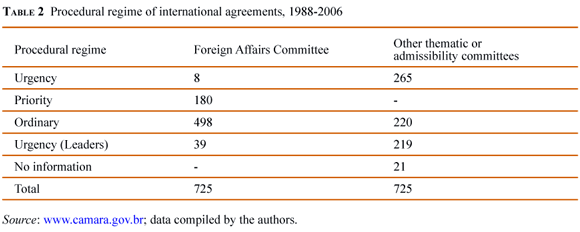
The urgency, priority and ordinary regimes are determined by the Mesa Diretora at the moment of distribution of the messages. In turn, urgency requested by party leaders expresses the intention of the government and/or the pro-government bloc of speeding up deliberation of a matter or of removing it from the reach of the committee where it is at that moment.
A pertinent question is: what motivates party leaders to resort to the urgency mechanism? We can list the following possibilities:
parliamentarians are not interested in the matter and let it make its way indefinitely;
in the event of a divergence of interests, not deliberating may be a strategic recourse of greater significance than taking the proposal to a vote to reject it;
urgency can also result from a certain expectation of the Executive regarding the behaviour of the Legislative.14
It is impossible to predict the exact reasons why urgency is requested. Maybe the fact that parliamentarians are delaying a decision, or perhaps fear on the part of the Executive that the parliamentarians who sit on the committee might create some kind of difficulty. However, the occurrence of urgency requests is a clear sign that the Executive had an interest in the approval and the Legislative, for lack of interest or divergence of interests, was delaying the decision.
Taking the proposition to the Plenary for deliberation via an urgency request is an effective way for the Executive to be successful in its preferences. It leads to a mobilization of the pro-government coalition to ensure the approval. This mobilization may not be enough to demonstrate the interest of the Legislative (or at least of those who make up the pro-government caucus) in such questions, but neither will it be possible to use it as an argument to show disinterest.
We return to the question of how to evaluate the interest, or lack thereof, of the Legislative in foreign policy. One possible indicator is the partial approval or the approval with reservations of PDLs. We have already seen that there are few cases (49), but even so it is an indicator worth using.
The analysis of the content of the reservations made by the Legislative revealed that in most legislative decrees, parliamentarians sought to safeguard their prerogatives as set out in the Constitution, including an article stressing that whichever acts meant to revise agreements approved or complementary adjustments require the approval of the National Congress.
The PDLs relating to nuclear questions are also examples of legislative action geared to ensuring functions already guaranteed in the Constitution. In line with the CF-1988, one began including a clause restating that any nuclear activity on national territory will only be admitted for peaceful ends and with the approval of Congress.
Among the PDLs approved with reservations, beyond the abovementioned safeguards, we found some cases of specific suggestions as to the terms of international acts, which were not particularly controversial. An example is the Protocol of Educational Integration and Recognition of Certificates, signed by Brazil and the other member-states of Mercosul, plus Bolivia and Chile.
Deputy Roberto Jefferson (Partido Trabalhista Brasileiro - PTB [Brazilian Labour Party]), rapporteur of the PDL at the CRE, added a reservation, suggesting that to ensure implementation of the Protocol, "the Ministers of Education of the Mercosul will endeavour to incorporate minimum curricular content of History, Geography and the languages of each of the states-parties, organized by means of instruments and procedures agreed by the authorities of each of the signatory countries".15
]]> Another example is the Brazil-USA agreement on cooperation between their economic competition authorities. The broad guidelines of the agreement are: a) the establishment of a system of notification of anti-competition practices affecting both parties; b) the possibility that one of the parties requests from the other an investigation into a practice that took place on the latter's territory, with possible effects on the former; c) suggests coordination of the activities of pertinent agencies, in the case of investigations conducted by the two parties, creating mechanisms of cooperation and coordination for this purpose; d) establishes a system of consultations between the agencies and regular meetings between the authorities; and e) sets out the possibility of technical cooperation.In order to produce the report, Deputy Carlos Pannunzio requested from the Chamber's Legislative Consultancy a comparative study of Brazilian and US legal texts mentioned in the agreement itself. The conclusion of his opinion is that the agreement does not collide with the current norms of our system, and is meant to establish channels of understanding and cooperation with the USA, while maintaining intact the domestic norms of the parties. However, among the Brazilian legislation mentioned, the rapporteur's understanding is that Provisional Measure (MP) 1567/97, which relates to the regularization, administration and sale of Federal real estate, does not have any correlation with the matter covered by the agreement. Hence the reservation, suggesting that this MP be excluded form the text.16
In two other agreements, one signed with Ecuador and the other with Peru, about the provision of technical support to the operations of the Military Observers' Mission, specific reservations were raised due to the fact that the original texts mentioned the Minister of the Army. At the moment of the PDL's examination, the referred ministry had become the Army Command, subordinated to the recently created Ministry of Defence. The reservations presented suggest that the competencies attributed to the former ministry be passed over to the Ministry of Defence.17
The Legislative also presented reservations to the approval of the Inter-American Convention on Serving Criminal Sentences Abroad, concluded in Managua on 9 June, 1993.
The reservation related to section II of article 7, which states that the sentence of a transferred person will be served according to the laws and procedures of the receiving state. Joining the Convention would also entail the possibility of applying whichever measures relating to the reduction of periods of incarceration or alternative serving of sentences.18 The position of the rapporteur, Deputy Joaquim Francisco, was that Brazil should not accept the hypothesis of the reduction in custody periods or the alternative serving of sentences, for which reason section II of article 7 received reservations.
Another agreement that was the object of reservations on the part of the Legislative, deals with the rights and privileges on Brazilian territory of the Latin American Physics Centre. Article 7 of the agreement states: "the locations, properties and correspondence of the Centre are inviolable and cannot be the object of search, requisition or legal sanction measures". The rapporteur of the matter, Deputy Eliel Rodrigues, opined that this article could be prejudicial to national sovereignty and interests in terms of the results of the studies and of the research conducted by the Centre. According to the rapporteur, the reservation made to the legislative decree aims at guaranteeing to the Brazilian government free access to the results of the studies and research projects of the Latin American Physics Centre and their applications. Further, he suggested that the Brazilian government, on the occasion of the agreement's revision, negotiate with the other signatories the insertion of the referred clause, as a safeguard to national sovereignty.19
International Labour Organization (ILO) Conventions provide cases that exemplify not only more active legislative work but also the influence of other actors in the process of deliberation of international acts in this sphere of jurisdiction.
The Executive forwarded to Congress the ILO Convention relating to night work and the Additional Protocol that bans night work for women.
A 1990 order of the Ministry of Labour created a tripartite (government, business and workers) committee to discuss the two instruments. In April of the following year, this committee concluded its work, suggesting the approval of the Convention (with the business representatives voting against) and the rejection of the Protocol, as it was considered discriminatory against women.
At the CRE, Deputy Sandra Starling was appointed rapporteuse. Her report fully endorses the deliberation of the tripartite committee, stressing that whichever acts that might result from the referred Convention would be subject to deliberation by the National Congress.
]]> The remaining cases of international acts that had some sort of objection from parliamentarians are more complex and require more detailed information. We begin our approach with the Convention for the Suppression of Unlawful Acts against the Safety of Maritime Navigation and the Protocol for the Suppression of Unlawful Acts against the Safety of Fixed Platforms Located on the Continental Shelf.These international acts, according to rapporteur Deputy Fernando Gabeira20 display some rather polemical aspects. The following are the controversial points and reservations:
1) establishment of the jurisdiction of one state over the illegal acts committed:
The act amounts to the concession of extraterritorial power to a state, thus hurting the jurisdiction of another. If we give up the exclusive prerogative of trying crimes that occurred on our territory, as well as hurting our national sovereignty, we will disrespect the norms and convictions of Brazilian society, such as non-application of sentences of life imprisonment or death, both of which exist in other countries. Brazil must not recognize this instrument and, therefore, we suggest a reservation on this matter.
2) the power conferred upon ship captains to hand over suspects to the authorities of any state-party:
The instrument gives ship captains the possibility of handing over any person, in any country, on the basis merely of "reasonable motives" — and we do not know what these may be — to undergo investigation, be sued or even tried. A person may find him/herself arrested in another country, without resources for a proper defence and submitted to laws he/she does not understand, which, by itself, amounts to an absurd, "Kafkaesque" situation. Although certainly approved and already in practice in other countries, we cannot accept that Brazil should agree with an arbitrariness resulting from the formulation of a norm such as this; hence our reservation.
3) recognition of the obligatory jurisdiction of the International Court of Justice to settle controversies between the states-parties as to the interpretation or application of the Convention and of the Protocol:
]]> Article 16 of the Convention rules on the resolution of controversies between states-parties, stipulating, firstly, a negotiation, then arbitration and, lastly, in case of disagreement as to the organization of the arbitration, submission of the dispute to the International Court of Justice. In this case, the problem rests in Brazil's non-recognition of the obligatory jurisdiction of the International Court of Justice, as the Minister of External Relations himself reminded us in his presentation of motives, which also suggests the presentation of a reservation to this item.
Given the above, the legislative decree approved found in favour of approval of the texts of the Convention and Protocol with reservation for item 1 of article 6, article 8 and item 1 of article 16, which deal with the abovementioned aspects.
Another case that was the object of reservations by the Legislative was the Vienna Convention on the Law of Treaties, of May 23, 1969. The rapporteur, Deputy Antonio Carlos Mendes Thame, highlighted the implications of the approval of the PDL without the due reservations. The controversial points were articles 25 and 66. The former refers to the coming into force and the provisional application of treaties. Its first section states: "A treaty or a part of a treaty is applied provisionally pending its entry into force if: (a) the treaty itself so provides; or (b) the negotiating States have in some other manner so agreed."21
According to the opinion presented, this diagnosis cannot be accepted by the Brazilian state, given its incompatibility with the Constitution:
With extremely rare exceptions, due to constitutional measures currently in force, Brazilian Law does not admit the provisional application of a treaty, since for Brazil to commit itself internationally the previous assent of the National Congress is indispensable. Along the same lines, upon ratifying the Vienna Convention, the republics of Colombia, Costa Rica and Guatemala manifested reservations to article 25, arguing that its content is not in line with their respective constitutional texts.
Article 66 regulates the process of legal solution, arbitration and conciliation. According to the rapporteur, this is the most controversial instrument. Article 45.3 of the Convention states that in case the parties to a treaty cannot agree on its validity, they must resort to the means of controversy resolution forecast in article 66. According to this instrument, any of the parties in a controversy about the application or interpretation of treaties may submit it to the International Court of Justice, in addition to and by common agreement, to arbitration or to the Conciliation Committee described in the Annex to the Convention.
The question of the obligation of submitting oneself to the decisions of the International Court of Justice, mentioned in article 66, brings old discussions back to life. At the time when such questions emerged, there was no consensus on the matter — giving rise to the so-called "optional clause of obligatory jurisdiction" —, to which Brazil did not associate itself.
According to the rapporteur's opinion:
]]> Against the International Court of Justice there remains its impossibility to compel states with a veto on the UN Security Council to respect its judgements. Just to illustrate the point, one might mention the recent controversy between the USA and Nicaragua. Having lost the case, the former simply ignored the Court's sentence even though it is a signatory to the optional clause of obligatory jurisdiction.
Two other cases, as well as exemplifying situations in which parliamentarians took up clear positions on the issue under deliberation, also show how foreign questions can rebound on the domestic policy plane.
The first refers to the Agreement of subscription to shares in the Andean Development Corporation (CAF).
The CAF is a multilateral financial institution headquartered in Caracas founded in 1970. It aims to provide financial services that promote and stimulate the process of integration and the economic and social development of its member-countries.
Member-countries may take out loans to the tune of up to four times their stock in the corporation for non-regional projects (i.e., of the borrowing country's exclusive interest) and of up to eight times that amount for projects of regional integration with Andean countries.
The Agreement was approved by the CRE without reservations. It was forwarded to the Finance Committee, where the rapporteur was of the opinion that the Agreement had an impact on the federal budgetary laws, as well as requiring an evaluation as to its adaptability to the multi-year plan and the law of budgetary guidelines. Let us look at the reasons.
According to Deputy Vignatti's22 opinion, Brazil overshot its loan limits, making it necessary to increase its stake in the CAF to make it possible to fulfil the contracts signed and keep open the possibility of undertaking new operations.23
To that end, the Brazilian government formalized a new agreement of subscription to ordinary capital shares in CAF, to be paid in two instalments, the first, worth US$ 24,964,850.00, to be paid within 90 days of the decree's publication; and the second worth US$24,976,700.00 to be paid within 12 months of the same date. In the 2003 budgetary bill, R$ 62.913.942,00 were set aside to make the first payment, using the budgetary dollar rate adopted for the formulation of that year's budget.
According to the opinion, there was a budgetary provision only for the first instalment. As for the second, the budgetary equating would be carried out in 2004 by means of the inclusion of the respective amount in the budgetary law.
For these reasons, the following message was included in the PDL:
]]>The text of the Convention of Subscription to 4,603 shares of the "C" Series of the Ordinary Capital of the Andean Development Corporation – CAF is approved, with the Executive being charged with paying still in 2003 the first instalment of the new share subscription agreement, as well as with including in the 2004 budgetary bill a specific sub-title with sufficient resources to carry out the second payment of the share subscription, as forecast in the Agreement.
Another case involving budgetary issues was the International Cospas-Sarsat Programme Agreement (ICSPA), which aims to search for and rescue aircraft and ships involved in accidents by means of satellite signals. It so happens that the terms of adhesion came with a request for an annual payment of US$10,000.00 to the Ministry of the Air Force so as to allow for the new financial obligations that resulted from joining the Agreement.
The opinion of rapporteur Sérgio Guerra considers that, as regards the merit, the reasons listed by the Minister of the Air Force and taken on board by the CRE were enough for the proposition to be considered opportune and advantageous for Brazil. However, with regard to the budgetary credit, the rapporteur had the following to say:
The concession of a credit worth US$10,000.00 to the Ministry of the Air Force budget is absolutely deprived of constitutional grounding and, consequently, of the related legislation, for, as well as forecasting resources budgeted in a foreign currency, it creates the figure of the annual, fixed, permanent budgetary earmark, and, furthermore, does not indicate the source of the resources for this purpose.
The PDL approved hence states that "the Executive Branch will include in the proposed general budget of the Union, forwarded annually to the National Congress, the necessary budgetary funds for the fulfilment of the financial obligations resulting from the adhesion to which article 1 of the decree refers."24
So far, we have seen cases where the Legislative actually manifested itself about international acts forwarded to it for deliberation. In the next section, we present other items of information on the passage of PDLs that we judge to be important for one to have a better understanding of the attributions of the Legislative as regards foreign policy questions.
The Deliberation of PDLs in the Decision-making Forums of the Chamber of Deputies
]]> It is widely known that the decision-making process in the Brazilian Congress is centralized in the Mesa Diretora25 and the Colégio de Líderes,26 which neutralizes possible advantages of the organization of legislative work into committees, such as gains of specialization on the part of parliamentarians, for instance.27One of the consequences of this centralization is the lower level of autonomy that the Legislative has to perform its functions, in a context in which the Executive is endowed with prerogatives that favour its bills, such as the capacity to determine the time of passage of its proposals or of those considered by it to have priority, via constitutional urgency or through urgency requested by the party leaders, and the use of provisional measures.
The 1988 Constitution tried to make sure the Legislative would have more room for its work, via the committee system, by adopting the so-called "conclusive power". This is an instrument that allows the deliberation of a proposal to conclude at thematic committee level, without the need for deliberation by the Plenary, unless an appeal is made against the committee's decision. However, according to Figueiredo and Limongi (1999), this instrument has a very small effect on the legislative process, and in the specific case of the propositions being analysed here it is not even used.
As we have seen, the Foreign Affairs Committee (CRE) is the first body to have a say in the deliberation of an international act. Our follow-up of the passage of PDLs indicates that there are significant differences regarding the work of the Legislative when comparing the deliberative process within the CRE with that of other committees in relation to two aspects: the raising of reservations and the procedural regime.
As for the former, the data indicate that most reservations presented did not originate at the CRE, but from other committees (merit and admissibility). At the CRE, only six international acts underwent some kind of reservation. Since the committees have specific jurisdictions, maybe the low rate of reservations was owed to the fact that the items in question fell into the field of jurisdiction of another thematic committee, rather than the CRE.
Another aspect that draws one's attention is the fact that the CRE tended to deliberate via the ordinary and priority procedural regimes, i.e., regimes that permit deliberation over longer periods. As shown by Table 3, the situation is inverted in the case of the other decision-making spaces, where there is more frequent recourse to so-called urgency regimes.
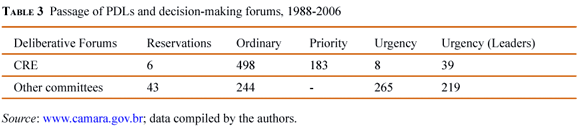
]]> The scarcity of studies both on the permanent committees and on the decision-making process of international acts at legislative level makes it difficult to explore more fully the previous indications. However, we believe it is worthwhile to put forward the following question. Why were the mechanisms that speed up passage (urgency requests) used so seldom in this Committee? Maybe the answer can be found by means of an analysis of its party make-up. A committee made up of a disciplined pro-government majority does not require mobilization via urgency requests from the Presidency of the Republic or pro-government party leaders. An in-depth study of the CRE itself, its composition and activities in the deliberative process could provide a significant contribution to this debate.
An argument that recurs in studies that point out the problems emanating from greater Legislative participation in foreign policy questions refers to the moroseness of parliamentary deliberation.
In the period under analysis, some 59% of the PDLs approved made their way through the Chamber in up to a year and a half. We also found that the longer period of passage is related to the number of decision-making spaces. The need for consideration by various committees is a consequence of the interdisciplinary nature of international themes, as observed by Maia and César (2004, 375), and the "porosity of the border dividing the domestic and international ambits means that subjects that have an interface with foreign affairs are dealt with at various committees".
There are PDLs that made their way through three committees (two of merit and one of admissibility). One of the consequences of this fragmentation in the examination of PDLs is that the larger the number of players in the deliberative process, the greater the cost and the longer the period of deliberation. Given the interdisciplinary nature of international acts, restricting deliberation to the CRE perhaps is not the best path to take. One may gain in terms of speed, but one loses in terms of a more careful analysis of international acts. As demonstrated earlier, most of the reservations to the PDLs were formulated beyond the CRE's confines.
Still with reference to the time of passage, the PDLs that underwent faster deliberation were examined during the first term of President Fernando Henrique Cardoso (FHC). It is worth stressing that this administration can be considered a mark in terms of the number of PDLs approved by Congress.
The highlight of President Lula's administration is the approval of PDLs that had been making their way through Congress for longer, which confirms the statement by Minister Celso Amorim (Folha de São Paulo, December 30, 2007, A14) that the Lula government concluded agreements "that had been put off for many years and that today establish, in practice, a free-trade area in the region [Latin America]". Table 4 presents data referent to the time of passage of PDLs.
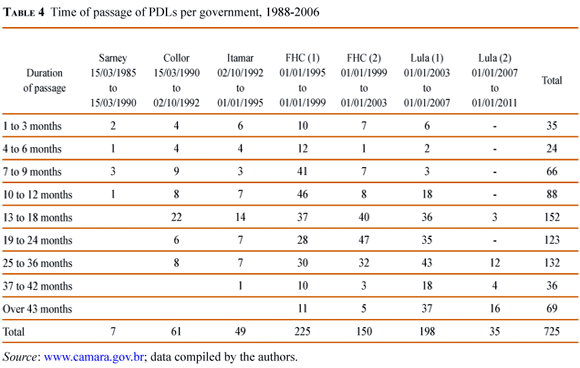
]]> In short, although we do not have a parameter to consider the passage of a PDL speedy or not, the fact is that 50% of them were deliberated upon in up to 18 months. If one considers that the domestic congressional agenda (examination of provisional measures, including the possibility of the agenda of the House being "locked", parliamentary inquiries etc) always asserts itself over the foreign congressional agenda, one is forced to recognize that the criticism levelled at the Legislative for its moroseness in the deliberation of international acts lacks solid grounding.
The information presented here also seeks to highlight the fact that the format of the legislative organization is also a fundamental variable to be taken into consideration in the analysis of the foreign policy activity of the Legislative Branch, interfering in the time of examination of international accords and in parliamentarians' capacity to influence — or not — their deliberation. We are referring to the passage of PDLs with urgency, which, given the characteristics of the decision-making process in Brazil, allows the Executive to have greater control over the deliberative agenda of the National Congress.
Conclusion
This article has aimed at contributing to the debate about the participation of federal deputies in Brazilian foreign policy. The analysis was based on the presidential messages referent to international agreements forwarded to Congress for deliberation between 6 October, 1988 and 31 December, 2006 and actually approved, i.e., those that fulfilled the whole procedure of passage and became legal norms. The choice of this source was owed to the fact that the analysis of presidential messages allows one to follow up and evaluate the process by means of which the Legislative acts in relation to foreign policy, through the tabling and deliberation of PDLs. Therefore, they constitute an institutionally established form of interaction between the Executive and the Legislative with respect to the country's foreign policy. They represent a map for all those interested in the activity of these two players in the decision-making process on international questions, through which it is possible to evaluate the weight of the domestic institutional arrangement on Brazil's international action.
In view of the attributions set out by the Constitution, much of the literature assumed from the start that the attitude of the Legislative in dealing with foreign policy issues was one of indifference, limited to endorsing or simply providing a seal of approval to the international acts negotiated by the Executive. There would remain a merely formal participation for the Legislative, for its power is restricted to ex post ratification of international accords developed by the Executive. This approach fails to take into consideration the distinction made by Martin (2000) between "action" and "influence". The absence of "action" — in the case in question, the small number of reservations presented — does not necessarily imply an absence of "influence".
Even though the activity of the Legislative is limited to approval, partial approval or rejection of presidential messages, we have found an aspect that is underestimated by the literature, that being the cooperation of the Legislative, which acts as a facilitating mechanism in the approval of an international act negotiated by the Executive. This mechanism gets translated into urgency requests on the part of party leaders. Its activation not only ensures that the PDLs get voted on, but also avoids possible veto points and resistance on the part of the Legislative.
The urgency request therefore challenges the perception that the Legislative does not take an interest in foreign policy questions. The activation of urgency makes it clear that in spite of the Executive's manifest interest in the approval of the matter, the Legislative — out of disinterest or divergence — delays its decision. As we have stressed, even though one cannot state that the urgency request reflects an interest of the Legislative in dealing with international matters, equally, one cannot put it down to disinterest either.
Having analysed the relationship between institutional factors and foreign policy, we submit that the Brazilian institutional model — identified by some authors as one of the main obstacles to the democratization of the country's foreign agenda — does not completely restrict the decision-making process on international acts to the Presidency of the Republic and the Ministry of External Relations.
The analysis of presidential messages referent to international accords forwarded to Congress for deliberation and their passage through the Chamber of Deputies revealed a broader spectrum of political participation than much of the literature points out.
]]> It follows that the analysis of foreign policy with domestic ratification as the starting level, based on the logic of two-level games, is totally feasible within Brazil's reality. As we have sought to demonstrate, the need to reconcile contradictory interests between the domestic and international arenas has in fact been imposed upon the Executive. On this point, the role played by the Legislative turns out to be substantial.If one has as a point of reference the conception that foreign policy takes shape in the effort to optimize national interests on the foreign plane, then one's analysis of it must take elements of the domestic order into account. Consequently, one would do well to incorporate into the analysis of Brazilian foreign policy variables that are basic for one to understand it and follow it up, such as the orientation of the regime, public opinion and the role of the Legislative.
Notes
1 The mensagem presidencial ("presidential message") is a document that forwards legislative proposals on the initiative of the Presidency of the Republic to the National Congress for its deliberation. Provisional measures and international agreements, for example, are accompanied by presidential messages.
2 The data were collected on 7 November, 2007 by means of a survey of the databases of the Chamber of Deputies and Federal Senate: www.camara.gov.br and www.senado.gov.br.
3 The provisional measure is a legal tool that allows the Presidency of the Republic to alter the status quo unilaterally. In 2001, the National Congress promulgated a constitutional amendment that sought to limit the use of such measures. The amendment established a 45-day period during which the parliamentarians must manifest themselves. After this, the rest of the legislative agenda is frozen until the deliberation of the provisional measure is complete.
4 Research conducted by Diniz (2005) demonstrates that the idea that such withdrawals are clear signs of Legislative resistance to Executive proposals can be a highly misguided one. On the other hand, research conducted by Alexandre (2006) on congressional actions in the foreign policy domain between 1985 and 2005 demonstrates that there was a divergence of interests between the Executive and the Legislative in the cases of 6 out of 22 withdrawn messages.
5 The author classifies the first two groups as political actors, whilst the third is considered a social actor.
6 The transitory measures of the 1988 Constitution stipulated a constitutional review for 1993. The review process failed. Of the 17,000 amendments formally tabled, only six were approved. For an excellent analysis of this debate, see Melo (2002).
]]> 7 See Fontanive (2007).8 Opinion of Deputy Aloísio Nunes Ferreira, annexed to Fontanive (2007).
9 According to Maia and César (2004, 378), the Mercosul Committee was created in 1996. The role of this committee is not the formal examination of international treaties, as is the case with the other committees. Its purpose is to follow up the evolution of the Mercosul, serving as a point of reference and information.
10 See article 52 of the Internal Regulations of the Chamber of Deputies.
11 Article 155 of the Internal Regulations of the Chamber of Deputies.
12 The same procedures as those described earlier in relation to the appointment of rapporteurs and the presentation and voting of opinions are adopted.
13 It is worth highlighting the fact that this survey was based on documents relating to the passage of PDLs. Research analysing the texts of the legislative decrees themselves may in future indicate more accurately the extent of approval, partial or not.
14 We thank one of our reviewers for having brought this aspect to our attention.
15 Rapporteur's opinion, accessed via PDL passage document: www.camara.gov.br.
16 Rapporteur's opinion, accessed via PDL passage document: www.camara.gov.br.
]]> 17 Diary of the Chamber of Deputies, November 6, 1999, 52652.18 Diary of the Chamber of Deputies, February 10, 2000, 7376.
19 Diary of the Chamber of Deputies, March 8, 1999, 1306.
20 Rapporteur's opinion, accessed via PDL passage document: www.camara.gov.br.
21 Rapporteur's opinion published in the Diary of the Chamber of Deputies, December 8, 1995, 8399.
22 Opinion of the Finance Committee rapporteur. www.camara.gov.br.
23 According to the rapporteur, the loans funded public sector projects, including the Brazil-Bolivia gas pipeline and the paving of highway BR-174, to the tune of US$422 million, and trade with countries of the Andean Community (US$616 million).
24 Diary of the Chamber of Deputies, November 20, 1991, 23728.
25 The Mesa Diretora is responsible for directing the House's legislative work and its administrative services. The President (Speaker) of the Chamber of Deputies is in charge of representing the House when it speaks collectively, of supervising its work and organizing the order of legislative business, following consultations with the Colégio de Líderes. See Internal Regulations of the Chamber of Deputies. www.camara.gov.br
26 The Colégio de Líderes is made up of the Leaders of the Majority, of the Minority, of the Parties, of the Parliamentary Blocs and of the Government. It performs the role of cooperating with the Mesa Diretora in the definition of Legislative priorities. The College constitutes one of the most important forums of discussion and political negotiation in relation to the propositions making their way through the Chamber of Deputies, especially with regard to which matters will go before the Plenary to be voted on.
]]> 27 On the functioning of the permanent committees in Brazil, see Santos (2002) and Ricci and Lemos (2004).
Bibliographical References
Alexandre, Cristina Vieira Machado. O congresso brasileiro e a política externa. Master's diss., Institute of International Relations, Catholic University of Rio de Janeiro (IRI/PUC-Rio), 2006. [ Links ]
Brazilian Constitution. (Constituição da República Federativa do Brasil (CF-1988)). 1988. Brasília: Senado Federal, Secretaria Especial de Editoração e Publicações, Subsecretaria de Edições Técnicas. [ Links ]
Diniz, Simone. 2005. Interações entre os poderes Executivo e Legislativo no processo decisório: avaliando sucesso e fracasso presidencial. Revista Dados 48 (2): 333-368. [ Links ]
Figueiredo, Argelina, and Fernando Limongi. 1999. Executivo e Legislativo na nova ordem constitucional. Rio de Janeiro: FGV. [ Links ]
Fontanive, Vicente Marcos. 2007. Estudo a respeito da elaboração de Proposta de Emenda Constitucional (PEC) visando alterar os artigos da Constituição Federal que tratam da apreciação dos Atos Internacionais, dando poderes ao Poder Legislativo de modificá-los. Consultoria Legislativa da Câmara dos Deputados, Brasília. www.camara.gov.br/publicações (accessed November 27, 2007). [ Links ]
Hill, Christopher. 2003. The changing politics of foreign policy. London: Palgrave Macmillan. [ Links ]
Hudson, Valerie. 2005. Foreign policy analysis: Actor-specific theory and the ground of International Relations. Foreign Policy Analysis 1 (March 2005): 1-30. [ Links ]
Kennan, George. 1984. American Diplomacy. Chicago: University of Chicago Press. [ Links ]
Kubálková, Vendulka, ed. 2001. Foreign policy in a constructed world. New York: M. E. Sharpe. [ Links ]
Lima, Maria Regina Soares de. 2000. Instituições democráticas e política exterior. Contexto Internacional 22 (2): 265-303. [ Links ]
Lima, Maria Regina Soares de, and Fabiano Santos. 2001. O Congresso e a política de comércio exterior. Lua Nova – Revista de Cultura e Política, no. 52:121-149. [ Links ]
Maia, Clarita Costa, and Susan Elizabeth Martins César. 2004. A diplomacia congressual: análise comparativa do papel dos legislativos brasileiro e norte-americano na formulação da política exterior. Revista de Informação Legislativa 41 (163): 363-388. [ Links ]
Martin, Lisa L. 2000. Democratic commitments: Legislatures and international cooperation. Princeton: Princeton University Press. [ Links ]
Mazzuoli, Valério de Oliveira. 2001. O treaty-making power na Constituição brasileira de 1988: uma análise comparativa do poder de celebrar tratados à luz da dinâmica das relações internacionais. Revista Brasileira de Política Internacional 44 (2): 82-108. [ Links ]
Medeiros, Antonio Paulo Cachapus de. 1995. O poder de celebrar tratados: competência dos poderes constituídos para a celebração de tratados, à luz do direito internacional, do direito comparado e do direito constitucional brasileiro. Porto Alegre: Sergio Antonio Fabris. [ Links ]
Melo, Marcus André. 2002. Reformas constitucionais no Brasil: instituições políticas e processo decisório. Rio de Janeiro: Revan. [ Links ]
Milner, Helen. 1997. Interests, institutions and information: Domestic politics and international relations. New Jersey: Princeton University Press. [ Links ]
Morgenthau, Hans J. 2003. A política entre as nações: a luta pelo poder e pela paz. Brasília: EdUnb, IPRI; São Paulo: Imprensa Oficial do Estado de São Paulo. [ Links ]
Neves, João Augusto de Castro. 2003. O papel do Legislativo nas negociações do Mercosul e da ALCA. Contexto Internacional 25 (1): 103-138. [ Links ]
Oliveira, Marcelo Fernandes de Oliveira. 2004. Atores políticos e Parlamento brasileiro no Mercosul. Leviathan – Cadernos de Pesquisa Política, no. 1:231-252. [ Links ]
Putnam, Robert D. 1988. Diplomacy and domestic politics: The logic of two-level games. International Organization 42 (3): 427-460. [ Links ]
Internal Regulation of the Chamber of Deputies (Regimento Interno da Câmara dos Deputados). 1989. www.camara.gov.br. (accessed November 27, 2007). [ Links ]
Rennó, Lucio. 2007. Críticas ao presidencialismo de coalizão no Brasil: processos institucionalmente constritos ou individualmente dirigidos? In Reforma política no Brasil, ed. Leonardo Avritzer and Fátima Anastásia, 259-269. Belo Horizonte: Editora da UFMG. [ Links ]
Rezek, José Francisco. 1973. Direito dos tratados. Rio de Janeiro: Forense. [ Links ]
Ricci, Paolo, and Leany Barreiro Lemos. 2004. Produção legislativa e preferências eleitorais na Comissão de Agricultura e Política Rural da Câmara dos Deputados. Revista Brasileira de Ciências Sociais 19 (55): 107-129. ISSN 0102-6909. [ Links ]
Santos, Fabiano. 2002. Partidos e comissões no presidencialismo de coalizão. Dados 45 (2): 237-264. ISSN 0011-5258. [ Links ]
______. 2003. O Poder Legislativo no presidencialismo de coalizão. Belo Horizonte: Editora da UFMG; Rio de Janeiro: IUPERJ. [ Links ]
Waltz, Kenneth. 2004. O homem, o estado e a guerra: uma análise teórica. São Paulo: Martins Fontes. [ Links ]
]]>
Submitted in February, 2008.
Accepted in October, 2008.
* We are immensely grateful to the valuable observations of BPSR's reviewers. We also wish to thank Amâncio Jorge Silva Nunes de Oliveira and Janina Onuki, with whom we had the chance to share some of the themes dealt with here.
]]>