André Borges
Federal University of Bahia (UFBA), Brazil
Replicated from Brazilian Political Science Review (Online), Rio de Janeiro, v.1, n.2, July/Dec. 2007.
ABSTRACT
Research on Brazilian federalism and state politics has focused mainly on the impact of federal arrangements on national political systems, whereas comparative analyses of the workings of state political institutions and patterns of political competition and decision-making have often been neglected. The article contributes to an emerging comparative literature on state politics by developing a typology that systematizes the variation in political competitiveness and the extent of state elites’ control over the electoral arena across Brazilian states. It relies on factor analysis to create an index of " electoral dominance" , comprised of a set of indicators of party and electoral competitiveness at the state level, which measures state elites’ capacity to control the state electoral arena over time. Based on this composite index and on available case-study evidence, the article applies the typological classificatory scheme to all 27 Brazilian states. Further, the article relies on the typological classification to assess the recent evolution of state-level political competitiveness. The empirical analysis demonstrates that state politics is becoming more competitive and fragmented, including in those states that have been characterized as bastions of oligarchism and political bossism. In view of these findings, the article argues that the power of state political machines rests on fragile foundations: in Brazil’s multiparty federalism, vertical competition between the federal and state governments in the provision of social policies works as a constraint on state bosses’ machine-building strategies. It is concluded that our previous views on state political dynamics are in serious need of re-evaluation.
]]> Keywords: Federalism; state government; political competition; social policy; clientelism.
Introduction
After the return to democracy in the 1980s, Brazilian subnational governments started to play an important role in national political coalition-making and in the implementation of a wide range of social and economic policies. Political and financial decentralization empowered state and municipal actors and institutions, transforming Brazil into one of the most decentralized federations in the world. The key role of subnational political systems in Brazilian democracy notwithstanding, comparative research on subnational and, especially, on state governments, remains a relatively underdeveloped field of inquiry. Scholarly work has been more concerned with " scaling-up" to understand the impact of the " new federalism" upon democratic institutions at the centre, than with " scaling-down" to account for the workings of state political institutions and patterns of political decision-making (Ames 2001; Mainwaring 1999; Samuels and Abrucio 2000).
In recent years, this empirical gap has been partially addressed by a series of comparative studies that have furthered our understanding of state institutions, party systems and public policies (Desposato 2001; Santos 2001; Schneider 2001; Souza and Dantas Neto 2006). Contrary to pioneering research on state politics, which emphasized the pervasiveness of clientelism and the " executive-centric" nature of decision-making as general features of Brazilian state governments (Abrucio 1998; Hagopian 1996), comparative analyses have indicated that subnational political systems differ widely with regards to executive-legislative relations, patterns of political coalition-making and policy formulation.
The article contributes to this recent literature by examining comparatively the evolution of state-level patterns of political competition over the course of the post-democratization period. It demonstrates that the return to democratic rule witnessed the emergence of variegated patterns of political competition at the state level. Whereas in some cases a few political bosses succeeded in restricting the scope of competition, in others, democratization led to rapid and intense processes of political fragmentation, and the potential for elite dominance remained low.
The article explores these issues by developing a typology that systematizes the variation in political competitiveness and the extent of state elites’ control over the electoral arena across Brazilian states. The typological classification of state political systems is then employed as a comparative yardstick to assess the evolution of state-level political competitiveness over the course of the 1990s and, especially, from 1998 onwards. The empirical analysis demonstrates that the growth of leftwing parties, in parallel with the decay of old bosses and their once-dominant party machines, have been rapidly transforming low-competitiveness states’ political landscape during recent years. In view of these findings, the article argues that the power of state political machines rests on foundations more fragile than previously thought: in Brazil’s multiparty federalism, vertical competition between the federal and state governments in the provision of social policies works as a constraint on the construction of stable state patronage networks over time.
Post-democratization State Politics: Political Continuity and Change
]]> The conventional interpretation of post-democratization state politics in Brazil has emphasized aspects of political continuity from authoritarian to democratic politics, as to the consolidation of a pattern of political decision-making characterized by an excessively powerful executive, weak parties and pervasive clientelism. Students of federalism and subnational politics within this approach have concentrated on the persistence of less-than-democratic and anti-republican practices at the state level, the restoration of free and competitive elections notwithstanding (Abrucio 1998; Ames 2001; Hagopian 1996).Contrary to this interpretation, the article argues that political democratization created strong pressures towards the fragmentation of political forces and the weakening of oligarchic patterns of competition, and that political continuity between authoritarian and democratic rule in terms of state elites’ control over state institutions was a feature present in some but not all the states. Besides, even though it is possible to argue that by the late 1990s one could still find state political systems characterized by the presence of dominant bosses and party machines, these political structures are rapidly fading away in the wake of institutional and political changes discussed in greater detail in section 5 of the article.
As noted by Santos (1998) the recent experience of democratization differs from the 1945-1964 democratic period in that socio-economic change and the extension of political rights to a larger share of the population interacted to produce increasingly competitive elections. Given the exponential growth in the number of voters and candidates, election results became increasingly unpredictable. As a matter of fact, available data on the effective number of parties, candidate/seat ratio and rates of electoral renewal in state assemblies and in Congress demonstrate an accentuated turnover of political elites and the intensification of political competition from 1982 onwards (Santos 1998: 183).
Although Santos’ (1998) analysis is concerned with broader trends and not with the identification of specific patterns of political competition at the state level, it does provide some clues to understanding why state-level political systems differ. This study argues that the fragmentation of political forces and the intensification of electoral competition occurred more rapidly and intensely in some states than in others.
Political democratization did not occur, in other words, as a linear, homogeneous process across the Brazilian territory. In some cases, powerful political bosses retained great leeway in controlling access to political office, narrowing the political arena and restricting the number of meaningful participants in the democratic game. In other cases, conversely, political fragmentation occurred early on, and state elites’ capacity to control the arena eroded rapidly in the wake of the implosion of oligarchic structures of competition.
In the following section and in section 3, I concentrate on the analysis of the variegated patterns of political competition that emerged in the immediate post-democratization period and arguably lasted until the late 1990s. In sections 4 and 5, I look at the transformation of these patterns, mainly within the least-competitive group of states, and develop a number of hypotheses to account for political change.
State Government and the Scope of Political Conflict
Where state political bosses were successful in slowing down post-democratization processes of political fragmentation and intensification of electoral competition, one should expect to find political systems characterized by the narrow concentration of power, restricted access to decision-making and regulated political competition. What differentiates these political systems from the rest is not the presence of a ruling " traditional elite" , but rather the dominance of powerful political machines, whose control over a wide range of material and specific inducements allows for a substantial centralization of power in the hands of the machine bosses.1 I add the adjective " dominant" to the term " political machine" to make explicit the fact that I am referring to a situation where the same political group secures persistent and centralized control of both the executive and legislative branches of government, extending the reach of vertical and hierarchic controls to other institutions and political processes as well.
In other instances, political continuity from authoritarian to civilian rule did not lead to the formation of a single, dominant machine, despite the persistence of a system of restricted competition. Elite circulation and renovation in these polities was dependent on the changing coalitions and conflicts involving competing factions led by a very small clique of political bosses. The regulated nature of competition in these states was evident in the fact that access to the governorship was controlled, de facto, by competing oligarchies. These states may thus be described as cases of " oligarchic factionalism" .
]]> The " dominant machine" and " oligarchic factionalism" types are distinguished from the remaining systems due to the restriction of the scope of political conflict. This definition follows of state control based on clientelism and corporatism, and severe restrictions to effective political competition. Thus, in those states where these barriers were most effectively overcome after the return to democracy, one should observe a substantial broadening of the scope of political conflict due to the intensification of political competition and the proliferation of various competing societal organizations.In more specific terms, the scope of political conflict is understood here as being inversely related to governing elites’ capacity to control both the electoral arena and the decision-making process, restricting the political incorporation of competing groups and elites and slowing down post-democratization processes of political fragmentation and intensified electoral competition. In the least-competitive states, strong executives and weak opposition parties and societal groups express the low degree of pluralism and the limited scope of the political arena.
I contrast these political systems, where a few political bosses have a gate-keeping effect upon political competition, with those states marked by substantial political fragmentation and intense electoral competition, classified as " pluralist" . " Pluralism" is defined as a situation where opportunities for forcefully limiting and controlling the scope of conflict are low, due to the proliferation of and competition between political organizations that are relatively autonomous from each other. Highly competitive elections, elite fragmentation and relatively weak state executives are major traits of these polities.
I define two sub-types of pluralism, according to levels of inter-elite conflict. " Conflictive pluralism" is characterized by the organization of political competition across reasonably clear ideological lines, and substantial political fragmentation. Alternation in power between sharply opposed ideological blocs is likely to be observed, reflecting the intensity of conflict among political elites. The divisive and fragmented nature of the political system reflects the breadth of the scope of political conflict, as incumbents must negotiate with a myriad of competing political organizations to implement their policies.
Coalescent pluralism is differentiated from conflictive pluralism due to much lower levels of inter-elite conflict. Although these political systems also display a reasonable dispersion of power, elite behaviour is much more coalescent, leading to greater possibilities for bargaining and coalition-formation. To employ Sartori’s (1976) terminology, political competition in these systems is characterized by centripetal tendencies, as parties seek to occupy the centre of the ideological spectrum rather than appealing to extreme ideological positions.2
Even though it is being assumed here that ideological divergences play a more important role in the conflictive-pluralist states, as compared to others where the left is not as strong, this is not the same as assuming that voters are necessarily more " ideological" and partisan. As indicated by Mainwaring’s (1999, pp. 173-178) analysis of party ideology in the Chamber of Deputies, ideological conflict among (national) political elites in Brazil is not paralleled by polarization at the societal level because voters do not make choices according to ideology, and party identification is low. This is not a problem for the typology developed in this paper, though, because it focuses on the impact of polarization on patterns of elite conflict and coalition-making and not on the more complicated issue of voting behaviour.
Classifying State Political Systems
To classify the cases according to each of these four ideal types, I have developed a composite index of " electoral dominance" , understood as the extent to which a given state political system comes close to a situation where a single party machine dominates. The higher the scores obtained, the higher the probability that a state fits the " dominant machine" type (and hence that electoral competition is restricted), the opposite being true for the states displaying low scores. The index was employed mainly to rank-order the states and set some minimal criteria to classify the cases. In addition to the electoral dominance index, I looked at the extent of left polarization (average share of seats controlled by the left), mainly to separate the conflictive pluralist states from the other groups.
Based on the electoral dominance ranking, I selected the cases located at the extremities of the distribution (1st and 4th quartiles) for a more detailed, comparative analysis relying on available case-study evidence whenever possible. After classifying the " extreme" cases, I examined the states located in the intermediate categories (2nd and 3rd quartiles). The classification of the latter cases was based on a process of " intuitive clustering" : I grouped the cases according to their similarities/differences relative to the most- and least-competitive states located at the extremities of the distribution.
]]>The index of electoral dominance
The composite index of electoral dominance comprises three separate indicators: the percentage of the total vote for the governor’s party (1st round), share of state legislative seats controlled by the governor’s party and an index of political continuity that measures governors’ ability to win re-election or be succeeded by a candidate from the same party over time. All the indicators were calculated as averages for the period 1982-1998, with the exception of the political continuity index.3
The 2002 and 2006 elections were not included in the analysis because, as I demonstrate in section 4, state politics have become much more competitive and fragmented since the late 1990s, and the gap between the least- and the most-competitive states is rapidly decreasing. Thus, considering that state structures of political competition have become more fluid in the post-1998 period, I decided to exclude the last two elections.
The inclusion of the 1982 and 1986 elections might be questioned due to the fact that they occurred under different electoral rules and with a party system different from that which emerged from 1988 onwards. However, because the dominant machine states were mostly characterized by a substantial degree of political continuity between authoritarian and civilian rule, there existed good analytical reasons for including the democratic transition period.4
One of the main assumptions behind the electoral dominance index is that in the low competitiveness states political parties are heavily dependent on access to patronage resources controlled by the executive, meaning that the political opposition is generally weak and subject to co-option by the governing party or coalition. Even though political continuity is not necessarily synonymous with the presence of a dominant machine whose power is based on control over public resources, I demonstrate throughout the article that the states characterized by the highest levels of continuity are also, in most cases, the least-developed states, where there exist greater opportunities for machine-building strategies.
The impact of government policies on voters’ welfare tends to be higher in low-development settings, mainly because the economy is more dependent on government activities. This implies that the " electoral returns" of machine-style politics are also likely to be higher in the least-developed states (Diaz-Cayeros, et al., 2003; Stokes and Medina, 2002). Desposato’s (2001) comparative study of state party systems has revealed that opposition parties are, as a general rule, less cohesive and more subject to co-option by the executive in poorer states, mainly because state deputies’ political survival is more heavily dependent on their ability to deliver particularistic goods to their constituencies. Arguably, a similar situation of dependence vis-à-vis the state executive is observed in the case of local mayors, as in the low development states a substantial number of municipalities will have a limited tax-base and hence depend on discretionary transfers made by the federal and state governments to supplement their budgets (see Bonfim, 1997; Guimarães, 2000).
In such a context, chief executives may take advantage of their control over patronage resources to engineer electoral majorities, constructing resilient political machines. Not unusually, political continuity creates self-reinforcing processes, as the dominant coalition’s control over access to patronage for extended periods of time increases the opportunity costs of staying in the opposition, thus facilitating the co-option of dissident elites.
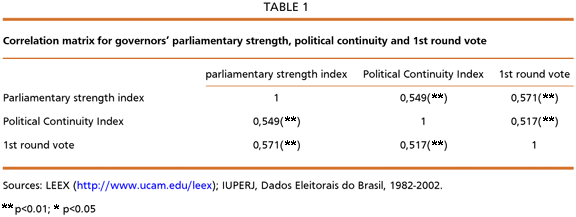
One of the potential results of this political dynamic is the creation of dominant party machines, as state bosses succeed in reducing the potential for meaningful opposition. As a matter of fact, it is possible to observe a positive relationship between state governors’ capacity to get their chosen successors elected over time (political continuity index) and the average share of legislative seats retained by the governor’s party (parliamentary strength index). Conversely, where alternation in power occurs regularly, the governor’s party is more likely to have a minority of the seats and broad coalitions are necessary to assemble a majority. The two indexes are highly and positively correlated: the Pearson coefficient for the two variables is 0.545 (p < 0.01).
As an additional indicator of the presence/absence of a dominant party, I calculated the average share of the total vote obtained by the governors’ party in each election held between 1982 and 1998 (1st round vote). The assumption here is that the low competitiveness states where a single party dominates should be characterized by a greater concentration of votes by the winning gubernatorial candidates, the opposite being true for the highly competitive and fragmented state political systems. This indicator is highly and positively correlated with the indexes of political continuity and parliamentary strength, which suggests that all three indicators are measures of a single underlying dimension (see the table below). Each of the variables might be interpreted as providing an indication of the extent to which state elites are able to secure the persistent control of the governorship, forming a dominant coalition.
]]>
Given the occurrence of moderately high levels of inter-correlation, I relied on factor analysis to reduce all three indicators to a single index of electoral dominance. The resulting composite index is made up of a single dimension, which explains 70% of the total variance. The component matrix below shows that all of the separate indicators are positively correlated with the composite index:
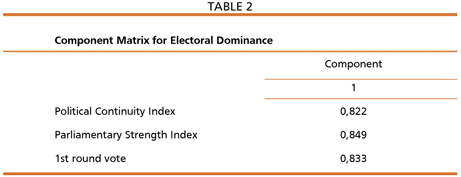
To facilitate the interpretation of the composite index, I set the median to 1. Hence, individual scores can be read as an indication of the distance between each state and the median. The transformed index of electoral dominance varies from –40.09 (most competitive state) to 43.68 (least competitive state). The state of Ceará received the highest dominance score and Rondônia the lowest. The state of Pará occupies the median position.
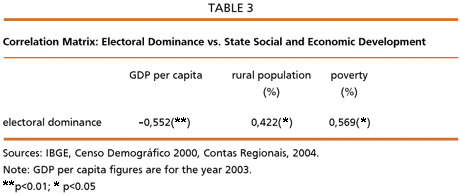
The table below presents simple correlations between the index of electoral dominance and a set of indicators of social and economic development (urbanization, rate of poverty and GDP per capita):
As seen in the table 3, the composite index of electoral dominance is correlated strongly and positively with the relative size of states’ rural populations and poverty levels, and it is negatively correlated with GDP per capita. These results are consistent with structural accounts of electoral politics, according to which uncompetitive, machine-style politics is more likely to emerge in poor and underdeveloped regions where voters are more dependent on government policies. Demographic characteristics are also important in this regard. In states where a substantial share of the electorate lives in rural areas and small municipalities, state bosses may count on a wide network of local brokers to mobilize voters and engineer electoral majorities. In more urbanized and populated regions, in contrast, politics is an activity that occurs under conditions of relative anonymity and local intermediaries play a less important role in voters’ choice (Desposato 2001; Diaz-Cayeros et al. 2003; Stokes 2005; Stokes and Medina 2002).
]]>
Although these arguments are widely accepted among students of state politics, they should not be overstated. One must note that a simple dichotomization between modern/competitive versus underdeveloped/uncompetitive states fails to account for political differences not directly related to social and economic development. Besides, as I argue in section five, even though a high level of poverty is often necessary for electoral dominance, it is hardly a sufficient cause. Hence, one should look at institutional and political factors that interact with socio-economic development in order to fully explain electoral dynamics at the state level.
The comparative analysis
I start the comparative analysis by focusing on the least-competitive group of states, located in the 4th quartile of the distribution.5 Applying this simple cut point, I obtained a list of six states: Bahia, Ceará, Goiás, Paraíba, Maranhão and Tocantins. With the exception of Goiás, all of the least competitive states are located in the poorer North and Northeast regions of the country, which is hardly surprising given the high correlations observed between electoral dominance, poverty and the relative size of states’ rural population.
Based on available case-study evidence and on the analysis of electoral data on each of these cases, I classified five of the cases as instances of the dominant machine type: Bahia, Ceará, Paraíba, Maranhão and Goiás. To separate these four states from the remaining cases within the least-competitive group, I adopted as a minimum threshold the presence of a single party winning the majority of elections held between 1982 and 1998 (index of political continuity >50). I also looked at case-study evidence to check whether these political parties were controlled by one single political elite over time or whether there was some sort of rotation in power among clearly identifiable political factions (in which case they might fit better the oligarchic factionalism type).
Bahia was a paradigmatic case of political continuity from authoritarian to civilian rule, as rightwing and formerly " autocratic" elites coalesced within a single dominant machine led by ex-governor Antônio Carlos Magalhães (Dantas Neto, 2006; Souza, 1997). Maranhão was rather similar to Bahia: the PFL machine controlled by the Sarney family was born and bred during the authoritarian years. However, the Sarney group was less successful in the consolidation of its hegemony, as a series of intra-elite splits throughout the 1980s and 1990s contributed to weaken the PFL and intensify electoral competition in both majority and proportional elections (Costa, 1997).
]]> In the state of Ceará, a centrist, business-led machine organized within the Brazilian Social Democratic Party (PSDB) dominated state politics for roughly twenty years from 1986. Even though the case of Ceará has been considered an example of " good government" promoted by reformist business elites and thus, different from the traditional variants of political bossism in Brazil (Tendler, 1997), research has demonstrated that the state was not very dissimilar from Bahia’s more conventional rightwing machine with regards to electoral dynamics. The so-called " young businessmen" relied on old-style patronage politics to construct a strong basis of support in the state’s poor interior and compensate for the oppositionist tendencies of the electorate of the state capital, Fortaleza (Bonfim, 1999; Tendler, 2000).6In Paraíba, elite accommodation within the PMDB machine secured the party an almost absolute hegemony in state politics: the PMDB won all gubernatorial elections but one between 1982 and 1998 (Ramos, 2000). Similarly to the case of Paraíba, politics in Goiás was controlled by the PMDB during most of the last two decades. The party relied on the charismatic leadership of ex-governor Íris Rezende to engineer systematic electoral majorities and obtain a share of state legislative seats close to 40% in every election between 1982 and 1994. Since 1998, however, the PMDB faced rapid decay, with the rise of competing centre forces organized within the PSDB.
The case of Tocantins was somewhat harder to classify. The history of the state since its creation in 1989 was marked by the charismatic and autocratic leadership of Siqueira Campos, who was elected governor twice between 1990 and 1998. However, differently from Antônio Carlos Magalhães in Bahia or Tasso Jereissati in Ceará, Campos was unable to organize a dominant party/coalition and was soon forced to share the political arena with other political bosses. Hence, the state was classified as a case of oligarchic factionalism.
Overall, the six states classified as instances of restricted scope of political competition display similar traits in terms of state elites’ persistent capacity to control the electoral arena and restrict the incorporation of new players into the democratic game. A rather contrasting picture emerges when one examines the states located within the most-competitive pole (1st quartile of the distribution): Amapá, Federal District, Minas Gerais, Rio Grande do Sul, Rio de Janeiro, Rondônia and Mato Grosso do Sul. These are political systems characterized by high-intensity electoral competition, highly fragmented party systems and the lack of political bosses and/or dominant political families.
The cases of Rio de Janeiro and the Federal District share a number of political and socio-economic characteristics that seem to answer for extremely high competitiveness levels. These are highly urbanized states (urbanization rates are higher than 90%), where a strong left has polarized competition (Desposato, 2001; Schmitt, 1997). Political competition between reasonably cohesive ideological blocs made incumbent elites weak and unable to exert control: both states have zero scores on the political continuity index.
Rio Grande do Sul is similar to these two states regarding the presence of a relatively strong political left (left parties controlled, on average, 30% of the seats in the assembly) and a low rate of political continuity.7 As noted by Schneider (2001), ideological polarization in Rio Grande do Sul has been associated with a conflictive pattern of political decision-making, as state governors have had to negotiate with a mobilized and relatively cohesive opposition in the state assembly.
Because the issue of party ideology measurement is a rather complex and controversial topic, it is important to make some brief remarks on the indicator of left polarization which is employed in the analysis. Figueiredo and Limongi’s (1999) ideological classification of Brazilian political parties is based on the analysis of voting patterns in Congress during a limited time period (1989-1994) and it may well fall short of recent changes in the Brazilian party system and differences in states’ political context. However, though the classification scheme employed here is somewhat limited, it serves the purpose of capturing differences in patterns of political coalition-making and competition across state political systems. As a matter of fact, the variation in left parties’ strength across states is associated with state governors’ ability to dominate, as predicted by the typological model. The average left share is negatively correlated with political continuity (r = -0.422, p <0.05) and with the index of governors’ parliamentary strength (r = -0.558, p<0.01).
Overall, the states of Rio de Janeiro, the Federal District and Rio Grande do Sul fit rather well the " conflictive pluralism" type. These political systems have been characterized by the traits of ideological polarization at the elite level and by relatively weak state governors, contrasting starkly with the dominant machine states.
Mato Grosso do Sul and Minas Gerais differ from the conflictive-pluralist states due to much lower levels of ideological polarization. Even though these states were characterized by low levels of political continuity, centre parties led the dominant coalitions and reduced the potential for polarization. Whereas the political left controlled, on average, more than one third of the state legislative seats in Rio de Janeiro, the Federal District and Rio Grande do Sul, in Minas Gerais and Mato Grosso do Sul these figures were substantially lower: 16.12% and 13.34% respectively. Political centrism was evident in the fact that political conflicts cut across ideological cleavages, leading to coalition-making patterns based on elite accommodation and coalescence.
Differently from the other four states in the most competitive group, which represent the most modern and urbanized regions of Brazil, Rondônia and Amapá are frontier, commodity-producing states, which developed mainly as a result of the colonization of the North region that started in the 1960s and 1970s. Both states were granted political autonomy very recently, in the late 1980s.
]]> Due to their recent colonization, the states of Amapá and Rondônia lacked the entrenched party machines that dominated many north-eastern states: voters as well as political elites came from all parts of the country, as a consequence of rapid and intense migration flows over the last three decades. Thus, the relatively high levels of political competitiveness in these two states probably express the lack of previously established political cleavages and identities.Political instability and volatility were especially evident in the case of Rondônia. According to Ames and Keck (1997), the state was a model of highly competitive politics between loosely defined alliances of politicians based on the distribution of particularistic goods. Political parties and coalitions were in a constant state of flux and state elites were unable to stay in power for long (the state received a score of zero on the political continuity index). Rondônia may be defined as a case of " unstable pluralism" , characterized by high-intensity and highly volatile political competition, without a clear " axis" to structure the formation of political coalitions.
Despite the similarities with Rondônia in terms of demographic characteristics and recent political history, Amapá exhibited many of the characteristics present in the conflictive-pluralist states: a relatively strong left, a low average of seats controlled by the governor’s party and elections structured around the left-right axis. Hence, it was classified as an instance of conflictive pluralism.
The remaining fourteen cases, located within the 2nd and 3rd quartiles of the distribution, displayed dominance scores ranging from 15.81 (Amazonas) to -11.40 (Roraima). As already indicated at the start of section 3, I discriminated between the cases based on their differences/similarities relative to the " exemplary" cases identified within the most- and least-competitive groups.
I started by looking at a group of five cases clustered above the median (electoral dominance scores ranging from 2.44 to 12.81). All five states — Sergipe, Mato Grosso, Piauí, Rio Grande do Norte and Amazonas — exhibited moderate to high scores on the political continuity index (>=40). Further examination of the cases demonstrated there were substantial similarities between these and the least-competitive, restricted-scope-of-conflict cases.
Rio Grande do Norte and Piauí fitted rather well the " oligarchic factionalism" type. Even though these states lacked a dominant party organization, gubernatorial and legislative elections had very low competitiveness (party fragmentation averaged 3.04 in Piauí and 3.38 in Rio Grande do Norte) and a small clique of political bosses was able to effectively control the entrance of new competitors into the democratic game, at least until very recently (Bonfim, 2004; Spinelli, 2006). Although Mato Grosso and Sergipe exhibited slightly higher levels of party fragmentation, politics in these states was also characterized by elite accommodation between highly personalistic political factions. Hence, they were also classified as instances of oligarchic factionalism.8
The case of Amazonas did not fit well any of the types, for it combined traits present in the most competitive states and in the dominant machine cases. For this reason, I decided to leave it unclassified.
Among the most competitive states within the intermediate section, there were two cases that fitted well the conflictive-pluralism type: Espírito Santo and Pernambuco. Politics in these states was highly polarized and marked by systematic elite conflict rather than accommodation. The northern state of Roraima displayed political characteristics similar to Rondônia’s and was hence treated as a likely instance of " unstable pluralism" . São Paulo was classified as an instance of " coalescent pluralism" , due to highly competitive gubernatorial elections and strong centre parties.
The group of states clustered around the median was the most heterogeneous of all. Pará and Paraná were classified as cases of coalescent pluralism, as both states were characterized by moderately competitive elections, low levels of polarization and strong centre parties. The remaining three states — Acre, Santa Catarina and Alagoas — displayed hybrid characteristics and did not fit precisely any of the types. Hence, I decided to place them in the unclassified list, together with the state of Amazonas.
]]> Classification results
The typology proposed in this article fits to a reasonable extent 21 out of Brazil’s 27 states. This suggests that the model discriminates well between state political systems. Four states could not be classified into any of the types, whereas the remaining two states (Rondônia and Roraima) were placed in an inductively-created type (unstable pluralism). The classification results are presented below:
The table 5 displays the average scores for each of the original four types on a set of selected indicators of political competitiveness and socio-economic development. As expected, the dominant machine states are the least competitive, displaying the highest average scores on the composite index of electoral dominance and on the political continuity index. The conflictive pluralist states are the most competitive, most probably as a consequence of higher levels of polarization, whereas the two remaining types occupy intermediate positions.
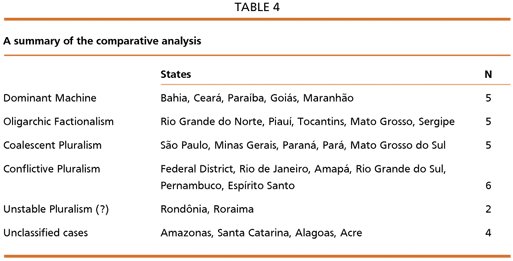
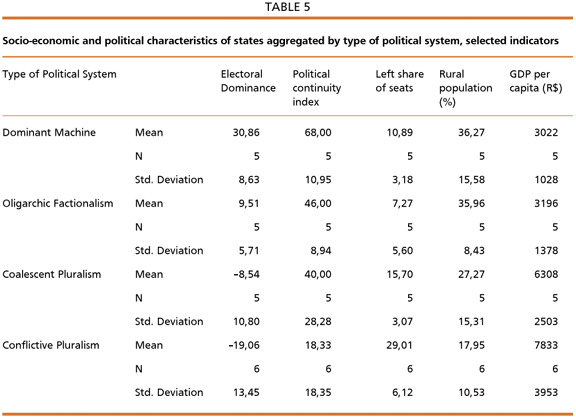
]]> The table 5 suggests that the typology might be interpreted as an ordinal scale, ranging from the highest level (dominant machine) to the lowest level of electoral dominance (conflictive pluralism). It is important to note, however, that there are rather marked political and socio-economic differences separating the states characterized by restricted scope of political conflict (dominant machine and oligarchic factionalism) and the pluralist states. The states in the first group display higher levels of electoral dominance, a much lower GDP per capita and more sizable rural populations as compared to the second group.
Recent Evolution of Political Competitiveness in the States
If on the one hand the four ideal-types undoubtedly account for some key, structural differences between state political systems, on the other, the patterns of political competition they describe cannot be seen as static, unchanging structures. As a matter of fact, there are important signs that state politics have become more competitive in recent years: since 2002, there has been a series of leftwing victories in gubernatorial elections in some of the low competitiveness states of the Northeast and traditional strongholds of the right such as Bahia and Piauí. The old bosses also suffered serious defeats to left and centre-left coalitions in Maranhão, Ceará and Sergipe in 2006.
In this section, I rely on the typological classification of state political systems as a comparative yardstick to assess the evolution of state-level competitiveness over the course of the recent democratic period. I start the analysis by looking at the evolution of the average share of seats by the governor’s party (governors’ parliamentary strength). I calculated the averages for each state for three periods: 1982-1990, which is used as a baseline for comparison, 1994-1998 and 2002-2006.
The cases were aggregated by type of political system. I did not include in the comparison the cases I was unable to classify in a specific type. I also excluded the two cases of unstable pluralism — Rondônia and Roraima. Though this case-selection strategy might seem arbitrary, it suits well the purpose of understanding political change within the least-competitive group of states. One can reasonably argue that the 10 states classified as instances of the dominant machine and oligarchic factionalism types constitute the relevant population of least-competitive states. Besides, assuming that patterns of competition are more firmly institutionalized in the coalescent- and conflictive-pluralist states as opposed to the cases of unstable pluralism and the hybrid, unclassified cases, the former should work better as control groups.
As shown in the table 6 the share of seats controlled by the governors’ party declined rapidly in the four groups, but at a faster pace within the least-competitive groups. As a consequence, the gap that separated the least-competitive group (dominant machine) from the conflictive-pluralist group decreased substantially.
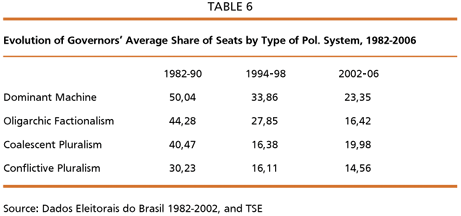
As one might have expected, the averages for the 1982-1990 period are much higher than for the subsequent periods due to the fact that the two-party system that emerged from the authoritarian regime was undergoing a process of reorganization, and several of today’s major parties, such as the PT and the PSDB, were too weak or inexistent outside the most developed regions of the country. It is also noticeable that the largest absolute difference between the least- and the most-competitive groups was found in the first period of the series, which indicates that the fragmentation of the political organizations created during the authoritarian years occurred at a slower pace in the former as compared to the latter group of states. Over the course of the 1990s, these differences became less remarkable, but the major change occurred in the 2002-2006 elections, when the gap between the least- and most-competitive states reached its minimum.
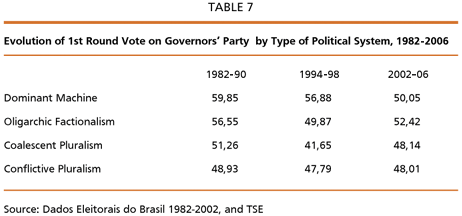
A somewhat similar story is told by the table 7, which shows the evolution of the 1st round vote for the governor’s party. The largest differences between the most- and least-competitive states were found in the 1982-1990 period. In subsequent elections, the dominant coalitions’ capacity to forge electoral majorities decreased continuously in the least-competitive group, to the point that the differences across groups became negligible by 2002-2006. In the most-competitive group (conflictive and coalescent pluralist states) the average 1st round vote varied only slightly during the whole period, which indicates that gubernatorial elections were affected to a much lesser extent by the fragmentation of subnational party systems during the 1990s.9
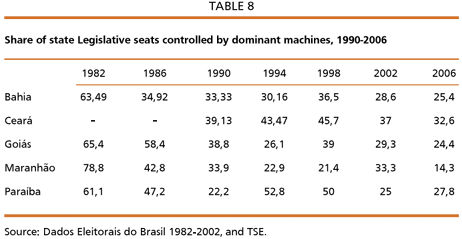
A trend directly related to the intensification of political competition at the state level is the electoral decay of dominant party machines. The table 8 shows the evolution of the share of seats controlled by the PFL/PDS in Maranhão and Bahia, the PMDB in Goiás and Paraíba, and the PSDB in Ceará between 1982 and 2006.10 As one might have expected, the dominant parties in these states lost ground between 1982 and 1990, due to the nationwide reorganization of the party system. Nevertheless, with the exception of Maranhão, the machines actually achieved improvements in their electoral performance between 1994 and 1998 and, in some cases (Bahia and Paraíba), succeeded in obtaining a higher share of seats than that observed in 1986.11 The case of Ceará is peculiar because the construction of the PSDB machine occurred from 1990 onwards. In the post-1998 period, the machines started to lose ground, in some cases more rapidly, in others more slowly, but the overall trend is rather consistent across cases and over time (again, the case of Maranhão is an exception).
]]>
The scope of political change in the least-competitive states is not less evident in the recent evolution of the left bloc in state assemblies. The table below is rather eloquent in that regard: it demonstrates that the political left grew at an incredibly rapid pace, to the point that the differences between the least- and most-competitive group of states almost disappeared in the eight years between 1998 and 2006.
Some of the largest increases in the size of the parliamentary left occurred in states where centre-left coalitions occupied the governorship for at least one term between 1998 and 2006, replacing right and centre-right forces. This is the case of Rio Grande do Norte, where the election of governor Vilma Faria of the Brazilian Socialist Party (PSB) in 2002 put an end to twenty years of alternation in power between two political families organized within the PFL and the PMDB. In the state of Piauí, the Workers’ Party (PT) won the 2002 elections and imposed an unexpected defeat on traditional centre-right forces. Between 1998 and 2006, the left’s representation increased by more than 200% in these states, from 12.6% to 41.7% in Rio Grande do Norte, and from 13.3% to 40% in Piauí.
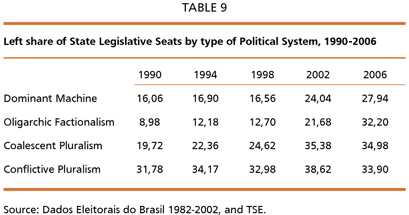
The left bloc substantially increased its parliamentary representation not only in the states that elected centre-left governments, but also in those cases where centre parties maintained control over the governorship. Among these, Tocantins was the most noticeable case: the left’s representation increased from zero seats in 1998 to a 20% share of seats in 2006.
Leftwing parties were in control of the governorship in 6 out of 10 least-competitive states by 2007. PT governors took over power in Piauí, Sergipe and Bahia. The PSB won the gubernatorial elections in Rio Grande do Norte and Ceará, and the PDT defeated the Sarney clan in Maranhão. Traditional rightwing forces that had once dominated the politics of many of these states suffered major electoral defeats, as none of the least-competitive states was being governed by a rightwing party by 2007, with the exception of the PP (Popular Party) in Goiás. It is interesting to note, though, that all the leftwing victories in gubernatorial elections occurred in north-eastern states of the least-competitive group, which are also among the poorest and least-developed of the Brazilian federation.12
Specialists in the politics of states such as Maranhão and Rio Grande do Norte might argue that some of the governors recently elected by centre-left coalitions are in fact moderate politicians, some of whom with connections to the old political class, which would make it incorrect to classify them as being part of the " left" . Even if that is true, it does not invalidate the argument presented in this article that the electoral growth of leftwing parties is an indication that the electoral arena has become much more competitive and less subject to control by state political bosses.13 When analyzed in association with the indicators of electoral dominance shown in tables 6, 7 and 8, the growth of the left reveals, indeed, that post-democratization processes of expansion of the scope of political conflict and implosion of oligarchic structures of competition have finally reached the poorest and leastdeveloped regions of the country.
]]>Accounting for Political Change in the Least-Competitive States
The magnitude of political change in the dominant machine and oligarchic factionalism states raises a number of questions on conventional accounts of state electoral dynamics. Students of state politics have emphasized governors’ ability to rely on the distribution of jobs and public works to forge electoral and parliamentary coalitions and strengthen executive-controlled state political machines. This literature assumes that politics at the state level is mostly executive-centric and based on the logics of clientelism and political co-option: in Hagopian’s (1996) study, " traditional politics" , which would allow state elites to reproduce their power over time (Abrucio, 1998; Hagopian, 1996; Samuels, 2003). Assuming these accounts are correct, one would still have to explain why these clientelistic strategies enabled state bosses to win elections in some places in the past, whereas now this no longer seems to be true.
I argue that the key problem to be addressed is a conceptual one. The concept of clientelism — understood as an asymmetrical bargain between a patron and a client, characterized by clients’ dependence on resources controlled by the patron — offers a limited explanation of electoral dynamics in developing democratic polities such as Brazil. Among other reasons, it can be argued that political clientelism strictu sensu is more likely to emerge in authoritarian or one-party regimes as opposed to multiparty, competitive democracies, where one should observe the emergence of " weak" and inherently unstable variants of clientelism. As noted by Fox (1994) in a comparative study of state politics in Mexico, political clientelism is in essence an authoritarian relationship characterized by the following conditions: a) patrons have a monopolistic or a quasi-monopolistic control over certain goods desired by clients; b) patrons possess effective instruments to punish clients, if the latter decide to behave opportunistically, refusing to fulfil their part in the clientelistic bargain (e.g. vote for the government’s candidates). A similar view is held by Diaz-Cayeros (2003) and Stokes (2002), who argue that the stabilization of clientelistic relationships necessarily involves institutionalizing some sort of political monopoly.
Obviously, in a democratic system in which several political bosses must compete among themselves for clients’ support, the probability of clients behaving opportunistically is likely to increase over time, as no single party is able to monopolize access to public resources, while at the same time formal democratic rules constrain the enforcement of the clientelistc bargain through direct coercion. The instability of the patron-client relationship is reinforced further due to its instrumental nature: in modern democratic settings, voters’ allegiance depends solely on patrons’ ability to deliver particularistic benefits, whereas affective, personal ties tend to be secondary (Avelino, 1994; Gay, 1994).
Based on these claims, it is possible to argue that Brazilian political institutions strongly conspire against the construction of the political monopolies necessary for state-level patron-client networks to gain stability over time. One key aspect is that state bosses must deal not only with horizontal competition (among political parties) but also with the threat of vertical competition (among distinct government spheres). In federal countries such as Brazil, the central and subnational governments compete for a similar " pool" of voters as they provide public services within a given territory. Thus, when state and local governments rely on social spending to buy voters’ support, they must compete with similar policies supplied by the federal government (Migué, 1997). Due to the potential for vertical competition in Brazilian federalism, state bosses were more likely to be successful in their machine-building strategies in settings characterized by a persistent coincidence between the parties/coalitions occupying at the same time the federal and state governments.
The fact that four of the five states classified as dominant machines by 1998 were governed by the only two parties — the PMDB and the PFL — that participated in practically every national political coalition between 1985 and 1998 is probably not incidental. Arguably, state bosses’ ability to participate in national government and gain access to federal patronage resulted in the weakening of potential opposition groups and thus reinforced the dominant coalition’s quasi-monopolistic control over the state political arena. In other words, to be part of the political opposition in these political systems would very often mean being in opposition to both the state and the federal governments, which is hardly a winning strategy in states that are extremely poor and dependent on federal funds.
Lula’s victory in 2002 represented a serious blow for state bosses in many of the least-competitive, least-developed states, as they were pushed into the ranks of the opposition.14 At the same time, the regional sections of the PT were strengthened by gaining access to federal posts and resources that had long been monopolized by their centre-right adversaries.
This is only part of the story, though. Changes in the structure of social policy provision and in the distribution of social policy funds across government spheres also contributed to constrain state governors’ ability to use federal funds for their own gain in the least-competitive states. At least since the first Cardoso government (1995-1998), the Ministries of Health and Education created inducements for the " municipalization" of these services, by allocating federal funds directly to municipalities (Arretche, 2000). As a consequence, state governments partly lost the capacity to intermediate the distribution of federal funds to municipalities, which contributed to the weakening of traditional mechanisms employed to secure local political machines’ support. In fact, state Health and Education departments had often allocated resources according to narrow political criteria, rewarding the mayoralties allied with the state government and punishing opposition strongholds with the withdrawal of funds.15 It is also important to note that decentralization was followed by greater institutionalization of social policies, as the social sector ministries introduced universalistic criteria (e.g., number of students enrolled) to guide allocation decisions (Castro et al, 2000; Ugá et al, 2003).16
State-level patronage networks were further weakened due to the rapid expansion of federal basic income programs from 1995 and, especially, during the PT administration. Targeted poverty alleviation policies first implemented by the Cardoso government were expanded and centralized within a special agency — the Ministry of Social Development (MDS) — during Lula’s first term. The centrepiece of Lula’s poverty alleviation strategy was a conditional cash transfer program, the Bolsa Família (Family Grant) that unified several pre-existing federal policies and initiatives under a single label and a single budget. The program targeted families with an income below R$ 120 a month and conditioned transfers on school attendance for students aged 6 to 15. By 2006, the Bolsa Família covered practically all the population below the poverty line: 11 million families or an estimated 40 million people.17 According to Hunter and Power (2007), the program was a key factor behind Lula’s victory against the PSDB in 2006, as it allowed the president to compensate for the losses suffered in the most developed and industrialized states with a much stronger electoral performance in the poorest regions of the country.18
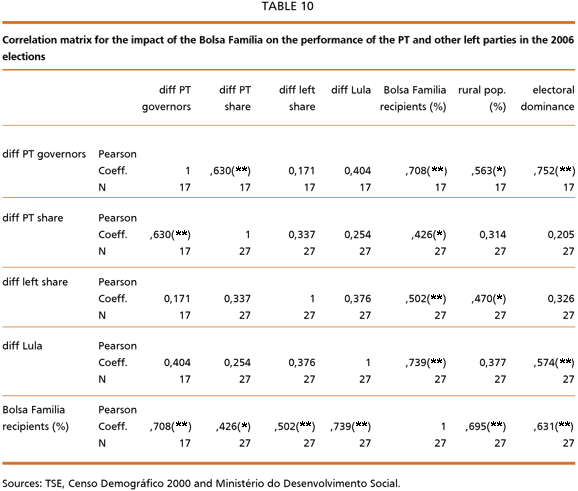
]]> The correlation table below presents some telling evidence on the impact of the Bolsa Família on the performance of the PT and other leftwing parties in the 2006 elections. The variables diff PT share, diff PT governors, diff left share and diff Lula measure the percentage of votes or of the share of seats gained/lost between 2002 and 2006. The variables diff Lula and diff PT governors indicate the variation in the PT’s first round vote in gubernatorial and presidential elections.19 As an indicator of the coverage of the Bolsa Família at the state level, I calculated the percentage of recipient families as a percentage of the total number of families (data refer to July 2006). The percentage of the state population living in rural areas and the composite index of electoral dominance were included to account for states’ political and social characteristics.As expected, there is a strong positive relationship between the PT’s electoral gains and the percentage of families attended to by the Bolsa Família at the state level. Also, the correlation coefficient obtained for the variable that measures the difference in the total left share of state legislative seats is positive and significant. This seems to indicate that the electoral effects of the Bolsa Família were not restricted to the president’s party, which is not totally surprising, considering the fact that the PT made alliances with other leftwing political organizations in several Brazilian states. The correlations also indicate that the PT gubernatorial candidates gained votes mostly in the least-developed and least-competitive states, as one can infer from the coefficients obtained for the variables rural pop and electoral dominance. The variation in the percentage of seats controlled by the left bloc is strongly and significantly correlated with rural pop as well, but not with the degree of competitiveness. Finally, the percentage of Bolsa Família recipients at the state level is very strongly correlated with rural population and electoral dominance, as the program concentrates resources in the poorest and least urbanized states.
Even though simple correlations are a limited strategy of causal assessment, the results shown in the table 10 provide a strong indication that federal social spending was an important factor behind the electoral growth of the PT and other leftwing organizations in the least-competitive states, in parallel with the decay of state political machines. Hence, the hypothesis on vertical competition as a constraint on state bosses’ ability to control the electoral arena seems rather plausible.
Conclusion
This article has contributed to the literature on federalism and subnational political institutions in Brazil, developing new concepts to deal with institutional and political variation at the state level. The comparative analysis has revealed that there were substantial differences across state-level political systems concerning the extent to which less-than-democratic practices and low competitiveness political structures persisted in the post-democratization period. In this respect, it became clear that the growth of electoral competition, the intensification of elite fragmentation and the rise of new political actors and organizations following the return to democracy were all part of the expansion of the scope of political conflict. These processes did not develop in linear, homogeneous fashion throughout the Brazilian territory, though, as in some cases state bosses were able to control the electoral arena and restrict the number of meaningful competitors in the democratic game. In this sense, the Brazilian experience of subnational democratization supports the view that the performance and the workings of democratic institutions will more often than not vary significantly within a federation, especially in regionally unequal countries (Fox, 1994; Heller, 2000; Snyder, 1999).
Furthermore, the article has revealed that state-level patterns of political competition are not static, unchanging structures. It has presented comparative evidence demonstrating the electoral decay of the old bosses and the rapid growth of the political left from 1998 to 2006 in the least-competitive states. In the face of these political changes, the article has argued that the strength of state political machines rested on foundations more fragile than previously thought. In a federal, multi-party democracy such as Brazil, the federal and state governments will more often than not compete for a similar " pool" of voters within the same territory by supplying social policies. One of the implications of vertical competition among distinct government spheres in the Brazilian case is that state bosses can hardly expect to construct the political monopolies necessary to stabilize patron-client networks over time. One hypothesis is thus that the PT victory in the 2002 presidential election, in addition to a series of changes in the structure of social policy provision by the mid-1990s, both contributed to intensify vertical competition and reduce state governments’ ability to intermediate federal funds. As a consequence, state-level patronage networks were seriously weakened, while at the same time the PT and other leftwing parties substantially improved their electoral performance in those regions that had been previously the fortresses of traditional bosses and their party machines.
]]> The hypotheses presented in this article will certainly need further refinement and empirical testing before one can be totally sure about the connection between social policy-making, vertical competition and electoral change at the state level. One must note that our knowledge on the electoral impact of social policies implemented by executive bureaucracies is still limited, as previous research has focused on the examination of the electoral returns of distributive policies produced by the Chamber of Deputies (Ames, 2001; Pereira and Rennó, 2001; Samuels, 2000b).The evidence presented in this article on the intensification of electoral competitiveness and political fragmentation in the least-competitive states is proof that, despite its non-linear and non-homogeneous character, political democratization has triggered from the start a consistent, inexorable movement toward the implosion of oligarchic structures of competition. In this sense, conventional accounts of state government and politics, according to which pervasive clientelism and " ultra-presidential" institutions (Abrucio, 1998; Hagopian, 1996) would secure the reproduction of less-than-democratic and anti-republican structures, have fallen short of empirical realities: Brazilian democratic institutions have shown themselves to be the " cemetery of oligarchies" .
This is not to say that ever-growing levels of party and electoral competition are always and necessarily a virtuous thing, though. In the context of contemporary Brazil, the issue of whether the highly competitive political systems will eventually perform better than the low competitiveness ones in the provision of social and economic policies is an empirical, rather than a normative question. Still, if one assumes, in Tocquevillian fashion, that democratic competition involves a process of learning-by-doing, whose effects can only be perceived in the long run, one might conclude that the ongoing expansion of the scope of political conflict in Brazil’s states is indeed a welcome change.
Notes
1 The political machine may be best characterized by the nature of the cement binding leaders and followers. In contrast with the disciplined, ideological party organisations that arose in some European countries, its primary means of coordination are particularistic rewards distributed among its members and followers. Rather than following ideological principles, it is mainly concerned with securing and holding office for its leaders and distributing income to those who work for it.
2 During the empirical analysis, I felt it was necessary to develop an additional, fifth type: " unstable pluralism" . However, because this fifth category is of little relevance to the main body of the analysis, I define it only cursorily in the following section.
3 The index of political continuity was calculated by dividing the number of times the governor succeeded in winning re-election or getting elected a candidate from the same party by the number of elections held between 1978 and 1998. The interpretation is rather straightforward, as an index of 100 means that the governor succeeded every time, whereas an index of 0 implies that the governor and his party were defeated in all the elections.
4 This is evident in the fact that elite domination was constructed within either of the two parties that were the direct " heirs" of the organizations created by the authoritarian regime — the PMDB and the PFL — in all the dominant machine states, with the exception of Ceará. (See the next section.)
5 This section relies on available secondary evidence on the politics of individual states and on my own research on state elites (the main sources being the Dicionário Histórico-Biográfico Brasileiro, pós 1930 edited by FGV and CPDOC and political biographies available on the internet). Secondary sources are quoted in the body of the text.
]]> 6 It is important to note, nevertheless, that old-style patronage politics is not incompatible with modernizing policy agendas. As a matter of fact, Souza (1997) and Bonfim (1999) have argued that the political centralization achieved by state elites in the states of Bahia and Ceará allowed them to implement a series of fiscal and administrative reforms to attract new industrial investments and foster economic modernization.7 The average left share of seats was calculated according to the ideological classification of Brazilian political parties developed by Figueiredo and Limongi (1999).
8 On the cases of Sergipe and Mato Grosso, see Dantas (2002) and Ames and Keck (1997).
9 The main reason for this pattern is that in order to win an election, a gubernatorial candidate will usually need to forge a multi-party coalition and, hence, the gubernatorial vote is more likely to reflect the coalition’s strength than the strength of the governor’s party alone. Also, the introduction of the possibility of re-election in 1998 gave a substantial advantage to incumbent parties and probably facilitated the assembling of winning coalitions. Given these aspects, the decrease observed for the least-competitive states, albeit small, is indeed a significant trend.
10 Because the PSDB did not exist before 1990, the table has no information on the 1982 and 1986 elections in Ceará.
11 As already hinted in section 3, Maranhão does not fit the dominant machine type as well as the other states because the hegemony of the Sarney family was continuously threatened by dissident elites. This probably explains the substantial variation of the PFL’s electoral strength during the period under analysis.
12 I discuss some of the potential causes of this pattern in the next section.
13 The assessment of the rise of centre-left governments in the least-competitive and least-developed regions of the country must also take into account the fact that the electoral success of the political left nationwide is partly a consequence of the moderation of ideological appeals, as demonstrated by the PT victory in the 2002 presidential elections.
14 This is especially true of the states governed by the PSDB and the PFL, as the two parties formed the most important opposition bloc in the Chamber of Deputies during Lula’s first term. The PMDB adopted a more ambiguous position, as some governors and parliamentarians joined the Lula coalition (especially in the Northeast region), whereas others decided to join the ranks of the opposition.
15 For evidence on the impact of health decentralization on these practices, see Guimarães’ (2000) research on the state of Bahia.
]]> 16 In addition to the decentralization of social policies, one might argue that state elites lost important sources of patronage due to fiscal adjustment and privatization policies imposed by the federal government in the mid-1990s. This hypothesis seems less plausible, though. As demonstrated by Souza (2006), the dominant elites in states such as Bahia and Ceará implemented fiscal adjustment rather early in the 1990s, and yet they succeeded in maintaining or even expanding their electoral base over the course of the decade.17 Data provided by the Ministry of Social Development at http://www.mds.gov.br.
18 Even though the Bolsa Família has generated substantial electoral returns for president Lula and the PT, the program cannot be considered an instance of clientelism, for the selection of beneficiaries is based on universalistic criteria (mainly per capita income). Clientelism necessarily involves the reliance on political discretion to strategically discriminate between voters and/or groups of voters.
19 To avoid distorting the measurement of the PT’s strength in gubernatorial elections, I included only the states in which the party ran in both the 2002 and 2006 elections (n=17).
Bibliography
ABRUCIO, Fernando L. 1998. Os barões da federação: Os governadores e a redemocratrização brasileira. São Paulo: Hucitec. [ Links ]
AMES, Barry. 2001. The Deadlock of Democracy in Brazil. Michigan: University of Michigan Press. [ Links ]
AMES, Barry and KECK, Margaret. 1997. The politics of sustainable development: Environmental policy making in four Brazilian states. Journal of Interamerican Studies and World Affairs 39: 1-40. [ Links ]
ARRETCHE, M. 2000. Estado federativo e políticas sociais. Rio de Janeiro: Revan. [ Links ]
AVELINO, George. 1994. Clientelismo e Política no Brasil: Revisitando velhos problemas. Novos Estudos Cebrap 38: 225-240. [ Links ]
BONFIM, Washington Luis Souza. 1999. Qual mudança?: Os empresários e a americanização do Ceará. Ph.D. diss., IUPERJ. (Unpublished manuscript). [ Links ]
_____. 2004. Mudança Social no Piauí. Rio de Janeiro: Revan. [ Links ]
CASTRO, J. A, Angela R. Barreto and Paulo Roberto Corbucci. 2000. A reestruturação das políticas federais para o ensino fundamental: Descentralização e novos mecanismos de gestão. Brasília, DF: IPEA Policy Paper n. 745. http://www.ipea.gov.br/pub/td/tda2000b.html. [ Links ]
COSTA, Wagner Cabral. 1997. Do " Maranhão Novo" ao " Novo Tempo" : a trajetória da oligarquia Sarney no Maranhão. UFMA: Department of History. Unpublished. [ Links ]
DANTAS, Jose Ibarê Costa. 2002. Eleições em Sergipe (1985 a 2000). Rio de Janeiro: Tempo Brasileiro. [ Links ]
DANTAS NETO, Paulo Fábio. 2006. " O carlismo para além de ACM" : estratégias adaptativas de uma elite estadual. In Governo, elites políticas e políticas públicas nos estados brasileiros, orgs. C. Souza and P. F. Dantas Neto, 247-286. Rio de Janeiro: Revan. [ Links ]
DESPOSATO, Scott. 2001. Institutional theories, societal realities and party politics in Brazil. Ph.D. diss., University of California, Los Angeles. [ Links ]
DIAZ-CAYEROS, Alberto, Beatriz Magaloni and Barry Weingast. 2003. Tragic brilliance: Equilibrium, hegemony and democratization in Mexico. http://www.stanford.edu/~albertod/tragicbrilliance.pdf. [ Links ]
DINIZ, Eli. 1982. Voto e máquina política: Patronagem e clientelismo no Rio de Janeiro. Rio de Janeiro: Paz e Terra. [ Links ]
FIGUEIREDO, Argelina and LIMONGI, Fernando. 1999. Executivo e legislativo na nova ordem constitucional. Rio de Janeiro: FGV. [ Links ]
FOX, Jonathan. 1994. The difficult transition from clientelism to citizenship - Lessons from Mexico. World Politics 46: 151-184. [ Links ]
GAY, Robert. 1994. Popular organization and democracy in Rio de Janeiro: A tale of two favelas. Philadelphia: Temple University Press. [ Links ]
GUIMARÃES, Maria Do Carmo. 2000. Descentralização da saúde, interesses e conflitos decisórios: O processo de decisão nas instâncias colegiadas estaduais da Bahia, 1993 a 1998. Ph.D. diss., Graduate Program in Public Administration, UFBA. [ Links ]
HAGOPIAN, Frances. 1996. Traditional politics and regime change in Brazil. Cambridge: Cambridge University Press. [ Links ]
HELLER, Patrick. 2000. Degrees of democracy: Some comparative lessons from India. World Politics 52: 484-519. [ Links ]
HUNTER, Wendy and Timothy J. Power. 2007. Rewarding Lula: Executive power, social policy, and the Brazilian elections of 2006. Latin American Politics & Society 49: 1-30. [ Links ]
MAINWARING, Scott. 1999. Rethinking party systems in the third wave of democratization: the case of Brazil. Stanford: Stanford University Press. [ Links ]
MIGUÉ, J. L. 1997. Public choice in a federal system. Public Choice 90: 230-254. [ Links ]
PEREIRA, Carlos, and Lúcio Rennó. 2001. O que é que o reeleito tem?: Dinâmicas político-institucionais locais e nacionais nas eleições de 1998 para a Câmara dos Deputados. Dados 44: 323-362. [ Links ]
RAMOS, A. V. M. 2000. Imprensa e eleições: uma análise de cobertura jornalística do processo de reeleição do governador da Paraíba em 1998. M.A. thesis, Department of Sociology, UFPB. [ Links ]
SAMUELS, David. 2000a. The gubernatorial coattails effect: Federalism and congressional elections in Brazil. Journal of Politics 62: 240-253. [ Links ]
_____. 2000b. Pork-barrelling is not credit-claiming or advertising: Campaign finance and the sources of personal vote in Brazil. Journal of Politics 64: 845-863. [ Links ]
_____. 2003. Ambition, federalism, and legislative politics in Brazil. Cambridge: Cambridge University Press. [ Links ]
SAMUELS, David, and F. L. Abrucio. 2000. Federalism and democratic transition: The " new" politics of the governors in Brazil. Publius 30: 43-61. [ Links ]
SANTOS, Fabiano, ed. 2001. O poder legislativo nos estados: Diversidade e convergência. Rio de Janeiro: FGV. [ Links ]
SANTOS, Wanderley Guilhermes dos. 1998. Décadas de espanto e uma apologia democrática. Rio de Janeiro: Editora Rocco. [ Links ]
SARTORI, Giovanni. 1976. Parties and party systems: a framework for analysis. Cambridge: Cambridge University Press. [ Links ]
SCHATTSCHNEIDER, E. E. 1975. The semisovereign people: a realist’s view of democracy in America. South Melbourne: Wadsworth Thomson Learning. [ Links ]
SCHMITT, Rogério A. 1997. " Rio de Janeiro: Multipartidarismo, competitividdade e realinhamento eleitoral" . In O Sistema Partidário Brasileiro, org. O. B. Lima Jr. Rio de Janeiro: Editora FGV. [ Links ]
SCHNEIDER, Aaron. 2001. Federalism against markets: Local struggles for power and national fiscal adjustment in Brazil. Ph.D. diss., University of California, Berkeley. [ Links ]
SCOTT, James. 1969. Corruption, machine politics and political change. American Political Science Review 63: 1142-1158. [ Links ]
SNYDER, R. 1999. " After the state withdraws: Neoliberalism and subnational authoritarian regimes in Mexico" . In Subnational politics and democratization in Mexico, eds. W. A. Cornelius, T. A. Eisenstadt and J. Hindley. La Jolla Center for U.S.-Mexican Studies/University of California: San Diego. [ Links ]
SOUZA, Celina. 1997. Constitutional engineering in Brazil: The politics of federalism and decentralization. Basingstoke: Macmillan. [ Links ]
_____. 2006. " Instituições políticas estaduais em um contexto federativo" : coalizões eleitorais e ajuste fiscal. In Governo, elites políticas e políticas públicas nos estados brasileiros, orgs. C. Souza and P. F. Dantas Neto. Rio de Janeiro: Revan. [ Links ]
SOUZA, Celina and Paulo Fábio Dantas Neto. 2006. Governo, elites políticas e políticas públicas nos estados brasileiros. Rio de Janeiro: Revan. [ Links ]
SPINELLI, José Antônio. 2006. Oligarquias e legitimidade democrática: A experiência potiguar de democratização. http://www.fundaj.gov.br/geral/observanordeste/spinelli.pdf [ Links ]
STOKES, Susan. C. 2005. Perverse accountability: A formal model of machine politics with evidence from Argentina" . American Political Science Review 99: 315-325. [ Links ]
STOKES, Susan. C. and Luiz F. Medina. 2002. Clientelism as political monopoly. Chicago Center on Democracy Working Paper 25. http://ccd.uchicago.edu/MedinaStokesAPSA.pdf. [ Links ]
TENDLER, Judith. 1997. Good government in the tropics. Baltimore: Johns Hopkins University Press. [ Links ]
_____. 2000. " Why Are Social Funds so Popular?" In Local dynamics in the Era of Globalization, eds. Y. Shahid, W. Weiping and S. Everett. Oxford: Oxford University Press for the World Bank. [ Links ]
UGÁ, Maria Alicia, Sérgio Francisco Piola and Maria Silvia Porto. 2003. Descentralização e alocação de recursos no âmbito do Sistema Único de Saúde (SUS). Ciência e Saúde Coletiva 8 (2):417-437. [ Links ]
Submitted in July, 2007
Accepted in September, 2007