Simone R. Bohns
York University, Canada
Replicated from Brazilian Political Science Review (Online), Rio de Janeiro, v.1, n.2, July/Dec. 2007.
ABSTRACT
The Senate remains as an almost uncharted territory for women. And not only in re-democratized countries like Brazil, but also in advanced democracies such as the USA. To date, 33 American and 28 Brazilian women have served in their Senates. Why are these numbers so reduced? This article discusses the key obstacles that women face and, through OLS and probit analyses, examines the degree of competitiveness and rate of success of all candidacies. We show that, even though women are thought to be weak contestants, they can be as competitive as men when they have a record of elected public positions. The reduced availability of the latter, however, indicates that they are still far from increasing their presence in the Senate.
]]> Keywords: Women; candidate quality; career; Senate; election.
According to the World Economic Forum’s most recent measurement of gender inequality across the globe (Lopez-Claros and Zahidi, 2005), the United States and Brazil occupy fairly distinct positions when it comes to female political empowerment. Based on data on the participation of women in the political arena, these two countries are said to rank 17th and 57th, respectively, out of a total of fifty-eight countries.1 Despite this significant difference, which places the United States in the top thirty percent and Brazil in the bottom two percent, these countries have at least one aspect in common: the female presence in the Senate is still small. To date, only thirty-three American women and twenty-eight of their Brazilian counterparts have served in their respective Senates.
When the comparative perspective is broadened and more countries are examined, one finds out, however, that this trend is in fact a pattern found almost everywhere. In several parts of the democratic regions of the world, not only in the United States and Brazil, women have a numerically insignificant presence in the Senate. In all the bicameral countries of South America, for instance, women comprise approximately 13% of their upper houses.2 Among the bicameral Western European countries, women represent, on average, 24% of their Senates, with Germany at the top end (33.3%) and Italy at the bottom (8.1%).3 In North America, only two in every ten senators are women.4 Moreover, in most countries, women are more successful (in absolute or percentage numbers) in elections for the lower house than for the Senate.5
What prevents women from becoming a more significant voice in the Senate? The goal of this article is to understand why, both in newly democratized developing countries like Brazil and postindustrial advanced democracies such as the United States, the Senate, despite its long years of existence, still remains an almost uncharted territory for women: very few female politicians have entered it. By analyzing socio-economic and politico-institutional variables and the pattern of the political career of women candidates in Brazil and the United States, we seek to understand the difficulties in women’s path to the upper house in contemporary democracies. We conclude by showing that gender per se is not the key obstacle faced by women in senatorial races, but the fact that most of them are not professional politicians. As will be seen below, this conclusion enables us to improve our understanding of the policy of gender quotas and especially its success.
Entering the Senate
What are the key obstacles to entering the upper house? Several works have shown that a candidate’s quality, measured by her/his retrospective portfolio of elected positions, is key to explaining her/his rate of success not only in senatorial elections but also in races for the lower house (Abramowitz, 1983, 1988; Bianco, 1984; Bond, Covington & Fleisher, 1985; Bond, Fleisher & Talbert, 1997; Canon, 1990; Green & Krasno, 1988; Jacobson, 1989; Jacobson and Kerner, 1983; Kerner & Jacobson, 2000; Lublin, 1994; Westlye, 1983). Most of these studies, such as Squire (1989), usually define quality as the experience attained from successfully running in an election and holding elected public office.6 The underlying assumption of this definition is that, as candidates achieve electoral victories, they tend to master the nuts and bolts of successful political campaigns, which increases their competitiveness for the following races. During that vote-seeking process, they perfect the key instruments of electoral success, which include, among other things, raising money, solidifying a party machine and building up name recognition.
Additionally, the literature emphasizes the fact that senatorial races tend to be more competitive than lower house elections. Several factors are believed to account for this difference. One of them, in the United States context, is the sheer difference in size of the house and senatorial districts, which increases substantially the amount of resources needed for a successful campaign (Abramowitz, 1988). Moreover, a Senate seat is usually perceived to be a high-value position in the professional political world, which makes it more coveted than a seat in the lower house (Francis, 1993).7 As a consequence, senatorial races are usually thought to have the participation of large numbers of highly qualified candidates (Westlye, 1983). Most of these factors, especially the last one, are usually presented as the leading causes of the dismal presence of women in the Senate.
]]> Women are said to be less competitive for the Senate than men for a number of reasons, first and foremost among them, because voters usually see them as " outsiders" to the world of politics (Grossi & Miguel, 2001; Kahn, 1996; Koch, 1999; Miguel, 2001).8 They are regarded as a very specific type of newcomer, almost like a minority that needs to be given a special chance to accede to office — otherwise they will not be able to do it by themselves.9Second, the general public seems to perceive women as having personal qualities that are unsuitable for political jobs. Whereas voters see women as docile, kind-hearted and fragile, they believe that politicians need to be tough and have a business-minded attitude (Huddy and Terkildsen, 1993). According to Dolan (2005), small segments of the American public, for instance, still hold the view that women and public office are incompatible and that women should refrain from entering the political world as candidates.10
Most importantly, women’s candidacies are generally regarded as lacking quality in the sense just described. Not only are they thought to lack enough practical experience to take up an important political position such as a Senate seat, but they are also viewed as having a poorer record of elected positions. As a consequence of this perceived inferiority, their candidacies are automatically labeled in voters’ minds as less promising than men’s. According to Bond, Covington & Fleisher (1985), this perception leads donors not to prioritize female candidacies.
Furthermore, the status of newcomers and its fundraising consequences supposedly make it difficult for women to compete in the entire state, which would explain why there are more women in the lower house than in the Senate (Squire, 1989). Similarly, elections where there is an incumbent seeking reelection are thought to pose an almost insurmountable challenge to women. This is especially true for senatorial elections, in which high-caliber politicians run (Francis, 1993; Westlye, 1983) and there is only a single seat per district.
On the other hand, there are drivers that foster an increase in women’s participation in the Senate — and in the political arena in general. The most important one seems to be a socially widespread egalitarian mentality, especially when it comes to the acceptance of women’s active presence in formal political institutions. According to the assumptions of modernization theory, the transformation of rural communities into modern urban societies introduces a whole array of changes in the political culture, which ultimately favors, among other things, the female struggle for political power. In other words, the rise in urbanization and income levels and the increase in the number of years of formal schooling are thought to have as a consequence the dissemination of more egalitarian values, which, in the electoral arena, benefit women’s candidacies. Norris and Inglehart (2005), for instance, show that, by and large, postindustrial societies, because of their greater level of socio-economic development and its egalitarian consequences, tend to have more women in public office than post-communist states or developing countries.11
Cultural factors fed by socio-economic transformations, therefore, are thought to favor the increase in women’s participation in the formal political arena. Political institutional elements, such as district size and the presence of an incumbent, are thought to act to their detriment. In the face of these considerations, the goal of this work is twofold. First, we aim at verifying empirically the veracity of certain assumptions pertaining to the characteristics of female participation in senatorial elections. Do women contestants really present lower quality candidacies in comparison with their male competitors in Senate races – if one accepts the definition of quality as a previous record of elected public positions? Furthermore, are women in fact less competitive than men in these elections? Lastly, are they actually defeated more often than men are? The second objective is to assess the impact of institutional, individual and socio-economic variables on the competitiveness and rate of success of women’s candidacies for the Senate. This study will analyze the following variables. Among the institutional factors, the first one is district’s population size, as measured by the absolute number of voters (Brazil) and inhabitants (the United States). The second one is the type of election, i.e., whether it is an open-seat race or an election in which there is an incumbent running. In addition, five personal characteristics of the candidates will also be part of the analysis: gender, educational level, party affiliation, incumbency and career pattern (whether the candidate has been elected before or is a novice). Lastly, in order to test whether urban landscapes and more highly educated societies favor female candidacies, the following variables will be included: each district’s average annual income per capita, average educational level and rate of urbanization in the year prior to the election.
It is important to mention that the goal here is not to map the whole array of variables that lead to success in a senatorial race.12 Instead of focusing on all the elements that make or break a Senate candidacy, this study seeks to assess (i.) whether women are less competitive than men, i.e., the former receive smaller percentages of votes than the latter; (ii.) whether women are less successful than men, i.e., the former are elected at a lower rate than the latter; (iii.) whether in larger districts fewer women run for the Senate; (iv.) whether elections in which an incumbent seeks reelection results in a lower rate of women being elected; and (v.) whether in more modernized states (i.e., states with higher educational, income and urbanization levels) women are more successful in senatorial races. In short, this article seeks to analyze the quality of female senatorial candidacies in Brazil and the United States and its impact on women’s electoral performance. Given these countries’ dissimilarities, we expect the findings of this study to shed light on the obstacles before women in both new and old democracies.
Case Selection: The USA and Brazil
Despite the fact that, throughout its history, Brazil has experienced democratic breakdowns a number of times, while the United States has been a solid democracy since independence, nowadays the upper houses of the two countries share a host of common institutional features. First, not only does the Senate, as an institution, have a prominent role in the production of legislation but also it is a vital element in the system of checks and balances in both countries.13 Second, American and Brazilian senators represent states and there is a fixed number of them per district.14 Third, both countries have established unlimited reelection terms, which results in the creation of the so-called " incumbency factor" for senatorial races.15 Fourth, both polities have a kind of non-electoral route to the Senate. In Brazil, senators have deputies who fill their absence either temporarily or permanently — in case the former do not return to Congress. Even though these deputies are officially a part of senators’ slates, their names do not appear on the ballot and very rarely do voters know them before they fill the vacancy. Differently from Brazil, in the United States, upon leaving Congress for an executive position for instance, an elected politician automatically loses his or her seat. However, this seat may be filled with a non-elected appointee until a new senatorial election takes place. As we will see ahead, this feature has had important consequences for the ascension of women to the Senate.16 Lastly, in both countries, campaigns tend to be candidate-centric. In Brazil, according to some authors, campaigns tend not to be party-centric mainly due to the feebleness of some party organizations and to the open-list system (Ames, 1995a & 1995b; Mainwaring, 1992; Mainwaring and Scully, 1995). In the United States, the facts that party machines are highly decentralized and the localities exert an important control over them have been some of the key drivers in the prevalence of candidate-centric campaigns (Wattenberg, 1991).17
]]> Two of the key institutional differences between Brazil and the United States pertain to the number of effective political parties and the occurrence of primaries.18 Since the end of the last authoritarian wave, Brazil has had a multiparty system with at least eight main political parties.19 The United States, on the other hand, has a bipartisan system, in which alternatives to the Democratic and Republican parties have faced considerable difficulty to become competitive parties.20 Primaries, on the other hand, are not an institutionalized procedure to select candidates in Brazil.21 In the United States, in contrast, most contestants to legislative positions face primaries in order to gain the position of the party’s candidate. The first obvious implication of this procedure is the need to have good fundraising skills and an active and professionalized party machine at one’s disposal. From the women candidates’ perspective, the primaries represent an additional challenge as far as gathering resources is concerned. On the other hand, they are also an opportunity to build up name recognition among the party’s base.22Similarities and differences also abound when it comes to the socio-economic conditions of both countries. We will not delve into the macroeconomic details. One of the key similarities is the fact that there exist visible socio-economic disparities across states within both countries. In Brazil and also in the United States, states present considerable differences when it comes to their urbanization rates and income and educational levels.23
Strictly speaking, from the perspective of women, the dissimilarities between these countries are striking. First, there are significant educational differences between them. For instance, whereas approximately 33% of American women held a college degree in 2004 (Bureau of Labor Statistics, BLS, 2005a), among their Brazilian counterparts, the figure for 2003 was of only 5.6% (Brazilian Institute of Geography and Statistics, IBGE, 2005). However, in both societies these numbers represent a large-scale improvement. Three decades ago, in 1974, only 11% of American women had a university diploma (BLS, 2005a). In Brazil, less than 1% of women had a tertiary education in 1970 (IBGE, 2005).
As far as their participation in the economy is concerned, women in both countries comprise nearly the same proportion of the labor force. American women represent 46.5% of the economically active population (BLS, 2005a), while their Brazilian counterparts encompass 40.4% of the same total (IBGE, 2001). Their income, however, is very dissimilar. While a college-educated American woman earns, on average, $860 per week (BLS, 2005b), her peers in Brazil receive, on average, $547 per month (IBGE, 2005).24
Lastly, not only does their socioeconomic background present differences, but also their integration into the political arena. While Brazilian literate women were fully enfranchised in 1932, American women (literate or not) started voting much earlier, in the 1920s. Among the latter, the first one to be elected to the lower house started serving in 1917 (Center for American Women and Politics, CAWP, 2005). In the case of the former, it was only in 1935 that the first Brazilian woman entered the lower chamber of Congress.
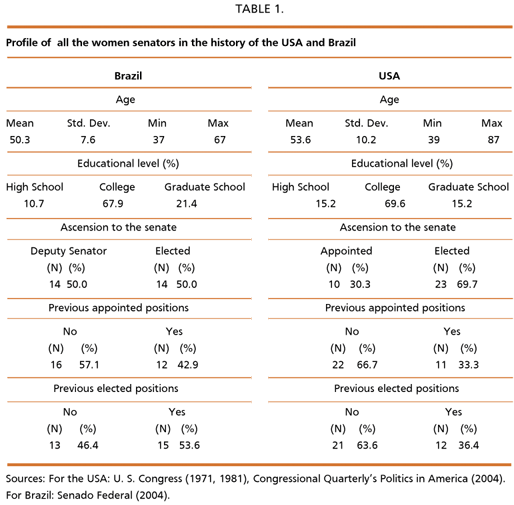
In spite of these starkly different socioeconomic and political profiles, the women who do gain access to senatorial seats share a number of features (Table 1). Women senators in Brazil and the USA are approximately the same age, in their early 50s. American women senators are, on average, slightly older than Brazilian ones. Additionally, less than one-sixth of female senators in the two countries did not have access to tertiary education. Around 68% of them possess a college degree and 18% attended graduate school. Their professional background is very similar as well. The two most common professions that women senators had prior to entering the upper house are the same in the two countries. Most of them were schoolteachers and lawyers. The percentages are, respectively, 21.2% and 15.1%, for the American senators, and 35.7% and 21.4% in the case of Brazil.25 Therefore, as far as their educational level is concerned, the women senators do not differ much: most of them, especially in the case of Brazil, come from an educational elite.26
]]> Their differences start to emerge when one examines the way they acceded to the Senate and their previous career paths. More than two-thirds of women Senators in the USA obtained their jobs from the ballot box. Only 10 of them gained access to the Senate through appointments. In Brazil, half of the women Senators obtained their seats when the elected male Senator died, resigned, was impeached or appointed to a position in the presidential cabinet. A total of only fourteen Brazilian women won their seats through elections — in contrast with twenty-three Americans. Furthermore, the latter entered the Senate several decades earlier, with the first one being appointed in 1922 and the second one elected in 1931. Brazilian women, on the other hand, only gained a voice in the Senate in 1979. The first female members were elected much later, in the 1990 election. Since the re-democratization of Brazil in 1985, the initial gap between the two countries has been decreasing substantially. In the three elections of the last decade (1990, 1994 and 1998), a total of six women won senatorial elections in Brazil. In the 2002 election alone, eight women became elected senators.
When it comes to their political background, a slightly larger percentage of Brazilian women had had appointed political positions prior to becoming senators than their American counterparts – 43% and 33%, respectively. Two-thirds of American women senators and 57% of Brazilians could not use a political position as a springboard to the Senate because they did not have one. Does this mean that they were totally distant from the political arena before launching their successful senatorial campaigns? Interestingly, the answer is different for each country. In Brazil, a little more than half the women senators had a track record of elected public service. In the USA, in contrast, only 36.4% had previously occupied elected positions. Out of the elected women, 85.7% of them in Brazil had previously been a councilwoman, a state or national legislator, mayor and/or governor. For the USA, the same statistic is 56.5%.
An element that, paradoxically, may contribute to explain this difference is the aforementioned late arrival of women in the Senate in Brazil. Somewhat similarly to what happened in the USA, most Brazilian women who entered the upper house in the 1990s and 2000s have what is usually described as a professional politician career. They had successfully competed in one or more electoral contests before. Additionally, in contrast with a rather common practice in the USA, very rarely do affluent Brazilians get elected to the Senate without a previous record of elected public service. A Senate seat in Brazil, most of the time, is a position coveted by members of the house, former governors and presidents. The senatorial elections tend to be very competitive as a consequence — as is the case of a large number of, but not all, the elections to the American Senate.
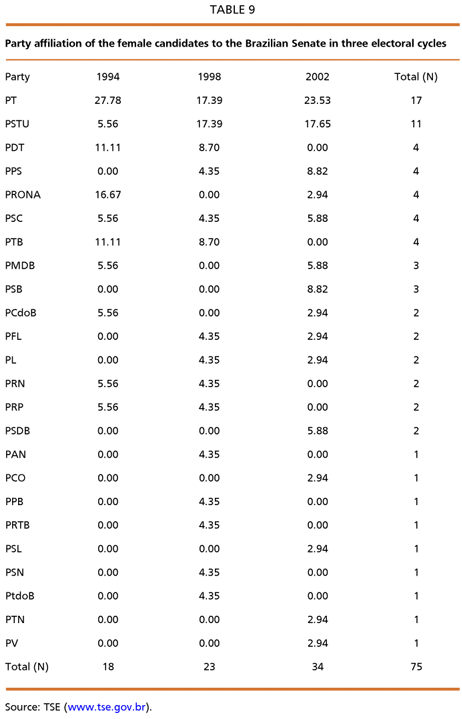
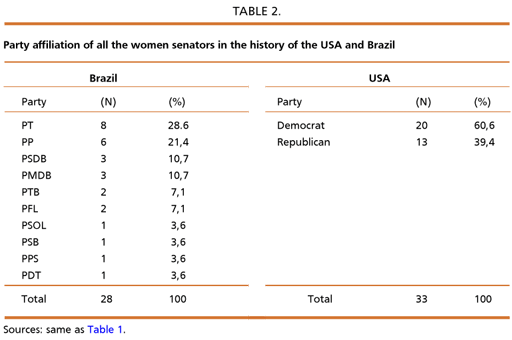
When it comes to their party affiliation, three-fifths of the female senators throughout the history of the United States Senate have been Democrats. About 40% of them have belonged to the Republican Party (Table 2). In the multi-partisan scenario in Brazil, women senators have come from all sides of the ideological spectrum. The parties of the left with female representatives in the Senate (PT, PPS, PSB and PSOL 27) have controlled approximately 39.9% of all female senators. Most of them, 28.6%, were affiliated to the leftist Workers’ Party. If the left has had the largest bloc of female senators, the second largest party contingent, however, has belonged to the rightist PP (Progressive Party), originally the party created to support the authoritarian regime that ruled the country between 1964 and 1985. Furthermore, about one in every three female senators has belonged to the traditional right, either the PP (21.4%) or the PFL (7.1%). On the other hand, it is important to point out that, whereas 90% of the women from the four leftist parties mentioned in the table 1 won their senate seats in elections, only 15% of the rightist women did so (none of the PP women entered the Senate through elections). All the other parties, which belong to the highly heterogeneous center, have had a maximum of three senators each, totaling approximately 32.1% of the female senate delegation. Thus, women senators in Brazil have found shelter in parties from highly distinct ideological profiles. Undoubtedly, however, the left has presented and elected a much larger number of women that the right.28
Socio-political Profile of Male and Female Senatorial Candidacies
Similarly to the markedly elitist educational profile of all the elected women senators, most senatorial candidates have many years of formal schooling, especially in the case of the United States (Table 3). Nonetheless, some differences are noticeable. First, mirroring the socioeconomic conditions of Brazil, the candidates from this country (both men and women) lag behind in comparison to the American ones when it comes to education.29 Nearly nine out of ten American Senate candidates have at least a college degree, in contrast with seven out of ten in the case of Brazilian contestants.
]]>
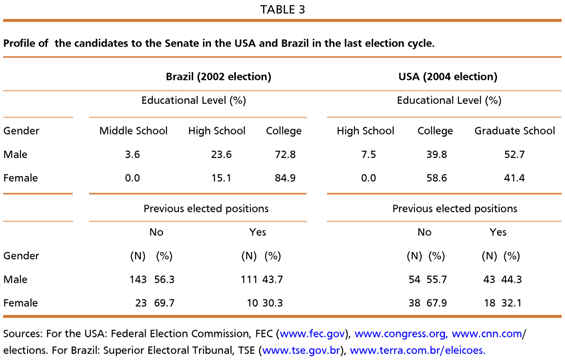
Second, in both countries, female candidates have a better educational background. In the United States, 7.5% of the men who ran for the Senate in 2004 had only a high school diploma. None of the women who competed in the same race had a similar profile. In Brazil, on the other hand, almost one third of the male candidates (27.2%) did not attend college, in contrast with 15.1% of their female counterparts. Therefore, if education helps increase a candidate’s quality, one must conclude that the women candidates in the last senatorial elections in the USA and Brazil were either more qualified than men or at least as qualified as them.
A different picture emerges when one focuses on the candidate’s previous record of elected public positions.30 In this regard, men have a better record in the two nations. In both the USA and Brazil, nearly 44% of male Senate candidates had already held public office prior to becoming senators, in contrast with approximately 31% of the women contenders. Amateurism, or the lack of experience in a public elected job, was a feature common to around seven in every ten female candidates in the two countries. Therefore, one must conclude that, despite the improvement in their educational attainment in both societies over the last few decades, women still have not been able to translate that advancement in education and careers into political empowerment and greater access to the institutions of the political arena, such as the Senate. The emergence of a larger proportion of highly educated women is yet to produce a greater number of female professional politicians at most levels of government.
Why are not more female candidacies launched for the Senate in either country? The literature assumes, as mentioned previously, that the larger size of the districts in comparison to the more limited geographical area in which the candidates to the lower house compete acts as a deterrent to more political entrepreneurship among women.31 Moreover, others point to the greater competitiveness of the Senate races when an incumbent is present as another type of discouragement for female candidacies.
The data in the table 4, however, do not seem to confirm these assessments. For both the USA and Brazil, the larger the district, the bigger the roll of candidates competing in each senatorial election. The addition of 100,000 voters to any given district adds nearly 3 more candidates in the USA and almost 5 in Brazil. The presence of an incumbent in the race does forestall plans to participate in the senatorial race in both countries. A similar relationship is also true when it comes solely to the number of male candidates.ag Nevertheless, this does not seem to be entirely the case when it comes to the number of female candidates.
]]>
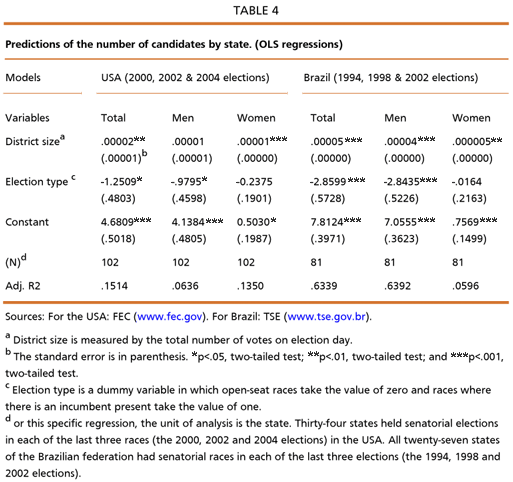
Bigger districts do act as an incentive for more women to compete. Faced with a hundred thousand additional voters in a district, at least one more woman in the USA and four others in Brazil will launch candidacies — if there exists such availability of women. Interestingly, however, the election type, despite having the expected signal, is not a significant variable. In other words, whether the election is an open-seat race or a contest against an incumbent has no significant effect on the number of women entering the race. This distinctiveness leads to two diametrically opposed interpretations.
On the one hand, it may point to the possibility that women in senatorial races act as franc-tireurs, launching candidacies after candidacies regardless of their real chances of success. The fact that, for the 2002 Brazilian race and the 2004 American senatorial elections, approximately 70% of the Brazilian women contestants and around 52% of the American female candidates participated in elections against an incumbent could be viewed as corroborating this interpretation. In other words, despite knowing beforehand that they will be defeated, some women still become candidates in tough elections, for instance, to build up name recognition. On the other hand, these same proportions and the numbers on the table 4 may be analyzed differently. They may indicate that a significant proportion of women have established their own political capital, enough to enable them to risk themselves in elections in which an incumbent is present. Therefore, from this perspective, not only do women engage in highly competitive races, but they choose to do so from a position of power. Which interpretation is closer to reality? We are about to find out.
Competitiveness of Female Candidacies and their Rate of Success
Does women’s poorer record of previous elected positions necessarily result in less competitive candidacies? How do they perform in comparison to their male competitors?
When only the overall average percentage vote for all male and all female candidates is contrasted, one would conclude that, by and large, the former did better than the latter in the last senatorial election in the USA, but not in Brazil. American male candidates garnered, on average, 29.6% of the votes, in comparison to 23.9% of their female competitors. In Brazil, the numbers for the same groups were 9.2% and 9.4%, respectively, indicating an almost lack of differentiation between genders. In open-seat races, American men received a larger percentage of votes (48.3%) than did women (34.0%). A similar scenario is visible in the races against incumbents: male candidates picked up more votes (17.1%) than did the female ones (14.7%). In Brazil, women performed better than men in open-seat races (11.0% vs. 7.9%, respectively), but obtained worse results in races against incumbents (8.7% vs. 9.5%, respectively).
The comparison of the vote received by candidates across genders, however, is rather valueless given that it does not take each candidate’s quality into account. In order to better assess the impact of the latter, the two gender groups have to be divided between professional politicians, who have held elected public positions before, and amateurs, which includes those who are novices in the political world. Additionally, the two different political contexts under which elections unfold must be noted. Therefore, one needs to differentiate between open-seat elections and races in which there is an incumbent running.
We used the above categorizations to predict the differences in the vote percentage of the candidates using an OLS regression (Table 5). The results show that, for both countries, the career pattern (professional vs. amateur politicians) and whether or not a candidate is an incumbent are significant predictors of a candidate’s vote (model I). In the two countries, holding the remaining variables constant, professional politicians receive a much larger percentage of votes than do novices: approximately 10% more in the USA and 9% more in Brazil. Incumbents are also better positioned than challengers (candidates seeking to enter the Senate). Senators seeking re-election receive 6% more votes than challengers in Brazil and 16% more in the USA.33
]]>
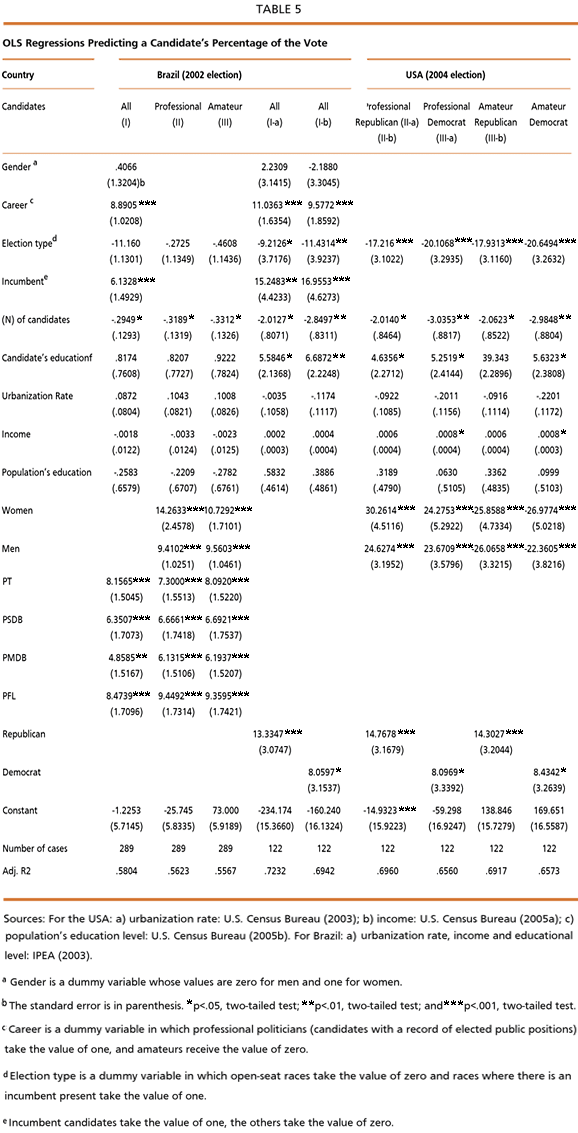
The election type variable has the expected negative signal in all the models, even though it is not significant in the Brazilian context. In the United States, the presence of an incumbent is associated with smaller percentages of vote. In contrast with open-seat races, competitors running against senators seeking re-election lose 10% of votes. Moreover, ceteris paribus, in the USA, more educated candidates fare better than contestants with a lower level of formal schooling: one move upward in the educational ladder is associated with an extra 6% of votes. This variable does not seem to be of importance in Brazilian senatorial races. Lastly, gender is not a significant variable in any of the countries.
The observation of the interaction between gender and career, as in models II and III, however, opens up a new perspective.34 The election type, number of candidates and educational level variables continue to have the same effects as before. In the case of the United States, the loss of votes in elections run against an incumbent becomes more pronounced and more significant. For both the Republican Party and the Democratic Party, professional politicians lose slightly fewer votes than amateur politicians.35 Similarly, but in an inverted manner, increases in the educational level are associated with greater gains in votes. In the specific context of the 2004 election, this was especially important in the case of novice Democratic candidates, who tended to accrue almost 6% more votes than their less educated peers. The incumbency factor did not play a significant role in the 2002 Brazilian election. The differentiation between open-seat contests and elections against an incumbent remains insignificant for the assessment of the percentage of votes a candidate receives in Brazil. Finally, the socio-economic characteristics of the environment, thought to affect women’s struggle for power, do not have an impact, for the most part, on a candidate’s performance at the ballot box.36 The exception was the case of Democratic candidates, who, in the specific context of the 2004 elections, performed better in districts with higher incomes.
The reasons that make the above numbers interesting are twofold. First, in both countries, professional women candidates are endorsed by a larger proportion of voters than their male rivals are. In Brazil, professional women receive around 14.3% more votes than all other candidates. Professional male competitors, in contrast, obtain approximately 9.4% more votes than all other contestants. The United States presents an identical picture. Regardless of their party affiliation, professional female candidates obtain more electoral support than their male counterparts. Being a Republican and a woman makes a professional candidate receive 30.3% of the votes. Republican professional men, in contrast, gather 24.6% of the votes. Among Democrats, the female advantage is slimmer: 24.3% against 23.7%.
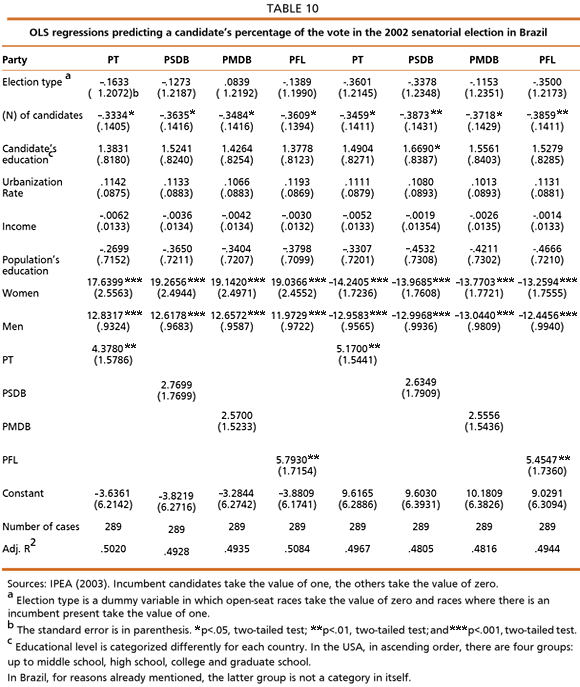
In the case of Brazil, this female advantage among professional candidates is also visible across parties. The gender bonus ranges between 9% (percentage points) and 4.8% (see table 9 in the appendix). The latter is the case of the Workers’ Party. Thus, among this party, a professional female candidate would receive 17.6% of the votes, and a male, 12.8%. The biggest difference is in the case of the PFL. When it comes to this party, whereas a female professional candidate would gather 19.0% of the votes, a male counterpart would get only 12.0%. For the other two parties, the differences, in favor of female professional candidates, are 19.3% vs. 12.6% (PSDB) and 19.1% vs. 12.6% (PMDB).37
Second, amateurism is a factor that leads to losses of votes for all candidates across countries. However, by and large, the loss is bigger for women than for men. For both Brazil and the United States, novice male candidates lose a smaller percentage of votes than their female counterparts. Whereas in the USA amateur male candidates from the two main parties tend to lose, on average, 24.2% of the votes in relation to all other groups, their female peers lose more: approximately 26.4%. In Brazil, the difference between the two groups is smaller. The amateur condition causes a loss of 10.7% of the vote among women and 9.6% among men.38
These data indicate that the alleged lack of competitiveness of women candidacies is not true for all women. Nonprofessional female candidates, indeed, are at disadvantage in comparison to all the other types of candidates. Professional women in both countries, however, are as competitive as men. Judging by their electoral performance, the former, therefore, seem to be doing exceptionally well at organizing their party machine, creating a network of support, gathering campaign resources and building up name recognition.
]]> Do these differences between professional and amateur male and female candidates translate into greater chances of real success? In other words, do professional women have a higher probability of being elected than professional men? These questions will be addressed through a probit analysis (Table 6).
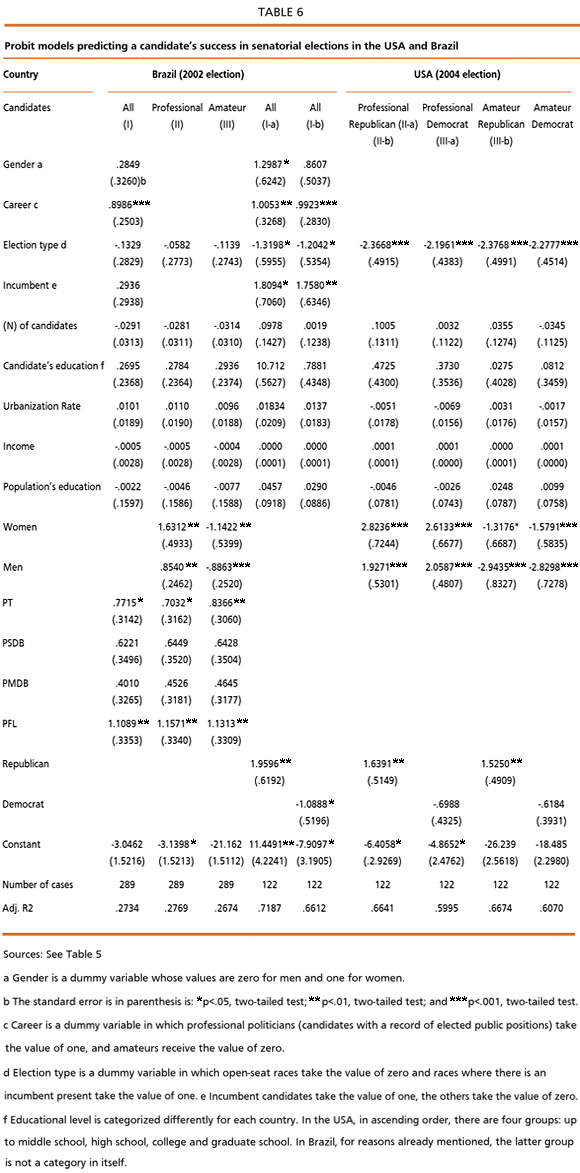
The results shown in the talbe 6 are consonant with most of those presented in the second OLS regression. Not surprisingly, model I for both countries shows that professional politicians have a greater chance of being elected than inexperienced ones. Races against an incumbent do decrease a candidate’s probability of success — even though this variable is not significant in the case of the Brazilian senatorial elections. Furthermore, a senatorial candidate seeking reelection has a higher likelihood of being successful than a non-senator in the United States. In Brazil, in contrast, incumbency is not a significant factor.39 Lastly, the socio-economic variables and the candidate’s level of education are not significant in any of the models. Therefore, even if better-educated candidates do receive more votes than poorly educated contestants in the USA and Democratic candidates perform better in richer districts, these variables are not decisive for their electoral victory.
Also in accordance with the OLS regression results, when isolated from the remaining groups (as in models II and III), professional women candidates in both countries have a bigger likelihood of victory than their male peers (when the latter are also separated from the other categories). In the case of Brazil, professional candidates who are women have a huge advantage over their male counterparts: their chance of obtaining a Senate seat is almost twice as big as the chance of a professional male contestant.40 In the case of the United States, this female advantage amounts to approximately 36%, i.e., women’s chance of being elected to the Senate is one-third higher than that of males from the same category.
The results are mixed for amateur women. In Brazil, their chances of being defeated are almost 29% higher than their male counterparts. In the United States, in contrast, women have a better perspective. Even though the odds are against all of them because of their nonprofessional status, male novice candidates, on average and across parties, have 50% more chance of being defeated than their female peers. Therefore, if amateurism is a real drawback, it has a more negative impact for men than for women in the United States context.
The probit analysis calculated the predicted chances of victory for professional and amateur men and women based upon the last elections in both countries. However, that analysis did not detail whether there are different probabilities for the four groups in the two different types of elections, open-seat contests and races against an incumbent — even though it clearly indicates that any given candidate has a higher chance of being elected in the former. This opens up an important question. Have professional women effectively won more often than professional men in all sorts of elections? The answer is no (Table 7). As a testimony to very important ongoing changes, however, women, specifically the professional candidates, performed better than experienced male candidates in the races considered the toughest: elections against an incumbent.
]]>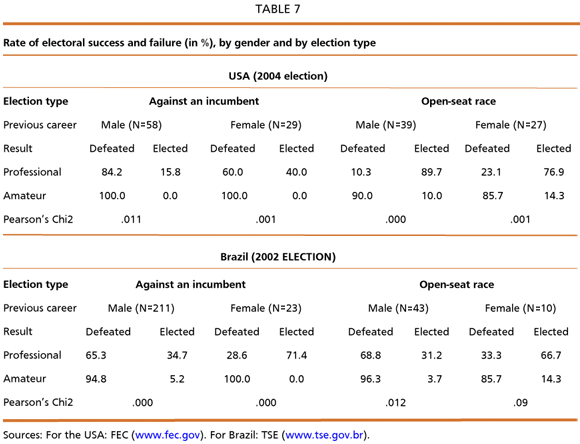
Squire (1989, 535) identified in his study that no American women had been successful in races where they faced incumbents, even though sixteen had attempted. Jacobson (1993), commenting on the 1992 elections, noted that, in that particular race, all the six women who ran against incumbents lost. Twelve years later, things have changed. In the 2004 election, American women did win elections against incumbents: 2 out of 5 professional female politicians (or 40% of them) beat senators seeking re-election. Among the professional men, in contrast, this rate of success was much lower: only 15.8%. In other words, when women attain the status of professional politicians, they become very competitive candidates. In contrast, no amateur politician in the USA — male or female — unseated an incumbent in the election analyzed.
In the case of Brazil, the numbers are even more impressive.41 Seven out of ten professional women were successful in races against incumbents, in comparison with only three out of ten professional men. Novice men, however, were more successful than nonprofessional women, given that none of the latter (sixteen of them tried) managed to win. Senatorial races against incumbents, therefore, represent a major obstacle for novice female candidates in both Brazil and the United States.
When it comes to open-seat races, Squire’s findings for the American case also need to be reconsidered. His study pointed out that women are less successful than men in this type of election. This has not changed for professional female politicians. In the 2004 elections, they won at a lower rate than male candidates: approximately 90% of the latter were elected, in contrast with 77% of their female peers. However, that does not hold true for amateur women candidates. Nonprofessional female candidates do seem to have a shot in open-seat races. Around 14.3% of them gained access to the Senate in open-seat races, in contrast with 10.0% of nonprofessional men. In Brazil, on the other hand, professional female candidates were very successful. They were elected at more than twice the rate of their male peers: 66.7% vs. 31.2%, respectively. Largely because of the sample size (only ten women ran in open-seat races), the results for amateur women in Brazil are not statistically significant and, therefore, cannot be compared with those for men.
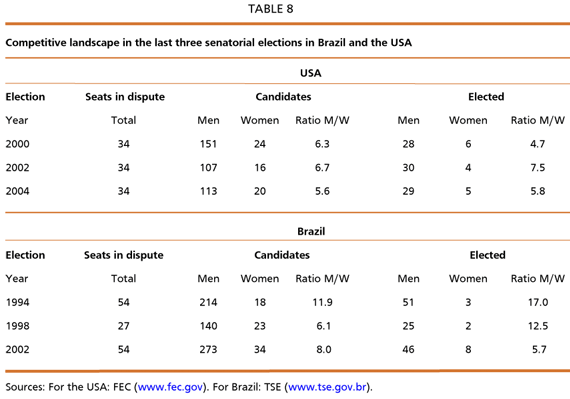
These interesting numbers open up a new question. If women are this successful in senatorial races, why have only 28 and 33 of them so far held seats in the Senate in Brazil and the USA, respectively? Table 8 displays the answer: the volume of female candidacies is still very small. For every female candidate contesting the 1994, 1998 and 2002 elections in Brazil, there were an average of eight men. Additionally, and perhaps most importantly, elected men in the Brazilian Senate outnumbered their female counterparts, on average, at a ratio of twelve to one. The same holds true in the case of the United States. In the last three American elections for the Senate, the availability of male candidates was six times greater than that of women running in those races. What is more, for every successful woman candidate in the same period, six men were elected, on average.
Final Considerations
The goal of this study was to verify whether, as some allege, female candidacies to the Senate are less competitive and less successful than their male counterparts. Building upon and corroborating previous works, we found that a candidate’s quality — as measured by the absence or presence of a record of elected public positions — is of paramount importance to entering the Senate.
We have shown that, when broken down by their professional or nonprofessional political background, women can be — and indeed were in the 2002 race in Brazil and in the 2004 election in the USA — as competitive and successful as men. In these two countries, professional women, those with a track record of previous elected jobs, tend to receive a larger share of the vote than their male peers. Moreover, the former segment also has a higher likelihood of being elected than the latter. In fact, the two elections analyzed witnessed a very important change. Professional women were more successful than professional men in the most difficult type of elections: races against a senator running for re-election. This change itself attests to the fact that nowadays, in both countries, a growing number of women are either consolidating or on the verge of consolidating their own political capital.
Second, this study has also pointed out that, despite the fact that amateur women, by and large, obtain a slightly smaller average proportion of the vote, they can be more successful than novice male candidates. That was definitely the case of American nonprofessional women candidates in the 2004 Senate race in the USA. The same seems to hold true for Brazil — despite the fact that the results for novice women in the 2002 senatorial election were not statistically significant.
Third, even though studies allege that the improvement of socio-economic conditions, such as income, education and especially urbanization, unleashes cultural and attitudinal changes that ultimately favor women’s struggle for political power, these variables do not seem to affect women’s electoral performance and rate of success in senatorial races in any important way.42
Lastly, the comparison between the American and Brazilian cases revealed that, in spite of the socioeconomic and political differences of their respective countries, women senators from the two nations have a similar age, educational and professional profile. Owing to their later entrance into the political world and into the upper chamber, Brazilian women senators have a better record of both previous appointed political positions and elected public jobs. American women, in contrast, entered the Senate much earlier. As a consequence, there is a higher concentration of amateur politicians among them.
Most important of all, the contrast between the two countries has shown that the key obstacle to a greater presence of women in the Senate is the same for both old and new democracies, namely the sheer lower availability of professional women running in senatorial races. Women do not lose Senate elections necessarily because they are women, but because fewer of them are professional politicians. This finding sheds light on the debate about gender quotas in a very significant way.
Needless to say, by automatically reserving slots for women in party lists, the gender quota laws represent the introduction of an important equalizer in the political arena, given that they level the playing field for a social segment whose entrance into politics has been more recent. However, this study shows that, in the short term, these legal measures will be rather innocuous when it comes to legislative bodies like Senates. The key element that represents an entry ticket into upper houses is the candidate’s political professionalization, which is acquired not by the mere obtainment of a slot in the party list of senatorial candidates, but through successful participation in other types of election. Therefore, focusing on the political parties’ willingness and strategies to obey the gender quotas, even though important in the long run (Araújo, 2005), is clearly insufficient.
Thus, in order to increase substantially the female voice in the upper chamber, a larger number of women need to be successful in other elections first: for local, state and national legislative and executive positions.43 Women need to run in such elections successfully with a view to gaining electoral experience, controlling their party machine and especially building up name recognition. Only then will a substantial body of female professional politicians be created, enough to challenge the Senates’ current gender balance. Between now and then, women who are political novices and still want to seek a career in the Senate will improve their chances significantly if they focus strategically on pursuing open-seat senatorial races.
]]>NOTES
1 The political variables used in this study of the World Economic Forum were the following: the number of women occupying ministerial positions and holding seats in the national legislative, and the number of years of presidential or parliamentary rule led by a female head of government (Lopez-Claros and Zahidi, 2005:4).
2 The disaggregated percentages are the following: for Argentina, 33.3% (2001 election); Bolivia, 14.8% (2002); Brazil, 12.3% (2002); Chile, 4.1% (2001); Colombia, 8.8% (2002); Paraguay, 8.9% (2003); Uruguay, 9.7% (2004); Venezuela, 8.8% (1998). These data and the numbers for the western European and the North American countries were obtained from the Inter-Parliamentary Union. Available at www.ipu.org.
3 The percentages by country are as follows: Belgium, 32.4% (2003 election); Germany, 33.3% (2004); Italy, 8.1%; France, 10.9%; the Netherlands, 29.3% (2003); Spain, 23.2%; Switzerland, 23.7% (2003) and the United Kingdom, 23.7% (2001).
4 The percentages by country are as follows: Canada (as of 2005), 37.1%; Mexico, 21.9% (2000); and the United States, 14% (2004).
5 For the same countries the numbers for the lower house are the following: Argentina, 33.7% (2001 election); Bolivia, 18.5% (2002); Brazil, 8.6% (2002); Chile, 12.5% (2001); Colombia, 12% (2002); Paraguay, 10% (2003); Uruguay, 12.1% (2004); Venezuela, 12.1% (1998); Belgium, 35.3% (2003); Germany, 32.8% (2004); Italy, 11.5% (2001); France, 12.1% (2002); Netherlands, 36.7% (2003); Spain, 36% (2004); Switzerland, 25% (2003); United Kingdom, 17.9% (2001); Canada, 21.1% (2004); Mexico, 24.2% (2003); United States, 15.2% (2004). Cf. Inter-Parliamentary Union, www.ipu.org.
6 Some studies define quality as a binary variable that distinguishes between candidates that have held elected public office and those who have not. Others categorize quality in an ascending order from city councilman, mayor, member of the State House, member of the State Senate, member of the national Lower House, senator and governor. According to this logic, being a former governor, for instance, ranks higher than having held the position of councilman. Needless to say, this latter definition is able to capture the impact that different elected public positions have on a candidate’s strength in elections.
7 Samuels (2003) suggests the idea of a progressive ambition among the Brazilian politicians. The latter usually attribute more value to a Senate seat than one in the national Lower House.
8 According to Gulati (2004), some women Senators in the U.S. do emphasize their images as outsiders, but they attribute a different meaning to the expression. They highlight the fact that they are a novelty: an alternative to the (degraded) establishment and a challenge to the status quo (Grossi & Miguel, 2001). Ondercin & Welch (2005) point out that, much because of this alternative perception, the election of women in some American states has been regarded as a political innovation that other states soon emulate.
]]> 9 This difficulty has fomented the debate about the propriety of introducing electoral quotas for women. The literature on this topic is vast. See, among others, Araújo (2001a, 2001b, 2005), Bird (2002), Chama (2001), Craske (1999), Htun (2001), Jones (1996, 1998), Norris & Lovenduski (1995), Norris (2001) and Peschard (2002).10 Using survey results from the University of Michigan and the University of Chicago, Dolan (2005, 43) shows that, in 1998, those who considered that men are better equipped for politics and that " [ w] omen should take care of their homes and leave running the country up to men" corresponded to 23% and 15% of the respondents, respectively.
11 Interestingly, in this study the United States figures as an outlier: a country with high levels of socio-economic development and a small proportion of women in elected public office. See Norris & Inglehart (2005). This particularity fomented various studies, such as Schroedel, Merolla & Foerstel (2005), which focuses on the impact of the population’s religious affiliation on women’s rate of electoral success in the United States.
12 In order to do that, one would necessarily have to gather data, among other things, on individual campaign expenditure by candidate. However, that would be very difficult in the case of Brazil, given that, for most parliamentary elections, parties provide the electoral management body with information on total party expenditure — instead of the expenses disaggregated by each individual candidate. The literature that assesses the impact of money on electoral results for Congress is very extensive. See, among others, Abramowitz (1991), Erikson and Palfrey (1998), Goidel & Gross (1994), Green & Krasno (1988), Jacobson (1980, 1990), Levitt (1994) and Mayhew (1974).
13 For the role of the Senate in Brazil, see Chacon (1997), among others; and for the United States, see Kernell & Jacobson (2000).
14 In countries like Uruguay, in contrast, senators represent the entire population, given that their districts are not the state-level units, but the whole nation. When it comes to the apportionment rules, there are three senators per state in Brazil and two in the US. In addition, the Brazilian Senate is renewed every four years, on a 1/3-2/3 basis. In the US, every two years, 1/3 of the Senate is renewed. The 2002 election in Brazil renewed two seats per state.
15 For the importance of the incumbency factor, see Born (1991), Cox & Katz (1996), Fiorina (1981), Jacobson (1981, 2001) and Johannes & McAdams (1981), among others.
16 In the US context, this possibility has benefited women who are spouses of senators, generating the so-called " wife/widow route" to the Senate. I thank Natasha Sugiyama and Kathy Staudt for this observation.
17 Needless to say, factors such as the widespread use of the mass media in campaigns, the party machines’ greater reliance on capital to the detriment of labor and the professionalization of campaigns have played an important role not only in these two countries, but in several others, including European countries. See Dalton (2002).
18 Another significant difference is the array of public positions available. There is a larger number of them in the case of the United States. Unlike in Brazil, judges, state treasurers, school board members and others are elected in the U.S. From the perspective of women, this greater availability of elected positions means that they have more opportunities to create name recognition. Most studies, however, limit candidate quality to the experience attained from being elected to traditional legislative and executive positions (councilmen, members of the state legislature, members of Congress, governors and presidents).
]]> 19 For the effective number of parties formula see Taagepera and Shugart (1989). Even though it varies significantly by state, the effective number of parties in the national Brazilian Lower House has been 8.7 (1990), 8.1 (1994), 7.1 (1998) and 8.5 (2002). See Bohn (2003, 2006).20 Presidential elections may figure as a possible exception to the rule. This was the case in the 1992 election of Ross Perot, who obtained approximately 19% of the vote (Dalton, McAllister & Wattenberg, 2002).
21 Political groups like the Workers’ Party (PT) do resort to primaries occasionally, but mainly to decide upon candidacies to executive positions (to presidential, gubernatorial and mayoral posts).
22 Given that they are absent from the Brazilian context, primaries will not be part of this study. The negative consequence of not including primaries is, for the American case, a possible underestimation of the pool of women engaging in races leading to the Senate.
23 For the purposes of this article, this important feature transforms these two countries into multiple observations, which has the beneficial effect of increasing sample size and the level of confidence of the results.
24 The level of gender income inequality in both countries is also very distinct. While in the United States, a woman earns, on average, 62% of a man’s salary, in Brazil the proportion is only 42% (UNDP, 2004, 221-222).
25 The fact that elected women are over 50 years old and have professional jobs means that entering the Senate may be an impossible task for stay-at-home women and for those without access to day-care for their children. For an interesting discussion on how women’s social trajectories affect their access to elected positions of political power in Brazil, see Araújo (2001b).
26 Given that the Senate is an elite body, this may be a reality for most polities in the world. I thank Kathy Staudt for this comment.
27 The Brazilian political parties mentioned throughout this articles are the following: PT (Workers’ Party), PPS (Popular Socialist Party), PSOL (Socialism and Freedom Party), PP (Progressive Party), PFL (Liberal Front Party), PSDB (Brazilian Social Democratic Party), PMDB (Party of the Democratic Brazilian Movement), PTB (Brazilian Labor Party), PDT (Democratic Labor Party), PSTU (United Workers’ Socialist Party), PRONA (Party of the Reconstruction of the National Order), PSC (Social Christian Party), PCdoB (Brazil’s Communist Party), PL (Liberal Party), PRN (National Renewal Party), PRP (Republican Progressive Party), PAN (Party of the Nation’s Retirees), PCO (Party of the Workers’ Cause), PPB (Brazilian Progressive Party), PRTB (Brazilian Labor Renewal Party), PSL (Social Liberal Party), PSN (Party of the National Solidarity), PTdoB (Labor Party of Brazil), PTN (National Labor Party), PV (Green Party).
28 In the electoral cycles of 1994, 1998 and 2002, the left also launched the largest number and proportion of female candidates. The top two parties are the Worker’s Party (with 17 female candidates in these three elections) and the PSTU (with 11 women on their senatorial lists). See table 9 in the appendix.
]]> 29 The data on the educational background of candidates in the USA contained detailed information about the different degrees attained and schools attended. Unfortunately, the data on the Brazilian candidates had a very brief description, which included only whether the candidate had finished middle school, high school or college.30 Once again, the data for Brazil is less detailed. Whereas for the USA one can easily gather data on all the previous offices a Senate candidate held, for Brazil the information available is whether he or she has been elected previously. Therefore, in this study, a candidate’s quality will be measured based solely upon the latter. It will be a binary variable, taking the value of one for candidates with a previous record of electoral success, and zero for amateur candidates. The negative consequence of this strategy is that, for the American case, we are unable to distinguish the impact of the different types of public office on a candidate’s competitiveness and rate of success.
31 Officially, senators and federal congressmen in Brazil compete in the same district, i.e., each of the twenty-seven states. In reality, though, studies show that members of the House concentrate their votes and campaign efforts in certain localities of each state. See, among others, Ames (1995a and 2001).
32 For the US case, when the number of male candidates is regressed solely against the size of the district, the resulting coefficient (.0000185) is significant at the .05 level.
33 This difference in the incumbency advantage may derive from the historical specificity of the two cases and their dissimilar re-election rates. Whereas in the United States some senators tend to hold their seats for several decades, in Brazil no senator has maintained his or her seat throughout the six elections that occurred after the end of the last dictatorship.
34 The variable incumbent was removed from models II and III in order to avoid possible multicollinearity problems, given that all incumbents are either male or female professional politicians and all amateur politicians are, by definition, non-incumbents.
35 In the specific context of the 2004 election, Republican senatorial candidates (both professional and amateur) fared better than their Democrat competitors. Needless to say, these numbers — for the variable party affiliation in both Brazil and the USA — may vary by election. Therefore, they are only valid for the 2002 election in Brazil and the 2004 election in the USA. It is important to emphasize that, even though party affiliation is an important intervening variable, the focus of this study is not on party performance, but on women’s electoral performance and rate of success.
36 It is interesting to note the signals for the socio-economic variables in the two countries. In Brazil, candidates, by and large, seem to receive larger percentages of the vote among the urban uneducated poor, whereas in the USA senatorial contestants perform better in less urbanized communities, especially among the wealthiest and most educated individuals.
37 All these results are statistically significant at .0001 level (see table 10 in the appendix).
38 When the party variable is taken into consideration, one finds out that being amateur hurts women candidates more than does men, regardless of party affiliation. Thus, while the non-professional status of a PT woman costs her 14.2% of the votes, for a male novice candidate the loss is 12.9%. The same pattern is visible in the other parties: 14.0% vs. 13.0% for the PSDB; 13.8% vs. 13.0% for the PMDB; and 13.2% vs. 12.4% for the PFL. All these numbers are statistically significant at .0001 level (see table 10 in the appendix).
]]> 39 This particularity will be a matter of a separate study.40 Probit regressions for the Brazilian case in which there is an iteration between gender and party confirm these results. Professional women have a bigger chance of success in all parties. In this sense, a professional woman from the PT, for instance, has a 26.5% higher chance of being elected than a professional male candidate with the same party affiliation. For the other parties, the same numbers are 52.7% (PSDB), 42.7% (PMDB) and 85.0% (PFL). All these numbers are statistically significant at the 1% level. The other variables included in these regressions were: election type, number of candidates, candidate’s education, urbanization, population’s education and income.
41 Unfortunately, unlike the American case, there are no studies with which these numbers can be compared. In order to create a longitudinal perspective, I am currently building a database for the Brazilian case to contemplate the three elections of the 1990s (1990, 1994 and 1998) and expect to present the results shortly.
42 For similar results for local level elections in Brazil, see Miguel & Queiroz (2006).
43 There is good news on this front. Kerbauy (2005, 341) shows that the number of female councilwomen has been on the rise since 1996 for all regions of the Brazilian federation.
Bibliography
Abramowitz, Alan. 1983. Partisan redistricting and the 1982 congressional elections. Journal of Politics 45 (3): 767-770. [ Links ]
_____. 1988. Explaining Senate election outcomes. American Political Science Review 82 (2): 385-403. [ Links ]
_____. 1991. Incumbency, campaign spending, and the decline of competition in U.S. House elections. Journal of Politics 53 (1): 34-56. [ Links ]
Ames, Barry. 1995a. Electoral rules, constituency pressures, and pork barrel: Bases of voting in the Brazilian Congress. American Political Science Review 88 (1): 95-111. [ Links ]
_____. 1995b. Electoral strategy under open-list proportional representation. American Journal of Political Science 39 (2): 406-33. [ Links ]
_____. 2001. The deadlock of democracy in Brazil. Ann Arbor: University of Michigan Press. [ Links ]
Araújo, Clara. 2001a. As cotas por sexo para a competição legislativa: O caso brasileiro em comparação com experiências internacionais. Dados 44 (1). [ Links ]
_____. 2001b. Potencialidades e limites da política de cotas no Brasil. Revista Estudos Feministas 9 (1): 231-252. [ Links ]
_____. 2005. Partidos políticos e gênero: mediações nas rotas de ingresso das mulheres na representação política. Revista de Sociologia Política 24: 193-215. [ Links ]
Bianco, William. 1984. Strategic decisions on candidacy in U.S. Congressional districts. Legislative Studies Quarterly 9 (2): 351-364. [ Links ]
BLS. 2005a. Women in the labor force: a databook. Washington D.C.: Bureau of Labor Statistics. [ Links ]
_____. 2005b. Median usual weekly earnings of employed full-time wage & salary workers 25 years and over by educational attainment and sex, 2004 annual averages. Washington D.C.: Bureau of Labor Statistics. www.bls.gov. [ Links ]
Bird, Karen. 2002. Does parity work?: results from French elections. Feminist Studies 28 (3): 691-698. [ Links ]
Bohn, Simone R. 2003. Is federalism a deterrent to the nationalization of the political parties?: Evidences from Argentina and Brazil. Paper presented at the 2003 Latin American Studies Conference, March 27-29, in Dallas, Texas, USA. [ Links ]
______. 2006. Ainda o velho problema da distorção da representação dos estados na Câmara dos Deputados. In Reforma Política, eds. Gláucio Soares and Lúcio Rennó. Rio de Janeiro: FGV. [ Links ]
Bond, Jon, Cary Covington, and Richard Fleisher. 1985. Explaining challenger quality in congressional elections. Journal of Politics 47 (2): 510-529. [ Links ]
Bond, Jon, Richard Fleisher and Jeffrey Talbert. 1997. Partisan differences in candidate quality in open seat house races, 1976-1984. Political Research Quarterly 50 (2): 281-299. [ Links ]
Born, Richard. 1991. Assessing the impact of institutional and election forces on the evaluations of congressional incumbents. Journal of Politics 53 (3): 764-799. [ Links ]
Canon, David. 1990. Actors, athletes, and astronauts: political amateurs in the United States Congress. Chicago: University of Chicago Press. [ Links ]
CAWP. 2005. Fact sheet: Women in the U.S. Congress 2005. Center for American Women and Politics (CAWP), National Information Bank on Women in Public Office, Eagleton Institute of Politics, Rutgers University, New Brunswick. [ Links ]
Chacon, Vamireh. 1997. História institucional do Senado no Brasil. Brasília: Senado Federal. [ Links ]
Chama, Monica. 2001. Las mujeres y el poder [ Women and Power] . Buenos Aires: Ciudad Argentina. [ Links ]
Congressional Quarterly’s Politics in America. 2004. 2004 – The 108th Congress, Washington D.C.: CQ Press. [ Links ]
Conway, M. Margaret (2001). Women and political participation, PS: Political Science and Politics, 34 (2): 231-33. [ Links ]
Cox, Gary, and Jonathan Katz. 1996. Why did the incumbency advantage in the U.S. House elections grow? American Journal of Political Science 40: 478-497. [ Links ]
Craske, Nikki. 1999. Women and Politics in Latin America. New Brunswick: Rutgers University Press. [ Links ]
Dalton, Russel J. 2002. The Decline of Party Identifications. In Parties without partisans: Political change in advanced industrial democracies, eds. Russel Dalton and Martin P. Wattenberg. New York, Oxford University Press. [ Links ]
Dalton, Russel J., Ian McAllister and Martin Wattenberg. 2002. The consequences of party dealignment. In Parties without partisans: Political change in advanced industrial democracies, eds. Russel Dalton and Martin P. Wattenberg. New York, Oxford University Press. [ Links ]
Dolan, Kathleen. 2005. How the public views women candidates. In Women and elective office: past, present, and future, eds. Sue Thomas and Clyde Wilcox. New York: Oxford University Press. [ Links ]
Erikson, Robert, and Thomas Palfrey. 1998. Campaign spending and incumbency: an alternative simultaneous equations approach. Journal of Politics 60 (2): 355-373. [ Links ]
Fiorina, Morris. 1981. Some problems in studying the effects of resource allocation in congressional elections. American Journal of Political Science 25 (3): 543-567. [ Links ]
Francis, Wayne L. 1993. House to Senate career movement in the U.S. States: The significance of selectivity. Legislative Studies Quarterly 18 (3):309-320. [ Links ]
Fridkin, Kim, and Gina Serignese Woodall. " Different portraits, different leaders?" : Gender differences in U.S. Senators’ presentation of self. In Women and elective office: past, present, and future, eds. Sue Thomas and Clyde Wilcox. New York: Oxford University Press. [ Links ]
Goidel, Robert, and Donald Gross. 1994. A systems approach to campaign finance in U.S. House elections. American Politics Quarterly 22: 125-153. [ Links ]
Green, Donald, and Jonathan Krasno. 1988. Salvation for the spendthrift incumbent. American Journal of Political Science 32 (4): 844-907. [ Links ]
Grossi, Miriam, and Sonia Malheiros Miguel. 2001. Transformando a diferença: as mulheres na política. Revista de Estudos Feministas 9 (1): 167-206. [ Links ]
Gulati, Girish (2004). " Members of Congress and presentation of self on the World Wide Web" , Harvard International Journal of Press Politics 9 (1): 22-40. [ Links ]
Heath, Roseanna M., Leslie Schwindt-Bayer and Michelle Taylor-Robinson. 2005. Women on the sidelines: Women’s representation on committees in Latin American legislatures. American Journal of Political Science 49 (2): 420-36. [ Links ]
Htun, Mala. 2001. A política de cotas na América Latina. Revista de Estudos Feministas 9 (1): 225-230. [ Links ]
Huddy, Leonie, and Nayda Terkildsen. 1993. Gender stereotypes and the perception of male and female candidates. American Journal of Political Science 37 (1): 119-147. [ Links ]
IBGE. 2001. Mapa do mercado de trabalho no Brasil, 1992-1997. Rio de Janeiro: IBGE [ Links ]
IBGE. 2005. Pesquisa Nacional de Amostra de Domicílios, 2002/2003. www.ibge.gov.br. [ Links ]
IPEA. 2003. Atlas do Desenvolvimento no Brasil. Software developed by the UNDP, IPEA and João Pinheiro Foundation. [ Links ]
Jacobson, Gary. 1980. Money in congressional elections. New Haven: Yale University Press. [ Links ]
_______. 1981. Incumbents’ advantages in the 1978 U.S. Congressional Elections. Legislative Studies Quarterly 6 (2): 183-200. [ Links ]
_______. 1989. Strategic politicians and the dynamics of House elections, 1946-86. American Political Science Review 83: 773-793. [ Links ]
_______. 1990. The effects of campaign spending in House elections: new evidence for old arguments. American Journal of Political Science, 34 (2): 334-362. [ Links ]
_______. 1993. Congress: unusual year, unusual election. In The Elections of 1992, ed. Michael Nelson. Washington, D.C.: Congressional Quarterly Press. [ Links ]
_______. 2001. The politics of Congressional elections, New York: Longman. [ Links ]
Jacobson, Gary, and Samuel Kerner. 1983. Strategy and Choice in Congressional Elections. New Haven: Yale University Press. [ Links ]
Johannes, John, and John McAdams. 1981. The congressional incumbency effect: is it casework, policy compatibility, or something else? American Journal of Political Science 25 (3): 512-542. [ Links ]
Jones, Mark P. 1996. Increasing women’s representation via gender quotas: The Argentine Ley de Cupos. Women and Politics 16 (4): 75-98. [ Links ]
______. 1998. Gender quotas, electoral laws, and the election of women: Lessons from the Argentine provinces. Comparative Political Studies, 31 (1): 3-21. [ Links ]
Kahn, Kim. 1996. The political consequences of being a woman: how stereotypes influence the conduct and the consequences of political campaigns. New York: Columbia University Press. [ Links ]
Kerbauy, Maria Teresa. 2005. As câmaras municipais brasileiras: Perfil de carreira e percepção sobre o processo decisório local. Opinião Pública 11 (2): 337-65. [ Links ]
Kerner, Samuel, and Gary Jacobson. 2000. The logic of American politics. Washington D.C.: CQ Press. [ Links ]
Kim, Thomas P. 1998. Clarence Thomas and the politicization of candidate gender in the 1992 Senate elections. Legislative Studies Quarterly 23 (3): 399-418. [ Links ]
Koch, Jeffrey. 1999. Candidate gender and assessments of Senate candidates. Social Science Quarterly 80:84-96. [ Links ]
Levitt, Stephen. 1994. Using repeat challenger to estimate the effects of campaign spending on election outcomes in the U.S. House. Journal of Political Economy 102: 777-798. [ Links ]
Lublin, David. 1994. Quality, not quantity: strategic politicians in U.S. Senate elections, 1972-1994. Journal of Politics 56 (1): 228-241. [ Links ]
Lopez-Claros, Augusto and Saadia Zahidi. 2005. Women’s empowerment: measuring the global gender gap. Cologny, Geneva: World Economic Forum. [ Links ]
Mayhew, David. 1974. Congress: the electoral connection. New Haven: Yale. [ Links ]
Mainwaring, Scott. 1992. Brazilian party underdevelopment in comparative perspective. Political Science Quarterly 107 (4): 677-707. [ Links ]
______ and Timothy Scully. 1995. Parties and Party Systems in Latin America. Stanford: Stanford University Press. [ Links ]
Miguel, Luis Felipe. 2001. Política de interesses, política do desvelo: representação e singularidade feminina. Revista de Estudos Feministas 9 (1): 253-267. [ Links ]
______, and Cristina Monteiro de Queiroz. 2006. Diferenças regionais e o êxito relativo de mulheres em eleições municipais no Brasil. Revista de Estudos Feministas 14 (2): 363-85. [ Links ]
Norris, Pippa. 2001. " Breaking the barriers: Positive discrimination policies for women" . In Has liberalism failed women? Parity, quotas and political representation, eds. Jyette Klausen and Charles S. Maier. New York: Saint Martin’s Press. [ Links ]
Norris, Pippa , and Lovenduski. 1995. Political recruitment: Gender, race and class in the British Parliament. Cambridge: Cambridge University Press. [ Links ]
Norris, Pippa, and Ronald Inglehart. 2005. Women as political leaders worldwide: cultural barriers and opportunities. In Women and elective office: past, present, and future, eds. Sue Thomas and Clyde Wilcox. New York: Oxford University Press. [ Links ]
Ondercin, Heather, and Susan Welch. 2005. " Women candidates for Congress" . In Women and elective office: past, present, and future, eds. Sue Thomas and Clyde Wilcox. New York: Oxford University Press. [ Links ]
Peschard, Jacqueline. 2002. " El sistema de cuotas en América Latina" : Panorama general. In Mujeres en el Parlamento. Más allá de los números, ed. International IDEA, 173-186. Stockholm: International IDEA. [ Links ]
Samuels, David J. 2003. Ambition, federalism, and legislative politics in Brazil. New York: Cambridge University Press. [ Links ]
Schroedel, Jean Reith, Jennifer Merolla, and Pamela Foerstel. 2005. Women’s relative lack of electoral success in the United States. Paper prepared for presentation at the Women’s Caucus for Political Science Pre-Conference Meetings at Howard University, August 31, 2005. [ Links ]
Schroedel, Jean Reith, and Marcia Goodwin. 2005. Prospects for cracking the political glass ceiling: the future of women officeholders in the twenty-first century. In Women and elective office: past, present, and future, eds. Sue Thomas and Clyde Wilcox. New York: Oxford University Press. [ Links ]
Senado Federal. 2004. Senadoras. Dados biográficos, 1979-2004. Brasília: Senado Federal. [ Links ]
Squire, Peverill. 1989. Challengers in U.S. Senate Elections. Legislative Studies Quarterly 14 (4): 531-547. [ Links ]
Taagepera, Rein, and Matthew Shugart. 1989. Seats and votes. New Haven: Yale. [ Links ]
UNDP (2004). Human Development Program 2004, New York: Oxford University Press. [ Links ]
U.S. Census Bureau. 2003. Statistical abstract of the United States: 2003. Washington D.C.: U.S. Census Bureau. [ Links ]
U.S. Census Bureau. 2005a. Current Population Survey, 2002 to 2004 Annual Social and Economic Supplements. www.census.gov. [ Links ]
U.S. Census Bureau. 2005b. Current Population Survey, Internet release, March 2005. www.census.gov. [ Links ]
U. S. Congress. 1971. Biographical Directory of the American Congress, 1774-1971. Washington, D.C.: Government Printing Office. [ Links ]
U. S. Congress. 1981. Members of Congress since 1789. Washington D.C.: CQ Press. [ Links ]
Wattenberg, Martin. 1991. The rise of candidate centered politics. Cambridge, Mass.: Harvard University Press. [ Links ]
Werner, Emmy E. 1968. Women in the state legislatures. The Western Political Quarterly 21 (1): 40-50. [ Links ]
Westlye, Mark. 1983. Competitiveness of Senate seats and voting behavior in Senate elections. American Journal of Political Science 27 (2): 253-283. [ Links ]
Submitted in February, 2006
Accepted in January, 2007
* This text was originally presented at the APSA Pre-Conference of the Women’s Caucus for Political Science, Washington D.C., Howard University, August 31, 2005. I thank all the participants for their comments. Special thanks go to Jennifer Merolla for her detailed comments and to Sueli Rodrigues for giving me the book about Brazilian women senators, from which this research originated. I also thank the blind reviewers for their useful comments.
]]>
APPENDIX