Yan de Souza Carreirão
Federal University of Santa Catarina, Brazil
Replicated from Brazilian Political Science Review (Online), Rio de Janeiro, v.1, 2007.
ABSTRACT
The article investigates some of the most relevant factors for the voting decision in the 2002 presidential election by testing some of the main hypotheses about electoral behaviour in the country by means of logistic regression analyses based on data from the ESEB (Brazilian Electoral Study), a post-electoral survey conducted on a national sample of voters. In the models, taken as a whole, political opinions did not have much weight in the voting decision. Furthermore, they are unable to "explain" a very large share of voters' positioning on a left-right scale or on a scale of voters' "party sentiments". All these "political" variables taken as a whole, in turn, "explain" only part of the evaluations that voters make of the government's performance. The analysis shows that Brazilian voters' voting decision seems rather varied, since some variables were shown to be relevant to "explain" the vote for a candidate, but not for the others. The variables shown to be more frequent (for all four candidates analysed) and with more considerable weight were: voters' religion, their "party sentiments", their positioning on a left-right scale, the evaluations made of the then current government (in actual fact important only for the vote for Serra, the government's candidate) and the candidates' attributes (especially "reliability" and "preparedness/competence").
]]> Key words: Brazilian politics; presidential elections; electoral behaviour.
Foreword
The article seeks to analyse some of the most relevant factors for the voting decision in the 2002 Brazilian presidential election. This is done by means of logistic regression analyses based on data from the ESEB (Brazilian Electoral Study).1 In the first section, the presidential election is put in context. Then, the empirical basis, the hypotheses and the methodological aspects involved in operationalising the analysis are characterized. In the third section, the more general results are analysed. The fourth section tests some complementary hypotheses regarding possible inter-relationships between various variables of the initial model. Lastly, the final considerations are put forward.
The 2002 Presidential Election: The Context and the Campaign
Six candidates stood in the 2002 presidential elections: Luiz Inácio Lula da Silva (Lula), for the PT-PL-PCdoB-PMN-PCB alliance; José Serra (PSDB-PMDB); Anthony Garotinho (PSB-PGT-PTC); Ciro Gomes (PPS-PDT-PTB), José Maria de Almeida (PSTU) and Rui Pimenta (PCO) — the latter two were candidates of far-left parties with extremely low electoral density (not reaching 0.5% of the votes between them). Of the more relevant parties, neither the PPB nor the PFL ran or supported a candidate in the first round.
In the first round, none of the candidates obtained an overall majority of the valid votes, and Lula (42% of the votes) and Serra (21%) went to the second round. In the second round, Lula gained the support of Garotinho, Ciro and the parties that supported them, namely the PSB, the PPS, the PDT and the PTB. Serra obtained the support of much of the PFL. Lula, with 61% of the valid votes, beat Serra (39%). For the first time in Brazilian history, a president clearly linked to the left was elected.
One factor in the context of the electoral process that is worth highlighting is the evaluation of the government of president Fernando Henrique Cardoso (henceforth referred to as 'FHC' for short) in the eyes of the Brazilian electorate. There was a major drop in the evaluation of the FHC government from the first to the second term. The percentage of voters who rated the government excellent or good in the first term varied between 30% and 47%, with an average of 39%. In the second term, it varied between 13% and 31%, with the average falling to 24%.
]]> Therefore, comparing the average of each period, some 15% of Brazilian voters who evaluated the FHC government positively in his first term ceased to do so in his second. And the change did not happen gradually; it was sudden, exactly at the turn of one term to the next. On the eve of the 1998 election, in late September, 42% of voters evaluated the government positively (in December there already was a drop to 35%); in February 1999, right after the devaluation of the Real, this percentage fell by exactly half, to 21%. It is obvious that there is a connection between this fall and the devaluation of the Real in January 1999, given the president's assurances during the 1998 campaign that there would not be a devaluation.If the devaluation of the Real brought much discredit to the government at the beginning of the second term, the absence of economic success (return to growth, rise in employment and income levels) was responsible for keeping at low rates the government's positive evaluation over the course of the second term. Although some improvement did take place during the second term, it was not enough to recover the ground lost at the turn of the first to the second term. The last Datafolha poll before the first round of the 2002 election showed that 23% of voters evaluated the government as excellent or good and 34% as bad or terrible.
This seems to me to be a decisive factor in the election: the electorate's evaluation of the FHC government's performance. On the one hand, a not insignificant share evaluated the government positively especially due to the fact that it eliminated the hyperinflation that had persisted in the country over a long period before the 1994 Plano Real. On the other, the evaluation was negative or neutral ("average") for most of the electorate — and the vast majority of voters who evaluate the government as average tend to vote against it (according to the analysis based on the data made by Carreirão and Kinzo 2004). There was dissatisfaction on the part of most of the electorate with the course the country was heading along under FHC, especially in his second term. This was owed, in part, to the erosion of the government's popularity after eight years and the country's fragility in the face of external instabilities (due to the high level of indebtedness, among other things), but, fundamentally, to the high rate of unemployment and the persistence of glaring social inequalities. There was a major perception that the FHC government had not done enough to improve the lives of the poor. Hence, the percentage of voters who still evaluated the government positively provided the fuel for a pro-government candidate to get to the second round, although winning it would be very difficult.
As for the campaign and the candidates, let us begin with Serra, the government's candidate. An economist by trade, he had already been a federal deputy and senator for the state of São Paulo and minister of planning and of health in the FHC government. He was well evaluated by a substantial portion of voters in attributes that seem to be considered relevant for a good president: he was considered honest and managed to form the image of a good administrator, serious and competent. The main problem was the credibility of his proposals. Serra centred his TV programme on two fundamental issues for the electorate: employment and public safety. But the credibility problem lay in the fact that he was the candidate of the government, which, in the eyes of the vast majority of the electorate, had let the situation deteriorate very much in these two fields.
As for Ciro Gomes (ex-governor of Ceará state and minister of finance in the Itamar Franco government), he had a moment of growth in his campaign in June and July, even reaching second place in the opinion polls, just 5% behind Lula in late July. In the following poll, in mid-August, Ciro's rating remained stable, with only a 1-point change. From then on, after the start of the HPEG (compulsory electoral broadcasts on radio and television), Ciro started falling. Among the main reasons for this, one might highlight firstly Serra's negative campaign (during the first televised debate in early August and after the start of the HPEG on August 20), showing not to be true certain statements by Ciro, so as to associate him with the image of a liar; Serra's broadcasts also showed Ciro calling a voter stupid, in an attempt to portray him as unstable. Secondly, several unfortunate statements made by Ciro, especially with regards to the role of actor Patrícia Pilar (his girlfriend) in the campaign, contributed to the undermining of his credibility before a segment of the electorate. Ciro's decline turned out to be continuous, until the eve of the first round. He dropped from 27% of voting intentions in mid-August to 11% at the ballot box.
The candidate Anthony Garotinho (broadcaster and ex-governor of Rio de Janeiro state) was ahead of Ciro Gomes in the polls between January and early June. Towards the end of the campaign, he returned to this position, achieving 16% at the ballot box. One of the strengths of the candidate, who is an evangelical Christian, was the support mustered among the evangelical churches, above all the neo-Pentecostal ones, which have grown very much over the last decade in Brazil. But the fact of being a candidate with a populist profile, seen as not very reliable by the economic elites and much of the better-informed electorate, as well as being supported by small parties, limited the reach of his campaign.
Anyway, during much of the campaign, there was room for a third candidacy beyond the polarisation between Lula and Serra. On several occasions, the sum of the poll ratings of third candidates surpassed Lula's. A significant contingent, 27% of the voters, ended up voting for a candidate other than Lula or Serra. But one thing that seems to have been fundamental for Lula's victory is that, in the moments of decline of Roseana Sarney (governor of Maranhão, pre-candidate for the presidency who abandoned the race in April 2002 after a political scandal involving illicit money to fund her campaign) or Ciro Gomes, part of the votes ended up going to Lula. And this was largely because Lula's campaign managed to neutralise well two central aspects of voters' rejection of the candidate in other elections: on the one hand, the "radicalism" of Lula and the PT; on the other, Lula's "lack of preparedness" to govern. The clear signalling of the PT and Lula's moderation, the alliance with the Liberal Party, the choice of a major industrialist as his running mate (for vice-president), the "Letter to the Brazilian People" committing himself to respecting contracts and maintaining inflation and fiscal surplus targets all contributed to reducing the fear certain layers of the population had of Lula and the PT's "radicalism". The emphasis put in Lula's campaign on his capacity to negotiate and lead (in the realm of trade union and party politics) also seems to have contributed to a reduction in resistance to Lula over his lack of administrative experience. It is necessary, however, to admit that the marketing job was made easier by certain more general political aspects. The dissatisfaction of most of the electorate with the situation of the country strengthened the possibilities of opposition candidacies. Lula was the main potential beneficiary, since his name and trajectory were better known to the electorate as a whole and he was the leader of the main opposition party. And when the campaign began, the fact that the other candidates had to fight over the second place to go to the runoff allowed Lula to maintain a "statesmanlike posture" with a proposal-centred campaign (and the "peace and love" style), while the others fought among themselves.
Although the government's candidate could count on a certain potential electorate among the 25% or so of voters who evaluated positively the FHC government, before the campaign began there really was a strong predisposition against the government's candidate (and there would be one, whichever the candidate). The deficiencies of the other candidacies, coupled with a greater predisposition to the vote for Lula and a good campaign by the latter candidate ended up deciding the result.
A Voting Decision Model for the 2002 Presidential Election
]]> In this section, the hypotheses that guided the research and the type of statistical analysis and variables used to formulate the outline of a voting decision model for the 2002 presidential election will be discussed.The empirical base that grounds the analysis is the ESEB (Brazilian Electoral Study), a survey conducted on a sample — probabilistic without substitution, with 3 selection stages (municipality, census sector and domicile), with a sampling error of 2% — of 2,513 voters throughout the country between October 31 and December 28, 2002.
Below, the main hypotheses that guided the research are listed. They are hypotheses whose testing was judged to be relevant. This was not because we judged that all of them would be corroborated by the data, but because some of them were formulated to explain the voting decision in recent Brazilian presidential elections, while, about others, there is a relevant debate in the international literature.
1) The hypothesis that voters' political opinions influence their voting decision. It is not a matter of proposing here that voters have a highly structured "belief system" (in the sense of having opinions that are "coherent" with one another). It is a matter simply of checking whether some sets of relevant opinions have an association with the vote, as proposed by Almeida and Clifford (2002).2
2) The hypothesis that the voting decision is influenced by voters' positions in relation to certain issues that are central at the moment of the election (Page and Brody 1972; Carmines and Stimson 1980, among others). In the context of the 2002 presidential election, there was a debate on the weight that policies for fighting inflation, unemployment and extreme poverty would have on the voting decision.
3) The hypothesis that voters' "ideological identity" (measured by their self-positioning on a left-right scale) influences their voting decision. This is the thesis defended by Singer, who defines the ideological identification as "the adherence to a position on the left-right or liberal-conservative continuum that, even if diffuse, that is, cognitively unstructured, signals a general political orientation of the voter" (Singer 2000, 49). After calculating correlation coefficients between this variable and the vote, Singer states that he showed "that the ideological identification had been a powerful predictor of the vote in the [presidential] elections of 1989 and 1994" (Singer 2000, 163).
4) The hypothesis that voters' inclinations or "sentiments" regarding the parties influence their vote. In the international literature there is a debate between the so-called "Michigan School" and rational choice theory over the notion of "party identity". In the eyes of the former, this identity is forged based on affection during the process of socialization (even before adulthood). This makes it more resistant to change. For the latter approach, party identification is a fruit of the result of the evaluation an individual makes of his or her built-up experience as a voter over the course of his or her life, monitoring parties' promises and performances over time. In this perspective, the identification could change more, due to changes in this evaluation (Fiorina 1981, among others). Anyway, both approaches see party identification as a central element of the voting decision. Over the last few decades of the 20th century, signs of the declining importance of political parties have been pointed out, including over voters' voting decision. In spite of this, party identification still is a central theme for the literature on electoral behaviour.
In Brazil, in relation to the current period, although there are some variations, there predominate interpretations that afford little relevance to party identification in the voting decision. Anyway, the studies in question have worked systematically only with the notion of party identification or preference ("measured", in general, on the basis of a single survey question). One of the proposals of this article is to test the weight of sentiments expressed by voters in relation to the parties by operationalising this variable in a more encompassing way, on the basis of a larger battery of questions, as will be seen further on.3
5) The hypothesis that the voting decision for president is influenced by the evaluation the voter makes of the performance of the incumbent government (president). The central thesis under debate here is that voters who evaluate the government's performance positively tend to vote for the government's candidate, while voters who evaluate the government's performance negatively tend to vote for the opposition.4
6) The hypothesis that the vote is influenced by the evaluation voters make of candidates' personal characteristics that are relevant to their capacity to govern and/or fulfil promises. Since the 1980s, there has emerged in the international literature a set of analyses that does not share the diagnosis, predominant until then, that the vote influenced by the evaluation of candidates' personal characteristics is necessarily "irrational" or "emotional", and that the voter's judgement is based on superficial criteria such as the candidate's appearance or "style". Fiorina (1981), for example, maintains that in voters' evaluation of candidates, the retrospective judgements (based on past governmental performance) or prospective judgements (based on proposals for the future) and the evaluations centred on personal characteristics relevant to the ability to govern (competence, intelligence etc) are much more important than evaluations based on physical and personality characteristics that are independent of the ability to govern (friendliness, beauty etc). Rahn et al. (1990), on the basis of analyses of US presidential elections, conclude that the process of evaluation of candidates' professional and personal qualities has a central role in the final voting decision. According to the authors, these evaluations are neither idiosyncratic nor superficial. On the contrary, they are very reasonable, grounded in daily processes of formation of impressions. Furthermore, the political context modifies the evaluation process. Voters structure their evaluations of candidates' qualities in terms of political leadership and competence. These judgements are related to political variables such as party preference, positions on issues and ideology. Beyond these, studies like those by Miller et al. (1986) and Popkin (1994), among others, emphasise the weight of the evaluation of candidates' attributes in voters' voting decision.
]]> 7) The hypothesis that most of the electorate tend to vote for the candidate that manages to form the image of defender of the interests of "the people" (of "the poor", "the workers", "the majority"). This thesis can be found, with certain variations, in works by Singer (1990) and Castro (1994), centred on the election of president Collor in 1989.Logistic regression analysis was adopted for the voting intention study for each of the four main candidates. In Methodological Appendix 1, the main characteristics of this technique of analysis are described. The following independent variables related to the hypotheses above, or as control variables, were included in the model for each candidate:
a) demographic and socio-economic variables: sex, age, income, schooling, religion, occupational situation.5
b) politico-ideological variables: "ideological identity";6 "party sentiments" (see Methodological Appendix 2); "cronyism index"; "'robber-but-doer' index"; "authoritarianism index" (protest against the government); "regulation of the market by the State index"; "closure of the market to the outside world index" (see Methodological Appendix 3).
c) position on issues — the answers, in terms of priorities, to two questions that could define very important counter-positions between the main candidates in the electoral dispute were considered: jobs X low inflation (Issue 1); fighting extreme poverty and hunger X low inflation (Issue 2).7
d) evaluation of FHC government (bad/terrible; average; good/excellent).
e) evaluation of candidates' attributes: reliability; honesty; competence; experience; "defends the poor"; "defends job creation"; "defends low inflation"; "avoids strikes and disorder" (see Methodological Appendix 4).
Analysis of the data
Below, the results of the logistic regression analyses for each candidate are shown.
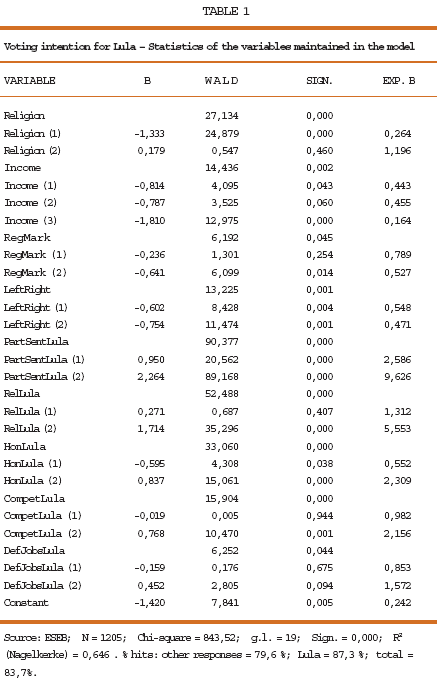
]]> LulaTable 1 shows the statistics for each independent variable maintained in the final model (for the voting intention for Lula), as well as the statistics relating to the model as a whole (below the table).8
The data relating to the model as a whole, shown below the table (chi-square, significance, R2 and hit rates of the answers foreseen) indicate that the model is rather satisfactory. We see that the remaining variables are statistically significant (some at the level of 0.01 and others, 0.05); the higher coefficients of the Wald statistic show that the "party sentiments" variable and, next, reliability and honesty, are the ones with the most weight.
The variables religion, income, "regulation of the market index", "ideological identification" (positioning on a left-right scale), party sentiments, reliability, honesty, administrative competence and defence of jobs were left in the model.
The last column of the second line indicates that the chance of an evangelical voter voting for Lula represented 26% of the chance of a catholic voter (considering the probability of voting for Lula adjusted in terms of the other variables of the model).9
As for income, the data of Exp B show that the chances of voting for Lula decline as the voter's income increases, so that for the layer of voters who earn more than ten times the minimum wage (MW) the chance was 16% of the chance among voters of the up to 1 MW layer (the lowest category, which serves as the parameter for calculating the percentages of chance of the other categories in the variable). Put differently, the chance of voting for Lula among voters who earn up to 1 MW is six times the chance of voters who earn more than 10 MW.
]]> With regards to the "regulation of the market index", the data in the table point to a tendency that is the opposite of that theoretically expected: among voters expressing a high index (i.e., with opinions more favourable to the regulation of the market by the State), Lula had a voting chance that represented 53% of the chance of a voter with a low index (i.e., voters more opposed to this regulation).The chance of voting for Lula on the part of a voter positioned in the centre (within a left-right scale) was of 55% the chance of a voter positioned to the left. The chance of a voter positioned to the right was of about 47% of that of a voter positioned to the left. Here, the tendency is that expected theoretically.
The chance of voting for Lula by voters whose expressions regarding parties represented a theoretically neutral situation (in relation to the vote for the candidate) was about 2.6 times the chance of those whose expressions regarding parties represented a theoretically negative situation in relation to the vote for the candidate. The chance of voting for Lula by those who expressed theoretically favourable party sentiments (in relation to the vote for the candidate) was around 9.6 times that of a voter whose expressions represented a negative situation.
As for the candidates' attributes, the tendencies are similar for reliability, honesty, administrative competence and defence of job creation (though the strength of the influence of the first two is much greater, as the Wald coefficient attests). It is especially among those who indicate Lula in first place in the answer (to each of the items in the question) that the chance of voting for this candidate is well greater, in comparison with those who did not mention his name or placed him in third place as to the attribute in question. The difference between those who indicated him in second place as to the attribute and those who did not mention his name or placed him in third place was only statistically significant for the attribute "honesty" (and, even then, in the opposite direction of what was expected). For the other attributes, the differences were not significant. In other words, it makes a difference to the chance of voting for a candidate when he is considered the best in a given attribute. Being considered the second does not seem to differ significantly from being considered the third (or being mentioned at all). As for the "defence of job creation", although the coefficient for the variable as a whole is statistically significant, the coefficients for each value assumed by the variable, individually, are not. This fact, coupled with the low Wald coefficient found for the variable, allows one to suppose that its influence on the voting decision for Lula is not very significant.
José Serra
The variables religion, evaluation of the FHC government, party sentiments, reliability and administrative competence stayed in the model. The ones with most weight were reliability, followed by party sentiments and administrative competence (Table 2). The model was not as good as the model of voting intention for Lula (lower R2 and hit rates of the answers), but, even so, it seems satisfactory.
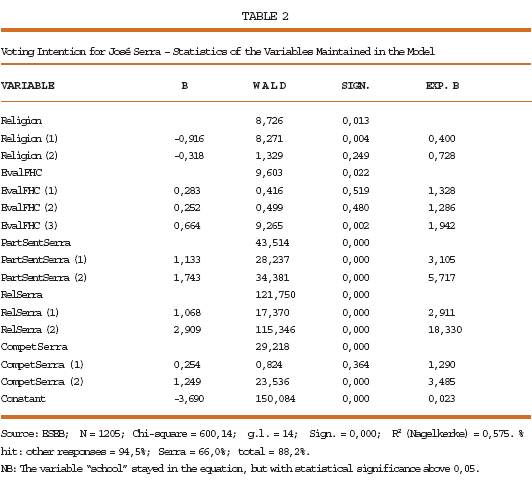
]]> As for religion, the chance of an evangelical voter voting for Serra was 40% that of a catholic voter.
With regards to the evaluation of the performance of the FHC government, the chances of a vote for Serra, as expected, go up as we go from voters who evaluated badly that government to those who evaluated it well. But only the coefficient of the highest category is statistically significant. The chance of a voter who evaluated the government as excellent or good voting for Serra was almost twice that of a voter who evaluated the government as bad or terrible.
The chance of voting for Serra on the part of a voter whose expressions with regards to parties represented a situation theoretically favourable to a vote for Serra was 5.7 times that of a voter whose expressions were theoretically contrary to a vote for the candidate.
As for the candidate's personal attributes, the chance of voting for Serra among voters who considered him the most reliable candidate was 18.3 times that of a voter who did not mention his name or who put him in third place as to this attribute. For the attribute "administrative competence", the direction of the variation is the same, but the intensity, although still significant, is well smaller.
Garotinho
The statistics for the model as a whole seem to indicate a reasonably satisfactory model, like Serra's. The following remained in the model: evaluation of the FHC government, administrative competence, defence of job creation, religion and reliability, with the last two having the most weight (Table 3).
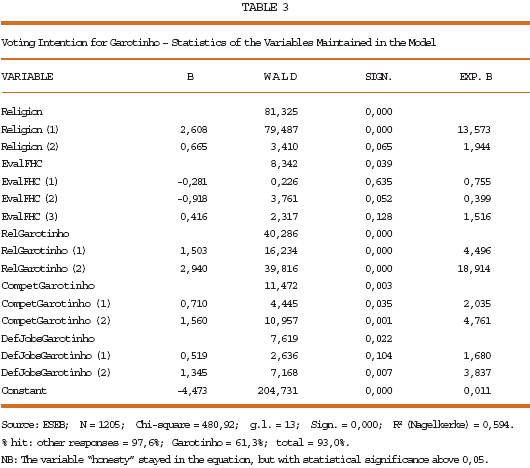
]]> The most relevant variable is religion (highest Wald coefficient). Garotinho's strength among evangelical Christians is confirmed: the chance of voting for Garotinho on the part of an evangelical voter represents 13.6 times the chance of a catholic voter. The fact that the candidate (who is an evangelical and does well politically out of this option) was supported by evangelical churches, was decisive to this result. The growth of these churches in Brazil over the last decade has been impressive, both in terms of numbers of followers and of political power.
With regards to the evaluation of the FHC government, although the coefficient for the variable as a whole is statistically significant, the coefficients for each value assumed by the variable, individually, are not. Furthermore, the value of the Wald statistic is one of the lowest in the model. This seems to indicate the low relevance of this variable to the vote for Garotinho. Lastly, there is no homogenous growth or decline tendency in the vote for Garotinho as we go from voters who evaluated the government negatively to those who evaluated it positively.
As for reliability, administrative competence and employment generation, the situation is similar to that found for the other candidates: the greatest strength belongs to the "reliability" variable. Among voters who ranked Garotinho first, the chance of voting for him was 19 times the chance of a voter who did not mention him or who ranked him third in this attribute.
It is worth highlighting the fact that Garotinho is the only candidate for whom the "party sentiments" variable does not stay in the model. The most probable reason is the fact that only 3 interviewees said that the PSB represented them (or that they liked the party).
Ciro Gomes
There remain in the model: religion, voter's positioning on a left-right scale, party sentiments, reliability, honesty, experience and "avoids strikes and disorder" (Table 4). The highest values of the Wald statistic were found for reliability, experience and party sentiments. The model is less satisfactory than those of the other candidates, as indicated by the R2 (Nagelkerke) and the hit rate of the answers (especially the vote for the candidate).
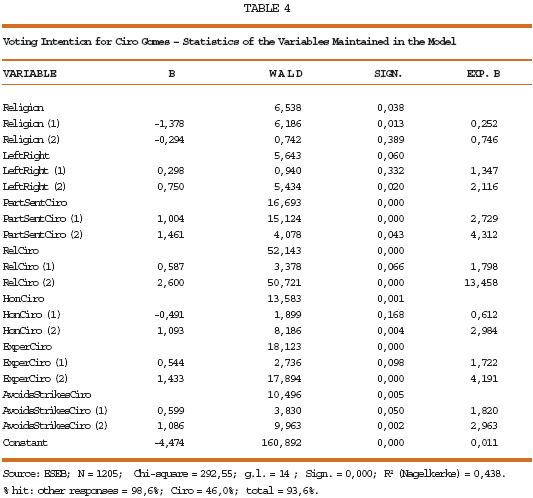
]]> The chance of voting for Ciro on the part of an evangelical voter represented about 25% of that of a catholic voter.
The chance of voting for Ciro grows as one goes from voters positioned to the left to voters positioned to the right. Among the latter, the chance of voting for him was 2.1 times greater than that of a voter positioned to the left.
On the question of party sentiments, the chances of voting for Ciro increase as we go from voters who expressed theoretically negative party sentiments as to the vote for the candidate to voters who expressed positive sentiments.
With regards to the candidate's personal attributes, the general situation is similar to that of the other candidates: the chances go up when we go from voters who do not mention the candidate (or mention him in third place) to those who mention him in first place. For Ciro, however, the categories administrative experience and "avoids strikes and disorder" appear as more relevant, which does not happen for the other candidates. As for the latter variable, the chance of voting for Ciro on the part of those who indicated him in first place for "avoids strikes and disorder" was 3 times the chance as that for those who did not mention him or who mentioned him in third place in this category.
Considering the latter aspect, as well as the tendency of voters situated to the right having a greater chance of voting for the candidate than those situated to the left, it may be said that there was a certain tendency of a more conservative electorate voting for Ciro Gomes.
The Most Relevant Variables for the Voting Decision
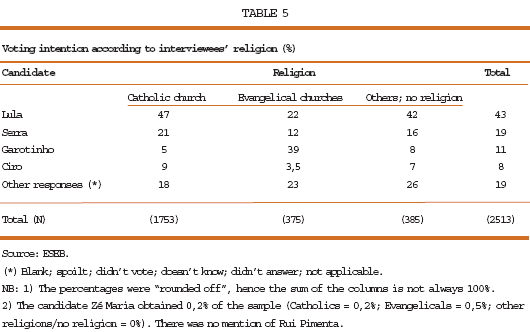
If we now turn to the most important variables for the candidates taken as a whole, the following conclusions stand out: of the demographic and socio-economic variables, religion appears as the most relevant: the coefficients were statistically significant for the voting decision for all the candidates. Religion was the most relevant variable in the decision to vote for Garotinho: the chance of voting for this candidate on the part of an evangelical voter was 13.6 times the chance of a catholic voter. For Lula, the weight of this variable was also relevant: the chance of voting for this candidate on the part of a catholic voter was 4 times the chance of an evangelical voter. For José Serra and Ciro Gomes, though with less intensity, the association was along the same lines as for Lula: greater chance of a vote from catholics than from evangelicals. The weight of this variable in the voting decision in this election, therefore, is linked to the major vote Garotinho received from evangelicals, which meant that the other candidates had a larger share of the vote among catholic voters.
Table 5 clearly shows the influence of the evangelical vote for Garotinho. What is noteworthy is that, although in the sample as a whole he got only 11% of the votes, among followers of evangelical churches he would have won in the first round.
]]>
This seems to be a new phenomenon: for the first time in recent presidential elections, voters' religion was the most relevant variable for the voting decision for one of the candidates with chances of reaching the second round. The fact that evangelical religions are on the rise further highlights the importance of this fact. Even though the Brazilian electorate remains largely catholic, there has been a rapid growth in the number of followers of evangelical churches over the last few decades in the country. Equally, the political power of these churches has grown substantially — and some of them clearly conduct politico-electoral activities. This power was largely put at Garotinho's service, although Lula also benefited secondarily.
Besides religion, out of the socio-economic variables, only income was relevant and, even then, only in the case of the vote for Lula. The chances of a vote for Lula decline with the voter's rising income, so that for the income layer of voters earning up to the minimum wage the chance of voting for Lula was 6 times that of voters in the income layer of over 10 times the minimum wage.
With reference to the more strictly "political" variables, the first point to note is that only one of the indices created — the "regulation of the market by the State index" — ended up being statistically significant for one of the candidates (Lula). And in this case, the coefficient found indicates the opposite of the relationship expected between the index and the vote. In any case, these data reveal that the various sets of opinions relating to the different themes that gave rise to these indices do not seem to have had great relevance to the voting decision of voters.10 Equally, voters' position in relation to the two issues considered to be the most relevant in this election — operationalised in the form of two confrontations of priorities: job creation X maintaining low inflation; fighting extreme poverty and hunger X maintaining low inflation — did not appear as relevant for the voting decision, since they did not remain in any of the models.
As for voters' self-positioning on a left-right scale, this appeared as statistically significant for the vote for Lula and Ciro. The chance of a voter positioned to the left voting for Lula represented twice the chance of a voter positioned to the right. In Ciro's case, the opposite occurred: the chance of a voter positioned to the left voting for him represented less than half the chance of a voter positioned to the right.11
The "political" variable that turned out to be the most relevant to the vote for Lula, Serra and Ciro Gomes was "party sentiments". For Lula, it was the one with most weight among all the variables, including those that referred to the candidate's attributes. The chance of voting for this candidate, on the part of voters who expressed party sentiments theoretically favourable to voting for him, was almost 10 times the chance of those who expressed party sentiments theoretically against voting for Lula. For Serra, this was the second most important variable, and for Ciro, it was the third variable with most weight in the model. The chance of voting for Serra, on the part of voters who expressed party sentiments theoretically favourable to voting for him, was 5.7 times the chance of those who expressed party sentiments theoretically against him. For Ciro, this figure was 4.3 times.
The way in which the "party sentiments" variable was operationalised in the logistic regression analysis possibly has limits, the most important of which have already been mentioned. Furthermore, one must consider that what was analysed here was only the presidential election, in which the PT-Lula association was very clear. For other electoral levels, I believe that the association between voters' "party sentiments" and their vote probably was less intense. All this may have artificially "inflated" the weight of this variable for the voting decision in those models. In any case, the data shown below seem to demonstrate the relevance of considering these "sentiments" in the analysis of Brazilian voters' voting decision.
The first item of relevant information shown in Table 6 regards the distribution of voters in the sample according to their expressions of positive sentiments (party "that represents" the voter or that the voter "likes") and/or negative sentiments in relation to parties.
]]>
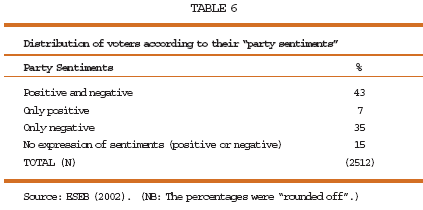
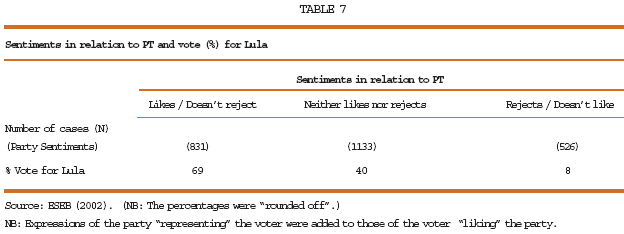
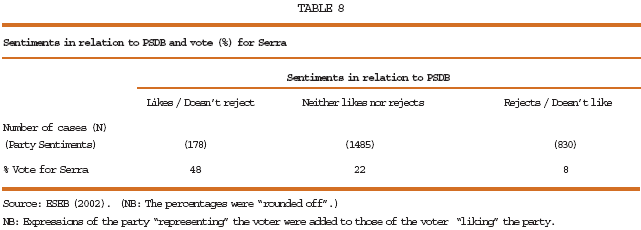
An item of data worth highlighting is that only 15% of voters interviewed did not express any type of sentiment in relation to at least one party. Those who expressed themselves positively in relation to parties represent half the electorate, a percentage a little above the average of voters who expressed a "party preference" over the last few years in the country, according to Carreirão and Kinzo (2004). As for those who expressed a rejection of at least one party, they amounted to 78% of the sample. Therefore, the percentage of voters who reject a party or another is rather more significant than the percentage of voters who like a party or another, or feel represented by one. In the sample as a whole, 43% of respondents manifested positive sentiments in relation to some parties and negative sentiments in relation to others.12 Tables 7 and 8 show the association between the sentiments expressed by voters in relation to the parties and the vote for Lula and Serra, respectively.
Among the 831 voters (33% of the sample) who said they liked the PT (or that the PT represented them), 69% declared they voted for Lula. Among the 1,133 (45% of the sample) who said they neither liked nor rejected the PT, 40% voted for Lula. As for the 526 (21% of the sample) who said they rejected the PT, 8% voted for the candidate.13 As one can see, there is a clear association between the sentiments expressed in relation to the PT and the vote for Lula.
Among the 178 voters (7% of the sample) who said they liked the PSDB, 48% voted for Serra. Of the 1,485 (59% of the sample) who said they neither liked nor rejected the PSDB, 22% voted for Serra. Lastly, out of the 830 (33% the sample) who said they rejected the PSDB, 8% voted for the candidate.14 There also exists a reasonable association between the sentiments manifested in relation to the PSDB and the vote for Serra, though with less intensity than that found between Lula and the PT.
The fact that the rejection of parties (and not just an expression of identification or preference) is an important element to the voting decision is clear and very important. This has not been taken into account in the literature. One hopes that the results presented here at least contribute to a deeper methodological discussion on the way to consider voters' "sentiments" in relation to the different parties upon making their voting decision. This is not a trivial task in a multiparty context.
As for the variable "evaluation of the performance of the incumbent government", it appears as relevant to the vote for Serra. As expected, the worse the evaluation of the government, the smaller the chance of voting for Serra. A voter who evaluated the FHC government as excellent or good was twice as likely to vote for Serra than a voter who evaluated the FHC government as bad or terrible.
Lastly, the variables that came up among the most relevant were some of the candidates' attributes (according to the voters' evaluation), such as reliability, preparedness/competence, honesty and experience (the first two in particular). The candidate's reliability was the only statistically significant attribute in the voting decision of all the candidates. If we take the Wald statistic as the best indicator of the weight of a variable in the model as a whole, this was the variable with the most weight in the voting decision for José Serra and Ciro Gomes, and the second most important one in the case of Lula and Garotinho. As expected, the chance of the vote obviously increases very much as one moves from voters who do not mention the candidate as being the most reliable (or who mention him in third place) to voters who mention him in first place as to this characteristic.
]]> Honesty shows up as relevant to the vote for Lula; "preparedness/competence" is statistically significant for Lula, Serra and Garotinho, while "experience", for Ciro.Of the characteristics that approach what we call "positions issues", the "defence of job creation" appeared as relevant to the vote for Lula and Garotinho, and "avoids strikes and disorder" for Ciro. These characteristics seem to approach the political "image" of the candidates that part of the electorate paint. These images seem to have some (though not a lot of) relevance to the voting decision.
Testing some Complementary Hypotheses
The above conclusions, based on a model that encompasses a rather large and varied set of variables, give us an initial idea of the possible weight that each variable had in the voting decision. But it is possible to think that there are rather complex inter-relationships between the model's various independent variables.
Below, some hypotheses about these inter-relationships will be tested so as to try to produce a more complex model of the decision-making process.15
The first hypothesis is that the evaluation of candidates' attributes is a step that is very close to the final voting decision and does not differ substantially from it. The evaluation of candidates' attributes might not contribute at all to improving the model. Further, this evaluation could be thought of as not an evaluation strictly based on "personal characteristics", but as influenced by "political" factors strictu sensu. In an attempt to test this hypothesis, two studies were carried out.
a) A model was tested in which the dependent variable was the voting intention for Lula, with the same independent variables of the initial model but removing the candidate's personal attributes. The following general statistics were obtained: Nagelkerke coefficient of 0.471; proportion of forecast responses: for the value zero of the variable = 74.8%; for the value one = 78.1% and for the total number of cases = 76.5%.16 As may be seen, although the model has a reasonable "power of explanation", this "power" is smaller than that of the model in which the candidate's personal attributes are included (Nagelkerke of 0.646; proportion of forecast responses: other responses = 79.6 %; Lula = 87.3 %; total = 83.7%).
Similarly, models were created for voting intentions for the other candidates, eliminating their personal attributes as independent variables. In the case of Serra and Garotinho, the models became a little worse in relation to the initial models (shown on Tables 2 and 3): the Nagelkerke coefficient declined from 0.575 to 0.332, for Serra and from 0.594 to 0.345, for Garotinho. In Ciro's case, the model ended up being very weak (Nagelkerke of 0.135, against 0.438 of the initial one; the "hit" rate declined to 3%). In other words, without the inclusion of personal attributes, the model "explains" the voting intentions for this candidate very slightly.
b) A model was produced in which the "reliability" variable for Lula became the dependent variable17 and the independent variables were the same as the ones used for the voting decision for Lula, with the exception of the candidate's attributes. The general statistics for this model were the following: Nagelkerke coefficient of 0.411; proportion of forecast responses: for the value zero of the variable = 65.2%; for the value one = 84.1% and for the total number of cases = 76.9%.18 The fact that these values are lower than those found for the model of the vote for Lula seems to indicate that part of the evaluation regarding this attribute of Lula's is made on the basis of considerations that are less "contaminated" by previous political positions (given that the differences between the magnitudes of the coefficients and proportions of forecast cases would correspond approximately to the share not "explained" by these positions.) However, the fact that the values found for the model that have (Lula's) "reliability" as a dependent variable are of a rather reasonable magnitude indicates that a substantial part of the evaluations really seem to be "explainable" (or "foreseeable") by the political positions and opinions of these voters.19
]]> For the variable of (Lula's) "competence", based on the same model as the one above, we obtained a Nagelkerke coefficient of 0.339 and the proportion of forecast responses for the total number of cases of 71.2%. For the variable of (Lula's) "honesty", the Nagelkerke coefficient was 0.314 and the proportion of forecast responses for the total number of cases was also 71.2%. In comparison with the data found for the initial model, the conclusions are therefore similar to those of the "reliability" attribute.The conclusions that these studies seem to lead us to are: a) the inclusion of the candidates' personal attributes improves all the models (though in different degrees); b) the evaluation made by the voters regarding these attributes of the candidates seems to be partly influenced by their previous party/political/ideological positions but also independently of these positions.
The wider problem is that we cannot know how much of the improvement in the models, with the inclusion of these attributes, is owed to an added component in voters' evaluations (further to the influence of the other variables), which would be an actual evaluation of the candidates made before the electoral choice, and how much may be owed to a methodological artefact alone, in case the answers to the questions about the candidates' attributes are only ex post rationalizations. Put differently, in case the interviewees, after having chosen their candidates, for other reasons, accord the best personal qualities to their candidates, so that their answers to these questions are coherent with their voting intention. This is a limitation in the interpretation that it is not possible to overcome with the kind of data available. Even though this problem is almost impossible to solve, it is possible to reduce its impact with the inclusion of other types of questions in the surveys. I believe a methodological debate is recommendable, on the basis of the international experience on the theme, so that the surveys in this country may benefit more from questions relating to this type of variable.20
The second hypothesis is that the voter's positioning on a left-right scale largely depends on his/her political opinions. This hypothesis was tested by means of a model in which this positioning is the dependent variable and the independent variables are the five indices created to classify voters as to their opinions in relation to different dimensions, as well as voters' position on the two issues considered relevant here. As a result of this test, we obtained a Nagelkerke coefficient for the model of 0.048 and proportions of forecast responses: for the value zero of the variable = 16.5%; for the value one = 92.6% and for the total number of cases = 62.4%.21 The variables "cronyism index", "authoritarianism index" and "closure of the market index" appeared as significant and with associations with the left-right positioning in line with what was theoretically expected. Given, however, the very low value of the Nagelkerke coefficient and of the proportion of forecast answers for one of the categories of answers, it cannot be said that the hypothesis was strengthened by the test. Voters' positioning on a left-right scale does not seem to depend much on the factors considered by the hypothesis.
The third hypothesis is that the "party sentiments" variable could be largely "explained" by the "politico-ideological" variables (the indices created, the left-right positioning and voters' positions on issues considered relevant here). The general statistics that resulted from testing a model with these variables (taking "party sentiments" related to the vote for Lula as a dependent variable) were: Nagelkerke coefficient of 0.104 and proportions of forecast responses: for the value zero of the variable = 85.7%; for the value one = 34.0% and for the total number of cases = 67.5%.22 One must take into consideration the fact that by transforming the "party sentiments" variable into a dichotomic variable, we lose many of the differences that made the variable have the weight (revealed by the previous analysis) it had in the voting decision. In any case, the low Nagelkerke coefficient in particular indicates that voters' party sentiments do not seem to be "explainable" only by the "politico-ideological" variables considered here.23
Lastly, the fourth hypothesis is that the evaluation of the FHC government would largely depend on voters' politico-ideological positions and party sentiments. In other words, one would be dealing with an evaluation strongly influenced by previous political positions and therefore not with an evaluation made on the basis only of "results". The following results were obtained from testing a model in which the evaluation of the government was the dependent variable and with the same independent variables described for the previous model plus party sentiments: Nagelkerke coefficient of 0.147 and proportions of forecast responses: for the value zero of the variable = 70.0%; for the value one = 58.6% and for the total number of cases = 64.5%.24 The associations followed the expected pattern: growth in the positive evaluation of the government among voters who expressed "party sentiments" that would theoretically influence positively the vote for Serra (and negatively the vote for Lula); among voters situated to the right and among those who gave priority to fighting inflation over job creation. Part of this evaluation, therefore, seems to be "explained" by those positions. Considering, however, that the model is not very satisfactory, it seems that an important part of the evaluation of the sitting government did not depend on voters' previous political positions (at least not on those considered here).
Final Considerations
Considering the set of variables included in the models for "explaining" the vote for each of the four main candidates in the 2002 presidential election, the indicators seem to point to a reasonable degree of adequacy of the models, especially the model for the vote for Lula, but also for José Serra, Anthony Garotinho and, to a lesser extent, Ciro Gomes. It is worth pointing out that that the results found here are to a large extent similar to those found in another study (Carreirão and Barbetta 2004) about the 2002 presidential elections in Greater São Paulo, in which an almost identical model of analysis was used.
In the models taken as a whole, political opinions (operationalised by means of the indices and positions on issues) did not have great weight in the voting decision. Furthermore, they did not manage to "explain" a very large share of voters' positioning on a left-right scale or their "party sentiments". All these "political" variables taken together in turn "explained" only part of the evaluations that voters made of governmental performance.
]]> My analysis shows that the voting decision of Brazilian voters seems varied, since some variables appeared as relevant to "explain" the vote for a candidate but not for the others. The variables that appeared most frequently (for the four candidates analysed) or with most considerable weight were: voters' religion, their "party sentiments", their positioning on a left-right scale, the evaluations they made of the sitting government (in fact important only to the vote for Serra, the government candidate) and the candidates' attributes (especially "reliability" and "preparedness/competence").Regarding religion, the relevant phenomenon was the strong support by evangelical (above all neo-Pentecostal) churches to the candidate Anthony Garotinho. Neo-Pentecostal churches are currently growing in membership very significantly in Brazil. The survey data show that Garotinho would win the election in the first round among evangelical voters. Considering their growing weight in the electorate, associated with a tendency to vote under greater influence from religious leaders than in the Catholic Church, it is possible to think that candidates with strong support among the leaders of the main evangelical churches have growing chances in Brazilian politics. It is clear, however, that as the contingent of the faithful grows, so does the supply of candidates connected to these churches, hence dividing this segment's vote.
The evaluation of the government's performance had a relevant weight to Serra's vote. In comparison with the weight that other variables seem to have had, however, the evaluation of the sitting government's performance was not as relevant as expected, based on the results of other studies (based on other data and methodologies of analysis; see Carreirão 1999 and 2002a). The fact that part of the influence of the evaluation of governmental performance on the voting decision is already "explained" by voters' ideological positions and party sentiments must contribute to this result. Thus, the counter-position between Lula and Serra seems to have happened based on ideological and party differences, and partly based on the evaluation of the government's performance, the latter being to some extent contaminated by those differences and partially formed on its own bases, unrelated to parties or ideologies.
As for the "sentiments" manifested by voters regarding the parties and the evaluation made by voters of candidates' attributes, possible limitations as to the way these variables were operationalised here were pointed out over the course of the text. Considering the results found here though, it seems recommendable to widen the methodological debate on possible different ways of operationalising these variables in the analysis. In a multiparty system such as ours, in which varied segments of the electorate express themselves positively and/or negatively with respect to a party or parties, it seems relevant to formulate more adequate indicators to capture the possible influence of these "sentiments" on the voting decision, rather than a simple expression of party preference.
Equally, a methodological discussion on the way to operationalise variables related to the evaluation of candidates' attributes seems relevant.
Further to these recommendations of a methodological character, it is hoped, in conclusion, that this article has contributed to a better understanding of how several relevant variables operate in the voting decision of the Brazilian electorate.
Methodological Appendix 1: Logistic Regression Analysis25
For each candidate, the dependent variable — voting intention — was defined as 0 and 1. 1 (one) when the voting intention is for the candidate in question, and zero for any other situation. Let P{Y = 1} be the likelihood of the voting intention for the candidate and X1, X2, the independent variables. By the logistic regression model, the likelihood of the voting intention for the candidate P{Y = 1}, may be predicted by
where B0, B1, B2, ... are parameters that may be estimated based on the sample.In this article, the independent variables are all categorical. For the originally dichotomic variables, such as sex, the codification is direct (0 for one category and 1 for the other). For the polytomic variables, such as schooling, an indicator variable was used for each category (1 when the element belongs to the category, and 0 if not), with the exception of the category of the lowest level, adopted as the basis for comparison.
]]> The coefficients B0, B1, B2, ... of the independent variables, after being estimated based on the data, supply information about the influence of each variable on the voting intention; the higher the coefficient, the greater the influence. And the sign of the coefficient informs the direction of the causality relationship. In presenting the results, I opted for analysing the value of the exponential function applied to each coefficient, which represents the percentage chance of the voting intention for the candidate, among individuals of the category in question and individuals of the category of the lowest level of the variable under study, "discounting" the effect of the other variables in the model.In linear regression, it is common to present the coefficient of determination R2, whose value is in the interval between 0 and 1, as representing the proportion of the variance of the dependent variable that may be "explained" by the independent variables, according to the model adopted. In logistic regression, a coefficient with this interpretation does not exist, but there do exist proposals of generalisation of the R2 coefficient, in which the higher its value, the greater the model's predictive power with the data of the sample. In the case of the R2 proposed by Nagelkerke, the result will always be in the interval from 0 to 1.26 In terms of the data in the sample, R2 = 0 indicates that
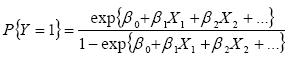
the model does not collaborate at all in predicting the voting intentions and R2 = 1 indicates that the model predicts correctly all the voting intentions in the sample. Another way of evaluating the model's quality is by means of its capacity to predict the voting intention for the candidate. Using the equation P{Y = 1}, with the parameters B0, B1, B2, ... estimated on the basis of the sample, one may predict the likelihood of each element in the sample voting for the candidate in question. If P{Y = 1} > 0,5 (cut-off point) is considered a prediction favourable to the candidate, one may evaluate the proportion of cases in which the model's prediction coincided with the voters' voting intention (hit rate in percent).
The selection of the independent variables may be done on the basis of automated algorithms. In this article the Backward LR algorithm was used. It starts the process with a model including all the variables. The non-significant variables are excluded one at a time, until resulting in a set of variables in which all are significant at the significance level established.
Methodological Appendix 2: Operationalisation of the "Party Sentiments" Variable
The expression "party sentiments" does not mean an adherence to the thesis defended at the level of the "Michigan School" that party identities are forged based on affection during the process of socialization, even before adulthood, thus making them resistant to change. The perspective adopted here is close to that espoused by authors affiliated to rational choice theory, for whom party identification results from the evaluation the individual makes of his/her built-up experience as a voter over the course of his/her adult life, monitoring party promises and performance over time. The expression "party sentiments" is used as a way of summarising the set of manifestations (defined above) of voters in relation to parties.
The variable was constructed (one for each candidate: SentPartLula; SentPartSerra; SentPartGaro; SentPartCiro) based on interviewees' answers to various questions, about parties they liked (q. 36a, b, c), or that represented them (q. 32), and rejection of parties (q. 81). On the basis of these answers, interviewees were classified, in relation to each candidate, in three situations: i) as having "party sentiments" that were theoretically unfavourable to the vote for the candidate; ii) as having neutral "party sentiments" in relation to the candidate; iii) as having party sentiments favourable to the vote for the candidate.
For Lula and Serra, the variable included, as well as "positive sentiments" ("party that represents you" or "party you like"), "negative sentiments" (rejection of the PT, in Lula's case, or rejection of the PSDB, in Serra's case). For Garotinho and Ciro, only "positive sentiments" were considered, since no questions were asked about rejection of their parties. Hence, the way the variables were constructed was very different comparing Garotinho and Ciro, on the one hand, and Lula and Serra, on the other.
]]> Stages in the construction of the variable (for Lula and Serra):]]> Methodological Appendix 3: Operationalisation of the Indices271st) Creation of a variable (provisional) "Party that represents you or that you like": the answers to questions 32 and 36 (a, b, c) were "added up", so as to consider any mention of a party in the answers to these questions;
2nd) Creation of the variable "Influence of Party Sentiments on the Vote for the Candidate" (PartLula or PartSerra): the previous variable and the variable relating to the rejection (or not) of the party of the candidate in question were "added up". Out of this "addition", there resulted different combinations, which were brought together in 3 groups:
a) "party sentiments theoretically against the vote for the candidate" (-1): a1) all the cases in which there was a rejection of the candidate's party with the exception of cases in which there was, simultaneously, a "positive" expression ("likes" or "is represented by") in relation to the same party (which reveals inconsistency in the interviewee's answers; in this case, the voter was classified in the "neutral situation"); a2) cases in which there is no rejection of the candidate's party, but there is a preference for the party of an opponent (or party allied to an opponent), without a positive expression in relation to the candidate's party; a3) positive mention of the party of an opponent and of a party allied to the candidate simultaneously;
b) "neutral situation" (0): b1) no mention (positive or negative) of any of the parties that ran or formally supported candidates; b2) simultaneous positive mention of the candidate's party and of an opponent's party, without rejection of the candidate's party; b3) simultaneous positive mention of a party allied to the candidate and of a party allied to an opponent, without rejection of the candidate's party;
c) "party sentiments theoretically in favour of the vote for the candidate" (+1): c1) only positive expressions in relation to the party or parties that support the candidate; c2) positive expressions simultaneously in relation to the candidate's party and to a party allied to an opponent.
NB 1: For Garotinho and Ciro, criteria similar to the ones above were adopted, that did not involve rejection of the candidate's party, since this information is not available for the PSB and the PPS in the ESEB.
NB 2: The variable was operationalised by relating it to the dependent variable, which could increase the risk of confusing the causal relationship between the variables. Despite this risk, the option for this type of operation was due to the fact that it allows one to consider the whole set of voters' "sentiments" in relation to the parties involved in the election, pondering differentially the relationship between each party and each candidate in the race (candidate's party, party allied to candidate's party, opponent's party, party allied to opponent's party). Another point is that the expressions with regards to the PT are the central ones and end up influencing the values assumed by the variables that relate to all the candidates (and not just Lula). But in a multiparty context such as ours — and using the option adopted here, of a binomial logistic regression analysis for each candidate —, how can one evaluate the possible influence of voters' "party sentiments" on their voting intention for Serra, for instance, without considering that a preference for the PT represents (theoretically) a negative tendency for a vote for Serra?
Cronyism Index (CronInd)
7 questions (93; 95; 97; 99; 101; 103 and 104), were included. They asked, for example: "A candidate offers a wheelchair to a disabled person. What should the disabled person do? 1) accept the wheelchair and vote for the candidate, or 2) not accept the wheelchair and vote for another candidate". The same was done for other items, such as a basket of basic foodstuffs for a hungry family, the payment of a school registration fee for a child etc. For each answer 1 a value of 1 was given; for other answers, a value of 0 was given. All the answers were added up, resulting in a "cronyism index" that goes from 0 to 7. The values were re-coded at the end: Indices: 1 = Low (0 or 1); 2 = Medium (2 to 4); 3 = High (5 to 7).
Reliability Analysis: Alpha = 0.8959 (all the correlations between the various items were positive).
"Robber-But-Doer" Index (RobInd)
Based on sentences of question 105: a) "in general, very honest politicians do not know how to govern"; b) "it makes no difference if a politician steals or not, what is important is doing the things that people need"; c) "it is better having a politician who does a lot, even if he/she steals a little, than a politician who does very little and does not steal at all"; d) "there exist some politicians who are honest"; e) "it is possible to carry out public works without stealing"; f) "honest politicians are not successful in politics"; g) "a politician who does a lot and steals a little deserves the people's vote"; h) "very honest politicians harm the functioning of government"; i) "a politician who governs well should be allowed to get public money kick-backs to fund his/her election campaign"; j) "it is better to solve quickly a problem the people have, even if to do so it is necessary to pay extra on the side"; k) "every politician steals".
1st) Re-coding:
• items a/b/c/f/g/h/i/j/k - answers "agree" (a little; a lot) = 1; answers "disagree" (a little; a lot) or "neither agree nor disagree" = 0; Answer Doesn't know/Didn't answer = DK/DA;
]]> • items d/e - answers "agree" (a little; a lot) = 0; answers "disagree" (a little; a lot) or "neither agree nor disagree" = 1; Answer Doesn't know/Didn't answer = DK/DA;2nd) Index = sum of re-coded values of the answers to all the items. In the case of there being 3 or more DK/DA, the index becomes a missing value, that is, an interviewee who says DK/DA 3 times is not considered in the analysis.
3rd) Re-coding: 1 = Low (0 to 3); 2 = Medium (4 to 6); 3 = High (7 to 11).
Reliability Analysis: Alpha = 0.7385 (all the correlations between the various items are positive).
Authoritarianism Index (AuthoritInd)
]]> Regulation of the Market by the State Index (RegMarkInd)Question 111: "Now I am going to mention various types of protest against the government and I would like you to say if the protest should always be permitted (1), should be permitted most times (2), should be banned most times (3), or should always be banned (4)." (Petitions; demonstrations; rallies; strikes; the blocking of highways; occupations of public buildings; land occupations.)
1st) Re-coding: answers 1 = 0; 2 = 1; 3 = 2; 4 = 3; other answers = missing.
2nd) Index = sum of the various items. Final values: from 0 to 21, were re-coded so: Low = 0 to 8; Medium 9 to 12; High 13 to 21.
Reliability Analysis (Scale alpha) = 0.683.
Sentences of question 108: a) "Should the government control the prices of all basic services, such as transport, for example"; b) "Should the government tell companies everything they must do, such as how many toilets they must have, for example"; c) "Only companies, and never the government, must train the workforce"; d) "The government should rescue companies going through difficulties"; e) "The government should fix the salaries of all the employees of every company in Brazil"; f) "Only companies, and never the government, should decide where to build a new factory"; g) "The government should control the prices of every product sold in Brazil".
1st) Re-coding:
• items a/b/d/e/g: 5 (agrees a lot) = 2; 2 to 4 (agrees a little; neither agrees nor disagrees; disagrees a little) = 1; 1 (disagrees a lot) = 0; other answers = missing.
• items c/f: 5 = 0; 2 to 4 = 1; 1 = 2; other answers = missing.2nd) Index calculated by the sum of the answers was re-coded for 3 values: Low = 0 to 7; Medium = 8 to 10; High = 11 to 14.
Reliability Analysis: (Scale alpha) = 0.3614 (despite the low value, the index was kept).
Closure of the Market to the Outside World Index (ClosMarkInd)
]]> Sentences of question 109: a) "The government must make it harder for foreign products to enter Brazil"; b) "The government should ban the employment of foreign workers in Brazil"; c) "The government should allow foreign companies to send all their profits abroad"; d) "The government should offer incentives to attract the investments of large foreign companies in Brazil"; e) "The government should ban foreigners from buying land in Brazil"; f) "The government should compel all foreign companies to leave Brazil".1st) Re-coding:
• items a/b/e/f : 5 = 2; 2 to 4 = 1; 1 = 0; other answers = missing.
• items c/d: 5 = 0; 2 to 4 = 1; 1 = 2; other answers = missing.NB: Given that item g ("Products made by foreign companies are always better than products made by Brazilian companies") does not really seem associated to the issue of the closure of the market to the outside world, this item was excluded, since the value of the Alpha coefficient of the index without item g (0.4134) was really higher than when the item was included.
2nd) The index was re-coded, for 3 values: Low = 0 to 5; Medium = 6 to 7; High = 8 to 12.
Methodological Appendix 4: Operationalisation of the Variables Related to Candidates' Personal Attributes
As well as four characteristics (reliability; honesty; competence; experience) more linked to "valency issues" (in other words, characteristics that are consensually seen as good by the electorate, with the candidate's evaluation varying in relation to them), another four characteristics of the candidates (according to voters) were also included, the latter more related to "position issues" (in other words, characteristics that depend on political positions in relation to the goals to be reached by political action and to the means to reach these goals).28 The question was: "Out of these politicians [Lula, Serra, Garotinho, Ciro], which is the most reliable? And in second place? And in third?" There followed a similar question referring to "which one does the most for the poor"; "the most honest"; "the one who has the most experience to govern Brazil"; "the best-prepared and most competent"; "the one most likely to avoid strikes and disorder"; "the one who most defends job creation"; "the one who most defends keeping inflation low". For each attribute, the variable was constructed with 3 values: 1 when the voter did not mention the candidate in question or put him in third place; 2 when the voter put the candidate in second place; and 3 when the voter put the candidate in first place for that attribute.
]]> Notes
* Editors' Note: The need to speed up the launch of the first issue of BPSR, which had already been delayed several times, regrettably led the Editors to overlook their duty to inform two contributors of the overlap between their respective pieces. This explains the publication of this article that investigates the 2002 Brazilian presidential election by testing some of the main hypotheses about electoral behaviour in the country by means of logistic regression analyses, and of the Research Note by Jairo Nicolau (An Analysis of the 2002 Presidential Elections Using Logistic Regression), in which the author seeks to analyse the same elections by using the technique of logistic regression, with the explanation that although this technique is widely used for election studies in other countries, it had been little used in Brazil to date.
1 The ESEB (Brazilian Electoral Study) was conducted by DataUFF, under the coordination of professors Alberto Carlos de Almeida and Zairo Cheibub, and by Cesop/Unicamp (Centre of Public Opinion Studies of the University of Campinas), under the coordination of professors Rachel Meneguello and Fernando Lourenço, with funding from Coordenação de Aperfeiçoamento de Pessoal de Nível Superior (Capes) and Fundação de Amparo à Pesquisa do Estado de São Paulo (FAPESP), and the involvement of many other people and institutions. Further to our compliments for the effort made in carrying out research of this magnitude and quality, these people and institutions deserve thanks for their willingness to make public the resulting database. This article was structured much in the same way as the previous one (Carreirão and Barbetta 2004), written on the basis of the analysis of data from another survey, conducted solely among voters of the Greater São Paulo region. The objective was precisely to test a similar model, based on data from different electoral universes, so as to test the reach of its validity. I thank the anonymous referees, whose suggestions were taken on board to the extent of my capacities.
2 Converse (1964) formulated the notion of "belief system", finding that most of the electorate do not have a structured system. Reviews of important aspects of the debate on this theme in the North American literature can be found in Singer (2000), Rennó (2001) and Carreirão (2002a).
3 In spite of the decline of the role of parties in political systems (Dalton and Wattenberg 1993 and 2000, Clarke and Stewart 1998, among others), the influence of the voter's party identification on the voting decision still is a relevant theme in the international literature (as demonstrated by Weisberg and Greene, 2003). Regarding Brazil, Carreirão and Kinzo (2004) review the literature on the theme with reference to the current party system.
4 Besides a vast international literature (Key 1966; Fiorina 1981; Lewis-Beck 1988, among others), this thesis appears in some way in many recent texts in Brazil: Lavareda (1989); Muszynski and Mendes (1990); Albuquerque (1992); Figueiredo (1994); Mendes and Venturi (1994); Meneguello (1995); Kinzo (1992); Carreirão (1999; 2002a), among others.
5 The categories of each variable were: sex (M/F); age (up to 24; 25 to 44; 45 and above); income (up to 1 minimum wage (MW); +1 to 5 MW; +5 to 10 MW; +10 MW); schooling (up to 4 years; 5 to 8 years; 8 to 11 years; higher education); religion (catholic; evangelical; others/no religion); occupational situation (waged/salaried employee + self-employed; professional + business person; student + intern; homemaker; retired + unemployed). As for the latter variable, after testing a model with each category of occupational situation separately, some aggregate forms were tested according to possible similarities between occupational situations. In all of them the coefficients found were very low. The one that was kept for presentation had slightly more significant results.
6 "Ideological identity" (or "ideological positioning") (LeftRight): voter's self-positioning on a left-right scale, with values from 0 (more to the left) to 10 (more to the right). The positions on the scale were re-coded hence: 0 to 3 = left; 4 to 6 = centre; 7 to 10 = right.
7 The question was: "In your opinion, what is more important to improve Brazil?" a) "creating more jobs or keeping inflation low and guaranteeing stability"; b) "fighting extreme poverty and hunger or keeping inflation low and guaranteeing stability".
8 The name of the variable, as well as the values of the Wald statistic that refer to the variable as a whole, were put in bold so as to make easier the visual contrast with the values that refer to each one of the categories that the variable assumes (in relation to the initial category).
]]> 9 If all the independent variables were non-correlated and the observations (sample) were made uniformly in relation to the combinations among them — as can be done in experimental studies — we could have independent measures of the effect of each variable. Since this does not happen, the effect of each variable may be influenced by the other variables. The analysis simulates maintaining constant the other variables to try to measure only the effect of the variable in question. For the other conclusions, over the course of the text, taken from the interpretation of the Exp (B), this consideration must also be taken into account. For an adequate understanding of the interpretations made here, it is important to have in mind that the ordering of the categories in each variable is that described in item 2.1, and that the initial category of the variable is the reference for the other categories.10 The analysis of the crossing of (continuous) values of the indices with the vote shows that, in general, there is a low association. The values were then aggregated in 3 categories (low, medium and high); initially the categories (low, medium and high), in each index, were defined by dividing the set of interviewees into 3 groups of roughly equal size. Later, variations in the form of aggregation of the (continuous) values into the categories (low, medium and high) were tested. The results were very similar to those presented over the course of the analysis.
11 It must be pointed out that in our models the possible effects of interaction between the variables were not tested. Elsewhere (Carreirão 2002b), it has been ascertained that the association between positioning on a left-right scale and the vote tends to be strong only among voters with more schooling (who are a minority share of the electorate). Perhaps by introducing the possible effects of interaction with the schooling variable, the effects would appear greater for this share.
12 Actually, in this percentage, a share of some 2% of voters who expressed simultaneously positive and negative sentiments in relation to the same party, hence revealing inconsistency in their answers (or, at least, making these expressions of little utility for the analysis), was also included.
13 There were also 23 voters (0.9% of the sample) who expressed simultaneously positive and negative sentiments in relation to the PT. Of these, 17% voted for Lula.
14 Twenty voters (0.8% of the sample) expressed simultaneously positive and negative sentiments in relation to the PSDB. Of these, 30% voted for Serra.
15 These complementary hypotheses are largely based on ideas whose origin may be located in the concept of the "funnel of causality", put forward by Campbell et al. (1960), according to which factors that are relatively close to the voting decision are strongly influenced by factors of longer duration. An example of this idea being taken up again is in Miller and Shanks (1996).
16 The remaining variables in the model were "party sentiments", religion, left/right, evaluation of FHC, schooling, income and issue 2 (hunger/extreme poverty X inflation).
17 For this, the variable was recoded with just two categories: 0 = no mention of Lula, or mentions of Lula as 2nd or 3rd most reliable candidate; 1 = mentions of Lula as the most reliable candidate.
18 There remain in this model the variables "party sentiments", religion, evaluation of FHC government, schooling, "authoritarianism index", "regulation of the market index" and sex, with the first 3 being the ones with the highest Wald coefficient. The chance percentages found for the "political" variables are in the expected direction (including for the "regulation of the market index", which, in the model for the vote for Lula, presented chance percentages in the opposite direction of what was expected).
]]> 19 When one removes the socio-demographic variables from the model, there is a small reduction in the Nagelkerke coefficient (from 0.41 to 0.38), but the same happens for the model for "explaining" the vote for Lula.20 Examples of the uses of questions relating to candidates' personal attributes may be found in Wattenberg (1991) and Miller and Shanks (1996).
21 In order to test this model, the variable "positioning on a left-right scale" was recoded as follows: we assumed as value zero, the values from 0 to 4 in the scale (in which the maximum position to the left was zero) and as value one, the values from 5 to 10.
22 In order to test this model, the variable "party sentiments" (related to the vote for Lula) was re-coded so as to make it dichotomic. We assumed as value zero the combinations of party sentiments that represented situations contrary or neutral in relation to the vote for Lula, and as value one, combinations that represented situations favourable to the vote for the candidate. The variables with most weight in this model were positioning on a left-right scale and "authoritarianism index" (with the chance percentages in the expected direction).
23 Including the demographic and socio-economic variables in the model does not alter the results significantly.
24 In order to test this model, the variable "evaluation of the FHC government" was re-coded so as to make it dichotomic. We assumed as value zero, the evaluations "terrible", "bad" and "average to bad" and as value one, the evaluations "average to good", "good" and "excellent". The inclusion of the demographic and socio-economic variables in the model improves the results a little: Nagelkerke coefficient of 0.185 and proportion of forecast responses for the total number of cases of 67.4%.
25 This Methodological Appendix 1 is a summarised version of the one written by Pedro Barbetta in Carreirão and Barbetta (2004).
26 Regarding the use of Nagelkerke R2, see the website below: http://linuxndsweb.mcs.muohio.edu/doc/sassystem/SUGI25/25/st/25p256.pdf
27 Although the indices are based on the original proposal of the ESEB questionnaire, the operationalisation presented here is of the author's responsibility.
28 A discussion regarding this differentiation between "valency issues" and "position issues" in the international literature may be found in Carreirão (2002a, 51-53).
]]>Bibliography
Albuquerque, José A. Guilhon. 1992. Identidade, oposição e pragmatismo: Uma teoria política do voto. Lua Nova (26): 53-79. [ Links ]
Almeida, Alberto C., and Clifford Young. 2002. As bases ideológicas do comportamento eleitoral. Rio de Janeiro, unpublished document. [ Links ] .
Balbachevsky, Elizabeth. 1992. Identidade partidária e instituições políticas no Brasil. Lua Nova (26): 133-65. [ Links ]
Baquero, Marcello. 1996. A tese da mobilização cognitiva e o declínio dos partidos. Paper presented at the 20th annual meeting for the ANPOCS, october, in Caxambu, Minas Gerais. [ Links ]
]]>Campbell, Angus, Philip Converse, Warren Miller, and Donald Stokes. 1960. The american voter. New York: Wiley. [ Links ]
Carmines, Edward, and James Stimson. 1980. The two faces of issue voting. American Political Science Review, no. 74. [ Links ]
Carreirão, Yan. 1999. Avaliação do governo e 'voto econômico'. Lua Nova, no. 48: 213-32. [ Links ]
______. 2002a. A Decisão de voto nas eleições presidenciais brasileiras. Rio de Janeiro/Florianópolis: Editora da FGV/EDUFSC. [ Links ]
______. 2002b. Identificação ideológica e voto para presidente. Opinião Pública VIII (1): 54-79. [ Links ]
]]>Carreirão, Yan, and Maria D. G. Kinzo. 2004. Partidos políticos, preferência partidária e decisão eleitoral no Brasil (1989/2002). Dados 47 (1): 131-68. [ Links ]
____________, and Pedro Barbetta. 2004. A eleição presidencial de 2002: A decisão de voto na região da Grande São Paulo. Revista Brasileira de Ciências Sociais 19 (56): 75-93. [ Links ]
Castro, Mônica M. M. 1994. Determinantes do comportamento eleitoral. A centralidade da sofisticação política. PhD diss., Instituto Universitário de Pesquisas do Rio de Janeiro. [ Links ]
Clarke, Harold, and Marianne Stewart. 1998. The decline of parties in the minds of citizens. Annual Review of Political Science, no. 1: 357-78. [ Links ]
Converse, Phillip. 1964. "The nature of belief systems in mass publics". In Ideology and discontent, ed. D. Apter. New York: Free Press. [ Links ]
]]>Dalton, Russell J., and Martin Wattenberg. 1993. "The not so simple act of voting". In State of political science II, ed. A. Finifter. Washington: American Political Science Association. [ Links ]
____________, ed. 2000. Parties without partisans — Political changes in advanced industrial democracies. Oxford: Oxford University Press. [ Links ]
Downs, Anthony. 1957. An economic theory of democracy. New York: Harper & Row Publishers. [ Links ]
Figueiredo, Rubens. 1994. Opinião pública, intencionalidade e voto. Opinião Pública II (2): 73-82. [ Links ]
Fiorina, Morris. 1981. Retrospective voting in American national elections. New Haven: Yale University Press. [ Links ]
]]>Key, V. O. 1966. The responsible electorate: Rationality in presidential voting, 1936-1966. Cambridge: Belknap Press. [ Links ]
Kinzo, M. D' Alva Gil. 1992. A eleição presidencial de 1989: O comportamento eleitoral em uma cidade brasileira. Dados 35 (1): 49-66. [ Links ]
Lavareda, Antônio. 1989. Governos, partidos e eleições segundo a opinião pública: O Brasil de 1989 comparado ao de 1964. Dados 32 (3): 341-62. [ Links ]
Lewis-Beck, Michael. 1988. Economics & elections: The major western democracies. Ann Arbor: The University of Michigan Press. [ Links ]
Mendes, Manuel, and Gustavo Venturi. 1994. Eleição presidencial: o Plano Real na sucessão de Itamar Franco. Opinião Pública (II) 2. [ Links ]
]]>Meneguello, Rachel. 1995. Electoral behavior in Brazil: The 1994 presidential election. International Social Science Journal, no. 146. [ Links ]
Miller, Arthur, Martin Wattenberg, and Oksana Malanchuk. 1986. Schematic assessments of presidential candidates. American Political Science Review (80). [ Links ]
Miller, Arthur, and J. Merrill Shanks. 1996. The new American voter. Cambridge: Harvard University Press. [ Links ]
Muszynski, Judith, and Manuel T. Mendes. 1990. "Democratização e opinião pública no Brasil". In De Geisel a Collor: O balanço da transição, ed. B. Lamounier. São Paulo: Sumaré/IDESP. [ Links ]
Page, Benjamin, and Richard Brody. 1972. Policy voting and the electoral process: The Vietnam war issue. American Political Science Review (66). [ Links ]
]]>Popkin, Samuel L. 1994. The reasoning voter — comunication and persuasion in presidential campaigns. 2nd ed. Chicago: The University of Chicago Press. [ Links ]
Rahn, Wendy. John Aldrich, Eugene Borgida, and Sullivan, John. 1990. "A social-cognitive model of candidate appraisal". In Information and democratic processes, ed. J. Ferejohn and J. Kuklinski. Illinois: University of Illinois Press. [ Links ]
Reis, Fábio W., and Mônica M. M. Castro. 1992. Regiões, classe e ideologia no processo eleitoral brasileiro. Lua Nova, no. 26: 81-131. [ Links ]
Rennó, Lúcio. 2001. A estrutura das crenças de massa e seu impacto na decisão de voto. BIB — Revista Brasileira de Informação Bibliográfica em Ciências Sociais (51): 85-103. [ Links ]
Silveira, Flávio. 1996. O novo eleitor não-racional. PhD diss., Universidade de São Paulo. [ Links ]
]]>Singer, André. 1990. "Collor na periferia: A volta por cima do populismo?". In De Geisel a Collor: O balanço da transição, ed. B. Lamounier. São Paulo: Sumaré/IDESP. [ Links ]
______. 1993. Ideologia e voto no segundo turno da eleição presidencial de 1989. Master's thesis, Universidade de São Paulo. [ Links ]
______. 2000. Esquerda e direita no eleitorado brasileiro. São Paulo: Ed. USP. [ Links ]
Wattenberg, Martin. 1991. The rise of candidate-centered politics. Cambridge: Harvard University Press. [ Links ]
Weisberg, Herbert, and Steven Greene. 2003. "The political psychology of party identification". In Electoral democracy, ed. Michael MacKuen and George Rabinowitz. Ann Arbor: The University of Michigan Press. [ Links ]
]]>
(Submitted for publication in October, 2005)
Translated from Portuguese by Leandro Moura
]]>