Acesso, expansão e eqüidade na educação superior: novos desafios para a política educacional brasileira
Clarissa Eckert Baeta NevesI; Leandro RaizerII; Rochele Fellini FachinettoIII
IAssociate Professor of Sociology at UFRGS, CNPq researcher and Coordinator of the University Study Group (Grupo de Estudos sobre a Universidade) GEU/UFRGS. E-mail: clarissa.neves@yahoo.com.br
IIDoctorate student in Sociology/UFRGS. CAPES scholarship holder. Research member of GEU/UFRGS. E-mail: lraizer2003@yahoo.com.br. Professor of Sociology at UFCSPA
IIIMasters degree student in Sociology/UFRGS. Research member of GEU/UFRGS. E-mail: chelifellini@yahoo.com.br
Translated by Robin Lane ]]> Translation from Sociologias, Porto Alegre, n.17, p. 100-125, July/Dec. 2007.
ABSTRACT
Higher education has come to be included in the list of items considered to be of priority and of strategic importance for the future of a nation: a generally accepted conviction that development requires an ever increasing level of education in the population. In Brazil, however, only 10.6% of those aged between 18 and 24 manage to enter higher education. How to increase access and obtain greater equity whilst providing quality education is a central issue in education policy. In the last decade solutions have been proposed to provide greater access and equity based on the diversification of the system with the creation of new types of HEIs, new types and modalities of courses, as well as those proposals including affirmative action (PROUNI and the policy of quotas). The analysis of statistical data, interviews, documents, and legislation reveals the current situation: the amplification of access as well as the implementation of social inclusion policies, has, particularly in the private higher education sector, resulted in the production of a socially perverse democratization effect.
Key words: Higher Education – diversification – equity – education policy
RESUMO
No Brasil apenas 11,5% dos jovens entre 17 e 24 anos conseguem chegar ao ensino superior. Como ampliar o acesso e alcançar uma maior eqüidade, com uma formação de qualidade, é uma questão central da política educacional. Na última década, foram propostas soluções referentes à ampliação do acesso e maior eqüidade através da diversificação do sistema com a criação de novos tipos de IES, novos tipos e modalidades de cursos, bem como da proposta de políticas inclusivas e de ações afirmativas (PROUNI e política de cotas). A análise de dados estatísticos, entrevistas, documentos, legislação revelam o cenário atual: a ampliação do acesso, bem como a implantação de políticas de inclusão deram-se, especialmente, pelo sistema privado de educação superior, produzindo um efeito socialmente perverso de democratização.
Palavras-chave: Educação superior, diversificação, eqüidade, política educacional.
]]>
1. Introduction
How to increase access and reach a greater equity with quality education is a central question of education policy. In the last decade solutions have been proposed to provide greater access and equity based on the diversification of the system with the creation of new types of HEIs, new types and modalities of courses, as well as those proposals including affirmative action (PROUNI and the policy of quotas). The analysis of data reveals the current situation: the increase of access as well as the implementation of social inclusion policies, has, particularly in the private higher education sector, resulted in the production of a socially perverse democratization effect.
The democratization of access to quality higher education becomes, therefore, a matter of extreme importance. Higher education in Brazil is presently undergoing notable changes, and such experience becomes an important reference for the analysis of the challenges of higher education today, most particularly, in the case of the emerging nations.
The question of access and of equity in education will be discussed and analyzed with respect to three fundamental aspects: a) has the process of expansion in higher education ensured the true democratization of access to quality higher education? b) to what degree can the diversification of post-secondary education opportunities facilitate the democratization of access? c) how and to what extent can the social inclusion policies of higher education stimulate the democratization of access and the quality of education provided?
2. The macro social context
The transformations that have been occurring in the macro social context and their possible consequences for the higher education system should be analyzed with respect to two significant processes in particular: globalization and the emergence of the knowledge society.
Globalization is a multifaceted, complex phenomenon that is, above all contradictory. It refers to a process that, in the view of Fenzl (2000:45), presents the tragic aspects of the disintegration of nation states, social and cultural disorientation, and the positive aspects of hope and the possibility of the social and economic reorganization of humanity on a global scale.
Globalization is a real, irreversible fact, characterized by the internationalization and interdependency of national economies across the planet, which are tending toward a single large financial, monetary and commercial market. Globalization is not a consensual process involving scholars. It is, in practice, a vast and intense battlefield between social groups. States and hegemonic interests on one side, social groups, states and alternative interests on the other. It is related to the emergence of a new international division of activity, based on the globalization of production that is being driven by multinational corporations, that are included as central actors in the new world economy.
]]> In this process some processes come immediately to attention: the impoverishment of the productive forces; the globalization of social contradictions, the weakening of nation states and consequently the disintegration of the political power of individual nation protagonists (SANTOS, 2003).Overall there is a separation between economic and transnational powers and public and local policies (BAUMAN, 2000).Giddens (1991:69) defines globalization as the “intensification of worldwide social relations that bring together distant places in such a manner that local events are determined by events that occur many miles away and vice-versa”. Thus, no matter how contradictory the process of globalization may be, it opens space for the possibility of the reorganization of the web of social and economic relations on a worldwide scale as well as for the treatment of new questions. These relate to the internationalization of environmental problems, the instantaneity of information and the distribution of knowledge, the emergence of networks as a basis for an unprecedented revolution in all aspects of human work, the growth in the importance of organizations that represent multilateral interests and of international organs with increasing functions in the running of the new world order that stimulate the processes of the emergence and awareness of world citizenship (Greenpeace, World Wide Fund for Nature-WWFN-, etc.) (Giddens, 1991; Ianni, 1996).
The other process, the emergence of the knowledge and of the information society has as a backdrop the exponential progress of new information and communications technologies– ICTs. Advances in information technology reveal new forms of social organization which are provoking true social, economic and political revolutions. According to Castells (2004), the economy infrastructure of the last two decades of the 20th century, is in concordance with the new information and communication technologies, based on microelectronics, telecommunications and on computer software for network usage. The flexibility of the new technological system allows components to be chosen, which implies that peoples from economically worthless or devalued territories are left behind. This value is shown by constantly renewed and reconfigured knowledge, within the dynamics of the information society. As such the constant drive for knowledge has become a fundamental element of insertion in this globalized world and a condition for a person to assume the role of protagonist rather than that of a mere spectator.
In this context there has occurred, however, an enormous revalorization of knowledge as a source of guidance for progress of the society (Brunner, 1997). For this reason, the rational administration, creation, diffusion and application of knowledge is now fundamental. Thus education has returned to the center of attention for public policy and private projects.
[...] knowledge is seen as a fundamental mechanism by which the company, nation or region acquires the capacity to efficiently generate process and apply information which is transformed into knowledge. Thus the idea is displaced that an economy can only generate wealth through the use of physical capital, given that now the basis of any economy is intangible capital and human capital in the contemporary sense of the term (Garcia2003:126).
To deal with these changes in such a way as to be positioned to their advantage in the current globalized context the Latin American countries need to think about the development project that they want: not just the economic development but particularly a human and socially sustainable development. It is under this orientation that education, in general terms, has the fundamental role of strengthening the socio-economic and cultural dimensions. Knowledge should be distributed and not be a source of exclusion. The distribution of knowledge amongst social groups is one of the challenges to guarantee democracy and greater social inclusion and global competitivity.
Guadilla (2002) drew attention to the possible scenarios that projected Latin America into the new context of relations between globalization, the internationalization of knowledge and the higher education system:
a) localism with irrelevance, when the HEIs are excluded from globalization, be it from self- exclusion as a criticism of internationalization, or be it through the inability to connect to the worldwide knowledge networks;
b) globalization with subordination, when the HEIs are connected to globalization through the consumption of knowledge produced externally (software clients);
]]> c) globalization with interaction, when the HEIs participate in an interactive manner in the globalization of knowledge, absorbing knowledge on one hand, but also producing relevant knowledge for the society. In this scenario the communicative and reflexive roles of the academic institutions are of fundamental importance.The author adds that reality certainly approaches different combinations of these scenarios. But in any case academic institutions should be committed to socially relevant knowledge and to the strengthening of civil society. It is very important, in this context of alternatives, that the educational systems present the conditions to sustain the continuous incorporation of students in an effective manner.
3. The expansion of Higher Education and the Democratization of Access: equity, quality and social relevance.
3.1 The performance of the Brazilian education system: primary and secondary education
A thorough understanding of the relationship between access and equality in higher education in Brazil cannot be reached through the interpretation of the numerical data that characterize its recent process of expansion. The numbers reveal significant changes; they haven't been enough to eliminate the fact that, at the root of the problem there remains a highly perverse educational pyramid that only allows a very small fraction of students to have access to higher education. In spite the fact that Brazil has managed to become modern society, it still presents an extremely precarious performance in its educational system, which proves to be the greatest impediment to the future prospects.
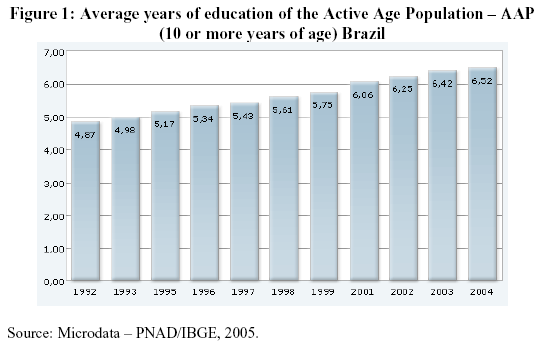
At the end of the nineties Brazil could claim universal access to primary education (96.8%), but the average time in education still remains very low – 5.75 years in the white population and 4.04 amongst non-whites – which includes the effect of legislation that made a minimum of 8 years of education obligatory. The average number of years in education amongst the active age population (AAP) is higher – being around 6.52 years (figure 1), but when this is examined by region it can be seen that the North and Northeast regions haven't reached this average level (graph 1). This means that there are high levels of truancy and repetition in primary education, which implies that the matriculation rate remains dramatically low.
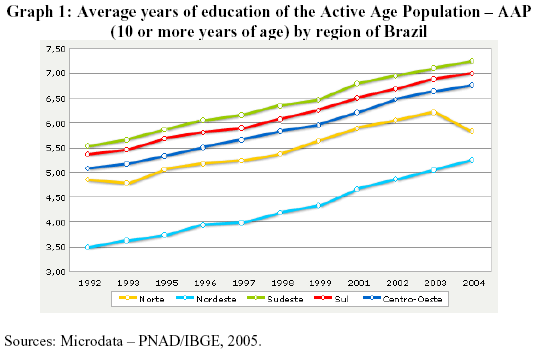
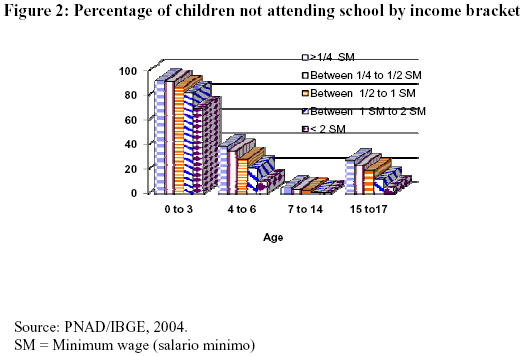
Figure 2 illustrates the fact that the rate of absence of children at school is connected to the income bracket of their family. It can be seen that between 7 and 14 years of age the data confirms presence at school, whilst between the ages of 15 and 17 the situation changes with a significant contingent still being out of education (PNAD/IBGE, 2004).
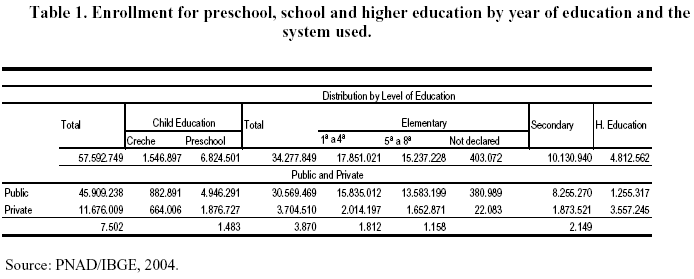
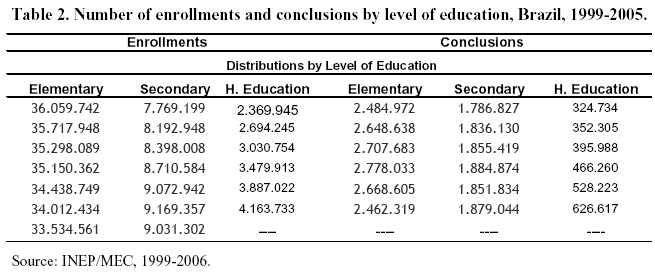
]]> The analysis of enrollment (tables 1 and 2) and conclusion (table 2) data, for the three levels of education, reveals that the educational pyramid in Brazil remains extreme. This implies that there is a severe problem in the conclusion and permanence of students, even during primary education.
Access has been practically universalized but that the children complete the eight years of obligatory education has still not been achieved. The very low completion numbers for primary education (2.4 million students per year-2004 data) is one of the major problems in Brazilian education. Another relevant fact (table 1), previously acknowledged, is the concentration of enrollments in primary education at 88%, and secondary education at 80%, in the public system, whilst in higher education this proportion is inverted with around 70% of the enrollments being in the private sector (PNAD/IBGE; MEC/INEP)2.
According to the data from PNAD/IBGE (2004) referring to age, 85% of the students from the 1st through the 4th grade are aged between 5 and 11 years old now. The problem of permanence in education starts at the moment of change from the 4th to the 5th grade and from the 8th grade to the first level of secondary education. Although students should complete primary education at the age of 14, only 66% of the students in the 5th through 8th grade are this age or younger. 15 to 17 year olds constitute 20% of the students with the remainder being 18 or above3. On the other hand, looking at the concern for equity of access and quality in the system, substantive differences, if not inequalities, appear between the data concerning the reality of public schools with the indices for private schools, which means that the social inequalities are reinforced by inequalities in school performance. Such reality will be reflected on the profile of the students of higher education who, as we shall be seeing below, are mostly from families of higher social economic levels.
The crucial issue is to understand the still low number of youngsters that complete primary education each year. Until 2002, a slight increase was recorded in the number of students completing primary school, but then the numbers started to fall down (table 2).
Additionally, secondary education, despite the constant increase in the number of enrollments over recent years, shows a very low completion rate. Only 47% of the matriculated students are between 15 and 17 years old, 35% are in the age range 18 to 24 with the remainder being 25 or over (PNAD/IBGE, 2004). The average number of enrollments over the three regular years of secondary education reveals that the expected number of graduates has not been reached; once again it is low, only around 1.8 million students per year. These data reveal the Brazilian educational pyramid (Figure 3).
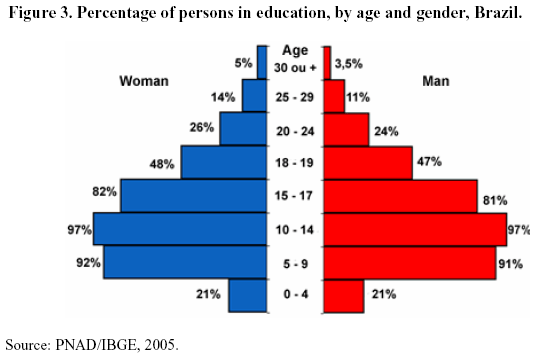
In order to understand the reasons for this educational backwardness, a further analysis is required. Failure of social policies and/or of recourse allocation could be indicated as a cause of it. It is worth noting, however, that data from 2002 shows that spending on education in Brazil is not low (4.1%) in comparison to that of European (Portugal, 5.9%; France, 5.6%; Spain, 4.5%) or other Latin American countries (Mexico, 5.3%; Chile, 4.1%; Argentina, 4.0%, etc) (OECD, INEP/MEC, 2004). Such comparison, however, should consider the history of investment and educational quality, if not the cultural capital, pertinent to the each social group. In this manner, considering the social and educational debt owed to our population, one could conclude that this investment is no more than parsimonious. Of the total invested, 49% goes to primary education, 13% to Secondary education, 19% to higher education, 11% to youth and adult education (EJA) and 8% to pre-school education.
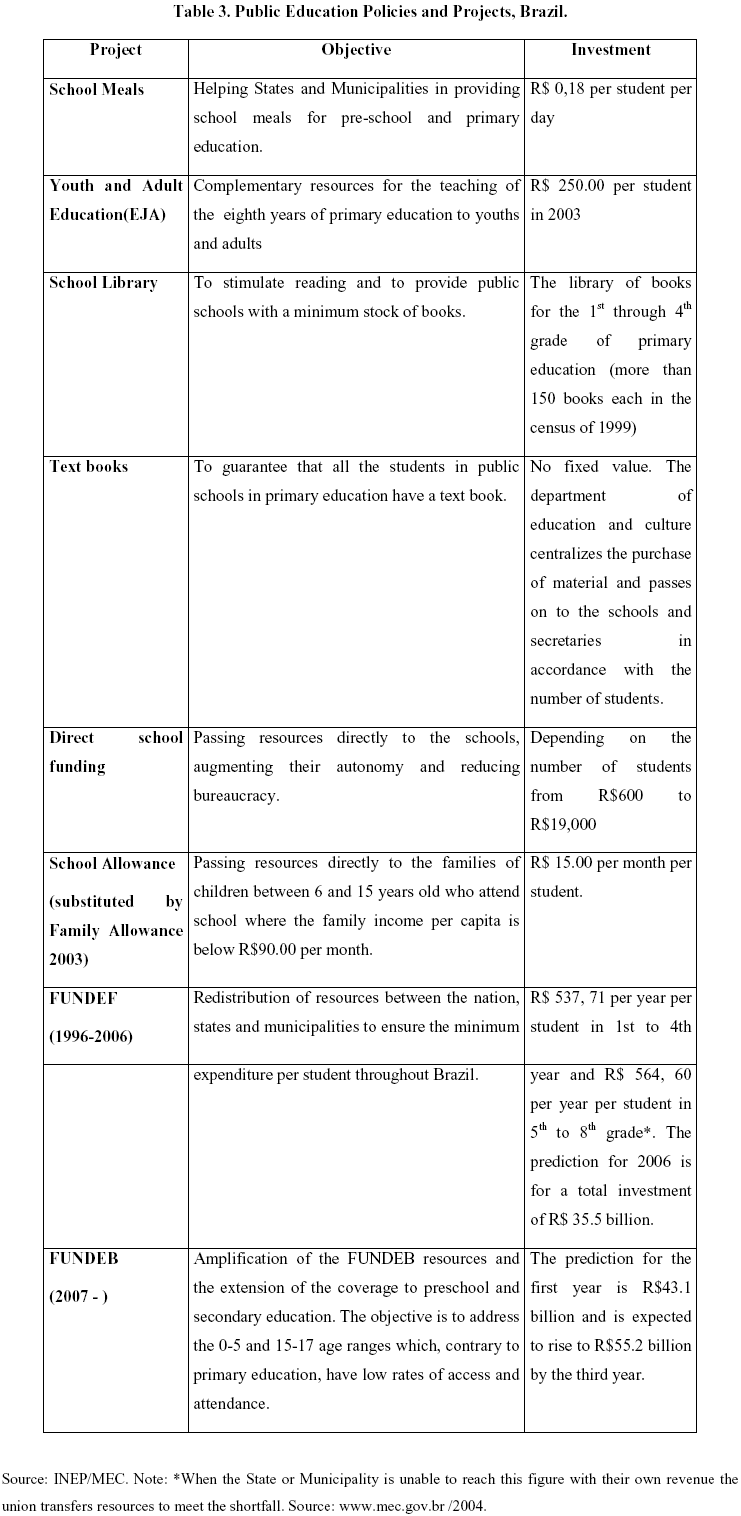
]]> In recent years a series of social policies and projects have been adopted in order to guarantee the permanence of children in school as presented in the table below:
FUNDEF was nationally implemented on January 1st 1998, starting, then, to control a new system of redistribution of resources for primary education. At the moment, FUNDEF has been substituted by FUNDEB; the inclusion of preschool and secondary education has been approved by the chamber of representatives and by the senate, and is now waiting for approval and regulation by the President of the Republic.
The most notable innovation of FUNDEF was in the changes made in the financing structure for primary education (1st to 8th grade) by allocating a portion of the resources constitutionally destined to education. According to the Constitution of 1988, 25% of the revenue of the States and Municipalities are directed to education. After the constitutional amendment 14/96, 60% of these resources, which represents 15% of the total revenue of the states and municipalities, are funds destined to primary education.
FUNDEF represents a genuine revolution in the handling of primary education in the Brazilian public school system, particularly with respect to the resource redistribution criteria. That model made it possible to direct resources to where the students, in fact, exist. After the institution of this fund, resources started to be moved from the financially better-off governments with low investment in education, though, to those municipalities with the inverse circumstances. In the first year of FUNDEF (1998) 2703 municipalities received financial help through the redistributive process. In 2001, 3404 municipalities benefited from an additional income of R$ 2.9 billion.
The reservation of 60% of the resources of FUNDEF for teacher's salaries represented a significant increase in their remuneration. From December 1997 to June 2000 the average pay increase for teachers was of 29.6%; regions, such as the Northeast, where primary teachers received an average increase of 59.6% both in State and Municipal systems. With a higher income, the Northeastern municipalities managed to provide an increase of 70.2% on average, over the same period.
At the end of 2003 the Family Allowance program was created, unifying various federal resource transference programs including the School Allowance, into one scheme directly associated with the President and administered by a special inter-ministerial council. The new program should provide a minimum income per capita of R$ 50.00 for every family where their income is less than R$ 50.00 with additional benefits for pregnant women, small children, children in school, and food and fuel subsidies which previously were parts of distinct programs.
Recently, Constitutional Amendment number 53 (12/6/2006) created FUNDEB – Fund for the Maintenance and Development of Basic Education and Valorization of Education Professionals – which aims at raising the attendance rates, mainly in pre-school and secondary education and at getting a considerable increase in and new distribution of investment in education.
]]> Why, in spite of resources that Brazil invests in education and with the social policies directed toward social inclusion, does the educational performance in Brazil remain so low? On the one hand, it might be due to inadequate or inefficient investments and to the lack of control over the expenses, but, on the other, further increase in investment is needed to overcome the situation, particularly with regard to the salaries and training of teachers.Once this basic reality is understood, the principal reason for inequality in access to higher education can be seen to be the failure of the lower levels of education with regard to social inclusion, and it is possible to create better conditions to understand what has been happening in higher education over in the country.
3.2 Access and equity in higher education
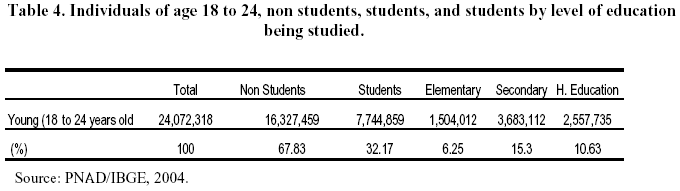
The development of Higher Education is compatible with the reality described above, in which it serves only 10.6% of the population between 18 and 24 years of age. The table below reveals two important aspects of the exclusion process, considering all youngsters in the age group: the early exit from the educational system, where in fact 68% of youngsters stop studying, and the degree of tardiness in study related to this age group where 6.25% of them are still studying primary levels, and 15% in secondary education (tables 4 and 5).
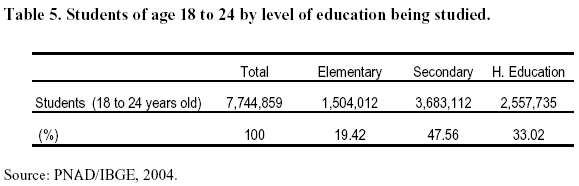
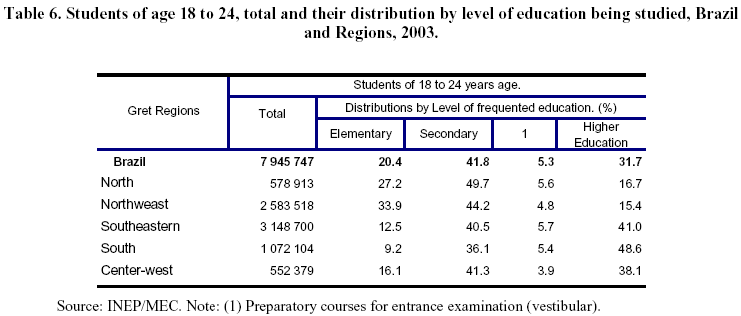
Table 6 presents the data of 2003, by region, confirming that the most positive indices are for the Southeast and South regions.
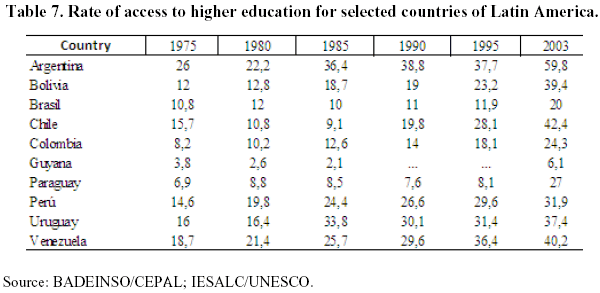
The basic question to be resolved is the following: what helps to explain this performance in the Brazilian education system, in particular in the higher education system that still shows overall levels of matriculation much lower than that of countries with a much lower level of development, such as our neighbors in South America (table 7)?
]]> Taken as a whole, the expansion of higher education in Brazil, reveals a problematic situation if compared to the size of the population in the pre-universitarian age range, especially when compared to other nations of similar or lower level of development. The rate of matriculation in Brazil remains very low and is one of the lowest internationally. The same is true of the gross numbers, as table 8 shows.Higher education in Brazil has, until very recently, been exclusively reserved for the better-off youngsters. After a period of increase in the 1970s, matriculation rates remained unaltered until the mid nineties. During the military governments (1964-1985) official policies limited the expansion of free public universities and allowed for the multiplication of private institutions. Even so there was a reasonable balance in the distribution of matriculation between public and private HEIs. The difference was more evident in the quality provided. With the exception of a few Catholic universities, in particular PUC in Rio de Janeiro, the private institutions were low in quality. The free public institutions received, paradoxically, the children of the higher classes who had undertaken their secondary education in high quality private schools. That means that the better-off paid for the best schools for secondary education and so assured that their children had the best chance of admission into the free public universities.
Today, however, there is an increasing perception that education and, in particular, higher education, is starting to become a bottleneck in the chances for a strong national development that could ensure a leading international role for the country.
The subject of the democratization of access to high quality higher education is one that, for this reason takes on great importance. The Brazilian experience with respect to transformations in the field of higher education is a rich one, and can serve as an important reference for the analysis of the challenges for higher education in contemporary society, particularly in emerging nations.
Thus, the question of access and equity in higher education needs to be discussed and analyzed with respect to three basic aspects: a) has the process of expansion of higher education provided true democratization of access to quality higher education? b) to what degree can the diversification of post-secondary education opportunities facilitate the democratization of access? c) How and to what extent can social inclusion policies of higher education stimulate the democratization of access and the quality of education provided?
3.2.1 Expansion
The increase in demand for higher education is one of the central trends of contemporary society. Amongst the factors that have contributed to this process are the valorization of scientific knowledge, the defense of social rights (more education), the aspirations of families to obtain social mobility, the need to acquire more competences to succeed in the employment market etc.
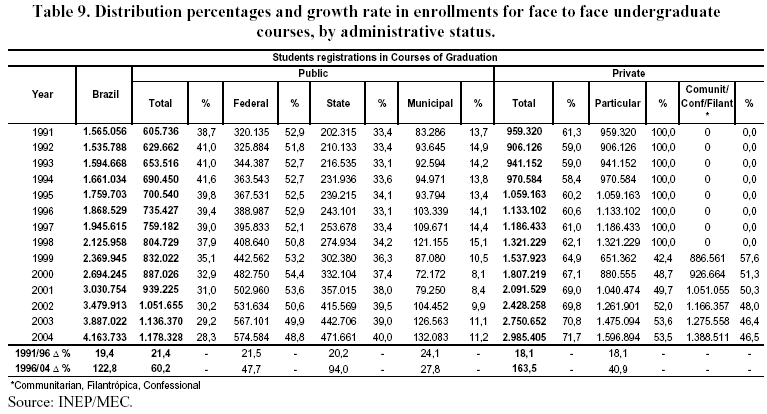
In Brazil, in 1995, the matriculation for higher education reached just above 1.5 million students. Ten years later it had exceeded 3 million enrollments. Today there are more than 4 million students as shown in table 9 this growth has been, in part, due to the expansion in secondary education, despite the fact that in 2002 only 40% of the 15 to 17 age range were studying at that level, increasing to 47% by 2004. Nevertheless, even with the expansion higher education only reaches 10.6% of those aged between 18 and 24, one of the lowest rates in Latin America.
Of the total number of enrollments, in 2002, 58% were women, 76% were white, and 41% came from the richest 10% of society and 7.5% from the poorest 50% (PNAD/IBGE, 2003). The expansion was driven by the private system which obtained 70% of all undergraduate enrollments.
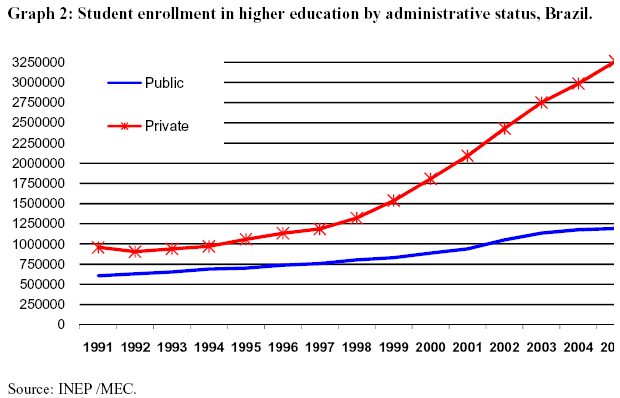
Table 9 shows the growth in enrollment by institution type, public and private (see graph 2). What catches the attention is, without doubt, that it shows a significant quantitative expansion, with the enrollments almost doubling over a five year period. However, in looking at the details it can be seen that the public system increased the number of places by 217,000 while the private system provided 1.7 million more places over this period.
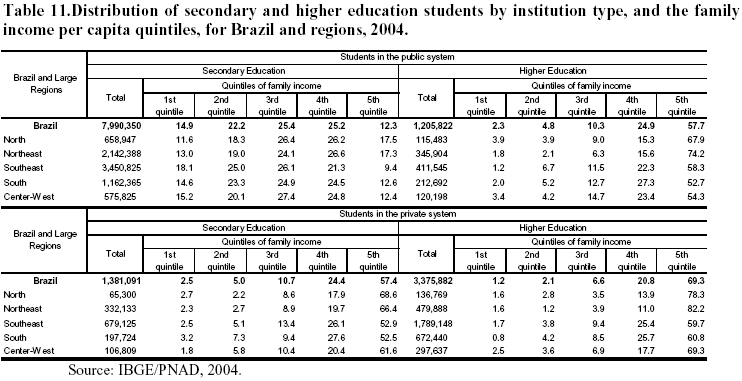
]]> Analyzing the demand figures for higher education it can be deduced that the inscriptions for entrance examinations represent a select public, arriving at 4.9 million inscriptions. What calls the attention in table 10 is the difference between the number of enrollments and the number of places offered, that occurs almost every year. Only 63% of the places offered in Brazil are taken. In the public sector the uptake is 95% whilst in the private sector the proportion of occupied places is 57.8% (see graph 3).Another question to be examined refers to the movement toward a real increase in the opportunity for students coming from the lower social economic sectors. The data concerning the expansion in matriculation in higher education, contrary to what could be supposed, reveals that this expansion has not made any significant changes in the social composition of the student body. One of the reasons for this is, as has already been shown, the low rate of students completing secondary education; another is the low increase in the places in the public institutions. The data shows that there has been no significant change when the family income is taken as the index of students in either public or private higher education institutions, as shown in table 11 below.
Analyzing the data, looking at the students in higher education, it can be seen that there is a presence of low income students (1st quintile, 2nd and 3rd quintiles) in public higher education and in a lower percentage also in the private system. The concentration of students from the richest portion of the population is over 50% in both: 57% in the public system and 69.3% of the enrollments made in the private sector are made by students from the highest quintile which represents only 6.9% of Brazilian families, whilst only 2.3% and 1.2% are taken, in the public and private education systems respectively, by students from the poorest quintile which corresponds to 30.2% of the families in the country (PNAD/IBGE, 2004).
In this sense the recent expansion has shown that access to higher education is still highly concentrated amongst the children of the upper and middle income brackets. Two aspects of this are noteworthy of this process, in addition to its low impact on democratization: a) there is a considerable level of abandonment as, on average, at least 1/3rd of those entering higher education do not graduate in the predicted time; b) there is an increased difficulty for a significant section of students in meeting the costs of study in the private sector, as has been seen, a largest part of the student body. From these circumstances arises the need to discuss anew the methods of financing higher education, the policies and instruments of modernization and qualification of teaching and of variation of supply, in such a way as to have a greater concordance with the expectations of the students.
3.2.2 Diversification
Since the issuing of the Law of Direction and Basis for National Education (LDBN) in 1996, there has been more emphasis placed on the need for diversification in the organizational structure as well as in the modalities of higher education being offered.4. In theory, diversification should assure more favorable conditions – lower cost and greater adaptation to demand – for a massive incorporation of new students. Diversification should be, therefore, an instrument for the democratization of access and for the amplification of equity.
In effect, in addition to the traditional university institution, with all of its problems, new types of HEIs appeared such as university centers and centers for education in technology. The supply of courses with different durations to the traditional university degree also diversified, with the implantation of sequential courses in specific subjects and technological courses (Neves, 2002:47).
Ten years on in this process of diversification it is possible to question the real reach of the changes made and their significance as an instrument of democratization. Such questioning does not imply denying that the strategies of diversification of the higher education system have had, as a matter of fact, a positive impact on the process of increasing access. International experience seems to corroborate this affirmation. Brazil is an interesting case to study precisely because, to a large degree, the differentiation that occurred was more in the terminology than in the practice.
Is differentiation as a multifaceted field integrated in a complex set of HEIs with distinct academic vocations and organizational profiles a solution to meet not only the demand, but also the specific social, academic and professional expectations?
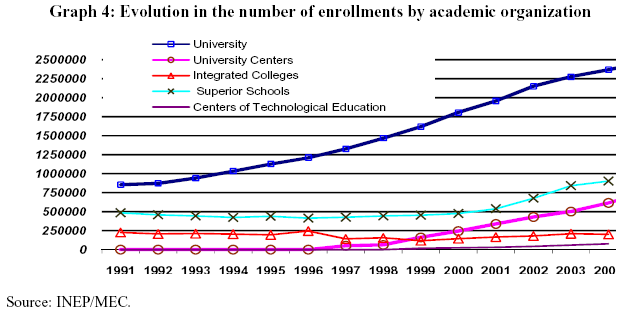
Of all the HEIs only 11% (207) are public with the rest (1652) being privately owned. Brazil has a differentiated system of institutions, totaling 1859 of which 8.8% are universities, 4.4% are university centers, 6.4% integrated colleges, 75.5% post secondary isolated schools or institutes and 5% technological centers.
]]> With respect to the number of enrollments in higher education by academic organization and year, of a total of 4,163,733, the universities, whilst still fewer in number, are responsible for 57% of the enrollments (with 48% of these being evening courses) whilst the isolated schools have 22% of the total enrollments (with 67% at evening), followed by the university centers with 15% (67% in the evening), integrated colleges with 5% (76.3 at evening) and, finally, the centers for technological education with 2% of the enrollments (63.6% at evening).The next graph illustrates the evolution in the number of enrollments by academic organization, since 1991.
To the traditional courses covered by the previous legislation, undergraduate, graduate and extension, the LDBN added sequential courses by area of knowledge and education at a distance. The modality of higher education courses denominated as sequential is a proposal to meet the requirements of greater inclusion in higher education with shorter duration courses. According to Gesteira, with this alternative it was sought to:
Amplify the supply of higher education courses, flexibilize the process of graduating from higher education in the country, create mechanisms to meet the demands emerging from market segments not covered by the traditional modes of graduation, take advantage of the unfilled places in higher education course to introduce opportunities for pluridisciplinary qualification, and introduce modalities of higher education qualification that allowed an increase on the options currently existing (2001: 98).
In 2001 there were a total of 328 sequential courses being offered, predominantly by the universities and, in the great majority by private institutions. In 2005 it can be seen that the number of sequential courses had risen considerably. Currently there are 984 sequential courses being run in the country and, despite these still being predominantly offered by universities, there has been an increase in the number of other types of institutions that have started providing them, such as university centers and integrated colleges.
Finally, with regard to diversification it is worth noting that the system still provides relatively the same type of options, despite the changes in quantity, the quality is unchanged. It has been, above all, changes in naming and not, in fact, important changes in the type of opportunities available in higher education which could significantly collaborate in the increase in access and interaction with society.
]]> 3. 2.3 Affirmative and social inclusion policiesThe current federal government gave priority to the reform of the higher education system and confronted the bottlenecks in the process of democratization with many actions:
a) returning to the growth in the number of public HEIs so as to increase the number of public places through the creation of new universities (two), the consolidation of those which was in the process of installation (one) transformation (six) or division (two) and, in addition, the expansion of existing campi. Those being created include the Federal University of ABC Paulista, in Santo André, providing 20 thousand undergraduate places and the Universidade Federal do Pampa, in the city of Bagé, which is to be a multi campi HEI offering a total of a thousand places.
b) Amplification of the educational credit program (Higher Education student finance fund/FIES)
c) The University for All program (PROUNI) (Universidade para Todos), created through decree nº 213/2004 and institutionalized by law nº 11.096, of the 13th January 2005. The purpose of this program is to provide integral and partial scholarships for low income students studying for a degree or a sequential course, in private higher education institutions offering as incentive exemption to some taxes for those institutions that adopt the program. In its first selection procedure, Prouni offered 112 thousand scholarships across 1,142 higher education institutions throughout the country. Over the next four years the program should supply 400 thousand new scholarships.
d) The implementation of affirmative policies with reserved quotas for black/pardo and indigenous students and a special system to reserve places for students coming from public secondary schools. These are, however, polemical measures that have provoked reactions from various parts of higher education itself and from public opinion (Maggie; Fry, 2004).
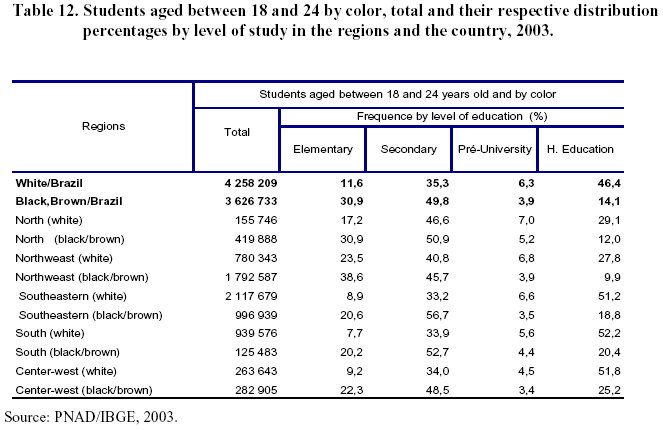
Table 12 shows that , in 2003, of the total of white students aged between 18 and 24 46.4% were in higher education compared to only 14.1% of all black and mixed race students in this age group. The data also shows that the greatest portion of black and mixed race students between 18 and 24 years of age studied at primary (30.9%) or secondary (49.8%) levels.
All of these actions are directed toward meeting the goals of the National Education Plan, which targets attendance, by 2010, of at least 30% of the population aged between 18 and 24 in higher education, today restricted to 10.6%.
It is too early to evaluate the impact of these measures on the process of democratization of access, particularly considering that some of them are not for immediate application. They depend upon the adherence of the institutions and sometimes on the approval of the National Congress. The monitoring of their implementation – voting process, the arrangements that the institutions need to make to meet their demands, the financial arrangements that have to be resolved to ensure not only access to but continuation in higher education of people from low income sectors, is an important set of issues that need to be analyzed and discussed in future work.
]]> 4. Closing remarks
It is undeniable that the education system in Brazil has seen a significant increase in enrollments at all levels in the last decade. It is also undeniable that there has been an increase in access to primary education which has resulted in almost universal matriculation.
A more detailed analysis of the data shows, however, that the educational pyramid remains very problematic. This means that there are still very few that complete primary education, fewer still that number that conclude secondary education and that enter into higher education.
In the case of primary education, everyone enters school but, as we have seen 84% finish the 4th grade and only 57% finish primary education. In this process of selective funneling, at the secondary level the index of completion is only 37%. It is noteworthy, as well, that the Primary Education Evaluation System (Saeb) indicates that half of the students that complete the 4th grade are incapable of reading a simple text. In an international comparison it was stated that the reading comprehension capacity of students from the Brazilian elite was lower than that of the lowest classes in Europe (SAEB/INEP/MEC, 2005).
Until the mid 1990s growth in higher education was practically stagnant as the data shows. In 1995 a period of strong growth started without any significant changes having been made to the secondary education figures.
The number of vacancies grew, principally in private education, and a group of potential candidates composed of individuals who had found themselves outside of the system returned to take advantage of the opportunity to obtain a higher education. The effect of the Plano Real and of the success in combating inflation cannot be overlooked as they opened new perspectives for the lower middle classes. Thus, a significant point to highlight is that the increase in demand for higher education does not mean an alteration in the structure of the Brazilian educational pyramid.
The second aspect is that the logic of the increase in places offered by the private sector only apparently follows an increase in demand. The true increase in places offered follows the internal logic of the management of the private HEIs: the number of places offered is a sort of preventative market reserve in the midst of ever increasing competition, particularly in the Southeast region. The profitability of the enterprise does not depend on these places being filled. The slack is relative; it does not reflect, necessarily, a crisis in the sector. While it is true that, on the micro perspective, that is, taking individual institutions in isolation, it is possible that the non filling of the places results in an irreversible crisis, it has to be understood that this irreversible crisis is not due to the unfilled places but to the failure to fill the minimum number needed for the maintenance of the HEI. The true challenges for the private sector are those of competition, the difficulty in maintaining investment in qualification (which provides the differential or relative advantage) and avoiding bankruptcy. Thus the variation between the number of inscriptions and the number of places does not appear to be central to the analysis of the access-equality relationship.
Demand, as has been seen, has grown little due to the number of finishers of secondary education, even taking into account those finishers outside of the expected age range. There is an important contribution to the number of candidates deriving from the EJA and from those candidates that are seeking to return to the education system. These are candidates that are already in the employment market.
Considered as a pertinent measure of the increase in education, above all higher education, as a linked challenge the idea of the potentialization of a fair and sustainable development it must be considered that the public policies for the sector should be systematic in nature. The process of democratization of access to higher education, as well as a more equitable distribution in terms of gender, class and ethnicity, cannot ignore that fact that the Brazilian population has, on average, 6 years of education and that nearly 70% of the population aged between 18 and 24 is not in any type of formal education.
Effectively, democratizing access and obtaining greater equity passes through not only an increase, of the time in school of the population, but above all the urgent need to increase the quality of the primary education that is provided.
]]>References:
BAUMAN, Z. Em busca da política. Rio de Janeiro: Ed. Zahar. 2000.
BRUNNER, J. Educación y Globalización. In: Educação Brasileira. Brasília, DF, 1997.
CASTELLS, M. Sociedade em rede. São Paulo: Paz e Terra, 2000.
CAPES. www.capes.gov.br
DURHAM, E. e SAMPAIO, H. O. O ensino superior em transformação. São Paulo: NUPES, 2001.
GARCIA, G. V. La función social de la educación superior en México. México. UAM, UNAM, Universidad Veracruzana, 2003.
GESTEIRA, C. S. Cursos seqüenciais. In.: DURHAM, Eunice Ribeiro e SAMPAIO, Helena (org.). O ensino superior em transformação. São Paulo: Núcleo de Pesquisas sobre Ensino Superior: NUPES, p.97 - 103, 2001.
GIDDENS, A. A constituição da sociedade. São Paulo: Martins Fontes, 1989.
___. As conseqüências da modernidade. São Paulo: UNESP, 1991.
GUADILLA, C. G. Tensiones y Transiciones. Venezuela: CENDES, Nueva Sociedad, 2002.
IANNI, O. A sociedade global. Rio de Janeiro: Civilização Brasileira, 1996.
IBGE. www.ibge.gov.br.
INEP. www.inep.gov.br. www.edudatabrasil.inep.gov.br. www.inep.gov.br/saeb.
MAGGIE, Y.; FRY, P. A reserva de vagas para negros nas universidades brasileiras. In: Estudos Avançados, N.º 50: São Paulo, 2004.
MARTINS, R. O. Cursos Seqüenciais: entendendo a formação de curta duração. Bauru, São Paulo: EDUSC, 2004.
MEC. www.mec.gov.br.
MEC.SeSu. www.educacaosuperior.inep.gov.br .
NEVES, C. E. B. A estrutura e o Funcionamento do ensino superior no Brasil. In: Soares, M. S. A. (Org.) A educação superior no Brasil, Brasília: UNESCO/CAPES/GEU, p. 43 - 69, 2002.
____________.Diversificação do Sistema de Educação terciária: um desafio para o Brasil. In: Tempo Social. Revista de Sociologia da USP. V. 15, n.º 1, maio 2003.
____________.RAIZER, L; FACHINETTO, R. F. Diversificação do sistema de ensino superior: um novo cenário? Relatório de pesquisa/CNPq, 2005.
SANTOS, B.S.(org). A globalização e as Ciências Sociais. São Paulo;Cortez, 2003
SCHWARTZMAN, S. Equity, quality and relevance in higher education in Brazil. In: Anais da Academia Brasileira de Ciências, 2004.
UFRGS . Documento sobre os cursos seqüenciais. CEPE (Câmara de Ensino e Pesquisa) UFRGS,1999.
Leonardo Renner Koppe and Alexandre B. Rodrigues collaborated in the production of this article.
1 This article presents the results of research, carried out in 2005 and 2006, about access and equity in higher education with the support of CNPq through its Edital Ciências Humanas e Sociais. We thank Dr. Alexandre Virgínio for his careful reading and contributions. Translation of Robin Lane and reviewed by Neusa Matte.
2 The difference in the data from INEP and IBGE is due to the fact that they are collected at different times: INEP in the first semester and IBGE in the second semester. ]]>
3 Given the results obtained from SAEB and the Brazil Exams, it is noteworthy that our greatest challenge, in addition to increase the school attendance of our population, is to ensure learning. The institutional evaluations show that, in 2001, 59% of students with 4 years of primary education could not read. This percentage fell to 55% in 2003, an absurdly high index. In 2001, 52.3% of these same students could not perform simple arithmetic operations. There was no significant change by 2003 given that the index then was 51.6%. In this period less than 5% of students reached adequate reading levels for the time spent in primary education, and less than 7% had adequate basic arithmetic skills. Additionally these evaluations revealed that of those who had concluded primary education, which means that they must have been 9 years in school, a little less than 10% could read adequately, whilst only 3% had the mathematical competencies considered adequate for that level.
4 Three international organizations of note have been developing strong positions concerning higher education: UNESCO, the World Bank and the OECD, proposing the diversification of the system as a strategy.