Entre o mar e a terra: modos de vida de comunidades estuarinas no sudeste do Brasil
Natalia HanazakiI; Fabio de CastroII; Vivian Gladys OliveiraIII; Nivaldo PeroniIV
IDepartamento de Ecologia e Zoologia, CCB-UFSC
IIPrins Bernhardlaan, 159, Voorburg 2274HX, The Netherlands
IIINEPAM, UNICAMP, Cidade Universitária Zeferino Vaz, CP 6166, CEP 13084-867, Campinas, SP, Brazil
IVFisheries and Food Institute (FIFO), Campinas, SP, Brazil
Replicated from Ambiente & sociedade, Campinas, v.10, n.1, p.121-136, Jan./June 2007.
ABSTRACT
The central focus of this study is to characterize and compare the livelihood strategies of two coastal communities from the estuarine region of Ribeira Valley (São Paulo State, Southeastern Brazil), analyzing the interplay among four economic activities: small-scale agriculture, fishing, tourism-related jobs, and extraction of non-timber vegetal resources. The local people of these communities are mostly Caiçara, the native inhabitants of southeastern Brazilian coast, in an Atlantic forest area. The miscegenation of Amerindians, European colonizers, and African Brazilians gave rise to the Caiçara people, whose subsistence was originally based on small-scale itinerant agriculture, small-scale fishery, and some extraction of forest products. Their livelihoods activities changed through time: agricultural practices were gradually abandoned, while fishing grew in importance. Recently, tourism-related jobs and the extraction of non-timber vegetal resources acquired a key role in the estuarine Caiçara livelihood. After an historical overview, we focus our analysis on the local factors and external pressures affecting the combination of these activities.
Keywords: Fisheries. Use of natural resources. Atlantic Forest. Conservation. Human ecology.
RESUMO
O objetivo central deste artigo é caracterizar e comparar as estratégias dos meios de vida de duas comunidades da região estuarina do vale de Ribeira (Estado de São Paulo), analisando a inter-relação entre quatro atividades econômicas: agricultura de pequena escala, pesca, trabalhos relacionados ao turismo e extração de recursos vegetais não madeireiros. Os habitantes destas comunidades são na maior parte Caiçaras, nativos da costa sudeste do Brasil, vivendo em área do domínio Mata Atlântica. Caiçaras são descendentes de ameríndios e colonizadores europeus, com influências mais recentes de escravos africanos. Sua subsistência era baseada originalmente na agricultura itinerante de pequena escala, na pesca artesanal e, em menor grau, na extração de produtos florestais. Suas atividades de subsistência mudaram com o tempo: as práticas agrícolas foram abandonadas gradualmente, enquanto a pesca cresceu em importância. Recentemente, as atividades econômicas relacionadas ao turismo e à extração de recursos vegetais não madeireiros adquiriram um papel chave nos meios de subsistência dos Caiçaras desta região estuarina. Após uma contextualização histórica, nós focalizamos na análise dos fatores locais e das pressões externas que afetam a combinação destas atividades.
]]> Palavras-chave: Pesca. Uso de recursos naturais. Mata Atlântica. Conservação. Ecologia humana.
1 Introduction
Coastal people worldwide face a constant dilemma between economic development and pressures towards resource conservation. While the increasing process of resource depletion leads to conservation-oriented policies, the demand for regional development fosters the development of infrastructure, and increases the pressure over the ecosystems. Such exogenous processes influence the way how local populations make decisions towards resource use. However, other important constraints influence resource use decisions, such as the local processes of social organization, household structure and resource availability.
The Brazilian Atlantic forest comprises currently less than 10% of its original vegetation along the coast, between the latitudes 14º S and 21º S. The threat of habitat reduction over the remaining original forest, combined with its high biodiversity, tops this biome as a hot spot for natural resource conservation (MYERS et al., 2000). On the other hand, the increasing demand for infrastructure development on the coast creates a counter-pressure to conservation through urbanization and tourism business.
Between policies for infrastructure development, on one side, and for biodiversity conservation on the other, lays native inhabitants who depend on the natural resources for their subsistence (DIEGUES, 1999). The estuarine region of Ribeira Valley, located on the Southeastern Brazil, is a case in point. This region has been relatively isolated from economic mainstream due to historical factors and to the lack of infrastructure. As a result, this region presents the lowest indices of literacy and income in São Paulo State, and the largest concentrations of Atlantic Forest remnants in Brazil (HOGAN et al., 1999).
The native populations include many social groups such as Guarani indigenous group, quilombolas, and Caiçaras (mixed blood descendants from Amerindians and European colonizers). The Caiçaras live on the coast and rely upon inshore small-scale fishing, small-scale agriculture, and some extractivism of vegetal resources for their livelihood (BEGOSSI, 1995; HANAZAKI et al., 1996; PERONI; MARTINS, 2000). Since Caiçara do not correspond to a well-defined ethnic group, there are no available data about its total population. According to Willems (2003), Caiçaras are distributed along the south and southeastern Brazilian coast; other authors consider that Caiçaras are distributed mainly in the southeastern coast, while in the southern part of Brazil the coast is inhabited by people with Azorian influence (DIEGUES; ARRUDA, 2001).
The analysis of these various activities of the Caiçaras was influenced by the concept of livelihood analysis (DFID, 2000), yet we do not follow the sustainable livelihood analysis guidance strictly. According to Carney (1998), the livelihood concept comprises the capabilities, assets, and activities required for a means of living. Based around a wide range of activities, the livelihoods are dynamics and complex, and are influenced by both external and internal forces (SOUSSAN et al., 1999). In this sense, we used an approach based in some of the principles of sustainable livelihood analysis, such as the start with an analysis of people´s livelihoods and how these have been changing over time; the acknowledgement of multiple livelihood strategies that people adopt to secure their livelihoods; the interplay between the micro and macro levels and by external and internal factors; and the dynamic features of livelihoods (DFID, 2000). Caiçara's livelihood is strongly influenced by local factors (BEGOSSI, 1995; HANAZAKI et al., 2000; PERONI; HANAZAKI, 2002). However, the rapid social and ecological changes due to exogenous factors have also played major role in shaping the patterns of resource use among Caiçaras. The central objective of this study is to characterize and compare the economic strategies of two Caiçara communities from the estuarine region of Ribeira Valley, and we show how the combination of regional and local factors influences the variability of livelihood strategies of coastal populations. The questions underlying this comparison is how culturally similar communities have coped with these factors in different ways. We focus our analysis on the interplay among four major economic activities related to natural resource use: fisheries, small-scale agriculture, tourism-related jobs and extraction of non-timber vegetal resources. First, we provide a brief history of the communities and the social and demographic changes in the region. Then, we describe the pattern of current economic activities in the communities in a regional and local context. Finally, we compare and discuss the variations in resource use strategies between these communities.
]]> 2 Study site
The study site is located on the estuarine area of the Ribeira Valley, Southeastern Brazilian and São Paulo State coasts. This region is characterized by a highly productive ecosystem, and well-preserved Atlantic rain forests (SMA, 1992). Climate is subtropical, temperatures average 21 to 22 ºC and annual precipitation ranges from 1,700 to 2,200 mm (SCHAEFFER-NOVELLI et al., 1990). Atlantic rainforests in the region includes many vegetation subtypes (KIRIZAWA et al., 1992), such as restingas (pioneer coastal sand dune vegetation), coastal plain forests, mangroves, and vegetation in several stages of secondary succession. The salinity of the estuary, determined by continental drainage patterns during the year and by sea tides, influences the occurrence of fish species and aquatic invertebrates of commercial interest (RADASEWSKI, 1976).
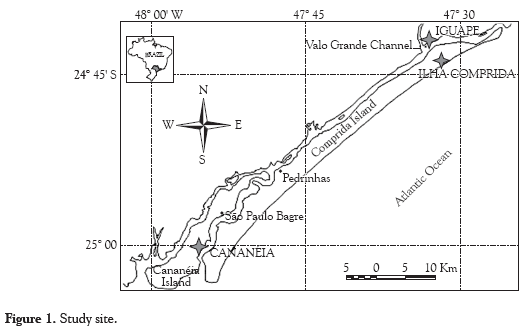
The two communities studied – Pedrinhas and São Paulo Bagre (henceforth Bagre) – are located between the latitudes 24º 40' S and 25º 10' S and longitudes 47º 20' W and 48º 05' W, in Ilha Comprida and Cananéia municipalities, respectively (Figure 1). Both communities date from the first half of the 20th century. Pedrinhas was founded in 1906, with the arrival of three families from nearby islands, and other scattered families living in the area (CARVALHO, 1999). Bagre was founded in the 1920s, by two families from the region who rented out a large land lot (SCARPIN, 1992).
Both communities are located on estuarine islands, with easy access from the continent through bridges and ferries. The urban centre is 30 and 8 km away from Pedrinhas and Bagre, respectively. The communities are served by public transportation and electricity, except for some isolated households. Despite the larger distance from the urban centre, Pedrinhas has better infrastructure than Bagre. Pedrinhas is supplied by piped water, while at Bagre the water comes from wells. Almost all houses at Pedrinhas have telephone, whereas Bagre residents share one public telephone. The elementary school at Bagre closed down in the 1990s under the justification of lack of students. Nowadays the students from Bagre attend schools in Cananéia. In contrast, Pedrinhas has one elementary school; higher-grade students attend schools in the Ilha Comprida town and in other nearby towns for professional training and college studies. Post office, health centre and a small public library are present only in Pedrinhas. Small stores and bars are the major local commerce.
The community population is mostly Caiçara. In 1998, Pedrinhas estimated population was of 252 inhabitants, distributed in about 60 families while Bagre had 78 residents distributed in 17 families (HANAZAKI, 2001). Bagre residents are mostly catholic while the few individuals from other religions travel to other communities to attend religious services. Bagre houses one church and maintain many regional festivities, such as the Bandeira do Divino, the Reiada, and the Fandango, a traditional rhythm and dance (MEIRA, 1997). Compared to Bagre, Pedrinhas is multi-religious, dominated by Catholic and one Pentecostal churches, in addition to other Protestant or Evangelic religions.
]]> 3 Methods
This study is part of an interdisciplinary effort on a broader project entitled "Floresta e Mar: usos e conflitos no Vale do Ribeira e Litoral Sul de São Paulo" (Núcleo de Estudos e Pesquisas Ambientais, UNICAMP). Data collection included interviews, systematic in situ observations about economic activities (BERNARD, 1995), participant observation (BERNARD, 1995), and research on secondary demographic and historical data, during 1998-2002, totaling about 120 days of field work. Pedrinhas and Bagre were selected based in three main criteria: i) communities where we still found fishing and agriculture activities, as well as tourism related activities and extraction of non-timber forest resources; ii) communities located in estuarine islands, as well as settled close to the inner channel; and iii) communities whose residents agreed to take part on the research. In 1998, semi-structured household interviews about the local socioeconomy were carried out with 61 household chiefs of two communities. Fifty percent of local households were sampled in Pedrinhas, and in Bagre we visited all the households; we excluded households where its inhabitants were not prone to be interviewed. Structured interviews with 32 fishermen and eight open-ended interviews with agriculturists were also carried out. Data on the extraction of non-timber forest resources were collected through a research-action project, which included participant observation, semi-structured interviews and archival research. In 2001 and 2002, additional household interviews were carried out with 23 families (10 in Bagre and 13 in Pedrinhas), using a non-probabilistic intentional sample (BERNARD, 1995). The criteria to choose these families were: i) households with both chiefs (men and women) present and available to the interview; and ii) households with multiple economic activities. Through these interviews we characterize the structure of the households and their respective economic strategies.
4 Regional context
The study area has one of the oldest contemporary human occupations in Brazil. Founded by 1531, Cananéia town was one of the first Brazilian villages. The miscegenation of Amerindians, European colonizers, and African Brazilians gave rise to the Caiçara, the inhabitants of Southeastern Brazilian coast. The Caiçara also had some influence of Japanese migrants who arrived in the area by the early 1900s (PIERSON; TEIXEIRA, 1947; MUSSOLINI, 1980). Their subsistence was originally based on small-scale itinerant agriculture, artisanal fishery, and extraction of forest products (DIEGUES, 1983; BEGOSSI, 1995; ADAMS, 2000). Artisanal fishery is a small-scale fishery directed towards both direct subsistence and commercialization (DIEGUES, 1983). Because of their reliance on natural resources for subsistence, combined with their relatively isolated location, Caiçaras were left aside from the economic mainstream. In this context, they relied upon local resources to assure their livelihood.
Swidden agriculture was the main Caiçara activity in the past, until the first half of 20th century (SCHMIDT, 1958; DEAN, 1997; PERONI; HANAZAKI, 2002). Cassava (Manihot esculenta Crantz), yams (Dioscorea spp.), sweet potato (Ipomoea batatas Poir.), squash (Cucurbita pepo L.), sugarcane (Saccharum officinarum L.), and beans (Phaseolus vulgaris L.) were the key crops (PERONI; MARTINS, 2000; PERONI; HANAZAKI, 2002). A major component of the agricultural activity in the region was the cooperative labor systems (mutirões), representing the most important expressions of solidarity in Brazilian rural societies (CÂNDIDO, 1977). As part of the Amerindian tradition (SCHMIDT, 1958; WAGLEY, 1976), relatives and neighbors cooperated in plot openings, receiving in exchange reciprocal help in their own agricultural work, as well as the meal or party following the work.
Commercial fishing in the region started in the 1910s (MOURÃO, 1971). Until the 1960s, fishing was mainly performed with paddled canoes built from trunks of large trees such as cedro (Cedrela fissilis Vell.), canela (Ocotea sp. and Nectandra sp.), ingá (Inga sessilis (Vell.) Mart.), jequitibá (Cariniana legalis (Mart.) Kuntze) and guapuruvú (Schizolobium parahyba (Vell.) S. F. Blake).
In spite of the close connections to the local environment in the past, Caiçara livelihood has by no means been disconnected of regional economic processes. Between the 18th century and the end of 19th century, the regional economy was based on rice agriculture to supply urban markets, and many Caiçara families worked in the rice fields to complement their cash income. In the late 1800s, the construction of a man-made channel (named Valo Grande) to facilitate rice transportation to the docks created a major environmental change in the estuary (SMA, 1992). Erosion on both edges widened the 5 m channel to 300 m, leading to sedimentation and changing the salinity regime of the estuary. These impacts restricted the navigation and have affected the productivity of some fish species until today. In the 1960s, the price decline of the agricultural products lowered the incentives to pursue agriculture. At the same time, improved fishing technologies, use of motorized boats, higher capital investment, and the growth of regional fishing market were major ingredients for the intensification of commercial fisheries in this region (DIEGUES, 1983). Between disincentives for agriculture and incentives for fishing, many small farmers shift their commercial focus from agriculture to fishing (MOURÃO, 1971).
Also during the 1960s, the construction of new roads increased land value (RODRIGUES, 1995), attracting migrants from other regions of the state, and accelerating the urbanization process in the region. In the 1980s, a new wave of external pressures hit Caiçara populations, threatening the traditional land occupation and the local access to resources. First, tourism development in the region has triggered land speculation on the coast and has strongly affected land-use patterns in the region (MARETTI; FILET, 1988). Second, conservation policies established several protected areas, mostly in areas occupied by local inhabitants. Squeezed by economic pressure from the tourism industry on one side, and the conservation policy on the other, the Caiçara populations experienced restrictions in their land-use activities and had to turn to the tourism-oriented services to ensure their livelihoods.
]]> 5 Local demography
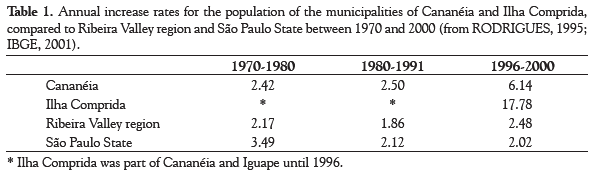
Ribeira Valley region presents the lowest population density and the lowest population growth rates in São Paulo State (HOGAN et al., 1999). In spite of this, the demography and socioeconomy of the region is highly heterogeneous. For example, while population growth rate has dropped in São Paulo State between 1970 and 2000, it increases in the municipalities of Cananéia and Ilha Comprida (Table 1). A similar trend is observed at the community level: in Bagre, population growth was 59% (from 49 to 78 inhabitants) between 1988 and 1998 (SCARPIN, 1992; HANAZAKI; BEGOSSI, 2000).
Interesting enough, while outmigration to urban areas is high in the region, Pedrinhas receives many migrants from other communities and even from urban areas as far as São Paulo. Yet, the population is still mostly Caiçara with migrants from urban centers usually being considered as tourists or "outsiders", even after living in the community for more than a decade. This distinction made by local inhabitants is probably due to some urban values and habits kept by the migrants.
Average household size is 4.24 in Pedrinhas (s.d.=1.90) and 4.59 in Bagre (s.d.= 2.35). Usually the nuclear family includes a couple and their sons and/or daughters. Extended families including adopted sons and daughters, grandchildren, and other relatives are also frequent (about 30% of the total families, for both communities). The illiteracy rate in the communities is similar to the State rate (14%, IBGE, 2001), evenly distributed among men and women. In Pedrinhas the interviewed inhabitants have an average of 3.93 schooling years (d.p.=3.50), and in Bagre the average of schooling years is lower (avg=3.64; s.d.= 2.21). In Pedrinhas a few residents are college graduated, resulting in the highest average of schooling years, and in a high standard deviation.
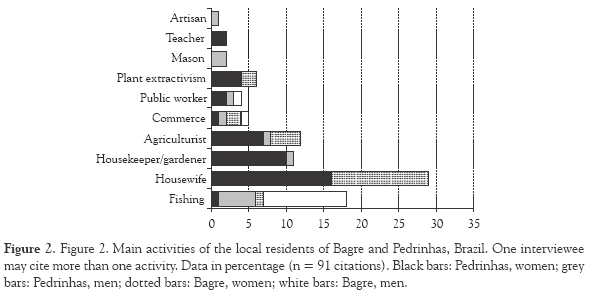
The main activities carried out in the two communities are dependent of the gender (Figure 2). In general, women define themselves as housewives, while most of the men identify themselves as fishermen. Fishermen also work for tourists either by renting boats, or by assisting with the recreational fisheries. Agriculture is a sporadic activity performed mainly by women and older inhabitants. Few women perform fishing activities, either occasionally accompanying their husbands on fishing trips, or collecting oysters (Crassostrea brasiliana) and mussels (Mollusca) in the mangroves for local consumption or to sell to tourists.
6 Economic activities
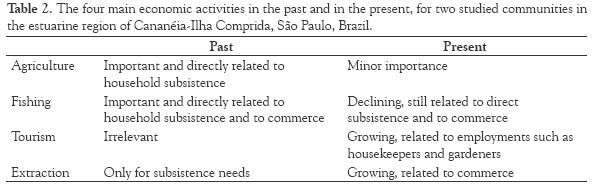
Nowadays, the combination of four main economic activities characterizes the current Caiçara livelihood. Agriculture and fishing, once the main economic activities, were being reduced in its importance with the growth of tourism related activities. In a similar way, new activities such as the extraction of non-timber forest resources directed to commerce are growing in importance (Table 2). As part of a process of social change, the level of importance of each of those activities varies across communities in the same region. Comparing the two communities focused – Pedrinhas and Bagre – we can observe a striking difference in the level of involvement in those activities.
Swidden agriculture is currently disappearing in the region. Less than 25% of the families keep small agricultural plots, only for subsistence, with different degrees of itinerancy, ranging from slash-and-burn of secondary vegetation, to rotation of small plots, and semi-sedentary gardens near the houses (PERONI; HANAZAKI, 2002).
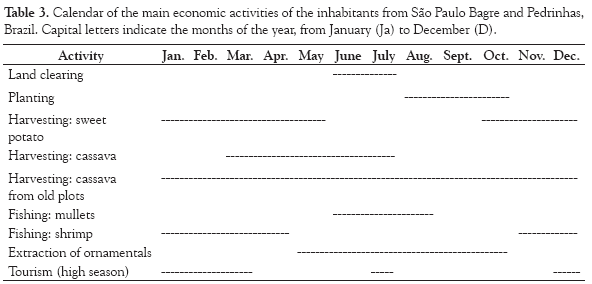
Farming calendar starts between June-July, with land clearing (Table 3). Planting takes place from August to October with harvesting beginning a few months later (three months for sweet potatoes and four to six months for cassava). Nowadays, plots are left to fallow for only two years, in contrast to longer time spans in the past (up to 20 years). According to Peroni and Hanazaki (2002), recently the fallow cycle has dropped and the plots have been cultivated for longer periods. Decline in labor force, increased food supply in local markets and the emergence of other economic alternatives are some of the factors that have refrained local residents from agriculture. In addition, the conservation policy that restricts the use of secondary vegetation higher than one meter has lowered the interest toward cultivation. Since the early 1980s, some Bagre residents have been fined due to restrictive environmental laws (WINTHER et al., 1989). The lack of land titles for most of the local residents enhances the conflict between conservation policies and local agricultural practice.
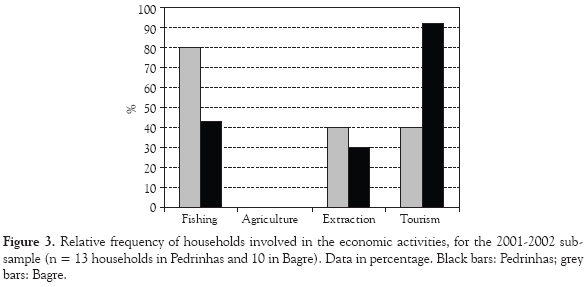
]]> The decline of agriculture has also affected the collective work practices for land clearing and harvesting, common in the past but virtually abandoned today. Such activity has been important in the past not only to facilitate agriculture but also to tighten the social bonds in the community. As part of an attempt to recover the collective work practices and to foment participation in community-based activities, the development of a collective garden has been experienced in Pedrinhas by Costa-Pinto (2003). According to Costa-Pinto (2003), this attempt emphasized the marginal role of agriculture in this community.Based on a household sub-sample conducted between 2001 and 2002, we can observe that agriculture is virtually absent in the household economy, while fishing (in Bagre) and tourism (in Pedrinhas) top the economic activities (Figure 3). 80% of the households in Bagre are involved in commercial fishing as opposed to 40% in Pedrinhas. In Bagre, 40% of the households carry out only commercial fishing whereas in Pedrinhas 31% is specialized in tourism-related activities.
Fisheries are currently the major resource use activity in the region, for both subsistence and commerce. Fishing takes place on the estuary and inshore near Ilha Comprida and is performed by 81% of the interviewed men (Figure 2). The purposes and intensity of fisheries vary in each community and along the year (Table 3). In Pedrinhas, most fishers are part-time and subsistence-oriented, catching mainly mullets (Mugil platanus), snooks (Centropomus spp.), croakers (Micropogonias furnieri), weakfishes (Cynoscion spp., Macrodon ancylodon) and shrimps (Litopenaeus schmitti). In contrast, almost all the fishers in Bagre are commercially-oriented and full-time. Shrimps are the main species landed in Bagre and are kept alive inside submerged barrels and sold as living baits. Snook, and many species of catfishes (Ariidae), weakfish and white mullet (Mugil curema, M. gaimardianus) are also important in their catch. Fishing technologies differ according to the production purpose (subsistence or commercialization), and to the target species. In Pedrinhas, the main technologies used are set gillnets and hook and line. In Bagre, the main fishing technology is the gerival, a type of cast net used to catch white shrimp.
Fishers relate fishing success to the estuary productivity and to the competition with other professional and sports fishermen. According to them, fishing success is also declining due to environmental problems caused by the man-made Valo Grande channel. According to local fishermen, the reduced salinity in the estuary caused by rainfall also affects the abundance of fish, and some species tend to disappear. Catfish is an exception, whose abundance remains unchanged. The shrimp fishery fails in the rainy months (between September and October, Table 3), because 'the freshwater frighten the shrimp to the open sea', according to fishers from Pedrinhas and Bagre. They also believe that a severe flood of the Ribeira River has strong impact on oysters and mussels. Scientific data confirm that most of the species with economic importance caught in tropical coast are partial or totally associated with the ecological conditions of the estuary (MACIEL; PAIVA-FILHO, 1999). These authors argue that the man-made channel seems to have strongly affected the fish community in the lagoon-estuarine system of Cananéia-Iguape.
Fishing activities have also been strongly influenced by local and exogenous factors as well. Local ecological conditions of the estuary such as habitat variation and rainfall pattern play a major role in the distribution and abundance of aquatic resources and, in turn, the availability for subsistence and commercial use. However, processes led by external factors such as landscape change (e.g., through man-made channel) and fishing intensification (e.g., through increased fish market and improvement of fishing technologies) strongly affected the local abundance and use of aquatic resources.
The extraction of ornamental plants has been taking place since the early 1900s, commercialized through middlemen from urban centers (OLIVEIRA, 2002). However, recently, the importance of this activity in the household economy has increased, due to the growing demand for ornamental plants, and to the lack of other economic alternatives. The main species collected are ferns (Rumohra adiantiformis (G. Forst.) Ching) and mosses (including many species of Briophytes, such as Schlotheimia rugifolia (Hook.) Schwaegr., Campylopus lamellinervis (C. Muell.) Mitl., C. trachyblepharon (C. Muell.) Mitl., Syrrhopodon leprieuirii Mont., Sphagnum recurvum P. Beauv. and S. capillifolium (Ehrh.) Hedw.). Only mature, long rachis of ferns are exploited, and sold as bunches of approximately 20 rachis. According to the interviewees, this method ensures the regeneration of the plant. In the case of mosses, the whole plant is extracted, mainly in the rainy season, probably leading to stronger impacts on plant populations. Ferns are sold in local flower shops and exported to other cities as far as São Paulo. Mosses are considered more profitable than ferns. The plants are arranged in small wooden boxes or clumped in plastic bags and sold to middlemen. In 1998, one bag of moss and two bunches of fern took approximately the same time to be collected, but the price of the former was twice as higher.
Plant extraction takes place in the communities' surrounding areas, mostly in the coastal restingas of Ilha Comprida. The ornamental plants are gathered from areas of common pool resources, and there are no established rights to use these areas. This activity is carried out mostly by women, but men and children can occasionally be involved. Commercialization is mediated by brokers who come directly to the collectors' houses to buy the products.
Plant extraction is a controversial activity, because conservation policies prohibiting the extraction of any natural resource from Atlantic rainforest have also affected the ornamental plant extraction. Plant extraction became illegal and collectors became "forest poachers". Recently, State governmental agencies organized extractors from different communities to define rules regarding fern extraction based on technical parameters. The Association of Plant Extractors has been created in order to provide voice to the local users (CONTE et al., 2000; OLIVEIRA, 2002). Yet, many problems have emerged from this process, including conflicts among the extractors and between extractors and governmental agents. The major distinction between both communities is because extractors from Pedrinhas have joined the local organization, while in Bagre this activity remains illegal, and commercialization is quite inefficient for the extractors.
Local factors influencing the pattern of plant extraction are related to the seasonality and family structure (usually woman-oriented). External factors affecting this activity are related to market demand which is apparently growing, combined with the lack of other economic alternatives, and the recent development of governmental action, through conservation legislation restricting this activity and through the new participatory management with the users.
In our 2001-2002 household sub-sample, we can observe the growth of activities related to vegetal extraction, yet tourism is also growing in importance, with 93% of the households in Pedrinhas related to that activity and 40% of the Bagre households involved in tourism activities (Figure 3). Tourism in the region can be divided into two major types: recreational fishing and tourism of second residence. Recreational fishing has been taking place in the region for a long time, and the development of Pedrinhas community is strongly related to this activity. In the 1970s, recreational fishers came to fish in the estuary and set camp at this community. Gradually, many of them built summer houses and, today, more than 200 houses in the community are owned by tourists who come regularly to fish or to spend their free time with their families. While both types of tourism coexist in Pedrinhas, Bagre residents rely upon recreational fishers only, to selling living baits (e.g., shrimp) and assisting in fishing trips. Shrimp fishing for living baits became a very profitable activity. Live shrimps are sold for U$ 0.17 (R$ 0.20) to U$ 0.43 (R$ 0.50) each unit, depending on the season. During the high season, shrimp catch can be as high as 1,000 units a day. In the low season, the price of one unit of shrimp in Bagre can become as high as the price of 1 kg of Broadband anchovy (Anchoviella lepidentostole) in the fish market.
]]> Despite the economic importance of the recreational fishing, local residents associate the decrease of fish productivity with the increased number of sport fishers in the estuary. It is important to note that sport fishers have become increasingly more independent from local fishers, as many of them already know the fishing spots, and can catch their own baits without the help of local fishermen. According to local residents, sport fishers even bring their own food stuff, and rarely buy anything in the local market. Local fishers also complain that tourist-fishers use predatory fishing techniques, and argue that they should have more restrictive fishing licenses, such as the limited use of gillnets.In addition to sport fishing, tourism of second residence is another tourist-related activity that takes place only in Pedrinhas. This activity has been expanded in the region in the last 20 years, considering that the regional planning foresees the importance of the assemblage of tourist attractions for its development (SMA, 1990).
In Pedrinhas, a special attention should be given to the increasing number of real estate projects. Often case, large infrastructure investments do not revert to the local people, enhancing landowner conflicts (CARVALHO, 1999). Another problem related to the tourism is the unequal distribution of opportunity among residents. Tourism-related services such as local commerce, housekeepers, and gardeners, are accessible to a limited number of residents. This differential access to tourism-related business has led to increase the social stratification in the community. Recently, the proposal of ecotourism in the region by governmental and environmental agencies has promised an ecological and economical alternative for Caiçaras. Ecotourism activities can be based on local assets, and include handicraft, learning about local medicinal plants, animal watching, and hiking.
Although tourism is a result of an external process (tourism development), it is strongly influenced by local features. Landscapes with easier access to fishing spots and to beaches are more attractive to tourists, such as in the case of Pedrinhas. In addition, individual abilities to communicate and assist the tourists influence their success in this business. Higher literacy degrees in Pedrinhas contribute to these abilities.
The difference in the proportion of activities in each community is related to the degree of access to each resource. Pedrinhas is located between the estuary channel and the beach. As a result, both tourism of second residence (for beaching) and recreational fishing (in the channel) are relatively attractive. Both male and female household members are involved in tourism-oriented business– the former related to second residence tourism (e.g., as housekeepers) and the latter related to recreational fisheries (e.g., as boat conductors and bait trade) (Figure 2). Services such as small stores, meal serving, and house construction are other tourism-related activities that absorb local labor force.
Carvalho (1999) argues that Pedrinhas experienced a process of land privatization and property transactions with outsiders, which led to an urbanized arrangement in the community. As a result, legalization of land property in Pedrinhas took place in a general accordance with the local inhabitants' interest. Rather than eroding local organization, the presence of tourists added to the community, because they were called upon to help in infrastructure improvements of the community, such as piped water, health centre, and library. Bagre, on the other hand, is relatively far from the beach, which makes it less attractive for other purposes than recreational fisheries. As a result, although the tourism-related activities also exist, they are mostly related to sport fishers (e.g., baits sale). In addition, the community has originated from three major families who formerly rented a part of land, and later obtained use rights (WINTHER et al., 1989). The lack of legal land titles, combined with internal land conflicts constrains land transactions in the community.
With little opportunity to get involved with tourism, Bagre women strongly depend on the extractivism of ornamental plants (40%) when compared to Pedrinhas (30%). Many women in Pedrinhas stated that they quit plant extractivism because they do not have time to go out to the woods, even after the extractive association was established, because they have to work in tourists' houses. Ironically, despite the relatively higher reliance on extractive activity among Bagre residents, the collectors are not part of the association because the community is located outside the Ilha Comprida municipality. As a result, their activity remains illegal both at the regional (federal policy) and at the local (municipal association) levels.
In spite of the closeness between Pedrinhas and Bagre (less than 13 km far from each other), the two communities are located in different municipalities, resulting in different institutional contexts. Ilha Comprida municipality, where Pedrinhas is located, is a new municipality, emancipated in 1992, and Bagre is located in Cananéia, one of the oldest municipalities in Brazil. Ilha Comprida is smaller than Cananéia municipality but its budget is almost twofold (IBGE, 2001). This institutional and governmental scenario results in more opportunities to employ public workers in Pedrinhas than in Bagre, resulting in another economic alternative for local residents.
Hanazaki and Begossi (2003) found that the variation of economic activities is reflected in the higher average income in Pedrinhas (US$ 78.55, s.d.= US$ 139.00, for US$ 1.00 = R$ 1.78, January 2000) in comparison to Bagre (average US$ 41.41, s.d.= US$ 21.30, Mann-Whitney U = 299, above the two-tailed value of U0.05, 15, 27 = 278). In the present study we observed that higher incomes in Pedrinhas are related to activities with fixed income, such as housekeepers and public workers. On the other hand, especially among fishermen's families, monthly income highly fluctuates, because fishing is a relatively unpredictable activity in comparison to tourism-related activities. As mentioned earlier, there is a trend toward the social and economic stratification among the local families in Pedrinhas, depending on their involvement on those fixed income activities.
Therefore, the striking difference in combination of economic activities in Pedrinhas and Bagre is strongly related to local features of the system. Three interconnected factors – the landscape features, the social organization, and land occupation history in each community – affect the degree of access to the resources (e.g., tourist, aquatic resource, non-timber forest product and area for cultivation). This case shows that exogenous factors can considerably influence local decisions differently according to local features of the system.
]]>7 Final remarks
The estuarine region provides a wide range of natural resources from the sea and from the land, and is historically inhabited by local people, such as Caiçaras. The importance of each resource in the household economy is related to both endogenous and exogenous factors. Distribution and abundance of resources, social organization and land occupation are endogenous factors that historically have shaped the strategies of fishing, agriculture and plant extractivism in the study area. Large-scale economic and political changes in the region are major exogenous factors that influenced the level of opportunities and constraints towards those resource use strategies. Thus, while the exogenous factors have shaped the options through the setting of new opportunities (e.g., tourism) and the restriction of old activities (e.g., agriculture), endogenous factors have defined strategies according to locally specific qualifications. As a result, similar exogenous factors may lead to different local responses of multiple resource use, as shown in this study. For fishing activities, local and external factors have synergistic effects. The increased number of fishers is related to the growing commercial fishing (DIEGUES, 1999), and to the population growth in the region. The increased number of fishers in the estuary has also been a result of the abandonment of the agriculture by local residents due to continuous inundation of the floodplains, a problem enhanced by the man-made channel.
The two communities analyzed presented the same economic activities; yet, they vary in the degree of involvement. In some extreme cases, responses are similar as it is observed with swidden agriculture. Despite the long history of swidden agriculture in the region, a combination of local and external factors led this activity to the status of virtually inexistent, with a few families practicing it at very small scale. Under very restrictive laws in protected areas, and with agriculture products more accessible in the local markets, local populations have turned to other economic alternatives. The new activities demand less labor force, and do not rely on collective work.
In contrast to agriculture, the other economic activities were assimilated distinctively between the two communities studied. Plant extractivism is similar in both communities in some aspects. They are female-oriented, the proportion of families involved is relatively similar, and market incentives are similar in both areas.
Major differences between Bagre and Pedrinhas are seen in the pattern of fishing and tourism-related activities, the most economically important activities in each community, respectively. Fishing is more important to Bagre residents due to their prompt access to aquatic resource and little other economic alternatives. Tourism-related activities are more developed in Pedrinhas due to the attractive to both sport fishers and secondary residence tourists. This major difference has driven major local economic and social changes when compared to Bagre. Today, Pedrinhas has better infrastructure, local organization, and land tenure has been settled.
These results show that policy to foment conservation and local development must be contextualized in both regional and local settings. Similar to coastal peoples from many parts of the world, the Caiçaras have been experiencing changes in their economy and livelihood due to a combination of exogenous and endogenous factors. This is especially true for estuarine areas, where the population settlements between the sea and the land provide access to a large range of resources. However, conservation and development policies for the region must account for community-based features such as local landscape, household structure and community organization, which enable the local population to take advantages of new opportunities, and to overcome problems emerged from resource use restrictions.
Acknowledgments
The authors are very grateful to the residents of São Paulo Bagre and Pedrinhas for their agreement in take part of this study. We thank to the Brazilian agency FAPESP for financial support for the project "Forest and Sea: uses and conflicts on the Ribeira Valley and southern coast of São Paulo" (97/14514-1), coordinated by Dr. L. C. Ferreira and Dr. A. Begossi. N. Hanazaki, F. de Castro and N. Peroni thanks to FAPESP for doctoral and post-doctoral grants, respectively, and N. Peroni thanks to CNPq for a doctoral grant. A preliminary version of this paper was presented at the Conference "People and Sea II: Conflicts, threats, and opportunities", held in Amsterdam in Sept. 2003. N. Hanazaki thanks to the Centre of Maritime Research (MARE) and University of Santa Catarina (UFSC) for providing support to attend the conference.
]]>References
ADAMS, C. Caiçaras na mata Atlântica: pesquisa científica versus planejamento ambiental. São Paulo: Annablume/FAPESP, 2000. [ Links ]
BEGOSSI, A. Fishing spots and sea tenure: incipient forms of local management in Atlantic Forest coastal communities. Human Ecology, v. 23, n. 3, p. 387-406, 1995. [ Links ]
BERNARD, H. R. Research Methods in Anthropology – qualitative and quantitative approaches, 2nd ed. Walnut Creek: Altamira Press, 1995. [ Links ]
CÂNDIDO, A. Os parceiros do Rio Bonito, 4. ed. São Paulo: Duas Cidades, 1977. [ Links ]
CARNEY, D. Sustainable rural livelihoods. London: DFID, 1998. [ Links ]
CARVALHO, M. C. P. Histórias da Ilha: temporalidade e apropriação do espaço na Ilha Comprida. Dissertação de Mestrado – Campinas: Universidade de Campinas, 1999. [ Links ]
CONTE, R.; REIS, M. S.; RIBEIRO, R. J. Estudo de Parâmetros Técnicos para o Manejo Sustentado da Samambaia Silvestre (Rumohra adiantiformis). In: DIEGUES, A. C.; VIANA, V. M. (orgs.) Comunidades Tradicionais e Manejo de Recursos Naturais da Mata Atlântica. São Paulo: NUPAUB/ESALQ, 2000. p. 29-41. [ Links ]
COSTA-PINTO, A. B. Em busca da potência de ação: educação ambiental e participação na agricultura caiçara no interior da área de proteção ambiental de Ilha Comprida, SP. Dissertação de Mestrado – São Paulo: Universidade de São Paulo, 2003. [ Links ]
DEAN, W. A ferro e fogo: a história e a devastação da Mata Atlântica Brasileira. São Paulo: Companhia das Letras, 1997. [ Links ]
DFID. The Department for International Development. Sustainable livelihoods guidance sheets. London: DFID, 2000. [ Links ]
DIEGUES, A. C. S. Pescadores, camponeses e trabalhadores do mar. São Paulo: Ática, 1983. [ Links ]
DIEGUES, A. C. S. Human population and coastal wetlands: conservation and management in Brazil. Ocean & Coastal Management, v. 42, p. 187-210, 1999. [ Links ]
DIEGUES, A. C. S.; ARRUDA, R. S. V. Saberes tradicionais e biodiversidade no Brasil. Brasília: Ministério do Meio Ambiente, 2001. [ Links ]
HANAZAKI, N. Ecologia de Caiçaras: uso de recursos e dieta. Tese de Doutorado – Campinas: Universidade de Campinas, 2001. [ Links ]
HANAZAKI, N.; BEGOSSI, A. Does fish still matter? Changes in the diet of two Brazilian fishery communities. Ecology of Food and Nutrition, v. 42, p. 279-301, 2003. [ Links ]
HANAZAKI, N.; BEGOSSI, A. Caiçaras, mangroves and estuaries: an ethnoecological approach. ELECTRONIC PAPERS OF THE CONFERENCE "SUSTAINABLE USE OF ESTUARIES AND MANGROVES: CHALLENGES AND PROSPECTS", 22-28 May 2000. Anais... Recife, Brazil, 2000. [ Links ]
HANAZAKI, N.; LEITÃO-FILHO, H. F.; BEGOSSI, A. Uso de recursos na Mata Atlântica: o caso da Ponta do Almada (Ubatuba, Brasil). Interciencia, v. 21, p. 268-276, 1996. [ Links ]
HANAZAKI, N. et al. Diversity of plant uses in two Caiçara communities from Atlantic Forest coast, Brazil. Biodiversity and Conservation, v. 9, p. 597-615, 2000. [ Links ]
HOGAN, D. J. et al. Sustentabilidade no Vale do Ribeira (SP): conservação ambiental e melhorias das condições de vida da população. Ambiente e Sociedade, v. 2, p. 151-175, 1999. [ Links ]
INSTITUTO BRASILEIRO DE GEOGRAFIA E ESTATÍSTICA (IBGE). Fundação Instituto Brasileiro de Geografia e Estatística. Base de dados SIDRA II. http://www.ibge.gov.br, 2001. [ Links ]
KIRIZAWA, M. et al. A vegetação da Ilha Comprida: aspectos fisionômicos e florísticos. Revista do Instituto Florestal, v. 4, p. 386-391, 1992. [ Links ]
MACIEL, N. A. L.; PAIVA-FILHO, A. M. Sobre a ictiofauna do complexo estuarino-lagunar de Iguape-Cananéia – São Paulo –Brasil. RESUMOS DO XIII ENCONTRO BRASILEIRO DE ICTIOLOGIA, p. 631. 22-26, Fev. 1999. Resumos...São Carlos, Brasil, 1999. [ Links ]
MARETTI, C. C.; FILET, M. Ilha Comprida: um desafio ao planejamento ambiental. Ambiente, v. 2, p. 2, p. 66-73, 1988. [ Links ]
MEIRA, R. B. O ciclo das festas: uma leitura cênica da dança do fandango e das festas populares de Cananéia, litoral Sul do Estado de São Paulo. Dissertação de Mestrado – Campinas: Universidade de Campinas, 1997. [ Links ]
MOURÃO, F. A. A. Os pescadores do Litoral Sul do Estado de São Paulo: um estudo de sociologia diferencial. Tese de Doutorado, São Paulo: Universidade de São Paulo, 1971. [ Links ]
MUSSOLINI, G. Ensaios de antropologia indígena e Caiçara. Rio de Janeiro: Paz e Terra, 1980. [ Links ]
MYERS, N. et al. Biodiversity hotspots for conservation priorities. Nature, v. 403, p. 853-858, 2000. [ Links ]
OLIVEIRA, V. G. Educação ambiental e manejo de recursos naturais em área de proteção ambiental: o caso dos extratores de samambaias da Ilha Comprida - São Paulo. Dissertação de Mestrado – Piracicaba: Universidade de São Paulo, 2002. [ Links ]
PERONI, N.; MARTINS, P. S. Influência da dinâmica agrícola itinerante na geração de diversidade de etnovariedades cultivadas vegetativamente. Interciencia, v. 25, p. 22-29, 2000. [ Links ]
PERONI, N.; HANAZAKI, N. Current and lost diversity of cultivated varieties, especially cassava, under swidden cultivation systems in the Brazilian Atlantic Forest. Agriculture, Ecosystems and Environment, v. 92, p. 171-182, 2002. [ Links ]
PIERSON, D.; TEIXEIRA, C. B. Survey de Icapara. Sociologia, v. 47, p. 3-21, 1947. [ Links ]
RADASEWSKY, A. Considerações sobre a captura de peixes por um cerco-fixo em Cananéia, São Paulo, Brasil. Boletim do Instituto Oceanográfico, v. 25, p. 1-28, 1976. [ Links ]
RODRIGUES, I. A. Áreas naturais sob proteção, estabelecimento e avanços nas medidas de conservação ambiental. Um estudo no Vale do Ribeira-SP. Dissertação de Mestrado – Campinas: Universidade de Campinas, 1995. [ Links ]
SECRETARIA DO MEIO AMBIENTE (SMA). Macrozoneamento do Complexo estuarino-lagunar de Iguape e Cananéia: plano de gerenciamento costeiro. São Paulo: SMA, 1990. [ Links ]
SECRETARIA DO MEIO AMBIENTE (SMA). Programa de Educação Ambiental do Vale do Ribeira, 2. ed. São Paulo: SMA, 1992. [ Links ]
SCARPIN, E. O imaginário religioso num bairro rural de Cananéia. Dissertação de Mestrado – São Paulo: Universidade de São Paulo, 1992. [ Links ]
SCHAEFFER-NOVELLI, Y.; MESQUITA, H. S. L.; CINTRÓN-MOLERA, G. The Cananéia Lagoon Estuarine System, São Paulo, Brazil. Estuaries, v. 13, p. 193-203, 1990. [ Links ]
SCHMIDT, C. B. Lavoura Caiçara. Documentário da vida rural 14. Rio de Janeiro: Serviço de Informação Agrícola, 1958. [ Links ]
SOUSSAN, J.; EMMEL, N.; HOWORTH, C. Freshwater ecosystems management and social security. IUCN, 1999. [ Links ]
WAGLEY, C. Amazon Town. A study of man in the Tropics. With a new chapter by Darrel L. Miller. London: Oxford University Press, 1976. [ Links ]
WILLEMS, E. A ilha de Búzios: uma comunidade caiçara no sul do Brasil. São Paulo: Hucitec, 2003. [ Links ]
WINTHER, J.; RODRIGUES, E. P. F.; MARICONDI, M. I. A ocupação Caiçara e os terrenos de marinha-terras de pescador. São Paulo: Programa de Pesquisa e Conservação de Áreas Úmidas/Fundação Ford/UICN/IAMÁ, 1989. [ Links ]
 Corresponding author:
Natalia Hanazaki
Departamento de Ecologia e Zoologia, CCB-UFSC, Campus Universitário Trindade
CEP 88010-970, Florianópolis, SC, Brazil ]]>
Fone: (48) 3721 9460, Fax: (48) 3721 5156
E-mail: natalia@ccb.ufsc.br
Received: 10/11/2005
Accepted: 25/6/2006