Capital social e desempenho institucional – discussão teórica e metodológica sobre comitês debacias hidrográficas na região metropolitana de São Paulo - Brasil
Pedro R. JacobiI; Fernando MonteiroII
IProfessor of Program of Environmental Sciences at the University of São Paulo. Prof. Pedro Roberto Jacobi at PROCAM-USP coordinated within the Projeto Marca DÁgua, that counted with resources of MacArthur Foundation, Hewlett Foundation and Fundo Setorial de Recursos Hidricos (CT-Hidro) from the Ministry of Science and Technology of Brazil a research group with Master and PhD students. The group that was directly involved in the research that developed the field work was composed by Fernando Monteiro, Fabiana Barbi, Marina Eduarte, Maria Castellano and Reynaldo Romagnoli
IIPhD student at the Environmental Sciences Graduate Program at the University of São Paulo- Brazil
Replicated from Ambiente & sociedade, Campinas, v.9, n.2, p.25-45, July/Dec. 2006.
]]>
ABSTRACT
The paper analyses the institutional transformations that have taken place in the environmental management process in Brazil since the 90´s, emphasizing the enlargement of democratic spaces and popular participation, specially in the field of water management. The focus is on the water basin committees, an institutional engineering that has become one of the references of institutional innovation in the water management process in Brazil since 1997.
The new watershed law presents a new framing of the issue of watershed protection, by recognizing the prime importance of a management system, by extending the protection instruments proposed and by opening the possibility of developing widespread agreement among stakeholders for the actions that are needed.
The article presents an overview of the theoretical debate and the main outcomes of a survey with all members of the five subcommittees that compose the water basin. The research was developed in 2004 in the water basin of Alto Tietê that covers the Metropolitan Region of São Paulo, and is based in the framework of social capital, as a tool to evaluate the institutional development of these democratic spaces. The analysis based on the conceptual framework allows to evaluate the level of associativism, trust, reciprocity and cooperation that enables the consolidation of an effective performance.
Water basin committees are the appropriate arenas to develop a comparative study of institutional performance and its relations with cooperative practices linked to preservation and spatial and environmental management.
Keywords: River Basin Management, Water Basin Committees, Social Capital, Institutions, Decentralization
RESUMO
Este texto analisa as transformações institucionais ocorridas na gestão ambiental no Brasil a partir da década de 1990, com ênfase na ampliação dos espaços democráticos e de participação popular, especialmente no campo do gerenciamento de recursos hídricos, com destaque para a experiência dos Comitês de Bacias, e seu caráter inovador. O artigo apresenta uma revisão do debate teórico e dos principais resultados de pesquisa realizada em 2004 com os membros dos cinco subcomitês que compõem a bacia do Alto Tietê, na Região Metropolitana de São Paulo. A base analítica do trabalho se apóia no referencial conceitual do capital social, como instrumento para avaliar o desenvolvimento institucional destes espaços de gestão compartilhada de recursos hídricos. A análise possibilita a avaliação do nível de associativismo, confiança, reciprocidade e cooperação para a consolidação de uma performance mais efetiva.
Os resultados apresentados mostram que os comitês de bacias hidrográficas são arenas apropriadas para desenvolver um estudo comparativo sobre desempenho institucional e sua relação com práticas cooperativas vinculadas com a preservação e a gestão territorial e ambiental.
1. Environmental policy and social 000000 participation in Brazil
Within the context of post-democratic transition in Brazil and due to pressures from a coherent and self-organized civil society, new deliberative arenas were created (AVRITZER, 2002; Nobre, 2005), many of them relating to promotion of negotiations over environmental management and governance. Within this context, social participation (JACOBI, 2000; NOBRE, 2005; GUIVANT & JACOBI, 2005) emerged as a referential of ruptures and tensions, and the participative practices became associated with a qualitative upgrade in the way society manages and governs its natural resources (Jacobi, 2003; Avritzer and Navarro, 2003; Dagnino, 2002; Melo, 2005, Jacobi, 2005; Jacobi, 2006) These institutional transformations and the enlargement of participatory arenas within organized sectors of society, indicates the build up and consolidation of new institutions (AVRITZER, 2005; ZHOURI, 2006).
The consolidation of public policies framed by the participatory component is related to changes in Brazil's socio-political matrix, following a debate over the state's role as the main driver in social and environmental policies (JACOBI, 2005). The consolidation of deliberative arenas is essential for the strengthening of a democratic, integrated and shared management of natural resources. The main challenge for these newly public arenas is to strengthen deliberative democracy, with regards both to its format as well as to its outcomes. Conflict is inherent to them, as is democracy. These arenas of policy formulation, where civil society participates actively, are marked by contradictions and by the publicizing of conflicts. They represent a public arena where — discussion, negotiation and voting characterize it as a legitimate and democratic locus of interaction between social actors. This implies in the constitution of the habermasian notion of public sphere where participation and public argumentation, and where as Avritzer (2002) states the deliberative process is at stake. The conditions for this new sociability will be fostered by management dynamics that emphasize public deliberation (JACOBI, 2005) and plurality of actors participating within the process.
With regards to natural resources management in Latin America, literature indicates (Dourojeanni, 2002, Cabral, 2005) that by the end of the eighties, the debate around public policies and natural resources was structured around two fairly new concepts for the region: decentralization and democratization. With regards to water resources, the concept behind IWRM — Integrated Water Resources Management was the cornerstone for much of the reforms that took place in the water sector. Countries like Brazil, Chile and Mexico, to mention a few, have deeply incorporated these principles in their water reforms (ABERS & DINO, 2005). Nonetheless, the outcomes of the reforms are still a fuzzy subject.
Within the political framework settled by the transition towards a stronger democratic State, new environmental forums were created in Brazil during the early nineties. Social participation gained substantial attention from both government and society, as the country saw an emergence of different forms of social organizations (Jacobi, 2000; Jacobi, 2005; Furriela, 2002; Sousa Júnior, 2004). Changes in the traditional political and institutional settings, along with the broadening of social participation in public affairs have demanded the need for new democratic institutions, responsible for crafting regulations over natural resources management.
The phenomena of public policies made under social participation are strongly related to changes in Brazil's political momentum. In Latin America as a whole and in Brazil in particular, the nineties set the grounds for a fierce debate about State's role, especially with regards to its closure towards civil society participation in policy making (AASELRAD, 1992). If we are concerned about democratic and decentralized institutions, then efforts must be made in order to strengthen broader and participative forums. In Brazil, the broadening of these new arenas for public participation on policy making enhanced citizenship both in a quantitative and in a qualitative way (DAGNINO, 2002). Watershed committees are a good example of how institutional reforms may enhance social participation and bring State and society together by closing the gap between the public and private divide. The challenge beset now is to make these watershed committees effective in their main attribution: govern the watershed in a sustainable way.
The shift from a technical point of view to an institutional approach in water resources analysis is consistent with a vast body of development literature (Polanyi, 1944; Hirschman, 1977, Ravallion, 1997; Sen, 1997, 1999; Veiga, 2005), which strongly relies on socio-political aspects rather than solely on technical ones. In the domain of water resources management in Brazil, this is particularly true since the scarcity of water raised new conflicts. The resolution of these conflicts accrues from new institutions, responsible for crafting and controlling norms for water's access and use (MONTEIRO, 2004).
]]> When analyzing the trends in water policy in Brazil, two aspects draws one's attention: first, the social capital within these committees, that is to say the role played by trust, solidarity, reciprocity and associational life of committee's members (PUTNAM,1993); and secondly the interactions and coordination between public and private stakeholders, from a State — society synergy point of view (EVANS, 1997).
2. Social capital, State-Society synergy and social networks analysis
With regards to social capital, the emergence of social phenomena such as corruption, civil violence, uprisings, and social inequalities have led researchers to believe that besides structural and intellectual needs — that is to say physical and human capital — both networks and patterns of group behavior also play an important role if development is to befall (WOOLCOCK, 1999; COLEMAN, 1990; OSTROM, 1990; PUTNAM, 1993). Groups where most of the people are trustworthy and their interactions are based on values such as solidarity, reciprocity and shared beliefs are more likely to cooperate, especially because these characteristics promote collective action (PORTES, 1998; KRISHNA, 2000; UPHOFF, 2000). The vast body of literature on the effects of social capital over institutional performance (PUTNAM, 1993; Serageldin, 1998; Isham, 2000) allows us to seek explanations for better institutions based on this theoretical framework.
The State — society paradigm indicates that polycentric institutions perform better when private and public stakeholders have the ability to coordinate their actions (OSTROM, 1990; EVANS, 1997). What allows groups with high heterogeneity to achieve high scores of efficiency in its programs and policies is the amalgam between private and public stakeholders, expressed by a dense social network among public servants and civil society representatives (TENDLER, 1997; Lin, 1989), in what has been referred to as embedded autonomy. The idea behind the concept of embedded autonomy refers to those day-to-day interactions between the public and private domains, and to all liability built upon this relationship (EVANS, 1997).
Therefore, the coordination between strong public institutions and organized communities can be an effective development mechanism. Stronger ties, cohesion and reciprocity between these stakeholders will ultimately make collective action more likely to happen, thus promoting higher institutional performance.
Social networks are built upon the existence of bonds that individuals or groups of individuals built intentionally from a common shared reference. The way in which each individual positions him/herself in the network will determine in the last instance his/her conditions and possibilities of interference and power, and the relationship standards generated by these networks can be used to explain political and social phenomena (MARQUES, 1999; 2003).
In addition to acknowledging these networks, social networks analysis is an analytical instrument that allows us not only to experimentally rebuild social networks, but also to verify their influence on political and social processes (MARQUES, 2003). The central focus of social networks analysis is the relationship among actors, and not of their categories or attributes. Attribute data have to do with the characteristics or qualities, while relationship data have to do with contacts, bonds, connections, or groupings of people that relate to one another, and therefore cannot be reduced to the individual properties of the actors (SCOTT, 1992; EMIRBAYER, 1997). Though important for the description of numerous phenomena, the characteristics and attributes do not have to do with social actions, but with their actors instead. In this sense, they explain a part of the phenomena, but leave aside important processes that can be studied only by considering bonds and relationships directly (MARQUES, 1999). Based on this methodology, by using the concept of networks, a great detail of individual relationships without losing sight of the structure of the whole field and the more general standards can be achieved.
Thus, the analysis of social networks constitutes an appropriate method for verifying the patterns of social relationships and their configuration in watershed committees, allowing, through their multiple techniques, for the representation and analysis of the interactions between the government and the civil society.
]]> 3. Water Policy in Brazil
In Brazil, water policy has historically aimed primarily for hydroelectric power, and secondarily for irrigation. Provision of adequate supplies of clean water for cities, and treatment of the rivers of waste was not a priority for many years.
The water sector in Brazil has historically been controlled by user sectors, particularly energy, sanitation, irrigation and the industry. These sectors enjoyed great autonomy in water management decisions, working under their own internal perspectives and rationale. The electricity sector is the one which maintained the largest domain, and until very recently it still enjoyed water rights concession powers, without being subject to major social and environmental concerns of its own enterprises, particularly dams and water diversions. The sanitation sector, with its large investment capacity, also maintained a major control of water management decisions (CABRAL, 2005, TUNDISI, 2003).
Decentralization of water management occurs in the context of the overall reduction of the Brazilian state. These reforms lasted for half-century during which the state was the driving force of the development process.
Considering water resources, the 1988 National Constitution established as a cornerstone, the extinction of private property rights over water, and issued all property rights over water use to the Union and the States. The institutional setting is complex, and the decision making forums are partitioned by several agencies, not always convergent.
Public companies are responsible for most of the water-market, leaving private companies with a mere residual market share. Almost 70% of all Brazilian municipalities have their water supplied by 26 state owned utility companies. In approximately 1500 municipalities, most of them midsize and small cities located in the Southeast, the population is served by municipal services. Recent data indicates that there are around 60 municipalities served by private companies, mostly in midsize cities in the Southeast region, representing 4% of urban population (VARGAS, 2005).
With the decrease in the state's role in economy, there is a drive for more operational rationality. At the federal level, the Law 9433/1997 establishes the National Water Resources Policy, through the National Water Resources System. The Law 9984/2000 regulates the establishment of a National Water Agency (Agência Nacional das Águas, ANA), a federal institution created to implement the National Water Resources Policy and co-ordinate the National Water Resources Management System. (JACOBI, 2003)
After the 9433/1997's piece of legislation, which established that water management should adopt the water-basin approach, and implement river basin committees, all rivers in Brazil must be classified according to desirable quality levels, depending on the existing or projected uses, environmental conditions and framing. From the environmental perspective, such framing is very important since it signals to water users an objective to be achieved in terms of controlling discharges. Environmental goals (quantity and quality) can be attained by a plan of water management feasible through financial revenues brought by charging for the use of water.
In the 1990's most Brazilian states and the federal government passed new legislation on water resource management. The legislation placed decision-making power at the lowest feasible level (generally the watershed), mandated user fees, and management fora in which civil society and water users would participate, and gave priority to provision of water to populations over other uses. The new laws mandated decentralized institutional arrangements, and changed the conception of water from a free good to one that must be paid for. The move to basin-level management coincides with an effort to privatize electric and sanitation companies, some of the biggest users of water.
A reform of the water resource management was conducted. The driving concepts behind the reform were: decentralization, materialized by the adoption of the water basin (watershed) as the territorial unit for the elaboration of management plans; integration, between stakeholders (State, Municipalities and civil society); and coordination between the technical, financial and political spheres (Rocha, 1998, Sousa Junior, 2004). As for water users, the main change was the creation of WBCs — Watershed Basin Committees (Comitês de Bacia Hidrográfica). These committees are the parliament for debating on all issues related to water management in a specific water basin. Their structure foresees the equal participation of all three stakeholders relevant to the proper functioning of public management: State, municipalities and civil society. Together, these actors should coordinate the activities related to the use and protection of water resources within the water basin (Jacobi & Monteiro, 2004). These committees have become responsible for water basin planning, development and preservation. These reforms brought clear and specific demands regarding the actions and attributions of these committees, and the system clearly allows socio-environmental issues and land use planning and management to be put on the agenda alongside the question of water allocation and therefore provides a mechanism for realistic environmental goals to be established for the basin.
]]> The Brazilian system is patterned after the French model, and it differs by granting basin organizations a decision-making role, rather than an advisory one. The committees will ultimately be responsible for agreeing on acceptable levels of pollution, balancing the interests of various water users, including the population at large and of environmental authorities as well. The process of reaching agreement among different users will be a political balance between costs benefits of alternative water quantity and quality goals, the way water will be allocated, and who the beneficiaries and payers will be (JACOBI, 2006). The new system has, in fact, been a major and fundamental step forward to integrate environmental issues into the traditional process of water quantity allocation.The key players at the basin level are part of a process that aims at bringing together the various parties who have an interest in the water resources of the basin in order to resolve conflicting views and objectives in an open and consensual manner. They include three sectors: 1) Water resources agencies, companies and environmental state agencies, 2) municipalities, 3) sectors of large users of water, energy, industry and irrigation, civil society representation (movements, organizations, NGOs, universities, unions, and other institutions).
They are organised by Water Basin Committees, which typically include all the viewpoints necessary for a comprehensive and sustainable planning process, although this coverage does not necessarily mean that the outcomes will be completely balanced.
However, the effective implementation of these reforms has had different outcomes, what suggests that the fate of these newly crafted institutions depends upon a series of factors. One of the most important is the committees' ability to constitute itself in a way that cooperation between the various interests represented there are encouraged, so that challenges related to the use and protection of water resources can be overcome. Thus, we believe that the ability of these institutions to coordinate their actions in cooperative way is increased as the synergy between State and society and the stock of social capital among these stakeholders grow (MONTEIRO, 2004).
4. Water resources in Brazilian metropolitan areas
Water resources management in Brazil can be better understood from a demographic and socioeconomic perspective. Urban growth in Brazil has been rising constantly, resulting in highly populated cities. Between 1950 and 2000, urban population went from 36% to 81% of total country's population (IBGE, 2000). The nine metropolitan areas created in the 1970s housed 41.9 million inhabitants in 1991, and 48.9 million in 2000, keeping its relative participation (respectively 28.7% and 28.8%) in total country's population (IBGE, 2000).
Environmental problems within Brazilian's metropolitan centres have increased rapidly in the last 50 years, and the inadequacies in addressing them have led to large impacts such as very large increases in the number and scale of floods, difficulties in the management of solid wastes and the environmental damage arising from inadequate waste management, and high levels of air pollution. Much of this is related to uncontrolled urban expansion. The expansion of metropolitan areas has brought an increasing environmental deterioration, since the appropriation of space reflects prevailing socio-economic inequalities. It is marked by the inadequacies or even total absence of public policies to address these problems, and the inertia in public administration in identifying and addressing these problems — and implementing measures to manage land use and guarantee improvements in the quality of life (Grostein, 2005; Jacobi, 2001).
The environmental problems arise mainly from the precariousness of the services and the failure of the public authorities. But they also reflect the neglect of the dwellers themselves, even in the neighbourhoods that lack infrastructure. This highlights the conflict between urban environmental problems and the practices of resistance of those who have the means to address the problems. This can be seen in the defence of individual interests that significantly interfere with the quality of life for the city as a whole.
Since large numbers of households are not connected to sewer systems, there are problems with sewage dumping on land sites, illegal connections to surface-water drains and direct dumping in the rivers. Cities are constantly affected by increasing numbers of floods in critical points. The disposal of solid wastes has become highly problematic in most cities because of lack of spaces for disposal. Precarious dwelling conditions in slums and peripheral plots increase the deficit of urban infrastructure; their location in critical areas often increases environmental degradation.
]]> The inadequacies in public policies in regard to the intense process of urbanization and the lack of a legislation regarding land use that could help control non compliance growth create an "illegal city" that occupies the empty spaces of the city, mainly in under valuated areas, including those around manatiales. It is mostly low-income groups that face daily risks of flooding, collapse of slopes, soil and water pollution due to illegal disposal of industrial toxic wastes, accidents with hazardous loads, leaks in petrol stations, and dangerous coexistence with mining and quarrying facilities, due to high levels of air pollution and noise. The close relationship between urban risks and the problem of use and occupation of land is obvious. Among the determining aspects of environmental conditions in cities, this is the one which is more difficult to address and where improved administrative and management skills from local authorities is required.Jacobi (2004) points out that the still fast growth pace of these agglomerations, their geographic expansion, and the lack of proper land planning — always linked to poverty — leads to a series of problems: 1) pollution of water streams; 2) increasing number of floods, usually associated to high rates of soil impermeability; 3) erosion problems, especially in slopes occupied by low income urban dwellers; 4) human settlements over creeks and other water bodies, what is especially unhealthy; 5) growing pressure over the water resources available for public supply; 6) difficulties in protecting springs threatened by extensive urban sprawl; 7) limited water availability and inter-regional conflicts over water use 8) urban sprawl over watershed areas; 9) low raw water quality at catchments, due to domestic, industrial and agricultural pollution; and 10) domestic and industrial pollution of rivers that cross metropolitan areas, what negatively impacts the water supply within the catchment's basin. Although metropolitan areas concentrate a considerable part of the economic activity, they have always stood out for growing levels of poverty, which results in over demanding public services. In 2000, 60% of the Brazilian population did not have access to the public sewage systems, and 23.9% to water supply systems. The Southeast, South and Center-Western parts of the country are better off — 84.6%, 80.3% and 77.9% of the population are served by water supply systems, and 63.6%, 26.1% and 33.1% by public sewage systems. Lower indexes are to be found in the Northeast and North, where only 63.9% e 51.9% are served by water supply systems, and 17.7% and 2.8% served by the public sewage systems (IBGE, 2000).
5. São Paulo: Metropolitan urbanization, spatial segregation, watershed degradation and public responses
The São Paulo Metropolitan Region is formed by São Paulo City with around 10 million inhabitants and 38 surrounding municipalities with around 8 million inhabitants – making it one of the world's largest cities (IBGE, 2000). During the 1990s, the population growth rate of 1.6% per annum was close to the rate of natural increase, so there was no net in-migration. There is an undergoing process of economic transition in the region, from an industry based economy to a services economy. The metropolitan pattern of urbanization shows processes of expansion, transformation and modernization of the intra-urban spaces what actually means poorer living standards to a significant part of its population. Much of this has been driven by the difficulty faced by low-income groups to have access to housing in safe and adequate areas. The metropolitan region appears more and more as a dual space, with social and environmental differences increasing between the formal city which concentrates public investments and the informal city which is excluded from most of these investments.
Urban expansion has led to a concentration of low-income population in peripheral areas, much of it near water sources that are meant to be protected by the Watershed Protection Act of 1976. This law was crafted to protect São Paulo's water resources, from a command and control point of view of the metropolitan development along the North-South axis, as well as through planning the land use and occupation in the watersheds. It defined protected areas as much as 54% of all Metropolitan Region's area and established standards for land occupation and use in these areas. Thus, 27 out of the 39 municipalities are totally or partially within this protected area and 17 have more than half their territory in such areas. The metropolitan area lies almost entirely within the physical limits of the Alto Tietê watershed; in fact, all municipalities in São Paulo Metropolitan Region are included, in whole or in part, in this watershed. However, the legislation in itself wasn't enough to hold back disorderly urban expansion in protected areas. Indeed, it facilitated the consolidation of precarious urban settlements there that lacked provision for water, sanitation, drainage and solid waste collection and other infrastructure, thus contributing to the degradation of water resources. This generated not only a chaotic land use and occupation but also motivated a decrease in land prices. These areas became attractive for the population historically excluded from the formal market; and today hold more than one million inhabitants.
The difficulty in implementing effective mechanisms to protect these areas makes them susceptible from market forces, especially from real state sector. This situation is worsened by the intense conflicts over land use and occupation, with increasing processes of occupation by irregular activities, such as favelas (squatter settlements) and illegal subdivision of plots. This contributes to the worsening of conditions of social vulnerability and creates areas with some of the lowest indicators of public services. It also endangers the water sources that ensure water supplies for the metropolis, especially those where there is already intense occupation and the quality of water is compromised as in the two largest reservoirs; and where the threat of urban growth is imminent.
It was not before 1997, when a piece of legislation was approved by the Legislative Assembly of the State of São Paulo, that efforts aimed at making the actions of watershed protection and preservation compatible with environmental protection started to pay off. It also sought to promote the use and occupation of land and the socio-economic development of protected areas, through the establishment of general guidelines for the areas of protection and recovery that must be regulated in all the watershed areas. The new Watershed Protection Legislation (1997) has improvements in comparison to the previous legislation of 1978 since it approaches water management more from a broader perspective and integrates it with the issue of land management. Furthermore, it allows the particularities of each watershed to be taken into account during the processes of planning, which necessarily involve the participation of the different stakeholders.
The main new issue in the 1997 legislation is the guiding principle of supporting community management to resolve conflicts of interests, instead of simply prohibiting the occupation of watershed areas. This new proposal for management includes, apart from the State, municipalities and civil society through watershed committees. The bill has three basic principles: the management by river basin or watershed as the unit of reference, the decentralized, participatory and integrated management (co-management of the water resources) and the need to establish mechanisms to charge user fees. It enables intervention in irregularly occupied areas, providing the inhabitants with infrastructure. Responsibility for the control of the protected area rests with the State Government due to the high degree of generality of the Watershed Protection Legislation. However, final responsibility rests with each municipality since it must regulate the use and occupation of land, and this confronts the two legislations. If the area is not regulated, the municipality may neither collect taxes nor provide any kind of urban infrastructure. The revision of the Watershed Protection Legislation that is being regulated in the municipalities proposes a tripartite management for the legalization of the area, involving the State Government, civil society and the Mayors of the municipalities, and this should join all the sectors together with the aim of overcoming the problems of illegal occupation.
Approximately 1.3 million people live in areas included in the Watershed Protection Legislation. Around 95% of the water collected in the watershed of the São Paulo Metropolitan Region itself (Alto Tietê Watershed) is not in totally protected areas, and the control over the watersheds of the water producing systems depends on the policies of land use and occupation as well as on adequate processes of management that exercise an efficient control.
]]>6. Qualitative Changes in the Management of Water Provision in the region; the role of the new institutional engineering
In the São Paulo Metropolitan Area, the policy adopted to address the seriousness of water quality and quantity problems was based on the land management of watershed areas characterized by the urban occupation and poverty. In the absence of a more integrated system of urban/metropolitan institutional development, jurisdiction over the land use and occupation was to be articulated with the related legislations of each municipality.
The Alto Tietê watershed is composed of five sub-basins and three major water systems, detailed above, and consumes much more water than it produces (31 m3 /s) out of the 63.1 m3/s used for public provision, are imported from neighbouring watersheds). The watershed occupies just 2.7% of São Paulo State territory but it concentrates almost half of its total population. It has a very complex hydraulic and hydrological regime as a consequence of all transformations caused by the process of intense urbanization.
The Alto Tietê Watershed Committee was created by State Law 7663/91, and it was set up in December, 1994. The Committee is formed by representatives of the State, of the 36 municipalities in the watershed and civil society entities. The Plenary of the Committee has 48 members, 16 from each group. As from 1997, the Committee extended its structure and five subcommittees were created. The duties of the Committee include the creation of management mechanisms for the operation of the Committee itself.
The fact that many problems have worsened throughout the years and many have become critical, the difficulties in establishing priorities for action also increase. The challenges of this new system based on a democratic and decentralized management are very complex and not easily solved in the short term.
It is clear that the problems associated with the management of water resources in the Alto Tietê watershed largely exceed the capacity of the water institutions to solve them, especially the problems that arise from the process of uncontrolled growth of this huge city. The social and regional complexity of the watershed encouraged the search for solutions that may respond more directly to local concerns. The creation of subcommittees was meant to help decentralize management and enable closer proximity to the problems, but it also generated more segmentation in the process. The dynamics of the subcommittees is also quite differentiated, reflecting their differing capacity of organization and mobilization. The Watershed Committee reflects a reality where each of the municipalities has their own particular problems and concerns, what makes cooperation an institution less likely to occur. The absence of any metropolitan wide policy that seeks overall and regional solutions significantly limits the committee's capacity.
In spite of the limits, the committee has turned into one of the few forums of debate in Brazil's metropolitan areas. By including representatives from different institutions and localities around the same group of problems, it extends the possibilities of articulation. It has increasingly contributed to greater awareness among different sectors of society regarding the need for a qualified and consistent participation by its members. However, simple facts such as the delay in agreeing with the necessity of regional waste water system for the collection treatment of served waters shows some of the flaws in the system. On the other hand, these sorts of disagreements can be understood as important learning moments for all stakeholders.
7. Institutional performance of watershed committees
]]> Considering the context of this institutional change, the research (Jacobi et al., 2006) focused on how this newly and creative institutional settings may contribute to an improvement in the watershed's overall governance. The methodological framework adopted was based on gauging and comparing performance indicators from watersheds studied during the research.Watershed committees are proper arenas for a comparative study of institutional performance and their relation to cooperative behavior. The actions usually coordinated by these institutions — preservation of natural resources and land use planning — are activities that when carried out separately reach, in most of the cases, unsatisfactory results (MONTEIRO, 2003). Institution's performance should be measured by its ability to respond to the demands imposed upon them, and also do it effectively. Evaluation of institutional performance should be comprehensive and not limited to a few aspects of the organization and the analysis of their activities should be as broad as possible. The evaluations should be internally coherent, reliable in the sense of translating the performance of an institution along; and, finally, should be based upon criteria that are not foreign to the leaders or members of the institutions being analyzed (PUTNAM, 1993).
The analysis of the institutional performance of watershed committees is structured on four dimensions: a) decision making process (planning and evaluation); b) resource management and mobilization; c) internal and external communication and coordination; and d) conflict resolution mechanisms. The presence or absence of these features will determine the ability of social groups in creating, defining and operating under rules agreed upon collectively. A group that is capable of swiftly executing the activities mentioned above should also present a better performance in its actions. On the other hand, a group where collective action is complicated will find it hard to reach its goals and consequently will have lower institutional performance (UPHOFF, 2000).
a- Methodology
For the evaluation of the institutional performance, a structured analysis from the indicators mentioned above was conducted. Literature (UPHOFF, 2000) indicates that the analysis of these indicators in an aggregated way allows for a clear and objective evaluation of social groups performance. Data was collected through a questionnaire answered by the elected members of five watershed committees.1
The four categories of indicators were then combined to form an index of institutional performance (IP). The index reflects the general member's perception about the activities carried out collectively by the watershed committee. Indicators were carefully selected indicators related to the way each group conducts its internal activities. Observations that are not directly related to the committee's activities are not considered as the object of institutional performance analysis. Thus, it does not make sense to include, for example, indicators such as water quality, since it is subject to a series of actions and interferences that most of the times do not depend solely upon the committee's activities.
The institutional performance index allows one to compare the performance of each committee from a common point of view, which makes the comparison more precise. As already mentioned, the analysis of the collective perception of these institution's performance represents a coherent way of making this comparison since it demonstrates the opinion of stakeholders directly involved with the institution.
To gauge committee's social capital 117 stakeholders were interviewed - the same sample universe - in five subcommittees. The main objective was to map the perception of members as to the following indicators: a) the characteristics of the association or organization to which the person interviewed belongs; b) trust in other members and in the committee as an institution; c) reciprocity; and d) cooperation between the person being interviewed and the other members. A number of alternatives were defined for each question, varying gradually from a situation that represented low social capital to the optimum situation for that theme. Each alternative received a specific value, calculated by dividing the value of each question by the number of alternatives presented. By adding the value of all the answers in a questionnaire, we obtained the value of the social capital for that questionnaire. The sum of the totals of each questionnaire allows for obtaining the absolute value of the SCI — Social Capital Index for each committee studied.
The elaboration of the SCI allows for determining how dimensions of human behavior such as associational life, trust, reciprocity and cooperation are present among committee's members.
Besides the application of the questionnaire, other activities were developed — the follow-up of meetings and the regular activities of the so-called technical groups, as well as informal talks with the representatives of the five sub-committees.
]]> b- Social Capital and Institutional Performance — research's resultsThe explanation for the asymmetries found in the institutional performance of the committees studied can be sought from the following hypothesis: the social capital of the watershed committees will positively influence the performance of that organization (Putnam, 1993). To gauge the social capital of the committees studied we applied questionnaires with the same sample universe. The main objective was to map the perception of the members as to the following indicators: a) the characteristics of the association or organization to which the person interviewed belongs; b) the trust in the other members and in the committee as an institution; c) reciprocity; and d) cooperation between the person interviewed and the other members. Again, a number of alternatives were defined for each question, varying gradually from a situation that represented low institutional performance to the optimum situation for that theme. Each alternative received a specific value, calculated by dividing the value of each question by the number of alternatives presented. By adding the value of all the answers in a questionnaire, we obtained the value of the social capital for that questionnaire. The sum of the totals of each questionnaire allows for obtaining the absolute value of the SCI — Social Capital Index for each committee studied.
The elaboration of the SCI allows for determining how dimensions of human behavior such as associational life, trust, reciprocity and cooperation are present among committee's members. After data processing, we reached the following result for social capital: SCI Billings = 21.75 and SCI Guarapiranga = 19.69. Once against we proved the statistical relevance of this asymmetry by submitting the values to the "t" test, at the level of 1%.
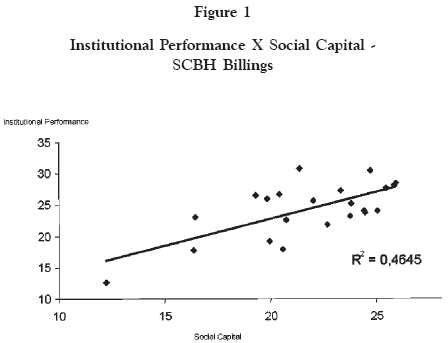
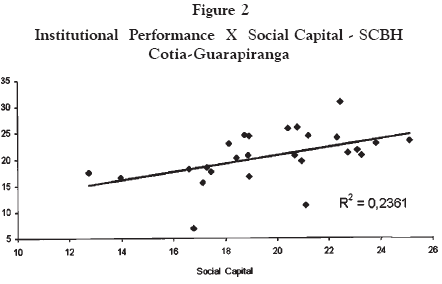
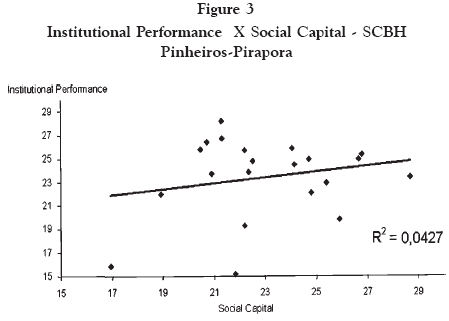
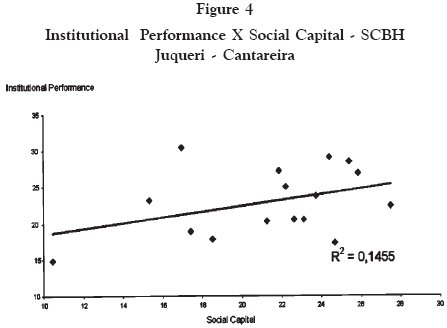
Once demonstrated the asymmetries in institutional performance and in social capital stocks, we are able to test our hypothesis and verify how these two variables are related. Figures 1 to 6 show the relation between social capital and institutional performance in the watershed committees studied. These figures suggest that there is a positive relation between social capital and institutional performance in both cases studied.
]]>
]]>
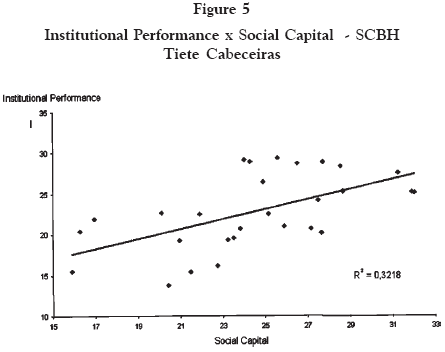
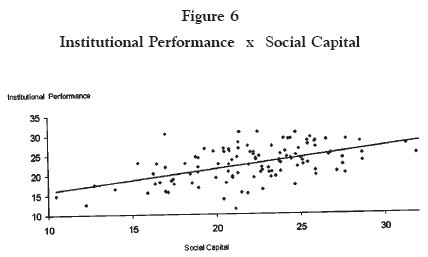
The correlation between these two variables in Billings committee is 0.68. For Guarapiranga the value found was 0.48. Considering the graphs below, it is reasonable to say that there is a positive relation between the variables. After combining the five data series, the relation can still be noted, but with a correlation coefficient of 0,62. Thus, we can say that there is in fact a positive relation between our independent variable — the social capital, and the dependent variable — the institutional performance.
The figures that follow illustrate the positive relation between social capital (independent variable) and institutional performance in the five watershed committees, indicating a positive relation.
]]>8 - Conclusions
The debate raised around social capital as a concept that explains the existence of better institutions should be treated rigorously when transferred to situations such as the one studied here. Our conceptual and operational formulations about the effects of social capital in the institutional performance of the watershed committees have proved that. The idea that certain aspects within social groups do influence institutional development can only gain strength if we are able to transport it from a rhetorical to a more elevated level, where these phenomena can be effectively observed and quantified.
The analysis of the institutional performance of the watershed committees from a social capital perspective has proved that there is a positive relation between these variables. In fact, in the cases studied, the existence of trust, solidarity and disposition to cooperate among the committee members seem to positively influence the ability of the group to coordinate its actions. And although the research has mapped and verified the existence of asymmetries in a specific timeframe, it is reasonable to assume that these processes are highly path dependent and tend to continue unaltered.
The study of the water resource management system from a social networks perspective allows us to conclude that in the cases studied, the interaction is greater between State and municipalities, and that the civil society representatives are clearly set apart from the decision making process. Results proved to be consistent with field observations. In fact, the civil society, in both cases studied, finds serious limitations in occupying a position to influence in the decision making process within the committees. From that comes the verification that the system has not been able to remain faithful to parity between all stakeholders. Although in some committees the civil society is able to exert greater influence than in others, the fact is that, in general, this system has not behaved in a flexible manner regarding the acknowledgement of civil society actions and propositions. Thus, the dynamics of the watershed committees is highly dictated by initiatives from the State and municipalities. We are yet to know how far these two actors are effectively committed to sharing the power over the decisions that affect the way in which the watershed is managed.
The outcomes show that the historical, political and social conditionings that allowed the development of the five subcommittees are differentiated. Those that are more active indicate very clearly the existence of institutional arrangements between municipalities of the region, a tradition of participation and engagement of the population in issues of collective interest.
These findings strengthen our understanding that scientific research over the conditions that foster or restrain collective practices, as well as more democratic institutional arrangements in participatory spaces (AVRITZER, 2002) stress the importance of deliberative democracy towards a more integrated and democratic environmental policy. Widening these participatory opportunities improve qualitatively the representation of interests and the quality and equity of public response to social demands. These experiences stress out the importance of public participation within the committees and improve its ability to play a more significant role in the relationships between State and Civil Society in the domain of water resources public policies.
Even though the committee's operational dynamics are far from being perfect, it is fair to say that there is a will to cooperate. The research indicates that all representatives are willing to reach agreements under a common shared understanding, and the stronger these behaviors are, the stronger the institutional performance will be.
Some challenges are yet to be overcome, especially those that deal specifically with the different mindsets of stakeholders, what implies in hardening conflict resolution through more deliberative means, based on negotiation on socio-technical premises, where asymmetries lie on informational resources rather then on economic, social or political ones.
The focal point in this whole process is stockholder's liability. Given its inherent complexity and the early stages where environmental citizenship still finds itself, the logics of management among committee's members are frequently determined by technocratic inputs, as main references of the processes control.
]]> What is worthy mentioning is the political innovations brought by this system in the State — Society relations, since the rules of the game are now more "water use" driven, and bring back into play a wider number of stakeholders. It also shows that a widening of public participation and strengthening of deliberative environmental politics grants access to information resources and improves public response to social demands. Therefore, social control over water policy is a turning-point within this new political context, since it forges fora focused on the necessity to establish partnerships.These observations have important consequences. At a moment when water resources draws attention not only from the news, but mainly in multilateral financing organizations agenda, one should be aware to verify to what extent the social factors are being satisfactorily met in these projects.
This allows to conclude that underestimating the importance of the various social dimensions, mainly the relational ones, is not an option for those who elaborate public policies; and that continuing to disrespect the influence that social dynamics exerts over development is condemning to failure initiatives that were initially valuable.
Thus, it is highly recommended to those who elaborate public policies and work in the area of water resource management to take into consideration both the social interactions, and the roles played by the State, municipalities, and the civil society and the social networks built by these actors.
Note
1. For each question, a set of alternatives was defined, varying gradually from low to high institutional performance situations.
REFERENCES
ABERS, R. & DINO, K. "Descentralização da gestão da água: por que os comitês de bacia estão sendo criados?" In: Ambiente e Sociedade, vol.VIII/2 — jul/dez. São Paulo: Annablume, 2005. [ Links ]
ACSELRAD, H. Meio Ambiente e democracia. IBASE - Instituto Brasileiro de Análises Sociais e Econômicas, Rio de Janeiro, Brasil, 1992. [ Links ]
ARAÚJO, M. C. Capital Social. Rio de Janeiro : Jorge Zahar Ed, 2003. [ Links ]
AVRITZER, L. & NAVARRO, Z. (orgs.) A Inovação democrática no Brasil. Cortez Editora, São Paulo, 2003. [ Links ]
AVRITZER, L. Democracy and the public sphere in Latin America. New Jersey: Princeton University Press, 2002. [ Links ]
BOURDIEU, P. "The Forms of Capital". In:Handbook of Theory and Research for the Sociology of Education, RICHARDSON, J. (ed.), NY., Greenwood, 1985. [ Links ]
COLEMAN, J. S. Foundations of Social Theory. London: Harvard University Press, 1990. [ Links ]
DOUROJEANNI, A. & JOURAVLEV, A. Gestión del agua a nivel de cuencas: teoría y práctica. CEPAL — Economic Commission for Latin America and the Caribbean, 2002. [ Links ]
EMIRBAYER, M. "Manifesto for a relational sociology". American Journal of Sociology, 103, 2, 1997. [ Links ]
E.S.P. ESTADO DE SÃO PAULO. Legislação sobre recursos hídricos. Secretaria de Recursos Hídricos, Saneamento e Obras. Conselho Estadual de Recursos Hídricos. São Paulo, 1998. [ Links ]
EVANS, P. (org.) State-Society Synergy: Government Action and Social Capital in Development. Berkeley, UC Berkeley, International and Area Studies Publications, 1997. [ Links ]
FURRIELA, R. Democracia, Cidadania e Proteção do Meio Ambiente. Annablume, São Paulo, 2002. [ Links ]
GROSTEIN, M. et al.São Paulo Metrópole. São Paulo: EDUSP, 2005. [ Links ]
GUIVANT, J. & JACOBI, P. "Da hidrotécnica à hidro-política: novos rumos para a regulação e gestão dos riscos ambientais no Brasil" . Cadernos de Pesquisa Interdisciplinar em Ciências Humanas nº 43. Florianópolis: UFSC, 2003. [ Links ]
HANNEMAN, R. Introduction to Social Network Methods. Online textbook, Department of Sociology, University of California, Riverside, 2001. [ Links ]
HIRSCHMAN, A. The Passions and the Interests: Political Arguments for Capitalism before Its Triumph. Princeton: Princeton University Press, 1997. [ Links ]
ISHAM, J. Can Investments in Social Capital Improve Local Development and Evironmental Outcomes? A Cost-Benefit Framework to Assess the Policy Options, 2000. Research on Internet In: www.worldbank.org/poverty/scapital em agosto de 2003. [ Links ]
IBGE — Brazilian Institute of Geography and Statistics, 2000. Censo 2000. [ Links ]
JACOBI, P. Movimentos sociais e políticas públicas. São Paulo: Ed. Cortez, 1989. [ Links ]
______ Políticas Sociais e Ampliação da Cidadania. Rio de Janeiro: Editora FGV, 2000. [ Links ]
______ "The Metropolitan Region of São Paulo- Problems, Potentials and Conflicts". DISP 147, v. -4. Zurich: ORL Institut, 2001. [ Links ]
______ "Gestão Participativa de Bacias Hidrográficas no Brasil e os desafios do fortalecimento de espaços públicos colegiados". In: NOBRE, M. & COELHO, V. Participação e Deliberação: Teoria Democrática e Experiências Institucionais no Brasil Contemporâneo. São Paulo: Editora 34, 2004. [ Links ]
______ " Governança institucional de problemas ambientais". Política e Sociedade, V4/7. Florianópolis: Cidade Futura, 2005. [ Links ]
JACOBI, P. et.al. " Capital social e desempenho institucional na bacia do Alto Tietê". In: JACOBI, P. & FERREIRA, L. (orgs.). Diálogos em ambiente e sociedade no Brasil.São Paulo: Annablume/Anppas, 2006. [ Links ]
MARQUES, E.C. Redes sociais, instituições e atores políticos no governo da cidade de São Paulo. São Paulo : Annablume : Fapesp, 2003. [ Links ]
______ "Redes Sociais e Instituições na construção do Estado e da sua permeabilidade". Revista Brasileira de Ciências Sociais - Vol. 14 No. 41.pp. 45-67, 1999. [ Links ]
MELO, M. et al. Desenho institucional e participação política: experiências no Brasil contemporâneo.Petrópolis: Ed. Vozes, 2005. [ Links ]
MONTEIRO, F. Institutional performance of watershed basin committees: the Cotia-Guarapiranga and Billings-Tamanduateí cases in Sao Paulo's Metropolitan Area . São Paulo 146p. Master's Thesis — Programa de Pós Graduação em Ciência Ambiental — PROCAM, Universidade de São Paulo, 2004. [ Links ]
MONTEIRO, F. JACOBI, P. Water resource management in Sao Paulo State, Brazil: an institutional perspective. Paper prepared to the World Water Forum — Madrid, 2003. [ Links ]
NOBRE, M. & COELHO, V. Participação e Deliberação: Teoria Democrática e Experiências Institucionais no Brasil Contemporâneo. São Paulo: Editora 34, 2005. [ Links ]
OSTROM, E. Governing the Commons: The Evolution of Institutions for Collective Action. New York: Cambridge University Press, 1990. [ Links ]
______ Crafting Institutions for Self-Governing Irrigation Systems. San Francisco: ICS Press, 1992. [ Links ]
POLANYI, K. The great transformation: the political and economic origins of our time. Boston : Beacon Press, 1944. [ Links ]
PORTES, A. Social Capital: Its Origins and Applications in Modern Sociology. Annual Review of Sociology 24: 1, pp 1-24, 1998. [ Links ]
PUTNAM, R., et. al. Making Democracy Work: Civic Traditions in Modern Italy. Princeton, New Jersey: Princeton University Press, 1993. [ Links ]
RAVALLION, M. "Good and Bad Growth: the human development reports". World Development, 25, 5, pp. 631-638, 1997. [ Links ]
ROCHA, G. A Construção do Sistema Paulista de Gestão de Recursos Hídricos. Presented at Simpósio Internacional sobre Gestão de Recursos Hídricos. Gramado: ABRH, 1998. [ Links ]
SCOTT, J. Social Network Analysis: a Handbook. Newbury Park, California : Sage Publications, 1992. [ Links ]
SEN, A. "What is the point of development strategy", In: MALINVAUD, E. et alii.Development strategy and management of market economy. New York : Clarendon Press / Oxford, vol. 1, 1997. [ Links ]
______ Desenvolvimento como liberdade. São Paulo: Cia das Letras, 1999. [ Links ]
SOUSA JÚNIOR, W. Gestão das Águas no Brasil: reflexões, diagnósticos e desafios. São Paulo: Peirópolis, 2005. [ Links ]
TENDLER, J. Good Government in the Tropics. Baltimore: Johns Hopkins University Press, 1997. [ Links ]
UPHOFF, N. "Understanding Social Capital: learning from the Analysis and Experience of Participation" In: DASGUPTA,P. & SERAGELDIN,I. Social Capital, a Multifaceted Perspective. Washington, D.C: The International Bank for Reconstruction and Development/The World Bank, 2000. [ Links ]
VARGAS, M. O Negócio da Água. São Paulo:Annablume, 2005. [ Links ]
WOOLCOCK, M. NARAYAN, D. Social Capital: implications for development theory, research and policy, 1999(mimeo). [ Links ]
ZHOURI, A. et al. (orgs.) A Insustentável leveza da política ambiental. Belo Horizonte: Autentica, 2006. [ Links ]
Received in 08/2006. Accepted in 10/2006.
]]> * Paper presented at the Research Committee on Environment and Society RC24 section of the XVI ISA World Congress of Sociology in Durban, South Africa. July 24-29, 2006. ]]>