Caracterização das Casas de Apoio a portadores de HIV/Aids em Ribeirão Preto (São Paulo, Brasil) e suas práticas de administração
Caracterización de las Casas de Apoyo a portadores de HIV/Sida en Ribeirão Preto (São Paulo, Brasil) y sus prácticas de administración
Marisley Vilas Bôas SoaresI,i; Aldaísa Cassanho ForsterII; Manoel Antônio dos SantosIII
IDepartment of Social Medicine, Ribeirão Preto Medical School, University of São Paulo, Ribeirão Preto, SP, Brazil. <marisley@usp.br>
IIDepartment of Social Medicine, Ribeirão Preto Medical School, University of São Paulo, Ribeirão Preto, SP, Brazil < acforste@fmrp.usp.br> ]]>
IIIDepartment of Psychology and Education, Ribeirão Preto Faculty of Philosophy, Sciences and Literature, University of São Paulo, Ribeirão Preto, SP, Brazil <masantos@ffclrp.usp.br>
Translated by Philip Sidney Pacheco Badiz
Translation from Interface - Comunicação, Saúde, Educação, Botucatu, v.12, n.24, p. 169-180, Jan./Mar. 2008.
ABSTRACT
This study was an evaluation of the structure, functioning and characterization of administrative and biopsychosocial practices of support houses (two dedicated to adults and one to minors) for individuals with HIV/AIDS in the Municipality of Ribeirão Preto, São Paulo State, Brazil. The methodology used was quantitative-qualitative, evaluative and exploratory research by free observations, a field diary and application of an instrument containing closed and open questions elaborated based on the Technical Norms of Health Surveillance Center, of the Center for Reference and Training on STDs and AIDS, of the State Health Department (CVS/CRT/AIDS/SES-SP). These organizations are run by an assistance and humanitarian entity, mostly maintained with resources from the civil society, partially following the norms and requirements of health agencies and health surveillance. Their coordination and human resources consist predominantly of women, both paid employees and volunteers. This work illustrates the important role of these nongovernmental organizations (NGOs) in the field of social rights related to HIV/AIDS patients, filling lacunas not provided by governmental institutions.
Keywords: evaluation; health care; acquired immunodeficiency syndrome; nongovernmental organizations.
RESUMO
Objetivou-se conhecer a organização, o funcionamento e a prestação da assistência de três Casas de Apoio a portadores de HIV/Aids em Ribeirão Preto-SP. Foram feitas entrevistas semi-estruturadas com as coordenadoras a respeito de suas funções, aplicou-se um questionário sobre os aspectos estruturais do local e registraram-se observações do cotidiano das instituições. Legalmente, eram organizações regidas por entidades de cunho assistencialista-humanitário e procuravam adequar-se às normas técnicas e exigências para seu funcionamento. Recebiam subvenção da prefeitura local, mas eram sustentadas, sobretudo, por doações da sociedade civil. As coordenações eram desempenhadas por mulheres, predominantes nos quadros de funcionários e voluntários. Em suas falas, observou-se uma postura administrativa multifuncional e dificuldade para realizar a inclusão social dos moradores, devido a preconceito ou regras de funcionamento das casas. Conclui-se que, administrativamente as Casas correspondiam ao que se propunham, mas deveriam atentar para a necessidade, como agentes sociais, de fomentar a inclusão social.
]]> Palavras-chave: Casas de recuperação. HIV. Síndrome da imunodeficiência adquirida. Cuidado. Inclusão social.RESUMEN
La finalidad del estudio fue conocer la organización, funcionamiento y prestación de cuidado por las coordinaciones de las tres Casas de Apoyo a portadores de HIV/Sida en Ribeirão Preto-São Paulo. Se realizaron entrevistas semi-estructuradas con las coordinadoras respecto a sus funciones, se aplicó un cuestionario sobre los aspectos estructurales del local y se registraron observaciones del cotidiano de las instituciones (diario de campo). Se obtuvo que, legalmente, eran organizaciones regidas por entidades del tipo asistencialista-humanitario e intentaban adecuarse a las normas técnicas y exigencias para su funcionamiento. Recibían subvención del ayuntamiento local, pero eran sostenidas principalmente por donativos de la sociedad civil. Las coordinaciones eran desempeñadas por mujeres, predominantes en los equipos de funcionarios y voluntarios. En sus discursos, se observó una postura administrativa multifuncional y dificultad en realizar la inclusión social de los habitantes, debido al preconcepto o reglas de funcionamiento de las casas. Se concluye que, administrativamente, las casas cumplían con aquello que se proponían, pero necesitarían atentar para que, como agentes sociales, fomentaran la inclusión social.
Palabras clave: Casas de convalecencia. HIV. Síndrome de Inmunodeficiencia adquirida. Cuidado. Inclusión social.
INTRODUCTION
The approach to the AIDS epidemic in Brazil, particularly in the 1980s, was strongly influence by the sociopolitical and cultural context of the country, at the same time as an important contribution to the epidemiology concerning the transmission mechanisms, prevention and control measures of HIV/AIDS at the population level was observed on the world scene. At that time, scientific knowledge regarding the acquired immunodeficiency syndrome (AIDS) was incipient. In the midst of the changes and crises that have agitated the political and economic scenario of the last few decades, organizations concerned with causes considered, up to that time, as minority (e.g., the environment, gender relations and racial questions) emerged from civil society.
The socio-sanitary situation of the segments affected by and vulnerable to the syndrome evolved with the availability of treatment, from which surged new assistential demands from people living with HIV/AIDS (adults, children and adolescents) that the State has shown difficulty in attending. As a response to these limitations, the mobilization of religious entities and civil society originated in organizations, such as Support Houses, nonprofit and public interest entities (2).
These social equipments aim "to offer multidisciplinary assistance to people with HIV/AIDS with no financial resources or family support" (2). They are of direct interest to questions of health, extendible to education and assistance in the case of the infant and adolescent public, for legal reasons or orphanhood, hence the denomination of Solidarity Houses (3). The support houses could be considered the locus of a complex web of relationships of the different social actors implied (service administrators, population assisted), with reflections in the social instances affected by their intervention.
]]> Considering the recognized social relevance of the equipments and the lack of studies involving the evaluation of this type of organization, the proposal of an investigation that approaches assistential services organized by the civil society becomes indispensible in order to systematize knowledge concerning their actuation. This would permit analysis of the reach and limitations encountered in the performance of their social role as promoters of the exercise of citizenship, in a society under a continuous process of transformation.The objective of this study is to evaluate and characterize the three support houses for people living with HIV/AIDS (two dedicated to adults and one to minors) that exist in the Municipality of Ribeirão Preto in the State of São Paulo, a city that presents an expressive incidence rate of people affected by HIV/AIDS.
METHODOLOGY
Outline
This is a descriptive exploratory study that uses a quantitative and qualitative theoretical-methodological strategy to evaluate the structure, functioning and characterization of the administrative practices and biopsychosocial assistance of the support houses. Evaluation of the guarantee of quality can be realized at different levels: structure, resources and installations; process, organization of the functions to achieve the desired result; and result, verification of the degree of attendance of the expected objective (4).
PARTICIPANTS
Participants were defined as those responsible for the coordination of each of the houses, as a function of the managerial position that they occupied within the organization and the designation of their role: "to unite and synchronize activities and individuals in a way that they function harmoniously in the realization of the objectives of the organization" (5).
]]> MATERIALS AND INSTRUMENTS
To evaluate and characterize the support houses, the following instruments were used:
- applied questionnaire, concerning the structural conditions of the support house;
- free observation, initiated after every interview; and
- field diary, elaborated throughout the process of data collection.
The questionnaire applied was developed based on the Technical Norms [Combined Regulation No. 2, from the Sanitary Surveillance Center/Center for Reference and Training in STDs and AIDS of the State Secretary for Health of São Paulo (Portaria Conjunta nº 2, do Centro de Vigilância Sanitária (CVS)/Centro de Referência e Treinamento em STDs and AIDS da Secretaria de Estado da Saúde de São Paulo (CRT-AIDS/SES-SP)), 2001] (3) and Recommendations Guide for HIV/AIDS support houses of the Ministry of Health (2). Its purpose was to evaluate the structure of the institutions. The script consisted of 23 questions, the majority closed questions, which can be classified as follows:
Physical, financial and social structure
The questions these topics embraced: conditions of the house (donated, rented, owned or ceded); verification of the existence of the number of rooms (bathrooms, showers, bedrooms and division criteria), common areas, light, water, ventilation; financial sources and their importance in the composition of the income; fiscal benefits conceded; and legal situation with respect to official organs, license, social statute, internal regimen and available information regarding the objectives of the social equipment.
Available resources and their management
Number of meals per day, staff member responsible for the menu and its preparation; hygiene (number of times per day that the house, bedrooms, bathrooms are cleaned); the existence of means of transport to health services; available health care services (odontological services, team discussion of clinical cases, assistance of bedridden patients, existence of a curative room); educative actions to prevent sexually transmitted infections; continuing education for staff members; and the supply of basic foods to relatives of the residences.
]]> House clients and their permanenceTarget-group for care; period of time stipulated for permanence; activities developed by residences; and conditions of reintegration of resident into the familial and social context.
Summary of human resources
Staff and volunteers; functions performed; quantity of hours worked per day; type of association with and time of permanence in the house; quantity of staff per bed; and, in relation to volunteers, selection criteria and brief discussion of their objectives.
Biosafety norms
Here, the execution or not of the items questioned was verified in loco: kitchen - wire netting installed, rubber seals on the doors, baskets and trash covered, adequate working conditions for the staff, exclusive access for food preparation; laundry - use of sealed sacks for clothes with secretions, wire netting on the windows, different recipients for clean and dirty clothes, use of gloves and aprons by the staff responsible; conditions of medication storage - reserved room, use of identification and clinical status records of residents, responsibility regarding drug administration and endovenous application.
The instrument developed was submitted to a pilot study and incorporated suggestions from coordinators of other entities where it was applied. Its objective was not to function as a means of inspection, rather to collect systematic information that permitted a clearer understanding of the structure of these support houses and their objective condition of functioning.
Observation were made freely, during three visits of an hour each (on average), in different periods of the day and the week, including weekends. The realization of observations permitted accompaniment of the development of the daily activities of the houses, the managing of concrete situations and contact with the daily life of the residents and staff.
It was possible to approach the technical questions evaluated from their evolution in the assistential practices realized, their limitations and potentialities.
The scenario of the research was constructed with the aid of a field diary. The moments that anteceded the period of observations and its realization, per se, were registered in this diary (6), where notes were also made concerning contact with the subjects observed (expressions, reflections and comments).
]]> Analysis of the data was conducted by means the elaboration of specific reports for each of the houses visited, developed and presented as a way of aiding the characterization of the singularities and similarities of these institutions, supported by evidence. Adopting observation as the principal of these reports, the interrelations of the existing conditions for the realization of assistance were elucidated - physical, financial and social structure, resources and management, resident population and their permanence, staff team and biosafety conditions - within the daily occurrences of the houses. The parameters used were those recommended by the norms adopted (2,3).Ethical considerations
Attending item IV of Resolution no. 196 of the National Health Council of October 10th 1996, the participants formalized their consent through signing a Term of Free Informed Consent in accordance with the norms of the Committee for Ethics in Research of the Health Center of the Ribeirão Preto Medical School, University of São Paulo.
RESULTS
The data obtained and presented here aimed to outline the structures and dynamic of the functioning of the three support houses for individuals with HIV/AIDS in Ribeirão Preto, SP, whose purpose is to offer biopsychosocial health assistance, developing actions related to the social well-being of a specific population. The study opted to amplify the technical aspects and enter these places with a vision determined to get to know services of direct interest to Health, maintained by civil entities that seek to offer not only shelter, but a home for people living with a disease that carries profound social stigma.
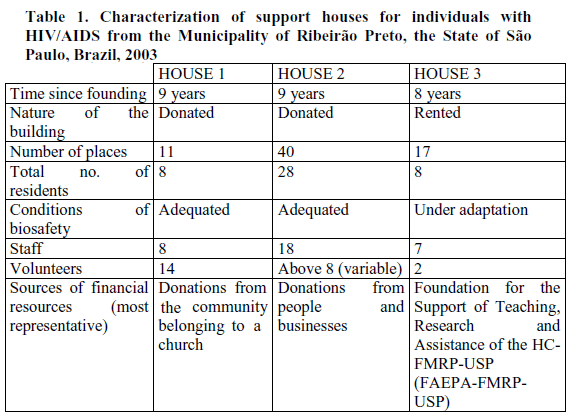
Characteristics common to these three equipments and information regarding the execution of certain required parameters are systematized in Table 1. The support houses in question began functioning in similar periods (a difference of one year), two of which were installed in donated buildings. House 3, more recently installed, was still undergoing adaptation to conditions of biosafety, in contrast to the other two, which were regularized.
In total, they can offer 68 places, though only 44 individuals were residents at the time of data collection. House 3 presented occupation close to half the available places, while the other two presented occupation above half of their capacity. All together, there were 33 staff and 24 volunteers. House 2, for a juvenile public, with the greatest offer of places, presented a greater proportion of contracted staff, in contrast with House 1, which depended on the voluntary work of a greater number of people.
Observation verified three distinct conditions in relation to the sources of income: exclusively from the community (House 1); from people and businesses (House 2); and from an institutional foundation (House 3) (Table 1). House 1 received an adult public maintained by a religious entity. The staff were volunteers, principally belonging to the same religious community, associated with the institution for roughly a year and half. The other two houses belonged to the same assistential entity, which maintained other activities simultaneously, facilitating the interchange of donations between them. Data originating from the questionnaire and free observation is presented in greater detail, such that the dimensions of activities and structures available in these entities are clarified.
Bricks, cement… What is the content of this construction?
The three entities evaluated possessed ample physical installations, in structural conditions adequate for the activities proposed. House 1 was characterized by an ample green area, with restricted access to repress the use of drugs by the residents due to the lack of a permanent guard. In all, it possessed 11 rooms and 3 bedrooms, one reserved for use as an infirmary, and 11 residents at the time of data collection. In House 2, the reforms observed were realized at the location to adapt and adequate the installations to the needs of minors. The coordinator denominated the details required for the adequation of the building as "lots of little things"; even so, everything was provided. It possessed bedrooms decorated for boys, girls and babies. House 3 possessed a total of 14 rooms, with three bedrooms. Thus, like House 1, the rooms of House 3 were divided by sex and the third bedroom was reserved for occupation in cases of worsening conditions of health.
All three houses were regulated with the municipal inspection organs, but reported that the internal regimen was in the elaboration phase; House 2 was already in the final stages of this documentation. The norms of biosafety were all being executed: in the kitchen and laundry, installed in semi-open rooms and in the storage of medications.
The construction of private space
The daily activities in these houses were predominantly directed toward health care, including the realization of consultations, exams or routine follow-up. Observation showed that one of the attributions of the coordinators was the organization of leaving times and the destinations (relate to the activities cited) for all the residents. They maintained a mural with an actualized schedule of these activities, accessible to everyone, an agenda under the responsibility of the coordinators. All three houses had their own vehicle for transport to and from health services.
Cleaning was provided with regularity, to maintain the environment hygienic. This could be performed by staff or residents in good health, or even by the coordinators, when necessary. According to the coordinator of the juvenile shelter, the children collaborated with the organization of their rooms and the "toys library" and developed several smaller activities, feeling valued with this type of responsibility. In House 1, however, some difficulty was encountered with the adhesion of the adults, their residents, in the performance of daily tasks, according to its coordinator.
In both adult houses, the cleaning activities performed by the residents were accompanied, which created a climate of intense mobilization and involvement of the majority. These moments, even without the participation of everyone by free and spontaneous choice and despite the absence of planned alternative activities, proportioned certain spontaneity in the performance of daily routines, disregarded by the common objective of the recovery of health.
]]> Among the specific responsibilities of the coordinators, was the monitoring of medication administration and meals, in order to please the largest possible number of residents. On average, six meals a day were offered to the adults, while for the minors, up to eight meals.The issue of sexuality was evaluated by the coordinators as beyond the competency of the houses, who limited themselves to attending the demand of the resident or leaving this task for the health services frequented. No systematic activity of education concerning the prevention of sexually transmitted diseases was verified. The sexuality of the residents, adults and minors, was not openly approached, which suggested the difficulty of the coordinators in dealing with the singularities of each individual in relation to sex; thus it was raised to a taboo condition, particularly when associated with the context of the AIDS epidemic.
The hands that do the work
Coordination was performed by women, initially volunteers, who, for different reasons, committed themselves to the formation of these social equipments. The feminine presence in the constitution of human resources (staff and volunteers) was predominant in the support houses. Since their qualifications were not well-developed, they were offered courses, training and continuing education activities by professionals in the area.
Considering the overall numbers of the work teams of the three houses, a predominance of the number staff over that of volunteers was observed. Separately, while House 1 possessed more volunteers than staff, the inverse occurred for House 2. The volunteers allowed the houses to offer specialized services of different professionals, but could also serve as an escape to "whine about your own troubles", according to one of the coordinators.
Thus, these individuals were previously interviewed and evaluated regarding their real interests and the meaning, according to them, of voluntary work.
The shifts were eight hours, on average; although the coordinators reported a longer working schedule due to the intense involvement, with responsibilities and the emotional character, in their activities.
Permanently living with difficulties was also present in these organizations. The principal provision of resources was obtained by means of donations from the civil community and public benefits, both insufficient to guarantee attendance to needs costs.
The crew of the ship
The residents of these support houses were qualified by the coordinators as individuals who did not possess "physical, social and family structure" to deal with the circumstances of infection by HIV. They came from families without the materials or resources for survival; or from a history of fragile connections, that made conditions adequate and necessary for good sociability in the family with AIDS and the person affected unfeasible.
]]> The period of permanence in these houses was variable, from three to six months, according to the definition of the internal regimens. However, many residents spent years within the shelter of the entity, make it their own home. The promotion of social interaction and/or familial activities occurred during the rare visits made by relatives; or in participation in external courses, though limited by the houses' lack of means of transport. In House 1, as a means of reintegration, certain residents were authorized to go out on weekends to visit family and friends. In the juvenile shelter, school and outings to the ice-cream store, shopping center or circus have the function of promoting the integration of the children with the external world. On weekends, in rare moments that the children were not otherwise occupied, groups of volunteers promoted parties with frequency.The residents presented different health conditions, such that interaction between those in reasonable health and those who presented imminent risk of death was common. One story offered by the coordinators of House 2 illustrated this proximity with the fatal outcome, when the death of a staff member (a recent event, during the data collection period) favored an appropriate context for the children to deal with other losses that they had been through, like the death of two other children in the house. According to the coordinator, the unusual occurrence reflected positively, functioning as a catalyst for the youngsters to explain their doubts, anguish and fears in the face of the proximity or presence of the spectra of death in their daily reality.
Evaluation of the structure of the support houses
Given the materials available for standardizing the functioning of these social equipments, it was possible to verify the following characteristics:
- the support houses for adults with HIV/AIDS evaluated were establishments defined as small to medium size (up to 20 places), while the capacity of the support house for the juvenile population was up to 40 minors;
- in the three houses, the period of permanence was defined as long-term (over 30 days), although this norm was not followed rigidly;
- it was not possible to classify the support houses for adults according to the Technical Norms of the CVS/CRT-AIDS/SES-SP, in which one of the criteria for differentiation refers to the conditions of manifestation and worsening of symptoms; however, the coexistence of individuals with their autonomous capacity intact and others who presented a greater level of dependence was observed;
- the support house for sheltering minors, was also characterized as a solidarity home, sheltering orphaned children or those whose parents, in their condition of people living with HIV/AIDS, were in a difficult social and economic situation (3); equally, the house was responsible for placing the minor up for adoption in cases where divestment of parental powers occurred;
- all three houses possessed systems of established reference and counter-reference (hospitals and health centers) for assistance in more complex cases and reciprocally, for the shelter of potential new residents attended by these services;
]]> - according to the Technical Norms CVS/CRTAIDS/SES-SP, the support houses defined as type II were lacking the required technicians (who should be doctors) registered with the correct organs; one of the houses informed us that the technician responsible for the organization was a nurse on the team, while the others did not specify;- in all three support houses, no document was observed that specifically detailed the activities realized (assistance and supervision, among others) by the specialized reference outpatient units; the organization and management documents were exclusively the task of the coordinators and not of graduated and specialized designated professionals in the reference services in the area of Health, as recommended by the norms cited.
DISCUSSION
Houses for those who have no home
Leading these houses, in the function of coordinating the entity, were women who, although they had no higher education course in the health area, possessed acquired technical skills. The constructed tasks indicated the condition of the role of woman as carer (7-10), seen as resulting from the sexual division of labor.
The functions of caring were inserted over decades, in the exercise of the feminine social role in the familial context. The emotional character of caring, which involves the dimension of mothering, was constructed and combined with characteristics considered as restricted to the female gender (e.g., having children).
It is socially expected that women assume the caring and attendance of physical and emotional aspects related to the family, especially in the care of more vulnerable individuals (10).
The data suggest that it is not possible to reduce the capacity of functioning of the houses to the specific level of education that each coordinator achieved. The management capacity of the support houses also underwent refinement, as a consequence of the personal identification of those responsible for the coordination of the ideas and objectives of the organization.
One final aspect that should be highlighted concerns the nongovernmental nature of these services, subject to uncertainties in relation to the availability of sufficient resources for their needs. It is necessary to deal with the difficult task of the equilibrium between the urgency of these needs and the real possibilities of their satisfaction. This demand was defined by one of the interviewees as "improvised quality".
]]> The incorporation of the study of the sources of income in the evaluation of structure, as reported in this work, is due to the importance of this measure in conferring greater legitimacy to nongovernmental organizations (ONGs) (11).The availability of a service (public, private or nongovernmental) requires structuration parameters that facilitate the best form of activity and of achieving its objectives/goals. Thus, the definition of indicators of adequation is one way to achieve the quality of the service.
It is important to emphasize that an evaluative study can count on predefined indices and parameters; or begin with their elaboration, based on previously conducted studies, though the definition of one or more indicators can be difficult given the complexity of the phenomenon of action in the health area (12).
This work, of an exploratory nature, was oriented by technical norms, without electing a specific indicator. The support houses were analyzed by intermediary of the application of a questionnaire developed based on technical materials established a priori, since no resource of accreditation or attribution of specific parameters for these services was available. While elaborating the questionnaire, the importance of the contextualization of these social equipments became apparent, both from the point of view of their history and their social and political conception. Free observation, in the quality of one of the three instruments used, enabled the identification of the contents obtained in the interviews in their own context - the "here and now", where and when the situations occurred - as well as providing information that could be captured only through this modality of data collection. After all, the apprehension and comprehension of the context of the service is essential to a holistic perspective of evaluation (6).
When perfecting a proposal of evaluation of services and programs that focus on deinstitutionalization, as is the case of the entities studied, it is necessary to consider that this contemplates the multiplicity of opinions by inclusion of the judgments that emerge from the groups involved in the program or service (13).
According to the World Health Organization (WHO) (14), evaluation has the following principals: (I) the possibility of appraising services and improving them; (II) flexibility to embrace distinct situations; and (III) the demand of a process in constant adaption to the conditions of reality to which it is applied.
As explained to the coordinators, the proposal of verifying the adequation of these organizations to the Technical Norms of the Ministry of Health and the Sanitary Surveillance Center of the State of São Paulo did not imply inspection or the emission of value judgments concerning the conditions of installation and functioning.
The reality proved to be larger than it was possible to predict in the terms of this report. While correlation ipsis litteris with the Technical Norms did not occur, the institutional benefit and the recognition of the importance that these social equipments have acquired for the just consideration of this social demand is undeniable.
ACKNOWLEDGEMENTS
]]> The authors are grateful for the support of participating entities, especially the collaboration of their coordinators, without whom the realization of this work would not have been possible.
REFERENCES
ABADIA-BARRERO, C.E. Crianças vivendo com HIV e Casas de Apoio em São Paulo: cultura, experiências e contexto domiciliar. Interface - Comunic., Saúde, Educ., v. 6, n. 11, p. 55-70, 2002. [ Links ]
ARAUJO, J. Associação François-Xavier Bagnoud do Brasil: apenas mais um caminho. In: CRUZ, E. F.; ABADIA-BARRERO, C.E. (Orgs.). Criança, adolescente e Aids: abra este diálogo. São Paulo: Fórum das ONG's-AIDS do Estado de São Paulo, 2005. p. 88-94. [ Links ]
BIASOLI-ALVES, Z.M.M. Entrevistas: formatos e análises. Ribeirão Preto, 1989. (Mimeogr. [ Links ]).
BRASIL. Ministério da Saúde. Secretaria de Políticas de Saúde. Coordenação Nacional de DST e Aids. Bol. Epidemiol. AIDS, v. 15, n. 1, p. 5-9, 2002. [ Links ]
______. Ministério da Saúde. Coordenação Nacional de DST e Aids. Guia de recomendações: casa de apoio em HIV/Aids. Brasília, 1998. [ Links ]
COSTA, J.F. Ordem médica e norma familiar. 2.ed. Rio de Janeiro: Graal, 1983. [ Links ]
DEVER, G.E.A. A epidemiologia na administração de serviços de saúde. In: __________. A epidemiologia na administração de serviços de saúde. São Paulo: Pioneira, 1988. p. 47-70. [ Links ]
FERREIRA, R.C.M.; FIGUEIREDO, M.A.C. A reinserção no mercado de trabalho: barreiras e silêncio no enfrentamento da exclusão por pessoas com HIV/Aids. Medicina (Ribeirão Preto), v. 39, n. 4, p. 591-600, 2006. [ Links ]
FISCHER, R.M.; FALCONER, A.P. Desafios da parceria governo e terceiro setor. Rev. Adm., v. 33, p. 12-9, 1998. [ Links ]
FISCHER, R.M. Trabalho e terceiro setor. Inform. Fipe, v. 1, p. 20-2, 1999. [ Links ]
GALVÃO, J. 1980-2001: uma cronologia da epidemia de HIV/Aids no Brasil e no mundo. Rio de Janeiro: ABIA, 2002. [ Links ]
GOMES, R. A análise de dados em pesquisa qualitativa. In: MINAYO, M.C.S. (Org.). Pesquisa social: teoria, método e criatividade. 3.ed. Petrópolis: Vozes, 1994. p. 67-80. [ Links ]
GONÇALVES, C.F. As casas de apoio no contexto das políticas públicas de saúde para as DST/HIV/Aids no Estado de São Paulo, no período de 1996 a 2003. 2006. Dissertação (Mestrado) - Medicina Preventiva, Faculdade de Medicina, Universidade de São Paulo, São Paulo. 2003. [ Links ]
GOTLIEB, S.L.; CASTILHO, E.A.; BUCHALLA, C.M. O impacto da Aids na esperança de vida, Brasil, 2000. Brasília, v. 16, n. 1, p. 17-23, 2002. [ Links ]
GUIRADO, M. Instituição e relações afetivas: o vínculo com o abandono. São Paulo: Summus, 1986. [ Links ]
LUZ, M.T. Cultura contemporânea e medicinas alternativas: novos paradigmas em saúde no fim do século XX. Physis - Rev. Saúde Coletiva, v. 7, p. 13-43, 1997. [ Links ] -
MENEGHEL, S.N. et al. Mulheres cuidando de mulheres: um estudo sobre a Casa de Apoio Viva Maria, Porto Alegre, Rio Grande do Sul, Brasil. Cad. Saúde Pública, v. 16, n. 3, p. 747-57, 2000. [ Links ]
PARKER, R.; AGGLETON, P. Estigma, discriminação e Aids. Rio de Janeiro: ABIA, 2001. [ Links ]
PARKER, R.; CAMARGO JR., K.R. Pobreza e HIV/Aids: aspectos antropológicos e sociológicos. Cad. Saúde Pública, v. 16, supl. 1, p. 89-102, 2000. [ Links ]
PAUGMAN, S. O enfraquecimento e a ruptura dos vínculos sociais: uma dimensão essencial do processo de desqualificação social. In: SAWAYA, B. (Org.). As artimanhas da exclusão: análise psicossocial e ética da desigualdade social. Petrópolis: Vozes, 1999. p. 67-86. [ Links ]
RAMOS, S. O papel das ONGs na construção de políticas de saúde: a Aids, a saúde da mulher e a saúde mental. Ciênc. Saúde Colet., v. 9, n. 4, p. 1067-78, 2004. [ Links ]
RIBEIRÃO PRETO. Programa Municipal de DST/Aids. Indicadores epidemiológicos 2007. Disponível em: <http://www.ribeiraopreto.sp.gov.br/index.html>. Acesso em: 10 jun. 2007. [ Links ]
ROMANELLI, G. O processo saúde/doença em famílias de baixa renda e a ação do Estado. In: ENCONTRO ANUAL DA ANPOCS, 23., 1999, Caxambu. Anais... Caxambu, 1999. p. 1-19. [ Links ]
SÁ, M.C. Subjetividade e projetos coletivos: mal-estar e governabilidade nas organizações de saúde. Ciênc. Saúde Colet., v. 6, n. 1, p. 151-64, 2001. [ Links ]
SÃO PAULO. Secretaria de Saúde do Estado de São Paulo. Centro de Vigilância Sanitária. Portaria Conjunta 2 CVS/CRT-DST/Aids. São Paulo, 2001. Disponível em: <http://www.cvs.saude.sp.gov.br>. Acesso em: 4 jul. 2002. [ Links ]
SARTI, C.A. A família como espelho: um estudo sobre a moral dos pobres. Campinas: Autores Associados, 1996. [ Links ]
SOARES, M.V.B.; FIGUEIREDO, M.A.C. Representações sobre Aids e o atendimento domiciliar: um estudo diferencial entre pacientes e cuidadores. Investigação Rev. Cient. Univ. de Franca, v. 3, n. 4, p. 7-13, 2001. [ Links ]
SOARES, M.V.B.; SANTOS, M.A.; FORSTER, A.C. Os significados do voluntariado para coordenadores de Casas de Apoio para portadores de HIV/Aids. In: LEAL-SILVA, L.L. et al. (Orgs.). Arquitetura de uma ocupação: orientação profissional: teoria e técnica. São Paulo: Vetor, 2003. p. 187-200. v. 1. [ Links ]
]]>
i Address: Av. Bandeirantes, 3900, Campus Universitário, Ribeirão Preto-SP. CEP: 14049-900
]]>