Programas de pós-graduação em Saúde Pública na Argentina e no Brasil: origens históricas e tendências recentes de processos de avaliação de qualidade
Programas de postgrado en Salud Pública en Argentina y Brasil: orígenes históricos y tendencias recientes de los procesos de evaluación de la calidad
Virginia Alonso HortaleI,1; Lilian KoifmanII
IResearcher, Department of Health Administration and Planning, National School of Public Health, Oswaldo Cruz Foundation, Rio de Janeiro, Brazil. <virginia@ensp.fiocruz.br>
IIProfessor, Department of Health Planning, Institute of Community Health, Fluminense Federal University (UFF), Niterói, Rio de Janeiro, Brazil. <lilian@vm.uff.br>
ABSTRACT
This article analyzes the uniqueness of methodologies used in the quality assessment of graduate studies programs in Public Health in two Latin American countries: Argentina and Brazil. The authors conducted a search in websites that addressed themes such as "public health training and education" and "quality assessment methodologies", besides reexamining documents and bibliography on the theme. The analysis took the following dimensions into account: the Latin American political and economic context during the previous ten years (1994-2004), reforms in the educational systems (emphasizing graduate studies), and the quality assessment methodologies implemented. The authors found similarities in the evaluation systems in effect in both countries, as well as shortcomings in these processes, namely, evaluation driven by supervision and control rather than redirection and reorientation of teaching, and the mandatory adjustment of courses to a standard model defined by experts.
Key words: teaching. quality assessment. graduate programs. public health. educational assessment.
RESUMO
O artigo analisa a singularidade de metodologias utilizadas em processos de avaliação da qualidade da formação pós-graduada em Saúde Pública em dois países da América Latina - Argentina e Brasil. Procedeu-se a uma busca em sítios da internet que abordavam os temas "formação em saúde pública" e "metodologias de avaliação de qualidade", além da revisão de documentos e bibliografia sobre o tema. A análise considerou as seguintes dimensões: o contexto político-econômico na América Latina nos últimos dez anos (1994-2004), as reformas nos sistemas educacionais (com ênfase na área da pós-graduação) e as metodologias de avaliação de qualidade implementadas. Foram identificadas semelhanças entre os sistemas de avaliação em vigor em ambos os países, assim como debilidades nesses processos: avaliação associada a supervisão e controle, e não a redirecionamento e reorientação do ensino, e obrigatoriedade dos cursos ajustarem-se a um modelo padrão definido pelos especialistas.
Palavras-chave: ensino. avaliação de qualidade. pós-graduação. saúde pública. avaliação educacional.
El trabajo trata del análisis de la singularidad de metodologías utilizadas en procesos de evaluación de la calidad de la formación de postgrado en Salud Pública en dos países de la América Latina -Argentina y Brasil-. Se hizo una búsqueda en sitios de Internet que abarcaban los temas "formación en salud pública" y "metodologías de evaluación de la calidad", además de la revisión de los documentos y bibliografía a respecto del tema. El análisis consideró las siguientes dimensiones: el contexto político-económico latinoamericano en los últimos diez años (1994-2004), las reformas en los sistemas educacionales (con énfasis en el área de postgrado) y las metodologías de evaluación de la calidad implementadas. Pudimos identificar semejanzas entre los sistemas de evaluación actuales en los dos países, así como debilidades en esos procesos: evaluación asociada a la supervisión y control y no al redireccionamiento y reorientación de la enseñaza y obligatoriedad de los cursos de adaptarse a un modelo estándar definido por los expertos.
Palabras clave: enseñanza. evaluación de la calidad. programas de postgrado. salud pública. evaluación educacional.
Introduction
In 2004, during a presentation in a Seminar2, Dr. Mirta Roses Periago, Director of the Pan-American Health Organization (PAHO), summarized the macro health trends in Latin America and the principal challenges for the 21st century. Among the trends, she highlighted the population increase and population aging, leading to a more complex epidemiological profile, and the population shift to urban areas, along with increased poverty and socioeconomic inequalities. According to Dr. Roses Periago, the two central tendencies in globalization – democratization and decentralization (of power, information, technology, and development) – are leading to profound political, economic, and social changes. She further pointed out that the fundamental challenges for health systems are to guarantee social protection in health for all citizens, contribute to the elimination of inequalities in access, guarantee quality services, provide the opportunity for comprehensive care for excluded social groups, meet the population's health needs and demands, and eliminate the ability to pay as a restrictive factor.
In the scenario described above, the tendency among graduate programs in public health3, including graduate studies stricto sensu (Master's and PhD programs) and lato sensu (specialization courses) is to focus on health and life (and not only disease and death), to concentrate more on reflection concerning the social subject as a fundamental category for understanding reality, and to complete one's scientific knowledge in the graduate program and return to the health service and further develop evidence-based themes. The quality assessment of this training (as a strategic component) has still not been fully developed.
There are currently at least four types of quality assessment models being used in higher education: (1) the American model, in which assessment is focused on reaching institutional goals and pre-established standards; (2) the continental European model, conducted by peers and whose focus is the academic program; (3) the British model, which conducts peer assessment and uses performance indicators; and (4) the Scandinavian model, a variant of the continental European model, which includes self-assessment and external assessment processes (Royero, 2002).
Considering the recent context in which the discussion of quality assessment is carried out, the current article aims to analyze the uniqueness of methodologies used in quality assessment of graduate studies in Public Health, with a focus on graduate programs stricto sensu in two Latin American countries, Argentina and Brazil.
]]> The choice of these two countries was not random, but based on the observation that they show convergences at the socioeconomic and political levels. Both are developing countries, with their pasts marked by democratic instability, and who have been cooperating in various fields for more than 15 years, including in higher education, consolidated recently with the Educational Mercosur4. They are also the countries in which quality assessment of graduate studies programs (Master's and PhD) has been conducted regularly. Since the 1990s, the replacement of the so-called welfare state with a state that evaluates services provision — while decentralizing the administration of education — has had a major impact on the dynamics of economic and political power, leading to profound changes and reforms in the systems of higher education in Latin America (Mollis, 1999).The period of neo-liberal reforms in Latin America, beginning with the educational reform in Chile in the 1980s (González, 2003), expanded steadily in nearly all of the countries in the region, and beginning with the re-democratization of these countries, some public universities (Mexico, Colombia, and Argentina) adapted to the demands of an international agenda promoted by the World Bank (WB) and later by the Inter-American Development Bank (IDB), although some countries (Bolivia and Brazil) put up serious institutional resistance (Mollis & Bensimon, 1999).
To achieve this study's objective, we proceeded to a non-exhaustive search in the websites that approached the themes "public health training" and "quality assessment methodologies", in addition to a literature review of these themes. As for the documents, for Argentina we prioritized those referring to the main quality assessment agency, the National Commission for University Assessment and Accreditation (CONEAU), and for Brazil, the documents from the Evaluation Division of the Coordinating Body for the Enhancement of Graduate Studies (CAPES). Since this study adopted a qualitative approach with a strong descriptive component, the aim was not to make it reproducible on a large scale, but to highlight its comparative relevance for other studies in Latin America. In this sense, the analysis focused on the following dimensions: the political and economic context in Latin America in the previous ten years (1994-2004), reforms in the educational systems (with an emphasis on graduate studies, stricto sensu), and the methodologies used to implement quality assessment.
The purpose is thus to contribute to the discussion on the implementation of quality assessment processes for graduate studies courses or programs stricto sensu in Public Health, whose methodological procedures are in keeping with the local and regional realities.
Reforms in higher educations: the impacts on training in health and the relationship to quality assessment of graduate studies in Public Health
In the 1990s, educational assessment became one of the strategic thrusts of educational reforms in Latin America. In the field of Public Health, the quality assessment systems have become essential components of the management systems in graduate training.
In a study conducted in 2002 for PAHO (Davini et al., 2002) to analyze the limits and reach of training processes (lato sensu) for Public Health professionals, based on the permanent education focus, it was observed that many of the programs only used the educational assessment procedures partially; in other words, they concentrated on process assessment, but the latter was not followed by an evaluation of the results. Meanwhile, other programs were using assessment instruments that were not properly linked to the proposed educational objectives, thus turning assessment into a mere bureaucratic tool. The study concluded that educational assessment (whether normative or strategic) was given secondary priority, despite great progress in the field of educational assessment in the last twenty years.
Before proceeding to an analysis of the methodological components of the quality assessment proposals in Argentina and Brazil, we will present a brief background on the creation of the two university systems, seeking to draw a parallel between the respective reforms in the areas of health and higher education and the quality assessment processes for graduate studies.
The Argentine university system was created in the 18th century, with a Jesuit orientation and an emphasis on the humanities. Beginning in the 19th century, the French model was introduced for the transmission of knowledge by means of theoretical and erudite teaching. Meanwhile, Brazil was one of the last countries in Latin America to create its university, and its higher education system dates to the 19th century. The Brazilian model was also inspired by the French model, and the concept of integration between teaching and research only materialized after the university reform of 1968 (Morosini, 1994), when the graduate studies programs were implemented based on the U.S. model. In Argentina, it was only in 1992, with the Federal Education Act, that there was reference to the educational system as a whole, including graduate studies, whose university institutions had already been offering courses since the late 1980s (Fernández Lamarra, 2002).
]]> In Latin America, during the 1990s, proposals for reform in health and higher education were part of an overall regional arrangement for public policies in this area, with financial support and strategic monitoring by institutions like the WB and IDB (Hortale et al., 2004). The quality assessment models implemented in higher education varied from country to country, but adopting similar logics to the four models described previously.In Argentina, the 1990s witnessed a major expansion of graduate studies courses (both lato sensu and stricto sensu), due to such factors as the increase in the number of public and private universities, the consolidation of the research field, and the establishment of a new "professional market", with the demand for greater competitiveness and the incorporation of new technologies. From the point of view of pedagogical processes, this field, although less bound to the traditional institutional and teaching practices of the universities, maintains unaltered the course objectives, didactic/pedagogical contents, and assessment processes (Fernández Lamarra, 2002).
Until 1995, when the Higher Education Act was passed, there was no agency for the control or assessment of undergraduate and graduate studies courses. The creation of CONEAU in 1996 launched a process focused on establishing a system for the assessment and accreditation5 of these courses. Its objectives are: to conduct institutional assessment in all the universities; to accredit undergraduate and graduate courses; to issue recommendations on projects for new universities; and to recognize private institutions (Koifman, 2004).
In Brazil, from the 1960s to the 1980s, local experiences with assessment were conducted in the universities, with limited integration; with the country's re-democratization in the mid-1980s, this process became institutionalized in two watersheds in the Ministry of Education: institutional assessment, and quality of the courses offered. However, the area of graduate studies stricto sensu was already a step ahead, and had been conducting assessments since 1976. Despite the limits, assessments slowly became mandatory and were incorporated into the agenda of institutions of higher learning. The year 2001 witnessed the creation of the National Education Plan, defined for a ten-year period, including the National Assessment System and mechanisms for monitoring its targets (Brasil, 2001). This proposal contains the first explicit reference to the concern for expanding higher education with quality. Among its 23 goals, five refer to the institutionalization of an internal and external assessment system, with the aim of (re)accreditation and promotion, encompassing the public and private sectors in the institutional and course-related dimensions.
In 2004, the National Graduate Studies Plan (PNPG 2005-2010) (CAPES, 2005) was launched, consolidating what had been presented in the previous plans (I, II, III, and IV). This plan proposed that assessment be based on the quality and excellence of the results, the specificity of the areas of knowledge, and the impact of the results on the academic and business communities and society as a whole. Each area of knowledge was expected to show, using comparable indicators, its scientific and social relevance in the national and international context, although the plan does not define the indicators.
The field of Public Health, which is by nature multi-professional and interdisciplinary, established itself in this scenario with graduate studies (both lato sensu and stricto sensu), and over the years, the teaching institutions adjusted their pedagogical projects to a health reality which is now much more complex, as described in the introduction to this article. The competencies of Public Health professionals were progressively restructured, requiring new skills, capacities, and attitudes. According to Rovere (2003, p.7):
The quality of a product or service — in this case, education in Public Health — materializes in the value that this training adds to professional practices in the field, assessed from the perspective of the needs and expectations of employers, professionals, and beneficiaries: the students, health services and the population. If this added value is not stable — it can increase or decrease according to what is offered by the course as a function of the students' expectations and needs, always in transformation — then quality becomes a relative concept, a comparative value, always socially and historically situated. In the final analysis, the value judgment of the product or service results from a comparison with other alternatives, and can always improve. That is why it is said that quality is the true target, which moves with the horizon, and cannot stop due to the lack of an on-going effort to improve its proposals.
In Brazil, if the Health Reform process consolidated in 1988 influenced the curriculum reform implemented in all the health professions in the late 1990s with the Curricular Guidelines, reflecting on graduate studies (lato sensu and stricto sensu), in Argentina the proposals for curriculum reform, especially in undergraduate training in Medicine, are still not integrated with the proposals for health sector reform, focused on primary care.
Taking as an example the School of Medicine at the University of Buenos Aires, the activities are developed mainly in the hospitals (university and non-university). This suggests that there is not a strong link between the course and the public health system, and that medical training excludes knowledge about the system in which the future physicians will work (Koifman, 2004). This characteristic differs considerably from the current trend in the Brazilian undergraduate health courses, based on the Curricular Guidelines6.
]]> The Case of Argentina: standards compatible with what?
In Argentina, together with the Higher Education Act, CONEAU was created in 1995 and implemented beginning in 1996, conducting assessment and accreditation of graduate studies programs (stricto sensu) in the field of Public Health. CONEAU is in charge of requiring the courses to submit a self-assessment, based on a questionnaire, previously prepared and supplied to them. Subsequently, a committee of peers (academics and professionals with teaching and administrative experience) meets to examine the documents of various courses in the same specialty, prior to consulting the universities on possible critiques from the peers.
CONEAU takes the peers' opinions into account in elaborating a report, and classifies the course or program in categories A, B, or C, according to its quality. Ruling 1.168 of the Ministry of Education sets the minimum quality criteria, and in the fields of Medicine and Public Health, the overall standards for any given type of graduate studies program were complemented by the Report of the Advisory Committee on Graduate Studies in Health Sciences.
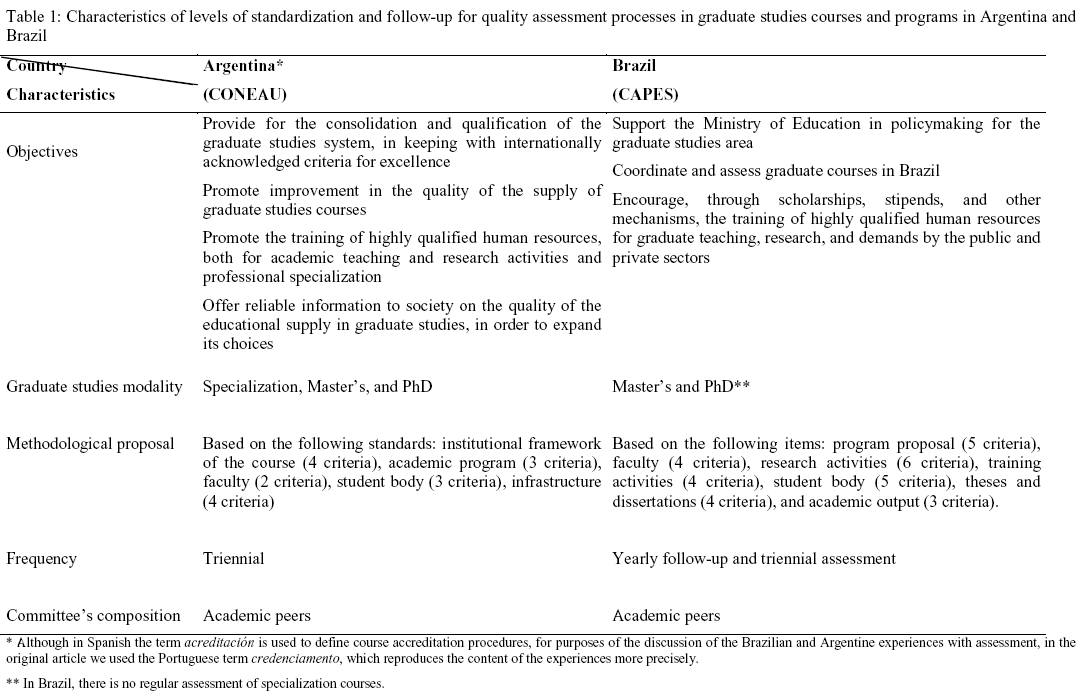
The principal responsibilities of CONEAU are summarized in Table 1. The Act that established CONEAU also provides for the creation of private agencies to conduct such procedures. According to Fernández Lamarra (2002), such agencies differ considerably from other institutions or agencies to the extent that they act both in the assessment and accreditation of government and private institutions, and undergraduate and graduate careers7.
In the definition of standards and criteria, adaptations were made from methodologies used in other countries like the United States, France, England, Netherlands, Spain, Chile, and Brazil. The following institutional assessment principles were adopted: to learn, understand, and explain how the universities function in order to improve them; to contribute to the enhancement of their practices, especially those related to decision-making and improvement in the stakeholders' understanding of their institutions, encouraging reflection on the meaning of their activities (Fernández Lamarra, 2002).
Table 1 also summarizes the standards used in the assessments. Each standard is subdivided into various criteria.
For the standard "institutional framework of the course", four criteria are defined: (a) the institution's proposal in relation to prevailing regulations, resolutions, or rulings in the graduate studies system; (b) regulation of the specific functioning of the career for which the accreditation is requested; (c) definition of the career's objectives, academic program foundations, and activities for the theme at hand; (d) consideration for the presentation of joint or inter-institutional careers, with the objective of taking advantage of the academic, scientific, and technological potential of the country's university institutions, in association among themselves or with foreign institutions, which, in a joint effort to improve the educational supply, combine the sufficient human and material resources. The requirements for the career's accreditation can be complemented by means of cooperation among the respective institutions. For this to happen, a specific agreement is indispensable between the respective academic units.
The standard "academic program" includes three criteria: (a) project (background, academic and/or professional relevance, objectives, admissions requirements, academic activities program, thesis rules, student follow-up and grading methodology, and conditions for granting degrees); (b) personalized Master's and PhD programs (the institutions may offer a Master's or PhD modality in which the program is presented by the thesis or dissertation supervisor as a function of the proposed theme); (c) course load (distribution of course load in units with different durations and formats, like courses, seminars, and workshops).
The "student body" standard involves two criteria: (a) number of regular and visiting students and (b) number of thesis/dissertation supervisors.
The "faculty" standard includes three criteria: (a) admissions policy, processes, and conditions, grading, passing, and awarding of degrees; (b) adequate thesis supervision vis-à-vis the specific academic program and degree; (c) collection and systematic organization of data on trends in enrollment, passing and retention rates, and degrees, and of all other important information in this regard.
]]> The "infrastructure" standard includes four criteria: (a) installations and equipment (adequate access, laboratories, staff, and teaching materials for the respective activities, in keeping with the needs generated in performing such activities); (b) library (access, collection, and updating); (c) information technology (access to adequate computer equipment and information and communication networks for the needs of the respective activities); and (d) availability for professional research and practice.In a meeting in 2003 (Borrel, 2004), the representatives of graduate studies courses (strictro sensu) in Public Health concluded that the criteria used by CONEAU were insufficient, since the assessments failed to take into consideration the distinctive elements of training in the field of Public Health, which has a triple foundation (teaching/research/management), thus failing to determine whether the course had the necessary quality for the proposed level of training (lato sensu versus stricto sensu).
The Case of Brazil: do the standards meet specificities?
In Brazil, the government agency that standardizes and monitors graduate studies programs and courses (stricto sensu) is CAPES. As of the last triennial assessment, in 2004, a standard instrument was used according to the sub-area of knowledge, with weighted criteria according to the specific area of assessment. For the sub-area of "health" – whose assessment areas are: Physical Education, Nursing, Pharmacy, Medicine I, Medicine II, Medicine III, Dentistry, and Collective Health - the instrument has seven items, including the following criteria, with the respective weights.
For the item "program proposal", five criteria: (a) coherence and consistency; (b) adequacy and scope of the course majors; (c) adequacy and scope of the research lines; (d) proportion of faculty, researchers, student authors, and other participants; and (e) infrastructure (laboratories and computer and financial resources).
For the item "faculty", four criteria: (a) composition and activity, institutional affiliation, and work contract; (b) size of the so-called faculty reference nucleus 6 (NRD6) in relation to the faculty as a whole, and activity by the NRD6; (c) scope and specialization of the NRD6 in relation to the course majors and research lines; and (d) faculty exchange or turnover, and participation by other faculty members.
In the item "research activities", six criteria: (a) adequacy and scope of the research lines and projects in relation to the course majors; (b) link between research lines and projects; (c) adequacy of the number of research lines and projects under way in relation to the size and qualifications of the NRD6; (d) student participation in the research projects; (e) financing, including participation by institutional research promotion agencies and other sources; (f) development of collaborative and inter-institutional research lines and projects.
For the item "training activities", four criteria: (a) adequacy and scope of the curricular structure in relation to the program's proposal and its course majors or research lines. Adequacy and scope of the various disciplines in relation to the research lines and projects; (b) distribution of course load and average course hours, compatible with the size of the NRD6, participation by other faculty; (c) number of thesis/dissertation supervisors in the NRD6 in relation to the size of the faculty, and distribution of thesis supervision among the faculty and average number of supervisees per faculty supervisor; and (d) course activities and supervision in the undergraduate courses.
For the item "student body", five criteria: (a) size of student body in relation to size of the NRD6; (b) number of supervisees in relation to size of student body; (c) number of degrees awarded and dropout rate in relation to size of student body; (d) number of authorial students in the graduate studies program in relation to size of student body; (e) activities involving integration between graduate and undergraduate studies.
]]> For the item "theses and dissertations", four criteria: (a) link between theses/dissertations and course majors and research lines and projects, and adequacy vis-à-vis course level; (b) average time-to-degree for scholarship students, average scholarship time, ratio between average time-to-degree comparing scholarship and non-scholarship students; (c) number of degrees in relation to size of NRD6, and participation by other faculty; and (d) qualifications of thesis/dissertation review panels, and participation by members from outside institutions.In the item "academic output", three criteria: (a) adequacy of types of output vis-à-vis the program's proposal, and link to the course majors, research lines and projects, or theses and dissertations; (b) adequacy of the channels or means for publication/dissemination, amount and regularity in relation to size of NRD68, and distribution of authorship among faculty members; and (c) student authorship and co-authorship.
In 2001, foreign observers present at the triennial assessment conducted by CAPES made some insightful comments on the assessment criteria. A recent article by Hortale (2003) discusses the characteristics of these criteria and the issue of quality of teaching (an aspect that has received little attention under the current CAPES assessment model), identifying some present trends, for example, that "transforming these assessments, which have been predominantly quantitative and insufficient for verifying quality improvement in the proposed education, can contribute to better organization of efforts at the institutional, faculty, and student levels" (p. 1840).
Although Brazil passed a law in 2004 that established the National Assessment System for Higher Education (Brasil, 2004), it is limited to undergraduate courses, leaving CAPES with the responsibility of assessing the country's graduate studies programs.
Meanwhile, the current National Graduate Studies Plan (PNPG), in referring to assessment, states that it should be based "on the quality and excellence of the results, the specificity of the areas of knowledge, and the impact of the results on the academic and business communities and society as a whole" (CAPES, 2005, p. 63). Atlhough the PNPG reaffirms the need for the indicators to reflect "the relevance of the new knowledge, its importance in the social context, and the impact of the technological innovation in the global and competitive world" (p. 63), it does not suggest changes in the criteria in the current assessment system implemented by CAPES.
Final remarks
The current study, although limited due to its predominantly descriptive component, analyzed the uniqueness of methodologies used in the quality assessment processes for graduate studies in Public Health in two countries of Latin America: Argentina and Brazil.
Both countries are currently reformulating their educational systems, including the implementation or consolidation of assessment processes. Although there are similarities in various aspects, examination of the Brazilian and Argentine realities shows differences that should not be overlooked (Koifman, 2004).
One similarity relates to the nature of the agencies working in the graduate studies area in the two countries, CONEAU and CAPES, which is not to assess the quality of courses and programs. In a previous article (Hortale et al., 2004), quality was interpreted, as proposed by Royero (2003, p. 2), as "a fundamental category for conducting the assessment of the world's institutions of higher learning", highlighting its attributes as: (a) multidimensional and complex, encompassing educational and social processes; (b) a socially determined category, related to specific socioeconomic contexts; (c) associated with the on-going transformation and adaptation of educational systems; and (d) integrated with the process of social efficiency in institutions of higher learning.
]]> Based on the above definition, we observed that in the Argentine case, CONEAU has the responsibility of both assessing and accrediting the courses, using similar criteria to those of quality attributes. Meanwhile, in Brazil, CAPES, which was originally an accreditation agency, conducts the assessment of re-accreditation processes without specifying the quality criteria it utilizes, as demonstrated in a previous study (Hortale, 2003). The fact that CAPES uses a more improved assessment instrument can be explained by its more than 30 years of experience, as compared to CONEAU, which was created in 1995.We also identified some weaknesses in these processes. Both cases display ambiguity in the concept of quality in higher education. In Brazil, the quality of higher education is only defined in terms of academic excellence, that is, according to the number of research projects and publications. Besides being insufficiently defined, the criteria for quality in higher education are not associated with the social use of the knowledge produced by scientific research or acquired by students. Spagnolo & Calhau (2002) point out that the CAPES assessment system focuses more on research than on quality of teaching. In its assessment instrument, there are no indicators for specifically assessing the teaching methods, and quality is inferred from an analysis of the number of publications, faculty qualifications, number of theses and dissertations supervised, and the faculty's workload in the program.
In both countries, assessment is still associated with supervision and control, rather than with redirecting and reorienting the teaching. One can identify an isomorphism in the two countries' assessment systems, namely, that the courses must adjust to a standard model defined by experts.
Finally, accumulated experience with the assessment of higher education in both countries, although still insufficient in terms of its quality attributes, allows further improvement of the procedures, as proposed in the National Assessment System in Brazil (although, as mentioned previously, it is limited to undergraduate courses), and by CONEAU in Argentina. Such progress in itself would be a major contribution to improving the quality of higher education in the two countries.
References
BORRELL, R.M.E.; ROVERE, M. La formación de postrado en salud pública: nuevos desafíos, nuevos caminos. Buenos Aires: OPS/OMS, 2004. [ Links ]
BRASIL. Lei n° 10.172, de 9 de janeiro de 2001. Aprova o Plano Nacional de Educação e dá outras providências. Diário Oficial da União, Brasília, DF, 10 jan. 2001. [ Links ]
BRASIL. Lei n° 10.861, de 14 de abril de 2004. Institui o Sistema Nacional de Avaliação da Educação Superior - SINAES - e dá outras providências. Diário Oficial da União, Brasília, DF, 15 abr. 2004. [ Links ]
CAPES. Coordenação de Aperfeiçoamento de Pessoal de Nível Superior. Plano Nacional de Pós-graduação (PNPG) - 2005-2010. Available at <http://www.CAPES.gov.br/CAPES/portal/conteudo/PNPG_2005_2010.pdf>. Accessed on 10/Jan/2005. [ Links ]
DAVINI, M.C.; NERVI, L.; ROSCHKE, M.A. Capacitação do pessoal dos serviços de saúde: projetos relacionados com os processos de Reforma Setorial. Quito: Organização Panamericana da Saúde, 2002. (Série Observatório de Recursos Humanos de Saúde, 3) [ Links ]
FERNANDES LAMARRA, N. La educación superior en la Argentina. Buenos Aires: Instituto Internacional para la Educación Superior en América Latina y el Caribe, 2002. [ Links ]
GONZÁLEZ, L.E. Acreditación y fomento de la calidad. La experiencia chilena de las últimas décadas. In: MOLLIS, M. (Org). Las universidades en la América Latina: reformadas o alteradas? La cosmética del poder financiero. Buenos Aires: CLACSO, 2003. p.141-59. [ Links ]
HORTALE, V.A.; OBBADI, M.; RAMOS, C.L. A acreditação e sua implementação na área de ensino pós-graduado em Saúde Pública. Cad. Saúde Pública, v.18, n.6, p.1789-94, 2002. [ Links ]
HORTALE, V.A. Modelos de avaliação CAPES: desejável e necessário, porém incompleto. Cad. Saúde Pública, v.19, n.6, p.1837-40, 2003. [ Links ]
HORTALE, V.A.; MOREIRA, C.O.F.; KOIFMAN, L. Avaliação da qualidade da formação: contribuição à discussão na área da Saúde Coletiva. Ciênc. Saúde Coletiva, v.9, n.4, p.997-1002, 2004. [ Links ]
KOIFMAN, L. O processo de reformulação curricular de duas faculdades de Medicina no Brasil e na Argentina: uma abordagem comparativa. Interface - Comunic., Saúde, Educ., v.8, n.14, p.113-33, 2004. [ Links ]
MOLLIS, M. Las políticas de reforma universitaria: la lógica global y la respuesta local - el caso de la Argentina. Interface - Comunic., Saúde, Educ., v.3, n.5, p.75-94, 1999. [ Links ]
MOLLIS, M.; BENSIMÓN, E. Crisis, calidad y evaluación de la educación superior desde una perspectiva comparada: Argentina y Estados Unidos. In: Casanova, C.; Rodriguez, G. (Coords.). Universidad contemporánea: política y gobierno. México: CESU/ UNAM, 1999. p.493-527. [ Links ]
MOROSINI, M.C. Universidade e integração no Mercosul: condicionantes e desafios. In: _______ (Org.). Universidade no Mercosul. São Paulo: Cortez, 1994. p.23-35. [ Links ]
PIÑON, F.J. Educación y procesos de integración: el caso del Mercosur. In: RECONDO, G. (Org.). Mercosur: la dimensión cultural de la integración. Buenos Aires: Ciccus, 1997. p.181-90. [ Links ]
ROVERE, M. Gestión de calidad de los posgrados en Salud Pública: adecuación crítica en un mundo en cambio. Washington: Organización Panamericana de la Salud, 2003. [ Links ]
ROYERO, J. Contexto mundial sobre la evaluación en las instituciones de educación superior. Disponível em: <http://www.campus-oei.org/revista/deloslectores/334royero.pdf>. Accessed 23/Aug/2003. [ Links ]
SPAGNOLO, F.; CALHAU, M.G. Infocapes - Bol. Inform. CAPES, v.10, n.1, p.7-34, 2002. [ Links ]
1 Rua Leopoldo Bulhões, 1480, Rio de Janeiro, RJ 21.041-210, Brazil.
2 "The Future of Public Health and the Millennium Development Goals", September 15, 2004, National School of Public Health, Oswaldo Cruz Foundation (ENSP-FIOCRUZ).
3 This article uses the term "graduate studies programs, stricto sensu", commonly used in Brazil to refer to Master's and PhD programs, but excluding shorter specialization courses (lato sensu), although many other countries do not make this distinction.
4 Although it is predominantly trade-related, the Southern Cone Common Market or Mercosur operates an educational department with the objective of incorporating the educational dimension into the economic integration process. This department, called Educational Mercosur, has held periodic meetings since 1991, and the ministers of education from the four countries signed a Protocol of Intent that includes the following areas: "formation of a citizens' awareness in favor of the integration process; human resources training to contribute to development; harmonization of the educational systems " (Piñon, 1997, p. 187). ]]>
5 In the references in Spanish, the term acreditación is used to define course accreditation procedures, although the meaning we adopt is that of a "strategic practice to monitor and guarantee academic and pedagogical quality" (Hortale et al ., 2002). For purposes of discussing the Brazilian and Argentine experiences in assessment, in this article we chose to use the term credenciamento in Portuguese, which gives a more exact idea of the content of the respective experiences.
6 In Brazil, the development of curriculum guidelines in the health field occurred from 1999 to 2001, in a process involving broad mobilization of the health schools and other stakeholders, who succeeded in submitting the proposals that were contrary to an initial version that had been presented and which they considered conservative. As a result, the guidelines submitted for the courses in Medicine reflect the proposals by the movements for change in the field (ABEM, CINAEM etc.).
7 Until the 1990s, in Argentina there were no private medical courses. The opening of private medical schools was accompanied by a concern for some level of monitoring and regulation. From this point on, projects began to be implemented for the assessment programs, accompanied fundamentally by the work of CONEAU. Furthermore, the discussions in Educational Mercosur emphasized the need to establish curriculum guidelines and standards for the courses in Medicine.
8 NRD6 refers to the faculty reference group for assessment, and consists of faculty members in charge of defining and consolidating the Program's proposal and research lines and projects.