Multifunctionality of agriculture and territorial development: implications and challenges in combining the approaches
Renato S. MalufI; Philippe BonnalII; Ademir A. CazellaIII
I Renato Maluf is a professor of CPDA-UFRRJ (renato.maluf@terra.com.br)
IIPhilippe Bonnal is an economist from Cirad (France) and a visiting researcher at CPDA (philippe.bonnal@cirad.fr)
III Ademir A. Cazella is a professor of the Federal University of Santa Catarina, UFSC (acazella@cca.ufsc.br) ]]>
Translated by Eoin O´Neill
Translation from Estudos Sociedade e Agricultura, Rio de Janeiro, vol. 16 no. 2, p. 185-227, Abril 2008.
ABSTRACT
The paper addresses the relationships between the concepts of multifunctionality of agriculture and territory with the aim of discussing the implications and challenges of uniting the approaches of multi-functionality and territorial development. Its reasoning is based on the results of field research in eight areas or territories located in different regions of the country whose focus was to identify if territorial dynamics and collective projects in these areas take into account family farmers in their multiple functions and social heterogeneity.
Key words: Family agriculture, Multifunctionality of agriculture, Territorial development.
]]>
In recent years the notion of territory has assumed great importance in the discourse of public policy makers in many countries including, and perhaps most importantly, Brazil. In relation to agriculture and rural areas, territory appears increasingly as a innovative, privileged and programmatic input that can renew the concept of rural development. It is noticeable that the concept of territory is similar to the concept of the multifunctionality of agriculture (MFA) which was used years ago, especially in European counties, to guide the making of agricultural and rural policies. In addition to the strictly economic dimension, the approximation of both concepts also occurs in the social, environmental and cultural dimensions involved in the agricultural and rural productive processes, as well as in the recognition of the importance of proximity and location in these processes.
This article aims to explore better the relationship between both concepts based on the results of a recently completed research project.[1] The first three sections of the article deal with the conceptual foundations and the analytical framework on which the intended articulation between the concepts of the multifunctionality of agriculture, territory and territorial development are based. The fourth section presents the guiding references of the eight case studies carried out in the research project mentioned above, followed by a brief summary of these studies highlighting their transversal questions. In the conclusion to the article the progress made and the challenges facing the different focuses of multifunctionality of agriculture and territorial development in Brazil are examined.
Multifunctionality of family farming in Brazil
The concept of the multifunctionality of agriculture (MFA), which highlights the importance of the non-mercantile implications of agriculture, especially social and environmental, as well as the production of public goods associated with agricultural activities, involves a new and expanded perspective of family farming that allows the analysis of the interaction between rural families and territories in the dynamics of social reproduction, taking into account families' way of life in its integrity and not just its economic components. The concept incorporates the provision by these farmers of public goods related to the social fabric, the environment, food security and cultural heritage (MALUF, 2002).
Basically the MFA focus involves four levels of analysis: (i) rural families and their systems of activities, (ii) territory, (iii) society and (iv) public policies. The study carried out previously by the research group on rural families in different regions of Brazil allowed the observation of the circumstances that affected the performance of the multiple ‘functions' attributed to agriculture from the perspective of these families' dynamics of reproduction. These dynamics are ‘sited' in the sense that they are inserted in specific territories, while at the same time they contribute to the configuration of the these territories. The incorporation of the territorial dimension also requires the investigation of the perception of the ‘functions' and the corresponding actions of actors and social networks in the social construction of their respective territories. Finally, analysis of public policies is required to identify the extent to which these policies recognize and confer legitimacy on the multifunctionality of family farming.
In this way the observation unit is no longer agriculture in the strict sense, but rather the rural family taken as a social unit and not just as a productive unit. Rural family is taken to mean the unit that is reproduced in the family economic system and which carries out any biological process on a piece of land. It also has to be taken into account that the family is ‘situated' in a territory with determined socio-economic, cultural and environmental characteristics. As a result the universe of analysis is expanded beyond the units taken to be economically relevant due to the production they carry out, in other words rural family units are considered as a whole, irrespective of the socio-professional status attributed to them.
In regard to the reality of Brazil the concept of MFA is useful as an instrument for the analysis of agrarian social processes that can ‘reveal' social facts and dynamics obscured by visions that privilege economic processes, even though it has to be accepted that in Brazil the promotion of MFA tends to be combined with the stimulus of food production. The role attributed by the concept of MFA to agricultural activities, especially agro-alimentary production, in the shaping of rural areas and in the reproduction of rural families, is one of the differentiating elements between its application in Europe and Brazil. In the latter country family farming, taking into account its social diversity, represents the form that best expresses, whether effectively or potentially, what the concept intends as an objective of public policies aimed at the promotion of social equitable and environmentally sustainable models of production that can valorize cultural diversity and the diversity of biomas.
The importance attributed to food production should be compared to the fact that the economic reproduction of rural families in Brazilian conditions does not have a linear relationship with the agricultural activities carried out by these families, since many of them obtain additional income from sources other than their mercantile agricultural production. Although this is not something new, this characteristic raises specific challenges for the correlation between agricultural activities and the promotion of the other functions of agriculture that it is intended to valorize. The habitual proposition in Brazil of the valorization of the production of food and other agricultural goods in ways that include various ‘functions' (social equity, cultural diversity, sustainability, etc.) has non-trivial consequences in terms of the instruments used to promote them, the treatment to be given to those ‘not covered by the norms', and the technical standards advocated by the principal professional agricultural organizations. ]]>
Previous studies carried out by the research group have highlighted four expressions of MFA in the Brazilian rural reality (CARNEIRO & MALUF, 2003). It should be noted that the way each of these four functions is manifested reflects particular aspects of each socio-spatial or territorial context, as well as how territories are differentiated in relation to the simultaneous presence of one or more of these functions and the articulation established between them. The functions are as follows:a) Socio-economic reproduction of rural families: this is related to the generation of work and income that can allow rural families to remain in the countryside in dignified conditions. In a context of high unemployment and low income for large sections of the population this is the preeminent function. In relation to this it should be noted that agricultural activities continue to play a central role in the economic and social reproduction of rural families in Brazil, despite the fact that a large number of them obtain relatively little monetary income from their own agricultural production.
b) Promotion of the food security of rural families and society: food security is considered here in terms of the availability of, and access to, quality foods that reflect ecological and cultural diversity. What needs to be stressed in this case is the importance of production aimed at self-consumption and the recurrent references by local authors to this function of agriculture, since, amongst other reasons, it alleviates the pressure caused by the rural exodus on urban centers.
c) Maintenance of the social and cultural fabric: as a result of the above, as well as due to factors linked to social identity and the forms of sociability of rural families and communities, agriculture continues to be the principal factor that defines the identity and type of social insertion of Brazilian rural families. However, the almost always pessimistic expectations about the future of agricultural activities contrast with the intention of farmers to remain in the countryside or ‘in their place', meaning that their relationship with the rural (environment) and agricultural activities has to be differentiated.
d) Preservation of natural resources and the rural landscape: on the one hand this function involves conflicts between the sustainable use of natural resources, agriculture practices (some of which are traditional) in family farming units, and aspects of environmental legislation. On the other hand, the preservation of the landscape is a question little or almost never dealt with in Brazil, while it can be observed that there is a low level of perception in relation to the rural landscape (more than the agricultural).
It is interesting to look at how some aspects covered by the concept of MFA are perceived by opinion makers and policy makers at the local level. The research showed that the visions of these farmers were quite diverse regarding agriculture and its roles, varying from the recognition of agriculture as the basis of the local economy (due to its productive importance and indirect financial support such as rural social security) to the belief that it lacks economic importance and the capacity to provide local development with any impetus. Between these extremes can be found an array of perceptions in which the low level of participation of the agricultural sector in municipal output does not impede a positive vision of the importance of agriculture in the dynamics of local development. Nevertheless, this evaluation is accompanied by an ambiguous vision in relation to the future of farming and expectations about children.
Relations between the multifunctionality of agriculture and territory
Territory is usually considered to be the privileged unit in the expression of the multifunctionality of agriculture which has to be taken into account in the formulation of public policies. However, the revision of the literature shows that there are great differences among the approaches of the authors who deal with the relationship between multifunctionality and territory. The principal differences, following the example of the previous discussion about territory, are a result of the existence of multiple meanings of multifunctionality from the disciplinary point of view. One initial difference is between authors who place the concept of multifunctionality strictly in the economic field and those who consider it in a broader form. A second difference occurs between economists who take positions on the question of public regulation and those who adopt the perspective of territorial development.
These differences also express at least four concepts of territory, which are non-exclusive and which have close ties with disciplinary perspectives: a) territory as a unit of state activity to control the production of externalities, both positive and negative, by agriculture. This approach is essentially a concern of the political economy perspective; b) territory as a unit of construction of specific resources for economic development; this corresponds to the point of view of territorial economics; c) territory as the product of a collective action, a concept related to socio-economics of organizations; d) territory as a fundamental component of traditional societies, in the sense of archaic societies, which falls under the perspective of anthropology and economic anthropology. Let us look at each of these four concepts in turn. ]]>
a) Territory as the place of expression and treatment of agricultural externalities
Public economics is concerned with social welfare and is based on neo-classical economic theory. More precisely public economics intends to determine the ways social welfare (in opposition to individual welfare, the concern of normal economics) can be maximized. In this approach what is of interest is the production and regulation of public goods, understood as the goods for which the goods and services market does not properly function because of the lack of the phenomena of exclusivity and rivalry of private goods.[2] Its purpose is to determine which state actions – always limited in order not to interfere in the functioning of markets –can maximize the production of public goods, with various complementary solutions being possible: (i) regulation; (ii) incentives (subsidies to stimulate the production of positive externalities or, to the contrary, fines to reduce the production of negative externalities); (iii) the internalization of the treatment of externalities in the production costs of goods, through the introduction of tolls based on consent to pay or receive.
In the specific case of the multifunctionality of agriculture the principal questions considered are the following: what are the amenities (positive externalities) to be promoted? How can they be hierarchically classify and priorities be established? What is the optimum level of production that can be predicted for these amenities? The responses to these questions involves the analysis of supply and the search for externalities based on the cost-benefit relationship. This focus presents particular methodological difficulties, notably in the identification of the precise causes of externalities and in their internalization (MOLLARD, 2006). Different applications of this focus are available in the literature about the recreational fishing sector (SALANIE & LE GOFFE, 2002).
In this perspective territory is not an important analytical category. It is only a geographical space for the expression of externalities and consequently the space for the application of public policy instruments. It is a complementary notion in relation to the sector of activity or public at which a public policy measure is aimed.
b) Territory as the result of collective projects concerned with the construction of specific detailed resources
Drawing on the logic of territorial economics, Mollard (2001) and Pecqueur (2002) focus on the economic activity of a determined space, using the concept of multifunctionality to justify a territorial development strategy. In this perspective territory is clearly defined as the place for the construction of specific resources, a condition deemed necessary for the creation of differentiated goods. A specific resource is understood as a resource that can only be transferred from one place to another with great difficulty. It is intrinsic to the place or the territory. A differentiated good is a specific good from a specific place and cannot be found in an identical manner outside the territory where it is produced.
Territory is thus understood as the result of an action combined between actors and economic agents. To the contrary of the previous approach, in which territory is not regarded as an important entity, here it occupies a leading role that transcends that of agricultural establishments and even agriculture itself. Multifunctionality is no longer a characteristic of agriculture and is transformed instead into a constructed characteristic of territory: "multifunctionality results from the coordination of the mono-functional activities of farmers and the set of actors" (PECQUEUR, 2002: 65). This does not signify denying the existence of the multifunctionality of agriculture, but rather argues that it does not constitute the fundamental element in the strategy of territorial development. Therefore, what is in question is not so much the valorization of the multifunctionality inherent to agricultural activities, but the creation of an unprecedented competitive capacity called multifunctionality. This is clearly an extension of work about industrial districts and clusters that analyze and try to reproduce so-called territorial resources and assets.
The mechanisms mobilized to encourage what some authors have called the ‘multifunctionality of territory' aim to create "baskets of goods" (MOLLARD, 2001; PECQUEUR, 2002 and 2006), since the goods and services arising out of the territory are associated with each other and are differentiated in relation to similar goods and services produced elsewhere. This strategy of territorial development is based on three basic principles: (i) the constitution of a specific ‘image' describing the products of the territory, in other words, using Gumuschian's concept (2002), the incorporation of the symbolic and the material; (ii) the prioritization of local markets to the detriment of distant markets to ‘force' in situ consumption; (iii) discrimination between producers in the establishment of the process to select who will participate in the constitution of these baskets of goods and who will benefit from the ‘club effect'.[3] Examples of this type of territory are very common, especially in the case of product quality strategies based on Denominação de Origem Controlada (DOC or Denomination of Controlled Origin).[4] We will return to this later. ]]>
c) Territory as the result of convergent collective projects that are not exclusively economic
Starting with a normative conception of the role of agriculture in society, numerous authors see territory as the place for the construction of collective projects. According to these authors this involves carrying out joint actions for the good of the collectivity. From the disciplinary point of view these dynamics refer to differ fields of thought. On the one hand economic references can be found in the field of neo-institutionalism in relation to collective actions in the utilization of common goods[5], stressing the importance of intercommunication and the rules of collective decisions (OSTROM, 1990). On the other hand, references can also be found to the field of the sociology of organizations (CROZIER & FRIEDBERG, 1977), which deals with the roles of the individual within the collective, relations of power with groups and in a more general manner coordination between actors.
Reflection about collective action related to the multifunctionality of agriculture resulted in two types of applications. The first refers to collective actions implemented at a local level to operationalize opportunities offered by public policy. This is the case of the Contratos Territoriais de Estabelecimento (CTEs – Territorial Contracts for Establishments), analyzed by Piraux et al. (2003), amongst other authors, or agrarian classification groups (SABOURIN & DJAMA, 2003). The second application is related to the initiatives of local authors to resolve a specific problem, for example, the scarcity of pasture during drought in the Northeast of Brazil (SABOURIN, 2001).
In this approach the general character of the problematic– agriculture as a social contract – favors the methodological concern, since it involves responding in a socially satisfactory manner to questions such as what should be done, with whom, where and how, and how can actions be perpetuated. Discussion of the instruments that can facilitate negotiation and coordination between actors is particularly common: such as diagnostics (PIRAUX et al, 2003), the explanation of actor representations (CANDAU & CHANERT, 2003), and modelling (BECU et al, 2004). However, the principal challenge is the construction of collective rules to implement and administrate the agreement between actors in a sustainable manner.
Territory is defined here in various forms. It can be ‘imposed' by the conditions of the environment or the structure of the area (a microbasin, coastal strip, village, etc.) or defined in an administrative manner: a territorial unit or a territory occupied by the public who are the subjects of a specific public policy. Finally, it can correspond to the territory occupied by voluntary participants in collective action.
d) Territory as a fundamental component of territorial societies
In political science a society is territorial when decision making power is anchored at the local level. A territorial society is differentiated from a sector-based society in numerous social, cultural, environmental aspects, etc., which depend directly on national public policies and are not regulated by organized economic sectors, in other words by productive chains (MULLER, 2004). In territorial societies the absence of a division of labor process means that independent economic sectors are not attracted and monetary transactions are not the only way of regulating exchange between the members of society.
Some researchers have sought to analyze the role of agriculture in territorial societies in, New Caledonia, Mayotte Island, Senegal and the Northeast of Brazil, using the concept of multifunctionality (GROUPE POLANYI, 2008). The purpose of this research was to understand how agriculture participates in the creation of social ties that cement societies and what its territorial influence was. These authors used anthropological instruments of analysis, especially Mauss work on exchange (1950) and Polanyi's work on the production of norms based on exchange, solidarity and redistribution (2000). Other authors also draw on institutional economics in relation to institutional change (NORTH, 1990) and the role of informal institutions (SCHMID, 2004). ]]>
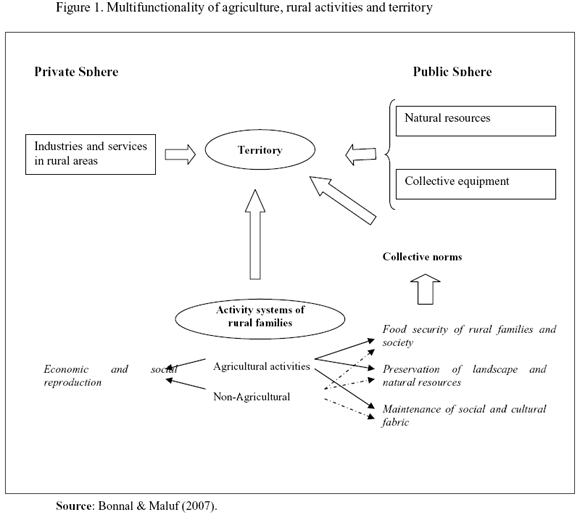
In these studies territory is understood as a physical and symbolic space, the source of both the material and immaterial goods that structure society. The multifunctionality of agriculture is expressed through the diversity of forms of exchange and reciprocity in relation to agricultural products, access to natural resources (land, water, forest, etc.,) and labor relations.To complete the analysis of the relationship between MFA and territory, it is proposed to correlate the multiple functions of agriculture with the activity systems of rural families whose manifestations within territories are mediated by social, economic and institutional dynamics (Figure 1). As a starting point it is useful to establish an initial and more general differentiation between the private sphere ruled by market regulation and the public sphere regulated by collective norms (BONNAL & MALUF, 2007). In the private sphere the agricultural products sold constitute the agricultural income that directly sustains the economic and social reproduction of the family group, while in the public sphere the multifunctional character of family farming gives way to the production of public goods related to food security, the preservation of natural resources and the landscape and the maintenance of the social and cultural fabric. In addition, public goods constitute the principal ingredients through which local norms are elaborated, understood as sets of rules, implicit or explicit agreements and knowledge shared by a significant part of the local population.
However, agriculture is not always the only source of these private and public goods. Non-agricultural activities can also play a significant role. The importance of these non-agricultural activities is notably expressed in the supply of material goods that can expand or even constitute the largest part of family income. These activities can also contribute in a significant form to the supply of public goods in relation to food security (transformation –alimentary products), the maintenance of the social and cultural fabric (cultural or collective production activities) and even the maintenance of landscapes (specific productive infrastructure, such as mills and factories).
Agricultural and non-agricultural activities shape a system of activities whose coherence and orientation depend on the individual and collective objectives of family members, which, as is well known, evolve during the life cycle of the family. It is important to establish here the difference between pluriactivity and the activity system. The activity system concept is an offshoot of Chayanov's idea of rural family activities, and was introduced for the first time by Paul et al (1994) in their analysis of the functioning of family establishments on Caribbean islands. These authors noted that the concept of pluriactivity did not allow the behavior of family assets to be properly explained in situations where agricultural production was precarious and the labor market unstable. Other applications of the concept were made in situations in which social activities played a leading role in family member activities, as the consequence of the pressure of the social group and the strength of the rules of solidarity and the commitments of the collectivity (BARTHES, 2003).
Both in Brazil and abroad researchers who work with this theme usually limit pluriactivity to remunerated activities, almost always on the part of the producer and family members, i.e., to activities carried out in the private sphere. In the analytical scheme presented here, the activity system of rural families is understood as the set of agricultural and non-agricultural activities, whether paid or not, carried out by members of the rural family in order to perform the functions necessary for the economic and social reproduction of the family. The activity system is thus broader than that of pluriactivity. First, it covers all the members of a family unit that are united through relations of relations of solidarity and/or reciprocity, whether or not they are living together[6]. Second, the system covers all activities, including those which are not merely economic. Included in this system are activities of a social, environmental and symbolic nature, due to the understanding that it is the proximity of the symbolic and social which confers meaning on economic activities, while these activities are also indispensible to maintain individuals in their social and environmental milieu.
It is through these activity systems, as well as through the specific collective norms established in a conscious or unconscious manner by the local collectivity, that territories are imagined and implemented. Territories are constructed to attain collective objectives. Local assets linked to activities in economic sectors other than agriculture (industry and services) can also participate in this construction, as well as natural resources and collective equipment. Thus, the concepts of activity system and territory correspond to two spaces of intermediation and negotiation. The former is related to the domestic and covers members of the family unit; the second has a collective nature and involves economic and social actors. ]]>
Thus, the concept of multifunctionality acquires meaning only when it refers to productive activities and not to territory, since it designates the simultaneous and differentiated effects of an activity beyond its economic functions. Thus, the multifunctionality of agriculture does not refer to the multifunctionality of territory, unlike other interpretations. Another question concerns territories that correspond to the distribution of the alternative uses that a determined space can have, as well as the relations that can be established with other spaces used in a distinct manner. In the latter case what is at question is more strictly the multiple uses of a territory.
Specific resources, local actors and territorial development
The foregoing literature review shows that, from the point of view of the multifunctionality of agriculture, certain characteristics of the concept of territory need to be emphasized. One is that a territory, since it is a delimitated unit, is simultaneously a space of aggregation and segregation, since there are individuals who are inside and others who are outside; this characteristic is fundamental in relation to territories resulting from collective actions. Furthermore, a territory is ‘bifacial', to use Gumuschian's expression (2002). In other words, it is the meeting of the material and immaterial, the real and the symbolic, the mercantile and the non-mercantile. This characteristic can be used to ‘mercantilize' the symbolic linked to agricultural activities, as in the case of the already mentioned ‘baskets of goods' used by Mollard (2001) and Pecqueur (2002), or to recognize and valorize the specific ways agrarian or rural communities are regulated in relation to agriculture. This point needs to be developed a little.
As pointed out by Carrière and Cazella (2006), studies of geographic space and reflections on development mutually ignored each other until the 1970s. After approximately a quarter century of separation attempts to associate them gained in importance. As a result the space-place of development, in other words the simple support of economic activities, has been substituted by the idea of space-territory equipped with life, culture and development potential (LACOUR, 1985). The space-territory is differentiated from the space-place by its ‘construction' based on the dynamism of the individuals who live in it. The concept of territory designates here the result of the confrontation of actors' individual spaces in regard to their economic, socio-cultural and environmental aspects. Territory is not opposed to the functional space-place, it makes it more complex, constituting a supplementary explanatory variable. Pecqueur (1987: 9) suggests that, "actors' games locally acquire a spatial dimension that provokes external effects and can allow the creation of a favorable environment for the development of the productive potential of a specific place."
The most recent studies of this topic indicate, on the one hand, that the formation of a territory results from the meeting and the mobilization of the actors who integrate a given geographic space and who seek to identify and resolve common problems. On the other hand, they show that a ‘given territory', whose delimitation is politico-administrative, can house various ‘constructed territories'. The organizational configuration of various institutions and the dual game intersection of the competition that is established between companies and between the different territories are constitutive elements of the concept of territorial development.
In other words ‘constructed territories' have three basic characteristics: a) they are multiple, non-permanent and can be superimposed; b) most often their boundaries are not clear; c) they seek to valorize the potential of latent, virtual or ‘hidden' resources. Resources are taken here to mean factors to be explored, organized, or revealed. When a process involving the identification and valorization of latent resources becomes concrete, resources become territorial ‘assets'. Resources and assets can be generic or specific. The former are totally transferrable and independent of the suitability of the place, people, where and by whom they are produced. The latter are difficult to transfer since they result in a negotiation process between actors who have different perceptions of the problems and different functional competences (PECQUEUR, 2004).
The asset specification process differentiates a territory from others and counterpoises the competition regime based on standardized production. New territorial configurations and knowledge can be produced when heterogeneous knowledge is articulated and combined. The metamorphosis of resources into specific assets cannot be disassociated from the long history of accumulated social memory and from a collective cognitive learning process (acquisition of knowledge) characteristic of a given territory.
This specification process, thus, consists of the qualification and differentiation of resources which local actors reveal in the process of the resolution of common or similar problems. The maximum point of the maturation of a constructed territory consists of the generation of an ‘income with a territorial quality', capable of surpassing the income obtained through the sale of products and services of a higher quality. In this conception the territory itself is the ‘product' commercialized. To achieve this the different local – public and private – actors create mechanisms to articulate their mercantile and non-mercantile actions with the aim of generating a coherent heterogeneous supply of territorial attributes.
Institutional theory based studies of territories offer an interpretation that highlights the collective actions of social actors (whether or not they are mercantile). The territory is at the same time a collective creation and an institutional resource. The plurality of institutional modes of functioning can be divided into two groups. On the one hand, informal institutions – for example customs and the collective representations of society – structure the collective and normative models of thought and social action. These simultaneously play informative and cognitive roles. On the other hand, formal institutions "play a dual role, structural and cognitive, complementary to the role of informal institutions; they correct to an extent the insufficiency of informal institutions in organizing the economic system, as well as having a concrete and constructed existence" (ABDELMALKI et al., 1996: 182). ]]>
The collective and institutional creation of territory is associated with the idea that the transformations of the properties of a given territory can generate and maximize the process of the valorization of the various – generic and specific– resources of this space. The ‘institutional density' of a space explains the construction and characteristics of a territory. Two fundamental properties are of particular importance in this analysis: a) it is a reality in evolution; b) it is the simultaneous result of the ‘games of power' and ‘stable commitments' established between the principal social actors.The institutional apparatus implied in the dynamics of development is not the same in all territories. They vary considerably and some figure as exceptions, which makes the imagining of a generic model of this style of development impossible. Furthermore, the institutional analysis of territory does not hide either socio-economic exclusions or social conflicts. The reproduction of social exclusions can occur in the collective creation dynamics of a territory - something which tends to occur frequently when only a fraction of the local society participates and benefits directly. In other words, initiatives which seek to transform a ‘given territory' into a ‘constructed territory' through the creation of differentiated advantages are not exempt from the risk of elitization or the appropriation of ‘income with a territorial quality' by a reduced number of actors – generally the best positioned in the social hierarchy.
As has been seen above territory is an active unit of development that has specific resources that are not transferrable from one region to another. This involves resources that may or may not be material, such as original know-how, generally linked to local history. The result is that this type of resource cannot be valorized in another place. Territory is thus not only a geographic or physical reality, but a human, social, cultural and historic reality. This means that the same technical and financial conditions do not have the same economic effects in terms of development in two different territories. The territory, as Courlet and Pecqueur (1993) state, is the result of social construction. What creates the territory is the system of local actors.
Territorial development thus passes through an inventory of local resources[7]. An inventory that is made with imagination and is capable of transforming negative aspects into new development projects. Furthermore, symbolic values can play the role of socio-economic resources. A territorial development dynamic is thus not installed without the creation or reinforcement of networks and forms of cooperation. Structures of exchange between researchers, civic associations, private companies and public authorities are fundamental to stimulate interest in new projects. Territorial development also assumes negotiation between actors with interests that are not necessarily identical, but which can find areas of convergence in new projects, so that they all can take advantage of an ‘atmosphere' suitable to the generation of unusual initiatives.
Finally, territorial development is a tributary process of the political and administrative decentralization of the state, whose success depends on the civic quality of local initiatives[8]. As a result this style of development seeks to re-qualify local know-how by resorting to new technologies. This means that information, training and education programs have to be included in local projects.
These general precepts, however, cover differentiated strategies of economic development due to the existence of a variety of productive configurations, with the best known being industrial districts, local productive arrangements, and company clusters. In all these cases territories result from the grouping of companies or production units, mainly small or mid-sized, which give way to the specialization of supply and to the development of specific know-how. Nevertheless the relationship with the market can vary profoundly. In the case of territories in the sense presented above, the strategy is based on the development of non-transferrable assets. While in the case of company conglomerates, described in detail by Porter (1985), this does not involve the evasion of competition, as in the previous case, but to the contrary facing it in the best possible conditions. Porter states that territorial development depends on the competitive capacity of the territory, which is associated with the quality of production factors (natural competitive advantages), company concentration, the importance of the rivalry created by proximity, and the existence of connected industries (upstream and downstream from production) in the service and supply areas. Economic and institutional density, as well as valorizing specific assets, allow transaction costs to be minimized, economies of scale to be created and an accumulative development process to be started (KRUGMAN, 1995; HIRSCHMAN, 1986).
Porter's formulations had enormous repercussion in Latin American in the debate on territorial development in rural areas. They constitute an important ingredient of reflection about the ‘new ruralities', and have been widely disseminated by international cooperation agencies, such as the IICA (1998), and international financial institutions, such as the World Bank and the Inter-American Development Bank (ECHEVERRI & RIBEIRO, 2002; SCHEJTMAN & BERDEGUÉ, 2003; DIRVEN, 2006). In Brazil these theories are important references for the Programa Arranjos Produtivos Locais (APL – Local Productive Arrangements Program) organized by the Production Development Secretariat of the Ministry of Development, Industry and Foreign Commerce.
It can be seen that the efforts to conceptualize territory reveal that what is at play is a polysemic concept whose meanings depend on the disciplinary perspective of the person looking at them, as well as the political and social problematic of the context in question. The various foci highlighted are justified from the point of view of public policies and collective action and can coexist. Nothing impedes territories resulting from distinct logics (whether public action, collective action, or social regulation) from being superimposed on each other and to a greater or lesser degree generating positive or negative synergies.
Territorial dynamics, collective projects and territorial construction ]]>
The research on which this article is based was carried out with two inter-connected and complementary forms of input. On the one hand, case studies were carried out in selected areas, covering the social construction of territories induced by territorial dynamics and collective projects present in these areas, an approach guided by a common research question: how do the territorial dynamics and collective projects present in determined territories contemplate family farming in its multiple functions and social heterogeneity. On the other hand, public policies aimed at family farming and the rural environment are analyzed as if they were the bearers of a territorial focus or reflected the context of the territorialization of public policies, with the aim of verifying the incorporation by these programs of the focus elements of the multifunctionality of agriculture perspective.The objective of the research and the categories which its approach draws on strongly implies the interaction of two spheres, one analytical and the other normative, the frontiers of which, however, are not always clear. A good way to illustrate this is by looking at the concept of the multifunctionality of agriculture, an analytical category which at the same time constitutes the guiding principle of public policies. As discussed above, the objectives of the research demand that connections be established between the concepts of MFA, with a focus on family farming, and territorial development, another category whose scope imposes a strong normative concept. Highlighting the normative dimension implicit to the concept does not mean ignoring the fact that rather than an intended result territorial development can be considered a methodology, a way of thinking and ‘carrying out' development. It corresponds to a process of the articulation of social actors and sectors, strongly related to the perspective of decentralization.
Dealing with territorial development requires taking the concept of territory as the analytical starting point of the research. Therefore, we start from the idea that territory is a polysemic concept, whose meanings depend on the disciplinary perspective of the person looking at them, as well as the political and social problematic of the context in question. At the same time territory can be the point of arrival when taken as a result of the territorial dynamics that occur within it, or also the delimitation of a physical space based on the collective dynamics that express the ‘game of social actors'.
Therefore, the concept of territory is being used here with two meanings. ‘As an instrument of analysis' territory is a social construction that results in the mobilization and organization of social actors around collective projects in their spatial dimension, involving material and immaterial resources. ‘As a unit of observation' territories are ‘given' based on distinct logics (of social organizations or public policies) and taken as universes of observation in the interior of which various ‘constructed' territories are manifested, expressing the collective projects of the actors present in it. For this reason the imbricated concepts of ‘given territories' and ‘constructed territories' formulated by Pecqueur (2005) are explicitly adopted.
In relation to the concepts of collective projects and territorial dynamics, the starting point is that collective projects correspond to the arrangement of social and/or institutional actors in relation to shared objectives and resources that intervene in the given territories. On the other hand territorial dynamics are the translation in space and time of the economic, social, political and environmental repercussions of the actions of actors and the relations (alliances and conflicts) between them (PIRAUX, 1999 and 2007). Actors are considered here as groups and segments differentiated from civil society and the state, who constitute relatively homogenous sets in accordance with their position in socio-cultural and economic life, and who through their collective practice construct identities, interests and visions of convergent worlds. It can be noted that the actions referred to may (or may not) occur in the form of collective projects.
As highlighted by Piraux (2007), the concept of territorial dynamics has nothing to do with whether or not a development process has a dynamic character. Often this concept ends up being associated with a developmental idea of growth even though it can also involve a declining movement (for example a region in crisis). Furthermore, the analysis of territorial dynamics should not hide factors of inertia or static phenomena, such as the maintenance of the concentration of landholding and the exercise of power, capable of revealing a certain number of problems, while other phenomena, such as the conservation of productive family systems, for example, can illustrate forms of resistance, of adaptation, or even interesting innovation to be taken into account.
Considered in this way territorial dynamics can be understood as the result of interactions between the economic, social, environmental and spatial components of territory (LEVY & LUSSAULT, 2003). The shaping of territories and their evolution results from the territorial dynamics present in them at the same time that these dynamics reflect the actual characteristics of the territories. Territorial dynamics express the transformations of territory under the influence of endogenous or exogenous factors, as well as their evolutionary tendencies (THÉRY & MELLO, 2003). Considering territory as an organized and open system, the analysis of territorial dynamics also allows us to learn the relations between the various components (economic, social, environmental and spatial) which constitute it and which are interconnected through strong interactions (THÉRY et al., 2006). There are four types of territorial dynamics: a) demographic and social; b) economic; c) environmental; d) spatial (PIRAUX, 2007).
The ‘demographic and social' component results from the fact that the human being is the first agent of the mutation of activities, with the projects of social groups being the basis of spatial dynamics. The demographic characteristics of the populations present in a region determine to a great extent the resources, economic development potentials, and reactions to modifications in economic policies, amongst others. Territorial dynamics also directly interact with social disparities, which at the same time are both causes and consequences.
The economic component is related to the transformations of economic geography. Since the end of the 1980s in particular, mutations in the productive system, industrial organization, urbanization and new functions of urban centers, the evolution of the role of rural zones, etc., have been the elements covered by the spatial perspective. Talking about the spatial economy signifies admitting that spatial entities (national, regional, local) form the basis of the dynamics of economic processes. It should also be noted that the social and economic organization of a territory has its own logic and that economic phenomena are manifested in a regional spatial context.
The ‘environmental' component, on the one hand, appears in the production process as a factor limiting development, together with markets. On the other hand, the level and nature of economic activity condition, and are conditioned by, the availability of the renewable resources available, due to their management and the level of degradation. ]]>
Finally, the ‘spatial' component is related to the fact that human beings live in a space that is constructed and managed by humans. To understand social relations and the distribution of populations as well as their commercial exchanges, it is necessary to have knowledge of essential elements such as the location of activities, the flows of persons and goods, the effects of distance and accessibility, the homogeneity or heterogeneity of space, including in terms of center and periphery.The components of territorial dynamics identified in this way have to take into account the following dimensions covered by the concept of territories that also contribute to the shaping of particular territories: a) actions of economic and social agents corresponding to areas of influence or spaces for action; b) territorial classification, considering environmental imperatives; c) relations between rural families and their respective territories (society and the spaces in which it is located); d) identity aspects; e) the implementation of public policies through political and administrative units (municipalities and states) and the types of coordination between them (partnerships, regions, ‘territories', amongst others); f) current institutionality in relation to which questions of equity and rights are presented regarding the social groups that may or may not be covered.
In summary, in the way used in the research collective projects imply social sectors that share objectives and strategies, while territorial dynamics are in part a translation of collective projects. The game of actors, with its political alliances and conflicts, conditions the possibility of whether or not projects actually come into effect. This has repercussions in relation to the exclusion of groups or social sectors historically present in the territories. By relating the concept of the multifunctionality of agriculture and of territory, the valorization of the potentialities of a territory, especially by family farmers and in the formulation of collective projects, is highlighted. Since these potentialities and valorization are the objects of dispute, the privileged focus of the research should be the game of social actors and the institutionalized spaces of mediation and negotiation, while the interests of the least mobilized farming sectors not included in decision making processes also have to be looked at.
According to the definitions presented previously, the observation unit (given territories) adopted in the field research was a spatial delimitation which took as a reference politico- administrative units due to the organization of information and the particular interest in public policies. The delimitation of this unit started with the municipality and its scope was established in accordance with the dynamics of the collective projects and public policies observed. The collective project input allowed for the coexistence of multiple constructed territories present in a given territory or observation unit.
The study of collective projects consists of the definition of two to three supra-municipal projects, chosen according to their relevance for territorial dynamics, seeking to contemplate the greatest possible diversity of dynamics, as well as drawing on three criteria defined in light of the MFA focus, namely: a) relations with family farming, both related directly to agricultural production and indirectly related to the members of rural families; b) material and symbolic dimension (identity) in the construction of the territory; c) social and political recognition.
As has already been highlighted, the research gave special attention to the processes of the inclusion and exclusion of farmers in the areas studied, circumscribed by the exclusions that compromised the expressions of the multifunctionality of agriculture. It is also worth noting that the research instrument included mapping, interviews, documentary analysis pertinent to the collective projects and territorial dynamics of the areas selected, as well as the results of previous research carried out in the zones studied by the team members. In some case studies the identification of dispersed or fragmented actions that did not shape collective projects as defined above, but which were relevant for the rural families, were privileged in the analysis. What is being referred to here are the ‘daily' actions in territories that are not covered by ‘formal' development actions, since they are not mediated or led by social movements and organizations or by public policies. Furthermore, the research also sought to contemplate the dynamics associated with the large private companies which were expressed in the observation unit. All these assumptions are related to complementarities, (open and hidden) conflicts and exclusions present in the given territories.
Summary of the principal results of the case studies
The analyses of the territorial dynamics and the collective projects present in determined territories, with an emphasis on the way family farming was contemplated in its multiple functions and social heterogeneity, revealed at least three elements on which a typology of the different cases could be constructed. This typology takes into account the diversity, and more especially the specificity, that can be found in territorial dynamics. The second element that differentiates the cases is related to the degrees and forms of family farming in the specific territorial dynamics and projects. The third considered the convergence and divergences of the collective projects involving family farming present in a given territory.[9] On the basis of this the areas studied were divided into three groups according to the most pronounced characteristics in the territorial dynamics or collective projects.
In the first group can be found the studies about territorial dynamics linked to public policy territories. It includes the areas around Campina Grande (PB), the North of Espírito Santo, Marabá (PA) and the Parati coast (RJ). The so-called Borborema Territories (PB) and the North of Espírito Santo can be characterized as public policy territories with convergent institutionalities, since the collective projects of the social actors linked to family farming, and the corresponding conflicts of concepts and interests, tend to converge on public policy spaces. In both cases, but more strikingly in Borborema, there existed strong collective projects (identity territories) before the implementation of the territorial development program by the Ministry of Agrarian Development (MDA), namely the activities of Trade Union Group in the promotion of agro-ecology in the case of Borborema, and the mobilization related to rural education and agro-ecology in Espírito Santo. These collective projects, carried out by strong and active institutions, constituted the foundations on top of which were constructed the ‘identity territories', which in the case of Espírito Santo also counterbalanced the agro-industrial territorial dynamics linked to reforestation with exotic species. ]]>
The Marabá region is configured as a public policy territory with divergent institutionalities, to the extent that the principal collective projects have distinct positions and even opposing visions in relation to certain questions. Especially notable are the divergences of the principal social movements in relation to the choice of strategies to strengthen family farming in an agricultural frontier (or post-frontier) context, divergences that are materialized in the choice of agricultural models that differ in terms of the hierarchy established between the economic, social and environmental functions. For some movements what is important is strengthening family farming, even if this has negative environmental impacts, such as those caused by cattle rearing. For others all the three functions have to be taken into account equally through the promotion of an agro-forestry system based on agro-ecological principles.Since it is a frontier region where the abundance of natural resources, especially forestry, is a trait that profoundly differentiates it from the other cases, the discussion of agricultural multifunctionality acquires a special form here. The forest appears as a difficulty hindering the promotion of agricultural production and its removal is seen as a necessary condition to make this activity feasible. This vision has been reinforced by the difficulties of implementing productive agro-forestry systems and by family farmers search for survival, with the food security of the family itself being what is most important. The implementation of identity territories by the MDA has, in turn, valorized in a partial and incomplete manner the collective projects of family farming institutions.
The coastal region of Paraty corresponds to a public policy territory with a still fragile institutionality, although it does have collective projects capable of mobilizing specific territorial resources. It is significant that the initiative of creating an identity territory in this region was created at the national/state level in light of the absence of both territorial dynamics and territorial projects which could have sustained it. Thus, what can be seen is the management, albeit still embryonic, of a differentiated and combined supply of territorial services and products, with the future potentiality of protecting this space from possible competitors. Here the idea of baskets of territorial goods and services makes sense and appears to be an element that points to a positive articulation between the multifunctional nature of agriculture and territorial development.
The four examples mentioned above reveal the relations existing between the collective projects and dynamics and the policy of territorial development, allowing the conclusion that the strength of local institutionality and the maturity of collective projects exercises a strong influence on the structuring and orientation of identity territories.
The second group of case studies is composed of studies of territorial dynamics that reflect formal or informal productive arrangements involving family farming: Vale do Taquari (RS), the South of Minas Gerais and Serra Catarinense (the mountain region in Santa Catarina State). Unlike the previous case studies, what unites these experiences is not a policy of territorial development, but rather economic dynamics related to one or more products resulting from family farming. The dynamics studied in Vale do Taquari were the result of an old and consolidated agro-industrial arrangement, based on conventional agricultural cooperativism. Nonetheless, it can be noted that although it is a zone that has been occupied for a long time, the socio-economic and environmental heterogeneity has not been altered and it is possible to find family production systems integrated with agro-industries and with high levels of technification, normally located in valleys, existing alongside the more traditional hillside systems, that are less integrated and technified and where production for self-consumption has a relevant economic and cultural meaning. Institutional density and coherence and proximity between economic and academic institutions gave the Taquari region a logic close to that of a productive cluster.
The coffee region in the South of Minas Gerais has an emerging productive arrangement, where a new type of cooperativism can be found in a structuring phase based on the production of quality coffee that is differentiated from the remainder of regional production. It should be noted that the zone studied has a long tradition and already possesses the necessary logistics for coffee growing. In other words, the emergence of a new productive system aimed at the production of organic coffee, especially in mountainous areas, represents a form of differentiation of this type of coffee from the remainder that is produced in a conventional form and sold as a commodity in the international market. Following the example of Paraty, this collective project seeks to valorize the specificity of territory (productive, cultural and geographic) and also family farming functions related to the maintenance of traditional activities, quality production and the social insertion of impoverished rural families.
In contrast in the Serra Catarinense what stands out are the implications of the predominance of an exclusive industrial arrangement focused on the indifferent production of timber, a large part of which is destined for export, and of paper and cellulose. Added to this is the fact that the project of promoting agro-ecology for the development of the region has not managed to expand the range of institutional partners necessary to cause a rupture with current low levels of adhesion by family farmers. Therefore, the initiatives of the business universe, organized civil society and public policies of a territorial type present a profound disarticulation and fragmentation with sector based and corporate visions prevailing. The current configuration of the institutional environment cannot provide either the implementation of collective projects with the possibility of generating a composite supply of territorial products and services, or the valorization of the precepts of agricultural multifunctionality.
In this type of situation the regulatory intervention of the state through, for example, the application of a stringent form of environmental legislation, seems to be one of the few forms of altering the scenario of indifference in the business universe, strengthening the multiple functions of family farming and, as a result, ensuring its social reproduction. Another possibility, returned to below, is the contractualization of extensive public policies, in this case in relation to the industrial sector.
Finally, there is the peculiar condition of the mountain region of Nova Friburgo (RJ), where the existence of territorial dynamics resulting from projects with little articulation and fragile institutional insertion can be observed. The fragility of the agro-ecology promotion project can also be perceived here, revealing a mismatch between, on the one hand, the objectives of this project and the organizations involved in it, and on the other hand, the interests of the majority of family farmers in that region.
The comparative analysis of the case studies also reveals the experience of three transversal themes that are expressed with different intensities and in different forms according to the region. The first is related to models of agriculture. As highlighted above, the question of the modernization of agriculture – an old and general reference in debates about agriculture – leads to a hierarchy between the economic, social and environmental functions of family farming, not rarely favorable to the economic dimension as evident in the cases of Marabá, the South of Minas and Vale do Taquari. However, it can also be looked at from a perspective that involves the valorization of non-productive dimensions associated with this type of agriculture, as proposed by the multifunctionality perspective. ]]>
Alongside the question of modernization is the discussion of the meanings and scope of the agro-ecological focus. In the theoretical sphere this model of agriculture seems to be one of the most consistent, both in relation to the precepts of agricultural multifunctionality and those of territorial development. Despite the divergences of interpretation between those who use the concept, it is evident that agro-ecology involves various dimensions covered by the multifunctionality of agriculture focus, for example by minimizing the importance of the strictly economic dimension in relation to the social and environmental ones. The presence of this focus in almost all the areas studied and in other parts of the country should not obscure the fact that in the majority of cases, the number of family farmers and territorial organizations involved is quite small.The second transversal theme refers to the territorial economic strategies in which the perspective of the aggregation of value predominates, though with a limited valorization of specific territorial resources. As has been seen above, the valorization of transferable resources that are independent of historical particularities, property and the collective learning of the place where they are produced, is incapable of generating a territorial quality income which can surpass the income obtained from the sale of products and services with a higher quality.
The third transversal theme is that of public policies, in this case considered in terms of their important inductive and at the same time polarizing role in territorial dynamics. The inductive role is manifested in the mobilization of local and territorial actors, both public and private, after the commencement of what is classified here as the process of the territorialization of public policies in Brazil. Mobilization capacity is greater in national programs, a characteristic that reflects the traditional importance of the Federal Government in the formulation of guidelines and in the management of public policy resources, although it also occurs with state programs. This should not obscure the role played by territorial social dynamics and by national movements in the territorialization of policies, as the cases analyzed here demonstrate, where these dynamics precede and even determine the formatting of policy territories. The polarizing role of public policies results from this to the extent that the formulation, and more especially the implementation, of programs expresses or gives visibility to the conflicts inherent in the coexistence of various territorial dynamics, with it not being rare for them to be seen as spaces for the demarcation of interests and the choice of priorities.
Based on the case studies presented here in a resumed form it seems evident that the multiple functions of family farming are not widely acknowledged, although they are present in various degrees in the territorial dynamics and collective projects analyzed. In addition to unequal recognition, the studies show that it is necessary to contextualize the functions to be valorized in each case. It is equally important to highlight that the multifunctionality of family farming does not represent a key focus in the formulation of public policies in rural development. Ultimately the productive dimension of agricultural activities represents the predominant focus and the principal justification for the implementation of these policies.
Conclusion: challenges for the conjunction of foci in public policies
The elements supported by the studies carried out in the eight chosen areas, as well as the analysis of the programs concerned with family farming and the rural environment which incorporate the territorial perspective, reveal important challenges for the conjunction of the foci of the multifunctionality of agriculture and territory or territorial development in public policies. The first is the requirement that programs adopt territories and rural families as a reference – rather than ‘family farming' – considered as producers and managers of the territory in which they are located. An initial consequence of the revision of the productive focus of family farming is that the activity systems of rural family units are considered, rather than being limited to one or more products and services supplied by these family units. Therefore, in place of conventional agricultural policy which concentrates the promotion of family farming on the supply of credit based on the production of goods, systemic credit instruments are required, which can take into account the sets of activities carried out in these units.
Another consequence is related to the role attributed to non-agricultural policies, in particular ‘social' policies, in the socio-economic reproduction of rural families, also including here agricultural activities. Furthermore, the focus on families is necessarily present in non-agricultural programs, in other words in those programs of universal access aimed at rural families in the countryside, for example anti-poverty, social security, education and health policies.
The incorporation of the territorial focus in replacement of, or at least with the perspective of expanding, the conventional sector focus has implications for questions of governance. The tendency of public policies to move towards fragmentation and differentiation has redefined the place of sector policies, in this case those concerned with agricultural and rural areas, while also interfering in the way the territorial focus is incorporated. By assuming that their purpose is to promote a type of social and territorial re-equilibrium, sector policies face the challenge of expanding the importance of the focus on the poorest farmers, present in territorial development programs. Also noted, with the help of the cognitive focus of public policies, was the role of policy networks and communities, which occurs not only in terms of the formulation and coordination of public programs, but also in the implementation stage.
Also in relation to the institutional landmark of public policies, public policy decentralization processes are faced with the challenge of achieving compatibility between the general directives of programs and the perspectives of local actors. Relations which are established between the general (national) directives of programs and local actors are marked by bidirectional complementarities and tensions between these directives (‘top down') and local interests (‘bottom up'). The recognition of these complementarities and tensions is in turn related to the requirement of interlocution spaces and coordination mechanisms not only between the spheres of government or action, but also between distinct programs and between the different elements of a program. ]]>
The analysis of programs and other studies about related themes, as well as elements extracted from case studies, suggest three possible foci for the integration or articulation of public programs and actions. The first is integration with a focus on territory, which signifies understanding the complex unity between urban and rural spaces and between the municipal and supra-municipal spheres. This also favors the emergence of questions related to poverty, social inequality and the environment, amongst others. It is worth bearing in mind that the territorialization of actions and programs involves the participation of social actors in general and rural families in particular.A second possible focus for the integration or articulation of actions, which has already been mentioned above, is to consider the rural family unit as an activity system and manager of territory. This implies the revision of the conventional instruments of agricultural policy and seeking a closer correlation with non-agricultural policies. By way of illustration we can mention the promotion of the transition of agricultural and extractivist models, the valorization of territorial resources and the articulation of social policies in the socio-economic reproduction of rural families.
Finally, the possibility of expanding the contractualization of relations between the state and the rural families covered by public programs represents a contribution to the aforementioned conjunction of foci that is still relatively unexplored. This involves the implementation of territorial development actions and policies capable of valorizing the multiple roles or functions played by rural families, including social control over actions and policies.
One of the most important advantages of the incorporation of the MFA focus is that contracts, depending on the way they are implemented, can be a transparent form, involving social participation, of defining priorities, implementing, and monitoring the destination of resources based on reciprocal commitments between the state, civil society, rural families and farmers covered by public policies. Another advantage of contractualization is that it expands the possibility of combining different forms of support for these families in a sole or a limited number of instruments or contracts. Furthermore, this mechanism can contribute to the move from a sector based focus to the rural-territorial focus mentioned above.
It is desirable that the basis of this new ‘social contract' should come from the current demands of Brazilian society in relation to agriculture and the rural world, as well as the demands of farmers themselves. Of course it will be necessary to have a wide-ranging debate about how to identify these demands and about which processes and institutional frameworks should be used. Also in relation to the above, it appears that changes in the norms that regulate the farming profession are required in Brazil regarding the treatment of those ‘outside the norm' and the particular question of young farmers and rural youth, especially in relation to succession process and support for new facilities of young farmers.
It is presumed that reflection on the multifunctionality of agriculture and the introduction of its precepts into public policies concerned with Brazilian development rural can assist the designing of a development model that seeks the inclusion of the family farming categories traditionally marginalized in the dynamics of the modernization of agriculture. Furthermore, introducing the multifunctional character of agriculture into the policies of territorial development implies foreseeing a social debate about the advantages and disadvantages of transferring public resources for the improvement of living conditions in the rural environment - and more than this, about the definition of the responsibilities of local authorities and the farmers benefiting from the transfer of these resources. In this way operations implemented in the rural environment, despite bearing the mark of ‘welfarism', can make subsidies dependent on benefits for society in general, such as the preservation of the environment, biodiversity and landscapes, the relief of anthropic pressure in urban centers, and the production of quality foodstuffs.
Finally, the question raised in some case studies about the interfaces of the business universe with the rural world and in particular with family farming remains open. Here what is in question is not only the issue of integration between family farming and agro-industries, already widely discussed, but the form of competition for the productive occupation of space to the detriment of the social reproduction of family farming and in particular the so-called rural amenities. This study reveals that the expansion of areas of reforestation with exotic species exerts a strong pressure on incipient initiatives aimed at the consolidation of family farming, the promotion of territorial development and the valorization of agricultural multifunctionality.
Following the example of the above discussion about the contractualization of policies of support for family farming, it is also worth asking about the relevance of the application of this instrument to the business universe and the state, in relation to the encouragement and regulation of socio-environmental responsibility. As seen in the cases analyzed, some public policies actually provide incentives for business initiatives detached from the precepts of territorial development that are perverse from the point of view of the social reproduction of family farming.
Bibliographic References ]]>
ABDELMALKI, L. et al. Technologie et territoires: le territoire comme création collective et ressource institutionnelle. In: PECQUEUR, B. (ed.). Dynamiques territoriales et mutations économiques. Paris: L'Harmattan, 1996.
BARTHES, C. L'Etat et le monde rural à Mayotte. Paris: Karthala, 2003.
BECU, N. et al. Multifonctionnalité dans les bassins versants du Nord Thaïlande : entre émergence de points de vue hétérogène et pilotage externe. Les cahiers de la multifonctionnalité, no. 6, 2004.
BONNAL, P. ; MALUF, Renato S. Do uso das noções de multifuncionalidade e território nas políticas agrícolas e rurais no Brasil. In : LIMA, E. N. et al. (orgs.) Mundo Rural IV – configurações rural-urbana: poderes e políticas. Rio de Janeiro : Mauad/Edur, 2007.
CANDAU J., CHANERT M. La multifonctionnalité, un sens en discussion. La place accordée au paysage dans le projet agricole de la Dordogne. Les cahiers de la multifonctionnalité, no. 3, 2003. ]]>
CARNEIRO, M. J. ; MALUF, R. S. (orgs.). Para além da produção – multifuncionalidade e agricultura familiar. Rio de Janeiro/ Brasília: Mauad/NEAD, 2003.
CARRIÈRE, J. P. & CAZELLA, A. A. Abordagem introdutória ao conceito de desenvolvimento territorial. Florianópolis, Eisforia, n° especial, 2006.
CAZELLA, A., BONNAL, P. E.; MALUF, Renato S. (orgs.), Agricultura familiar – multifuncionaldade e desenvolvimento territorial no Brasil. Rio de Janeiro: Mauad Ed. 2009.
COASE, R. Problem of Social Cost. Journal of Law and Economics, no. 3, 1960.
__________. The Firm, the Market and the Law. Chicago (III) University of Chicago Press, 1965. ]]>
COURLET C.; PECQUEUR, B. Industries et dynamiques de territories. Revue d'économie industrielle. Paris, 1993.
CROZIER; FRIDBERG. L'acteur et le système: les contraintes de l'action collective. Paris: Seuil. 1977.
DIRVEN, M. Acción conjunta en los clusters: entre teoria y los estudios de caso. Santiago do Chile, Seminario Internacional Territorios Rurales en Movimiento, Rimisp/IDRC, 2006.
ECHEVERRI, R.; RIBEIRO, M. DEL P. Nueva ruralidad vision del Territorio en América y el Caribe. San José, IICA, 2002.
GROUPE POLANYI. La multifuncionalité de l'agriculture. Une dialectique entre marché et identité. Paris: Quae, 2008. ]]>
GUMUSCHIAN H. Entre forme et sens: le territoire comme objet géographique. Les entretiens du Pradel. Académie d'agriculture de France, 2nd ed. 2002, www.academie-agriculture.fr.
HIRSCHMAN, A. O. Vers une économie politique élargie. Paris : Collection Le sens commun, Editions de Minuit, 1986.
KRUGMAN, P., Development, Geography, and Economic Theory. Cambridge-London, MIT Press, 1995.
LACOUR, C. Espace et développement: des enjeux théoriques nouveaux face aux contradictions des sociétés contemporaines. Revue d'Economie Régionale et Urbaine. Bordeaux, ASRDLF, no. 5, 1985, pp. 837-847.
LEVY J.; LUSSAULT M. (coord.). Dictionnaire de la géographie et de l'espace des sociétés. Ed. Belin, 2003. ]]>
MALUF, Renato S. O enfoque da multifuncionalidade da agricultura: aspectos analíticos e questões de pesquisa. In LIMA, D. M.; WILKINSON, J. (orgs.). Inovação nas tradições da agricultura familiar. Brasília: CNPq/Paralelo 15, 2002.
MAUSS, M. Essai sur le don, forme et raison de l'échanges dans les sociétés archaïques. In : Sociologie et Anthropologie. Paris: PUF, 1950.
MOLLARD, A. Qualité et développement territorial: l'hypothèse du panier de biens et de services territorialisés. Economie Rurale, n. 261, jan./fev, 2001.
MOLLARD, A. Multifuncionalidade, externalidades e territórios. Florianópolis, Eisforia, n° Especial, 2006.
MULLER, P. Les politiques publiques. Paris: PUF, 2004. ]]>
NORTH, D. C. Institutions. Journal of Economic Perspectives, vol. 5, no. 1, 1990.
OLSON, M. Lógica da ação coletiva. São Paulo: EDUSP, 1999.
OSTROM, E. Governing the Commons: The Evolution of Institutions for Collective Action. New York: Cambridge University Press, 1990.
PAUL, J. L. et al. Quel système de référence pour la prise en compte de la rationalité de l'agriculteur : du système de production agricole au système d'activité ? Les cahiers de la Recherche-Développement, n.o 29, 1994.
PECQUEUR, B. De l'espace fonctionnel à l'espace-territoire: essai sur le développement local. Grenoble, Université des Sciences Sociales, Doctoral Dissertation, 1987. ]]>
__________. ed.). Dynamiques territoriales et mutations économiques. Paris : L'Harmattan, 1996.
__________. Politiques publiques, action publique et spécificités territoriales. Multifuncionnalité et territoires: justifications et modalités de la territorialisation des politiques publiques. Les cahiers de la multifonctionnalité, no. 1, 2002.
__________. Le développement territorial: une nouvelle approche des processus de développement pour les économies du Sud. Grenoble, Institut de Géographie Alpine, 2004.
__________. O desenvolvimento territorial: uma nova abordagem dos processos de desenvolvimento para as economias do Sul. Raízes, Campina Grande, 2005.
__________. Qualidade e desenvolvimento territorial: a hipótese da cesta de bens e de serviços territorializados. Florianópolis, n° especial, 2006. ]]>
PIRAUX, M. et al. Multifonctionnalité et action collective. Le cas de la mise en place du CTE Cilaos à la Réunion. Les cahiers de la multifonctionnalité, no. 3, 2003.
PIRAUX, M. Intensification et diversification des systèmes de production dans un contexte à risque. Le cas du bassin arachidier sénégalais. Tese de dodutoramento, Faculté Universitaire des Sciences Agronomiques de Gembloux (Belgique), 1999.
__________. As dinâmicas territoriais: definição e análise. Curso de "Desenvolvimento rural sustentável e territorial". Cirad/Universidade Federal de Campina Grande, 2007.
POLANYI, K. A Grande Transformação. Rio de Janeiro : Campus, 2000.
PORTER, M. Competitive Advantage. The Free Press, New York. 1985. ]]>
PUTNAM, R. D. Comunidade e democracia: a experiência da Itália moderna. Rio de Janeiro : FGV, 2nd ed., 1996.
SABOURIN E. Ação coletiva, reciprocidade e organização dos produtores no Nordeste semiárido. Antropolítica no. 8, 2001.
SABOURIN; E. ; DJAMA, M. Approches de la multifonctionnalité à travers deux exemples non européens: Nordeste brésilien et Nouvelle Calédonie. Acte du colloque international de la Société Française d'Economie Rurale, Cirad, Inra, Educagri, 2003.
SALANIE, J. ; LE GOFFE, P. Economie publique et demande de multifonctionnalité. Les cahiers de la multifonctionnalité, no. 1, 2002.
SCHEJTANM A. y J.A. BERDEGUÉ. Desarrollo territorial rural. RIMISP, Santiago de Chile, February 2003. ]]>
SCHMID A. Conflict and Cooperation: Institutional and Behavioral Economics. Blackwell, 2004.
THERY, H. et al. Padrão de uso e ocupação do território e suas principais tendências de transformação. São Paulo, 2006.
THÉRY, H.; MELLO, N. A. Atlas du Brésil. Paris, Collection Reclus, CNRS-Libergéo-La documentation française, 2003.
[1] The research project entitled "Research and dissemination of actions related to the question of multifunctionality of family farming and territorial development in Brazil", carried out in 2006-8 by an inter-institutional network of researchers who were members of the Multifunctionality of agriculture and territory research group and who belonged to the following institutions: UFRRJ-CPDA (coord.), UFSC/PPAGR, UFRGS/PGDR, Embrapa-CNPAM, USP/ESALQ, UFES, UFCG and UFPA (Brazil) and Cirad (France). The complete results of the research will be published in Cazella et al. (2009). ]]>
[2] A private good is exclusive because it can only be used by the consumer who pays for it. This good can also be a rival when its use by a consumer diminishes or impedes the consumption of the same good by another consumer. Market mechanisms are considered sufficient to implement the exchange relations on which the exchange of private goods is based.
[3] A club good is an exclusive good which is not a rival good. In other words the use of the good by a consumer does not negatively influence the capacity of another consumer to use it (COASE, 1960 and 1965; OLSON, 1999; OSTROM, 1990).
[4] DOC products come from areas geographically demarcated by particular edaphological and climatic characteristics that have a high quality reputation assured both by production norms and traditional practices.
[5] A common good is not exclusive because its consumption is not restricted to the consumption paid for it, but it is a rival good because its consumption negatively influences the capacity of its use by other consumers.
[6] Take, for example, the case of the activities of migrant relatives, some of whom have migrated in a definitive form, who regularly send monetary remittances back to the family members who remain in the family agricultural unit. ]]>
[7] For examples of territorial development projects centered on the valorization of specific territorial resources, see Carrière and Cazella (2006).
[8] An excellent analysis of this theme is made by Putnam (1996) based on the Italian experience of decentralization.
[9] The detailed analysis of each of the case studies presented here in a summary fashion can be found in the publication mentioned above (CAZELLA et al., 2009).
]]>