O programa brasileiro de rastreabilidade da produção de bovinos - revisão e análise crítica
Victor Muiños Barroso LimaI; Cláudio Thomas BornsteinII; Henrique Luiz CukiermanIII
IProfessor at the Faculdade Metodista Granbery and technician at Embrapa Gado de Leite (victorl@cnpgl.embrapa.br)
IIProfessor at Coppe Sistemas/UFRJ (ctbornst@cos.ufrj.br)
IIIProfessor at Coppe Sistemas/UFRJ (hcukier@cos.ufrj.br)
Translated by Jeffrey Hoff ]]> Translation from Estudos Sociedade e Agricultura, Rio de Janeiro, v.14, n.1, p.49-87, Apr. 2006.
ABSTRACT
This paper examines the creation of the Sisbov, launched to certify provenance, nutritional as well as sanitary aspects of Brazilian cattle production. Economic, social and political consequences, particularly in respect to the initial compulsory character of the regulations, are considered. The government will have greater control and more information, not only about the cattle herd, but also about the ranchers themselves. After a brief historical review of similar programs in France, with links to the "Mad Cow" Disease, the origins and initial objectives of Sisbov are examined. A connection is made with the development of Information Systems and the development of subcutaneous chips used to identify their bearers.
Keywords: cattle livestock, traceability, Sisbov, transponder.
RESUMO
Este trabalho examina a criação do Sisbov, implantado para certificar a origem e os aspectos nutricionais e sanitários da pecuária brasileira. As conseqüências econômicas, sociais e políticas são consideradas, principalmente em relação à obrigatoriedade inicial da regulamentação e à capacidade de controle que o governo terá não somente sobre o rebanho, mas também sobre os próprios criadores. Após breve histórico de programa semelhante na França e do mal da vaca louca na Europa, as origens e os objetivos iniciais do Sisbov são analisados, bem como o surgimento de sistemas de informação e o desenvolvimento de chips subcutâneos utilizados para identificar os animais.
Palavras-chave: pecuária, rastreabilidade, Sisbov, chips subcutâneos.
]]>
Introduction
On Jan. 10, 2002, the Ministry of Agriculture, Husbandry and Supply (MAPA) published Normative Instruction 1, instituting the Brazilian Bovine and Bubaline Identification and Certification System, the Sisbov, to identify register and individually monitor all of the cattle and buffalo born in Brazil or imported since that date.
Sisbov is a set of actions, measures and procedures adopted to characterize the origin, sanitary state, production and productivity of Brazilian cattle and buffalo raising, and the safety of foods from this economic activity.
To understand the process of creation of the Brazilian Bovine and Bubaline Identification and Certification System, we open this "black box" called Sisbov to understand how and why it was (and is still being) constructed.
This is science in action, not readymade science (Latour, 2000), as the analysis goes back in time to analyze the facts that preceded Sisbov’s creation and study how the convergence of different interests involved with Sisbov took place.
We can choose 1969 as the starting point of our investigation, a time in which the term "traceability" was still not used. In that year, France published Decree 69-422, which gave the Departmental Institutes of Husbandry (Établissements Départementaux D'élevage- EDE) the mission of identifying and registering sheep, goats and cattle, in order to establish joint control of the movement of these animals and the improvement of their breeds.
The Departmental Husbandry Institutes are regional agencies, spread throughout France, which work together with farms, coordinating activities related to genetic improvement of animals and the promotion of techniques and research information.
The term "traceability" was first standardized in 1994, with the publication of norm ISO 8402: 1994 about quality management, which defines traceability as the ability to trace the history, application or location of an item by means of previously recorded information.
The French animal identification and register program was expanded in 1995 as an instrument for the control of contagious diseases. In 1997 the European Community, through regulation 820/1997, created a mandatory system for the identification and registration of the entire cattle herd for tracing the production and tagging of meat (Costa & Filho, 2002).
]]> This new regulation arose from the need to organize the productive chain and resolve the problems resulting from the series of food crisis, such as mad cow disease, in the early 1990’s and the dioxin crisis in 1999. These facts will be examined in the next section.We will then discuss the situation in Brazil since the early 1990’s and the most important events that contributed to the implantation of a certification and traceability system for Brazilian livestock production.
Later, we will detail the mechanisms and processes of Sisbov’s operations, presenting the principal actors and their roles, indicating in the following section, their interests in the system, which gather them around the Sisbov.
Finally we will present some of the problems confronted by Sisbov since its creation and the conclusion of the study.
Mad cow disease and dioxin contamination
Mad cow disease and the dioxin crisis in Europe directly contributed to the rise of meat tracing and labeling systems and to the establishment of sanitary barriers to importation of the product, primarily in the European Community and later in other countries.
Bovine spongiform encephalopathy, popularly known as mad cow disease, is a degenerative disease that attacks the nervous system of animals, leading to death. It was detected for the first time in late 1985 in a British herd. The disease rapidly became an epidemic and afflicted nearly 180 thousand cattle in the United Kingdom. By February 2001, more than 35,000 farms, nearly 40% of the British herd, had animals with the disease, most of them, nearly 61.3%, in dairy cattle. (Padilha, 2002).
Mad cow disease spread throughout Europe and also appeared in other locations such as the Malvinas Islands and Oman in 1989, Canada in 1993, and Japan and the United States in 2003, where it was found in animals imported from the United Kingdom (Padilha, 2002).
Mad cow is a complex disease with uncommon characteristics. Its exact origin has not been completely understood, although there is evidence that the disease is caused by an infected protein particle called a prion.
]]> The disease causes the slow degeneration of the animal’s nervous system, disturbing behavior, coordination and movement and causing hypersensitivity to touch, sound and other problems. The animals lose weight and those that are lactating decrease milk production. After the symptoms appear, the course of the disease varies from two weeks to 14 months and culminates in the animal’s death (Padilha, 2002).One of the causes of the infection of animals is believed to be the inclusion, without control, of meat, bones, blood and innards in the fabrication of animal rations. Rations are the basis of cattle feed in Europe, where stock is generally raised in confined systems.
The economic implications of the disease were very significant, above all a compulsory change in eating habits of European consumers. Many frightened consumers, principally after discovering that humans could also be contaminated,1 stopped eating beef, leading to a drop of up to 30% in consumption of the product in some European countries (Espírito Santo & Medeiros, 2003). Thousands of animals had to be slaughtered and incinerated, in an attempt to control the disease, since there is no treatment for it (Padilha, 2002).
In 1999, another food crisis in Europe, the dioxin crisis in Belgium, shook consumer confidence in products of animal origin, in particular milk and meat:. The scandal erupted when news that fat contaminated with dioxin (a known carcinogen resulting from the manufacture of some herbicides and pesticides) had been used in the manufacture of animal rations. The Belgium ministers of health and agriculture resigned when it was revealed that they were aware of the dioxin contamination one month before the problem became public. It is estimated that in Belgium, 140 cattle raisers, 500 pig and 416 poultry farms had had contact with the contaminated fat (Lima et al., 2005a).
In addition to curbing consumption, the dioxin crisis also led to layoffs in the Belgium food industry and slaughterhouses in particular. It was the worst food scandal in Europe since mad cow disease (Lima et al., 2005a).
These crises highlighted the lack of sanitary control and more effective food safety mechanisms and led to questioning of European production systems, which in many cases are government subsidized (Lima et al., 2005a).
If in post war Europe food safety implied producing foods in sufficient quantity, in the past decade it has also come to involve quality, that is, the guarantee of the production and sale of foods without contaminants and that are safe for the population. Global agricultural policy accompanied this change, being one of the incentives for the creation of various programs for certification and traceability of production of agricultural products. Later, various countries also created non-tariff barriers, prohibiting imports of products of animal origin that are not certified or not part of traceability programs.
The European Community, pressured in large part by the grave food crises that it suffered years earlier, such as the mad cow disease and dioxin contaminations, was the first to create sanitary barriers of this type, which were published in the July 2000 in the resolution EC 1760.
The Brazilian situation
]]> The 1990’s were a period of profound changes in the Brazilian economy that broadly affected the agricultural sector. The end of price indexing, the estabilization of the economy after the creation of a new currency, the Real, the economic opening to the international market and in particular the creation of Mercosur, among other economic transformations, caused agribusiness to undergo great changes in this period (Siqueira & Gomes, 2003).Milk producers, for example, suffered from greater international competition. This can be seen in the data for milk imports, which in the early 1990’s were equivalent to 906 million liters of powdered milk and reached 3.2 billion liters in 1995, which corresponded to 19.4% of milk production in that year (Yamaguchi et al., 2001).
There was another significant transformation in the country in the 1990’s, related to the internal consumer market, principally in relation to upper class consumers, with greater access to information. These consumers became more demanding in relation to the quality and origin of agricultural products, leading to increased demand for organic products without residues of pesticides and herbicides, and more recently, for non genetically modified products. These movements partially reflect trends in developing countries, where consumers have greater power of mobilization and control.
Brazilian agribusiness has traditionally played an important role in guaranteeing the country a balance of trade surplus and attracting international investments. This is one of the reasons that consistently led the Brazilian government to strive to be more competitive internationally.
This scenario has required regular restructurings in the Brazilian livestock and poultry industry focused on the efficiency and quality of products. The exposure of the national market to other countries means that efficient and effective production is a requirement for survival or permanence in the business (Costa e Filho, 2002).
This situation, when combined with policies in the developed countries that guarantee subsidies for livestock products, indicates that the only way for Brazilian companies to be competitive, or have an effective insertion in international markets, is to offer products with a distinction in quality. In addition to the intrinsic characteristics of the product, this quality must imply that the product presents no risks to human health and was created with minimal environmental impact. (Costa & Filho, 2002).
The Brazilian government created Sisbov in order to guarantee entrance into the international market, particularly Europe, a destination of nearly 36% of the country’s meat exports, and to meet the demand for more reliable and safer products (Costa, 2004).
Sisbov, in addition to being a market strategy, is also, at least in principle, a tool for protecting consumers in relation to the safety and quality of foods produced from livestock and poultry.
We will now look at Sisbov’s structure, its operational mechanisms, the principal actors involved in the system since its creation and the negotiations among them.
]]> Sisbov’s functioning
According to Normative Instruction 1, by the end of 2003, all properties that supply animals to meatpackers that produce for export are required to participate in Sisbov.
Until December 2005, all the properties located in areas free of hoof and mouth disease were required to adapt to the system. The properties in the states not recognized as an area free of hoof and mouth disease should adjust by December 2007. In any case, producers can join Sisbov before these deadlines (Inst. Normativa, 2002).
The International Organization of Epizootics considers the following states to be free of foot and mouth disease: Bahia, Espírito Santo, Goiás, Mato Grosso, Mato Grosso do Sul, Minas Gerais, Paraná, Rio de Janeiro, Rio Grande do Sul, Santa Catarina, São Paulo, Sergipe, Tocantins and the Federal District (OIE, 2004). These states account for nearly 85% of Brazilian cattle. The other Brazilian states are not considered areas free of foot and mouth disease and for this reason are not permitted to export meat.
This separation of cattlemen clearly indicates the focus that the government had on the international market, because the concern was first to guarantee the inclusion in Sisbov of producers who export meat, and then, producers in areas free of foot and mouth disease, who could be exporters.
Only 15% of all beef produced in Brazil is aimed at foreign markets, which means that this is the percentage of producers that Sisbov sought to reach in its first phase.
All of the activities required of the cattlemen under Sisbov are executed by companies authorized by the Ministry of Agriculture to operate as certifiers. They are responsible for the identification and oversight of the individual livestock on the rural properties, from birth to slaughter.
Clause 11 of Normative Instruction 1 that established Sisbov defines in general lines what the entities interested in participating in the system should do to obtain accreditation from the Ministry as a certifier.
There are currently 70 accredited certifiers, with only two of them linked with government agencies, the Secretary of Agriculture and Supply of Paraná State and EMATER of Rio Grande do Sul State. The others are all private companies. The certifiers are spread through 14 states and principally concentrated in the Southeast (27 certifiers) and Midwest (23 certifiers), which are the regions with the largest number of animals. The Midwest has 35.7% of the national herd and the southeast has 19.8% (IBGE, 2005).
We do not know what led the Brazilian government to adopt this strategy of trusting to certifiers, most of them private companies, the responsibility for executing certification activities with the cattlemen. The decision creates a certain incoherence. Records about the life of the animal and sanitary factors are used to exercise, at least potentially, inspection action. Therefore, it would be desirable for the certifying company to be totally impartial and independent from the cattlemen. It is difficult to believe that this independence can exist in a commercial relationship.
]]> It should be recalled that the regulation establishes that the certifier must be contracted by the farmer to provide the service. That is, the entity that inspects the cattleman is paid for by the cattleman raiser.Another factor that raises the same question is that the auditors of some certifiers are veterinarians or agricultural engineers that work in the region of the farm to be audited. In principle, any veterinarian, at the request of the property owner, can be registered and approved as an auditor of the certifier. Would it be possible for this technician to have the impartiality required to conduct an audit at a farm where they provide a service?
Despite these issues, the certifiers are among Sisbov’s most important actors. They have the central role of identification, accompaniment and certification of the animals on the farms. In addition, they add an important element to Sisbov: the information systems developed to register the animals.
The cattlemen and breeders who want to enter Sisbov must first choose a certifying entity to be registered in the system. The cattleman must inform the certifier about all the events related to each animal: how it was bred, its principal food, supplementary food, vaccines etc. It should also report when the animal dies or is sold.
The cattleman identifies the animals according to the individual registration number issued by Sisbov, which should be confirmed later by the certifier by means of a technical visit to the property. Informed of the realization of the identification, Sisbov authorizes the certifier to issue the Animal Identification Document (AID) and issues it to the cattleman. The ID serves as an identification for the animal (Normative Instruction 2002). Later, the certifiers send the data collected at the farms to the National Data Base maintained by the Ministry of Agriculture in Brasilia.
According to Normative Instruction 88 published in December 2003, animals to be exported could only be released for slaughter 90 days after their registration in the National Data Base, in the case of animals destined to the European Union, and 40 days for animals destined to other importing markets.
After the conclusion of the identification process of the animals, the certifier should make periodic visits to the property, to check and audit the information supplied by the cattleman. The certifier is the faithful provider of the information and will be held accountable by the Ministry for any information about the animals identified.
The government does not determine a single type of identification for the animals. Normative Instruction 21, of April 2004, specifies only that the animals should be properly identified with some combination of earrings, brands, tattoos and electronic devices.
In terms of electronic devices, the Brazilian Company of Agricultural Research (Embrapa) developed a transponder2 to electronically store the animal’s identity.
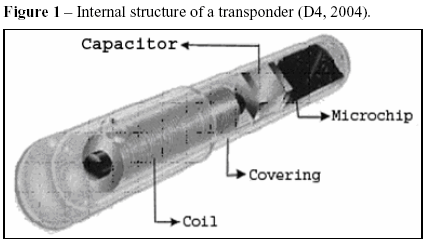
The transponders (see Figure 1) are small devices with an internal microchip, a coil that can serve as an antenna, and optionally by other devices, such as for example a Global Positioning System for localization by satellite.
]]>
The electronic identification can also incorporate sensors capable of evaluating characteristics of the animal, such as variations in its metabolic state and temperature. This additional information can be of great use for the cattleman and help detect possible infirmities or when cows are in heat. (Tavares, 2002).
The electronic identification system can also function in conjunction with other devices, such as, for example, electronic scales, allowing the identification and weighing of the animals to be executed in a single operation.
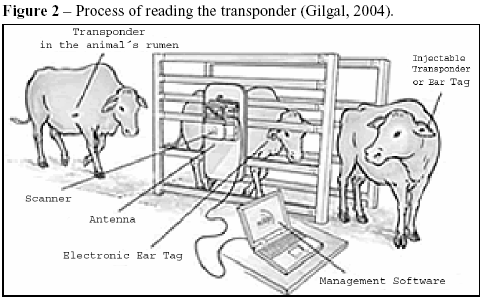
The transponders are read with another device, called a transceptor or scanner. This device issues radio waves that reach the transponder and trigger the coil, generating a small electric current and activating a microchip. This microchip then responds, also in radio waves, emitting the identification code recorded within it.
During the manufacture of the transponder, each microchip is individually registered and programmed to store permanently a single number or code, composed of 10 – 22 alphanumeric characters. (ADS, 2004).
The transponder developed by Embrapa is lined with porcelain or castor resin and has an anti-migration covering made of bio-compatible substances that will not leave a residue in the meat. They are also designed to be resistant and not to break upon impact or stress from daily handling (Tavares, 2002).
The transponder is implanted in newborn calves in the umbilical scar, taking advantage of the treatment that is normally conducted to treat the navel. In the case of adult animals, it is placed in the rumen. These locations for implantation were determined after an experiment conducted by Pires et al. (2001), which considered criteria such as: low incidence of infection, low mobility of the device, reduced chance of breakage and low rate of error during the transponder reading.
]]> In Europe the transponders are used in earrings, a practice which Embrapa researchers believe is not suitable for Brazilian cattle, because most are raised in pasture, and traditional forms of handling, such as lassoing, can damage the rings (Tavares, 2002).The transponder was constructed in accord with norms NBR 14766 and NBR 15006, which standardize the radio signal to allow its reading by Brazilian or imported devices. Once read, the identification code is automatically sent by the scanners to a computing system, where all the data referring to the animal is recorded, checked and updated (see Figure 2).
The transponder developed by Embrapa is awaiting patent, and is currently manufactured by the U.S.-based company Destron Fearing for a price of about US$ 3.3
The cost of the electronic identification and management system is high, although it is a system that allows fast control, when compared with other types of identifiers. In the experiment conducted by Ferreira & Meirelles (2002) an average of only one second was taken to read the transponder, while to read the earrings took about six seconds. In addition to the speed of reading, the precision of the transponder is also higher and the reading can be done even with the animal moving at a speed of 40 km/h.
It should be emphasized that these experiments were conducted in conditions close to ideal, or that is, there was no simulation of breakage or failure of the electronic devices. These factors, as well as the costs and speed of maintenance, should be considered in the evaluation of the cost benefit of this type of device.
One advantage that the technicians boast of is that the use of the transponder makes nearly inviable a certain type of fraud, the exchange of identifiers between animals, which in the case of earrings is easy to accomplish. Nevertheless, it should be emphasized that the code recorded in the transponder is different than the Sisbov code, and the relation between them is established by the information systems and the certifiers. That is, although it is difficult to exchange or remove a transponder from an animal, the codes can be easily manipulated in the software. It is evident that the registrations can also be altered by a specialist in computing.
]]> With these advantages in mind, it is important to take a broader look and consider more than the technology. The question of traceability should also be analyzed more extensively.The spheres of science and technology become interlinked with the social and political spheres, at a time when new hierarchies and classes are created. A new steer has entered the market in a separate category and comes to be sold as a "traced steer", more valuable than the non-regulated steer, now known as a "common steer". The animal gains a new identity, and is now recognized by a serial number or by records in a data base.
Our cattle farms come to be populated by cyborgs, by a hybridization of the body and technology that destabilizes the borders between the natural and the artificial and creates new identities, new social classes and hierarchies. As mentioned in Marques et al. (2004), commercial, industrial and government institutions wind up incorporating themselves in the bodies of the animals, not metaphorically, but literally.
The implant of a chip or transponder creates a new nature, forms new types of bodies, in a type of cyborgization that produces a new animal, which we will call CIBOV, the cybernetic bovine, constructing and being constructed by data bases and information systems.
It is as if our steers become true walking data bases or industrial artifacts, which receive serial numbers and are inserted in registration systems that allow isolating defects and discovering production errors.
Convergence and translation of diverse interests
Each actor involved in the construction or conception of a certain fact or artifact has a particular interest in this construction. These different interests may align and converge configuring what Bruno Latour (2000) calls the translation process.
In the case at hand, the translation of interests promotes an integration of the various actors who are components in the productive chain, making them allies in the construction of Sisbov, or that is, transforming them and allowing an equivalence and convergence of these diverse interests.
In this way, particular questions, such as how to receive more for a traced steer in the case of producers or new business opportunities in the case of certifiers, seek to associate themselves to larger questions, such as the health and well-being of the population or the participation of the country in international markets. It is interesting to note that these apparent questions are so solidly tied that to threaten the first, is apparently equivalent to threatening the later.
]]> We can say that the principal actors aligned in the construction of Sisbov are the cattle raisers who export meat (consequently, the meatpackers and the exporting industry), the government, the certifiers and the consumer. According to Euclides (2004), the principal focus of the certification systems are consumers and their increasing concern for food quality.We also see that there are important actors whose integration to Sisbov is still very precarious or inexistent. For these actors, new factors must appear and other interests converge that can link them to the system.
Producers geared for export
For cattle raisers aimed at exporting beef, entrance in Sisbov, in addition to being a legal requirement, became an imperative given the restrictions imposed by the developed countries, such as the European Union members. In addition, the amounts spent on certification tend to be diluted with the sale of the animals, given that certification aggregates greater value to the product. Beef from traced cattle is negotiated at prices 5% higher than meat from common steer. (Folha de São Paulo, 2005).
Brazilian government
The government is interested in gaining positions in the international market, with a consequent increase in exports. According to Euclides et al. (2002), the importance of the agro-food chains for the Brazilian economy has grown consistently and has, in recent years, been responsible for the equilibrium in the country’s balance of trade. In this context, meat is an important commodity, because we have the largest commercial herd in the world, with more than 195 million head of cattle (IBGE, 2005), with continuous growth over the years while the industry has become organized in a competitive manner. In the past decade, meat production grew an average of 30%, while exports grew more than 200% (Euclides, 2004).
Exports of unprocessed and industrialized beef grew 40% in 2003 alone, reaching US$ 1.5 billion. By weight, they totaled 1.4 million tons shipped principally to Chile, the Netherlands, Egypt, the United Kingdom, Italy, Saudi Arabia and Germany. This performance placed the country in first place in the world ranking in sales in the sector, passing Australia, the former leader in world trade in beef (Mapa, 2004).
The data presented in the graph (Figure 3) illustrate the changes in the international beef market from the year 2000 to 2005.
]]>
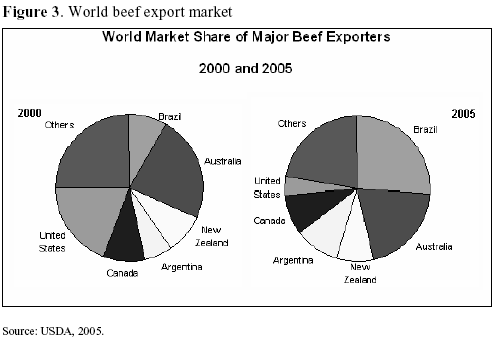
Australian beef exports have been stable for the past five years, hovering around 1.3 million tons. Brazil made a great leap in the international market, passing from nearly 500 thousand tons in the year 2000, to 1.6 million tons in 2004. This performance is principally due to the improvement in breeding and management techniques, to genetic improvements of the Brazil herd and also to a quite significant decrease in Canadian and U.S. exports, after the discovery of mad cow disease in these countries (USDA, 2005).
One of the factors that explains the reason that Australia has not taken better advantage of the space left by the Canadians and Americans, by increasing its beef exports, is the decrease in its cattle herd. Australian cattle is concentrated principally in the country’s southeast, a region of temperate climate with fertile lands4. The nation’s herd grew gradually from 1898 - 2002, when it reached 24.7 million. In recent years, intense periods of drought have caused this quantity to decrease 5.7%, reaching 23.3 million head in 2004 (ABS, 2005).
Approximately 65% of the 2.1 million tons of beef produced in Australia are destined for export, with Japan, South Korea and the United States the principal buyers (ABS, 2005). This percentage makes beef production in Australia highly vulnerable to fluctuations in the international market, such as those caused by the decrease in the consumption of meat in the United States and Japan due to mad cow disease. There was also a decrease in imports of meat by some other important markets such as the Philippines and Egypt, for cultural reasons and because of changes in consumption habits. Finally, there were consecutive rises in the Australian dollar that also affected exports (ABS, 2005).
The U.S. dollar, which was quoted at 1.99 to the Australian dollar in March of 2001, dropped to 1.27 by March of 2004. This variation represents a strengthening of the Australian currency by more than 60% in relation to the U.S. dollar (Borland, 2005).
Domestic consumption of beef in Australia has also fallen considerably since 1966-1967. In that year, per capita consumption reached 70 kg, stimulated by high production and low prices. Since 2002, domestic consumption has fluctuated from 35 kg - 36 kg per inhabitant. The reasons for this change of habit among Australian consumers include new cultural influences, new health recommendations, changes in relative prices between different types of food and propaganda not favorable to the consumption of red meat (ABS, 2005).
Certifiers
For the certifying companies, Sisbov represents business opportunities, given that the animals must be traced. In addition, the greater proximity with the producers and breeders facilitates the sale of other technologies and other information systems, such as systems for financial management of farms and herds.
This is also one of the interesting aspects of Sisbov, because it has been contributing to the computerization of the Brazilian cattle sector. The large majority of certifiers developed on their own or purchased from Brazilian partners the software for the operationalization of the activities required by Sisbov. Much of this software has additional functions such as control of stock of inputs, control of machinery, income and expenses, allowing the cattle raiser fast and precise access to information about his farm and facilitating decision making.
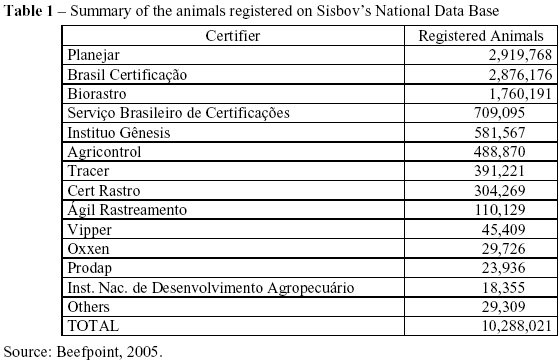
]]> By November 2003 the National Data Base registered nearly 10.3 million animals. Each day an average of approximately 25 thousand animals enter the system. Since March 2002, there have been a few spikes of inclusion as in mid July 2003, when on one day 300,000 head entered the system (Beefpoint, 2005).It is easy to gauge the size of the market for the certifiers. If we consider that the producer is charged an average of R$ 3,00 for each animal traced with an earring, which is the method used in the large majority of cases, we can calculate that in the first two years of Sisbov’s operation the certifiers earned R$ 30,9 million. Moreover, this is only one component of their income, given that producers not only have to pay an annual fee and a registration rate to the system, but also wind up having to improve the technology in their businesses, and contract services for development and maintenance of software for management from the certifiers themselves.
Table 1 below shows that the three leading certifiers in number of animals on the data base in 2003, were, respectively, Planejar with 2.92 million certified animals; Brasil Certificação with 2.88 million, and Biorastro with 1.76 million.
Consumers
The quality and the security of foods is the principal interest of consumers, above all of those in the developed countries such as Europe and Japan, especially after the rise of mad cow disease and the dioxin crises (Euclides, 2004).
The trinomial health-environment-price is constantly balanced at the time of purchase, with a clear trend toward favoring food of good appearance, with no preservatives, produced without toxic chemicals and without risk to the environment (Euclides, 2004).
]]> This has led consumers to demand the traceability of food along the production chain, requiring that the process be as transparent as possible. These facts constitute one of the principal guiding elements of the creation of new sanitary and agricultural policies.It is worth emphasizing that a demanding consumer is willing to pay more, which unfortunately, is not the case of most Brazilian consumers, who, hampered by poverty, can only opt for the cheapest beef.
Studies conducted by Souki (2003) in Belo Horizonte and by Brisola et al. (2003) in Brasilia show that nearly 70% of consumers interviewed consider price one of the most important factors in the purchase of beef. The study by Brisola et al. (2003) also shows that the large majority of those interviewed (91%) do not understand the term "traceability".
Small cattlemen and milk producers
Using the terminology of Bruno Latour (2000), we can say that one of Sisbov’s weak links is the small cattlemen, in particular those from the dairy sector. For many of these producers, it can be difficult to garner the resources needed to enter and remain in Sisbov, given that for milk there are practically no policies or incentives in Brazil that would increase the income of producers inserted in traceability and certification programs.
Milk is produced by the animal during its entire productive life, unlike beef, which is the final product of the slaughtered animal. Since traceability, in its conception, involves the control of movement of the product along the production chain, it is necessary to monitor not only the animal, but principally the milk. Sisbov for dairy cattle only provides information about the animal.
The truth is that dairy farming has never been well characterized within Sisbov, which was initially created with a clear concern for guaranteeing the entrance of Brazilian beef into international markets. That is the principal focus has been on cattle raisers, in particular those geared for export. To illustrate this idea, it is worth mentioning that the Agricultural Minister at the time of Sisbov’s launching, Marcus Vinícius Pratini de Moraes, is now president of the Brazilian Association of Beef Exporting Companies (Abiec).
Problems and questions
Sisbov presents great challenges for the government, principally concerning entrance into the system of small cattle raisers. One of the large difficulties is related to the low profitability of cattle raising for small dairy farmers for whom the costs with certification and tracing are prohibitive. This can push them to become clandestine or even give up dairy farming for another agricultural activity.
]]> There is a clear trend toward only the most competitive producers, or that is, the most specialized and who are able to produce more - those who have more land - being able to produce at higher quality and lower costs. These producers have better access to technology and capital and therefore dominate the cattle market. There has been a gradual replacement of traditional farmers by rural businessman.Table 2 shows that from 1999 - 2002 the number of dairy producers related to the 15 largest dairy companies in the country grew 31%.
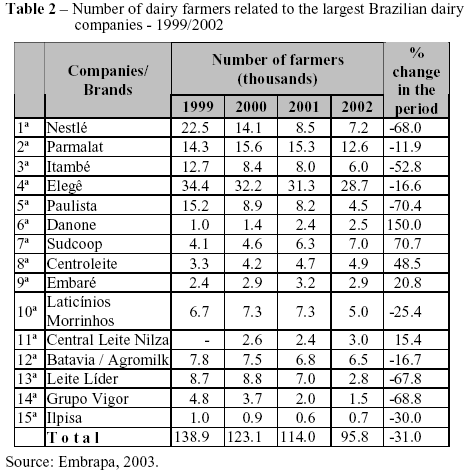
Data for the period from 2001-2002 (Embrapa, 2004) allow comparing the decrease in the number of farmers with an increase in milk production, allowing the conclusion that there was a clear concentration of milk production.
This concentration can bring risks to the population, such as: a greater rise in the cost of milk in light of eventual pressure from large producers; or market instability, because large producers have greater mobility, or that is, a cattle raiser may decide to give up cattle to raise soybeans, depending on the financial return of each activity.
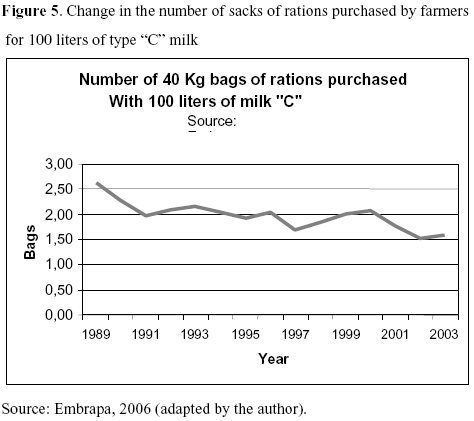
The graphs in Figures 4 and 5 clearly illustrate how over the years the profitability of milk producers has been systematically falling - with Sisbov another additional cost - which can accentuate the declining number of these producers.
]]>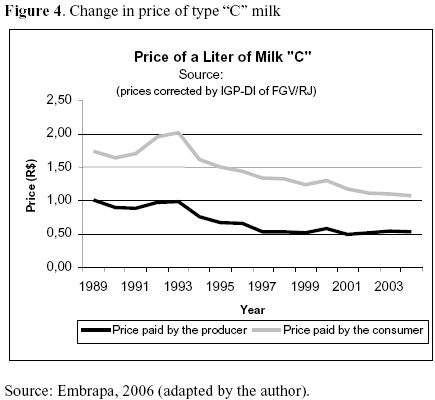
The first graph (Figure 4) shows that the corrected price received by the producer for a liter of type "C" milk has increased over the years, as well as the corrected prices paid by the consumer. These numbers reflect, in part, the greater supply of the product, given that milk production rose from 14.1 billion liters in 1989 to 23.5 billion liters in 2004 (Yamaguchi & Carneiro, 2002).
It may appear contradictory to have, at the same time, higher production and a decrease in the number of producers. In addition to concentration, this can be explained by the continuous improvement of productivity in national herds (Martins, 2004). According to Alvim & Martins (2004), productivity (liters of milk/cow/year) grew 0.7% from 1998 - 2000, and 1.5% from 2001 - 2003.
The second graph (Figure 5) even more clearly demonstrates that the profitability of milk production has been decreasing, tracing a comparison of change of price received by the producer for type "C" milk with the change in prices of rations, one of the major costs faced by the dairy farmer.
]]> In addition to the marginalization of the dairy farmer, principally the small farmer, the advantages of Sisbov in terms of prices must be seen in relative terms for beef producers as well. The reference market price, which until recently was the price of the "common steer", is little by little being transferred to that of the "traced steer", or that is, little by little what is seen in the market is no longer a "traced steer" with a higher price but a "common steer" with a lower price. Thus, instead of earning more for quality, those who are not certified are penalized (Franco, 2004).Due to these problems, many farmers and trade associations consistently defend that Sisbov registration should not be mandatory, arguing that the market should be left to regulate the farmers.
In November of 2004, during the inauguration of the 13th Expomilk fair in São Paulo, Minister of Agriculture Roberto Rodrigues admitted that he made an error at the beginning of his mandate, by expanding Sisbov without improving its operational mechanisms. The minister emphasized that the system should not be used to penalize the cattlemen. This position, assumed publicly by the minister, hinted that Sisbov could become non-mandatory, although this was not said directly (Franco, 2004).
In June 2004 Minister Roberto Rodrigues created a working group on traceability, composed of representatives of Embrapa, CNA, Sociedade Rural Brasileira, the Agricultural Commission of the federal congress, the National Forum of Agricultural Secretaries, the Association of Beef Exporting Companies and the Brazilian Meatpackers Association. This group presented a report during a meeting of the Consultative Committee of Sisbov on October 21, 2004, requesting that adhesion to the system be voluntary, with only one opposing vote, that of the Secretary of Agricultural Defense of MAPA.
Soon after, on Oct. 28, 2004, the publication of Normative Instruction 77 made clear that Sisbov would be weakened, lowering the minimum period of permanence in the National Data Base for animals destined for export to only 40 days.
As a result of these conflicts the government resolved, at least temporarily, to abolish mandatory entrance in Sisbov for all cattlemen. According to Normative Instruction 1, as of January 1, 2005, only cattlemen involved in export would be required to certify their animals.
This measure mitigated in large part the negative impacts caused by Sisbov, but it is certain that to the degree that Brazilian milk and its derivatives advance in direction of the international market, they as well as beef, will have to be inserted in certification and tracing programs by requirements of the new sanitary barriers that could be created at any moment. The growing importance of dairy exports is indicated by the fact that Brazilian exports of milk and dairy products in 2003 reached 44.4 thousand tons, a 10.8% growth in volume and 20.5% in value when compared with the previous year (Costa, 2004).
This chart indicates that the government, if it also wants to place dairy cattle within Sisbov, would have to review some of its mechanisms and operating criteria to better characterize and define the traceability of milk.
Conclusions
]]> All of these disagreements concerning Sisbov indicate its at times unstable character and show that a continuous consideration of the various interests involved is needed so that there can be a convergence of all the actors. This involves a dynamic process of alignment and "translation"; and clarification of interests, which at times are divergent and generate debates and controversies. It is evident that Sisbov is still undergoing a process of construction and improvement.On one hand, it is important to recognize that Sisbov allows the rise of dozens of new companies (the certifiers), the development of new information systems and new devices for the identification of livestock. It also facilitated a greater approximation of cattle raisers inscribed in Sisbov with new technologies and the affirmation of Brazil in the international market as a large producer of beef, in volume and quality (Lima et al., 2005b).
Another issue that calls attention to Sisbov is its potential for control. Control not only of the cattle herd, but of the potential that the tool has to control cattle raisers.
All of Sisbov’s architecture, composed of the identifiers, scanners and data base, has the capacity not only to better regulate the Brazilian cattle herd, but also the breeders and farmers. In this sense, Sisbov’s potential for control is enormous, to the degree to which all movement of animals is registered, as well as their handling, so that indirectly all of the economic activity of the farmers is also monitored.
In the data bases of the certifiers and very probably that of the National Data Base of the Ministry of Agriculture, all the information related to each animal is registered as well as some information about the rural properties. It is thus not difficult for the government to have a map of the economic activity of the cattle raiser, including the size of the herd, the number of animals bought and sold and the type of rations and vaccine consumed.
Accessibility to a data base of this type, which contains all the information about the Brazilian herd, can represent a risk to the producer and to the population in general, since it can be used for speculative actions in commodities markets and even for definition of policies and strategies that do not necessarily favor either the cattle raiser or the population. The minimum precautions that should be taken include provision of solid guarantees of secrecy, similar to bank classification. It is clear, that nothing can completely guarantee that the information will not fall into the wrong hands.
The fact is that with Sisbov the producer comes to be part of a technology chain of which he does not have complete control, control that can be used either beneficially or harmfully. We can imagine hypothetical situations, such as, for example, a grave food crises with a lack of supply and shortage of food, in which the government decided to confiscate animals. With Sisbov it would be much easier to locate and determine the size of the herds to conduct this confiscation.
Brazil passed through a similar situation in 1986, at the time of the Plano Cruzado economic policy, when producers refused to slaughter animals in order to put pressure on the prices that had been frozen by the government. At the end of April 1986, the first signs of the problems of the Cruzado Plan began to appear, such as disrespect for the frozen prices, a lack of supply and disagreements among members of the economic team. In May, lines were found throughout the country of consumers seeking products that disappeared from the shelves of stores and supermarkets. In June of that year the government declared war on the cattle raisers, ordering the confiscation of cattle.
Another issue in this process of construction of Sisbov is the tension between the need for insertion in a globalized market and resistance to this insertion, or that is, it has generated a series of divergences and debates based on the option for the international market, instead of a focus on the domestic consumer market.
It is also worth mentioning that Sisbov could be an important tool for restricting access to markets in developed countries. Through increased sanitary requirements or the establishment of new requirements concerning feed or certain characteristics of the animals, it would be possible to prohibit access to these markets. Sisbov, by allowing better identification and characterization of the animal, could become an important tool in the construction of these barriers.
]]> We can, for example, imagine that with the release for planting and sale of some genetically modified (GM) foods in Brazil, such as soy and corn, there may be cattle rations made with these types of grains. In a hypothetical situation, the European Union could prohibit the importation of GM foods and also the meat of animals fed with GMs as it did in the past with animals created with steroids and growth hormones (Tonsor & Schroeder, 2004). In this case, Sisbov could be used as an instrument to locate and identify these animals, exactly for a purpose inverse to its conception, which was to guarantee export.The reasons that led the Ministry of Agriculture to authorize private companies to operate as certifiers, instead of leaving this role to the state secretaries of agriculture, must still be determined. It is also not known if livestock will truly be monitored or if what is sought is only their certification for export.
Some of these questions have been discussed by the Europeans, the main purchasers of Brazilian beef. In the second half of 2004, a European commission came to Brazil to evaluate Sisbov and test the system. Various requests for changes, adjustments and additional demands were made in the report it presented to the Ministry of Agriculture (DE/Sanco/7185/2004). The concerns were related to nonconformities and doubts about the traceability and certification systems, such as, for example, the absence of a registration for exporting properties, deficiencies in the control over movement of livestock and inconsistencies in the National Data Base.
Since then, various actions have been taken by MAPA to meet the European requests. One of them calls for the State Agencies of Agricultural Defense to be integrated into the system, because they are the agencies responsible for inspection and control of the transit of animals.
It is yet to be seen if the state sanitary agencies are prepared to control the transfer of animals. This measure can be hampered by the lack of personnel and by the low level computerization of most of these agencies, which remain over burdened with the responsibility of inspecting and controlling the transfers of animals.
Another measure that should be adopted by the end of 2006 is the registration of properties permitted to export beef. Producers of beef cattle and buffalo, the meat of which will be destined for export, will have until December 31, 2006 to prepare for the new rule. In these so called "approved establishments", 100% of the animals must be identified. Animals born on the property should be identified by the time they are weaned. If the identification is made after this date the properties will have their animals declassified for export, even if identified previously be Sisbov.
Failure to adopt these measures could raise a series of obstacles to Brazilian beef exports, creating grave consequences not only for the cattle raisers and exporting meatpackers, but for the entire Brazilian production chain.
This perspective is very clear when one reads portions of a speech given by Michel Scannell, technician of DG-Sanco (General Direction of Health and Consumer Protection of the European Union) upon the delivery of its auditing report of Sisbov. In the speech, published by Franco (2005), Scannell affirmed that the European union always treated some agrarian issues in Brazil with flexibility, such as hoof and mouth disease, despite the opposition of its own producers who regularly call for greater restrictions on Brazilian exports. Nevertheless, he emphasized that it is important for Brazil to present a level of food security equivalent to the food produced in Europe and improve Sisbov so that it becomes truly efficient. If not, Brazil can not be maintained as a supplier of beef to the European Union.
This scenery reveals the fact that the European Union was always present in the construction of Sisbov, not only as a factor in the adoption of this new form of coordination of the beef production chain, since the demands in 2000 for traced products, but also as a key actor in the current phases of its redefinition, by means of repeated audits and demands for adjustments and improvements to the system.
]]> Bibliographic References
ABS. "Australia's beef cattle industry". Australian Bureau of Statistics, 2005. <www.abs.gov.au/Ausstats/abs@.nsf/0/29550F34FEE00FC5CA256F7200832FDA>. Accessed on 5/20/2005. [ Links ]
ADS. "VeriChip Overview", 2004. Applied Digital Solutions. <www.adsx.com>. Accessed on 11/12/2004. [ Links ]
Alvim, R. S., Martins, M. C. Desafios nacionais da cadeia produtiva do leite. In: Zoccal, R., et. al. (eds), Leite: uma cadeia produtiva em transformação, 1 ed., capítulo 1, Juiz de Fora, Embrapa, 2004 [ Links ]
Beefpoint. Sisbov divulga lista de animais incluídos por estado e certificadora. Beef Point. <www.beefpoint.com.br/bn/girodoboi/artigo.asp?nv=1&id_artigo=16477&area=1>. Accessed on 3/17/2005.
Borland, J. The determinants of the $US/$AUS exchange rate: Case Study, Department of Economics, University of Melbourne, Melbourne, Australia, 2005. [ Links ]
Brisola, M. V. et al. O interesse do consumidor da cidade de Brasília a respeito da rastreabilidade de carne bovina. IV Congresso Internacional de Economia e Gestão de Redes Agroalimentares, Ribeirão Preto, SP, out. 2003. [ Links ]
Costa, C. N., Filho, K. E. "Identificação Animal e Rastreamento da Produção de Bovinos de Corte e de Leite". Workshop Agrosoft 2002: O Agronegócio na Sociedade da Informação, 59, Brasília, abril, 2002. [ Links ]
Costa, C. N. "Rastreabilidade da Produção de Bovinos". Primeiro Seminário Nordeste Rural, Aracaju, maio, 2004. [ Links ]
D4, O Microchip. D4 Identificação Animal Ltda. <www.d4microchip.com.br/microchip.htm>. Accessed on 11/10/2004.
]]>Espírito Santo, E., Medeiros, J. X., 2003, "Coordenação e qualidade na cadeia da carne bovina: o caso da exigência da rastreabilidade". IV Congresso Internacional de Economia e Gestão de Redes Agroalimentares, Ribeirão Preto, SP, out. 2003. [ Links ]
Embrapa. "Número de produtores das maiores empresas de laticínios no Brasil-1999/2002". Empresa Brasileira de Pesquisa Agropecuária. <www.cnpgl.embrapa.br/producao/04industria/tabela04.03b.php>. Accessed on 3/15/2005. [ Links ]
Embrapa. "Quem é quem na indústria de laticínios". Empresa Brasileira de Pesquisa Agropecuária, 2004. <www.cnpgl.embrapa.br/producao/04industria/tabela04.08.php>. Accessed on 5/15/2005. [ Links ]
Embrapa. "Indicadores de Preços e Índices Econômicos". Empresa Brasileira de Pesquisa Agropecuária. <www.cnpgl.embrapa.br/indicadores/index.php>. Accessed on 1/20/2006. [ Links ]
Euclides, F. K. "O papel do rastreamento e da certificação em sistemas de produção sustentáveis". In: Zoccal, R. et al. (eds), Leite: uma cadeia produtiva em transformação, 1 ed., cap. 19, Juiz de Fora, MG, Embrapa Gado de Leite, 2004. [ Links ]
Euclides, F. K. et al. Cadeias produtivas como plataformas para o desenvolvimento da ciência, da tecnologia e da inovação. Campo Grande, MS, Embrapa Gado de Corte, 2002. [ Links ]
Ferreira, L. C. L., Meirelles, M. B. Avaliação da eficiência de quatro métodos para identificação de bovinos. Monografia, UFMS, 2002. [ Links ]
Franco, M. Sisbov entra em nova fase e aguarda definições. Revista DBO, n. 289, nov. 2004, p. 14-15. [ Links ]
Franco, M. Ultimato da União Européia sacode o Sisbov. Revista DBO, n. 297, jul. 2005 p. 25. [ Links ]
Gilgal. "Sistema Biochip: Identificação eletrônica e rastreamento animal", 2004. <www.gilgal.com.br/biochip/biochip.htm>. Accessed on 4/15/2004. [ Links ]
Folha de São Paulo, "Indicadores Econômicos", jornal Folha de São Paulo, 7/1/2005, p. B5. [ Links ]
IBGE, 2005 "Pesquisa Pecuária Municipal". Instituto Brasileiro de Geografia e Estatística, 2005. <www.sidra.ibge.gov.br/bda/acervo/acervo2.asp?e=v&p=PP&z=t&o=12>. Accessed on 3/15/2005. [ Links ]
Instrução Normativa. Dipoa. Departamento de Inspeção de Produtos de Origem Animal. Secretaria de Defesa Agropecuária, MA, 2002. <www.agricultura.gov.br/das/dipoa/normativa01.htm>. Accessed on 11/3/2004.
Latour, B. Ciência em Ação. São Paulo: Unesp, 2000. [ Links ]
Lima, V. M. B., Borstein, C. T., Cukierman, H. L. Cybov: o bovino cibernético. A criação do sistema brasileiro de rastreabilidade da produção pecuarista. In: II Jornada Latino Americana de Jovens Pesquisadores em Ciência, Tecnologia e Sociedade, Anais..., Blumenau, abril, 2005a. [ Links ]
Lima, V. M. B., Borstein, C. T., Leite, J. L. B. A criação do programa brasileiro de rastreabilidade da produção de bovinos e a informatização da pecuária. In: XLIII Congresso Brasileiro de Economia e Sociologia Rural – Sober, Anais..., Ribeirão Preto, jul. 2005b. [ Links ]
Mapa. "Agronegócio Brasileiro: Uma oportunidade de investimentos". Ministério da Agricultura, Pecuária e Abastecimento, 2004. <www.agricultura.gov.br/portal/page?pageid=36,477071&_ad=portal&_schema=PORTAL>. Accessed on 9/5/2004. [ Links ]
Marques, I. C., Cukierman, H. L., Mendes, P. S. P., et al., 2004, "The War of the Fingerprints", 4S & EASST Conference, Paris, França, 25-28/8/2004. [ Links ]
Martins, P. C. Políticas públicas e mercados deprimem o resultado do sistema agroindustrial do leite. Juiz de Fora, MG, Embrapa Gado de Leite, 2004. [ Links ]
OIE. "Lista de los países libres de fiebre aftosa". Organização Internacional de Epizootias, 2004. <www.oie.int/esp/info/es_fmd2002.htm>. Accessed on 8/30/2004. [ Links ]
Padilha, T. Encefalopatia Espongiforme dos Bovinos: A doença da vaca louca. In: Fórum de Discussão Sobre a Doença Encefalopatia Espongiforme dos Bovinos. Relatório Técnico. Embrapa Gado de Leite, Juiz de Fora, MG, mar. 2002. [ Links ]
Pires, P. P., Vaz, E. C., Gomes, F. C., Sabion, A, G. "Determinação de local ideal para a implantação de transponder subcutâneo para a identificação eletrônica de bovinos". IV Congresso Brasileiro de Buiatria, Campo Grande, MS, nov. 2001. [ Links ]
Siqueira, K. B., Gomes, S. T. "A década de 90 e suas conseqüências no setor lácteo". In: Congresso Brasileiro de Economia e Sociologia Rural, 41, Anais..., Juiz de Fora, jul. 2003, p. 54. [ Links ]
Souki, G. Q. Estratégias de marketing para os agentes da cadeia da carne bovina, Ph.D. Thesis., Univ. Federal de Lavras, Lavras, MG, 2003. [ Links ]
Splice. "Rastreabilidade Eletrônica". Grupo Splice, 2005. <www.splicetag.com.br>. Accessed on 11/8/2005. [ Links ]
Tavares, T. "O desafio da carne brasileira". Embrapa Gado de Corte, 2002. <www.cnpgc.embrapa.br>. Accessed on 11/ 11/2004. [ Links ]
Tonsor, G. T., Schroeder, T. C. Australia’s Livestock Identification Systems: Implications for United States Programs. Risk & Profit Conference, Manhattan, Kansas, EUA, aug. 2004 [ Links ]
USDA. World Beef Trade Overview, 2005. <www.fas.usda.gov/dlp/circular/2005/05-04LP/beefoverview.html>. Accessed on 5/5/2005. [ Links ]
Yamaguchi, L. C. T., Martins, P. C., Carneiro, A. V. Produção de leite no Brasil nas três últimas décadas. In: Gomes, A. T., Leite, J. L. B., Carneiro, A. V. O agronégocio do leite no Brasil, Juiz de Fora, Embrapa, 2001. [ Links ]
Yamaguchi, L. C. T., Carneiro, A. V., Martins, P. C. Custo da produção de leite: abrindo a caixa preta. Curvelo. Embrapa, 2002. [ Links ]
1 The disease in humans is known as Creutzfeldt-Jakob disease and also has no known treatment. Contamination is caused by ingestion of the meat of animals with the disease.
2 The term transponder, a combination of the words transmitter and responder, is generally used in satellite communications and in systems for location, identification and navigation.
3 It would be interesting to verify, at another opportunity, the routes that led Embrapa to conceive of an artifact and then find it necessary to develop it in the United States and not in Brazil.
4 Only 10% of Australian territory is farmable, with 70% of the country being arid or semi-arid.