Incorporando o desenvolvimento sustentável aos projetos de carbono florestal no Brasil e na Bolívia
Peter MayI; Emily BoydII; Manyu ChangIII; Fernando C. Veiga NetoIV
IPeter May is a professor at the Federal Rural University of Rio de Janeiro, Graduate Program in Development, Agriculture and Society – UFRRJ/CPDA (peter@rebraf.org.br)
IIEmily Boyd is a researcher at the Tyndall Centre for Climate Change Research, UEA, Norwich NR4 7TJ, UK
IIIManyu Chang is advisor to the Secretaria de Meio Ambiente e Recursos Hídricos, Rua Desembarcador Motta, 3384, Mercês, Curitiba, Paraná, CEP 80430-2
IVFernando C. Veiga is a program officer, Atlantic Forest Office, The Nature Conservancy, Alameda Augusto Stellfeld, 1671 apt. 101, Bigorrilho, Curitiba, Paraná, CEP 80730-150
ABSTRACT
Can the Clean Development Mechanism (CDM) bring local sustainable development benefits to low-income communities? CDM carbon forest projects may displace local peoples; plantations may cause environmental damage. But ‘win-win’ outcomes addressing both carbon emissions reductions and poverty alleviation may exist. Empirical findings from Brazil and Bolivia illustrate that pilot schemes had only limited sustainable development benefits. Top-down and with inadequate local stakeholder participation, they faced a number of barriers to sustainability. But they offered valuable learning opportunities, insights for future projects. Guidelines are offered for integrating socio-economic concerns in global environmental projects.
Key words: CDM, forests, stakeholders, participation.
RESUMO
O Mecanismo de Desenvolvimento Limpo (MDL) pode promover o desenvolvimento local sustentável? Projetos de carbono florestal podem deslocar povos e plantações florestais e causar danos ambientais. Mas é possível encontrar resultados que tanto reduzem emissões de carbono quanto aliviam a pobreza. Estudos empíricos no Brasil e na Bolívia ilustram como projetos-pilotos tiverem resultados limitados em termos de sustentabilidade local. Os seus processos decisórios verticais, sem participação adequada de grupos locais, constituíram-se em barreiras, mas os projetos ofereceram também oportunidades valiosas para aprendizagem, úteis para experiências futuras. O trabalho fornece orientações para integrar variáveis socioeconômicas em projetos ambientais globais.
]]> Palavras-chave: mudança climática; florestas; atores; participação.
Introduction
Progress toward sustainable development is often considered incompatible with efforts to combat global warming, but recent efforts have shown that these objectives can and should be linked (Swart et al, 2003). In Article 12 of the Kyoto Protocol - the Clean Development Mechanism (CDM) - projects are expected to be selected so as to simultaneously meet global concern to reduce emissions and national sustainable development needs, but this objective is yet to be implemented in practice. The CDM, one of the Protocol’s so called flexibility mechanisms, foresees that developed countries and economies in transition can acquire carbon credits generated through projects implemented in developing countries to meet part of their greenhouse gas emissions reduction commitments in the first commitment period (2008-2012). Carbon credits generated by such projects are to be based on the net greenhouse gas emissions (derived from the difference between a scenario "with" and "without" the project), primarily by fuel substitution or absorption in terrestrial sinks (that is, in forests or other land uses that ensure permanent fixation of carbon in ecosystem components).
In response to growing global concern over climate change and tropical deforestation, land use, land-use change and forestry (LULUCF) projects were initiated in developing countries under the UN Framework Convention on Climate Change (UNFCC) prior to adoption of the Kyoto Protocol. Some such projects were specifically called Activities Implemented Jointly (AIJ), permitting cooperation between developed and developing countries.1 Such AIJ projects and other "early start" initiatives that occurred since the beginning of discussions over implementation of the Protocol involved multi-stakeholder partnerships between international investors and conservation organisations, national governments, project developers, and private investors. They became engaged in such schemes primarily with the view that certified emissions reductions (CERs) would eventually be traded on a global market as carbon credits. Such project frameworks are expected to be emulated by the CDM projects once Kyoto was ratified.2 They were also hoped to redound in benefits for low income communities, their executors, financiers, as well as global society (Smith and Scherr, 2002).
The results encountered in our study suggest that the envisioned socio-environmental benefits of LULUCF project outcomes might in fact be illusory, and that the links between climate policy and local sustainable development remain poorly understood in practice. In reality, in some cases, projects encountered stakeholder resistance particularly when they placed social benefits secondary to carbon and biodiversity benefits. The implications for climate policy could be considerable, particularly as regards issues of accountability, legitimacy, and equity between local and global participants. For example, local participants may have less capacity to articulate their priorities in such a market. We argue that project developers and investors need to contend with issues of local context, interests and risks, and that to overcome these barriers requires that these be anticipated within flexible project designs.
The paper begins with a brief review of the literature and adopted methodology. It then turns to review the results found in four pilot forest carbon projects in Brazil and Bolivia, examined in depth through fieldwork. The final section of the paper provides some generic criteria that could help to guide policy makers and project developers to take into account the direct and indirect social benefits that projects should provide to comply with national sustainable development, as stipulated under Article 12 of the Kyoto Protocol.
Conceptual framework
]]> Increasingly scholars suggest that global climate policy (both in terms of adaptation to climate change as well as to its mitigation) might not respond to local development issues or address vulnerability of local community groups in developing countries (Paavola and Adger, 2002; Adger et al., 2003; Brown et al., 2004). In particular, they warn of the potential impacts that emissions trading may have on local communities, such as possible displacement of activities exercised by local community groups or of the communities themselves with creation – as part of carbon offset projects -- of exclusive conservation units (Boyd, 2003). Similarly, other authors have emphasized that carbon markets can result in an inequitable distribution of benefits among participants (Brown and Corbera, 2003). Some civil society groups call attention to the threats and risks to human and environmental systems implicit in carbon credits that might stimulate forest plantation expansion. These impacts are commonly associated with large scale forest monoculture plantations (Kill, 2003).To address this problematic, this paper sets out, through empirical research on four pilot projects in Latin America, to explore the issue of how forest carbon projects may in fact benefit low income populations.3 The following three key questions were raised:
• What are the local sustainable development benefits of carbon forest projects?
• Who participates in these schemes?
• What are the impacts of such schemes?
To address these questions, the paper frames empirical evidence within literature on sustainable development, corporate socio-environmental responsibility and stakeholder participation in natural resource management. Each set of literatures is succinctly summarized below.
Sustainable development
The concept of sustainable development was given universal credence as a result of global consensus emerging with the Brundtland report in 1987 (WCED, 1987). Adoption of this principle was also incorporated in Article 12 of the Kyoto Protocol, which states that CDM projects should contribute to the sustainable development of a host country, according to each nation’s domestic criteria for such development.
Despite adopting the sustainable development concept in the CDM, sustainability remains a broad concept, which may be interpreted differently depending on the perspective, political position, and commitment of particular stakeholders. The central idea of sustainable development as advocated by the landmark Brundtland report is that development and environment cannot be separated; they are interdependent parts of the same issues. Development cannot be sustainable if the resource based deteriorates over time: "care for the environment is not a goal per se but rather a means to makes possible long-term development so that living standards in societies may be improved" (WCED, 1987). Social equity and economic progress are thus combined with environmental protection as three pillars of sustainability. As the three pillars are interlinked dimensions of sustainable development, they need to be present together; one dimension cannot compensate for the other at the cost of failing to attain sustainability in the long term.
]]> The link between poverty and environment is paramount in policies for sustainable development, whereby not only are consumption patterns of the rich indicated as targets for adaptation to emerging scarcities, but poverty itself is perceived as a root cause of environmental degradation. This led the WCED commissioners to conclude that economic growth is needed not only to raise overall living standards, but also to give society the capital and tools to solve environmental problems. In this regard, the sustainable development concept suggests that technology and social organisation be put to the task of promoting economic growth within the constraints of ecological limits and absorption capacity. It is also recognised that economic growth in itself does not ensure poverty reduction. Progress and poverty coexist. Social equity is flagged as a key element in sustainable development, and associated with the empowerment and effective participation of citizens and of their communities in decision-making. Without questioning the structural distribution of resources in the capitalist system, the concept of sustainable development was adopted as a market convention in part because it redefined the role of production and growth by incorporating the element of time. Sustainable development thus "meets the needs of the present generation without compromising the ability of the future generations to meet their own needs".Despite the fact that the concept of sustainable development includes poverty alleviation as a major requirement to achieve sustainability, very often poorest groups are left behind. This may in part be due to the ambiguity on the part of environmental groups and public agencies that often perceive the poor as a causal factor in environmental degradation ("blaming the victim"). This exclusion may also be owing to the fact that poverty results in a lack of political capacity, social inertia, and information networking that would enable the poor to fend for themselves.
Corporate social responsibility
The CDM and emissions trading are perceived as essential components for companies to respond to international and national demands that they address greenhouse gas emissions. Companies are increasingly hopeful that market mechanisms will provide incentives necessary to internalize the costs of control (Kolke and Pinkse, 2004). They are also increasingly adopting corporate social responsibility principles driven by standards such as ISO 14001 or national legislation requiring environmental and social impact assessment. Some companies take action on climate change based on their overall commitment to sustainable development or objective to become "corporate citizens". Strategic alliances also appear as an important motivating factor for private companies, underpinned by a trend to foster partnership agreements between companies, governments and NGOs (ibid, 2004).
Governments in Latin America have become more and more open to the idea of substituting their former leadership with private sector partnerships, divesting publicly held assets particularly in the energy and transports sectors. As a result, private entities have seen it necessary to take on a quasi-government role (May et al., 1999a).4 Experience of such partnerships, however, highlight that the prevailing corporate vision, in particular in energy resource development in the tropics, has emphasised immediate financial gain over long-term financial benefits. Private companies are frequently unsuccessful in providing social services to communities in an efficient way, for several reasons, including: lack of expertise in social development, services may be perceived by shareholders as unwarranted additional expense (i.e. they cannot justify expenses to their shareholders); and governments may deflect blame for local problems due to negligence resulting in project disruption, sabotage, delay, and failure (ibid, 1999a).
On the other hand, a successful local partnership can provide a business with a "license to operate", offering it credibility and assuring positive long-term relationships with its neighbors. These benefits go beyond qualitative factors, having the potential to minimize corporate risk of investment undertakings (Dabbs & Bateson, 2002).
As a consequence, there is a growing interest on the part of the private sector in associating itself with civil society in projects that seek to mitigate carbon emissions. The engagement of the private sector in climate related projects is often oriented by corporate social responsibility, national legislation and international standards.
Stakeholders
Carbon forest projects extend beyond the private-public partnership to include a range of local stakeholders, i.e. local actors with a stake in the project outcomes, including devolved project executors, scientists, negotiators, planners, and groups representative of local interests such as the municipal governments, labor unions and local communities. Companies are increasingly committing to partnerships with stakeholders that are reflected in the outcomes of investments.
Participation of local stakeholders in forest carbon projects can help to gauge how project objectives and processes are communicated and how local stakeholders are able to benefit from processes. In fact, identifying stakeholder preferences helps to make explicit the "winners and losers" in any process and to compare interests and power dynamics between target beneficiaries, i.e., the primary stakeholders, with secondary and tertiary stakeholders. This helps to determine which assumptions and omissions have formed the basis of any particular project.
]]> In the past, failure of development projects to adequately consult local stakeholders in project design and implementation led to costly social impacts. Consequently, analysts, managers, and financing agencies have begun to give greater attention to participation of local stakeholders (Chambers, 1983, 1994 a & b; Pimbert and Pretty, 1997; World Bank, 2002). Yet, projects are still often confronted by lack of adequate stakeholder engagement in decision making, as well as, unfair decision-making systems, absence of opportunities for changing decisions, and inadequate forms of decision making, such as evaluation of social impacts or lack of local representation. In the absence of mechanisms for participatory decision making, the issue of project accountability, legitimacy and equity could affect project sustainability as defined previously. The question is who stands to gain from these projects? Are local residents, organizations, or networks included in decision making and are projects transparent in the way they operate? These questions are appropriate for private investment projects whose impacts are felt on global common property resources, as is the case with the CDM.
Case Studies
The paper draws lessons from four case studies in Latin America: the Peugeot/ONF Project, Plantar Project, Bananal Island Carbon Sequestration Project in Brazil; and the Noel Kempff Project in Bolivia.5 As projects under review were at an early stage of implementation (0-5 years) at the time of the research, and activities were still in a dynamic process of adaptation, the impact on local communities was thus far limited making it necessary to make predictions.
The research reported below grounds its analysis on the idea that stakeholders have contributions to make in projects that will redound in local development, in the expected outcomes from initial project design, and reasons for change in projects’ direction. The research scrutinizes the perspectives of various beneficiaries’ at different levels, and analyses the impacts within a temporal framework (short- and long-term outlook). Primary data was collected by the authors through approximately 100 stakeholder semi-structured interviews in 2001 and 2002. The interviews intended to capture on the one hand different stakeholder’ standpoints vis-à-vis the project and their opinion on how benefits could be enhanced or adverse impacts ameliorated (Gregory and Wellman, 2001; Grimble and Wellard, 1997). At the same time information from both project beneficiaries and non-beneficiaries served to validate data on implementation of activities supplied by project developers. Contributions to rural livelihoods were largely assessed in terms of perceived contributions to local or community development activities and triangulated with real financial and distribution of benefits among local groups. Participation of stakeholders was assessed in terms of involvement in decision making in the project design, direction, and the contributions to institutional capacity.
The following section describes the policy context, projects and their locations. (A more detailed description of case studies can be found in May et al., 2004).
Policy context
Climate change and specifically those activities associated with land use and forests (LULUCF) are of increasing importance to Brazil and Bolivia even before their signing of the Kyoto Protocol. Although Brazilian government negotiators opposed the use of sinks in the international climate change policy and express aversion to the inclusion of certain forestry activities in the CDM, they have more recently been forced to admit that deforestation is the main source of green-house gas emission in Brazil (Brazil, 2004). Most deforestation is caused by the expansion of the agricultural frontier, mainly in the Amazon region (59% of net emissions from land use change), yet it is difficult to reliably measure emissions from clearing and burning of biomass in tropical forests. Scientists estimate a mean value of 120 metric tones of carbon (tC) per hectare for above-ground biomass stock, but this figure may vary substantially (ibid, 2004).
The potential for regulatory measures to succeed in reducing deforestation and protecting the environmental benefits that forests provide, such as carbon sequestration, have been limited in the tropics (May, 1999b). In response, innovative responses to conservation and carbon sequestration are emerging among civil society and producer organisation in many parts of Latin America. For example, Pagiola et al (2002) review a number of initiatives under which market-based mechanisms can provide incentives to conserve forests and at the same time contribute to new sources of income to support rural livelihoods. In Brazil, the ecological value-added tax a fiscal instrument that remunerates municipalities that protect nature and generate environmental services was adopted initially by the states of Paraná and Minas Gerais, and more recently implemented in parts of the Amazon as well (May et al., 2002). Yet, the potential to harness markets for global environmental services as a mechanism to generate local sustainable development benefits continues to be at an initial stage (Vitae Civilis, 2002; Landell-Mills and Porras, 2002).
Case study description and results
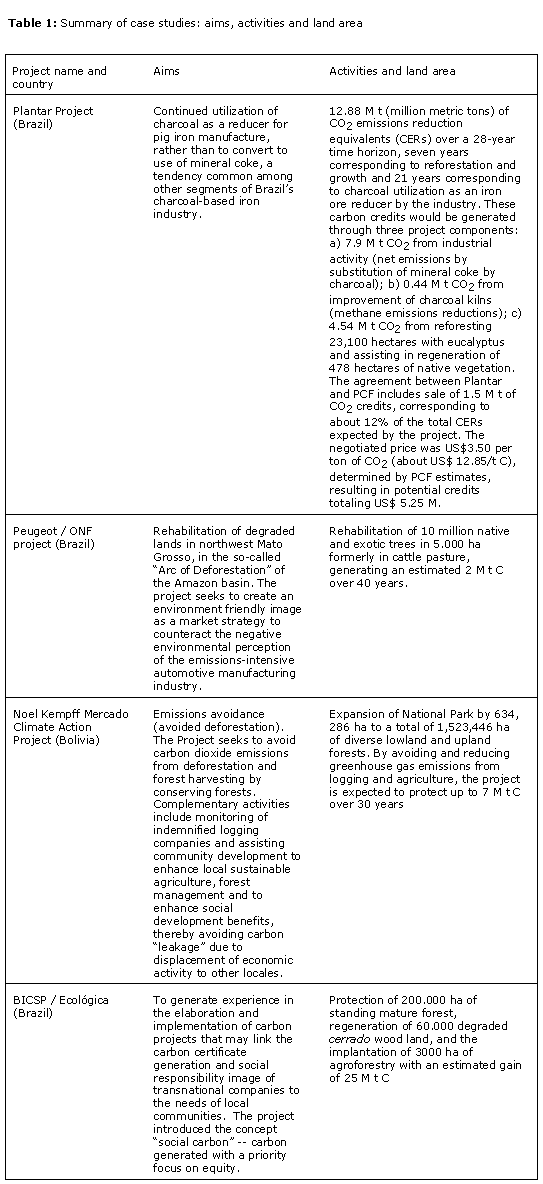
]]> Each case study summarized in Table 1 had objectives to generate economic, social and environmental benefits that go beyond the target of mitigating greenhouse gas emissions. In each case there appear both benefits and limitations in the phases of design, development and implementation. The following discussion presents a description of the projects and a summary of their impacts.
• Plantar project
Plantar, located in Curvelo (nursery and plantation) and Sete Lagoas (pig iron factory), Minas Gerais in the Brazilian cerrado. Plantar S.A. is one of the pioneers of fast growing industrial eucalyptus plantation technology, which it perfected during the 1970s and 80s built on generous federal subsidies, since discontinued. The Plantar company seeks carbon credits to enable it to maintain plantations used to produce charcoal to fuel its blast furnaces, and to sell certified "green pig iron" to the international steel industry, so differentiating it from the rest of the industry, based on carbon-emitting fossil fuels and electricity. The Plantar project was initiated in 2000 by the World Bank and funded by the Prototype Carbon Fund (PCF).6 The project includes a plantation of 23,100 hectares of eucalyptus.7 In addition to the plantation, the project aims to improve the design of approximately 2,000 charcoal kilns to reduce around 70% of harmful methane and particulate emissions. The project also expects to assist in the regeneration of 478 hectares of cerrado. It is predicted that the project could generate 12.88 million tons of CO2 emission-reduction equivalents over a 28-year time frame.
This project, which juxtaposes the utilization of forest biomass against fossil fuel exploitation, is a good example of this potential role for CDM in stimulating fuel switching between non-renewable sources and biomass. However, the promise of fuel substitution should be matched with social sustainability. Direct social benefits include employment of 1,270 people in seedling production, soil preparation and planting, harvesting and in charcoal-based steel manufacturing. Given the forestry vocation of the cerrado region and Plantar’s substantial technical know-how in high technology and genetically superior clonal seedling production, there appears to exist considerable potential to secure local development benefits through outgrowing under a forest farmer scheme already existent in Minas Gerais. This could include the possibility for extending carbon credits to include such farmers. The Plantar project, however, falls short of contributing to agricultural extension and capacity building of local farmers. No such forest technology diffusion or social inclusion efforts were proposed by Plantar, which has restricted its relations with the local community to a modest environmental education program and certified "child friendly" status in respect of compliance with child labor laws.
• Peugeot/ONF project
Established in northwest Mato Grosso, Brazil, the Peugeot/ONF project is a joint project between the French National Forest Service (Office National des Forêts or ONF) and the car manufacturers PSA Peugeot-Citröen. The project was intended to be jointly implemented by ONF International (a direct and private corporate affiliate of ONF) and a national NGO Instituto Pró-Natura (IPN), and originally aimed to sequester an estimated 2 million t C equivalent in 40 years through reforestation of an area degraded by cattle ranching on the Arc of Deforestation at the Amazon frontier. The publicity image desired by the investor led the partners to set an overly ambitious target – establishment of 10 million native trees in three years on 5,000 hectares – in an environment culturally and ecologically unfamiliar to the executor. As a result the project faced a number of hurdles during its initial phase, which forced it to change course. The principal barriers to the success of the reforestation were a low survival rate of seedlings planted in vigorous brachiaria grass, and the repercussions of attempts made by the executors to surmount this hurdle by adopting aerial spraying with the herbicide Roundup. This together with accusations of biopiracy against the executor, although never proven by public investigators, profoundly affected the project, forcing its executors to redirect their approach, and to adopt a more accommodating position with regard to relations with Brazilian public institutions.
]]> The process of internal re-evaluation by ONF resulted in a number of changes: substitution of the use of herbicides by manual weeding; reduction of reforestation targets from 5,000 ha to 2,000 hectares; restoration of permanent protection areas in line with the state’s rural land use licensing system; creation of a Scientific Advisory Committee with the participation of regional universities and government institutions; substitution of foreign equipment and expertise with local inputs; enhancement of local integration through an environmental education program and seedling distribution to local farmers. In terms of carbon benefit, with the establishment of more realistic targets, the initial estimation of 2 M t C to be sequestered over 40 years has now been reduced to 500,000 t C over 100 years.Employment creation is the most visible result and brings the highest direct benefit to the local communities in the two municipalities where the project is located, Juruena and Cotriguaçu, particularly when compared to former cattle ranching. During the first three years of implementation (1999 to 2002) the project has employed, through its two subcontractors, approximately 100 workers in the rainy season (November to March), of which 20 positions are kept throughout the year for seedling maintenance in the dry season (April to October). Besides the plantation operations, ONF Brasil relied on eight administrative and technical workers from three families who lived on the ranch. In addition to employment of seasonal staff in the plantation, the project also carried out a forestry extension component addressed to small-scale farmers that live near the ranch. This activity was undertaken mainly by IPN in line with the institution’s historical role in the region. This component aims at promoting the integration of the project with smallholders in the local community. The underlying idea was to promote a culture of planting multifunctional trees and to create synergy with other regional projects aiming at sustainable agroforestry development.
• Bananal Island Carbon Sequestration Project
The Bananal Island Carbon Sequestration Project – (BICSP) is the first "social carbon" project to be initiated in Brazil. Financed initially by AES Barry Foundation, a thermoelectric power company based in Wales, it was implemented by the NGO Instituto Ecológica and its partners. The project was originally conceived to offer forest conservation and recuperation inside public parklands as its central component, to be managed in partnership with the Federal and State Government environmental agencies. However due to lack of robust institutionalization of these partnerships, the planned activities did not materialize during the course of the project. This restricted the project targets to research and social components.
The BICSP had as its objective to develop and implement an innovative, equitable and sustainable system to offset GHG emissions through sequestration of CO2 in terrestrial ecosystems, avoiding thereby the process identified in the baseline of degradation and conversion to soybean cultivation of native vegetation of the transition zone between the cerrado and Amazonia. Initially the project aimed to protect the stock estimated at 65 million tC over 30 years. This overly ambitious target was later sharply reduced to 25 million tons of carbon in 25 years. The project expected to contribute to carbon absorption and to avoid deforestation through its promotion of environmental awareness and seedling distribution among smallholders in land reform projects. During the research period, efforts were underway to support sustainable income and employment generation activities, but net results of such efforts remained limited in scale. The project expected that raising environmental awareness could also contribute to carbon benefits, both by increasing tree planting and by reducing deforestation. The impact of such consciousness-raising activities on regional carbon stocks is indirect and difficult – if not impossible -- to measure.
In summary, it was considered that the BICSP was pioneer, in popularizing the concept of local activities in favour of combating global warming and particularly in introducing the concept of "social carbon" to Brazil, although it was largely impractical with regard to generation of concrete and sustainable local or global benefits.
• Noel Kempff Climate Action Project, Bolivia
The Noel Kempff Mercado Climate Action Project (NKMCAP) was created by a consortium of implementing agencies, including the government of Bolivia, American Electric Powers (AEP), the Nature Conservancy and a local conservation NGO called Fundación de Amigos de la Naturaleza (FAN). NKMCAP assured a major expansion to 1.5 million ha of national park area in tropical forests on the Bolivian border with Brazil, previously granted in concession to timber companies. It also provided for indigenous communities to have access for sustainable management of some forest areas, and committed funds toward local environmental improvements. The project aimed to avoid emissions of 14 million tC (more recently reduced to approximately 7 million tC) over 30 years. Besides addressing carbon "leakage",8 the project included multiple use forestry management and development activities including ecotourism, sustainable logging and alternative income generation. The consortium indemnified logging concessions adjacent to the Noel Kempff national park and invested in community development activities, including forestry and agroforestry extension, health, education, infrastructure and supported an indigenous land titling process.
Prior to the Park expansion the communities did not have legal access to the territory but had accessed the forest through informal usufruct rights during nearly 100 years. The project established a buffer zone on the western side of the Park, where three communities were located. The principal economic impact on the communities of Park creation was loss of employment of 13 families in logging concessions. Local participation in the design phase was limited, and institutional dynamics were highly charged, culminating in local resistance to the expansion of the national park.
A community development program was initiated in this context of uncertainty and conflict, facing an absence of organized community representation. Model farms and planting trees promoted by the project had limited success, due to inadequate diagnosis of the complementarity of these proposals with local labor availability, as well as to insecure land tenure. A project-led micro credit scheme was also problematic, as the majority of loan recipients were unable to repay their debts.
]]> The principle project benefits foreseen by local community members include land titling and sustainable forest management, expected to stimulate local development, generating income to pay for health and education. Over time and through greater dialogue, trust was built between the project executors and local communities. Community development objectives are now clearer and there is greater community participation. This study suggests that the project had an overly centralized project design, unclear links between objectives and as a result too many activities. Besides this, communication about access to resources by communities was weak, owing to little time and to the pressures of the project cycle, as well as the great distances and vast project area to cover with few technicians. The project’s strengths included provision of resources to communities in a context where local government is weak, and the project managers’ demonstrated ability to adapt to local realities and establish a partnership recognizing local priorities.
Analysis of findings
Findings are analyzed in the subsequent section in terms of environmental, social and economic impacts. Foremost, findings indicate that there exist tradeoffs between carbon, social and economic project components based on moral and value judgments. This implies that it is largely illusory to expect a synergy between social, economic and environmental objectives in these projects. The negative environmental impacts include risks of increased area under fast-growing exotic species and exaggerations in estimates of carbon emission reductions. Benefits include contributions to enhanced awareness of conservation. The social costs include exclusion of local stakeholders, unequal partnerships, and concentration of land tenure; while benefits include short-term employment generation and income creation, knowledge generation, and capacity building. In terms of economic impacts, findings imply that projects could contribute to developing new financing models and attracting foreign investment, as well as encouraging local income multiplier effects; but can incur high transaction costs.
In accordance with May et al (1999a) institutional dynamics and local problems largely dominated project implementation processes, resulting in disruption and delay. Corporations have taken considerable risks in championing these projects in the context of general uncertainty regarding the regulatory principles of the carbon market. We herewith summarize the principal environmental, social and economic impacts in turn and their potential implications for future projects.
Environmental impacts
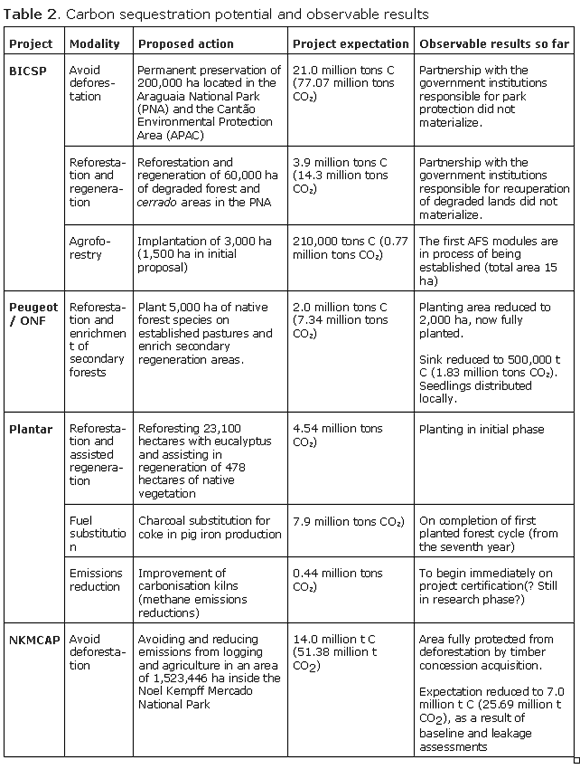
The main environmental impact of a forest carbon project must be its impact on climate change, in terms of the amount of carbon sequestered. The differences between the proposed action in terms of lands recuperated or trees planted and outcomes were notable in each of the case studies. Table 2 illustrates these discrepancies and attributes this to unrealistic expectations and to barriers to implementation. For example, the Peugeot/ONF project proposed that it would plant 5000 hectares of native forest species on established pastures and enrich secondary regeneration access and sequester 2.0 million tC over 40 years. Not only was this number reduced to 500,000 tC but project executors soon realized that the objective of restitution of native Amazon biodiversity was overly ambitious. With the aim to ensure better indices of survival and growth in the reforestation, the executors reduced the diversity of planted species drastically from 32 to six species, including teak (Tectona grandis), an exotic species, as a principal forest component.
]]>
To maintain and restore biodiversity, seedling distribution can be a very effective means of reducing pressures on native forests. Unless, however, such distribution follows technical criteria on species diversity and use of native trees it does not guarantee repair of damaged ecosystems, since demand is often greater for exotic species or conventional fruit trees. Projects that seek primarily to enhance the financial viability of forest plantations typically will involve even fewer species, and will mostly focus on industrial monocultures, such as the case of Plantar. The risk of increase of fast-growing exotic tree plantations is particularly relevant to Brazil, whose expertise in tropical forest-plantation technology is considered among the most advanced in the world, but where there is considerable deficit of new planting to meeting national wood, pulp and charcoal demand. Industry representatives have shown great interest in harnessing the carbon market to justify and help to finance new large-scale plantations for these purposes.
Of the four projects studied, three are located in frontier areas, where there are considerable pressures for conversion of standing forest to agricultural use. In this sense, forest carbon projects have a substantial role to play in the region as a means to revert the incentives that had led to forest destruction. Arguably, the existence of a carbon market signals the economic relevance of protecting forest areas and other environmental services, such as watershed management, biodiversity or ecotourism. Proposals for policy alternatives for the environment have been attracted by these options, where there is a need to harmonize colonization and land redistribution with nature conservation objectives. There is a real search underway for innovative economic incentives and instruments that may motivate farmers to adopt sustainable land use practices (Pagiola et al., 2002; McNeeley and Scherr, 2002).
Social impacts
In the four projects reviewed, participation of local community members was found to be limited, even when stakeholders (such as locally elected officials) are articulate and capable of communicating and imposing demands on project proponents. It became clear from the study that stakeholder participation should be enhanced when designing, implementing and evaluating the outcomes of projects. Because the issue of carbon sequestration remains largely technical and obscure local actors have rarely become engaged in discussion about the nature of these projects. When debate does occur, the population or communities affected are historically excluded, since a local elite usually dominates, as was found in the NKMCAP. As a consequence, it is necessary to objectively seek stakeholders’ opinions, and seek to ensure that project concept become transparent to all who are affected by the project.
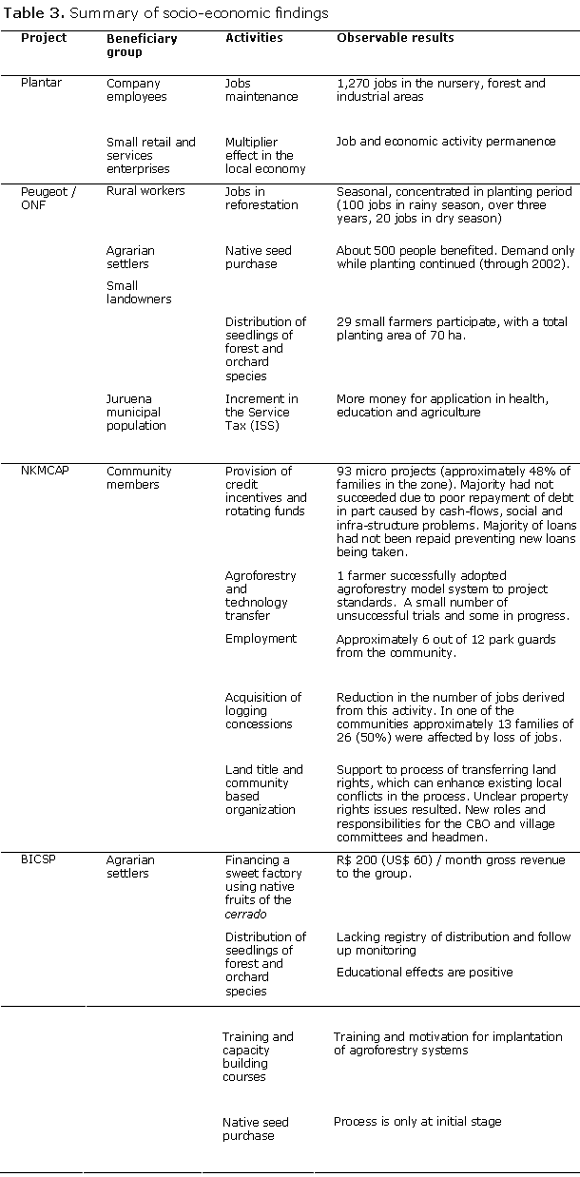
An overriding characteristic of these projects commented by local observers and project staff was the haste of implementation and the unclear focus of social objectives. For example, in the BICSP there was a drastic cut in the forest component after partnerships with government institutions failed to materialize, while Plantar fulfilled its employment objectives, yet raised protest among local communities due to the perceived risks and lack of local benefits or stakeholder engagement beyond this immediate employment spurt. On paper, local development was clearly stipulated as an objective in three out of the four cases but the reality was less in practice due to inadequate resources. This was also the case in the renowned Scolel Te carbon sequestration project in Chiapas, Mexico, despite explicitly social objectives (Nelson and de Jong, 2003). Table 3 provides a summary of the main beneficiary groups, activities and observable results from those benefits.
]]>
Environmental education has become one of the most important activities in all studied projects, it being a particular emphasis in the BICSP. These environmental education programs aim to reach mostly public school teachers and students, assuming that the children would be the principal multipliers to their parents and family. Nursery construction and consequent distribution of seedlings to small farmers and community members in general is a fundamental activity in the BICSP and is also very important in the Peugeot/ONF project.
Seedling distribution has an educational character, which aims to contribute to the wider appreciation of planting native specie, but it is necessary to ally seedling distribution with other aspects. These include the gathering of seed and production of seedlings, training in planting practices (particularly in relation to agroforestry systems) besides permanent technical assistance and monitoring of silvicultural operations (survival rates, plant development, biomass accumulation, etc.). Low survival indices, caused by inadequate local species choice, planting time, pest attack and other agronomic problems (weeds, diseases, etc.) can yield only a very small percentage of seedlings being transformed into trees, thus drastically reducing the prospects that a new forest will be formed. Together with these technical matters, it is fundamental that the projects seek support to commercialize the products produced under agroforestry, as well as the carbon itself, one of the largest bottlenecks for this land use type.
In this process, it is fundamental to try to harness existing local experiences, with the goal of quelling resistance and incorporating local knowledge. On the other hand, the lack of qualified technical assistance is so great, that there is often substantial receptivity to new techniques. This was found, for example, in the case of the BICSP, where the acceptance of new technology was a function of the provision of quality technical assistance, and respect for the producer. Based on these related experiences, it is fundamental that projects ally enterprise financing to actions directed to enhance local technical and commercial capacity, to increase chances for local enterprises to become successful and avoid frustrating communities' expectations.
Economic impacts
In terms of economic impacts, employment creation is the most visible and is of highest immediate benefit to local communities in all case studies. Among beneficiaries, however, there is no clear perception that the provision of employment is linked to generation of environmental services or of local development. Temporal and seasonal labor requirements can become problematic for large scale afforestation and reforestation schemes. These concerns arise due to the greater labor requirements at the time of forest establishment and lesser demands throughout the growth and maintenance period. Seasonal effects include the greater need for labor in the rainy (planting) than in the dry (maintenance and harvest) seasons. Projects with these profiles should foresee investments in capacity building and training in alternative income generating activities for periods of low employment.
Funding of small income generation projects can be an important lever to stimulate local initiatives, particularly those related with the utilization of local products, aggregating income to traditional uses, such as support for a native fruit sweet factory by the BICSP. A clear point in the NKMCAP project experience with micro-lending is that is necessary to take into consideration potential cash flows, as well as the local political and cultural context, to ensure local organizations control over management of micro projects. External issues included lack of infrastructure, access to markets and the interpretations of financial ownership (whether it was "project money" or "community money"). Seed collection was another form of income generation for local populations (Peugeot/ONF and BICSP), but is fairly short lived since the supply goes mainly to fulfill project nursery demands. Once the project’s needs are met, this demand declines. The volume of seed usually demanded by the projects booms in the initial years, diminishing significantly in the following seasons (as was the case in the Peugeot/ONF project) due to reduction in reforestation targets. To counteract this problem, it is necessary that seed collection be accompanied by work on environmental education in rural and urban communities, creating through this means a greater demand for native seedlings, seeking to create a permanent local market. It is also important that project developers perceive the synergies obtained from investment in a cluster of similar projects in a same region, relying on seed collection and other technical capacity generated by pilot projects.
The potential for projects to produce an additional income multiplier effect in their adjacent communities is directly correlated with their level of local service contracting, job and income generation among the local population. The commercial projects reviewed in this study (Plantar and Peugeot/ONF) had a more immediate impact on direct job creation, often occupying an important relative position among local employers. This impact has been generally greater, at least in the initial period, than the effort dedicated to support training, capacity building and generation of alternative local income sources. In the other two projects, this emphasis was reversed, with direct project related employment being either of minor impact (BICSP) or even resulting in job loss (NKMCAP) due to acquisition of timber concessions. Projects’ purchase of machines, equipment, services, and consumables in the surrounding communities, when available, was another locally pertinent source of both income and government revenues. The service taxes (ISS) that are collected by local governments in Brazil particularly during the project implementing phase can generate significant additional revenues for the municipality, increasing its capacity to invest in social services that particularly benefit poorer segments of the population.
]]> In Brazilian projects executed in states that have implemented the ecological value-added tax (Mato Gross, Minas Gerais and Paraná in the cases reviewed), the implementation of private natural patrimony reserves (RPPN) by projects, in areas of permanent conservation, generates additional revenues to the beneficiary municipalities. These benefits are also generated when the projects include the expansion in parks and reserves of indirect use. The executors should clarify to local actors the link between this effort and the additional revenues generated due to the projects.Additional economic impacts include attraction of foreign capital and learning related to these financial opportunities. Discussion about LULUCF within the context of climate change occurs at a time in which Bolivia and Brazil are seeking to increase their exports. The primary agricultural export products, such as soybeans, only temporarily lucrative, can be devastating in their impacts on occupation of fragile areas such as the Amazon basin. Projects such as the BICSP and Peugeot/ONF cases explored here, both situated along the Arc of Deforestation in the Amazon, point to more appropriate alternatives for generation of foreign exchange on fragile tropical soils. These activities could potentially compete with extensive ranching and marginally profitable export crops if compensated by the carbon market.9
On the down side, these forest carbon projects are characterized by high transaction costs for a number of reasons. Initially, restrictive carbon market rules limited interest in projects that incorporated efforts to avoid deforestation. Uncertainty persists regarding other aspects, including such concerns as utilization of officially protected areas as carbon sinks, and establishment of criteria defining projects’ expected contribution to sustainable development. Such doubts have led pioneering project investors and executors to pay an extra price for their projects and oblige them to constantly rethink their strategies throughout project implementation. On the other hand, as early comers, they are offered the perspective of exceptional gains from innovation, when the rules are better defined, since they will have gone through the experience of having established pilot projects.
Implications for climate policy
Many lessons learned from the research and associated recommendations were discussed in the previous section regarding to the impacts caused by the projects visited in this study. In this section, we seek to point out additional lessons and recommendations that arose during the course of the research that go beyond specific social, environmental and economic impact assessment and identify what are the implications for climate policy. These include concern for institutions, property rights in the context of the forest carbon market, the proper definition of priorities, introduction of standards and capacity building.
Institutions
One of the fundamental lessons learned from the research is that carbon forest projects require good governance. Risks need to be anticipated, and project developers require sufficient understanding of the local context, history and politics, as well as the trade-off between social, carbon and economic objectives. Each project suffered from the lack of guiding regulation, organizational capacity, and appropriate decision making mechanisms. In three out of four projects low level of local stakeholder buy-in to projects was a negative result of overly centralized decision making. Peugeot/ONF, Plantar, and NKMCAP all experienced some level of conflict associated with different priorities and interests, poor communication and lack of community political collaboration. For example, the conflicts emergent in the NKMCAP were in large measure a result of a wider conflictive policy framework and historical context related to the "right of return" of indigenous groups in Bolivia. In the case of Peugeot/ONF, lack of collaboration with regional stakeholders – particularly environmental agencies -- resulted in a costly court case that irremediably damaged the public’s perception of the project.
Such institutional factors could have implications for land ownership and rights to carbon credits. The credits generated in forest carbon projects belong to the proprietor of the land or to whoever retains legal ownership over the bundle of rights and responsibilities that accrue with legal title. If the investor himself is not the owner of the land, some guarantee over the rights to carbon credits is needed, in the form of a contractual agreement signed between the investor and public or private landowner prior to project presentation for approval to the designated national authority. The absence of land titles held by many small farmers and rural settlers could represent an insurmountable barrier to the establishment of carbon projects on their lands, due to uncertainty for investors.
In frontier areas of Brazil and Bolivia, although land titling does exist, it is often multi-tiered and susceptible to judicial challenge, leading to equivalent uncertainties. Rights over carbon credits also become a cloudy issue when the land to which these credits accrue are state property, and it is deemed equitable that the State act on behalf of local communities who have usufruct rights over these lands. On the other hand, introducing the thorny issue of carbon credits to communities may raise expectations that cannot be fulfilled, given uncertainties in the market.
]]> In general, partnerships between local stakeholders, private enterprises and government institutions in carbon projects need to be formalized through inter-institutional agreements. Shared activities and responsibilities as well as expected budgetary contributions must be clearly defined from the outset to assure transparency and local stakeholder engagement. Rights over land and to the proceeds of environmental service payments require adequate legal and contractual definition prior to project implementation.• Defining priorities correctly
The criteria each host government (Designated National Authority) adopts in project review are of fundamental importance to guarantee that forest carbon projects presented for registry contribute to national goals for sustainable development. Kyoto Protocol regulations delegate to these institutions the power to approve projects according to the national sustainable development prerequisite. Thus, the extent to which the State applies coherent socio-environmental criteria in their review will affect the manner in which projects reflect these concerns in their design and implementation.
A plausible tradeoff exists between the amount of carbon sequestered and the relative prioritization of social development activities. Major commercial projects are more focused on tree planting and consequent carbon accumulation than local development aspects. They allege that efforts to furnish income generation alternatives for neighboring communities or the incorporation of small farmers in their planting schemes will be difficult to accomplish efficiently and competently. From this perspective, the State should define what affected communities can expect of investors and executors to ameliorate impacts, assure local benefits and local acceptance. Although this perspective flies in the face of the tenets of socio-environmental responsibility, it is common among business segments.
Despite the fact that the approval of CDM projects is based on criteria and indicators that are the responsibility of government to define, the assessment criteria can also be used by civil society10 to advise potential investors with regard to evaluation criteria and indicators they consider a priority for project approval. Investors may or may not respond to these suggestions, but they will soon become aware that the process of public scrutiny of these projects can be facilitated if they respond to these concerns.
• Principles of legitimacy and accountability
Principles of legitimacy and accountability seek to assure local stakeholder participation in project conception and implementation. For this to occur requires that corporations, project developers, and the State be held accountable. The corporate sector needs to concentrate efforts on several areas, including corporate values, strategy and policies for CDM investments, such as identifying and being cognizant of existing codes of ethics. Project developers need to concentrate efforts on anticipating risks, such as problems associated with property rights (who owns the trees and carbon credits) and how this influences partnerships between public and private institutions, as well as with local farmers or autonomous laborers.
One way to address legitimacy and accountability could be to link CDM projects to pre-existent certifications. A possible criterion to indicate those forest plantation projects that should be made eligible for CDM is to verify the socio-environmental certifications already acquired by the proponents. Forest Stewardship Council (FSC) certification would represent a significant departure from current practice, particularly if the criterion regarding promotion of local development were given greater weight than is currently the case in such certifications. Another recommendation is to adopt instruments to monitor socio-environmental impacts similar to those undertaken in certified natural forest management, where the requirements imposed are made progressively more stringent over time (for details see www.fsc.org).
• Complementing existing development and socio-environmental networks
The existence of networks of government entities and NGOs, with pro-active local development and environmental roles can catalyze local communities’ potential to capture project benefits. Carbon projects established in the context of such networks stand a greater chance for replicability and innovative spin-offs to arise.
]]> Some authors suggest that small-scale CDM projects represent the most appropriate way to provide development benefits to low income communities, assuming that tenure rights are clear, local organizations are structured, and that projects complement existing development activities (Boyd et al., 2004, Smith and Scherr, 2004). Among these projects, agroforestry systems (AFS) have been promoted as one of the most promising means for sustainable use of tropical ecosystems as well as carbon sequestration, particularly for projects involving small landowners. Among their main advantages we can point to higher diversity and corresponding risk reduction, utilization of perennial forest species in association with annual crops for production system longevity. Although they offer many advantages, the process of implantation of AFS is still in its infancy in the majority of the South American tropics (Smith et al., 1997). One of the main reasons for this is difficulty in access to long-term credit, unavailability of technical assistance to small farmers and problems related to marketing for some agroforestry products, such as access to urban markets and absence of roads. In the use of ASF it is fundamental to identify and attempt to apply pre-existing local experiences, with the goal of placating resistance and incorporating local knowledge.There is also considerable interest in carbon finance among small and medium rural landowners, who suffer from problems of access to credit lines responsive to the lengthy growing period to forest product harvest. The carbon market could potentially serve as a guarantor for credit to small farmers who could become out grower partners in projects such as Plantar. Carbon finance could also guarantee support for initial establishment of small-scale AFS among producer associations or rural workers’ unions.11 The uncertainties present in the carbon market imply that the producer cannot dispense with the need for profitability from the underlying production system, including market channels.
The impacts of land concentration, as noted in the case of Plantar, could be counteracted through inclusion of small and medium producers in the projects’ "core business". This could be achieved either through direct partnerships ("forest farmer programs" – fomento florestal) in large-scale commercial projects, or with such farmers assuming the role of primary actors in local development projects based on payments for ecosystem services. Such options would reduce the need to acquire land and the potential to exacerbate an already highly inequitable land tenure structure. Besides the social gain, such partnerships could reduce the total final costs of carbon sequestration, because investors would not need to incorporate land acquisition costs, and could rely on household labor inputs as a partial contribution to plantation establishment. These cost reductions would help to cover the additional transactions and validation costs that would be considerably higher in projects that involve multiple actors and sparsely distributed sites that would need to be regularly monitored to validate rates of carbon sequestration.
In the case of the Action Against Climate Change Project in Paraná, Brazil, permanent land immobilization principally for conservation and restricted use created a substantial regional polemic. This controversy arose due to local concern that the project could dislocate small landowners. Yet this threat never materialized. On the contrary, the project made them partners, by helping to title their properties located at the interstices of the larger properties acquired by the project (Chang, 2004).
The issue of maintaining large land areas tied-up in forest plantations remains a pertinent issue in CDM project eligibility. A more thorough examination of the effects on local sustainable development of further land concentration should be a part of eligibility analysis for CDM projects. Such examination should not necessarily serve as a justification for refusing carbon finance, but rather suggest means for integrating the local population and lands of low agropastoral productivity into project benefits.
Building flexible institutions
Besides environmental education per se, the projects offer two other kinds of capacity-building activities. The first is focused on local communities involved with the projects. Education and human capital development in countries such as Brazil and Bolivia register the highest deficits in rural and urban areas, distant from principal towns. Carbon projects that seek to incorporate the social aspect as a relevant component should have in their conception, strategies for training and technical assistance as pillars, with the objective of creating new alternatives for income generation. Such alternatives must be identified in line with beneficiaries’ expectations, and developed preferentially on the basis of their demands. On the other hand, it is necessary to define indicators of effectiveness for such actions, to measure their real benefits.
The second kind of capacity building concerns reinforcement in understanding of climate change issues, such as awareness of the existence of a carbon market and technical issues associated with carbon measurement and rural land use. In the NKMCAP case, technical training has been provided for community leaders, for people in different levels of government (municipal, state and federal) and NGOs. Such capacity building is fundamental for the country to enable itself to take part in the carbon market.
Projects located near to indigenous areas should include in their social components actions specifically oriented to these communities. Given developing countries’ historical negligence regarding indigenous peoples, the projects should seek to establish partnerships with such groups, in an effort to reinforce their traditional activities, as well as to stimulate new alternatives for their survival. In the case of the Peugeot project, for example, local indigenous groups whose reserves lie near the project site were stimulated to furnish tree seeds to the project.
]]> Ideally, projects should seek approval by local partners, through their inclusion in decision-making mechanisms and collaboration with people affected by the project towards common goals. This could mean supporting communities’ efforts to secure land title, as in the case of NKMCAP, or assisting the development of indigenous or local institutions. However, ensuring land title to indigenous communities requires a considerable amount of skill in technical aspects and conflict resolution, which need to be accounted for in project design and budgeting. Linking processes of carbon mitigation with local land titling can in the process open a Pandora’s box of historical and contemporary local stakeholder conflicts, that had remained unresolved, thus creating rather than solving problems.
Conclusion
All the cases studied generated some local sustainable development benefits. But they also experienced negative impacts due to top-down centralized decision making. Primary local stakeholders were frequently excluded from decisions adopted at an initial stage in projects’ design. Large scale projects such as Plantar and Peugeot/ONF have tended to provide employment to local people, yet were less motivated to promote locally appropriate alternative land uses such as agroforestry systems. These systems represent an important land use option in tropical forest ecosystems, but their slow rate of adoption is largely a function of the absence of credit and inadequate technical assistance to family farmers and colonists.
The utilization of economic or market instruments, such as the emerging carbon market, opens up new possibilities to generate revenues that can support the protection of public or private conservation units as well as promotion of environmentally friendly production practices. Rural development agencies should also assume proactive roles in developing projects jointly with rural producer organizations that stand to benefit from the potential carbon market, and avoid that discussion on such instruments be limited to environmental forums.
There is no single solution as to how projects can ensure "success" in terms of equitable benefits sharing. A potential starting point is for projects to engage in a process articulated and prioritized in function of local stakeholders’ demands. It is to be hoped that this engagement will lead toward ensuring rights to land and/or carbon for local people. Yet a crucial point where the process might encounter unanticipated conflicts is the linear objective of forest carbon projects to mitigate greenhouse gas emissions. To be able to respond to this objective and simultaneously attend to local concerns requires that project developers exercise flexibility. As such, there is a significant challenge regarding the degrees of freedom from which the project is able to diverge from its original mitigation objectives.
Partnerships between developers and local stakeholders should heed projects’ response to all three pillars of sustainable development. In the context of social assessment, during project appraisal, proponents should define their intentions regarding job creation and development of local income generation options. Such criteria include, for example, a required minimum percentage of local labor force participation in project hiring, commitment to purchase a certain minimum share of supplies and contract services provided by members of the communities affected by the projects, as well as a commitment to and a proportion of total project investment placed into a local socio-environmental challenge fund.
References
Adger, W. N. Brown, K., Fairbrass, J. Jordan, A. Paavola, J., Rosendo, S. and Seyfang, G., 2003. Governance for sustainability: towards a ‘thick’ analysis of environmental decision-making. Environment and Planning A. 35(6), 1095 – 1110. [ Links ]
Boyd E., 2003, Forests post Kyoto: Global priorities and local realities, PhD Thesis, University of East Anglia, Norwich. [ Links ]
Boyd, E, Gutierrez, M and Chang, M. 2005. Adapting small-scale CDM sinks projects for low-income communities, Tyndall Working Paper 71.
(http://www.tyndall.ac.uk/publications/working_papers/working_papers.shtml)
Brazil. 2004. Primeiro inventário brasileiro de emissões antrópicas de gases de efeito estufa - Relatório de referência. Brasília, Ministério de Ciência e Tecnologia. [ Links ]
Brown, K., Adger, W. N., Boyd, E., Corbera, E., Shackley, S. 2004. How do CDM projects contribute to sustainable development?, Tyndall Centre Technical Report 16. [ Links ]
Brown, K. and Corbera, E. 2003. Exploring equity and development in the new carbon economy Climate Policy 3.Supp1: 41-56. [ Links ]
Chambers, R. 1983. Rural development: Putting the last first. Harlow, UK: Longmans. [ Links ]
Chambers, R. 1994. Participatory rural appraisal (PRA): Challenges, potentials and paradigms. World Development 22(10). [ Links ]
Chang, M. 2004. Seqüestro florestal do carbono no Brasil – dimensões políticas, socioeconômicas e ecológicas. PhD Thesis. Doctoral Program in Environment and Development, Federal University of Paraná, Curitiba, Brazil. [ Links ]
Dabbs, A. & Bateson, M. 2002. The corporate impact of addressing social issues: a financial case study of a project in Peru. Environmental Monitoring and Assessment 76(1). [ Links ]
Gregory, R. and Wellman, K. 2001. Bringing stakeholder values into environmental policy choices: a community-based estuary case study. Ecological Economics 39: 37-52. [ Links ]
Grimble, R. and K. Wellard, 1997. Stakeholder methodologies in natural resource management: a review of principles, contexts, experiences and opportunities. Agricultural Systems 55(2): 173-193. [ Links ]
INPE. 2000. Amazon deforestation data. [ Links ]
Kolk, A. e Pinkse, J. Market strategies for climate change. European ManagementJournal. v. 22, n. 3, 2004. [ Links ]
Landell-Mills, N., and Porras, C. 2002. Silver bullet or fools’ gold? A global review of markets for forest environmental services and their impacts on the poor. London, IIED. [ Links ]
May, P., A. Dabbs, P. Fernandez, V. Vinha, and N. Zaidenweber., 1999a. Corporate roles and rewards from promoting sustainable development: lessons learned from Camisea. Working Paper ERG-99-1, Energy and Resources Group, U. of California-Berkeley. (http://socrates.berkeley.edu/erg/Pages/wp_98_1.html) [ Links ]
May, P. (ed.) 1999b. Natural resources valuation and policy in Brazil: methods and cases. New York; Chichester, Colombia University Press. [ Links ]
May, P., Boyd, E., Veiga, F., and Chang, M. 2004. Local sustainable development effects of carbon forests in Brazil and Bolivia: a view from the field. Markets for Environmental Services: No.5, IIED, London. (http://www.iied.org/eep). [ Links ]
May, P., Veiga, F.C. e Passos, C.A. 2004. Financial and technical viability of agroforestry systems for carbon sequestration in small farm areas in northwest Mato Grosso, Brazil. I Global Congress on Agroforestry Systems. Flórida. [ Links ]
McNeeley, J.A. and Scherr, S.,J. 2003. Ecoagriculture: Strategies to feed the world and save biodiversity. Future Harvest and IUCN. Washington D.C.: Island Press. [ Links ]
Nelson, K.C. and de Jong, B.H. 2003. Making global initiatives local realities: carbon mitigation projects in Chiapas, Mexico. Global Environmental Change 13: 19-30. [ Links ]
]]>Paavola, J. and Adger, W.N. 2002. Justice and adaptation to climate change. Tyndall Working Paper 23. Tyndall Centre for Climate Change Research, University of East Anglia, Norwich. [ Links ]
Pagiola, S., Bishop, J. & Landell-Mills, N. 2002. Selling forest environmental services: Market-based mechanisms for conservation and development. London, Earthscan. [ Links ]
Pimbert, M.P. and J.N. Pretty. 1997. Parks, people and professionals: putting ‘participation’ into protected area management. In Ghimire, K.B. and Pimbert M.P. (eds.). Social change and conservation: environmental politics and impacts of national parks and protected areas. London, Earthscan Publications Ltd. pp: 297-330. [ Links ]
Scherr, S.J., A. Smith and D. Kaimowitz. 2004. A new agenda for forestry conservation and poverty reduction: Making markets work for low-income producers. Washington D.C.: Forest Trends, with CIFOR and IUCN. [ Links ]
Smith., J. and Scherr., S. 2003. Capturing the value of forest carbon for local livelihoods. World Development, Vol.31, No.12. [ Links ]
]]>Smith J., Sabogal, C., De Jong, W. Kaimowitz, D. 1997. Secondary forests as resources for rural development and environmental conservation in the Latin American tropics. Cifor Occasional Paper 13. Jakarta: Cifor. [ Links ]
Stake, R. 2000. Case Studies. Handbook of qualitative research. N. Denzin and Y. Lincoln. Thousand Oaks: CA, Sage Publishing. [ Links ]
Swart, R., Robinson, J., Cohen, S. 2003. Climate change and sustainable development: expanding the options. Climate Policy 3S: S19-S40. [ Links ]
United Nations Framework Convention on Climate Change, 2002. Sixth Synthesis Report on activities implemented jointly under the pilot phase. Subsidiary Body for Scientific and Technical Advice. FCCC/SBSTA/2002/8, Bonn. [ Links ]
World Commission on Environment and Development (WCED), 1987. Our Common Future. Oxford: Oxford University Press. [ Links ]
]]>World Bank. 2002. Social Analysis Source Book: Incorportating social dimensions into Bank-supported projects. Washington D.C., Social Development Department of the World Bank. [ Links ]
Vitae Civilis. 2002. Proteção do capital social ecológico por meio de compensações para servicos ambientais (CSA). Peiropolis, GO: Editora Pierópolis. [ Links ]
MAY, Peter et al. Incorporando o desenvolvimento sustentável aos projetos de carbono florestal no Brasil e na Bolívia. Estudos Sociedade e Agricultura, abril 2005, vol. 13 no. 1, p. 5-50. ISSN 1413-0580. [ Links ]
* The authors express appreciation to the International Institute for Environment and Development (IIED) and Shell International Foundation, as well as to the case study interviewees for their involvement and contributions to the research. Earlier versions of this article were presented at the International Conference on Biodiversity and Livelihoods, in Bonn, 26 to 28 May 2003, and in the seminar Globalization, Localization and Tropical Forest Management in the 21st Century, 22 to 23 October 2003, in Amsterdam.
1 The majority of pilot projects were established in Latin America (UNFCCC, 2002). ]]>
2 The Kyoto Protocol entered into force in February 2005, after having been ratified by the large majority of Parties signatory to the UNFCCC.
3 A good part of this study is based on doctoral dissertations defended by two of the authors in 2003 (Boyd, 2003; Chang, 2003).
4 Not only are private companies privy to such a quasi-government responsibility, certainly in the context of Brazil and Bolivia, NGOs are also taking on board such a role, whether as intermediaries in the relation between government and local interests, or as partners with corporations in such roles.
5 A fifth project, executed by the NGO SPVS in the Guaraqueçaba coastal zone of Paraná, was analyzed by one of the authors in her doctoral thesis (Chang, 2004), whose results are partially described here.
6 The PCF (Prototype Carbon Fund) seeks to develop the carbon market, with the specific goals to: a) minimize project risks; b) reduce transactions costs; and c) enhance learning experience. The fund was closed with total capital of US$145 million aimed to support about 30 projects globally. Fund shareholders are comprised of governments and the private sector, with quotas of US$10 million and US$5 million, respectively. The World Bank expects PCF products to be competitively priced, of high quality; project-based and provide a high value knowledge asset The effectiveness of awareness building depends largely on a concerted effort by other development agents and opportunities, such as adequate technical assistance, promotion of environmental education and availability of financial support addressed to this purpose.
7 Due to the complexities in evaluation of the project baseline, it was considered y the forest carbon auditors Norsk Veritas that these restored plantations should not be accounted as additional activities for the purposes of the CDM. Therefore, it became necessary to propose the acquisition of a new area for the establishment of a new plantation of equivalent size, so as to access the same volume of carbon credits originally anticipated.
8 The concept of "leakage" applied to forest carbon projects implies the need to avoid that activities dislocated by such projects result in the same impact on global carbon emissions that they sought to avoid through planting or conservation. That is, to avoid that timber companies simply relocate to other forests to practice the same exploitation activities they would have carried out in the area protected by the project.
9 A viability study regarding the potential for agroforestry systems in the Peugeot/ONF project region (May et al., 2004) suggests that the average returns on these production systems would be 14%/yr, while this rate of return would increase to 16% with carbon credits included. In contrast, traditional land uses, such as extensive range-fed cattle, offer negative returns.
10 For instance, this is one of the objectives of the "Observatório do Clima", a network of Brazilian, social and environmental NGOs concerned with climate change (http://www.clima.org.br). Other standards specific to forest carbon projects have been divulged and monitored by the Climate, Community and Biodiversity Alliance (http://climate-standards.org/standards/index.html).
11 This concept is fundamental to the Proambiente program, adopted in Brazil as a policy for financing of agroforestry practices in rural settlements of the Amazon.