La izquierda en el gobierno: ¿Cambio o continuidad en las políticas de bienestar social?
Carmen MidagliaI; Florencia AntíaII
IPh. D in Political Science from Instituto Universitario de Pesquisas from Río de Janeiro, IUPERJ. Profesor and researcher at Institute of Political Science, Faculty of Social Sciences, University of the Republic, Uruguay. E-Mail: midaglia@adinet.com.uy
IICandidate to a Masters degree in Política Science from Universidad de la República, Uruguay. Profesor and researcher at Institute of Polítical Science, Faculty of Social Sciences, University of the Republic, Uruguay. E-Mail: fantia@fcs.edu.uy
Translated by Lucía Tiscorniay and Mateo Porciúncula
Translation from Revista Uruguaya de Ciência Política, Montevideo, n.16, p.131-158, Dec. 2007.
ABSTRACT
The article analyzes the main social welfare policies developed by the left-wing government in Uruguay, identifying changes and continuity in social policy in relation to the policies implemented by previous administrations. In this context, the article analyzes the main characteristics of the traditional Uruguayan welfare regime, the reforms that were processed following re-democratization, and the direction and content of the social policy reforms proposed by the left-wing administration. The paper argues that the left-wing government has prioritized initiatives designed to enhance the welfare of the most vulnerable sectors and to promote social equity. However, in other strategic policy areas, such as education and social security, significant reforms have not been undertaken.
Key words: Left, Social Policies, Welfare State
RESUMEN
El artículo analiza las principales políticas bienestar social desarrolladas por el gobierno de izquierda en Uruguay, procurando identificar las líneas de continuidad y cambio planteadas por el actual gobierno en relación a las establecidas por las administraciones anteriores. En este marco, se consideran los rasgos más destacados de la tradicional matriz de bienestar uruguaya, las reformas de la que fue objeto desde la reapertura democrática y las propuestas que la izquierda impulsó desde el gobierno. Un balance de la gestión social de esta Administración indica cierta tendencia a la jerarquización de iniciativas orientadas a mejorar las condiciones de vida de los sectores más vulnerables, al tiempo que se tiende a promover una mayor equidad. Sin embargo, subsisten algunas políticas estratégicas que no han sido sometidas a revisiones, las que probablemente mejorarían los niveles de integración social.
Palabras claves: Izquierda, Políticas Sociales, Estado de Bienestar
]]> 1. Introduction
The onslaught of leftist governments that took place between the end of the XX century and the beginning of the XXI in Latin America showed the need to reconsider the forms of political management, in particular, those involving dealing with social costs concerning the implementation of the new development model1.
Within this framework there are several political and academic questions regarding the possibilities the leftist governments had to influence the structure of inequalities characteristic of the continent and, simultaneously, to relieve situations of abject poverty, taking into consideration the international patterns of macroeconomic stability and therefore public spending control.
The objective of this article consists of analyzing the dominant pattern of action regarding protection and welfare promoted by the Uruguayan left wing in office since 2005. In this sense, the aim is to identify the lines of continuity or change defined by the current government in contrast with those established by former administrations controlled by the traditional parties2. To do so, it is necessary to consider those outstanding features of the Uruguayan traditional welfare matrix, as well as the reforms it was subject to since the redemocratization in 1985, until the leftist forces assumed the political conduction of the country.
Although it is far too early to fully acknowledge the strategy that the new government will develop towards the end of its mandate, the measures carried out until now allow us to speculate about the direction that public intervention will take regarding social issues.
2. The itineraries of Uruguayan welfare
There is an ample consensus that Uruguay had, at an early stage -in the first half of the XX century- an institutionalized universal system of social policies of ample scope in the fields of education, health care and of labour, with capacity to incorporate the majority of the urban population and later the rural workers (F. Filgueira 1998).
The central role of the State in providing social goods limited both the presence of private or philantropic protection institutions and the design of focal interventions aiming at specific population groups (Midaglia 2000). Measures of this nature were marginal in the welfare system and they were also projected as subsidiary to universal services (feeding for workers) and/or to address problems considered social "biases" (like abandoned infancies).
In the development of the mentioned welfare scheme, traditional political parties played a strategic role by means of capturing the state apparatus. In this way, political parties anticipated the social problems or allowed for the installation of a participatory and plural structure where the distributive conflict characteristic of modern societies was resolved. Thus, the dispute for social benefits among partisan clients and stakeholder organizations (unions, chambers of commerce, etc) took place in relatively plural conditions of competition. The establishment of this kind of political conditions to negotiate social benefits was only possible due to the stability of democratic rule, which was respected almost with no interruption until the coup d’etat in 1973.
]]> The result of this process was the creation of a dense political structure of formal and informal institutional controls involving the majority of collective agents which, at the same time, promoted the emergence of a political culture where the State, Democracy and Welfare were presented as politically associated aspects. (Castellano 1994, Lanzaro 2003).The configuration of this welfare matrix produced a series of socio-political effects which governed national life during the XX century, some of them are still present. It is possible to group these impacts according to the spheres of action identified by Pierson (1993): regarding political action; state capacity; and citizenship in general. Among the most outstanding of these effects are: the barriers for labour parties– as beneficiaries of social law – to reach significant electoral results; the creation of a state apparatus with little professionalized bureaucracies, fundamentally middle and high level managers -given that they maintained close partisan relationships; and the consolidation of a rooted state culture (C. Filgueira et.al. 1989) which established the State as an agent with enough authority to conduct economic development and to assure ample levels of social integration.
The Uruguayan social regime could not avoid a certain degree of stratification of benefits, in particular those relating to those services connected with social security. National studies present several differences regarding this fact: according to some analysts the system had significant features of differentiation in services, qualifying it as stratified universalism (F. Filgueira 1998). To some others, in turn, the degrees of stratification in benefits were smaller, generating a social-democratic welfare matrix – in terms of Esping-Andersen – of course, within the Latin American context (Moreira 2003; Esping-Andersen 1990).
Beyond these relatively different explanations regarding the general characteristics of the system, international and regional classifications position it as an intermediate welfare regime, placed between those state type where the majority of the population is protected through the market and/or public intervention, characteristic of developed countries, and those of informal security typical of Latin America, where the creation of welfare is supported by family and social networks. (Wood y Gough, 2004) This point will be analyzed further on.
Unlike other countries of the region, the de facto regime established between 1973 and 1984, did not destroy this rooted welfare system. However, a series of services deteriorated, particularly those of social security, health care and education, with the definition of new mechanisms to allocate public spending. Even though such reallocations did not modify significantly the protection matrix, or encouraged a reduction of the size of the State, they undermined the quality of social services. There are a series of political factors that explain the continuity of some social policies and a State-centered matrix during the Uruguayan military regime; among them are: a relative degree of power concentration, or, better said, a certain degree of dispersion given the collegiate and alternating direction of the military Junta of the time, as well as the prevalence of a statist ideology among the decision-makers. (Castiglioni 2005).
3. An heterogeneous pattern of social reforms
Despite the strong tradition in the welfare field, a set of social reforms was introduced in the period of redemocratization. This took place in the 90s, since the creation of a development strategy oriented towards the market, and as a response to new social issues in the country.
The pattern of social reform adopted was not a single one; on the contrary, it presented significant variations among sectors. Independently from the absence of academic consensus on the ways to measure the changes introduced in the social policy system (del Pino and Colino 2006), it is possible to qualify them as moderate and incremental (Castiglioni 2005) or gradual (Midaglia 2006).
A similar situation was observed in developed countries with mature Welfare States. In those cases, over the last decades there was not a deep retrenchment in the main social policies, even though there was a de-acceleration in the rhythm of growth of social spending (Taylor-Gooby and Daguerre 2002: 12). Comparative analyses show a group of causes operating as impairments to the establishment of a radical pattern of reforms, tending to dismantle protection schemes. Among the obstacles of greatest importance are: electoral support related to social programmes; institutional veto points both formal and informal and historical legacy –path dependence– of public policies. (Pierson 2001; Skocpol 1992).
]]> Despite Uruguay’s distance in the magnitude of welfare compared to developed countries, in this specific case there are some of the elements mentioned above. Namely, path dependence and veto points such as the degree of power of those groups of beneficiaries, the ideological orientations of the politicians and technicians involved in those processes and the kind of political coalition in charge of government. (Hall 1986; Geddes 1994; Castiglioni 2005). To these are added specific political configurations according to the social service being reformed.Independently from the moderation which characterized this country regarding reform, a series of changes of different scope and orientation took place in the diverse arenas of social policies, as well as modifications in the different management modalities. As a result of this review process of the classic welfare, a hybrid system was created where there are semi-private services, others with more state intervention and new focal services which have a mixed implementation format, that is, private-public co-participation. To this variety of orientations and management patterns is added a significant dispersion of services in the interior of the public institutional network (Midaglia 2006).
The key problem of the new welfare and protection matrix during that period is not a deficit or disorder in its institutional engineering but an absence of an agreed political project aiming at redesigning a welfare structure according to the present social risk structure and also to the projected parameters of social integration. That is, a pattern of inequality manageable in a democratic context. (Midaglia y Castillo, 2007).
It is necessary to briefly present the main social reforms implemented in the 90s, so as to acknowledge the complexity of the emerging welfare system and, therefore, the public framework of reference the leftist coalition had to administer and/or modify.
In the labour sphere the mechanisms of salary negotiation had a "short life" as they were installed right after the redemocratization and they were suspended in the first change in government. With these and other measures a process of labour deregulation began, tending to substituting the existing protection mechanisms for others oriented towards basically training the work force, in the hypothesis that training would enable a fast insertion in the labour market. (Rodríguez 2005; Midaglia et.al. 2006).
In 1995 law 16.713 was passed, enabling the reformulation of the classic scheme of social security, specifically regarding retirement pensions, substituting a system characterised by the monopoly of the State for another of hybrid nature. This way, the regime established was based on two distinctive pillars which are connected: one of them, of solidarity or intergenerational distribution characteristic of the former system, controlled by a state agency - the Social Welfare Bank (BPS as per the Spanish acronym)–; and another, new, of individual capitalization administered by private agents3 (Busquets 2002).
Also, since 1995 an education reform was promoted in primary and highschool. In the field of education this is an ideal case –at least in its basic formulation– of trying to modernise the characteristic universalism of this sectoral policy through multiple initiatives. Among them we could mention the general modifications in the curricula and timeload in high-school, the extension of education to children of 4 and 5 years of age, the introduction of focal programmes in critical socioeconomic contexts (through double shift schools) and the extension of training of teachers to the interior of the country (Lanzaro 2004). Differently from other reforms introduced in the region in this period, the Uruguayan experience maintained a statist and universalist orientation.
The reviews of the health care system were practically nil since the redemocratization until now4, despite several attempts to modify that system. The different governments saw their intentions of reformulating the sector frustrated due to successive political and corporate blockages to the proposed reforms. It was in that framework that a restructuring of the sector took place, qualified as passive (Moreira and Setaro 2002). Nevertheless, in the last decades there has been a noticeable increase in public spending on health care (PNUD 2005:80), but such increase did not seem to be translated into a better functioning sector. On the contrary, the different diagnoses pinpoint a growing inequity and the loss of the global quality of the system (Pereira et.al. 2005).
The social reform did not end in the public sphere, but it also embraced a series of services directed to specific sectors of the population, those who occupied a marginal place in the older Uruguayan welfare scheme. That way they were reformulated and at the same time inaugurated a set of programmes and projects exclusively designed to deal with problems associated to the vulnerabilities of certain age groups, especially children and adolescents. A significant proportion of those new interventions were implemented through civil associations or non-profit organizations (Midaglia 2002 and 2006). The expansion of those services, as well as the set up of a wide variety of new initiatives, did not turn into a solid net of social assistance, articulated with the rest of the services that cover the needs of those groups, though by sector.
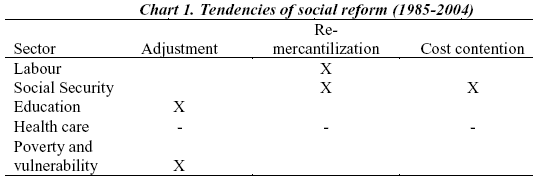
Beyond that simple presentation of the changes of orientation and operations of the principal social policies, it is interesting to group such modifications around a series of analytical dimensions used internationally to determine the orientation that emergent welfare schemes tend to assume after reform processes. Therefore, Pierson (2001) establishes three categories for analysis: adjustment (adaptative modifications of the social policy, either to respond to contemporary social provision demands or to correct distorted dynamics); re-mercantilization (substantial changes in the orientation of the social policy, prioritising the job market as the sphere to obtain welfare and income); and cost cutting (budgetary reduction of the social policy with possibilities of register variations in the level and composition of public spending). Chart 1 describes the main tendencies in social reform using Pierson’s categories.
]]>
The characteristics of the different reformulations of public services reaffirm the appreciations made before, with respect to the moderation of reviews regarding social issues and the hybrid features the national welfare system assumed.
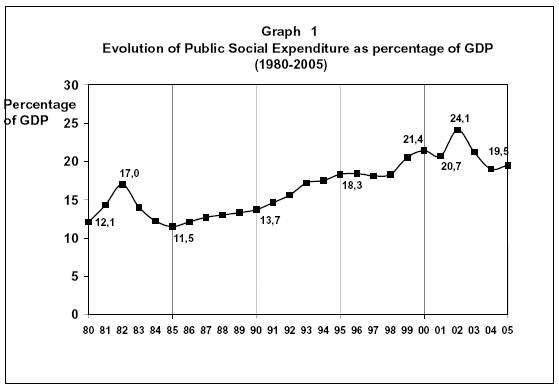
It is relevant to find out whether the group of reforms promoted, apart from trying to adapt to the new social needs, led to any level of reduction in Public Social Expenditure (PSE). Contrary to what one would expect, during the reform phase, the PSE grew in terms of GDP. As graph 1 shows, PSE rose significantly during 1990-1995, from 13,7% in the first year to 18,3% in the last. This took place as a consequence of an increase of spending in social security (as a result of the already mentioned mechanism of readjustment in pensions, as well as because of the need to finance transition costs towards the new provisional system). (Flood et.al. 2005).
]]> 4. The social context: impoverishment and increase of inequity
Even though Uruguay has been historically placed among the least unequal and poor countries of Latin America, during the first years of the XXI century this situation tends to vanish. The current picture of the Uruguayan society suggests a growing process of impoverishment, social fragmentation and loss of equity.
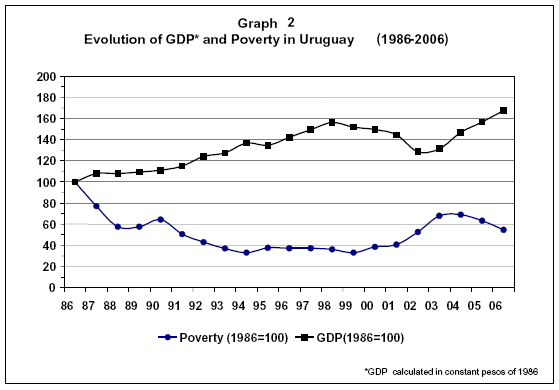
In that sense, several studies indicate that since the redemocratization the evolution of poverty in Uruguay went through three phases until 2004 (De Armas 2005, Amarante et.al. 2005). During a first phase (1985-1994), the incidence of poverty decreased deeply (del 46,2 al 15,3%); on a second phase (1994-1999) the tendency was reversed and the proportion of poor households started to rise; during the third phase, from the economic recession starting in 1998 to 2004 –which includes the economic crisis of 2002– the levels of poverty have risen significantly, reaching a third of the population in the country (32,1% in 2004). However, since 2005 it is possible to identify a new phase in the evolution of poverty. Over the last two years a reduction in the incidence of poverty can be seen, which in 2006 reached 25,2% of the population. (Amarante and Vigorito 2007). It is relevant to point out that despite this favourable evolution, poverty is still at levels above those existing before 20025 crisis.
As graph 2 shows, the evolution of poverty in the last two decades is closely related to the cycles of expansion and contraction suffered by the Uruguayan economy. It is also relevant that there is not a direct relationship between the two variables, this association is mediated by another set of factors, such as public policies, structural reforms or the functioning of the labour market, among other aspects. That is why, for example, during 1996-1998 there was a significant economic growth (near to 5% annually) and, at the same time, the incidence of poverty remained stable.
The specific incidence of poverty among children and youngsters is notorious in comparison to other age groups. In that sense, in 2001 poverty reached 38,5% of the children under 6, whereas it reached 3,9% of the people over 65. The levels of poverty in childhood increased over the last years, and in 2006 climbed up to 46,3% of the children under 6. The generational disparity tended to decrease since the last economic crisis as a consequence of the loss of real value in pensions. (Amarante and Vigorito, 2007).
A similar route to that was the one undergone by indigence. The percentage of people in that situation threefolded during the mentioned economic crisis of 2002, moving from 1,32% in 2001 to 3,92% in 2004. However, in 2006 that percentage fell significantly, reaching 1,65% of the population.
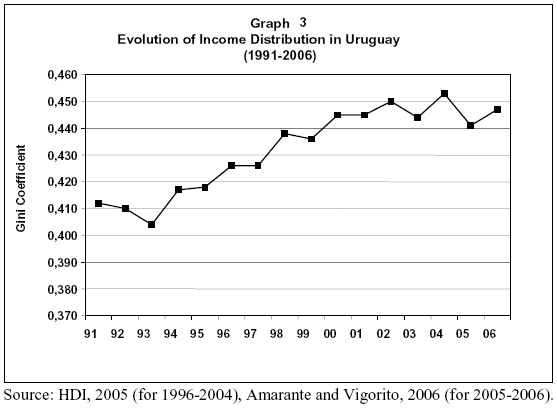
]]> Not only did poverty rise in the country but also did the degree of social inequality. Since the second half of the 90s there has been a slight tendency to concentrate income distribution, which worsened during the crisis. As graph 3 shows, Gini coefficient went from 0,412 in 1991 to 0,450 in 2002, to finally set in 0,447 in 20066.
In this situation of social decay, featured by an increase in poverty and inequality, the left wing comes to office for the first time.
5. The left wing and alternative social policies
One of the relevant political concerns of the left wing in general, since the redefinition of the international parameters of development, was the way to improve the persistent situations of vulnerability and social exclusion in an economic framework of austerity of public spending. (Aust and Arriba 2004). The regional experience shows, as it was pointed out for the Uruguayan case, that even though economic dynamism tends to have a positive impact on severe social problems, at the same time it requires relatively stable public interventions aiming at facing the multiplicity of factors operating in their reproduction (ECLAC, 2006), as well as to control the pattern of inequality in these societies.
The current government began its period in a context of post-crisis economic reactivation, but still carrying a series of social consequences generated by the critical situation the country went through in 2002.
]]> To decipher and interpret the social objectives of this country’s present administration during the first half of its period in office and paying attention to the socioeconomic framework exposed above, it is relevant to incorporate some political antecedents to frame its present behaviour. Among the most relevant are the position it assumed towards the reforms implemented by former governments, as well as their programmatic proposals regarding social issues.The Frente Amplio7, maintained a strong opposition to the orientation assumed by the process of review of social policies, as well as to the prevailing modality of implementing them.
On the other hand, in the party manifesto proposed to win 2004 election, one of the prioritised topics was the social one. To emphasise its relevance, it was presented in public under the name of "Social Uruguay". To build a new country, the leftist coalition manifested its commitment to seek new public parameters which favoured social integration. In that sense, the public discourse of the left wing made one think there was a strong concern to readjust social policies, giving them a certain universal and integral orientation, which, at the same time, would interact with other actions focused on addressing the most urgent social situations (Vázquez 2004).
Therefore, it is necessary to find out about the room for action of the new government, not only to translate its manifesto into specific measures of social protection, but also to sustain those political positions from the recent past. In that sense, the Frente Amplio counted on its own parliamentary majority, which allowed it to pass laws without having to seek agreements with other parties. However, among the main restrictions of the new government there was the high public debt, as well as the rigid structure of the PSE.
In the same way, as a series of economic and political factors pressed to encourage the reformulation of the classic welfare system, it is reasonable to suppose that they will continue operating in some direction, either favouring or being an obstacle to the new reviews and innovations promoted regarding social issues. Surely, international economic patterns, the institutional legacy accumulated over the last years of reform, the clients of services and the emergence of new veto points regarding the adjustment of certain social policies, have some kind of role in the process of installation of the so called Social Uruguay. Apart from these elements it is necessary to consider the ideological orientation of this Administration under the analytical presupposition that it influences the orientations of social reform (Boix 1998).
In those terms, next, the main political measures proposed by this government in the social area are discussed, taking as a framework of reference the same policy arenas previously analysed in order to make comparisons.
Three lines of political direction
Generally speaking, the left wing assumed three specific types of political orientations towards the reformulation of the welfare system in force in the country. One of them is restoration; the other is innovative, and lastly, there is evidence of a cautious handling of a series of reformulated services.
The basic restorative measures are located in the labour area, where the reinstallation of the Consejos de Salarios8 is observed.
The innovative measures focused on different social areas and they acquire a singular political meaning. For example, regarding poverty and vulnerability, a contingency Emergency Plan and afterwards the Equity Plan were launched. There are other two policies which subscribe to this kind of conduction. One of them, specifically social, the health care reform, and the other, expected to have favourable social impacts, the tax reform. Both reforms were stated in the party manifesto and they also were an emblem among the historical claims of the Uruguayan left wing.
]]> In the framework of a cautious political behaviour is the management of the system of public education and social security, specifically, pensions. The review of these services, which were subject to profound reforms during the last decade, was substituted for the creation of room for dialogue among diverse stakeholders involved in those sectoral policies. The creation of those participatory arenas apparently aimed at contributing towards the construction of an acceptable level of consensus, which would work as a starting point to redirect, adjust or confirm the orientation of those social services.This category of cautious behaviour also comprises the controlled increases in PSE, as they were determined by the fiscal space the government had to expand public intervention.
Hence, with the aim of understanding the political meaning of the main social lines promoted by the current government, it is necessary to detail some characteristics of those initiatives.
Social reforms: proposals and debates
The reinstallation of the Consejos de Salarios implied the activation of collective negotiation mechanisms to solve the typical distributive conflicts between capital and labour. The enforcement of this policy is highly meaningful after a long period of labour deregulation, as it tends towards the improvement of salaries in different sectors; at the same time it strengthens the organizations representing interests in those areas: trade unions and chambers of commerce. One of the novelties in the application of these mechanisms was that rural workers were incorporated to these negotiations for the first time in history.
Since the creation of those instances, those unions belonging to the PIT-CNT9, increased the number of members in nearly 100.000 workers. Also, 400 new unions were created (Senatore 2007). Regarding salaries there has been a recovery in real salaries, public and private. In December 2006 the salary index was 11,5% higher than in June 2004 (Notaro 2007).
Even though the Consejos de Salarios account for a great number of workers –440.000 in the private sector, 150.000 in the public sector, and 80.000 rural workers– workers in the domestic service, self-employed workers and non-salaried rural workers (Notaro 2007). Beyond these coverage problems, the Consejos de Salarios have been very dynamic since they were created, providing opportunities for negotiation to workers in general and showing significant productivity in relation to the celebration of labour agreements. In the private sector, 96% of the cases ended up in agreements. (MTSS 2006, quoted in Senatore 2007).
The promotion of this kind of labour policy seems to match the Uruguayan tradition regarding salary negotiation and also the close connection between the left wing and trade unions.
The issues connected with poverty and vulnerability have been prioritized by this administration. Three measures were taken in this regard, all of different nature and projection. Two of them refer to programmes directed to covering the basic or specific needs of groups in situations of social exclusion – Emergency Plan and Equity Plan. The third, in turn, is a strictly institutional initiative, regarding the creation of the Ministry of Social Development in charge of implementing and monitoring the referred programmes and at the same time coordinating the set of social services provided by the State.
The Emergency Plan –PANES, as per its Spanish acronym– was projected as a transitory public intervention, designed to be implemented in the two first years of the administration. It was organised based on seven components which promoted an integral perspective; among them are: basic income (ingreso ciudadano), food support and shelter for homeless people. This programme focused its actions in the indigent social segment, those people showing severe difficulties to secure their physical reproduction. Even though such initiative presented some problems of implementation in its initial phases, at present, when it is nearly finishing, it can be qualified as a successful experience, as it reached the objectives established and the established goal of coverage.10 (Midaglia 2006).
]]> Unlike PANES, the Equity Plan is defined as a long term proposal which seeks to influence in the structure of inequalities in the country, being them socioeconomic, of gender, ethnic, regional, or other. However, in the short term, the objective is to deal with poverty in an ample sense, going beyond the objectives of the PANES. During this first phase it aims at creating a network of social protection, oriented towards correcting the intergenerational social unbalance favouring children and youth, as these age groups are more vulnerable. There are also some complementary interventions directed specifically to poor heads of household and elderly people (Midaglia, 2007). Beyond the novelty of the plan, it is relevant to highlight that its design combines new interventions with classical instruments of social provision, as it is the case of Asignaciones Familiares1112, to respond to the present structure of social risk.The creation of these plans is framed in the creation of the Minsitry of Social Development. This entity aims at reorganizing the sphere of public assistance, not only by implementing and coordinating the mentioned programmes, but also by incorporating a series of social institutions existing in the public sphere –INAU, INAMU, INJU13– which account for new social demands.
Although these modern plans, which include income transfers, have become a generalized strategy in Latin America, Uruguay’s specificity lies in the way they are connected with the other public interventions. Apparently, the objective is that these initiatives become one of the links between universal welfare services and specific social protection programmes.
Beyond social fads, there is no doubt that the ideological bases of the government have played an important part in its involvement in this kind of programmes, as they assume that situations of poverty and inequality are of public responsibility, therefore requiring the action of the State.
Besides, in the social security sphere the existing agenda of reforms is not of relevance. However, the government has promoted the realization of a "National Dialogue on Social Security", so that specialists, civil society stakeholders and the Government can discuss about the main problems the system faces, as well as to make reform proposals. (Busquets and Setaro 2007).
It is remarkable that the social security regime suffered the most radical change in its orientation compared to other social services, as it included the market – private agents – in the production of welfare, giving it a liberal profile. The implementation of this system in the 90s led to a high degree of political and social conflict and surely its modification would not be free from strong political vetoes and tensions.
The political strategy of this dialogue is presented as a shortcut that would create the right environment to discuss and evaluate the different alternatives of change or adjustment of the system. Beyond these general assumptions, the implementation of this means of exchange and participation is based on three main reasons. First, in the government there is no consensus with regard to the kind of reform that should be promoted. Some governmental actors claim that it is necessary to eliminate the pillar of individual capitalization, whereas others reject that possibility. Secondly, the system in force at present has led to the creation of private agents (AFAPs14) in favour of maintaining the regime. At the same time, the costs of modifying the system are also considerable, its ten years of functioning have produced a "small" historic legacy, resistant to transformations. Last, from the academia there have been some diagnoses that point to a series of relevant problems in the present social security system. In that sense, a recent study underscores the risk of a relevant percentage of workers will be excluded from the general regime of pensions in the forthcoming years, as they will not fulfil the requirement of 35 years of service when they get to the usual age for retirement15 (Bucheli et.al. 2006).
State education, for the time being, has not been subject to revision by the present administration and it seems there is no political time to initiate a change in the system. As it was stated before, state education of primary and mid level was part of the reform process in the 90s. Unlike the prevailing orientation in this and other sectors, its format of adjustment implied a greater participation of the State. Even though in this period minor modifications were introduced in the system16, this does not necessarily mean the government does not see the sector as important; in fact, it received budgetary increases, and at the same time the electoral promise of reaching 4,5% of GDP by the end of the mandate still remains. (Mancebo and Bentancur 2007). The government’s behaviour, scarcely propositive or innovative in this field, tended to be corrected, the same happened with social security, through the promotion of a singular initiative: the so called "Education Debate" carried out in 2006. In this series of meetings, of ample participation (with a crucial role played by the state education unions) a series of proposals came up which were presented to the authorities of education and to the representatives of political parties, as well as some recommendations to design a new Education Law to deal with different aspects of the system, among them, the governance of the education system. (Mancebo and Bentancur 2007).
The Education Debate became a political instrument with different objectives. One of them is the generation of a consensus that would allow incorporating the necessary adjustments to improve the functioning and social results of the sector. Another could be to strengthen the political decision of postponing reforms in the sector in the near future. This, because of the high level of conflict it would lead to, given the strength and position of the actors involved, or because of the need to prioritize other areas of public reconversion in this period in office.
Last, it is relevant to mention an additional problem in the educational field, as the statist orientation of the reform of the 90s does not seem to differ from the ideological position the left wing coalition has regarding social policies.
]]> Besides, the government has started implementing an ambitious health care reform, oriented towards the creation of a National Integrated Health System (SNIS, as per Spanish acronym)17. The main objective of this new system is to ensure universal access to health care services, guided by the principles of equity, quality and decentralization (Law of creation of the SNIS).The innovations in this proposal are in three areas: i) the model of health care, by prioritizing the primary level of attention; ii) the management system, through the connection between private and state services, with a central body of governance –the "Junta Nacional de Salud"18–, and finally, iii) the financing and spending system, through the creation of a single fund for health –FONASA, as per its Spanish acronym– administered centrally19. The users of the system will have the right to their health assistance, their children’s under 18 and in the future, their spouses’. Besides, civil servants are incorporated to the formal health system. In that sense, according to the official forecast, 30.000 civil servants will be incorporated to the system (starting on August 1, 2007) and 500.000 children under 18 (since January 2008) (Fernández Galeano, 2007).
Institutions of collective medical assistance, non-profit institutions of private medical assistance and medical insurance systems currently functioning will be able to become part of the SNIS, as well as the health care services managed by the State –ASSE. This way, the bases for a competition dynamic between the public and private poles are created. The expectation is that strengthening the public sector will enable greater equity of the services offered by both subsystems.
Among other innovations, it is intended that the FONASA pay a "health instalment" to the suppliers, according to the services they provide. Such instalments will vary according to the risks of the different sectors of the population, which will be determined by the users’ sex and age. This way the stimuli from "adverse selection" are avoided, that is, the prioritisation of groups that experiment minor sanitary problems, as it happens nowadays. (Olesker, 2007).
Besides, the governance of the SNIS will be given to a Health Council, which will be in charge of planning, directing and controlling the functioning of the system and of managing the National Health Insurance20.
It is apparent that the reform tends to prioritize the public system and it could be supposed that this will improve the assistance of the population segments which use the services in that sphere. Beyond the potential social impact of the projected health reform, it still has to overcome important political veto as well as the opposition of groups or "corporations" who benefited, or at least were not affected, from the old system.
Finally, one of the structural modifications of most relevance being carried out by the government is the tax reform. Even though it is not a social policy, strictly speaking, it is a privileged distributive or redistributive instrument. The reform has four main goals: i) to generate greater equity in the tax system, relating tax pressure with the different social sectors capacity to contribute; ii) to increase the efficiency of the system; iii) to stimulate productive investments and employment; and iv) to satisfy the financial needs of the State (MEF, 2006). To that end, the reform simplifies the tax structure, reduces the weigh of indirect taxes and, at the same time, it strengthens direct taxes by introducing the income tax21.
It is important to make special reference to the Income Tax (IRPF,as per its Spanish acronym), which was timely announced by the left in the framework of its electoral-programmatic proposals and which constitutes the main innovation of the new regime. The IRPF is a kind of the so called "dual" tax system, whose main characteristic is differential treatment of income from work, compared to income from capital. In that sense, salaries and pensions are taxed with progressive rates applied to each income band (between 10% and 25%, with a minimum amount, non-taxable), whereas income from capital has a fixed rate (12%). The non-taxable minimum amount of IRPF excludes an important percentage of population from the obligation of paying taxes, which reaches almost 60%. This makes a difference with the previous system, where only 30% of workers were exonerated from the so called "personal income tax" (IRP) (Perazzo and Rodríguez, 2006).
On the other hand, consumption taxes are modified since the elimination of the Social Security Tax (COFIS, as per its Spanish acronym, of 3%) and the reduction of the VAT, whose value drops from 23 to 22% and the minimum rate from 14 to 10%. The objective is to reduce the weigh of indirect taxes on the global tax structure – which in the former system reached 72,3% of the total collection – considering that those taxes tend to be regressive (Perazzo and Rodríguez 2006). However, other goods and services, which in the former regime did not pay such tax, are added to the VAT.
Among other relevant innovations, are the modifications to the "Single taxation " regime, so that it becomes a tool for social inclusion and labour formalization. The incorporation of workers who develop low income entrepreneurial activities is sought. These will pay a single tax (substituting all other national taxes and with a relatively low cost) and they will have access to Social Security.
]]> Although predicting the distributive impacts of the tax reform is a complex matter, particularly due to the difficulties to estimate the results of many of the modifications done, it is possible, however, to present some estimations.A recent paper shows that the first decile of income (the poorest) would be the most benefited with the reform, because it would be exempt of the IRPF and at the same time it would increase its available income as a consequence of the lowering of indirect taxes. Regarding the mid deciles of the chart, the aforementioned study concludes that the benefits gained from a lesser IRPF rate would be partially countered by a greater expense in VAT (mainly because of the extension of the VAT on health and transport, which were exempt of it before). Finally, the two deciles which concentrate the richest population would increase their contribution through the IRPF and with taxation over the other sources of income that are presently exonerated. (Perazzo y Rodríguez 2006).
In accordance with the argument of the aforementioned study, official evaluations point out that the tax changes would mean an increase of the available income for households located between the first and eighth deciles, whereas the richest households (ninth and tenth deciles) would see a decrease of their available income because of the greater tax load. (MEF, 2007). Likewise, estimations made by Barreix and Roca (2007: 136) point out that the dual income tax would improve the distribution of income in more than two points of the Gini coefficient.
So, in a general sense and according to different analysis, the new tax system would have positive effects regarding equity. However, as has been already stated before, it is necessary to wait until the results of the tax reform are measured after some time, so that we know the social impacts of the new system.
In order to bring about this set of reforms and new social initiatives, the government increased their PSE in a controlled manner. From 2005 it is possible to verify that the PSE / GDP ratio increases (from 19% in 2004 to 19,5% in 2005), a fact that seems to be consolidated since the Budget Law 2005-2009 and the Ley de Rendición de Cuentas22 bill 2006 (Bertoni and Azar 2006). Said bill suggests the strengthening of the trend to give more macroeconomic priority to PSE23. The budget entries aimed at financing the new initiatives – PANES and Equity plan –, budget for Education, as well as destined to drive reform in traditionally blocked sectors like Health care.
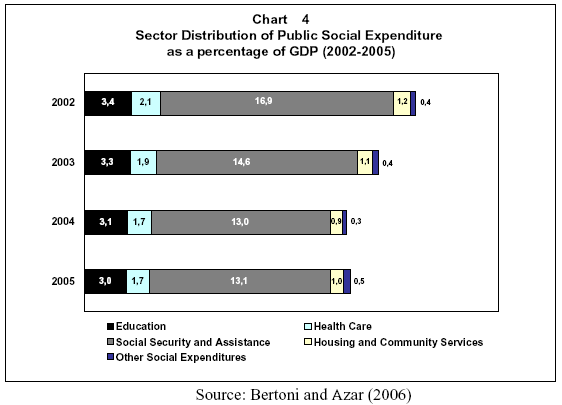
When observing the sector distribution of PSE it is noticeable that it is strongly concentrated in social security (68,8% is the mean of the 2002-2005 period, equivalent to a 14% of GDP), followed by Education (15,5% of PSE and about a 3% of GDP) and Health care(8,8% of PSE and roughly a 1,9% of GDP) (Bertoni and Azar 2006). It is likely that the set of social initiatives taken by the current government do not change significantly the sector structure of expenditure allocation.
]]>
6. Welfare the left-wing way
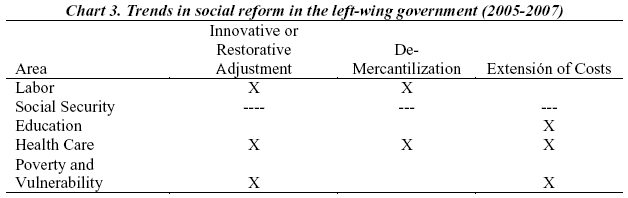
In an attempt to provide an analytical framework to the welfare system modifications made by the left-wing government, P. Pierson’s typology about social reforms was used. The categories of his schema were adjusted in order to capture the orientation of the main social initiatives taken by the current Administration.
The chart that follows shows a synthesis of the main policy lines of the social reform, taking three relevant dimensions of analysis:: adjustment, which includes updating the contents of the policy and may be presented as an innovative or restorative change, the tendency to demercantilization, which involves the social policy deeming the service as a right to be guaranteed by the State; and finally, the extension of costs, which refers to the expansion of public expenditure or budget in the area of reform.
Broadly, the present Administration made a series of innovations and adjustments in a set of social services. These changes seem to be different from those implemented in the past. The general direction of these changes is a repositioning of the State as a social protection agent. The State assumes this role by regulating the salary standards, competing in and managing the supply of basic public goods and taking responsibility to address poverty and vulnerability situations. To these features it is added the reformulation of an essential public policy regarding the determination of the new distribution rules that shape a country, as is the Tax Reform.
Even though the impacts of some of the reforms driven by the government are not yet known in detail –as for instance, health care and tax reform-, estimations suggest an improvement in the distribution of Welfare and, thus, in the equity parameters that the society will adopt. The design and the announcement of the implementation of these two public policies (Health Care and Tax), provoked serious political opposition from political parties, organized interest groups and the high and mid-high social strata who consider themselves affected by these reforms. These political vetoes could translate in the future into electoral punishments as a consequence of significant change in the existing public systems. (Pierson 1993). Notwithstanding, the government seems to be determined to take those risks and, somehow, persuade the citizenship or at least try to modify their preferences and interests, as was done in the past, on occasion of the instauration of the classic Welfare matrix. Thus, the current Administration shows a certain strength and determination that some changes are essential, not only to avoid the deterioration of basic social services, but also to establish some minimum norms of social justice.
7. Final Considerations
It is pertinent to state that the left-wing government has been active in the issue of social reforms. In the matter of two and a half years in office it introduced a set of important modifications in areas and sectors of public relevance –labour, health care, poverty and tax–. Notwithstanding, up to this moment, the orientation of other social policies that are highly significant to address some risk factors –social security and education- has not been defined. The absence of initiatives of change in said sectors was substituted by the implementation of participation spaces with the goal of agreeing on some basic policy lines to correct those services. On the other hand, those and other areas benefited from budgetary increases which will allow them to somehow improve their work.
]]> Among the main social concerns of the government is the search to address the most pressing social problems, namely those that affect poor children and teenagers. This priority is evidenced in the approval of the measures that constitute the "hard core" of the Equity Plan.It is clear that the prevalent orientation of the review and generation of new social policies is geared towards a reduction of existing inequities. Accordingly, there are expectations that the Tax Reform, labour policies –particularly Consejos de Salarios- and programs directed to diminishing the impact of poverty – Emergency plan and Equity plan- have positive impacts in this matter.
On the other hand, this Administration tries to recover the historic legacy of Welfare, re-using some classic instruments, by adapting them to the social context of reference and, on occasion, combining them with new strategies –Asignaciones Familiares framed in the Equity Plan, Consejos de Salarios.
An additional novelty that was promoted in this period is the creation of the Social Ministry, an entity specialized on the treatment of poverty situations and the management of new social demands –gender, childhood and youth-. The inauguration of this new public organism, besides addressing said problems, also seems to be an attempt to order the dispersion of social services; particularly those related to social protection and assistance. Anyway, it is still unknown whether this institution will have the effective capacity to coordinate that set of measures.
Beyond the innovations and revisions put forward by the government, it does not seem that the preceding reforms promoted by past governments are to be significantly reversed. There is a tendency to keep a mixed pattern in social services, in which services with different orientations coexist, generating a relatively hybrid welfare and protection matrix.
However, it is evidenced a sustained increase of the level of State intervention in social issues, especially in some areas like health care, labour and poverty.
This -more statist- pattern, -in other words, a moderate statist pattern- seems to respond to the ideological and manifesto basis of the left, which tends to bring about public and collective solutions to social problems.
Still pending is a set of institutional and political challenges to apply and sustain the projected reforms; Also pending are the possibilities to introduce modifications in the distribution of social expenditure to address the needs of the most vulnerable groups; as well as to guarantee high quality services that respond to the current configuration of social risks.
References
]]>Amarante, Verónica and Andrea Vigorito. 2007. Evolución de la Pobreza en el Uruguay 2001 – 2006. Montevideo: Instituto Nacional de Estadística. Programa de las Naciones Unidas para el Desarrollo. UNFPA. [ Links ]
Amarante, Verónica, Rodrigo Arim, Mónica Rubio, and Andrea Vigorito. 2005. "Pobreza, Red de Protección Social y Situación de la Infancia en Uruguay". Serie de Estudios Económicos y Sociales. Washington: Banco Interamericano de Desarrollo. [ Links ]
Aust, Andrea and Ana Arriba. 2004. Policy reforms and discourses in social assistance in the 1990s: Towards 'activation'? Working Paper 04-11. Madrid: Unidad de Políticas Comparadas. CSIC. [ Links ]
Barreix, Alberto and Jerónimo Roca. 2007. "Reforzando un pilar fiscal: el impuesto a la renta dual a la uruguaya", en Revista de la CEPAL N° 92, pp. 123-143. Santiago de Chile: CEPAL [ Links ]
Bertoni, Reto and Paola Azar. 2006. Identificación y análisis del Gasto Público Social en Uruguay 2002-2005. Montevideo: Ministerio de Desarrollo Social-Universidad de la República. [ Links ]
Bucheli, Marisa, Natalia Ferreira-Coimbra, Álvaro Forteza, e Ianina Rossi. 2006. "El Acceso a la Jubilación o Pensión en Uruguay: ¿Cuántos y Quiénes lo Lograrían?". Documento No. 01/06. Montevideo: Departamento de Economía, Facultad de Ciencias Sociales, Universidad de la República. [ Links ]
Busquets, José Miguel and Marcelo Setaro. 2007. "Preparando las ideas y los actores para una futura reforma", en Informe de Coyuntura 2007. La hora de las reformas. Gobierno, actores y políticas en el Uruguay 2006-2007. Instituto de Ciencia Política, Facultad de Ciencias Sociales, Universidad de la República. Montevideo: Ediciones de Banda Oriental. [ Links ]
Busquets, José Miguel. 2002. "Análisis comparativo de la reforma de la seguridad social en Uruguay" en Uruguay: La reforma del Estado y las políticas públicas en la democracia restaurada. 1985-2000). Colección Política Viva. Montevideo: Ediciones de la Banda Oriental e Instituto de Ciencia Política. [ Links ]
Castellano, Ernesto. 1996. "Uruguay: Un caso de bienestar de partidos". Revista Uruguaya de Ciencia Política, No 9. Montevideo: ICP-FCS. [ Links ]
Castiglioni, Rossana. 2005. The Politics of Social Policy change in Chile and Uruguay. Retrenchment versus maintenance. 1973–1998. New York & London: Routledge. [ Links ]
Comisión Económica para América Latina - CEPAL. 2006. La protección social de cara al futuro: Acceso, financiamiento y solidaridad. Trigésimo primer período de sesiones de la CEPAL. Montevideo: CEPAL [ Links ]
De Armas, Gustavo. 2005. "De la sociedad hiperintegrada al país fragmentado. Crónica del último tramo de un largo recorrido", en Gerardo Caetano. (ed.), 20 años de democracia. Uruguay 1985-2005: Miradas Múltiple. Montevideo: Ediciones Santillana. [ Links ]
del Pino, Eloisa and César Colino. 2006. "¿Cómo y por qué se reforman los Estados de bienestar? Avances y retos teóricos y metodológicos en la agenda de investigación actual", en del Pino, Eloisa and César Colino (coords.), Zona Abierta 114/115. La reforma del Estado de bienestar. Madrid: Siglo XXI de España Editores. [ Links ]
Esping-Andersen, Gosta. 1990. Three Worlds of Welfare Capitalism. Cambridge: Polity Press. [ Links ]
Fernández Galeano, Miguel. 2007. Declaraciones en: "El Sistema Nacional Integrado de Salud incorporará a medio millón de niños". Diario La República. 19 de mayo 2007. Año 8. Nº 2553, Montevideo. [ Links ]
Ferreira-Coimbra, Natalia and Álvaro Forteza. 2004. Protección social en Uruguay: Financiamiento, cobertura y desempeño 1990-2002. Santiago de Chile: Oficina Internacional del Trabajo. [ Links ]
Filgueira Carlos H; Bruera, Silvana, González, Mariana and Midaglia, Carmen. 1989. "De la Transición a la Consolidación Democrática: Imágenes and Cultura Política en el Uruguay". Serie Informes, No 38. Montevideo: CIESU. [ Links ]
Filgueira, Fernando. 1998. "El nuevo modelo de prestaciones sociales en América Latina: residualismo, eficiencia y ciudadanía estratificada" en Brian Roberts. ed.) Ciudadanía y Política Sociales. San José de Costa Rica: FLACSO/SSRC. [ Links ]
Filgueira, Fernando; Rodríguez, Federico; Rafaniello, Claudia; Lijtenstein, Sergio; Alegre, Pablo. 2005. "Estructura de riesgo y arquitectura de protección social en el Uruguay: crónica de un divorcio anunciado", en Revista Prisma 21. Dilemas sociales and alternativas distributivas en Uruguay. Montevideo: IPES-Universidad Católica. [ Links ]
Flood, Cristina; Grau, Carlos and Melgar, Alicia. 2005. "Análisis del gasto público social", Serie de Estudios económicos y sociales. Washington: Banco Interamericano de Desarrollo. [ Links ]
Geddes, Barbara. 1994. "Challenging the Conventional Wisdom" en Journal of Democracy: Economic Reform and Democracy. October 1994, pp. 104-118. [ Links ]
Gough, Ian and Wood, Geog. 2004. "Introduction" en Ian Gough and Geof Wood. org) Insecurity and Welfare Regimes in Asia, Africa and Latin America. Cambridge: Cambridge University Press. [ Links ]
Hall, Peter. 1986. Governing the Economy: The politics of State Intervention in Britain and France. New York: Oxford University Press. [ Links ]
Instituto de Economía. 2003. "Consideraciones sobre los cambios en la línea de pobreza del INE. 2002". Serie Documentos de Trabajo DT 06/03. Montevideo: Facultad de Ciencias Económicas y de Administración, Universidad de la República. [ Links ]
Lanzaro, Jorge. 2004. "La reforma educativa en Uruguay. 1995-2000. virtudes and problemas de una iniciativa heterodoxa". Serie de Políticas Sociales. Santiago de Chile: CEPAL. [ Links ]
Lanzaro, Jorge. 2003. "Fundamentos de la Democracia Pluralista and estructura política del Estado en Uruguay", en Revista Uruguaya de Ciencia Política Nº 14. Montevideo: Ediciones de la Banda Oriental - Instituto de Ciencia Política. [ Links ]
Mancebo, María Ester. 2002. "La larga marcha de una reforma exitosa: de la formulación a la implementación de políticas educativas", en Mancebo, María Ester, Pedro Narbondo and Conrado Ramos. (comp.), Uruguay: La reforma del estado y las políticas públicas en la democracia restaurada. 1985-2000). Colección Política Viva. Montevideo: Ediciones de la Banda Oriental – Instituto de Ciencia Política. [ Links ]
Mancebo, María Ester and Nicolás Bentancur. 2007. "Políticas educativas 2006", en Informe de Coyuntura Nº 7. La hora de las reformas. Gobierno, actores and políticas en el Uruguay 2006-2007. Montevideo: Ediciones de Banda Oriental - Instituto de Ciencia Política. [ Links ]
Midaglia, Carmen. 2007. "Plan de Equidad", en Informe de Coyuntura Nº 7. La hora de las reformas. Gobierno, actores y políticas en el Uruguay 2006-2007. Montevideo: Ediciones de Banda Oriental - Instituto de Ciencia Política. [ Links ]
Midaglia, Carmen. 2006. "El Plan de Emergencia", en Informe de Coyuntura Nº 6. ¿y ahora? El primer ciclo del gobierno de izquierda en Uruguay. Montevideo: Ediciones de Banda Oriental - Instituto de Ciencia Política. [ Links ]
Midaglia, Carmen. 2000. Alternativas de Protección a la infancia carenciada. La peculiar convivencia de lo público y lo privado en el Uruguay. Buenos Aires: Ed. CLACSO-Asdi. [ Links ]
Midaglia, Carmen and Marcelo Castillo. 2007. "Reforma social y sistema de protección: argumentos para la direccionalidad política de las intervenciones públicas", Universidad de Guadalajara (mimeo.). [ Links ]
Midaglia, Carmen; Florencia Antía and Marcelo Castillo. 2006. Las tercerizaciones de las prestaciones sociales: un debate político inconcluso. Informe de Consultoría, Montevideo: Oficina de Planeamiento y Presupuesto. [ Links ]
Moreira, Constanza and Marcelo Setaro. 2000. "Alternativas de reforma del sistema de salud en Uruguay", en Mancebo, María Ester, Pedro Narbondo and Conrado Ramos. (comp.), Uruguay: La reforma del estado y las políticas públicas en la democracia restaurada. (1985-2000). Colección Política Viva. Montevideo: Ediciones de la Banda Oriental – Instituto de Ciencia Política. [ Links ]
Moreira, Fernando. 2003. Uruguay: ¿Un Estado Socialdemócrata? Tesis de Licenciatura en Ciencia Política. Montevideo: Instituto de Ciencia Política – Facultad de Ciencias Sociales Universidad de la República (mimeo.). [ Links ]
Ministerio de Economía y Finanzas. 2007. Proyecto de Ley de Rendición de Cuentas. Informe Económico. Montevideo: Ministerio de Economía y Finanzas. [ Links ]
Ministerio de Economía y Finanzas. 2007. "Los beneficios del nuevo sistema tributario", Disponible en www.uruguayavanza.gub.uy [ Links ]
Ministerio de Economía y Finanzas. 2006. Proyecto de Ley de reforma del sistema tributario. Exposición de motivos, 2006. Montevideo: Ministerio de Economía y Finanzas. [ Links ]
Ministerio de Salud Pública. 2006. Proyecto de Ley de Creación del Sistema Nacional Integrado de Salud. Montevideo: Ministerio de Salud Pública. [ Links ]
Ministerio de Salud Pública. 2006. Proyecto de Ley Administración de los Servicios de Salud del Estado. Creación como servicio descentralizado. Montevideo: Ministerio de Salud Pública. [ Links ]
Ministerio de Salud Pública. 2006. Proyecto de ley Creación del Fondo Nacional de Salud. Montevideo: Ministerio de Salud Pública. [ Links ]
Ministerio de Trabajo y Seguridad Social. 2006. Memoria Anual del MTSS. Montevideo: Ministerio de Trabajo y Seguridad Social. [ Links ]
Notaro, Jorge. 2007. "Los Consejos de Salarios en el Uruguay 2005-2006". Serie Documentos de Trabajo DT 04/07 Montevideo: Instituto de Economía, Facultad de Ciencias Económicas y de Administración, Universidad de la República, Montevideo. [ Links ]
Olesker, Daniel. 2007. Entrevista a Daniel Olesker, Radio Espectador. 7 de junio de 2007. Montevideo. Disponible en: www.espectador.com [ Links ]
Perazzo, Ivone and Sandra Rodríguez. 2006. Impactos de la Reforma Tributaria sobre los ingresos de los hogares. Montevideo: Instituto de Economía, Facultad de Ciencias Económicas y de Administración, Universidad de la República. [ Links ]
Pereira, Javier, Lucía Monteiro and Dense Gelber. 2005. "Cambios estructurales y nueva configuración de riesgos: desbalances e inequidades en el sistema de salud uruguayo", en Revista Prisma nº 21, Dilemas sociales y alternativas distributivas en Uruguay. Montevideo: Universidad Católica del Uruguay. [ Links ]
Pierson, Paul. 2001. "Sobrellevando la austeridad permanente. Reestructuración del Estado de bienestar en las democracias desarrolladas", en del Pino, Eloisa and César Colino (coords.) Zona Abierta 114/115. La reforma del Estado de bienestar. Madrid: Siglo XXI de España Editores. [ Links ]
Pierson, Paul. 1993. "When Effect Becomes Cause: Policy Feedback and Political Change," World Politics, Vol. 45, No. 4, July. [ Links ]
Programa de las Naciones Unidas para el Desarrollo. 2005. Desarrollo humano en Uruguay, 2005. Hacia una estrategia de desarrollo basado en el conocimiento. Vigorito, Andrea and Lucía Pittaluga (coord.), Montevideo: PNUD. [ Links ]
Rodríguez, Juan Manuel. 2005. "Hacia una mayor articulación entre las políticas activas y pasivas", en Uruguay: empleo y protección social. De la crisis al crecimiento. Santiago de Chile: Oficina Internacional del Trabajo. [ Links ]
Senatore, Luis. 2006. "Las relaciones laborales". En Informe de Coyuntura Nº 6. ¿Y ahora? El primer ciclo del gobierno de izquierda en Uruguay. Montevideo: Ediciones de Banda Oriental - Instituto de Ciencia Política. [ Links ]
Senatore, Luis. 2007. "Las relaciones laborales". En Informe de Coyuntura Nº 7, La hora de las reformas. Gobierno, actores y políticas en el Uruguay 2006-2007. Montevideo: Ediciones de Banda Oriental - Instituto de Ciencia Política.. [ Links ]
Skocpol, Theda. 1992. Protecting soldiers and mothers: the political origins of Social Policy in the United States, Cambridge: Cambridge University Press. [ Links ]
Taylor-Gooby, Peter; Daguerre, Anne. 2002. State of the Art Paper: The New Context of Welfare. Disponible en: http://www.kent.ac.uk/wramsoc/workingpapers/index.htm [ Links ]
Vázquez, Tabaré. 2004. Ponencia del Dr. Tabaré Vázquez. Seminario "El Uruguay social". Ciclo Una transición responsable. 6 de setiembre 2004. Disponible en: http://www.epfaprensa.org/hnnoticia.cgi?110,21,0,0,,0 [ Links ]
1 Generally speaking, the new development model implied economic opening, financial liberalization and reduction of the role of the State, in line with the orientations summarised in the "Washington Consensus" (Williamson, 1989).
2 Nacional and Colorado party.
3 Previous to the approval of this reform, in 1989 a constitutional amendment was introduced, by means of a plebiscite, to modify the pattern of adjustment of pensions, which enabled the real value of these services to duplicate in ten years. Even though this modification had a positive impact on the situation of poverty of more than a third of the beneficiaries, it simultaneously generated an increase in public spending which led to an increase in fiscal deficit. Political concern regarding this situation turned into the elaboration of a set of proposals to change the system, which did not have enough support to be processed. ]]>
4 Notwithstanding, 1987 law 15.903 created the National Administration of Health Services (ASSE, as per Spanish acronym) as a specialized organism in the Ministry of Health. The creation of such entity was the main innovation on the field of the last four democratic governments led by traditional parties.
5 The data on poverty used here are based on a measurement of poverty following the income meted. The National Institute of Statistics (INE) produces information on poverty based on two lines, one developed in 1996 and the other in 2002. We have chosen to include data corresponding to the Poverty Line 2002.
6 Gini coefficient offers a summary of the information of income distribution in the whole population, showing how far is real income distribution from a perfectly egalitarian distribution. The Gini coefficient varies between 0and 1, the higher the value, the most uneven the distribution of income.
7 Left wing party which won the national elections for the first time in 2005.
8 Instances of collective negotiation created to ensure the rights of workers, with participation of workers and employers, mediated by the State.
9 PIT-CNT is the unified workers‘ union.
10 The Emergency Plan embraces 76.991 households which means 337.240 people. (MIDES, Dirección de Evaluación y Monitoreo, 2006)
11 A policy that provides an income to families with children below a certain income -translator’s note
12 An increase in scope and in the amount of Asignaciones Familiares aiming at poor households with kids and adolescents will be defined.
13 INAU: National Institute for Children and Adolescents in Uruguay; INAMU: National Institute for Women; INJU: National Institute for the Youth. –translator’s note ]]>
14 Private Social Security Providers
15 According to the estimations of the study, only 24% of the workers will reach 35 years of service at 60, and 42% will do so at 65. This problem is greater in the private sector and among workers of lower income. (Bucheli, et. all., 2006).
16 Among them, we can highlight the programmes called Community Teachers and Community Classrooms, oriented towards providing specific pedagogical support to children and adolescents with poor academic results, who generally belong to poor households.
17 In this framework, three law bills were elaborated: law of creation of the FONASA, passed by Parliament, the project to create a SNIS and the project to decentralize ASSE, both currently being studied in Parliament.
18 National Health Committee. (translator’s note)
19 The FONASA will be funded with the contributions of the State and private businesses according to the people they provide services for. There will also be other contributors – according to their income level – such as private and state workers, pensioners and people who perceive rental income. Finally, the fiscal contribution of the government is also considered, through budgetary and extra budgetary contributions.
20 The law bill considers this Council to be a decentralized agency, composed of seven members: four members from the Executive branch and three representatives from suppliers, organized workers and system users.
21 We will not make here a detailed description of all the components of the new tax system, but of those modifications that may have greater distributive impact.
22 Budget accountability and adjustment law
23 The Economic Report (2007) which accompanies the Ley de Rendición de Cuentas bill of 2006 points out that he modifications included in this bill, added with the Rendición de Cuentas 2005, will determine a total PSE increase of more than two percentage points of GDP in the five year period