
Diego GonnetI; Diego HernándezII
IBA in Political Science. Researcher, Programa de Investigación en Seguridad Regional, Fuerzas Armadas, Política y Sociedad, Instituto de Ciencia Política, UDELAR, Montevideo. gonnetcp@gmail.com
IIBA in Anthopology. Master student in Sociology, Universidad de la República, Montevideo. Director of Observatorio de Política Exterior Uruguaya, Facultad de Ciencias Sociales, UDELAR. diegohernandeznilson@gmail.com
Translated by Diego Gonnet
Translation from Cuadernos del claeh, 2.ª serie, año 31, n. º 94-95, 2007/1-2 pp. 59-89
The paper is a contribution to the public debate on the foundations and effects of Uruguay's participation in un Peacekeeping Operations as an instrument of foreign policy. In the first section we offer a brief description of the origins and historic evolution of un Peacekeeping Operations. In the second we examine the Uruguayan participation in these Operations. In the third section, the links between this participation and the country's international insertion strategy are observed. The fourth is devoted to analysing to which the extent is the policy of participation in un Peacekeeping Operations coherent with the reasons used to justify it. Finally, we present the main conclusions of this work.
Keywords: peacekeeping operations, foreign affaires, Uruguay.
Introduction
United Nations-led peace-keeping operations have become an important policy tool within the international system. Its declared objective is to achieve security and stability for the international community. In its simplest version, peace operations could be described as military, constabulary or civilian international interventions, which main aim is to impede belligerent fractions to keep on fighting, and to promote conciliatory processes. (Wins, 2007: 20)
Uruguay has participated in these missions since they began, and its involvement has become increasingly significant in the last 20 years. Nowadays, Uruguay is within the top ten troop contributors to UN-led peace operations. Academics, politicians and military officers have frequently described such participation as a tool to enhance the country's insertion in the international community and as a tool of its foreign policy. (MDN, 2005; MDN/PNUD/UdelaR, 2006; Zubriggen, 2005; Wins, 2007). This claim is correct if ‘foreign policy' is understood simply as any activity developed by the national political system and directed to influence foreign subjects and processes. (Pérez Antón, 2003: 129. Van Klaveren, 1984: 15-16).
According to its Uruguayan advocates, participation in these operations promotes the country's foreign policy in two ways. First, it is consistent with a set of principles which have historically driven Uruguayan foreign policy, such as the preference for multilateral action. Second, it opens opportunities for achieving concrete national political and economic goals.
However, we affirm here that it is not clear that participation in peace operations as it had been developed until now actually helps to advance these principles and objectives. Some evidence is provided which indicates that Uruguayan peace operations' policy design and implementation is deeply influenced by needs and interests different from those related to foreign policy. Particularly, some characteristics of this participation seem to indicate that it is in fact developed as a tool of military policy; i.e. it pursues goals related to the defence sector needs. From this perspective, Uruguayan participation in peace operations would not fall into the most rigorous definition of foreign policy as these political activities through which a state promotes its interests in relation to other states. (Wilhelmy, 1988: 148)
]]> In short, the article analyses to what extent cans, Uruguay's participation in peace operations, be considered as part of the country's efforts for international integration. First, a brief characterization of UN-led peace operations is offered. Then, the quality and extent of Uruguay's involvement in these operations is revised. Thirdly, its consequences for the country's foreign policy are depicted. Fourthly, we revise the main arguments which have been held to support the idea that peace operations contribute to the national foreign policy's objectives. Finally, we suggest an analytical scheme for better understanding this problem and we present our conclusions.
1. The importance of Peace Operations in the United Nations System
In this section the importance of peace operations within the United Nations system is reviewed. These operations are also briefly depicted, taking into account its evolution in the period 1948-2006.
As article 1 of the UN Charter indicates, the organization's main purpose is
"To maintain international peace and security, and to that end: to take effective collective measures for the prevention and removal of threats to the peace, and for the suppression of acts of aggression or other breaches of the peace…" (UN, 2007)
Later in the same document, the UN Security Council is given the "…main responsibility…" for achieving this goal, while in chapters VI (Arts. 33 to 38) and VII (Arts. 39 to 51), the duties of the organization and its members regarding "Pacific Settlement of Disputes" and "Action with respect to threats to the peace… and acts of aggression…"are defined.
Notwithstanding that, and contrary to what it is usually affirmed, the Charter does not mention peace operations as they are currently performed. In effect, as Hansen, Ramsbotham y Woodhouse affirm,
]]> "The concept of ‘peace-keeping' cannot be easily defined since it is not explicitly included in the UN Charter. It was established through different situational demands and precedents (…). Chapter VI refers to the techniques the Security Council may adopt when looking for pacific settlement of disputes, such as mediation, arbitration, negotiation and investigation. Chapter VII gives the Security Council the power to impose its decisions, including the use of armed forces when necessary to maintain or restore international peace and security". (Hansen, Ramsbotham & Woodhouse, 2001:2)
In particular, the Charter does not include clear or detailed enough references on the procedure through which the consent of the belligerent parts must be expressed in order to allow the Security Council to deliver troops to a certain place. Nor anything is said on what procedure should be followed in the probable case when the belligerent parts are more than two and not all of them accept UN's intervention.
This lack of clarity or detail can be expected in a document such as the Charter, which should raise the approval of the largest possible number of signatories. And it did not prevent the Security Council from early exerting its powers on these matters, even using military forces. In effect, as early as in 1948, the Council created UNVT, an organism dedicated to supervise the truce agreed by Israel, Egypt, Jordan, Lebanon and Syria, considered as the first peace operation. In that case, the military involvement was limited to a small number of officers who must observe that the conditions included in the peace accords were respected. In perspective, the creation of a multinational group subjected to a multilateral organism and dedicated to supervise an armistice was a significant event. It might be considered as the first step for introducing a new modus operand for conflict resolution in the international system at that time.
The following year the Security Council created UNMOGIP (still in place), a mission of military observers (small group of unarmed officers) deployed in the India-Pakistan border. Uruguayan Army officers are part of this group since 1952. While the resolution that created the UNVT defined this as an "observation mission", the resolution which gave birth to the UNMOGIP explicitly framed it within Chapter VI of the Charter. Notwithstanding that, the role played by the military elements was essentially the same in both cases1.
In 1956, as a consequences of the Suez Channel war –which faced Egypt against Israel, the United Kingdom and France– the Council generated UNEF I. This was the first peace operation which included the deployment of armed military units. Its objective was not only to observe and report any breach to the peace accords, but to ensure the ceasefire. This can be signalled as the very origin of peace-keeping missions and the UN's "Blue Helmets".
That year, the then UN Secretary-General Mr. Dag Hammarskjölk, chaired a commission in charge of elaborating the rules which would regulate the role of the military in such missions. The final document includes five fundamental principles: 1. Consent of the belligerents about the need of UN's intervention. 2. Limitation of the use of force solely to legitimate defence. 3. Formation of the Blue Helmet's units on the voluntary contribution of "...small, neutral countries" (sic Hansen et al, 2001: 3). 4. Impartiality. 5. Subordination of the contingents to the UN's Secretary-General. Acknowledging the fact that this kind of operation is not properly defined in the Charter, Hammarskjölk ironically defined them as framed by the "Chapter VI ½".
It is important here to notice the key qualitative difference between operations where military involvement is limited to small groups of unarmed officers, and those which include complete armed units. In the first case, the intention is to produce ground-based, precise and trustable information on the evolution of a certain situation. In the second one, the military units are there to dissuade the different parties from fighting, through the threat or direct use of force.
According to its Internet site, since these first steps UN has implemented 60 operations of peace-keeping or peace-imposition. 14 of these are currently in progress, as are other 12 political or peace-building missions2.
But the distribution of operations in progress during that period has not been uniform. In the first 40 years of the period 1948-2006, the UN initiated 13 operations, while in the following 14 years an impressive total of 47 operations were created. So the average number escalated from one new operation every three years until 1988, to five new operations every two years in the subsequent years.
This truly quantitative explosion was accompanied by important qualitative changes, regarding their political objectives, its structures and institutions, as well as the role played by the military. The introduction of such changes coincides with –and may be in some cases a result of– political discussions made within the UN on the future of peace operations, which are worth to be mentioned here.
]]> In this sense, two events of importance equivalent to the creation of UNVT in 1948 and the introduction of complete armed units in UNEF I can be signalled. The first one is the publication in 1992 of "A programme for peace", promoted by the then Secretary-General Boutros Boutros Ghali. (UN A/47/277) The second one is the "Brahimi Report", published in 20003. (UN A/55/305)"A programme for peace" reflects the intention to foster UN's role on conflict resolution, and to put peace operations at the centre of this effort. By that time, the end of the cold war made some analysts to think that the direct involvement of permanent members of the Security Council in international conflict resolution would decrease, as it would their intention to veto UN-led interventions. In that context, Boutros Ghali intended the UN to use the intervention powers included in Chapter VII of the Charter, as well as to create a permanent military force at the service of the Security Council.
However, these ideas were not seen with sympathy by the United States of America, and some time later Mr. Ghali –its main proponent– left the Secretariat. Nevertheless, some other proposals included in the report were put into practice, marking the beginning of a new period in the history of peace operations, and defining some characteristics which persist until now. For example, the increase in the number of UN-led interventions intended to solve intrastate conflicts and based on the prerogatives of Chapter VII was notorious. As a result, during the 1990's there was a marked augment in the number of simultaneous operations, its budget, the volume of troops deployed and, in some cases, the speed in its creation. (Bárcena Coqui, 2002)
The next milestone to mention is the "Brahimi Report", published in 2000. Among other suggestions, the Report recommends to expand the use of policemen; to complement military deployments with civilian missions of state reconstruction and peace consolidation (peace-building); to ensure that Blue Helmets can impose peace to belligerents if needed4; and to reinforce the participation of troop contributors in the design and management of each operation5.
At the same time, this report reiterated some of Boutros Ghali's proposals. First, it highlighted UN's responsibility to lead quick and decisive interventions in situations of potential or ongoing humanitarian disasters, as well as when previously reached peace agreements became too unstable. Secondly, it recommended the Security Council to act more frequently under the prerogatives defined in Chapter VII. Such prerogatives seem to provide a more suitable legal framework for the UN to take action in case of intra-state conflicts, where various parts are involved. In these situations an extended agreement among local actors on the need for a peace operation, which Chapter VI of implicitly defines as a precondition for any UN's intervention, is highly unlikely to be achieved. In general terms, most Brahimi Report's recommendations were gradually put into practice.
In sum, changes in the international environment triggered political discussions on peace operations within the UN, which in turn resulted in concrete changes in the way such operations were conceived and implemented. Some examples of these dynamics can be mentioned here: UNIKOM (established in the Iraq-Kuwait border from 1991 to 2003) was the first operation explicitly framed by Chapter VII. UNMIB (Bosnia-Herzegovina, 1995-2002) was the first mixed operation where police contingents predominated over the military components. While UNPOS (Somalia, in place since 1995) can be highlighted as the first strictly civilian operation, which inaugurated what UN now describes as politic or peace-building missions. Contrary to what happens in the case of ‘conventional peace operations', this kind of missions are not always organized by the Department of Peace Keeping Operations, but by the Department of Political Affairs.
As a result, two broad stages can be distinguished in the history of UN peace operations, with a turning point which can be placed, more or less arbitrarily, in 1988. (Bárcena Coqui, 2002 and Hansen et al., 2001). Both articles refer to "stages" or "generations" of peace operations. However, it seems to be more accurate to talk about types of operations which predominate in each stage, since missions with the characteristics of contemporary peace operations can be found before 1988, and vice-versa. During the first stage, interventions were mainly created to deal with inter-state conflicts, and only after the belligerent had clearly reached a consensus on the need for a ceasefire and UN's intervention. On the other hand, during the second stage UN frequently intervenes in intra-state conflicts, without previous consent of the parts involved or stable ceasefire. In these cases, rules of engagement are used which allow Blue Helmets to be more proactive in threatening and using military force. (Bárcena Coqui, 2002: 76-77)
2. Uruguayan participation in peace operations
Uruguay has had uninterrupted military presence in peace operations since 1952, and has been engaged in a total of 23 missions. In 1952 Uruguayan Army officers joined UNMOGIP (set up in 1949) as military observers. This was the only national participation in UN-led peace missions until 1988. This year a new group of military observers was sent to the Iraq-Iran border (UNIMOG).
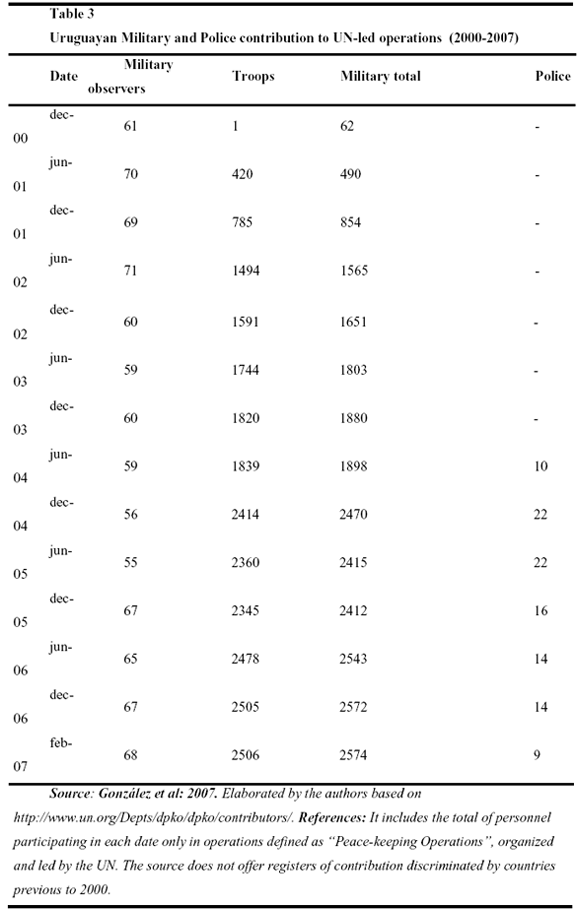
]]> In the following years, during Luis A. Lacalle's presidency (1990-1994) Uruguayan presence in peace operations steadily increased. Between 1991 and 1995 observers were sent to nine missions. At the same time, a significant qualitative change occurred: the first national troops' deployment in UN-led operations was authorized in 1992, so Army and Navy elements were sent to Cambodia. After that, units were also sent to Mozambique (1993-1994) and Angola (1995-1997).On one hand, the number of Uruguayan military observers sent to these missions remained about 60 to 70 officers from the middle 1990s to 2006, while the number of troops significantly fluctuated, as it can be seen in tables 1 and 2. On the other hand, in the two years between the end of UNAVEM III (Angola) in 1997 and the beginning of UNMEE (Ethiopia-Eritrea) in 2000, Uruguay did not contribute with troops to UN-led missions. The list of operations where national contingents were deployed is completed with MONUC (DR Congo, since 2001) and MINUSTAH (Haiti, since 2004). It is also worth to notice that most missions to which Uruguay sent troops are related to conflicts where intra-state conflicts were predominant.
A second relevant qualitative change occurred in April 2003, when the Uruguayan Legislative accepted the Executive's petition and authorised national contingents deployed in MONUC to stay there despite the change in the mission's mandate. Such change had been decided by the UN Security Council in reaction to the deterioration of the security conditions in that country. It meant that MONUC started to be framed by Chapter VII of the Charter. Rules of engagement were also altered, allowing more room for the Blue Helmets to use force. Until then, Uruguayan troops had only participated under Chapter VI missions6.
In sum, three turning points can be signalled in the history of Uruguayan participation in UN peace operations; 1952, 1992 and 2003. During the first stage, only military observers were sent to mainly inter-state conflicts, where consensus about the need for UN intervention had been previously achieved among local parts. The missions in Kashmir (UNMOGIP, 1952 to date) and the Persian Gulf (UNIIMOG, Iraq/Iran 1988-1991 and UNIKOM, Iraq/Kuwait, 1991 to date) are clear examples of this7.
The stage inaugurated in 1992 is marked by the deployment of troops, though still acting in regions where relatively stable agreements had already been reached on the acceptance of UN intervention and respect for ceasefire. However, the clearest example of how fragile these agreements can be is Congo. After many years in that country the MONUC could not stop the serious deterioration of the political situation, which forced the change in the mission's mandate.
Finally, since 2003 Uruguay started to deploy troops framed by Chapter VII, this is, in situations where no ceasefire has been established, and local consensus on the need for UN intervention is not always present. It is worth to notice that 95% of Uruguayan Blue Helmets work in two "Chapter VII" operations: MINUSTAH and MONUC. (González et al, 2007: ch. VI). Furthermore, considering the number of military personnel deployed, Uruguayan participation in peace operations is currently in its heydays. Uruguay is one of the top ten troop contributors to UN-led operations8.
But Uruguayan participation in peace operations is not limited to those led by the UN. Two exceptions deserve to be mentioned here. The first one is the participation of Army observers in the Neutral Military Commission which controlled the respect to the armistice signed by Bolivia and Paraguay at the end of the Chaco War, in 1935.
]]> The second and most important one is the Uruguayan involvement in the Multinational Force and Observers in Sinai (MFO-Sinai), initiated in 1982 in the Egypt-Israel border. This operation was going to be organized by the UN but the USSR vetoed it in the Security Council. The USA then decided to create it under the framework of the Treaty of Camp David (1979). In that context, in 1981 American authorities held "direct conversations" with the Uruguayan Army's Commander in Chief. The details of the plan were defined later in the Army headquarters in Montevideo, by a bi-national group. As a result, a section of military engineers were deployed in the peninsula. (J. Esteyro, 2004: 55)For a number of reasons, MFO-Sinai is a very particular and interesting mission. Firstly, it is important to highlight that engagement in the only modern peace operation not organised by the UN in which the country has ever participated was decided under the civil-military dictatorship. And, vice-versa, the only operation in which the dictatorial government accepted to engage in was not set up by the UN but by the American government. Secondly, it is remarkable as the first peace operation involving deployment of troops, 10 years before the first deployment of units under UN's umbrella in Cambodia, 1992. Lastly, it must be pointed out that the Uruguayan Army is still part of the MFO. We do not have information on if such participation was explicitly evaluated and approved by government's authorities after the recovery of democracy (1985), or if it was accepted as a policy legacy without further analysis. This important engagement under a multilateral and ad hoc accord, out of UN's decisions and clearly aligned with the American interests could be interpreted as an adjustment in the national foreign policy in the context of a different political regime and in line with the ideological orientation of the dictatorial government.
3. Uruguayan international insertion and peace operations
In the two previous sections we briefly described the historic evolution of peace operations as an intervention tool at the hands of the UN, as well as the history of Uruguayan participation in them. Now it is time to analyse whether or not this participation can be considered as part of the country's effort of international insertion, particularly in its political dimension. In order to do so, we mention and critically assess some of the meanings which have been assigned to Uruguay's involvement in peace operations.
To start with, following Pérez Antón's minimalist definition, participation in these operations can be understood as part of Uruguay's foreign policy since it is an activity supported by the political system and directed towards foreign subjects and processes. (Pérez Antón, 2003: 129).
]]> Notwithstanding that, engagement in peace operations constitutes a foreign policy decision with some strong peculiarities. First, the possibility to send observers or troops abroad always depends on receiving an invitation from the DPKO, an UN office where no state has official representation. So the initiative for this policy is not fully in national hands, even when Uruguayan officers (particularly from the Army and Navy) proactively promote and try to ensure such invitations. (González et. al., 2007: Cap. VI)Second, the Uruguayan government has very small room for designing the way it will participate. In fact, usually the only decision to make is to accept or refuse sending personnel to the places and under the conditions previously established by the UN. Most of the key variables which clearly determine the political results of these actions, such as deciding where and when a new operation will be set up; its main political objectives (mandate); the total number, composition and tasks of the personnel to be deployed; or even the rules of engagement are defined in ambits where the national authorities have scarce or null influence.
Furthermore, during the operation the Uruguayan military are under command of the UN Secretary-General and/or his Deputy Secretary. So the concrete tasks they perform are not defined by the national authorities. As a result, they have not much freedom to align these tasks with the objectives and principles that guide the national foreign policy. Some options the Uruguayan government can exploit in order to increase its influence in this sense are explored below. As an example, building up strong bilateral relations with the government or civil society of the country which receives help can be a path to investigate.
Having mentioned these peculiarities, it is also important to notice that participation in peace operations is always a high-profile foreign policy action for any country. This is so particularly because these operations are among the most visible and delicate policies undertaken by the UN. So, every engagement in such operations has delicate political implications and affects the whole international insertion's strategy of the troop contributor.
In the Uruguayan case, the early and continuous engagement in peace operations is a remarkable fact. Though in its first 36 years it was limited to a group of observers in the UNMOGIP, by 2006 the country had accumulated 55 years of uninterrupted dedication to UN-led peace operations.
At the national level it has also been argued that, in a generic sense, participation in these missions is a clear and highly visible expression of commitment to the principles of peaceful resolution of conflicts and support to UN-led multilateralism.
In coincidence with this argument, many authors have highlighted the importance of participation in peace operations as a key piece of Uruguayan foreign policy. Particularly, the impressive amount of resources dedicated to this activity since the beginning of the 1990's has been remarked. (Ferro, 2006. Pérez Antón, 2003) The fact that this policy has been supported by the three main political parties has also been emphasized. (Ferro, Fernández y Hernández, 2006: 133) At the same time, some authors have praised the political prestige these activities bring to the country in the international arena. (Pérez Antón, 2003. Wins, 2007:22) Its continuity would allow cataloguing it as a true state policy. (Toro Hardy, en Suniaga, 1999. Fernández, 2002:15). In effect, the Uruguayan military presence in peace operations has been maintained and increased through various changes of governments and two political regime changes (1973 and 1985).
However, it was not until 1992 that the country's commitment to these activities acquired a major qualitative and quantitative importance. Since that year up to now the participation gained relevance and stability. These are two key components of the concept of a state foreign policy, as opposed to a foreign policy defended just by one political party and then susceptible to frequent change. (Fernández Luzuriaga, 2002: 14) Such relevance and stability are confirmed in the document "Results of the political dialogue on foreign policy", which synthesises the outcomes of a dialogue process established by the then recently elected President Vázquez (Frente Amplio) and the leaders of the Nacional and Colorado parties, published shortly before he took office, in March 2005. (Ferro, Fernández y Hernández, 2006) Due to all this, it can be affirmed that in the last fifteen years participation in peace operations has definitely become part of Uruguay's state foreign policy.
Notwithstanding that, many of the arguments used to support the idea that in Uruguay participation in peace operations is consciously and explicitly used as a foreign policy tool can be put into question.
First, because until 1988 the Uruguayan presence was limited to a few observers in a single operation: UNMOGIP. This is, during 65% of the time Uruguay has participated in missions, including the two regime changes mentioned above. So it seems to be too optimistic to affirm that before 1988 participation in UNMOGIP rewarded Uruguay with considerable international prestige or was a strong signal of the country's support to peaceful and active multilateralism.
]]> Second, the fact that Uruguay has not occupied significant positions in the civil governance structure of any peace operation indicates that the important effort made in military terms was not turned into political influence, which could be more useful to pursue foreign policy objectives. In fact, until recently Uruguayan contributions were exclusively military. This phenomenon is remarked by Santiago Wins, representative of the Ministry of Foreign Affairs before the National System for Peace Operations (SINOMAPA). He suggests that due to its antecedents in these activities, Uruguay could accede to positions of political and diplomatic responsibility in different missions. (Wins, 2007)Third, it is still necessary to determine to what extent the notable augment and diversification of Uruguay's engagement in these operations since 1992 was effectively decided by the political authorities taking into account reasons related to international insertion and foreign policy. As we will try to show in the next section, there are motives to believe that this argument is in fact an ex post justification to decisions made by political and military authorities in pursue of internal policy objectives. This alternative explanation suggests that such strategy, promoted by the Armed Forces (in particular, the Army and Navy) and supported by most politicians in the country, is in fact motivated by the belief that participation in peace operations is convenient both economically and to foster the national military capabilities.
In short, we affirm that involvement in peace operations must be regarded and analysed as a significant ingredient of the Uruguayan foreign policy, since it consist of actions directed towards foreign actors and it has important consequences for the country's international insertion. However, this does not mean to immediately accept that such participation was consciously and explicitly designed and implemented as a tool for foreign policy.
We will enter this debate in the next section, where three groups of arguments commonly used to present engagement in peace operations as part of our foreign policy will be revised:
First, some have argued that this policy is perfectly consistent with a set of principles which have firmly guided Uruguayan foreign policy in the last 100 years. (Pérez Antón, 2003).
Second, it has been affirmed that being part of these operations means actively supporting UN-led multilateralism. In the case of MINUSTAH, for example, it has been said that Uruguay is assuming its part of regional responsibility in controlling and helping to solve conflicts within the continent9.
Finally, it is usually stated that the most recent peace operations open opportunities for selling national goods and services as part of the state and nation building efforts funded by the UN and some developed countries. From this perspective, even when major infrastructure and other economic projects are often exclusively assigned to companies based on the donor countries, Uruguay could participate in and benefit from cooperation projects which demand qualified human resources, such as health care, education or building state sector capabilities.
As we will try to show, these three groups of arguments are not always backed up by concrete actions which help to put them into practice, thus serving our foreign policy interests. If confirmed, such lack of consistency between discourse and reality would only admit one out of two explanations. Or the participation in peace operations has been ineffective in achieving the foreign policy goals that some actors declare it pursues, or it was never really designed and implemented to achieve them.
4. Peace operations and Uruguayan foreign policy
]]> Different political stances coexist on what is and what should be the relationship between participation in peace operations and Uruguay's foreign policy. In order to expose them, two important documents will be revised here.During 2006 the Ministry of Defence formally launched and conducted a National Debate on Defence, which included installing debate groups on different issues10. The second debate group discussed the link between foreign policy and defence policy. Its final document begins by stating that the national defence policy, as well as Uruguayan foreign policy, must be in line with the principles of strict respect for peoples' self-determination, non-intervention in internal affairs of other states, pacific resolution of international controversies and observation of the international law ratified by Uruguay. It also affirms that multilateralism must be the preferred modus operandi on issues related to international security. (MDN/PNUD/UdelaR 2006: 7)
The same document later establishes that military participation in peace operations must be coherent with our foreign policy, in the sense of advancing national interests in the international arena, promoting confidence-building measures as well as cooperative and respectful relations between different international actors. When this is so –the document continues– military participation in peace operations becomes a tool of foreign policy. To ensure this, the ministries of Foreign Affairs and Defence must carefully analyze opportunities for participation case by case. (MDN/PNUD/UdelaR 2006: 8)
This cautious tone contrasts with a more optimistic view, expressed in the only written official statement produced by both ministries on this issue, which was published during the last days of Dr. Jorge Batlle's government (2000-2005). In this work it is said that Uruguayan action under the frame of the UN's General Assembly has always been in line with the traditional principles which inform our foreign policy. Peace operations are described as one of the most clear and effective example of multilateral action in which the country is engaged, and as a key element to support peace and security. (MDN, 2005: 51)
These documents reflect two different views on the actual link between peace operations and the traditional principles of our foreign policy which have also been expressed –along with stances overtly contrary to these missions– during parliamentary and journalistic discussions11. So, two different perspectives can be appreciated among those who generally support military engagement in peace operations.
On the one hand, sceptics think that participation in peace operations does not automatically advance national interests and promotes the already mentioned principles. They remember the need to analyse each initiative and its singular conditions carefully, and they call for complementing military engagement with other measures, particularly, with diplomatic activity. On the other hand, the optimists tend to believe that as long as it is carried out under the UN umbrella, any intervention in peace operations advances our foreign policy interests and principles.
It is time now to analyse in more detail the different arguments used to support each of these positions.
4.1 Peaceful resolution of international controversies
In principle, it can be assumed that UN peace operations seek to peacefully solve controversies which threaten international stability, an intention which, as it was previously said, is at the core of Uruguayan foreign policy.
]]> At the same time, Uruguay has also participated in many international initiatives for non-violent conflict resolution. Along with the antecedent of supervising peace accords after the Chaco War (Bolivia-Paraguay, 1935) we must recall that the country remained neutral in many conflicts which can be considered as clearly relevant for our national interests12.We accept here that in many cases participation in peace operations can be regarded as a tool for peaceful conflict resolution. However, this is not always true since the Security Council has sometimes decided to impose peace through military means without exhausting non-military alternatives.
4.2 Human Rights protection and general welfare of societies affected by conflict
At the national level it has been repeatedly argued that Uruguayans have a moral obligation to energetically protect Human Rights and to help endangered societies to achieve acceptable levels of development.
Such goals have become part of the Uruguayan foreign policy particularly after the end of the last civil-military dictatorship (1973-1985). For example, the country has strongly supported the International Crime Court and actively participated in the UN Human Rights Commission. Moreover, Uruguay has regularly sustained many UN General Assembly resolutions which condemn violations to Human Rights in different countries.
In particular, Human Rights protection and international solidarity have often been presented by politicians, diplomats and the military as the main rationale for engagement in peace operations13.
From our point of view, it seems reasonable to admit that most UN peace operations are successful in putting an end to massive Human Rights violations. This is so specially when the UN's intervention has been admitted or even requested by the belligerent. However, it must also be taken into account that not in every operation are Blue Helmets allowed to immediately intervene to stop ongoing Human Rights violations. So, though generally positive, presence of UN troops does not automatically or always means really safer conditions for populations at risk.
Furthermore, and without discrediting the good intentions which generally motivate engagement in peace operations, it is also necessary to adopt a critical view on the new situation which is promoted by the UN for the regions or countries where the intervention takes place. Each troop or financial contributor should answer a number of questions: What kind of socio-political situation is intended to be achieved in each case? In what sense, to what extent and for whom is it better than the previous status quo? Has the peace operation, –under the form it has been planned and implemented by the UN– any possibility to set up the bases for future sustainable human development? Or, on the contrary, will the achieved stability last just until the last Blue Helmet has abandoned the country? Could it be possible that the UN mission is in itself promoting national dependence from foreign intervention?
Steps could be taken in order to answer these questions and to really achieve the declared goals. Contributors should continuously produce and analyse information on the progress of the operation and the effects on the society that has been intervened. The post-conflict nation and state-building processes should be planned and evaluated as carefully as possible. Greater involvement of civilian, multi-disciplinary organizations and personnel is crucial in this sense, as it has been already noticed by the UN itself.
]]> Some observations made by the debate groups of the already mentioned National Debate on Defence reflect these concerns and are worth to be mentioned here. First, it was affirmed that shortly after taking his office, the recently elected Haitian President René Préval called representatives of Argentina, Brazil and Chile for help in order to prepare and implement a plan of development of the state sector. The three countries accepted and became significant allies in the effort to build capacities within the Haitian government. On the contrary, Uruguay remained excluded of this process simply because it lacks diplomatic representation in Port-au-Prince.In effect, at least in the cases of D.R. Congo and Haiti, and different to other troop contributors, Uruguay did not reinforce its diplomatic presence once its troops were deployed. The closest Uruguayan ambassadors are in South Africa and Dominican Republic, respectively. Neither adequate financial aid nor particular instructions have been sent for these legacies to appropriately complement the work of the military units. (MDN/PNUD/UdelaR 2006: 80)14
Moreover, apart from the military groups which support the troop's deployments, there is no unit in Montevideo dedicated to monitor the progress of the operations in which the country is engaged, or the global situation of the intervened country. The two officials who constitute the Department of Special Affairs in the Ministry of Foreign Affairs devote their scarce time to perform administrative tasks related to the deployment of troops, as well as to work on a wide range of issues broadly related to international cooperation on the security realm.15
In sum, we agree with the argument that Uruguayan engagement in peace operations is a generally effective action, coherent with the claim to be solidary with foreign societies in need, as long as military observers and troops participate in interventions intended to alleviate or prevent massive humanitarian crisis. Nevertheless, this positive effect can fade away in the mid or long term if we do not keep a critic and attentive eye on the evolution of the UN-led post-conflict programmes. In the absence of such attitude and of consequent, intelligent diplomatic action to support it, Uruguay could end up legitimating international interventions which do not attack the structural causes of violence and poverty, but unintentionally perpetuate underdevelopment and vulnerability of the affected societies. Similar critiques have been raised against the UN intervention's strategies, for example in D.R. Congo or Haiti, a country where five different UN missions have been installed since 1993. (MDN/PNUD/UdelaR, 2006: 80).
4.3 Self-determination of peoples
The principles of national sovereignty and self-determination of peoples are usually identified as part of the Uruguayan foreign policy's ideological hard core. (Pérez Antón, 2003: 124). Peace operations sometimes seek to solve conflicts which threaten the sovereignty of a state, particularly when small and young countries in the underdeveloped world are affected.
Uruguay has participated in many operations which implied defending the right to self-determination of small countries, e.g.: UNIKOM (Iraq-Kuwait border, 1991-2003); UNFICYP (Cyprus, since 1964); UNMISET (East Timor, 2002-2005) and MINURSO (West Sahara, since 1993). About this last case it is noticeable that in the last three years engagement in the MINURSO coincided with the support given to certain Uruguayan political groups to the West Saharans' claim for complete independence from Morocco.
On the other hand, it must also be said that occasionally, the principle of self-determination can be invoked to justify a foreign intervention on behalf of a certain fraction which has gained the favour of the Security Council, particularly during intra-state conflicts.
]]> 4.4 Non-intervention on internal affairs of other independent countries
Peace operations are a particular type of international intervention on inter-state or intra-state conflicts, so it seems reasonable to assume that they do not reaffirm the principle of non-intervention on foreign affairs. In fact, questions have been frequently raised on whether or not such principle is respected any time coercion is exerted on a certain country invoking the prerogatives of the UN Chart. Some of these questions are: What are valid reasons to justify an intervention not requested by the belligerents, as authorized by chapter VII? Who can legitimately judge on whether these reasons are present in each particular case? Even the concept of ‘failed state', which is directly linked to the doctrines on peace and conflict resolution actively promoted by the UN, is currently at the centre of strong debates carried out by academics and practitioners.16
Answers to these questions are vital both for the country where an international operation is carried out, and for any other country which is susceptible to be intervened in a more or less distant future. In fact, each UN-led intervention legitimates the reasons and modus operandi of those countries that actively promote them, particularly the permanent members of the Security Council. Each operation constitutes an important and sometimes serious precedent for the international community.
It is worth to mention here an example of how Uruguay can endorse decisions which blur the principle of respect for self-determination. In the Haitian case, the Security Council decided not to authorise the deployment of an UN-led force to control the insurgent movement initiated at the end of 2003 until the democratically elected Haitian President Jean-Bertrand Aristide left his office. As a consequence, the insurgents reached their objective of overthrowing Aristide under the permissive sight of the Security Council, which seems to have considered this outcome as the most desirable. (Dieterich, 2004; Bidegain, 2004)
Moreover, although the circumstances under which Aristide "resigned" and abandoned the country remain highly controversial, it is undeniable that US troops' action was decisive in this affair. Beyond the critiques that were and can be raised against his government, Aristide had been legally elected and his removal was, at best, extremely irregular.
4.5 Multilateralism
Multilateralism is one of the foreign policy's practices which is supposed to be reinforced through participation in peace operations. An associated debate is then, what is the true extent and meaning of the multilateral action that can be exercised within the UN in relation to international security issues.
First, UN is usually recognised as the most important arena for multilateral action. (Wilhelmy, 1988, 158)17 Second, at the Uruguayan level, multilateral action has been prioritised by practitioners of our foreign policy at least since 1985. During Dr. Julio Sanguinetti's government (1985-1989) a series of actions were taken in order to reinforce mechanisms of regional coordination, facing some aspects of the American unilateralism. Bizzozero and Luján (1992) affirm that the support given to the Contadora Group (Colombia, Mexico, Panamá and Venezuela, 1982) is a remarkable benchmark of this stage. (Bizzozero and Luján, 1992).
That event has been compared to the current South American participation in the MINUSTAH and the support given to the Haitian government. Since 2004 Argentina, Brazil, Chile and Uruguay contribute with the majority of the troops in Haiti, and Brazil leads the whole military component of the operation. Latin American actions within Contadora and MINUSTAH are comparable to the extent that both are a multilateral, regionally-led attempt to control a source of instability for the region, with the Latin countries playing a role which could have been unilaterally performed by the USA. However, as Mónica Hirst (2007) affirms, it is ironical that the members of Contadora do not participate in the MINUSTAH. In fact, it can be argued that in the case of MINUSTAH, far from opposing the will and interests of the US in relation to Haiti, the South American countries are taking care and supporting US foreign policy.
]]> This example shows that the final meaning and consequences of each multilateral action are complex and contestable, and must be analysed in depth. In effect, from an optimistic perspective it has been argued that participation in multilateral institutions fosters some desirable international practices, such as respect for international law. At the same time, it limits the possibilities for and reduces the legitimacy of unilateral uses of power. As a consequence, countries with less military and economic power would obtain greater guarantees in the international arena.18The Haitian example is again useful to illustrate this point. In January 2004 President Aristide asked the international community for help to control the active insurgent movement. The Caribbean Community (CARICOM) presented a "Plan for Previous Action", which was followed in February by a new plan elaborated by the "Group of Six" (Bahamas, representing the CARICOM; Canada, USA, France, the Organization of American States and the European Union). Both plans, which looked for a peaceful exit to the conflict, were accepted by Aristide but not by the opposition. On 19th February, American marines were sent to protect American interests in the island. On 28th February the government of the USA publicly made Aristide responsible for generating the conditions which allowed the insurgent movement to grow, and asked for his resignation. The following day, Aristide was taken to the Central African Republic by American military. At the same time, USA and France initiated the deployment of troops in Haiti; some hours before the movement was validated by the Security Council through its Resolution 1529/2004.
While the Secretaries-General of the UN and OAS accepted the version about Aristide's resignation, CARICOM, the African Union, Cuba, Venezuela and South Africa announced that they will not accept a new Haitian government due to the fact that it had been originated in a coup d'état. (Dieterich, 2004; Bidegain, 2004). Nevertheless, Aristide never came back to his country and the American-French provisional force gave way to the MINUSTAH.
The optimistic stance described below must then be questioned. An automatic alignment with the decisions of the Security Council does not necessarily means, in itself, an act of support to wide and participative decision-making processes, where weak countries could have a stronger voice. In fact, as it is recognised in the reports of the Special Committee on Peace-keeping Operations of the General Assembly (known as C-34), the explicitly recognised gap between "...those who plan, mandate and manage United Nations peace-keeping operations and those who implement the mandates..." could not be bridged in the last years. (UN A/60/19: p.25).19
We do not deny here that the UN offers many forums where a relatively weak country can take actions, build up alliances and promote decision-making processes which best serve its interests. We even acknowledge that significant troop contributions to peace operations could amplify the voice of any country in these forums. But we affirm that military participation alone does not reinforce the country's political influence in multilateral institutions. Such influence must be built up by a strong, coordinated and decided diplomatic effort which can take advantage of the credit and prestige gained by the national Blue Helmets.
In the Uruguayan case, diplomatic officials regularly participate in UN forums were different aspects of peace operations are discussed, such as the already mentioned C-34 or the Commission which analyses the regular budget of the Organization, including the DPKO's budget. Notwithstanding that, on the one hand, the reports of these working groups account for the difficulties that small countries find when they try to advance positions contrary to the interests of permanent members of the Security Council or to the big financial contributors to peace operations.20 On the other hand, the coordination achieved by Uruguay in these forums with countries with similar interests seems to remain unstable and limited.21
An example of more active diplomatic action, based on the search for common interests with other countries seems to be growing since 2005, with the meetings of Vice Secretaries of Defence and Foreign Affairs of the Latin American countries which sent troops to MINUSTAH. This group is currently known as the "9x2 mechanism". In the Uruguayan case, this is the first relatively stable mechanism for political collaboration and coordination regarding peace operations. It was established 13 years after the first national group of Blue Helmets were deployed, and it acts only in relation to MINUSTAH.
The need for reinforcing diplomatic presence in multilateral forum related to peace operations is also recognised from the Ministry of Foreign Affairs. Some concrete recommendations for exploiting the opportunities that peace operations generate as a tool for multilateral diplomacy have been drafted in unofficial documents. (Wins, 2007)
4.6 Economic Benefits
]]> Another argument used to classify participation in peace operations as a foreign policy's tool is that it may generate economic benefits. According to its proponents, goods and services (including human resources) could be sold as part of programmes of poverty alleviation, as well as civil society and state reconstruction funded by external donors.In effect, the growing diversification of post-conflict reconstruction's strategies led by the UN under the concepts of "peace-building" and "nation-building" allows room for new ways of remunerated help, other than troop contribution. A wide range of opportunities are open for professionals in areas such as health care, education, public policy, judicial systems and others. (Hansen, Ramsbotham & Woodhouse, 2001).
In the Uruguayan case, this type of sale of civilian services has been limited to the water purification units designed by OSE (public company)22 and "advertised" to the DPKO by military personnel. Nowadays, a Ministry of Foreign Affairs' unit specialised in international cooperation seeks to develop projects on telecommunications and state sector capacity-building with Haiti, but there are not significant antecedents of this kind. (González et al, 2007: Cap. VI).
We affirm that, first, political authorities should clearly define the relative importance which they want to assign to economic motivations among a wide range of reasons for and against engagement in peace operations. Second, once economic benefits have been defined as an acceptable rationale, the concrete possibilities for obtaining international funding for projects involving Uruguayan individuals or firms should be carefully calculated. Moreover, obtaining such funding requires, once again, active and intelligent lobby from the diplomatic personnel. It also requires setting up organizations which could identify economic opportunities associated with the operations and organise the required human and material resources in order to take advantage of them. As long as these conditions are not met, it makes little sense to use economic benefits as a justification for participation in peace operations.
Nevertheless, it must be recalled here the enormous income obtained by selling military services to the UN. First, the UN pays to the national Armed Forces an amount of money by way of salary for the personnel deployed. Each government has its own criteria on how to use this money. In Uruguay, the funds are completely transferred to the personnel, which constitute very significant extra incomes for them23.
Second, the organization also pays for the use of the military equipment. Since UN standards are higher than those of the national military, the Uruguayan Armed Forces make earnings out of this rental and use them to re-equip themselves.
Just as a way of indication –due to the lack of public official information– it is worth to mention that according to data provided by the Ministry of Foreign Affairs, between January and December 2005 the military personnel deployed in UNMEE, MINUSTAH, MONUC and UNOCI generated payments for over U$S 32 million. This amount is equal to a 14.4% of the total budget of the Ministry of Defence for 2005. Such figure does not include neither the payment for equipments deployed nor the one for military observers working in other peace operations. (González et al, 2007).
Finally, it must be said that the earnings from military services are often signalled in private by national politicians as one of the strongest reasons which explain the intense compromise of the Armed Forces with peace operations.
6. Conclusions
]]> As a way of conclusion, we present here some observations based on a theoretical framework suggested by Van Klaveren's (1992)
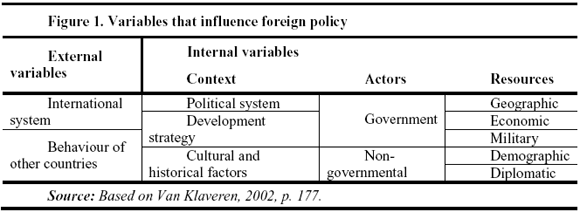
First, this author departs from the well-known distinction between internal and external variables which influence foreign policy. Among the external variables, peace operations can be conceptualized as opportunities produced by the international system. As it was mentioned above, during the last fifty years UN-led peace operations evolved and became more complex. Different stages can be distinguished during this evolution, which were accompanied by the Uruguayan government and particularly by the Armed Forces. In 1948 the UN established the first peace operation, and in 1952 Uruguay joined it. A second generation of operations started around 1988, and in 1992 the first Uruguayan units were deployed under the UN flag. In 2000 the Brahimi Report suggested new modalities for intervention as well as an increase in the use of the prerogatives of Chapter VII, and in 2003 the Uruguayan government decided to keep the troops deployed in D.R. Congo under the new "Chapter VII" mandate for MONUC.
So, since many changes in the Uruguayan policy on peace operations strictly accompanied the changes promoted by the UN, a question can be raised about to what extent is this national policy guided by our own foreign policy objectives, or, on the contrary, participation in peace operations has become an end in itself. This second possibility seems to be in line with a common tendency in Latin American countries, identified by Van Klaveren. This author affirms that the external behaviour of the countries in the region is generally a reaction to events that happen outside the region. According to this argument, the external context determines the options taken by the Latin American countries, relegating internal variables to a minor role in the shaping of foreign policy. Other authors have also depicted the foreign policy of these countries as more reactive than proactive. (Toro Hardy, 1991)
Looking at the international context, the end of the Cold War seems to have had a clear impact on the Uruguayan foreign policy in two ways. First, the end of bipolarity in the international system triggered a re-discussion and re-definition of the role of the UN in general and of peace operations in particular. Second, a process of revision and questioning of the roles and doctrines of the Latin American Armed Forces started. In Uruguay, for instance, participation in peace operations augmented qualitatively and quantitatively during this period. This relation would be worth to be further analysed in future research projects. It may constitute an interesting example of how the international context affects the domestic scenario.
Regarding to internal factors, Van Klaveren (1992) affirms that its importance must not be underestimated, despite the fact that external factors can be predominant. So, Uruguayan participation in peace operations is influenced, first, by the already mentioned changes in the political system which occurred during the democratic restoration (1985 – 1990).
Second, as Van Klaveren (1992: 198) also recalls, historical and cultural factors are still important, since they shape the perceptions and influence the decisions of local actors. In the Uruguayan case, it is clear that many national decision-makers understand that our foreign policy is and must be clearly directed to promote the already mentioned ruling principles. (Pérez Antón, 2003) Nevertheless, we affirm here that critical assessments on how our participation in each peace operation actually affects these principles are scarce.
It is time now to come back to our original question: has participation in peace operations been fully utilized as a foreign policy tool in Uruguay? Has it been used to advance our own foreign policy objectives and promote its traditional ruling principles?
]]> We find that, first, participation in peace operation is potentially a powerful tool for pursuing foreign policy objectives and affirming its ruling principles. It can also provide the country with international prestige, as long as the Uruguayan troops perform their delicate role as Blue Helmets with proficiency.Second, the continuity of the military participation despite government changes indicates that it has become a state policy, approved by the four political parties with representation in the Legislative.
Third, it has acquired great importance not only for the huge amount of public resources dedicated to it (e.g. 10% of total active duty military personnel are currently deployed in these operations), but also for its political visibility both at the national and international level.
On the other hand, from the analysis shown in the previous section we conclude that it cannot be a priori said that participation in peace operations automatically and universally reinforces the ruling principles of Uruguayan foreign policy, as some official views suggest. It is probably true that it can contribute to reaffirm some of them. But it can also easily be contradictory to some others, as in the case of non-intervention on internal affairs of other independent countries. Anyway, we highlight that in order this policy to actually reinforce these principles some conditions must be met. The government should thoroughly analyse the opportunities and risks that each operations offer to support these principles before accepting to participate. Constant monitoring of ongoing operations should be performed. And more intense and proactive diplomatic efforts ought to be made in the states and multilateral institutions involved in each operation.
Something similar can be said in relation to the use of participation as a tool for international insertion and to achieve more concrete objectives of the Uruguayan foreign policy. Stronger and more active diplomatic engagement in multilateral forums is clearly required. (Wins, 2007)
In order to avoid some complacent or idyllic views on this policy, it is important to reiterate that no peace operation is equal to any other regarding some key variables. In effect, each UN intervention is exercised over a particular social and political situation, which has its own historical and structural causes. Each intervention is created and implemented as a result of a complex plot of interests and pressures, where the will of the Security Council's permanent members is usually the strongest. And each operation involves a different mix of diplomatic pressures, threat or direct use of military force, humanitarian and financial aid, reconstruction programmes, etc. At the same time this ensemble of variables determines the final outcomes over the affected regions.
Each troop contributor should clearly know and understand these variables, as well as to produce its own view on what causes and interests led to the creation of each peace operation both in the intervened country and within the Security Council. Based on such an analysis, it should produce its own judgment on what the meaning and the consequences of its contribution will be.
If these variables and problems are not fully understood and assessed, and if action is not taken to maximise opportunities and minimise risks, participation in peace operations will not be really useful to achieve foreign policy's objectives, and it can even be counterproductive.
This leads us to a new conclusion; from this perspective, the role of the Ministry of Foreign Affairs becomes crucial. This is the government department which should perform most of these tasks and which ought to take responsibility for turning engagement in peace operations into a fruitful tool of foreign policy.
Previous research on the decision-making process leading to participation in new operations seems to indicate that the Ministry has not fully performed this role. (González et al. 2007) This point requires further exploration. Nevertheless, it must be added here first, that the low priority given by Foreign Ministries to this policy appears to be common at least among the Latin American countries which have sent troops to MINUSTAH. In most cases the Defence Ministries have adopted a leading and sometimes exclusive role in conducting this policy.24
]]> Second, regarding the Uruguayan case, it is worth mentioning that Defence is much more powerful than Foreign Affairs in terms of budget and human resources. The total number of diplomatic personnel of the Ministry –considering both those working in Montevideo and those deployed abroad– in December 2005 was 261. (OPP, 2005) At the same time, according to sources of the Ministry of Defence, the number of military aggregates working abroad ascended to 30 in December 2006; i.e., the equivalent to more than 11% of the civilian diplomatic personnel. Defence had more military aggregates in the Uruguayan Permanent Delegation in the UN headquarters in New York (3) than the total number of diplomats working in the Department of Special Affairs (2), which, as it was previously mentioned, is in charge of a large list of functions apart from supporting peace operations. At the same time, despite the large amount of money received for participation in such operations, no extra resources where dedicated to reinforce Foreign Affairs' capabilities on this issue. (González et al., 2007)The weakness of the Foreign Affairs Ministry is recognised by its own members. Wins (2007: 23) affirms that more diplomatic personnel should be dedicated to participate in multilateral forums if better foreign policy results wanted to be achieved. In any case, it is important to highlight that the final responsibility for equipping the different departments with the capacities required to properly perform its functions always lies on the elected authorities.
Wins (2007) makes some suggestions on how to take advantage of the prestige acquired by the Armed Forces in peace operations in order to gain political influence on new interventions. He recommends promoting civilian Uruguayans for positions within the DPKO as well as for the political direction of each mission. He even proposes the possibility to get a transitory position in the Security Council. However, such ideas have never been commented, even as intentions, by authorities or in official documents. The officially declared main foreign policy's goal of engagement in peace operations can still be summarised by the vague motto: "to enhance the international image of the country".
So long as the present situation persists, the opportunities offered by peace operations will remain under-exploited. Provided that the Foreign Affairs Ministry is not reinforced and that it does not plays a key role in the design and implementation of the national policy on peace operations, such policy will continue being strongly influenced by objectives other than the ones of foreign policy.
Particularly, it will reflect the interests of the Army and Navy25. In effect, the Armed Forces have become the main supporters of this activity, which produces significant professional and personal benefits for its members as well as provides them with previously unknown opportunities for training troops and acquiring new equipment. In order to take advantage of these opportunities, the Forces have proactively worked to keep the number of personnel deployed abroad at the level they consider adequate. This attitude has been supported and / or allowed by the majority of the different governments in the post-dictatorial era.
Cited Bibliography
Bárcena Coqui, Martha. "El sistema de seguridad colectiva de la ONU". En: Revista Mexicana de Política Exterior. Nº 65. Febrero de 2002. México d.f. 2002.
Bidegain, Gabriel. "Haití y las presiones de Estados Unidos de América". En Revista Memorias.ur. Año II Número 5. Mayo - Junio de 2004. Pág. 14. Montevideo. 2004.
]]> Bizzozero, Lincoln y Carlos Luján. La política exterior del gobierno de transición (1985-1989). Facultad de Ciencias Sociales – Departamento de Posgrados. Montevideo. 1992.Dieterich, Heinz. "Destrucción consumada de Aristide, destrucción planeada de Hugo Chávez". En Revista Memorias.ur. Año II Número 4. Marzo Abril de 2004. P. 16. Montevideo. 2004.
Esteyro, Juan L. La difícil profesión de la paz. Centro Coordinador de Operaciones de Mantenimiento de la Paz – Estado Mayor General del Ejército. Montevideo. 2004.
Ferro Clérico, Lilia. "Democracia y política exterior: Uruguay (1985-2006)". En: América Latina hoy. Vol. 44. Diciembre de 2006. Salamanca. 2006. (115-132).
Ferro Clérico, Lilia;Fernández Luzuriaga, Wilson; y Diego Hernández Nilson. "La estrategia de inserción internacional de Uruguay en el gobierno del Frente Amplio". En: Revista uruguaya de Ciencia Política. Nº 15. Montevideo. Año 2006. (129-150)
Fernández Luzuriaga, Wilson. La política exterior de Estado. Aspectos teóricos para su comprensión. Facultad de Ciencias Sociales – Unidad Multidisciplinaria. Serie documentos de trabajo. Nº 61. Octubre de 2002. Montevideo. 2002.
Fernández Luzuriaga, Wilson. Ruptura de consensos en la política exterior uruguaya durante el tormentoso 2002. Facultad de Ciencias Sociales – Unidad Multidisciplinaria. Serie documentos de trabajo. Nº 62. Noviembre de 2003. Montevideo. 2003.
González, Julián. (coord.); Arbesún, Rolando; y Diego Gonnet. (2007). Defensa y Fuerzas Armadas, Democracia e integración regional. Exploración en un área opaca de políticas públicas. ICP-FCS / CSIC, UdelaR, Montevideo, Uruguay. (a publicarse próximamente. En prensa).
Hansen, W., Ramsbotham, O., y T. Woodhouse. "Hawks and Doves. Peace-keeping and Conflict Resolution". En Berghof Handbook for Conflict Transformation. Berghof Research Center for Constructive Conflict Management. Berlín. 2001.
Ministerio de Defensa Nacional - Uruguay. La Defensa Nacional. Aportes para un debate. OF. RR.PP. del MDN. Montevideo. 2005.
]]> Ministerio de Defensa Nacional -Uruguay / PNUD / UdelaR Insumos para la elaboración de un anteproyecto de Ley de Defensa Nacional. Elaborado en el marco del Debate Nacional sobre Defensa. Montevideo. 2006. Disponible en http://www.mdn.gub.uy/pages/debnac.aspOPP. Oficina de Planeamiento y Presupuesto. "Perfil Etario, De Género y Antigüedad de los Recursos Humanos de la Administración Central e INAU". Montevideo, 2005.
Pérez Antón, Romeo. "Un siglo de política exterior". En: Nahum, Benjamín (coord.). El Uruguay del Siglo XX. La Política. EBO. Montevideo. 2003. (95-136).
Russell, Roberto. "Política exterior y toma de decisiones en América Latina: aspectos comparativos y consideraciones teóricas". En R. Russell y otros. Política exterior y toma de decisiones en América Latina. Programa RIAL. Buenos Aires. 1990. (255-274).
Schwarz, Rolf. "Post-Conflict Peacebuilding: The Challenges of Security, Welfare and Representation". Security Dialogue. Vol. 36. Nº 4. Dic. 2005. (429-445).
Toro Hardy, Alfredo. La maldición de Sísifo: quince años de políticas externa venezolana. Editorial Panapo. Caracas. 1991.
Van Klaveren, Alberto. "El análisis de la política exterior latinoamericana: perspectivas teóricas." En: Muñoz, Heraldo y Joseph Tulchin (comps.). Entre la autonomía y la subordinación. Política Exterior de los países latinoamericanos. Tomo I." GEL. Buenos Aires. 1984. (14-50).
Van Klaveren, Alberto. "Entendiendo las políticas exteriores latinoamericanas: modelo para armar." En: Revista de Estudios Internacionales. Nº 98. Año XXV. Abril-Junio de 1992. Santiago de Chile. 1992. (169-216). [ Links ]
Wilelmy, Manfred. Política internacional: enfoque y realidades. GEL. Buenos Aires. 1988. [ Links ]
Wins Arnabal, Santiago. "La participación uruguaya en las operaciones de mantenimiento de la paz de las Naciones Unidas: una herramienta de diplomacia multilateral." En: Política Exterior del Presente. Nº 3. Julio de de 2007. Montevideo. (20-23). [ Links ]
Zubriggen, Cristina. "Política exterior, defensa y las operaciones de paz: ¿una estrategia coherente? El caso de Uruguay." En: Revista Fuerzas Armadas y Sociedad. Nº 1. Año 19. Santiago de Chile. 2005. (85-109). [ Links ]
1 See www.un.org/spanish/peace/dpko.
2 See www.un.org/spanish/peace/dpko.
3 The "Report of the Panel on United Nations Peace Operations" or "Brahimi Report" includes the recommendations made by a working group convened by the then Secretary-General Kofi Annan in order to prepare an in-depth review of UN activities regarding peace and security. (UN A/55/305).
]]> 4 "Rules of engagement should be sufficiently robust and not force United Nations contingents to cede the initiative to their attackers". This directive was latter reflected in the rules which define the conditions and modes of use of force allowed for Blue Helmets in each operation, known as rules of engagement. (UN A/55/305).5 "Member States that do commit formed military units to an operation should be invited to consult with the members of the Security Council during mandate formulation; such advice might usefully be institutionalized via the establishment of ad hoc subsidiary organs of the Council, as provided for in Article 29 of the Charterer. Troop contributors should also be invited to attend Secretariat briefings of the Security Council pertaining to crises that affect the safety and security of mission personnel or to a change or reinterpretation of the mandate regarding the use of force". (UN A/55/305). It is worth to notice that Uruguay, among other countries, should have been included in this category.
6 In turn, military observers have been deployed under Chapter VII in UNAMIR II (Ruanda), since 1994.
7 These missions fall into the category of only observation operations in inter-state conflicts under Chapter VI. Nevertheless, some partial exceptions must be noticed. The Security Council resolution which created UNIKOM is based on Chapter VII; while UNIFICYP (Cyprus) is not dealing with a strictly inter-state conflict.
8 The other nine top contributors are Pakistan, Bangladesh, India, Jordan, Nepal, Ghana, Nigeria, Italy and France. (See www.un.org/spanish/peace/dpko)
9 See Daily Record, House of Senators, Uruguay, 2-June 2004.
10 Such debate groups were joined by military and police officers, politicians, academics, diplomats and other public officials. They resulted in particularly open and rich discussions. Each group produced a document approved by consensus, including recommendations to be communicated to the Ministry of Defence. Although these are not official documents, they express the lowest common denominator of the opinions of a wide range of actors related to this policy.
11 See, for example, Daily Records of the House of Representatives (11 and 16-June 2004) and House of Senators (2-June 2004).
12 This was the case during the Malvinas War (Argentina-United Kingdom, 1982). In the same line, as some other Latin American countries, Uruguay officially expressed its support to the Allies during World War II remarkably late (February 1945).
13 To cite just one out of various examples, Senator Pablo Millor (Colorado Party) defended Uruguayan participation in MINUSTAH describing it as "...a way to collaborate in the investigation of faults against Human Rights and International Law, in order to put an end to impunity". (Daily Record, House of Senators – Uruguay, 2-June 2004.
]]> 14 Due to these reasons, at least until June 2006, the Uruguayan ambassador in South Africa was not able to play any significant role in D.R. Congo. (González et al, 2007: Cap. VI).15 I.e., within the UN sphere: Disarmament, landmines, light weapon's traffic, drugs, terrorism, corruption, international organised crime, money-laundering. Under the umbrella of the Organization of American States: Inter-American Committee Against Terrorism (CICTE), Inter-American Committee Against Drugs Abuse (CICAD); hemispheric security. Moreover: System of the Antarctic Treaty (through the Antarctic Uruguayan Institute); Organisation for the Prohibition of Chemical Weapons (OPCW); International Atomic Energy Agency (IAEA); Organisation for Prohibition of Nuclear Weapons in Latin America (OPANAL); and International Maritime Organization (IMO). (González et al, 2007: Cap. VI)
16 For an interesting critique of this concept and the ‘post- conflict peace-building' strategies promoted by the UN see Schwarz (2005).
17 For a different, critical perspective on the origins of the concept and meaning of multilateralism within the UN see Moreau, 2004.
18 For a national version of this argument, see Daily Record, House of Senators – Uruguay, 2-June 2004.
19 See also UN A/58/19, p 11 & 12.
20 In January 2007 the ten most important financial contributors to peace operations were USA; Japan; Germany; United Kingdom; France; Italy; China; Canada; Spain and Korea. (http://www.un.org/Depts/dpko/dpko/contributors/financing.html).
21 An example of this phenomenon is the successful attempt of financial contributors to disarticulate the efforts of some troop contributors to raise the remunerations for military equipment engaged in the operations, during the meetings of the Working Group on Contingent-owned Equipment in 2001 and 2004. (See González et al., 2007: Ch. VI, and UN A/C.5/58/37).
22 OSE is a state owned company which produces and distributes drinkable water and provides sanitation systems for cities and towns.
23 It must be added that those who are deployed in peace operations continue receiving their regular salaries, plus some other compensations paid by the Uruguayan government corresponding to "time of war duty", stipulated by national statue.
]]> 24 Many academics, politicians and military expressed this opinion during the Second International Seminar "Latin American Cooperation in the Humanitarian Intervention in Haiti", Montevideo, August 2007.25 The Air Force seems to be less enthusiastic about peace operations, due perhaps to the fact that it has far less personnel available for performing these "secondary functions", as the Armed Forces themselves catalogue peace operations.
]]>