Verónica AmaranteI; Marisa BucheliII
IResearcher, Institute of Economics, Facultad de Ciencias Económicas y Administración, UDELAR, Montevideo. vero@iecon.ccee.edu.uy
IIResearcher, Economics Department, Facultad de Ciencias Sociales, UDELAR, Montevideo. marisa@decon.edu.uy
Translated by Lucía Colombino
Translation from cuadernos del claeh, 2nd Series, Year 31, Nº 96-97, 2008/1-2 pp. 175-207
Unemployment insurance is a type of contributory program which aims to provide transitory benefits and has three main objectives: provide workers with temporary income so they can select a job which is suited to their skills, reduce the decline in aggregate spending during recessions by stabilizing the income and consumption of those concerned, and reduce workers' resistance to productive restructuring. A review of international experiences shows that beyond differences in program design, the related problems tend to repeat themselves. In general terms, unemployment insurance programs may stimulate abusive behavior from workers and employers. This article systematizes the weaknesses of Uruguay's current unemployment insurance program. Statistical data are presented and the extent to which this program may be stimulating abusive behavior is discussed. Finally, we consider possible modifications.
Keywords: legal aspects, statistical data, unemployment, employment policy, unemployment insurance, Uruguay.
1. Introduction
An unemployment insurance program consists of a transfer to cover the loss of income which is suffered by a worker who has lost his job unexpectedly or, in some cases, has experienced a reduction in working hours. This kind of program seeks to provide a temporary benefit and has three main objectives: to alleviate the urgency of finding a job and thus give the worker some temporary income while he finds employment which is suited to his skills; to lessen the decline in aggregate spending during recessions by stabilizing the income and consumption of those concerned; and to reduce workers' resistance to productive restructuring. As its name suggests, the general program design is based on the principle of insurance in a contributory program.
It is distinguishable from non-contributory programs for the unemployed (assistance schemes) whose specific objective is reducing the poverty of households affected by unemployment. These assistance programs —which coexist with unemployment insurance mainly in the OECD countries— are targeted, and benefits are awarded after verifying that the households lack income. They are therefore different from unemployment insurance in that they are not based on prior contributions from beneficiaries.
The unemployment insurance of most countries is designed according to the ilo recommendations which, in turn, provide margins within which the specific features of the benefits are defined. The programs differ in aspects of their design, including the level and structure of benefits, duration of benefits, eligibility requirements, funding and administration. Despite these differences in design, the problems associated with these programs tend to repeat themselves from one country to another. The literature on the subject underlines the problem of moral hazard: unemployment insurance programs may induce abusive behavior from workers and employers. For example, workers may lack incentives for actively seeking and accepting a job which allows them to contribute to the program. This means that the benefit might lead to a slackening of the search for formal employment and, therefore, to extending the period during which benefits are received and raising the rate of unemployment or of informal employment. With regard to employers, abusive behavior refers mainly to using the program for anticipated situations (off-season periods) with the aim of retaining workers without taking on the related cost. Furthermore, employers might be stimulated to reach an agreement with workers who are beneficiaries of the insurance to have informal labor relations and avoid making contributions to the program.
Several studies analyze the specific problems of the current program design in Uruguay and make a series of recommendations. Against that background, this paper systematizes the weaknesses of the program and analyzes the possible modifications for improvement. It is organized as follows: Section 2 describes the legal and institutional aspects of the program, Section 3 analyzes different indicators and summarizes the main weaknesses, Section 4 details and discusses the possible changes to the program and Section 5 offers final reflections.
]]>2. Legal and Institutional Aspects
In Uruguay, the first precedent of benefits for the unemployed dates back to 1919 when an insurance scheme for public employees was created; in 1928 it was extended to the employees of corporations. In the following years, a series of laws provided benefits for seasonal workers during their inactive periods. Then, in 1958, Law 12570 created a program for unemployment insurance in the strict sense, which was modified in 1962.
The current unemployment insurance scheme was created in 1981 and regulated in 1982 (Decree-law 15180 of 1981 and regulatory Decrees 14/982 and 280/998). In 2001, Decree 211/01 (with modifications in 2005) extended the scope of coverage. This program currently covers all wage-earners of the private sector, except the workers of the financial system.1 2 The Banco de Previsión Social (bps, Social Security Bank) is in charge of managing the program.
Below is a description of the program design, followed by the institutional framework and the sources of funding.
Beneficiaries and Benefits
The unemployment insurance devised in 1958 was a monthly benefit which wage-earners of the private sector who lost their jobs would receive during four months. The benefit was equivalent to half a monthly wage with a supplement when the unemployed worker had dependents, and subject to a ceiling. As is usually the case, the law established eligibility requirements (unemployment not caused by quitting the job, misconduct or strikes; six months of contributions; not having another job or being retired). Furthermore, the law defined the situation of partial unemployment as that in which there is a reduction of at least 25% of the usual workload (for monthly workers or day laborers). In this case, the benefit amounted to 50% of the difference between the wage received and that which would correspond for 75% of normal work.
Two features of the legislation were never put into practice. First, the administrating institution was assigned the task of classifying workers to facilitate their return to employment. Second, registration in a job bank was set as an eligibility requirement and the job bank was to be created. Although the Legislature approved a law on job banks, it was never implemented3
In 1962, the program was subject to discussion again due to the delay and the reluctance in awarding benefits and because the administration of funds was questioned (especially because they were used to pay pensions and grant loans to public enterprises). Nonetheless, only minor modifications were adopted — adjustments were made to the period of payment (from four to six months) and to the benefit amounts (the ceiling was eliminated).4 The most important debate focused on which was the appropriate institution for managing the fund —this issue is discussed more thoroughly below.
In 1982 the program currently in force, very similar to that of 1958, was implemented. The beneficiaries are the private wage-earners who contribute to the Caja de Industria y Comercio (Industry and Commerce Pension Fund) of the bps.
]]> The three grounds for receiving benefits are loss of employment, suspension of activities and reduction of work (a reduction in the days or hours of work which exceeds 25% of the statutory or usual working time in normal periods).The eligibility requirements which restrict access are:
— Workers who resigned, were dismissed, suspended as a disciplinary measure or who are on strike, are not included.
— The beneficiary should not have a job or refuse an offer of work without just cause.
— The beneficiary should not have another regular source of monetary income. This refers not only to jobs —as seen above— but also to other benefits, such as pension payments.
— There is a qualifying period: monthly workers should have paid contributions during at least six months, and day laborers, during 150 days. Piece workers should have received at least six national minimum salaries (smn). These minimum amounts should have been met in the twelve months preceding the claim.
— The program should not have been used in the year preceding the claim. This means that once the worker has received payment during a benefit period, at least twelve months must elapse before he or she is entitled to a new period. The law allows the Executive Power to extend this period to a total of twenty-four months in the case of persons working in activities that justify this extension.
The benefit consists of a monthly amount equivalent to 50% of the average wage in the six months preceding unemployment, which should be at least 50% of the minimum wage, plus a 20% supplement in the case of dependents (i.e., the most a person can be paid is 60% of the wage). In the case of hourly workers or day laborers, the monthly benefit is equivalent to twelve days' pay, calculated according to the remuneration received in the six preceding months divided by 150.
The law established that the total benefit should not exceed eight smn. Later, Law 17856 of December 2004 dissociated the smn from taxes and social benefits, and created the "base de prestaciones y contribuciones" (bpc, base unit for benefits and taxes). This new baseline was to be used in place of all references to the smn in the different laws and decrees. It was established that the bpc would be equivalent to the value of the smn on the date the law was enacted and its value would be adjusted according to variations in the consumer price index (ipc) or the average wage index.
The benefit is payable for a maximum period of six months for monthly workers and 72 days for hourly workers or day laborers. However, the Executive Power (specifically, the Ministry of Labor and Social Security) may grant discretionary extensions. Article 10 of Decree-Law 15180 establishes: "The Executive Power has authority to establish, for reasons of general interest, a system of subsidies for total or partial unemployment for highly skilled workers in certain job categories or lines of business". It was planned that extensions should not to exceed 18 months but Parliament has granted longer periods in some cases.
]]> In 2001, Decree 211/01 included farm laborers in the unemployment insurance program. The eligibility requirements were slightly more rigorous than for the other workers:— With regards to the qualifying period, 12 months of contributions are required for salaried workers and 250 days of wages for day laborers. Workers with variable remuneration should have received at least 12 smn. These minimum amounts should have been met in the twenty-four months preceding the claim.
— At least two years must elapse before the benefit program can be used again, one of them with effective contributions. This aspect was modified in 2006, and 18 months of effective contributions are now required before the program can be used again.
Workers on unemployment insurance benefits also receive training and job brokering services. These are included in the programs funded by the Fondo de Reconversión Laboral (Labor Retraining Fund, frl). This fund was created in the early 90's to help workers on unemployment insurance to return to work and its programs were later extended to a broader target population.
Finally, it must be noted that employers must pay severance compensation to workers who are dismissed after more than three months of work, except in the case of "gross misconduct". For each year of work or portion thereof the worker is entitled to the equivalent of one month's pay, up to a maximum of six monthly wages. The legislation provides for increased compensation in cases such as the dismissal of a sick worker, one who has had an accident, or is pregnant.
Institutional aspects: management and funding
At the time the first unemployment insurance programs appeared, a retirement and pension fund was already in existence —since the early 1900's. It was based on a pay-as-you-go system whose funding came from contributions by workers and employers. The fund was managed by a special entity (Caja de Jubilaciones). In turn, a fund for family allowances managed by Cajas de Compensación (Compensation Funds) for workers with different occupations existed since 1943. Later the Consejo Central de Asignaciones Familiares (Central Council for Family Allowances) was created to manage transfers from funds with surpluses to the ones with losses, and to run the Fondo Nacional de Compensación (National Compensation Fund). In addition, the programs for allowances during low season periods were managed by specific Compensation Funds for different occupations (Caja de Compensaciones por Desocupación para la Industria Frigorífica — Compensation Fund for the Meat Packing Industry — and Caja de Compensaciones para Trabajadores de Barracas y Depósitos de Lanas y Cueros — the Compensation Fund for Workers of Warehouses and Depots of Wool and Hides —).
When the unemployment insurance scheme was created in 1958, there was a debate about which entity should be in charge of management. The two options were the Caja de Jubilaciones (with political leadership) and the Consejo Central de Asignaciones Familiares (headed by delegates from the three interested parties: government, employers and employees). Although the latter was considered to offer greater guarantees against the influence of political clientelism in management, the Caja de Jubilaciones was finally chosen to run the program and the fund. The fund created for the insurance program was to be financed with a specific contribution from wages and several taxes on specific goods (gambling, beverages and cigarettes).
In 1962, during the parliamentary debate about these modifications, it was put on record that problems in management led to important delays in the granting of benefits. There was discussion, once again, about which entity was most suited to running the unemployment insurance program, but it was decided to leave it in the hands of the Caja de Jubilaciones. One of the reasons was that the fund was exhausted because resources had been used for purposes other than the anticipated ones, particularly loans to other public entities and for paying pensions. Further details about this debate in 1958 and 1962 can be found in the records of the parliamentary sessions and in an analysis by Rodríguez (2005).
A few years later there was a trend towards unifying the management of the social security programs. Later, in the 80's, and within the framework of a tax reform which sought to unify taxes and increase the significance of indirect taxation, the trend was towards reducing the rate of contribution to social security and eliminating the specificity of each contribution. So currently the same contribution rate is applied for the funding of all social security programs.
]]> At present, the Banco de Previsión Social manages the social security scheme of most workers5. It is in charge of assistance programs, such as old-age pensions and allowances for low-income families — access to which is through the verification of low income — and contributory programs, such as unemployment insurance, retirement and sick pay — access to which depends on recorded contributions. All the programs get their resources from a fund generated both by employer and employee contributions which are calculated as a percentage of remunerations (or of a hypothetical amount for some categories) and also out of general taxes. Some of these taxes were planned by law as a source of funding for social security, while the others are resources provided by the State due to the deficit situation in the bps.The training and job brokering services for the workers on unemployment insurance are managed by the Dirección Nacional de Empleo (National Employment Bureau), while the Junta Nacional de Empleo (National Employment Board) is in charge of the frl.
3. Program analysis
This section presents the main indicators that typify the program and summarizes the main weaknesses. Several studies have analyzed the characteristics and weaknesses of the program: the authors agree on the main points but there are some differences in emphasis (bps, 2006; Cassoni et al, 1994; Trylesinski, 2001; Bucheli et al, 2004; Forteza and Rossi, 2005; Velásquez, 2005; Rodríguez, 2005). This section summarizes those studies.
Main performance indicators of the program
Expenditure and resources
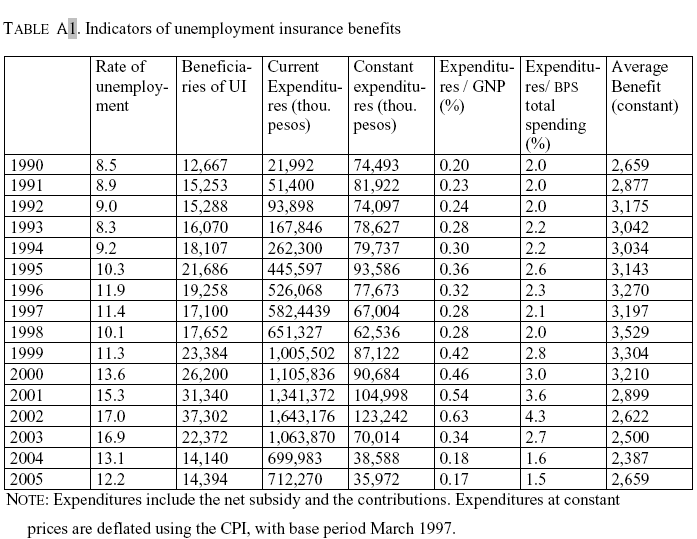
The program is relatively small, both in relation to gdp and as a proportion of social spending. Since the 90's, the significance of these expenditures on gdp has been less than 1% (Table A1). In terms of bps total spending, the program represented around 2% in the early 90's; with unemployment rates close to 9%. In 2002, when the economic crisis worsened and the unemployment rate climbed to 17%, the program reached 4% of the entity's total spending.
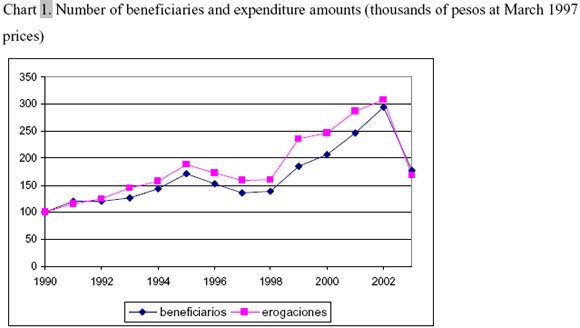
Chart 1 shows that both the number of beneficiaries of the insurance plan and the expenditure (in constant pesos) increased with the rise in unemployment in 1995 and with the recession of 1999. Later, as the crisis got worse, the number of beneficiaries and the expenditure amount rose to a peak in 2002. Average benefit payments show an upward trend until 1999 and then decrease.
]]>
As mentioned, the program does not have is own resources — it is funded jointly with the other bps programs. Therefore the analysis of its financial results is difficult. This raises two considerations.
On one hand, it is interesting to know the implicit contribution rate of the insurance, that is, the rate which would permit financing the spending which actually took place. Velázquez (2005) estimates that it corresponds to 3.48% of the payroll in 2002, and points out that this is relatively high if compared to similar systems.6 However, the author points out that this value is highly sensitive to the assumptions on which the calculation was based (particularly, the number of prior contributions). Also, the estimate was made for a year of profound economic crisis with the highest rate of unemployment in the country's history, which implies greater program spending and a smaller mass of contributions.
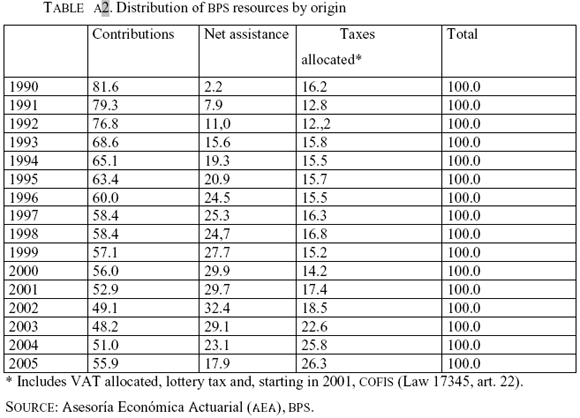
On the other hand, and considering contributory programs as a whole, it is worth asking to what extent they are funded with contributions from beneficiaries. In the early 90's, contributions from salaries represented approximately 80% of the bps funding. In turn, pensions for old age and disability accounted for only 5.5% of expenditure. This indicates that contributory programs as a whole were largely funded by contributions from the persons who would receive the benefits. During the 90's, contributions started to decline as a proportion of total resources. At least three policies help to explain this change: i) the 1991 adjustment of pensions increased their value in real terms, increasing the expenditures of the bps. ii) the move in 1996 from a solidarity-based system to one which combines the pillar of solidarity with individual capitalization, which decreased the income of bps and iii) the growing number of waivers of employers' contributions to social security, which began in the mid-90's and increased during the crisis, causing the bps's income to drop.
Currently contributions make up one half of the resources used by the bps (see Table A2). Thus, taxes on goods and services provide funding for one half of the expenditures (one quarter comes from taxes which were created to finance the bps). With regard to expenditures, there was an increase in non-contributory benefits which began when the scheme of allowances to low-income families was extended in 2001. Nonetheless, it is estimated that a significant part of contributory program benefits is financed out of general tax revenues.
Coverage: its impact on employment, unemployment and characteristics of beneficiaries
The program coverage can be analyzed — with some limitations — using the Encuesta Continua de Hogares (ech, Continuous Household Survey) carried out by the Instituto Nacional de Estadística (National Statistics Institute).7
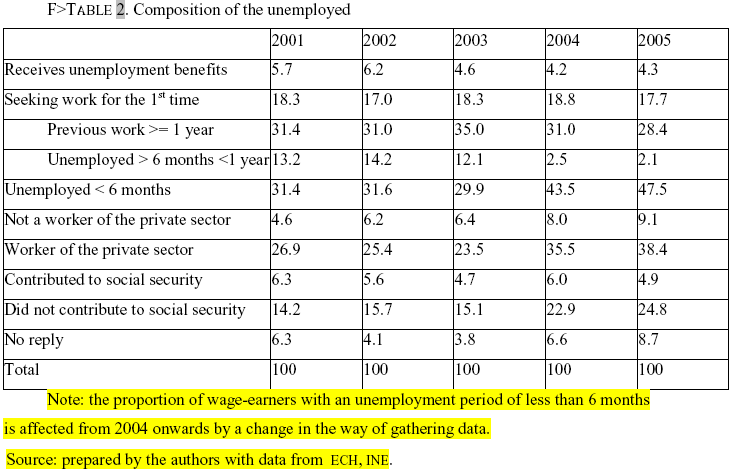
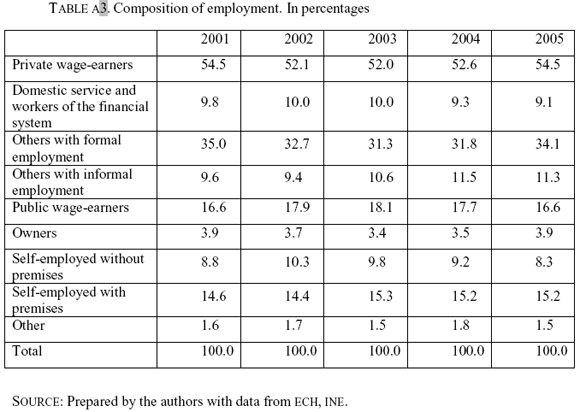
]]> According to the ech, in the past few years private workers in the formal sector (except workers of the financial system and domestic workers) have represented 33% of employees (Table A3). The proportion of private wage-earners who are not covered because they do not contribute to social security has been around 10%. Therefore, around 57% of employed persons appear not to be using the program because they are not part of the target population; they are mainly self-employed workers and public wage-earners.The household survey provides information about whether the unemployed person is receiving insurance benefits. In its highest point, between 1991 and 2005, the insurance program only covered 6.2% of the unemployed (Table 1)8. The greater level of coverage during the years of economic crisis (especially 2001 and 2002) is due to the dynamics of the job market, since unemployment was generated mainly by dismissals and the closure of companies.
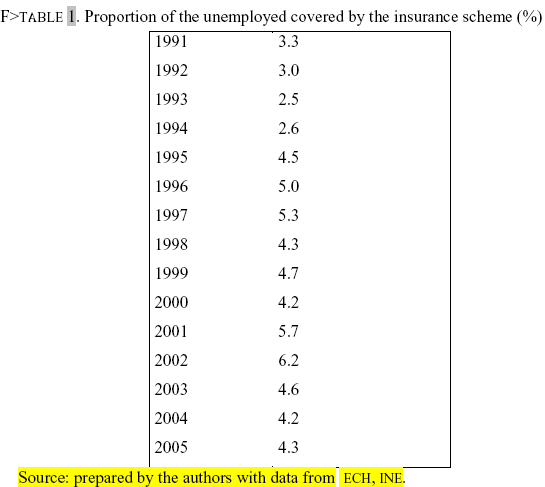
The reasons for this low level of coverage deserve some analysis. Basically, four causes of unemployment should be studied: the significance of self-employed workers, that of inactive persons, long term unemployment and undeclared private sector workers (workers in the informal economy). A more detailed analysis of the characteristics of the unemployed as shown in Table 2 is illustrative.
We can interpret that in recent years around 48% of the unemployed are not covered by the program because they are entering the job market for the first time (17.7% in 2005) or are re-entering after a long interruption (at the time of the interview, in 2005, 28.4% had worked for the last time over a year before).
The other reason for low coverage is the fact that so many wage-earners worked in the informal economy. In fact, the information for 2005 shows that 24.8% of the unemployed had been in that situation for less than six months and that their last job had been in the informal economy. This significance is more important since 2004, but is related to a change in the way the ine surveys the duration of unemployment9. Finally, a duration exceeding six months (i.e., the possibility of workers using the insurance benefits until their exhaustion and not finding work) appears to be less significant.
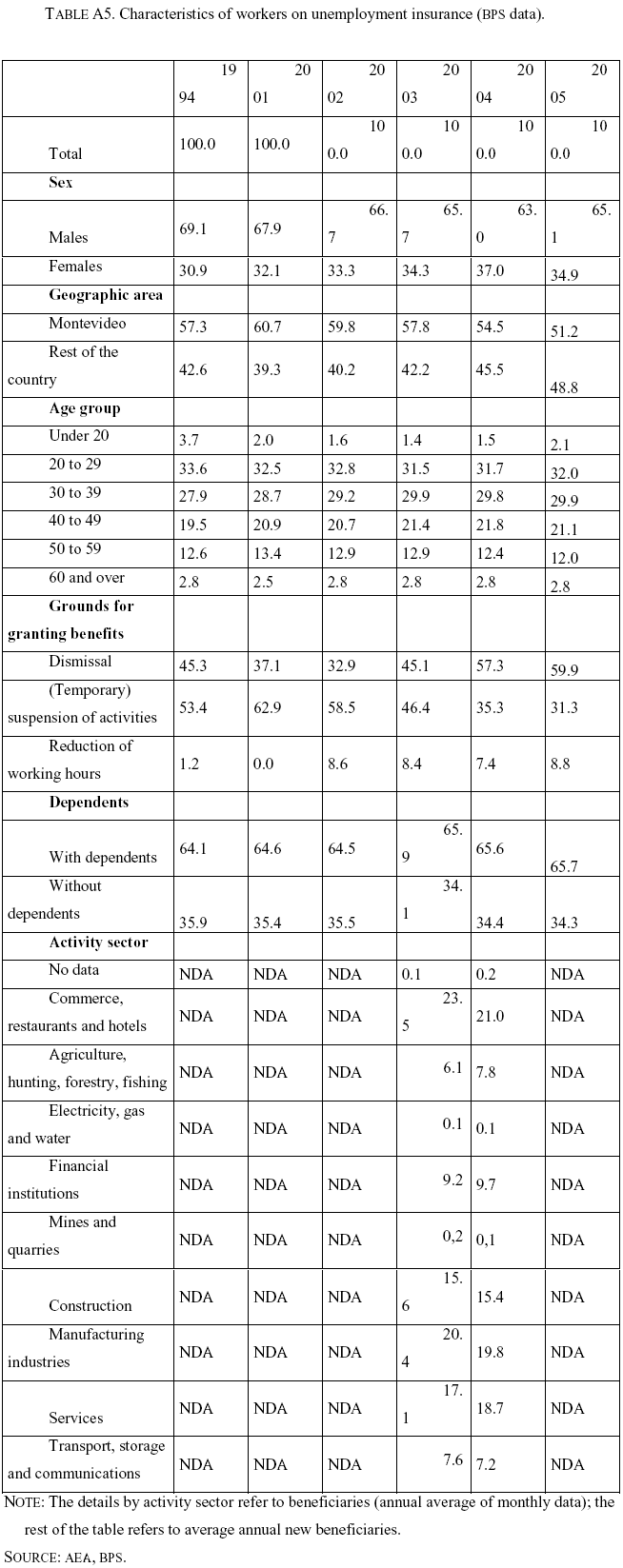
]]> The information in Table 2 indicates the existence of a group of unemployed workers who had a formal wage-earning job less than six months before but do not collect benefits (4.9% of the total in 2005). This group includes those who do not meet the other eligibility requirements —for example, six months of contributions, not having received benefit payments in the previous year, not having been dismissed for gross misconduct or having resigned voluntarily.The beneficiaries may be described based on the information provided by the ech and the bps (Tables A4 and A5). There is greater coverage of unemployed males than females, of residents of Montevideo than of the other provinces, and of medium-aged persons than of members of other age groups. Better rates of coverage are also observed for heads of households and workers with a high level of education (complete secondary and complete university education). The lower coverage of unemployed persons who did not complete their university education is possibly due to the fact that a high proportion of them is attending the educational system and working in the informal economy.
The ech also permits an analysis of how beneficiaries are placed by income distribution —they are distributed in a fairly homogeneous manner by pay quintiles (Table A4). In this respect, Trylesinski (2001) states that the scheme does not focus on low-income persons and that it tends to concentrate income. On the other hand, Forteza et al. (2005) consider that the unemployment insurance scheme contributes slightly to the reduction of inequality.10 Regardless of the qualities and shortcomings of the different analytical methods, it must be noted that the main objective of the program is not to focus transfers on the persons with lower incomes. Although the program implies redistribution from employed workers with a lower risk of unemployment to those who are more vulnerable to unemployment, it does not focus on the most vulnerable group in terms of income because it is associated with entering the formal labor market. In any case, the socioeconomic situation of the unemployed persons not covered by the insurance scheme is worth studying. The break-down of categories in Table 2 shows that the incidence of poverty is somewhat higher for persons who are unemployed between six months and one year, and for those who formerly had a private job in the informal economy.
Grounds for granting benefits
The significance of the different grounds for using the insurance program tends to vary within the cycle. Before the increase of unemployment in the mid-90's, the suspension of activities accounted for more than one half of new recipients. With the onset of recession and crisis, dismissals and the reduction of working hours tended to become more significant (although the latter is relatively unimportant). Thus, in 2005 the suspension of activities represented 31% of new recipients (Table A5). According to Trylesinski (2001), claims based on the suspension of activities are particularly frequent in the manufacturing industry: in 2000, this sector accounted for 41% of the claims based on the suspension of activities and 18% of the ones based on dismissals.
The suspension of activities has been considered a valid reason in cases of an unforeseen reduction of business activities. Its intensive use appears to indicate that the program is used by highly seasonal activities. Previous studies do not have indicators about the extent to which companies use the program repeatedly or, for those that do, the reasons. This information would require the use of micro-data on benefits, which could be obtained from the bps.
Benefit amounts
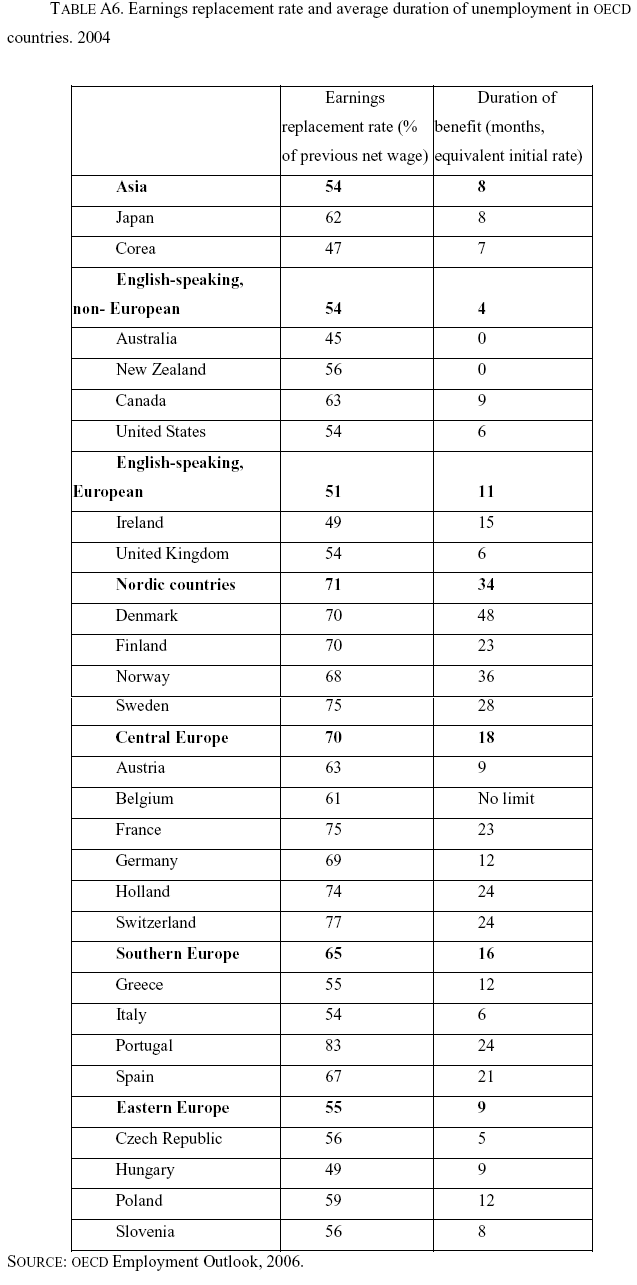
Three quarters of the beneficiaries collect the additional allowance for family dependents, i.e., the benefit is increased by 20% (Table A5). Velásquez (2005) points out that the experience in other countries indicates that the incentive to search for work is seriously reduced when this rate exceeds 60 or 70%. Uruguay is therefore very close to that situation because the benefit payment including family dependents amounts to 60% of the lost wage. The basic replacement rates (without dependents) in the oecd countries vary between 50% (English speaking oecd countries) and 70% (Nordic countries and Central Europe) (Table A6).
It must be noted that in Uruguay the benefit amount is a fixed percentage of the former wage in current terms, so during inflationary periods there is a loss of purchasing power.
Duration of the benefit period
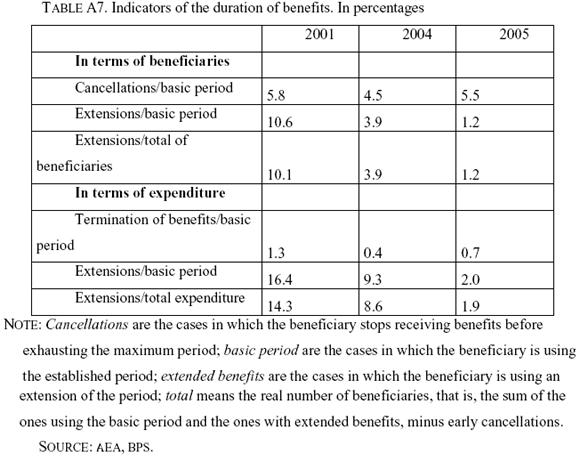
]]> The information disclosed by the bps does not allow us to know the real duration of the benefits, that is, for how long workers collect insurance benefits. It is possible to get an estimate through the data provided by the bps on the number of beneficiaries who stop receiving benefits before the end of the period to which they were entitled. In fact, the proportion of beneficiaries who stop collecting payments before the end of the period is around 5% of the average annual number of beneficiaries (without considering those who have an extension) and only about 1% of anticipated spending (Table A7). This appears to indicate that the workers covered by the insurance tend to use it until the expiration date.This can be interpreted in two ways. Velásquez (2005) underlines that while the benefits are being paid, there is no incentive to actively search for work (people prefer to collect the benefits instead of working). Bucheli et al (2004) suggest that shortcomings in the control mechanisms allow beneficiaries to receive coverage until they exhaust the period while they simultaneously work in the informal economy.
Besides the beneficiaries who receive payments during the regular period, there is also a group with access to special extensions. The bps records provided some information on recent years which indicates that the significance of beneficiaries with an extended benefit compared to the number of beneficiaries using the basic benefit period has dropped from 11% in 2001 to 1% in 2005 (Table A7). In terms of spending, the extensions represented 14% of program expenditure in 2001, but dropped to 2% in 2005.
Weaknesses of the program
The program's weaknesses were noted in those previous studies, but with different emphasis.11 For example, Trylesinski (2001) underlines the problems of coverage and equity; Velásquez (2005) highlights the issues related to eligibility, suspension of activities, extensions and the structure of payments, and Rodríguez (2005) analyzes the institutional aspects and the problems of coordinating passive and active policies.
Workers without coverage
Three groups of workers are not covered. Those who do not earn wages (particularly self-employed workers) are usually not covered, mainly due to the difficulty of proving the lack of work (the fact that unemployment is involuntary). A second group comprises those whose coverage would be in violation of the principle of insurance. This is the case of new entrants and re-entrants — we can say that these persons are never included in the target group when this type of programs is designed.
Finally, private wage-earners who do not contribute to social security have been pointed out as the weak spot of program coverage. They represent approximately 17% of the employed and 25% of the unemployed (in 2005). This incidence may be an overrepresentation of the potential cases of extended coverage, since it appears to include short term jobs.
Verification of the eligibility requirement of not having another job
The law establishes that the beneficiary may not have another job or monetary income or refuse suitable employment. The bps monitors the system to make sure that beneficiaries are not contributing in respect to another job, which would be an incentive to informal work since controls for this situation have always been slack. In fact, if the beneficiary finds work, these weak controls are an incentive to cooperate with the hiring company to avoid contributions to the bps until the six months of benefit payments have elapsed. Therefore, the lack of adequate controls may be an incentive to informal employment. This failure to control compliance with program conditions possibly leads to the fact that most beneficiaries use the benefits for the full six months.
]]> The incentive to search for workTrylesinski (2001) and Velásquez (2005) point out that the fact that the benefit amount is constant over time is an important problem because it does not stimulate the active search for work. In turn, the support to job seeking is poor: although programs to facilitate the return to work have been tried, they have not had a relevant positive impact (Bucheli et al, 2004).
The current extension system
The maximum duration of unemployment insurance benefits is six months, as mentioned, but the Executive Power has the authority to extend them for an additional year. The Executive Power has delegated this authority to the Ministry of Labor and Social Security. In some cases, when the extensions reached the limit of ministerial authority, Parliament approved special a laws allowing a new extension.12 These are discretionary extensions which require no special conditions; they must simply be based on reasons of public interest. In this sense, they have the advantage of giving the system some flexibility to deal with isolated situations, but the great disadvantage of this discretional authority is that it may end up becoming a regular practice — as has been the case in some periods.
Use of extensions to subsidize seasonal activities
In several countries unemployment insurance is used as a subsidy to the seasonality of businesses. Seasonal activities are those which have predictable high and low periods. When no subsidies for the periods of low production exist, the industry is forced to assume one of the following costs: i) the cost of selecting and training new personnel which is hired in every period of high activity, and/or ii) continuing to provide income to workers so they do not seek other employment during the low part of the cycle. Once a subsidy for the low period exists, the industry can guarantee that workers will remain in their jobs without taking on the whole cost. On an aggregate level, when all employers and employees contribute to the same fund in exactly the same conditions, the industries that offer more stable jobs are subsidizing the ones that offer seasonal jobs.
In Uruguay, before the first general unemployment insurance program, the regulations provided an income for workers during low season periods. Nowadays these specific situations are not mentioned separately. Since dismissal generates compensations and the unemployment insurance program allows benefits for the suspension of activities, the latter appears to be the best option for businesses with highly seasonal production cycles. This is why previous studies indicate that a weakness of the program is that the fund currently subsidizes some seasonal situations in an implicit manner (Cassoni et al, 1994; Trylesinski, 2001; Bucheli et al, 2004; Velásquez, 2005).
The financial situation
An analysis of the financial performance of the program normally implies identifying expenditures and resources. The literature from other countries shows that proposals for redesigning programs are originated in their financial situations. In Uruguay, since the program is not tied to its own funding, it is not possible to determine if it has a deficit.
The studies we have reviewed try to approach the financial analysis of the system in two ways. Velásquez (2005) states that the implicit contribution rate of the insurance scheme (the one which allows expenditures and income to be equal) is relatively high when compared to similar systems. Trylesinski (2001) compares program spending with revenue from the vat (on the assumption that the program is financed totally from general revenue). He finds that in the period 1990-2000, despite the increase in the vat rate, the proportion of revenue from that tax that went to the insurance program practically doubled. However, it must be noted that the significance of expenditures for the program with respect to the total spending of the bps and in the pbi does not exhibit a very noticeable trend in the 90's; rather, it is associated to the increase in unemployment. In any case, both studies suggest that the program's financial situation might have weaknesses.
]]> Coordination with other policiesIt has been pointed out that the unemployment insurance program is not closely coordinated with other labor policies, as would be desirable. This is not unique to the Uruguayan case: similar problems have been noted in the region (Mazza, 1999; Bertranou, 2001). Particularly, the unemployment insurance program does not appear to be coordinated with the training policies or with the policies to support the search for employment.
Rodríguez (2005) highlights the lack of coordination between active and passive policies, both with respect to planning and implementation. He states that these policies were entrusted to different entities and no coordination between them was established. The bps has remained in charge of the unemployment insurance program, while the mtss is in charge of the existing active programs, which deal basically with training for the unemployed. The inexistence of a national employment system and the scant tradition of state intermediation between labor supply and demand have contributed to this lack of coordination. Furthermore, the policies for promoting production and employment, such as exempting some industries from contributions, have usually not been initiatives of the mtss but of other entities and, again, active and passive programs for the job market have not been coordinated. 13
4. Discussion of modifications to the program
An unemployment insurance program is one of the contributory programs which protect workers from contingencies and risks during their working life (basically sickness, maternity, loss of employment and even old age or retirement). Unemployment insurance seeks to assist the worker who lost his job unexpectedly for reasons beyond his will to search for a new job. For society as a whole, the main specific benefits of the program are: allowing unemployed workers not to have to accept the first job they find (if the worker is not suited to the job, productivity declines) and facilitating productive changes (which often imply the renewal of staff). In contrast, the program can lead to potential distortions: reducing incentives for the search of work; inducing cooperation between worker and employer to avoid contributions during the period in which the first is registered as an unemployed beneficiary; using the program benefits for periods during which lack of work is anticipated. The main negative effects of these distortions are increasing the unemployment rate, increasing informal employment and the subsidizing of seasonal activities by those which offer stable employment. An adequate design requires objectives to be harmonized with the desired benefits in a way that minimizes the negative effects.
Following is a discussion about modifications to the current Uruguayan program design and an evaluation of their relevance. As has been stated, most of them have been considered in previous studies and proposals. Although the discussion is presented according to the specific modifications proposed to the current design, in fact the positive and negative effects are originated in the whole set of provisions.
The studies reviewed analyze each of the modifications separately, but global proposals are not easily found. Table A8 summarized the main proposals for reform presented in recent years. Two of them are based on the creation of an individual account for each worker (draft legislation mentioned by Velásquez, 2003; Banco Mundial, 2004). In the case of this type of proposal, debate about their design is centered on: the treatment of unemployed workers who have a deficit in their account when they file a claim; the use of any remaining balances at the end of the individual's working life and other provisions about the complete life cycle. The advantages of the system are based on the fact that the workers are not stimulated to use the program abusively. The main disadvantage is that the negative balances of individual accounts are usually funded with government resources so the system as a whole may have financial problems. Velásquez (2005) assessed the option of notional accounts proposed in the draft legislation, and identified two unintended effects. Workers with unstable jobs, despite having made with the required number of contributions, might not be entitled to the whole package of unemployment benefits if they do not comply with the condition of having a positive balance in their account. For workers with relatively more stable jobs, the system would grant similar protection in case of unemployment, but with greater costs.
This debate is not applicable to the three other proposals (ert-bps, 1999, included in Forteza et al, 2005; Trylesinski, 2001; Velásquez, 2005) which recommend changes in several aspects of the program's design but not in the way it is currently financed. Following are the advantages and limitations of these modifications, according to eight aspects.
1. Changes in coverage. It has been suggested that coverage should be extended to domestic workers (Trylesinski, 2001) and this modification is currently under discussion. Another possibility is the coverage of informal workers.
]]> Expanding coverage to include private wage-earners who do not contribute to the program would have the advantage of including them in the social safety net which currently excludes them. Another important consideration is that the system currently requires beneficiaries to have made contributions, but in fact it is not financed exclusively with contributions from potential beneficiaries. However, this expansion of coverage would be difficult to implement because it would have to rely on witnesses. The Uruguayan experience in the field of pensions indicates that this type of design is an incentive to abusive behavior which cannot be controlled.In order to assist informal workers, an option might be a non-contributory social program offering benefits to low-income unemployed persons who are not covered by the insurance.14 The objective of such a program would be to alleviate poverty among the unemployed. It is therefore a program against poverty, which is different from a traditional unemployment insurance scheme. Its design should be planned in the framework of the existing social security net, in coordination with the other benefits provided.
2.Control of simultaneous work in the informal economy. The studies reviewed on the topic of proposals for modifications to the current program do not include specific measures aimed at solving or mitigating the potential problem of employers and employees cooperating to have an informal labor relationship. A possible solution would be the implementation of rigorous control mechanisms for detecting such situations. However, that would imply increased expenses and it raises the question of whether it is more expensive to implement these controls or to transfer funds to these persons who use the system inadequately (Diez de Medina and Bucheli, 2002).
Another way of monitoring these distortions would be the implementation of active programs (job brokering services, assistance in job searching and training) to occupy working hours, as is done in other countries. In this way the worker has a cost for using the insurance, and abusive behavior is discouraged. The implementation of active programs offers the advantage of facilitating access to new jobs and therefore reducing the need for insurance benefits. In general, when insurance programs are supplemented by active programs, the program design includes sanctions for non-compliance. In other words, success with this program option requires some sanctions for workers who do not attend the active programs or refuse job offers without just cause.
3. Decreasing benefits. Another suggestion has been a different structure of benefits, based on decreasing benefit amounts (Trylesinski, 2001; Velásquez, 2005). Velásquez (2005) specifically recommends a benefit equivalent to 65% of the reference wage on the first month and a gradual decrease to 35% on the sixth month. The aim of such a measure is to stimulate the search for work while the person is receiving benefits, so as to shorten the time the program is used. An advantage for the worker is that since benefit amounts are constant in current terms, during inflationary periods the decreasing payments may imply greater purchasing power.
However, these measures can only have limited effects on the duration of benefits until simultaneous work can be controlled. As long as workers are able to receive benefits while working in the informal economy, the effects of decreasing benefits on the length of duration are not clear.
4. Elimination of the possibility of extensions. Extensions — and therefore the advantage of having discretionary authority for exceptions — are an incentive to distortions because they open a door for lobbying and clientelism. Their advantage lies in the discretionary nature of the clause that authorizes extensions for reasons of general interest, which enables a response to emergencies and exceptional situations.
There appears to be consensus that this clause has been used in excess because use has not been limited to emergencies. The ert-bps (Workers Advocacy Team in the bps) has suggested restricting the clause (Forteza et al, 2005), while Rodríguez (2005) asserts that it might be an important instrument to enable certain very specialized professional categories to continue working, but that the rules should be improved. Other authors have recommended their elimination (Trylesinski, 2001; Velásquez, 2005).
It is worth noting that if the extensions are to be maintained, steps must be taken to articulate them with a program design with decreasing benefit amounts.
5. Modification of the suspension of activities clause. Velásquez (2005) suggests that the (temporary) suspension of activities as a reason for accessing benefits should be eliminated to reduce the incentive for using the insurance plan for highly seasonal activities.
]]> This proposal has two disadvantages. First, the suspension clause allows employers to offset short-term adverse shocks. Termination of the labor relationship through dismissal is an inefficient solution if it ends a good worker-job match (the worker is specialized in his position and the job requires that specialization) which could continue after the unfavorable period.Second, as noted in the historical review of the program, seasonality was explicitly contemplated by the early legislation. Although we have not carried out a specific analysis, it appears that the changes in legislation which led to the current system continued to offer protection for those seasonal activities. Therefore the intense use in Uruguay of the (temporary) suspension of activities as a reason for accessing benefits is not surprising and its elimination might be politically unfeasible.
6. Rate increase according to history of use. This type of clause, like the one mentioned before, seeks to reduce use of the insurance system during foreseeable periods of low production. The advantage is that it does not require eliminating the suspension of activities clause. A disadvantage is that companies undergoing a difficult moment and therefore having to cut back on personnel would face higher costs in the following periods.
In general, the fact that employers contribute to the insurance fund according to the number of beneficiaries they have generated in the past admits two interpretations. On one hand, the incentive for using the program to finance regular cycles (seasonality) is reduced. This generates costs for the companies that use intermittent workers and therefore encourages them to mitigate the cycles of production and employment by searching for alternatives for their low activity periods. On the other hand, those who are using the system most are contributing more resources, thus easing the financial burden that they create.
Trylesinski (2001) and the draft legislation (mentioned in Velásquez, 2003) suggest the use of a similar mechanism, but one which only considers the use of the suspension of activities clause. The general aim is to establish a ceiling above which employers would have to make a larger contribution. The draft legislation — which is based on notional accounts — establishes that the employer must contribute an additional monthly salary each time the suspension of activities clause is used.
7. Coordination of institutions and programs. Previous studies have paid little attention to the institutional aspects and coordination.
As mentioned, active policies may serve as controls for a passive program and, additionally, increase the chances that the unemployed person will find a suitable job. Rodríguez (2005) identifies four potential institutional scenarios with regard to coordination. Three of them suggest the centralization of policies in only one entity, which could be the bps, the mtss or a new entity; this way a national employment service would be created. The other option is to maintain the current situation in which the bps is in charge of passive policies and the mtss of active ones — the author emphasizes the need for coordination mechanisms in this case.
The program design would have to be analyzed keeping in mind the other regulations currently in force, particularly coordination between the different government entities entrusted with control functions. For example, at present there appears to be no cooperation between controls by the Dirección General Impositiva (Internal Revenue Service of Uruguay) and by the bps.
8. Modifications due to the financial situation of the program. Previous studies mention some proposals for modification based on the fact that the program expenditures are very high both in terms of payroll and of revenue from the VAT.
One of the proposals consists in increasing the number of monthly contributions to the scheme. The aforementioned draft legislation requires that monthly workers contribute at least nine months — instead of six — from one or more companies, and workers with variable wages should have completed 200 working days. Velásquez (2005), too, suggests that the number of monthly contributions should be increased — from six to nine — for initial eligibility or for making a new claim.
]]> A second option is joint consideration of benefits and severance pay. The aforementioned draft legislation established that "workers who are dismissed will be able to collect the unemployment insurance subsidy after the corresponding months of severance payments". Trylesinski (2001), too, proposes that unemployment insurance be used as a supplement of severance pay. Dismissed workers who are entitled to six months severance pay would not be entitled to unemployment insurance benefits. Those entitled to less than six months severance pay would receive a supplement in unemployment insurance benefits up to a total of six months.Both proposals imply more restrictive eligibility requirements. Justification of this kind of proposal faces the difficulty of analyzing the financial situation of the program.
When there is a specific fund for unemployment insurance, financial imbalance is easy to detect. Furthermore, in the — common — cases in which a percentage of the payroll provides funds for a set of risks, it is also possible to monitor the evolution of the financial situation of each risk by estimating implicit taxes. Additionally, when the different country programs have encountered financial problems, this has led to a change of general program design. In Uruguay, the general financial situation of the social security system is determined by the pension program, so it appears best to concentrate on an analysis of the whole system.
In this context, it seems advisable to make a long-term estimate of the implicit rate of the insurance program and monitor its evolution rather than implement modifications aimed only at changing the financial situation. It is also worth noting that proposals such as the ones in numbers 4 and 6 (and eventually 3) of this Section, all tend to reduce expenditure.
5. Final comments
The main challenge when designing an unemployment insurance scheme is finding an adequate balance between the objective of providing workers with insurance against the risk of losing their jobs and the perverse incentives that such insurance may create. Analysis of Uruguay's unemployment insurance program indicates that in some cases this balance has not been adequately achieved. For that reason, several proposals for improving the current program design have been made in recent years. This article has detailed those proposals and indicated their advantages and disadvantages.
Further, we underline the need to consider the system of social security policies as a whole. This implies articulating policies and institutions: unemployment insurance and active employment programs, the different entities that perform tax controls, the agency at the head of labor policies (mtss) and the one in charge of managing the unemployment insurance program (bps), among others.
This system-wide analysis of social security must include funding issues. On a general level, workers' contributions provide them with coverage for a series of contingencies in their working lives (unemployment, sickness, retirement). This precludes analyzing the program's financial situation in the traditional way. In order to monitor possible imbalances, one option would be to make regular estimates of the implicit contribution rate.
Currently, the system shows global losses. It would also be useful to separate resources for pensions from those for covering contingencies during the active working life, in order to clarify the financial situation of the programs which place a smaller burden on the system.
]]> Finally, it is worth mentioning that all the information which is generated in the bps could be used more thoroughly for evaluating and redesigning the program. It would be a good idea to improve cooperation between the bps and the mtss and to start analyzing this information regularly and in greater detail, so as to improve the policy-making capacity of the mtss.
Bibliography
Bertranou, Fabio (2001): Protección para los desempleados: los seguros de desempleo en América Latina, in ilo, Panorama Laboral 2001 de América Latina y el Caribe, Santiago de Chile, ilo. [ Links ]
bps (2006): Evolución de los seguros por desempleo: principales resultados segundo semestre año 2005, in Comentarios de Seguridad Social, n.º 10, January-March 2006. See the report at http://www.bps.gub.uy. [ Links ]
Bucheli, M. and R. Diez (2002): Seguro de desempleo. Análisis comparativo regional e internacional de sus opciones de diseño, LC/MVD/R 198, Montevideo, cepal. [ Links ]
]]>Bucheli, M., A. Fernández, M. Furtado and J. M. Rodríguez (2004): Regulación e Instituciones en el Mercado de Trabajo de Uruguay, report for the idb, Montevideo, cinve. [ Links ]
Cassoni A., G. Labadie and S. Allen (1994): Reformas del mercado laboral ante la liberalización de la economía. El caso de Uruguay, Inter-American Development Bank, Working Paper No. 177. [ Links ]
Forteza, A., A. Caristo, N. Ferreira Coimbra and I. Rossi (2005): Pay roll contribution financed social protection programs in Uruguay, Working Paper No. 03/05, Montevideo, Departament of Economics, Universidad de la República. [ Links ]
Mazza, J. (1999): Unemployment Insurance: Case Studies and Lessons for Latin America and the Caribbean, Inter-American Development Bank. [ Links ]
Rodríguez, J. M. (2005): Hacia una mayor articulación entre las políticas activas y pasivas, in ilo, Uruguay. Empleo y protección social. De la crisis al crecimiento, Santiago de Chile, ilo. [ Links ]
]]>Trylesinski, F. (2001): Principales características del subsidio por desempleo en el Uruguay. Lineamientos para su reforma, consultant report for the Ministry of Economy and Finance, Montevideo. [ Links ]
Velásquez, M. (2003): Seguro de desempleo en Uruguay: evaluación y lineamientos para su modernización, consultant report for the Ministry of Labor and Social Security, Montevideo. [ Links ]
Velásquez, M. (2005): Seguro de desempleo: evaluación y lineamientos para su modernización, in ilo, Uruguay. Empleo y protección social. De la crisis al crecimiento..., Santiago de Chile, ilo. [ Links ]
1 Workers of the financial system and persons receiving retirement and pension benefits thereof contribute to a fund which is administrated by the Caja Bancaria (Bank Employees' Retirement and Pension Fund) (workers: 2.5%; retirees and pensioners: 2.5%). In 2002, the financial crisis led to the closure of banks with the corresponding consequences on employment in that industry, so a subsidy program was created to assist the unemployed of the financial system (Law 17613, articles 50 to 60). The eligibility requirements were similar to those of the original unemployment insurance program, including that the lack of employment should be for involuntary reasons and not related to the person's capacity for work. The benefits, however, were greater: maximum duration is 18 months which can be extended for another 18 months, and the ceiling is 20 national minimum wages. For cases of unemployment occurring after the crisis, the bank involved was required to make a specific contribution to the Caja Bancaria. In the case of bankruptcy, there is a debate about the interpretation of the law regarding whether this contribution is a preferred creditor.
2 Law 18605 of November 2006 and its regulatory decree of June 2007 extend access to all the labor rights currently in force, including unemployment insurance, to domestic workers.
]]> 3 A discussion about the parliamentary debates of the time and particularly about job banks can be found in Rodríguez (2005).4 The ceiling had been established in nominal values and its purchasing power had been undermined by inflation.
5 The police, the armed forces, the workers of the financial system and the professionals have their own social security entities. Furthermore, since 1996, there are also private pension fund managers (afaps). The managers of the funds for policemen and members of the armed forces are public; the other entities (Afap, and Bank Employees', Professionals' and Notaries' Funds) operate in the private sector.
6 The implicit contribution rate is defined as the percent contribution, applied on the payroll of contributing employees, which is needed to finance total spending on unemployment benefits in a specific period. The author estimates it based on the situation in 2002 as informed by the bps, considering the ratio between total spending in benefits with respect to the total amount of contributions. The assumption is nine actual contributions per year.
7 Between 2001 and 2003, the ech has recorded an increase in unemployment insurance recipients which is 65 to 75% of the total recorded by the bps. This growth refers to urban areas with 5000 inhabitants or more. The bps figures correspond to the whole country.
8 Velásquez (2005) and Forteza et al (2005) estimate that coverage is twice as much. Those studies divide the number of beneficiaries informed by the bps by the number of unemployed persons according to the ech. It must be noted that workers who inform the ech that they are on unemployment insurance are classified as employed when they make statement indicating that they will return to their work. These are cases that correspond to beneficiaries who presented claims based on the suspension of activities clause. In those previous studies, these workers are not included in the denominator (they are not classified as unemployed at the ech) but they are included in the numerator (they are registered as beneficiaries at the bps).
9 Starting in 2004, the ine made the interview regarding the person's last job more rigorous. This led a a decrease in the duration of unemployment, since the interviewees were asked if they had done any work at all during the time they were searching for a job. Table 2 suggests that there was a movement of unemployed persons who before 2004 indicated a duration of unemployment of over six months, to the group of those who had been unemployed for less than six months and were non-contributing private wage-earners in 2004 and 2005. It is probable that after losing their jobs these people entered the job market intermittently, for short periods and in the informal economy.
10 An analysis of the distributive impact of the program exceeds the scope of this article. However, it is worth mentioning that Tryslesinski (2001) does not consider the stratum of the persons who finance the program, while Forteza et al (2005) do. The program is financed with contributions made to the bps and also out of general taxes; furthermore, the same fund competes to finance other programs, so it is difficult to estimate the impact on distribution.
11We have not included a complete list of the problems pointed out by previous studies, only the most relevant ones. Specifically, we do not analyze the problems in controlling the effective compliance of the contributions required for eligibility (Velásquez, 2005) or the equity of the program (Trylesinski, 2001).
12 Laws 16623, 16792, 17276, 17288, 17293, 17325, 17346, 17553 and 17594.
]]> 13In this respect, it is worth mentioning that Velásquez (2005) recommends that industries with waivers should start to contribute again.14 Trylesinski (2001) suggests the creation of a social employment program, which is also a program against poverty with work as its counterpart.
Statistical Annex
]]>
]]> Table A8
]]>