Diego Hernández*; Paulo Ravecca**
Translated by Cristina Cafferata
Translation from Cuadernos Del CLAEH, Montevideo, n.92, 2006.
ABSTRACT
The bulk of scholarship on emigration as a social and political process tends to focus on those who migrate and their situation in the host country. In contrast, only limited attention has been given to the study of those who remain in the home country. One of the distinctive features of this article is that it does not stress the classical migration issues or adopt the traditional focus on emigrants. On the contrary, and based on one of the most important emigratory waves in Uruguayan history (the one that took place in the first years of this new century), it seeks to explore emigration's effect on poor non-migrants' welfare. It argues that as a consequence of the erosion of social capital produced by the emigration of a household member, vulnerable households from Montevideo could be prone to welfare losses. This argument challenges the conventional wisdom about globalization's effects. In short, though non-migrants in developing countries receive emigrants' remittances, harmful effects are also possible.
]]> Key words: emigration, Uruguay, Social capital
Introduction
During the first half of the 2000's decade, Uruguay went through one the most important emigration waves of its history. Literature studying emigration as a social and political process, its causes and consequences, is wide and it is mainly focused on those who emigrate and their situation at the host country, while studies centered on the analysis of those who stay at the home country have been scarcer. Precisely, this article focuses on this last dimension of the phenomenon, putting special attention on the effects of relatives' departures (or close referents departures) in vulnerable households.1
In particular, it puts into question whether emigration influences, and in what way, the possibilities of welfare access, and deepens into the study of concrete mechanisms through which this is produced. One of the main arguments of those who sustain an optimistic vision of the phenomenon, is that emigration could be considered as a potential influence for improvement of the quality of life of citizens who remain at the home country, basically through the reception of remittances from abroad. In other words, households would change affective welfare for material welfare. Calling this into question, this works explores if there is an important risk of lack of opportunities of welfare access in households due to close referent departure and to the erosion of primary social capital which that means.
This article is based on an exploratory study, whose main technique to collect information was the semi-structured interview. Therefore, it does not pretend to make empirical generalizations or statements that can be representative of a specific population. On the contrary, its heuristic potential points at testing the plausibility of certain work hypothesis, as well as at deepening the knowledge of the object of study. Within this framework, we made between January and July 2005, twenty-four interviews in households of Montevideo that had gone through an emigration event in the last years.2 The conclusions of this study inform about the plausibility of the statement above: when facing an emigration event, a concrete risk of closure of ways to welfare access is confirmed in these households. In addition to this, signs of remarkable improvement in the quality of life from the emigration event were not found. Therefore, it does not seem to be analytically convenient to reflect on emigration without considering, in first place, the socioeconomic characteristics of households (physical, human and social capital and insertion in the opportunities structure), and, in second place, the wider context (international politics, migration policies at the host country, etc.) in which emigration takes place.
The departure from a condition of structural vulnerability, determines that the appropriation of the emigrant condition is made from precariousness (from symbolic to material aspects), which perpetuates that vulnerability. In this sense, migration policies at the host country play a crucial role. Currently, they tend to criminalize immigrants, and this affects not only those who leave their countries but also those who stay there, because precariousness due to the departure of close referents is added to the pre-existing precariousness.
The analytical, theoretical and political consequences of this proposal are very important, because they point at making problematic the more acquiescent approaches at the so called globalization process, which prevail in the political system but also have an important presence in the academy.
]]> Migration in Uruguay3
At the end of XIX century and until middle XX century, Uruguay was an immigration country. Since the sixties, it has been an emigration country. This situation began together with the crisis of the model of substitution of importations, which caused a deterioration of the quality of life of population due to the increase of unemployment and the decrease of real income.
Inter-census periods 1963-1975 and 1975-1985 register two of the most important emigration waves in the history of the country. In both cases, exile due to economic reasons was overlapped with that due to political reasons.
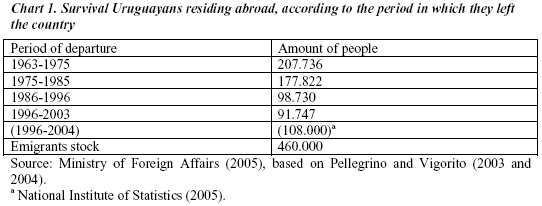
The first relevant datum in the chart below is that it is estimated that 460.000 Uruguayans live abroad. This figure represents about 14% of the population living in the country. As a comparative datum, we must point out that in Mexico, whose emigration current is considered one of the most important nowadays, it is estimated that emigration represents from 6% to 10% of all the population of the country.
With regard to 1996-2003 period, there is consensus that the great majority of this contingent emigrated after the recession suffered by the country after 1999 and it deepened during the acute crisis unleashed in 2002. Indeed, specialists coincide that, from year 2000 until today, the country is going through the most important emigration wave from that registered in the seventies. A possible estimation of people who emigrate per year can be calculated with the arrivals and departures at the Carrasco International Airport (the only reliable point of departure to make this calculation). In the following chart it is shown the evolution of this difference in the period of reference.
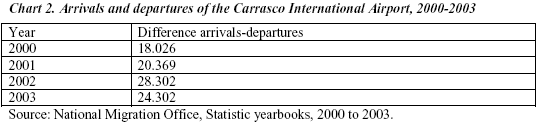
The sum of these figures worked out at a negative balance comparing arrivals and departures of almost 91.000 people between 2000 and 2003.4 According to the data of the World Bank's Social Characterization Survey (SCS), 3,86% of urban households had at least one member who had emigrated on the period March-December 2002. Pellegrino and Vigorito estimate that 33.000 people emigrated during those months.
Although we don't have precise information, according to SCS and data from census in other countries (in which it is asked the individual's country of birth), the favorite destinations of Uruguayan emigration stopped being regional and have changed to farther countries, specially United States and Spain (two out of three emigrants between March and December 2002). All social sectors have taken part on emigration to these destinations. Perhaps it is the same emigration to Argentina that now points at farer destinations, partly encouraged by the existence of Uruguayan communities in these countries and by the economic crisis at regional countries which made them less attractive destinations.
With regard to the emigrant profile, as usual, it is a population that has educational levels higher than average residing population. However, the proportion of emigrants with twelve or less years of education is not much lower than national average. Continuing the statements above, this can suggest that in this last emigration wave, and beyond the usual over education of migrants, cases of socioeconomic levels lower than in previous decades are also registered. Some expressions of consulted qualified informants tally with this statement. Indeed, members of the Association of Parents who have sons and daughters abroad, Idas y Vueltas (Association of Migrants' Families and Friends), Non governmental Organizations (NGOs) specialized on the problem of emigration, affirm that, while years pass, they perceive that they are dealing with a population of lower socioeconomic level.
In almost all cases, reasons given for emigration can be grouped in three answers: unemployment (lower socioeconomic levels), low incomes (medium and high levels) and search for a better quality of life. At the same time, the percentage of households where some emigration event has been registered, it is proportionally much higher in those households which have a member of the family residing abroad.
Pellegrino and Vigorito (2003 and 2004) point out that in Uruguay, remittances from abroad play a role not so relevant as they do in other peripheral countries. While in Mexico, for example, remittances are the second source of income, in Uruguay, the quoted authors estimate that in 2003 they reach about thirty-five million dollars.5 This figure is very similar to that estimated by the Uruguayan Central Bank in 2002 and it represents less than 1% of the Gross Domestic Product (GDP). If we add to this marginal contribution to the GDP, that this GDP corresponds to the worst period of recession (calculation base 2002) and therefore it is one of the lowest GDP in last years, we must expect the relative importance of remittances in normal years to be even less significant. 6 Moreover, and concerning the population object of this study, from the SCS analysis we can confirm that less than a quarter of recent emigrants sent remittances.
Pellegrino (2003) states that one of the possible reasons for not sending remittances can be related to the characteristics of Uruguayan emigration, which includes medium socioeconomic levels and several times whole families. Pellegrino and Vigorito (2003) say that this can also be explained by the fact that Uruguayans who have emigrated recently can be in a stage of consolidation of their residence abroad, and this would not let them sending money.
Social capital and international emigration
The concept of social capital
]]> Literature dealing with the concept of social capital has not developed a univocal definition of the term. Indeed, we can notice that this concept is used in different ways, outside and inside academy. For this reasons, apart from revising different conceptualizations, it will be necessary to clearly decide the definition to be used. In the same way, to achieve an operative definition of the concept will allow us to avoid value judgments (usually positive value judgments).When revising the origins of the concept of social capital, it is necessary to go to James Coleman and Pierre Bourdieu, whose works are considered foundational on this point.
Coleman defines social capital as
[ ... ] a variety of different entities with two elements in common: all of them have some dimension of social structures, and all of them make easier certain actions of the actors -people or corporate actors- in the structure (Coleman, 1998, p.98).
He makes some additional statements about the nature of this concept: "[... ] social capital is productive, it makes possible to achieve certain aims, which could not be achieve otherwise [... ] it is inherent in the relation structure among two or more actors" (Coleman, 1988: 98).
One criticism made to this definition (Portes,1998) is that, as it is vague, different processes can be labeled as social capital. Portes argues that one problem of Coleman's definition is that he includes in the same term the mechanisms that creates social capital as well as the consequences of its possession. We will return to this topic below.
Meanwhile, Bourdieu makes a more precise definition, conceptualizing social capital as:
]]> Among the analytical merits of this last definition, there is that it explicitly distinguishes the resources that can be obtained from the capacity to obtain them, according to the belonging to a social structure. However, in both cases, there is the notion of social capital as a mean to obtain other types of capital (human of physical), which plays a central role in our approach.[... ] the group of actual or potential resources linked to the possession of a lasting network of relations, more or less institutionalized, of interknowledge or interrecognition, or, in other words, the belonging to a group, as a group of agents who have not only common properties (capable of being perceived by the observer, by the others or by themselves) but also who are united by permanent and useful bonds. (Bourdieu, 2001: 83).
Unlike human and physical capital, social capital is intangible: "[... ] it is a type of assets, highly intangible, that is in the bonds among people and not in people, unlike what happens with human capital, which is incorporated in individuals" (Kaztman, 1999: 178).
Up to a certain point, we could speak about transactions mediated by social capital and characterized by less transparency and more uncertainty than purely economic ones.
The social capital of a person could be break down into three elements: the number of relations that compose his/her bond network, the type of request that he/she can make from those relations and the quality of resources that circulate in that network. Then, following Portes, the social capital of an individual is related to his/her ability to assure himself/herself of benefits due to his/her belonging to a network of other social structures.7 A classic example of a transaction mediated by social capital is when an individual gets an employment through the recommendation of a relative or friend.
However, there is a second line of conceptualization of social capital, in which it is put on the same level of a collective attribute of a community or social group. Robert Putnam (1993 and 2001) is the exponent par excellence of this argumentation line. This author conceptualizes the category equaling it to certain civic virtues of citizens, which he places at central place when explaining why a democracy "functions better" than other. These virtues are related with the level of associationism and participation in a society.8
It is possible to find a similar argumentative line in Lorenzelli's work (2004), in which he states that it is possible, through public interventions, to go from a social capital as a private good of a group of people belonging to a (group) network, to a social capital as a public good of which all members of community can benefit, which he calls communitarian social capital. To do so, this author states that it is necessary the existence of widespread mutual confidence among individuals, as well as an institutional framework where associative expressions that do not contribute to common well are punished. Although Lorenzelli focuses on the potentialities of social management as articulator and creator of a virtuous circle between group and communitarian social capital, strictly speaking, this idea (specially the notion of communitarian social capital) is mostly due to the search for the development of "civic virtues" to reach a common objective.
Following this line of discussion, Herreros and De Francisco (2001) state that it is possible to find two approaches of social capital: structural and cultural. The former is referred to the notion of available resources of an individual, whereas the latter is related to aspects of political culture, in particular, the generation of "widespread confidence" in a society. We adopt the first definition, which does not assimilate social capital with civic virtues of a group. In other words, the approach we chose is clearly structural. The adoption of a cultural vision of social capital would not be methodologically convenient, because it does not consider social capital as a dimension of the portfolio of assets of a household (and thus, as a way of welfare access), which is the central point of our investigation.9
Having made this proviso, and turning to the definition of social capital, it is important to bear in mind which are the analysis units of this study: vulnerable households with relatives or close referents who have emigrated. Therefore, the resources circulating in networks are, in general, of low quality and probably "internal", as it will be difficult for many of its members to move them outside their environment. In other words, it is very probable that the resources that can be obtained through moving the assets of social capital have to do with the maintenance of a basic welfare.
We agree with Lorenzelli when he affirms that:
]]> [... ] in particular a group formed just by individuals in situation of poverty and scarce contacts with other social groups, will have a limited capacity to bring into operation networks of reciprocity that can get resources to overcome poverty. (Lorenzelli, 2004: 119).
This shows the fact that, beyond its intangibility, social capital, as other capitals, is unequally distributed in society.10 Moreover, it is important to point out a fact that, though obvious, cannot pass unnoticed. The quality of goods that circulate through a network of reciprocal confidence of an individual will depend on the availability and accumulation of other capitals. It is clear that in a poor neighborhood, transactions mediated by social capital will not probably manage to overcome the situation of vulnerability. However, these transactions can be crucial when trying to avoid the deterioration of a household. For example, for a poor household, to share one of its highest fixed costs, the house, could mean to have access to it: to be in a reciprocity network, to know somebody to share the house and to count on him/her for that, have as a consequence the possibility to have access to physical capital (the house). Therefore, it is valid to reaffirm that interlink dynamics that are associated to the possession of social capital lead to the acquisition (or not) of other types of capital.
As we prioritize its potential as a way of welfare access, we will deal with this concept in connection with its positive consequences. This does not mean that we agree with a quite widespread vision that assigns positive connotations to the category, that is, that only recognizes those consequences thought as desirable. 11
We must point out that, frequently, the central part of an individual social capital is concentrated on its relatives' bonds (nuclear and extended). And, as this study focuses on the loss of social capital associated with the departure of close referents, it will probably stress the consequences of this related to family support. 12
We can also think about this topic in terms of the ways in which social capital is supported. Coleman (1988) suggests two: strong bonds and weak bonds. One of the main components of the former is primary bonds and stable bonds. Not for nothing are family environment and friends networks a paradigmatic example of social capital networks. There is, besides, where the central points of socialization process are concentrated, a process that brands the individual and conditions its present and future possibilities.
Weak bonds are lanes through which information and contacts circulate (professional circles, acquaintances belonging to different spaces of interaction, ex classmates, etc.). As it was argued before, social capital of less favored social sectors is concentrated on strong bonds rather than weak bonds. Although these last bonds are considered true sources of social mobility through a system of work references, 13 it is important to repeat the importance of strong bonds as a support to maintain a basic welfare.
How can we understand social capital as a way of welfare access? Social capital is part of a household's portfolio of assets, which can be defined as those movable resources to improve the welfare situation, to avoid its deterioration and to decrease its vulnerability. Moreover, they are considered assets those movable resources that allow households to make a better use of the structure of opportunities existing in a society. At the same time, when can define the opportunities structure (?) as
[... ] probabilities of access to goods, services or activities that influence a household's welfare because they make the use of own resources easier or they bring new resources, useful for mobility and social integration through existing channels (Kaztman, 2000: 299).
These structures are given by the market, State and society. This definition is within the vulnerability-assets approach, which emerges as a need to know more about the heterogeneity of poverty. It focuses on the study of the assets of poor households and the way in which those households manage them. Moser (1998) affirms that, by knowing this portfolio and the strategies to use it, it is possible to make social intervention easier so that these households can use their assets in a productive way. Other authors like Kaztman (1999 and 2000) state that it is also necessary to pay more attention to the opportunities structures of a society, as the vulnerability degree of a household would depend on the gap between these structures and its portfolio of assets. Currently, the crisis of the labor market, plus the withdrawal of the State and the crisis of some communitarian pillars, strengthen these kinds of gaps and deteriorations. In labor market this is translated into an increase of precariousness and work instability, and at the same time, the gaps in the opportunities structures of the State and community generate vulnerability and insecurity.
]]> It is interesting to notice how regressive evolution in the existing opportunities structures has been one of the most important drives for massive emigration. Then, and to sum up, when the use of these structures is more difficult, it is possible that one of the assets of the household is affected, and that widens the above mentioned gap, or, in other words, the household's vulnerability.The argument
The social actor involved in the problem of emigration is not only the one who travels, but also his/her family and surroundings. When we think about them, in general terms, we pay more attention to the problem of the affective losses and emotional effects of the departure. Here we look from a different perspective: the possible variations in the portfolio of assets of a household. This perspective will be almost exclusively centered on social capital, because, indeed, it is improbable that migration causes variations in, for example, the physical or human capital of non-migrants. In other words, the welfare dimension privileged in this study is specially focused on the channel that can be lost due to migration. In tune with Kaztman's statements (1999), in this work we see the departure of some members of a network as one of the possible mechanisms that decrease the amount of social capital.
This situation becomes particularly relevant when we limit the analysis to less favored social sectors. It was argued that these sectors have more social capital expressed in strong bonds than in weak bonds, and thus we could think that the effect of a relative or close referent emigration can be considerable. Moreover, it is probable that most basic aspects of welfare come from the participation in reciprocity networks. More specifically, primary bonds such as family ones will play a crucial role. Some mechanisms that can be placed under this category are, for example, scale economies or the provision of basic cares substituting the market option.
This argument does not mean that more favored sectors do not loose social capital nor underestimate other kinds of looses in the population studied. It simply searches for an analytical cut of a complex reality. In the case of medium and high sectors, it is very probable that basic aspects of welfare do not depend on the collaboration of close referents. In other words, if, for example, the income of one of the household members is lost, this lost will be more or less significant depending on the type of welfare those incomes could reach. In the same way, the lost of the goods the referent emigrant could provide will be significant if there are no means to get those goods at the market.
Analysis of empiric evidence
Households analyzed
The population studied were households affected by the last emigration wave, which was directed mostly to out regional countries (specially Spain and United States). It is essential to point out that these households do not belong to the lowest socioeconomic levels, because these last levels, as it is known, do not have the possibility to emigrate.
In fact, we can expect the group of migrants to be mostly composed of medium levels that have decreased in the structure due to the increase of unemployment and labor precariousness with the resulting salary decrease. However, medium sectors include popular integrated medium classes.14 Among the interviewees we can find ex industry employees, domestic employees, public employees (of the lowest ranks), etcetera. This profile matches with the Kaztman's category vulnerable to poverty.15
]]> Migration and its contextThose who emigrate are basically the interviewees' relatives, specially their sons and daughters. In some cases there were their brothers, sisters, or even their parents. The departure is, to a great extent, collective and not individual: it is possible to notice in many interviews how the story progressively includes not one son but several, and sometimes all of them.
The economic motivations are omnipresent, in its different variants, which go from the search for new horizons or the carry out of personal projects (like independence from parental household) to survival. With regard to the causes to leave the country, labor problems are the main ones. Many interviewees had some moment of rupture with labor market, and the situation in which an individual loses his/her job, after many years of having it as his/her stable source of income, is common. The decision to look for other destinations is due to the deterioration of the labor situation and the lack of alternatives. The interviews reflect the daily nature (in terms of its effects) of a macrosocial reality: the dismantling of industrial activity in Uruguay in the last decades. Indeed, in many of the interviewees' households lived some ex-industrial employee, whose lost of job was the beginning of a process of deterioration of the whole family welfare.
Nevertheless, unemployment is not the only factor that motivates emigration. It was frequent the mentioning of scenes that could be considered of labor precariousness, in particular, excessively low incomes that did not allow the access to goods and basic services. Then, we found that many migrants were working at the moment of their departures. But of course, as we have just mentioned, that labor situation was uncompleted as it did not guarantee minimum incomes.
Moreover, and agreeing with literature that studies this topic, evidence shows that emigrated Uruguayans are an attraction pole. This is due to a certain demonstration of the effects the earnings have in terms of welfare improvement, as well as to the creation of a learning and retaining network that convert the departure into a much more secure, and thus viable, alternative. Another central aspect of Uruguayans residing abroad has to do with the help to get the tickets to the chosen destination. There are several cases in which this happens, and many times those who help with the ticket have emigrated no longer than one or two years ago.
About the conditions in which emigration happens, we must point out the effects of the hardening of central countries policies towards illegal emigration. It is clear that these policies also affect those who remain at the home country through different ways: possibilities for family reunification, communication fluency and the own anguish generated by the situation and its consequences (which exceed, although they are related to, the scope of this article). Moreover, we must stress the central place occupied by the immigrants regularization process in Spain, while at the same time the hardening of residence conditions in United States after the attacks of September 11th 2001 has played a crucial role.
Effects upon households
The first verification is categorical: A significant loss of social capital is indeed detected in the households studied. However, as that loss is registered practically by definition (because one of the constitutive components of social capital is the amount of members of the reciprocity network), this discovery does not mean too much.16 What it is interesting here is detecting the mechanisms that this loss unlashes and its effects upon the households studied. When analyzing the loss of social capital related to welfare we noticed that in less favored sectors, emigration adds and strenghens vulnerabilities, as experiences of desertion and separation are added to the daily fight for maintaining a fairly decent level of life; absence, therefore, is seems to be felt more.
It is relevant to emphasize the emergence of several aspects that go beyond the most restrictive version of the concept of welfare. As we have already mentioned, evidence shows a deterioration of social capital (in its structural version) due to emigration of close referents. But also, it makes possible to reflect on a series of losses that happen in different registers and levels and intensely interact, which makes much complex the reading and analysis of the collected information. The close referent departure, in current conditions, causes a damage that operates in the internal world and in psychological dynamics, and that it is also associated to the loss of multiple channels to welfare: care in case of illness, economic cooperation, several helps in the reproduction of daily scenes, link with the outside world, etcetera. That is to say, "the other" provides not only an economic income to the family but also daily security (which has special relevance in low socioeconomic contexts, where many times there are alarming levels of violence).
The presence of the other, the possibility to count on him/her if an unexpected problem arises, the shared activities, the dialogue in an atmosphere of trust, the possibilities to look for ways of overcoming adversity as a team and intrafamiliar work division: all this is left aside when one of the participants of the bond network emigrates. In a surrounding where people have to solve problems by themselves (long walks, minor solutions, personal protection inside and outside the house), households lose a mind and a body. This loss, specially the body one, and even more if it is a young and sane body, is less significant in those households that can resort to other type of resources, usually provided by the market (a taximeter, a carpenter, a builder, private security, an apartment building caretaker or just living in a quieter area). To sum up, the other is a capital that, when he/she emigrates, is inevitably lost.
]]> All this lead us to think up to what extent this type of dimensions, crucial for the studied population, are not considered by economic approaches of emigration effects. It is a problematic area that this work leaves open. Deepening into the argument, and thinking about possible future interdisciplinary approaches, the interviews show the radical interconnection among (the usually called) psychological, discursive, social and economic aspects of welfare, and how anguish, anxiety and sadness can impact on the social capital of an individual. For example, think about an unemployed woman, who remains at her house, who is alone and depressed, and who stops having contact with close friends, perhaps one of the scarce sources to know about work opportunities that she has.Material welfare: incomes and services
In terms of material welfare, remittances are fundamental. In the research cases, help from abroad, when it exists, is not continuous, but it happens only in extreme situations (for example, the payment of important bills). Remittances depend on the situation of the referent who is abroad, and sometimes this situation is very adverse. Then, it is possible to find examples of emigrants who are suffering unemployment. Anyway, and although this not seems to be the usual situation, interviewees use to say that, while their relatives are in an installation stage, the possibility of their sending money is unviable. Other situations that can be hindering the sending of remittances could be the Uruguayan emigration model: individual emigrations are not very common, on the contrary, as a whole, all nuclear family (simultaneously or in stages) travel to the host country. Undoubtedly, this impacts on the possibility of remittances reception at the home country.
Situations in which the emigrant stops generating demand on household's incomes were also detected. This is registered when the emigrant was a chronic unemployed, due to the time he/she is out of the labor market as well as to the stage of the vital cycle in which this happens. In those cases, in general, contribution to the household was made in kind, such as repairs at the house, accompaniment to do steps and aspects related to security. A story that illustrates this situation is that of a household where the son of forty years old decides to emigrate after five years of being unemployed. Incomes generated by him are marginal and very unstable. However, he is in charge of accompanying his mother to a health center in a context in which security to move around the neighborhood is, from the interviewees' perspective, much deteriorated.
At the same time, it is interesting to pay attention to the different notions of economic success. Up to a great extent, and depending on households' situation, one indicator of economic success consists, for the own interviewees, of having a full freezer. Up to some extent, these parameters explain the situations that motivate emigration and how, in some cases, what could be at risk was the guarantee of basic feeding. Moreover, the search for opportunities to live a decent life, beyond the satisfaction of basic needs and including other vital aspects such as enjoyment of leisure, was also detected.
About the effect the departure of close referents has on individuals welfare, the loss of the opportunity to have an income pool generated from different sources was one of the most outstanding aspects. We can also find other type of transactions that are lost, such as credit access using the guarantee of close people, as well as a kind of "informal credit" network that consisted of mutual loans (cash or in kind) among the family members and other close people to cover present needs. Thus, for example, in one of the interviewed households was frequent, before the lack of own access to credits due to past failures, to resort to the signature of a relative, and in that way being able to buy school tools for children. Nowadays that guarantee has been lost, and therefore the purchase of school tools is more difficult.
In the researched households, we cannot notice an improvement of the quality of life of those relatives who remain at the country. In any case, help from abroad is used to cover expenses that existed previously and that do not improve the quality of life (in terms of consumption or services) of the household.
The importance of the other: social activity, leisure and support
As it was above mentioned, primary bonds in these households work as a support of welfare in a wide sense. In colloquial terms: instead of watching a play, mother and daughter share the afternoon at home; instead of going dinner with friends, they prepare something to eat at home. Whereas other interviewees (those who belong to a sector more favored than the studied population), keep doing social activities they did before emigration, such as, for example, go to the theatre.
It is worth mentioning that, in several cases, success at the host country was mentioned as an incentive so as not to suffer so much the absence. In more than one interview it is mentioned the comfort of knowing that they are fine ("if they are fine, I am fine"). In this sense, it is interesting to remember the above mentioned reflections about the different notions of material success abroad.
]]> We must focus on what seems the most affected sector of the family: older people, those who have more leisure time and more vulnerability in several aspects. The role of the grandparent is central for the family as a whole and for the grandparent in particular. When, anyhow, any person withdraws from the labor market and from public spaces, it seems comprehensible that private spaces become of greater importance. In the so-called old age, some functions and aspects lose intensity: physical activities and all tasks related to the outside. Therefore, the household (and the bonds cultivated for years) is an strategic place for welfare. Older people lose many times one of the pillars of their private world: the interaction with their grandchildren. We must remember that in these contexts, interaction can be much closer and in many cases consists of the own cohabitation. The grandparent, apart from being a source of affection, gives services by taking care of children, which at the same time makes him/her more vulnerable to suffer the loss of a grandchildren, who he/she will not probably see again. Thus, older people frequently have their health problems worsened due to the dismantling of their private world, which provided them of welfare. This perception matters, regardless if it agrees with the facts or not.The situation is very similar for older people with regard to their sons and daughters: if the illegal condition does not change, they live as a the dramatic alternative the risk of not seeing them any more.
To sum up, in less favored sectors, activities related to leisure are centered, up to a great extent, on interaction with primary networks. Emigration puts at risk these networks, which are the activities in themselves. There are no more family meetings at weekends and daily meetings to drink mate as geographical distances allow it, if the network members go away. This situation is noticed several times in interviews, specially when we are talking about people who lived at the same neighborhood.
It is frequent that, before the question about social activity, the person answers that, "in fact", she did not "go outside so much" before the close referent emigration. This means, more than a previous lack of social life, that she had the household and close referents as her center. Facing their absence, social activity changes.
The findings put into consideration express an experience data that we must not avoid: the importance of the other, whose meaning, because of its width and complexity, is hardly apprehensible, and it can include from time of shared leisure to daily support in key decisions or complex situations.
A clear example is the own person's illness: the other would provide him/her of medicines and steps related to his/her health care. Or, perhaps, the other would have helped the mother in the care of her youngest daughter when her husband had a serious disease. In other words, is in this dimension where it seems more appropriate to affirm that emigration is the loss of a mind and a body in the household.
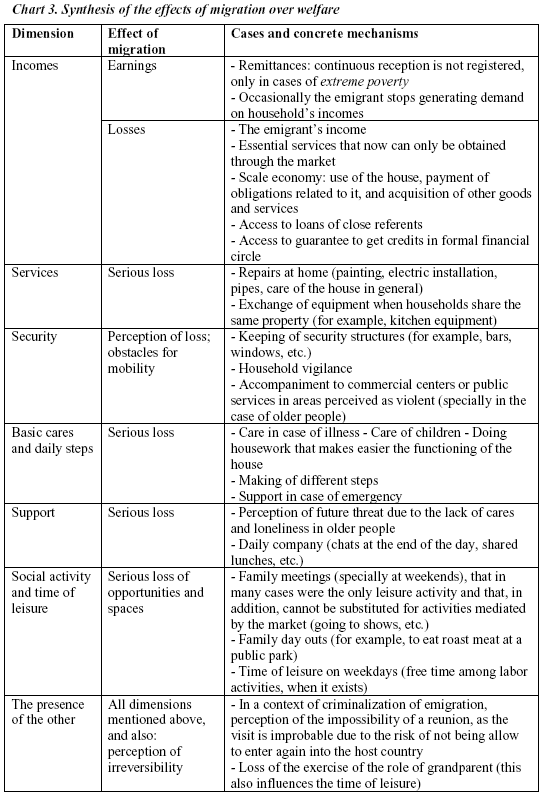
Chart 3 synthetically shows the above mentioned analysis of empiric evidence appeared in interviews made throughout this study. Its objective is to make the information processing and presentation more systematic. As in the precedent section, we can distinguish dimensions of welfare, we make a very brief characterization of the effect of emigration on the household, as well as a description of the mechanisms and concrete examples that explain them.
Conclusions
Empiric evidence opens an important space for the plausibility of the argument sketched in this work: emigration does not act unidirectionally as a source of welfare with regard to the emigrant's relatives through remittances, but as a polyvalent mechanism which, in the analyzed cases, deprives them of welfare due to the deterioration of their primary structural social capital. Evidence suggests that the improvement on the quality of life of emigrant's relatives is not significant and in many cases it does not exist. Going beyond this, it is also possible to find examples in which the balance in terms of welfare for the household is negative. Indeed, the mentioning of important expenses that were previously faced collectively, but since the departure of a household member become a much heavier burden for those who stay at the country, is frequent. This situations are due to decreases on households' incomes.
Help coming from abroad, when it exists, is not a determinant factor for the access to higher levels of life. This interviewees' perception agrees with what we can notice being in contact with them and their surroundings: it seems difficult to think about a welfare increase in a household where, at times, the own survival is at risk due to the lack of food. This does not mean that remittances, or the expectance of receiving them, were not mentioned. What is clear from the research is that in cases where remittances were necessary, its coming is irregular, in relatively low amounts and, in general, related to specific expenditures (for example, the monthly bill of the electric service).
This lack of constant economic support in high amounts from abroad, seems to be associated with two kind of circumstances. First, the emigrant situation abroad, that is to say, the impossibility of sending remittances because his/her settlement is hard and difficult, or because he/she has not been so "successful" at the host country. Second, relatives who stay at the country have no urgency to complement their incomes with help from abroad. Usually, this last situation correspond to those cases in which those who emigrate are the youngest sons or daughters, who did not work or their incomes were relatively low, and so its loss goes practically unnoticed. Of course, households always suffers a series of mechanisms of harm that act on welfare dimensions and which, though are not purely material aspects (specially incomes), are tangible goods (for example, security or health).
To sum up, we can affirm that, when emigration happens in households vulnerable to poverty, there is a real risk of closure of ways for welfare access. Moreover, for the researched cases, we cannot affirm that, after emigration, there was a significant improvement in the quality of life.
Up to now we focused on the central argument of this article, which limits itself to relating emigration with social capital as a way for welfare access. However, the complexity of this topic goes beyond this analysis and raises other central aspects for academic and civic debate.
One of these topics is the convenience of analyzing the effects of migratory policies of central countries. When we talk about criminalization of emigration, we are implying that the restrictive policies of these countries seem to have direct and indirect effects on the households of Montevideo nowadays. The question we have to answer is, therefore, what is the margin the government has to take decisions in this topic inside and outside the country.
Secondly, the analysis proposed is not based on a romantic vision of family. Welfare in a wide notion is not associated, therefore, with a normative rescue of that institution: this work simply confirms the way in which certain actors have access to welfare, where family plays an important role. Moreover, we hope that nobody deduces from this work that social capital is, for the authors, the way for welfare access that we have to favor. This is a resource with an individual base and non egalitarian distribution. Up to a great extent, it is due to the precariousness of the welfare matrix in a certain social context and it coincides, in general, with a weak presence of the State, as a collective agent, in the definition of its opportunities structure.
Last, in a household vulnerable to poverty, with occasional difficulties of survival, it is not surprising that the effects of emigration are not reduced to welfare and have political connotations. In general terms, interviewees make previous governments and political parties in power responsible for emigration. Usually, they distinguish between the government action and politics as a whole (as an activity). In this sense, the Frente Amplio (left political party currently in power) plays an important role: even those persons who have a less politicized discourse, or against politics of parties, identify it as a hope. It is frequent to find cases in which people give some credit to the new government. This had as a result, sometimes, some delay in the departure of the own interviewees. Undoubtedly, the temporal horizon of this credit is of short-term. Surely, at the time of publishing of this work, it will be wearing out
]]>Bibliography
Bourdieu, Pierre, «The forms of capital», en J. G. Richardson (ed.), Handbook of Theory and Research for the Sociology of Education, Nueva York, Greenwood, 1985. [ Links ]
_______. «El capital social. Apuntes provisionales», en Zona Abierta, n.º 94/95, Madrid, 2001. [ Links ]
Buxedas, Martín, Rosario Aguirre y Alma Espino, Exclusión social en el mercado de trabajo, el caso de Uruguay, Santiago de Chile, Organización Internacional del Trabajo, 1999. [ Links ]
Chami, Ralph, Connel Fullenkamp y Samir Jahjah, Are immigrant remittance flows a source of capital for development?, Washington, Fondo Monetario Internacional, 2003. [ Links ]
]]>Coleman, James, «Social capital in the creation of human capital», en American Journal of Sociology Review, vol. 94, suplemento S95-S120, 1988. [ Links ]
Dirección Nacional de Migración del Uruguay, Anuario Estadístico, Montevideo, Ministerio del Interior, años 2000 a 2003. [ Links ]
Hernández, Diego, «Analysis of an exemplar book: Putnam Robert, Making Democracy Work», artículo final presentado para el seminario «Scopr and Methods», del Programa de Doctorado en Ciencia Política de la Universidad de Carolina del Norte - Chapel Hill, 2001, (mimeo). [ Links ]
Herreros, Francisco y Andrés De Francisco, «Introducción: el capital social como programa de investigación» en Zona Abierta, n.º 94-95, Madrid, 2001. [ Links ]
Herreros, Francisco y Henar Criado, «El problema de la formación del capital social. Estado, asociaciones voluntarias y confianza generalizada», en Zona Abierta, n.º 94-95, Madrid, 2001. [ Links ]
]]>Instituto Nacional de Estadística, Resultados del Censo. Fase I – 2004, Montevideo, INE, 2005. [ Links ]
Kaztman, Ruben (coord.), Activos y estructura de oportunidades. Estudio sobre las raíces de la vulnerabilidad social del Uruguay, Montevideo, CEPAL-PNUD, 1999. [ Links ]
_______. El aislamiento social de los pobres urbanos: reflexiones sobre naturaleza, determinantes y consecuencia, Montevideo, 2000, (mimeo). [ Links ]
_______. «Notas sobre la medición de la vulnerabilidad social», artículo presentado en el 5º taller de MECOVI: La medición de la pobreza: métodos y aplicaciones, México, D. F., 2000. [ Links ]
Kaztman, Ruben y Fernando Filgueira, Informe de desarrollo humano en Uruguay, Montevideo, PNUD, 2000. [ Links ]
]]>Kaztman, Ruben, Fernando Filgueira y Magdalena Furtado, «Nuevos desafíos para la equidad en Uruguay», en Revista de la Cepal, n.º 72, Santiago de Chile, 2000. [ Links ]
Kyle, David, Transnational peasants. Migrations, networks, and ethnicity in Andean Ecuador, Baltimore-Londres, The John Jopkins University Press, 2000. [ Links ]
Levi, Margaret, «Capital social y asocial: ensayo crítico sobre Making Democracy Work de Robert Putnam», en Zona Abierta, n.º 94-95, Madrid, 2001. [ Links ]
Lin, Nan, «Inequality in social capital», en Contemporary Sociology, vol. 29, n.º 6, 2000. [ Links ]
Lorenzelli, Marcos, «Capital social comunitario y gerencia social», en Cuadernos del Claeh, segunda serie, año 29, n.º 88, Montevideo, 2004. [ Links ]
]]>Marshall, T. H., Cidadania, classe social e status, Río de Janeiro, Zahar, 1963. [ Links ]
Martínez Pizarro, Jorge, La migración internacional y el desarrollo en la era de la globalización e integración: temas para una agenda regional, serie Población y Desarrollo, n.º 10, Santiago de Chile, Cepal, 2000. [ Links ]
Massey, Douglas et al., «Theories of international migration: a review and appraisal», en Population and Development Review, vol. 19, n.º 3, 1993, pp. 431-466. [ Links ]
Menendez-Carrión, Amparo, «El lugar de la ciudadanía en los entornos de hoy. Una mirada desde América Latina», en Revista Debate Ecuador, n.º 58, Quito, 2002 (a). [ Links ]
_______. «¿Pero dónde y para qué hay cabida? El lugar de la ciudadanía en América Latina, algunas consideraciones para situar el problema» en Revista Debate Ecuador, n.º 57, Quito, 2002 (b). [ Links ]
]]>Ministerio de Relaciones Exteriores del Uruguay, Departamento 20, La patria peregrina, Montevideo, presentación a la Comisión de Asuntos Internacionales del Parlamento, 2005, (mimeo). [ Links ]
_______. «The asset vulnerability framework: reassessing urban poverty reduction strategies», en World Development, Washington D. C., vol. 26, 1998. [ Links ]
Moser, Caroline, Confronting crisis: a summary of household responses to poverty and vulnerability in four poor urban communities, Washington, D. C., Banco Mundial, 1996. [ Links ]
Pellegrino, Adela y Andrea Vigorito, Informe sobre emigración y remesas en Uruguay, Montevideo, 2004, mimeo. [ Links ]
_______. Emigration and economic crisis: recent evidence from Uruguay, Montevideo, 2003, (mimeo). [ Links ]
]]>Pellegrino, Adela, La emigración en el Uruguay actual. ¿El último que apague la luz?, ponencia presentadas en el cabildo sobre el fenómeno de la emigración, organizado por la Oficina de Unesco, Montevideo, 15 de julio de 2003. [ Links ]
_______. «La emigración de latinoamericanos a los EE. UU. Un polo de atracción», en Revista Encrucijadas, n.º 7, Buenos Aires, 2001. [ Links ]
_______. Caracterización demográfica del Uruguay, Documento de Trabajo n.º 35 de la Unidad Multidisciplinaria, Montevideo, Facultad de Ciencias Sociales, 1998. [ Links ]
Pizarro Martínez, Jorge, La migración internacional y el desarrollo en la era de la globalización e integración: temas para una agenda regional, serie Población y Desarrollo, n.º 10, Santiago de Chile, Cepal, 2000. [ Links ]
Portes, Alejandro, «Social capital: its origins and applications in modern sociology», en Annual Review of Sociology, vol. 24, 1998. [ Links ]
]]>Portes, Alejandro y Patricia Landolt, «The downside of social capital», en Revista The American Prospect, 1996. [ Links ]
Putnam, Robert, «La comunidad próspera. El capital social y la vida pública», en Zona Abierta, n.º 94-95, Madrid, 2001. [ Links ]
_______. Making democracy work: civic traditions in modern Italy, Princeton, Princeton University Press, 1993. [ Links ]
Ratha, Dilip, «Worker´s remittances: an important and stable source of external development finance», en Global Development Finance, Washington D. C., Banco Mundial, 2003. [ Links ]
Romano Silva, Javier, Otro futuro es posible lejos de mi país. Reconocimiento y análisis de las experiencias, problemas y expectativas de los migrantes del Uruguay reciente, monografía de grado, Montevideo, Facultad de Ciencias Sociales de la Universidad de la República, 2003. [ Links ]
]]>Skocpol, Theda, «Unsolved Mysteries: The Tocqueville Files. Unravelling from above» in The American Prospect, vol. 7 n.º 25, Marzo-abril, 1996. [ Links ]
Solimano, Andrés, Remittances by emigrants: issues and evidence, Santiago de Chile, cepal, 2003. [ Links ]
Stolle, Dietlind, «Jugando junto a los bolos, jugando solos: el desarrollo de confianza generalizada en las asociaciones voluntarias», en Zona Abierta, n.º 94-95, Madrid, 2001. [ Links ]
Tarrow, Sidney, «Making Social Science Work Across Space and Time: A Critical Reflection on Robert Putnam's Making Democracy Work», en The American Political Science Review, vol. 90, n.º 2, 1996. [ Links ]
Taylor, Michael, «El buen gobierno: sobre la jerarquía, el capital social y las limitaciones de la teoría de la elección racional», en Zona Abierta, n.º 94-95, Madrid, 2001. [ Links ]
]]>
* Sociologist (Catholic University of Uruguay) and MA in Political Sciences (North Caroline University - Chapel Hill). CIESU associated researcher, analyst and researcher of the Education and Culture Ministry and of the National Administration for Public Education (ANEP). Teacher at the Master on Social Policies in the Latin American Center of Humane Economy (CLAEH). E-mail: diegohernandez@adinet.com.uy
** Researcher and teacher of the Political Science Institute, School of Social Sciences, University of the Republic. E-mail: paulorav@montevideo.com.uy
1 This article is based on the investigation report of the project "Adding migrants: subtracting citizenship?", winner of the 2004 research projects competition "International links of poverty in Latin America and the Caribbean", within the framework of the CLACSO-CROP Program on poverty studies in Latin America and the Caribbean 2001-2004. We thank the comments of anonyms evaluators.
2 The search and selection of interviewees were made using the "snowball" technique. For this reason, the group of cases does not represent a specific sample framework (and this also invalidates any ambition of statistical representation of this work).
3 This section is mostly based on information of Adela Pellegrino and Andrea Vigorito (2003 and 2004). Specifically, these authors have analyzed the microdata of the Social Characterization Survey of the World Bank, 2002, which is perhaps the only recent survey in Uruguay that includes questions about emigration in households. It is a survey made on December 2002 and it covered 2.500 households placed at urban areas, which represented 90% of Uruguayan population.
4 Experts estimate that we should add to this datum about ten thousand people more, due to regional emigration (that can be overland, using other points of departure).
5 This figure includes money orders through specialized companies, banks and transferences in kind, in purchases in supermarkets through Internet.
6 According to a journalistic article published at the web host ‹http://www.espectador.com›, of El Espectador radio, money sent by Uruguayans residing abroad had increased 10% in 2004 according to 2003. ]]>
7 As an example of the diversity of definitions –that have nevertheless a common conceptual branch– Kaztman (2000) defines the social capital of an individual as "[... ] its capacity to mobilize other persons' will for his/her benefit, without resorting to force or to the threat of force" (p. 285).
8 There is wide literature warning about some weakness of Putnam's work in particular (in this sense, see Tarrow, 1996; Scokpol, 1996; Portes, 1998; and Hernández, 2001), as well as, in general, about the substantial and logic risks run when assigning civic social capital to a group and use it to explain some outcomes as quality of democracy or economic development.
9 Moreover, it is also truth that cultural vision carries value judgments with it, which makes it a more diffuse and less potent analytical tool.
10 See Lin (2000).
11 Portes and Landolt (1996) point some negative consequences of social capital: restriction on opportunities access for outsiders, restriction on individual freedom, excessive demands on the members of the group and norms for down equaling.
12 For a discussion on sources and consequences of social capital, see Portes (1998:8).
13 Bourdieu strongly stresses this type of bonds in his foundational works on social capital.
14 The socioeconomic level of a household was determined once the interview was made. This made that three cases did not correspond to the researched profile, as they were households that can be hardly classified as medium classes post decrease or low incomes labor class. Anyway, these interviews were very illustrative to understand the complexity of the studied phenomenon. Among other things, they allow to see that, though with differences, it was possible to identify similar processes irrespective of different socioeconomic levels. Of course, in these cases, the social capital supports a type of welfare that can be hardly called as basic needs.
15 This author describes the individuals classified in this category as those who "for different reasons have relatively low incomes, maintain their participation and confidence in work institution as a mean to improve their welfare situation, as well as in knowledge institutions as a mean to materialize their aims of mobility and integration for their children [... ] Most of them are close to the line of poverty, but the category is also composed by important segments of integrated low class, mid-low class and some segments of medium class [... ]" (Kaztman, 1999:28).
16 Concerning this, it is important to mention that the evidence collected does not register an increase of social capital. This discovery contradicts, in first place, the argument that the emigration of a close referent generally has as a result an improvement of the resources of an individual, through the reception of remittances, and in second place, the concept of a primary network transnacionalization as a good in itself. This kind of reasoning is contradicted by the experience data above mentioned, which condition the emigration process. We should point out two of them: in first place, in the studied cases, the migrant incorporation to the host country was hard and slow, and so, at least during the research, the surplus generated by him/her did not reach his/her relatives or close referents at the home country. And, in second place, the discursive and public policy context that constructs emigration from criminalization and from the subject (intrinsically denigrated) of the illegal immigrant, whose effects considerably limit the potential benefits of the bond network transnacionalization.
Annex
Interview guideline
If it corresponds, start by finding out the type of bond interviewee-emigrant
When did he/she emigrate and where to?
Why did he/she emigrate?
What kind of relationship did you have with the emigrant? (if they share the house, the neighborhood, acquaintances, friends, labor relationship, etc.)
How do you feel about the absence? (if the person is adapted, if she/he will never get accustomed, if she/he hope that she/he will return or that they will meet again)
Did you have to make some kind of economic effort so that the person could travel? (for example, selling household implements, use savings, etc.)
]]> Do you fell that you are sentimentally affected by the departure of this person?How could you define the role this person played in your life?
How often did you meet? If it corresponds.
What kind of activities did you make together?
Did this person help at the house?
In which way? Did he/she help economically? (ask about the economic topic)
In which other ways? (administration of the house, steps, minor repairs, care of children, etc.)
Following questions: find the appropriate moment to talk about remittances
How did you substitute that help?
Do you believe that not counting on that help will be a problem in the future?
]]> For you, who or what is responsible for the emigration of that person? (mention politicians, rich people, powerful people, government, individual responsibility, she/he went away because she/he wanted to do so, etc.)What is your opinion about politics and politicians?
Did this opinion change after the emigration?
After this person emigrated, did you start new activities involving contact with people, or your social life remained unchanged? (ask about his/her social life before emigration)
Did you have any contact with other emigrants' relatives, do you talk about this topic with other people? (ask about institutional links such as Ministry of Foreign Affairs or social institutions)
Now the government will change in Uruguay, do you think this will make a change with regard to the situation of the person who emigrated? In which sense?
Do you think that it makes any difference to live under a democracy or under a military regime? If they promise you the return of that person, would you support a firm hand regime that leave aside some liberties?
Do you think that your situation is the worst or there are other situations that are worse? Did you start to think in this way after the emigration of your relative?
If you were in the government, what would you do first: plans to reduce poverty or programs for the return of emigrants?
What are your future expectations for yourself and for the person who emigrated?
]]>