Zorina Khan
Ph.D in Economics, profesor of the Economics Department of the Bowdoin College, Brunswick, USA, [bkhan@bowdoin.edu]. I am grateful for comments from Greg Clark, Catherine Fisk, Kenneth Flamm, Claudia Goldin, Wendy Gordon, Stan Liebowitz, Peter Lindert, Jacques Mairesse, Michael Meurer, Steve Munzer, Alan Olmstead, Ivan Png, Elyce Rotella, Kenneth Sokoloff, and Eugene Volokh. I received useful insights from participants in the Pratiques Historiques d'Innovation Conference in Paris, and the workshop on Fair Use at the University of Texas, Austin. I also benefitted from presentations at the American Society for Legal History, Boston University School of Law, the University at Buffalo Law School, University of California, Davis, Colby College, the British Commission on Intellectual Property Rights, the Economic History Association, Harvard University, the University of Hawaii, Indiana University at Bloomington and Yale University. This paper was written while I was on sabbatical from Bowdoin College, and a Visiting Scholar at the UCLA School of Law; I am grateful to both institutions for providing the resources that supported this research. Liability for errors is limited to the author. The views expressed herein are those of the authors and not necessarily those of the National Bureau of Economic Research. Published as working paper in NBER Working Paper 10271, 2004.
Translated by Zorina Khan
Translation from Rev.econ.inst., vol.10, n. 18, p. 21-54, Jan./June 2008
Zorina Khan
Does the lack of international copyrights benefit or harm developing countries? This article examines the effects of U.S. copyright piracy during a period when the U.S. was a developing country. U.S. statutes protected the copyrights of American citizens from 1790, but until 1891 deemed the works of foreign citizens to be in the public domain. In 1891, the laws were changed to allow foreigners to obtain copyright protection in the United States if certain conditions were met. Thus, this episode in American history provides us with a convenient way of investigating the consequences of international copyright piracy. The analysis is based on copyright registrations, information on authors, book titles and prices, financial data from the accounts of a major publishing company, and lawsuits regarding copyright questions to investigate the welfare effects of widespread infringement of foreign works on American publishers, writers, and the public. The results suggest that the United States benefited from piracy and that the choice of copyright regime was endogenous to the level of economic development.
[Keywords: copyrights, development; JEL: K11, O1, Z1]
In literature...there is nothing but supply and demand Dodge (1870)
Debates about economic and social progress have long included uestions about the appropriate institutions to promote creations in the material and intellectual sphere. Thomas Paine contended that "the country will deprive itself of the honour and service of letters, and the improvement of science, unless sufficient laws are made to prevent depredation on literary property" (cited in Bugbee, 1967, 105). Similarly, scholars such as Douglass North have suggested that intellectual property systems have had an important impact on the course of economic development and technological change (see North, 1981, and Machlup, 1958). Policy makers today stress the need for laws and property rights in intellectual products that are well-defined and wellenforced. Others, however, argue that such institutions are more relevant to the needs of already developed countries, whereas newly industrializing societies may not benefit from their adoption1.
]]> The question of property rights is especially important because ideas and information are public goods characterized by nonrivalry and nonexclusion. Once the initial costs are incurred, ideas can be reproduced at zero marginal cost and it is difficult to exclude others from their use. Thus, in a competitive market public goods may suffer from underprovision or may never be created because of a lack of incentive on the part of the original provider who bears the initial costs but may not be able to appropriate the benefits. Such market failure can be ameliorated in several ways, for instance through government provision, rewards or subsidies to original creators, private patronage, and through the legal creation of private property rights such as patents and copyrights. Patents and copyrights allow the initial producer a limited period during which he is able to benefit from a monopoly right. Patent and copyrights can also be traded in the market place, a process which assigns value and allows transactors to mobilize and allocate resources to their optimal use. Since private property rights exclude others from the free use of the output, they also inhibit social diffusion, but if the net present value of social benefits of exclusion outweigh the social costs of limited diffusion, overall welfare is increased.Numerous economic studies have analyzed property rights in inventions from both a theoretical and empirical perspective. Theoretical models of the optimal structure of the patent system include examinations of patent scope, the length of protection, and derivative inventions. Empirical studies have estimated the relationship between patents and productivity, patenting and firm size, and the question of appropriability. Economic historians have examined the rate and direction of inventive activity, as well as markets for invention in the eighteenth and nineteenth centuries2. They have highlighted the significant and conscious differences in the objectives and outcomes of the American patent system relative to the British system, and argued that the former promoted a process of "democratization" (Khan and Sokoloff, 2001 and 2004, and Khan, 2005).
This impressive body of work on patents across time, regions and industries highlights the lack of empirical research into other aspects of the economics of intellectual property3. The need for empirical studies of copyright protection is especially relevant today for at least two reasons. First, the rapid technological changes of recent years have created a plethora of new questions for intellectual property regarding the nature and scope of protection to accord mapping of DNA sequences and other genetic material, business methods, semiconductor chips, computer software, digital music, and transactions on the internet, among others. Some have argued that the historical separation of patent and copyright protection has become outmoded and unworkable given the current state of the arts, and advocate a new compendium intellectual property system that integrates both types of protection. Other scholars have recommended the adoption of "sui generis" protection for each type of technology; while a growing number are so concerned about the unprecedented enforcement of intellectual property today that they support its abolition. Under these circumstances, insights into the historical development of the intellectual property system would seem to be of some utility in understanding whether there is a need for drastic revision in a system which has incorporated and adjusted to social and technological innovations in the course of two centuries4.
Second, the United States has been at the forefront of efforts to compel developing countries to recognize foreign copyrights5. The tendency for "pirates" in other countries to reproduce American music, textbooks, periodicals, literature and movies without due compensation is costly to the United States, which is a net creditor in the trade of such items6. However, both theory and empirical research are unclear about whether the optimal policy for developing countries is to import intellectual property legislation and institutions along with other products of developed countries. Static welfare gains to such countries from infringement may exceed the costs to the owners of copyright, but the dynamic consequences of ignoring intellectual property rights are difficult to estimate. Studies in this area would require information on the costs of imitation and the costs of adapting pirated material to a different application or environment. One would also need to specify the role of learning by doing, as well as insights into the extent to which comparative advantage builds on cumulative technological innovation. At this stage, it is impossible to know whether intertemporal resource allocation in developing countries is distorted or affected positively by weaker enforcement of intellectual property laws.
Although the United States today is the leader in the movement for stronger enforcement of patents and copyrights, it is somewhat ironic that for most of the nineteenth century federal copyright statutes explicitly condoned "piracy" of foreign works. However, this episode in American history does provide us with a convenient way of investigating the likely dynamic effects of ignoring international legal standards. Even today it would be impossible to obtain all the information that one would like to estimate the welfare effects of piracy, so the analysis is necessarily constrained by those data that are available for the period under review. The data are drawn from the financial accounts of a major publishing company, book titles and prices, and biographical information on some 750 authors. I use these data sets to address the welfare effects of unauthorized copying of foreign books on publishers, authors, and the public in general.
INTERNATIONAL COPYRIGHTS AND PIRACY OF CULTURAL GOODS
Our literary workmen...ask simply for markets G. H. Putnam (1879)
The period before 1891 may be characterized as one of the most colourful episodes in the history of U.S. intellectual property largely because of copyright laws. According to Ainsworth Spofford, Librarian of Congress between 1864 and 1897, "a group of publishing houses in the United States, which made a specialty of cheap books, vied with each other in the business of appropriating English and Continental trash, and printed this under villainous covers, in type ugly enough to risk a serious increase of ophthalmia among American readers" (cited in Putnam, 1896, 70). Unlikely coalitions formed during the nineteenth century, whose common objective was to change the international copyright laws. Among them were Americans with international reputations such as Henry Clay, John Jay, Henry Wadsworth Longfellow, Louisa May Alcott and Samuel Morse; educational institutions, including Longfellow's alma mater Bowdoin College, the University of Virginia and the University of California; miscellaneous groups such as the American Medical Association and the citizens of Portland, Maine; and Europeans Charles Dickens, Edmund Burke, Harriet Martineau, and Gilbert and Sullivan. Equally vociferous were groups that lobbied against the reforms: concerned citizens from Richmond, Virginia to Bellow Falls, Vermont; paper producers in Boston, Newark and Pennsylvania; as well as Toledo printers, typographical unions, New York publishers and Hartford bookbinders7.
The United States in the nineteenth century was a net debtor in flows of material culture, and engaged in protectionist policies that benefitted its residents at the expense of authors and artists in other countries, most notably in Europe8. England engaged in multilateral treaties with other countries to establish reciprocity in the recognition of foreign copyrights. France allowed copyrights to foreigners conditioned on manufacturing clauses in 1810, granted foreign and domestic authors equal rights in 1852, and led the movement for international harmonization of copyrights. In marked contrast to its leadership in patent conventions, the United States declined an invitation to a pivotal conference in Berne in 1883, and did not sign the 1886 agreement of the Berne Convention which accorded national treatment to copyright holders. Moreover, until 1891 American statutes explicitly denied copyrights to citizens of other countries and the United States was notorious in the international sphere as a significant contributor to the "piracy" of foreign literary products9. It has been claimed that American companies for the most part "indiscriminately reprinted books by foreign authors without even the pretence of acknowledgement" (Feather, 1994, 154). The tendency to freely reprint foreign works was encouraged by the existence of tariffs on imported books that ranged as high as 25 percent (see Dozer, 1949).
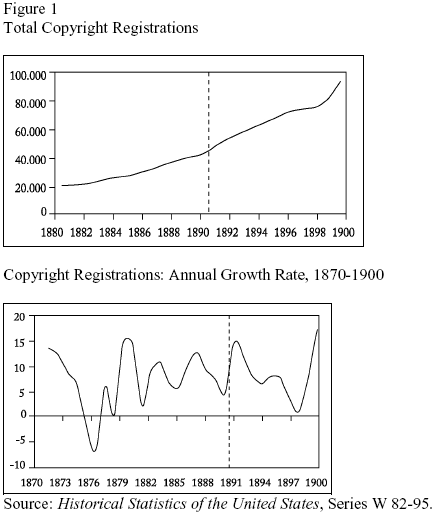
]]> Proposals to acknowledge foreign copyrights were brought before Congress repeatedly throughout the 19th century10. American and European authors, musicians and artists supported the movement to attain harmonization of U.S. laws with international copyright policies. Earlier attempts were defeated by publishers, printers, and representatives of the Democratic Party, and it was not until 1891 that Congress granted copyright protection to selected foreign residents11. However, the statute also included significant concessions to printers' unions in the form of "manufacturing clauses." First, a book had to be published in the U.S. before or at the same time as the publication date in its country of origin. Second, the work had to be printed here, or printed from type set in the United States or from plates made from type set in the United States. These clauses resulted in U.S. failure to qualify for admission to the Berne Convention until 1988, approximately one hundred years after the initial Convention12.After a century of lobbying by interested parties on both sides of the Atlantic, based on reasons that ranged from the economic to the moral, copyright laws were finally changed to allow foreign artists and authors to obtain copyrights in this country. Figure 1 shows the growth rate in copyrights filed in the United States before and after the 1891 reform. The critical change in the laws to allow foreign authors to obtain American copyright protection was accompanied by an immediate increase in the growth rate of registrations from 4.4 percent to 14.3 percent in 1891 and 11.9 percent in the following year. However, marked changes in the growth rates had been a feature of the time series for the previous two decades as well, so one cannot credibly attribute the pattern entirely to statutory changes. In 1900 the U.S. Senate authorized Carroll D. Wright, the Commissioner of Labor, to investigate the effect of the reforms in the copyright system. Wright was discouraged from any statistical analysis by the marked lack of data on the publishing industry, and instead conducted a survey of printers and publishers, to find out whether the new law was viewed as "detrimental or beneficial" (United States Bureau of Labor, 1901).
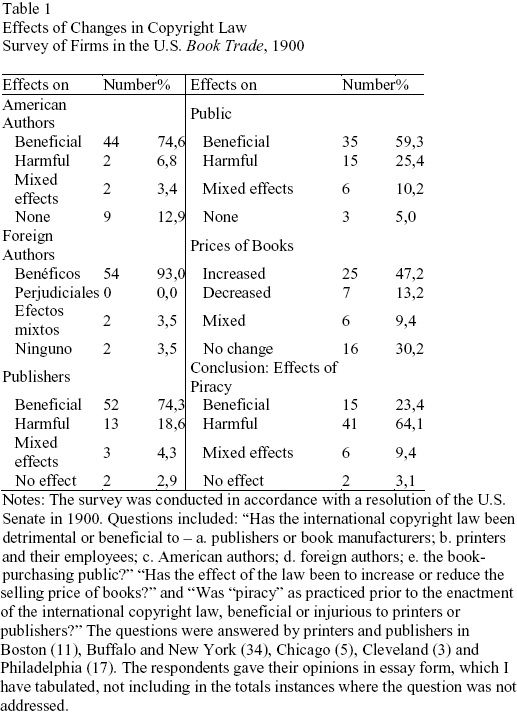
Table 1 classifies the written answers of respondents to the Wright survey. The impact of the reforms was analyzed in terms of four groups: publishers, authors, employees in the printing industry, and the book-reading public. Foreign authors, it was felt, were unambiguously better off as a result of the reforms. American authors were held to have benefitted because the previous régime had exposed them to "dumping and unfair competition" in the form of cheap uncopyrighted works, from Britain in particular, which had discouraged the development of domestic literature. Publishers who dealt in copyrighted books were also better off because they could now exclude unauthorized reprinters, whereas the latter class of publishers were quickly driven into bankruptcy by the passage of the act. Printers' unions felt that the reforms had not caused any real change in the circumstances of their members. As for the public, results were mixed: prices of copyrighted books now increased, fewer books of the "cheap and nasty sort" from the pens of foreign novelists were available, but the overall quality of available books had improved. In sum, the survey concluded, "piracy" had been costly to the United States. The consensus was that the United States had benefitted from the reforms, and was in better standing with other countries as a result of the move towards harmonization.
The consensus from this survey begs the question of why, if they were so uniformly beneficient, the reforms in copyright had been so contentious and difficult to achieve13. Wright was forced to rely on these subjective assessments because of the lack of statistical information on books and the publishing industry in the nineteenth century. Such data are still unavailable or incomplete. However, I intend to present a more systematic analysis of the impact of international copyright laws in the 19th century on the book trade than Wright was able to provide. My analysis employs data on books, the publishing industry, and biographical information about authors. These data are inadequate to precisely estimate the overall welfare effects of "piracy" in the nineteenth century, but do allow us to assess the validity of several assertions that featured in the debate about the impact of lack of legal copyrights in foreign books.
BOOKS AND AUTHORS
According to observers such as Arthur Schlesinger, "So long as publishers [...] could reprint, or pirate, popular English authors without payment of royalty, and so long as readers could buy such volumes far cheaper than books written by Americans, native authorship remained at a marked disadvantage" (Schlesinger, 1933, 252). Professional authorship was discouraged because it was difficult to compete with established authors such as Scott, Dickens and Tennyson, and as a result "much of beauty, value and interest was lost to the world"14. In G. H. Putnam's view (1879, 237), "an international copyright is the first step towards that long-awaited-for ‘great American novel'"15. This argument is somewhat suspect on its face, for a number of reasons. First, it supposes that the highest valued product was deterred, rather than works at the margin. Second, it also assumes that there was a high degree of substitutability between cheap reprints and domestic books. Third, if the claim were true, one would expect that domestic authors would respond to the competition by accepting lower royalties and less favourable contracts. Instead, one observes over time higher royalties and better terms being offered to American writers16.
These observations do not disprove the counterfactual claim that, if the laws had protected foreign copyrights, even better terms would have prevailed for native writers. However, one can bring to bear some degree of systematic evidence to address specific questions that have relevance to this issue. First, consider the claim that foreign books were dominant because they were sold at lower prices than those by American authors17.
Proponents of the copyright reforms frequently referred to the cheap "Libraries", such as the Fireside and Franklin Square series that published English reprints at a retail price of ten cents, and argued that American authors were driven from the market by such prices. This argument confuses cause and effect, since "dime novels" were quintessentially American, and reprinters of low-end fiction priced their books to compete in this market18. The first number of the Lakeside Library that reprinted the works of foreign authors appeared in 1875 in response to the success of cheap American fiction, and was followed by the Home, Seaside, and Franklin Square Libraries (Reynolds, 1995, 75-76).
Moreover, one cannot compare the price of a gilt-edged volume of history bound in morocco with a detective story printed on cheap yellow paper. It is necessary to control for other factors that might influence price, in order to assess whether books by American authors were indeed more expensive than those by foreign authors. Such factors as the literary quality of the book are difficult to quantify, especially since there is likely to be little agreement as to what constitutes a "good book." In order to control for differences across publishing firms, I consider within-firm variation in prices for books published by Ticknor and Fields between 1832 and 185819. Ticknor and Fields (the precursor of Houghton Mifflin) was one of the leading publishers of this period, and was especially noted for its publication of foreign authors such as Dickens, Thackeray, Tennyson, Browning, Kingsley, Reade, and de Quincey. The firm also published an impressive roster of well-known American writers including Hawthorne, Longfellow, Thoreau, and Lowell20. Other less eminent figures included Josiah Bumstead, the author of a set of best-selling children's readers, and Jacob Abbott, who wrote the popular juvenile "Jonas" series.
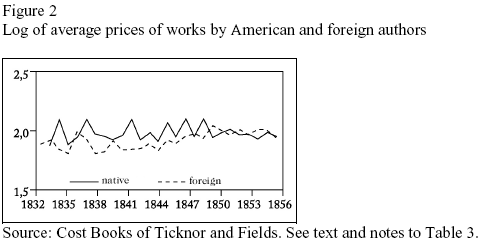
Figure 2 shows the pattern over time in the log of the average annual retail price of all books by American authors, relative to foreign authors. There is clearly a lot of noise in the data especially for prices of American books, which is partly to the unsettled state of the book trade in the 1830s and 1840s, and partly to heterogeneity among books and authors. However, by the 1850s the two series converge. We need to consider whether these patterns were caused by differences in nationality, holding other variables constant. Table 2 presents the results from a multivariate regression, which examines the influence of variables such as time, gender, type of book, and nationality, on the log of nominal price. The unit of observation is an edition of an individual book published by the firm between 1832 and 1858.
]]>
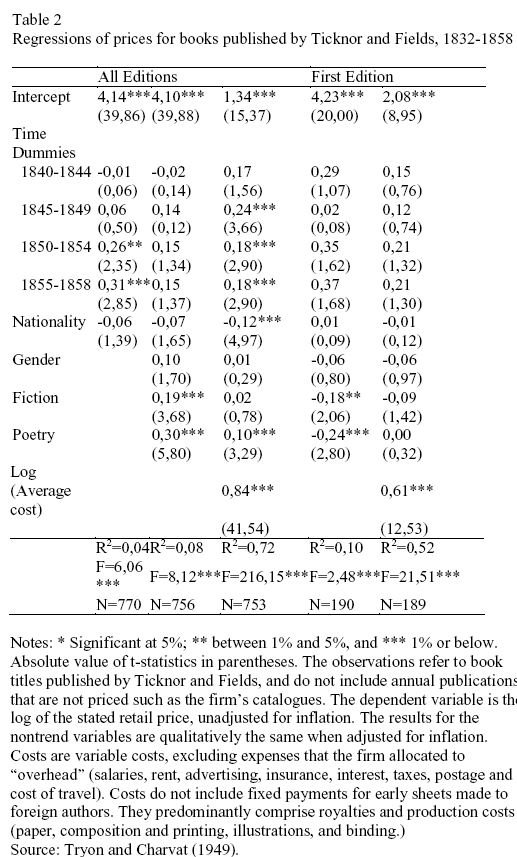
The evidence from the regressions does not support the notion that American books were suffering from competition with cheaper foreign books. First editions are likely to be less predictable and thus more difficult to price than subsequent editions, but even here there is no significant difference between the price of a book by an American and a foreign reprint. Indeed, in the only instance in which the dummy variable for American nationality is significant, the coefficient is negative. Variation in prices is mostly explained by average variable cost21. These results suggest that, after controlling for the type of have been lower to reflect lower perceived quality or other factors that caused imperfect substitutability between foreign and local products22. This is not surprising, since prices are not exogenously and arbitrarily fixed, but vary in accordance with a publisher's estimation of market factors such as the degree of competition and the responsiveness of demand to determinants. As one of the respondents to the Wright survey remarked: "The book-purchasing public has not been seriously affected by the act, inasmuch as the ordinary law of supply and demand is sufficient to protect the general public against unfair prices"23.
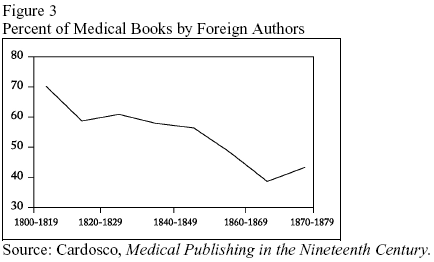
A second question is whether native authors were deterred by foreign competition. This would depend on the degree to which books by foreign authors were substitutable for books by American authors. It would also depend on the extent to which foreign works prevailed in the American market. According to one of the leading histories of publishing in this era, by 1850 most books in this country were written by Americans24. However, this is not entirely true for all classes of publications. Early in American history the majority of publications were reprints of foreign titles25. However, nonfiction titles written by foreigners was less likely to be substitutable for nonfiction written by Americans; consequently, the supply of nonfiction soon tended to be provided by native authors. From an early period grammars, readers, and juvenile texts were written by Americans (Gilreath, 1987 xxii). Geology, geography, history and similar works had to be adapted or completely rewrittento be appropriate for an American market26. Figure 3 shows the fraction of medical books that were written by foreigners. Until the middle of the century, about half of all medical books were written by non-American residents, but this figure fell to approximately forty percent soon after. This was true even though the high fixed cost of production for medical volumes deterred rivalry among publishers of reprints, who feared predatory behaviour would lead to large losses27. Thus, publishers of schoolbooks, medical volumes and other nonfiction did not feel that the reforms of 1891 were relevant to their undertakings28.
]]>
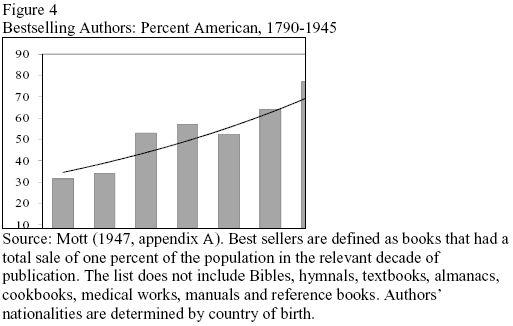
On the other hand, foreign authors dominated the field of fiction, so it is worth exploring whether there might be some validity in the idea that there was no Great American Novel in the nineteenth century because of the international copyright laws. I agree that Americans did not produce any great works of literature during this period, but doubt that the lacuna was due to the lack of copyright protection for foreign books. Figure 4 suggests a gradual decline over time in the role of foreign authorship. In the period between 1790 and 1829, two thirds of all authors of fiction bestsellers were foreign (Mott, 1947, 92-93). A discrete change in relative success of American writers occurred after the 1830s with the entrance of such authors as James Fenimore Cooper, Henry Wadsworth Longfellow, Nathaniel Hawthorne and R H Dana. By the early twentieth century Americans comprised the majority of best-selling authors in this country29. This fall over time in the fraction of foreign authorship may have been due to a natural evolutionary process, or may have been caused by the change in the copyright laws.
Some have claimed that the cadre of professional Americans authors –especially of novels– was small or nonexistent because of foreign competition. For instance, the biographer of Edgar Allan Poe states that Poe switched to short story format because he was unable profit from the market for novels30. If it were indeed true that professional authorship was deterred, the reforms in 1891 should have been associated with a discrete rise in the number of Americans whose profession was writing, holding other factors constant31. In order to investigate whether copyright reforms influenced the propensity for Americans to become professional authors, I compiled a random sample of 758 authors from biographical dictionaries. Table 3 describes the characteristics of the sample. Academic and religious books are less likely to be written for monetary returns, and their authors probably benefitted from the wider circulation that lack of international copyright encouraged. However, the writers of these works declined in importance relative to writers of fiction, a category which grew from 6.4 percent before 1830 to 26.4 percent by the 1870s. The growth in fiction was associated with the increase in the number of books per author over the same period. Fifty nine percent of the 98 women writers in the sample published in the fiction-only category, but they did not account for more than 39 percent of all fiction authors. Expansions in the market, due to improvements in transportation and the increase in the literary and academic population, probably played a large role in enabling individuals who lived outside the major publishing centers to become professional writers despite the distance32.
]]>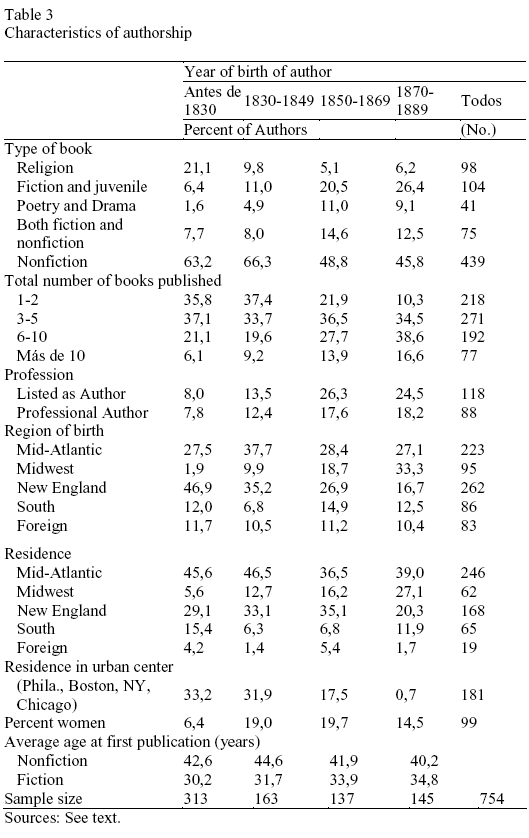
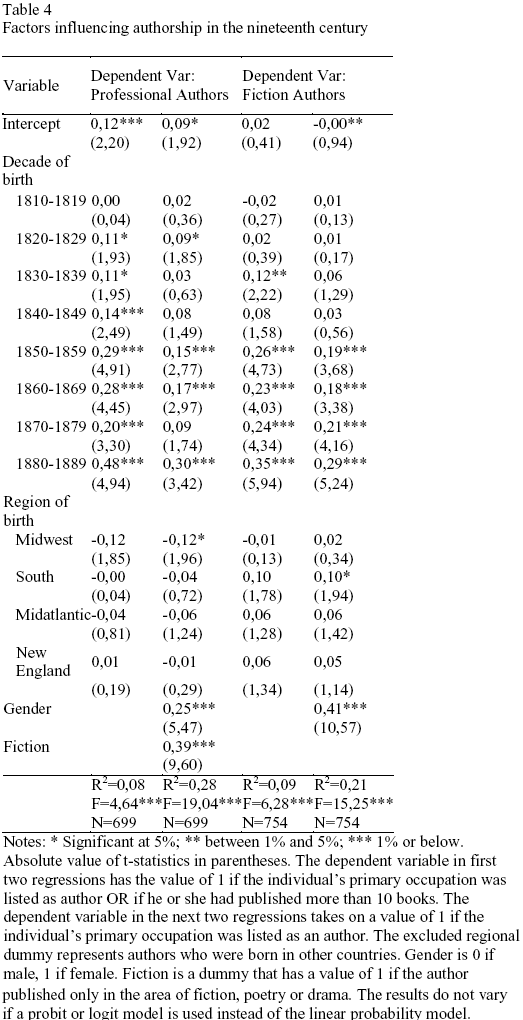
The average age of a writer of nonfiction at time of first publication was approximately forty years, relative to fiction where age at first publication was in the early thirties. Since the data are organized by birth cohort, this implies that authors of fiction who were born in the1860s were the most likely to have been influenced in their choices by the change in the copyright laws. The regressions in Table 4 are directed towards the question of whether writers were discouraged from choosing authorship as a career by the lack of international copyright protection. The results do not seem to support this contention. The first set of regressions report the coefficients from a linear probability model that estimates the factors that influenced whether an author was a professional author. The time dummies suggest a fairly steady increase over time in the likelihood of this occurrence, with the biggest increase in the cohort born in the 1880s, who would have become writers around 1910 or 1920. For fiction, the biggest increase occurs for the birth cohort between the 1840s and the 1850s, the members of which would have entered the market before 1891.
Although these results do not support the hypothesis that the lack of copyright protection discouraged authors, this does not imply that intellectual property policy in this dimension was of little economic significance. It is likely that the lack of foreign copyrights led to some misallocation of efforts or resources, such as in attempting to circumvent the rules. Authors changed their residence temporarily when books were about to be published in order to qualify for copyright. Marryat was a resident in the U.S. in 1838 but the courts ruled that one also must have the intention to become a citizen. American authors visited Canada in order to satisfy the more lenient British regulations which permitted copyright protection for books whose authors were within the borders of Britain or its colonies at time of publication. Others obtained copyrights by arranging to co-author with a foreign citizen. T H Huxley adopted this strategy, arranging to co-author with "a young Yankee friend [...] Otherwise the thing would be pillaged at once" (Nowell-Smith, 1968, 70). An American publisher suggested that Kipling should find "a hack writer, whose name would be of use simply on account of its carrying the copyright." Harriet Beecher Stowe proposed a partnership with Elizabeth Gaskell, so they could "secure copyright mutually in our respective countries and divide the profits"33.
Courts were somewhat sympathetic to these stratagems, as revealed in a lawsuit involving the Encyclopaedia Britannica. The British publishers engaged a number of American contributors for the volumes, and these individuals obtained copyright protection, which was challenged as a mere evasion of the law by infringers to the cyclopaedia. The court ruled that "There was no impropriety soliciting competent citizens of the United States to write upon its history, and I can perceive no unfairness or injustice towards the defendant company in the plaintiffs' use of the copyright laws for their pecuniary advantage, and as a weapon with which to repel a competition which is more enterprising than considerate"34.
]]>PUBLISHERS
The previous analysis related to authors, but it is widely acknowledged that copyrights in books during this period tended to be the concern of publishers rather than of authors (although the two are naturally not independent of each other). Copyright in Europe was largely enforced to regulate the book trade and to ensure that publications were non-seditious. Early publishers obtained copyrights in the books they produced, and authors frequently sold the copyright to the publisher outright, thus transferring all risk in return for a lower but more certain payment. Similarly, from the first decades U.S. copyright statutes allowed copyrights to issue to "proprietors" as well as to authors, and the registrations show that it was a common practice in the United States for the publisher to file for the initial copyright in a book. However, even when authors retained the copyright, publishers were most at risk because they were required to make large fixed investments that might be lost if the sales of the book were low due to piracy.
Publishers in this country were able to prevent unauthorized copying of books by American authors, and to enforce their property rights in the United States through the threat of litigation35. The growth in litigation was minimal until the 1880s, suggesting that infringement of domestic authors was within manageable proportions36. Many of the early copyright cases deal with genuine questions regarding the boundaries of property rights in literary, dramatic and artistic works, rather than blatant disregard of the claims of legitimate property owners. However, the situation was quite different for books by foreign authors in which no copyright protection existed. If all firms produced rival editions, competition was likely to drive prices down to marginal cost, in which case the high initial fixed investments would not be recovered. Throughout the period, publishers attempted to avoid "ruinous competition" and engaged in numerous unsuccessful attempts to fix prices. In the early years of the nineteenth century publishers engaged in races in order to be the first in the market with popular books such as the works of Sir Walter Scott37. A Waverley novel could be reprinted within twenty four hours through a gang system where the book was divided among as many as a dozen printers working at full capacity. Carey & Lea, a prominent Philadelphia firm, saturated the frontier markets before selling in New York, where rival printers stood ready to reprint at the first appearance of the books. If they judged the size of the market accurately, the winners were able to sell all copies that they had printed, while the other firms lost their initial outlay.
One of the consequences of such races was a greater likelihood of mistakes or deliberate alterations in the attempt to be first and to reduce costs38. For instance, Carey & Lea paid Sir Walter Scott $1475 for an early manuscript copy of his Life of Napoleon. Subsequently, readers were concerned that Scott had made changes after the proofs had been pulled, which were not reflected in the American edition. Within one month of the American publication date, a small New York firm produced an abridged version, without the author's consent, which was advertised as preferable to the "voluminous" original. Complaints were also rife about Carey & Lea's edition of The Pirate, which had omitted an entire chapter. Robert Browning sent a list of errata to Ticknor and Fields, in the hope that the American edition would be updated, but the corrections were never made (Tryon and Charvat, 1949, 338). Other complaints included charges that the spelling in Macaulay's History of England was Americanized, that hack authors were sometimes put to the task of creating a version that was more likely to appeal to American tastes, or even that enterprising hacks marketed their work under the guise of a more meritorious foreign author's name. These allegations suggest that the lack of formal copyrights and the prevalence of publication races led to lower quality in the literary market. However, if consumers cared about quality over price, this created an incentive for sorting among publishers thus leading to appropriation through reputation and, indeed, the more "reputable" publishers were able to secure greater returns in part because they offered products that were more likely to be free of defects39.
To the firm that won the race, profitability of foreign books was likely to be higher than for American works. The market for writers like Scott and Dickens was more predictable and certain. By trading in on the established reputation of foreign authors, the publisher also avoided high advertising and marketing costs. Foreign books entailed less risk at lower cost and higher margins. But competition and the probability of being the loser in the race decreased these advantages. As the cost of advance payments and the probability of copying increased, the relative advantage to publishers of some means of exclusion became greater. Some publishers bought early proof sheets to get an advantage over others who waited until the first imprinting. Henry Carey paid an agent $250 per year to send English titles to his firm in Philadelphia, and was so concerned about the delay of several days at the New York customhouse that he also hired another agent in New York to expedite the process40. Ticknor and Fields paid foreign authors significant sums for early sheets, royalties or simple lump sums out of profits. For instance, the company offered £60 for the advance sheets for Robert Browning's Men and Women in 1855, and the following year paid £100 for the early sheets and engravings for Mayne Reid's juvenile fiction work, The Bush Boys. The firm also sent several unsolicited payments to Tennyson over the years out of profits on his poetry reprints. Such payments might ensure the coincidence of publishers' and authors' interests, and were recognized by reputable publishers as "copyrights"41. However, they naturally did not confer property rights that could be enforced at law42.
Publishers in England had faced similar problems before, in the market for books that were in the public domain, such as Shakespeare and Fielding43. Their solution was to collude in the form of strictly regulated cartels or "printing congers". Cooperation resulted in risk-sharing and a greater ability to cover expenses. The congers created divisible property in books that they traded, such as a one hundred and sixtieth share in Johnson's Dictionary that was sold for £23 in 1805. The unstable publication races in the United States similarly settled down during the 1840s to collusive standards that were termed "trade custom" or "courtesy of the trade." Publishing houses were acknowledged to have the exclusive right to reprint specific authors. For instance, Harper Brothers were associated with Bulwer-Lytton, whereas Marryat was customarily reprinted by Carey & Lea. In the case of newer authors, the first publisher to receive the item or the first to list the work in a trade publication was deemed to have the right to exclude other reprinters. Firms that violated these rules were punished or at least threatened with punishment44.
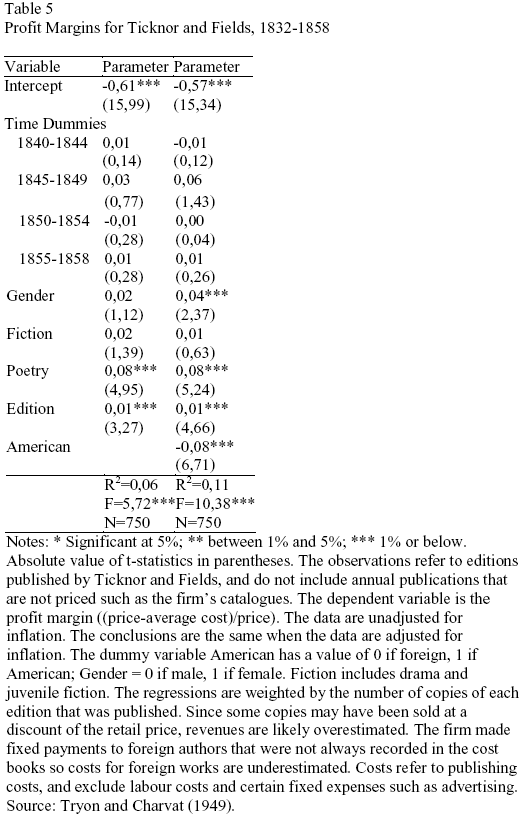
If publishers were harmed by the lack of legal copyright we would expect that this would be reflected in their profits, which would tend to be declining or negative as a result of the competition. Table 5 presents information on the profit margins for Ticknor and Fields, one of the leading reprinters in the United States during the nineteenth century. The lack of statistical significance on the time dummies before 1860 in these regressions do not support the view that profits were declining as a result of unbridled competition. The firm of Ticknor and Fields was well known for the quality of its poetry publications, which were apparently a source of profit for the firm relative to other types of books. Profits were somewhat higher for foreign titles, as shown by the negative coefficient on the dummy variable representing American nationality, but the magnitude of the effect is not large, especially since the costs do not include all lumpsum payments to foreign authors. The publishing industry was able to secure returns because, in the decade before the Civil War, competition among the major firms had settled into a relatively stable situation of tacit collusion. American firms, like their British counterparts in the previous century, were able to appropriate returns from "synthetic copyrights" that were created by publishers in the absence of legal protection.
]]>
The case of Sheldon v. Houghton, 21 F. Cas 1239 (1865), illustrates that these rights were considered to be "very valuable, and is often made the subject of contracts, sales, and transfers, among booksellers and publishers." Henry Houghton, who purchased the initial synthetic right from O. W. Wight, had formed a partnership with Sheldon & Co of New York to publish, print and market the "Household Edition" of Charles Dickens' works. In 1865 Houghton decided to terminate the contract, which Sheldon contested in court because the market value of the publication right had increased under the partnership to some thirty thousand dollars. The very fact that a firm would file a plea for the court to protect its claim indicates how vested a right it had become. The plaintiff argued that "such custom is a reasonable one, and tends to prevent injurious competition in business, and to the investment of capital in publishing enterprises that are of advantage to the reading public."
The court pointed out that "if anything which can be called, in any legal sense, property, was transferred to this partnership, it must have been that incorporeal right to publishing this edition of Dickens." However, this was based on the custom of the trade, which "is very far from being a legal custom, furnishing a solid foundation upon which an inviolable title to property can rest, which courts can protect from invasion [...] It may be an advantage to the party enjoying it for the time being, but its protection rests in the voluntary and unconstrained forbearance of the trade. I know of no way in which the publishers of this country can republish the works of a foreign author, and secure to themselves the exclusive right to such publication [...] For this court to recognize any other literary property in the works of a foreign author, would contravene the settled policy of Congress". Thus, synthetic rights differed from copyrights in the degree of security that was offered by the enforcement power of the courts. Nevertheless, in the absence of legal property rights in foreign works, synthetic copyrights were able to transform a competitive environment into a quasi-monopolistic arena. These title-specific rights of exclusion decreased uncertainty, enabled publishers to recoup their fixed costs, and avoided the wasteful duplication of resources that would otherwise have occurred. In short, publishers were able to achieve some degree of appropriation through industry structure rather than through government mandated monopolies.
CONCLUSIONS
The question of the appropriate role of intellectual property in development is complex and has failed to be resolved with theoretical models which tend to provide ambiguous answers to the question of whether "piracy" results in net welfare benefits or costs, and whether the interests of all parties coincide or conflict. Few studies provide empirical assessments, especially from the point of view of developing countries. Thus, some insights may be gleaned from a period when the United States was itself a developing country. The United States maintained very different policies towards authors and inventors. In the case of patents, the social good was seen as coincident with the award of secure and strong patent rights to individual inventors, regardless of their citizenship. However, the rationale for copyrights was held to be much weaker because of the lower incentive from their grant, and the higher social costs of restricted access. This paper investigated the welfare effects of "piracy" of foreign copyrighted material, and focused on the impact on authors, publishers, and the general public in the 19th century.
Claims had been made that prices of foreign books were so low that books by Americans could not compete; that professional authors were deterred by foreign competition; that American society suffered from a lack of quality domestic literature as a result of copyright policies; and that publishers' profits were driven down over time by the inability to exclude competitors. I find little support for these contentions. Publishers appear to have priced in accordance with the dictates of the market, and may have charged lower prices for American literature because of lower demand or lower perceived quality. According to conventional economic analysis, in the absence of legal protection the market prices of books are likely to be competitively bid down to marginal cost, and publishers would be deterred by their inability to recover fixed costs. This was not the case for, despite the lack of copyright protection, publishing houses were able to appropriate returns through cartels, price discrimination across firms, and the creation of synthetic copyrights. However, the lack of formal enforcement of property rights may have led to higher costs of production for the industry, lower investments in quality, and a diversion of resources from production to rent-seeking.
After the copyright reforms in 1891, both English and American authors were disappointed to find that the change in the law did not lead to significant gains from foreign royalties45. This is consistent with the regression results, which suggest that professional American authorship seems to have developed through a natural evolutionary process. Foreign authors may even have benefitted from the lack of copyright protection in the United States. Despite the cartelization of publishing, competition for synthetic copyrights ensured that foreign authors were able to rachet up payments that American firms made to secure the right to be first on the market. It can also be argued that foreign authors were able to reap higher total returns from the expansion of the American market. For, the lack of copyright protection functioned as a form of international price discrimination, where the product was sold at a higher price in the developed country, and at a lower in the poorer country, with the result that the size of the market was larger than under a uniform pricing strategy. Under such circumstances, returns to authors may be higher for goods that have demand externalities or network effects, such as "bestsellers" where consumer valuation of the book increases with the size of the market (Takeyama, 1994, 155-166).
The inframarginal foreign writers were able to obtain returns through competition on the part of American publishers to gain their "authorization." They were able to exploit network effects as piracy increased the scale of readership in the United States, in some instances far in excess of the high-priced and restricted European markets. Charles Dickens, who publicly and in his writings launched bitter diatribes against "the continental Brigands" in the United States, in fact was a major beneficiary of such bandwagon and network effects. He played publishers off against each other, and as many as four companies paid him large sums and had legitimate claims for considering themselves his sole American representative. Moreover, Dickens was able to parlay his popularity among readers into a heightened demand for complementary lectures. His U.S. reading tour of 1867-68 comprised 76 appearances that earned the author the astonishing sum of $228,000 in total receipts (Kappel and Patten, 1978).
]]> In general, the greater the responsiveness of authors to financial returns, the stronger the case for copyright protection. Financial incentives to authors tended to be relatively unimportant in case of nonfiction, whose authors benefitted more from diffusion (proselytizing and reputational effects), and we noted the predominance of nonfiction titles in the earlier part of the century. Thus, the market for new American fiction was the most affected, but from the point of view of many contemporary commentators, fiction was regarded as a discretionary or luxury good. The movement for international copyright gained impetus only towards the end of the century because of the growing importance of popular fiction written by American authors.The reading public appears to have gained from the lack of copyright, which increased access to foreign works, especially fiction. After 1891, this "unnatural demand" for cheap fiction went unsatisfied in the case of new titles, but since the law was not retroactive formerly unprotected works were still in the public domain. Books were no longer printed on the "scramble system" and it was argued that these were characterized by higher quality and accuracy. A number of cheap reprint establishments went bankrupt, although some observers attributed this not to the law, but to the "cutthroat competition" that had been prevalent among fringe firms. Thus, after the reforms the prices of some books were higher, and the range of choices less extensive than would have been the case if the law remained unchanged. Still, the loss to consumers from this aspect of the reforms may have been insignificant, since the books and firms that had depended on the subsidy from lack of copyright in the 1890s were likely of marginal value.
This episode in the history of intellectual property is broadly relevant to the 21st century, especially in terms of developing countries. The United States today evinces great concern about the consequences for corporate profits of both domestic and international "piracy." However, Congress in the nineteenth century repeatedly rejected proposals for reform of copyright laws because the emphasis in that era was on fulfilling the objectives of the Constitution in promoting the progress of social welfare. In a democratic society this was interpreted as a mandate for ensuring that the public had ready access to literature, information, education and other conduits for achieving equality of opportunity. Democratic values may even have furthered the interests of those who were the subject of so-called piracy since, as discussed here, even in the absence of copyright protection, foreign authors directly or indirectly benefitted from the larger fraction of literate consumers in the United States. U.S. publishers were not demonstrably harmed by the lack of formal protection because they were able to create parallel rights that were privately enforced, and evolved firm-level strategies such as price and quality discrimination. This finding is borne out by the fact that the highest profit margins in book publishing today are derived from reprints of out-of-copyright "classics."
Today there is a narrow emphasis on state-created rights and less on private market-generated means of exclusion such as private contracts or monitoring. However, given that firms' strategies regarding appropriation are endogenous to the security of copyrights, strong measures by the state to counter "piracy" may lead to social overinvestment in property rights enforcement. Some scholars have expressed concern that technological methods of exclusion at the firm level have the capacity to unduly restrict public access in perpetuity, without the social balance of costs and benefits that underly welfare maximization. For others, the censure of both copyright "piracy" and price discrimination may rest on outmoded notions of competition; and in some contexts, copyright "piracy" may merely constitute fair use by another name. Some lessons may be derived from the period when the United States flourished as a "continental Brigand," and for a century successfully resisted international pressures to conform. It is worth emphasizing that, once the U.S. had developed its own native stock of literary capital, it voluntarily had an incentive to recognize international copyrights. In sum, the U.S. experience during the nineteenth century suggests that appropriate intellectual property institutions are not independent of the level of economic and social development.
Date received: November 1 2007;
Date modified: 3 March 2008;
Date of acceptance: 7 April 2008.
]]>
BIBLIOGRAFIC REFERENCES
1. Allen, H. Israfel: The Life and Times of Edgar Allan Poe, New York, Farrar & Rinehart, 1934. [ Links ]
2. Breyer, S. "The Uneasy Case for Copyright: A Study of Copyright in Books, Photocopies, and Computer Programs", Harvard Law Review 84, 2, 1970, pp. 281-351. [ Links ]
3. Buell, L. New England Literary Culture: From Revolution through Renaissance, Cambridge, Cambridge University Press, 1986. [ Links ]
4. Bugbee, B. The Genesis of American Patent and Copyright Law, Washington, D.C., Public Affairs Press, 1967. [ Links ]
]]>5. Cate, F. H. "The Technological Transformation of Copyright Law", Iowa Law Review 81, 1996. [ Links ]
6. Charvat, W. Literary Publishing in America, 1790-1850, Philadelphia, University of Pennsylvania Press, 1959. [ Links ]
7. Clark, A. J. The Movement for International Copyright in Nineteenth Century America, Washington, D. C., Catholic University Press, 1960. [ Links ]
8. Collins, A. S. Authorship in the Days of Johnson, London, Robert Holden and Co., 1927. [ Links ]
9. Coultrap-McQuin, S. Doing Literary Business, Chapel Hill, University of North Carolina Press, 1990. [ Links ]
]]>10. Dodge, M. A. Battle of the Books, New York, Hurd and Houghton, 1870. [ Links ]
11. Dozer, D. M. "The Tariff on Books", Mississippi Valley Historical Review 36, 1, 1949, pp. 73-96. [ Links ]
12. Feather, J. Publishing, Piracy and Politics: An Historical Study of Copyright in Britain, New York, Mansell, 1994. [ Links ]
13. Frischtak, C. R. "The Protection of Intellectual Property Rights and Industrial Technology Development in Brazil", F. W. Rushing and C. G. Brown, eds., Intellectual Property Rights in Science, Technology, and Economic Performance, Boulder, Westview, 1990. [ Links ]
14. Fyfe, A. "Copyrights and Competition: Producing and Protecting Children's Books in the Nineteenth Century", Publishing History 45, 1999, pp. 35-59. [ Links ]
]]>15. Gilreath, J. Federal Copyright Records 1790-1800, Washington, Library of Congress, 1987. [ Links ]
16. Hackett, A. P. and J. H. Burke. Eighty Years of Best Sellers, 1895-1975, New York, Bowker, 1977. [ Links ]
17. Kappel A. J. and R. L. Patten. "Dickens' Second American Tour and his ‘Utterly Worthless and Profitless' American Rights", Dickens Studies Annual 7, 1978, pp. 1-33. [ Links ]
18. Kaser, D. Carey & Lea of Philadelphia, Philadelphia, University of Philadelphia Press, 1957. [ Links ]
19. Khan, B. Z. "Innovations in Law and Technology, 1790-1920", M. Grossberg and C. Tomlins, eds., Cambridge History of Law in America, vol. II, Cambridge, Cambridge University Press, 2008. [ Links ]
]]>20. Khan, B. Z. "Intellectual Property and Economic Development: Lessons from American and European History", Study Paper 1a, British Commission on Intellectual Property Rights, London, 2002. [ Links ]
21. Khan, B. Z. "Property Rights and Patent Litigation in Early Nineteenth-Century America", Journal of Economic History 55, 1, 1995, pp. 58-97. [ Links ]
22. Khan, B. Z. The Democratization of Invention: Patents and Copyrights in American Economic Development, 1790-1920, New York, Cambridge University Press, 2005. [ Links ]
23. Khan, B. Z. and K. L. Sokoloff. "Institutions and Democratic Invention in the United States: Evidence from ‘Great Inventors', 1790-1930", American Economic Review 94, 2, 2004. [ Links ]
24. Khan, B. Z. and K. L. Sokoloff. "The Early Development of Intellectual Property Institutions in the United States", Journal of Economic Perspectives 15, 3, 2001, pp. 233-246. [ Links ]
]]>25. Lehmann-Haupt, H. The Book in America, New York, Bowker, 1952. [ Links ]
26. Hui, K. e I. Png, "Piracy and the Legitimate Demand for Recorded Music", Contributions to Economic Analysis & Policy 2, 1, 2003. [ Links ]
27. Machlup, F. An Economic Review of the Patent System, Washington D. C., Government, Printing Office, 1958. [ Links ]
28. Mott, F. L. Golden Multitudes: The Story of Best Sellers in the United States, London, MacMillan, 1947. [ Links ]
29. North, D. C. Structure and Change in Economic History, New York, Norton, 1981. [ Links ]
]]>30. Nowell-Smith, S. International Copyright Law and the Publisher in the Reign of Queen Victoria, Oxford, Clarendon Press, 1968. [ Links ]
31. Penrose, E. Economics of the International Patent System, Baltimore, John Hopkins Press, 1951. [ Links ]
32. Plant, A. "The Economic Aspects of Copyright in Books", Economica 1, 2, 1934, pp. 167-195. [ Links ]
33. Putnam, G. H. "International Copyright", Publishers' Weekly 371, 1879. [ Links ]
34. Putnam, G. H. The Question of Copyright, New York, G. P. Putnam's Sons, 1896. [ Links ]
]]>35. Reynolds, Q. The Fiction Factory, New York, Random House, 1995. [ Links ]
36. Saunders, D. Authorship and Copyright, London and New York, Routledge, 1992. [ Links ]
37. Schlesinger, A. M. The Rise of the City, 1878-1898, New York, MacMillan, 1933. [ Links ]
38. Schmookler, J. Invention and Economic Growth, Cambridge, Harvard University Press, 1966. [ Links ]
39. Sokoloff, K. L. "Inventive Activity in Early Industrial America: Evidence from Patent Records, 1790-1846", Journal of Economic History 48, 4, 1988, pp. 813-850. [ Links ]
]]>40. Takeyama, L. "The Welfare Implications of Unauthorized Reproduction of Intellectual Property in the Presence of Demand Network Externalities", Journal of Industrial Economics 42, 2, 1994, pp. 155-166. [ Links ]
41. Tebbel, J. A History of Book Publishing in the United States, vol. II, New York, Bowker, 1981. [ Links ]
42. Tryon, W. S. and W. Charvat. "The Cost Books of Ticknor & Fields and Their Predecessors, 1832-1858", New York, Bibliographical Society of America, 1949. [ Links ]
43. United States Bureau of Labor. "A Report on the Effect of the International Copyright Law in the United States", Washington, Govt. Print. Off., 1901. [ Links ]
44. Wright, C. D. A Report on the Effect of the International Copyright Law in the United States, Washington, GPO, 1901. [ Links ]
]]>45. Zboray, R. J. A Fictive People. Antebellum Economic Development and the American Reading Public, New York, Oxford University Press, 1993. [ Links ]
1 The policies of Britain towards its colonies are instructive. During the nineteenth century British administered a two-tiered international intellectual property system that attempted to address the needs of its colonies. In 1847 Britain passed the Foreign Reprints Act which allowed colonies to import the works of British authors without copyright protection, and also allowed legal price discrimination with significantly lower prices for overseas editions. See Khan (2002).
2 Schmookler's pioneering empirical work suggested that patenting was systematic and varied with the extent of the market (Schmookler, 1966). K. Sokoloff (1988) extended this approach, and demonstrated that when previously isolated areas gained access to markets, patenting per capita increased markedly. Other research also established the existence of a rapidly growing market for patented inventions that was supported by strong enforcement from the legal system (see Khan, 1995). Christine MacLeod and Harold Dutton have produced extensive accounts of the patent system in Britain.
3 For an empirical study of copyright piracy today, see Hui and Png (2003).
4 See Breyer (1970) and Plant (1934). For relationship between intellectual property and technological or social change, see Khan (2008) and Cate (1996).
5 The movement for international copyright is ostensibly under the aegis of GATT. The Uruguay Round of GATT established an Agreement on Trade-Related Aspects of Intellectual Property Rights (TRIPS) in 1994, to be administered by the World Trade Organization. TRIPS protects general copyright clauses, such as the grant of property in expression and it protects computer programs as literary works.
6 The U.S. copyright industries accounted for foreign sales and exports of $89 billion in 2001. The International Intellectual Property Alliance (despite the name, a consortium of American copyright holders) estimated a loss from copyright piracy of over $12.3 billion in 2002; see [www.iipa.com]. One might question the accuracy of these figures, but not the existence of widespread violation of U.S. copyrights both here and overseas.
]]> 7 International Copyright petitions (on either side) were submitted on more than 100 occasions in the Congressional sessions through 1875; see the House and Senate Journals.8 Senator John Ruggles, who had overseen the reform of the patent laws, pointed out that "American ingenuity in the arts and practical sciences, would derive at least as much benefit from international patent laws, as that of foreigners. Not so with authorship and book-making. The difference is too obvious to admit of controversy".
9 Copyright policies in this dimension may be contrasted with patent policies designed to attain more uniformity across countries. The first international patent convention was held in Austria in 1873, at the suggestion of the United States, and was followed by other agreements including the International Union for the Protection of Industrial Property in 1884. The efforts of the United States were hampered by a lack of leverage: it was unable (or unwilling) to offer foreign delegations any concessions in exchange for reforms that the latter agreed to adopt, since American policy was already the world's most liberal in granting equal rights to foreign patentees. Nevertheless, since its patent system was recognized as the most successful, it is not surprising that patent harmonization implied convergence towards the U.S. model (see Penrose, 1951, and Khan, 2005).
10 For instance, S. 223 (1837); H.R. 779 (1868), "A Bill For securing to authors in certain cases the benefit of international copyright, advancing the development of American literature, and promoting the interests of publishers and book-buyers in the United States;" H.R. 470 (1871); and S. 688 (1872), among others. On February 18th, 1853, Millard Fillmore, President of the United States, sent to the Senate "with the view to its ratification, a convention which was yesterday concluded between the United States and Great Britain for the establishment of international Copyright," but the Senate refused to comply with the request. See the Journal of the executive proceedings of the Senate of the United States of America, 1852-1855, February 24, 1853, p. 35.
11 International Copyright Act of 1891, 26 Stat. 1106.
12 Berne Convention for the Protection of Literary and Artistic Works, opened for signature Sept. 9, 1886,828 U.N.T.S. 221, S. Treaty Doc. No. 99-27, 99th Cong. (1986) (revised at Paris, July 24, 1979).
13 Indeed, the passage of the Act was in doubt right to the end: "While a member of the Fifty-first Congress, an international copyright bill was reported by the Judiciary Committee, debated for two days, and failed of passage by a negative majority of about forty. Mr. Simonds then redrafted the bill, added its famous thirteenth section, and procured its favorable report to the House. On the third day of the short term he secured its passage through the House, after a vigorous fight, by a majority of about forty. By reason of parliamentary tactics and maneuvers, it had to pass the House, in one shape or another, three times subsequently, each time after a fight over it, the last passage being about two o'clock on the morning of March 4, 1891, the day on which Congress adjourned. For this service in connection with international copyright the government of France conferred upon him the Cross of the Legion of Honor" (Scientific American 66, 18 June 1892, p. 389).
14 "Writing as a profession would never be attractive to native talent as long as the average author had to compete with the great masters of England whose works were appropriated without cost" (Clark, 1960). Similarly, "The grant of copyright protection only to American citizens pushed the publishing industry in a direction that injured those who sought to make a living by creative writing in America," p. xxiii, Gilreath.
15 This affirms my personal conviction that, Moby Dick notwithstanding, there was no great American novel in the 19th century.
16 Many of the earlier books were published at author's risk, or on commission. "Half-profits" was also a way of sheltering publishers from risk that prevailed until the 1830s. In the 1840s, reputable authors received an average of 10 percent, and between 10 to 20 percent. However, there was wide variation in contracts for unknown authors. For instance, as discussed in Bean v. Carleton et al., 12 NYS 519 1890, Fanny Bean advanced $900 to publishers George W. Carleton & Co, to be repaid when 2000 copies of the book were sold, on the expectation of further royalties on sales after 2000. Until the 1890s authors had few means of monitoring their publisher; the 1896 decision in Savage v. Neely, for the first time gave authors the right to inspect accounts of their publishers. The improvements in contractual terms could be due to sample selection, if lower quality authors were selected out of the market.
]]> 17 Tebbel (1981, 23) cites an 1834 study that stated the average retail price for American authors was $1.20 and for foreign reprints, 75 cents. However, it is unclear how this price was arrived at, and to what it refers, much less what a price that averages across all books indicates.18 Reynolds (1955, 72) notes that dime novels were initiated by Irwin P. Beadle and Co in 1860 to publish American authors: "Its detractors could never deny the fact that this was a peculiarly American institution and not a pale replica of English tales".
19 See Tryon and Charvat (1949). The firm also published an extensive array of pamphlets, many on commission, which are not included in these data.
20 According to the editors of the Cost Books, "Of the outstanding American writers of the period only three names are lacking from the Ticknor lists." These were Poe, Melville, and Whitman (see p. xviii, foot note 7).
21 Average cost of publishing reflected strong economies of scale. Hence, independently of piracy, average cost in the United States was likely lower than in Britain because the market of readers was much more extensive in this country. Readers in urban centers in Britain were more likely to belong to commercial lending libraries or book clubs, which again would suggest a more narrow market for an individual work.
22 Demand might have been lower for a number of reasons, such as the claim that "The difficulties of early American authorship are often attributed to American prejudice against American literature" (Charvat, 1959, 42). One may ascribe such "prejudice" to the higher perceived quality of foreign literature.
23 United States Bureau of Labor (1901, 44).
24 "In all fields of authorship, American books were supplanting the British works. Goodrich estimates that in 1820 American authors wrote 30 per cent of the books, while British authors wrote 70 per cent, but for 1850 his estimate is reversed" (Hellmut Lehmann-Haupt, 1952, 124). Another frequently cited statistic is the claim that, between 1830 and 1842, "nearly half the publications issued in the United States were reprints of English books," and that in 1853 there were 733 new titles, which included 278 English reprints and 35 translations; 1854 765 titles and 277 reprints; and 1855, 1092 titles and 250 reprints. These figures were originally produced by a firm of London booksellers, and reproduced by the Publisher's Circular and Literary Gazette, Sept 13, 2 (37), 1856, p. 552. However, the Gazette later expressed doubts about the accuracy of the information, especially since even a casual count from publishers' trade lists reveal that the fraction of reprints was manifestly higher.
25 According to Saunders (1992, 156) "Harper's first catalogue contained 234 titles of which 90 percent were English reprints, the same pattern being true for Wiley and for Putnam".
26 For instance, Carey and Lea, the Philadelphia publishers, originally planned to simply pirate the German encyclopaedia, Konversations-Lexikon, by getting it translated. They soon found that it would need a great deal of original work to be suitable for the American public. The Enclopaedia Americana appeared after 17 months and, even at a price of $32.50, was an enormous success (see Kaser, 1957).
]]> 27 Wood Co, in the Wright survey (p. 88), testified that "Medical works of English authors have but a limited sale in the United States, and even when, with rare exceptions, a book of this class is found to prove unexpectedly popular, the cost of manufacturing such books is so great as to deter one publisher from reprinting on another, with it absolutely understood that the first party would reduce his price so as to make any competition ruinous".28 Pointed out in the Wright (p. 74), Ginn & Co "The question of international copyright law is one which we have not considered very much, as it does not materially affect the schoolbook business. It has almost wholly to do with general literature. Each country has its own methods of teaching, and the school books of one country can not be pirated in another to advantage".
29 Hackett and Burke (1977) imply a more abrupt change, since they argue that in 1895 American authors accounted for two of the top ten best sellers, but by 1910 nine of the top ten were written by Americans.
30 See Allen (1934, 403). An alternative view (mine) is that even in the absence of any competition Poe would have been an indifferent novelist.
31 Some scholars define professional authors as individuals whose sole occupation or source of income was from writing. However, this definition is problematic since it is biased towards women writers who were markedly less likely than men to engage in jobs outside the home. It also to some extent equates professionalism with success, since one is less likely to depend on writing for one's income unless writing provides more income than available alternatives. I define a professional author as a person who is listed in a biographical dictionary as an author, or had written more than ten books. See Buell (1986, 375-392) who argues that women writers may have been the first professional writers, because they had few other sources of employment. Between 1820 and 1865 writing was the sole sou rce of income for 34 percent of women authors, relative to 17 percent for men.
32 For a discussion of the influence of transportation on book distribution, see Zborays, (1993).
33 Elizabeth Gaskell was not persuaded by the argument.
34 See Black v. Henry G. Allen Co., New York, 42 F. 618, June 26, 1890. "The Encyclopaedia Britannica, as a whole, was the production of aliens, who could obtain no copyright in this country, and is a work of great value to the whole people. The employment of citizens of the United States to write articles which were to be used in some of its volumes, and the purchase of an interest in the copyright of such articles, were an attempt to deprive the defendant, and other like-minded persons, of a privilege which they would have otherwise enjoyed, and were for the purpose of giving the foreign owners of the encyclopaedia an advantage in the sales of the work in this country. The attempt contained an element of unfairness, because the book, if written by foreigners, could be reproduced here, and the complainants have only a color of copyright interest, and therefore should not receive the sanction of the courts [...] The acts of the Messrs. Black were for the purpose of making a use of the statutes which might assist them against pecuniary loss, and give them a more unobstructed field for their large commercial venture. The disputed point is whether there was an element of fraud or injustice in the scheme which would prevent a court from regarding it with favor." See also Carte v. Evans, Circuit Court, D. Massachusetts, 27 F. 861 (1886) which related to a pianoforte arrangement for Gilbert and Sullivan's Mikado: "There is nothing in our copyright law to prevent one of our own citizens from taking out a copyright of an original work composed by him, even though the work of composition was performed at the procurement and in the employment of an alien; or from assigning his copyright to an alien under an agreement made either before or after the composing of the work. A nonresident foreigner is not within our copyright law, but he may take and hold by assignment a copyright granted to one of our own citizens. The proprietor as well as the author is entitled to enter the work for copyright."
35 The landmark Supreme Court case Wheaton v. Peters, 33 U.S. 591 (1834) did not recognize state common law rights for publications, in the interests of a national, uniform policy. Thus, the boundaries of property in patents and copyrights in this country are specified by federal statute and enforced by litigation in the federal courts. The Supreme Court found that no common law copyright protection existed for published works, which were products of the existing statutes. Unpublished works, however, were protected under common law. The dissenting minority opinion argued that authors held an inherent right in their creations beyond their statutory right.
36 See Kaser (1957, 143): "the second quarter of the nineteenth century saw few copyright violations disturb the comparative quiet of the domestic publishing scene". The data on copyright litigation support this claim (Khan, 2005)
]]> 37 The details about the firm of Carey & Lea are from Kaser (1957).38 "Speed was of the greatest importance in any reprinting venture; and speed bred carelessness. American editions became more and more sloppily printed and bound. Workmanship degenerated. Proofreaders corrected only the most obvious errors. Printed sheets and bindings were often not properly pressed" (Kaser, 1957, 92).
39 The reputational effect may partly explain why foreign pharmaceutical firms in Brazil increased their share of the domestic market even in the absence of patent protection. See Frischtak (1990).
40 The distance between Philadelphia and New York translated into a significant disadvantage for publishers in Philadelphia, and may ultimately have granted New York its precedence in the publishing industry.
41 See the exchange Charles Reade and Ticknor & Fields (Tryon and Charvat, 1949 372) Cost Books. Reade authorized the firm to reprint his work It is Never Too Late to Mend. When it seemed that the Appletons would publish another edition, he wrote to Ticknor and Fields that this was unlikely because Appleton would desist when they found out that they would have to publish with a one-month delay behind Ticknor: "They might do the wrong thing for the Tea, but they are too respectable to do it for the Tea leaves!"
42 As late as 1902, this issue was brought before the courts. See Fraser v. Yack et al., 116 F. 285 (1902): "We are of opinion that the contract conferred no rights of proprietorship in the manuscript, but only the right of publication coincidently with or in advance of the publication of the work in England."
43 See Collins (1927). Fyfe (1999, 35-59), argues that the "share-book" system survived until the middle of the 19th century in the market for children's books. The system served as a means through which participants could spread and share risk, raise capital, and also control competion.
44 According to Kaser (1957, 150), "[Henry Carey] wrote almost weekly to the New York firm [Harpers] warning them, threatening them, advising them, not to challenge his firm to an all-out war".
45 This section is based on Putnam, (1896, 162-174) After the change in the copyright law, publishers price discriminated across time rather than across region. They tended to bring out the higher priced, more elaborately bound volumes first, and the cheaper versions only after a year or two.
]]>