Economistas e culturas econômicas no Brasil e na Argentina: notas para uma comparação a propósito das heterodoxias
Federico Neiburg
Translated by Deborah Neale
Translation from Tempo Social, São Paulo, v.16, n.2, p.177-202, Nov.2004.
This article approaches social and cultural history of economy (especially the phenomenon of inflation) by examining the interconnections between (a) the social logic underlying the production of economic theories (taking into account the social careers and profiles of economic experts), (b) the modulations of national public economic spheres (which serve as channels for propagating economic visions of the social world beyond the narrow circle of specialists), and (c) economic cultures (that is, the general forms of representation and agency found in economic life). The article focuses on a recent period in the economic cultural history of Brazil and Argentina, dominated by the application of monetary stabilization plans depicted as "heterodox" (the Cruzado and Austral plans). The comparative analysis looks to reveal the transformation of economists into public intellectuals, the mechanisms through which economic pedagogy is achieved, and the relations between economic and national cultures in the two countries.
Keywords: Economists; Economic cultures; Inflation; Brazil; Argentina.
RESUMO
Este artigo propõe uma abordagem sobre a história social e cultural da economia (e em especial sobre o fenômeno da inflação) preocupada em articular (a) a lógica social que subjaz à produção de teorias econômicas (considerando as trajetórias e propriedades sociais dos profissionais da economia), (b) as modulações das esferas públicas econômicas nacionais (que servem como canais de difusão para as visões econômicas do mundo social fora do estreito círculo dos especialistas) e (c) as culturas econômicas (isto é, as formas mais gerais de representar e de agir na vida econômica). O artigo focaliza um capítulo recente da história cultural da economia marcado pela aplicação de planos de estabilização monetária reconhecidos como "heterodoxos", no Brasil e na Argentina (os planos Cruzado e Austral). A análise comparativa procura iluminar, por contraste, a consagração dos economistas como intelectuais públicos, os mecanismos por meio dos quais se exerce a pedagogia da economia e as relações entre culturas econômicas e culturas nacionais em ambos os países.
Palavras-chave: Economistas; Culturas econômicas; Inflação; Brasil; Argentina.
Notes for a comparison of heterodoxies*
[...] never remains the same, but changes from ]]>
day to day [and often] [...] nobody knows what a
particular coin is worth, and money as to be dealt in,
bought and sold, or changed from its value.
A thing which is against its nature.
Nicolas Oresme, De Moneta, c. 1360
In Western Europe, during the fourteenth century, an inflexion in the modern discussion of the nature of money occurred. Whereas the political unification of States turned monetary standardization and centralization into key issues (establishing the distinction between real currencies and spurious currencies or quasi-currencies that persists to this day), some of the greatest thinkers of the time, such as Nicolas Oresme, speculated on the reasons and the consequences of money's fast loss of value. The Plague, which took lives, but not goods, left behind a cursed legacy: inflation, fueled by the excessive wealth in the hands of survivors, dedicated to "sumptuous consumption".
Oresme's theories had a practical objective: to discover mechanisms to stabilize the price of the "units of value" that were coined by the monarchs and that, at the dawn of modern times, were increasingly used in exchanges between people1. Oresme was one of the first examples of personages with whom we are now familiar, i.e., the money doctors, who became famous in Latin America in the late twentieth century, negotiating foreign debt and designing monetary stabilization plans (cf. Drake, 1994). They were invited by governors to eradicate something to which their very presence lent the impression of major social cataclysm: monetary instability. Confronted with diagnoses that point to social dissolution as a consequence of "the inflation virus", which supposedly turns money against its own "nature", societies that are submitted to "emergency treatments" have been particularly receptive to the practice (and the theoretical practice) of economists.
During the last decades of the twentieth century, Brazilians and Argentineans have gone through several crises and monetary therapies. As the value of money became one of the main public opinion concerns, economists (those intellectuals rarely seen as such by intellectuals who study intellectuals) increasingly took over key positions within government and in the public arena. The modern money doctors called themselves, and were generally recognized as being, "heterodox". They tried to legitimize their stabilization therapies based on different principles from those who upheld the theories that had been implemented until then, trying to avoid some of the "negative collateral effects", such as recession and unemployment. To do so, they employed mechanisms that meant radical changes in the "rules of the game", such as price freezing, general contract revisions and changing the national currency (in Argentina, the first heterodox plan determined, in June 1985, that the Peso be eliminated and replaced by the Austral; in Brazil, in February 1986, the Cruzeiro was replaced by the Cruzado).
The architects of the heterodox plans also stood out for a series of social characteristics. They intensely involved in local politics (marked by the transition from dictatorship to democracy). They had studied economics in universities in their own countries, which allowed them to communicate with the previous generation of economists, which comprised professionals who had modernized the subject in the region and had also worked for the state. They had also studied at top American universities, where they acquired a relatively high number of international connections and learnt to use the neutral and universal language of numbers (which, according to some people, is what makes economics the only true social science), which was necessary to acquire a reputation, transforming their countries and heterodox experiments into laboratories for theoretical speculation and practical international economic policies (a privilege shared not only with other Latin American countries, but also, and especially, with Israel in the 80s and Eastern Europe in the 90s)
]]> Recent literature on the economists and economic history of these countries has focused on describing the transition between the prevalence of developmentalist models, in the 60s, and the "neo-liberal" models, in the 90s. They state that that the point of inflection was the last generation of stabilization plans: Convertibility, in Argentina, in 1991 and the Real, in Brazil, in 1994. Maybe due to the excessively panoramic nature of these descriptions, even the best studies, based on a comparative perspective2, either ignored the heterodox experiences, or included them, based on anachronistic projections, in the "preamble to the neo-liberal era".In this article, I argue that it is worth examining these experiences more carefully. First, by promoting heterodox ideas and policies developed by local "therapists", these stabilization plans provide a unique environment for the study of the transformation dynamics of the relations between economic wisdom and economic "therapies" in the national and international arenas. This, in turn, allows us to analyze the relationship between intellectual and state elites in each country more carefully. Secondly, these plans consolidate a long history, at the end of which experts not only had made monetary instability their main problem, but also the common people had learnt to live with inflation and the remedies for it, interpreting the mechanisms developed by the economists and developing ways of defending themselves and using instability to their advantage.
Historical sociology has shown, sufficiently, the worth of comparisons for understanding the processes whereby economic ideas spread and the mechanisms whereby management models are imported, as well as their influence in transforming national states (cf. Dezalay and Garth, 2002; Fourcade-Gourinchas and Babb, 2002; Hall, 1987; Love, 1994; Sikkink, 1991; Weir and Scokpol, 1989). On the other hand, historical sociology has, in general, restricted its analysis to economists and politicians, without considering, beyond the limited universe of experts, how the "economic" ways of perceiving and acting in the social world spread. This article attempts to outline a few lines of research that, until now, have been explored very little. Therefore, my description moves constantly between the economists themselves, the different shades of the national public arena (and particularly the economic public arena, which, during the analyzed period, was fully structured, complete with journalists and specialized media), and what, since we lack a better name for it, we could call economic cultures. These economic cultures are the social determinations that are mobilized by individuals within what experts call the economic dimension of social life, or, in other words, the native ways of representing and acting in economic life (cf. Bourdieu, 1977; Gudeman, 1986). I do not think it is necessary to discuss the idea of "economic culture" here. Suffice it to say that, in the historical sociological tradition that began with Weber, its purpose is to focus on mediations between erudite and practical uses of the categories which allow one to think and act in the world of economics (or to think and act economically in the social world).
Inflation theories and cultures
Since the end of World War II, and especially from the 50s onward, the issue of the nature and origin of inflation (sometimes, although not always, seen as a dimension of the problem of economic development) has held a key role among Latin American economists and enthusiasts. The debate soon crystallized into two mutually recognized schools. On one hand, the Structuralists proposed a global perspective of the coordination between the different sectors of production, meaning that "bottlenecks", especially in the agricultural sector, were the main cause of price hikes. In other words, it was a point of view that focused on the problems of the supply of goods (cf., for example, Sunkel, 1958). On the other hand, the Monetarists, closer to the neo-classical or orthodox perspectives, interpreted the inflationary phenomenon as a result of the abundance of money, focusing on the effects of excessive demand (cf., for example, Campos, 1961). The discussion gained consistency thanks to the participation of a series of economists who, acknowledging and being acknowledged by both schools of thought, managed to place themselves at a distance from them, presenting themselves as independent and emphasizing other aspects of the inflationary phenomenon (such as tax structure) (cf., for example, Olivera, 1960, 1967; Simonsen, 1964, 1970)3.
The intensity of the discussion indicated that there was a relatively independent field of economists in several countries of the sub-continent (such as Argentina, Brazil, Chile and México), with their own institutions for the development and dissemination of theories and policy. In fact, several of the debate's participants held key positions in this field. The discussion also brought certain international prestige to some of its protagonists, since, in the international academic field, it made the region attractive, "good for studying" the inflation problem. However, despite all the attention given to monetary instability, it is a fact that, as Albert Hirschman showed two decades later ([1981] 1984, p. 247), inflation in Latin America became "all-enveloping, prolonging itself over a long period, in such a way that today [in 1980], it seems familiar and almost 'normal'"4.
Thinking about the causes of this persistence is, and may continue to be, an obsession among economists. However, anthropologists or historians who are interested in inflation not as an economic occurrence but as a social and cultural fact cannot ignore one of the aspects of the phenomenon's construction that is only taken into account in economists' infighting (in other words, to disqualify intellectual adversaries accused of being responsible for the creation of defective models or the failure of certain policies). I am referring to the participation of economists themselves in the development of what was effectively an education in inflationary economics, mechanisms and technology that allowed the people (the "economic agents") to learn to live with monetary instability, to defend themselves from its harmful aspects and also to take advantage of its opportunities.
There is possibly no more significant period for the observation of this process of economic cultivation than the 60s. While they discussed the origins and the nature of inflation and proclaimed monetary instability to be one of the worst obstacles to economic development, experts formulated hypotheses on the tolerable margins of inflation (which was not, in any way, unique to either of the schools of thought)5. At the same time, countries like Brazil and Argentina experienced a proliferation of price measurement indexes, encouraged by a process that can be seen to this day: the implementation of each new stabilization plan tends to "demand new and better technical resources", while economists organized within institutions compete in the idea and policy market, developing and selling indexes that are soon consumed in the public economic environment, which is increasingly filled with company and association bulletins, magazines, newspapers and special informative sections (which, in turn, widen the job market for economists)6.
This was also a period of high expectations of "social mobility" and expansion of consumption among the growing urban middle classes. There was a huge increase in the diversity of means of payment: credit cards, checks, savings and mortgages, which were used to buy real-estate, cars and home appliances (vital objects within the standards of comfort and modernity of the sixties)7. To "stimulate development", governments, business associations, banks and investment agencies worked hard at broadening capital markets, not only encouraging small and medium-sized companies to trade their shares on the stock market, but also defending that private and public securities be bought by individuals who learnt to invest in assets, to "beat" inflation. Therefore, since the late 50s, campaigns to attract investors to the stock market grew, financial papers distributed in Buenos Aires and São Paulo diversified and new investment manuals for laymen were edited. In more institutional terms, for example, the "Capital Market Development Program" (Programa para o desenvolvimento do mercado de capitais) national seminaries were organized by the Latin-American Monetary Study Center (Centro de Estudios Monetarios Latinoamericano –Cemla), created in 1952 by the continent's Central Banks.
]]> On the other hand, whereas the professionals in charge of the of the management of the economy by the state insisted on denouncing price increases as a public disaster and designed and implemented a series of stabilization plans, they also activated mechanisms that spread the culture of monetary instability. One example: in a speech broadcast on the Argentinean national radio and television networks, in June 1962, the Minister of Finance Álvaro Alsogaray, after stating that "the country is facing the most serious economic crisis in its recent history", announced the debut of the "9th of July National Loan", a public debt security whose value "will not suffer the effects of inflation". The Minister asked that "in every town, in every village, in every school and in every factory…essentially, anywhere where Argentinean interests converge, commissions be organized, and that the idea of lending be discussed and encouraged" (El Cronista Comercial, 10/7/1962, p. 1). He also announced that, soon, one would be able to count on commerce and businessmen to receive and pay dues not with legal tender, but with these securities. A few weeks later, it was determined that part of civil servants' wages were to be paid in "9th of July Securities". This continued for a few months, until, near the end of the year, Alsogaray resigned. Another example was the "Government Economic Action Program" (Programa de Ação Econômica do Governo) implemented during the military regime in Brazil, under Marshall Castello Branco's government, in 1964. It was designed by Otávio Gouveia de Bulhões and Roberto Campos. This program kicked off an institutionalized economy indexing process that was unparalleled in other national contexts. This was done through the creation of what is known as "monetary correction" or "monetary restatement" (correção monetária), and the readjustment of contracts and wages according to the fluctuation of a virtual coin that lasted a long time: the Readjustable National Treasury Bonds (ORTN - Obrigações Reajustáveis do Tesouro Nacional). (For a contemporary analysis of this process, see Gudin, 1967).The fact that similar contrivances were not so long-lasting in Argentina is certainly an indication of the lower density of the state apparatus in that country as compared to Brazil (a point to which we shall return further on). However, one must be careful with comparisons on the economic cultural level: in building mechanisms for the absorption of monetary instability, the ongoing implementation of a policy can be as effective as the adoption of a series of heterogeneous and fragmented policies that oblige economic agents to keep learning the new "rules of the game". On the other hand, not everything happens on the public policy level (as can be seen from the proliferation of means of payment, the market certainly "acts" with relative independence) and, finally, not everything is restricted to the universe of rules (as we know, sometimes it is the rules that incorporate the habits designed by the agents to evade them).
In any event, this text does not try to develop a comparative cultural history of inflation. What has been said so far is enough to provide support for one of this article's main ideas: that monetary instability was always partially caused by the economists (to be more conceptually rigorous, and to capture the diversity of this profession in the modern world, it is better to use the expression "economics professionals", inspired by Weber. This includes all individuals who live "off" and "for" economics: government and international agency employees, academics, journalists, operators, etc.). One of the results of the contribution of economics professionals to the social structure of monetary instability can be seen in several of their academic, political, and even business careers, both national and international. Another of these effects is the transformation of the language of monetary economics into common knowledge among wide sectors of the urban populations of countries where inflation became, using Hirschman's words once again, "something familiar and almost normal".
This finding has two implications. The first is the usefulness of reconstructing the long and slow process of economic cultivation for the understanding of individual and collective behavior in crisis or hyperinflationary periods8. These moments are certainly special ones for economic education9, but only under the condition that the dispositions that have already been incorporated, even in periods of relative stability and well-being, can be mobilized. The second implication is related to the "performance effects" of economic science on social life – a hypothesis that became generalized among recent literature after a text by Michel Callon (1998) and that, as was mentioned by MacKenzie and Millo (2003, pp. 108-110), still awaits fully convincing empirical evidence. However, for such evidence, it seems necessary to improve Callon's postulate, showing that, if there is something similar to performativity, its agent is not "economic science" (an inexistent, abstract and uniform economics, with agency). Instead, it would be more appropriate to consider it to be an effect of the relationships of interdependency and competition among economics professionals who act simultaneously in the fields of politics, academics and the market. Therefore, let us look a little more closely and in a little more detail at a few chapters of this complex world's recent history in Brazil and Argentina.
Crisis and national salvation: the time for heterodoxy
On Monday 22nd of April 1985, the Buenos Aires newspapers' headlines announced the beginning of the trial of the Military Juntas that had governed the country between March 1976 and December 1983. With unique intensity, Argentines were exposed to the recent past, which bore the marks of mass murders, torture, exiles and proscriptions. On that same day, President Raúl Alfonsín publicly declared that the young democracy was under threat, and asked all citizens to gather, on Friday, at the Plaza de Mayo, the main political and symbolic centre in the country. More than 200 thousand people answered the call. However, with an unexpected change in his speech, from the balconies of the Casa Rosada (and on a nationwide radio and TV broadcast), the head of State hardly mentioned the alleged conspiracy. On the other hand, he did state that the main threat was inflation – more precisely, the fact that "the institution of money has come undone in Argentina". The reestablishment of its value required the creation of what was almost a "war economy", warned Alfonsín, adding, "we must all realize what this means".
As we have seen, Argentineans had lived for a long time with considerable inflation rates. Although the previous decade had always seen three digit annual indexes, democracy seemed to highlight the imbalances, and several people had been warning for months of the possible short-term political consequences of the exponential increase in prices. In 1983, inflation had reached 343% and in 1984 (the first year of Alfonsín's mandate), 688%. This drove the government to replace the first finance minister and his office, in February of the following year. Therefore, although the crowd left the Plaza de Mayo astonished by the path things had taken, they all certainly had, as the President himself had suggested in his words, a basis to understand what was being said. The "Argentine crisis", from then on, was a synonym for monetary imbalance. Emergency therapies would be necessary to save the nation from catastrophe.
Slightly less than two months later, on the 14th of July, Alfonsín once again spoke to the Argentineans, announcing a wide-ranging plan to "end inflation and save democracy". When the political system is at stake, he said, "there is no room for gradualism". A true "shock-treatment" was necessary. The president's speech was followed by that of Minister Juan Sourrouille, who explained in detail the main points of the plan, effective immediately: a general price freeze to eliminate indexation of the economy, substitution of the Peso by another national currency (the Austral) and a revision of all future market contracts, with the application of a conversion rule, or "discount" (deságio).
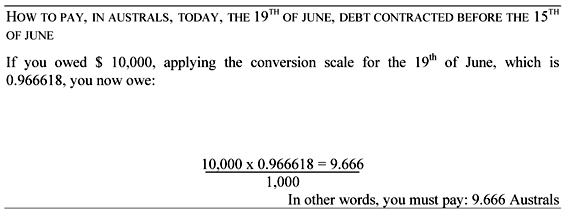
The Australs took almost six months to reach the streets, and it took a few weeks for the old Peso notes to begin circulating stamped with the new symbol. Whereas the population had to use a mental conversion trick, cutting three zeros from the nominal values (one Austral equaled one thousand Pesos), the government and the main economic agents (banks and companies) bombarded the public, through the media, with the innovations. There were pieces of pure rhetoric, such as the Banco Español's advertising that commemorated: "The strong currency. To get rid of the weight (peso) of uncertainty"; or the government's own advertising, which announced: "The Austral is a strong, healthy currency that does not have to bear the weight (peso) of inflation". Citizens were also shown the plan's sophisticated mechanisms, such as simulations of the daily discount (deságio) table, which, from then on, was to be used to calculate wages, rent, quotas, etc. On a black-board, a teacher explained, with a pointer:
]]>
This complexity generated assorted reactions. Some emphasized the difficulties that this monetary conversion system for future contracts would generate among laymen. As pointed out, with certain irony, by a Clarín (June 17,1985, p. 22) newspaper columnist, the word 'discount' (deságio), jargon used by the "authors of this clever plan", "comes from the Latin word aggio, which means profit produced through monetary exchange, but is prone to generating confusion, and it is worthwhile that it should be clarified". On the other hand, there was no shortage of people using not-so-remote experiences to orient themselves in the present, such as the substitution of the national currency in 1970 (with the conversion of 100 old pesos into one new peso - the 'peso law'), or the peso/dollar conversion table (the "little table" or "tablita") implemented by Minister Martínez de Hoz between 1978 and 1980 (which, also having been created as a way of fighting inflation, was a taste of dollarization of current transactions, establishing the currency's future quotations)10.
Who were the ingenious therapists who created the Austral? All of them were professional economists, unlike those who had managed the government party's economic policy until then (such as Alfonsín's first Finance Minister, Bernardo Grinspun, who was an accountant). After graduating from the University of Buenos Aires, several had received doctorates in the United States (José Luis Machinea in Minnesota, Daniel Heymann in California, Mario Brodersohn at Harvard, Adolfo Canitrot at Stanford), with theses that dealt more or less directly with inflation under non-monetarist perspectives, which enhanced the studies of several relatively prestigious teachers in the United States who dealt with monetary instability and economic growth in underdeveloped countries. This was the case of the youngest member of the group, Heymann, who defended his thesis at UCLA under the supervision of Axel Leijonhufvud, a very prestigious teacher at the time, but, as a neo-Keynesian, an "outsider" (cf. Snowdon, 2003). His interest in understanding environments of extreme monetary instability outside the (macro) general equilibrium theory made him (in the words of Heymann, in an interview to the author in November 2003, in Buenos Aires) especially attractive for students from countries with a tradition of inflation and who, for scientific and ideological reasons, wanted to do their doctorates outside the mainstream economics departments. In other words, they looked for ways of fighting inflation without implementing regressive policies, in terms of wealth and employment11. This teacher-student bond was very fruitful, as we can see from Heymann and Leijonhufvud's article (1995), in which they review, among other things, the experiences of Argentina, Bolivia, Brazil, Israel, Mexico and Peru in the 80s.
In this group, only Minister Sourrouille had held high positions in government (as first director of the National Institute of Statistics and Censuses - Instituto Nacional de Estadísticas y Censos – Indec, founded in 1968), although either before going to the United State or after returning from it almost all of them had held technical jobs in State institutions (such as Indec itself or the National Council for Development – Consejo Nacional de Desarrollo - Conade). Sourrouille had also lived for some time in the United States, working at Harvard with Latin American studies specialist Richard Mallon. They had met at the Cepal, in Chile12, which points to another of the characteristics of the group (an experience that was shared by another of its members, Roberto Frenkel): participation in the Latin American circuit that ranged from Cepal (in Santiago and in its branches) to the international agencies and academic centers based in the United States. In Argentina, two institutions were central for these articulations, catapulting their members into the political and local academic scene: the Torcuato Di Tella Institute's Center for Economic Investigation (Centro de Investigaciones Económicas del Instituto Torcuato Di Tella) and the Social and Economic Development Institute (Instituto de Desarrollo Económico y Social - Ides), created in 1958 and in 1960, respectively (cf. Neiburg and Plotkin, 2004). During the military dictatorship, which preceded the arrival of these young economists to the highest positions of state-run management of the economy, Ides (under Sourrouille's direction during almost all this period), especially, became a think tank through which the passed the creators and administrators of the Austral Plan (Plano Austral)13.
In retrospect, it is worth imagining the unique intellectual excitement of these money doctors when the turbulence of politics placed before them an opportunity to exercise their knowledge in order to save the country and democracy14. This was a handful of individuals who met for hours and hours each day and also at night, in an almost clandestine manner, since a significant part of the plans' success depended on getting to "D-Day" without the markets finding out about any of the details15. In love with their jobs, they developed unique experiments, preparing even the most subtle details of the mechanisms that would "reshape people's entire lives" and that, and this was a central aspect of their success, had to be announced at the right moment:
It was quite a remarkable thing [...]. A program that started in February 1985 as a seminar [...] with the idea of imagining what could be done, shocks, gradualism, the fiscal issue, inflationary inertia [...]. Things were assembled slowly, in a logical manner: if we stop the inertia, what shall we do with indexed contracts, with credits? The idea of meddling with all the contracts in the economy was also quite scary. The only thing that kept us calm was neutrality. We were guided by the idea that contracts should continue to respect what the parties intended when they signed them, although we, through an economic policy action, were disturbing their relations in an unexpected way. However, in fact, it was not an intervention in the contract's effective results, but only in the nominal aspects. Most people understood this [...]. The Argentines knew perfectly well that a Peso today was not worth the same as one in thirty days. Luckily, the 30% rate was already in people's heads; it made calculations easier16.
In the months before the start of the Austral, inflation was close to 30% a month, without effectively having reached that number. "D-Day" would be the realization (in the literal sense; that of making real) of the 1% a day rate, and it is interesting to point out this number's "magical" sense, since, strictly speaking, 1% a day meant an accrued monthly inflation rate of more than 30%. When the "experts" thought that this coefficient had finally been transferred from thought to practice, and when the currency's loss of value had seemed to stabilize at this rate, the plan was effectively announced.
]]> A few weeks before, some of the members of that unique "seminar" in which the Austral was prepared had traveled to Washington (quite secretly, according to them; on different days and taking different routes) to present the details of the project to the highest authorities of the International Monetary Fund, the World Bank and the Federal Reserve. Despite being tense, the meeting seemed to happen in a familiar mood, since it was a meeting of old acquaintances, who had the same academic and economic culture. They acted out the relationship in which they already knew their role: Latin students had to convey confidence in English and through their gestures, honor their reputation of being brilliant young economists and make these heterodox projects, that were, for the first time ever, going to be put into practice, convincing.The teachers gave their approval. In fact, it was not the first time they had heard ideas of that sort. As has been mentioned, these theories had long been circulating in international agencies, think tanks and economics departments of certain American universities. In fact, in the beginning of December 1984, there had been a conference in Washington, sponsored by the Institute for International Economics, in which ways to eliminate "inertial inflation", especially in Argentina, Brazil and Israel, had been discussed17. One month after the Austral was announced, a similar plan was implemented in Israel. Seven months later, Brazil entered the "Cruzado era". Among those who had taken part in this conference were two individuals who were part of the team that designed the stabilization plan in Brazil: Pérsio Arida and André Lara-Resende.
The recognition of the theory: a few contrasts
Although the different reconstructions of the debate that led to the implementation of the Cruzado Plan (Plano Cruzado) may set out different histories (cf., for example, Arida, 1986; Bresser Pereira, 1986, 1989; Rego, 1986), all of the authors recognize the pioneering character of "Inflation: gradualism x shock-treatment" (Inflação: gradualismo x tratamento de choque), a book published by Mario Henrique Simonsen in 1970. The reason for this unanimity has probably less to do with the content of that work (since the author looked for some intermediate position between the two stances) than with the fact that Simonsen was one of the heroes who modernized the Brazilian economy and, among other things, was one of the founders and the first director of an institution, created in the 60s, that had become central to economists: the Post-Graduate School of Economics of the Getúlio Vargas Foundation (Escola de Pós-Graduação em Economia - EPGE, Fundação Getúlio Vargas, Rio de Janeiro), where several heterodox economists from the 80s had spent some time18.
Two of them (André Lara-Resende and Francisco Lopes) had completed their master's degrees at EPGE before going to the United States for their doctorates (at MIT and at Harvard, respectively). When they returned to Brazil, they joined the newly created Department of Economics of the Catholic University of Rio de Janeiro (Departamento de Economia da Universidade Católica do Rio de Janeiro - PUC-RJ). The creators of this department, Pedro Malan and Dionísio Dias Carneiro, had led a rupture among those who worked around Simonsen at EPGE, when the latter joined General Geisel's government as Planning Minister. Strong militants for democracy and, simultaneously, good at mathematical economics, with good relations abroad and with segments of the country's social elites, the young economists from PUC were a unique group. It was not long before they were joined by other individuals who were to play key roles in the Cruzado Plan, such as Pérsio Arida, who, after graduating from the University of São Paulo's School of Economics and Business (Faculdade de Economia e Administração da Universidade de São Paulo - FEA-USP), had spent time at Princeton and then at MIT, at the same time as Lara-Resende was there19.
As is commonly known, in the early 80s "PUC-RJ" became a factory for the creation and divulging of new stabilization theories and plans, of which the Cruzado Plan was the first. Several renowned economists and also a few young Latin Americans spent some time there. Amongst them was one of the future creators of the Austral, Roberto Frenkel, whom we have already mentioned, and whose article analyzing price setting mechanisms in periods of great uncertainty or hyper stagflation, published in 1979 in the Ides journal, became an important reference for the Brazilian group.
From 1984 onwards, coinciding with the end of the military government, two works acquired certain notoriety. Both postulated the need to end "inertial inflation", in other words, the mechanism by which price increases became an autonomous process, fueled by economic agents who tried to reproduce the inflation rate and its former real gains. The proposed solutions emphasized different things. One of the texts argued in favor of a period of "price-freezing" (cf. Lopes, 1984b). The other proposed a sophisticated apparatus to transform the index mechanisms (with which Brazilians had lived for two decades) into legal tender. It was precisely the study presented at the Washington conference by Arida and Lara-Resende (1985); known by the name of "The Larida Proposal" (proposta Larida), it went around in Brazil thanks to Simonsen himself, who backed these young economists' project, despite the technical and political disagreements that he had had with them for a decade20.
Some contrasts between the legitimization processes of heterodox theories in Brazil and Argentina are quite suggestive. One aspect is the relationship between different generations of professionals, which always involved more ruptures in the latter country than in the former. Brazilians could refer to an eclectic range of professors in their studies (Simonsen himself, Rangel, Furtado or Delfim Netto, for example), which was almost unthinkable among Argentineans (with the possible exception of Julio Oliveira, a renowned academic, who had never had high positions in government or in private enterprises)21. This, in turn, indicates different standards among the segments of political and intellectual elites: it is certain that none of the young democratic Argentine economists would recognize the patronage (or even the intellectual merit) of any member of the former military government, as the Brazilians did. Finally, although the social biographies of both groups show several parallels, such as social ascension through work and study in the United States, the Brazilians tended to have a closer relationship with the ruling class (which was always more cohesive) than the Argentines. This is certainly indicative of a society that was more unequal and less plebeian than that of Argentina22.
We must also add that the heterodox theories had other sources (not just PUC-RJ) that also were intellectually prestigious and well-connected to the economic and political scenes. The second of these sources was the Getúlio Vargas Foundation's Business School (Escola de Administração de Empresas da Fundação Getúlio Vargas de São Paulo - Eaesp) and the Journal of Political Economy (Revista de Economia Política), started in 1981 by Luis Carlos Bresser Pereira. A teacher at Eaesp and at the School of Economics and Business of the University of São Paulo, where he obtained his doctorate (after an MA at Michigan), Bresser had been a student of another of the modernizing heroes of the Brazilian economy, Antonio Delfim Netto, one of the strong-men of the military regime. Bresser's journal was one of the most dynamic media for divulging "inertialist theories" (of which, according to several commentators, he had the right to proclaim himself a forerunner) (cf., for example, Bresser Pereira and Nakano, 1984; Rego, 1986)23. Another unthinkable attitude for the Argentineans: to maintain a close relationship with Delfim Netto and, at the same time, start a journal that had (and has), as patrons, intellectuals that were identified with "progressive thought" and deserved unanimous respect among the Brazilian economists of several schools of thought: Caio Prado Jr., Celso Furtado and Ignácio Rangel.
]]> Another common characteristic among the heterodox economists from Rio de Janeiro and São Paulo was relatively rare among the Argentineans: following continuous path through the business and finance scene and also through government bureaucracy, even during the military government, to which they were opposed. Some worked in the Economic Research Institute Foundation (Fundação Instituto de Pesquisas Econômicas - Fipe), created in 1973 at FEA-USP, which was a good example of how the new economics professionals organized themselves in relation to the modernization of the economic scene during the "economic miracle" (milagre econômico). Others published articles regularly in the important Research and Economic Planning (Pesquisa e Planejamento Econômico) journal, which belonged to the Institute for Applied Economic Research (Instituto de Pesquisa Econômica Aplicada - Ipea), which answered to the Planning Ministry. Thus, the Brazilians, in addition to their academic articulations and intergenerational politics, enjoyed a great deal of credibility, based on their closeness to the market and the state. On the other hand, among the Argentineans, only Brodersohn had similar characteristics. Loureiro points out another similarity among Brazilian economists who came of age in the early 80s: their work in big business consulting, before entering politics (1997, pp. 90-94).There is yet another difference that deserves to be mentioned: on the Argentinean side, the story of a semi-clandestine seminar; on the Brazilian side, intense participation in public debate. It is true that one must consider the chronological difference; the fact that the Argentine and Israeli plans were launched before the Cruzado. It is also true that the difference is a question of degrees: the details of the Brazilian plan were also determined secretly (we must remember the importance of "D-Day") and in Argentina there was equally a feeling of imminence before the announcements (although the word "heterodox" was not in any way common in the press during the period that preceded the Austral). Anyway, despite these reservations, the contrast seems to reveal significant peculiarities of the public economic scenes in each country24.
In fact, during the period between the introduction of the Austral and the announcement of the Cruzado Plan, the experience of Brazil's neighbors (that had already started to reflect problems) was widely debated in Brazil, in more academic publications (cf., for example, Bresser Pereira, 1985; Modiano, 1986), in the journalistic environment (such as in IstoÉ magazine, Exame magazine or the Gazeta Mercantil financial newspaper)25 and in the business scene. This reflected not only the scale, the institutionalization and the continuity of the economists' field in that country, but also a rare certainty: before it was announced, the heterodox plan already seemed to be accepted as fact, even by the more orthodox economists. Moreover, there was no tone of fatality in this acceptance. People such as Delfim Netto and Simonsen himself admitted that it was time for the new generation to take the lead and recognized the merits of the heterodox ideas (although they expressed disagreement and demanded revisions, especially in relation to the "price freeze")26.
On the other hand, the other big names of the previous generation, related to Structuralism and Developmentalist economics (such as Celso Furtado), had close relations with the third group of Cruzado Plan administrators, which included Luiz Gonzaga Belluzo, João Manuel Cardoso de Mello and Maria da Conceição Tavares. This group was tied to academic institutions with very different stances from PUC-RJ, EPGE and Eaesp, such as the University of Campinas Department of Economics (Departamento de Economia da Unicamp) or the Federal University of Rio de Janeiro Economics Institute (Instituto de Economia da UFRJ)27. With such diversity, in the eyes of the Argentineans, the Cruzado seemed to be a rare confluence between individuals with varied and contrasting academic paths and political legitimacy. A very well-founded perception, if we consider the proposed description of the different relations between intellectuals (economists) and the ruling class in each country28.
When, on the 28th of February 1986, President José Sarney and his Minister of Finance, Dílson Funaro, announced the "fundamental economic changes" that were to be imposed on that day, they did not forget to explain to "Brazilians – men and women" the theoretical basis of the reform. After explaining that "the measures are not a copy of any program created in any other country" (an obvious reference to the Austral's mechanisms), Sarney stated, among other things: "We are knocking down the walls of the inflationary fortress. We still face the force of habits that have grown roots with time. We must remember that inflation and monetary adjustment are part of the life and habits of the new generations, who do not know other economies besides this one." Funaro added:
Brazilian inflation has become independent of the original factors that fueled it. It now gains strength from its own movement. The existence of monetary adjustment, applied broadly on quantities of money, has contaminated the psychology of all the economic agents and has weakened the Cruzeiro's monetary functions. Everybody has begun to calculate their earnings and wealth in ORTNs29.
It is a rare virtue of economics that it can produce such similar words in announcements directed at such diverse audiences: here, the population of a country; there, a select group of experts. It is certain that the approximation between the two audiences was a result of a slow process, at the end of which the masterminds of the inertial inflation theory had become public intellectuals. In fact, while the monetary reform was being announced, well-informed Brazilians could, almost at the same time, read the works in which the theory that supported it was presented. Thus, for example, a mere two months after the launch of the plan, under the title of "Guarantee on the Packaging" (Garantia na embalagem), IstoÉ magazine (Aug. 25, 1986) reviewed two books that were published at the time: "Heterodox Shock" - Choque heterodoxo (Lopes and Arida, 1984) and "Zero Inflation" - Inflação zero (Arida, 1986). It also informed, in passing, that the authors had asked the publishers (Campus and Paz & Terra) to do something that was uncommon for the time, due to the constant price increases. They asked that the prices be printed on the cover, as a "guarantee of stability".
Conclusion: on "Orloff" and other effects
]]> Anthropology has developed a wide range of conceptual instruments to analyze the dramatic and performance aspects of State rituals (cf., for example, Peirano, 2001). During the last two decades of the twentieth century, in countries such as Brazil and Argentina, the implementation of successive monetary stabilization plans acquired a similar ritualistic dimension. I have already mentioned the dramatic content of President Alfonsín's announcement on the "war economy", followed shortly by the Austral Plan, mobilizing the population to defend the political system and invoking the ghosts of modern Argentina's worst authoritarian experience. In comparison, Sarney's words were much less grandiose, but the dramatic effect was implicit in each of his actions. It could be seen even in the fragment of the speech that launched the Cruzado, in which he referred to his commitment to the Democratic Alliance (Aliança Democrática). This was the coalition that supported his government politically, which he had joined after the death of Tancredo Neves, who, appointed President by the Electoral College at the end of the military regime, never took office. Hospitalized on the 14th of March 1985, the day before taking office, for an abdominal operation, he died 38 days later from a general infection. History seemed to add to the national tragedy: it was the 21st of April, the day of Tiradentes, the "martyr of Brazilian independence".Anyone who lived in those countries at that time will have no difficulty recalling the successive announcements, on national radio and television networks, of "price freezing", "forced savings" and currency denomination changes, followed by bank holidays on which not only economics professionals, but also anybody who received wages, owed bank loans, rented real estate (essentially, just about everybody) was exposed to the new mechanisms developed, for the umpteenth time, to save society from the plague of monetary instability. No doubt, part of the educational effectiveness of the announcements had to do with the rhetoric itself and, especially, with the dramatic rhetoric that spoke of the "crisis" that each stabilization plan promised to solve. In the case of Argentina, references were occasionally made to the central themes of a story that stretched back over half a century: national decadence, due to which, each day, society moved further away from its wonderful past and the country was placed before the almost fatal perspective of its own dissolution30. In Brazil, the horizon of the crisis was neither national decadence, nor the loss of a glorious past. It was the turn taken away from the road to greatness. This was the central theme of Minister Funaro's speech, during the launch of the Cruzado: to recover "the path of promises of Brazilian growth", the need to "awaken the country and put in motion its powerful forces" (cf. also Funaro apud Rego, 1986, pp. i-iii).
We can see that, as in the time of Nicolas Oresme, mentioned at the beginning of this text, the relation between erudite economic narratives and economic cultures, widely disseminated in the public arena and incorporated as dispositions by individuals, operates mainly through images and metaphors of nature. These images and metaphors were essential to represent the crises that justified the implementation of monetary stabilization plans31.
A similar movement between scientific and common terms, mediated by metaphors and natural images, was also used to represent the similarities between the Brazilian and Argentinean experiences at the time of the heterodoxies. References to the mysteries of national character and neighborhood, which, from the start, were used to describe the common destiny of Brazilians and Argentineans (and the differences and the coincidences between the plans implemented in each country), did not take long to acquire the status of proper theories, with the wording of the "Orloff effect", the name given to the 'law', according to which, "Argentina today is Brazil tomorrow". This was a generalization of the slogan used at the time for the advertising campaign of the well-known Orloff vodka, in which one character, referring to the drink's absence of negative side effects (no hangover), warned the other character (before drinking): "I am you, tomorrow.". This theory reached its peak when the Cruzado and Austral plans were submitted to readjustments named after seasons on both sides of the border: the "Spring" (Primavera) plan in August 1988, in Argentina and the "Summer" (Verão) plan in January 1989, in Brazil. This was just as the "Orloff effect" predicted. This theory spread not only as common sense among large sections of the population of both countries, but it was also frequently mentioned in the media and apparently was also accepted by the creators of economic policy.
I have already mentioned that the incipient nature of the research on which this text is based does not allow one to penetrate very deeply in the comparative argument, relative to the economic cultures. I have also already mentioned one reason why our perception of the power of economics to change the social world, according to its own representation of it, must become more complex: the fact that, like every science, this one exists as a world of its own, a hierarchy of theories and theoreticians. It is worthwhile adding another reason, that is a consequence of what has been shown so far: despite its demand for universality (organized in the abstract language of equations and numbers), economic wisdom owes much to national intellectual traditions and its transformation into policy (which is essential for their performance efficiency) depends on conditions for implementation and legitimization on an international level, but also on a domestic one32. Finally, the devices invented by economists (such as money itself), are the object of social elaborations. In other words, they are filled with meanings and inserted in contexts that are not always those imagined by the economists (cf., for example, Viviana Zelizer, 1994). But let us leave this argument (that requires an examination, for instance, of the meanings associated to tablita discount tables, indexes, bonuses and other quasi-currencies) and return, one last time, to economists and their heterodoxies.
From today's perspective (it is not the job of the sociologist, as it usually is the economist's, to imagine future scenarios), the cycle of stabilization plans started in the mid-80s, with the Austral and the Cruzado and ended at the end of the subsequent decade. A glance at the last generation of these plans allows us to complete these notes comparing the national contexts, if we think of the social conditions that favored the differences between them: on the Brazilian side, "gradualism"; on the Argentine side, "rupture". A very adequate representation for the time, given the different speeds and strategies each country adopted for the transition from military to civilian government, but that did not take long to expand to other aspects of social life and, especially, to economic policy. This happened despite the exceptions, which, as is usually the case with stereotypes, end up confirming the general rule. The so-called "Collor Plan" ("Plano Collor") (1991) and its failure are an example of this33.
In Argentina, the last and perhaps the most heterodox plan was the "Convertibility Plan" (1991), whose objective, in accordance with inertialist theory, was to eliminate inflation through the transformation of the most important economic index (in this case, the US dollar) into legal tender – implementing a strict currency board system that established, by law, the free exchange between the peso and the foreign currency. On the other hand, the last stabilization plan applied in Brazil (the "Real Plan") depended on a sophisticated model for the transition between two national currencies (the old Cruzeiro and the new Real) by way of a third virtual currency (the Real Value Unit - Unidade Real de Valor - URV), that allowed contracts to be reprogrammed. From then on, the contrasts would only become more intense. On one hand, we have the recent "Argentine crisis" that, in a few weeks in 2001, led to the fall not only of convertibility, but also of four presidents. The first was Fernando de la Rúa, alongside his Minister of Finance, Domingo Cavallo, "father" of the monetary regime implemented ten years earlier. On the other hand, we have the Real's permanence, even after the end of the government of President Fernando Henrique Cardoso, who had created it eight years earlier.
In Argentina, then, we have a group of economics professionals, Cavallo and his colleagues from the Mediterranean Foundation (Fundação Mediterrânea), and later Roque Fernández and his colleagues from the Center for Argentine Macroeconomic Studies (Cema - Centro de Estudios Macroeconómicos Argentinos), who built their theoretical and political identity in opposition to the Austral's idealizers. In the case of Cema, they were even local representatives of the "Chicago School", refusing all dialogue with the national traditions of economic thought34. In Brazil, in contrast, the Real can be regarded (and in fact it was regarded) as a second try by at least a part of the Cruzado team, comprising those who theorized about inertial inflation, organized at PUC-RJ by Pedro Malan, minister for both of Fernando Henrique Cardoso's terms. I believe that the comments made throughout this article on the characteristics of the relationships between intellectuals and the bureaucratic arena and on the different degrees of cohesion between segments of the Brazilian and Argentine elites, allow one, at least partly, to understand the social context on which such contrasts are based.
Economists work at determining the causes of success and failure of economic plans in accordance with their perspective of "internal consistency". Trying to solve the same problem, political scientists usually speculate on the mechanisms of "creation of consent" (between parties and social sectors) that support the stabilization programs. The "other" social sciences (anthropology, sociology and history) ask no such questions. Instead, their objective must be (as was the case in this article) to describe the social construction of economic theories, the complex mechanisms that legitimize them and spread them beyond a small circle of experts, and understand the processes whereby these theories merge with other ways of understanding the relations between people and social life.
]]> Bibliographical References
ARIDA, P. (1984a), "Economic stabilization in Brazil". Working Paper, 149, Washington, Woodrow Wilson International Center for Scholars. [ Links ]
______. (1984b), "A ORTN serve apenas para zerar a inflação inercial". Gazeta Mercantil, 19/10. [ Links ]
______. (1986), Inflação zero: Brasil, Argentina, Israel. Rio de Janeiro, Paz & Terra. [ Links ]
ARIDA, P. & LARA-RESENDE, A. (1985), "Inertial inflation and monetary reform in Brazil". In: WILLIAMSON, J. (ed.). Inflation and indexation: Argentina, Brazil and Israel. Cambridge, Mass., MIT Press. [ Links ]
BAER, W. & KERSTENETZKY, I. (1964), Inflation and growth in Latin America. Homewood, Irwin. [ Links ]
BERROTARÁN, P. et al. (2004), "La construcción de un problema: los debates en torno a la inflación. Argentina (1940-1952)". In: ______. Intelectuales, crisis y cuestión de Estado, Argentina 1930-2000. Buenos Aires, Ediciones Al Margen. [ Links ]
BIDERMAN, C.; COZAC, L. F. & REGO, J. M. (orgs.). (1996), Conversas com economistas brasileiros. São Paulo, Editora 34. [ Links ]
BOURDIEU, P. (1977), Algérie 60: structures économiques et structures temporelles. Paris, Minuit. [ Links ]
BRESSER PEREIRA, L. C. (1985), "Como a Argentina acabou com sua inflação inercial". Gazeta Mercantil, 17/7, p. 4. [ Links ]
______. (1986), "Inflação inercial e Plano Cruzado". Revista de Economia Política, 6 (3): 9-24. [ Links ]
______. (1989), "A teoria da inflação inercial reexaminada". In: Rego, J. M. (org.). Aceleração recente da inflação. São Paulo, Bienal. [ Links ]
BRESSER PEREIRA, L. C. & NAKANO, Y. (1984), "Fatores aceleradores, mantenedores e sancionadores da inflação". Revista de Economia Política, 4 (1). [ Links ]
______. (1986), "Inflação inercial e choque heterodoxo no Brasil". In: Rego, J. M. (org.). Inflação inercial, teorias sobre inflação e Plano Cruzado. Rio de Janeiro, Paz & Terra. [ Links ]
CALLON, M. (1998), "Introduction: the embeddedness of economic markets in economics". In: ______ (org.). The laws of the markets. Oxford, Blackwell, pp. 1-57. [ Links ]
CAMPOS, R. (1986), "Two views of inflation". In: HIRSCHMAN, A. (org.). A economia como ciência moral e política. São Paulo, Brasiliense (1 ed. 1961). [ Links ]
DE L'ESTOILE, B., NEIBURG, F. & SIGAUD, L. (2002), "Antropologias, impérios e Estados nacionais: uma abordagem comparativa". In: ______ (orgs.). Antropologia, impérios e Estados nacionais. Rio de Janeiro, Relume Dumará. [ Links ]
DELFIM NETTO, Antonio. (1985), "Alfonsin substitui demagogia por coerência". Revista de Economia e Política, 5 (4). [ Links ]
DEZALAY, Y. & GARTH, B. (2002), The internationalization of palace wars: lawyers, economists, and the contest to transform Latin American states. Chicago, University of Chicago Press. [ Links ]
DIXON, K. (1998), Les évangélistes du marché. Paris, Raison d'Agir. [ Links ]
DRAKE, P. W. (1994), Money doctors, foreign debts, and economic reforms in Latin America from the 1890s to the present. Wilmington, SR Books. [ Links ]
FOURCADE-GOURINCHAS, M. (2001), "Politics, institutional structures and the rise of economics: a comparative study". Theory and Society, 30. [ Links ]
FOURCADE-GOURINCHAS, M. & BABB, S. (2002), "The rebirth of the liberal creed: paths to neoliberalism in four countries". American Journal of Sociology, 108 (3): 533-579. [ Links ]
FRENKEL, R. (1979), "Decisiones de precios en alta inflación". Desarrollo Económico, 19 (75). [ Links ]
GUDEMAN, S. (1986), Economics as culture. Londres, Routledge & Kegan Paul. [ Links ]
GUDIN, E. (1967), "A institucionalização da inflação". Digesto Econômico, 163. [ Links ]
HALL, P. (ed.). (1989), The political power of economic ideas: keynesianism across nations. Cambridge, Harvard University Press. [ Links ]
HEYMANN, Daniel. (1986), Tres ensayos sobre inflación y políticas de estabilización. Buenos Aires, Cepal. [ Links ]
______. (1987), "The Austral Plan". The American Economic Review, 77 (2): 284-287. [ Links ]
HEYMANN, D. & LEIJONHUFVUD, A. (1995), High inflation. Oxford/Nova York, Oxford University Press. [ Links ]
HIRSCHMAN, A. (1963), "Inflation in Chile". In: ______. Journeys toward progress: studies of economic policy-making in Latin America. Nova York, Norton, pp. 159-223. [ Links ]
______. (1984), "La matriz social y política de la inflación: elaboración sobre la experiencia latinoamericana". In: ______. De la economía a la política y más allá. México, Fondo de Cultura Económica, pp. 225-267 (1 ed. 1981). [ Links ]
KAYE, J. (1988), "The impact of money on the development of fourteenth-century scientific thought". Journal of Medieval Studies, 14: 251-270. [ Links ]
LARA-RESENDE, A. (1984a), "A moeda indexada: uma proposta para eliminar a inflação inercial". Texto para Discussão, 5, Rio de Janeiro, PUC-RJ, Departamento de Economia. [ Links ]
______. (1984b) "A moeda indexada nem mágica nem panacéia". Gazeta Mercantil, 26, 27 e 28 de setembro. [ Links ]
LEBARON, F. (2000), La croyence économique: les économistes entre science et politique. Paris, Seuil. [ Links ]
LOPES, F. (1984), Choque heterodoxo: combate à inflação e reforma monetária. Rio de Janeiro, Campus. [ Links ]
LOUREIRO, M. R. (1997), Os economistas no governo. Rio de Janeiro, Fundação Getulio Vargas. [ Links ]
LOVE, J. (1994), "Economic ideas and ideologies in Latin America since 1930". In: BETHELL, L. (ed.). Ideas and ideologies in twentieth century Latin America. Nova York, Cambridge University Press. [ Links ]
MACKENZIE, D. & MILLO, Y. (2003), "Negotianting a market, performing theory: the historical sociology of a financial derivatives exchange". American Journal of Sociology, 109 (1): 107-146. [ Links ]
MANTEGA, G. & REGO, M. (1999), Conversas com economistas brasileiros II. São Paulo, Editora 34. [ Links ]
MIROWSKI, P. (ed.). (1994), Natural images in economic thought. Cambridge/Nova York, Cambridge University Press. [ Links ]
MODIANO, E. (1986), "O choque argentino e o dilema brasileiro". Revista de Economia Política, 6 (2). [ Links ]
NEIBURG, F. (1997), Os intelectuais e a invenção do peronismo. São Paulo, Edusp. [ Links ]
NEIBURG, F. & PLOTKIN, M. (2004), "Internationalisation et développement. 'Les Di Tella' et la nouvelle économie en Argentine". Actes de la Recherche en Sciences Sociales, 151-52: 57-67. [ Links ]
OLIVERA, J. G. (1960), "Teoría no monetaria de la inflación". Trimestre Económico, XXXVII. [ Links ]
______. (1967), "Aspectos dinámicos de la inflación estructural". Desarrollo Económico, 7 (27). [ Links ]
PANTALEÓN, J. (2004), "El surgimiento de la nueva economía argentina: el caso Bunge". In: NEIBURG, F. & PLOTKIN, M. (orgs.). Intelectuales y expertos: la construcción del conocimiento social en la Argentina. Buenos Aires, Paidós, cap. 6. [ Links ]
PEIRANO, M. (org.). (2001), O dito e o feito: ensaios de antropologia dos rituais. Rio de Janeiro, Relume Dumará/NuAP. [ Links ]
RANGEL, I. (1963), A inflação brasileira. São Paulo, Brasiliense. [ Links ]
REGO, J. M. (org.). (1986), Inflação inercial, teorias sobre inflação e o Plano Cruzado. Rio de Janeiro, Paz & Terra. [ Links ]
SARDENBERG, C. A. (1987). Aventura e agonia: nos bastidores do cruzado. São Paulo, Companhia das Letras. [ Links ]
SIGAL, S. & KESSLER, G. (1997), "La hiperinflación en Argentina: comportamientos y representaciones sociales". In: Canton, D. & Jorrat, J. R. (orgs.). La investigación social hoy. Buenos Aires, CBC/UBA, pp. 155-187. [ Links ]
SIKKINK, K. (1991), Ideas and institutions: developmentalism in Brazil and Argentina. Ithaca, Cornell University Press. [ Links ]
SIMONSEN, M. H. (1964), A experiência inflacionária do Brasil. Rio de Janeiro, APEC. [ Links ]
______. (1970), Inflação: gradualismo x tratamento de choque. Rio de Janeiro, APEC. [ Links ]
SNOWDON, B. (2004), "Outside the mainstream: an interview with Axel Leijonhufvud". Macroeconomic Dynamics, 8 (1): 117-145. [ Links ]
SOLA, L. (1991), "Heterodox shock in: Brazil. Técnicos, politicians and democracy". Journal of Latin American Studies, 20. [ Links ]
SPITTA, A. (1988), "La cultura de la inflación en la Argentina: observaciones cotidianas de un extranjero". In: BOTANA, N. & WALDMANN, P. (orgs.). El impacto de la inflación en la sociedad y la política. Buenos Aires, Tesis, ITDT, pp. 125-150. [ Links ]
SUNKEL, O. (1958), "La inflación chilena: un enfoque heterodoxo". El Trimestre Económico, 25 (4). [ Links ]
WEIR, M. & SCOKPOL, T. (1989), "State structures and the possibilities for 'keynesian' responses to great depression in Sweden, Britain and the United States". In: EVANS, P.; RUESCHEMEYER, D. & SKOCPOL, T. (eds.). Bringing the state back in. Cambridge, Cambridge University Press, pp. 107-163. [ Links ]
WILLIAMSON, John. (1985), Inflation and indexation: Argentina, Brazil and Israel. Cambridge, MIT Press. [ Links ]
ZELIZER, V. (1994), The social meaning of money: pin money, paychecks, poor relief and other currencies. Nova York, Basic Books. [ Links ]
Notes
* This text is the result of ongoing research on economists and economic cultures in Brazil and Argentina, which I have been carrying out with the support of a grant from the Guggenheim Foundation within the Center for Research in Culture and Economics (Núcleo de Pesquisas em Cultura e Economia). I have relied on the inestimable collaboration of Ana King and Michele Markowitz for finding information in newspapers and magazines. I would like to thank Afrânio Garcia for his generous suggestions in relation to the usefulness of a sociological look at the stabilization plans. I also thank Mariano Plotkin for his sharp critical eye, right from the beginning, when we first became interested in economists. Preliminary versions were presented at the "Comparison as a problem. For a trans-national focus on cultural Latin American history" (El comparatismo como problema. Por un enfoque transnacional para la historia cultural latinoamericana) seminar, organized by the National University of Quilmes Intellectual History Program (Programa de Historia Intellectual da Universidad Nacional de Quilmes) (Buenos Aires, December 2003) and at the "Intellectual Networks and a Social History of Culture" (Redes Intelectuais e História Social da Cultura) seminar, organized by the University of São Paulo's Departments of Sociology and Anthropology (São Paulo, August 2004). I would like to thank all my colleagues who kindly discussed my work on these occasions. The Portuguese version is the result of Sérgio Benevides's careful work.
1. Oresme gained notoriety after being appointed financial counselor to Carlos V. Kaye (1988, pp. 253 and 258-260) suggested relations between Oresme's and other scholastics' theories on money and those of neoclassical economists.
2. As Dezalay and Garth (2002) on Mexico, Chile, Brazil and Argentina, and Fourcade-Gourinchas and Babb (2002), contrasting Mexico and Chile with France and Great Britain.
3. One of the main enactments of this debate occurred during a conference that was celebrated in January 1963 at FGV in Rio de Janeiro. The papers that were presented can be seen in Baer and Kerstenetzky (1964). The best overview of history before the debates on inflation in Latin America (since the mid 19th century) is the paper written by Hirschman (1963) on the Chilean case. For Brazil, there are useful elements in Rangel (1963) and Simonsen (1970). For Argentina, see Berrotarán et al. (2004).
4. Since 1960 the annual inflation indexes in Brazil and Argentina have always been at least two digits figures. In Argentina, the rates exceeded the 100% mark in 1975, reaching a peak of almost 5,000% in 1989. In Brazil, inflation stabilized at three digits as from 1982, fell to two digits the year the Cruzado was implemented and reached over 1,000% in the years before the Real. Meanwhile, the United States has only registered double-digit inflation between 1979 and 1981.
]]> 5. As is commonly known, even in current debate, those who identify themselves as successors of the Structuralist schools are in favor of injecting liquidity into the market to encourage economic growth. This type of theory is not very easy to find in the political practices of economists who are identified with Monetarism, such as Roberto Campos in Brazil or Krieger Vasena in Argentina (both ministers in the 60s).6. Undoubtedly the history of price indexes extends back much further. In Argentina, the index numbers were introduced by Alejandro Bunge in the 1920s (cf. Pantaleón, 2004). In Brazil, in 1944, FGV created the oldest index among those that still exist (the IGP-DI). However, after the 60s, there was a true proliferation of indexes, in parallel to the proliferation of economic institutions. On the other hand, some of these institutions (such as FIEL in Argentina and FGV in Brazil) were pioneers in implementing strategies for publicizing, through the press, the indexes that they themselves produced, by offering courses in economics for journalists.
7. In Argentina, the first credit cards were announced on October 1969. In Brazil, the use of checks for the payment of day-to-day bills also began in the late 60s.
8. This would allow one to advance in relation to the available descriptions, like the proposals for the Argentine case by Spitta (1988) and by Sigal and Kessler (1997).
9. As suggested by Dixon (1998, pp. 47-60) and Lebaron (2001, pp. 176-181), for Great Britain and France, respectively.
10. The national currency changes, with the establishment of rates of exchange between old and new denominations, have been privileged processes for spreading and strengthening cultures of monetary instability: in Argentina, since 1969, legal tender pesos, legal pesos, convertible pesos, pesos; in Brazil, since 1967, cruzeiro, new cruzeiro, cruzeiro, cruzado, new cruzado, cruzeiro, real cruzeiro, real.
11. These are the words of Heymann, in an interview granted to F. Neiburg in Buenos Aires, November 2003.
12. Interviews granted by J. Sourrouille to F. Neiburg, Buenos Aires, 7/10 and 6/11 of 2003.
13. The group's sociologist, Juan Carlos Torre, also was involved with both Ides and Instituto Di Tella. Together with other social scientists and communication experts, he was part of the group of advisors to Alfonsín known as the "Emerald Group" (Grupo Esmeralda).
14. Apart from the interviews with Heymann and Sourrouille, this report is also based on interviews that were carried out in Buenos Aires by F. Neiburg with Roberto Frenkel (Nov. 19, 2003) and Adolfo Canitrot (Nov 27, 2003); and by F. Neiburg and M. Plotkin with Pablo Gerchunoff (Sep. 14, 2003).
]]> 15. Bresser Pereira and Nakano (1986) worked on the "D-Day" issue for the application of heterodox plans such as the Austral or the Cruzado.16. Interview with Heymann, already mentioned. A detailed description of the preparation of the plan, in macroeconomic terms, can be found in Heymann (1986, 1987).
17. The works were published in March 1985 by MIT (cf. Williamson, 1985).
18. Simonsen also collaborated with Roberto Campos for the implementation of PAEG [the Governmental Economic Action Plan], was minister during General Geisel's government and was a member of the board of directors of several companies and banks (see the interview with Simonsen, in Biderman et al., 1996, pp. 189-211).
19. Arida only received his doctorate at MIT in 1992, which did not affect his reputation as "brilliant young man". Edmar Bacha, who had a doctorate from Yale and taught at the EPGE for a while, was another of the PUC recruits for the Cruzado team. On the social and intellectual paths of the PUC-RJ Department of Economics (founded in 1977), see Loureiro (1997, pp. 65-95) and Dezalay and Garth (2002, pp. 100-103).
20. What was behind the scenes of the development of the Cruzado Plan was reconstructed by journalists (especially Sardenberg, 1987) and told by the actors themselves. Some examples are the interviews granted by Bacha, Gonzaga Belluzo, Lara-Resende and Arida to Biderman et al. (1996) and by Cardoso de Mello, Sayad and Lopes to Mantega and Rego (1999).
21. Even Raúl Prebisch himself, creator of the Argentine Central Bank, in 1935, and Cepal, in 1948, never represented unanimousness in his country.
22. It is worth recalling that, among the "clever creators of the Cruzado", there were some real heirs, such as Francisco Lopes, son of Lucas Lopes, who, among other things, was BNDE President and Minister for Finance. Also, another thing that was very rare among Argentineans, several of them were well married to daughters of true "big families" of the Brazilian elite (an important element in this highly masculine universe of creators of economic policy).
23. As is generally known, it would not be long before Bresser had a chance to put his ideas into practice. In July 1987, he took over from Dilson Funaro as Minister of Finance (starting the Cruzado plan's "second phase", known as the "Bresser Plan").
24. The greater dynamics of the economic public scene in Brazil, at the time, when compared to that of Argentina, contrasts with the history of the subject in each country: in Argentina, the first economics course was founded in 1913 and by the end of the decade there were already two important academic journals (the "Economic Science Magazine" - Revista de Ciencias Económicas and the "Argentine Economics Magazine" - Revista de Economía Argentina). In Brazil, the first school of economics was created in 1946 (one year later, the "Brazilian Economics Magazine" - Revista Brasileira de Economia, the first national publication of that kind, was started).
]]> 25. As early as December 1984, long before the Austral, Lara-Resende (1984b) had published a series of articles in the Gazeta Mercantil newspaper, proposing an "indexed currency" to "break the frustrating lack of mobility to which anti-inflationary policy has been relegated". On a similar note, Arida (1984b) published another text in the same newspaper, in October (Arida, 1984a), and an article in English at the Woodrow Wilson International Center for Scholars (Arida, 1984b).26. Although he expressed reservations, Delfim, at first, did not think twice about qualifying its authors as "brilliant" (IstoÉ, Mar. 5, 1996, pp. 20-21). Cf. Delfim Netto (1985) and Lara-Resende (1984).
27. Another of the plan's administrators, João Sayad, had developed a career at FEA-USP.
28. Of course this statement on the perceptions of the contrasts between the two national worlds does not intend to mask the acute differences between the several administrators of the Cruzado plan (especially between the Unicamp/UFRJ group and the PUC-RJ group).
29. "Stabilization plan (documents)", Revista de Economia e Política, 6 (3): 112-115, 1986.
30. In another paper, I proposed an analysis of the history of the Argentine crisis after 1930 (cf. Neiburg, 1997, chap. 3). The debates that have been driven by the last great Argentine monetary destabilization (December 2001) show the extent to which the themes related to national decadence continue to be triggered by economists and other public intellectuals from that country. Although they did not consider economists, Sigal and Kessler (1997) wrote a suggestive analysis of the intellectual history of the 1989 hyperinflationary crisis.
31. For a general view of the role of natural images in legitimizing economic theories, see Mirowski (1994).
32. On the dimension of national traditions, see, for example, Fourcade-Gourinchas (2001). For an analysis on the production of knowledge on society, that considers both the national and international conditions for their legitimization and their implementation in a comparative perspective; see De L'Estoile, Neiburg and Sigaud (2002).
33. A note in the Clarín newspaper from Buenos Aires on July 12, 1985, entitled "Brazilian gradualism and Argentinean shock" (Gradualismo brasileño y shock argentino), expresses this contrast between the economic policies. The Collor plan involved, among other things, a structure that is characteristic of heterodoxies: violent state intervention in the name of free markets (with "confiscation of savings" applied by Minister Zélia Cardoso de Mello). Collor would shortly be ousted, at the end of an impeachment process.
34. To think of the differential densities of the universe of economists in both countries, it is significant that in Brazil, although there were monetarist economists, there was no academic center that could be identified as a "local branch" of that school.
]]>
Text received in July/2004 and approved in August/2004.
Federico Neiburg is a professor at the Post-Graduate Social Anthropology Program - Programa de Pós-graduação em Antropologia Social (PPGAS, Museu Nacional, UFRJ) and a researcher for CNPq. Head of the Economics and Culture Research Center (Núcleo de Pesquisas em Cultura e Economia) - (NuCEC, www.cultura-economia.com). E-mail: fneiburg@terra.com.br.
]]>