Redes sociais e poder no Estado brasileiro: aprendizados a partir de políticas urbanas
Réseaux sociaux et pouvoir dans l'État brésilien: apprentissages à partir de politiques urbaines
Eduardo Marques
Translated by Eduardo Marques
Translation from Revista Brasileira de Ciências Sociais, São Paulo, v.21, n.60, p. 15-41. Feb. 2006.
ABSTRACT
This article presents results of two researches on urban policies in different Brazilian metropolises using network analysis. Policy network studies have explored the consequences of networks over policies, but have underestimated the consequences of the structure of the network itself. The institutional and personal networks that structure state organizations internally and insert them in broader political scenarios organize a mid-level structure I call State fabric. This introduces more stability and predictability than usually considered and gives access to a specific power resource, which I call positional power, associated with the positions political actors occupy in the State fabric, influencing politics inside and around the State.
Keywords: State, social networks, power, public policies, bureaucracies, Brazil.
RESUMO
Embora o Estado historicamente tenha grande importância nas dinâmicas sociais e políticas no Brasil, e a sua presença tenha sido constante no pensamento social brasileiro, sabemos pouco sobre o seu funcionamento e sua dinâmica interna. O presente trabalho pretende contribuir para o preenchimento de uma parte desta lacuna, apoiando-se em resultados de pesquisas recentes, em que foram utilizadas análises de redes sociais. Esse tipo de análise é um campo de estudo amplo e recente, embora tenha sido pouco desenvolvido no Brasil até o momento. Os estudos existentes, entretanto, têm explorado de forma inovadora as dinâmicas internas ao Estado e suas relações com outros atores sociais, demonstrando a importância para a política do "tecido do Estado" – sua estrutura relacional interna. O presente artigo parte de resultados de duas pesquisas recentes sobre políticas públicas urbanas, sistematizando e discutindo suas principais contribuições analíticas à luz das discussões mais relevantes sobre o tema presentes na literatura.
Palavras-chave: Estado; Redes sociais; Políticas públicas; Dinâmica política.
RÉSUMÉ
]]> Malgré le fait que l'État ait, du point de vue historique, une grande importance dans les dynamiques sociales et politiques au Brésil, et que sa présence ait été constante dans la pensée sociale brésilienne, nous connaissons peu son fonctionnement et sa dynamique interne. Ce travail, fondé sur le résultat de recherches récentes qui ont utilisé des analyses de réseaux sociaux, se veut une contribution pour permettre de combler cette lacune. Ce genre d'analyse, peu développé au Brésil, est un champ d'études ample et récent. Les études existantes ont, néanmoins, exploré de forme innovatrice les dynamiques internes à l'État et ses relations avec d'autres acteurs sociaux, en démontrant l'importance pour la politique du «tissu de l'État», c'est-à-dire, de sa structure relationnelle interne. Le point de départ de cet article sont les résultats de deux recherches récentes à propos de politiques publiques urbaines, qui systématisent et discutent ses principales contributions analytiques à la lumière des discussions les plus relevantes sur le thème présentes dans la littérature.Mots-clés: État; Réseaux sociaux; Politiques publiques; Dynamique politique.
The State is regarded as one of the main actors in the political scenario in Brazil, and has performed historically very important roles in the national economy and politics. Uncountable of its aspects have been analyzed along the last decades by both national and international literatures. Nevertheless, in a contradictory situation, we know little about its heterogeneity and internal dynamics. The same situation occurs in other Latin American countries.
One way to solve this problem is to develop detailed analysis about the processes that build up policy communities internally, following the footsteps of policy network studies since the 1970s. According to this literature, the patterns of relationships among institutional actors organize political systems and influence policy outcomes.
To the moment, however, this reseach field has scarcely focused on Latin American countries, and Brazil specifically. This is a problem in itself, since we do not account for the effects of networks when studying policies in those countries. However, this gap causes also theoretical consequences. Since the policy literature has so far been concentrated in highly institutionalized (or pluralist) political systems, we know little about the variation of the networks' effects on policies. Indeed, the results about the Brazilian case suggest a much more structured situation than described previously by the international literature focused on Latin American countries. The evidences suggest that networks made of institutional and personal relationships structure state organizations internally, as well as insert them in broader political scenarios. These patterns of relations, that I call State fabric, frames the political dynamics, influences public policies and introduces much more continuity, stability and predictability than considered by the literature. It also gives access to a specific power resource to political actors, which I called positional power, associated with their positions in the networks. The distribution of this power resource influences politics inside and around the State.
The present article presents the ideas around those two concepts, building up on researches I have developed on urban policies in two different Brazilian metropolises using intensively network analysis (Marques, 2000, 2003). The article comprises four sections, besides this introduction. In the next section, I discuss the main conceptual elements involved. Next, I present the key elements of traditional analysis about the Brazilian State. In the third part, I discuss the evidences about the State fabric and its consequences to policies and to politics. Finally, I conclude by discussing the relationship between politics and public policies in Brazil considering the interaction between social networks and political institutions.
]]> 1. The elements to integrate: actors, institutions and networks
Before going further, I establish my starting points using some widely accepted elements. Public policies occur inside policy communities, formed by sets of State and societal actors and knowledge practices. Those actors have interests concerning a specific field of State action and act potentially inside that field. They develop strategies and share one or more visions of society and the issues they are involved in. Networks of different kinds of relationships structure these communities, both inside the State and in its surroundings, structuring what I call State fabric. There are similarities (but also differences) between these communities and Jobert and Muller's sector (1987), Bourdieu's field (1996) and Lauman and Knoke's policy domain (1987). In general terms, since I have no room to develop the discussion there, the State fabric is more stable and resilient than the policy domain, less State-centered than the sectors and more organized around organizations then the fields.1 Within these communities, several actors interact, compete and cooperate, establishing strategies, alliances and conflicts, and mobilizing their power resources. All these processes are constrained by the formal and informal institutions present in the community, as well as by the community networks. In the networks, they access a power resource related to the positions of the actors within the State fabric2.
Considering the importance of these issues, I will define briefly each of these elements discussing succinctly the pertinent literatures. The majority of the arguments is well known, but I believe their systematic presentation help explain the location of my argument.
Actors and institutions
Each social situation involves a set of actors that dispute the political processes to achieve their interests. The many perspectives about State and power combine such elements differently, as well as sustain different analytical concerns.
For pluralists, the set of political actors is very dynamic, and their interests and power resources are unstable. The disputes among them are organized around interest groups (Dahl, 1961), and the achievement of the government by means of the electoral process would explain most of the government's actions. Although the emphasis is on the dynamic character of politics, stability could be brought by dominant political coalitions (Mollenkopf, 1992).
For elitists, conversely, the winning political actors would be the same most of the time, due to the existence of great power disparities associated to the cumulative character of wealth, knowledge and status inequalities in society (Mills, 1956 and Hunter, 1953). In regard to the State, such disproportional power would be embedded in institutions, leading to the maintenance of the elite's interests, mainly through indirectly mechanisms (Domhnoff, 1979, and Useem, 1983). For the elite theory, therefore, power would involve not only the open conflict (as the pluralists prefer), but also the lack of decisions (Bachrach and Baratz, 1963) and the third dimension of power (Lukes, 1974).
These two traditions have shown the importance to consider both the contingency of political results (that leads to change) and the unequal distribution of power resources (that favors stability). The result is that, in political processes, some results are more probable than others, though not deterministically (Przeworski, 1990).
However, as we have been warned by the neo-institutionalists, actors play in specific institutional contexts structured by informal patterns, law, and certain organizational design and procedures (Skocpol, 1985). These elements may potentially change the results, affect strategies and alliances, and even modify the agents' behavior and preferences (Steinmo et al., 1992; Immergut, 1998). Formal rules and organizational formats are especially relevant, but directly and through their fit in the political conflicts (Skocpol, 1992). In the same direction, State organizations have their own interests and, since they are located at the production chain of public policies, they control very important power resources. Therefore, they may become very central actors in the political struggles that surround the production of policies. Their fit to societal groups and institutions, however, is mediated by several elements, including social networks.
Policies
]]> Along the last five decades, a tradition of policy analysis has been developed (Parsons, 1995, and Ham and Hill, 1993). I absolutely do not intend to reproduce the long and rich debate on the theme, but to pick up some elements that may help us see the contribution of network analysis (Klijn, 1998).Policy analysis included academic studies as well as policy-oriented analysis, which many times introduced some confusion between normative and analytical aspects (Minogue, 1983). Since its formulation, the policy-making process was conceived as if comprised by successive stages of a cycle, such as in Easton (1957).3 The cycle could include problem recognition, formulation of alternatives, evaluation of options, decision making, implementation, assessment and finishing, and feedback (Parsons, 1995). Until the 1970s, decision making was regarded as the most critical moment for policy explanation, when public agents would enroll problems, list the possible alternatives, and decide rationally the best alternative. Successive analyses criticized the traditional models discussing the role of rationality and incrementalism in decision making (Lindblom, 1979; Smith and May, 1980; Gregory, 1989), the (intrinsically political) processes which interfered in the agenda setting (Kingdon, 1984, and Sabatier and Jenkins-Smith, 1993), not to mention the ideas (Sabatier and Jenkins-Smith, 1993; Hall, 1993) and the complex character of policy implementation (Hjern and Porter, 1981; Hogwood and Gun, 1984; Lipszky, 1980). In broad terms, the enhancements introduced by this literature involved the consideration of the heterogeneity and complexity of the State and the policy process, as well as the constant reaffirmation of its political aspects.
Considering our main concern here, this literature has increasingly focused on the political context and the interaction between agents, not only on decision making, but also during policy implementation. Hjern and Porter (1981), for example, reminded us that implementation was not made by a focal organization alone, but by a group of actors, comprising what the authors named implementation structures – groups of organizations that would work on the same problem, taking part on the process by self-selection, and would all intervene at the same time over the same issues. The question of specifying what influence relational structures would have on policies would be approached by the incorporation of social networks by policy analysis (Heclo, 1978), introducing shades of the elite theory into the chiefly pluralist colors of the tradition.
Networks
Network analysis starts from the premise that networks structure many fields of social reality. From the 1960s on, a vast literature has shown that the links between individuals and organizations structure a wide range of social situations, affecting the flow of goods, ideas, information and power (Freeman, 2002). This perspective focused on social relationships and not on attributes, and aimed at constructing mid-range analyses, enhancing our ability to handle simultaneously social action and structure. In network analysis, hence, the structures are deductively raised by the empirical work, in what Tilly (1992) called a post hoc structuralism.4
In the case of political phenomena, the intrinsically relational nature of power already suggests the possibilities brought by this approach to the study of many phenomena (Knoke, 1990), constituting relational structures that restrict choices, provide different access to resources, facilitate alliances or conflicts and affect policy results. The network research allows the consideration of both relations and rationality, although this rationality ends up being different from what is generally considered (Granovetter, 2000, and Immergut, 1998).
Two lines of these analyses of networks in politics are of interest here. The first one investigated the relations within economic and political elites, discussing the interlocking with, among and within organizations and their connections with the political domain. In this tradition we find Mintz and Schwartz (1981), Mizruchi (1996), and Carroll and Fennema (2002), for instance. The political elites themselves were also studied, but in more focused works, such as Gil-Mendieta and Schmidt (1996), and Del Alcázar (2002).
A second line of studies addressed public policies directly. Although the starting point of this tradition was pluralist, the authors intended "to develop a more sociologically informed approach to interest group behavior" (Laumman and Knoke, 1987, p.7). Besides stressing the relationships between private interests, bureaucracies and politicians, theorized by pluralism as "iron triangles" (Fiorina, 1977), network researches propounded that the relationships are more permanent and less result-oriented, in conformity with what Heinz et al. (1997, p. 8) call "structural attributes of influence".
Each policy would comprise a policy domain, a subsystem defined by mutual acknowledgement from actors involved in the production of a policy (Laumman and Knoke, 1987). The actors would belong to the State and to society and would be involved in policy making through lobby action and influence quest (Heinz et al. 1997), politics and business connections (Laumann et al., 1992), representation arenas such as policy councils (Schneider et al., 2003), or the acquisition of assets (Jordana and Sancho, 2003). Influence would be based on organizational relations rather than on individual ones (Knoke et al., 1996), and the connections and the general structure of ties would have strong effects on action, affecting how rationality will be bounded (Padget and Ansell, 1993) and allowing the incorporation of contexts.
On the other hand, network research allowed incorporating informal phenomena and relations into the analyses (Heclo, 1978). This seems to be a key element of the diffuse and extra-institutional pattern of not only the influence (Heinz et al., 1997), but also the State cohesion (Schneider, 1991) and cohesion in financial elites (Kadushin, 1995).
]]> Finally, and this is the main point of this article, network analysis shows that there are relatively stable relational settings in which the actors are embedded. Since the relational patterns and the network location make strategic alliances and coalitions more or less feasible, policy network structures affect significantly the power dynamics within the State (Marques, 2000, 2003). Additionally, positions in the structure of the networks provide information and resources differently, as well as access to certain actors (and regions of the network), constituting a relational power resource individuals access unequally.
2. The discussion about the Brazilian State
The literature about the Brazilian State comprises a quite large tradition. Despite this, we know little about its internal dynamics and particularities. Up to the early 1980s, the majority of the studies focused on the Brazilian State's macro-characteristics and its role in the nation development, on the construction of a modern political order, and on the formation of a certain peripheral and dependent capitalism. These investigations include studies from the classical works by Oliveira Viana and Raimundo Faoro to Martins (1985), Stepan (1989), Cardoso (1970 and 1975), and Linz and Stepan (1996). The emphasis in more general interpretations was part of the style of analysis of the time, but was influenced by the Brazilian political context. The legacy from this literature is a significant knowledge about macro-processes, exemplified by outstanding works, such as the one by Nunes (1984). On the other hand, the study of the State apparatus, its relations with the broader political system, and its influence on policies, remained indirectly (and sometimes superficially) reviewed.
The 1980s were a milestone in the effective beginning of studies on Brazilian public policies. Accompanying the social and political transformations of the country, several works depicted critically the public policies from Estado Novo and from the military regime, exploring our historical legacy. There were studied policy areas such as social security, health, welfare, housing, industrialization, as in Santos (1979), Draibe (1989), Maricato (1987), Melo (1989), Schneider (1991), Evans (1995), and Tendler (1997), for instance. At that moment, some researches brought into light the characteristics, interests and processes present in each policy, enhancing specially our comprehension of Brazilian social policies. Even within this tradition, however, rarely the State internal dynamics has been analyzed, with few exceptions such as Tendler (1997).
Differently, the last 10 years favored a literature fragmented on different themes leading to the weakening of the policy research agenda. This was partially due to the unfolding of the studies from the previous decade, together with the specialization of several policy sectors. In a general sense, however, it occurred thanks to the absence of broader theoretical perspectives, resulting in low-profile abstraction and too much empirical fragmentation, as pointed out by Melo (1999) and Arretche (2003). The problem was worsened by the fact that public policies became a thematic meeting-point of very distinct disciplines (some external to social sciences). As a result, policy research in Brazil was torn between theoretical and macro-sociological concerns and a profusion of specific case studies, most of them coming from concrete domains of policies.5 The use of network analysis could have helped to close this gap between theoretical considerations and detailed empirical analysis about policies, but the presence of network studies on Brazilian policy analysis is almost inexistent.
3. Networks and the Brazilian State
To apply social networks to the Brazilian State, we must first consider a few distinctions.6 Firstly, political domains in Brazil tend to be centered in state agencies, given the relative fragility of societal organizations, when compared with more pluralist polities. However, the state organizations generally are themselves poorly institutionalized, have low insulation, and present intense migration from (and towards) the private sector. The literature interpreted this as State weakness, but the State fabric may also be a source of embedded autonomy in the sense of Evans (1995). Thus, the same process that halts institutionalization may favor coordination between agencies, making the State fabric denser. The issue is what conditions favor each result, a question that may only be answered empirically. The question of boundaries is also central to this point. Strictly speaking, the whole society constitutes one sole network with densities and thematic specializations in its different portions. What makes the studies possible is the delimitation of the area that corresponds to a particular process, being both the boundaries and the issues under study analytical choices of the researcher. In the case of policies in Brazil, they may not be confined to the institutional frontiers of the State.
In the second place, differently from several policy network analyses (Laumann and Knoke, 1987), I believe that we must look at relationships between both organizations and individuals (at least in Latin American contexts). Although networks involve an always-existing duality between people and organizations (Breiger and Mohr, 2004), the significance of personal relations and the relatively low institutionalization of procedures in Latin American countries would make an organization-based analysis artificial and misleading.
]]> Additionally, I consider that only part of the ties was intentionally produced. Since the policy network is only a portion of broader networks connecting the individuals, most of the ties were produced a long time ago and with quite different goals (or even with no goal at all). Under this point of view, hence, the actors may choose strategically, but they will be bounded by the actions of all the other actors in the network (Granovetter, 2000), leading both to bounded rationality and complex political results. This point of view collides with great part of the Brazilian literature, mostly based on an instrumentalist reading of the "bureaucratic rings of power" from Cardoso (1970). According to him, the interests associated to specific policies would arrange intentional and relatively brief ties with state bureaucracies in order to achieve their goals. I propound that the mechanism I call permeability of the State is simultaneously more long-lasting and less goal-oriented than considered by this description.7Thus, the State fabric is yielded and changed by networks among people and organizations, both inside the State and on the larger environments of policy communities. The contacts are both personal and institutional and are based on old and new ties, constantly recreated. These mid-level structures conduct several resources and affect preferences, restrict choices, strategies and change political results. Concretely, we can say that superposed thematic networks of several professional communities constitute the State fabric.
The development of the researches
The general design of the studies was similar to enhance comparability and involved the two most important cities in the country, two spatially organized policies, developed by State organizations with two different designs (Marques, 2000, 2003).
For the study of the policies, both studies started from information about investments based directly on contracting disclaims published on the official press (around 800 contracts in Rio de Janeiro and almost 5500 in São Paulo).8 I distributed that information for each city in time and space, investigating the effects, in each case, of electoral cycles, changes in political regimes, the presence of social movements and other broad events and processes over the policies. The spatial distribution of investments also allowed the analysis of the distributive character of the policies over time and in each administration, with the results already summarized.
Additionally, in order to research the community networks in each case, I collected documents associated to the occupants of institutional positions in the agencies, on the engineering community associations, as well as in list of graduate and undergraduate alumni of the most important engineering schools. Then, I conducted in-deep interviews both to characterize the policies and the political dynamic in each city over time, as well as to allow the reproduction of the networks. The interviews used a name generator and snowballing techniques, and were not ego centered (when an ego answers questions about his contacts) but focused both on the ego contacts and on other contacts, including individuals and private companies. I considered information of all types of contacts inside the community, and not only those directly associated with some specific policy issues, following the idea presented in the previous section that it is the trajectories of individuals in their many activities that sews the State fabric, and not only intentional actions and ties. Later on, specific interviews were developed to separate contacts in different periods, as well as to differentiate the types of ties.9 The selected material enabled me to remake analytically, by using social network analysis techniques, the set of relationships between individuals, entities and private companies, including several types of ties, formal and informal relationships, associated and not associated with specific policy issues.10 In each case, the networks were organized by periods associated with administrative terms.11
The researches
The first study analyzed sewage and water policies in Rio de Janeiro metropolitan area, developed by a state level public company – Cedae – from 1975 to 1996. That company was created in 1975 by the merger of three preexistent public companies, who belonged to two different states, which were merged territorially and institutionally at that moment – the old state of Rio de Janeiro and the state of Guanabara, resulting in the creation of the new state of Rio de Janeiro (which keeps the same boundaries to this day). The process was controlled by the bureaucratic elite of one of the companies – Cedag, which was very close to the new governor, politically. Brazil was at that moment dominated by a military dictatorship, but since 1982 the state governments became to be directly elected. Since that, the state of Rio de Janeiro experienced considerable electoral competition, with a swing in results of each state election between center-left and center-right until the end of the period. In the sector under study, this meant a similar swing of the most important institutional positions between political groups inside the company.
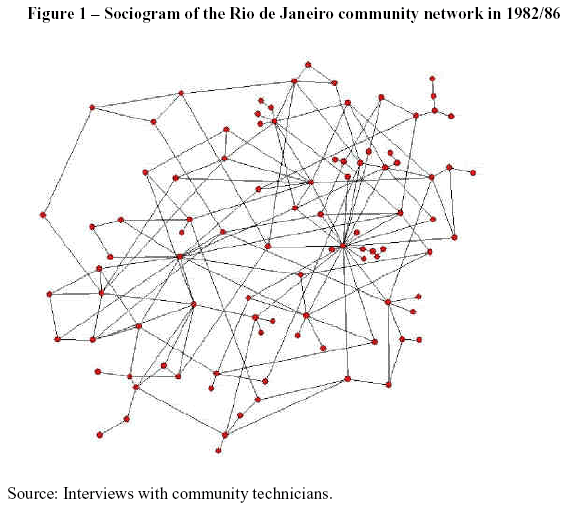
Regardless of that, the policies showed a considerable stability in substantial terms and the presence of politicians and technicians from outside the community in important institutional positions was relatively small. Along the years, the transformation of the community occurred by generational dynamics and internal political struggles, with small effects from the outside, except when associated to the intra-community conflicts. I have credited that insulation to the institutional format of the state agency – a state company with its own revenue, strong career patterns, well-delimited bureaucratic identities and quite rare migrations to and from the private sector and the political realm (Marques, 2000). Several of these processes are inscribed in the community network, as we will see in a moment. The community network in Rio de Janeiro reached 154 individuals at its peak with the general features presented in the following sociogram.
The second study analyzed urban infrastructure policies in the city of São Paulo, including urbanism, the opening of streets, their paving, drainage works, the canalization of small rivers, and the building of bridges and tunnels. These policies were developed by a municipal office from 1975 to 2000 (Secretaria de Vias Públicas – SVP). The first policy, hence, was developed by a state-owned company and had a metropolitan coverage, whereas the second one was developed by a direct local administration agency and had municipal reach. In the second case, the agency depended on the municipal budget, did not have strong institutional boundaries or a strong career pattern, and experienced strong migrations from and to other parts of the government and the private sector. As we will see, these institutional differences are very important, not only to explain the cases, but also to get more theoretical results about the relationship between networks and institutions.
]]> The political scenarios were also very different. In the case of São Paulo, a single right-wing political group controlled municipal politics during the most part of the period. This happened first because the governor appointed the mayors during the dictatorship and therefore three of the four appointed mayors belonged to that political group. But the situation remained in a very similar way after the return of elections, and three of the four elected mayors belonged to that same right-wing political group.12 Only during two administrations, therefore, there was a real change in the composition of the municipal government and in the control over institutional positions. Additionally, infrastructure policies in São Paulo are central in local politics, both because the local government induces the growth of the city by road construction (instead of planning it effectively by means of zoning), and because political campaigns' financing is heavily associated to donations of public contractors of those works, both legal and illegal (and associated to corruption schemes).As both a consequence and a cause of that centrality, the policy community of infrastructure in the city is very close to the right-wing political group that controlled local politics for the major part of the period. They are so close that one of the right-wing mayors – Reynaldo de Barros - was also the secretary of infrastructure in other three administrations. During left-wing governments, hence, technicians and politicians from outside the community occupied a great portion of the institutional positions, in a strategy of isolating the groups of the community that were sympathetic to the political opposition and allowing a change in the contents of the policies implemented by the agency. As we will see in the next section, those decisions can be seen in the network of the community.
That goal was apparently achieved, since the research found substantial differences in the contents of the policies delivered by right and left-wing policies, allowing us to sustain the ideological difference, yet established by the political parties in the Brazilian political scenario, in the sense of greater or smaller concerns about social redistribution in State's actions as defined by Bobbio and Cameron (1997). The difference between right and left that is considered here, therefore, follows not only broad political party positions, but also the contents of the policies during different administrations. In right-wing administrations, the policies were typically concentrated in large public works, contracted with big private companies and located in the richer areas of the city. In left-wing administrations, policies tended to be dispersed in a larger number of small works, located in a more peripheral pattern and contracted with a larger number of smaller public contractors. All those results were statistically significant. Apparently, the patterns of relationship with the private sector were also different, considering corruption denunciations in the press. This element is also present in the network of the community and in the structural positions occupied by directors and private companies in different governments.
The São Paulo network was larger and more complex than the one in Rio de Janeiro, comprising 238 individuals with the general features presented in the following sociogram.
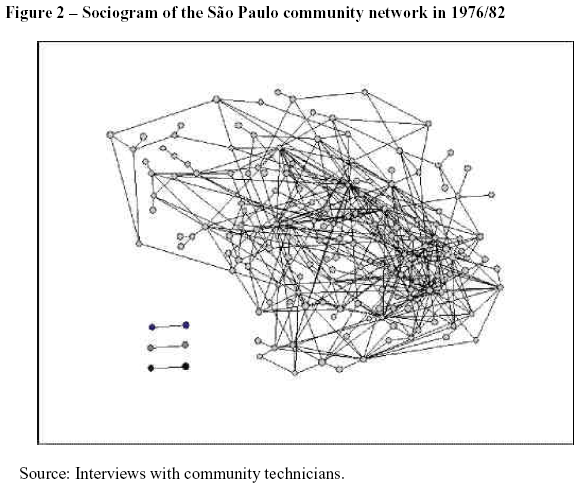
Compared to Rio de Janeiro, therefore, the case of São Paulo involved a much less insulated agency, was influenced by electoral politics much more strongly and showed more intense changes in the contents of policies, explained by the political decisions of policy makers, but implemented by the operation of the community network in directions that were compatible with those changes.
Having presented the development of both the researches and the two policies, we may now discuss the results associated to the relationship between the networks and the State. The presentation of the results is organized around the two broad arguments about the State fabric I want to sustain:
1. Continuity and rupture in the networks - Due to the State fabric, the settings in which public policies are developed are more stable than usually considered by the policy literature, leading to permanence in time and strong resilience against change.
2. Relational power in the State fabric - This structure provides the individuals with access to a specific kind of power resource directly associated to the positions in the structure of the networks. Those resources are tradable with other power resources.
For obvious reasons, further details about the policies and the political dynamics in each case are presented only when strictly necessary.
Continuity and rupture in the networks
Generally speaking, the presence of networks is an important element of stability in policy communities, helping to maintain the administrative capabilities and the technical memory throughout time. As a matter of fact, according to this point of view, building dense networks in policy sectors is part of the processes that create policy-implementing bureaucracies, such as suggested by Schneider (1991). At least three important consequences emerge from this process: networks are centrally involved in the building of institutions and organizations; the transformations of those organizations are associated to network transformations in processes that involve generational dynamics and exogenous changes, but also political choices; and thirdly, characteristics of some network structures lead at the same time to intense clustering and connectivity, even in moments of large changes in ties, making the State fabric's general characteristics resilient and strongly inertial. Let's observe these consequences separately.
Firstly, institutional capacities may be created by patterns of individual ties, as well as institutional ones. This element goes against the great majority of the Brazilian social sciences literature, which regards the relevance of personal relationships in the public order as an expression of the maintenance of an outdated political order in Brazil. In my opinion, however, it seems more profitable analytically to consider such dimension without a priori normative judgments and to investigate it empirically. In doing so, we may end up with a different understanding of the issue. In the Rio de Janeiro network, for instance, one may observe that the type of ties that grows faster in the period is institutional/professional (Chart 1). This suggests that the processes of institutional building are not always incompatible with environments that are strongly based on personal relations.
]]>
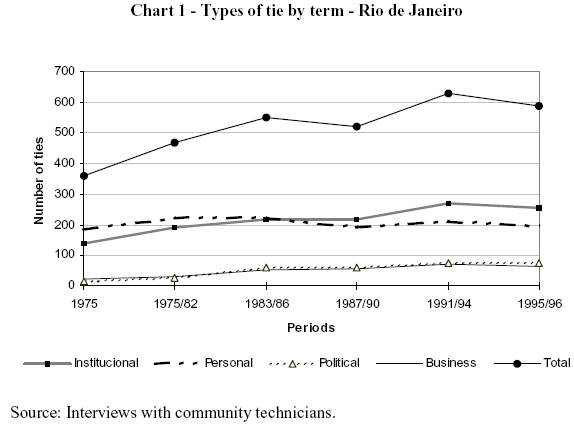
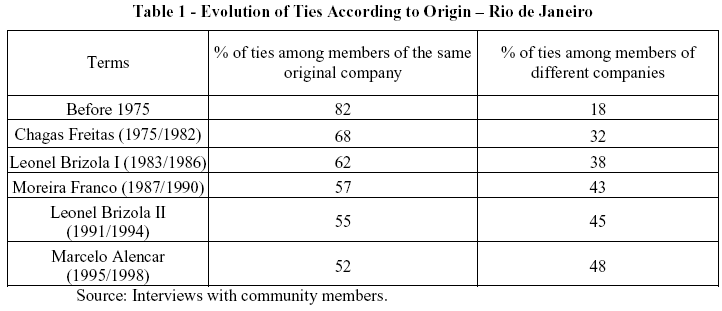
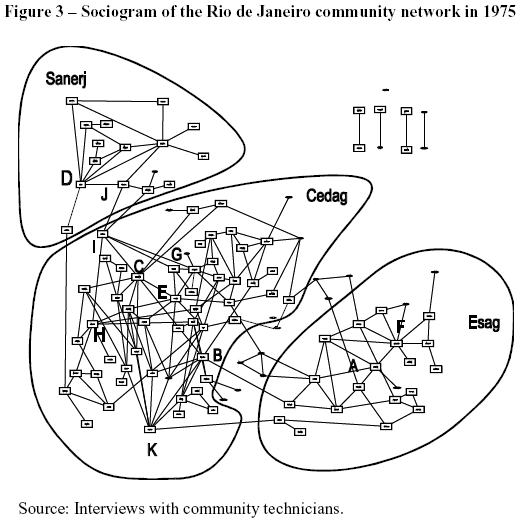
More than that, the Rio de Janeiro case suggests, in fact, that the network can be an important element in the processes of institutional building itself. As stated before, the company that undertakes the policies – Cedae – was created by the merger of three other existing state-owned organizations. The interviews suggested that this process was full of conflicts, but evolved to a sole organization, with its own institutional identity, insulation and technical culture. The structuring of the new company had also a relational dimension, since the merging process caused (and was politically enabled by) the merging of the network itself, although this process took time and happened slowly (Table 1).
As we can see, the participation of ties with individuals that have worked in the same original company tended to decrease over the years, and with other increased strongly, showing the relevance of ties in the formation of the new organization. At the end of the period, however, the presence of ties with individuals from their companies remained high, proving the strong resilience of relational patterns.
At the moment of the merger of the companies, the network of the community resembled what is shown in Figure 1 above. As we can see, the individuals that belonged to different companies occupied, at that moment, very different regions of the network. Through the governments, the sociograms show an increasing interpenetration of the networks of the three companies, making it impossible to represent them as in Figure 1.
]]>
This dynamics also reminds us that networks change over time, thanks to the formation and destruction of ties. In policy networks, in particular, this process tends to occur in a concentrated way during administration changes. However, there are broader processes of transformation in the networks, especially due to generational dynamics. As expected, the arrival of cohorts into/from bureaucracy and politics affects the networks by including/excluding new members, or by dismounting cohesive groups.13 The groups are sets of individuals or entities with several ties to each other and a similar relational pattern with other network peers and that, in the case of these researches, were delimitated by cluster analysis (Marques, 2000). The interviews suggest that they usually have common political identities or may engage in collective actions, but this is not part of their definition. Within the networks, the groups differ in power resources, not only because of who is in office, but also because of their network locations, which grants easier or harder access to specific portions of the relational fabric. We will return to the discussion later on.
In Rio de Janeiro, the political changes in the State executive from the first period to the second meant the loss of the hegemony over the policy for the most important political group in the first mandate (who was responsible for the merger of the companies). The political heirs of this group were two other groups that, however, could not control the policy. Only one of these groups maintained its relational importance and continued to polarize the network throughout the whole period. The group that polarized the network during the rest of the period had no connection with them, and emerged from the association of institutional positions and political ties.
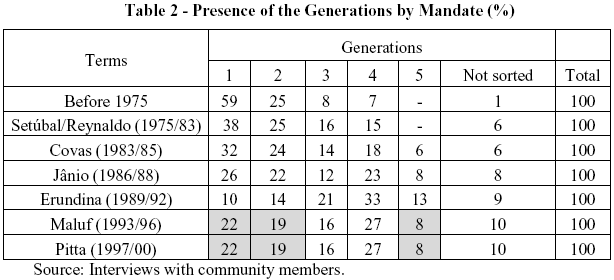
This generational dynamics, however, does not happen naturally and depends on political choices. The case of São Paulo, illustrated by Table 2, shows this eloquently. In general terms, there has been really a smooth decline of the first and second generations in time, as well as a rise of the fourth and fifth generations during the first four terms. But during the last two mandates, however, the older generations returned and the presence of the younger ones decreased (see highlighted cells). The reason for this is political, since these administrations represented a return of the same right-wing political group that controlled the municipal government at the beginning of the period. Therefore, generational dynamics has its influence, but the situation of the network in each moment also depends heavily on the political decisions.
This is not to say that the transmission of political power between groups is a simple matter of transference. It includes several "assets", some of them material and symbolic, such as the ones studied by ethnographic research by Kuschnir (2000) and Pedroso de Lima (2003) on political-electoral and business legacy transfer, respectively. They also involve, and this is the point here, relational elements, not only associated to the ties themselves, but also to the succession of positions in the structure of the networks. This seems to be important to explain the stability within power structures in organizations and politics.
On what concerns stability, however, another issue should be focused. Until recently, the policy network literature suggested that the main stability-promoting elements were the great amounts of ties an nodes inherited from preceding periods, making their volume in a given period relatively low. Recently, Watts (1999) showed the existence of some mathematical properties of networks that make connectivity increase much faster than the decrease in clustering, when a regular network is subjected to the randomization of ties. For networks with these properties, which the author calls small world, great connectivities (or short average distances) and high clustering are obtained with low randomizing. For our concerns here, the main practical consequence of these findings is that even in moments of intense change in ties (as in government changes), the general structure of the network tends to maintain its general characteristics (not only because there are few changes in each period).14
The application of Watts' ideas to the policy networks of São Paulo and Rio de Janeiro suggests that we have two cases of small world networks. A small world network has high clusterability, but high connectivity (or small maximum distance), both in comparison with a fully random network of the same size. Therefore, if we divide the clustering and connectivity indicators of the theoretical random network by those of our empirical networks, we will find a value close to 0 for the first and close to 1 for the second. In our case, for rendering the argument concrete with some administrations:
]]> Hence, these networks have high connectivity and still high clustering. In political terms, this means that the State fabric is likely to create a strong connectivity pattern and that this pattern tends to be very stable from one government to the next. This may add new elements to the explanation of the difficulties of State reforms, as well as of the inertia of organizational structures. Therefore, even in moments of intense transformation of a network of a particular policy community, the changes will tend to have a local (rather than structural) effect. Such changes may be sufficient to allow a shift in the policies considering the policy preference of who is in office, but generally will not be reproduced over time and the former situation will reappear when the external (political) efforts cease. As we will see in just some moments, this is exactly the case of São Paulo.a) The relationships between the clustering coefficient from the random (theoretical) network and our networks are: Cedae (first Brizola term) – 0.11; Cedae (Marcelo Alencar) – 0.07; SVP (Erundina) – 0.04; and SVP (Pitta) – 0.05.
b) The relationships between the distances from the random (theoretical) network and our networks are: Cedae (first Brizola term) – 0.74; Cedae (Marcelo Alencar) – 0.92; SVP (Erundina) – 0.84; and SVP (Pitta) – 0.86.
Disregarding the State fabric, such as the majority of the policy analysis tradition did, makes this policy dimension unacceptable, suggesting stronger restrictions to actors and lesser inertia to changes in organizations and politics than empirically observed.
Relational power in the State fabric
Although all these elements lead to the structuring of the environment in which policies are produced, the community and its network are continuously transformed by politics, as well as bounded by institutional formats. I will discuss the first element here, and the second element at the end of the article.
The networks build up the State internally, but their influence on the policy process depends heavily on government decisions and electoral results. The São Paulo policy is a good example to be observed, since local politics has been highly polarized between right- and left-wing political parties.15 As I have already stated, the municipal office was occupied by right-wing administrations (both under the military rule and after the return to democracy) during most of the period, but there were two left-wing governments. As we also saw, the network was extremely close to this right-wing political group and during its governments the policy was developed through the network. Left-wing administrations, on the contrary, tried to isolate the network, bringing a significant group of technicians from the outside of the community and trying to handle the network with just some strategic points of entry. Therefore, although the networks are highly inertial and path dependent, the strategic choices actors make may make a difference and allow for the development of different policies.
The type of organizational design of the state agency facilitated this strategy of left-wing administrations, since in this case a municipal office with low insulation implemented the policy, leading to much larger and less defined community boundaries.16 In Rio de Janeiro, a state-owned company with specific administrative staff, a budget of its own, clear organizational identity and strong insulation from political pressures implemented the policies. In that case, the network almost coincided with the organization limits, except for the private contracting sector. Members of the agency ruled even the civil society associations of the community, and their issues and dynamics reflected those from inside the state agency.
In São Paulo, conversely, the data suggested a strong association between the political dynamics that happen inside the network and outside politics. In fact, the analysis of the co-participation of individuals in institutional positions among administrations suggests the existence of a network of administrators close to the right-wing politicians and crossing several terms in many agencies. Among right-wing administrations, there were 171 co-participations, against 31 between right-wing and left-wing governments and 10 among the left-wing administrations.
But how are networks associated to the political and institutional power? Since the networks structure the relationship between agents within the State fabric, the administration of state organizations involves intense negotiations between insiders (who control the knowledge, contacts and positions in the network) and outsiders (mainly politicians and public work and service contractors).17 Those who hold institutional power need supporters inside the community in order to implement policies according to their projects, as well as those interested in contracting with the government need supporters inside the community to heighten their individual odds of making contracts.
The two cases also differ strongly in these respects. In Rio de Janeiro, data suggested a rather polarized network, with strong and important groups controlling different areas of the network and disputing power with each other, polarizing the community. The two most important groups included predominantly individuals coming from the two main former companies merged in 1975. Groups of minor importance in power disputes, but also individuals and groups involved on political mediation, occupied the center of the network.
In the São Paulo case, the network had very low inner polarization. Actually, it had a single core, associated with the aforementioned set of right-wing public administrators. They alternated themselves in the most important institutional positions at the agencies and were located in the same position of the network. It is important to add that the São Paulo network was larger and more complex than the one from Rio de Janeiro, reaching 238 entities and 806 relations against 154 entities and 628 ties of the latter.
]]> As discussed before, as administrations succeed, members of different groups struggle for political (and policy) hegemony within the State fabric using their relations with those who hold institutional power. The groups include individuals with intense relational patterns between each other and similar connections with the rest of the network. An important dimension of power in networks, hence, is the location of the individuals that hold institutional positions.In Rio de Janeiro, where local politics experienced stronger political change18 and the network was more polarized, the location of the most important institutional positions tended to oscillate between the two network poles along with each political change on key executive positions. This situation can be seen on the following figures, representing the network in 1982/1986 (Leonel Brizola) and 1987/1990 (Moreira Franco), with the highlight on those entitled to institutional positions.
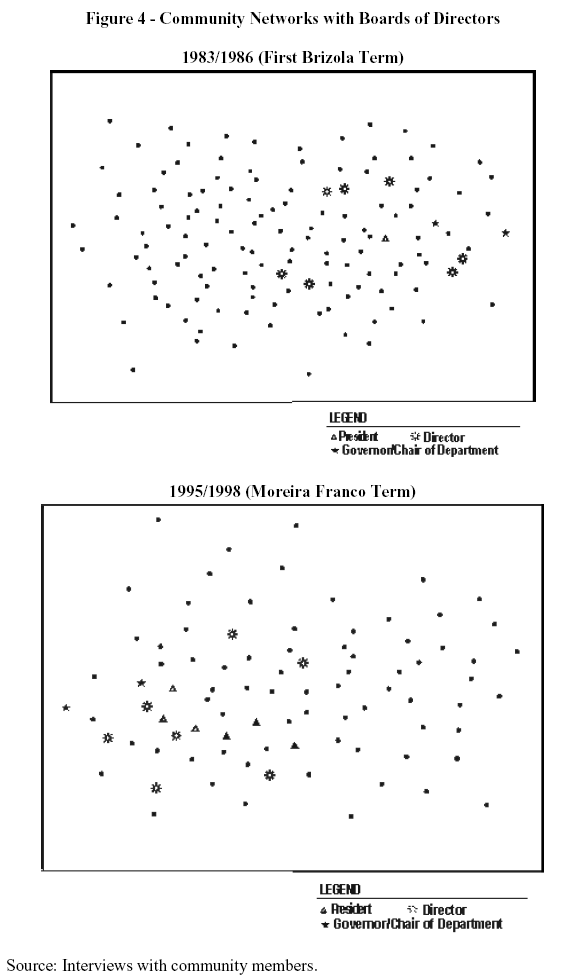
The figures are sociograms with hidden links (to enhance visualization) and the nodes have been located using MDS techniques. These reduce bias and distribute the points approximately in the same position in all administrations, allowing the comparison.19 The general pattern is the same in other administrations.
As we can see, the location of chief institutional positions oscillated from one side of the networks to the other between both administrations. The same situation is repeated in other administrations, and whenever there is a change in the political group that holds office, the board of directors is found on the opposite side of the previous administration. That pattern is easily understandable. When a particular political group held office, it had to choose points of entry in the policy community to enable the implementation of its policies. In doing so, they could not create contacts with network groups that had already been associated to its adversaries. If that same group returned to power later, it activated again the same contacts, reproducing in the network the polarization of the political scenario. By means of that mechanism, the location of institutional positions oscillated from one administration to the next, as shown in the sociograms.
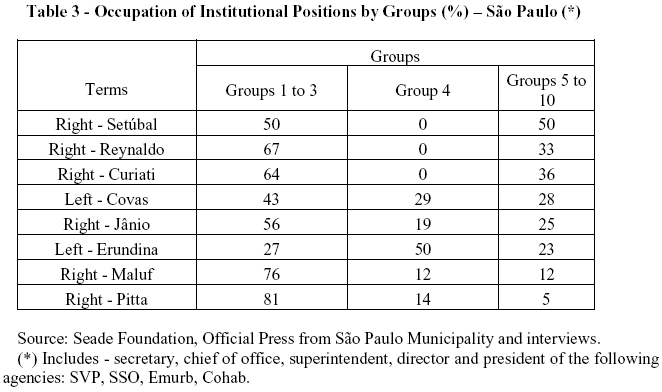
The situation in São Paulo was very different. We shall begin by looking at the occupation of positions by relational groups. The Table 3 below presents the proportional occupation of institutional positions in the community by members of different groups in the network. The groups were delimited by cluster analysis of the patterns of ties, and join individuals with similar relational features. Groups 1 to 3 were very close to the right-wing administrations and formed the network of right-wing public managers I have mentioned before, and Group 4 was the one used during left-wing administrations as point of entry in the network. As we can see, the first three groups hold the most important positions in almost all administrations, with the exception of the two left-wing governments. Those hegemonic groups had sharp political-ideological tendencies, as well as long political association with the political group that dominated the municipal politics during most of the time and basically succeeded each other. These processes were probably reinforced - the long control of the administration by the same political group and the control of the network (and of the institutional positions) by the same relational group.
This result suggests that if a specific political group controls the network, certain administrations may try to avoid implementing their policies using the community network, and import new sections of the network from the outside, connecting them locally in the community. In the São Paulo case, during left-wing administrations, this happened with the connection of outside individuals to the group of technicians presented in the last Table as group 4. This strategy may help to implement policies that would not be supported by important segments of the policy community, neutralizing the bureaucracy found in central locations of the State fabric, but tends to have low influence on community change, with low impact over time when the external efforts cease.
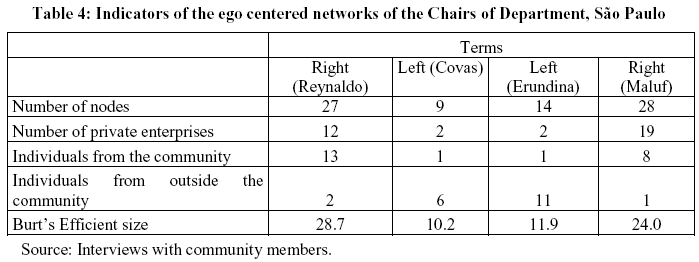
Another form to address the issue is to analyze the location of the main decision makers by administration. The information about São Paulo suggests that the administrations differ strongly regarding that element. If we compare the reach centrality scores of the Chairs of the Department of public works in each administration, we will find an average centrality of 73.5 for left-wing governments against 98 in right-wing governments.20 The same tendency is found in the ego centered networks of the Chairs of the Department in different governments characterized at Table 4 by simple indicators.21 As we can see, the egonets of the most important decision makers in right-wing governments are larger, more populated by private enterprises and by community members than the ones of left-wing governments. We can see additionally by Burt's measure that the egonets of right-wing governments tend to be more efficient in the sense of having less redundancy in ties. The pattern is the same in other administrations.
]]> Finally, we might explore the location of the individuals that hold institutional positions in the network during different governments. The following sociograms present the information for one right-wing and one left-wing administration, with the weak ties suppressed to enhance visibility.22 As we can see, the board of directors in left-wing administrations occupied a very peripheral section of the network, as opposed to the central and connected location of the right-wing's board. The other administrations follow the same pattern over the period.
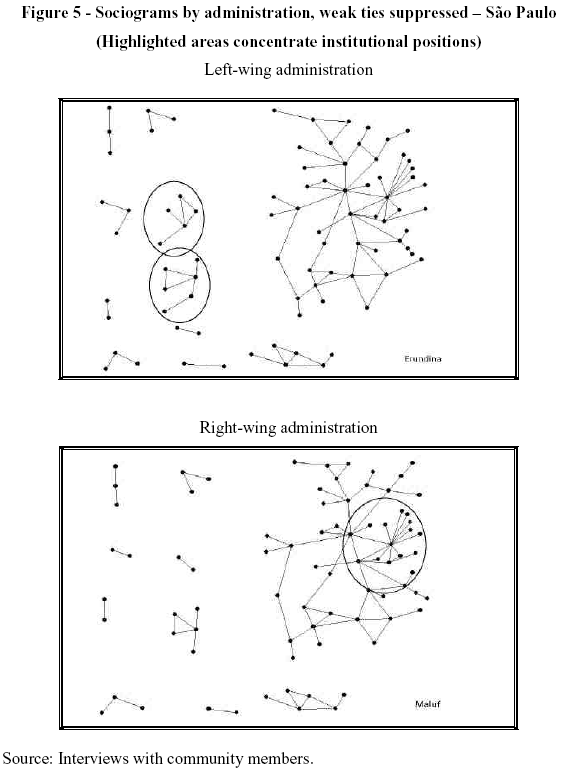
This information is complemented by the observation of the boards of directors' location in relation with the private contractors, including them in our networks by administration. The following sociograms show the sociograms of a right and a left-wing administration (Setúbal/Reynaldo/Curiati and Erundina), with the ties suppressed and the nodes located by MDS techniques. Private companies and board of directors are indicated. Simple technicians correspond to light dots, private companies to black dots, and the most important position nominees in each administration are stars.
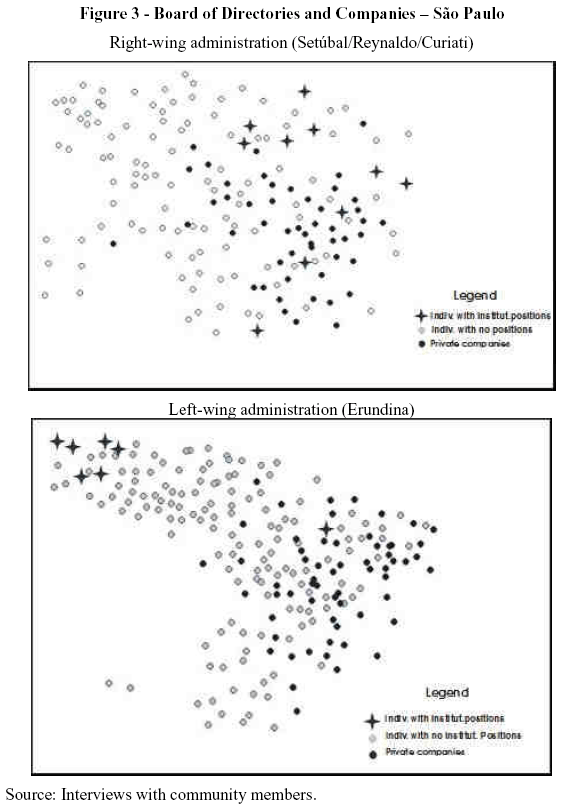
As we can see, in right-wing administrations the board of directors is very close to private companies. In left-wing administrations, on the contrary, the individuals with institutional positions are far away from the private companies. The other administrations follow the same pattern.
It is important to add that I have also subjected the data on contract bids to a quantitative analysis to test whether the locations of private companies in the community networks, or other non-relational variables, influence the amount of contracts a company manages to win in bids. Since the results tell us much more about the permeability of the State than of power and policies, I will not report them here in details. But it is important to highlight that, in the São Paulo case, the pattern of permeability is completely different in right and left-wing administrations.23 In right-wing governments, the financial amounts won in bids were affected both by relational elements and by the size of the companies, measured by the companies' capital. The proximity in the network to the most important institutional positions had also a positive influence on the resources won in bids. In addition, companies whose location provided many primary and secondary contacts generally had a higher amount of victories.24
]]> In left-wing administrations, no network-related variable showed any significance. Among the investigated elements, only the company's capital had a positive influence on the amount won in bids, but with a lower return than in right-wing administrations. Since we have seen that the São Paulo left-wing administrations tried to neutralize the network, the absence of influence of relations suggests that the strategies used by these governments may be well succeeded. As stated before, networks affect the results, but the actors' choices and strategies are also relevant.In Rio de Janeiro, conversely, for the great majority of the cases, the pattern of bids was affected by the occupation of locations which may grant access to information. These involved typically the mid-size companies, characteristic of the community,25 which won more whenever their location in the network provided information about the ongoing processes. This pattern was present over the whole period, confirming that permeability is more diffuse, non-intentional and resilient than suggested by the majority of the descriptions present in the literature.
All this information about networks and power suggests that the two cases can be construed as different configurations of the same logic of power in the State fabric, which I named the exchange of power resources (Marques, 2000). The administration of State agencies comprises the control of, at least, two different sets of power resources.26 The first refers to the occupation of institutional positions, is based on law and administrative arrangements and relates to the ability to rule and command the State apparatus. These resources are essential to power authority, but are not sufficient, because the policy operation remains greatly in state agencies and bureaucracies. These not only implement, but also formulate the policies in several cases, besides the fact that, as Lipszy (1980) showed us, implementation is also decision making. The management of these elements depends on a different set of power resources associated to the locations inside the community networks. I named this power resource as positional power, sustaining that it is embedded in policy networks. From a political point of view, what happens is that the heads of the executive exchange institutional positions (institutional power) for places and locations (positional power) with members of bureaucracies, who get access (through the former) to higher wages, status etc. Technicians, in their turn, lend their positions and relational patterns, enabling policy implementation.
Both in Rio de Janeiro and São Paulo the elected administrators have dialogued with specific communities to acquire support from the networks. The different results of this process in both cities concern to differences on network configurations, on institutional environments and on local power structures. These differences resulted, in one case, in the polarization of the network and in the association with the institutional power (Rio de Janeiro). In the other case there was an association of the major portion of the network to a particular political group, and the use by other political groups involved the import of technicians from outside the community that were connected marginally to the network (São Paulo).
Some concluding remarks: the State fabric and institutions
We have seen throughout this article the main characteristics of the State fabric, and how, by taking them into account, our understanding about state policies is enhanced. Broadly speaking, network analysis conduces beyond the simple concept of a State comprising actors to insert them in specific relational contexts. By doing this, we can see how networks affect strategies, conflicts and alliances, and make some results more probable than others, similarly to what have been already focused by the literature in regard to institutions. Therefore, by taking into account the State fabric we can better understand the interdependence in policies, assimilate the informality found in many aspects of politics, and analyze more accurately the stability and inertia involved in the production of policies.
As we have seen, the State fabric has different effects on political dynamics according to how the relational patterns relate to the institutional designs and the different sets of actors found in each case. The association between these three elements produces important political impacts. Next, I will summarize the main elements investigated, dialoguing with the literature presented in the first section.
Networks structure the State and contribute to the presence of a bigger resilience in political organizations than considered by pluralism. Despite this trend towards stability, organizational and individual actors constantly recreate networks. The importance of the last ones seems crucial, whether for the personal relations between nodes, or for the fact that the State fabric is not created intentionally and temporally, but relates to the long-term trajectories of individuals, something that has been escaping the policy network tradition. On the other hand, contrary to common statements, personal relations can be an important element in promoting institutional building, since they may favor cohesion. This cohesion is not homogeneous and leads to the formation of groups that dispute policy control in a rather polarized way, according to the State fabric configuration.
The community individuals and the groups negotiate their association with the institutional position nominees, providing them positional power to administrate the State and to implement policies, in exchange to power resources emanated from institutional positions. The way this negotiation occur in each case depends on power structure and on institutional formats, suggesting that the same relational structure can provide different results when associated to distinct sets of actors and institutional designs. Only several comparative studies will enhance our understanding of this association.
On the other hand, the State fabric also structures the relation between public and private domains, accounting for most of its permeability. This seems to be much more complex, resilient and accidental than what has been sustained by previous approaches. Again in this respect, though the State fabric does not define results, it strongly constrains and affects them. As stated before, the political choices do matter, and the strategies from those that hold the main institutional positions affect the way permeability occurs.
]]> I will finish with a last remark about the relationship between the State fabric and institutions. In order to fully understand it, we need much more investigations, but apparently the networks tend to be more important and to affect policies more deeply when the state organizations involved are more insulated, and the policy community stronger. As we saw in Rio de Janeiro, where there was a greater insulation, the relationship between institutional power and the groups inside the network tended to be based on negotiations. In São Paulo, conversely, the organizational design apparently reduced the importance of the network in the production of the policy. In more insulated organizations, the strength of community groups tend to be higher, and, in more accessible agencies, the implemented policies tend to express outside elements more strongly.
References
ARRETCHE, Marta. (2003), "Dossiê Agenda de pesquisa em Políticas Públicas". Revista Brasileira de Ciências Sociais, Vol (18), 51. [ Links ]
BACHRACH, Peter & BARATZ, Morton. (1963). "Decisions and non-decisions: an analytical framework". American Political Science Review, 57: 641-651. [ Links ]
BOBBIO, Norberto. & CAMERON, Alain. (1997), Left and Right: The Significance of a Political Distinction. Chicago: The University of Chicago Press. [ Links ]
BOURDIEU, Pierre. (1996). The state nobility. Cambridge: Polity Press. [ Links ]
BREIGER, Ronald & MOHR, John. (2004), "La dualidad y la agregación de categories sociales". Redes, 5 (4). [ Links ]
CARDOSO, Fernando Henrique. (1970), "Planejamento e política: os anéis burocráticos", in B. Lafer, Planejamento no Brasil, São Paulo, Perspectiva. [ Links ]
_________. (1975), "A questão do Estado no Brasil", in F. H. Cardoso, Autoritarismo e democratização, Rio de Janeiro, Paz e Terra. [ Links ]
CARROLL, William & FENEMA, Meindert M. (2002), "Is there a transnational business community?". International Sociology, 17 (3). [ Links ]
DAHL, Robert. (1961), Who governs? Democracy and power in an American city. New Haven, Yale University Press. [ Links ]
DAVIS, Mike. (1992), The city of Quartz: excavating the future in Los Angeles. New York: Vintage. [ Links ]
DEL ALCÁZAR, Mariano. (2002), "On the nature of power: an examination of the governing elite and institutional power in Spain, 1939-92". Public Administration, 80 (2). [ Links ]
DOMNHOFF, William. (1979), The powers that be: process of ruling-class domination in America. New York, Vintage Books. [ Links ]
DRAIBE, Sônia. (1989), "O welfare state no Brasil: características e perspectivas". Ciências Sociais Hoje, 1989, Rio de Janeiro, Anpocs/Rio Fundo. [ Links ]
EASTON, David. (1957), "An Approach to the Analysis of Political Systems". World Politics, Vol. IX, pp. 393-400. [ Links ]
EVANS, Peter (1995). Embeded autonomy. Princeton: Princeton University Press. [ Links ]
FIORINA, Morris. (1977), Congress: Keystone of the Washington Establishment. Yale, Yale University Press. [ Links ]
FREEMAN, Linton. (2002), The development of social network analysis: a study in sociology of science. North Charleston, Booksurge. [ Links ]
Gill-Mendieta, Jorge & Schmidt, Samuel. (1996), "The political network in Mexico". Social Networks, 18. [ Links ]
GRANOVETTER, Mark. (2000), "A theoretical agenda for economic sociology". Article available at http://ist-socrates.berkeley.edu/~iir/culture/papers/Granovetter01_03.pdf. [ Links ]
GREGORY, Robert. (1989), "Political rationality or incrementalism? Charles Lindblom's enduring contribution to public policy making theory". Policy and Politics, 17: 139-153. [ Links ]
HALL, Peter. (1993), "Policy paradigms, social leaning and the State: the case of economic policy-making in Britain". Comparative Politics, 25 (3). [ Links ]
HAM, Christopher & HILL, Michael. (1993), The policy process in the modern capitalist state. New York, Harvest Weatsheaf. [ Links ]
HECLO, Hugh. (1978), "Issue networks and the executive establishment", in A. King, The new American political system. Washington, American Institute for Public Policy Research. [ Links ]
HEDSTROM, Peter; SANDELL, Rikard & STERN, Charlota. (2000), "Meso-level networks and the diffusion of social movements". American Journal of Sociology, 106 (1). [ Links ]
HEINZ, John; Laumman, Edward; NELSON, Robert & SALISBURY, Robert. (1997), The hollow core: private interests in national policy making. Cambridge, Harvard University Press. [ Links ]
HJERN, Benny & PORTER, David. (1981), "Implementation structures: a new unit of administrative analysis". Organizational Studies, 2: 211-227. [ Links ]
HOGWOOD, Brian & GUNN, Lewis. (1984), "Why perfect implementation is unattainable?", in B. Hogwood, Policy analysis for the real world, Oxford, Oxford University Press. [ Links ]
HUNTER, Floyd. (1953), Community power structure. Chapel Hill, University of North Carolina Press. [ Links ]
IMMERGUT, Ellen. (1998), "The theoretical core of the new institutionalism". Politics & Society, 26 (1). [ Links ]
JOBERT, Bruno & MULLER, Pierre. (1987), L'État en action: politiques publiques et corporatismes. Paris, PUF. [ Links ]
Johnson, Richard & Wichern, Dean. (1992), Applied multivariate statistical analysis. New Jersey, Prentice Hall. [ Links ]
JORDANA, Jacint & SANCHO, David. (2003), Policy networks and the opening of the market: the case of telecommunications liberalization in Spain. Madrid, Center Juan March (working paper 188). [ Links ]
KADUSHIN, Charles (1995), "Friendship among the French financial elite". American Sociological Revie, Vol 60 (2), April. [ Links ]
KINGDOM, John. (1984), Agendas, alternatives and public policies. Boston, Little Brown Pub. [ Links ]
KLJIN, E. (1998), "Policy networks; An overview" In: Kickert, W. and Koppenjan, J. (ed.) Managing complex networks. London: Sage Pub. [ Links ]
Knoke, David. (1990), Political networks: the structural perspective. New York, Cambridge University Press. [ Links ]
KNOKE, David; PAPPI, Franz; BROADBENT, Jeffrey & TSUJINAKA, Yutaka. (1996), Comparing policy networks: labor politics in the U.S., Germany, and Japan. Cambridge, Cambridge University Press. [ Links ]
KOGUT, B. & WALKER, G. (2001), "The small world of Germany and the durability of national networks". American Sociological Review, 66. [ Links ]
KUSCHNIR, K. (2000), O cotidiano da política. Rio de Janeiro, Zahar. [ Links ]
LAUMANN, Edward; TAM, Tony; HEINZ, John; NELSON, Robert & SALISBURY, Robert. (1992), "The social organization of the Washington establishment during the first Reagan administration", in G. Moore e A. Whitt (orgs.), Research in politics and society, vol 4, Tóquio, JAI Press. [ Links ]
LaumaNn, Edward & Knoke, David. (1987), The organizational state: social choice in the national policy domains. Madison, University of Wisconsin Press. [ Links ]
LINDBLOM, Charles. (1979), "Still muddling, not yet through". Public Administration Review, 39. [ Links ]
LIPSKY, Michael. (1980), Street-level bureacracy: dilemmas of the individual in public services. New York, Russell Sage Foundation. [ Links ]
LUKES, Stephen. (1974). Power: a radical view. London: Macmillan Ed. [ Links ]
MANN, Michael. (1987), "The autonomous power of the State: its origins, mechanisms and results", in J. Hall (org.), States in History, London: Basil Blackwell. [ Links ]
MARICATO, Ermínia. (1987), Política habitacional no regime militar. Petrópolis, Vozes. [ Links ]
MARQUES, Eduardo. (2000), Estado e redes sociais: permeabilidade e coesão nas políticas urbanas no Rio de Janeiro. Rio de Janeiro, Revan/Fapesp. [ Links ]
_________. (2003), Redes sociais, instituições e atores políticos no governo da cidade de São Paulo. São Paulo, Annablume. [ Links ]
MARTINS, Luciano. (1985), Estado capitalista e burocracia no Brasil pós 64. Rio de Janeiro, Paz e Terra. [ Links ]
MELO, Marcus. (1989), "O padrão brasileiro de intervenção pública no saneamento básico". Revista de Administração Pública, 23 (1). [ Links ]
_________. (1999), "Estado, governo e políticas públicas". O que ler na ciência social brasileira (1970-1995), vol. 3, São Paulo, Anpocs/Sumaré. [ Links ]
MILLS, C. Wright. (1956) The power elite. Oxford Press. [ Links ]
MINOGUE, Martin. (1983), "Theory and practice in public policy and administration". Policy and Politics, 11. [ Links ]
Mintz, Beth & Schwartz, M. (1981), "Interlocking directorates and interest group formation". Ann. Soc. Review, 46. [ Links ]
Mizruchi, Mark. (1996), "What do interlocks do? An analysis, critique and assessment of research on interlocking directorates". Annual Review of Sociology, 22. [ Links ]
MOLLENKOPF, John. (1992), A Phoenix in the Ashes: the rise and fall of the koch coalition in New York city politics. Princeton, Princeton University Press. [ Links ]
NUNES, Edson. (1984), Bureaucratic Insulation and Clientelism in Contemporary Brazil: Uneven State-Building and the Taming of Modernity," Ph.D. diss. Department of Political Science University of California at Berkley. [ Links ]
O'DONNELL, Guillermo. (1988), Bureaucratic Authoritarianism: Argentina 1966-1973 in Comparative Perspective. Los Angeles: University of California Press. [ Links ]
Padgett, John & Ansell, Christopher. (1993), "Robust action and the rise of the Medici (1400-1434)". American Journal of Sociology, 98 (6). [ Links ]
PARSONS, Wayne. (1995), Public policy: an introduction to the theory and practice of policy analysis. London, Edward Elgar Pub. [ Links ]
PEDROSO DE LIMA, M. (2003), "Relações familiares na elite empresarial de Lisboa", in A. Pinto e A. Freire (orgs.), Elites, sociedade e mudança política, Lisboa, Celta. [ Links ]
PRZEWORSKI, Adam. (1990), The State and the economy under capitalism. Chur, Harwood Academic Publishers. [ Links ]
SABATIER, Paul & JENKINS-SMITH, Hank. (1993), Policy change and learning: an advocacy coalition approach. Boulder, Westview Press. [ Links ]
SANTOS, Wanderley dos. (1979), Cidadania e justiça. Rio de Janeiro, Campus. [ Links ]
SCHNEIDER, Ben. (1991), Politics within the State: elite bureaucrats & industrial policy in authoritarian Brazil. Pittsburgh, University of Pittsburgh Press. [ Links ]
SCHNEIDER, Mark; SCHOLZ, John; LUBELL, Mark; MINDRUTA, Denisa & EDWARSEN, Mattew. (2003), "Building consensual institutions: networks and the National Estuary Program". American Journal of Political Science, 47 (1). [ Links ]
SKOCPOL, Theda. (1985), "Bringing the State back in: strategies of analysis in current research", in P. Evans, D. Rueschmeyer e T. Skocpol (orgs.), Bringing the State back in, Cambridge, Cambridge University Press. [ Links ]
_________. (1992), Protecting soldiers and mothers: the political origins of social policy in the United States. Cambridge, Harvard University Press. [ Links ]
SMITH, Gilbert & MAY, David. (1980), "The artificial debate between rationalist and incrementalist models of decision making". Policy and Politics, 8: 147-161. [ Links ]
STEINMO, Sven; THELEN, Kathleen & LONGSTRETH, Frank. (1992), Structuring politics: historical institutionalism in comparative analysis. Cambridge, Cambridge University Press. [ Links ]
STEPAN, Alfred (ed.) (1989), Democratizing Brazil: problems of transition and consolidation. Oxford: Oxford University Press. [ Links ]
TENDLER, Judith. (1997), Good government in the tropics. John Hopkins University Press. [ Links ]
TILLY, Charles. (1992), "Prisioners of the State". Historical sociology, 133. [ Links ]
USEEM, Michael. (1983), "Business and politics in the United States and United Kingdom: the origins of heightened political activity of large corporations during the 1970s and early 1980s". Theory and Society, 12 (3). [ Links ]
Wasserman, Stanley & Faust, Katherine. (1994), Social network analysis: methods and applications. Cambridge, Cambridge University Press. [ Links ]
WATTS, Duncan. (1999), Small worlds. Princeton: Princeton University Press. [ Links ]
1 I refer the reader to Marques (2000) for a deeper discussion on the matter.
2 Traditionally, the literature considers the existence of three dimensions of power involving open conflicts, non-decisions and latent conflicts, studied by the pluralism, Bachrach and Baratz (1963) and Lukes (1974). I am not propounding a fourth type of power, but a power resource that operates within each of the three forms of power defined traditionally.
3 For an overview on the stages used by several authors from the 1940s to the 1980s, see Parsons (1995, item 1.10). ]]>
4 For a review on policy networks, see Kljin (1998). For a quick summary of concepts, refer to Knoke (2003), and for a comprehensive set of studied themes, see the dossier in the Journal of Theoretical Politics, 10 (4), 1998.
5 About this see the dossier organized by Marta Arretche in Revista Brasileira de Ciências Sociais, 51, 2003.
6 These issues are discussed in detail in Marques (2000, chapter 1).
7 For a detailed conceptual discussion on the issue see Marques (2000, chap. 1).
8 All government contracts in Brazil must have some summary information published in daily publications called Diários Oficiais. These are the main sources of our information on investments.
9 I decided to separate the collection of the information on ties and types of ties because when I asked them together, the corruption ties tended to be hidden by the informant. For further details, including techniques and data collection, the reader shall refer to the original works.
10 Technically, the connectivity matrices.
11 Consequently there was a network for each administration – five in Rio de Janeiro (Faria Lima/Chagas Freitas, Brizola, Moreira Franco, Brizola and Marcelo Alencar) and six in São Paulo (Setúbal/Reynaldo/Curiati, Covas, Jânio, Erundina, Maluf and Pitta). The first two administrations in Rio and three in São Paulo were collapsed on account of evident memory troubles from interviewees. In order to control previous situations in each community, I created a "Before 1975" period for each case.
12 Although considering the particularities of the Brazilian party system, they belonged to different political parties.
13 In order to analyze the generation effects, I have sorted technicians in each of the researches by the generation they belong to, considering: 1 – oldest generation, with individuals around 80 years old, with no active involvement; 2 – retired employees, around 70 years old, some involved in activities; 3 – individuals around 60 years old; 4 – active individuals, around 50 years old; 5 – younger active individuals, around 40 years old. All ages measured at the time of each research. ]]>
14 Kogut and Walker (2001), for example, showed the high resilience on business network structure in Germany, even under strong changes driven by the recent privatization processes. Conversely, Hedstrom, Sandell and Stern (2000) showed the strong effect of little randomizing on increasing connectivity in the structuring of the socialist party in Sweden.
15 Where classified as right-wing: Setúbal/Reynaldo de Barros, Curiati, Maluf and Pitta; and as left-wing: Covas and Erundina.
16 As a matter of fact, not even the network boundaries coincided with the agency. The trajectories of individuals among important institutional positions in several governments led to the inclusion of the whole São Paulo urban engineering community, including agencies which worked with all types of public works, garbage collection, public building construction and the maintenance of public services and equipments.
17 The final policy beneficiaries were found not to be relevant in the investigated cases. However, in policies more involved in social demands and/or social movements, and implemented by street-level bureaucracies (Lipsky, 1980), they may have higher influence.
18 The politics in Rio de Janeiro was stressed by an oscillation on the political spectrum of the state governors: Faria Lima/Chagas Freitas/Leonel Brizola/Moreira Franco/Leonel Brizola/Marcelo Alencar; or in terms of political parties: Arena/Mdb/Pdt/Pmdb/Pdt/Psdb, alternating the political groups that control the state executive.
19 Technically, there is no guarantee that the positions are exactly the same, but the detailed analysis of cases suggests that this happens approximately in the majority of the points and was regarded as precise enough for the comparative use of this article. The technique is known by multidimensional scaling (MDS), a method of multivariate analysis that reduces the number of variables in a data set, simplifying the general pattern and increasing visibility. About MDS, see Johnson and Wichern (1992) and about its application on network analysis, see Wasserman and Faust (1994).
20 Reach centralities are network simple statistics: the greater the score, the higher is the centrality, and the closer is the individual to the rest of the network. The differences between means of left and right-wing administrations are significant to 95% of confidence. See Wasserman and Faust (1994).
21 Ego centered networks are centered on each individual and include just the node directly linked to them and the ties between those.
22 Tie strength was measured by the relative frequency of their citation.
23 All reported results are representative in statistical terms in regression models. For details see Marques (2000 and 2003). ]]>
24 Primary ties are the direct connections of nodes and secondary ties are the connections of the nodes directly connected to the node in question.
25 As opposed to large companies, typically involved in federal public works (of water dams and hydroelectric power plants, for example), and which appear at the community during periods of crisis of those larger markets.
26 In abstract terms, this division is compatible with the one established by Mann (1987) between despotic and infrastructural power.