Uma classificação socioeconômica para o Brasil
Un classement socio-économique pour le Brésil
José Alcides Figueiredo Santos
]]> Translated by André Villalobos
ABSTRACT
This article presents a new socioeconomic classification for Brazil, applicable to the national social statistics, exposing its theoretical foundations and the operational criteria used in the construction of its empirical categories. Built on a social class approach, this classification intends to contribute to the characterization, description and explanation of the production and reproduction of the durable inequalities that permeate the highly unequal Brazilian society. Using micro data from the 2002 National Household Survey, the article presents the relative distribution of the class categories in the Brazilian society and its income gaps. Finally, it points out some importants results of the process of construct validation of this typology.
Keywords: Socioeconomic classification; Social class; Social structure; Class typology; Brazilian society.
RESUMO
Este artigo apresenta uma nova classificação socioeconômica para o Brasil, aplicável às estatísticas sociais nacionais, expondo os seus fundamentos teóricos e as soluções operacionais consideradas na construção das suas categorias empíricas. Construída na perspectiva de classe social, esta classificação pretende contribuir para a caracterização, a descrição e a explicação da produção e reprodução das desigualdades duráveis que permeiam a desigual sociedade brasileira. Usando os microdados da Pesquisa Nacional por Amostra de Domicílios (PNAD) de 2002, apresentamos a distribuição relativa das categorias de classe na sociedade brasileira e suas distâncias de renda. Por fim, são realçados alguns resultados relevantes do processo de validação de constructo desta tipologia.
Palavras-chave: Classificação socioeconômica; Classe social; Estrutura social; Tipologia de classe; Sociedade brasileira. ]]>
RÉSUMÉ
Dans cet article, on présente un nouveau classement socio-économique pour le Brésil, applicable aux statistiques sociales nationales, exposant ses fondements théoriques et les solutions opérationnelles considérées dans la construction de ses catégories empiriques. Construite dans la perspective de classe sociale, ce classement prétend contribuer à la caractérisation, description et explication de la production et reproduction des inégalités durables qui prévalent dans la hautement inégal société brésilienne. En utilisant les micro donnés de la Recherche Nationale de Domiciles de 2002, l'article présente la distribution relative des catégories de classe dans la société brésilienne et ses distances de revenu. Finalement, sont soulignés quelques résultats importants du procédure de validation de cette typologie.
Mots-clés: Classement socio-économique; Classe sociale; Structure sociale; Typologie de classe; Société brésilienne.
Introduction
This article presents a new socioeconomic classification - applicable to the national statistics of Brazil –, exposing both its theoretical grounds and the operational solutions taken into account in the construction of its empirical categories. Such classification is an instrument that might significantly contribute to a better characterization, description and explanation of the production and reproduction of social inequality in Brazilian society’s concrete conditions. [1] It has been successfully submitted to a process of construct validation which has explored the conditioning effect exerted by the sphere of class inequality, measured by such typology, upon race inequalities in Brazil (Figueiredo Santos, 2005).
The sociological approach in conceptualizing and measuring social classes has much to contribute to the understanding of the configuration, evolution and consequences of socioeconomic divisions and their relationships with other forms of durable inequalities which permeate the highly unequal Brazilian society (Tilly, 1999). So far, however, Brazilian sociological analysis has not been sufficiently engaged in empirical research, on a national scale, directed to the study of socioeconomic divisions characterizing the country and their consequences for people’s lives.
]]> Updating and improving the typology adopted in Estrutura de posições de classe no Brasil (Figueiredo Santos, 2002), this article transcends a purely academic interest, intending to introduce in the Brazilian social statistics agenda the concern with the construction of a national socioeconomic classification in the perspective of social class analysis. Such a classification is to be understood as an analytical tool aiming at monitoring the social structure, elucidating contingencies that affect the “social conditions” of the country, and evaluating the impact of social and economic policies upon different social groups.Public policies with focus on the question of social welfare, for instance, cannot be assessed without the understanding of the determining factors, expressions and consequences of social inequality. In this sense, and intending to stimulate a similar orientation in Brazil, this initiative follows a new trend in social statistics, especially in the European Union, that seeks convergence with the sociological approach for the conceptualization and measurement of social class. [2]
The article initially reviews Erik Olin Wright’s and John Goldthorpe’s schemes of classes as well as the categories of social class used in the National Statistics of the United Kingdom, which are incorporated in the Eurostat Project, aimed at harmonizing the socioeconomic classifications adopted by the nations of the European Union. It also proceeds to an elaboration on the theoretical dimensions involved in the design of the classification and shows the operational solutions for the construction of empirical categories of class. Furthermore, based on the new solutions achieved and on the micro-data of the PNAD (National Household Survey) 2002, it presents the relative distribution and the patterns of income of the class categories in Brazilian Society. Finally, it offers some concise comments on the main substantive outcomes of the construct validation process concerning that measurement instrument for the concept of social class.
Schemes of class and socioeconomic classifications
Sociologists Erik Olin Wright and John Goldthorpe have developed the most well-known conceptual and operational schemes of social class addressed to the analysis of sample data surveys in contemporary sociology (Crompton, 1998, pp. 54-76). For Olin Wright, social class represents a special form of social division created by the unequal distribution of powers and rights over the relevant productive resources of a society. The existence of such division generates systematic consequences for peoples’ lives and the dynamics of institutions. Class condition affects individuals’ material interests, life experiences and ability for collective action. The determining power of class position is effective in conditioning the access to productive resources and in molding life experiences in the spheres of labor and consumption. What one has (productive assets) determines what he gets (material well-being) and what he ought to do for getting what he gets (opportunities, dilemmas and options). Molding experiences in the spheres of labor and consumption and determining life opportunities, these two primary processes generate secondary effects (health standards, attitudes, etc.). Considering the consequences of class position for peoples’ lives, Olin Wright’s analysis emphasizes the notion of material interests. As a result of the nature of powers and rights over productive resources, one faces a structure of opportunities, dilemmas and tradeoffs in the pursuit of his material well-being (endeavour, leisure and consumption).
The notion of exploitation intends to offer a diagnostic of the process through which inequalities of rewards are generated by inequalities in powers and rights over productive resources. Exploitation is characterized by the fact that a group gets economic benefits at the expense of another by means of the appropriation of the latter’s labor outcomes. This appropriation represents the determining mechanism which explains that the exclusion of control over productive resources translates itself into an inverse and differentiated well-being amongst social classes. However, in absence of a process of appropriation of the effort involved in labor activity, there is economic oppression, but not exploitation, although there may be deprivation and exclusion. The event of the appropriation of labor outcomes introduces a dependence relationship of the explorer vis-à-vis the activity of the explored in the sphere of the labor process. This means that the latter has a kind of social power that can be used in the struggle for his interests. Involving social power interactions between actors, the appropriation of labor effort requires direction and control over labor activity within the social organization of production. Systems of exploitation always involve a confrontation of options (tradeoffs) between coercion and consensus as mechanisms for the extraction of labor effort (Wright, 1997; 2004a; 2005).
Olin Wright develops a basic typology of class in capitalist society based on the ownership of capital assets, the dissimilarity of control over qualification assets, and the relationship to the exercise of authority within the production process. Such typology is shown in Figure 1, where we can see the criteria of class division between and within the categories of owners (hire or not hire labor) and employees (exert or not authority, and possess or not scarce qualifications). The ownership of capital assets has a structural prevalence in relation to the other forms of class differentiation. Qualifications and skills represent productive assets, frequently attested by credentials, which enhances the power of complex labor force on the markets and within the labor processes. Expert professionals have a privileged status in the process of appropriation because of their strategic position in the organization of production, as knowledge holders, and in the organization of labor markets, as owners of a scarce form of labor force. On the other hand, the positions of strategic command and authority within the social organization of production enable their occupants to demand a portion of the social surplus. The exercise of authority under delegation from the employer’s organization, particularly by managers, represents a source of power attached to their position, therefore giving rise to a problem of control/incentive of these agents. Managers have a privileged place in the appropriation process, since they stand in a sort of confluence of the relations of domination and exploitation. As it may be verified through the presentation of the typology, the working class corresponds to those salaried workers who are neither managers nor experts (Wright, 1997, pp. 17-25).
]]>
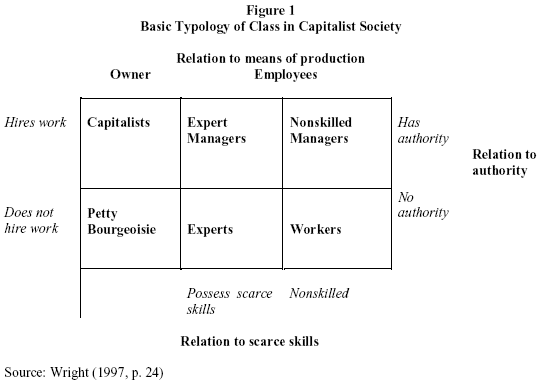
The three dimensions of the basic typology may be considered, by methodological option, as a “trichotomy” in which three different positions are distinguished: dominant, contradictory, and subordinate. The intent of such methodological solution is to create a typology in which the asymmetrical positions (for instance, manager and worker) are relatively well measured. The intermediate categories concentrate the ambiguous situations and the deficiencies of measurement. In fact, a trichotomic variable is created to capture and represent a theoretical dichotomy. Considerations associated to the limitations of sample size, nature of the available data, and analytical context may generate different combinations of these three fundamental factors of class differentiation in contemporary capitalist society (Wright, 1985, p. 149; 1989, p. 36).
Olin Wright acknowledges that analysis based on data obtained by sample surveys face serious limitations in dealing with the extreme poles within the class structure – the large capital and the chronically excluded population -, which represent very important dimensions of class differentiation and of the Marxist critique of Capitalism (Wright, 1997, pp. xxx-xxxi). The increase in the research’s degree of comprehension, enlarging the notion of economic activity or incorporating certain forms of economic inactivity, may relieve part of the problem concerning the contingent of those excluded from employment. In my previous study (Figueiredo Santos, Estrutura de posições de classe no Brasil. 2002), I have considered the existence of the categories of precarious self-employment and of surplus worker (unemployed). The presently prevailing classification in the United Kingdom National Statistics defines a category of “never employed and long-term unemployed”. In turn, the question of studying the large capital shows much more complexity. John Scott warns about the necessity that a class scheme includes all the relevant categories, even if the conceptual category of controllers of corporate assets appears as an empty cell in the majority of data surveys reported (Scott, 2002). The adequate understanding of the “capitalist class positions” in contemporary society, however, implies the study of the structures of control of great corporations, in a context in which impersonal forms of ownership and control prevail; forms that, without loss of economic power, generated a managerial reorganization of the capitalist class (Scott, 1997). This kind of study cannot be adequately carried out through surveys of sample data centered on the household.
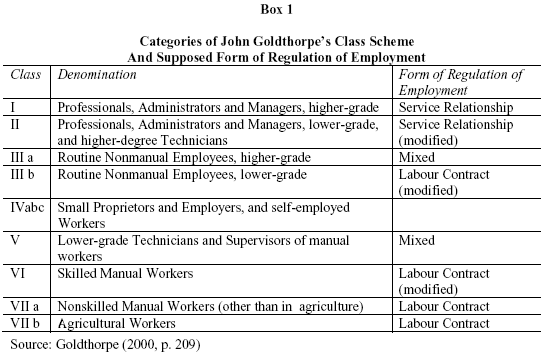
John Goldthorpe regards modern societies, based on the institutions of private property and labor market, as reproducing class divisions derived from the nature of relations and conditions of employment. He elaborates a class scheme (Box 1) whose purpose consists in “differentiating positions within the labour markets and production units or, more specifically, one could say, differentiating such positions in terms of the employment relations they entail” (Erikson & Goldthorpe, 1992, p. 37).
In its first level of elaboration, the scheme presents the basic distinctions between the conditions of employer, self-employed, and employee. The class of the large employers, or great bourgeoisie, is settled within the service class I, forming a bloc with the managers and professionals of higher rank. Goldthorpe admits the existence of an “elite” class of largely propertied owners, but, in practice, taking into account its slight numerical dimension, such a category is not considered separately in his class scheme. An excessive concentration on the labor market makes him minimize the distinct class situation of those who control large capitals (Scott, 2002). Class distinctions are introduced among employees because employment relations have become organized in terms of heterogeneous principles, implying different market and labor situations. Goldthorpe’s class scheme differentiates the class positions of employees according to the form of regulation of the employment relation or, in other words, in correspondence to the nature of labor contracts. Labor contract represents a “social relation” in which the employee, in exchange for remuneration, agrees in submitting to the authority of the employer or his agent. Variably but substantially, labor contracts are implicit or incomplete contracts. The main purpose of the employer is to induce maximum effort and cooperation in the performance of the tasks assigned to the employee. However, he faces two sources of contractual risk – the degree of difficulty involved in monitoring that performance and the degree of specificity of the human assets (expertise and skills) – that condition the form of regulation of the employment relation (Goldthorpe, 2000, pp. 211-214).
]]> A key-differentiation is established between employments regulated by a service relation and those based on labor contracts properly. The nature of the employment relation involves the mode of exchange of work activity [trabalho] for rewards. In the service relation, employees share work situations characterized by a substantive degree of autonomy and freedom, which, in the case of managerial functions, are associated to the need, on the part of the employer’s organization, to delegate authority; and, on that of the professional functions, to make use of their specialized knowledge and skills. There is a situation of information asymmetry between these employees and the employer, which turns ineffective or unfeasible, for the latter, a strategy of surveillance/monitoring. These employees offer their services to the employer’s organization in exchange for “compensations” that incorporate important prospective elements besides salary gains, as ascendant career trajectories and incremental remuneration scales. The labor contract relation, in its turn, represents a specific and relatively short term exchange of labor for money. Employees offer more or less discontinuous quantities of labor, under the supervision of the employer or his agent, in exchange for wages that are calculated on a basis of “unity” or “time”. In addition, the class scheme conceives the existence, among employees, of “intermediary” class positions, in the sense that their employment relation combines, in a mixed form, rules arising from the service relation and from the labor contract (Erikson & Goldthorpe, 1992, pp. 41-44).Goldthorpe avoids the extreme interpretations that consider contractual relations solely from the perspective of exploitation/conflict or from the viewpoint of efficiency/harmony. Interests of employers and employees are not treated as being “fundamentally” in harmony or in conflict. He considers the existence of a central tendency of the employers to act rationally, in the sense of making their organization viable and successful. Contractual relations may be seen as unfolding either as a zero-sum or as a positive-sum game - what, depending on the circumstances, they effectively are (Goldthorpe, 2000, pp. 209-213).
Both Goldthorpe’s and Olin Wright’s class schemes consider the importance of property, managerial power, and skills. The two alike regard the relation between capital and labor as defining the main axis of class relations in capitalism. They equally emphasize the importance of social categories – professionals, managers and executives, bureaucratic officers, highly qualified employees – that do not properly fit in the polarized class relations between capitalists and laborers (Wright, 1994, p. 92). Since the empirical categories of analysis are frequently underdetermined by the theoretical model of reference, Wright’s class structure matrix does not differ dramatically from Goldthorpe’s typology in terms of the practical set of operational categories (Wright, 1997, p. 37).
Between 1994 and 2000, the United Kingdom’s Office for National Statistics (ONS) organized, with the collaboration of the Economic and Social Research Council (ESRC), a comprehensive revisional process of governmental social classifications, which culminated in the adoption, since the 2001 official census, of a sociological approach to the conceptualization and measurement of social class. The new official classification, entitled National Statistics - Socioeconomic Classification (NS-SEC), is centered on the relational aspects of social classes. The widespread use and acceptance of Goldthorpe’s class scheme in sociological research influenced the decision concerning its adoption as the basis for the new classification. The original scheme has been adapted to the main purpose of analyzing data referred to the employment relations and, in the final version, has been applied to the unitary groups of the new 2000 Standard Occupational Classification of the United Kingdom (Rose & Pevalin, 2001). The official NS-SEC adopted by the ONS has eight basic categories. Construct validation studies have shown the existence of a tendency in the class gradient in relation to health inequalities, and confirmed the worthiness of the strategy of treating the condition of “never employed or long-term unemployed” as a separate category in the class scheme (Rose & O’Reilly, 1998, p. 37). With the purpose of offering the researcher the greatest flexibility, the classification has been built in a combinatory format, composed of operational categories that may be aggregated in different analytical variables. Preserving the underlying conceptual model of employment relations, it may be used in different aggregation levels – aggregating nine, eight, seven, six, five and three class categories. It allows, as well, the use of the categories of the operational version, so that the researcher can scrutinize the “inside” of the classes defined in the analytical versions (Rose & Pevalin, 2001, pp. 15-18).
With the prospect of harmonizing the social statistics of the European countries, the Eurostat has engaged the United Kingdom’s ONS with the purpose of elaborating recommendations aimed at the construction of an European Socioeconomic Classification. In January 2001, the group of experts in charge of the task, under the supervision of sociologist David Rose, presented its final report pointing out the desired features for an European classification: unequivocal conceptual basis; categorical form of measurement; based on occupation and employment, but with a variant applicable to the whole of the population, active and inactive; flexible in the use of extended and restricted versions; robust when operationalized in different data-bases; applicable either to individuals or households; and, finally, valid and trustful as a comparative measure (Rose et al., 2001, pp. 11-22). The classification incorporates the sociological proposition that relations and conditions of employment are central aspects in structuring material and symbolic inequalities in modern society. The conceptual basis of the employment relations approach, which characterizes Goldthorpe’s class scheme, is considered as providing analytical transparency and permitting the construction of causal or explanatory accounts correlating socioeconomic position and distribution of life opportunities and well-being. The scheme which has been adopted is a conceptual construction, and its conversion to a working instrument demands the elaboration of rules and instructions allowing the pertinent information to be translated into class categories. The outlined classification takes the form of a hierarchy articulated in two levels. Level 1 has nine class categories and distinguishes itself from the solution adopted in the United Kingdom by reckoning a category of “employers and self-employed in agriculture”. Level 2 has 44 socioeconomic groups, 35 of them directly associated to the nine class categories, with the remaining groups being treated according to other rules. When applied to individuals, the classification covers the whole of the population, since it takes into consideration the different forms of economic activity and inactivity (Rose et al., 2001, pp. 29-56).
Conceptualization and measurement of social class in Brazil
This work benefits from the theoretical contributions provided by Erik Olin Wright within the Marxist tradition of social class analysis and its application to the comparative research of “class effects” in contemporary capitalism. The understanding of the Brazilian social structure, however, has its own challenges. A socioeconomic classification for Brazil must reflect the creative solution of these challenges faced in the process of designing its categories. The specificity of the country’s class structure seems to materialize particularly in the generation of a huge socioeconomic heterogeneity observed through a hypertrophic self-employment segment and the constitution of exacerbated forms of destitution, inside and outside the universe of salaried labor, not to say of exclusion from the social system of production. The following part of this article formalizes the theoretical dimensions and the general analytic considerations providing the basis and orientation for the construction of class empirical categories and segmentations reflecting the Brazilian social context.
Class relations and class categories
The existence of classes is connected to the relational social dimension of a system of production. The different forms of class relations are defined bythe types of rights and powers over productive resources and the correspondent power relations involved in the manner through which people’s activities are regulated and controlled in a system of production. The notion of class relations emphasize the structured patterns of interaction associated with the ownership of the basic productive resources of society. The notion of class localization or class position, in its turn, intends to define the position occupied by the individual within class relations. The line of investigation based on class categories, differently from the study of class relations themselves, reflects a modality of research in which the individual is the unit of observation (Wright, 2005). Taking into account the theoretical criterion of peoples’ relations to the production system, and the marks generated by these relations in the employment structure, the primary distinctions that have been made delimitate, in terms of employment status, the categories of employer, self-employed, employee, domestic worker [empregado doméstico], and worker excluded from the production system. The justification for the distinct category of domestic worker refers to the specificity of the labor dedicated to the production of use values for households, and its weight in Brazilian social structure. On the other hand, the category of excluded or surplus worker has to do with the extent and implications of contemporary exclusionary tendencies affecting the role of the labor force.
]]> Two classes model, complexity and contradictory locationsMarxism conceives owners of capital and salaried workers as the two basic or fundamental classes of the capitalist mode of production. In contemporary capitalist society, however, instead of a simple, binary structure of property rights, complex clusters of power and rights over productive resources are formed. The fundamental power over the allocation of capital assets and the operation of income flows remain under the private control of capitalists, but property rights and powers may be decomposed and redistributed, so that the class relations turn to be distant from the simple, abstract, perfectly polarized form (Wright, 2005). The organization of production and the operation of the labor market gave rise to the formation of privileged positions of appropriation among employees, i.e., to contradictory class locations in which the opposed interests of capital and salaried work intercross. Forming the nucleus of middle class locations, the expert employees appropriate a portion of the social surplus due to their role in the reproduction of the expert systems, similarly to what occurs with the managers, who enjoy comparable privilege because of their place in the hierarchies of command-domination within the production process (Wright, 1997, pp. 19-25). However, it is worth noticing that, in his most recent book, Wright proposes a certain change in the approach to the qualification/credentials dimension, namely that it has to be thought as defining strata within the class of employees, instead of contradictory class locations properly. This reformulation could be due especially to the difficulty in conciliating a relational conception of social classes with the recognition of the gradational nature of the qualification dimension (Wright, 1997, pp. 527-8). Furthermore, it would be the case of putting under discussion the definition of qualification as an “asset incorporated into the labor force” (Wright, 1997, p. 23). The qualification/skills dimension, as understood here, has been taken rather as a socially defined asset and as a component of the labor structure and organization. So, the understanding here emphasized is that its determining power depends both on the occupational and organizational context and on the structures of opportunities generated in the labor market (Sorensen & Kallerberg, 1981; Spenner, 1983). Such a theoretical step allows avoiding the notion of “human capital” in the sense of a productive attribute of the individual, that is, of a productive resource that cannot be dissociated from the person, being transported from a job to another. The delimitation of middle class positions takes the qualification/skills and control/authority components as incorporated into the labor structures.
Control of capital assets admits differentiations in terms of scale and modality of the division of labor. According to Olin Wright’s theoretical justification, the conceptual distinction between capitalists and small employers intends to contrast these two categories on the grounds of the criterion of the division of labor between employer and employees. The typical small employer would represent a holder of capital assets working side by side with his employees, frequently executing the same work, but benefiting from the appropriation of surplus value, whereas the capitalist, in the proper sense of the concept, does not execute the same work as his employees, being fundamentally engaged in the tasks involved in keeping his business going. This demarcation allows considering the category of small employer as a kind of “contradictory location” that would combine simultaneously characteristics of the capitalist class and of the petty bourgeoisie (Wright, 2004b).
Self-employment class composition
The theory of classes faces the challenge of explaining large scale reproduction of self-employment in countries of dependent capitalism, as is the case of Brazil, and of understanding its “return”, in the case of advanced capitalist economies. In the book published in 2002, I have verified and tried to interpret the phenomenon of the high proportion and heterogeneity of self-employment in Brazilian social formation. The petty bourgeoisie is in expansion in the country’s urban areas, with its distribution matching that of the small agriculture, as a consequence of the sectorial transition in the economy, which reduces the weight of agriculture and favors the less capitalized services facing lesser barriers to entry. The reproduction of precarious self-employment, in its turn, may be attributed to the processes which transform part of the available population in surplus population, to the mechanisms of exclusion from the control of the assets economically relevant, and to the existence of interstitial spaces in the market for goods and services (Figueiredo Santos, 2002, pp. 280-282). In the countries of advanced economy, one finds out a “return” of self-employment, but along with the decline of the petty bourgeoisie and of the craft-based self-employment, and with the predominance of a growing heterogeneity in this kind of activity. In fact, in the contemporary reality of the developed countries, self-employment frequently shows itself as an individual activity, increasingly feminine, and involving especially both the professional occupations and domains historically associated with marginal activities. This self-employment does not necessarily lead to the creation of small enterprises and cannot be equated to an entrepreneurial activity (Arum & Muller, 2004). The class decomposition of the self-employment universe took into account, as theoretical criteria of differentiation, the extent of capital assets, the control over qualification/skills resources, and the distinction separating agricultural/non-agricultural sectors.
Ambiguous class situations and order of dominance
In the developed form of Olin Wright’s class typology, in which the three dimensions of class differentiation are trichotomized, there are ambiguous class locations involving skilled workers and non-skilled supervisors, which are viewed as integrating the enlarged working class, and skilled supervisors, considered as compounding the enlarged middle class. On the other hand, Goldthorpe assigns especial value to the role of employment relations and conditions in determining life opportunities and the formation of social consciousness. The inclusion in his scheme of the categories of non-manual routine employees, lesser rank technicians, and supervisors monitoring manual laborers, would be the major point of disagreement separating his scheme from Olin Wright’s, at least in reference to the problematics of proletarization of the class structure in contemporary capitalism (Marshall et al., 1993, p. 103). The distance separating these two class schemes, however, does not seem to be so important when Goldthorpe defines the class condition that polarizes such categories. Non-manual occupations of higher rank are seen as coming close to the managerial/expert nucleus, lower rank non-manual occupations are considered as approaching non-skilled or semi-skilled manual workers, and technicians of lesser degree are regarded as close together to skilled manual workers (Erikson & Goldthorpe, 1992, pp. 35-47). In his well-known study on social mobility and class structure in modern England, Goldthorpe situates technicians of lesser degree and supervisors of manual work as a “blue collar elite” segment of an enlarged working class (Edgell, 1995, p. 30).
The present classification defines class categories in terms of powers and rights exerted over productive resources, and not in accordance with the nature of the employment relation and its form of regulation. The approach here undertaken does not consider the existence of a mixed social configuration of employment relations, i.e., of a sort of “intermediary class” amongst salaried workers, which would combine the rules of a “service relation”, characteristic of the managerial-professional class, with the rules of the “labor contract”, distinctive of the working class. In the Brazilian social structure’s concrete conditions, ambiguous class situations (shade zone) develop between the managerial-professional class and the proletarized working class, and there is an order of dominance which causes the segments involved in those ambiguous class situations to be aligned within an enlarged working class dimension (Figueiredo Santos, 2002, pp. 118-119).
Comprehensive aggregate and segmentation of the working class
In considering the inadequacy of the “model of two classes” and in delineating his own class scheme, Olin Wright has directly incorporated, into the conformation of the class locations, the actual complexity of the manner in which rights and powers over resources and economic activities are distributed. This strategy, however, serves basically the purpose of delimitating the contradictory class locations and distinguishing the working class aggregate. In the already mentioned former study on the structure of class positions in Brazil (Figueiredo Santos, 2002), I have introduced into this typology certain internal divisions (class’ segments or strata) that should give the social configuration of the Brazilian working class a more nuanced gradation. Proletarized workers have been segmented especially according to the kind of work they perform (manual/non-manual) and the sector of the economy (agricultural/non-agricultural) into which they are integrated. The United Kingdom’s socioeconomic classification, nevertheless, considering changes in the nature and structure both of the industries and occupations, rejects the manual/non-manual division as an obsolete and misguiding distinction. Such classification prefers to establish a distinction that does not take into account the occupation’s manual/non-manual character and the sector of the economy where the work activity is performed, stressing the separation between semi-routine occupations incorporating some elements of work autonomy, and routine occupations, in which labor autonomy reaches its minimal degree (Rose & O’Reilly, 1998). This conception presupposes that the form of regulation of employment relations, which is the conceptual basis of the classification, does not depend on the work’s manual/non-manual character, so that the classification would be able to recognize the existence of types of non-manual works less autonomous than certain types of manual works, or of non-manual and manual works subjected to the same form of labor contract. The authoritative study by Duncan Gallie and his collaborators on the employment’s restructuring in England during the 1990’s, showed that “increase in task discretion did not mean reduction in organizational controls”. Control systems, involving both sanctions and rewards, are considered the critical factors creating a “crucially defining difference in class relationship” among workers (Gallie et al., 1998, p. 312). The criterion of task discretion does not indicate in itself a transformation of the class character of the employment relation, but serves to bring about such type of internal stratification of the working class. In reference to this solution espoused by the United Kingdom’s socioeconomic classification, one has to have in mind that the Brazilian PNAD does not provide any explicit indicator of discretion in the performance of work tasks. Anyhow, the criterion of work performed through physical operations, resulting in discrete material outputs, may be rendered operational with the support of the occupational denominations, and would stand for a parameter in the approach to the (restrict) degree of autonomy concerning the specification of the labor process. When the labor activity, even though not conventionally classified as manual, has a clear physical component, with a specific and well defined material output, it allows an easy observation of the worker’s efforts, which are thus subjected to direct external control through measurement and supervision (Goldthorpe, 2000, pp. 215-216).
]]> In fact, the United Kingdom’s new classification system also does not use a direct indicator of discretion. “Well informed” appraisals are made about the modal levels of discretion associated with certain occupational denominations and, then, these levels of autonomy are imputed to all those who are gathered together into these occupations. This situation reflects what, in Olin Wright’s view, would be the biggest methodological problem in modeling measurement of social class; in other words: “to what extent does the analytical strategy involve trying to measure the underlying relational dimensions themselves, or – in contrast – rely on conventional classifications system and then impute relational properties to those conventional categories?” (Wright, 2004b).In delineating and segmenting the restricted working class, the present article has taken a different path compared to our former study. Elements of convergence and similarity of conditions within the restricted working class have been explored, and its segmentation has been made through the delimitation of work roles and tasks which are associated with acute processes of economic destitution. In the Brazilian reality’s concrete conditions, the social division of labor and the operation of the labor market have produced a particularly strong association between the elementary features of work roles and tasks, which can be apprehended by means of the occupational denominations, and the stressing of economic destitution processes. Nonetheless, all the segments of the restricted or “pure” working class – which exclude the ambiguous situations of skilled employees and supervisors – have, as a common denominator, a subordinate position in the domains of the skills systems and of the hierarchies of authority incorporated into the labor structures.
Methodological questions in the construction of the typology
A typology represents a conceptual classification formed by an exclusive and exhaustive set of categories, in which each case belongs to a determined category (exhaustiveness) and none is situated in more than one category (exclusiveness). Categories should be internally homogeneous with respect to the relevant attributes, and clearly separated (and dissimilar) from one another. A typology of class positions is a qualitative classification, which can be generated without quantification or statistical analysis, since its cells represent conceptual types rather than empirical cases. Nevertheless, since a typology is an analytical instrument assisting empirical investigation, a correspondence must be established between the conceptual type and its empirical counterpart. In this typological construction, the adoption of a classical deductive strategy allowing the formation of the concepts was followed by the identification of the empirical cases for each conceptual type (Brailey, 1994).
The typology must be the most appropriate for the elaboration of causal accounts and to allow for the understanding of how class positions perform a mediator and/or moderator role vis-à-vis other variables, and how their effects are mediated and/or moderated through determined specific variables. In order to assure the analytical transparency and the correct stipulation of the causal links, those variables considered as mediators and/or moderators between class position and the generation of determined effects, as education, for example, should not be incorporated into the process of expressing class in operational terms.
The design of the socioeconomic classification for Brazil and the operationalization of its empirical categories
The delimitation of class categories considers the “position within occupation” (according to PNAD’s terminology), or the employment status, conducing to distinguish the positions of employer, employee, self-employed and domestic worker. The transformation of the original variables in order to construct the empirical class categories follows this logic, for they have been obtained through a process of sociological disaggregation of these large clusters. The present classification benefits from the new Brazilian Classification of Occupations [Classificação Brasileira de Ocupações (CBO) – Domiciliar] that has been applied by IBGE (the Brazilian official foundation for statistics) to the Demographic Census of the year 2000, and incorporated into the PNAD from 2002 onwards. This new occupational classification made possible, this time, for instance, the separation between the categories of managers and supervisors. On the other hand, it is compatible with the International Statistical Classification of Occupations (ISCO-88) in terms of the logic of its construction, which is based on the similarity of qualification – considered the level and the area of specialization - required for the performance of tasks and obligations involved in the employment positions (Hoffmann, 1999, pp. 6-7). This Brazilian version achieves a level of detail that shows 519 disaggregated occupational groups, what is advantageous for the researcher making use of micro-data, but curiously it does not delimitate the large cluster of “elementary occupations”, as does the original international classification. In its turn, the treatment of the armed forces (0.4%) followed the ISCO-88 solution, but resulted in impoverished outcomes compared to those of the former PNADs, since it no longer distinguishes the armed forces subgroups, what implied in their exclusion from the present classification.
Box 2 displays the 13 categories and the operational criteria of this socioeconomic classification for Brazil. The version presented here does not consider the internal differentiation of these categories in socioeconomic subgroups, and does not develop a treatment of the different forms of economic inactivity, as that of the surplus workers (unemployed).
]]>
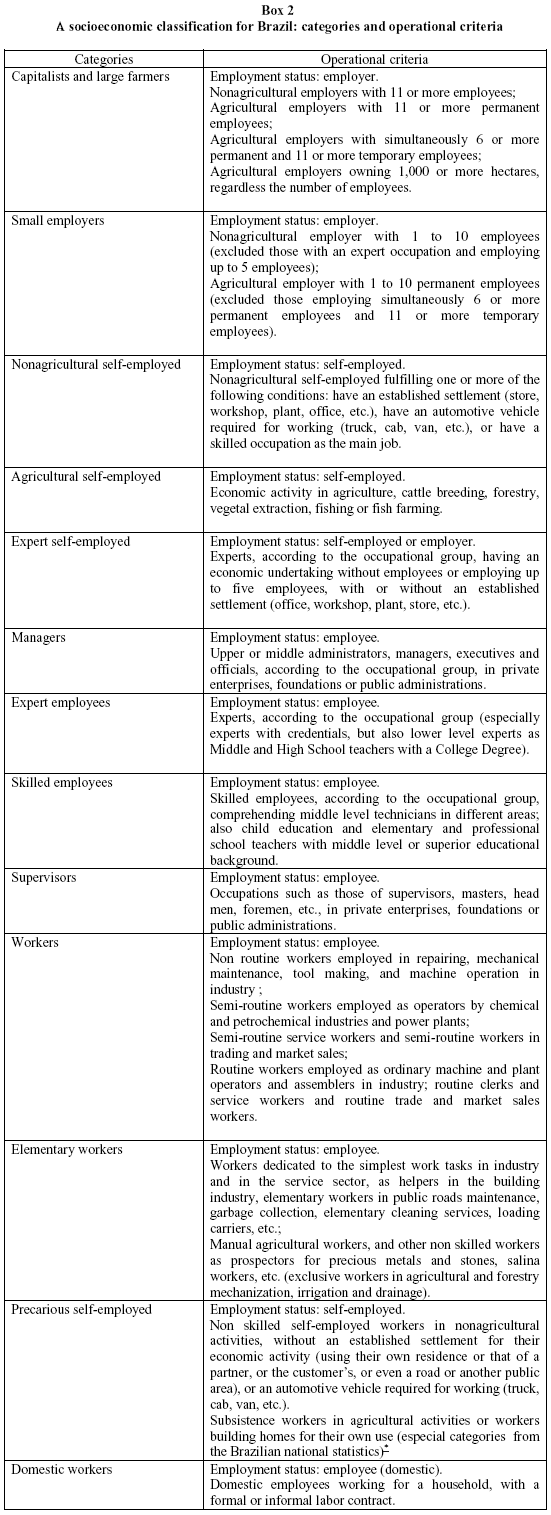
On the other hand, it considers the distinct situation characterizing the owners of relevant capital assets and delimitates a single category of small employers, differently from what was done in the previous study, which attempted to differentiate the situation of the “micro-employers”. [3] The double denomination “capitalists and farmers”, used for designating the most privileged class category, is to be taken not only as a reminder of the existence of agrarian capitalists, but also to point out to the existence, in that category, of large agrarian proprietors controlling large tracts of land, even if employing, in a permanent basis, less than 11 employees in their settlements. [4]
Self-employed workers have been internally differentiated, in a first level, in accordance with the division separating agricultural and non-agricultural sectors of the economy, which may also be seen as a division between controllers of assets in capital and of resources in land, respectively. As for the non-agricultural self-employed, they have been segmented according to criteria referred to the control of physical productive assets and of qualification resources. It might be reminded that the PNAD offers, as an indicator of possession of capital assets, the specification that the enterprise or economic concern has an established settlement.[5] In the definition of the occupational qualification, the treatment adopted has been similar to that accorded to the case of the employees, i.e., based on the same occupational groups, regardless of the years of formal education.
The classification distinguishes the small and highly privileged segment of the autonomous experts. This category is formed not only by self-employed workers, but also by employers having up to five employees. In this case, the central role of these employers’ expert knowledge in the operation of their undertakings has been emphasized.
The self-employed in agricultural activities are composed by producers having access to land and using it to work for themselves without hiring third persons as laborers. Notwithstanding, 10.9% of them, according to PNAD’s data for 2002, have two or more occupations, what may affect the income provided by their main occupation, due to a lesser compromise with their own undertaking. Disregarding the cases of unpaid workers, members of the household, the majority of the original category is composed by landowners (63.8%), but it also includes grantees [cessionários] (14.2%), sharecroppers [parceiros] (9.6%), tenants [arrendatários] (6.9%), and squatters [posseiros] (4.5%).
Non-agricultural self-employed control some “capital” which is materialized in their established settlements or, when they don’t have their own work premises, they benefit from a skilled occupation as middle level technicians - to mention what is considered their typical condition -, although their skills are of a lesser degree compared to those of the self-employed experts. The single criterion of exercise of a skilled occupation, however, has a relatively residual quantitative impact. The main objective of this procedure has been to delimitate more precisely, through a process of contraposition, the category of precarious self-employed workers. Disregarding the cases of unpaid household members, reclassified to this class position, the self-employed with a skilled occupation, but without an established settlement, represent only 0.5% of the entire set of class positions, whereas those with a skilled occupation and an established settlement correspond to 1.0%, and those with an established settlement but without a skilled occupation amount to 5.9%.
The category of precarious self-employed workers aims at roughly delimitating the large segment of self-employed workers destitute of both capital assets and qualification resources, who survive out of the application of their work capacity to the production and/or sale of products or services on the market. Furthermore, this category includes workers producing for their own consumption (4.0%) and workers involved in house construction for their own use (0.2%). Without access to monetary income, such workers personify extreme situations of material destituteness.
Middle class salaried employs, or, in Olin Wright’s definition, privileged appropriation locations are represented by the categories of expert employees and managers. In their turn, the ambiguous class situations amongst salaried workers – in terms of the qualification and authority elements incorporated to the labor structures – are materialized through the positions of skilled employees and supervisors. The treatment of the qualification and skills dimension has represented a quite painful problem, since it seems to show, to a certain extent, a logic of gradation, in the sense that it incorporates more or less of something. This problem even caused Olin Wright’s reconsideration of the theoretical status of the qualification dimension, which led him to treat it as a distinction of strata within the class of employees rather than a contradictory class location as such (Wright, 1997, p. 527). Distinctions among employees, as those separating “experts”, “skilled workers” and “workers”, present complications which are due to the relative dimension of the social definition of qualification as well as to the influence of the labor market’s structure of opportunities in specifying the economic value of qualification. The operational construction of the present classification has adopted a rather “expansive” solution for the category of experts and for that of skilled workers. [6]
In this classification, differently from the previous study, the restricted working class has been divided into only two segments, considered the elements of aggregation and similarity of conditions of each category in the sphere of the social division of labor and on the labor market. The need for differentiating its more destitute segment, that of “elementary workers”, in terms of the nature of their work roles and tasks has been emphasized. It has also been considered that, in the Brazilian social context, it would be more interesting to explore the existing differences between the “standard” proletarized worker and the more destitute “elementary” laborer, assuming that the latter comes closer to the categories of precarious self-employed and domestic servants, in terms of circulation mobility and/or degree of economical destituteness.
]]> 1 shows, in percentages, the distribution of the class categories and their respective average incomes, according to the 2002 PNAD’s data. As presented here, it incorporates the outcomes of the “appropriate” class allocation process of household members classified as unpaid workers. [7] Basically, the average income data aim at pointing out the structural demarcations established by class categories in terms of income differences, yet they will not be explored in this summarization of the results achieved. The inclusion of unpaid workers, members of the household, in the calculation of the average income presented in one of the columns of Table 1, intends to express the patterns of per capita income available for consumption to individuals engaged in the family’s class circumstances. [8] In the case of precarious self-employed workers, a complementary procedure of inclusion involving those with no monetary income has been adopted, so that the category could reflect the extreme degree of destituteness observed especially among those producing for their own consumption [trabalhadores de auto-consumo].
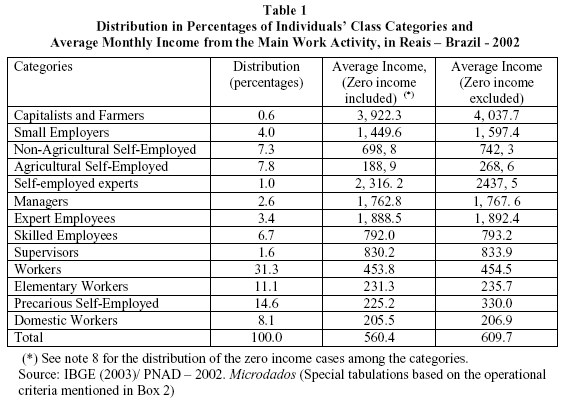
Capitalists form an almost insignificant fragment (0.6%) of the class structure, a result very similar to that found in my former study (0.5%). The weight of small employers (4.0%), in its turn, is slightly higher than their participation revealed by the numbers of 1996 (3.7%). The increase in numbers of expert self-employed, from 0.7% to 1.0%, may be explained by the fact that the new operational solution includes in this category expert employers with up to five employees (Figueiredo Santos, 2002, p.80).
As for the category of expert employees, the classification uses a more expansive operational solution, resulting in a composition of the salaried middle class as comprehending 6.0% of the social structure, a number achieved through computing experts as well as managers in such expanded category. [9] Measurement problems affecting the salaried middle class had already led the former study to present a restrictive solution (4.0%) used throughout that work, and a more expansive alternative estimation (6.6%) (Figueiredo Santos, 2002, pp. 117-21).
Non-agricultural self-employed workers represent 7.3% of the cases, compared to 7.0% found in the previous study. On the other hand, the category of agricultural self-employed corresponds to 7.8% of the cases, against 13.5% in that study. This discrepancy is due, in a large measure, to the inclusion into this category of the workers producing for their own consumption (4.0%), now directly allocated among the precarious self-employed, in order to emphasize this segment’s profound destituteness. Precarious self-employed, in turn, standing in the destitute pole of self-employment, amount to 14.6% of the cases, compared to the previous 14.7% (Figueiredo Santos, 2002, pp. 80-117). [10] It should be remembered that a considerable portion of this last contingent is possibly composed by veiled and degraded forms of salaried labor (Figueiredo Santos, 2002, pp. 124-126).
The enlarged working class, aggregating skilled employees and supervisors, represents 50.7% of the social structure, what corresponds to a result 2.0% inferior to that found in the former study, which was of 52.7%. The divergence between the two studies, however, becomes reduced to 0.6% if considered the more restrict estimate of the enlarged working class, which amounted to 50.1% of the cases, according to the 1996 data. The more important discrepancy refers to the effectives of the restricted working class: 42.7% in the present classification, compared to 47.8% in the former. Part of this “contraction” seems to be associated to a huge enlargement of the contingent of skilled employees, who presently totalize 6.7% of the cases, against 3.8% in the previous study. The former typology considered a category of higher rank non-manual workers (1.9%), close to that of skilled employees, and the important contingent of primary education teachers, with high-school or superior degrees of formal education, is now being included among skilled employees. [11] Notice that part of the “contraction” of the working class between the two studies remains “non-explained” and demands a more accurate investigation. In addition to the problem introduced by changes in the classification itself, it should be the case of examining the relative roles of the reversible floatation of employment levels and the structural process of destruction of employment positions along the period 1996-2002. Finally, the domestic servants amount to 8.1% of the cases, compared to 7.8% in the former study (Figueiredo Santos, 2002, pp. 80 and 120).
]]> Conclusion
The scientific value of the classification presented here should of course be considered according to its usefulness as an instrument for the empirical investigation of the processes of production and reproduction of social inequality. This instrument for the measurement of the sociological concept of social class has been subjected to a process of construct validation in which, on the grounds of the Marxist tradition in class analysis, a proposition has been tested relating the concepts of class and race in explaining the income differences among the Brazilian population. The conditioning effect of class inequality over racial inequality in Brazil has been investigated through the examination of the income gap variation separating whites and non-whites (mulattoes and black) throughout the structure of class positions (Figueiredo Santos, 2005). The linear regression technique has been used with the intent of discerning the configuration of racial inequality and the more relevant manifestations of the “moderator” role of class categories in attenuating or exacerbating racial effects on personal income. Much of the gross racial gap shows itself mediated in face of the unequal access or allocation to class condition, education and geographic region, but a significant direct disadvantage remains. After the statistical control of inequalities – in terms of class allocation, education, years worked, years worked in the main job, geographic region, urban/rural residence, private/public sectors, large economic sectors, gender and condition within the family - the direct racial gap favoring whites is observed in almost all class categories, but its effect is significantly moderated by class condition. Class variations of the racial gap occur even after controlling the outcomes produced by the allocation mechanisms that would explain the unequal distribution of racial groups among class positions with unequal retributions. The racial gap in incomes is higher among middle class positions, especially among managers. This gap becomes statistically non-significant among those described as capitalists, due to the more depersonalized nature of the mechanisms of income determination affecting this category; nonetheless, there are very few non-whites in such condition. The lowest levels of racial gap are observed precisely among the fully proletarized segments of the class structure, and especially among the more destitute categories. This outcome confirms the expectation of Marxist theory that the common condition of class exploitation reduces, to a certain extent, the impact of racial divisions within the restrict working class. The investigation carried out has successfully demonstrated the construct validity of this socioeconomic classification, based on a social class approach, for the study of the structural divisions of Brazilian society and their consequences for peoples’ incomes.
Notes
[1] Researchers interested in applying or in having a better knowledge of this classification may request its operational details, or even the correspondent algorithms in the syntax of the SPSS or Stata, sending an e-mail to josealcidesf@yahoo.com.br.
[2] The project of production of a European socio-economic Classification (ESEC), funded by the European Union, was undertaken between October 2004 and September 2006. The classification created is going to be employed particularly in comparative research on elements of life quality and social cohesion, such as health, life conditions and economic situation. See http://www.iser.essex.ac.uk/esec/.
[3] The operational delimitation separating capitalists and small employers in accordance with a criterion based on the number of employees follows approximately the solution implemented in the international project coordinated by Erik Olin Wright, and takes into account the limitations of the PNAD, whose questionnaire differentiates economic establishments just up to the limit of 11 or more employees (Wright, 1977, p. 76).
[4] Among those establishments with a thousand or more hectares, which control 45.1% of the available land, the 1995-1996 Census on Agriculture and Cattle Raising (Censo Agropecuário) reports the existence of substantial numbers of landowners with less than 11 permanent employees.
[5] According to PNAD’s definition, an enterprise or economic concern has an established settlement when it is located on premises specifically appropriate for working practices or for the administration or management of internal or external tasks, and has an independent access allowing entrance and exiting without necessity of passing through residential premises. The establishment could be of the kind of a commercial store, an industrial plant, an office, a clinic, a warehouse, etc., but also a newsstand or a closed stand fixed on the ground (IBGE, 2003).
[6] The category of experts proceeded to include, for instance, graduate secondary school teachers and professional middle-schools instructors. The category of skilled employees, formed to a great extent by middle level technicians, has as well been enlarged when compared to the former study, and proceeded to include not only elementary school teachers and instructors of junior professional schools, but also child education schoolteachers with middle level or superior educational background. In addition, the category includes some special cases of skilled laborers, as those of workers operating chemical and petrochemical installations, mechanical workers charged of aeronautical maintenance, and some other rather mixed occupational groups involving service workers, as bank clerks and exchange operators, policemen and inspectors (federal, state, and civil), and workers performing direct services to passengers (airline stewards, etc.). The operational solutions for the categories of experts and skilled employees do not exactly follow the separation adopted by the PNAD between the large professional groups of “arts and sciences professionals” (occupational groups 2.011 to 2.631) and “middle level technicians” (occupational groups 3.001 to 3.912).
]]> [7] According to a procedure used and theoretically justified in my former study, when the position of the reference person in the household is one that allows him to aggregate unpaid workers (positions of employer, self-employed and agricultural employee, according to the PNAD), the class position of such person has been assigned to those non compensated workers showing a strong compromise with the economic concern of the household to which they are attached (30 or more working hours during the week) (Figueiredo Santos, 2002, pp. 71-72). This procedure, however, excludes the small contingent of “other unpaid workers” who are disconnected from the household’s activity.[8] Unpaid workers, aggregated to some categories as members of households, do not have personal income, their consumption being based on the incomes generated by the economic concern of the households to which they are attached. On the other hand, self-consumption workers correspond to individual situations that can be observed only in activities concerning the agricultural sector comprehensively conceived. The case of zero income workers corresponds to 31.6% of the precarious self-employed (28.5% represent self-consumption workers, since this category aggregates very few unpaid members of households), 27.3% of the agricultural self-employed, 8.4% of small employers, 5.5% of non-agricultural self-employed, 2.6% of capitalists and farmers, 1.6% of the elementary workers, and 0.5% of self-employed experts.
[9] Besides such operational change, the PNAD has created, since 2002, a large cluster of “Arts and Sciences Professionals” integrated by 77 distinct occupational groups, what can enlarge to a certain extent the classification of some cases, as that of the experts, compared to previous PNADs.
[10] The previous study had already adopted the procedure of allocating the self-consumption workers among the precarious self-employed, but that was done in a second moment, when delineating the class macro-positions (Figueiredo Santos, 2002, pp. 124-125). The comparison between the weights of the precarious self-employed in the two studies has already taken into account such change. Notice that the incorporation of non-compensated workers attached to the household economic concern, strongly present in agriculture, responds for the increased participation (from 5.8% to 7.8%) of the non-agricultural self-employed in the social structure.
[11] This new operational solution, to a certain extent experimental and open to the scrutiny of further research and consideration, took into account the criterion of the relative value of qualification assets in a context of absolute low educational level and high inequality degree as the one prevailing in Brazil. It should be noticed, however, that the economic value of such assets depends on the structures of opportunity generated by the labor market. In addition, since 2002, PNAD has created a large cluster of “Middle Level Technicians” integrated by 114 different occupational groups, including all the areas of activity. This kind of change involving the structure and range of the occupational composition affects the outcomes of the cases’ classification process.
BIBLIOGRAFIA
ARUM, Richard & MÜLLER, Walter (ed.). (2004), The reemergence of self-employment: a comparative study of self-employment dynamics and social inequality. Princeton, Princeton University Press. [ Links ]
BRAILEY, Kenneth D. (1994), Typologies and taxonomies: an introduction to classification techniques. Sage University paper series on quantitative applications in the social sciences, 07-102, Thousand Oaks, CA, Sage. [ Links ]
CROMPTON, Rosemary. (1998), Class and stratification: an introduction to current debates. 2. ed. Cambridge, Polity. [ Links ]
EDGELL, Stephen. (1995), Class. Londres, Routledge. [ Links ]
ERIKSON, Robert & GOLDTHORPE, John. (1992), The constant flux: a study of class mobility in industrial societies. Oxford, Clarendon Press. [ Links ]
FIGUEIREDO SANTOS, José Alcides. (2002), Estrutura de posições de classe no Brasil: mapeamento, mudanças e efeitos na renda. Belo Horizonte, Ed. UFMG; Rio de Janeiro, Iuperj. [ Links ]
_________. (2005), “Efeitos de classe na desigualdade racial no Brasil”. Dados, 48 (1): 21-63. [ Links ]
GALLIE, Duncan et al. (1998), Restructuring the employment relationship. Oxford, Claredon Press. [ Links ]
GOLDTHORPE, John H. (2000), On sociology: numbers, narratives, and the integration of research and theory. Nova York,Oxford University Press. [ Links ]
HOFFMANN. Eivind. (1999), International statistical comparisons of occupational and social structures: problems, possibilities and the role of ISCO-88. http://unstats.un.org/unsd/class/intercop/expertgroup/1999/ac75-2.htm [ Links ]
IBGE. (1998), Censo Agropecuário 1995-1996, Número I – Brasil. Rio de Janeiro, IBGE. [ Links ]
_________. (2003), Pesquisa Nacional por Amostra de Domicílios (PNAD – 2002). Microdados. Rio de Janeiro, IBGE. [ Links ]
MARSHALL, Gordon et al. (1993), Social class in modern Britain. Londres, Routledge. [ Links ]
ROSE, David & O’REILLY, Karen. (1998), The ESRC review of government social classifications. [ Links ]
London e Swindon, Office for National Statistics ONS e Economic and Social Research Council (ESRS).
ROSE, David & PEVALIN, David J. (2001), The national statistics socio-economic classification: unifying official and sociological approaches to the conceptualization and measurement of social class. ISERWorking papers. Paper n. 2001-04. Colchester,University of Essex. [ Links ]
ROSE, David et al. (2001), Toward a European socio-economic classification: final report to Eurostat of the expert group. Londone Colchester, Office for National Statisticse ISER, University of Essex. [ Links ]
SCOTT, John. (1997), Corporate business and capitalist classes. New York, Oxford UniversityPress. [ Links ]
_________. (2002), “Social class and stratification in late modernity”. Acta Sociologica, 45 (1): 23-35. [ Links ]
SORENSEN, Aage. (1998), “Theoretical mechanisms and the empirical study of social processes”. in P. Hedström & R. Swedberg, Social mechanisms: an analytical approach to social theory, Cambridge, Cambridge University Press, pp. 238-66. [ Links ]
SORENSEN, Aage & KALLEBERG, Arne. (1981), “An outline of a theory of the matching of persons to jobs”, in I. Berg (ed.), Sociological perspectives on labor markets, Nova York, Academic Press, pp. 49-74. [ Links ]
SPENNER, Kenneth I. (1983), “Deciphering Prometheus: temporal change in the skill level of work”. American Sociological Review, 48 (6): 824-837. [ Links ]
TILLY, Charles. (1999), Durable inequality. Berkeley, University of California Press. [ Links ]
WRIGHT, Erik Olin. (1985), Classes. Londres, Verso. [ Links ]
_________. (1994), Interrogating inequality: essays on class analysis, Socialism and Marxism. Londres, Verso. [ Links ]
_________. (1997), Class counts: comparative studies in class analysis. Cambridge, CambridgeUniversity Press. [ Links ]
_________. (2004a), “Social class”, in G. RITZER (ed.), Encyclopedia of social theory, Thousand Oaks, Sage, 2004. http://www.ssc.wisc.edu/~wright/. [ Links ]
_________. (2004b), “Erik Olin Wright comments on José Alcides Figueiredo Santos paper”. Economic Sociology Research Seminar of the Department of Sociology at the University of Wisconsin-Madison. September 27, 2004. [ Links ]
_________. (2005), “Foundations of a neo-Marxist class analysis”, in _____. (ed.), Approaches to class analysis, Cambridge, Cambridge University Press. http://www.ssc.wisc.edu/~wright/. [ Links ]
WRIGHT, Erik Olin et al. (1989), The debate on classes. Londres, Verso. [ Links ]
* The IBGE considers those working for their own consumption and those building homes for their own use as two distinct types of position within occupation.
]]>