Empresariado e estratégias de desenvolvimento
Entrepreneurs and development strategies
Eli Diniz; Renato R. Boschi
Translated by Enrique J. Romera
Translation from Revista Brasileira de Ciências Sociais, São Paulo, v.18, n.52, p.15-34, Jan. 2003.
ABSTRACT
This paper analyses the development strategies as perceived by representative tendencies of the industrial entrepreneurial establishment after market-oriented reforms, having in sight the redefinition that occurred in the role of the economical factors facing the State and the international context with the processes of privatization and commercial opening. The first part focus on the main aspects of the changes that have affected the Brazilian productive structure, especially the volume of transactions that changed the relative weight of foreign investments compared to the domestic capital. Another structural aspect is enhanced in the second part, which is the reconfiguration of the structure of representation of interests, which started to operate predominantly in a way of voluntary enrolment and the operation of selective incentives. Finally, the third part concentrates on proposals about the so-called alternative ways of development by the entrepreneurial leaderships and the formation of possible coalitions able of sustaining different strategies.
Key words: Entrepreneur; Reforms; Regulation; Organizations of Interest; Development.
RESUMO
Este trabalho consiste em uma análise das estratégias de desenvolvimento na percepção de correntes representativas do empresariado industrial após as reformas orientadas para o mercado, tendo em vista a redefinição ocorrida no papel dos atores econômicos ante o Estado e o contexto internacional com os processos de privatização e abertura comercial. A primeira parte focaliza os principais aspectos das mudanças que afetaram a estrutura produtiva brasileira, sobretudo o volume das transações que alteraram o peso relativo dos investimentos estrangeiros em face do capital doméstico. Outro aspecto estrutural, destacado na segunda parte, consiste na reconfiguração da estrutura de representação de interesses, que passou a operar predominantemente no marco da adesão voluntária e da operação de incentivos seletivos. Finalmente, a terceira parte concentra-se nas propostas acerca de vias alternativas de desenvolvimento por parte das lideranças empresariais e na formação de possíveis coalizões capazes de sustentar diferentes estratégias.
Palavras-chave: Empresário; Reformas; Regulação; Organizações de interesse; Desenvolvimento.
RÉSUMÉ
Ce travail propose une analyse des stratégies de développement suivant les courants représentatifs du patronat industriel qui sont apparus suite aux réformes du marché qui ont été entreprises. Il tient compte de la redéfinition qui a eu lieu dans le rôle des acteurs économiques face à l'État et du contexte international par rapport au processus de privatisation et d'ouverture commerciale. La première partie aborde les principaux aspects des changements qui ont affecté la structure productive brésilienne, principalement en ce qui concerne le volume des transactions qui modifient le poids relatif des investissements étrangers face au capital interne. Un autre aspect structurel, traité dans la seconde partie, se rapporte à la restructuration de la représentation d'intérêts, qui opère désormais prioritairement suivant l'adhésion volontaire et de la mise en place d'aides sélectives. Finalement, la troisième partie analyse les propositions relatives aux voies alternatives de développement de la part de la direction du patronat et de la formation de possibles coalitions capables de défendre différentes stratégies.
]]> Mots-clés: Entrepreneurs; Réformes; Régulation; Organisations d'intérêts; Développement.
The objective of the present study is to analyze the development strategies and the resumption of economic growth after the market-oriented reforms implemented in Brazil, according to the perception of representative tendencies within the industrial business class, having in view the redefinition of the role played by economic agents vis-à-vis the state and the international market. The first part focuses on the main changes that affected the Brazilian productive structure, specially the nature and volume of the transactions that modified the proportion of foreign investments in relation to domestic capital. In other words, we intend to identify the reconfiguration occurred in productive relations among the main industrial segments of industry, as well as its consequences in terms of the relative position of players and their strategic relations.
Another structural aspect, dealt with in the second part, is the reconfiguration of the representative system of the various interests and the alteration of its functioning logic, which is now defined by the principle of voluntary adhesion and selective incentives, rather than the predominant compulsory scheme of the previous era.
Finally, the third part concentrates on the proposals regarding alternative ways of development elaborated by industrial leaders. The analysis tries to detect the way in which industrial entrepreneurs take part in the debate on the resumption of economic growth in the long term and the perspectives of capitalism in Brazil, defined by alternative scenarios of the country's insertion in the international market. This implies deepening the current model or taking a different route with an emphasis on a greater balance between the external attraction and internal induction factors.
Economic reforms and industrial reorganization in the 1990's
The decade beginning in 1990 was remarkable in terms of reforms and structural changes in the economy, which affected the basis of industrial capitalism in Brazil and the role played by the different economic agents. The crisis of the national developmental model and the transition towards a market-centered model are the main features of this period. These changes also affected the different branches of industrial activity, exerting significant impacts in the performance of industry within the economic system as a whole. Moreover, the reforms and their impacts thereafter clearly influenced the formation of the business elites, as well as the strategies of their collective actions.
Among the factors that stimulated these changes, the commercial opening and privatization program stand out; these were implemented at the end of the of 1980s and later intensified at the end of the following decade. The consequences of these reforms in macroeconomics were analyzed thoroughly. This was not the case however with the impacts that they caused politically, with respect to the reconfiguration of the players involved, to the remodeling of interests and to the organization of their representative strategies.
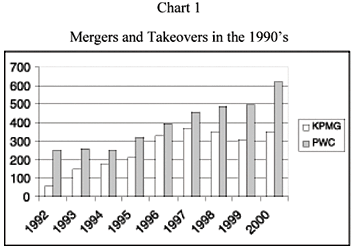
]]> We will first of all examine the effects of the commercial opening on the changes in company ownership, expressed by the large number of bankruptcies, mergers and acquisitions, which led to an ever increasing displacement from domestic capital in favor of foreign capital. As can be seen, in, Chart 1 the volume of mergers and acquisitions in the decade of the 1990s is significant, according to two specialized reports (KPMG, 2001; and Prince, Waterhouse and Coopers, 2001, respectively). Although there are certain discrepancies between the sources, a trend can be seen in the volume of growth of these transactions throughout the decade, particularly from 1997 onwards, a period in which privatization intensified. According to Prince, Waterhouse and Coopers, the increase in the number of mergers and acquisitions reached its highest point in the year 2000.
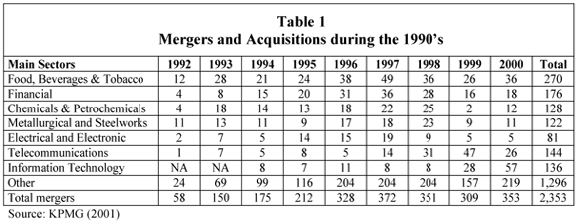
According to the KPMG report, it is possible to identify three periods, each characterized by different forms of government involvement. The first, up to 1993, concerns the initial effects of the opening up of the economy, when there were a great number of mergers in industry sectors such as chemical products, petrochemicals, metal and steel sectors. The second period, from 1994 to 1997, corresponds to the implementation of the Real Plan and to the stabilization of the economy, which stimulated new business, mainly in the financial and electrical / electronic sectors, as well as those already mentioned. Finally, in the third period (1998-2000) the growth of privatization caused a large volume of business transactions in the telecommunication and information technology sectors (Table 1).
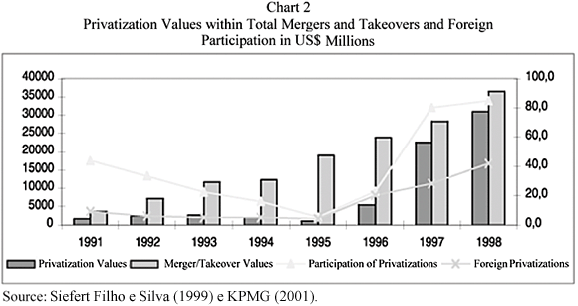
]]> It is worth pointing out the role of privatization as the second vector of productive restructuring during the 1990s. Chart 2 allows us to evaluate the importance of privatization concerning mergers and acquisitions in the economy, as well as the amount of foreign capital involved. The growth of foreign capital in Brazil was, to a great extent, stimulated by the intensification of the privatization program, which increased from 1995 onwards.
The capital raised from privatization after 1991 was vastly significant, as can be seen in the data shown in Table 2, where we can find the figures for the revenue from privatization related to the PND (Programa Nacional de Desestatização - National Program of Privatization, created in 1990), regarding the federal and state spheres plus the telecommunications sector, treated separately.
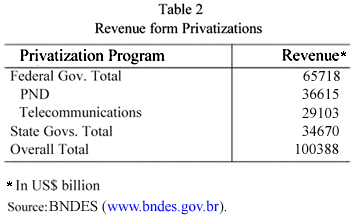
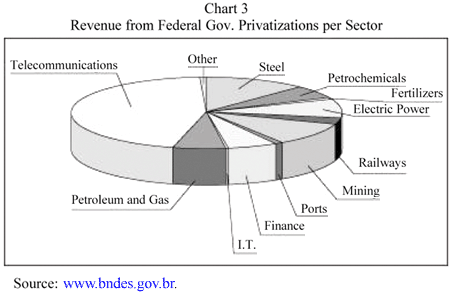
]]> The privatization of the telecommunications sector began in1997 and was the most significant part of this program, accountable for 44% of the federal government revenue coming from privatization (Chart 3). The mining and steel sectors have also contributed significantly to federal revenue from privatization.
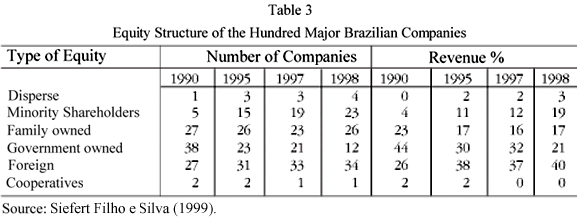
What was the impact of market reforms, implemented during the 1990s, on the restructuring of the corporate sector? According to data presented by Siffert Filho e Silva (1999), an important aspect of the productive reorganization was the change in the structure of ownership of the biggest Brazilian companies, with a large reduction in the number of state-owned companies, a growth in the number of foreign owned companies, and an increase in the number of companies owned by minority shareholders. The number of foreign companies contributing to the total revenue generated by the hundred largest companies increased significantly during the 1990s. The number of family owned companies remained stable during that decade, however their contribution to revenue decreased from 23% to 17% (Table 3).
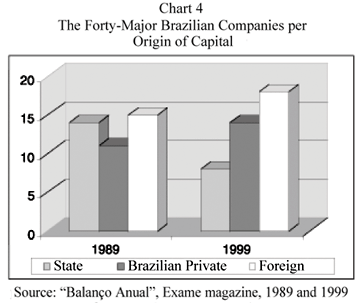
]]> A clearer view of the changing trends in the pattern of ownership of the biggest Brazilian companies throughout the decade can be seen from the data published in Exame magazine's "Annual Balance". Comparing the list of the forty biggest companies classified by origin of capital between the years 1989 and 1999, we can observe that those controlled by foreign capital increased from 37.5% to 45%, while those controlled by the state were substantially reduced. Among the latter, there were fourteen state-owned companies, at the end of the 1980s, of which only eight remained in 1999. Among the ten largest companies, six were state-owned in 1989, and only three appeared on the list at the end of the decade in 1990.
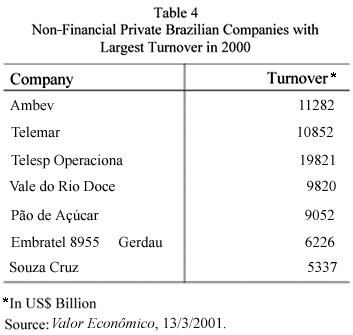
As we can see in Table 4, among the private Brazilian companies that achieved better turnovers in 2000, the largest (Ambev) is the result of a merger, four others, the result of privatization (Telemar, Telesp, Vale do Rio Doce and Embratel), and only three (Pão de Açucar, Gerdau and Souza Cruz) are genuine private companies.
This picture contrasts with the sluggish performance of the Brazilian economy during the whole of the 1990s. Reverting the trend of steady growth during the period of substitutive industrialization, the 1990s showed an even sharper fall of the GDP compared to the previous decade. There were some periods of expansion between 1993 and 1994, and between 1999 and 2000, however without recovering a steadier GDP growth rate. Chart 5 shows the weak performance of the Brazilian economy in the last two decades of the twentieth century, with regard to average annual variation rates of the GDP.
]]>
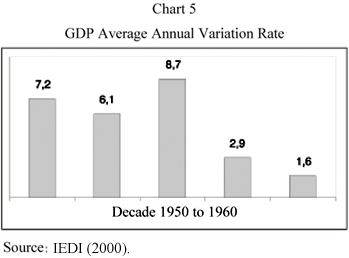
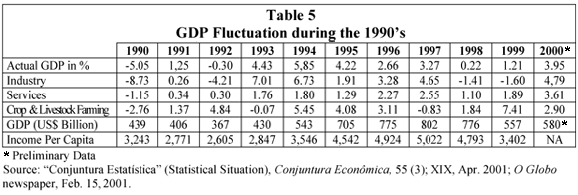
It is worth pointing out the characteristics of the industrial sector's performance within this picture of notable decline in GDP growth rates. Such performance oscillated up and down considerably, there were sharp falls (1990, 1992, 1998 and 1999) and periods of recovery (1993, 1994, 1997 and 2000). In the year 2000, a strong recovery of the GDP led by the industrial sector could be observed (Table 5).
If we consider the relative participation of the different sectors in the GDP, a trend towards stability in each of the sectors could be seen from 1994 onwards, after a notable decline in relation to 1993. However, manufacturing industry accounted for only around 25%, showing a slight decline (Chart 6).
]]>
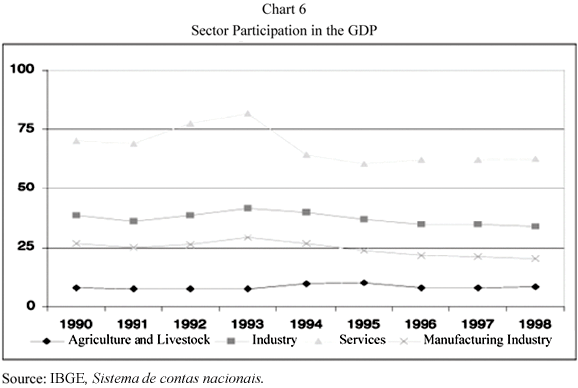
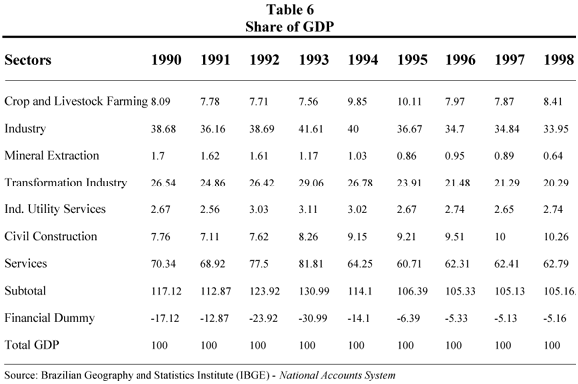
The data presented in Table 6 allows a more accurate evaluation of the relative performance of industry. Industry's share in the GDP underwent a decline from 38.68%, in 1990, to 33.95%, in 1998. This decline was somewhat sharper regarding the manufacturing industry: from 26.54% to 20.29%, after a considerable increase in 1993 to around 29,06%. On the other hand, the civil construction industry increased its share in the GDP significantly, being the industrial sector which attained the best relative performance throughout the decade.
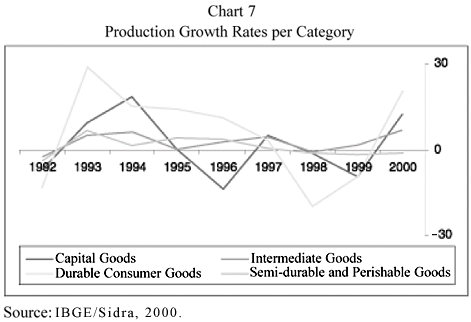
We still need to examine the variations of the main industrial categories classified according to the type of goods produced. We can see significant fluctuations regarding performance, despite the general downward trend from 1993/1994, which was sharper in the case of the durable consumer goods and capital goods sectors. In the intermediate, semi-durable and perishable goods categories, figures indicate a more stable pattern throughout the period. Between 1999 and 2000, we see a slight recovery in the growth rate of capital goods and durable consumer goods (Chart 7).
]]>
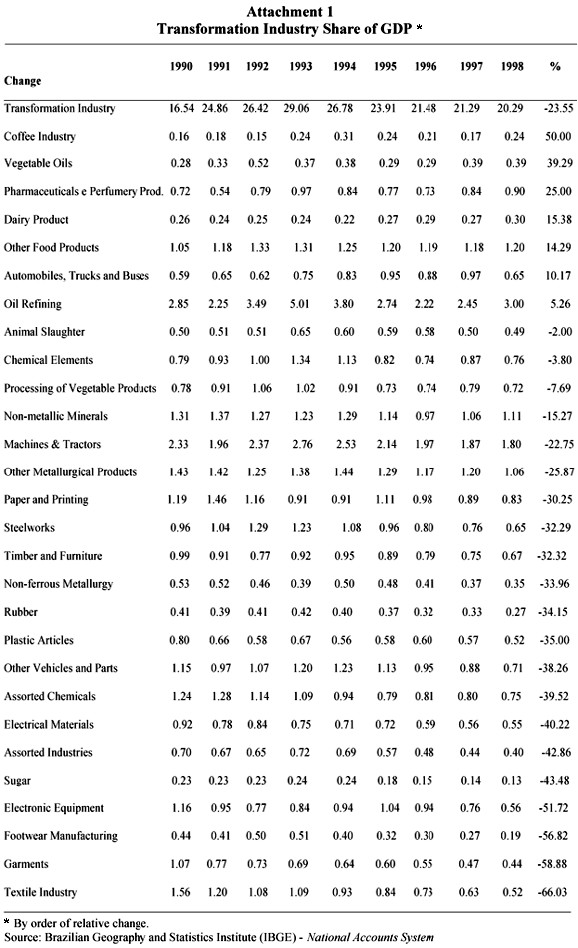
How should we interpret the performance of industry in the context of this new model, given the data presented? It is not possible to see any real steady trend in the performance of Brazilian industry in the period covered by this study1. In contrast, the decade in which economic reforms took place was characterized by great instability. Due to the opening of the market, the performance rate oscillations show that the economy was submitted to variations derived from selective mechanisms, lack of industrial policies and development projects. However, compared to cases where poor industrial performance took place as a result of conversions to open market policies, the Brazilian case is perhaps characterized, by a "selective process", which did not jeopardize the industrial sector as a whole. It is evident, however, that several sectors of industry suffered a sharp decline, including electrical goods, electronic equipment, footwear, clothing and textiles, which showed a decrease of over 40% (Attachment 1).
Changes in representative structures
The restructuring which took place within the Brazilian productive sector, due to the reforms that changed the relative role of industry and redefined the profile and composition of economic players, was also mirrored in corporate organizations. Therefore, the structure of representative organizations started to take new shape, to adjust to more competitive globalized markets and to the growth of foreign capital on the domestic scene. As the state no longer supported domestic industry unconditionally, this scenario contributed to increasing uncertainty within industry as a whole and certain specific sectors in particular.
We will analyze the more recent aspects of these structural changes, giving continuity to previous works (Diniz and Boschi, 2000a; 2000b), where a more thorough study of other aspects regarding industrial organizations were carried out. Firstly, it is important to highlight the vast change in the actions taken by industrial organizations due to the opening of the market and the privatization process. Coming from a predominantly protected market where membership in industrial confederations was compulsory, we then had an open market based on competition and voluntary membership of industrial organizations, which stimulated the search for efficiency and the emphasis on efficient organizational performance, as selective incentives to guarantee the adhesion of members. The relative centralization of the official corporate structure depends on the restructuring of organizations, so that they are able to provide specialized services, thus preventing their decline. Simultaneously, independent industry associations are committed to achieving higher efficiency levels, as well as redefining their operational principles in an effort to control potential free riders.
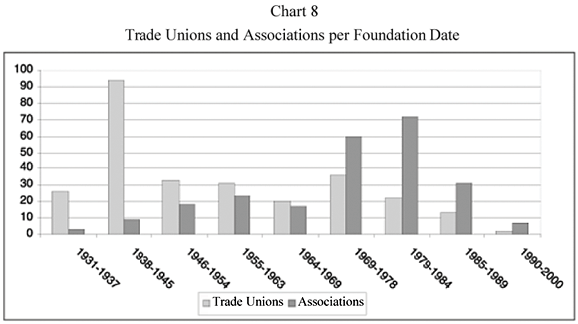
This research was based on a recent update of a data bank on the organization of industrial associations, so as to evaluate the main trends within corporate organizations. A first aspect is concerned with the evolution of the dual structure of representation beginning in the 1930s (Chart 8). While the foundation of official industry federations was at its highest during the initial phase of the industrialization process, mainly between 1938 and 1945, and again in the 1970s, the period between the years 1970 and 1980 was noted for the foundation of independent associations. The following decade, a period of market-oriented reforms and low rates of economic growth, was characterized by a halt in the foundation of both these types of organization, however , more recently, a slight increase in the number of new associations can be observed.
]]>
Various indices have shown that several organizations have adopted a new professional model of management, although not in a systematic fashion. Organizations appear to increasingly adopt a service provider format, following corporate models, trying to offer solutions to the daily problems of companies.
The Brazilian Association of Chemical Industries (Abiquim) is an exemplary case, although not an exception. The directorship of this organization has adopted professional management forms: it counts on a superior council made up of entrepreneurs, to which the executive president reports ultimately. However, he holds total authority for all purposes, including contacts with the government and the general public. This association carries out a series of activities that previously were taken care of by each company independently. This happened due to the necessary restructuring of the companies vis-à-vis the opening up of the economy, which turned the organization into a true service provider. It maintains a central office for customer service, offers specific MBA courses, plus Abiquim carries out a whole range of activities, exceeding the mere representation of corporate interests.
Many associations have their own executive directors, but the level of professionalism varies greatly. There are cases such as Abifarma (Brazilian Association of Pharmaceutical Industries) and of the aforementioned Abiquim, where the presidents are true executives who even carry out the political activities of the organization. The IBS (Brazilian Institute of Steel Industry) operates a system where the executive coordinator plays a similar role to that of CEOs. At Abinee (Brazilian Association of Electrical and Electronics Industries), despite the president being a businessman, the executive vice president is responsible for management, and in contrast to IBS, the actual management has less autonomy and public visibility than the corporate leadership as such.
Such characteristics are typical of extra-corporate organizations but they are also becoming the profile of the main official organizations. Fiesp (Federation of Industries of the State of São Paulo) itself, despite internal resistance, has tried to separate technical functions from those of directorship, and has recently created the post of executive director: a professional of equal rank to directors, who is remunerated for his functions. CNI also adopted this duplicity of functions. Besides its vast technical body, which is organized into in several thematic commissions, this organization has three executive directors.
Another important aspect of the professional management of associations deals with relations with the government. Due to the importance of relations with the congress in terms of national political decisions, several organizations maintain their own offices or outsourced offices to carry out lobbying activities, commonly called "governmental relations". Almost all the lobbying is conducted by teams of professionals. This new activity has contributed to a new professional category: industry association ‘lobbyist’.
The central role played by relations with congress has caused an impact on many corporate associations, which have modernized and adjusted their representative structures to cope with institutional changes in the country. Important movements such as "Ação Empresarial" (Entrepreneurial Action), several industry federations such as CNI, Fiesp and ABDIB, among others, have directed their activities towards Congress, in order to maintain a permanent interchange to follow up procedures regarding the passing of bills of interest to the business sector. Some facts regarding this progress deserve highlighting.
]]> The first one regards the creation of Ação Empresarial (Entrepreneurial Action), in 1991, to follow up the procedure of the bill on port modernization in Congress. Not regarded as a formal organization, Entrepreneurial Action is a very flexible organization free to operate in defense of a wide range of interests, acting at strategic times on behalf of the general interests of business. Besides the new legislation on ports, it acted intensely during the constitutional revision of 1995, and more recently, it has concentrated its activity on the tax reform bill discussed in Congress. It keeps a closer relationship with CNI and IBS (Brazilian Institute of Steel Industry), where they obtain organizational support, and they also maintain contacts with many corporate associations, which gives it influential political power. According to business leaders, the defense of a wide range of interests affecting the business class as a whole was a new and successful experience for the Brazilian industry associations.Another innovation associated to the crucial relations with Congress, was the creation of Coal (Coordination of Legislative Issues) within CNI. Coal is an advisory body for legislative issues which follows up legislative procedures of interest to the industrial business class, supplying information about law bills to different industry associations, and at the same time, providing congress members with data and suggestions put forward by corporate federations. For five years, Coal has edited and distributed the 'legislative agenda' among corporate circles, spreading information on the various bills being discussed, explaining the standpoints of business associations on those matters and their main proposals.
The creation of Coal is not the only result of the modernizing effort, which is changing the way CNI operates. During the last decade, industry’s major official association has been revitalized. Rather than a radical change, such alterations made the federation more dynamic and representative. This includes restructuring and expanding thematic councils, which then elaborate proposals for different purposes such as industrial policies, technological development, labor relations, international integration, foreign trade, the environment, as well as legislative matters. There was also an important change in the composition of such councils, which besides corporations now incorporate industry sector associations, such as ABDIB, Abiquim, Abinee, Anfavea, among others. Another aspect of the modernization of CNI was the expansion and further training of its technical personnel, the reinforcement of its advisory functions in different fields, and the elaboration and distribution of relevant information on economic and political matters of interest to its associates. Its research department, started to carry out studies to evaluate the impact of governmental policies on the different industrial sectors, and systematic consultations on the opinions of entrepreneurs concerning the economy and other subjects relevant to business.
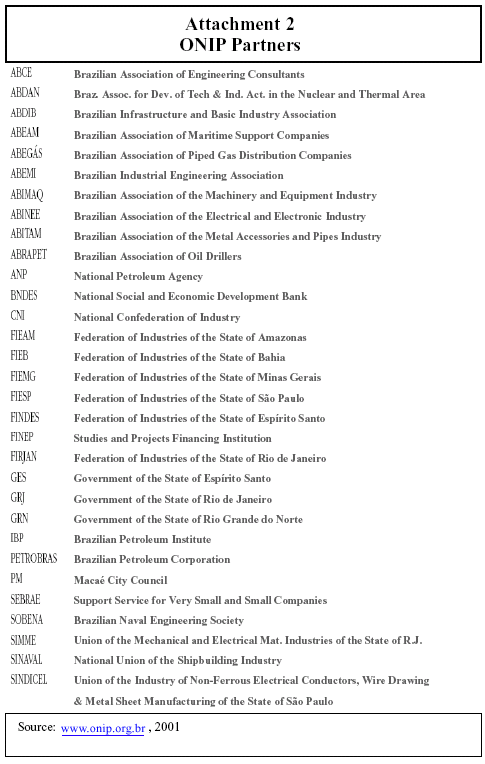
The third factor showing a process of adjustment of business organizations to the new situation, was the creation of the Organização Nacional da Indústria do Petróleo (Onip) (National Organization of the Petroleum Industry ) Acting as a non - governmental organization, Onip brings together the interests of the oil productive chain operating in Brazil. It acts as an articulating and cooperation agent involving the main players Petrobrás, private companies, trade unions and governmental bodies in the search for common strategies for the expansion and strengthening of the productive chain as a whole. It also tries to reach a consensus of common interests despite the differences among each sector. In contrast to the organizations of the past, Onip’s target is the Executive Power, particularly the ANP (National Petroleum Agency), the Central Bank, the BNDES (National Development Bank), the ministries of Finance, Science and Technology, Development and others. Among the organizations included are trade unions and industry associations plus domestic sector associations linked to the petroleum chain. The relation with the government centers on an informal network of contacts involving the different players, with no institutionalized channels of negotiation.2
Strategies of development: alternatives and perspectives
In a previous work (Diniz and Boschi, 2001), we analyzed the evaluation of the main business leaders concerning the impact of macroeconomic policies n the productive structure and the direction in which the Brazilian economy was going in the 1990s. As we pointed out, there was a consensus on the importance of economic stability by all those interviewed, which was seen as a victory for the government of Fernando Enrique Cardoso. However, there was severe criticism of market reforms, with regard to the pace and the way they were implemented. The errors in carrying out these reforms were, according to entrepreneurs, the difficulties faced by Brazilian companies, which were subject to profound restructuring without the support of efficient governmental policies, capable of leading to a well balanced and gradual adjustment. This gap caused a destructive impact on the industrial sector, which was shown by numerous indices. The closure of companies, bankruptcies, associations and mergers with foreign companies, a substantial drop in the level of employment within industry, the break down of consolidated productive chains (such as the electrical and electronics chain), a substantial denationalization of the economy; all these were highlighted as the main consequences of the uncontrolled opening and increased external vulnerability of the economy, mainly between 1995 and 1998, the most affected sectors being textiles, machinery and equipment, car parts and electronic products. However, this negative evaluation did not cause any organized resistance movement. In contrast, the main corporate associations continued in their support of the governmental agenda. The success of the real plan guaranteed the unity of the business class supporting economic stability despite the hardship imposed upon some sectors, thus stemming any dissident manifestations and isolating the more unsatisfied.
This scenario changed at the end of the 1990s, when the first indications of a split in the consensus appeared. Such consensus had certainly served as political support for Fernando Henrique Cardoso’s first term of office as president. The splits in the main coalition took place at different levels. Within the government circle, the liberal-developmental tendency was strengthened under the leadership of important personalities, such as minister Luiz Carlos Mendonça de Barros. Within the business sector, we could also see an important split in the support of liberal policies by the business class as a whole.
This split became public during the electoral year of 1998, when the proposal of re-election of the president in office was being discussed, besides the debate on the need for a redefinition of economic orientation. Criticism was led by two important business associations, Fiesp and Iedi (Institute of Studies for Industrial Development) and by a recently formed group made up of eight business organizations Movimento Compete Brasil, conforming a joint resistance effort for the first time. Despite the differences among each of these segments, there was an agreement on the redefinition of priorities in favor of resuming development and adopting an industrial policy to help revitalize Brazilian industry.
A new conjuncture was now taking shape, with the idea that economic stability alone was not enough, and that drastic changes in economic policy would be necessary in the long term. The indiscriminate opening of the market, high interest rates and over-valuation of the domestic currency all combined to create a very favorable environment for financial interests but damaging to industrial interests. These factors gave privilege to foreign capital but were detrimental to domestic capital, which had a negative effect on the economy by causing stagnation and high rates of unemployment. From this point of view, conditions for permanent policies of stabilization as an exclusive and absolute priority of the government would be depleted. The unilateral concern about controlling inflation, linked to the fiscal adjustment at any cost, brought the country to a stalemate, as growth stagnated and any strategy of sustained development was not feasible under the circumstances. Besides, there was no institutional instance in the government where these proposals could be argued and put forward as the central ideas for the expected change.
]]> A proposal was put forward for the creation of the Ministry of Production, an idea which did not materialize, but which later gave origin to the Ministry of Development, Industry and Foreign Commerce. This signaled the intention of instituting a space for debate on topics related to the expansion of the productive sector and the resumption of development. External factors linked to the international crisis derived from the Russian moratorium and a new agreement with the IMF (through which a US$ 41 billion package was negotiated on the eve of the re-election of the president), alongside domestic problems related to suspicion of irregularities in the privatization program, provoked substantial changes in economic policy. Among the main alterations, were the rise of the primary surplus to 3,75%, the substitution of the fixed exchange rate for a floating rate and the reinforcement of fiscal austerity via the law of Fiscal Responsibility. After the re-election, President Fernando Enrique substituted the president of the Central Bank Gustavo Franco for economist Armínio Fraga, starting a new phase as of 1999, which relaxed the factors inhibiting economic growth and made possible the occurrence of brief outbreaks of growth when international conditions became less restrictive. Under such conditions, a consensus was reached on prioritizing the preservation of macroeconomic foundations.Stability of prices, fiscal austerity and balance of public accounts again took first place on the governmental agenda, dampening developmentalist demands. The Ministry of Finance and the Central Bank resumed their command over economic policies, relegating the Ministry of Development to a subordinate position. On the other hand, although it was held back, the demand for reform of the economic model remained. Among the critics of fiscal rigidity, some business leaders, during president Fernando Henrique Cardoso’s second term in office defended the redefinition of priorities in favor of strengthening the national productive sector, expanding exports and demanding more aggressive policies with regard to foreign commerce.3 The fact that the goal of development remained constant was an important factor for renewing the debate on the search for a new economic strategy for the country.4
The proposal for the creation of the FTAA (Free Trade Area of the Americas), was seen as a long term opportunity to stimulate development through the expansion of foreign trade, however, it raised criticism from the business class due to the conditions imposed by the United States during the negotiation process on the new trade bloc. The CNI and Iedi published documents criticizing tariff and non-tariff barriers placed on domestic export products, where Brazil is competitive, and which could damage the interests of the country and national industry. Besides that, participation in the FTAA would reduce the comparative advantages that Brazil currently enjoys regarding trade with Latin American commercial treaties, such as ALADI (Association of Latin American Integration) and especially the Mercosur.
The standpoint of the business class questions the way in which the trade liberalization process was carried out, and sustains that export capacity is essential for the definition of a new development strategy. It is also worth pointing out, when assessing the FTAA, the need for a tax reform and reduction of the so called 'Brazilian cost' as a way of expanding exports in sectors where Brazil can be competitive.
The elections of 2002 rekindled the debate on the resumption of development, where the proposals of the main business associations were the central element. The notion arises again that the alternative to resume development would be based on corrections of the process of indiscriminate opening of the economy, which took place during the 1990s. Thus three proposals put forward by the CNI, Fiesp and Iedi in the first semester of 2002 focused on the urgency for the adoption of consistent industrial policies which would stimulate exports and the competitive substitution of imports, in order to reduce the deficit of the commercial balance, with a series of chain effects, such as the creation of technological capacity, production of goods of high added value, increase in productivity and growth of employment in industry.5 The central idea common to the three proposals is the recovery of economic dynamism and the achievement of goals in economic growth that, according to Fiesp, should reach a rate of 5% per year. Also the expansion of employment is an important item included in the document, as well as the reversal of the growing informality in the labor market. Finally, the tax reform was presented as a strategic objective to make the development process feasible, reducing the so-called 'Brazilian cost' by the elimination of cumulative taxes and by the rationalization of the tax burden. As for the more specific aspects of the proposals, it is possible to organize the suggestions in two categories, which are industrial policies and the institutional conditions to make them feasible.
The program of industrial development suggested by the CNI is based on three points: policies on foreign trade and international trade negotiations, policies on technological innovation and policies on national development and integration aimed at the reduction of regional disparities. Within these, there are distinguished points such as expanding the Chamber of Foreign Commerce and to form a strategic plan for export development, as well as support for projects for the competitive substitution of exports. Still, some challenges must be overcome; most of them regard the correction of distortions introduced by the process of indiscriminate opening of the market.
A highly notable point in the CNI document mentions the challenges in the area of technological innovation. The proposals argue not only about the question of leveraging technological capacity by promoting research and development, but also the need for financing the diverse activities of innovation, as well as the adequate tax reform and an increment of the formation of networks and partnerships. Parallel to this debate, an important study was carried out which resulted in the creation, of Protec (Brazilian Pro-Technological Innovation Society), in February of 2002, after a meeting at Abimaq - Brazilian Association of the Machinery and Equipment Industry. This project was backed by industry associations and federations, aiming at mobilizing the productive sector and society in general for the creation and improvement of policies investigating technological innovation, which would guarantee greater competition6. In July 2002, the first National Meeting for Technological Innovation for Exports and Competition (Enitec) also took place.
A special point in the proposals developed by Fiesp emphasizes the establishment of Brazilian business groups operating internationally, in order to strengthen and expand the country's insertion in the international market. The proposal by Fiesp differs from the others as regards the establishment of new regulatory bodies. The document considers the creation of strong regulatory institutions and a reduction in the amount of red tape from the State, as being imperative to the increase in competition within Brazilian industry.
For these proposals to become feasible, CNI's and Fiesp's documents put much emphasis on the institutional political sphere. To ensure conditions of governance a political reform is proposed, encompassing mechanisms to strengthen political parties, encourage party loyalty and greater transparency in electoral processes, including clear rules on financing political campaigns, as well as improving legal processes. Besides, the role of the Judiciary was considered essential for the efficient running of the market, basically reiterating guarantee of contracts and respect to property. The reforms could happen either by means of improving the rules governing legal processes, or by making the Judiciary more autonomous as explained in CNI’s document.
]]> Conclusion
This study aimed at evaluating the impact that governmental policies throughout the 1990s, that is, economic stability and market oriented reforms, had on Brazil’s productive structure, on the organization of the interests of the industrial business class, and on the opinions of the business class leaders about the challenges and future perspectives of the country.
We first saw a deep economic restructuring taking place, which transformed the basis of industrial capitalism inherited from the developmental strategy. The three pillar model consolidated during the military regime, which consisted of a certain balance between the state, the private national and private foreign sectors, changed substantially due to reduction of State participation in the economy, privatization, the ever increasing influence of transnational groups and also the shrinking ratio of domestic capital in the market. The denationalization of the economy reached a level never seen before, outlining a new economic order, notable for the supremacy of international capital. Besides that, the absolute priority attributed to economic stabilization targets, to fiscal austerity and to balancing public accounts, reflected in poor economic performance. There were oscillations between economic stagnation and brief periods of growth, which were always reverted when external conditions became unfavorable. Low growth rates, reduction of industrial production, increased unemployment and expansion of the informal sector, high interest rates and scarcity of credit, reduction of exports and increase of imports, all these factors kept domestic production within particularly stringent limits, as shown by the large number of creditor agreements, bankruptcies, mergers and corporate restructuring.
In spite of the difficulties, uncertainties and the dissatisfaction of significant segments of the business class, no manifestation of organized resistance was seen. In contrast, support of the neo-liberal agenda and agreement with the consensus created by the success of the Real Plan predominated. This, as well as being a landmark in the control of inflation, represented an important political asset, guaranteeing the legitimacy of the governmental agenda.
On the other hand, at the end of the 1990s, the successive crises, which unfolded in the international scenario, led to more extreme standpoints regarding the potential economic growth. Criticism of the economic policy, that is, the overvaluation of the domestic currency and high interest rates became part of the industrial sector's agenda, and a reasonable consensus was arrived at, concerning the need for resuming economic growth by means of consistent industrial policies based on an increase of exports and Brazil’s competitive insertion in the international market.
In a process of gradual fragmentation of organized interests, which evolved towards greater competition, it is interesting to point out that the proposals elaborated by the main industry associations converged. Such organizations as the CNI, Fiesp and Iedi, were all in favor of reorienting economic policies, that is, the need to prioritize development objectives with expanded technological capacity and creation of jobs.
In the new institutional environment, competitiveness started to rule collective action and association was determined by selective incentives. In other words, the deconstruction of the old corporate system, plus the gradual process of change and adjustment of industry associations, especially in more recent decades, caused a break away from the old parameters of organized interests. These were the prevalence of the monopolistic representation and compulsory membership. Collective organization became entirely voluntary.
However, there may have been a certain asymmetry in the capacity of organization among classes, which was wider than the one observed in old corporatism. The demobilization of trade unions the high rates of unemployment and the decline in social policies have all contributed to increase structural inequality, especially as regards relations with the State, where collective action is being restructured.
The breaking down of private interests and the drive towards competition, plus the new accessibility to the public sector by means of lobbying is in fact a kind of "Americanization " of public/private relations. However, the capacity to recompose and the flexibility to adjust of representative associations are remarkable characteristics that enable them to re-institutionalize in different fashions. On the other hand, the most organized private interests can take public spaces as their own, which is not positive.
In the structure of representation of interests of the industrial business class, we find aspects of both continuity and rupture. As to the former, the formal structure still lacks an organized and overseeing leadership capable of expressing the interests of different sectors. On the other hand, as a result of the adjustment process undergone over the last decade, new organizations appeared which aimed at organizing and mobilizing industrial production sectors or even the business class as a whole to negotiate with the Executive or the Legislature, with the objective of defending policies of interest to the business class as a whole or to some significant sectors. As aforesaid, this is the case of Onip, which represents the interests of the petroleum productive chain, and of Corporate Action, a movement made up of over fifty business organizations to follow up and exert an influence on the passing of laws which affect the Brazilian market, such as the new laws on ports and patents, as well as the tax reform. Another similar example is the creation of the Brazilian Pro-Technological Innovation Society (Protec), founded by fifteen business organizations with the objective of supporting industrial policies, which directly promote the generation of new technology, which is a basic component for value addition and greater competitiveness of domestic production. These are innovative initiatives that tend to make the organizational complex of the industrial business class more dynamic. These initiatives look for ways of operating that may overcome differences, cleavages and internal divisions, mobilizing more general interests and trying to organize more concentrated ways of action.
]]> Finally, we can point out important changes in progress regarding Brazilian capitalism and its insertion in the new world order. Firstly, we can verify that economic reforms and the consequent productive reorganization caused alterations in the strategic relations among players. These, in turn, influenced the patterns of collective action and organization of the business class. From this point of view, there has been a tendency to counterbalance dispersion by means of building action platforms that may bring together sectors of the business class, even if proposals come from specific organizations, geared towards delimited objectives. On the other hand, the programs and alternatives put forward by larger organizations have targeted feasible strategic development alternatives in the long term, capable of overcoming limitations imposed by an extremely restrictive international market. According to business players, this strategy implies the selective correction of the process of opening the domestic market, as well as the revision of basic issues regarding economic policy, but is also committed to preserving economic stability. The question is how to make these goals compatible, that is, how to liberalize the administration of external conditions, while organizing a domestic coalition capable of sustaining this alternative strategy.
NOTES
1 In fact, data published by the press on 2001 with projections for 2002 revealed a sharp drop of industrial production and of the GDP in relation to 2000. Industrial production fell from 6.64 to 1.41 in annual percentage, with a projection of further decline in 2002. In the case of the GDP, the drop was from 4.36% to 1,51% with a growth projection for 2002 not higher than 2.1% (Folha de São Paulo, 5/18/2002).
2 See the list of members of ONIP in the Attachment
3 In this regard, see for example Coalizão Empresarial (1999, 2000) and Iedi (2002).
4 As part of this research we investigated the newspapers Folha de São Paulo, for the period between 1994 and 1998, and O Globo, for the period between 1998 and 2002, in order to study electoral processes. We verified the persistent question of industrial policy put forward by industry associations in those periods. As regards Fiesp, the demand for an industrial policy made up approximately 20% to 24% of all articles published on that association. In the case of CNI and Iedi, most published articles were critical of governmental economic policy and demanded a true industrial policy. These were circa 17% to 18% of all articles published on these associations.
5 Cf. Iedi (2002), Fiesp/Ciesp (2002) and CNI (2002).
6 The full members of the Delibetative Council of Protec are the presidents of the 15 founding organizations. The president is Luiz Carlos Delben Leite, also president of Abimaq. Also part of the direction are , José Miguel Chaddad, diretor of Associação Nacional de Pesquisa, Desenvolvimento e Engenharia das Empresas Inovadoras (Anpei), and Nelson Brasil de Oliveira, diretor of Associação Brasileira da Indústria de Química Fina e Biotecnologia (Abifina), which will host Protec in Rio de Janeiro. The organization will hold regular meetings in São Paulo. The vice presidents are Eduardo Eugênio Gouvêa Vieira, president of the Federação das Indústrias do Rio de Janeiro (Firjan); Horácio Lafer Piva, president of Fiesp; José Carlos Gomes Carvalho, president of Federação das Indústrias do Estado do Paraná; José Fernando Faraco, president of Federação das Indústrias do Estado de Santa Catarina (Fiesc); and Robson Braga de Andrade, president of the Federação das Indústrias do Estado de Minas Gerais (Fiemg). Couselors are, Carlos Paiva Lopes, from Associação Brasileira da Indústria Elétrica e Eletrônica (Abinee); Celso Antonio Barbosa, from Anpei; Dante Alário Júnior, from Associação dos Laboratórios Nacionais (Alanac); Fernando Sandroni, from Centro das Indústrias do Rio de Janeiro (Cirj); José Augusto Marques, from Associação Brasileira da Infra-Estrutura e Indústrias de Base (Abdib); Luiz Carlos Baeta Vieira, from Centro de Integração de Tecnologia do Paraná (Citpar); Luiz Cezar Auvray Guedes, from Abifina; Mário Bernardini, from Centro das Indústrias do Estado de São Paulo (Ciesp); and Sérgio Moreira, from Serviço Brasileiro de Apoio às Micro e Pequenas Empresas (Sebrae). The businessmen introduced Protec to Fernando Henrique Cardoso on 3/5/2002 (cf. http://www.brasilnews.com.br).
]]> BIBLIOGRAPHY
DINIZ, Eli & BOSCHI, Renato. (2000a), "Globalização, herança corporativa e representação dos interesses empresariais: novas configurações no cenário pós-reformas", in R. Boschi; E. Diniz e F. Santos, Elites políticas e econômicas no Brasil contemporâneo, São Paulo, Fundação Konrad Adenauer, pp. 15-88. [ Links ]
_________. (2000b), "Associativismo e trajetória política do empresariado brasileiro na expansão e declínio do Estado desenvolvimentista". Teoria e Sociedade, 5: 48-81, jun. [ Links ]
_________. (2001), "Reconfiguração do mundo empresarial: associações de representação de interesses, lideranças e ação política". Trabalho apresentado no XXV Encontro Anual da Anpocs, Caxambu, 16-20 nov., mimeo. [ Links ]
ZUCCO JR., César. (2001), "Análise sobre a indústria brasileira na década de 1990". Rio de Janeiro, Relatório de Pesquisa, Iuperj, mimeo. [ Links ]
Documentos e Fontes
BNDES. (2000), "Privatizações". www.bndes.gov.br/pnd1000.
COALIZÃO EMPRESARIAL. (1999), "Contribuição do setor empresarial brasileiro para negociações da FTAA". Rio de Janeiro, CNI. [ Links ]
_________. (2000), "A visão da coalizão empresarial brasileira sobre o processo de negociações da FTAA". Rio de Janeiro, CNI. [ Links ]
CNI. (2002), A indústria e o Brasil: uma agenda para o crescimento. Brasília, CNI. [ Links ]
FIESP/CIESP. (2002), "O Brasil de todos nós (proposta para discussão com a sociedade)". São Paulo, Fiesp/Ciesp, jan. [ Links ]
IBGE. (2000), "Sistema de recuperação automática de dados Sidra. www.sidra.ibge.gov.br. [ Links ]
IBGE. Sistema de contas nacionais. [ Links ]
IEDI. (2000), "Indústria e desenvolvimento: uma análise dos anos 90 e uma agenda de política de desenvolvimento industrial para a nova década". São Paulo, Iedi. [ Links ]
_________. (2002), "A política de desenvolvimento industrial: o que é e o que representa para o Brasil". São Paulo, Iedi. [ Links ]
KPMG Corporate Finance. (2000), "Fusões e aquisições no Brasil: análise dos anos 90". [ Links ]
PRICE, WATERHOUSE & COOPERS. (2001), Fusões e aquisições no Brasil. [ Links ]
SIFFERT FILHO, Nelson & SILVA, Carla Sousa. (1999), "As grandes empresas nos anos 90: respostas estratégicas a um cenário de mudanças", in BNDES, A economia brasileira nos anos 90. Rio de Janeiro, BNDES. [ Links ]
]]> Article received in October/2002
* Paper presented in the XXVI Annual Meeting of Anpocs, GT "Business Class and Collective Action - Empresariado e ação coletiva", Caxambu, 23rd-26th of October, 2002. We would like to thank the assistant César Zucco Jr. who in the first part of our research, collaborated in the elaboration of charts and graphs and the preliminary analysis of data. We would also like to thank Leonardo Andrada and Sérgio Mastrangelo, assistants in the current phase, who collected data and systematized information. This study is part of the research project "Globalização, elites empresariais e reconfiguração do setor privado no Brasil dos anos 90 – Globalization, Business Elites and Reconfiguration of the Private Sector in Brazil in the 90's", coordinated by us, and funded by Faperj, and with a scholarship from CnPq.
]]>