Desigualdade educacional e cotas para negros nas universidades
Eunice R. Durham
Translated by Julia Maria Dias Negreiros
Translation from Novos Estudos - CEBRAP, São Paulo, n.66, p.3-22, July 2003.
This article discusses the proposed definition of quotas for black students in universities in view of the widespread inequalities in the Brazilian educational system. The author defends that the proposed measure would lead to limitations and distortions, for it is based on rigid, artificial categories, in sharp contrast with the country's ethnic heterogeneity, and fails to consider key factors in the schooling experience of afro-descendants. The study of statistical series has shown that in spite of the progress made, there is still a great educational gap dividing white students from black and mulatto students. This led the author to conclude that public initiatives geared to reinforcing basic skills would constitute a more effective affirmative action than the establishment of quotas.
Key words: educational gap; inequality; affirmative policy; racial discrimination
RESUMO
O artigo discute a proposta de estabelecimento de cotas para negros nas universidades em face das desigualdades mais amplas que permeiam o sistema educacional brasileiro. Argumenta-se que essa proposta revela limites e distorções ao apoiar-se numa categorização racial rígida e artificial, a contrapelo da heterogeneidade étnica do país, e ao não incidir sobre os fatores fundamentais que afetam a escolarização dos afro-descendentes. Ao constatar por meio de séries estatísticas que, a despeito dos avanços, permanece o grande déficit educacional dos negros e pardos, a autora conclui que iniciativas públicas voltadas ao reforço da sua formação escolar básica constituiriam ações afirmativas mais eficazes que as cotas.
Palavras-chave: desigualdade educacional; política afirmativa; discriminação racial.
The case for quotas
The proposal to introduce quotas as a way to grant black students easier access to university is laudable because it exposed a very serious issue, namely racial discrimination and the reduced presence of certain ethnic groups in the Brazilian educational system. It might seem difficult for anyone who condemns racism to oppose affirmative action aiming to redress the balance, for education plays a decisive role in ensuring future social status and access to the best-paying positions in the labor market. To compound the problem, parent education also plays a key role in children's schooling, and thus academic underachievement impacts future generations as well. Nevertheless, there are a number of negative aspects to be weighed against other alternatives which may be more effective and fairer. One of the shortcomings of the proposal is that it focuses on one of the consequences of the existing racial discrimination and educational gap, failing to address the real roots of the problem.
]]> We can say there is racial discrimination when individuals are segregated or excluded from access to public services or civil rights due to alleged genetic differences which may or may not be apparent in physical appearance, or when such individuals are not evaluated, selected, admitted, promoted and remunerated according to their abilities and skills but rather based on irrelevant criteria such as the color of one's skin, the type of hair, features and ethnical origin. In a complex, differentiated and competitive society, fighting all forms of prejudice and racism means basically demanding that the same universal criteria be applied when selecting applicants for any job or position, and observing universal patterns of respect for individuals at all times. In a selection process for computer technicians, for example, applicants should be evaluated for their competence in information technology and not on the fact that they happen to be white or black. The same goes for hiring sales people, managers and soccer players - or for granting access to the university. It seems clear that this is not always the case in Brazil, yet racial prejudice is not evenly distributed in society.Racial prejudice is especially cruel in the job market, making it more difficult or even impossible for black candidates to get better-paying jobs or positions associated with higher social status. It also shows its ugly face, albeit in different degrees, in social relations, where open or veiled discrimination often undermine the self-esteem of blacks. This is where it is most difficult to fight prejudice, and where schools could play an important role - unfortunately, it is not so: there are conscious and unconscious instances of prejudice and discrimination among students, civil servants and even teachers and professors, and this discourages academic achievement, as we will see later.
There are some sectors and social institutions where racial discrimination and displays of prejudice have in fact been neutralized. The entrance exam to public universities is one such example, as are the qualification exams for careers in civil service. In fact, such exams represent a victory of democracy over the chauvinism, nepotism and racism that seem so ubiquitous in Brazilian society. Students of any skin color, income bracket and gender are accepted or rejected based exclusively on their performance in tests that can reasonably be said to measure the knowledge, competence and skills required for a college education. This means that afro-descendants are not barred from college because they are black, but rather because of their deficient previous schooling. That is precisely why it seems so inadequate that the first affirmative action in education should target the college entrance exams while disregarding the basic educational shortcomings that eventually led to their exclusion at this later point in the process.
While from a strictly formal viewpoint entrance exams qualify as non-discriminatory criteria because they measure exclusively the candidates' acquired knowledge, from a social point of view, when we consider the ultimate goal of building a fairer society, there is no denying that this path to college education tends to perpetuate the gap that marked all the previous schooling of underprivileged groups. It is therefore necessary to find a way to make this access more democratic, narrowing the gap. The question that must be answered is whether quotas are the best way to do it.
The idea to establish a system of ethnic quotas for universities as a way to fight prejudice was born in the United States. Quotas do in fact make some sense in that country, given the long tradition of segregation in the educational system. One should bear in mind that the criteria for entering college in the United States are different, not based exclusively on tests that aim to measure knowledge but by a number of other considerations, which will vary from one university to another. The fact that one of the parents is an alumnus, or has made a sizable donation to the institution, being good at a certain sport, gender or ethnic origin may make a difference. In the past, this system made it possible to exclude black students from "all white" universities or women because of their gender - none of this ever happens in Brazilian entrance exams.
In the United States, racial discrimination is so strict and aggressive that any person having any African ancestor is classified as being black. Splitting the population into two closed and mutually excluding racial categories produced segregation mechanisms that pervaded all public institutions and services in the country. Such underlying classifications are related to the most violent forms of racism, especially those officially and legally recognized as eligibility criteria for benefits, services and social status, as in the cases of the official prejudice against Jews in Nazi Germany and South-African apartheid. The cruel artificial discrimination becomes very clear when it is applied to mixed blood individuals, since their racial or ethnic identification is particularly tricky. In countries where prejudice is more extreme, there has been disproportionate exclusion of large portions of the population in a way that affected even those 'mainstream' individuals who had remote ascendants belonging to the despised minority. This form of classification is especially mean because it implies the despised 'inferior' race can 'contaminate' the genetic pool of whites. In the case of South Africa, the solution found was a little different: the entire population was officially classified into three categories, "white", "black", "Indian" and "mixed race" and strictly segregated, socially, sexually and spatially. The absurdity of the measure is clear when one considers that members of a same family, including brothers, could be classified in different categories, and prohibited to live under the same roof, or in the same neighborhood, or even to go to the same schools.
One could argument that using minority quotas to prevent minorities from gaining access to privileged positions in society is to be deplored, but using quotas to force minorities to be included is desirable. Yet even when used 'for a good cause', quotas carry an original sin, namely the fact that they themselves establish separate categories based on racial traits, and this is a new type of segregation in itself. It creates a dangerous precedent, since it undermines one of the basic principles in the worldwide struggle against racism: the denial that there is any scientific justification to allege racial differences. In fact, racism relies on a theory modern science has proven false: the idea that different "races" show genetic differences in terms of mental achievement, that there are insurmountable differences which are passed on from one generation to the other. The very concept of race is seldom used in scientific register today, since genetically there are no isolated, uniform races. Race is a social, discriminatory construct and not a scientific classification, and that is why the Declaration of Human Rights promotes the principle of equality before law and justice, condemning all forms of discrimination and racism. The Brazilian Constitution states the same rights; universal criteria are the foundations for a democratic society.
Likewise, applying universal criteria to citizenship issues does not mean underestimating or undermining the expression of cultural diversity. The relationship between cultural universalism and pluralism is rather complex, and pluralism should not be mistaken as segmentation, particularly in schooling. Sacrificing the hard-won universal principle to solve a very specific problem - extending college education to more black students - is too much of a risk, considering the limited benefits quotas may bring. Some other solution is called for, especially because separating the population in two categories - black and white - as formalized by the use of quotas seems particularly artificial, since the classification lacks scientific backing and blatantly ignores the immense heterogeneity of the Brazilian population. It even contradicts Brazilian common sense; a Brazilian would say, for example: "If my father is black and my mother is white, or vice versa, I am neither white nor black".
This is not a comeback of the myth of the Brazilian racial democracy disseminated by Gilberto Freyre, used to hide very real prejudice and widespread discrimination. Yet Freyre was right when he insisted that the Brazilian population is mostly mixed blood, and that the Brazilian solution to racism would have to acknowledge and value this fact. This goes both for physical and cultural traits: in Brazil, it is quite difficult to tell black culture from white culture, since African influences are interwoven into Brazilian music, dance, fine arts, body language, food, literature, religion, etc. As a matter of fact, one of the most serious forms of violence against afro-descendants lies in the fact that the African contribution to the Brazilian culture is so little acknowledged - it is so deeply incorporated into Brazilian customs and mostly taken for granted. Because it is not acknowledged, it cannot be used to value African ascendance, as it should, or to build positive identification of Brazilians with the pillars of local culture, namely Portuguese-African cross-breeding1.
If the myth of the Brazilian racial democracy has in fact been unmasked and destroyed, it is worrisome that some leaders in the black movement defend university quotas yet refuse to set racial democracy as their goal. Instead, they propose formalizing a split between blacks and whites and using quotas to ensure the equal representation of both groups in areas bringing greater prestige and power. The classification "black" would create a specific category of citizens with their own rights and duties and culture of their own, different from the "white culture". This means extending the idea of quotas to the point of complete division of society in opposing categories, with specific mechanisms for participation and a differentiated legal situation. A new apartheid, albeit more favorable to afro-descendants than the current situation, could very well promote prejudice and generate permanent ethnical conflicts. I do not believe this solution is feasible or acceptable for those who recognize their African ascendance, particularly because as mentioned above, both "blacks" and "whites" and all of those somewhere in-between have incorporated African cultural elements with such voracity that it would be more appropriate to speak of a "Portuguese-African" or "Euro-African" culture than of a "white culture"2.
]]> While cultural cross-influences are not sufficiently acknowledged in Brazil, that is not the case for racial cross-breeding. In fact, in the 2000 Demographic Census, only 5.4% of the Brazilian population has chosen to identify themselves as whites. Cross breeding is even more widely recognized than indicated in the census, since part of those who claimed to be white recognize (though they might prefer to conceal it) that they do in fact have some African ancestor. Thanks to the widespread recognition of cross breeding, Brazil had so far escaped the perils of strict racial divisions, and avoided the most virulent forms of racism. If the category "black" is now to be formally instituted, a new category will be paradoxically and artificially created in tandem: "officially white"3.The argument could be made that the Brazilian proposal prevents violence in pseudo-racial classification in that the inclusion in the white or black category is a decision made voluntarily by the individual himself. But having to choose either category is a form of violence in itself, since people may not see themselves as belonging to either artificially created division. With the quota system, those who choose not to claim they are black will reduce their chances to enter college, and cause a negative impact on their identity. Establishing a benefit that requires people to classify themselves as being black means forcing them to make an option they would rather not make, and in my opinion, it is disrespectful to ask them to do so, considering the prevailing ethnic identification in Brazilian society. When we consider that intense crossbreeding leads to families where a child may be "blacker" or "whiter" than her siblings, it is clear that this option, even though voluntary, is artificial and will divide families. What can an apparently white man claim to be when his darker-skinned brother uses the quota benefit to enter college?
The proposal for quotas is based on the established fact that "black" students do not seem to able to compete with white students in the entrance exams. This is in fact true, because this population faces very serious social hurdles in their schooling trajectory, making it harder for them to qualify for college education. Something must be done to bridge the gap, yet quotas do not represent affirmative action in the sense that they do not help overcome the lack of basic skills and the stigma of discrimination. It is simply a claim to differentiated admission criteria, stricter for white and Asian-origin students, and a more lenient for "black" candidates. No matter how hard one tries to avoid negative implications, the outcome seems inevitable: university will be divided between underachieving quota students and students who have a more solid educational background.
We cannot accept the assumption that the difficulties "black" students face when seeking admission to college derive from genetic differences which hinder their efforts do well in school. Yet if we formalize race as one of the admission criteria, we are assuming that all those with Negroid features, even those in higher income families, and those with good basic schooling, are equally unable to compete with white students, and should therefore be equally benefited by the quota system. This reinforces the false association between African ascendance and intellectual inferiority, presupposing that no black individual can compete with a white individual. The danger of incurring in such false generalization has led many black college students to firmly oppose the quota system.
Another negative consequence is the fact that such claim will fail to recognize the value of good basic schooling, as if it were unnecessary for pursuing further education. The main goal is to get into university, rather than to create opportunities that will allow victims of discrimination to fight for a college education. This lack of recognition of the value of basic education introduces the risk of preserving the initial distinction throughout the course, since the quality of the educational background plays a substantial role in the academic achievement in college. Students challenged by serious educational handicaps in areas such as reading comprehension, writing, familiarity with scientific methodology, use of mathematical reasoning, etc, will find it very difficult to keep up with university courses. Lack of information in sciences, literature, history, geography, etc limits the cultural horizons of those who did not have the chance to study in good schools, and this too should be addressed. This problem affects not only black students, but also poor white students, preventing them from entering public universities. Even when they do enter, it may prevent them from actually getting a degree in the chosen course (it is no coincidence that the courses requiring lower thresholds have less demand and more dropouts).
In order to succeed, quota students with deficient background would need a parallel program to help them overcome their difficulties, but this is not a task universities can perform during regular courses, since this requires specific competencies and adequate pedagogy. It could also lead to designing courses or syllabi specifically for black students, segregating college students into black programs and white programs. A much better solution would be to provide such curricular compensation program before students get into university.
Getting into university cannot be considered an indemnization for present or past injustices, but there should be affirmative policies to bridge the gap, not just in terms of a diploma, but in terms of real education, and the development of competences. Such a solution would have to deal with the underlying roots of inequality in access to college, formulating affirmative actions that address the cumulative educational gap. If on the one hand there is no racial discrimination in college entrance exams, we cannot deny the fact that the educational process seen as a whole does in fact exclude African ascendants from public universities.
Inequality throughout the Brazilian schooling process
In order to develop an affirmative policy that offsets deficiencies and does not lead to underprivileged students permanently lagging behind as they did from the early school years, we must have some insight into the extension of the Brazilian educational gap and analyze the hurdles faced by black students - still, to be fair, we must recognize that the gap does not affect exclusively those of African ascendance. This analysis is particularly important considering that quotas should not blur the key issue, namely the educational gap experienced by black students throughout their years in the educational system. The same gap applies to a large portion of the white population that also fails to even complete the compulsory grades of the Brazilian fundamental schooling.
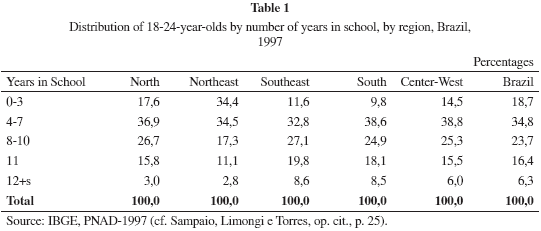
]]> The wide gap is revealed in an analysis carried out by Sampaio, Limongi and Torres based on data from the National Survey by Household Sample (Pesquisa Nacional por Amostra de Domicílios or PNAD) in 19974. Considering the age bracket 18 to 24 - youths who should be entering college -, for whatever skin color, Table 1 shows that only 16.5% have completed eleven school grades, that is, they have concluded the Brazilian 'medium level' and are therefore officially qualified to enter a college course. The percentage with 12 complete grades, that is, those who currently attend or have attended some kind of college program, is a discouraging 6.4%. For the entire young population, regardless of the skin color claimed, the average number of years spent in school is lower than seven, meaning that most Brazilian youths (58.7%) have not even succeeded in completing the 8 compulsory grades in the so called 'fundamental schooling'. This enormous gap is also found in regional terms: in less developed regions such as the Northeast, there is a higher percentage of students excluded from higher education.
A historical perspective is also necessary if we are to find adequate treatment for the problem. In a seminal study published in 1979, Carlos Hasenbalg recovered and analyzed data from the 1950 Census, demonstrating how far behind the country's education lagged at the time. As can be seen in Table 2, the percentage of Brazilian students aged 10+ who had not even completed four years in school was then a staggering 93%5. The educational gap of today has its roots in this unfortunate past, and the problem of black students should be examined against this backdrop. We should strive to find and explanation for this slow educational development.
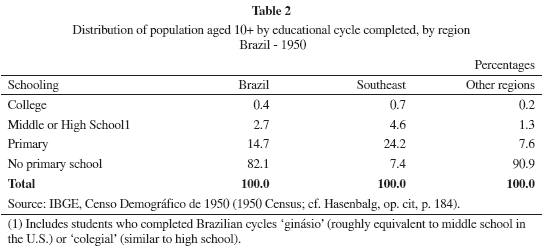
]]> Both tables show a substantial difference between findings for the Southeast and other regions. In 1950, the percentage of students who had not completed their primary education in the Southeast was around 82% compared to almost 91% in the other regions. This situation can be traced back to prevailing economic development model at the time, described in a pioneering work of Gláucio Soares quoted by Hasenbalg:
... while the Southeast presented some characteristics typical of an urban-industrial society, with considerable urban population and a sizable working class, the rest of Brazil was fundamentally rural and agricultural. Industrial jobs were scarce, proving the secondary role played by industrialization in the economic scenario […] In this respect, the Southeast is fast becoming an industrial society, while underdeveloped Brazil, particularly the Northeast, remains predominantly rural, agricultural, non-industrial6.
One needs to aware of the little use this traditional, slavery-based society had for reading or writing - there was nothing to be read anyway. For small farmers and farm hands, mastering skills such as reading or writing did not bring any improvement to daily life, since whatever work was available did not require any of that. In rural areas, those few children who went to school even forgot their reading skills once they left school, since there was nothing to read in daily life. Even in urban areas within the traditional economy, a manual worker could only enjoy a better life if he learned some craft through practice, not formal education. The only social activity that required writing (but not reading) and brought some benefits was being a voter - though even here all it took was being able to write your name. In short, ours was an illiterate economy and society7.
Another aspect that should be considered is the fact that the two great matrixes that shaped our culture and society, namely the African and Portuguese, had no strong literate tradition - the African had no written language, and the Portuguese still had one of the largest numbers of illiterate citizens as late as the 19th century and even well into the 20th century. The German and Italian immigrants that came to Brazil in the late 19th century included a significant number of literate workers, but in Brazil as a whole, literate culture was restricted to a small, specialized elite group, to which most landowners did not belong. School began to be valued with the emergence of modern capitalism and the urbanization resulting from the industrialization process, and that is why the Southeast was the first to show some educational improvement compared to other regions8.
Another important factor in traditional culture derives from our slavery-marked past: labor was despised, and this prevented the social ascent of the poor black and white workers. In Brazil, manual labor was something slaves did, not free men. It is easy to understand that for the ex-slaves, freedom meant mostly relief from hard work and more time for leisure. Florestan Fernandes showed how the association of labor and slavery pervaded all of the Brazilian society, and hit mostly the poor, whether black or white, as they started to have to compete with European immigrants in places like São Paulo9.
While recognizing the devastating effects of educational unfairness, we must acknowledge the dramatic changes that have been taking place from the fifties until today. Considering that compulsory schooling was raised from four to eight years, and that the population in schooling age grew enormously (due to the increased birth rates from the fifties to the seventies), there was considerable progress, in spite of the remaining regional and ethnical gaps. Our country reached unprecedented schooling rates, as high as 97% in the 7-4 age bracket. Yet the consequences of the expanded inclusion in the schooling system can only be perceived in the medium and long run, and they do not become apparent at the same pace for all population. Within this picture of tremendous unfairness, there is no question that the black and mulatto are in fact the underprivileged among underprivileged.
Skin color and educational gap
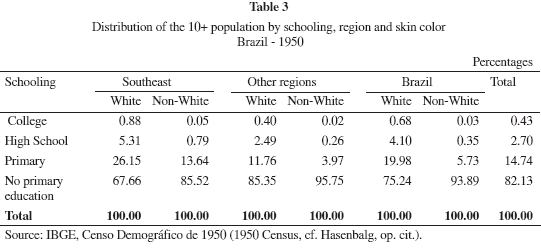
In 1950, the educational gap separating white and black/mulattoes was even more shocking than the overall appalling situation of Brazilian education as a whole. We need only point out the differences in both ends of the process: while the percentage of whites with no primary education was 75.2% country-wide, it reached 93.9% for blacks and afro-descendants - in other words, a difference of 18,7% . For college educated individuals, while the percentage of whites is dismal (0.68%), non-whites are virtually excluded, with 0.03% (Table 3).
]]>
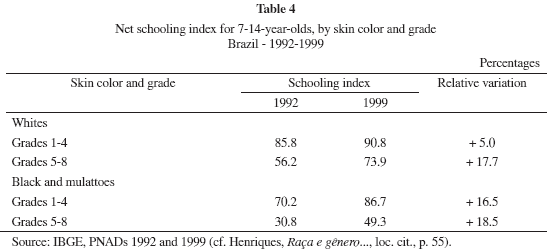
For the assessment of the skin-color educational gap in a more recent period, we will use data from the PNAD surveys of 1992 and 1999 on net schooling indexes for the population aged 7-14 and on the schooling of the population aged 25+, according to the analysis made by Ricardo Henriques10. The data are not directly comparable with the previous findings, yet they are valuable because they show the wide gaps that still persist until today. In Table 4, we see that although school attendance has increased substantially across the board, black and mulattoes still have the greatest educational deficit. It should nevertheless be noted that in primary school, even considering only the years 1992 and 1999, the improvement in non-white schooling levels is higher than for the group of whites, especially in the first school years. In fact, since schooling is cumulative, policies should aim for more evenness in early schooling so that eventually greater balance can be achieved in the following grades.
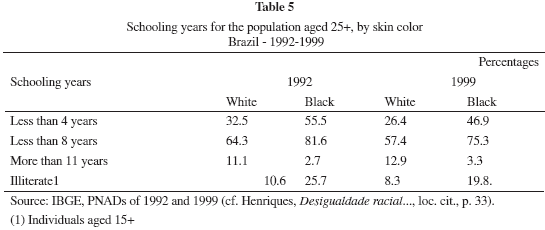
As for the adult population (25 or older), besides the findings in Table 5, data in the 1999 PNAD show that the average number of schooling years was 6.6 for whites and 4.4 for blacks/mulattoes. This represents a substantial increase over 1992, where the corresponding figures were 5.9 and 3.6 years respectively. Considering this indicator in a sequence beginning with individuals born in 1929 and extending the analysis until those born in 1974, Henriques comes to the conclusion that in spite of the overall improvement in schooling for white and black, the gap was not any narrower, since it remains 2 less years for afro-descendants11. One could interpret the findings differently: if in 1929 the average schooling for white individuals was 100% greater than the one for black individuals (four and two years in school, respectively), in 1999 this relative difference was down to 50% (4.4 and 6.6 years). There is still a great gap, of course, but it is little realistic to claim there was no progress at all. Excessive pessimism may backfire, creating the perception that afro-descendants are not capable to make use of the opportunities offered by universal access to school.
]]>
Once the extension of the gap has been documented, we must proceed to analyze the factors and mechanisms that promote such unfair treatment, and determine whether it is the result of social class or racial prejudice. We must consider three interconnected factors that play a decisive role in school performance, regardless of ethnic origin: parents' schooling, family income and region of residence. There is still a fourth factor, attending private schools, which provide better teaching, but then again this is a consequence of family income and parents' schooling, and therefore we will not consider this fourth factor separately.
The level of schooling is an essential part of the so-called "cultural capital", which in turn is closely associated with income and social status. Cultural capital is accumulated from one generation to the next, and it depends not only on school and income, but also on the family environment. Thus, in middle or upper income families, where parents have had more education, the environment is richer in stimuli to the acquisition of the skills and competences essential to the school culture: abundance of written materials; drawing and reading as part of children's leisure; selection of educational programs on TV; rational argumentation and discussion of issues; use of educated language; enforcement of study discipline. Even more importantly, students are expected to perform well in school, and academic success is valued12 - this explains why Asian ascendance students tend to outdo white students in school, and have a far larger student share in universities than their share of population.
In light of cultural capital, one could conclude that educational policies introducing compensatory pedagogical practices in public schools, aiming to reduce the cultural deficit affecting children of poor, illiterate parents could benefit low income children from rural regions, whose parents have not even concluded primary school. We know that due to the vicissitudes of their particular history, the black and mulattoes are more than proportionately present in such underprivileged group. First, they are concentrated in regions where there are fewer educational opportunities to be found. The increase in the non-white population in the Southeast is a relatively recent phenomenon due to the interregional migration that started right after World War II, but the (mostly black and mulatto) immigrants have much lower initial schooling levels than residents; this is only corrected in subsequent generations). Second, the difference in schooling among adults (parents) is much smaller in the non-white population, and the difference between white and non-white groups seems to resist for generations. Last, there is the income gap, and one of the key indicators of such difference is the percentage of black and white among the poorest in the country: while the first make up 69% of those below the poverty line and 64% of the lower income class, the corresponding figures for whites are 31% and 36%, respectively13.
Income levels, parent's schooling and region of residence or origin can account for a significant part of the educational gap affecting afro-descendants, since this population seems to accumulate all the negative factors, with multiplying effects. But that is not the whole story. While the Brazilian average for all ages shows that the black and mulattoes have around two years less schooling than the white, the comparison of white and non-white families within the same income bracket will show a narrower gap: here, the difference is one year only14. This shows the burden of prejudice and discrimination that falls on black children, a burden affecting both school-family relationships and social environment.
There are three basic areas where discrimination and prejudice play a decisive role in the vicious circle of poverty, exclusion and deficient education (or lack thereof) that has afflicted afro-descendants after the abolition of slavery. The first two, as we saw, are the labor market and informal social relations. The third, which is of special interest to us, relates to schools. This is where prejudice is especially dire, especially when occurring in the early grades, at a time when children have not yet developed defense mechanisms against the projection of negative identities on part of those who see themselves as white. In fact, it is in school that many children with a Negroid phenotype have their first encounter with prejudice, since before then they moved only in closer circles of family and neighbors, where skin color tends to be more homogeneous and where closer ties prevent blatant prejudice15. Entering school means moving away from the protection of family, and being included in a multi-ethnical group.
White students show their prejudice in a number of ways. At its most aggressive, insults and stereotypes will attribute negative traits to afro-descendants, characterizing a black student as "troublemaker", "lazy", having "no manners", as different studies have shown16. In its subtler form, it will use exclusion mechanisms to set black children apart from groups of white children within the school environment. Both processes contribute to creating feelings of rejection and low self-esteem that may in turn affect black children's achievement at school. On part of the teachers, there are two mechanisms at work: the first is assuming that black children with fail and create trouble, in an attempt to make the child responsible for his or her underachievement. The second, still related to the first, is failing to provide the stimuli and affective attention such children crave. For poor children that have parents with little schooling, living in homes where school is not perceived to be of great value, it is crucial for teachers to help integration at school, offering the necessary incentives to learning. In contrast, presupposing the student will fail is a powerful form of discouragement.
Once she is excluded from the white groups and discouraged by her teachers, the black child may reject school and all it represents - this feeling will usually be expressed through aggressive behavior, lack of discipline or excessive shyness and isolation. Thus, the assumption of failure is a self-realizing prophecy, reinforcing negative stereotypes. Since success or failure in early grades is decisive for later achievement, the vicious circle is set, bringing more and more difficulties until the child eventually drops out of school, perpetuating the educational gap that plagues afro-descendants.
]]> The excluding character of the Brazilian school system is revealed when one examines the activities where this group has brilliantly succeeded in breaking the skin color barrier and gone on to achieve fame and success, such as sports and music: the required competencies for success were not acquired at school. It is in such activities that black children find their role models; this is where they focus all their hopes for success. This is one more reason why it is so important not only to increase the participation of black students in universities, but also to create the basic conditions that will help them succeed in intellectual activities: black children must have black scientists and intellectuals as role models, too.We must recognize that school and teachers cannot do all the work. Family culture is of utmost importance, since it is parents who encourage studying and enforce the discipline required for academic achievement. Well-structured, stable families and the solidarity of the immediate family members are important, for the child's activities should be supervised and organized by responsible adults. Both the works of Florestan Fernandes and Roger Bastide in São Paulo in the fifties and sixties and those of Alba Zaluar in Rio de Janeiro in the eighties and nineties17 show the detrimental effects on the socialization of children when they are left to their own devices due to the absence of a father or a substitute provider, or when they have to help maintain the household by starting to work very early, mostly in the informal or illegal economy. It should be pointed out that such families are very poor not only because they depend on a single provider, but because this single provider is a woman and women tend to have a much lower salary than men.
The high concentration of afro-descendants in urban poverty pockets is both a cause and a consequence of the wider exclusion process, and the difficulty in social mobility affecting this population group. There is a widespread vicious circle in which poverty and family disintegration reproduce and foster the development of violence not only at home but also in society at large. The systematic beating of women and children in the domestic environment - frequently associated with a succession of alcoholic husbands or companions who never develop stable relations with the family nucleus - certainly contributes to the pattern of violence found in the poverty pockets. Black children are the greatest victims of this process18.
The data presented here, though summarized, clearly demonstrate the unfairness of our educational system, a system that penalizes the poor, discriminates against black and mulattoes, and shows a decisive bias towards children of parents with better schooling. For those few who overcome all hurdles and do finish high school, there should be opportunities to pursue a college education, especially in public universities, since these provide better courses and do not charge tuition. Yet we should bear in mind that afro-descendants have in fact already achieved important victories in the educational arena, also in terms of access to universities, as shown in the analysis by Sampaio, Limongi and Torres of the social and economical indexes found for the standardized National Exam of Courses (Exame Nacional de Cursos) taken by 1999 college graduates countrywide19. As seen in Table 6, black and mulattoes together account for approximately 20% of the graduates from public universities at the time, and this not a small feat in light of the situation that prevailed ten, thirty or mostly fifty years ago.
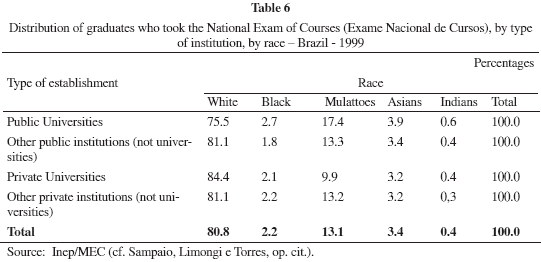
There is no denying that the percentage of white students is much larger, and that the educational gap is a great burden on the shoulders of afro-descendants, especially when we consider the entire group of institutions and not only public universities: in this case, black participation is reduced to 15.3%. Likewise, there is no denying that affirmative actions are necessary to narrow the gap. What we do want to emphasize is that actions will be effective exactly because a growing population of afro-descendants has finished high school and entered university; these youths are now about to graduate, proving that there is a larger group of talented, competent young men and women who have succeeded and overcome the many hurdles they had to face along the way.
Yet the set of data proves beyond any doubt that poverty, lack of parent schooling and discrimation in the labor market reproduce intolerable racial unfairness. The application of universal criteria alone has failed to correct this situation satisfactorily or promptly. That is why, affirmative action is needed, as long as we do not raise the level of public schools, improve the schooling of parents, elevate the cultural capital of the poorest among our population (with their disproportionate numbers of black and mulattoes), and as long as discrimination survives in our schools. We must provide this group with the opportunity and stimulus to help those who value an education and who are willing to work harder to overcome the deficiencies in their previous schooling. This brings us back to discussing education and intellectual background as a values.
]]>Affirmative policy
In Brazil, maybe because universal access to school is a recent event, dedication to school and to studies is still a secondary value. Although children in higher income families enjoy obvious advantages as pointed out above, study and culture are not fundamental values as a rule. Even in white upper middle class families, children and youths who show a clear intellectual vocation are in fact discriminated against: popularity is a result of success in sports, designer clothing and sex appeal. Yet today a college education is increasingly necessary to maintain social status and competitiveness in the labor market. Since entering the best institutions depends on the evaluation of competencies that are a result of sound schooling, at the time of the entrance exam values are transformed.
The deficiencies in previous schooling must be made up for, and this led to the creation of the Brazilian institution called "cursinho" ('short course'). Educators generally criticize them, considering them as mere preparatory drills to enable students to pass entrance exams. But while "cursinhos" cannot replace the solid background obtained in good schools along eleven years of schooling, they do in fact make up for part of the deficiencies in information and competence in different subjects20. In addition to that, the year preceding the entrance exam is the one time students in cursinhos really dedicate themselves to studying in a way they have never done before. For the first time, getting a high grade is a factor of prestige and personal value. And this is one more reason why entrance exams are important: they serve to reward those who study hard rather than race, purchasing power or social prestige. Nevertheless, such courses are private and costly, which renders them unaffordable for the poorer population to which most afro-descendants belong.
For better or worse, studying in a cursinho makes it possible to overcome existing deficiencies in a way that would be impossible during a college program. As mentioned above, this is not the objective of universities, and they do not have the qualified personnel for such remedial work in so many different career-oriented courses. What could be done in universities is gathering specialists in youth and adult education and specialists in the different areas tested in the entrance exams in order to create a free, innovative, stimulating, creative, effective prep course which would enable low income youths to catch up and have better chances at the entrance exams. For this population, not used to studying in an autonomous, disciplined manner, remote learning is not adequate, but good programs inspired in new information and communication technologies, presented and discussed in presential sessions, could be a great help. The creative talent of universities could also be used to produce the programs, which could also be offered to public school and used in regular classes as a powerful learning tool. A team could organize and supervise a preparatory course formally integrated into extension activities, with classes being taught by undergraduate and graduate students, especially in teacher's colleges. For these "licenciatura" students (NT:'licenciaturas' are required to teach specific subjects such as Biology, Physics, History, etc in the grades roughly equivalent to middle/high school), this activity could even be part of the compulsory student internship and be an excellent opportunity for pedagogical experience and familiarization with new educational technologies.
For students who have suffered discrimination and incorporated a negative image of their ability to learn, there should be room to discuss the racial issue and to receive adequate stimuli to reconstruct one's identity. Though still few, the black students and professors could play a decisive role here. It is important that this discussion not exclude non-afro-descendants, since it is mostly whites who practice or condone prejudice. This is possible and desirable; so much that students have undertaken initiatives to that end in the cities of São Paulo and in Rio de Janeiro. Furthermore, preparatory courses of this type have been constituted outside university by organizations committed to supporting black students.
Financial support was recently provided for such courses, in a rushed last minute effort by the outgoing administration of then President Fernando Henrique Cardoso. Because it lacked the necessary research and preparation, this initiative cannot be seen as a paradigm. Nevertheless, with corrections, it could be reformulated into a new program with similar orientation, involving public universities in the project. This could provide adequate affirmative action within our racial reality, and could be very helpful to those who finished high school against the odds, and deserve not the guarantee that they can enter college, since this is not offered to anyone else, but a chance to show their ability to learn and compete.
A free preparatory course could hardly serve all candidates, but would certainly make it possible to overcome deficiencies by favoring those candidates coming from public schools and lower income households, those who do not have the option of paying for a good private preparatory course. Choosing students by income bracket would automatically lead to accepting a greater group of black and mulattoes, who represent the majority among the poorer; but beyond that, it is important that they have explicit precedence as the underprivileged among the underprivileged. A scholarship system could also help cover expenses with transportation, books and meals.
A program as described above would not incur in the distortions of a quota system based on the percentage of blacks and mulattoes in the total population, rather than on their much smaller percentage among high school graduates. In fact, 1999 data show that among whites, 12.9% had completed high school, compared to 3.3% among blacks. A good part of this minority of afro-descendants comes from higher income families, where parents have had better schooling. In the suggested quota system, a high school graduate who claims to be black may have two to four times better chances of entering college than a white student. This will be inevitably unfair to poor white students of parents with deficient schooling, since these poor students will need to have substantially higher grades to enter college. So this would be redressing a wrong and creating another.
Another essential affirmative action would be raising the university's awareness of its urgent responsibility to train teachers to fight racism in themselves, in their classroom and in their school. This issue must be included in the curriculum of pedagogy and "licenciatura" courses. This subject should not be taught as a theoretical and abstract discussion of the evils of racism, but rather as a program to enable teachers to diagnose racism as it happens inside a classroom, and to fight it. Participants must be aware of how important it is for a child to have a teacher who believes in their potential. This way, universities can truly contribute to nipping the problem at the bud, that is, in primary school. The combination of these two affirmative actions - at the low and high end - could do a lot more to bridge the educational gap than a quota system.
]]>
Received for publication on June 14, 2003.
Eunice Ribeiro Durham is Professor Emmeritus at the FFLCH-USP and a research fellow of the Núcleo de Pesquisas sobre Ensino Superior da USP (USP Nucleus of Research on College Education). She published another article in this magazine, called "A universidade e o ensino no Brasil" [University and Education in Brazil] (nº 63).
1 See Fry, Peter. "Feijoada e soul food". In: Para inglês ver. Rio de Janeiro: Zahar, 1982, cap. II. The author analyzes the phenomenon of appropriation of cultural items produced by afro-descendants by producers of national symbols and mass culture, using as examples samba (typical Brazilian music) and candomblé (a kind of Brazilian religious ritual). Also see the classical text by Maria Lúcia Goldwasser on samba schools and Carnival parades: O palácio do samba. Rio de Janeiro: Zahar, 1976.
2 Creating a "black culture" as proposed would mean also creating a white culture, re-segregating capoeira, samba and carnival (albeit European in origin, carnival was Africanized in Brazil) as belonging only to blacks, as well as hip hop, funk, umbanda and other symbolic elements related to ethnicity, such as cuisine from Bahia and even the Black Virgin, Our Lady Aparecida. The esthetic values of the African culture have been widely incorporated into Brazilian culture. Prejudice focuses on the esthetics of the body (but not form), by demeaning physical characteristics such as hair, nose and lips, so that the notion of "black beauty" needs to be recovered. A new black esthetic concept is a very important victory in the making, thanks to the black movement, and this is not in any way detrimental to the creation of a racial democracy.
3 On the fluid racial boundaries in Brazil, see Carlos A. Hasenbalg, Nelson do Valle Silva and Márcia Lima, Cor e estratificação social [Skin color and social strata] (Rio de Janeiro: Contracapa, 1999), presenting a different position from the one I defend, and also the classical essay by Oracy Nogueira, "Preconceito racial de marca e preconceito racial de origem" [ Racial prejudice of brand and racial prejudice of origin] , de 1955 (in: Tanto preto quanto branco: estudos de relações raciais. [Both black and white: a study in racial relations] São Paulo: T.A. Queiroz, 1985, pp. 67-94).
4 Sampaio, Helena, Limongi, Fernando and Torres, Haroldo. Eqüidade e heterogeneidade no ensino superior brasileiro [Equality and heterogeneity in Brazilian college education]. São Paulo: Nupes-USP, 2000 (mimeographed).
5 Hasenbalg, Carlos A. Discriminação e desigualdades raciais no Brasil [Discrimination and racial unfairness in Brazil]. Rio de Janeiro: Graal, 1979. Data are not strictly comparable with the previous ones due to the differences in the age brackets considered.
6 Soares, Gláucio A. D. Sociedade e política no Brasil [Society and Politics in Brazil]. São Paulo: Difusão Européia do Livro, 1973, pp. 162-163, apud ibidem, p. 125.
7 For a more detailed analysis of the traditional rural economy and society, see the second part of Durham, Eunice R. A caminho da cidade [On the way to the city]. São Paulo: Perspectiva, 1973. A review of the extensive bibliography on the theme can be found here, including reports by voyagers in the 19th century and the community studies that became so common in Brazil beginning in the forties. The work of Antonio Candida, Os parceiros do Rio Bonito [The partners of Rio Bonito] (São Paulo: Duas Cidades/Ed. 34, 2001 [1954] ) is particularly important.
8 Scholars who have analyzed the racial issue in Brazil, as Carlos Hasenbalg, have discarded the past of slavery as a factor explaining the current racism and educational gap. They are right in that invoking the past is often an ideological justification to hide the mechanisms that reproduce discrimination in current society - racism is a mere leftover from the past, having no real roots in the society of today. Yet the current situation of blacks in Brazilian society is the result of a historical trajectory from which the past of slavery cannot be eliminated, because it has in fact caused later difficulties for their integration into society. The combination of prejudice and poverty, the lack of schooling and family organization, all sad heritage from slavery, add up and build serious obstacles to social ascent, creating a vicious circle of reproduction of unfairness, recognized by Hasenbalg, who called it the "cycle of accumulation of handicaps" (Hasenbalg, Carlos A. e Silva, Nelson do Valle. Estrutura social, mobilidade e raça[Social structure, mobility and race]. Rio de Janeiro: Vértice/Iuperj, (1988).
9 Fernandes, Florestan. A integração do negro à sociedade de classes [The integration of blacks into class society]. São Paulo: Faculdade de Filosofia, Ciências e Letras da USP, 1964; O negro no mundo dos broncos [The black in the world of the white/brutish]. São Paulo: Difusão Européia do Livro, 1972.
10 Henriques, Ricardo. Raça e gênero no sistema de ensino: os limites das políticas universalistas na educação [Race and gender in the educational system: the limitation of universal policies in education]. Brasília: Unesco, 2002; Desigualdade racial no Brasil: evolução das condições de vida na década de 90 [Racial inequality in Brazi: the evolution of the living conditions in the nineties]. Rio de Janeiro: Ipea, 2001 (Texto para Discussã o nº 807)[Text for Discussion no. 807] The use of the net schooling index underestimated the extension of schooling, since it excludes the children over 14 who are still in school. A large number of students flunk, including a large percentage of black and mulattoes.
11 Henriques, Raça e gênero [Race and gender]..., loc. cit., p. 30.
12 Apparently contradictory to the statement in the text, the studies I carried out in the sixties, seventies and eighties with rural immigrants and poor urban workers indicated they generally saw school as being very important. But they thought achievement was the result of a child possessing "natural" talent or "a good head", and it was only "natural" for those who didn't have such attributes to eventually drop out. As a consequence, the family investment in education tends to be concentrated on one of the children only.
13 Data from the PNAD of 1999, cf. Henriques, Raça e gênero..., loc. cit., p. 23.
14 Cf. Sampaio, Limongi e Torres, op. cit.
15 Indeed, the incorporation of negative identities can also take place in one's own family, in cases where the prejudice against the black has been assimilated by the parents. This occurs quite clearly in mixed blood families where the lighter-skinned children are more valued than the darker-skinned offspring.
16 Cf., for example, Silva Jr., Hédio. Discriminação racial nas escolas [Racial prejudice in schools]. Brasília: Unesco, 2002; Cavalleiro, Eliane. (org.). Racismo e anti-racismo na educação [Racism and anti-racism in education]. São Paulo: Summus, 2001; Lopes, Ana Lúcia. Ampliando o olhar: a construção da identidade de crianças negras e mestiças pobres frente à experiência escolar [Widening the angle of vision: building an identity for poor mixed blood children through school experience]. São Paulo: Master Degree dissertation, FFLCH-USP, 1997. Cf. Virgínia Bicudo's pioneering work: "Atitudes dos alunos dos grupos escolares em relação à cor de seus colegas" [Student attitudes towards their classmates' skin color in public primary schools]. In: Bastide, Roger e Fernandes, Florestan. Relações raciais entre negros e brancos em São Paulo [Racial relations between blacks and whites in São Paulo]. São Paulo: Anhembi, 1955.
17 Bastide, Roger e Fernandes, Florestan. Brancos e negros em São Paulo. [Blacks and whites in São Paulo]. 2ª ed. São Paulo: Companhia Editora Nacional, 1959; Zaluar, Alba. A máquina e a revolta [The machine and the rebellion]. São Paulo: Brasiliense, 1985.
18 Nelson do Valle Silva shows that the highest indexes of violence including domestic violence are found among black and mulattoes, who are the majority both of aggressors and victims (cf. "Notas sobre desigualdade racial e política no Brasil" [Notes on racial and political inequality]. In: Hasenbalg, Silva e Lima, op. cit., p. 39).
19 Sampaio, Limongi and Torres, op. cit. Even though for this year the exam covered only thirteen courses, it did include both the most and least prestigious courses, and can thus be considered a reasonable sample of the entire system.
20 Even though I had studied in good schools and had parents with good schooling, I too attended a "cursinho" before I entered the USP College of Philosophy, and I found it very helpful. At the time, the "cursinho" was an initiative of the USP student center, and classes were taught by college students.