"El fracaso argentino": interpretando la evolucion economica en el "Corto Siglo XX"
Eduardo Miguez
Instituto de Estudios Histórico-Sociales (IEHS), Universidad Nacional del Centro de la Provincia de Buenos Aires, and Universidad Nacional de Mar del Plata
Translated by Marta Ines Merajver.
Translation from Revista Desarrollo Económico, Buenos Aires, v. 44, n.176, p.483-514, Jan./Mar. 2005.
]]>
SUMMARY
This study reviews a representative though not an exhaustive set of representative explanations of the poor performance achieved by Argentina’s economy between the Great War and the 1989 crisis. It analyzes the literature by dividing it in accordance with two different approaches: one that assumed that economic performance was conditioned by structural factors, and another that attributes it to decisions on economic policies and conjunctural circumstances. Regarding the firts approach, it highlights the importance of colonial legacies, the asymmetry of international relations, problems related to the formation of capital, and the flaws of the entrepreneurial class that led the industrialization process. Among the second approach, emphasis is laid on those who point to the lack of State intervention or the State’s belated decision to intervene, those who hold the opposite view by stating that it was precisely because of State intervention that the economic parameters favorable to growth and development became distorted, those who point to problems about political and social institutions, and those who attribute poor performance to a series of citcumstancial processes. The last part of the study intends to underscore the role played in this process by the distance separating initial levels of development (aided by natural resources) and the levels of societal general development, chiefly in relation to the available human capital and to the quality of the institutions involved.
Descriptors: Social theory, Economic history, Development, ‘Argentinean failure’, Human capital, Institutional quality, Argentina.
RESUMEN
El trabajo revisa un conjunto representativo, aunque no exhaustivo, de interpretaciones sobre el pobre desempeño de la economía argentina entre la Gran Guerra y la crisis de 1989. Analiza la bibliografía agrupándola según dos aproximaciones distintas; quienes asumen que dicha performance estuvo condicionada por factores estructurales, y quienes la atribuyen a decisiones de política económica y circunstancias coyunturales. Entre los primeros, destaca la importancia que se ha dado a los legados coloniales, el peso de las instituciones, la asimetría en las relaciones internacionales, problemas en la formación de capital y la inadecuación del empresariado que dirigió el proceso de industrialización. Entre las segundas, quienes señalan la falta de (o tardía) intervención estatal, los que por el contrario atribuyen a esta intervención la distorsión de los parámetros económicos que facilitan el crecimiento y desarrollo, quienes señalan problemas en la institucionalidad político-social, o atribuyen la performance simplemente a la resultante de una serie de procesos circunstanciales. En la parte final del artículo se apunta a subrayar el papel que la distancia entre el grado de crecimiento del producto en el momento inicial (favorecido por la dotación de recursos naturales) y el nivel de desarrollo general de la sociedad, fundamentalmente en cuanto a su capital humano y calidad institucional, pueden haber tenido en este proceso.
Descriptores: Teoría social, Historia económica, Desarrollo, 'Fracaso argentino', Capital humano, Calidad institucional, Argentina.
]]> Had Pyrrhus not fallen by a beldam’s hand in Argos or Julius Caesar
not been knifed to death? They are not to be thought away. Time has
branded them and fettered they are lodged in the room of the infinite
possibilities they have ousted. But can those have been possible seeing
that they never were? Or was that only possible which came to pass?
Weave, weaver of the wind.1James Joyce: Ulysses, p. 31, Penguin Books, 1980 (My italics).
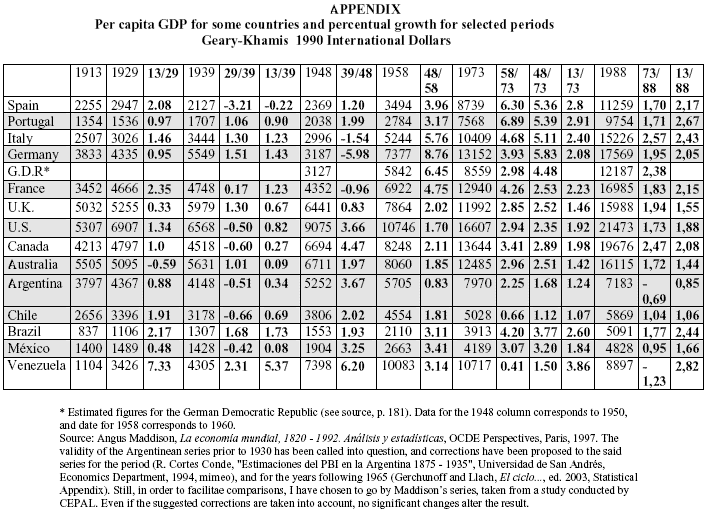
Could Argentina have escaped its fate of economic stagnation and relative backwardness in the 20th Century? Between 1913 and 1989, the country’s rate of growth amounted to 0.74 per year2. If it had been 2%, a reasonable figure for the world economy in the period (see Appendix), in 1989 its per capita GDP would have been similar to that of France: a little more than 17,000 dollars. If we go by the perhaps more reasonable Australian rates (1.45% per year), the per capita GDP would have reached about 11,300 dollars, in the vicinity of that of Spain for the same period. In either case, it could be affirmed that Argentina would have been an altogether different country from the one it actually is. Its political system might be more stable, nationalism and populism might be more moderate in the social imaginary, the political range might be more temperate, and there might be lower levels of social exclusion. In other words, it might share some of the cultural and political features that characterize modern pseudo-European nations whose cultural tradition is akin to Argentina’s.
Why Argentina evolved as it did is a classic question in the general history of economics, and not just in the history of Argentina. Practically every scholar who has broached our 20th Century economic history have opened the discussion at this point, and many of the best-reputed economic historians or economists have occasionally contributed their reflections on the subject.
]]> This paper intends to cast a historiographic and analytical look at the problem. Naturally, as has already been stated, the very size of the issue prevents me from expounding, in a few pages, the countless ideas and arguments formulated on the matter. Thus, the first section of this study will deal with a selected number of the analytical nucleuses of the problem in order to illustrate the approaches it has induced. It is my purpose to analyze the hypotheses proposed in terms of the conceptual systems from which they derive. Some of the notions chosen rank among the most classic and influential ones, while others, perhaps less known, will serve to illustrate some of the aspects that I would like to underscore. There is particular emphasis on the type of explanation that different authors have suggested as a reason for the "Argentinean failure", especially when they have discussed whether it was due to structural factors or to particular historical processes. The natural outcome of such theories is a question about the part played by economic policies in determining the course of events, together with the extent to which such policies conditioned structural features. There are also considerations about the relation between explanations that are solely grounded on the economy and others that stress political and institutional factors or other, wider, aspects of social development. On the basis of historiographic analysis, Section Two posits some hypotheses for the interpretation of the phenomena. These hypotheses stem from a comprehensive perspective of such factors as affect economic growth. To this purpose, by resorting to the world’s economic history insofar as it has focused on issues of growth and development, I have adopted a comparative stance that allows a view of Argentina’s problems within the framework of the world’s economic process. This leads to the choice of suggestive reference points to explain the country’s particular processes.If we glance at the country’s economic development in the 20th Century, we will find it easy to share Daedalus’ perplexity as he taught his class on that ill-omened Doomsday morning. Was the future of Argentina written into the very essence of things? Or was it rather the outcome of a number of circumstantial decisions about economic policy which, depending on the case, were due to conjunctures, sectoral pressure, and/or intellectual vogues that, taken together, wove a net (a net of winds?) that inescapably drove Argentina to its third-world fate? As we shall see, the question admits of more than one answer, and the possible answers have complex edges. In principle, one could think that a Neo-classic standpoint3 would necessarily favor the second choice, while dependentist or structuralist theories will predictably tend to lay emphasis on determinants that go beyond conjunctural decisions. However, the outlook is not that simple. Structural explanations display numerous nuances, and there also those that appeal to classic or neo-classic analytical matrixes. Moreover, Argentinean common sense –frequently apparent from interpretations by historians –is remarkably reluctant to accept classic or neo-classic economic reasoning. In our common sense there prevails consensus about the fact that economic failure results from bad policies, often imposed from outside and embraced by a corrupt, opportunistic political class. Thus, curiously enough, theoretical or ideological lines of thought not always are relevant divides for interpretation models. We shall also see that explanations inspired in neo-classic ideas run close to others whose sources lie in very different conceptual models. At times, viewpoints stemming from the "right" coincide with others from the "left" in more aspects than they would be happy to acknowledge.
Because of the above reasons, I believe that a good way to approach the various views is to attempt a definition of some of the general models that constitute their guidelines. I do not propose to reproduce the corpus of thought of any particular author –although in some cases the models do derive from one work or from a limited number of authors –but rather to construct general models of interpretation (some sort of Weberian "abstractions") that give the possibility of joining similar ideas which appear repeatedly and which, in a number of cases, rule the various explanations. (Still, it is also true that there is great variation in the manners in which they combine). On the other hand, explanations about the past of Argentina do not always opt for either deterministic or historical notions. They often match hypotheses of different origins: some are of a more rigid nature, others depend on random variables. It is quite probable that this study schematizes viewpoints hinging on this alternative. There is no intention to caricaturize arguments, but just to order conceptual tools. However, it stands to reason that this method renders it impossible to account fully for the wealth of the works dealt with here. Then, even when the name of an author is associated to some argument, it would be a reductionist idea to assume that the whole of the mentioned author’s thought is being reflected..
The colonial legacy
Perhaps the most frequent vision of the Argentinean failure in the 20th Century is the one that associates it with a past legacy that the country cannot overcome. Many variants have been devised around this notion but, on the whole, they tend to place the origin of our evils in a legacy that almost invariably dates back to the colonial era. Thus, it is remarkably consistent with one of the most frequent prognoses formulated by those who spread the idea before the great expansion that occurred in the late 19th Century. The assumption states that the colonial past bequeathed to Latin America – obviously including Argentina –a set of practices, customs, institutions, and even an economic structure at odds with the rise of a modern society. This interpretation has been favored by a large part of Anglo-Saxon literature on the subject, and remains a dominant view. However, there are other conceptual traditions that promote this connection with the past. Perhaps the most classic of these approaches is inspired by a vague functionalist sociology that relates backwardness to a pre-modern social order. Its most salient political features are supposed to lie in authoritarianism and caudillismoI, added to the survival of an oligarchic elite rooted in the concentration of land4. This notion, generally prompted by "progressivism", suggests that the elite held power for so long that it thwarted the initiative of the economic change potentially brought to the country by the new immigrant class.
One particular yet notable aspect of this dynamics might be the difficulty to develop an industrial base. Oscar Cornblit’s classic argument5 -an association between industrial development and a poor social base composed of immigrants with no influence on the system would deprive the former of political support –complements the vision of a social order which, despite the growth experienced in the late 19th and early 20th Centuries, does not adapt kindly to the fostering of a modern society.
In more general terms, development requires an open society that may stimulate individual progress, which is said by some to have been inhibited by the Spanish tradition. Dominance by an aristocratic, traditionalist elite, and the ensuing authoritarian populism engendered by it are thought to be insurmountable obstacles for the type of progress whose nature is intrinsically democratic.
Based on arguments that are less dependent on functionalism, ideas akin to these have been commonly found in vernacular readings of our past. Their most simplistic expression is the one that reduces Argentinean history to a confrontation between the "people" and "oligarchy", a most useful resource to justify populist policies. According to this view, the "oligarchy" hinders development in order to preserve its own dominance and privileges. But even manicheistic explanations presuppose that the weight of the oligarchic political legacy and the distribution of the land have constituted insurmountable obstacles to Argentinean growth.
This line of interpretation presents formidable problems. From an empirical standpoint, the pattern followed by the Argentinean State and economy prior to the Great War has been heavily brough into question by historical research in the past twenty years. If the bonds between the landowners and the State were weaker than it was believed, if the government was more sensitive to industrialist demands and regional agroindustries, if the concentration of lesser rural property and a more diversified productive structure (for example, small landowners and great sharecroppers), if –in general terms –the agricultural sector was dynamic as well as competitive whereas industrial development was quite incipient but grew solidly even before the crisis of the 30s, many of the arguments that attribute the failure of the "short 20th Century" to the colonial legacy that survived the Great Expansion lose a large part of their footing.
]]> Even if we leave these arguments aside, the assumption that development is associated to democratic contexts is indeed exceedingly questionable. It is not only the Asiatic countries that have succeeded in overcoming their economic backwardness within heavily authoritarian contexts. The history of economics is teeming with examples that prove that there is not one single model to shape the relation between the political system, manners of authority, and economic growth. If Jeffersonian social democracy led the way toward growth in the U.S. (also a debatable matter), the economic growth experienced by Japan, Germany, or Italy, and especially Spain is in no way related to social democracy. Countries that were ruled by authoritarian or authoritarian-and-populist governments later consolidated their democratic regimes together with their growth and development and, at least in part, their growth began under authoritarianism. Chile, a closer neighbor of Argentina, seems to be currently undergoing a somewhat similar experience. Nor can we think of an Anglo-Saxon model, since the social order that gave rise to British capitalism was very different from the one that furthered its development in the colonies overseas. Therefore, attributing Argentinean failure to the country’s structures of power or distribution of land echoes an ethnocentric expression rather than a reasonable explanation for backwardness. As we shall see, a question has been raised about the extent to which early social and political modernization may have obstructed the potentialities of an effective development model under an authoritarian regime.One element that keeps coming up in this argument is the one referred to "mentalities". In the Anglo-Saxon world, a classic yet dated notion associated economic growth with "individualism"6. And even though the notion of British particularism finds it difficult to hold its ground in our times, once and again the factor of local "customs and manners" raises its head among the elements that compose the explanation: backwardness results from a mentality that is disinclined to accept progress. However, as anyone can see, this part of the argument is as vulnerable to objections as are the ones already formulated against other posits of the same theory. Additionally, in the case of Argentina –a case that can be extended to Uruguay and, within certain limits, to the south of Brazil –such hypotheses must assume that not only the Great Economic Expansion but even the shift in population that swept the country in the period7 made little impact on the archaic mentality. Or perhaps it should be assumed that immigrants, far from the modernizing role ascribed to them by Alberdi and Germani, did not affect the prevailing mentality. At any rate, any hypothesis that relates backwardness to a mentality typical of Southern Europe is hardly defensible as soon as one realizes that the per capita Italian GDP is similar to the British, and that the Spanish one is close on their heels.
The weight of institutions
The tradition that attributes the origins of the country’s –and of Latin America at large - relative deterioration to the colonial legacy has found a new source of inspiration in neo-institutionalism. According to this notion, the roots of backwardness should be sought in the wrong definition of property rights, which increase transaction costs. In a recent text, Jeremy Adelman, who has cultivated a variegated institutionalist interpretation of the Argentinean past8, has taken up the idea of the Latin American "colonial legacy" as the origin of an institutional system that has hampered economic growth 9. Adelman makes a conscious effort to avoid determinist positions and to understand institutions as something else than a mere colonial legacy, for "institutional rules were the outcome of deep conflict"II(Republic, p. 14)10. This is how he highlights one of the typical problems posed by the institutionalist model. If institutions determine growth, what causes institutional development?
In North’s original formulation, the imprint left by the colonial legacy seems to determine the future of Latin America. In due agreement with his model, ideology plays a significant part in the transmission of the legacy11. Other institutionalist approaches seek to reject cultural-and-determinist aspects involved in the theory of the colonial legacy. (Adelman calls it "the culture as destiny crowd"II, Colonial, p. 12). Though through a less diversified approach –one that could be dubbed "militantly neo-classic" - S. Haber also underscores the role of the institutions in Latin America’s economic backwardness12. But along the lines of the work by Engerman and Socoloff included in the volume whose introduction he wrote, Haber posits that rather than being determined by a colonial legacy (he explicitly rejects the idea of "Iberian mentalité"), the destiny of institutions is marked by the availability of the factors that exercise their influence through the kind of productive structure developed in the region. This calls for a definition of property rights that does not go down well with modern capitalist development (and here we approach once more the issue of the colonial legacy). Nevertheless, the interesting thing about this hypothesis is that it resorts to a well-known model in Latin-American specialized literature: while the small-scale grain agriculture favors social democracy, the big tropical plantation gives rise to systems with greater concentration of property and power, not really suitable for growth. The same notion had been held by supporters of the staple theory13, with just a shade of difference: they laid greater emphasis on the different links of both systems and paid less attention to their institutional effects14.
As was stated in the staple theory, the problem lies in the fact that Argentina’s dominant feature was the exploitation of agriculture in a temperate climate rather than large plantations that thrived through slave labor. This is what Engerman and Socoloff try to work out briefly by means of ad hoc hypotheses intended for the preservation of their model15. Then, the argument that oligarchic dominance did not foster institutions that might aid development (thus bearing the responsibility for Argentinean backwardness) is easier to support by assuming that it was the offshoot of a traditional legacy and not an outcome of a number of factors in a case which, as has too often been said, does not differ much from those of Australia, Canada, and a large part of the U.S.
Again, this is due to a problem that will have to be taken up further on. Mercantilism does not constitute a legacy solely inherited by Iberian America. As North himself remembers, it took Europe a long process to abandon it. The question is: if institutional change is at the root of economic growth, what is the explanation for institutional changes? As we have seen from Adelman, many supporters of neo-institutionalist explanations are well aware that this is a problematic point in the theory. In North’s writings, the problem finds a different type of solution. Still, in the concrete case posed by Argentina, a new problem arises. Which were the institutions that enabled Argentina to grow until it had reached a privileged position within world economy and that then sank it back into underdevelopment? In order to attempt an answer to this question, even within an institutionalist framework, it will be necessary to seek for nuances in the explanations that account for processes of institutional change. One of the answers to this query comes from an institutionalist viewpoint of a different origin, in which institutions do not adhere to longe durée structures but rather to the "recitative of the political conjuncture". Still, we should examine other, more structurally based theses before proceeding to explore analyses of the accidental, short-lived span of politics.
World asymmetry
]]> A classic determinist explanation for the Argentinean failure associates backwardness and relative growth with foreign dependence. Here also we could find a number of variants. It is not worth revisiting the most extreme versions of the dependence theory of the 60s and 70s, such as the one expounded by André Gunder Frank16.Still, the idea that Argentinean economy had achieved growth only in relation to external determinants that imposed their own restrictions on growth enjoyed great popularity in the Academia –and not only there17. One recurrent notion of this hypothesis is that colonial or neo-colonial relations involved an endless transfer of income from peripheral to central countries; thus, the periphery involuntarily contributed to the accumulation of capital in central countries in detriment to its own economy18.
Let us not go deeper into this more than debatable interpretation of unequal interchange, with its characteristic implications of a distortion of relative prices in the international market that would be very difficult to correlate with the empirical information available. Instead, let us look into a more solid version that assumes that Argentina’s excessive dependence during the stage of externally oriented growth generated much external vulnerability, reflected in the deterioration of interchange terms and in the strong fluctuations in the demand of Argentinean exports (a more accurate rendering of "unequal interchange"). At this point, the influence exercised by the prognosis made by CEPAL (Economic Commission for Latin America) acquires more visibility, as it predicted that the tendency toward deterioration of interchange terms for primary producer countries was marked by a structural, long term nature, and that a favorable turn of the tendency was not to be expected. External vulnerability becomes more evident because it can also be noticed in the investment sphere. Fluctuations in international capital availability point to the pace of domestic accumulation.
One variant of this thought states that excessive dependence on the British market brought about the ensuing fall19. The growth experienced during the "golden era" was associated to exports of primary products to England and to imports of consumption and capital goods of the same provenance. During the first postwar period, when the U.S. took center stage in the world’s economy, a triangular interchange was established and the weakness of the Argentinean position became exposed. It became pathetically obvious when the Great Depression put an end to multilateral exchanges, forcing Argentina to seek a new growth model. As Great Britain lost its central standing in world economy, it dragged Argentina along. At this stage, the persistence of structures of power associated to the former growth model furthered conditions –such as the Roca-Runciman treaty –that did little to aid transition toward a new phase of development. In short, the nefarious experience of the Depression might have suggested that Argentina find possibilities of growth by focusing on the domestic market in the face of the external shock it had undergone.
The above ideas present some serious problems. In the first place, as has been recently highlighted by V. Bulmer Thomas (in a quite skeptical text about "external growth"), among all Latin American countries, Argentina was the one that diversified its foreign trade the most, both in terms of products and commercial partenaires20. While Great Britain occupied an important place in the meat trade, the alternatives were much richer in other significant items such as cereals and wool. Regarding the arrival of capitals, the 20s witnessed the increasing role played by the U.S.21.
However, an examination of the problems linked to external growth, apart from the "privileged relation" with Great Britain, would be in order. Many pessimists suppose that the time and manner in which economic growth first occurs determine later performance. Central countries achieve growth on the basis of industrial development at an early stage. The belated incorporation of peripheral countries ensures them a place in the production of foodstuffs and raw materials, whose conditions of exchange are bound to fail in the medium term. Thus, the first few to achieve growth occupy the best places, relegating newcomers to a peripheral location that they will not be able to abandon while they seek development through insertion in the world market. The market demands a specialization in which such production as possesses more added value is reserved to central countries only. The international flow of capitals strengthens this situation, and only resorts to investments that are directly or indirectly related to the extractive sector of the economy.
Once again, international comparison shows that this hypothesis is not well supported. Some "peripheral" countries maintain their growth rates above the international average in the various phases of world economy (see, for example, the case of Brazil in the Appendix). Others, the so-called NICs22, not only grew with a tendency to convergence, but also followed an industrialist model. Lastly, the idea that the development of the center precedes that of the periphery arose from exaggerated attention to the British case. Most European countries consolidated their capitalist development about the same time as Argentina. Until the 1870s, agricultural economies, still with a large peasant component, prevailed in Scandinavian countries and even, to a certain extent, in France and Germany23. The two latter countries, especially Germany, already evidenced industrial advances in some regions, but their total economy had not yet undergone transformation. When it did, it ran parallel to Argentinean growth, and its per capita income remained at the same levels as ours, and sometimes at even lower levels. Naturally, the manners of growth were different, but the differences were not chiefly related to aspects of time. Then, access to the "center" is not a matter of timing. And while in the cases of France and Germany it could be argued that the size of their economies and the place they held in the concert of nations worked in their favor, the same is not true of other European nations. Besides, not all of them grew simultaneously. Denmark followed close on Germany, but Norway was far behind, a fact that did not eventually prevent it from reaching convergence. It is obvious that there were other factors in play.
The problem of saving
As D. North reminds us, neo-classic models basically associate economic growth to accumulation of capital24. This is why we should not be surprised when, in their attempts to explain Argentinean backwardness, economists with a neo-classic background seek clues in problems about saving25. Basically, this is what A. Taylor propounds26. In the title of the work cited, he toys with the notion of dependence. In fact, stricto sensu, he uses the expression "rate of dependence" to name the PEA-total population relation. But the assumption that a high dependence rate in Argentina results in little saving - and, therefore, in a dependence on foreign capital to achieve an adequate level of investment - implies that the rate of dependence ends up by generating foreign dependence. This might explain the fact that, when depression interrupts the incoming flow of capitals, Argentina’s economic growth cannot be maintained. The article includes an argument about the role of immigration in the increase of the dependence rate, something totally indefensible, and not really worthwhile dwelling on27. Instead, regardless of the role played by the dependence rate, the argument that low saving rates are an Argentinean problem should be borne in mind, for this gives rise to excessive dependence on foreign investment for the creation of capital.
]]> These same ideas can be found in a more recent work by Alan Taylor28 ,in which he insists that investment flaws constitute the main cause of Argentinean stagnation. He links them successively to the dependence rate (in agreement with his earlier argument) until 1943, and to distortions experienced by relative prices between that year and 1990. To develop his thought, he borrows from Díaz Alejandro, whose ideas Taylor stretches much farther in time. The argument has strong and weak points, but there is literally no space to discuss them here. At any rate, its merit consists in making explicit many aspects of the debate around problems in the formation of capital as the root of Argentinean stagnation.
The leading class
An entirely different explanation has been advanced by those who have stressed the need for a leading class that may head the accumulation process as an essential requirement for capitalist development. In some ways, this vision is connected to an old obsession that has been haunting the Argentinean Marxist left. The problem consisted in identifying a "national bourgeoisie" fit to play the leading role in our national capitalist development. If the resulting development turned out to be poor and imperfect, the causes were to be found in the absence –or in the specific traits-of the said bourgeoisie. Owing to its traditionalist, dilatory, and hardly innovative nature, the "landed oligarchy" (the local dominant class) offered a poor performance as a bourgeoisie that could drive change. Jorge Sábato took up the problem but, besides reformulating it into a formal academic presentation, he introduced substantive changes in the characterization of the social sector involved. In fact, the "dominant class" is not a dilatory, agrarian bourgeoisie, but a powerful class that maximizes its income and rationally plans its economic activity. Still, the characteristics of the context in which it operates renders these attributes useless for the development of a dynamic form of capitalism.
Why so? The comfort afforded by La pampa pródiga29 discourages a more classic capitalist development30. Yet other factors contribute to deprive the dominant class from its role of a dynamic bourgeoisie able to create a modern version of capitalism. Its dependence of fluctuating external markets promotes a speculative rather than a productive attitude. This can be seen from their choice of cattle breeding (especially the fattening aspect) and of agriculture –because it requires smaller fixed investments and can provide quick solutions at hard moments. Another distinctive feature is "multi-implantation". Rather than having an industrial class, a financial one, and an agricultural bourgeoisie, each of them loyal to its own sectoral interests, all of these functions are carried out by a multi-implanted segment of the bourgeoisie, with diversified investment in order to minimize risks. Lack of commitment on the part of social sectors that should have promoted development might be the ultimate explanation of Argentinean backwardness. Jorge Schvarzer’s analysis of Argentina’s industrial backwardness follows similar lines31. Argentina’s weak industrialization process –and its consequent economic modernization –is basically due to the lack of a genuine entrepreneurial, dynamic bourgeoisie that may promote competitive development. The empty space has been occupied by an entrepreneurial class lacking in business drive but strongly oriented toward financial profit.
We cannot dwell on this interpretation here and now; suffice it to say that its empirical and conceptual bases have been seriously questioned32. However, it is proper to remember that this hypothesis did make a strong impact, perhaps because of the remarkable Marxist influence on many local social science scholars until at least the 1980s. Anyway, as has already been said, "multi-implantation" is by no means an original trait of our dominant class (Sawers, Rocchi). On the other hand, Hora suggests that the landowners were not actually "multi-implanted", which did not make them anti-industrial either. At all events, the good thing about the Sábato-Schvarzer hypothesis is that it identifies the characterization of an entrepreneurial class to engineer development as the chore problem.
Economic policies
Colonial legacies, institutional systems that were ill-prepared to aid development, world asymmetry, poor savings, an ill-adapted leading class... All these factors lay emphasis on the structural problems that prevent Argentina from joining the developed world. On the whole, these studies prioritize historical features. Strictly economic approaches tend to underscore problems inherent to the economic policies that were implemented. Perhaps this should necessarily be so, at least according to neoclassic tenets, as I have suggested before. In an economic model with perfect equilibrium and markets, growth should come as a natural consequence of both types of equilibrium. If equilibrium fails, we should blame it on economic policies or other conjunctural factors that are distorting the markets.
In contrast, less orthodox stances regard some economic policies as necessary elements to make up for market flaws by means of incentives to investment or to the development of economic sectors that may guarantee a process of steady growth. This was the prevailing thought in the 60s, in a context heavily marked by Keynes’ and A. Gerschenkron’s ideas, a thought striving to find political formulas that might further development. Therefore, in the light of these views, one crucial issue is to determine the extent to which the lack of suitable public policies hindered industrial development, a development which could have replaced the farming/stockbreeding sector as an engine for expansion. At both ends of this outlook, the discussion does not focus on the structural factors that hamper development, but on the economic policies themselves –or their absence –which have the same negative effect.
]]>A deficient State
One of these notions has been contributed by CEPAL’s structuralist views, as expressed by Aldo Ferrer, for example33. According to this economist, the main causes for GDP’s stagnation after 1948 should be sought in the implementation of erroneous economic policies, especially as from 1930. Ferrer maintains that policy makers were unable to diagnose the causes of stagnation or propose solutions to it. Their inability was then translated into the country’s impossibility to make timely adjustments to the economic structure so as to adapt it to the requirements of modern economic development and to the changing international reality. His vision of the stage of the Great Expansion emphasized the absence of economic integration, a fact that made the economy extremely vulnerable to the fluctuations of external demand and to the offer of capitals. Nevertheless, the period showed remarkably high rates of growth, thanks to exceptional external conditions and to the offer of local lands. According to Ferrer, neither changes in international conditions nor the exhaustion of the farming/stockbreeding frontier entailed a need to alter the course of the economy in order to sustain the ongoing pace of growth. Thus, from 1939 on, development would depend directly on the economic policy, insofar as the path chosen to steer industrialization would lead either to development or to stagnation.
The flawed design of economic policies resulted in a "non-integrated" industrial economy and a heavy demand of imported goods. The situation could have been reverted by developing basic industries (materials, power, and capital goods) and infrastructure, all of which required the State to play an active role. Ferrer declared that while it is true that industry grew steadily between 1939 and 1949 –the period during which the substitution of consumption goods and other simple goods was completed –indecisiveness to implement aggressive industrial policies to encourage production of complex goods rendered it impossible to overcome the deficiencies of the country’s economic structure. Towards 1950, easy substitution was over, and the situation worsened, bringing about economic stagnation.
Although based on different approaches, his ideas somehow correlate with those expressed by G. Di Tella and M. Zymelman. Their studies start from a strictly Rostowian model, but also reflect A. Gerschenkron’s ideas, widely spread at the time34. Essentially, these authors point out that there is a fixed limit to growth based on the occupation of new lands. Thus, growth will continue only if investment is redirected from farming/stockbreeding activity toward the industrial sector. "The channeling of resources toward industry would have succeeded only if there had been a deliberate attempt at developing the industrial sector prior to ending the "horizontal development" process [occupation of lands]. This could have been achieved through protectionist policies, restrictions on foreign trade, or granting power of monopoly to some industries" (p. 123), since the market did not offer sufficient incentive to channel investment to the manufacturing sector.
Still, it would not be realistic to expect such far-sightedness at a time when expansion had bred the illusion of development, which was to come later on. This is why "the economic policies implemented pertain to [more developed countries] rather than to those that have not yet reached maturity". "Economic policies that did not meet the needs of the moment". The circumstances of the decade (1930) forced an abrupt change, out of pressure rather than conviction, and resources were diverted from the agrarian to the industrial sector. The industry-oriented policies that rose then paved the way for a self-generated stage of growth that is supposed to have started in the mid-30s and that was to align the country on the side of the mature nations, farther away from underdeveloped countries. Nonetheless, the 50s witnessed "structural maladjustments" related to the notorious inefficiency of some sectors of the economy (transport, government services). These problems partly resulted from the "grave delay" between 1914 and 1933, though other social and political factors are to be taken into account.
The Peronist era had also generated imbalance. As instances of major problems, authors point to overinvestment and bad distribution of investment in the industrial sector, insufficient investment in the agrarian sector, and neglect of basic social capital, all of this aggravated by a shortage of foreign currency to import capital goods. Still, such evils do not speak of an underdeveloped economy. Argentina was already past that stage. Thus, it was necessary to seek more refined solutions in economic policies than those that impelled the first stages of self-generated growth.
Undoubtedly, a strict application of the Rostowian model weakens the arguments, for the authors need to force a correspondence between every instance of Argentina’s economic reality and some stage included in the model. But indeed the most serious weakness of their analysis stems from an interpretation (typical of the 50s, and probably more visible in Ferrer than in Di Tella and Zymelman) that established an opposition between agrarian and industrial development. Instead, later studies showed that the transfer of investments to the secondary sector already existed in times of the Great Expansion, and that it gathered strength quite spontaneously in the 20s. Both before and after the would-be "grave delay", the industrial sector behaved in a considerably dynamic fashion. On the other hand, according to Carlos Díaz Alejandro35, Argentina is one of the Latin American countries that adopted active policies in order to overcome the crisis of the 30s, and its recovery in the second half of the decade was relatively good. Still, in the atmosphere of State interventionism that characterized the country between 1950 and 1960, distortions in growth were attributed to a belated or inadequate intervention from the State. Instead, by the end of the period, there was a radical change in terms of interpretation of the phenomena. Measures that had been deemed essential, no matter how delayed or inefficient, began to be regarded as the very roots of stagnation.
The distortive State
]]> As has already been pointed out, it was Carlos Díaz Alejandro who provided a solid, well-argued formulation for the explanation of Argentinean decline36. His ideas are now viewed as classic; not so then. According to Díaz Alejandro, despite the inequality of the distribution of the land, Argentina had achieved solid growth during the Great Expansion. But the crash of the markets brought about by the Great Depression halted development, negatively affecting the terms of interchange and hampering Argentinean exports. By the second half of the decade, things were improving and Argentina was back on the path of growth. However, improvement was thwarted by an ill-advised turn in economic policies, whose lasting consequences would long be suffered by our economy.In the 30s, the international conjuncture had already been confronted by means of a partial closure of the economy, implemented through exchange control and industrial protection policies. Also, a part of the revenue yielded by the agrarian sector had been transferred to the State. After the international recovery of the prices of commodities, a measure that had been intended to support agrarian prices with the intervention of the State in the corresponding markets –the Regulatory Boards –ended up as a makeshift tax on exports. Collection of these taxes aided the funding of a differential exchange system that favored the State, some foreign debtors, and non-traditional exports. It also proved indirectly favorable to industry, thanks to the high rates of exchange on consumption imports, and sometimes lower rates on materials imported for manufacturing purposes. However, these policies were viewed as conjunctural responses to the crisis, and it was believed that they should be abandoned as soon as the international situation returned to normality.
But the 1943 coup and the ensuing Peronist administration veered the course. Protectionism and isolationism became stronger than ever before, and concern focused on social policies and on deepening the development of import substitution industries, which were thought to have thrived under the favorable conditions offered by the 30s. The tendency was to maintain relatively high wages and salaries and low food prices. This was done by creating barriers on exports, which resulted in lower domestic prices in comparison with those of the international market. By way of compensation to the industrial sector, on account of the high wages it was paying, subsidy loans were granted. State revenues were first furnished by exports and then by income derived from the newly established social insurance system. In the early postwar period, the favorable conjuncture of prices for traditional exports encouraged steady, solid growth. But eventually the need for imported materials to meet industrial needs began to cause problems. Traditional exports had either stagnated or become recessive owing to the increase in the domestic demand and to a system of relative prices that discouraged investment in the sector. Other social measures, such as the freezing of rental contracts, also proved prejudicial to agrarian production. Thus, the fall in foreign currency revenue –as foreign investment had ceased and foreign trade was in deficit –gave rise to bottlenecks that prevented acquisition of materials for the industrial sector and generated difficulties in the foreign sector, all of which blocked the flow of the economy (the notorious "stop and go").
As time passed, efforts were made to remedy the said difficulties: the administration sought to stimulate foreign investment, develop heavy industries and oil and petrochemical production to reduce dependence on imported materials, foster industrial exports, increase efficiency and productivity, and inject strength into agrarian production37. In spite of these measures, the economic policies implemented after 1955 still tended to close the economy and the promotion of industry failed to profit from the favorable conditions offered by the international economy in the interval between the second postwar period and the oil crisis38. Then, the policy of economic development [desarrollismo] with State intervention, which CEPAL followers felt so hopeful about in the late 50s and early 60s, and which Carlos Díaz Alejandro kept a hesitantly watchful eye on in 1969 without rejecting it altogether (although he supported a more orthodox stance), was some time later viewed as part of the process that ended up in failure. To make matters worse, the economic policies, seeking to foster industrial production as well as keep wage levels high, for socio-political reasons but also in an attempt not to weaken the domestic market, had brought about fiscal deficit. After a first stage of an extremely favorable balance resulting from social insurance revenue, funding the deficit became increasingly difficult. It was necessary to issue currency in order to compensate for the deficit, a decision which resulted in chronic inflation. Policies of monetary stabilization and external balance, regularly resorted to in an attempt to control inflation and balance foreign accounts, brought severe recession as a new form of "stop and go". The overarching outcome was translated into inadequate, spasmodic economic growth..
This cycle peaked as from 1975 through a combination of runaway inflation, sectoral pressure on the public expenditure, and an increasing foreign debt that, far from financing productive investment, served to fund sectoral distribution (consumption) and adjustment policies without cutbacks in expenditure. In the late 70s, and despite the export expansion, the opening of the economy maintained a negative trade balance that could also be managed by assuming further debt. The high rate of exchange together with an open economy barely controlled inflation. This pushed the country to more external exposure, which resulted in the debt crisis of the early 80s, added to another 15 years’ total stagnation by the end of the decade. No doubt an explanation for the adoption of such ineffective policies was in order, and a number of authors attempted to provide one.
Institutions and policies
Roberto Cortés Conde was one of the scholars involved in the task. He strongly emphasized the negative consequences of certain economic policies and, in a recent work, insisted on the institutional aspects of such policies. His arguments are based on North as well as on Ekelund and Tollison and Mancur Olson, all of whom draw special attention to the cost of mercantilistic policies, which allocate funds to specific sectors at the cost of the inefficiency and backwardness of economic growth as a whole39. In Progreso y declinación de la economía argentina40, Cortés Conde combines an emphatic analysis of the inadequacy of economic policies with an introduction and conclusions in which he highlights that "the causes of the economic decline should not be sought in the economy but in the institutional system that allows the economy to work in this way" (p. 109). He states that it is not easy to explain why the society did not build up efficient organizations, and puts it down to the corporatism that encroached upon it from World War I on. According to his view, at that time sectoral conflict began to divide the country, in the form of groups whose vested interests exerted pressure on the State in order to obtain reserved markets or benefit guarantees, making up a "rent-seeking society".
In turn, the institutional frameworks consolidated by Peronism gave rise to ever increasing acute conflicts that took their toll on governance and economic growth in the second half of the 20th Century. There was not the least base for consensus, and thus there was no room for cooperative interchange. The different sectors fought each other and all fought the State, investing huge efforts and resources in self-defense. Under such circumstances, "transaction costs rose, it was impossible to reach an effective definition of property rights, investment stagnated and so did growth". Cortés Conde believes that one of Argentina’s advantages –a well-schooled population that enjoyed great expectations, a population in which no group could impose its power permanently –turned into a drawback, for it encouraged squandering, became an obstacle to the formation of capital and ended in economic decline. On the other hand, in the zero-sum game generated by the dispute over revenue, the richest ended as winners, since they had access to the best information and a bigger capacity to manage their demands and change markets in order to cut down losses.
In his 1987 book entitled Reconstrucción o estancamiento41, Juan Llach attributes similar importance to the role played by the institutions in the Argentinean failure. In his view, the core of stagnation was constituted by a lack of social consensus and of a structure of credible contracts that might foster economic progress. Things being what they were, the country had become an extreme case of political instability, having reached a situation which he, in other writings, called "[a situation] close to a political and institutional state of nature"42. Llach attempted to identify the times when the country gradually lost strength in comparison with nations in similar situations: he concluded that the two most negative periods were the decade of the 50s and the years after 1970. In his view, the great political, economic, and social upheavals that marked those years resulted in three different kinds of sequels.
]]> In the first place, the big internal and external shocks became institutionalized within the economic and social organization, which in turn adopted a concrete form in the so-called "rent-seeking behavior focused on the internal market", which implied that economic growth was mostly dependent on the expansion of the domestic market and that this, in turn, was conditioned by the revenue deriving from the natural resources that the country could trade in. Taking up an idea expressed by Germani, Llach insists that, just like other countries in the Southern Cone, Argentina underwent an early process of social and political modernization, generating an imbalance between social demands and the capacity of both the economy and the State to meet them.The second sequel consisted of an unprecedented number of obstacles to growth that raised their heads in the 70s: foreign debt, flight of capitals, net investment close to zero, a regressive distribution of income, and the crisis of the State. The third and most significant sequel in this approach lay in the loss of credibility undergone by the main institutions and economically relevant contracts as a result of the historical sequences of inflationary shocks and sociopolitical upheavals. In his analysis, both the State and the economic policies play a crucial role in an explanation of Argentina’s collapse, yet the ultimate reason should be sought in the political structures that condition the development of the economic policies, bearing in mind that the main problems lie in State control and in "rent-seeking behavior focused on the internal market". Thus, Llach and Cortés Conde agree that the problem is not merely economic but that it encompasses the State and even the society as a whole43.
Along similar lines, Federico Sturzenegger44 argues that, ever since the early 19th Century, Argentinean history has been marked by institutional weakness and strong social antagonism, which he holds responsible for the decline process that –in his view –began in 1930. He maintains that favorable external conditions along with the country’s comparative advantage during the boom of primary exports could have neutralized the effects of the negative distinctive features mentioned above. However, when the affluent years were over, there came a long period of relative stagnation (1930-1975), followed by another of absolute stagnation that lasted until 1990. He also states that lack of consensus and of the basic rules of the game in politics were translated into high levels of political risk and confrontation between factions, which discouraged investment and impeded growth. In addition, disregard for property rights, intensified as from 1975, counts as another factor that stood in the way of investment and saving.
Disappointment in politics
In order to close this section, it seems essential for me to revisit the ideas expressed in a recent, widely spread book dealing with 20th Century Argentinean economic policies. The issue of the "Argentinean failure" is central to a book authored by Pablo Gerchunoff and Lucas Llach45. Their arguments give center stage to the promising Argentina of the beginning of the past century, when the country’s path seemed to be destined to run parallel with that of the U.S., but in fact produced the baffling reality we lived through the late 20th Century and the even worse events that inaugurated the 21st Century. As a matter of fact, their work comprises two versions. The first one, written in 1998, has an open ending: an epilogue in which the changes experienced in the 90s forewarn an evolution of uncertain characteristics that include some hopeful items and other, less optimistic factors. Instead, the 2003 version substitutes a last chapter about the 90s for what used to be the epilogue. Here the outlook is understandably pessimistic, and a new epilogue reassesses Argentina’s performance over the period under study (1880-2001)46.
However, neither version seeks for structural causes that might explain Argentina’s stagnation. Rather, this is seen as resulting from a series of international events and decisions about economic policies which, on most occasions, were forced by specifically economic or political circumstances of the moment. On explaining the successive instances of economic performance in the short term, such circumstances account for long-term development. "Once one has formed a clearer idea of good, not so good, and definitely bad periods, the big question [about failure] vanishes to make way to more limited questions [about the various stages]"47.
Thus, it is not easy to summarize their argument. Through their study of each of the stages, rather than attempt to provide a general interpretative clue to and a critical analysis of the policies adopted, these authors try to explain the reasons why the said policies were adopted and what consequences they had on the economy48. Thus, even though their diagnosis about domestic market policies do include critical conclusions –following Díaz Alejandro –they also point out that, in the context of these policies, there were periods of powerful growth, as happened in the 60s. On the other hand, the following period (although regarding inflation control, the opening in the late 70s not only yielded limited and ephemeral results but also had extremely negative effects insofar as it contributed to contrive the debt crisis) is viewed as a quest for an answer to an uncontrollable inflationary bout within a political context that was strongly reluctant to reduce public expenditure. Still, the diagnosis of the 1975-1982 period is the most somber of them all; somehow, the policies implemented then appear to be held responsible for the protracted stagnation between 1975 and 1991. As has been indicated, the difficulties to control inflation –explained through a combination of arguments involving structural issues and the fiscal deficit –conditioned, for the most part, the economic policies applied and, additionally, the 80s brought the burden of an unpayable debt in a rather unfavorable international context.
In brief, and in accordance with their subject –let us remember that these authors focused on economic policies rather than on the economy itself- even though they do not say so explicitly, to their mind there does not seem to be one encompassing explanation for the "Argentinean failure". Rather, it is the outcome of an unfortunate series of random events, adverse external circumstances, and unwise decisions. With a more modelized approach, the conclusion of their most recent work follows similar lines49. Their model is too complex to be summarized here, and lies beyond the scope of this paper. At any rate, what can be said is that it suggests that, in Argentina, political and social pressures directed at equal distribution tend to generate economic policies that go against growth. Thus, problems of productive efficiency and investment slowed down development during the postwar period, whereas fiscal and inflationary threats halted it altogether as from 1975. For growth to be recovered, it would seem necessary to ensure fiscal surplus in an open economy. In order to fulfil this requirement, it is essential to keep wages and salaries low so as to sustain external competitiveness and control fiscal expenditure. But in a democratic society, political pressures make it difficult to balance this equation. On this point, the authors agree with those who, from a more institutionalist standpoint, associate Argentina’s growth problems with political pressures rather than with specifically economic conditioners.
There is no denying that Argentina’s economic performance in the 20th Century was oscillatory, and that the ultimate result of the process is an average of the oscillation cycles. But is this enough to explain the long term evolution? Is there something else, as structuralist hypotheses assume, than mere more or less random oscillations in the construction of growth? Are long term conditioners preponderantly political rather than specifically economic? Such questions are too complicated to attempt an answer here and now. In the following paragraphs, I shall draft a few observations that may contribute to outline the beginning of an answer.
]]>A historical approach to Argentinean development50
At the end of World War II, a large part of German physical capital and infrastructure had been destroyed. Moreover, the Allies devised the Morgenthau Plan51, a policy for the deindustrialization and reruralization of Germany that would ensure that the country could never be able to wage war again. The plan aimed to dismantle German industry and relocate it to the allied countries as war reparation. However, this was a short-lived policy in the areas under the rule of Western countries. The English always felt skeptical about it, and the Americans soon prioritized the Cold War, persuading the French –who also benefited from the Marshall Plan –of the need to reconstruct Germany so that it could emerge as a strong country. But the Russians thought otherwise. Their actual priority was not the Socialist Block but the consolidation of their country. Thus they continued to penalize East Germany with harsh war reparations. According to Karl Hardach52, the assets and services that East Germany transferred to the Soviet Union amounted to 20,000 million dollars, twice the sum allocated to the whole of Europe under the terms of the Marshall Plan.
On the other hand, the Soviet occupation zone consisted mostly of the territories formerly known as Prussia, the most backward and agricultural part of Germany. Finally, nowadays there is considerable consensus that the institutional system that rose in the Federal Republic of Germany (FRG) was more favorable to growth than that of the German Democratic Republic (GDR). Obviously, FRG’s economic performance was far more successful; the capital injected by the U.S. and the institutional superiority of the West on the one hand versus the disinvestment derived from the war reparations transfer to Russia on the other hand had the expected effect. . Hardach (p. 217) points out that by the late 60s, the standard of living in the GDR, even though it was the highest within the Communist Block, reached –in the best of cases –that of the early 60s in the FRG. He estimates that the per capita consumption of goods and services in the East barely reached 70% of what the West consumed, although he admits that by the mid-50s the standard of living in the GDR was higher than it had been in 1936. According to Maddison’s estimates, the 1950 GDP in East Germany was slightly two thirds above that of West Germany, and did not change until the fall of the Wall (see Appendix)
Much has been said about the "German miracle". No doubt the economic recovery of West Germany was extraordinary. However, it is equally amazing that, in spite of its many disadvantages, the GDR did not experience higher levels of deterioration and backwardness. The differences between the two Germanies may be partly due to the fact that the West was historically richer and enjoyed more efficient institutions, but the question remains about what aided both Germanies - destroyed and decapitalized – to regain a privileged position in the world economy –in the Eastern case, in the economy of the Communist Block. Considering the progress of the GDR, the Marshall Plan seems to have played a lesser role than was once believed.
To what purpose should we bring in the German experience? Why, simply in order to illustrate the fact that human capital is the basic support for development53. The lack of physical capital can be compensated in some way or other (for example, given that there are investment opportunities, it is possible to lure foreign capitals, or to encourage solid domestic saving via relative prices and including interest rates, or via planning, as happened in the GDR). If there is a wealth of human capital, labor and entrepreneurial capacity will ensure a certain degree of development. Besides, it will be possible to adapt and adopt the technology that best suits available factors and relative prices. Even if there is a dearth of natural resources, human ingeniousness will find suitable technological tools under the circumstances. For example, it is said that Belgium was second to England in the Industrial Revolution of the 19th Century because, just like Great Britain, it had the advantage of coal and iron. But Holland possessed nothing of the sort and still its per capita GDP evolved similarly to that of Belgium, on the bases of an efficient agricultural system and service development. Japan offers another classic example, with sustained growth despite a dearth of natural resources. On the other hand, returning to the German case, institutions may favor or hinder the process, but do not suffice to provide a comprehensive explanation for a certain level of development. In 1981, after forty years of Socialism, the GDP of the GDR was no lower than that of Spain.
How do the above remarks relate to Argentina? In principle, I only wish to suggest that such interpretations as overemphasize favorable conditions in the form of natural resources, or unfavorable conditions in the form of saving and investment might explain specific short or medium processes, but will hardly provide a key to understand the 20th Century as a whole. Under certain conjunctures, lack of foreign investment and/or domestic saving may have delayed development. However, insufficient investment should have been reverted as circumstances changed, which in fact did partly happen in the second half of the 30s, in the 60s, and in the 90s. It may be assumed that in these conjunctures, with availability of capital, the constraints on the levels of investment were conditioned by other components, such as institutional features or relative cost of factors.
Taylor has laid great emphasis on the relation between foreign and domestic investment, disregarding Marx’s warning: "Capital has no homeland". This disagreement should not be overdone. In the first place, as Christopher Platt reminds us, a considerable amount of capital channeled to Argentina via the London market is regarded as "British". But in actual fact it came from other countries, including Argentina itself. Along the same lines, in more recent times a great part of Argentina’s foreign debt is in the hands of Argentineans who reside in the country. Finally, extremely significant amounts of capital belonging to Argentineans have been invested elsewhere; some estimates suggest that in our days, the said amounts do not differ much from the total of our foreign debt. Furthermore, there are reasons to believe that "exporting" capital must have been a common practice at least during the second half of the 20th Century, for in this period the volatile quality of the Argentinean market, frequently negative real rates of return on savings deposited in banks, and the numerous cases when contracts were not honored indicated to investors that they would do wisely in diversifying their assets in foreign markets. Thus, the levels of domestic investment are determined not only by the levels of domestic saving, but also by the outcomes of saving at home, which depend on institutional factors, relative cost of factors, etc.
Did the problem lie in the absence of a dynamic entrepreneurial sector? I, for one, feel inclined to believe that availability of entrepreneurial skills in modern societies bear a fairly simple, direct relation to the educational levels of the society. On the other hand, a large corpus of research has demonstrated that, when investment opportunities were favorable, many local and foreign entrepreneurs did not hesitate to take advantage of them. Their behavior did not seem to respond to predetermined norms, but rather constituted an adaptation to the changing conditions in which they had to operate. Then, if there was a rent-seeking mentality, it was likely due to the context rather than to an entrepreneurial culture or nature54.
Likewise, it does not look as if, in the medium term, we should expect restrictions to the establishment and adoption of new technologies exceeding the capacity of the country’s labor force. The occasional shortage of capital goods fails to provide a sensible explanation, since they proved accessible over a number of periods. Regarding improvements to the organization of design and production processes, they can be easily followed. Perhaps a little backwardness in the dissemination of "soft" technology could explain some gaps in levels of income, but it would hardly account for a long process of imbalance. Thus, insofar as growth depends on technology, in substantive terms the constraints on the adoption of technological tools into Argentina’s economy must have been due to a lack of human resources or, perhaps, to a lack of available capital because of the reasons listed above.
]]> Institutions can also be viewed as "soft" technology aimed at reducing transaction costs. But innovations are in the hands of individual initiative; therefore, their adoption depends on the existence of an innovative entrepreneur that is willing to make the decision. This is not the case with the institutional system, whose implementation requires social consensus. Then, while it is true that, in a way, institutions are also technologies, since they result from human intellectual creativity and from the development of knowledge and, in principle, easy to follow ( Neo-institutionalist economists have already drawn attention to the similarities between both), their transmission finds its limits in a set of far more complex requirements: the creation of social consensus for their adoption, bonds with other institutions and ideas, etc. We should then pose the following question: do repeatedly marked difficulties about the institutional nature of Argentinean economy go beyond such deficiencies as are related to the general population’s educational level?55When Argentinean economic evolution is discussed, it is a platitude shared by laymen and experts alike to wonder at Argentina’s difficulties in achieving economic development when the country owns such a wealth of natural resources56. It cannot be denied that Argentina took due advantage of its natural resources, since by the end of the 19th Century and late 20th Century it had reached one of the world’s highest rates of growth. Still, this type of growth has a limit. In the 19th Century, Argentina possessed unexploited natural resources which it could incorporate into the production process, thus earning high marginal profits and attracting capital, technology, and labor57. One may well say that the country’s use of its natural resources favored the development of the institutional system by generating wealth that funded the concentration of power, and so forth.
However, development anchored in natural resources lasted only while international markets remained favorable, and while the high productivity of the agrarian sector sufficed to engineer high performance in the overall economy. As development reduces the relative weight of the leading sector on the others, growth should be based on adequate levels of production of the economy as a whole rather than on the sector favored by resource allocation. Generally speaking, advantages like the ones mentioned ceased to be sufficient by themselves if acceptable levels of development were to be reached by the time of the Great War. Even though at a later stage Argentina had the opportunity of continuing its exports of primary products with competitive advantages (which it in fact did, with ups and downs), this by itself was already insufficient to ensure a significant level of progress. Other countries (Australia, Canada, Chile,; see Appendix) whose growth was tied to the export of their natural resources underwent similar experiences. These countries suffered a significant downturn in their growth about the same time. In the case of Chile, the process began a little later thanks to the high price reached by nitrate during the war.
Besides, the impact of the development of these resources on the society that makes use of them derives, at least in part, from their production function, as is stated by the theory of exportable primary goods. Here we should bear in mind the linking effects, including the tributary linking effect in some cases58. One particularly important outcome was the institutional and cultural development that accompanied the said growth (educational system, health system, system of social values, etc.) Moreover, a further effect of natural prosperity [a boom]was seen in the increase of the marginal productivity of the factors in other sectors of the economy, which would not have thrived to the same degree if prosperity had not occurred59.
Then, during the process of exploitation of agrarian resources, development involved capital goods, human resources, and institutions that were ready to pursue economic growth in the stage to come. But growth was hindered by the inherent characteristics of the factors and institutions. Essentially, productivity adapted to the quality achieved by the human capital available since, to a large extent, this type of capital sets limits on the adoption of technology as well as on institutional development. No doubt the general population’s cultural level was favored by prosperity, but it was still very far from the productivity achieved by more developed countries, whose growth had not been an offshoot of a boom but of a more integrated form of development.
Furthermore, during the stage of prosperity, productivity and remuneration of factors was higher than could be expected at later times, as marginal productivity was "artificially" increased60. This particularly concerns labor, since when the prolonged period of prosperity came to an end, wages and salaries had to be adjusted to their normal marginal productivity.
Something similar applies to the entrepreneurial sector. Retribution for those in charge of the administration of resources (whether via the administrators’ salaries or the "capital" remuneration to the entrepreneur who manages his own company) was increased depending on the high marginal productivity generated in the context of prosperity. As productivity drops, the capital earnings become related to management quality (efficiency in the allocation of resources inside the company, technological upgrade, etc). In turn, this depends on the quality of the human capital available in the society. In terms of this argument, the problem of Argentina’s entrepreneurial class is not so much that it did not behave optimally to achieve development under the tenets of classic capitalism (according to Sábato – Schvarzer) as that Argentinean development was hampered, among other things, by the fact that its number of entrepreneurial talents is proportional only to its level of sociocultural development.
Finally, prosperity may have had negative effects associated to the "Dutch disease"61. Still, perhaps the most significant ones are the institutional effects of the structure of relative prices derived from prosperity. If the prices of tradable goods remained relatively low owing to export or to the potential competition posed by export (or else because export goods were undergoing a stage of prosperity) and wages/salaries remained relatively high because labor was relatively scarce and, consequently, highly productive (unaffected by decreasing profits), real wages/salaries were higher than those potentially earned by a worker with similar skills in an economy where prosperity did not occur. As the more favorable conditions decreased, it would have been wise to proceed toward a remuneration equivalent to that of other economies with average productivity for similar labor, a choice that might have proved costly from an institutional point of view. The same could be said about management, since the entrepreneur should have acquiesced to be remunerated in accordance with his true managing capacity62. This creates the conditions for a strong intersectoral redistributive struggle.
The tax context involved additional problems. The collection structure was based on indirect taxation which, for the most part, affected consumption. In a prosperity context with high wages/salaries the policy did not generate much resistance. But when the prosperity stage came to an end, the redistributive struggle grew fiercer. No matter what path the State took, it would result in serious conflict, whether it maintained the collection structure, affecting wages/salaries even more, or reform it to mitigate the drop in wages/salaries, an option which entailed increasing tributary pressure on higher income sectors, or –ultimately –reduce public expenditure, risking possible recessive effects and negative redistribution. One alternative that is currently still resorted to; namely, putting pressure on the agrarian exporting sector (which in turn causes an increase in real wages/salaries at the expense of that very sector) ends up by having negative effects on external accounts.
On the other hand, it could be argued that growth occurred in a context of relatively high transaction costs, owing to constraints on institutional development. This may have remained concealed by the high profitability yielded by factors related to prosperity. As has been suggested above, adoption of institutional measures aimed to lower transaction costs and limit mercantilistic inefficiency is never easy, since it requires either social consensus or, what amounts to practically the same thing , absolute power to impose them. This is all the more so if the construction of power has been favored by an extraordinary availability of resources generated by prosperity, giving rise to a squandering system that, from the point of view of the economy, lacks efficiency. It will be even more difficult to correct the system in a political context shaken by the redistributive struggle. Under such circumstances, one might even think that the institutional system will not evolve toward the reduction of transaction costs and operational effectiveness of the markets. Quite the other way around, the struggle among sectors may generate norms that will increase "mercantilistic costs", understood as what Juan Llach calls "prebendary capitalism" o "rent-seeking behavior focused on the internal market" and Cortés Conde, "a rent-seeking society".
]]> What conclusions may be drawn from these reflections? A part of my observations point to trends in the long-term evolution. A look at the Appendix will quickly reveal that Argentina’s growth problems, oscillating as they may be, are apparent throughout the whole period under study. It will also show that countries with a similar long term behavior also enjoyed prosperity in the late, long 19th Century. It could be argued that, when the stage of prosperity came to an end, the growth of the economy was left at the mercy of the dynamics ruling "normal" growth. Technological progress (in a very broad sense), together with the accumulation of capital, ensures a certain level of growth. The level of growth reached during the stage of prosperity –basically reflected in human capital and in the institutions, but also in basic social capital (infrastructure) –guaranteed that Argentina was able to maintain (though with increasing difficulty) a relatively favorable situaton with respect to other Latin American economies. Still, this did not suffice to impel it toward a higher level of development, closer to that of the leading nations.It is interesting to cast a glance at the Latin American context. Chile and Venezuela - which also enjoyed successful booms (in the mining sector) - with the higher GDP in the region have not evolved very differently from Argentina. On the other hand, Brazil maintains higher growth rates with much lower per capita GDP and, from the known data, with striking internal inequality. According to Juan Llach, this would be a Lewisian type of growth63.
In this long-term view, constraints on development do not arise exclusively from a legacy that cannot be overcome, an unsatisfactory set of institutions, world asymmetry, lack of saving, absence of an enterprising class, even though some of these factors played a part in the problem to varying degrees. In fact, there is no specific constraint. Rather, thanks to the times of prosperity, Argentina reached a given level of development in terms of human capital that was not entirely in keeping with its GDP, expanded by the high productuvity of its resources. In later stages, its growth became painfully adjusted to the true levels of the country’s development.
However, this is a most deterministic view, and as such fails to explain why other countries managed to "take the great leap forward" ( "the takeoff", in Rostow’s words). A typical query consists in establishing the group of factors that drive a country up the development path until it can join the nations at the head of the process. I assume that although many of the theories postulated contribute important elements to the analysis, a theoretical approach is clearly insufficient. Development is a historical phenomenon. In other words, each nation reaches a certain level of development along a specific and unique path. Naturally, it is possible to isolate an important group of factors that are relevant to, even necessary for, development. Theoretical approaches contribute to identify the factors to be considered. But the particular process that in each concrete case causes the confluence of elements leading to qualitative leaps in development pertains to the specificity of each case.
In recent years, a very much heeded viewpoint has been stressing the role of institutions. Their crucial role to development can certainly not be denied. But D. North’s model, for example, which places them at the starting point of what determines development, overlooks the fact that institutional evolution may be either the outcome or the origin of economic growth and that, ultimately, it is also necessary to explain why institutions change. In his various works, North himself resorts to different explanations about institutional change 64. In Argentina it is not difficult to argue –as I have done –that significant institutional progress took place between the boons of prosperity in the late 19th Century and the early 20th Century. However, one might also think that at the end of prosperity it is not only institutional progress that comes to a halt, but that regression sets in or, to put it in less evolutionist terms, the institutions adopted do not prove favorable to growth and development.
In agreement with various authors, it could be said that these difficulties are rooted in the particular tensions generated at the political level owing to the interruption of boom-based growth. As from the Great War, such tensions have been on the increase, and worsened after the crisis of 1929. Thus, Argentina’s institutional instability, marked not oly by political frailty but also by the forceful changes produced in its economic policy, are believed to aggravate the fluctuations in the international conjuncture, explaining the strikingly spasmodic nature of the process of growth. One could speak of the political cost of transaction; i.e., the cost of establishing and keeping governance agreements. Mercantilistic disputes and redistributive tensions –expressed, for example, in discouragement of agrarian investment until the 50s, or in the ensuing inflationary escalate –added to other political pressures, hamper the choice of suitable responses to the different conjunctures offered by the international market and blur the adoption of coherent, long term development policies. The negative effects of external vulnerability at the end of the prosperity period encourage behaviors focused on the internal market which, in the long run, also have constraining effects on growth.
All the same, when a certain amount of consensus and stability is achieved and the internal conditions are favorable, the country’s own productive potential accounts for growth leaps that compensate, in part, the stagnation or recession brought about by the lack of coherence of growth-promoting policies. The situation took a turn for the worse after 1973, when conflicting and misguided policies led to a long period that relieved itself of its final spasms by going into total stagnation. Once again, this was partly compensated when the stability that emerged in 1991 gave rise to a new upshoot of growth until 1998 –the "ditch" of 1995 seems to have been attributable to the international conjuncture alone. In later years, stagnation and crisis can also be partly related to political rigidity65.
This does not imply a denial of different forms of growth (accompanied by higher or lower degrees of equity, depending on each case), partly determined by domestic policies and partly by technological advances and the characteristics of international markets. But apart from these changes, it could be reckoned that, to a large extent, the country’s overall level of progress is related to the levels of development reached by its human resources, whereas the shakiness of its growth may be associated to political conflict. Still, most probably, the spasmodic nature of growth contributed to its being more limited than it might have been had it enjoyed greater institutional stability. Moreover, stability may favor the development of policies that are bound to increase institutional efficiency and human development.
In short, is the lackluster growth of Argentinean economy in the short 20th Centuryn anything else than the outcome of a series of more or less random circumstances? I do not think this question is more answerable than Joyce’s essential doubt expressed in the epigraph. What I have striven to suggest is that the per capita income reached by Argentina in 1912 in comparison to that reached by other countries for the same year may have been excessive for its true level of develpment, on the understanding that human capital and institutions play a crucial role in matters of development. In later years, Argentina was not able to find a way for its development to stand alongside that of the more developed countries. In a causal hierarchy, I have argued that some causes are less relevant than others. Without discarding that they may have had some part in the events described, I do not believe that the colonial legacy, or the levels of internal saving, or external dependence were satisfactory explanations for the increasing relative backwardness. The role played by institutional tensions and, therefore, by fluctuating policies, seems more significant. And I believe so because, among other reasons, unless we adhere to diehard determinism, we should accept that changes in political circumstances can drive to decisions that may eventually lead us to a road where we shall join the more developed countries. In the meantime, if I am right, the levels of development of human capital and its influence on institutional quality determine a relative position for Argentina in the concert of nations. In my argument, these are the most significant advantages and relative constraints, possibly because they are the most difficult to bend.
If the Argentinean "anchor" at an intermediate stage of development consists of its human capital, which makes possible remarkable recovery after the darkest crisis, this observation contains a warning. Institutional tensions are apt to deteriorate social reproduction, mainly the educational system, which would detract from recovery after the successive crises and result in the loss of the country’s relatively privileged position within Latin America. Conversely, suitable decisions in the field of policies might revert the situation. An optimistic outlook leads to the Chilean case. With a more or less similar past as ours, in the last few years Chile seems to have reached the institutional agreements that may gradually change its economic profile. The same could be said of the nations of Southern and Eastern Europe, which advance in the same direction under the sponsorship ( or thr protection, perhaps?) of the European Union. However, there is no magic formula to avhieve this outcome. Argentina will have to find its own passage.
]]>Bibliography
MIGUEZ, Eduardo. "«El fracaso argentino». Interpretando la evolución económica en el «corto siglo XX»". DESARROLLO ECONOMICO – REVISTA DE CIENCIAS SOCIALES (Buenos Aires), vol. 44, Nº 176, January-March 2005 (pp. 483-514). [ Links ]
Footnotes
* I am grateful to María Inés Barbero for her significant collaboration to the development of the first part of this essay as well as for her comments on the second part. Needless to say, her help does not make her responsible for the contents. I also wish to thank comments from Lucas Llach, Andrés Regalsky, and other participants in the XIX Jornadas de Historia Económica, where a preliminary version of this work was presented. I would like to dedicate this paper to the memory of Guido Di Tella.
1 "¿Si Pirro no hubiera caído a manos de una arpía en Argos o Julio César no hubiera sido apuñalado? No deben ser descartadas del pensamiento. El tiempo las ha marcado, y engrilladas, yacen en el desván de las infinitas posibilidades que han excluido. ¿Pero pudieron acaso ser posibles, viendo que nunca fueron? ¿O sólo pudo tener lugar aquello que en efecto ocurrió? Teje, tejedor del viento". [(Trans. by E.M.). Thus reflected Daedalus, the young artist, while he taught his morning class on Doomsday, the hectic day in Joyce’s narration] III
2 If we choose a different initial and closing year, the data may change, but not the general meaning. 1912 was the year that registered the highest per capita income before the 1913-1917 recession, while 1989 was prey to a strong recession owing to the inflationary crisis. If we compare the already shrunken economy of 1913 to that of 1988 (the endpoints chosen for the Appendix), we find that, before the crisis, the rate is 0.85%. Instead, if we take 1812 and 1989, the rate drops to an annual 0.70 %. As can be seen from the Appendix, apart from these differences, and whatever the rate chosen, we are looking at the worst performance of all the nations included in the sample, which shows a varied selection of the economies that, for several reasons, proved to be a useful reference regarding the Argentinean performance.
3 The hyphen in Neo-classic intends to underscore the twofold meaning given to the word. On the one hand, it is indeed a response inspired by neoclassic economic notions. But, on the other hand, ever since Carlos Díaz Alejandro made his solid, brilliant formulation, this has become the new "standard" –classic- interpretation of Argentina’s economic backwardness. ]]>
4 For example, J. SCOBIE: Revolución en las Pampas. Buenos Aires, Solar/Hacette, 1968; D. ROCK: Argentina 1516-1817, Berkeley, U. of California Press, 1987; in the conclusions of his recent revisions of Argentina’s economic path in the 20th Century, also C. LEWIS: "Del crecimiento al atraso económico: una revisión de los recientes debates sobre la historia económica y social argentina", in Ciclos, 18, 1999, pp. 5-32, suggests this interpretation in ways that remind Díaz Alejandro: "[...] if the ‘inward growth policies’ of the 20th Century’s third quarter were to blame for economic stagnation, intitutional inefficiency and political ‘exclusion’ of the late 19th and early 20th Centuries contributed to the alliances that devised such policies" (p. 23).
5 "Inmigrantes y empresarios en la política argentina", in T. HALPERIN DONGHI and T. DI TELLA (comps.): Los fragmentos del poder. Buenos Aires, Jorge Alvarez, 1969.
6 A. MAC FARLANE: The Origins of British Individualism, Oxford, Blackwell, 1978.
7 Demographic studies show that on the eve of the Great War, more than 50% of the Argentinean population was composed of immigrants or their descendants, and that their numbers continued to rise until at least 1930. A case study in E. MÍGUEZ: "Migraciones y repoblación del sudeste bonaerense a fines del siglo XIX", Anuario IEHS, Nº 6, 1991.
8 Frontier Development, Oxford, Oxford U.P., 1992, and Repubic of Capital, Stanford, Stanford U.P., 1999.
9 Colonial Legacies, New York, Rutledge, 1999; preface and introduction. The section of the book devoted to Argentina was written by Tulio Halperin who, rather than revisit the weight of the colonial legacy on the country’s development, preferred to reflect upon the ideas that this weight aroused in Argentina.
10 He repeats this notion in Colonial Legacies; for example, p. 13: "Not all constraints are bequests of the conquest or foundational religious dichotomies. Most, indeed, are indeterminate products of struggles for power, resources, and personal quests".
11 D. NORTH: Institutions, Institutional Change and Economic Performance, Cambridge, C.U.P. , 1990, pp. 101-103; on the importance of ideology in NORTH’s model, "Estructura y cambio...", chap. 5.
12 Como se rezagó la América Latina, México, FCE, 1999, Introduction. As a matter of fact, the text by Haber as well as the chapters by Adelman speak more of the long 19th Century than of the short 20th Century. In truth, Adelman’s do not tell a story of failures. For his part, Haber does not make distinctions among Latin American countries, assuming that their backwardness originated in the 19th Century. This is clearly not true in the case of Argentina, particularly if failure is measured by GDP growth (which Haber himself does). We have taken up his ideas in order to introduce an institutionalistic hypothesis of a structuralist nature. It was certainly taken into account to explain phenomena pertaining to the 19th Century, although it was not systematically developed along those guidelines. The importance of institutions surfaces once and again, sometimes in more deterministic views and others in conjunctural situations, as will be seen further on.
13 For example, Lucio GELLER: "El crecimiento industrial argentino hasta 1914 y la teoría del bien primario exportable", in M. GIMÉNEZ ZAPIOLA (comp.): El régimen oligárquico, Buenos Aires, Amorrortu, 1975. ]]>
14 The staple theory has also been used to explain American economic history by North among others. See D. NORTH: The Economic Growth of the United States 1790-1860, Englewood Clifs, N.J., Prentice Hall, 1961.
15 P. 325. Curiously enough, Haber’s prologue is a criticism of Latin American economic history for not having adopted the quantitative and conceptual scientific rigour of the New Economic History and the theoretical richness of neoinstitutionalism. Instead, the Latin American historiography ranging from the 60s to the 80s is supposed to be ruled by some unprecise dependentist theory. To ground his view, Haber disregards a large part of Latin American economic history of the 70s and 80s, incurring absurdities such as the inclusion of CORTÉS CONDE and HUNT’s compilation (Latin American Economies, New York, Holmes, 1985) on a list of dependentist writings when the book is, in fact, a rejection of the theory in defense of the staple theory. Besides, whereas the colloquium edited by Haber was held in 1992, by 1997, when the book was published and the prologue was supposedly written, the influential book byVictor BULMER THOMAS , who rigorously and reliably applies an orthodox economic approach, had already been published, but Haber chose to ignore it.
16 About whom F. H. Cardoso himself used to joke in the 70s, calling him "Gunder Frankenstein", as an allusion to some monstrous deformity of his theory.
17 A fairly typical formulation that involves the notion of "internal colonialism". This proposition assumes that the same center-periphery relation found between central and peripheral countries is mirrored internally between well developed and dependent areas–, in Alejandro ROFMAN and Luis Alberto ROMERO: Sistema socioeconómico y estructura regional en la Argentina, Buenos Aires, Amorrortu, 1973.
18 It frequently has to do with a temporal extension of Marx’s argument about originary accumulation in the famous chapter XXIV of Das Kapital.
19 Probably the most comprehensive formulation of this hypothesis will be found in Arturo O’CONNELL: "La Argentina en la depresión. Los problemas de una economía abierta", in Desarrollo Económico, Nº 92, 1984, pp. 479-514.
20 The Economic History of Latin America since Independence. Cambridge, C.U.P., 1994; see, for example, charts 3.2 (p. 59), 3.6 (p. 74) and 3.7 (p. 76). Bulmer Thomas suggests that Argentina may have been the only Latin American country which, thanks to the diversification of its partenaires and marketable products, could have achieved ostensible growth, sustained in time, on the bases of the agrarian export model. See also R. THORP: Progress, Poverty and Exclusion, Baltimore, John Hopkins U.P., 1998, Appendix VII, p. 345.
21 J. VILLANUEVA: "El origen de la industrialización argentina", in Desarrollo Económico, Nº 47, 1972. Although the dominance of British investment in the previous period was overwhelming, there was also affluence of French and German capitals, whereas saving by Belgium and other European countries were channeled into Argentina, sometimes through the British market.
22 "Newly Industrialized Countries": countries whose industrial development was quite recent, especially in Eastern Asia.
23 Even in the U.S., great industrial progress took place partcicularly post-bellum. ]]>
24 By way of conclusion to a brief presentation of a neoclassic growth model, North writes: "Under such conditions, the growth of total production and of per capita production will be determined by the proportion of saved (and invested) income and the population’s growth rate. If the proportion of saved income generates a growth that corresponds exactly with the growth in population, the per capita growth rent will total 0. On the other hand, a saving rate higher than the population growth will generate a positive growth rate of the per capita rent". He continues to say that "from the standpoint of an economic historian, this neoclassic formulation seems to overlook all the important issues. It refers to a world free of conflict, where there are no institutions and where all changes occur in a context of operational markets". Douglass NORTH: Estructura y cambio en la historia económica, Madrid, Alianza, 1981, p. 19.
25 This draws attention to an issue that tends to pass unnoticed. Neoinstitutionalist models of economic growth differ widely from neoclassic ones. The problems they posit are totally different, and prioritize history over economy. Research programs prompted by these problems are very different from the ones stemming from neoclassic models. In spite of this, because of an affinity that often sounds more ideological than methodological, many authors who apply neoclassic models refer to neoinstitutional models as if they were part of one and the same conceptual and methodological battery. Still, their studies seldom include concrete references to transaction costs, basically non-existent in the neoclassic theory, as North rightly remarks. See, for example, HABER, op. cit., G. DELLA PAOLERA and A. TAYLOR: A New Economic History of Argentina, Cambridge, C.U.P., 2003, "Introduction". This is why, in fact, the New Economic History, usually based on neoclassic tools, and neoinstitutional history, which pays special heed to transaction costs, are very different though not contradictory proposals.
26 "External Dependence, Demographic Burdens and Argentine Economic Decline After the Belle Epoque", in Journal of Economic History, 52, 1992. This argument is taken up by other authors, for example, C. LEWIS: Argentina. A Short History, Oxford, Oneworld, 2002. He insists on it forcefully in the conclusions (p. 231), through in other parts of the text (pp. 102 and 105) he deals with the subject in a rather ambiguous manner.
27 A critical analysis in E. MÍGUEZ: "Migration and the Development of the Argentine Labour Market at the Turn of the Century", presented at the Organising and Imagining the Market: new currents in argentine economic and social history Conference, London School of Economic & Political Science, London, February 11 and 12, 1999. The central is issue is that, according to Taylor, the massive arrival of immigrants tended to increase the dependance rates. In fact, it works exactly in the opposite way. As the newly-arrived are mostly adults whose age makes them fit for labor, the immediate effect is a strong reduction of the said rate. Against what has been argued by Lewis (cit. p. 105), the high rate of male immigrants, and the fact that immigrant females are less fertile than native women also has a positive effect on dependence. In other words, demographic transition is faster and more effective thanks to immigration, giving rise to an unorthodox model in which the simultaneous decrease in births and deaths prevents the vegetative demographic expansion typical of the first transitional stage.; Edith Alejandra PANTELIDES: "La transición demográfica en la Argentina. Un modelo no ortodoxo", Desarrollo Económico, Nº 88, 1983.
28 "Capital accumulation", in DELLA PAOLERA and TAYLOR, op.cit.
29 Buenos Aires, Ensayos y Tesis CISEA [1981].
30 Sábato is referring to the thesis developed by Laclau-Flichman on the role of differential rent. I shall not comment here on this interpretation, which specifically concerns the agrarian sector and the Great Expansion period, and which I have already discussed in E. MÍGUEZ: "La expansión agraria de la pampa húmeda (1850-1914). Tendencias recientes de sus análisis históricos", in Anuario IEHS, vol. I, 1986; and R. CORTÉS CONDE: "La formación de mercados en la frontera", ibíd, La economía argentina en el largo plazo", Buenos Aires, Sudamericana-San Andrés, 1994; pp. 72 passim.
31 La industria que supimos conseguir. Una historia político-social de la industria argentina. Buenos Aires, Planeta, 1996.
32 Larry Sawers: "Agricultura y estructura económica en la Argentina. A propósito de J. F. Sábato", in Ciclos, 7, 1994; Juan M. PALACIO: "Jorge F. Sábato y la historiografía rural pampeana: el problema del otro", in Entrepasados, Nº. 10, 1996: Fernando ROCCHI: "En busca del empresario perdido: Los industriales argentinos y las tesis de Jorge Federico Sábato", in Entrepasados, Nº. 10, 1996. Roy HORA: Los terratenientes de la pampa argentina. Una historia social y politica, 1860-1945, Siglo XXI Argentina, 2002 (British version, Oxford U.P., 2001); Roy HORA: "Terratenientes, empresarios industriales y crecimiento industrial en la Argentina: los estancieros y el debate sobre el proteccionismo (1890-1914), in Desarrollo Económico, Nº 159, 2000, and debate with J. Schvarzer in Desarrollo Económico, Nº 161, 2001.
33 La economía Argentina, Buenos Aires, Fondo de Cultura Económica, 1963. ]]>
34 Las etapas del desarrollo económico argentino (con la colaboración de Alberto PETRECOLLA), Buenos Aires, Paidós, 1973 (original edition, Eudeba, 1967).
35 "América Latina en los años 1930", in R. THORP: América Latina en los años treinta. El papel de la periferia en la crisis mundial, México, F.C.E., 1984, pp. 68 passim. Also R. THORP, op. cit., and V. BULMER THOMAS, op. cit.
36 The version that follows gathers ideas posed by Carlos Díaz Alejandro (Ensayos sobre la historia económica argentina, Buenos Aires, Amorrortu, [1975]) as well as those by other authors who advanced along the same lines of thought. It is worth insisting on the enormous influence exercise by Díaz Alejandro’ work and the great respect commanded by both his work and himself, to the extent that authors like Rosemary Thorp, and Della Paolera and Talylor, who adhere to such different schools, have dedicated their works cited herein to pay homage to his memory.
37 It is indeed remarkable that these solutions should bear such a close relation to CEPAL’s diagnosis.
38 R. CORTÉS CONDE: "La economía argentina en el largo plazo", in ibídem, Buenos Aires, Sudamericana-San Andrés, 1994. Along the same lines, Victor BULMER THOMAS, op. cit., chap. 9. Although he makes a most brief assessment of the issue, R. THORP (op. cit.) also seems to be of the same mind (p. 184).
39 Robert EKELUND and Robert TOLLISON: Mercantilism as a Rent Seeking Society, Austin, Texas A. y M. Press, 1981; Mancur OLSON: The Rise and Decline of Nations, New Haven, Yale U.P., 1982.
40 Buenos Aires, FCE, 1998.
41 Buenos Aires, Tesis/Adeba.
42 "La industria.1945-1983", in Academia Nacional de la Historia, Nueva Historia de la Nación Argentina. Vol. IX, Buenos Aires, Planeta, 2002, p. 86.
43 Along similar lines, Richard MALLON and Juan V. SOURRROUILLE had argued that socioeconomic development had not been accompanied by corresponding advances in institutional modernization, and that the sociopolitical alienation of Argentina’s society, together with difficulties in buildig up lasting agreements and consensus was translated into ideological polarization regarding decision making as well as in strong instability. Both offshoots explained the low performance of the economy from 1950 on and the "stop and go" cycles. La política económica en una sociedad conflictiva. El caso argentino, Buenos Aires, Amorrortu, 1973. ]]>
44 In La economía de los argentinos, Buenos Aires, 2001.
45 El ciclo de la ilusión y el desencanto. Un siglo de políticas económicas argentinas, Buenos Aires, Ariel, 1998; corrected and updated edition, 2003.
46 An enlargement of a brief introduction to the epilogue of the former version.
47 P. 427 of the 1998 version. Also, pp. 463/4 of the 2003 version.
48 A striking practice typical of historians from the pen of two economists.
49 Entre la equidad y el crecimiento. Ascenso y caída de la economía argentina 1880-2002. Buenos Aires, Siglo XXI, 2004.
50 I wish to thank Licentiate Georgina Gómez’s comments on a batch of notes that were used to compose this section. It is a reflection seeking to contribute to an interpretation of the historical evolution of Argentina’s economy in the 20th Century, partly based on an interpretation of its past growth. However, only future empirical research will prove the extent of its usefulness. For this to be possible, these general ideas should take the form of concrete hypotheses and be contrasted with empirical information. Some of the participants in the XIX Jornadas de Historia Económica, like my commentator L. Llach and moderator R. Salvatore, encouraged me to take such steps. The reason why I have not followed their fruitful and generous advice here has to do with lack of material space, and also with the fact that, at this stage, I prefer to limit my analysis to a suggestion to be treated in depth rather than to a rigidly formalized model.
51 It is somehow odd that such an anti-German policy was devised by an American Secretary of Treasure of German descent.
52 "Germany 1914-1970", in C. CIPOLLA (ed.): The Fontana Economic History of Europe, , vol. 6 (1), Collins/Fontana Books, Glasgow, 1976, p. 214.
53 As we shall see, in this section I use the expression "human capital" in a very broad sense, referring to the family and relational, mostly informal, transmission of educational, behavior patterns, knowledge and attitudes that influence both productivity at work and availability of entrepreneurial capacity. It can be assumed that this kind of unmeasurable informal transmission bears a strong correlation with the levels of formal education. In short, I believe that a suitable indicator for an average educational level –one that should include not only the time spent in school but also the quality of the schooling –would be excellent to indicate availability of human capital, although there will surely remain a cultural "residue" that is not easy to measure. ]]>
54 Perhaps here lies the explanation for the frequent complaint that multinational companies established in Argentina quickly adopt the "vices" of our local firms.
55 It should be noted that by "institutions" I do not only mean the law, but also actual social practices. A powerful elite can devise certain efficient institutions which, insofar as they are not accepted by the society as a whole, fail to reduce transaction costs. Corruption provides an obvious example for this case.
56 See, for example, P. Samuelson as cited in J. LLACH: "La industria...", op. cit., p. 86. There is frequent reference to additional factors such as sparse population, which amounts to the same, seen from a different point of view (in fact Samuelson says it is a relation), the temperate climate (?), and the population of European descent. This approach seems to suggest that a country’s wealth is explained through its portion of natural resources in relation to its population, or through vague climatic or cultural features. I am convinced that scholars of Samuelson’s stature would not feel comfortable advocating such a view. However, the notion that Argentina is a "rich" country impoverished by mismanagement of its resources never lost popularity.
57 An interesting definition of these processes, described as "non-neoclassic frontiers", in G. DI TELLA: "La economía de frontera", in C. P. KINDLEBERGER and G. DI TELLA: Economía del largo plazo, Buenos Aires, Tesis, 1989 (British original, MacMillan,1982). My ideas on this issue are quite close to his.
58 See R. CORTÉS CONDE and S. HUNT: The Latin American Economies, New York, Holmes and Meyer, 1985, especially the chapters by S. Hunt about Peru and by Cariola and Sunkel about Chile. These authors have called "tributary linkings" the transfer resulting from resources obtained by the State from the export sector and then invested in other sectors of the economy. Although this mechanism was not significant in Argentina, some of the developments subsidized by the State, such as a few railroads and the sugar-cane industry in Tucumán, could roughly fit this pattern. On the other hand, partly because of a restrictive tariff policy, industrial development can also be seen as a transfer of resources from the export sector.Regarding tariffs, the current consensus agrees that, with few exceptions, they were not low before 1930, whether for tributary reasons or protective measures.
59 Because of cultural, institutional, and other forms of development, this is precisely what V. BULMER THOMAS (op. cit.) finds, pointing out that, unlike other Latin American countries, during the period of outward growth, Argentina experienced a marked increase in productivity, even in sectors other than exports.
60 It can be seen as the participation of other sectors in the profits generated in the non-neoclassic frontier. Cf. G. DI TELLA: "La economía de frontera", op. cit.
61 The expression "Dutch disease" arises from Holland’s discovery of oil in the North Sea in 1970. This is said to have resulted in relative deindustrialization, as the revenue yielded by oil supposedly brough about a surplus in the balance of payments, pushing up prices and rendering the economy less competitive. Thus equilibrium is reached through commercial deficit at the expense of the local industry. Following Hamilton’s classic theory, this model has been used to explain Spanish backwardness after the discovery of America. His conclusions stand in clear opposition to those of the model of exportable primary goods. However, the effects produced are not preclusive. Prosperity may foster growth via linkings, but it may also generate a structure of relative prices that will go against industrial development.
62 This is particularly relevant, since one characteristic of Argentinean economy in the Great Expansion period consisted of a multiplicity of small independent companies in the three branches of the economy. The ones in the primary sector may have been more efficient, as the sector is more integrated into competitive markets, but this line of thought would require exhaustive analysis.
63 Lewisian growth (referring to a model by Arthur E. Lewis) implies absorbtion by "capitalist" economy of marginal labor. This mechanism results in a remarkable increase in productivity, but keeps salaries low –at least for unskilled workers. As can be easily seen, if this mode does not succeed in developing institutions that may ensure continuity of productivity increase (as seems to have been the case with some Asian South-eastern countries), its scope is very narrow, for as the economy and the society achieve closer integration, the sources of cheap labor tend to disappear. LLACHS'S REFERENCE IN "La industria", op. cit., p. 91 passim. The case of Mexico seems to resemble that of Brazil. ]]>
64 For example, in D. NORTH and R. THOMAS: El nacimiento del mundo occidental , Madrid, Siglo XXI, 1987, the change arises from more or less random fluctuations in the population, while in D. NORTH and B. WEINGAST: "Constitution and commitment: the evolution of institutions governing public choice in seventeenth century England", en Journal of Economic History, vol. 49, Nº 4. 1989, pp. 803-832, it is historical and political circumstance that engineers change. The same idea seems to underlie the expression "history matters" in Institutions, Institutional Change... (cit.). O. BOLCKART: "Central Europe’s Way to a Market Economy, 1000-1800", European Review of Economic History, 6, 2002, pp. 309-337, following a neoinstitutionalist analysis, it tries a model in which change must be intrinsic. On the other hand, the classic by John HICKS: A Theory of Economic History, Oxford, Oxford University Press, 1969, posits that institutional change is a matter of evolution, like other technological transformations. Still, this does not explain why some nations adopt the most effective institutional technology and others do not. In short, the reasons for institutional change remain an open question, and send us back to the arena of history, where the origins of change are undetermined.
65 That convertibility was maintained at a low rate of exchange when it was already untenable was due to political reasons, while political and institutional reasons made it impossible to implement adjustment via deflation.
I Doctrine of government by a strong man [T.N]
II In English in the original [T.N.]
III Spanish translation by the author of the epigraph that heads this paper [T.N]
]]>