Análise comparada do fluxo do sistema de justiça para o crime de estupro
Analyse comparée de la marche du système de justice concernant le crime de viol
Joana Domingues Vargas
Final draft concluded in August 2007
Translation from DADOS – Revista de Ciências Sociais, v. 50, n. 4, pp. 671-697, 2007.
ABSTRACT
The current article is intended to demonstrate the advantages of prioritizing an analysis of court caseload processing for a given type of crime and proceeding to a comparison of the results obtained from empirical studies in different countries. The article draws on a study I performed on rape cases tried by the court system in Campinas, São Paulo State, and the study by Gary LaFree on rape cases in the United States, based on data in Indianapolis, Indiana. The comparative analysis of determinants of victims' and law enforcement agencies' decisions concerning the pursuit of legal action proved to be productive, even when comparing two different systems of justice. This allowed greater knowledge of how the Brazilian criminal justice system operates, both in its capacity to identify, try, and punish sex offenders, and in terms of the importance it ascribes to formal legal rules in trying rape cases, in comparison to the American criminal justice system.
Key words: rape; sexual assault; comparative criminal justice; comparative law; criminal justice caseload
RÉSUMÉ
Dans cet article, on cherche à montrer les avantages d'utiliser l'analyse de la marche de la production décisionnelle lorsqu'il s'agit de l'étude d'un crime donné ainsi que de comparer les résultats obtenus dans les recherches empiriques menées dans divers pays. On part donc ici de l'étude effectué sur la marche de la Justice Pénale concernant le crime de viol à Campinas (Brésil) ainsi que de l'étude de Gary LaFree sur la façon dont la Justice Pénale nord-américaine considère le viol, d'après des données obtenues à Indianopolis (USA). La comparaison entre les facteurs déterminant les décisions des victimes et les facteurs les opérant dans la poursuite de l'action judiciaire a fourni de bons résultats, malgré les différences entre ces deux systèmes. Elle a permis de mieux connaître le fonctionnement de la Justice Pénale brésilienne autant en ce qui concerne ses possibilités d'identifier, d´étudier et de punir les agressions sexuelles, que dans l'importance qu'elle attribue aux règles légales établies dans les procés de viol, par rapport à la Justice Pénale nord-américaine.
Mots-clé: viol; violence sexuelle; Justice Pénale comparée; droit comparé; marche de la Justice Pénale
]]> The national academic output concerning the application of Justice in rape crimes is rather modest and its scope of investigation is for the most part limited to only one of the stages of penal prosecution. This output is also rather ethnocentric considering the scarcity of comparisons between the results obtained in Brazil and those produced by research in other countries. As a result, the patterns and tendencies identified nationally have been interpreted as unique and are often exclusively attributed to the incapacity and inefficiency of Brazilian police and justice system in dealing with social demands.
In this article, I intend to demonstrate the advantages research can benefit from by privileging the analysis of the flow one can reconstruct of the processing of a certain type of crime by the justice system and by then proceeding to a comparative analysis of the findings of empirical researches conducted in other countries. To this end, I will draw on the studies I conducted on rape cases tried by the court system in the city of Campinas, in the Brazilian state of São Paulo, (Vargas, 2000; 2004) and from Gary LaFree's study (1981; 1989) on rape cases in the criminal justice system of the United States, based on data collected in the city of Indianapolis.1
A considerable amount of the international studies on the rape cases in judicial systems follow the theoretical developments of studies on the adjudication by criminal courts in general and seek to verify the interaction between the so-called legal and extralegal variables and of (organizational) processing in the outcome of results.2
However, of all variables, the so-called legal ones are the least scrutinized and problematized (Pires and Landreville, 1985),3 which begs the following questions: are judicial rules (pertaining to incrimination and sentencing) equivalent to social or moral rules and norms? (Robert, 1991).4 How are moral rules and legal norms articulated? These questions have been given special attention in countries belonging to the Civil Law Tradition (France and Belgium, among others) as a result of the importance ascribed to the (substantive) incrimination and (processing) sentencing rules according to this tradition. Considering the importance given to the codified rules in Brazilian Law and the fact that the criminal system is not based on negotiation as a principle of conflict management, but rather on the discovery of truth (Kant de Lima, 1997), it is in our interest to find out what is the influence of judicial processing rules in the Brazilian criminal justice system of rape cases and to what extent do they guide and shape judicial sentencing.
The purpose of this study is to further and enhance our knowledge of the Brazilian criminal justice system: on one hand, of its ability to identify, prosecute and punish sexual assaults and, on the other, of the importance it attributes formal legal laws in prosecuting these crimes, compared to the US justice system.
COURT CASELOAD PROCESSING IN THE CRIMINAL JUSTICE SYSTEM
It has been said that the most adequate method to investigate the criminal justice system's response to the sexual offenses consists of reconstructing the flow of processing and persons which cut across different legal agencies that make up the system – the police, the Public Prosecutor's Office, criminal courts, the appeals courts, the penitentiary department and so on(Coelho, 1986; Fundação João Pinheiro, 1987; Vargas, 2000).
This reconstruction is not an easy task, not even in countries such as the United States where, since the 1930s, a uniform record-keeping system for criminal occurrences and law enforcement – the Uniform Crime Reporting, UCR – which integrates at the national level official statistics collected from the police and the Justice system is in place.
One of the problems encountered in the attempt to reconstruct this flow has to do with the articulation of information on the prosecution of cases and offenders that would enable following them over time. LaFree points this out as well:
]]>"[I]n Indianapolis the police and the courts assigned different identification numbers to the same cases. As a result, the only way to match police records with court records was to compare the actual contents of individual cases. In many cases, this required a relatively simple matching of defendants' names in the police and court records. However, with common names, it was also necessary to compare other case characteristics to guarantee an accurate match" (LaFree, 1989; 91-2)
The offender's name is therefore a crucial element in reconstructing the flow from its starting point. This was also one of the findings of my afore-mentioned study on sex crimes and the justice system (Vargas, 2000). Thus, the need to follow each case almost individually explains the locally-restricted scope of most studies of this nature, conducted based on fairly small sets of data. This local scope of research and the scattered nature of the information being used, observed in both countries, seem to be a strong indicator of a certain degree of organizational autonomy of the many subsystems involved. 5
Despite differences in the legal tradition of both countries – Brazil and the United States – and the diversity of institutions, rules and procedures in each judicial system or, moreover, of more or less institutionalized national practices, as for example, the existence of negotiation mechanisms such as plea bargaining in the American system, the comparison of the results of these studies is nevertheless possible and productive, since they roughly focus on the same stages culminating with sentencing.
I will thus start with a presentation of raw numbers and percentages from both studies relative to each stage of decision, as well as the proportion of cases that reach conviction sentences among those which enter the system. However, before proceeding I would like to go over some considerations on the caseload processing in the criminal justice system in general and for rape crimes in particular in order to shed light on the subject of this article.
The flow of caseload processing in the criminal justice system can be pictorially represented as a funnel. At the outset, there are a large number of cases that are reported to the police and by the end, after rounds of selection, there is but a small number of sentenced cases. The funnel-like effect is one of the inherent traits of modern criminal justice systems and is equally valid for all other types of criminal offenses. 6
If, according to the codes and to the practical activities of criminal justice agents, for each type of offense it should be possible to find a corresponding singular way of processing the case, it is possible to believe that the nature of the offense has a decisive role in determining the flow it will follow. Assuming this is true, comparing the flow of different crimes is less enlightening than comparing flows of crimes of a similar nature, as they are processed by distinct Justice systems.
Studies on the functioning of the criminal justice system conducted in different countries converge in their assessment that the system tends to act in a reactive manner rather than in a proactive manner.7 When it comes to the repression of rape crimes, this tendency is confirmed, in other words, the system reacts after it is provoked and only then does it proceed to the selection and processing of cases and its authors (LaFree, 1989). In Brazil, this mode reaction has also been defined in legal codes in the nature of penal actions. In rape crimes, save for a few cases, the decision to provoke the system is befalls the victim, the action is therefore considered private.
Finally, it is never too late to recall that the information produced by the criminal justice system is not a crime indicator, but rather of enforcement by the system, since it does not take into account cases that were not brought to the police. It is a known fact that in sex crimes the rate of cases in which victims are reluctant to press charges is rather high due to the behavior pattern of most victims – silence or trying to settle the conflict privately.
Caseload Processing of Rape Crimes in Campinas
]]> In contrast to other countries, especially those in the English-speaking world, Brazil has no longstanding tradition of empirical studies concerning the application of Justice, and among those that do exist, only a few employ the caseload processing flow model in order to study the functioning of the Criminal Justice system.8 In gender and justice studies, studies that adopt this methodology are rare. The data presented in the vast majority of research on criminal justice cases involving assaults aimed at women, domestic violence, and more specifically, sexual assaults are limited to certain stages of penal prosecution - either to police investigation (Azevedo and Guerra, 1988; Feiguin et alii, 1987; Soares, 1996; Saffioti, 1994), or the judicial prosecution (Corrêa, 1983; Pimentel, Schritzmeyer and Pandjiarjian, 1998). Only recently have some researches sought to reconstruct the flow of Criminal Justice sentencing in all of its phases. In the specific case of rape cases, this study is the only one which has set out to carry out this reconstruction and quantify the flow of decision.9 In order to achieve this task, 444 reports to the police (in Portuguese they are called Boletins de Ocorrência, BOs) citing rape filed at the Women's Protection Police Precinct (Delegacia de Defesa da Mulher - DDM) in Campinas from 1988 to 1992. The reports and how they unfolded (including filed cases) in the Justice system's caseload processing flow until the year 2001.In the state of São Paulo, the recording of a criminal occurrence - the aforementioned boletim de ocorrência, BO – is drafted by the Civil Police when the person responsible for the complaint or the victim approaches the precinct or is directed to it by the military police to file a complaint. In Campinas, the investigation of rape crimes and other crimes directed at women are carried out by the special precinct since 1988. 10 Opening a police investigation in rape crimes is the result of a set of decisions. The first one occurs with the identification of the criminal occurrence by the police authority, initially based on information contained in the BO, ion forensics, and later, on accounts given by those involved. The following procedure consists of letting the victim and her legal attorney decide whether or not to follow through with penal charges, of initiating penal action. In occurrences in which there is not sufficient incriminating evidence, the charges are not pressed, there is no indictment and the complaint is filed at the precinct. Of the 444 initial rape crime complaints recorded in BOs at the Campinas DDM, only 128 became inquiries.
The responsibility for pressing penal charges that originates the action belongs to the Ministério Público, the Public Prosecutor's Office, when public, and to the victim's attorney when private. We have seen that in rape cases, save for exceptional cases, the action is private. According to the Penal Code, a private action can only become public in case the complainant cannot afford the action's accompanying legal fees. The practice observed at the Campinas DDM was that almost all, if not all, actions were transferred to the Public Prosecutor's Office, that is, in the 71 cases of rape arraignments, the action was initiated by the prosecutor.
Upon arraignment, the criminal instruction phase is enacted. This consists of several rites in which defendants and witnesses are heard and the Prosecutor and Defense state their cases. In the end the judge will announce the sentence. Of the 71 indicted cases, 41 ended in convictions, 25 in acquittals, and in three cases the defendant was absent and it was impossible to follow the outcome.
The conviction or acquittal sentences can be challenged through appeals initiated by the prosecutor, the complainant or the defendant. If the motion to appeal is accepted, the case is judged by a second degree court. According to the data collected appeals were filed in 24 cases. In 7 cases the conviction was upheld; in 10 it was diminished; one conviction was overturned and two acquittals were turned into convictions by the Court.
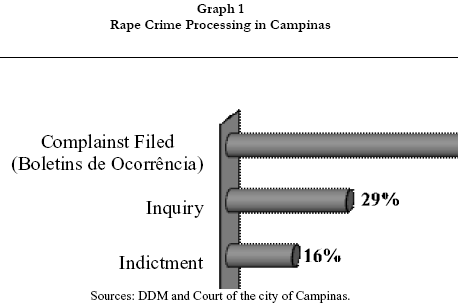
As predicted (Graph 1), the processing flow for rape crimes in Campinas start off with a wide base and then funnels down. The most striking fact is the large amount of cases filtered by the police – 71% of the BOs are filed. A second round of selection occurs before the judicial stage, when 55% of the cases go on. Considering only indictments, 58% end in convictions, yet this percentage represents only 9% of the initial results. Therefore, there is a low probability of convictions in cases that enter the system.
]]>
Considered by itself the data shows that most of the screening occurs during the police p that the cases that enter the system have a very low chance of ending in a conviction (less than 10%). Therefore, it can be concluded that punishment for this kind of crime is remote. This entails the following question: is the fact that complaints will hardly be converted into a penal prosecution and that the crime still goes unpunished a unique characteristic of countries that should be attributed to the agencies responsible for enforcing the law in these crimes? In order to answer this question I will build on the information presented in LaFree's research (1989) on the processing and judicial flow of rape crimes conducted in Indianapolis and proceed to a comparative analysis of his results.
Caseload Processing of Rape Crimes in Indianapolis
The mid-1970s – in the wake of the feminist movements, of the turn in criminology towards the study of dominant groups in the application of law, and of the social construction crime, especially of those played out by social control agencies – marked the appearance, in the United States, of the first studies aimed at assessing how the Criminal Justice handled rape crimes. LaFree's work (idem) is embedded in this context and remains the most complete and important study on the subject. According to the plan described above I will now describe the database and the flow reconstructed by this author.
LaFree's research database comprises 881 rape cases reported to the police in Indianapolis in 1970, 1973, and 1975 along with their trial outcomes, which includes data collected in courts from July 1978 to September 1980 and data from interviews with policemen, prosecutors, defense attorneys, jurors and judges who processed the studied rape cases.
The 881 initial rape cases refer to the record of police officials dispatched to crimes scenes when called or of cases directly reported to the police. Of these, 328 resulted in arrests, that is, they were submitted to police investigation who thereupon decided to arrest the suspect. The other cases were filed either because the complaint was considered unfounded or because the suspect was not identified or because the victim was unwilling to cooperate with investigation.
Detentions resulting from potentially serious offenses are reviewed by the public prosecutor's office with the aid of investigators (felony screening). The attorneys responsible for this examination try to evaluate the case's seriousness, whether there are enough elements for proof, whether the victim will testify and decide in favor of one of the four following options:
- To file the case due to insufficient evidence
- To transfer it to the Municipal Court, when the offense is considered a minor one or if the victim is unwilling to testify
]]> - To present the case to a Grand Jury, when the evidence is not straightforward- To send the case directly to a Criminal Court, preserving the initial accusation
After this screening, 153 cases became felony charges or indictments. Of these, 125 were prosecuted, being that 74 cases ended in a guilty plea and 50 were tried by a court.11 In 104 cases, the defendant was considered guilty and, in 83, the sentence was executed. In 42 cases, the sentence resulted in penitentiary incarceration.

Most screening occurs in the police phase, being that 62.8% of the initial cases are filed and 53.4% of the arrests are not filed as felonies. The processing flow shows that, out of those initially reported cases, only 11.8% ended in conviction sentences and only 4.8% resulted in stricter punishments resulting in incarceration.
This brief comparison of the quantitative description of the outcomes of these different criminal justice systems (Brazil and the United States) for rape crimes, although perhaps not sufficiently in-depth in order fulfill the standards of a rigorous comparative study, allows for a few findings. Firstly, it supports the findings of many studies on criminal justice that affirm that attrition rates are rather high in rape cases, in that less than 12% of the initial complaints end in convictions. Second, it indicates the police phase as the moment when the process of selection and screening of cases occurs.
The comparison of the quantitative production of decisions in the different phases of the processing flow between the two countries allows for a first exploration of the difference of rape crime treatments. In what follows I will delve deeper into this investigation, comparing the predictors of the decisions taken during the police phase – the gateway into the justice system – which has been identified as the most problematic in both studies. The question whose answer is at stake is whether the predictors for each of the cases are the same. Before, however, it is necessary to describe the people implicated (the victim and the offender) and the characteristics of the occurrences presented in this phase of each study.
]]> Victim and Aggressor Profiles and the Characteristics of the Rape Crimes in the Police Phase in IndianapolisThe data referred to the initial complaints in LaFree's study (1989) are shown on Chart 1. Concerning the profiles of the victims and aggressors, the data shows that 65.6% of the victims were aged 18 or older and that 73% of the aggressors were aged 21 or older. The percentage of complaints involving a black victim and offender is the highest (44.1%), followed by those involving a white victim and aggressor (33%) and then white victims assaulted by black offenders (22.9%).
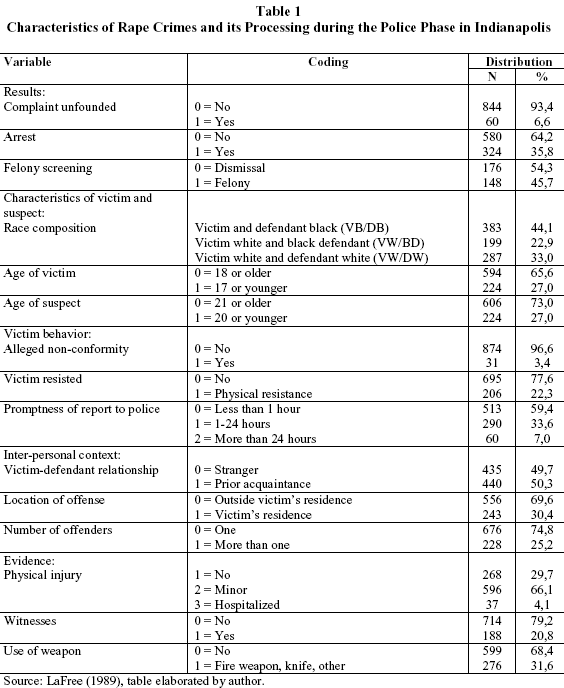
Cases in which the victim was black and the offender was white were excluded due to its few occurrences. With regard to the interpersonal context between the victim and the offender, the data shows that strangers comprise 49.7% of the cases and prior acquaintances 50.3%. Most assaults occurred outside the residence of the victim (69.3%), by one offender (74.8%), without the use of a weapon (68.4%), and resulted in minor injuries (66.1%). With regard to the victim's behavior, non-conformity was alleged in 3.4% of the cases and physical resistance in 22.3% of the cases. As for the results, 93.4% of the complaints were considered well-founded, 35.8% resulted in arrests and, of these, 45.7% were prosecuted as a felony.
Profile of those Involved and Characteristics of Rape Cases in the Police Phase in Campinas
The data concerning the police phase in Campinas are presented in Table 212. Next, I will select some variables in order to compare the distributions found in both studies. I will start with "race composition," and remind that in Brazil race has been represented as "color."13
]]>
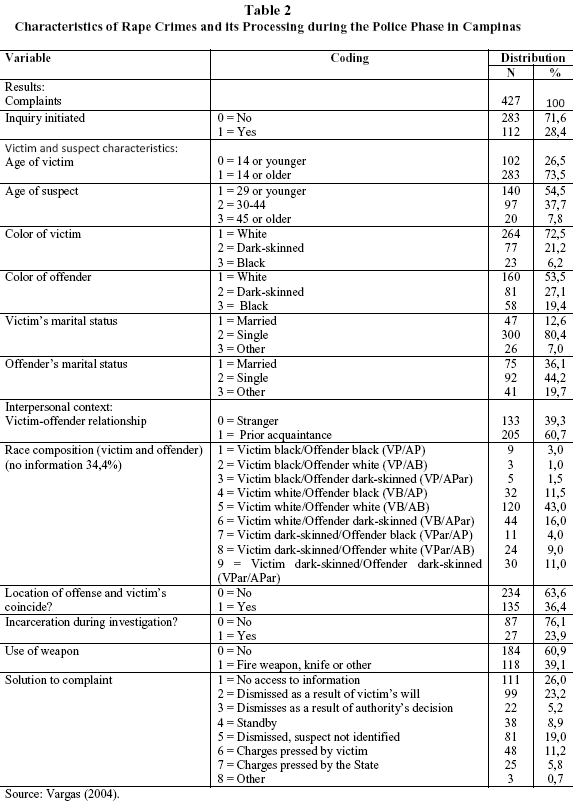
The data collected in Campinas indicates that most complaints can be classified as intra-racial rape cases, with a white offender being accused of raping a white victim (43%). However, there is a considerable amount of inter-racial complaints. These comprise 27.5% of the total complaints, being 16% against a dark-skinned aggressor and 11.5% against a black aggressor.
If compared to LaFree's study (1989), in which the proportion of cases in which the victim and offender was black equivalent to 44.1% of the cases, this same statistic for Campinas can be considered quite low – only 3% of all complaints. This figure remains low (14%) even if cases in which the victims and offenders were dark-skinned are included. The proportion of dark-skinned victims that filed complaints against a white aggressor relative to the total amount was 9%. As in LaFree's study, the lowest proportion of complaints was found for cases in which the offender was white and the victim black (1%). The data shows that the victims in Campinas are younger than those in the American case. Such a difference is certainly due to the fact LaFree excluded statutory raps from his analysis.14
One notes that, in relation to any prior acquaintance between the victim and the offender, in Campinas there was a higher proportion of cases under the "acquaintance" category. The categories formulated based on the Campinas records were initially "acquaintances" and "strangers" and were then refined in order to specify the degree of the relationship to include "father," "step-father," "boyfriend," "husband," "other relative," "neighbor," "acquaintance," "workplace colleague," and "other." The classification "other relative" encompasses uncles, grandfathers, brothers, brothers in law etc. Meanwhile the category "acquaintance" comprises suspects who are thus described in reports yet whose specific relationship to the victim is not made clear."15
When the victim's age is correlated with that of the offender's it turns out that 89% of the victims between ages 0 and 8 and 84% of those aged between 9 and 13 filed complaints against offenders that fit the category of acquaintances. For those aged 14-19 this figure represented 55%. From this age bracket above (except for the 35-39 and 45-49 brackets) the proportion of offenders in the stranger category exceeds that of the acquaintances.
Very young victims file complaints mainly against offenders who belonged to their circle of intimate relations, usually relatives: father (47%), step-father (6.5%), other relative (27%). The figure for other acquaintances are: neighbor (6.5%), other acquaintance (6.5%), others (6.5%). In the following bracket – ages 9-13 – there are complaints against relatives: father (25%), step-father (10%), and other relatives (12.5%), but also against offenders that are just acquaintances (19.5%), boyfriends (21%), neighbors (8%), work colleagues (4%). Complaints against acquaintances reach a peak in the 14-19 age bracket, albeit the frequency of complaints against relative decreases: father (19%), step-father (4%), other relative (12.5%) whereas those against boyfriends (11%), acquaintances (35%), neighbors (4%) and work colleagues (7%) increases. In the 20-29 age bracket more than half of the complaints are against offenders that are just acquaintances. For ages 50 and above there is a predominance of non-acquaintances in those few cases that were recorded.
These findings are similar to those in more recent studies and indicate that rape is not a homogenous category, that there are changes as to the nature of the complaints presented to the police with a greater number of complaints being directed against acquaintances, both intimate and more distant ones (Estrich, 1987; Harris and Grace, 1999).16
Finally, both in LaFree's and in the Campinas study, in most cases (more than 60%) there was no report of weapon use. Although it is not possible to compare the proportion of cases with respect to the variables "victim's willingness to follow through with prosecution" and "non-identification of suspect," the Campinas study shows that these two are important characteristics of this crime with regard to the police's decision of whether to pursue or not a given case.
]]>PREDICTORS FOR DECISIONS IN POLICE PHASE FOR RAPES CRIMES IN INDIANAPOLIS
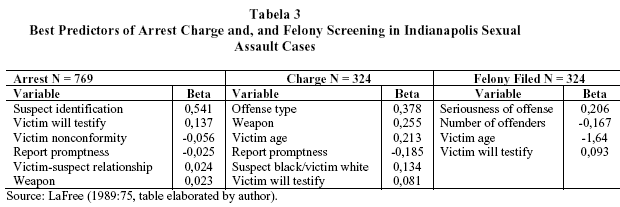
In this section I compare the predictors for decisions taken by victims and legal agents to follow through with legal action in both studies. Table 3 shows the results of the multiple regression analysis conducted by LaFree (1989) and indicates the main predictors for each one of the decision phases identified by the author in the police phase organized according to their standard regression coefficients. The main predictors for the decision to consider the rape complaints are the suspect's identification and the victim's willingness to prosecute the offender.
The decision not to consider a complaint well founded is influenced by the victim's non-conformity to certain established behavioral patterns. In deciding whether to press charges, the type of offense, the use of a weapon, and the victim's age are important predictors. LaFree (idem) also notes that an additional influencing factor is whether the offender is black and the victim white. In deciding whether to file the case as a felony, the main predictors are the seriousness of the offense and the victim's willingness to testify.
The main predictors for decision in the police phase were interpreted by LaFree (1981) as factors considered relevant by agents in order to follow through with judicial prosecution and classified as predominantly legal and therefore opposed to previous studies which emphasized the police's discriminatory attitudes towards rape victims.
However, discriminatory attitudes of the police in relation to the type of victim or offender (factors classified as extralegal) were identified in the decision not to consider the complaint substantiated, when the victim's behavior does not conform to established patterns, as well as the decision to consider the complaint substantiated, when the black offender is suspected to have raped a white victim.
PREDICTORS OF THE DECISIONS OF THE CRIMINAL JUSTICE SYSTEM FOR RAPE CRIMES: SUBMITTING LAW TO ANALYSIS
LaFree's (1981) interpretation of the predictors found in the police phase stimulates reflecting upon the variables he worked with, beyond the legal/extralegal dichotomy that us usually employed. Such dichotomy obscures the fact that racial, gender and age discrimination may be embedded in the legal criteria usually considered legitimate and neutral (Pires and Landeville, 1985). The discussion regarding the social content of legal variables, such as the variable "incarceration during investigation procedures," which strives to identify how they can assume an extralegal character when it implies in unequal treatment of certain defendants will be approached in time. At this moment, I would rather bring attention to the fact that the variables considered extralegal, such as "victim's age," can also assume a legal character given the application of certain judicial prescriptions. I thus intend to examine the prescriptive and legal aspect which set the boundaries for the decisions encompassed in this variable, as well as the variable "victim's willingness to press charges," one that was neither particularly explored by LaFree nor in studies on the treatment given to rape in the Criminal Justice system in general. Therefore, I will proceed to describe the variables "victim's willingness to prosecute" and "victim's age" in what follows.
a) "Victim's willingness to press charges" variable
]]> It has been mentioned earlier in the article that the initiative to take legal action and prosecute in rape cases is a private decision. In certain circumstances, the Public Prosecutor's Office can undertake legal action, acting as a representative, thereby rendering it public. For this to happen, the victim must manifest herself or grant the Public Ministry authorization. This is the case when the costs of prosecution cannot be afforded by the victims or her parents. In cases in which the suspect is the father, step-father or legal guardian of the victim, the initiative of prosecution is unconditionally public, that is, the Public Prosecutor's Office has the duty to bring the case forth to Justice, regardless of the victim's will (as per article 225, paragraph 1, sub-item II of the Brazilian Penal Code). Penal prosecution is also a public initiative in cases in which rape resulted in physical injury or in the victim's death.17The victim's willingness to press charges has also been interpreted as an instrumental decision (Kerstetter, 1990), a legal one (LaFree, 1981), or as a decision which involves the interaction of the victim with legal agents, which is often tainted by the police's or public attorney's office discriminatory attitudes (LaFree, 1989; Frohman, 1991; Bryden and Lengnick, 1997). In the database, this variable appears as one of the variables within the "solution given to complaint" variable, which are: 1 = "no access to information"; 2 = "filed as a result of victim's will"; 3 = "filed as a result of authority's decision"; 4 = "standing by for further processing"; 5 = "case filed due to unidentified suspect"; 6 = "victim pressed charges"; 7 = "charged pressed by public authority"; 8 = "other". Note be taken that I have thus considered other hypotheses of action in this type of crime in order to define this variable and that the non-identification of the suspect, a category considered important in LaFree's study (1988), is also accounted for here.18
b) "Victim's age" variable
The Brazilian Penal Code does not contain any stipulation that there is presumed violence when the victim is 14 years old or younger, mentally handicapped with the offender's knowledge, or for any other reason (drunkenness, unconscious, illness) that kept the victim from resisting against the act (as per article 224 of the Brazilian Penal Code) – a means to protect victims who are less capable of defending themselves. With respect to the assumption of innocence as a result of age, the Code, promulgated in 1940, bases itself on the assumption that until the age of 14 the victim is unaware of sexual topics and therefore consent cannot be deemed valid.19
One can therefore notice that the "victim's age" variable contains a legal definition which restricts how law enforcers select and interpret cases. I assume, and therefore try to verify throughout this article, that the legal criterion that the presumption of violence for minors aged less than 14 functions as a factor which contributes to the progression of this variable within the flux, almost as a kind of positive discrimination since, in these cases, no evidence of violence and non-consent are required. Thus, the variable "victim's age" was categorized as 0 = "less than 14 years old" and 1 = "at least 14 years old".
PREDICTORS of decisions in the police phase for RAPE crimes in campinas
Tables 4 and 5 present the two models that resulted from the logistic regression which considers the dichotomical categorization of the police decision concerning the investigation: the suspect's indictment vs. non-indictment. The aim of this technique is to verify which factors affect the probability of each type of decision.
]]>
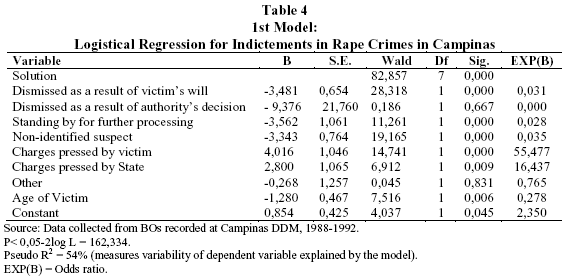
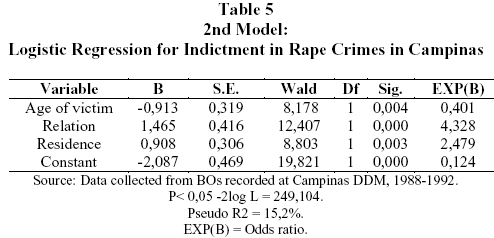
The first model shows that the main predictors for the decision to indict a suspect in rape investigations registered in Campinas are the victim's willingness to press charges and the non-identification of the suspect. The representation provided by the victim is the most determinant factor for the suspect's indictment. The dismissal of a case as a result of the victim's will and the non-identification of the suspect are the most determinant factors relative to the decision not to indict. These results are in line with the findings of LaFree (1989) and also with those of my previous study (Vargas, 2000). However, this analysis allows for improved quantification. It shows, for example, that when the victim decides to press charges against the offender the chance of indictment is multiplied by 55 which proves that, in this type of crime, it is basically the victim who opens the gateway to the justice system. Meanwhile, the chance of non-indictment increases 32-fold when the victim does not want to press charges against the offender and 28 fold when it was not possible to identify the suspect.
These results show, on one hand, that the hypothesis that legal rules are important as they set the boundaries of the behavior and actions of legal agents is plausible and can be verified in relation to the victim's decision to press charges against the offender. Thus the rule that defines penal prosecution as dependent of private initiative is essential for indictment and must be considered an integral part of the dependent variable (thus the need to constitute a second model without considering the "solution" variable). On the other hand, the results also underline an important aspect I have already explored, namely, the problem of investigating authorship in this crime which, in the DDMs in general, have taken on a dramatic dimensions (idem). Before further considering this claim, I would like to explore the question of rules and their application.
As noted, private legal action can become public as a result of the victim's or her legal guardian's requests when they cannot afford the legal fees that accompany prosecution. In the daily activities of legal agents, this legal possibility has become a common practice. Those who filed a complaint, whose cases can lead to an indictment and who are willing to set a trial in motion are counseled to sign a term of representation claiming not to possess the wherewithal to comply with fees and thereby request the State to take action in its place. The conflict, initially private in nature, is thus rendered public and the criminal justice system is called upon to solve it. Therefore, as stated above, the victim's decision is responsible for activating the system in this type of crime. It is a rule defined by law and which has been laid out in the Penal Code setting the boundaries for how those presenting complaints and those working in the Justice system can act. It is my contention that this partially explains how cases get selected in this first phase of processing. When the victim or her legal guardians do not manifest themselves officially by filing a private complaint (queixa-crime) or when they do not request the Public Prosecutor' s Office to indict the accused suspect, the case is filed.
]]> The results of this second model of logistic regression, which does not take into account the effect of the "solution variable," show that the chances an indictment is reached increases when the victim is 13 years old or younger, is an acquaintance of the offender, and when the event took place at victim's residence. Also as noted earlier, victims 13 years old or younger (89% of the victims aged 0-8 and 84% of the victims aged 9-13) pressed charges against offenders who were previous acquaintances. The analysis indicates that the chances of indictment in these cases are greater than for victims aged 14 or older, the age bracket in which we can find a larger proportion of victims who accuse rape suspects who were strangers.The common explanation given to the influence of age in the penal treatment of rape centers on, on one hand, a more emphatic reaction of legal agents to very young rape victims and the difficulty of in determining aggression when the victim is an adolescent or adult (and especially when victim and offender already knew each other) and, on the other one, in the instrumental calculation agents perform considering the chances the prosecution will succeed in the system, leading them to stimulate or not the victim to follow through (Spohn, Beichner, and Davis-Frenzel, 2001).
I would like to suggest as an additional explanation the fact that violence is assumed in cases when the victim is younger than 14 years old. Assuming violence facilitates the police's task of constituting evidence (since there is no need to prove non-consent and recourse to violence) and, on the other hand, stresses the police's difficulty in constituting evidence of non-consent for victims 14 years old and above, particularly in this phase of the flux.
However, the victim's age also influences the non-indictment for an additional reason. The category "14 years old and above" is the one most represented in the non indictment, when the solution is "non-identification" of suspect, further confirming previous findings with respect to the relation between the victim's age and her level of acquaintance with the offender. In a previous study (Vargas, 2000), field research led to the observation that in situations involving suspects the victim was not acquainted with non-identification of the former is common since DDM police officers (which fit in with the behavior of officers DDMs in general) usually do not proceed to investigate the case. Thus the analysis of the data collected in Campinas reveals a factor that pertains to an organizational feature of specialized precincts (and perhaps other types of precincts in Brazil as well) which negatively affects how the criminal justice system deals with rape crimes is the lack of investigation.20
The cases which require less investigation are precisely those in which the victim and offender know each other and are often relatives living beneath the same roof. In such cases, the task of locating those involved and witnesses is easier, a condition which, in practice, has been shown to be essential in order to reach an indictment.
FINAL CONSIDERATIONS
The difficulty encountered in the transition from complaint to the judicial constitution of rape as well as the low proportion of convictions in relation to the total of initial cases are responses found regularly in the analysis of the Brazilian and US criminal justice systems to rape crimes.
I have attributed much of the explanation for the dismissal of cases, a particularly prominent feature in both countries, to the rules of incrimination and decision. I have also suggested that such rules, as the rule of presumed violence, plays an important role in how the criminal justice system in Brazil processes rape crimes. I have sought to empirically demonstrate the hypothesis of the importance of legal rules as boundary-setting for the behavior with the analysis of the variables which refer to the victim's decision whether or not to press charges. Such variable was found to be such an important predictor in the decision whether or not to accept the felony that it had to be considered an integral part of this independent variable. The same did not occur with the variable "victim's willingness to press charges", which LaFree emphasized as a legal variable and identified only as an important predictor of the decision to follow through with prosecution. As for the presumption of violence rule, more in-depth studies on the judicial phase in Brazil and also on the jurisprudence concerning rape crimes are necessary in order to investigate how said rule has influenced decisions in this phase.
For the time being, it is enough to say that the role played by legal rules in the judicial processing of rape crimes can be an indicator that legislative reform concerning this crimes can substantially contribute to change the way it has been processed in Brazil. 21 Studies conducted in the United States have shown that the impact of reform has been far from as great as expected (Berger, Searles, and Neuman, 1988). It is probable yet not certain that similar reform in Brazil would have greater effects given the importance of incrimination and procedure rules in the Brazilian law system compared to the United States.
]]>REFERENCES
AMERICA'S WATCH. (1992), Injustiça Criminal x A Violência Contra a Mulher. Rio de Janeiro, Relatório de pesquisa da Human Rights Watch. [ Links ]
AZEVEDO, M. A. e GUERRA, V. N. A. (1988), Pele de Asno Não é Só História: Um Estudo sobre a Vitimização Sexual de Crianças e Adolescentes em Família. São Paulo, Roca. [ Links ]
BERGER, J., SEARLES, P. e NEUMAN, W. (1988), "The Dimension of Rape Reform Legislation". Law & Society Review, vol. 22, nº 2, pp. 329-357. [ Links ]
BRYDEN, D. P. e LENGNICK, S. (1997), "Rape in the Criminal Justice System". Journal of Criminal Law and Criminology, vol. 87, nº 4. [ Links ]
]]>CÓDIGO DE PROCESSO PENAL ANOTADO. (1986), Org. Damásio E. de Jesus. São Paulo, Saraiva. [ Links ]
CÓDIGO PENAL E SUA INTERPRETAÇÃO JURISPRUDENCIAL. (1987), São Paulo, Editora Revista dos Tribunais. [ Links ]
COELHO, E. C. (1986), "A Administração da Justiça Criminal no Rio de Janeiro: 1942-1967". DADOS, vol. 29, nº 1, pp. 61-81. [ Links ]
CORRÊA, M. (1983), Morte em Família. Rio de Janeiro, Graal. [ Links ]
ELUF, L. N. (1999), Crimes contra os Costumes e Assédio Sexual. Doutrina e Jurisprudência. São Paulo, Editora Jurídica Brasileira Ltda. [ Links ]
]]>ESTRICH, S. (1987), Real Rape. Harvard, Harvard University Press. [ Links ]
FEIGUIN, D., BORDINI, E., MEDRADO, M. A. e PATERNOSTER, M. A. E. (1987), Um Retrato da Violência contra a Mulher – 2.038 Boletins de Ocorrências". São Paulo, Fundação SEADE. [ Links ]
FROHMANN, Lisa. (1991). "‘Discrediting Victims' Allegations of Sexual Assault: Prosecutorial Accounts of Case Rejections". Social Problems, vol. 38, nº 2, pp. 213-226. [ Links ]
FUNDAÇÃO JOÃO PINHEIRO. (1987), Indicadores Sociais de Criminalidade. Belo Horizonte, relatório de pesquisa, Fundação João Pinheiro. [ Links ]
FUNDAÇÃO SISTEMA ESTADUAL DE ANÁLISE DE DADOS -- SEADE. (2001), Consolidação de um Sistema Estadual de Análise e Produção de Dados e Constituição de um Modelo de Tratamento de Informações que Subsidie Políticas Públicas em Justiça e Segurança, em especial o Centro de Análise Criminal da SSP de São Paulo. São Paulo, relatório parcial de pesquisa da Fundação Seade. [ Links ]
]]>HARRIS, J. e GRACE, S. (1999), A Question of Evidence? Investigating and Prosecuting Rape in the 1990s. London, Home Office. [ Links ]
KANT DE LIMA, R. (1997), "Polícia e Exclusão na Cultura Judiciária". Tempo Social, vol. 9, nº 1, pp. 169-184. [ Links ]
KERSTETTER, W. A. (1990), "Police and Prosecutorial Response to Sexual Assault against Women". The Journal of Criminal Law & Criminology, vol. 81, nº 2, pp. 267-313. [ Links ]
LaFREE, G. D. (1981), "Official Reactions to Social Problems: Police Decisions in Sexual Assault Cases". Social Problems, vol. 28, pp. 582-594. [ Links ]
___. (1989), Rape and Criminal Justice: The Social Construction of Sexual Assault. Belmont, Wadsworth Publishing Company. [ Links ]
]]>LÉVY, R. (1987), Du Suspect au Coupable: Le Travail de la Police Judiciaire. Genebra, Editions Médecine et Hygiène. [ Links ]
MIRANDA, A. P. M. (coord.). (2006), "Avaliação do Trabalho Policial nos Registros de Ocorrências e nos Inquéritos Referentes a Homicídios Dolosos Consumados em Áreas de Delegacia Legais". Concursos Nacionais de Pesquisas Aplicadas em Justiça Criminal e Segurança Pública, disponível em http://www.mj.gov.br/senasp/pesquisas_aplicadas/anpocs/concurso_projetos.htm.
PIRES, A. P. e LANDREVILLE, P. (1985), "Les Recherches sur les Sentences et le Culte de la Loi". L'Année Sociologique, vol. 35, pp. 83-113. [ Links ]
PIMENTEL, S., SCHRITZMEYER, A. L. e PANDJIARJIAN, V. (1998), Estupro: Crime ou "Cortesia"? Abordagem Jurídica de Gênero. Porto Alegre, Sérgio Antônio Fabris Editor. [ Links ]
ROBERT, P. (1991), "Sociologie et Création de la Loi Pénale", in P. Robert (ed.), La Création de la Loi et ses Acteurs: L'Example du Droit Pénal. Onãti, Onãti International Institute for the Sociology of Law, pp. 207-215. [ Links ]
SAFFIOTI, H. I. B. (1994), A Vida por um Fio: A Violência contra Crianças e Adolescentes no Brasil Contemporâneo. Trabalho apresentado no XVIII Encontro Anual da Associação Nacional de Pós-Graduação e Pesquisa em Ciências Sociais --Anpocs, Caxambu, 23-27 de novembro. [ Links ]
___. (2002), "Violência Doméstica: Questão de Polícia e Sociedade", in M. Corrêa (org.), Gênero e Cidadania. Campinas, PAGU/ Núcleo de Estudos de Gênero – UNICAMP. [ Links ]
SOARES, B. M. (1996), "Delegacia de Atendimento à Mulher: Questão de Gênero, Número e Grau", in L. E. Soares (org.), Violência e Política no Rio de Janeiro. Rio de Janeiro, Relume Dumará, pp. 107-125. [ Links ]
SPOHN, C., BEICHNER, D. e DAVIS-FRENZEL, E. (2001). "Prosecutorial Justifications for Sexual Assault Case Rejection: Guarding the ‘Gateway to Justice'". Social Problems, vol. 48, nº 2, pp. 206-235. [ Links ]
VARGAS, J. D. (1999), "Indivíduos sob Suspeita: A Cor dos Acusados do Estupro no Fluxo da Justiça Criminal". DADOS, vol. 42, nº 4, pp. 729-760. [ Links ]
___. (2000), Crimes Sexuais e Sistema de Justiça. São Paulo, Instituto Brasileiro de Ciências Criminais. [ Links ]
___. (2004), Estupro: Que Justiça? Fluxo do Funcionamento e Análise do Tempo da Justiça Criminal para o Crime de Estupro. Tese de doutorado, IUPERJ, Rio de Janeiro. Disponível em http:// www.crisp.ufmg.br. [ Links ]
Received for publication in January 2007
1 Rape crimes are defined by article 213 of the Brazilian Penal Code as "constraining a woman to sexual intercourse by means of violence or serious threat: Penalty – six to ten years reclusion". Common Law defines rape as the act of male sexual penetration of a woman that is not his wife by means of force and without her consent. As a result of feminist social movements, most states have enacted some sort of reform in legislation (Berger, Searles, and Neuman, 1988).
2 In this respect see Bryden and Legnick (1997), who conducted a survey of the literature on the criminal justice system and rape crimes and also Vargas (2004) ]]>
3 According to these authors, the refusal to submit the law to analytical scrutiny is quite embedded in studies on decision.
4 According to this author, much of the work produced in criminology until then showed little interest for the role of law in the constitution of crimes.
5 When analyzing the treatment given to sexual assault crimes in Campinas I was able to observe, for example, that in situation in which the suspect is not arrested the Police, in general, acts alone and independently until indictment. After the indictment the Public Prosecutor's Office gains access to the proceedings and has formal control over the indictment, even if more often than not this is done through paperwork.
6 In his review of the studies on the treatment given to rape by the American Criminal Justice system, Bryden and Lengnick (1997) shows that the attrition of sex offender cases that is, the loss or filing of cases that occur in each of the phases of decision is emphasized considerably and most of the studies attribute this fact to the systematic discrimination practiced by law enforcers against rape crimes against a known victim. Furthermore, according to these same authors, more recent studies attempted to compare the pattern and rate of attrition for rape crimes with other crimes and concluded, first, that if few rapes result in a trial and conviction, this is also true for other crimes, except homicide, and, second, the difference in cases of attrition of crimes committed by strangers and acquaintances is not unique to rape crimes.
7 Lévy (1987) performs a detailed survey of the research that dealt with how the Criminal Justice System, and especially the police, the gateway inside, grasped cases.
8 In this respect see Fundação Seade (2001).
9 Mention must be made to Saffioti's national study (2002) on domestic physical and sexual violence, based on BOs and its developments leading to sentencing.
10 In 1985, based on the initiative of a women's group, the Sate Council on the Female Condition, and of the government of the state of São Paulo, the first precinct specializing in women was opened. Its aim was to investigate and indict violent cases against women and avoid the discrimination of these victims.
11 The description of one case's outcome was not provided by the author and is thus is missing. See (LaFree 1989: 59,60).
12 The analysis and the critique of the data collected from the BOs have been developed elsewhere (Vargas, 2000). Several gaps were identified in the records, the main one being the lack of data concerning the offender. ]]>
13 In a previous study (Vargas, 1999) I underlined the problems that can arise with variable "color", both for the victim and the offender. In general, this information is supplied by the victim and the categorization is made during interaction with the police, or defined independently by it.
14 The legislative equivalent to statutory rape in Brazil is rape with the presumption of violence. The exclusion of this type of crime from LaFree's analysis considerably limits comparison between the two studies, as will be discussed later in this article.
15 In addition to being a reasonable figure for the lack of information concerning this variable (25%), it is also necessary to consider that the absence or presence of information is not distributed in the same proportion for each category.
16 A survey of the studies on the treatment ascribed to rape by the Criminal Justice System shows that there has been a series of changes in relation to the nature of the complaints and in relation to how researchers have classified and interpreted them. In this respect, see Vargas (2004).
17 These cases were not taken into account in this study since they were sent to homicide investigation precincts.
18 It is worthwhile remembering that the "solution" variable was constructed based on the procedures recorded by the police authority in the BOs and that, since these are not always manifest, or because there are several situations in which the police itself considered them undefined, a high percentage of BOs reporting no solution to the case was found, being that this information was not codified.
19 There is currently heated debate in legal doctrine and jurisprudence with regard to this precept. The current prevalent understanding is that presumption is not absolute but relative and must be evaluated on case-to-case basis, although this understanding is many times justified in acquittal sentences by the victim's behavior and not by consent (Eluf, 1999).
20 With regard to the absence of investigation in the precincts specialized in women see the report produced by America's Watch (1992). With respect to the low percentage of solutions by the police and the complexity of this task in homicide cases, especially those related to drug-trafficking, see Miranda (2006).
21 It is worthwhile pointing out that, among these reform proposals, public penal action for underage victims, the conflation of rape crimes with indecent exposure, the broadening of the definition of a sexual relationship as to include anal and oral coitus, as well as changes as to how elements of proof and non consent can be obtained.