Ressources des familles et performance cognitive des élèves de l'enseignement primaire et secondaire au Brésil
Recursos familiares e o desempenho cognitivo dos alunos do ensino básico brasileiro
José Francisco Soares; Ana Cristina Murta Collares
Translated by José Francisco Soares and Ana Cristina Murta Collares
Translation from Dados - Revista de Ciências Sociais, v.49, n.3, p. 615-650, 2006.
ABSTRACT
This article discusses the processes by which family structure affects students' cognitive performance in Brazilian schools. The article's basic premise is that family influence is not a uni-dimensional construct, and the study thus uses four dimensions to capture such influence. The effects of these factors on students' performance are measured through a school attainment analysis model. The data are compatible with a model in which the parents' involvement acts as a mediating factor for the action of cultural resources, which in turn depend on economic resources, which have only indirect effects on students' cognitive performance in primary school.
Key words: scholastic performance; family effect; school effect
RÉSUMÉ
Dans cet article, on examine les processus à travers lesquels la structure familiale peut gêner les performances cognitives des élèves au Brésil. On part du pressupposé que l'influence de la famille ne repose pas sur un principe unidimensionnel mais que, pour la saisir, il faut se servir de quatre dimensions. Les effets de ces facteurs sur les résultats scolaires des élèves sont examinés par le moyen d'un modèle d'analyse des trajectoires. Les données sont compatibles avec un modèle où l'engagement des parents agit comme un facteur de médiation dans l'intervention des ressources culturelles qui, à leur tour, dépendent des ressources économiques; celles-ci n'ont que des effets indirects sur les performances cognitives des élèves de l'enseignement primaire et secondaire.
Mots-clé: Sistema Nacional de Avaliação do Ensino Básico - Saeb; résultats scolaires; effet de la famille; effet de l'école
]]> Introduction
Active and critical participation of individuals in modern society demands knowledge and skills that not long ago were considered necessary only for the intellectual elite, especially in developing countries like Brazil. New sociopolitical advancements in these countries lead to a new consensus about the important role of these nations in promoting learning opportunities to all their children. Educators emphasize that education should provide the acquisition of skills necessary to conscious political participation, cultural appreciation and preservation of local cultures, the dissemination of attitudes of environmental preservation, respect to diversity and pacific conflict management solutions, as well as have an impact on the general health of the population. Economists, on the other hand, will justify the universal access to education by arguing that modern economy demands a more educated and qualified labor force. In any of these views, the school is seen as the major structure that provides the acquisition of the knowledge and skills necessary to fulfill the different educational goals.
It is a well known fact, however, that the success of schools as institutions is strongly influenced by external factors, i.e. academic success is associated both with innate characteristics of students and mainly with the advantages provided by family background and by society in general, before and after their schooling. These associations were first observed in empirical studies conducted during the 1950s and 1960s. In the United States the study known as the Coleman Report (Coleman et alii, 1966; Mosteller e Moynihan, 1972), surveying thousands of American students, was a touchstone in the area; in England, the "Plowden Report" (1967); in France, the National Institute of Demographic Studies – INED, that belongs to the French government, conducted a large longitudinal study (196-72) to evaluate inequality of access to schooling (Bressoux, 1994). During the next decades many other important studies took place in several countries, presenting similar outcomes (Nogueira, 1990; Fourquin, 1995), i.e. reinforcing the idea that family background and innate ability have a greater explanatory impact in academic achievement differences than internal school factors. These results together suggest that, in order to analyze the influence of school factors on academic achievement, the statistical models must take into account control variables such as some measure of students' socio-economic status (SES).
As family background is only a control variable in these statistical models, including only one indicator of family background influences on the academic achievement of students is a reasonable procedure. Usually, indicators of family background focus on the economic status of the family. To reduce family background to its economic facet is detrimental to the study of educational and social policies that could be developed through a partnership between schools and families. The message underlying the emphasis on the economic factors is a pessimistic one, according to which nothing can be done towards the academic improvement of students without first intervening in their families' economic conditions.
In this paper we discuss the processes through which different family factors affect students' achievement in public schools in Brazil, using data from a representative sample of Brazilian middle school students. Acknowledging that family background is a multi-dimensional concept, we use four categories to describe it: family cultural resources; family economic resources; parents' participation in their children's education; and family structure captured by the presence or absence of one of the parents.
Our specific goal is to identify, using data from Brazilian students and schools, evidence of the existence of direct and indirect effects of each one of the family resources above mentioned in students' academic achievement. It is important to highlight that the influence of the economic factor on student achievement occurs mostly through an indirect path, i.e., economic resources allow the acquisition of cultural resources and parental participation in the students' school life. Moreover, the data is compatible with the hypothesis that parental involvement is a crucial activator of family cultural resources, which makes it very useful to the cognitive and academic development of their children. This hypothesis indicates that the impact of parental involvement on their children's schooling could be boosted by school policies and programs targeted specifically to the development of "educational" attitudes in the families.
Data and Methods
The data used to develop our explanatory models comes from the National System for Evaluation of Basic Education in Brazil - SAEB. SAEB was planned by the Brazilian Federal Government for monitoring the educational system. As such, it does not contain all the relevant information to measure adequately the explanatory constructs of students' academic achievement, that are generally conceived of as the economic capital, cultural capital and social capital from the students' families. Given these limitations, we choose to use explanatory categories that we named economic resources, cultural resources and parental involvement that are reduced forms of the above mentioned explanatory constructs.
]]> The SAEB
The SAEB was created to provide subsidies to educational policies at national, state and city levels, helping to identify the variables associated with schooling processes. SAEB relies on a rigorous sample methodology that has been developed since 1990, when it started being carried out by the government. SAEB's surveys and tests have been applied on a bi-annual basis since 1993. They evaluate students from the last year of each cycle of education, on both Fundamental (6-15 year olds) and Secondary educational levels. The same scoring scale is used to measure achievement in both Portuguese and Math, allowing for the comparison of different years.
The students are tested on Portuguese Language and Mathematics, and fill out a questionnaire collecting information on socio-economic status, habits of study and parent's participation in the educational process. Teachers, Principals and the person in charge of administering the questionnaires in each school also answer questionnaires about institutional and contextual characteristics of the schools. All the information obtained through these questionnaires is confidential and made available only in aggregated format at national or state levels. Under no circumstances are specific schools identifiable in the data.
The SAEB test specification matrix used was put together mainly by emphasizing the similarities between the curricular contents of Brazilian elementary level schools and the skills in reading and mathematics to be measured by the test. To guarantee the inclusion of items related to all the cognitive processes, SAEB tests are organized in such a way that different students take different tests, but with common items. This precaution and the use of Item Response Theory ensure that the students' proficiencies for the different cycles and grades are on the same scale. Obviously, senior high school students are expected to have higher proficiencies than 4th grade ones. The proficiency methodology is described in Klein and Fontanive (1995). In terms of proficiency measurement, SAEB is a particularly well-designed tool.
There is an increasing literature on SAEB. To understand the sampling aspects used, look up the survey sample plan in (Andrade, Silva & Bussab, 2001). Franco (2001) puts together a collection of critical reflection articles on SAEB 1999. The planning of SAEB 2001 can be found in Locatelli (2002), and the final report main results, were published by INEP. SAEB's two first cycles are evaluated in Crespo, Soares & Mello e Souza,(2000). Franco (2001b) presents suggestions for improvement of the system.
SAEB data are the best available in Brazil to study the questions posed at the introduction of this paper. However, there are some caveats. The first one worth mentioning is the high number of missing data. For instance, around 35% of the 4th grade students do not know their parent's education. This limitation, together with the need to obtain the greatest number of students possible to analyze the association between the different variables indicated the use of the Item Response Theory as the best way to measure the explanatory constructs of the model. IRT models allow the measurement of the construct even for students that did not answer all the items, generating an efficient and elegant way of treating missing data. Another structural limitation of the data is that information about families comes from students' answers to the questionnaire. Technically what we have is the students' view of their family characteristics, and not the real family variables. Therefore, by using this data we adopt the assumption that, although students' views may be imprecise, they are not biased.
For this analysis, we use only data from the students included on SAEB's 2001 sample, at the 8th grade of the Fundamental Level (middle school, 14 year olds on average), and the Math test results. The sample contains 30,354 students nested within 1,692 schools from all geographic regions of Brazil. To analyze the questions proposed, we built several measures that capture family characteristics in different dimensions, students' individual characteristics and school contextual aspects. In the next sessions we explain the construction of these measures and make explicit the theoretical background that justified the choice of variables to be included in the measures.
Economic Resources
Family income, or "economic capital" as it is often referred to, is the first characteristic that should be taken into account in research about background influences on achievement, especially in countries with high income inequality such as Brazil. As our information about family characteristics is obtained through students answers to a questionnaire, this information is not directly available in the data. Most students don't know their family income in any of its usual definitions, leaving us with the resource of using indirect measures. Fortunately, international experience summarized in Buchman and Dalton (2002) and Willms (1992) shows that scales based on the existence of consumer goods at the student's house provide good indirect measures of family income that are adequate to educational research, even if they do not have and immediate monetary translation.
]]> Parental occupation could be another alternative measure of family income, less invasive than asking about the existence of material items in the student's house. Occupation can be further codified and transformed in items such as the International Socioeconomic Status Index or ISEI, which gives to each occupation a defined position within a scale (see Ganzeboom and Treiman 1996). However, to collect and code occupational information is a complex matter, for it requires the use of open questions in the questionnaire. Moreover, recent experiences with the use of this indicator by the Programme for International Student Assessment – PISA have shown that occupation alone does not provide a good measure of family income. To analyze PISA's data researchers created another indicator based on the ISEI that included also the consumer goods present at the student's house.In this paper, taking into account the items available in SAEB's questionnaire, the Family background measure is an index labeled "ECONO", composed by goods found in the students' house (number of bathrooms, cars, radios and TVs, fridges and freezers, vacuum cleaner, computer), the rate of inhabitants per room in the students' house, the existence of house maids, and whether or not the student works. It is reasonable to assume that the student can account for the existence of these goods in his own house, and therefore the measure is unbiased. The items included in SAEB's questionnaire are commonly used in Brazilian social research. They are part, for instance, of a socio-economic status index created by the National Association of Marketing Research, and denominated Criterio Brasil de Posicao Social (Brazil's criterion of social position). The Criterio Brazil index, however, is not employed in this paper, because our main interest is to analyze separately the cultural and the economic dimensions of social status.
In the Appendix, we show the Item Response Theory model used to build the ECONO index, as well as other technical details of this construct. It is important to mention that there is strong evidence that the items utilized to build the construct belong to a latent variable, "economic capital", as all of them demand economic resources for their acquisition.
Cultural Resources.
Family spending patterns above the subsistence level can reflect family values, including cultural values. When schooling is a priority value in the family, this value can be detected by the family's spending in cultural goods and resources that can support learning and create an adequate environment at home for studying, as well as providing their children with more cultural and educational experiences. The amount of investment in cultural goods made by a family can be attributed to parents' cultural capital.
The concept of cultural capital was first used by the French sociologist Pierre Bourdieu in his famous book Les Heritiers (Bourdieu and Passeron 1964), and further developed by him in his subsequent work. In the work of Bourdieu, cultural capital is a complex and abstract concept, with more than one meaning. It is therefore difficult to be captured by questionnaires such as the ones commonly used in school effects research. Lareau and Weininger (2003) have proposed that the analytical separation between achievement and cultural capital is theoretically inadequate, because one of the expressions of cultural capital is the achievement level itself.
Paul DiMaggio attempted to operationalize cultural capital quantitatively as a latent variable measured through items that capture students' participation in highbrow cultural activities such as musical concerts, visiting museums, exhibits and going to the theater. Other researchers such as DeGraaf and DeGraaf (2000) associated this measure of cultural capital with academic achievement. Although the quantitative version of cultural capital makes sense intuitively, its practical utilization was not always positive. For instance, items similar to the ones used by DiMaggio were introduced in PISA contextual questionnaires, but these items did not capture the concept of cultural capital in countries in which the participation of youth in highbrow culture is not frequent. In Brazil, specifically, even students that attend private schools have very low frequency to cultural events. DiMaggio's items are thus inadequate to measure cultural resources in Brazilian households, showing that the idea of high and lowbrow culture vary significantly across different countries.
Given PISA's negative experience, the developers of SAEB decided to include in its 2001 questionnaire items that reflect intellectual concerns of Brazilian families, such as the number of books in the students' house (besides textbooks), the existence of an adequate place for studying, the presence of magazines, daily newspapers, encyclopedias, atlas, dictionary and calculators in the house. The use of these items does not emphasize participation in highbrow culture but rather the decision to consume items that favor the acquisition of academic knowledge, such as books and computers. To make clear the specific nature of the concept of cultural resources employed in this paper, we call it "cultural resources in the household", and use the label "CULTO".
Parental level of education are also included as part of the cultural resources' indicator in this analysis. Details of the construction of the "CULTO" variable are specified in the appendix.
]]>Parental Involvement
Coleman (1988) suggests that the transmission of cultural capital takes place via constant interactions among parents and children, and among children and other adults, especially in situations in which the main goal is the consumption of cultural goods. The amount of these interactions with adults that possess cultural capital that is retained by a child is called the child's social capital. The concept of social capital has its origins in the sociology of education, but has been adapted to may other uses within the sociological literature (e.g. Putnan 1993). In order to avoid confusions with other uses of social capital, we name our own construct "parental involvement" and label it "PAIS".
We measure parental involvement through items that indicate the amount of time spent by parents in talking to children about books, movies, TV programs, etc, listening to music with their children, having family meals together, talking about school issues, helping them to do homework, and giving incentives for children's punctuality and high achievement at school. Although factor analysis indicates that one factor alone could summarize all these indicators, it is worth mentioning that a second (weaker) factor appears in the analysis distinguishing between parental participation in their children's academic versus routine activities. Details about the construction of the parental involvement factor are shown in the appendix.
Other Family Characteristics
Beyond families' cultural and economic resources and parental participation, other family characteristics have also been associated with student achievement, although data limitations prevent the inclusion of all of them in the present analysis. For instance, previous findings show that family size is negatively associated with students' achievement. A bigger family cannot provide the same economic, cultural and social resources to all their children as a smaller family with the same economic background. However, information about family size is not available in the SAEB data base.
Other empirical research such as Lareau (1989) indicated a number of influences that are also relevant for achievement. Family's daily routine [indicated by behavior rules, organized schedules, trust, punctuality, cleanliness, etc.], family's general psychological climate [indicated by parent's relationship, educational approach to the child, frequency of parent's participation at the child's activities], constant presence of stress [indicated by economic problems in the family, loss of beloved ones, disease and addictions] are some of the factors to be considered. These indicators can only be collected reliably through parent's answers to questionnaires or interviews, or through student's daily reports about their routine, which are expensive procedures rarely employed in large scale surveys like SAEB.
One family characteristic often used in educational research was collected by SAEB survey and is employed here. This variable is an indicator of family structure defined by is whether or not the family is mono or bi parental. The absence of one parent in the students' life, because of divorce, abandonment, mothers' choice (to be a single mother), and so on, can affect his/her achievement levels (Garib, Garcia and Dronkers, 2003). It must be mentioned that the negative effect of a parent's absence is attenuated in societies with an efficient network of social protection, which is not the case of Brazil. In this paper we utilize the variable that captures the presence or absence of one or both parents in the student's household as an indicator of family composition, labeled "FAMÍLIA".
]]> Students' Characteristics
In this paper we aim to study not only the effect of family structure on student achievement, but the interaction between family and school characteristics in the promotion of achievement. The process of learning depends not only on family factors, but also of students' personal characteristics, that are naturally correlated with family characteristics but have an effect on their own. Though influenced by family factors, the student is the one participating in the learning process, and he is individually assessed by the proficiency scale. Therefore, in order to analyze achievement, some students' personal characteristics must be taken into account.
Based on prior experiences with the use of SAEB data (Soares et alli, 2001), and taking into account previous research on student achievement and the available questions in SAEB's questionnaire, the following variables were included at the student level of the analysis: sex, race, an indicator of retention and an indicator of student's attitude towards school.
There is still in Brazil a marked difference in the cognitive performance between males and females. Males perform better in Math, while females fare better in Portuguese Language. As for race, SAEB asks the student to choose between White, Brown, Asian and Native (Branco, Pardo, Amarelo and Indigena). We collapse this information in two categories: Whites/Asians versus Others, although Soares and Alves (2003) show that this aggregation is not the best to study the impact of race on achievement. Students' attitudes towards school have a definite impact on achievement. In this paper we capture this attitude through two questionnaire items: if the student likes the subject area in which he was evaluated (in this case, Math), and if he does homework regularly. Finally, we include in the model a measure of years of retention, calculated as the difference between the student's age and the expected age for being in the 8th grade. Retention can be considered as a proxy for weak achievement in previous years.
School Characteristics
Students' learning, especially math learning, happens mainly at school. For that reason, some of the schools' characteristics must be included in the model in order to control for effects of the general composition of school. Other than pedagogic differences, contextual variables, created through the aggregation of students' characteristics within schools, vary widely across schools. For instance, schools in which the majority of students' parents have more resources are generally located in more developed and well served neighborhoods, and therefore attract more qualified teachers. Based on similar assumptions we consider the existence of four contextual indicators at the school level, that are created by calculating the mean value of the students within a school for each one of the variables. These indicators are school SES (ECONO_M), school cultural resources (CULTO_M), school average parental participation (PAIS_M) and school average retention levels (ATRASO_M).
Our emphasis here is on the impact of family on achievement, therefore the school level variables represent, in this model, only the role of statistical controls, aiming to decrease school differences that could influence the analysis. As controls, the four school factors can be reduced to simplify the analysis, and we opted to transform them through factor analysis, in one single factor representing the "school socio-cultural homogeneity" with the label "ESCOLA". A school with higher levels of socio-cultural homogeneity have a student body with average characteristics that are considered more favorable to the school climate, attracting better teachers and more resources. Moreover, the joint influence of the student body in each student, i.e., the so called peer effects, can boost the achievement of students in these schools even further (Hanuschek et alli 2003, Soares, T. M., 2003).
A summary of the variables is presented on Table 1.
To simplify the presentation of results, all the variables in the analysis are standardized. We use the prefix "Z" in the beginning of each variable to indicate when it has been standardized (e.g. Z_ECONO).
]]>Analysis and Outcomes
Table 2 shows the Pearson Correlation Coefficient for correlations between student and family variables. Economic resources and cultural resources have the highest correlation coefficient, reflecting the fact that both represent the possession of material goods, either household or cultural items. Although they are very similar, the matrix of correlation of all items used to build these constructs indicate the existence of two distinct factors. Thus, in spite of this strong association, there are clear empirical indications of the existence of two latent constructs in the set of questionnaire items.
School retention is negatively associated with all other constructs, which is an expected result as this variable is a proxy for achievement in prior years. The negative sign shows that students that are kept back for more years are also the ones coming from families with less economic, cultural and social resources.
The correlation between all the constructs and student achievement is small, but they are in the magnitude usually observed in the literature. The small coefficients indicate that none of the variables alone is a good predictor of achievement. Academic achievement is a complex process that depends on a series of variables, many of which are not considered in this paper.
The correlation coefficients on Table 2 were calculated based on all the students from public schools included in the SAEB sample from 2001, using the sampling weights provided. Among these students, there are some in great poverty. For these we suspect that the associations among the constructs included in the table could be counter-intuitive. However, when we exclude these students (10% of the total) from the correlation matrix, the results are not significantly changed.
Hierarchical Model
In this paper we discuss the influence of family factors on students' achievement, trying to unveil some of the mechanisms through which socio-economic background can influence learning processes. In order to capture these influences, the first model of analysis employed is a regression of Math test scores on family background factors, students' sex, race, attitudes toward school and the school level variable representing the socio-cultural homogeneity of the students within the school.
As the students are nested within schools, we use hierarchical linear regression, a statistical tool that takes into account the fact that the variation across students within the same school is smaller than the variation across students from different schools, i.e. it considers schools as clusters of students. For a description of this model see Lee (2000), Raudenbush and Bryk (2002) and Goldstein (2003). Because of the large sample size (30,354 students), we use a p-value of 0.001 as the minimum level of statistical significance.
]]> The model analyzed here is:Level 1 - Student:
Y = B0 + B1*(Z_SEXO) + B2*(Z_RAÇA) + B3*(Z_CULTO) + B4*(Z_ATRASO) + B5*(Z_ATITUDE) + (Z_FAMÍLIA) + R
Level 2 - school:
B0 = G00 + G01*(Z_ESCOLA) + U0
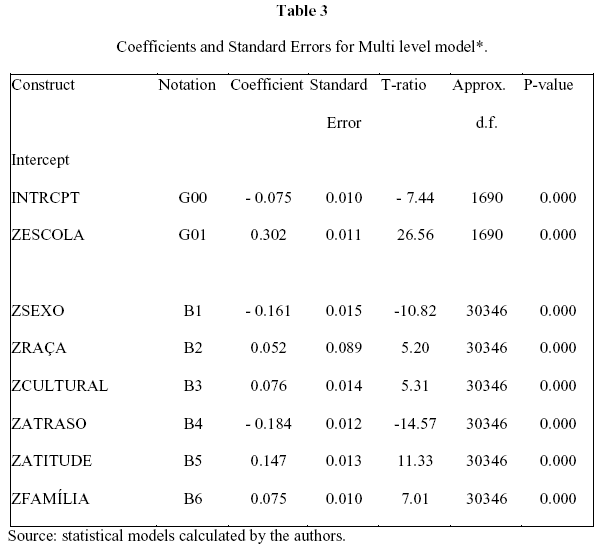
Table 3 displays the results of the model. The coefficients are directly comparable, because all the variables included in the analysis were previously standardized. These coefficients are similar to the "Beta" coefficient in multiple linear regressions, and indicate the size of the change in the response variable, in standard deviations, given a change of one standard deviation in each of the explanatory variables.
According to the results shown in Table 3, boys have better math achievement than girls, White/Asian students have better achievement than "others" (black/mixed), and students with more years of retention have worse achievement than those in the expected grade level according to their age. Even for students with the same economic background, having both parents at home is associated with higher achievement. Students with a better attitude towards school also have better achievement. Family economic resources did not significantly affect the students' achievement. The greatest predictor of achievement in this model is the school "socio-cultural homogeneity" factor. This could be derived from the peer effect, i.e., students with a better academic profile boost the performance of their peers through mutual influences. Another concurrent explanation for this effect is that parents that have more social capital, are more articulated politically and have better economic resources can attract more resources for their children's school.
We cannot test the mechanisms of the association between the different family factors and student achievement using only OLS or hierarchical regression models. The absence of significant associations for family economic resources and parental involvement in the model described above indicates that the influence of these factors must happen indirectly. To disentangle these relations, we need statistical models that take into account several intermediate results at the same time, and not only the final outcome, i.e., student achievement. Path analysis can combine several structural equations with different response variables in one single model, allowing us to trace the causal trajectory between the factors. The results of the path model tested in this paper are presented in the next session.
Structural Equations Model
]]> Translating a structural equation model into endogenous and exogenous variables is a necessary step in the understanding of the associations that the model proposes (Hayduk, 1987). Endogenous factors work as response variables in several nodes of the model, and exogenous factors work only as explanatory variables in the same equations.The model proposed here uses the following endogenous and exogenous variables:
Endogenous (Ys): proficiency [Y1: PROFICT]; cultural resources [Y2: CULTO]; parent's participation [Y3:PAIS]; students' attitude toward school [Y4:ATITUDE], retention [Y5:ATRASO] and school socio-cultural homogeneity [y6: ESCOLA].
Exogenous (Xs): Economic resources [X1: ECONO]; family structure [X2: FAMÍLIA];
sex [X3:SEXO]; race (this variable in Brazilian surveys corresponds roughly to "skin color") [X4:RAÇA]; whether the school is rural or urban [X5:LOCAL];
The model we propose for the association of these variables takes into account the following assumptions: proficiency is a measure of school achievement; families can influence students' attitudes regarding school, and what kind of school their children attend; attitudes can influence proficiency. Positive attitudes towards school will be developed in families with parental participation and higher cultural resources. Moreover, family economic resources affect parents' participation and cultural resources. Grade retention is a proxy for proficiency in previous years and is influenced by family structure and family economic resources.
In addition to these initial assumptions, exploratory research using a specific software to run structural equation models lead to the final model, defined by the following regression equations:
PROFICT = b14(ATITUD) + b15(ATRASO) + b16(ESCOLA) + g12(FAMÍLIA) + g13(SEXO) + g14(RAÇA) + z1
CULTO = g21(ECONO) + g25(LOCAL) + z2
PAIS = b32(CULTO) + b35(ATRASO) + z3
]]> ATITUD = b43(PAIS) + z4ATRASO = b56(SCHOOL) + g 51(ECONO) +g 52(FAMÍLIA) + g53(SEXO) + z5
ESCOLA = b62(CULTO) + b63(PAIS) + g61(ECONO) + z6
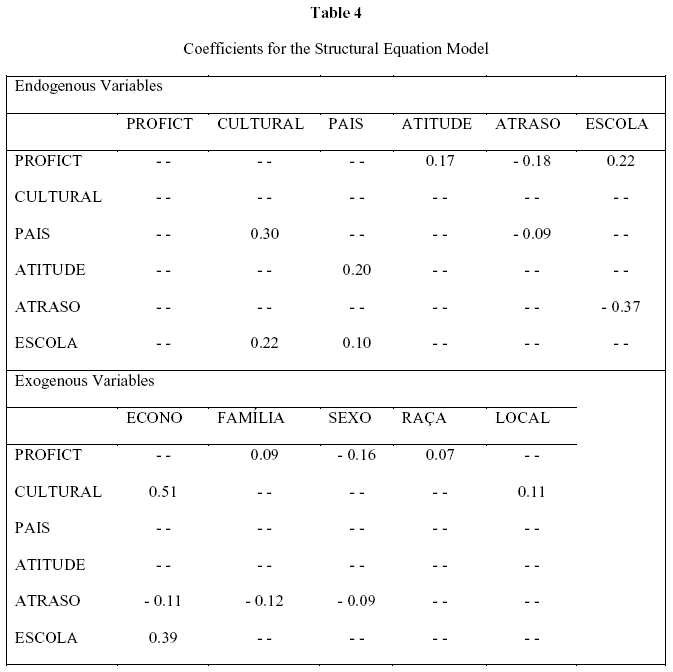
The parameters of the model were estimated through the LISREL software. Table 4 displays the resulting coefficients. All values in this table are comparable and represent the direct effect of a change of one standard deviation in each of the explanatory variables on the response variable. Usually, values smaller than 0.10 are considered too small.
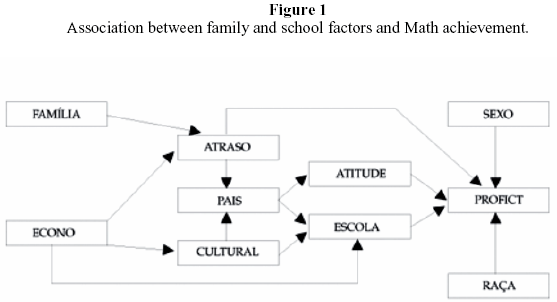
This model can be better understood through a graphic representation, in which all the non relevant associations are omitted. Figure 1 displays the model graphically.
The arrows in Figure 1 indicate the direct effects of the variable of origin on the variable of destination. For instance, the ECONO factor has a direct impact only on ATRASO and CULTO. Besides this direct effect, there can be also an indirect effect of some factors in others. In this case, although ECONO has no direct effect on the achievement variable PROFICT, it has an indirect effect through the variables ATRASO and CULTO which, in turn, are related to ATITUDE that is directly related to achievement or proficiency. It is important to understand this Figure to apprehend all the substantive conclusions of this analysis.
]]> Table 5 shows the total standardized effect of the endogenous and exogenous variables of the model. For instance, the total effect of ECONO on the proficiency is 0.18. This means that a change of one standard deviation in ECONO creates a change of 0.18 standard deviations on PROFICT. The interpretation of the value of the other coefficients is similar to this one. Effects above 0.10 (a common cut point to define relevant values) are shown in bold in Table 5.The model fits well to the data and shows that the observed values are compatible with the following structure of relationships between factors: first, families obtain economic resources; then, some families choose to purchase cultural goods; with economic and cultural goods in hand, families dedicate time to follow the school life of their children. In particular, they choose a school for their children to attend in which they will find other students in similar socioeconomic conditions. As the children from these families rich in cultural and economic resources find a more stimulating studying environment at home, they develop better attitudes towards school. The combination of these factors leads to a better proficiency in Math test scores. However, students retained below grade level usually come from families with scarce economic resources and parents that participate less in their school life, all these factors reducing even more the achievement of these students.
Discussion
The results indicate that family influences on student achievement should be measured through variables that have academic relevance, and not only through measures of social position such as SES, or indexes of economic resources. Parents' education should be associated with families' cultural, not economic resources. One of the advantages of the large sample size provided by SAEB, and of the great number of items included in its contextual questionnaire, is that they allow for separating the effects of the cultural resources, including parents' education, from the economic factor. However, these items do not cover all the possible range of culturally relevant attitudes of a family. Many improvements are possible and desirable in this area.
Amongst the constructs included in the models, the ones with the stronger mutual association are family economic and cultural resources. This association is compatible with Pierre Bourdieu's theory of social reproduction for the case of Brazilian elementary schools. According to this theory, families with greater economic resources can purchase more cultural resources and provide more opportunities to their children of keeping or elevating their socioeconomic status through educational success. This is not, however, a deterministic proof. There is variation around this structure of reproduction that does not happen for all students, or at least with the same intensity for all of them. PISA results have shown that, even when there is great economic equality there are strong differences in students' performance in achievement tests. This means that the association between the economic and cultural factors and their joint impact in academic achievement is not a structural component of every society, but it is a characteristic of the current organization of Brazilian society. Another possible explanation for this association that must be mentioned is that the indicators used in this analysis, almost all of them associated with the presence of material goods in the students' household, do not represent adequately the cultural resources factor. Items that capture the valorization of cultural activities by the family, independently of the possession of cultural goods, should be included in questionnaires such as SAEB's student questionnaire to improve the measurement of this factor.
The outcomes presented in this paper show that SAEB data is compatible both with the hypothesis of the existence of indirect effects of economic resources and the hypothesis of parental influence in their children's academic performance. It is important to remember that the final outcome we want to explain in this analysis is the achievement in Math test scores for students from 8th grade. If we had used the students' future income as the response variable other family factors could have had a much greater impact than its cultural resources. The Wisconsin Model of economic success proposed by Sewell, Haller and Portes (1969), for instance, uses the individual occupation as the response variable and includes as family influences their educational and occupational attainment expectations for the student, and the influence of peers and teachers.
It is important to mention that our final model presupposes that parental involvement in their children's education activates family cultural resources. According to this analysis the influence of the family investment in cultural resources on achievement is channeled through the involvement of the parents.
Previous analysis show, however, that families will naturally choose to place students in schools that reflect their own cultural values. As a consequence, school communities become very segregated in terms of the flow of educational processes. This division favors the children of families with the highest values in the cultural resources indicator, because these children will share their school with peers whose families have similar resources. For students in public schools this process is somewhat restricted because of policies of allocation according to residence area. For the families that opt for private schools the segregation is much more intense. As the school environment is a strong determinant of academic achievement, the students from families with smaller economic resources, but higher cultural capital, end up being harmed in this process.
These results raise the question about how a typical school can, through partnerships with families, increase their educational effect. The final model suggests that this can be done by reproducing within every school the same environment that, in some of them, is naturally created by the existence of a student body with high economic resources and positive intellectual attitudes. To attain this goal the starting point is to create, within families, a favorable environment that encourages academic success, i.e. families are not supposed to substitute schools, but should emphasize that school work is very important and should dedicate time and resources for the students to acquire school knowledge. Families should also have high though realistic expectations about their children's academic achievement and attainment. The data clearly shows that the effects of these attitudes will be much stronger if they are shared by most families within the same school, and not only by isolated families. That's why the whole community surrounding the school has to get involved in the school's activities. There is such a great probability that this strategy will improve school effects that partnerships between schools and families should be part of the schools' project.
]]> Change along these lines is a difficult task, especially in communities that have, on average, low cultural capital or reduced mobilizing capacity. In such communities parents do not feel comfortable in participating in school activities because the school environment and language are not familiar to them, sometimes providing negative encounters. Besides, many parents think of the school as a professional organization, and of themselves as not possessing the tools or skills to intervene in its routine. Finally, in schools with a high poverty student body maybe some prior economic action is really necessary, providing families with access to basic material needs before engaging them in school projects.Our analyses show a complex scenario of relations between family and school characteristics and student achievement. SAEB data indicates, though, that family effects are not smaller than school effects, even in contexts in which the school is below a minimum threshold of resources, as proposed by Heyneman and Loxley (1983). There is also some evidence worldwide (e.g. Baker, Goesling and Letendre 2002) that family effects dominate the explanation of student achievement. But what a careful analysis of the data shows is that, in order to improve the levels and equity of educational outcomes it is necessary to work at the same time with families and schools. Until recently researchers from international agencies have influenced the adoption of educational public policies that focus only on the isolated action of schools in order to improve achievement levels. Empirical evidence shows that this kind of approach leads less to effective results and more to frustration.
One of the statistical models used to analyze the data in this paper has six simultaneous regression equations. As these equations are associated, the parameters of each of them have to be estimated jointly. The first equation, however, that has student achievement as the response variable, should take into account the mutual influence of students from the same school, i.e., peer effects. The hierarchical regression is more appropriate to capture this effect. In the path model we did not take into account the nested nature of the sample, but the similarity between the coefficients of the results from the first equation and the ones of the hierarchical regression show that there is no bias in the path model. Naturally, our path model should be tested in different situations to assure its robustness. SAEB data offers several opportunities for this, and it can be our next step. We should especially access how the inclusion of other items from the student questionnaire into the factor "cultural resources in the household" will affect the results.
References
ANDRADE, D., SILVA, P. L. N. e BUSSAB, W. O. (2001), O Plano Amostral para o SAEB 2001. Brasília, INEP/MEC (versão final). [ Links ]
BAKER, D. P., GOESLING, B. e LETENDRE, G. (2002), "Socioeconomic Status, School Quality, and National Economic Development: A Cross-national Analysis of the 'Heyneman-Loxley Effect' on Mathematics and Science Achievement". Comparative Education Review, vol. 46, nº 3, pp. 291-312. [ Links ]
BARTHOLOMEW, D. J. (2002), The Analysis and Interpretation of Multivariate Data for Social Scientists. Flórida, Chapman & Hall/CRC. [ Links ]
____ e KNOTT, M. (1999), Latent Variable Models and Factor Analysis. London/New York, Arnold/Oxford University Press. [ Links ]
BOURDIEU, P. e PASSERON, J. C. (1964), Les Héritiers. Les Étudiants et la Culture. Paris, Minuit. [ Links ]
BRESSOUX, P. (1994), "Les Recherches sur les Effets-Écoles et les Effets-Maîtres". Revue Française de Pédagogie, nº 108, pp. 91-137. [ Links ]
BUCHMANN, C. e DALTON, B. (2002), "Interpersonal Influences and Educational Aspirations in 12 Countries: The Importance of Institutional Context". Sociology of Education, vol. 75, nº 2, pp. 99-122. [ Links ]
Central Advisory Council for Education (1967) Children and their Primary Schools ('The Plowden Report'), London: HMSO. [ Links ]
COLEMAN, J. S. (1988), "Social Capital in the Creation of Human-Capital". American Journal of Sociology, nº 94, pp. 95-120. [ Links ]
COLEMAN, J. S. et alii. (1966), Equality of Educational Opportunity. Washington, D. C., US Government Printing Office. [ Links ]
CRESPO, M., SOARES, J. F. e SOUZA, A. M. (2000), "The Brazilian Evaluation System of Basic Education: Context, Process and Impact". Studies in Educational Evaluation, nº 20, pp. 105-125. [ Links ]
DE GRAAF, N. D. e DE GRAAF, P. M. (2000), "Parental Cultural Capital and Educational Attainment in the Netherlands: A Refinement of the Cultural Capital Perspective". Sociology of Education, vol. 73, nº 2, pp. 92-111. [ Links ]
DiMAGGIO, P. (1982), "Cultural Capital and School Success - The Impact of Status Culture Participation on the Grades of United-States High-School-Students". American Sociological Review, vol. 47, nº 2, pp. 189-201. [ Links ]
FORQUIN, J. C. (1995), Sociologia da Educação: Dez Anos de Pesquisas. Petrópolis, Editora Vozes. [ Links ]
FRANCO, C. (org.). (2001a), Promoção, Ciclos e Avaliação Educacional. Porto Alegre, ArtMed. [ Links ]
____. (2001b), "O SAEB: Potencialidades, Problemas e Desafios". Revista Brasileira de Educação, nº 17, pp. 127-132. [ Links ]
GANZEBOOM, H. B. G. e TREIMAN, D. J. (1996), "Internationally Comparable Measures of Occupational Status for the 1988 International Standard Classification of Occupations". Social Science Research, vol. 25, nº 3, pp. 201-239. [ Links ]
GARIB, G., GARCIA, T. Martin e DRONKERS, J. (2003), "Are the Effects of Different Family-forms on Children's Educational Performance Related to the Demographic Characteristics and Family Policies of Modern Societies?". Disponível em http://www.iue.it/Personal/Dronkers/English/divorcePISA.pdf (acessado em 31/7/2005). [ Links ]
GOLDSTEIN, H. (2003), Multilevel Statistical Models. London, E. Arnold. [ Links ]
HANUSCHEK, E.A., KAIN, J. F., MARKMAN, J. M. e RIVKIN, S. G. (2003), "Does Peer Ability Affect Student Achievement". Journal of Applied Economics, vol. 18, nº 5, pp. 527-544. [ Links ]
HAYDUK, L A. (1987), Structural Equation Modeling with LISREL: Essentials and Advances. London, The Johns Hopkins University Press. [ Links ]
HEYNEMAN, S. P. e LOXLEY, W. A. (1983), "The Effect of Primary-School Quality on Academic-Achievement across 29 High-Income and Low-Income Countries". American Journal of Sociology, vol. 88, nº 6, pp. 1.162-1.194. [ Links ]
INSTITUTO NACIONAL DE ESTUDOS E PESQUISAS EDUCACIONAIS - Inep. (2001), Saeb 2001: Novas Perspectivas. Brasília. Disponível em http://www.inep.gov.br/basica/saeb/publicacoes.htm (acessado em julho de 2005). [ Links ]
KLEIN, R. e FONTANIVE, N. S. (1995), "Avaliação em Larga Escala: Uma Proposta Inovadora". Em Aberto, nº 66, pp. 29-35. [ Links ]
LAREAU, A. (1989), Home Advantage: Social Class and Parental Intervention in Elementary Education. Philadelphia, Falmer. [ Links ]
LAREAU, A. e WEININGER, E. B. (2003), "Cultural Capital in Educational Research: A Critical Assessment". Theory and Society, vol. 32, nº 5-6, pp. 567-606. [ Links ]
LEE, V. E. (2000), "Using Hierarchical Linear Modeling to Study Social Contexts: The Case of School Effects". Educational Psychologist, nº 35, pp. 125-141. [ Links ]
LOCATELLI, I. (2002), "Construção de Instrumentos para a Avaliação de Larga Escala e Indicadores de Rendimento: O Modelo SAEB". Estudos em Avaliação Educacional, 25, pp. 3-21. [ Links ]
MALUF, M. M. B. (1996), "Sistema Nacional de Avaliação da Educação Básica no Brasil: Análise e Proposições". Estudos em Avaliação Educacional, nº 14, pp. 5-38. [ Links ]
MOSTELLER, F. e MOYNIHAN, D. P. (1972), On Equality of Educational Opportunity. New York, Random House. [ Links ]
NOGUEIRA, M. A. (1990), "A Sociologia da Educação do Final dos Anos 60/Início dos Anos 70: O Nascimento do Paradigma da Reprodução". Em Aberto, vol. 9, nº 46, pp. 49-59. [ Links ]
PUTNAM, Robert. (1993), Making Democracy Work: Civic Traditions in Modern Italy. Princeton, Princeton University Press. [ Links ]
RAUDENBUSH, S. W. e BRYK, A. S. (2002), Hierarchical Linear Models: Applications and Data Analysis Methods. Thousand Oaks, Sage Publications. [ Links ]
SEWELL, W. H., HALLER, A. O. e PORTES, A. (1969), "Educational and Early Occupational Attainment Process". American Sociological Review, vol. 34, nº 1, pp. 82-92. [ Links ]
SOARES, J. F. (2003), "Quality and Equity in Brazilian Basic Education: Facts and Possibilities", in S. Schwartzman e C. Brock (eds.), In The Challenges of Education in Brasil. Oxford, Center for Brazilian Studies, University of Oxford, pp. 69-88. [ Links ]
____ e ALVES, M. T. G. (2003), "Desigualdades Raciais no Sistema Brasileiro de Educação Básica". Revista da Faculdade de Educação, vol. 29, pp. 147-165. [ Links ]
SOARES, J. F., CÉSAR, C. C. e MAMBRINI, J. (2001), "Determinantes de Desempenho dos Alunos do Ensino Básico Brasileiro: Evidências do SAEB de 1997", in C. Franco (org.), Promoção, Ciclos e Avaliação Educacional. Porto Alegre, ArtMed Editora, pp. 121-153. [ Links ]
SOARES, T. M. (2003), "Influência do Professor e do Ambiente em Sala de Aula sobre a Proficiência Alcançada pelos Alunos Avaliados no Simave-2002". Estudos em Avaliação Educacional, nº 28, pp. 103-123. [ Links ]
WILLMS, J. D. (1992), Monitoring School Performance: A Guide for Educators. Washington, Falmer. [ Links ]
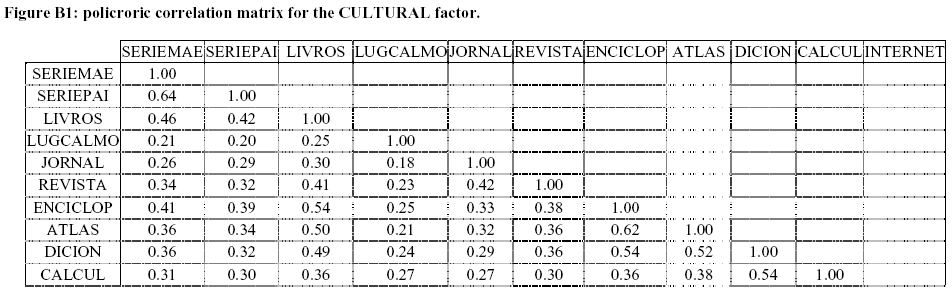
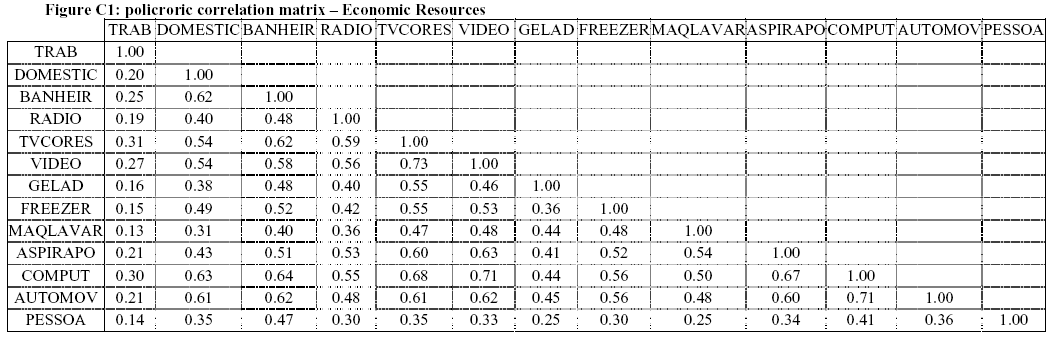
All the explanatory factors included in the analysis were measured by ordinal indicators obtained through SAEB's Student Questionnaire items. Although we restricted the analysis to students from public schools, the measure of all the factors was obtained using the 50,300 students tested in 8th grade Math for SAEB 2001. By doing this, we avoid that artificial differences be created in the values, and allow a more robust test of the associations among the variables used. In order to create the constructs, we first created and analyzed a Policroric correlation matrix for all the indicators. Consistent to the theory, the values of all matrixes calculated were positive and contained one dominant value. A second step consisted of adjusting the model TRI for ordinal data, following the method introduced by Samejima, calculated in the MULTILOG software (e.g. Bartholomew 2000, Bartholomew and Knott 1999).
A) PAIS (Parental involvement).
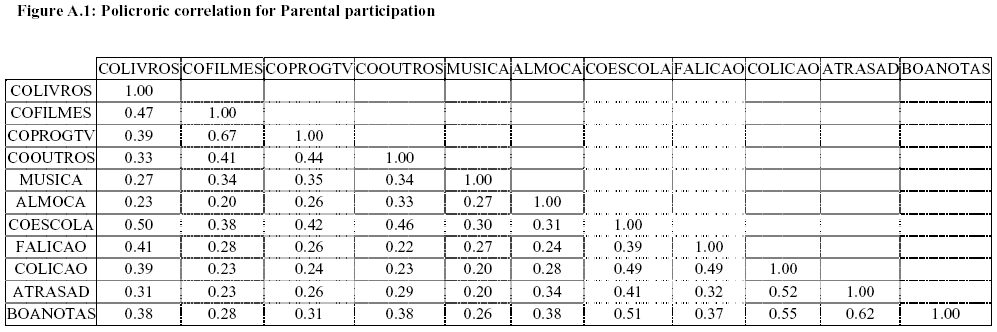
Eleven items of SAEB's Student Questionnaire were used to build this indicator. The items that represent parental involvement in the student's academic life correspond to questions 7 to 19 of the questionnaire. Questions 14 and 15 (about how often parents talk to student's friends, and these friends' parents) were excluded from the calculus because they were not consistently correlated with the other items. All the items included had in general the same question design1:
How often, in general, you parents or the adults that are responsible for you ...
]]> [never, occasionally, almost always, always]
| Question | Variable name |
| a.1 Talk with you about books? | COLIVROS |
| a.2 Talk with you about movies? | COFILMES |
| a.3 Talk with you about TV programs? | COPROGTV |
| ]]> a.4 Talk with you about other subjects? | COOUTROS |
| a.5 Listen to music with you? | MUSICA |
| a.6 Have meals with you? | ALMOCA |
| a.7 Talk with you about what happens at school? | COESCOLA |
| a.8 Help you with your homework? | FALICAO |
| ]]> a.9 Check your homework? | COLICAO |
| a.10 Check your punctuality at school? | ATRASAD |
| a.11 Encourage you to have good grades at school? | BOASNOTAS |
All the eleven items above are in the ordinal scale. Therefore a policroric correlation matrix was calculated to interpret their correlations, through the PRELIS software. This matrix is presented in Figure A.1. All the correlations have a positive sign.
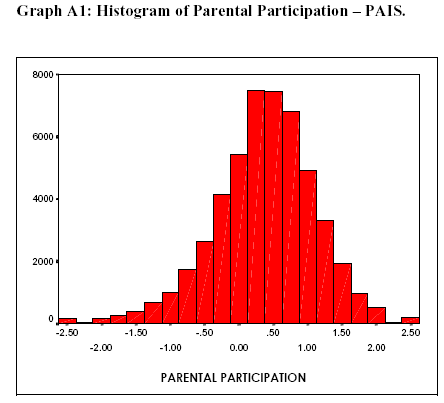
Among all the items included, the one that offers more information about parental participation is the one referring to the frequency with which parents talk to their children about what happens at school. Graph A.1 displays the histogram of the Parental Participation indicator.
B) CULTURAL (Family's Cultural Resources).
For the cultural resources' factor ten items of SAEB's Student Questionnaire were used. These questions try to capture in a single factor an intuitive measure of parent's cultural capital and the existence of an academically stimulating environment in the student's house. These items relate parental education with the values of the family regarding the investment in cultural resources.
Besides parental education, the standard question asked for all the items were:
In you house you have...
| Question | Variable name |
| b.1 What is the last grade level your mother/responsible female adult completed? | SERIEMAE |
| ]]> b.2 What is the last grade level your father/responsible male adult completed? | SERIEPAI |
| b.3 How many books are there in your house other than school text books? | LIVROS |
| b.4 In your house you have ... a quiet place to study and make your homework? | LUGCALMO |
| b.5 A daily newspaper? | JORNAL |
| b.6 General information Magazines? | REVISTA |
| ]]> b.7 An encyclopedia? | ENCICLOP |
| b.8 An Atlas? | ATLAS |
| b.9 A Dictionary? | DICION |
| b.10 A calculator? | CALCUL |
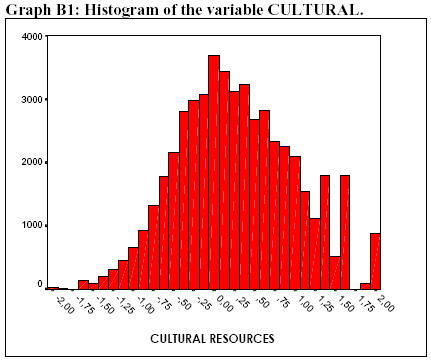
The policroric correlation matrix for this factor is presented in Figure B1, and the histogram for the final variable in Graph B1. All the correlations have a positive sign.
]]>
C) ECONO (Family Economic Resources)
For this factor, thirteen items from the Student Questionnaire administered by SAEB were used. Ten of them refer to the existence of material goods in the student's house, and the other three ask if the student works or not, if there are cleaning personnel (maids) daily in his house (and how many), and how many people lives in the student's house.
The questions were as follows:
| Question | Variable name |
| c.1 Do you work? | TRAB |
| ]]> c.2 How many maids are there in your house? | DOMESTIC |
| c.3 How many bathrooms are there in your house? | BANHEIR |
| c.4 How many radios are there in your house? | RADIO |
| c.5 How many color TVs are there in your house? | TVCORES |
| c.6 How many VCRs are there in your house? | VIDEOS |
| ]]> c.7 How many fridges are there in your house? | GELAD |
| c.8 How many freezers are there in your house? | FREEZER |
| c.9 How many washing machines are there in your house? | MAQLAVAR |
| c.10 How many vacuum cleaners are there in your house? | ASPIRAPO |
| c.11 How many computers are there in your house? | COMPUT |
| ]]> c.12 How many cars are there in your house? | AUTOMOV |
| c.13 How many people live in your house? | PESSOA |
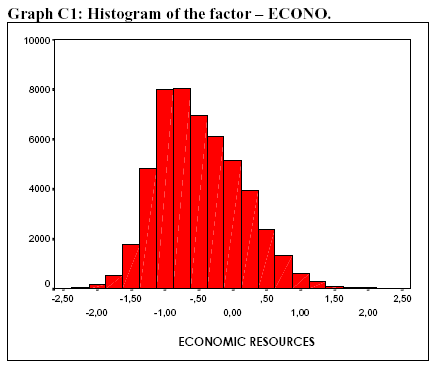
Figure C1 and Graph C1 display the policroric correlation matrix of the items and the histogram of the ECONRE factor.
D) ATRASO (Years of Retention)
This variable was calculated through the difference between student's age and the typical age required by the student's actual grade level. This value is missing for 2696 cases in the sample. For the cases where the information is available there is a clear association between retention and sex, race and economic resources. Therefore we decided to impute the missing values by using the 75 percentile of students with complete data belonging to the same combination of SEX, RACE, and cultural resources. This decision was based on the assumption that missing data for retention can be itself an indicator of some level of retention.
]]> Table D1 displays the values imputed for each case. After this procedure, the remaining students or cases with missing data for SEX and RACE where erased from the sample.
1 Literal translation of the questions.
]]>