
Democracias Andinas: chegando tarde à festa?
Démocraties des Andes: arrivant trop tard à la fête?
Marcelo Coutinho
Translated by Paul Freston ]]> Translation from Dados - Revista de Ciências Sociais, v.49, n.3, p. 795-832, 2006.
ABSTRACT
After a centuries-long history of oligarchical, populist, and authoritarian institutionality, in recent decades South America has begun the transition to a liberal democratic state model. This new state model harbors the contradiction of being both more democratic and less capable. In other words, it allows public participation and dissent but has less ability to respond, a role that has been largely transferred to the market, which has become globalized and more complex while experiencing difficulties in meeting social demands. The tension between democracy and economic limitations, combined with endogenous institutional problems, has sustained a climate of permanent political instability in parts of South America, reproducing fragmentations and conflicts, which are the focus of this study, a comparative analysis of five Andean countries: Bolivia, Peru, Ecuador, Colombia, and Venezuela.
Key words: Andean countries; political instability; social fragmentation.
RÉSUMÉ
Après une histoire centenaire sous la primauté des institutions oligarchiques, populistes et autoritaires, l'Amérique du Sud semble, depuis quelques décennies, aller vers un État démocratique et libéral. Ce nouveau modèle d'État présente le paradoxe d'être plus démocratique sous certains aspects, tout en étant moins efficace, c'est-à-dire qu'il permet la participation et la contestation publique sans pour autant disposer de moyens pour les satisfaire; ceci car presque tous ces moyens ont été cédés au marché économique, qui s'est mondialisé et devenu plus complexe, n'ayant plus la possibilité de répondre aux demandes sociales. La tension entre démocratie et restrictionsé conomiques, associée à des problèmes institutionnels endogènes, provoque un climat d'instabilité politique permanent dans certains endroits de la région, reproduisant des cassures et des conflits, sujet étudié dans cet article sous la forme d'une analyse comparative de cinq pays andins: Bolivie, Pérou, Équateur, Colombie et Vénézuéla.
Mots-clé: pays andins; instabilité politique; éclatement sociale
]]>
INTRODUCTION
This article intends to examine the socio-economic and political conditions of Andean countries at the turn of the century, seeking to explain the political instability that characterized this part of South America at that time. The initial assumption is that the answer for the institutional crises lies in a fundamental contradiction facing contemporary Andean states which, on becoming the main source of dissatisfaction for broad sectors of society with substantive democratic performance, generates a range of disaggregating behaviours.
One aspect which stands out, and is shared by the cases examined, is social fragmentation. This is manifested in different forms and at different levels, from civil war in Colombia, through the divisions of Venezuelan society, to conflict involving traditional populations, regions and trade unions in Bolivia, Ecuador, and Peru. However, what all these manifestations have in common is a structural fracturing provoked by intense hostilities between political and social groups, which frequently lead to violence.
In spite of differences from one case to another, to some degree the whole Andean region suffers from an institutional imbalance brought about by the polarization of forces, leading to periodic crises, weakened governments, intensification of regimes, and lack of clear rules of sociability – in short, an environment of permanent intranquility and tension that hampers democratic order at the very same time that it reveals its centrality.
This critical state in which the Andes live, which standardizes them without eliminating their specificities, needs to be analyzed first in the context of growing worldwide democratization and economic liberalization since the last decades of the 20th century. The Andean countries may be the clearest expression in this period of the contradiction between people's freedom to participate and criticize, and the difficulty in meeting their demands in an era of diminished autonomy for the nation-state. In other words, having been through the oligarchical state, the populist state, and several variations of authoritarian and plutocratic states, Latin America has transitioned in recent decades to a liberal democratic state. This new model contains a basic incoherence, because democratization of the state occurs precisely when it cannot be, or has given up trying to be, an instrument of social-structural change. It is the state itself which enter a crisis and period of reform in the 1980s and 1990s. The asymmetry of the social structures is preserved.
The novelty this time is that growing popular movements cannot simply be ignored or repressed without major consequences. The contradiction of the new state consists in being more democratic in allowing participation and public opposition (using Dahl's axes [1971]), but with fewer means of satisfying them because they have been largely transferred to the market, which has become globalized, more complex and slow to demonstrate positive results.
An overview, however, may give the false impression that the Andes are a homogeneous bloc, which is not the case. Each country has its own political process, even if they share similarities which allow them to be examined together from a certain angle. Their specificities, as well as their common components of instability and government, will be studied in more detail in three parts of this article. The first two parts refer to socio-economic conditions, and the third deals with conflicts and political institutions, followed by some conclusions. It is important to note that the division of socio-economic conditions into two sections follows a preliminary criterion which is sometimes present, albeit distortedly, in public debate: a distinction between developmentalist and liberal variables.
SOCIO-ECONOMIC CONDITIONS: "DEVELOPMENTALIST" VARIABLES
]]> The first years of the new century are a repetition of the region's centuries-old social and economic difficulties. In the post-democratic-transition period, we see modest and very oscillating economic growth (cf. Table 1). The average between 1980 and 2005, with the last figure being only an estimate, was of just over 2.2%. Colombia had the best performance (3.0%) and Venezuela the worst (1.3%). There are years of negative growth (1982, 1983, 1989, and 1999) and only in five years did the region grow by over 4% (1986, 1991, 1994, 1995, and 2004).Examining the cases separately, one can observe that the 1990s were not so bad for Bolivia. It grew most of the time over 4%, with the GDP falling only in 1999, but soon recovering in the following years, even if with less intensity. The 1980s were without a doubt the worst years for that country. As a result, the historical data-set shows a certain positive tendency, but with a ceiling of 5.3% (1991) and a low general average of 2.0%.
Colombia, however, always had positive growth until 1999. Until that year, when it displayed a strong negative growth of -4.2%, it had grown by close to zero only in 1982 and 1998. Its best years were from 1986 to 1995, reaching a peak in 1990 when it grew by 6.0% of GDP. It thus has the best individual performance of all Andean countries in this indicator.
Ecuador had its best moment at the turn of the 1980s to the 1990s, when GDP grew the fastest (8.4%). It had another good performance after the 1999 crisis in which it shrank by 6.3%. This, by the way, was a bad year for all Andean countries, plunged into a recession similar to that of the second and third years of the 1980s. Ecuador has had the best general performance of the last few years, even better than Colombia.
Peru has been one of the most unstable countries in its growth. Twice in the 1980s it shrank by almost 12% (1983 and 1989), the worst in the whole region. On the other hand, it grew by 12.8% in 1994, the second highest for the Andean data-set. Moments of great prosperity were followed by profound crises. In the last four years it has displayed a relatively positive growth, with an upward tendency, even if more modest than in the periods from 1984 to 1987 and 1993 to 1997.
Venezuelan growth was one of the most unstable in the region, together with Peru, as highlighted by the highest individual leap (18%) in 2004. This record growth was largely due to a strong recovery from the crisis of 2002 and 2003 when the country shrank at rates of 9%, the worst Andean performance and comparable only to the Peruvian crisis of the late 1980s, when Venezuela also went through a bad patch. It thus remains impossible to detect any trend for the country, even if one looks only at the most recent years, except the trend to continuing radical oscillations.
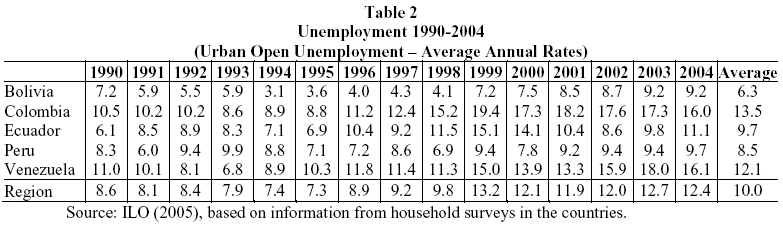
Low average economic growth in the Andes accompanies an increase in urban unemployment, which throughout the data-set is around 10% (cf. Table 2). According to research by the International Labour Organization (ILO), after a slight fall between 1993 and 1995, unemployment grew consistently until it surpassed 12% in 2003. This figure was exceeded only in 1999, when regional unemployment reached its peak (13.2%). Individually, even though it is the country where the GDP grew most during this period, Colombia has the highest average rate of unemployment (13.5%), followed by Venezuela (12.1%), which, as we saw above, displayed the worst economic performance. The lowest average rate of unemployment is Bolivia's, a mere 6.3%, which is consistent with its relatively good GDP performance throughout the 1990s.
Bolivia not only has the lowest average rates of unemployment but also the second lowest upward tendency. However, since 2003 unemployment has surpassed 9%, almost reaching Peru which has the most stable rates in the region, especially in the last few years, of around 9.5%. Ecuador, which is also a little below the average rate of unemployment, after a few critical years at the turn of the decade, saw an accentuated fall in these rates in 2001, coming closer to those of Bolivia and Peru.
Of all countries, it is in Colombia and Venezuela that one can most clearly see significant growth in unemployment. Both set out in 1990 from a rate of 10.5% to 11%, reaching 16% in 2004, an increase of 5% in 15 years. Ecuador saw a similar rise, but at a much lower level. Despite huge oscillations, it is possible to say that Colombia at least shows a slight tendency to improvement after the leap of 19.4% in 1999, the highest unemployment rate of the whole region.
The increase in urban unemployment is also consistent with the average growth of population in the cities, although there are important variations between countries (cf. Table 3). All Andean countries are predominantly urban by the beginning of the 1990s. Generally, between 1990 and 2004, urban population grows at about 7%, reaching a regional average for the data-set of almost 60%. The most stable figures are from Ecuador, which displays the lowest rate of urban populational growth among the Andean group. The most accentuated growth occurs in Venezuela (precisely the country with the largest growth in unemployment) and then in Peru (where unemployment grows more slowly), where urban populations already surpass two-thirds of the total. Growth of cities is slower in Colombia (where, however, unemployment has risen sharply since 1990) and in Bolivia (where unemployment has not increased much).
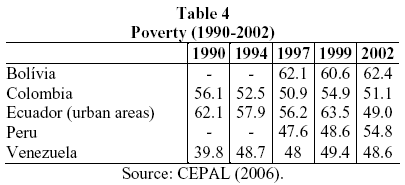
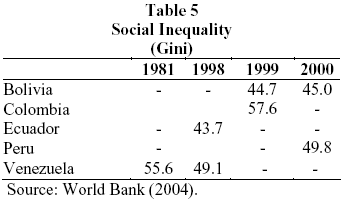
]]> The combination of low economic growth and a rise in unemployment, now significantly more urban, seems to freeze the Andean social scenario in the last few decades, but produces uncertain results. In general, the indicators of poverty and social inequality are less periodic and certain than the indicators already analysed (cf. Tables 4 and 5). But everything, including analysis of official and international reports, indicates that an enormous social debt remains in these countries. Poverty is still very high and social inequality remains one of the worst in the world, like the rest of South America, without signs of consistent and significant improvement in this respect (except in the last three years). At the most, poverty may have diminished slightly, while the asymmetries may even have grown in some cases.
According to the Economic Commission for Latin America and the Caribbean – Cepal (2006), the trend towards improvement in indicators of poverty in 2005 was mainly a consequence of economic growth in Latin America. In 2004, average growth in these countries was 5.9%, and it was 4.7% in 2005. The Cepal report argues that economic recovery had a positive impact on labor markets and, accordingly, on the decline in poverty, despite the increase in the informal sector in many countries. Another factor pointed out was the low rate of inflation (8.5% in 2003 and 7.3% in 2004), which had a positive impact on the purchasing power of poorer people.
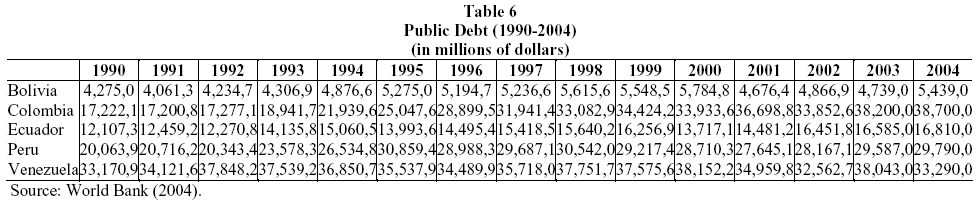
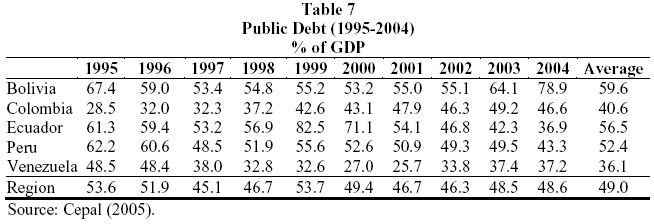
]]> The poorest country in the Andes continues to be Bolivia, with over 60% of the population in this condition, followed by Peru, Colombia, Ecuador, and Venezuela. The social situation in Venezuela worsens in the early 1990s and possibly in the crisis-ridden years of 2002 and 2003. A preliminary analysis shows a downward trend in Peru the same year but, on the other hand, a swift fall in poverty in Ecuador and a smaller one in Colombia.Another Andean structural condition which not only remained practically untouched but also worsened in some cases was the public debt (cf. Tables 6 and 7). Colombia was the country where it grew the most in the 1990s and early 2000s, actually doubling. In Peru the debt also grew a lot in this period. It grew less in Ecuador and Bolivia, although with an important upward trend. The debt practically stabilized in Venezuela, with some oscillations. In absolute terms, the lowest regional debts are the Bolivian (5.4 billion dollars) and the Ecuadorian (16.8 billion dollars), while the biggest are the Colombian (38.7 billion dollars), Venezuelan (33.2 billion dollars) and Peruvian (29.7 billion dollars).
From 1995 to 2004, the regional average GDP/debt ratio decreased from 53.6% to 48.6%, oscillating around 49% in this historical data-set. That means economic growth was low, but a little above the growth of the debt, which now no longer hovers over half of the wealth produced in most of these countries. The worst performer in this regard, by some distance, is Bolivia, whose debt once reached 79% of national GDP and has averaged around 59.6%. In that country, the GDP/debt ratio fell considerably between 1996 and 2002, and went up again sharply in 2003.
In the remaining countries, this ratio is more stable and below 50%. In Colombia, there is an upward trend. The same holds true for Venezuela, although only after 2002 (the crisis year), after falling a lot between 1997 and 2001. In Peru and Ecuador the debt burden on GDP has consistently decreased, especially after 1999. In 1995 both countries had more than 60% of the debt included in the GDP. Ecuador broke the record in 1999 with 82%, but in 2004 it had the lowest rate of all Andean countries (36.9%). Peru also diminished the debt-burden on its GDP by about 20%, reducing it to 43.3% in 2004.
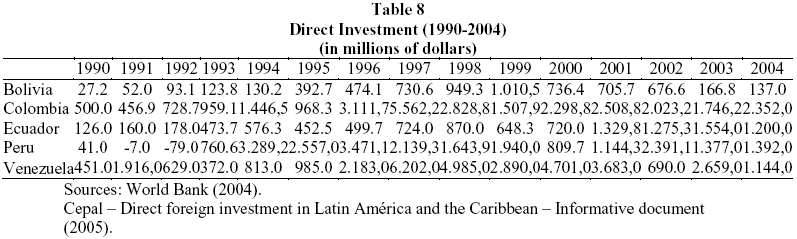
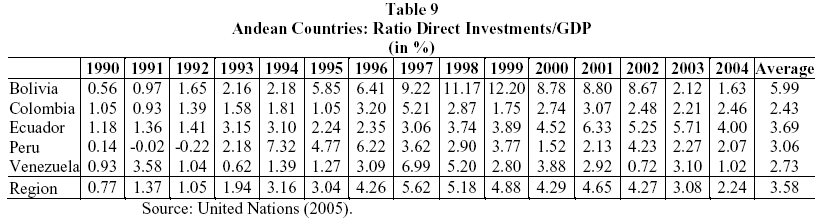
If public debt continues to be a major problem in the Andes, the lack of direct investment in the region aggravates the situation even more (cf. Tables 8 and 9). Foreign productive investment in these countries is, in fact, very low and oscillating. It grew for a few years during the mid-1990s, but fell again soon after this to almost insignificant levels. The countries that capitalized most on this brief investment cycle, in absolute terms, were Colombia and Venezuela. Ecuador, despite its lack of major investments, has grown consistently. Peru went through a good period from 1993 to 1996, and recovered again in 2000, but in a very unstable way. Foreign investment rose in Bolivia until 2000/2001, after which it began to fall perceptibly.
The volume of direct investment in the Andes in relation to GDP is minimal. It rarely surpasses 5%. The average in the region from 1990 to 2004 is 3.58%. Clearly, the relative weight of investments grows until 1997, and then falls in a pronounced manner. Regional investment starts from a level inferior to 1% in 1990, which allows it to be easily doubled or even tripled while still remaining low. Contrary to what occurs with absolute numbers, Bolivia has the greatest percentage growth in investment in relation to GDP. Thus, even though more investment occurs in Venezuela and Colombia, the relative weight of investments is much bigger between 1995 and 2002 in Bolivia. On the other hand, relative to its gross domestic product Ecuador shows sustainable growth until 2001, after which it begins to fall.
Considering all the socio-economic aspects discussed thus far, the picture is really not very encouraging. Economic growth was low, and the incipient rise in productive investment vis-à-vis GDP – low even by South American standards – did not last. Cities grew but so did unemployment. The social debt (poverty and inequality) continued, albeit with some progress, as did the public debt.
Individually, Bolivia had the best indicators of growth and employment amongst Andean countries in the 1990s, but its debt rose in this period. In any case, it remained a very poor and unequal country, the poorest in the sub-region. Investment in proportion to the internal wealth produced rose significantly in a few years, but fell away again in 2003 and 2004. The lack of new foreign productive investment caused an extraordinary rise in debt. Colombia grew the most in average terms during the period, including the 1980s, even if at insufficient levels, as the increase in unemployment shows. Colombian debt does not surpass 50% of GDP, but has been growing. Furthermore, investment rates are very low and unsustainable.
Something similar occurs with investments in Venezuela. However, in this country, debt is relatively low in relation to GDP and compared to its neighbors. Unemployment has increased, accompanying major oscillations in economic growth. Subsequently, the best-case scenario is that poverty and inequality persisted. In Peru economic growth is highly unstable, but has improved in the 2000s. Unemployment has been slightly upward but, although the social situation remains bleak, public debt relative to GDP has decreased perceptibly. On the other hand, investments have fallen a lot after increasing in 1994 and 1997.
Finally, Ecuador grew at an average rate of 2.5%, slightly above the overall Andean average. In that country unemployment has increased, as in the others, but slightly below average. It had the advantage of progressively lowering its debt and at the same time having an upward trend in the rate of investment vis-à-vis GDP. On this basis, looking overall at the recent picture, one can say it is the country with the best socio-economic situation among the Andean neighbors.
]]>SOCIO-ECONOMIC CONDITIONS: "LIBERAL" VARIABLES
A division between developmentalist and liberal variables in the analysis of socio-economic conditions, which sometimes reflect rival schools of thought over macro-economic policy, can produce serious distortions. Even zeal over inflation, usually associated with monetarist and orthodox and generically more liberal currents, has implications for development. This indicator would be, in principle, on the list of liberal and not developmentalist variables because its control leads to a reduction in economic growth. Furthermore, the focus on controlling inflation in the late 1980s and throughout the 1990s in South America coincided with the hegemony of neoliberal ideas in the region, which ended up associating the latter with the battle against high inflation.
It is true that, in certain contexts, the demand for low and declining inflation rates may have negative effects on short term growth. On the other hand, in the long term it may mean more balanced and continuous growth, at least in theory. And besides, low inflation and sustained (even if moderate) growth should have positive effects on income distribution, which is a basic indicator of development.
Observing Andean countries in the turn of the twentieth to the twenty-first century, one sees a strong, unmistakable and constant fall in the consumer price index (cf. Table 10). Only in Ecuador after 1997 does inflation rise brusquely, as also in Venezuela in 2002 (its crisis year). On the whole, it decreases considerably. Except for the Venezuelan rates, which continue relatively high, all the countries reach 2004 with single-digit inflation. In the last year of the data, the regional average is 7.6%, having oscillated around 10.6% in the ten years analyzed.
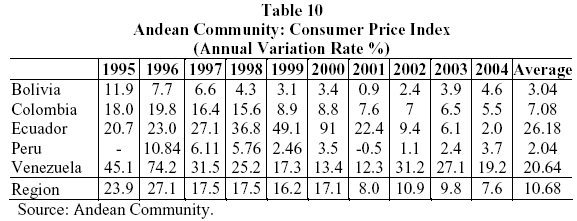
One of the lowest averages is Bolivia's (3%), precisely the country with the best economic and employment growth in the 1990s, despite maintaining its public and social debt. Peru had an even lower average (2%), coinciding with the period from 2000 when its economic growth began to improve. On the other hand, the higher average inflation of Ecuador and Venezuela did not go with significantly higher rates of economic growth and productive investment than other countries. On the contrary, the moment in which Ecuador was doing better in terms of growth, employment and debt was when inflation fell strongly. The same cannot be said, however, of Colombia where the continuous fall in inflation rates had little or no favourable effect on the economic performance of the country.
]]> Another variable usually associated with neoliberalism is foreign trade. Although this has been a fundamental variable in the national-developmentalist model, be it through its phase of import substitution or through its more internationalist phase, it is usually associated with the agenda of pro-market reforms because of the shocks of trade liberalization that marked the 1990s. This in fact occurred, with greater or lesser intensity, but nothing prevented trade from also being an instrument of development as long as it obeyed criteria such as enlargement of the domestic market, balanced increase in per capita income and industrialization of the economy.Trade may only be considered a strictly liberal (and not developmentalist) variable when its liberalization makes a national economy less diversified, competitive, just, and productive. One of the frequent ways that trade does not promote development in South America is by preserving the primary-export nature which has historically characterized its economies. But, even then, there is nothing inherent in foreign trade that says that protectionism is developmentalist per se, or that its liberalization may not serve a developmentalist project.
In any case, between 1990 and 2004 Andean imports showed an upward trend (cf. Table 11). The curves are irregular but upward, with the possible exception of Bolivia after 1999. The same can be said of exports, notably from Venezuela, the biggest exporter of the five countries examined (cf. Table 12). Yet an analysis of the balance of trade shows mainly deficits, especially between 1992 and 1999, except in Venezuela, where exports are far greater and faster-growing than imports. Ecuador has obtained small trade surpluses, although its figures worsen from 2000 onwards (cf. Table 13).
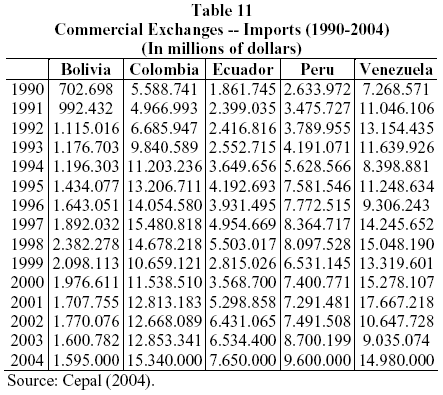
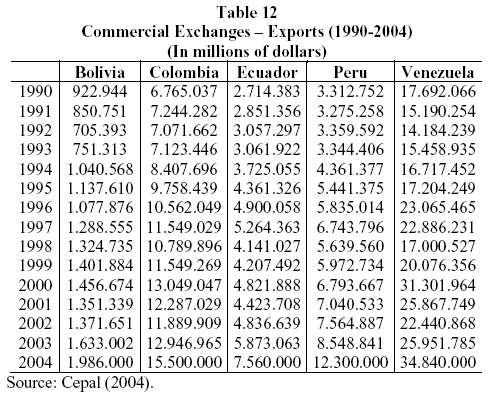
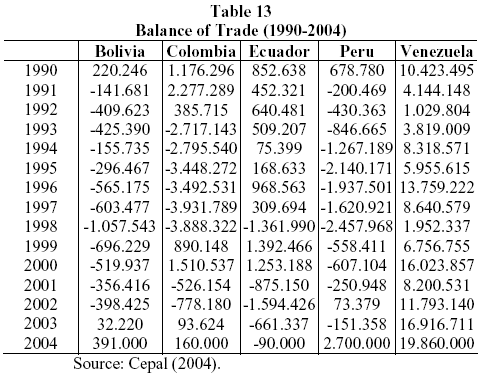
An analysis of the Andean balance of trade since the last decade of the 20th century suggests the existence of an unfavorable process of international integration. The liberalization policies have continuously enlarged trade, but without promoting surpluses in most countries and in most years of the data-set. The only exceptional performance is that of Venezuela, whose main export is oil. In the other cases, one sees that foreign trade is a less relevant variable for development since it does not constitute an effective instrument of economic expansion. Its liberalization exerts little impact on the structure of Andean economies, which continue to be primary-exporting and highly dependent on the importing of industrialized products.
The level of economic freedom as measured by a foreign foundation (The Heritage Foundation), shows that the region as a whole has remained in the "partially unfree" category, with an average of around 3.1 (cf. Table 14). This means that, despite the liberalizing efforts and pro-reform agenda, which has included trade, the Andean markets are still very closed. The above average countries (i.e. even less open) are only Venezuela and another petroleum exporter, Ecuador. The freer economies are firstly Bolivia, followed by Peru (both "partially free") and then Colombia which has barely changed. However, none of the Andean cases has a clear tendency with regard to economic freedom, with the exception of Venezuela which in 2004 was already considered a very "repressive" or unfree economy, even though it is the country that has most enlarged its international trade relations.
All of this data analyzed together, independently of its classifications, points to the fact that the neoliberal policies of the 1990s were not responsible for all the social evils of the Andes. After all, poverty and inequality are older problems with structural roots in society, having been through diverse alterations from one country to another, and not all of them necessarily negative. However, it is also true that the liberalizing reform agenda did not have anything like the positive effects initially promised. The reform agenda founded on the Washington consensus and defended by international economic organs further reduced the leverage of the state, reproducing its fiscal problems and functioning as a sort of medication which keeps the patient inert.
In addition, the costs demanded by pro-market reforms (reflected, for example, in public debt and increase in unemployment), far surpass their benefits, partly because of overriding restrictions of an international and systemic nature, and partly because liberalization did not follow a development logic. Hence the fact that these variables, liberal and developmentalist, are dissociated in practice although they would not need to be in theory. In any case, the desire to control inflation which favoured the adoption of this agenda was transformed into an island of illusions that concealed the persistence of serious structural and asymmetrical deformities, including huge income concentration and a primary-exporting economy which in most cases runs on a deficit.
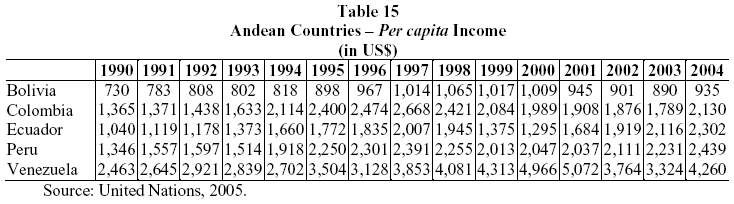
In short the Andean countries preserved their underdeveloped nature, even in aggregate terms, as can be seen from a final analysis of per capita income between 1990 and 2004 (cf. Table 15). Only Venezuela shows a tendency to vigorous progress in this period, and even that is unstable and dependent on the price of a barrel of oil. The other countries did not experiment any significant and orderly advance; after at least 15 or 20 years of economic adjustments and only slight improvement, they remain in the category of poor countries with a per capita income under US$ 2,500. To this problematic panorama and slow progress, we must add a weak and fragmented state that suffers great pressure for democratization, as we shall now see.
]]>CONFLICTS AND POLITICAL INSTITUTIONS
While the region showed little progress towards development in socio-economic dimensions, the Andean democracies have been through important political changes. These changes will be object of a more careful analysis in this section, based mainly on the data-base of events organized by the South American Political Observatory -- OPSA, which contains diverse, detailed and indexed information about political episodes in each country of the region since 20011.
First of all, it is important to point out the existence of distinct variations and patterns in political change in the Andean countries at the end of the 20th century. Colombia and especially Venezuela were for a long time seen as models of stable democracy in South America. Even if these countries were not as democratic as imagined, at least they were different from the military regimes scattered around the region at that time. In any case, in the 1990s they lost this status for different reasons: the Colombians because they suffered an intensification of their civil war when it was least expected; and the Venezuelans because they saw the breakdown of their party system and the rise of Hugo Chávez, a charismatic leader who immediately collides with the more traditional political forces in the country.
For decades, one of the worst civil wars ever in the region has dragged on in Colombia. This extremely violent war has already killed thousands of civilians, guerrillas, and military. In 2002, with the election of the conservative Álvaro Uribe, a new attempt at pacification began. Despite some progress such as the partial demobilization of the AUC (United Self-Defence Forces of Colombia), negotiations with the ELN (National Liberation Army), and even with the FARCs (Revolutionary Armed Forces of Colombia), the problem of Colombian security still impedes the strengthening of democratic institutions. Colombia exemplifies a type of non-institutionalized conflict, in which not all social and political actors agree to follow the rules of the game. So the main question in that country continues to be the lack of full acceptance of the political regime and, consequently, of the liberal democratic state. Adding to this the heritage of militarization and the centrality of security issues, we have a very special case (cf. Boudon, 2000; Gutiérrez Sanín, 2003; Livingstone, 2004; Safford and Palacios, 2002; Tanaka, 2001).
An important part of Colombian territory is not controlled by the state but by the guerrillas, who are still reluctant to accept the formal institutions of the country. With the end of the Soviet Union and the Cold War, these left-wing revolutionary forces lost their main source of funding. Since then, they have been accused of using drug trafficking in order to survive, perpetuating what seemed to be a lost cause with no international backing. Meanwhile, democracy in the country remains unstable and a hostage to the past, but also to unending social and economic difficulties which pour more fuel onto the flames of the civil war itself.
The more institutionalized political relations that occur within the state contribute little to the stabilization of the regime. They are not only disconnected from the violent reality of the country, but also get bogged down in run-of-the-mill disputes that further fragment the political system. A demonstration of this is the creation of the Uribista party at the end of 2005. Because of the president and the circumstances of power, the country's right-wing subdivides once again, creating a new grouping that is not only personalist but also weakens the political parties even more. It is important to highlight that in the 2002 elections, for the first time in decades, a candidate from outside the big Colombian parties (Liberal Party -- PL and Social Conservative Party – PSC) reached the presidency of the country. In these same elections, the so-called independent parties got an extraordinary number of seats in the national legislature, both in the lower chamber as well as the senate, ending the one-party majority previously enjoyed by the PL.
Like Colombia, Venezuela did not experience authoritarian governments during the 1960s and 1970s as did the rest of the region. For 40 years it lived under the pact of Punto Fijo, a 1958 agreement establishing alternation between the Democratic Party -- AD and the Christian-Democrats of the Committee of Independent Political-Electoral Organization -- COPEI. In the 1990s this pact enters a crisis, exemplified amongst other things by the attempted coup of 1992. After that, rumors of new coups, social revolt, states of exception and interruption of presidential mandates become routine. Out of the crisis of the two-party system Hugo Chávez emerges and wins the elections of 1998, accelerating the downfall of the traditional political forces in the country (cf. Burt and Maureci, 2004; Solimano, 2003; Tanaka, 2001; Anastasia et alii, 2004).
In 1999, the political changes that had been hinted at throughout the decade enter a new phase with the rise of the Chavista hegemony over the rubble of the old corrupt and discredited regime. Initially, there is a ferocious political battle between the Chávez group and the old oligarchies, allied to trade unions who were still trying to resist the changes, even to the point of a coup d'état in 2002 which not only failed but revealed the undemocratic nature of the opposition. Gradually, Chávez began to consolidate and concentrate power. The decisive confrontation was the referendum of 2004, when the population, by not agreeing to new elections, once again ratified their support for Chávez, definitively undermining the opposition forces.
The opposition still tried to de-legitimize the legislative elections of December 2005 by abstaining from the contest, but ended up achieving only its own self-exclusion from the political process which was known to be favourable to the government. In this episode, the country's dividedness, which for a few years had flirted with the possibility of internal war and brought about moments of institutional rupture, seemed to lose intensity and began to be viewed in different terms. At the same time that the opposition is defeated, society shows its weariness with the conflict. Not insignificantly, the group of the "ni-ni" (neither Chavistas nor anti-Chavistas), which had originated during the 2004 referendum, grows and occupies the centre of the political spectrum, in a sort of synthesis of the turn-of-the-century conflict. However, as this movement initially does not have its own party, it leads in practice to the consolidation of the Chávez hegemony.
]]> Hugo Chávez concentrated powers by breaking the old correlation of forces, winning local and national elections, enlarging his parliamentary base, reforming the Constitution, controlling the courts, the office of Public Prosecutions, the National Electoral Counsel -- CNE, the police and the Armed Forces, creating new militias and the so-called missions who were responsible for much of the implementation of government social policies. Despite accusations of authoritarianism, he did all this legally and with the support of the population who elected him in 1999, reelected him in 2000, supported him in the 2004 referendum and gave his allies victory in the national legislative elections of 2005 which international observers classified as free and fair, contrary to what the opposition stated.Although Chávez made all these changes in a formally democratic manner, and although the opposition is oligarchical, cultivates a 'coup d'état' culture and has the support of the private media and the blessing of the United States, the new concentration of powers introduced an unmistakable imbalance in the institutional checks and balances of the country, together with the possibility of violations of freedom through censorship and political persecution. The popular and hegemonic character of the Chávez government interrupted a political model centered on the economic and union elites, ending the plutocracy that had existed for 40 years in Venezuela but also bringing new problems.
At the same time that the government promoted the mobilization and political inclusion of much of the unorganized population, a highly radicalized environment led it to assume a posture of intolerance towards its opponents and towards any counter-hegemonic mechanisms. Furthermore, the emphasis on a model of participatory democracy weakened the representative and mediating institutions that had organized political life in the country, thus verticalizing a process of fragmentation that already existed horizontally in the society.
Although there are many differences in the political changes in Colombia and Venezuela, they have something in common: the crisis of traditional parties followed by an institutionalism centered even more in the figure of the president, whether from the right or the left. There is also the similarity that, in both cases, these institutional changes, especially in the party system, were added to a conflicting national split, although with marked differences in nature, degree, and history. The Colombian conflict is older (a survivor of the Cold War), violent (armed conflict, civil war), and was relatively weak during the Uribe government, while the Venezuelan conflict is newer (post-Cold War) and less virulent, although it has intensified greatly during the Chávez government.
In the southern Andes we see another important political change at the turn of the century. After the transition to democracy, Ecuador, Peru, and Bolivia faced the strengthening of popular movements in the 1990s, especially movements of the traditional populations. These countries form the so-called indigenous arc, composed mainly of Quechuas and Aymaras. Most of the social revolts that erupt during this period involve such groups, reinitiating a wave of demands which had been suffocated by the authoritarian governments; the 1990s saw the consolidation of the indigenous cultural renaissance and the reinvigoration of the struggle for land.
Ecuador and Bolivia have very large and active indigenous movements. In Peru, its demands are more in line with those of the unions and ordinary peasants. These movements demand better living conditions and political participation, as well as the valuing of their ethnic identity. Their demands are thus both material as well as symbolic and political. They further propel the process of fragmentation and conflict in society and between society and the state, including conflicts of a regional nature (cf. Burt and Maureci, 2004; Crabtree and Whitehead, 2001; Dávalos, 2005; Martí I Puig and Sanahuja, 2004; Solimano, 2003).
Ecuadorian and Bolivian social conflicts have some similarities, so they may to a certain extent be analyzed together. They feed a chronic situation of political instability that generally manifests itself in revolts and pressures followed by states of exception and, at times, interruptions of presidential mandates and even coups d'état like the removal of Ecuadorian president Jamil Mahuad in 2000. Both in Ecuador and Bolivia indigenous movements have aroused unrest in local elites, deepening a social cleavage based on ethnicity and going beyond the familiar class conflicts in the region. Some of their most radical leaders went to the extreme of proposing the formation of an indigenous "state" which would unite the traditional peoples marginalized by the official institutions. They do not find backing for that, but they do at least demonstrate a profound discomfort and dissatisfaction with the current state and seek to go beyond it.
These movements were capable of electing presidents. In Ecuador, Lúcio Gutiérrez was elected in 2003 by the Patriotic Society (SP) with a very leftist and nationalist agenda of change which was, curiously enough, sensitive to the indigenous organizations. Although not of indigenous descent, Gutiérrez attracted these movements with a strong discourse against neoliberalism and corruption. He modeled himself on Venezuela's Hugo Chávez and inflamed the people against the oligarchies and American imperialism.
Once in power, however, Gutiérrez betrayed his campaign promises in a typical case of policy switch, with the maintenance of a liberalizing agenda that he was supposedly going to combat. That led to a steep loss of popularity which became unsustainable from late 2004 when he tried to modify the composition of the Supreme Court of Justice (CSJ). Protests intensified at the beginning of 2005, even disregarding the "state of exception", a commonly used and usually little effective measure in the 1990s (in Ecuador, this mechanism which temporarily suspends civil rights is called a "state of emergency"). Gutiérrez is unable to withstand the pressure and, after a very polemical process of removal, is transformed into another exiled president, just like his predecessors Abdulá Bucaram and Gustavo Noboa. Alfredo Palácio takes over from him, but soon finds himself pressured between two antagonistic forces: on one side the social movements, and on the other the economic elites, each one with foreign backing from, respectively, Hugo Chávez's Venezuelan government and George W. Bush's American government.
In this battle, once again, maintaining the political economy inherited from the market-driven reforms wins out. It is a victory, for example, for continuing negotiations over a Free Trade Treaty with the United States, which makes Palácio lose his newly-conquered social base. In the middle of all that, the new president proposes a Constituent Assembly with broad powers, a proposal which soon faces great opposition in the Legislature and the Electoral High Court and throws the country into a new crisis. This revives a spiral of conflicts that maintains the routine of instability in Ecuadorian democracy without any perspective of solution, despite institutional attempts by Palácio such as the creation of the Conciliating System with Civil Society and the National Counsel of Modernization (Conam), which were intended to improve relations between state and society.
]]> Ecuador has not had a stable body of constitutional rules. In 1997, there was a Constituent Assembly to elaborate a new Constitution that would regulate political practices in the country. A routine of institutional reforms like this showed the lack of internal cohesion in relation to normative benchmarks, which became a central element in the crisis of parties and Executive-Legislative relations. From 1994 onwards, after a popular consultation (a very common mechanism), Ecuador also experienced the participation of the independientes or social movements (groupings which did not require party affiliation). The difficulty in building parliamentary and social majorities meant Ecuadorian presidents have had relatively short periods of cooperation with Congress, between one and two years, after which the system would go irremediably into crisis.Bolivia has a similar phenomenon of deterioration of the party system accompanied by an escalation of conflicts regarding ethnicity, economic sectors, and regions of the country (east versus west). It is probably the clearest case of the strength of social movements, especially the indigenous ones, in deepening democracy. It is also the most prominent case of demands for political inclusion, bearing in mind the enormous distortions and asymmetries in representation in state institutions, whether legislative, executive, judicial, or even military, that still exist in a society where two-thirds of the population are indigenous.
After the transition, the government of Victor Paz Estenssoro, of the Nationalist Revolutionary Movement -- MNR, forged a pact for democracy with the Nationalist Democratic Action -- ADN and started a program of structural reforms. On 29th August, 1985, the first neoliberal act in a democratic South American government was instituted, decree n. 21.060 which follows the recommendations of the International Monetary Fund (cf. Hofmeister, 2004). In 1989, another agreement was made, now between the ADN and the Revolutionary Left Movement -- MIR, which elected Jaime Paz Zamora (MIR) even though he was not the candidate with the most votes. It should be noted that, in Bolivia, if none of the candidates reaches a majority of votes (50% + 1) in a direct election, the Congress chooses the president in the run-off, a practice that has become customary and has been one of main reasons for the deficit of legitimacy of the governments.
This democracy by pacts was in crisis in Bolivia by the end of the 1990s, after the end of Gonzalo Sanchez de Lozada's first term (1994-1998). The resentment (from the time of the dictatorship) against the new president and former general Hugo Banzer (1998-2002), together with the economic crisis and the peak of the campaign of coca eradication (a traditional crop in Bolivia), was an impulse for huge social mobilizations from which emerged the vigorous Movement to Socialism – MAS, of the cocalero Evo Morales. There then followed a sequence of more severe protests: the water war of 2000 (when the social movements of Cochabamba manage to block the privatization of the distribution service); the gas war of 2003 leading to the fall of president Sanchez de Lozada (in his second term); and the final conflict in 2005, in which the resignation of Carlos Mesa led to a provisional government with Eduardo Rodrigues (judge and then president of the Supreme Court) in command.
The result of this escalation of conflicts was the victory of Evo Morales in the unexpectedly early elections of 2005, obtaining the majority of votes (51%) and a large advantage over the second-placed candidate, Jorge Quiroga (Democratic and Social Power – Podemos). The union leader and first Bolivian president of indigenous origin won a majority in the lower house, inaugurating a new political reality in Bolivia. From the debris of the old parties a two-party system was born, divided between MAS and Podemos, but preserving the challenge to the government of accommodating an enormous list of social demands that includes agrarian reform, new regulations regarding the cultivation of coca, the nationalization of natural resources and the calling of a Constituent Assembly.
Although Peru also has a large indigenous population, ethnicity did not have the same weight in its fragmentation and conflicts as in Ecuador and especially Bolivia. This may be due to the lack of movement organizing at the national level, or because the movement blends into the more class-based, sectorial or even regional Peruvian peasant struggle. In any case, Peru's recent history is specific and different from all the other Andean countries, owing to the existence of an authoritarian government after Alberto Fujimori's self-coup of 1992, in a context where democracy was already hegemonic in the region (Coutinho, 2005; Anastasia et alii, 2004; Tanaka, 2001).
The Peruvian institutional rupture differs from the region not because of the coup itself, but because it started a hardening of the regime that extended for the whole decade. Fujimorization in Peru witnessed the end of the civil war (one of the bloodiest in Latin America), a process of generalized institutional deterioration and the dominion of neoliberal doctrine. With the fall of Fujimori in 2000, Alejandro Toledo of Possible Peru (PP) is elected, inheriting a completely corrupt State and enormous popular dissatisfaction which was immediately freed from the controls imposed by the old regime.
Once in power, Toledo made an alliance with the Independent Moralizing Front (FIM), a more right-wing coalition, which already sent a negative signal to the social movements which had helped to get him elected. That alliance was made in order to guarantee a small majority, besides receiving occasional support from other smaller parties. Toledo faced his first big crisis in 2002, when he was forced to decree a state of exception in certain areas of the country with considerable unrest on the streets. In 2003, another crisis erupted, once again brought about by social revolts throughout much of the country. A new state of exception was decreed and, once again, the military took to the streets to restore order.
The crises continue, almost all of them causing ministerial reshuffling and threats to the permanence of the president. Toledo loses almost all social support. His popularity falls to very low levels, reaching 6% at the end of 2004. At the beginning of 2005 another uprising occurs, this time in the form of a military mutiny, which the authorities are soon able to keep in check by means of a new state of emergency instituted by Toledo. The president survives this wave of protests and conspiracies thanks to the fear throughout the country of more institutional regression; the memory of Fujimori is still very much alive. Another factor that keeps Toledo in power was the lack of an opposition capable of taking over the country. Thus Peru lived through a sort of unstable equilibrium while awaiting the 2006 elections. Meanwhile, the national party configuration fell into place with the emergence of new leaders and coalitions, especially Lourdes Flores of National Unity (UN) and Ollanta Humala who emerged from a more radical nationalist group (etnocacerismo). They begin to jostle for space with the old parties: the American Popular Revolutionary Alliance (Apra) and Popular Action (AP), led respectively by former presidents Alan García and Valentín Paniagua.
A comparative observation of all the Andean countries leads to the conclusion that at the turn of the century a profound process of political change was occurring, which greatly affected the behaviour of political and social actors and generated institutional crises throughout the period. In spite of their very important differences, the fragmentation and conflict apparent in each of these countries are evidence of the same movement of democratization which runs counter to the capacity of the state (further weakened by pro-market reforms) to satisfy the more popular demands or even coordinate the emergent political relations.
]]> This change in behavior reveals new values and elements present in the political culture and which become consolidated above all in the 2000s. Amongst these, one should note the ethnic, nationalist, and anti-neoliberal sentiments, as well as the criticism of traditional political institutions. All these sentiments flow into a melting pot that can be summed up by the sign of inclusion, both with regard to groupings within the state and with regard to the social dimension of welfare. This new constellation of ideas and meanings, which in some degree recovers old symbols, begins to orient political behaviour in search of a settlement which is hampered by the ineptitude of the state and by an economic order (not limited to the Andes) in which the market has preeminence.The crisis of political parties in this period is symptomatic of the discontent with traditional political institutions. South American citizens share democratic values and principles, but also have a strong distrust of politicians, of representative institutions and of the usual public policies, which has led to a low preference for democracy in the region, and particularly in Andean America where there is a smaller proportion of "democrats" according to the United Nations report on the topic (cf. PNUD, 2004). The weakening or even collapse of hegemonic and older parties at the turn of the century is, at the same time, a result of this new Andean political culture and an ingredient of instability, since the absence of mechanisms of institutional mediation between state and society denies social pressures a channel of dialogue or the forms of conflict-settlement which existed previously. In addition, governments do not have actors and institutions with credibility in the eyes of the social movements.
The exceptions, with a relative reservoir of social credibility, are limited precisely to the new governments and parties of a more popular nature, like those of Chávez and Morales, who to a large extent reach power because of the new political culture emerging in parts of the region2. In these cases of gobiernos de las calles, one sees an attempt at reassuming the responsibilities of the state and a closer relationship with the mobilized sectors of society which were formerly marginalized. On the other hand, confrontations with the old oligarchies and with the market are also growing in these countries, and this ends up deepening national divisions and reproducing an environment of instability. In Colombia, it is important to note, the credibility and acceptance which the Uribe government has won do not extend to the whole national territory, since a large part of it is still controlled by subversive forces that are reluctant to legitimize the liberal democratic state. In any case, Uribismo is proof enough of the party-political bankruptcy and social fragmentation of the country, notwithstanding all its peculiarities.
CONCLUSION
With the liberalizing reforms of the last decade of the 20th century and with all the global transformations already in course, the Andean states ended up losing power and autonomy. The state fiscal crisis was not solved in these countries and the public debt aggravated the problem. At the same time, the mechanisms of economic control and intervention were reduced without obtaining substantial results from the market. So when society expanded its expectations and demands vis-à-vis the process of political democratization and thus began to participate more freely and actively in public life, it found itself facing an "empty" state.
Even with political inclusion (incorporation of representatives in the institutions and deliberations of the state), the degree of freedom or room for manoeuvre for promoting appreciable change in the social structure (in the status quo) are very small. Therefore, the impression is that they arrived late to the party, to taking part in a state that once had a relevant role in development but which no longer has the same power, precisely at a time when world capitalism is shrinking after decades of strong growth.
This apparent contradiction of the liberal-democratic state, a state supposedly of popular sovereignty, leads to a tragic period for the Andean countries which are submerged in successive institutional crises. This paradox is really at the root of the dissatisfaction of most of society, not with the democratic institutions themselves, but with the fact that power has been transferred away from them, away from the parties, Parliament, and even government, that is, from the supremely political fora, to institutions which are intangible, supranational or simply out of reach of nations on the margins of the new international order, so that these nations have difficulty even keeping the sort of peripheral insertion that they once had. In a situation like this, in which national political space is less effective for decision-making despite being the repository of expectations for those who enter it, we see the development of an environment of perplexity, apathy, and revolt.
Comparing the Andean countries, one can identify the existence of different processes of fragmentation and conflict moved by a common desire for political and social inclusion. The contemporary Andean states give an outlet for this demand, underlining many forms of political behavior but running into its own limitations. These are the problems of a state that has become political by becoming more democratic, but has lost its centrality by becoming more liberal. The perception of differences and the mobilization of interests have cultivated distinct forms of political behavior, but all of them are as disaggregating as they are inclusive in spirit. As the state cannot automatically respond to social demands and neither can the market, a new conflict begins in search of a new settlement which is slow in coming.
The discovery that the state is no longer an instrument of social transformation frustrates large parts of the population who finally have access to it. After all, contrary to what modernization theories expected (cf. Lipset, 1963), these are democratic experiences without development, polyarchies without better concrete results. In a way, this discussion resuscitates an interpretative school that believes participation is a risk for democracy because of the overloading and permanent questioning of decisions (cf. Huntington and Nelson, 1976). However, the problem is not merely one of growing demands but is also, and mainly, on the supply side, that is, in the weakening of the power of public institutions to respond.
]]> In an earlier study, it was found that political inclusion was fundamental for the stabilization of some democracies in the Southern Cone (cf. Coutinho, 2005). It was responsible for generating a more cooperative environment, something that was missing in Andean countries which were still very low in inclusiveness. Venezuela, Peru, and Ecuador did not form broad coalition governments, generally maintained restricted or ad hoc majorities, and established a highly conflictive and exclusive relationship with the oppositions which also followed social divisions. Colombia and Bolivia maintained large formal legislative majorities, which were however falsely inclusive because they did not correspond to the diversity and to the most important conflicts in society. These were the two cases studied in which a pattern of more cleavaged conflict required a previous incorporation of social segments in the state.Regardless of these differences over political inclusion, all Andean countries have high tension between economic limitations and democracy, between (as it were) the market and the streets. Market forces became more complex and underperformed, as we saw in the first two parts of this article. But the social forces, moved by a desire for not only political but also social inclusion, intensified their actions, maintaining a high level of mobilization and generating many conflicts, of greater or lesser violence according to the country and the moment, as became clearer in the third part. This parallel connection of two processes of apparently refractory change results in chronic instability. And by means of a lack of consensus or minimal bases of lasting negotiation, the predominance of political behavior oriented towards confrontation reinforces the search for alternatives to the paradox of the liberal democratic State.
An issue that deserves to be highlighted is that the institutional crises in Andean democracies were not always associated with strictly economic crises. In fact, on several occasions a major crisis erupted during a period of relative growth in the economy. One of the most recent examples is Peru during the second half of the Toledo government, marked by political crises and economic recovery. Thus, the tension between democracy and economic limitations is more complex than it might seem at first. The oscillating and periodic moments of capital expansion do not mean that the new wealth is well distributed in society or even sufficient to placate the discomfort of an enormous social debt accumulated throughout history. A more vigorous, sustained and de-concentrated growth would be necessary to meet the population's expectations. In addition, the atrophy of the role of the state together with the endogenous institutional problems (for example, the failure of party systems) suggests an emptiness or difficulty in articulating the interests of the market and of society that could not easily be overcome just by spurts of growth as long as a more efficient inclusive political coordination left the institutional dimension of the problem unresolved.
Finally, it is important to remember that contemporary crises do not find the same support for openly authoritarian solutions along the lines of the 1960s and 1970s. In the post-Cold War, the interruption of democratizing processes or solutions convenient for the elites are much more difficult, as became evident in the episode in which Chávez was restored to power after the coup of 2002. The dilemma is now different: how to adapt a weakened state to the demands of democracy without resorting to repression or ignoring the global protagonism of the market.
Acknowledging all due distinctions, part of the paradox we have stressed in this article – in which the economic behavior expected by the market collides with the political behavior of the streets – goes back to ideas in Karl Polanyi's The Great Transformation (1980). Now, as in the past, simultaneously with the liberal wave there is a countermovement of revitalization of society that starts to demand that the new market adjust to a system of social protection and collective rights. Once again, therefore, there is a collision of principles which divides society and opens up a corridor of conflicts. The institutional tension resulting from this shock makes the great transformation into a catastrophe. "The fascist crisis of the 20th century originated exactly from this dangerous impasse" (idem:140). But the solution for the contradictions of a liberal democratic state did not imply then, and does not necessarily imply now, a fatalist outcome; it can also imply a compromise, a pact of co-existence, even if not along the lines of the social welfare model. In any case, the challenge continues with the deepening of democracy.
(Received for publication in June 2006)
(Final version in November 2006)
]]>
NOTES
* This article is a result of research developed at the South American Political Observatory -- OPSA of the Research University Institute of Rio de Janeiro -- Iuperj, and is especially indebted to the valuable assistance given by Juan Claudio Epsteyn, Ph.D student in political science and responsible for the gathering and organization of the socio-economic data. I would also like to thank the anonymous reviewers of Dados for the enriching comments and suggestions to the first version of this text.
1. OPSA is a research nucleus in Iuperj which, besides training, analysis and information, has developed a data-base of events (http://observatorio.iuperj.br).
2. In another article I discuss at greater length the new regional leaders, populism, neo-liberalism and democratic instability in contemporary South America (cf. Coutinho, forthcoming).
BIBLIOGRAPHICAL REFERENCES
ANASTASIA, Fátima, RANULFO, Carlos and SANTOS, Fabiano. (2004), Governabilidade e Representação Política na América do Sul. São Paulo, Editora UNESP/Konrad Adenauer. [ Links ]
Boudon, Lawrence. (2000), "Party System Deinstitutionalization: The 1997-98 Colombian Elections in Historical Perspective." Journal of Interamerican Studies and World Affairs, vol. 42, nº 3. [ Links ]
BURT, Jo-Marie and MAURECI, Philip. (2004), Politics in the Andes: Identity, Conflict, Reform. Pittsburgh, University of Pittsburgh Press. [ Links ]
Comisión Económica para América Latina y el Caribe -- CEPAL. (2004), Balance Preliminar de las Economías de América Latina y el Caribe. Santiago, División de Desarrollo Económico, CEPAL. [ Links ].
___. (2005a). Panorama de la Inserción Internacional de América Latina y el Caribe 2004: Tendencias para el 2005. División de Comercio Internacional e Integración. Santiago de Chile. Available at http://www.eclac.org/cgi-bin/getProd.asp?xml=/publicaciones/xml/5/2246 5/P22465.xml&xsl=/comercio/tpl/p9f.xsl [ Links ]
___. (2005b), Estudio Económico de América Latina y el Caribe, 2004-2005. Santiago, División de Desarrollo Social y la División de Estadística y Proyecciones Económicas, CEPAL. Available at http://www.eclac.org/cgi-bin/getProd.asp?xml=/publicaciones/xml/7/22107/P22107. xml&xsl=/de/tpl/p9f.xsl [ Links ]
___. (2005c). Panorama Social de América Latina 2005. División de Desarrollo Social y la División de Estadística y Proyecciones Económicas, CEPAL. Santiago de Chile. [ Links ]
___. (2006). Panorama Social de América Latina (preliminary version). Available at http://www.eclac.org/cgi-bin/getProd.asp?xml=/publicaciones/xml/0/27480/P27480.xml&xsl=/dds/tpl/p9f.xsl&base=/tpl/top-bottom.xsl [ Links ]
COUTINHO, Marcelo Vasconcelos. (2005), Crises Institucionais e Mudança Política na América do Sul. Doctoral thesis in Political Science, Iuperj, Rio de Janeiro. [ Links ]
___. (forthcoming), "Movimentos de Mudança Política na América do Sul Contemporânea". Revista de Sociologia e Política. [ Links ]
CRABTREE, John and WHITEHEAD, Laurence (eds.). (2001), Towards Democratic Viability: The Bolivian Experience. Hampshire, Palgrave. [ Links ]
DAHL, Robert. (1971), Polyarchy: Participation and Opposition. New Haven, Yale University Press. [ Links ]
DÁVALOS, Pablo. (2005), Pueblos Indígenas, Estado y Democracia. Buenos Aires, CLACSO (Colección Grupos de Trabajo). [ Links ]
]]>Gutiérrez Sanín, Francisco. (2003), "Hyper-Fragmentation and Traditional Politics in Colombia: Discussing Alternative Explanations". Working Paper, nº 24, IEPRI, Universidad Nacional de Colombia. [ Links ]
THE Heritage Foundation. (2005), Index of Economic Freedom. Available at: http://www.heritage.org. [ Links ]
HOFMEISTER, Wilhelm. (2004), "Bolívia: La Construcción de la Democracia y la Evolución del Proceso Politico", in W. Hofmeister (ed.), Reformas Políticas en América Latina. Rio de Janeiro, Fundação Konrad Adenauer. [ Links ]
HUNTINGTON, Samuel P. and NELSON, Joan. (1976), No Easy Choice: Political Participation in Developing Countries. Cambridge, Harvard University Press. [ Links ]
INTERNATIONAL LABOR ORGANIZATION – ILO (Organización Internacional del Trabajo – OIT). (2005), Panorama Laboral de América Latina y el Caribe 2005 (avance primer semestre). Oficina Regional para América Latina y el Caribe. Lima, Peru. [ Links ]
]]>LIPSET, Seymour M. (1963), The Political Man. New York, Doubleday. [ Links ]
LIVINGSTONE, Grace. (2004), Inside Colombia: Drugs, Democracy and War. New Jersey, Rutgers University Press. [ Links ]
MARTÍ I PUIG, Salvador e SANAHUJA, Josep M. (eds.). (2004), Etnicidad, Autonomía y Governabilidad en América Latina. Salamanca, Ediciones Universidad de Salamanca. [ Links ]
PROGRAMA DAS NAÇÕES UNIDAS PARA O DESENVOLVIMENTO – PNUD. (2004), Democracia na América Latina: Rumo a uma Democracia de Cidadãs e Cidadãos. São Paulo, LM&X. [ Links ]
POLANYI, Karl. (1980), A Grande Transformação: As Origens da Nossa Época. Rio de Janeiro, Campus. [ Links ]
]]>SAFFORD, Frank and PALACIOS, Marco. (2002), Colombia: Fragmented Land, Divided Society. Oxford, Oxford University Press. [ Links ]
SOLIMANO, Andrés. (2003), Governance Crises and the Andean Region: A Political Economy Analysis. Economic Development Division. Macroeconomía del desarrollo series. Comisión Económica para América Latina y el Caribe (CEPAL) (Ed.). Santiago, Chile. Available at http://www.eclac.org/publicaciones/ xml/2/12092/lcl1860i.pdf [ Links ]
TANAKA, Martín. (2001), La Situación de la Democracia en Colombia, Perú y Venezuela a Inicios de Siglo. Lima, Comisión Andina de Juristas. Available at: http://www.observatorioandino.org.co/docs/demo_col_peru_ven.pdf. [ Links ]
UNITED NATIONS. (2005), World Development Report 2006: Equity and Development. New York, WB & Oxford University Press. [ Links ]
WORLD BANK. (2001), Pobreza y Desempleo en América Latina y el Caribe. Available at <http://www.iadb.org/etica/sp4321/DocHit.cfm?DocIndex=472. [ Links ]
___. (2004), Indicadores Mundiais de Desenvolvimento. Available at http://econ.worldbank.org/external/default/main?menuPK=477704&page PK=64167702&piPK=64167676&theSitePK=477688 [ Links ]
Marcelo Coutinho is master in Politics Sciences, afiliated research of Instituto Universitário de Pesquisas do Rio de Janeiro – Iuperj and coordinator of Observatório Político Sul-Americano –OPSA(E-mail: mcoutinho@iuperj.br).
]]>