À quoi servent les règles électorales? Modèles de listes électorales et leurs effets sur la compétition entre les partis et leur performance institutionnelle
Regras eleitorais importam? Modelos de listas eleitorais e seus efeitos sobre a competição partidária e o desempenho institucional
André Marenco dos Santos
Professor do Departamento de Ciência Política, Universidade Federal do Rio Grande do Sul. E-mail: amarenco@terra.com.br
Translated by Plínio Dentzien ]]> Translation from Dados - Revista de Ciências Sociais, v.49, n.4, p. 721-749, 2006.
ABSTRACT
This study is intended to analyze the effects of different electoral list models, classified in two basic groups: electoral rules for proportional representation which either (1) reserve the parties the monopoly of electoral ranking or (2) provide for intra-partisan competition according to preferential votes as the procedure for defining the final make-up of the party's membership in the Legislature. The article examines 51 national cases, seeking to evaluate the consequences of different types of lists on both the party systems' dynamics and institutional performance. The results show that after controlling for other variables, electoral lists are insufficient to explain the observed differences between the respective democracies.
Key words: electoral rules; preferential vote; parties
RÉSUMÉ
Dans cet article, on cherche à analyser les effets produits par différents modèles de listes des partis, classées en deux groupes: 1) les règles électorales de représentation proportionnelle qui donnent aux partis le monopole de la classification électorale; 2) les règles électorales de représentation proportionnelle qui prévoient la dispute entre partis à travers le vote préférentiel comme moyen de définir la composition finale de leurs groupes dans le Législatif. On a examiné 51 cas brésiliens cherchant à évaluer les conséquences des différents types de listes sur la mécanique des systèmes de partis et la performance institutionnelle. Les résultats montrent que, lorsqu'on les contrôle à l'aide d'autres variables, les listes électorales ne suffisent pas à expliquer les différences rencontrées entre les démocraties étudiées.
Mots-clé: règles électorales; vote préférentiel; partis
]]>
This article intends to analyze the consequences of different models of electoral lists on the configuration of party systems and the performance of polyarchic institutions. Alternative models of electoral lists may be understood as rules that define who commands the distribution of party seats among individual candidates, varying from a previous ranking of legislative candidates – determined by party leaders – to forms that allow for a greater influence of the voters in the definition of the composition of each party's representation through nominal vote given to individual candidates.
The debate on political reform, chronic in the Brazilian institutional agenda, warrants the relevance of a comparative study on the impact of different models of electoral lists, offering a possibility of control of the hypotheses that purport the adoption of alternative electoral models. Therefore, this article intends to evaluate to what extent the consequences imputed to the open list model are to be found in other democracies and whether there is an association between closed party lists and a better party organization. In other words, do electoral rules dealing with the ordering of party lists really matter for the configuration of party systems and institutional performance?
First, I tried to reconstruct the interpretations found in electoral studies on the effects of the adoption of different models of ordering of the party lists. Thereafter, I examined the consequences associated with the functioning of different modes of electoral lists, organized around two groups: electoral rules that (1) give parties the monopoly of electoral ranking and (2) offer voters chances of interfering in the final composition of the legislative partisan lists. I searched for the origin of the system in effect in each national case, considering the period of establishment and the previous electoral system. As a second step, discarding non-democratic countries (not-free according to Freedom House's classification), majority based and mixed electoral formulae, analysis was concentrated on 51 national cases with rules of proportional representation. In this part, I examined the preferential vote impact on the dynamics of party systems (number of effective parties, turnout and electoral volatility) and institutional performance (accountability and corruption). The results showed that different models of electoral lists are not capable of causing significant differences in these issues, leading us to a new discussion on the assumptions and interpretations presented by specialized literature up to now.
Political Consequences of Electoral Rules: Present Status of Knowledge regarding the Issue
Until recently, major controversies about the effects of electoral rules on party competition focused on the discussion of mechanic and psychological factors derived from formulae for converting votes into legislative seats and their incentives to strategic voting (Duverger, 1954, 1986; Nohlen, 1981; Fisichella, 1984; Taagepera, 1984; Lijphart, 1990; Sartori, 1996; Blais and Massicotte, 1996; Cox, 1997; Blais, Young and Turcotte, 2005), on the mechanisms of vote surplus allocation and on the consequences of electoral size (Rae, 1967; Taagepera and Shugart, 1989). Less attention was given to the rules for the occupation of party seats among party candidates. An example of this disregard may be found in Lijphart's recent and exhaustive study on the institutional variations in polyarchies. The chapter dealing with the description of the available alternatives for the organization of electoral systems – with details about the electoral rules of the 36 democracies under scrutiny, such as formula, magnitude, barriers, dimensions of the legislative body, proportionality – refers to variations in the list system only in a footnote.
Formulae for the conversion of votes into legislative seats correspond to a part of the institutional engineering committed to the production of political representation. In the case of institutions of proportional representation, it becomes relevant to establish how the seats of the party's proportional quota are to be distributed among its parliamentary candidates: either following the ranking previously decided in party organizations or through preferential vote expressed by the voters.
The most frequent form of ordering previously established by the party is that of closed lists, as adopted, among others, by Argentina, Indonesia, Norway, Portugal, Spain and South Africa. In this format, parties present beforehand an ordered roll of their candidates, offering the voters an impersonal choice from the list of their preference. Seats are distributed among party candidates according to the previously established order until de proportional party quota is fulfilled. The party ranking of the list may still be found in mixed electoral systems, either parallel as those of Georgia, Japan, Korea and Russia, or congruent-mixed, as those of Germany, Hungary, Bolivia and New Zealand.
The most usual model defined by the interference of the voter in the establishment of the final ordering is the open list (non-ordered), found in countries like Brazil, Finland, Sweden, Czech Republic and Chile, and corresponds to a format where parties appoint their candidates without a previous preference ordering; it is up to the voters to define that hierarchy through a nominal vote given to their chosen candidate. Once the votes for each party's candidates are added up and a proportional quota of seats that corresponds to each party established, the seats are distributed following the order of the nominal votes for each candidate. Flexible lists, as those of the Belgian electoral system, are a variation of this procedure, when parties present previously ordered electoral lists, but the voter may alter this order, insofar as he (she) votes preferentially for some candidate in a sufficient quantity in order to change the final list, ordered after the final counting of the votes. In the lema system, the voter votes in a sub-party list, determining the party's proportional quota and, at the same time, the intra-party distribution of the seats, among the different lemas. While each lema has a previously ordered list, the final definition of the elected party candidates depends on the intra-party distribution of the electorate's preferences, which allows for the placing of Uruguay among the cases of preferential vote (Colomer, 2004; Rose, 2000). Colombia presents a similar mechanism. However, its formula for the conversion of votes into seats, based on the electoral quotient combined with the precedence of the larger surpluses, eliminates the possibility of intra-party transference and sharing of the votes (Archer and Shugart, 1997). Finally, the single transferable vote, applied in Ireland and Malta, allows for a previous ordering of the electorate's preference, leading the vote transference in case the first options are wasted. After a first count, the first options for the less voted candidates are discarded, as well as the surplus votes of those that achieved the electoral quotient. Such procedure is successively repeated until the seats in dispute are filled.
]]>Interpretations on Electoral Lists and their Consequences
The matrix for the diagnoses produced on the effects of different rules for the party candidates' electoral ranking derives from the model of electoral connection, originally formulated by David Mayhew (1974). Studying the career strategies of North-American legislators, Mayhew found evidence to the effect that, in seeking to be reelected, they would be induced to cultivate personalized reputations, and to promote an offering of selective and particularistic incentives for their constituencies as the best response to this opportunity structure. The relationship between preservation of the political career, search for personalized votes and legislative terms oriented towards the fund collecting for their constituencies – still focusing on uninominal districts – was identified in other contexts besides the one originally observed (Cain, Ferejohn and Fiorina, 1987).
One of the earliest works to employ the electoral connection model to interpret the competitive dynamics under preferential vote was that of Scott Mainwaring (1991). Examining the electoral rules operating in Brazil since 1946, Mainwaring suggested that, by being established prior to the institutionalization of national party organizations, the open list may have created incentives to the candidates' weak discipline and loyalty to their parties. By not having foreseen the possibility of party leaders organizing a previous hierarchy of the candidates, that procedure might have reduced the electoral costs of violating party identities, for their election depended on the quantity of personalized votes conquered, a main condition in the definition of the ordering of candidates. Thus, by stimulating intra-party competition, the open list mechanism would be responsible for producing disloyalty, inter-party migration, lesser legislative discipline, personalized votes, reproducing an endemic situation of party weakness.
A comparative framework measuring institutional incentives for the generation of personal or party reputation as a resource for political careers deriving from different models of electoral lists was prepared by Carey and Shugart (1996). They created a score to measure the means of control available to party leaders: prerogative in nominating and ordering of those elected (ballot), vote transference (pool), restrictions to intra-party competition and barriers to the formation of new parties, resulting from the magnitude of electoral districts. Along these lines, open list, natural candidates and large size of electoral districts would increase the potential of intra-party competition, simultaneously reducing the control of the party leadership over its members and candidates and expanding the value of personal reputation as a political asset. From this perspective, uninominal majority formulae, such as those of the United Kingdom and Canada, and proportional representation with a closed list (Israel, Spain) would be examples of institutions that, allowing for a larger stock of resources to party leaderships, offered a lesser incentive to personal reputations. In contrast, Colombia's multiple party lists with limited transference might be rules with larger incentives for enlisting personal votes. In the case of Brazil, the inter-party nominal vote transfer might be a factor able to mitigate reputational effect deriving from the open list model. On the other hand, according to Carey and Shugart (1996) the increase in electoral magnitude would lead to the opposite consequences, increasing the value of personal votes as a distinctive factor in intra-party competition.
A different argument regarding the consequences pertaining to electoral magnitude may be found in a study where Wessels (1999), while examining legislators' orientations from 15 European Union countries, observed that the impact of electoral magnitude on personal reputation and electoral connection ran in the opposite direction to the one prescribed by Carey and Shugart (1996). The lesser (and not the larger) the district's magnitude, the stronger the relevance of the personalized reputation and representatives' distributivist orientations.
Analyzing six national cases in Latin America, Crisp et al (2004) isolated two variables as explanatory of the generation of patterns of electoral connection: parties' procedures regarding selection of candidates, from centralized appointments, as in Chile, Costa Rica and Honduras, to decentralized, as in Colombia, passing through the intermediate cases of Argentina and Venezuela; in parallel, closed list electoral rules or with intra-party competition (including open lists and sub-partisan lists). Thus, decentralized decisions, combined with intra-party competition, would constitute the most favorable context for the dispute for personalized votes and particularistic policies.
Literature has found it very attractive to establish a connection between: (a) electoral rules based on preferential vote; (b) incentives to the promotion of personalized reputations as a dominant strategy; and (c) a pattern of electoral connection based on the reinforcement of parochial loyalties and on the use of the pork barrel as a means of reducing the uncertainty deriving from the high cost of information to the voter, in turn generated by the increase in the number of individual candidates and by intra-party competition. Thus, Carey and Shugart say that: "personal reputation is frequently associated by U.S. political scientists with legislative particularism -- securing pork-barrel funding for projects that benefit specific districts, and providing errand-boy services to solve individual constituents' problems with government bureaucracy [...]" (1996: 419).
In a similar vein, Norris emphasizes the point, saying that: "where citizens exercise a preference vote (otherwise known as an 'open' or 'non-blocked' vote), this strengthens the chances that particular candidates from the list will be elected and therefore changes their rank. Under these rules, politicians have a moderately strong incentive to offer particularistic benefits, to stand out from rivals within their own party" (2002:4-5).
In contrast, Norris adds, "closed-list multimember districts, where voters can only 'vote the ticket' rather than supporting a particular candidate, are expected to encourage politicians to offer programatic benefits, focused on the collective record and program of their party, and to strengthen cohesive and disciplined parliamentary parties. it is expected...". (Idem). Finally, Crisp et al insist that:
]]>"candidate selection procedures and the type of electoral ballot determine the nature of the electoral connection between legislators and voters. Legislators who must please local constituents to get on the ballot or who square off against their own copartisans will have an incentive to focus on 'targetable' projects for which they can credibly claim credit with prospective constituents. Legislators who are part of a party structure that is more prominent in voters' calculus than the legislators' individual attributes (because voters cannot choose among copartisans) have the opportunity to focus on public goods or on bills with relatively diffuse impacts (Crisp et alii, 2004:831).
From these propositions, one can infer that, while a programmatic and party offer would cultivate party reputations and retrospective evaluations according to party identities and loyalties, electoral rules that stimulate personal reputation as an electoral asset would reinforce opportunities for pork barrel, increasing voters' indifference with regard to redistributive policies and to the adhesion to party loyalties on the part of the candidates chosen on account of their personal attributes (idem).
An illustration for this inference may be seen in the reconstitution made by Ames (2003) of the electoral strategies and of different patterns of spatial distribution of elected candidates' votes in Brazil according to the rule of proportional representation with open list. Induced to cultivate electoral constituencies based in personalized reputation, elected candidates would present four different formats of electoral connection in Brazil: (1) concentrated/dominant, corresponding to exemplary electoral constituencies of traditional politicians, founded on patronage, clientelism and family ties; (2) concentrated/shared, found among candidates connected to unions and professional groups, as well as to environmentalist movements; (3) dispersed/dominant, characteristic of politicians with careers built from management positions in public administration; and, finally, (4) dispersed/shared, seen in candidates elected by the support of evangelic churches and also ethnic groups (idem: 65).
In sum, the conventional argument offered by the literature suggests that, under the rule of the preferential vote, where the ranking of the candidates that will fill the seats generated by each party's proportional quota is defined by each candidate's individual vote, the consequence will be strategies based on personal reputation, preferentially rendered feasible through distributivist policies of concentrated allocation of public resources (budgeted amounts, jobs) in the constituency to be maintained as a condition for the continuation and/or mobility in the political career.
An even more severe diagnosis about the efficacy of the open list in promoting not only party reputation but any mode of retrospective vote, and aptitude of the voters to either punish or reward their representatives is found in a study by Nicolau (2002). In the legislative elections held from 1986 to 1998 in Brazil, only a third of the voters chose elected candidates. The remaining two thirds dispersed their preferences in defeated candidates, but, through the mechanism of the pool, their votes contributed to elect other candidates. According to Nicolau (idem), the effect of this was an increase in the cost of monitoring representatives' performances. As the party reputation, measured by the vote on the party label, and the memory of the non-wasted vote might correspond to a minority of the voters, the citizens without a memory of their last choice, those retrospectively following many representatives, coupled with those choosing on the basis of the offer existing at the electoral moment, without the use of a retrospective mechanism, would be those that would end up predominating in the Brazilian voters' behavior under the opportunity structure allowed by proportional representation with an open list.
Electoral rules produce, from this dominant perspective, effects of a positive feedback kind (Pierson, 2004): personalized votes in districts of great magnitude reinforce the importance of personal reputations as a choice criterion and, at the end of the term, of retrospective evaluation. The marginal importance of party reputations stimulates strategies of inter-party migration – given the low risk of punishment on the part of voters – and this, in turn, increases costs of forming party reputations, reinforcing personal reputations as the parameter of vote distribution. Finally, the high cost of information required for voters to choose – deriving from the precariousness of party reputation – stimulate the concentrated transference of resources as electoral means of exchange, generating aggregate distributive effects. In sum, intra-party competition would entail that personalized reputations and parochial loyalties predominate over party identities and loyalty, resulting in a greater fragility of the parties.
One of the few propositions that run in the opposite direction to the current condemnation of the open list may be found in Fabiano Santos' argument (2003). Since a residual group of candidates is elected with a number of votes corresponding to the electoral quotient, Santos (idem) observes that, in effect, most of the legislators owe their election to the vote transfer that may occur within a party or even between many parties forming a legislative electoral coalition. ¨This means, according to Santos, that these candidates' electoral constituencies are virtual or even unknown to the candidates themselves, for they are composed of votes given to other people. Rather than the electoral connection to a geographically delimited constituency, fed by the pork barrel, the success factor for Brazilian politicians lies in the performance of the party or coalition as a whole, i. e., in the votes of the candidates that attain or exceed the quota as well as those who falling very short of it, end up defeated, but transfer them to those in a better position in the individual ranking. In that case, argues Santos, the more rational strategy would be not one of maximizing the connection with the electoral constituency, but rather to take a chance on party performance, which, in turn, would stimulate discipline instead of a free rider-like behavior. The problem, however, derives from the fact that the value of the vote pool is not symmetrical throughout all candidates of a party (or a coalition). In other words, in order to effectively benefit from vote transfer from both those candidates exceeding the quotient, as well as those from the defeated candidates, it is imperative for the candidate in question to attain a privileged position (determined by the party proportional quota) in the ranking of the party's nominal votes. And, to this end, he will need the personalized votes that, even though they may be insufficient to ensure the candidate's election, are not so in the intra-party (or intra-coalition) competition for the transferred votes.
A different interpretation about the conversion of personal reputation into party reputation in the preferential vote systems could be sought by isolating the effects wrought by time on intra-party competition. In other words, we should consider the possibility that the electoral routine, generated by party offer stability, may contribute to a gradual conversion from personalized prestige into party identity. That is to say that, starting from original electoral choices based on the "person and not on the party" – probably as a result of lower information costs deriving from this mode – the voter, election after election, ends up transferring the qualities attributed to his (her) preferential candidate to the party to which he (she) belongs. The reduction in the electoral volatility rates observed in Brazil (PNUD, 2004) might thus indicate an incremental process of assimilation of personal reputations conversion into party reputations, in spite of the stimuli generated by the nominal vote.
]]> Electoral Lists in a Comparative Perspective
The severity of the diagnoses leveled against open or flexible list systems is in contrast with the scarcity of comparative studies able to put such arguments to test, examining to what extent there is a regular connection between intra-party competition generated by the individual ranking of the elected candidates and the presumed effects, in the form of a weakening of party bonds and incentives to policies of a distributive nature, as an aggregate result of the behavior of candidates, seeking to strengthen personal reputations and firm electoral support.
In order to measure the effective consequences of different electoral list models, this study makes a comparative exercise based on contemporary electoral institutions. Countries labeled "not free" according to Freedom House classification for the period 2003-2004 were discarded from the analysis, thus excluding national cases in which elections and electoral rules, while eventually formally existent, do not amount to an effective electoral competition. On the other hand, democratic and semi-democratic countries adopting a majority (60 cases) or mixed (19) electoral formula were also excluded. In this case, we considered that the significant singularities established in this electoral competition process would result in an artificial comparison with proportional representation systems, with regard to the issue of either party or preferential ranking of legislative candidacies.
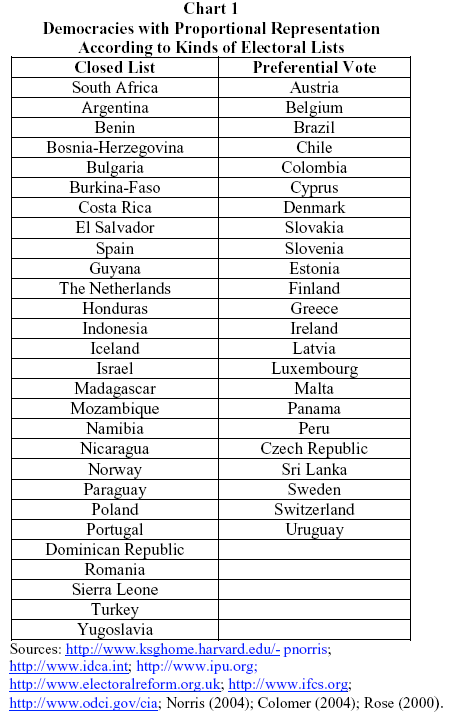
After excluding these, we examined 51 national cases, comprising free (39) and partly free (12) institutions. Considering the electoral formula, the whole is divided into list proportional representation (49) and single transferable vote (2). The sample was divided into two groups: that of electoral institutions in which the ranking of legislative candidates is promoted exclusively by party echelons, prior to the dispute for the electorate's vote, called closed list (28 cases), and electoral procedures that offer different modes of interference to voters in defining of the final order of the candidates that are to fill the party's quota of legislative seats, including open and flexible list, lema voting, single transferable vote, or still panachage, all of them lumped together, for analytical economy's sake, under the label preferential vote (23 countries).
A possible doubt at this point would refer to the possibility of classifying, under the single label preferential vote different procedures such as entirely non-ordered lists, previously ordered lists subject, however, to alteration by voters, double simultaneous vote, panachage and single transferable vote. Without disregarding the peculiarities of each of the available procedures which provide for voter's interference in the distribution of party seats, their equivalence derives from the premise that any analytical effort in interpreting political processes implies an exercise of reduction whereby some attributes are subsumed while others are stressed. Much the same occurs when we utilize "proportional representation" as an analytical category: despite the singularities existing in institutions adopting proportional representation, deriving from different formulae for the distribution of votes exceeding the quotas, electoral magnitude, threshold, kinds of lists and filling up of party seats, proportional representation has been used as a variable to explain degrees of proportionality, party dispersion and institutional performance.1 What is being emphasized in employing "preferential vote" as an analytical category are its similarities with regard to the possibility of interference on the part of the voter and intra-party competition as conditions for defining occupation of party seats,2 attempting thereafter to test if the effects resulting from this model correspond to those expected in the literature.
South America (8 cases), Africa (7) and Central and Eastern Europe (5) are the continents with more frequency of closed list electoral procedures, while Western Europe (12) accounts for 34.8% of the preferential vote in contemporary democracies. When we consider the kind of Executive (presidential/parliamentary), we find an even higher association between closed list and presidential executive (67.9%) and more balanced one in the cases of proportional representation with a preferential vote.
The point of departure for the study was the electoral procedures for the filling of the party seats in force in the 70 cases existing in the year 2004, attempting to identify the implantation conditions in each case. To this end, we considered ranking procedures prior to the system in effect and the period where the reform to the present system occurred. The information gathered was divided, considering the groups closed list and preferential vote.
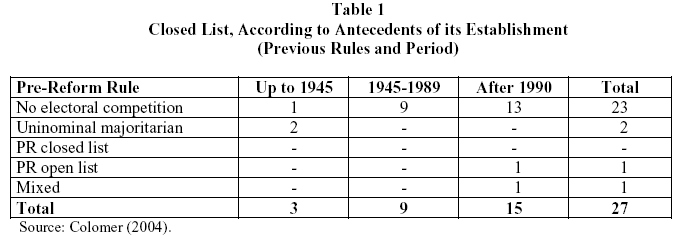
Two elements stand out in the observation of the national cases with closed list electoral rules in force by 2004: in most of the cases, its adoption occurred in the period following World War II, and almost half of the elections held under closed list were established only after 1990. More than that, among the 27 nations with rules giving parties the prerogative of deciding on the ranking of legislative candidates, only three (Norway, The Netherlands and Iceland) established them before 1945 and have remained since then under the same rule.
Secondly, the preference for closed lists seems to be associated to contexts marked by an antecedent of absence of electoral competition: 23 out of the 27 cases under this format were adopted soon after either independence processes or transition from authoritarian regimes, without previous effective electoral competition. Spain is in this situation, for having undergone different kinds of majority systems (with block or limited vote, in multi-nominal or uninominal districts) from 1836 to 1931, adopted closed list proportional representation in 1977, after a long four-decade electoral interval brought on by Franco's regime. Portugal falls in the same category: it alternated majority and mixed systems between 1822 and 1915, establishing a closed list proportional formula after a 46-year authoritarian cycle. Latin-American (Argentina, Costa Rica, Dominican Republic, El Salvador, Guyana, Nicaragua, Paraguay), African (South Africa, Benin, Burkina-Faso, Mozambique, Namibia, Niger, Sierra Leone), Asian (Indonesia, Turkey) and Eastern European (Bosnia-Herzegovina, Romania, Yugoslavia) nations complete the group of nations adopting candidate ranking decided by party organizations within an immediately post-authoritarian context. Considering uninominal majority formulae as characterized by more restricted degrees of electoral dispute, we may also add, along these lines, two other cases of adoption of the closed list as a substitute for a system of more concentrated competition. In other words, 92.6% of contemporary national closed list cases are alternatives to the status quo of restricted (even absent) electoral competition.
In contrast, the introduction of the closed list in order to substitute the previous rule establishing the preferential vote occurs only once, in Poland, with the 2001 reform, which substituted for the open list formula effective since 1991 the party prerogative of ranking the legislative candidates.
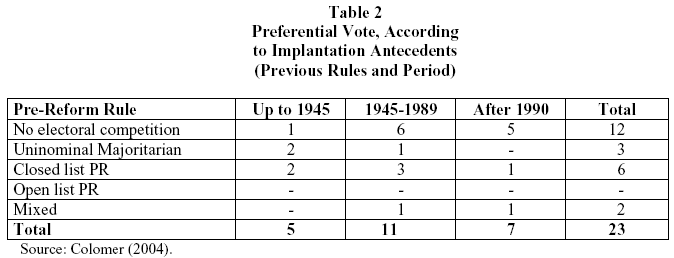
]]> Although the context prior to the introduction of preferential vote systems does not present a clearly predominant pattern, as in the case of closed list rules, we may identify a significant frequency of cases whose procedures give the voter some margin to interfere with the ranking of candidates as a substitute for the previous party prerogative to define candidates' ranking, typical of the closed list. Combined with this reform in the procedure for the occupation of the party seats, we see in four of the six cases that substitute the closed list for the preferential vote a parallel expansion in electoral magnitude, reaching average values thereof higher than nine.It is equally worth noting the relatively more significant duration of electoral institutions with preferential vote. This may be seen both through the number of cases whose adoption of this electoral rule is previous to 1945 and, mainly, by comparing the average time of the functioning of rules in force in 2004: 39.9 years for the preferential vote systems versus 25.5 in closed list-based institutions .
Electoral Rules and Party Systems
Most emphatic predictions on the performance of proportional representation electoral rules, either with open list or preferential vote, suggest that its most likely consequence is a stimulus to intra-party competition, a phenomenon that contributes, in its turn, to the erosion of organizational loyalties and party identities. The outcome of internal competition for personalized votes, still from this perspective, is a lesser control on the part of parties' directing bodies over the selection of candidates for legislative seats, a reduction in parliamentary discipline and a larger importance attributed to personal prestige and reputation to the loss of party reputation as a resource for competition in the electoral arena. In sum, the various forms of preferential vote would tend to be accompanied by a precarious party institutionalization and weak parties.
Considering party institutionalization as a process correlated to the ability of parties to control the supply of political representation, which implies the freezing of organizational structures and stability in political behavior (Mair, 1997), we may isolate a number of criteria used for measuring the phenomenon. In the first place, political party institutionalization results from more stability in voters' choices, and this indicates a more continuous relationship between parties and traditional voters, with a marginal fluid electorate. Besides, the occupation of competition space by older organizations reduces the possibilities for the appearance of new relevant parties. This results in a situation wherein parties and candidates are compelled, because of high costs, to defect and transgress fixed identities, and voters do not get new electoral offers.
This picture may be better seen if we measure the consistency of the bonds between voters and parties and the dispersion of party offer in the electoral arena. Three indicators** are conventionally utilized to measure the existing electoral arena stability and were used here as dependent variables: effective number of parties, electoral participation and party volatility (Nicolau, 1997).3
Next to the consequences resulting the preferential vote model on the dynamics of the respective party systems, the literature has suggested the existence of collateral effects resulting from personalized votes: loss of efficiency in monitoring and accountability over representatives by the voters; a pattern of electoral connection in which the preservation or mobility in political careers depends on the ability to capture electoral constituencies geographically concentrated, stimulating electoral and political career strategies turned to the pork barrel, and this, in turn, generates favorable conditions for distributive policies and corruption. Since each legislator's constituency might not be sensitive to programmatic appeals, responding only to selective initiatives like concentrated resource transference, the representatives would end up moving among private agents interested in public concessions and public authorities, enjoying the prerogative of liberating financial resources of interest both to voters and electoral financiers. At the same time, the number of candidates and procedures of vote transference would hinder the monitoring and control of the representatives' mandate, aside from rendering diffuse the clarity of each individual representative's responsibility in relation to governmental policies.
In order to put this argument to the test, the procedure adopted was to consider the relation between preferential vote and accountability. To this end, we used the World Bank's voice and accountability index that attributes scores to 190 countries according to their performance in this respect. In the group of nations herein analyzed (free and partly free, with proportional representation), the worst performances were those of Sierra Leone, Colombia and Paraguay, and the best ones were Sweden's, Finland's and Denmark's.
The last step was to examine the relation between preferential vote and governmental corruption. To this end, we again used the World Bank's indicator, which classifies 191 countries of the world between the extremes 0 (highly corrupt) and 10 (highly transparent). In the 51-nation's sample herein utilized, the worst performances were those of Paraguay, Indonesia and Mozambique, and the best ones, again, were those of Sweden, Finland and Denmark.
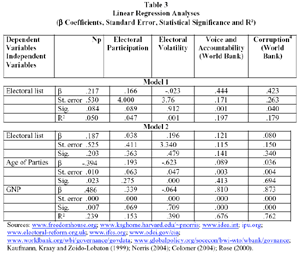
]]> As independent variables, we used an electoral list (1 for preferential vote, 0 for closed list), average time of existence of parties for each national case, and economic development, measured through per capita Gross National Product – GNP, figures in 2000. Results may be seen in Table 3, below.
First, we tried to test for the isolated effect of electoral ordering rules based on preferential vote under the chosen variables. The first question to be answered is whether there is a relationship between the absence of mechanisms ensuring the party direction's monopoly on the definition of the candidates' position in the rank in order to occupy the quota of party seats (preferential vote) and the stimulus to defections, with the creation of new parties. Can factions and personalized candidacies constitute a potential element for party dispersion, resulting in an increase in the number of effective parties? The analysis showed a moderately significant relations between this electoral procedure and the dispersion in party supply.
If the relationship between preferential vote and nominal party increase does not seem controversial, the issue becomes the sign value attributed to that association. In other words, does the variation in the effective number of parties in electoral institutions under the rule of preferential vote represent a positive or negative instrument to be credited to that mode? The premise guiding the interpretation herein developed is that the party dispersion of preferences must be considered a handicap when it represents an increase in the information costs to voters, to the extent of stimulating either electoral alienation or a marked fluctuation in the electorate's party preferences over time, i.e., if the number of parties implies an increase in the amount of relevant and necessary information for the voter to decide on his (her) own participation in the electoral competition and on the direction of his (her) vote. Such an information increase may reach the point that the voter, faced with the impossibility of differentiating between an excessively elastic supply of parties, may choose to abstain from voting or, when he (she) votes, may do it in an erratic and unpredictable way among the available alternatives.
A high electoral abstention may represent an instability potential for the party system if this group of voters either represents stimuli for electoral defection strategies from within to without existing party organizations, or for the entry of outsiders in the electoral arena. Thus, one must test for the existence of a negative correlation between preferential vote and electoral participation: to what extent may the presumed relationship between preferential vote and personalized reputations increase the information costs for the party choice, contributing to the indifference of voters with regard to parties, once they are not able to perceive the effective contrasts among them. Or, still, the increase of intra-party competition between personalized candidacies may represent a larger amount of relevant information (differences between candidates, and not only between the different parties, but also within each party), stimulating evasion and apathy on the part of the electorate.
If the statements regarding modes of preferential vote and its association to personalized reputations are correct, we must find a significant relation between electoral rules that allow for the interference of voters in the determination of the final ordering of elected candidates and intra-party competition and instability in the party distribution of electoral preferences. This because, if personalized reputations (instead of party reputations) are the best resource to gain votes according to this electoral arrangement, we must expect a significant longitudinal variation in the aggregate party performance, for it will experience the influence of the entry and exit of names and biographies from its rolls presented by each party in each election. Conversely, when party reputations are relevant, it is reasonable to predict stability in the electorate's behavior, less sensitive to each candidate's electoral offer on each occasion. Electoral volatility may be, from this perspective, a proxy to the presence of exclusively personal reputations within the electoral arena.
It was not possible to confirm any of these assumptions. The relationship between preferential vote and electoral participation is positive and significant at 10%, pointing to a moderate association between nominal votes, intra-party competition and a larger proportion of voters participating in the electoral contest. In the same way, it was not possible to detect a relationship between preferential vote and higher electoral volatility rates. Contrary to the assumption that intra-party competition for nominal preferential votes could stimulate a temporal fluctuation in party preferences, the coefficient found is negative, although statistically non significant. The fact that the relations between list, participation and volatility show significantly high figures for standard error draws one's attention. The size of the observed N and the presence of outliers represented by the cases of Burkina-Faso, Sierra Leone and Colombia (electoral participation), Malta and Cyprus (volatility) probably contributed to this result. An alternative for correcting such a distortion would be to suppress of the outliers. But, even so, coefficients remained statistically non significant, with high values for standard errors, failing to indicate a precise interference on the impact of the electoral list model on the levels of turnout and electoral volatility. Which, anyway, does not jeopardize the interpretation orienting this analysis, for it suggests precisely the marginal relevance of electoral list formulae to explain patterns of electoral behavior, in this case, the decision and direction of the vote, and a more efficient relationship to be ascertained through other factors.
The next question regards the effects on institutional performance. From the literature, one would expect that, under preferential vote procedures, there would be a negative relationship to performance with regard to accountability. However, this does not happen either. Contrary to the assumption that intra-party competition for preferential votes – particularly when combined with the nominal transference of these votes – would mean a higher cost for the identification of connections between vote-party-government-policies and for the perception of the responsibilities deriving from the exercise of a legislative mandate and from the position vis-à-vis national policies, institutions allowing for the interference of the voters in the elaboration of representatives' lists, present a significant (1%) positive relationship to the accountability indicator.
Would an intra-party competition for preferential votes, by creating stimuli for personalized reputations, by (presumably) reinforcing distributive pressures and particularistic advantage allocation, by requiring fund raising to finance individual electoral campaigns, and, still, (presumably) at higher monitoring costs, end up generating an opportunity structure more favorable to corruption in public institutions? Against this assumption, the coefficient found from the ratio between preferential vote and the score attributed by the World Bank regarding illicit practices and deviation of public funds show a reverse association between democracies adopting rules of intra-party competition and nominal votes and corruption.4
However, when controlled for the variables 'average party age' and 'per capita GNP', the effects of the variations on the procedures of electoral ranking cease to be statistically significant, pointing to the inexistence of a relation between the model of the proportional electoral list, party stability and institutional performance. Once again, figures for standard error in the association between list, turnout and volatility are significantly high.
Economic development, measured by average income, proved to be a significant variable to explain the dynamics of both the electoral arena and institutional performance. Initially, converging with modernity theories, we found a relationship between income, dispersion of the party offer and electoral participation. The predictive capacity of the economic development phenomenon seems to indicate a context formerly termed 'affluent society,' revealing cognitive bonds and dispersion of economic and cultural resources required to help the potential voter in identifying the connections between public decisions and his (her) own particular interests.
]]> The notion according to which an increase in per capita GNP – together with moderation, retrospective governmental judgment, centripetal dynamics – would positively affect the stability in the distribution of electoral preferences and a smaller routine dislocation of the electorate was not confirmed. The coefficient found has a negative sign, although it is not statistically significant. In contrast, economic development shows a strong relationship to institutional performance, indicating that social well-being and income increase, by enlarging the access to information and monitoring resources, may widen the ability for public accountability and inhibiting corruption phenomena.The relationship between the age of the party system and stability in the distribution of the electorate's party preferences appears suggestive. We were able to find a statistically highly significant relationship between a longer average life of a party across national cases and a reduction in the number of effective parties, which suggests a temporal effect on the sedimentation of the party offer. Still more revealing was the association detected between each party system's age and lower electoral volatility rates. This seems to indicate that the cost of the necessary information required for the voter to incorporate the meaning associated to the different party labels is the larger, the lesser the time of party existence, contributing to the instability in the longitudinal distribution of the votes. Conversely, the conclusion that the increase in parties' lifetime may exert a positive feedback effect (Pierson, 2004), allowing for savings in the costs of acquiring relevant information and generating a higher electoral predictability seems to be valid. Along the same lines, the comparison of the simple averages of the party systems' lifetime within the groups of proportional representation with closed list and preferential vote does not confirm the presumed relationship between closed list and higher party sedimentation: while the average age of the parties in institutions with rank order based on closed list was 32.4 years in 2004, in democracies with proportional representation and different models of preferential vote, the average lifetime of party organizations reached 48.6 years.
Conclusion
Can proportional election list models wherein the definition of the ordering of the candidates entitled to fill the proportional quota of party seats is prescribed by the intra-party competition for preferential votes, be considered responsible for party weakness and deficits in the institutional performance of democracies, translated into lesser accountability and higher corruption? Judging from mainstream electoral studies and from the agenda of Brazilian political reformers, yes. Considering the results presented in this article, no.
Electoral rules based on preferential votes did not show an association to higher instability in the temporal distribution of votes and show a small probability of being accompanied by an increase in the effective number of parties. At the same time, this model of electoral list indicated a relationship to increases in voter turnout, increased accountability of political institutions and a smaller number of cases of corruption.
When other variables – economic development and party age – are used for control, the lists showed to be irrelevant in explaining party and institutional differences observed in the cases analyzed. These factors presented a more significant association with electoral competition and institutional performance: economic development confirmed exerting influence on party dispersion and increase in electoral participation, along with a powerful relation with accountability and low corruption. The age of party organizations was seen to be a strong predictor of the stability of the temporal distribution of the vote: the longer the average lifetime of the parties, the lower the electoral volatility rates. If the stability in the party distribution of electoral preference is an appropriate indicator of the consistency of bonds between voters and parties and, consequently, of opportunities for strategies of party desertion and disloyalty (Marenco dos Santos, 2003; 2004), then the creation of stimuli for the generation of stable votes and party identities seems to result not so much from institutional reforms – the indifference of the list models on volatility show this – but rather from the electoral routine provoked by the maintenance, election after election, during a long period of time, of the same party preference. This seems to be the most favorable indication for the conversion of personalized reputations into party reputations.
NOTES
1 "In proportionality-based classifications of electoral systems, list proportional representation and the single transferable vote are usually put together and regarded as polar opposites of plurality-based methods" (Grofman, 2005: 736). ]]>
2 Along the same lines as adopted by Crisp et al (2004: 830): "Multiple lists from the same party (subparty lists) or open lists, on the other hand, mean legislative candidates must not only distinguish themselves from members of other parties but also from members of the electoral banner to which they have staked their own fortunes."
3 Number of effective parties (NP) = 1/Spi2, where p corresponds to the partisan proportion of votes; Electoral participation = valid votes / voting age population; Partisan volatility (Vp) = [(P1-P1')+ (P2-P2')+... (Pn-Pn')]/2.
4 As the 0-10 scale of values of the World Bank index gives lower values (near zero) to cases of higher corruption, the positive coefficients found indicate, in fact, an association of the independent variables to lower corruption.
REFERENCES
AMES, Barry. (2003), Os Entraves da Democracia no Brasil. Rio de Janeiro, Fundação Getulio Vargas Editora. [ Links ]
ARCHER, Ronald, and SHUGART, Matthew. (1997), "The Unrealized Potential of Presidential Dominance in Colombia", in S. Mainwaring e M. Shugart (eds.), Presidentialism and Democracy in Latin America. New York, Cambridge University Press. [ Links ]
BLAIS, André, and MASSICOTTE, Louis. (1996), "Electoral Systems", in L. LeDuc, R. Niemi e P. Norris (eds.), Comparing Democracies: Elections and Voting in Global Perspective. London, Sage. [ Links ]
BLAIS, André, YOUNG, Robert, and TURCOTTE, Martin. (2005), "Direct or Indirect? Assessing Two Approaches to the Measurement of Strategic Voting". Electoral Studies, vol. 24, no 2, pp. 163-346. [ Links ]
CAIN, Bruce, FEREJOHN, John, and FIORINA, Morris. (1987), The Personal Vote: Constituency Service and Electoral Independence. Cambridge, Harvard University Press. [ Links ]
CAREY, John, and SHUGART, Matthew. (1996), "Incentives to Cultivate a Personal Vote: A Rank Ordering of Electoral Formulas". Electoral Studies, vol. 13, no 4, pp. 417-439. [ Links ]
COX, Gary. (1997), Making Votes Count: Strategic Coordination in the World's Electoral Systems. Cambridge, Cambridge University Press. [ Links ]
COLOMER, Josep (ed). (2004), Handbook of Electoral System Choice. New York/London, Palgrave/Macmillan. [ Links ]
CRISP, Brian, ESCOBAR-LEMMON, Maria, JONES, Bradford, JONES, Mark, and TAYLOR-ROBINSON, Michelle. (2004), "Vote-Seeking Incentives and Legislative Representation in Six Presidential Democracies". The Journal of Politics, vol. 66, no 3, pp. 823-846. [ Links ]
DUVERGER, Maurice. (1954), Os Partidos Políticos. Brasília, UnB. [ Links ]
___. (1986), "Duverger's Law: Forty Years Later", in B. Grofman and A. Lijphart (eds.), Electoral Laws and their Political Consequences. New York, Agathon Press. [ Links ]
FISICHELLA, Domenico. (1984), "The Double-Ballot System as a Weapon Against Anti-System Parties", in A. Lijphart and B. Grofman (eds.), Choosing an Electoral System: Issues and Alternatives. New York, Praeger. [ Links ]
GROFMAN, Bernard. (2005), "Comparisons among Electoral Systems: Distinguishing between Localism and Candidate-Centered Politics". Electoral Studies, vol. 24, no 4, pp. 735-740. [ Links ]
KAUFMANN, Daniel, KRAAY, Aart, and ZOIDO-LOBATÓN, Pablo. (1999), Governance Matters. Washington D.C., World Bank. [ Links ]
LIJPHART, Arend. (1990), "The Political Consequences of Electoral Laws, 1945-85". American Political Science Review, vol. 84, no 2, pp. 481-497. [ Links ]
___. (1999), Patterns of Democracy: Government, Forms and Performance in Thirty-Six Countries. New Haven, Yale University Press. [ Links ]
MAINWARING, Scott. (1991), "Políticos, Partidos e Sistemas Eleitorais: O Brasil numa Perspectiva Comparada". Novos Estudos Cebrap, no 29, pp. 34-58. [ Links ]
MAIR, Peter. (1997), Party System Change. Approaches and Interpretations. Oxford, Oxford University Press. [ Links ]
MARENCO DOS SANTOS, André. (2003), "Partidos em Carne e Osso: Votos e Deputados nas Eleições de 2002". Cadernos Adenauer, vol. IV, no 1, pp. 21-37. [ Links ]
___. (2004), "Le Renouveau Politique: Carrières Politiques et Liens de Parti au Brésil (1946-2002)". Politique et Societés, vol. 23, no 2/3, pp. 109-133. [ Links ]
MAYHEW, David R. (1974), Congress: The Electoral Connection. New Haven, Yale University Press. [ Links ]
NICOLAU, Jairo. (1997), "Notas sobre os Quatro Índices mais Utilizados nos Estudos Eleitorais", in Olavo Brasil de Lima Junior (org.), Sistema Partidário Brasileiro: Diversidade e Tendências. Rio de Janeiro, Fundação Getulio Vargas Editora, pp. 313-320. [ Links ]
___. (2002), "Como Controlar o Representante? Considerações sobre as Eleições para a Câmara dos Deputados no Brasil". Dados, vol. 45, no 2, pp. 219-236. [ Links ]
NOHLEN, Dietr. (1981), Sistemas Electorales en el Mundo. Madrid, Centro de Estudios Constitucionales. [ Links ]
NORRIS, Pippa. (2002), Ballot Structures & Legislative Behavior. Trabalho apresentado na conferência Exporting Congress on World Legislatures. Miami, Florida International University, 6-7 de dezembro. [ Links ]
___. (2004), Electoral Engineering. Voting Rules and Political Behavior. Cambridge, Cambridge University Press. [ Links ]
PIERSON, Paul. (2004), Politics in Time. History, Institutions and Social Analysis. Princeton, Princeton University Press. [ Links ]
PROGRAMA DAS NAÇÕES UNIDAS PARA O DESENVOLVIMENTO – PNUD. (2004), Democracy in Latin America: Towards a Citizens' Democracy. New York, UNDP. [ Links ]
RAE, Douglas. (1967), The Political Consequences of Electoral Laws. New Haven, Yale University Press. [ Links ]
ROSE, Richard. (2000), International Encyclopedia of Elections. Washington, Congressional Quarterly Press. [ Links ]
SANTOS, Fabiano. (2003), O Poder Legislativo no Presidencialismo de Coalizão. Belo Horizonte, UFMG Editora. [ Links ]
SARTORI, Giovanni. (1996), Engenharia Constitucional. Como Mudam as Constituições. Brasília, Editora Universidade de Brasília. [ Links ]
TAAGEPERA, Rein. (1984), "The Effect of District Magnitude and Proprieties of Two-seat Districts", in A. Lijphart e B. Grofman (eds.), Choosing an Electoral System. New York, Praeger. [ Links ]
___ and SHUGART, Matthew. (1989), Seats and Votes: The Effects and Determinants of Electoral Systems. New Heaven, Yale University Press. [ Links ]
WESSELS, Bernhard. (1999), "Whom to Represent? The Role Orientations of Legislators in Europe", in H. Schmidt e J. Thomassen (eds.), Political Representation and Legitimacy in the European Union. Oxford, Oxford University Press. [ Links ]
(Received for publication in May 2006)
(Final version in December 2006)
]]>
* An earlier version of this article was presented to the Lesgislative Studies Work-group during the XXIX Yearly Meeting of the Associação Nacional de Pós Graduação e Pesquisa em Ciências Sociais – ANPOCS, Caxambu, October 25-29 2005. I would like to thank Fatima Anastasia, Carlos Ranulfo, Carlos Pereira and Marcus Melo, for their comments and criticisms.
** See appendix at the end of the article.
Indicators Utilized
Number of Effective Parties (Np) = 1/Spi2, where p corresponds to the party isan proportion of the votes. Last election up to 2002.
Sources: www.electionworld.org; www.ksghome.harvard.edu/~pnorris; www.idea.int; www.ipu.org; www.electoral-reform.org.uk; www.ifes.org; www.odci.gov/cia.
Electoral Participation. Valid votes for the national legislative / population with voting age. Last election up to 2002.
]]> Sources: www.ksghome.harvard.edu/~pnorris; www.idea.int; www.ipu.org; www.electoral-reform.org.uk; www.ifes.org; www.odci.gov/cia.Partisan Volatility (Vp) = [(P1-P1')+(P2-P2')...(Pn-Pn')]/2, where P corresponds to the proportion of votes for each party and P' to the proportion of votes for the party in the previous election. Last election up to 2002.
Sources: www.ksghome.harvard.edu/~pnorris; www.idea.int; www.ipu.org; www.electoral-reform.org.uk; www.ifes.org; www.odci.gov/cia.
Voice and Accountability. Indicator used by the World Bank on the basis of an aggregate of values attributed to civil liberties, political rights, human rights, freedom of the press, effectiveness of the Legislative Power, accountability of public authorities, free and clean elections, conditions of government substitution, institutional stability and representativeness. Positive scores correspond to more favorable conditions for more governmental accountability and negative scores to the absence of institutional controls over public authorities. Figures pertaining to calendar year 2002.
Sources: World Bank www.worldbank.org; www.worldbank.org/wbi/governance/govdata; www.globalpolicy.org/socecon/bwi-wto/wbank/govnance; Kaufmann, Kraay and Zoido-Lobaton (1999).
Corruption. Indicator used by the World Bank based on an aggregate of values corresponding to the perception of corruption of public political institutions and to the frequency of denunciation of corruption and of illegal payments to public authorities such as judges, party leaders, ministers, government heads, with a view to obtaining favorable decisions. Scale from 0 to 10, where 0 stands for greater corruption and 10 for greater transparency. Figures pertaining to calendar year 2002.
Sources: World Bank www.worldbank.org; www.worldbank.org/wbi/governance/govdata; www.globalpolicy.org/socecon/bwi-wto/wbank/govnance; Kaufmann, Kraay and Zoido-Lobaton (1999).
Electoral List: 1 for preferential vote and 0 for closed list, according to classification presented in Chart 1.
]]>
Sources: Norris (2004); Colomer (2004); Rose (2000).
Party Age. Average time of existence, in years, of the political parties represented in the National Legislative Chamber, per country, in 2000.
Source: www.ksghome.harvard.edu/~pnorris.
GNP. Per capita Gross National Product, in US Dollars, relative to 2000.
Source: World Bank.
]]>