Uma virada imprevista: o"fim" da adoção internacional no Brasil
Un revirement imprévu: la "fin" de l'adoption internationale au Brésil
Claudia Fonseca
Translated by Carolyn Brissett ]]> Translation from Dados - Revista de Ciências Sociais, v.49, n.1, p. 41-66, 2006.
ABSTRACT
During the 90s, there was a dramatic fall in intercountry adoptions of Brazilian children – from over 2000 per annum at the beginning of the decade, to under 400 at decade's close. In this paper, on the basis of archival material, we will attempt to outline possible reasons for this drop, considering hypotheses linked to the international market of adoptable children, legal restrictions on intercountry adoption imposed by the Brazilian government, and, finally, scandals in the mass media which stigmatize local intermediaries and officials involved in this activity. We conclude that inflamed public opinion and scandals in the media, although highly influential, are not necessarily the most adequate ingredients for a sensible policy on adoption.
Key words: international adoption, legal anthropology, Brazilian Children's Code
RÉSUMÉ
Pendant les années 1990, on a noté une chute dramatique du nombre d'enfants brésiliens adoptés par des étrangers — de plus de 2.000 par an en 1990, à moins de 400 en 1999. Dans cet article, fondé sur des documents, on essaie d'esquisser les raisons de cette chute. On examinera des hypothèses liées au "marché" international des enfants disponibles à l'adoption, aux restrictions imposées par la législation brésilienne et, finalement, aux scandales parus dans la presse dénonçant des intermédiaires locaux et des gens de la fonction publiqule qui bénéficient de cette activité. On peut conclure que une opinion publique échauffée et un émoi médiatique, quoique bien influents, ne sont pas nécessairement les éléments appropriés à une politique équilibrée concernant l'adoption.
Mots-clé: adoption internationale; anthropologie du droit; Statut de l'Enfant et de l'Adolescent (ECA)
]]>
Ten years ago, traffic in organs, traffic in orphans, and intercountry adoption came as a package in the Brazilian media, ready for consumption. Today, with new policies giving priority to "family preservation", the excesses of this international "traffic", for the most part, have been warded off and adoption itself put on the back burner. But exactly because of a comfortable distance with respect to the 1990s scandals, it behooves us to review moments of this process – the rise and fall of intercountry adoption in Brazil – to reap certain lessons and reflect on the national and international pressures that have influenced social policies in the country. Thus, after a quick look at the "international market of adoptable children", I will focus on a classical problem of law and anthropology, trying to understand the interaction between national laws, "public opinion" as it is evidenced in the media, and concrete practices of individuals involved in the field of adoption. I will try to demonstrate, in the following paragraphs, that because it is embedded in a particularly new global situation, with countless variables at stake, intercountry adoption follows trends that are not always easy to foresee.
Not very long ago, scandals about intercountry adoption were all over, appearing regularly in the Brazilian media. At the end of 1995, national newspapers still ran feature stories alleging -- quite erroneously as we will come to recognize -- that Brazil was the world's number one exporter of adopted children (Folha de S. Paulo, 15/11/1995). Even five years later, it was still possible on practically any of the major television channels, program on the excesses of international adoption in Brazil. And, at the time, the Brazilian professionals consulted for this studyi -- the social workers, judges, and psychologists involved in the adoption process -- were unanimous in their conviction that, even at the turn of the millennium, intercountry adoption remained dangerously popular in a good number of the country's 27 states.
I thus raise the hypothesis that the scare lasted longer than the "real" danger. Certainly, until the mid-1990s, there was ample motive to consider Brazil as one of the world's major "furnishers" of children. Kane, examining 1980s data, had classified Brazil as the world's fourth largest exporter of children (behind Korea, India, and Colombia), with predictions that "if current patterns continue South America will soon become the major sending region" (1993:323). At the time, Brazilian children appeared to be heading the list of foreign adoptees in countries such as France and Italy. The 1993 statistics I had from the Brazilian Federal Police (Division of Passports) showed that, after a pause at the beginning of the decade, the number of children leaving the country with foreign adoptive parents was back on the rise. According to this source, during the first four years of the 90s, the number of children adopted abroad had already surpassed the number adopted during the entire previous decade.
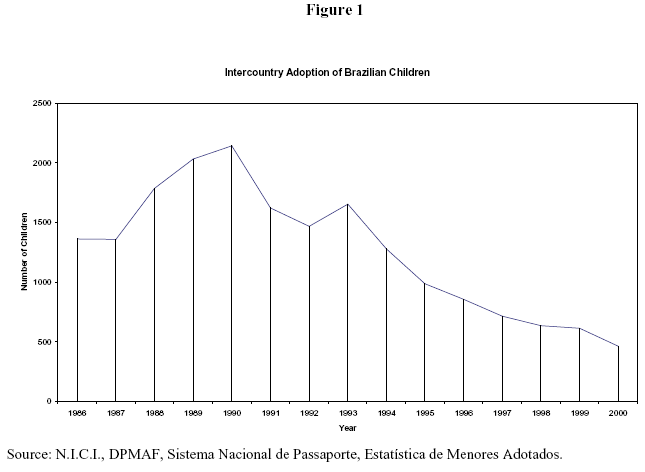
Nonetheless, already in 2000, we began to suspect that things had changed. That year, the British researcher specialized in intercountry adoption, Selman (2000), presented preliminary data from his study, stating that, among the 14 countries from which adoptees are most commonly drawn, Brazil was practically at the bottom of the listii. My first reaction was to explain this "sub-estimation" in terms of the universe under study. Selman's material, restricted to infants aged 0-4, did not include Italy, Brazil's most popular customer. But a second look at Selman's statistics brought home the fact that Brazil was not the only country dethroned from its leading status among the world's donor countries. India had fallen as well to a rate of intercountry adoption which, calculated in relation to the country's population, placed it at the very bottom of the list. To clear up any doubt, I entered directly into contact with the Federal Police in Brazil's capital city, the passport office through which all children legally adopted by foreigners had to pass. Thus, I received, via internet, in archives put out yearly from 1990 to 2000, the registry of intercountry adoptions carried out in the country's major precinctsiii. Together with data on the period from 1986 to 1994, registered in another document from the Federal Police that I had located at the Juvenile Court in Porto Alegre, this material produced the following graph on the evolution of intercountry adoption in Brazil (see Figure 1).
One should note that the numbers I received from the Federal Police did not entirely tabby with the pre-1994 statistics their very office had supplied six years before. Nor did this data coincide with numbers I received directly from the different state offices. However, these discrepancies were, for the most part, small and, by no means, cancelled out the dramatic fall in intercountry adoption of Brazilian children registered during the 90s – from over 2.000 per annum at the beginning of the decade, to 400 at the decade's close.
Faced with this picture, I was forced to modify my research agenda, addressing two interlocking issues: How is one to explain this sudden drop in intercountry adoption? And why is it that, despite this impressive change, the great majority of Brazilians continue to see intercountry adoption as a considerable threat? In the following paragraphs, I propose to explore hypotheses concerning the different social and political processes that might be relevant to this discussion.
Intercountry adoption within its recent historical context
To better understand fluctuations in intercountry adoption, we should first consider a brief historical overview of the phenomenon. In fact, plenary adoption as it is known today – the total and irrevocable transference of a child from one ("biological" or "original") family to another ("adoptive) family – is a fairly recent phenomenon in the legislative history of the West. Historians have shown that, although similar practices have existed since time immemorial (see Boswell, 1988), it is only since the Second World War that the idea of "substitutive filiation" has been amply acceptediv. This particular form of child placement brings the possibility of an adoptee's full rights in his or her new family, but at the price of a complete rupture in family identity. Thus, overriding centuries of debate as to whether anonymity (symbolized in many narratives by the historical "roda dos expostos") was more in the interest of biological or adoptive parents --, state authorities decreed complete closure of adoption procedures. In other words, state authorities have become the exclusive guardians of the "secret" of the adopted child's "origins" (Modell, 1994; Ouellette, 1995).
]]> The historian Carp (1998), writing on the North American case, associates the institutionalization of the "secret of origins" to particular historical circumstances. Until the mid-twentieth century, as in most other places, it was mainly poverty-stricken women who furnished children for adoption. They had no particular interest in hiding their identity, nor would legislators have worried about "protecting" their rights. During the 1960s, the sexual revolution reached middle-class teenagers in North America before the technical revolution had popularized the birth control pill. It was in this period "of transition" that the older and more conservative generation of this middle class would have pressured for a change in adoption law, easing the way for their illegitimate grand-children to be adopted into other families, with no fear of return. They sought, in this way, to rid themselves of the "excess" elements in the family circle, freeing their daughters for a future traditional marriage.In a short time, however, there came a new sort of change. In the wake of post-War prosperity, together with efficient welfare policies, contraceptive technologies conspired to bring a decline in the "First World's" birth rates. Not only did unplanned pregnancies diminish, the stigma attached to illegitimacy was less and less important, and even the poverty that had brought many women to "abandon" their children seemed to abate. All this had occurred exactly at a time – well documented by Parson and Bales (1955) – when the ideal of the nuclear family was in vogue, feeding young couples' desire for children. People who had difficulty in conceiving a child began to complain of the "shortage" of adoptable children.
At first, renouncing their traditional demands (for a child with a phenotype similar to their own), people looked for adoptive children within the borders of their own country, among poor and minority populations that had not benefited from the recent social "advances". Thus, inter-racial adoption, heretofore considered unadvisable, for children as well as for adoptive families, was once again under consideration. However, social movements were quick in protesting against this "appropriation" of black, Hawaiian, Eskimo and Native American children by white middle-class parents (Simon, 1984; Modell, 1998; Slaughter, 2000). The North American preoccupation with the violation of rights of minority populations was translated, in (a more ethnically uniform) Europe, by a greater respect for the rights of impoverished families. Legal changes were introduced making it extremely difficult for state authorities to terminate a person's parental rights against his or her will. Given the circumstances, couples wanting to adopt a child began to look beyond their own national borders to poorer regions where adoption had not yet been the object of social and political questioning. It was in this scenario, at the end of the 1970s and, especially, the 1980s, that the intercountry adoption of Third World children surged into the picture.
A first glance at the rise and fall of intercountry adoption in Brazil might suggest a trajectory not so different from that of adoption in the northern hemisphere. Traditionally, Brazil's "adoptable" children were made available not by moral stigmas such as those against "unwed mothers", but rather by conditions of sheer povertyv. Thus, optimists might suggest that the intercountry adoption of Brazilian children had decreased because of improved living conditions, bringing down the number of "abandoned" children. Unfortunately, on the whole, this explanation is not particularly convincing. Despite certain positive changes – a small reduction in infant mortality, for example, and a rising level of education – in the year 2000, the over 30% of the population living beneath the poverty line was not much different from 30 years ago (Barros, Henriques and Mendonça, 2000) and the number of institutionalized youth is constantly on the increase.
Another possible explanation is that the number of Brazilian adopters has increased to such an extent that there are no longer children available for foreign adoptive parents. For a number of reasons, this explanation is reasonably plausible. Not only has the legislation changed, giving systematic priority to Brazilian candidates, but periodic campaigns have been launched to promote a "culture of adoption". This hypothesis is, however, extremely difficult to explore since there are no centralized figures on in-country adoption, and those few statistics I have located do not show any significant increase in recent years. A survey of the 1994-2004 period conducted by the Folha de S. Paulo suggests a reduction of adoptions in most states (Corrêa, 2004).
I propose then, in this paper, to look more closely into three other possible explanations for the abrupt fall in intercountry adoptions: 1) fluctuations in the international market of adoptable children; 2) pressures exerted by Brazilian legislation and federal agencies aimed at regulating international adoption; and 3) public opinion which vacillates between praise and condemnation of local intermediaries involved in this activity.
These factors are not mutually exclusive. The last two, in particular, are tightly interlinked. For analytical reasons, however, I will consider them one by one.
Fluctuations in the international market of adopted children
The first hypothesis I propose to address concerns the law of supply and demand. Is it possible that the rapid decline in intercountry adoptions in Brazil occurred due to a glut on the international market of adoptable children? Perhaps the demand for Brazilian children dried up because the market was flooded by East European and Asian babies. This question may appear naïve, but it was the first that Brazilian adoption workers brought up when confronted with recent statistics. Furthermore, there are researchers who consider that adoption always contains a mercantile element they should be removed from child labor and other profane influences of the mercantile economy. However, the more children were preserved, the more they grew in symbolic value, creating a new and highly valued market of children available for adoption.
]]> Zelizer (1985), in her historical essay on "pricing the priceless child", furnishes important insights as to why, in the adoption process, there is such vehement denial of anything smacking of commerce. According to her analysis, Victorian reformers were faced with a paradox. Modern notions on the family provoked a growing sacralization of children, dictating that youngsters be withdrawn from paid labor and other profane influences of the economy's cash nexus. Yet, the more a child was sacralized, the more it gained in financial as well as symbolic value, thus giving rise to the equally modern notion of «the market of adoptable children». Aside from rapacious intermediaries, the turn-of-the-century imagination was peopled with mothers who were ready to auction their children off to the highest bidder. It is worthy of note that, in these images -- which, to a great extent, explain the loathing of any contact between adoptive and birth parents -- the "consumers", presumably moved by noble instincts, appear to come out unscathed. I will come back later to this financial element in traffic. For the moment, I propose to deal with another angle of this "market": following the hypothesis that the "demand" for adoptable children varied in function of the supply.Certainly, during the 1990s, new countries surged onto the field of intercountry adoption. For example, 1991 was marked by the tremendous quantity of Romanian children flooding the world market of adoptees. In the United States, their number rose from 121 in 1990 to 2.594 in 1991vi. That same year the number of Brazilian children adopted in the States fell from 228 to 175. Inspired by this coincidence between the avalanche of Romanian children and a slight decline in Brazilian adoptees, one might be tempted to deduce a relation of cause and effect. Pushing this line of reasoning even farther, one could suggest that, at the end of the 90s, Brazilians were all but edged out by a tremendous wave of Chinese and Russian children. Such conjectures are quashed, however, if we consider that the other leading donor countries – Korea, India, and Colombia – had already begun curbing the number of adoptees in America well before the arrival of Romanians. On the other hand, certain countries like Vietnam witnessed a steady increase in the number of children adopted in the U.S. during the 90s. Guatemalan children, for tragic reasons we will not go into here, also increased by a huge proportion (from 202 in 1989 to 1.518 in 2000). And the number of Peruvian adoptees jumped by over 50% exactly at a time when Romanian children were most abundant.
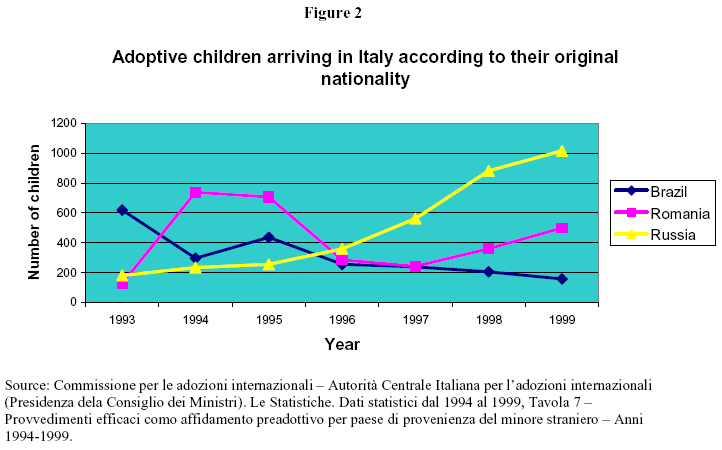
We should not forget, however, that 15 years ago, the bulk of Brazilian children were not going to North America, but rather toward Italy and France. By the end of the 80s, Italy was probably Brazil's most faithful "customer", receiving nearly a thousand of its children every year (nearly half of all Italy's foreign-born adoptees). Here, the fivefold increase from 1993 to 1994 of Romanian children adopted in Italy could easily be considered responsible for the drop in Brazilian adoptees registered during that period. By the same token, the resurgence of Brazilian adoptees in 1995 could be correlated with the slight drop in popularity of Romanians. Finally, we might associate the take-off of Russian children, around 1996, with the definitive decline of Brazilian-born adoptees. Fluctuations in the global number of available children would thus be responsible for the fall in importance of Brazilians, from over half the total number of adoptees brought into the country in 1990 to barely 5% of this universe in 1999 (see Figure 2).
Once again, this line of analysis, although tempting, is all too pat. It supposes, among other things, that, in a given country, the total annual influx of foreign-born adopted children remains constant – a fact consistently contradicted by the data. There are innumerable other questions I could raise to the all-too-mechanical application of market theory. Among other things, how are we to chart correspondences without having a more precise idea of time delays in the adoption process? If, for example, it takes an average of two years to adopt a Brazilian child, can we be safe in linking the 1991 fall of Brazilian adoptees in the States to the sudden offer of Romanian babies? Wouldn't prospective parents have put in their bid well before the fall of the Berlin wall? It is also difficult to separate out cause and consequence in the fluctuation of adoptees: did the number of Brazilian children adopted abroad diminish because there was a glut on the market? Or, on the contrary, did children of other nationalities come in to fill the gap left by the pull-back of traditional "suppliers" such as Brazil, India, Colombia, and (to a lesser extent) Korea?
Altogether, even this brief look at adoption statistics in the U.S. and Italy suggests that the back and forth play of adopted children between sending and receiving countries is determined by factors far more complicated than the mere supply-and-demand logic of a consumer market.
Government regulations
A second hypothesis would put squarely in the limelight Brazilian legislators enacting measures to insure a "child's best interests". Following this line of reasoning, the drop in intercountry adoptions would be due not so much to trends in receiving countries, as to the realization by Brazilian policy-makers of the need for government regulation, inspired in part by international accords such as the 1989 U.N. Convention on the Rights of the Child. This perspective is in keeping with the present globalized trend to see legislative action as a (if not the) major weapon in the war against poverty and injustice (Santos, 2000).
However, in order to support this hypothesis – that a change in law can provoke a change in behavior -- one would have to demonstrate not only that new laws were enacted to effectively control intercountry adoptions in Brazil, but that these laws were effectively applied. A brief look at the history of adoption law in Brazil confirms the first element of this argument.
]]> The evolution of laws concerning intercountry adoption in Brazil
Just as in many other countries -- see for example Yngvesson's description of adoption legislation in India (2000) -- the adoption of children does not seem to have been a major concern of Brazilian legislators before the 80s. Up until the late 1970s, most child transfers in Brazil were regulated by the Country's 1916 Civil Codevii. Children could be adopted, by Brazilian or foreign parents, through a private transaction registered at the local notary public's office. The 1979 Children's Code is the first to make mention of potential foreign adopters, stipulating certain restrictions. Such candidates could adopt only officially abandoned children, and even then, never on a full adoptive basis (in other words, they would proceed through "simple adoption", whereby the child maintains his or her original family identity, simply adding on the adoptive status.) Since, however, the 1979 Code did not revoke previous legislation, many jurists continued to consider "private" adoption a valid loophole for foreigners. Debates on this issue were settled at the state level of jurisdiction, with measures such as the 1982 Rio de Janeiro decree which outlawed private adoption procedures for foreign adoptive parents, requiring them to pass through state juvenile authorities.
A number of researchers, investigating family dynamics in Brazil, have documented the (until recently) common practice of "adoção à brasileira". Through this entirely illegal procedure, people who wanted to adopt a child were able to avoid government bureaucracy by simply taking out a birth certificate on the child as though he or she were their flesh and blood (Costa, 1988; Fonseca, 1995; Abreu, 2002; Weber, 1999). Calling attention to the cases in which adoptive parents were apparently moved by "noble motives", many judges tacitly accepted this illegal form of adoption. On the other hand, foreign adoptive parents, as early as the 1980s, were being increasingly obliged by both Brazil and their own "receiving" countries to submit to official procedures (Abreu, 2002). Taking stock of the contrast between official adoptions (systematically required of foreign adopters) and illegal adoptions (often tacitly tolerated for the case of national adopters), it should be no surprise that, well into the 90s, many Brazilian states still registered more international than local adoptions.
By the time the new Children's Code was edited in 1990 (revoking all previous legislation on the subject), international adoption had become a major issue. Alongside enjoinders that all adoptions would henceforth be plenary adoptions, sanctioned by the juvenile court, diverse elements of the new law appeared to be, implicitly or explicitly, aimed at regulating adoption by foreign-born parents. According to the 1990 Code:
• Adoption by proxy is expressly prohibited (art. 39). In other words, it is no longer possible for a lawyer to take custody of a child and put it on the plane to its foreign adoptive parents.
• The arrangement for a child to live with adopters for a trial period, recommended for all adoptions, may be waived in the case of Brazilian adopters. Foreign parents, however, face an unavoidable trial period, obliging them to remain in the country for a minimum of 15 days when dealing with children under 2 years of age, and 30 days when the children are older (art. 46, P. 2). The adoptee cannot leave the country before adoption procedures have been successfully concluded (art. 51).
• Applications by foreign candidates should preferably be examined by specialized state judiciary commissions (art. 52) that will require full, duly translated documentation, and evidence of approval (including psychosocial evaluations) of the potential adopters by accredited agencies in the receiving country.
• Adoption by foreign nationals is to be considered an "exceptional measure" (art. 31).
This last article transmits the implicit message that Brazilian nationals should be given priority in the bid for adopted children. This orientation, mirroring a global preoccupation already evident in the 1989 U.N. Convention on the Rights of the Child, gained weight with the 1993 Hague Convention on Protection of Children and Co-operation in Respect of Intercountry Adoption (approved by the National Congress in Brasilia in 1995, and ratified in 1999).
]]> Without a doubt, Brazilian jurists are well in tune with their progressive counterparts overseas. It would be naïve, however, to suppose that the new legislation causes an automatic change in conduct. Innumerous researchers have dedicated their efforts to understanding this relation, focusing on the mechanisms through which law's influence is mediated (Moore, 1878; Bourdieu, 1989). To address this issue, I propose to return to my data, paying close attention to regional specificities.
Regional variation in the application of the law
As shown in Figure 1, the exodus of Brazilian children peaked in 1989 at around 2.000 adoptees. It then took a moderate plunge, before climbing back to over 1.650 children adopted abroad in 1993. From then on, however, the annual reduction is consistent, leaving the number of adoptees in the year 2000 at under 400. The dip during the early 90s is no doubt due, in part, to the country's new Children's Code, enacted in 1990. In many states of the federation, public placement services suspended or slowed down their activities for a year or more, so as to "restructure" their service in function of the new legislation. And, in keeping with this logic, there was a small upsurge of international adoptions in 1993, right at the time the "restructuring" would have been more or less completed. Thus, a look at the country as a whole brings us to the conclusion that the Brazilian Children's Code appears to have had a daunting effect on intercountry adoption. However, on second consideration, if we break the numbers down to regional units, we are forced to recognize that Brazilians by no means responded in block to the expectations of legislators. On the contrary, the drop in intercountry adoptions, albeit nearly always dramatic, took place at different moments in different localities.
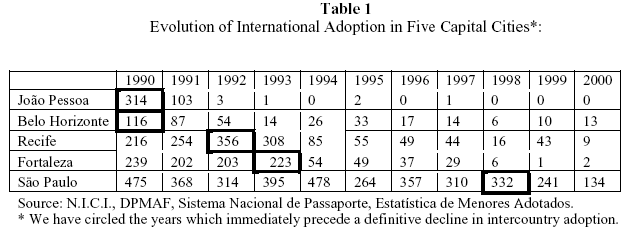
During the 80s and the beginning of the 90s, the relatively poor Northeastern states were among the largest furnishers, accounting for nearly half the total number of internationally adopted children in the country. In this region, the number of such adoptions diminished radically during the four years following the new Children's Code, plummeting, by the year 2000, to three per cent of the 1990 level. Whereas the turning point in the Bahian state capital (Salvador) preceded the Children's Code, in other state capitals, the change came later (João Pessoa and Belo Horizonte – during the 1990-1992 period; Recife and Fortaleza – around 1993-1994). Finally, Brazil's largest city, São Paulo, furnished a steady supply of international adoptees right up until 1998. That year, the city of São Paulo was responsible for over half the country's international adoptees. Here, the definitive decline in intercountry adoptions began only in 1999, dropping rapidly, within two years, to a third its former level (see Table 1).
This rapid survey of data shows that the impact of federal legislation on the adoption in Brazil follows divergent paths, according to local circumstances. This observation is not surprising if we consider the vast size of the country, and its division in relatively autonomous states. What's more, since there are Children's Courts in most major cities, each run by a judge with considerable discretionary powers, adoption policy may vary from town to town as well as from state to state.
To bring about the rapid and uniform implementation of the law, the Children's Code proposed the creation of "Commissions for International Adoption" (CEJA or CEJAI). These commissions, normally composed of leading community citizens, alongside members of the judiciary, were implanted gradually throughout the 90's. In the centrally-located state of Minas Gerais, for example, as well as the Northeastern state of Pernambuco, the commissions were instated relatively quickly (1992 and 1993 respectively), producing corresponding drops in the number of local children given in international adoption. A Pernambuco newspaper showed explicit recognition of the commission's impact on the reorganization of priorities in the adoption process: "The results of the CEJA were evident within two years of its implantation. The number of adoptions made by foreigners in 1995 was significantly reduced, tying [for the first time] with those made by Brazilian couples" (Jornal do Commercio, 5/11/1997).
However in other states (such as Paraíba), the drop in international adoption occurred long before the new commission was formed, and in still others the drop occurred even though a commission was never instatedviii. Once again, it would seem that, although federal legislation had considerable influence on the patterns of international adoption, its impact was neither immediate nor uniform throughout the national territory. In chasing down these regional differences, we will get a better view not only of the mechanisms used to apply the law, but also of the elements that motivated authorities to act. The coincidence in timing between scandals in the press (including police action) and the "demise" of international adoption will bring "public opinion" squarely into the picture.
Parliamentary Inquests and police investigations
]]> There is no doubt that, in the 1980s, a growing number of potential adopters in Europe and North America turned to Brazil to find a child. This "demand" provoked a chain reaction which included the growth of a new category of Brazilian lawyers specialized in international adoption, followed by public outcry, and the tightening of government regulation. From the late 1980s on, the commercial involvement (and, in fact, any involvement) of lawyers was increasingly viewed as illegitimate, making these paid professionals think twice before risking their reputations by mediating an intercountry adoption -- see Abreu (2002) on the Brazilian case and Triseliotis (2000) on similar trends in other countries.The preoccupation spreading throughout the country gained federal status when, in 1988, the Brazilian Congress commissioned a Parliamentary Inquest to follow up denunciations on, among other things, the "trafficking of children". At the time, it was estimated that for each one of the nearly 2.000 legally adopted children leaving the country, there were one to two children taken illegally across the borders. Ironically, although newspapers carried episodic articles on children from border states smuggled, for example, to Paraguay, the brunt of publicity (and very likely the real crack-down) was concentrated on irregularities in legal adoption. The state of Bahia which, up until the late 1980s, had been the country's most regular provider of legally adopted children was also the first state to be affected by the new mood of surveillance. The number of legal adoptions by foreign parents reached its peak in 1988, the same year the congressional investigation began, going subsequently into rapid decline.
Abreu, based in articles printed in the Cearense newspaper, O Povo, furnishes details on the rising tide of resentment against intercountry adoption at this time. During the 1980s, Ceara was receiving a growing number of foreigners – especially French citizens – who had come to adopt a child. The intermediaries for such adoption were, at first, mainly women, often members of the local elite, involved in philanthropic activities. They were nursery school administrators, church leaders, etc. who enjoyed a good deal of prestige thanks precisely to the role they performed – a role considered beneficial not only for adoptive parents but for the children themselves. The first article to appear against international adoption (in 1986) still portrays these "storks" as people concerned primarily with the destiny of abandoned children who, were they not adopted, might become "prostitutes or delinquents". Nonetheless, still in this first article, one clearly sees the lament that, with the exodus of children caused by intercountry adoption, Brazil is suffering an irreparable loss. For example, the case of a hydrocephalic child adopted and rebaptized by a French couple, is prefaced by the headline: "Babies who leave [Brazil] lose their identity and receive names that are common in the adoptive country" (Abreu 2002:146).
The idea that intercountry adoption is a necessary evil – unfortunate, but justified in the name of a child's best interests – is gradually ressignified. Articles begin to speak of "deportations" or, with the appearance of a new class of lawyers specialized in this subject, of "transactions" involving children in the "industry of intercountry adoption". This rhetoric implicitly evokes the question: "what sort of country is this that tolerates the sale of its children?" (idem). The ambivalence of the first articles – in which the idea of "child savers" existed side by side with the "foreign threat" – gave way to the monolithic refrain of "traffic". In 1987, a famous journalist from Ceará published an angry article against the image – present in the international press at the time – of Brazil as a country with 30 million famished children roaming the streets. She insists that intercountry adoption, with its salvationist overtones permits foreigners to feel like "the pure, the saviors", in relation to Brazilians seen as "indigents, delinquents, murderers, hunger-stricken, underdeveloped". Rather than tolerate such an affront to national honor, the journalist declares, referring to the children adopted by foreigners: "I prefer to cry over their deaths rather than to suffer the shame of them alive" (idem:153).
Our own research in the archives of daily newspapers in the country's South Central (Folha de S. Paulo) and southern regions (Zero Hora, Porto Alegre) shows a correspondence, repeated again and again in different states, between the rhetoric against international adoption, the local prosecution of intermediaries and the drop in the number of children adopted by foreigners. Thus, we learn that in Paraíba, for example, the police began investigating judges, lawyers and clerks involved in the intercountry adoption procedures in 1991, bringing charges against nearly 50 individuals. By 1992, adoptions had dropped from over three hundred a year to exactly three. Simultaneous procedures in the nearby state of Rio Grande do Norte brought in an 11-year prison-term for a lawyer convicted of irregularities. In Ceará, the state legislator began a general investigation of intercountry adoptions in 1993, calling in lawyers, judges, and even directors of day-care centers that were reputedly linked to international adoption. From September to December of 1993, and then again in August of 1994, the judge presiding over the Children's Court in the capital of Pernambuco (Recife) suspended intercountry adoption altogether. Alarmed by alleged cases of adopted children being used for organ transplants, the judge stated flatly that he would only reopen the possibility of intercountry adoption after ascertaining that all the children adopted under his jurisdiction by foreigners were proven to be in good health (Folha de S. Paulo, 30/8/1994).
The outcome of this more or less systematic repression was to inspire fear in many "respectable" citizens who served as intermediaries in the adoption process. Domingos Abreu (2000) gives us an ethnographic account of how these child-bearing "storks", many of whom came from high society, abandoned their activities as police investigations transformed what had previously been viewed as a charitable mission into a shady business.
In certain states, the bulk of intercountry adoptions migrated from the better-regulated capital to the more loosely-supervised provincial citiesix. Brazil's most populous and politically influential state, São Paulo, followed a slightly different pattern in which a good number of difficult-to-place childrenx continued being placed abroad until, in 1998, a widely-publicized scandal involving a judge from city of Jundiaí slowed the entire system. A number of lower-income mothers -- compared by journalists to the Argentine madres de la plaza de maio -- had banded together to protest the "abduction" of their children by the local judge. Investigation showed that over the past six years, more than 200 children had been given in international adoption, most of them without the mothers' consent. After a summary inquest, the judge would declare the child abandoned, allowing adoptions in record time. The judge responded to these accusations with what he considered a perfectly good justification: working in collaboration with a reputable Italian adoption agency, he was providing a decent home to mistreated and neglected children who were living in deplorable hygienic and moral situation. Journalists, however, pointed to the biased nature of his judgments. In one case, for example, the major evidence against a child's mother was that she earned her living as a stripper; in another, accusations of negligence against the biological parents boiled down to the fact that their child lived in a house "with broken windows and roaming dogs". Whether the judge was moved by financial greed or charitable zeal has yet to be determined. The scandal, however, brought intercountry adoption throughout the state of São Paulo back into line with the rest of the country; that is to say, it was reduced to a trickle.
Media and rumors
Throughout the 1980s, newspapers and television played an important role in shaping public opinion on international adoption. It would thus be interesting to point out one particular theme which, I believe, had a decisive influence – the alleged use of adopted children for organ transplants. Since the 1980s, there had been a tendency in news articles to link real and documented cases of "traffic in orphans" across national borders, to "the traffic of [human] organs". In 1988, rumors on the traffic of organs were dignified by a federal prosecutor who claimed to have sound evidence that Brazilian children adopted abroad were being used as guinea pigs in scientific experiments as well as for organ transplants (Zero Hora, 26/8/1988:14; 2/12/1989:15). That same year, the theme was included in the agenda of the Congressional Parliamentary Inquest, and, throughout Brazil, the federal police opened a record number of investigations on international adoption. Despite the fact that none of the inquiries ever turned up firm evidence, rumors came to a peak in the mid-90s, in the wake of what seemed to be a worldwide wave of hysteria.
]]> In October 1993, Leon Schwartzemberg, a French deputy in the European Parliament, in his general condemnation of the traffic of children marked for organ transplants, made particular reference to Brazil. According to his estimates, out of 4.000 Brazilian children adopted in Italy, only 1.000 still survived. The rest had supposedly died due to abuse or been killed, their organs harvested for future transplants (Zero Hora, 6/10/1993:45). The following month, the BBC fired the debate, presenting a low-level Argentine diplomat who claimed to possess evidence of atrocities involving Brazilian children (Zero Hora, 21/11/1993:51). Police and adoption services throughout the country began to investigate "denunciations that Brazilian children with physical deficiencies were being adopted in other countries to have their organs torn out" (Folha de S. Paulo, 30/8/1994:3-1).By September of 1994, when the Brazilian university teacher, Volnei Garrafa, announced the imminent publication of his book O Mercado Humano (Human Market), in co-authorship with the Italian Giovanni Berlinguer, panic was at its peak. Speaking of adoption "for the dismantling of children", the author pointed out that, whereas a child could be acquired through intercountry adoption for approximately US$8,000, a single kidney could be sold for over US$40,000 (Garrafa and Berlinguer, 1996). At this point government officials began to wonder about the enormous number of missing children in Brazil, and the traffic in organs was included in the new Commission of Parliamentary Inquest against child prostitution (Folha de S. Paulo, 3/8/1994; Abreu, 2002). For like reasons, control tightened over the adoption of Brazilian children by foreigners, and the adoption of older and physically or mentally impaired youngsters became especially suspicious. The Pernambuco judge who suspended all intercountry adoption in 1994 admitted he had no absolute proof as to the alleged atrocities against Brazilian adoptees, but he did note a "strange fact" that could be indicative of abuse: of 14 children adopted under his supervision that year, five were over 8 years old, and two were somehow deficient (Folha de S. Paulo, 30/8/1994).
This local panic, it would seem, was but the symptom of a worldwide scarexi. Brazilian police and juvenile officials repeatedly backed their concerns by citing the pressure exerted on them by international human rights organizations. Brazilian delegates participated in various international meetings (for example, the UN Permanent Committee for the Prevention of Crime and Penal Justice – Austria, May 1994) in which the combat against intercountry adoption, linked to the traffic in human organs, was invariably high on the list of priorities. Returning from a special session of the People's Tribunal on the Fundamental Rights of Children and Adolescents (Italy, March 1995), the Brazilian delegate gave the following report:
[at this meeting] it became clear that the violation of children and adolescents' fundamental rights is occurring throughout the world. In poor countries, the situation is reaching monstrous and indecent levels. In countries from Latin America, children are being kidnapped and introduced into the circuits of prostitution and of the production and diffusion of pornographic material; poor children are having their organs torn out to be sold in First World transplant clinics; children and adolescents are being reduced to slave labor; international adoptions are made indiscriminately in a highly lucrative form of commerce (Folha de S. Paulo, 27/4/1995).
Intercountry adoption appeared, in these public rumors, one of a piece with child prostitution, slavery and the traffic in organs – guilty by association. In the midst of such hullabaloo, it made little difference that Italian officials scurried to prove that all the country's adopted Brazilians were in exceedingly good health, that the French deputy Schwartzemberg made a public retraction, and that neither police nor academics were ever able to turn up actual clues, much less proof, to the traffic in organs. The organ scare, I believe, was the nail on the coffin of international adoption. It was in the 1993-1994 period that the number of children adopted abroad took a definitive downward turn. Of course, prior to that moment, there was good deal of legitimate indignation about lawyers transforming adoption into a lucrative business, but oddly enough, this particular point – although well-documented – appeared to lose ground to more sensationalistic and far less credible scandals concerning adoption for organ transplants.
Why, one wonders, are these rumors so persistent and so potent? Different researchers have hazarded an answer to this question (Scheper-Hughes and Biehl 2000; Abreu, 2002:cap. 6). Here, I would simply conjecture that underlying issues of inequality are at stake. A first sort of inequality involves the unequal status of countries within the world economic system. When citizens of a country already consider their natural resources endangered because of foreign exploiters, it is not surprising to see children included in the list of stolen national "products". It is also no surprise that news that disparages a certain country circulated quickly in rival territories. In 1987, newspapers published rumors that children from Honduras were being taken to the United States to have their organs sold. Although the original source of information quickly retracted this accusation, the news continued to circulate in Latin American newspapers and was repeatedly used by the Soviet block to say that North Americans were "cannibals" and racists (Campion-Vincent apud Abreu 2002:164-165).
There is, however, another sort of inequality at stake, between rich and poor within the country. From the point of view of the poverty-stricken families from which adopted children are drawn, the rumors about traffic in organs are believable because, as N. Scheper-Hugues (2000:62) reminds us, the Brazilian poor have long considered their lives and bodies as "fodder for the wealthy".
In such an atmosphere, the complete secrecy which enshrouds the legal adoption process in Brazil can but fuel a birth mother's fantasiesxii. But why, we might ask, do well-informed middle-class people so easily entertain vampire images in which intercountry adoptions supposedly serve as a front for a bustling industry of transplanted organs? I believe the answer to this question lies in the various "politically correct" translations of the profound malaise caused by radical inequality on the national and international scale.
Barely more than a decade ago, in reaction to the first wave of intercountry adoptions, the importance of maintaining a child's "cultural origins" began, in various national and international documents, to be underscored, justifying the policy of giving systematic priority to in-country adoptions. This definition of a "child's best interests" was well met by donor countries who could then put aside xenophobic objections to intercountry adoption centered on national pride and the drain of human resources. The policy also no doubt assuaged the ire of many local candidates to adoptive parenthood who, when they weren't eliminated by stringent selection processes, often had to wait two years or more for a suitable child to appear. However, research has suggested that Brazilians aspiring to the status of adoptive parent do not easily modify their expectations about the sort of child they want (Weber, 1999). Having won the battle against intercountry adoption, the question remained: what was a country like Brazil to do with "leftover" adoptable children – the rejects, so to speak, who, because they were older, darker or handicapped, no Brazilian wanted?
]]> There is much evidence that, from the early 90s on, zealous adoption workers in most parts of the country saw to it that the vast majority of children going abroad had characteristics that would make them hard to place in Brazil. They were either part of a sibling group or else older, darker, or somehow disadvantaged in such as way that they could not be placed in Brazil. Adoption workers repeatedly point out the "amazing generosity" of certain foreign adoptive parents – those relatively few who are willing to take in a severely handicapped child. If one is to consider the "best interests of the child", it is hard to imagine how such placements can be censured. And yet, for the national psyche, the adoption of these children is hardly less threatening than previous trends, because it puts the "generosity" of Brazilian adoptive families in question. In such circumstances, the organ-transplant scare serves as an unconscious defense mechanism. If we do not want these children, the logic goes, then nobody could want them. They are unwantable as sons and daughters. If people are after them, it can only be for some other reason – for personal gain, exploitation of their labor, or organ transplants. And so, the scandal masks the fact that there is still an untold number of children in the country for whom public policies as well as support to their families are sadly inadequate.
Conclusion
Summing up, I suggest that, as a result of different and converging forces, intercountry adoption in most parts of Brazil has not been regulated so much as terminated. Now, one could well ask, is this not a good thing? After all, for the past decade, many of my efforts, as well as those of reputable colleagues, have been directed against the excesses of intercountry adoption (see Gailey, 1999; Triseliotis, 2000; Fonseca, 2002b). Certainly, in Brazil, Selman's warning that adoption is being touted as a "cure for too many ills" (2000) is still a highly relevant issue, as government officials, copying their North American and European counterparts, launch campaigns to encourage Brazilian nationals to adopt "abandoned" children. However, in my opinion, this warning pertains not only to intercountry, but to in-country adoption as well. Criticism was never aimed at putting a tourniquet on adoption, but rather at finding ways in which to make child transfers, when necessary, a more human and just venture for all concerned. The inflamed public opinion and media scandals described here are hardly the necessary ingredients for a well-pondered policy on adoption, be it national or international.
The regulation of intercountry adoption has made great strides with the experience of the past two decades. Today, one can only hope that policy-makers as well as professionals in the adoption field, conscious of the dangers of extremist positions, will be able to forge policies that promote justice in a broad sense, and for all those involved: not only for children and their adoptive families, but also for the families of origin.
Bibliography
ABREU, Domingos. (2002), No Bico da Cegonha: Histórias de Adoção e da Adoção Internacional no Brasil. Rio de Janeiro, Relume Dumará. [ Links ]
BARROS, R. P., HENRIQUES, R. and MENDONÇA, R. (2000), "Desigualdade e Pobreza no Brasil: Retrato de uma Estabilidade Inaceitável". Revista Brasileira de Ciências Sociais, vol.15, n. 42, pp. 123-142. [ Links ]
BOSWELL, John. (1988), The Kindness of Strangers: the Abandonment of Children in Western Europe from Late Antiquity to the Renaissance. New York, Pantheon. [ Links ]
BOURDIEU, Pierre. (1989), "A Força do Direito. Elementos para uma Sociologia do Campo Jurídico", in O Poder Simbólico. Rio de Janeiro, Bertrand Brasil, pp. 209-254. [ Links ]
CAMPOS, Maria Machado Malta. (1991), "Infância Abandonada - o Piedoso Disfarce do Trabalho Precoce", in J. Martins (ed.), O Massacre dos Inocentes: a Criança sem Infância no Brasil. São Paulo, Hucitec. [ Links ]
CARP, E. Wayne. (1998), Family Matters: Secrecy and Disclosure in the History of Adoption. Cambridge, Harvard University Press. [ Links ]
CORRÊA, Silvia. (2004), "Número de Adoções Sofre Redução de 19%". Folha de S. Paulo, 27/3/2004. [ Links ]
COSTA, Cecilia. (1988), Os "Filhos do Coração": Adoção em Camadas Médias Brasileiras. Doctorate thesis in Anthropology, Museu Nacional/UFRJ. [ Links ]
FONSECA, Claudia. (1995), Caminhos da Adoção. São Paulo , Cortez. [ Links ]
_______. (2001), "La Circulation des Enfants Pauvres au Bresil: Une pratique locale dans un monde globalisé". Anthropologie et Sociétés, vol. 24, n. 3, pp. 24-43. [ Links ]
________. (2002a), "Inequality Near and Far: Adoption as Seen from the Brazilian Favelas". Law & Society Review, vol. 36, n. 2, pp. 101-134. [ Links ]
________. (2002b), "The Politics of Adoption: Child Rights in the Brazilian Setting". Law & Policy, vol. 24, nº 3, pp. 199-227. [ Links ]
GAILEY, Christine. (1999), "Seeking 'Baby Right': Race, Class, and Gender in US International Adoption", in A-L. Rygold, M. Dalen and B. Saetersdal (eds.), Mine, Yours, Ours... and Theirs: Adoption, Changing Kinship and Family Patterns. Oslo, University of Oslo. [ Links ]
GARRAFA, Volnei and BERLINGUER, Giovanni. (1996), O Mercado Humano: Estudo Bioético da Compra e Venda de Partes do Corpo. Brasilia, Editora da UnB. [ Links ]
KANE, Sara. (1993), "The Movement of Children for International Adoption: an Epidemiologic Perspective", The Social Science Journal, vol. 30, n. 4, pp. 323-339. [ Links ]
MODELL, Judith. (1994), Kinship with Strangers: Adoption and Interpretations of Kinship in American Culture. Berkeley, University of California Press. [ Links ]
_____. (1998), "Rights to the Children: Foster Care and Social Reproduction in Hawai'i", in S. Franklin and H. Ragoné (dirs.), Reproducing Reproduction: Kinship, Power, and Technological Innovation). Philadelphia, University of Pennsylvania Press, pp. 156-172. [ Links ]
MOORE, Sally Falk. (1978), Law as Process: an anthropological approach. London, Routledge and Kegan Paul. [ Links ]
OUELLETTE, Françoise-Romaine. (1995), "La Part du Don dans L'Adoption". Anthropologie et Sociétés , vol.19, n. 1-2, pp.157-174. [ Links ]
PARSONS, Talcott and BALES, Robert F. (1955), "The American Family", in T. Parson and R. F. Bales (coord.), Family, Socialization and the Interaction Process. New York, MacMillan. [ Links ]
PILOTTI, Francisco and RIZZINI, Irene. (1995), A Arte de Governar Crianças: a História das Políticas Sociais, da Legislação e da Assistência à Infância no Brasil. Rio de Janeiro/Uruguai, Editora Universitária Santa Úrsula/Instituto Americano Del Niño. [ Links ]
SANTOS, Boaventura S. (2000), "Law and Democracy: (Mis)trusting the Global Reform of Courts", in B. S. Souza and J. Jensen (eds.), Globalizing Institutions: Case Studies in Regulation and Innovation. Aldershot, Ashgate. [ Links ]
SCHEPER-HUGHES, N. e BIEHL, João Guilherme. (2000), "O Fim do Corpo: Comércio de Órgãos para Transplantes Cirúrgicos", in G. G. Debert and D. M. Goldstein (org). Políticas do Corpo e o Curso da Vida. São Paulo, Sumaré. [ Links ]
SELMAN, Peter. (2000), "Adoption: a Cure for (Too) Many Ills?", Paper presented at Conference of EASA, Krakow, July 26-27. [ Links ]
_____. (2004), "Adoption: a Cure for (Too) Many Ills?", in F. Bowie (ed.), Cross-Cultural Approaches to Adoption. New York, Routledge. [ Links ]
SIMON, Rita J. (1984), "Adoption of Black Children by White Parents in the USA", in P. Bean (ed.), Adoption: Essays in Social Policy, Law, and Sociology. New York/London, Tavistock Publications. [ Links ]
SLAUGHTER, M.M. (2000), "Contested Identities: the Adoption of American Indian Children and the Liberal State". Social and Legal Studies, vol. 9, n. 2, pp. 227-248. [ Links ]
TRISELIOTIS, John. (2000), "Intercountry Adoption: Global Trade or Global Gift?" Adoption & Fostering, vol. 24, n. 2, pp. 45-54. [ Links ]
UNITED STATES. "Immigrant Visas Issued to Orphans Coming to the US". Bureau of Consular Affairs, United States Department of State. Available at http://travel.state.gov/family;adoption/stats;statsã451.html. [ Links ]
WEBER, Lidia N. D. (1999), Laços de Ternura: Pesquisas e Histórias de Adoção (2nd ed.) Curitiba, Juruá. [ Links ]
YNGVESSON, Barara. (2000), "'Un Niño de Cualquier Color': Race and Nation in Intercountry Adoption", in B. S. Santos and J. Jensen (eds.), Globalizing Institutions: Case Studies in Regulation and Innovation. Aldershot, Ashgate. [ Links ]
ZELIZER, Viviana. (1985), Pricing the Priceless Child: the Changing Social Values of Children. New York, Basic Books. [ Links ]
i This research project, "Hegemonic narratives in the field of child welfare", was developed in the sphere of the Program of Post-graduate Studies in Social Anthropology, at the Federal University of Rio Grande do Sul, with funds provided by the National Council for the Development of Science and Technology – CNPq; see also Fonseca (2001; 2002a; 2002b).
ii See Selman (2004) for a more elaborate version of this article.
iii Ministério da Justiça, Departamento da Polícia Federal, Divisão de Polícia Marítima, Aeroportuária e de Fronteiras.
iv The idea of "substitute filiation" appeared in the West for the first time in the Napoleonic Code (1820) that introduced into the French legal system something approximating adoption as we know it today.
v According to the last survey of its kind (1984) which canvassed over 150.000 women who had separated from her child before its first birthday, the major motivating factor for giving a child up was sheer poverty (Campos, 1991). See also Fonseca (1995) and Abreu (2002).
vi See "Immigrant visas issued to orphans coming to the US", available at http://travel.state.gov/family/adoption/stats/statsã451.html.
vii Two different laws, in 1957 (n. 3.133) and 1965 (n. 4.655), had brought certain innovations to the adoption process, but both were of restricted impact. See Fonseca (1995) and Pilotti and Rizzini (1995) for more information on the evolution of policies for dealing with "children in risk situations". ]]>
viii In Rio Grande do Sul, where a CEJAI has never been founded, intercountry adoption appears reasonably well regulated since the mid-1980s. Intercountry adoptions, never very numerous, fell by the year 2000 to around 60% of the 1990 level.
ix In Bahia, the number of foreign adoptions in Ilhéus far outstripped those in Salvador for a period of five years, starting in 1991. And, until 1993, the city of Ijuí saw more adopted children leaving for foreign countries than Santa Catarina's capital, Florianópolis.
x The CEJAI in São Paulo, for example, estimates that of the 2.483 children placed in foreign adoptive homes between 1992 and 1999, fewer than 40% corresponded to the desirable profile of "white infants under three years of age" (Folha de S. Paulo, 21/2/2000).
xi The International Resource Center for the Protection of Children in Adoption (of the International Social Service) lists a variety of sources to document the worldwide concern, during the early 90s, about using children for organ transplants.
xii Open adoption, widely practiced in North America, in which there exists the possibility of a brief, supervised contact between birth and adoptive families, has so far not been discussed in any part of Brazil.
About the author:
Claudia Fonseca teaches at the Departament of Anthropology, Federal University of Rio Grande do Sul. She is the author of Família, Fofoca e Honra (Porto Alegre, Editora da UFRGS, 2000) and Caminhos da Adoção (São Paulo, Cortez, 2nd ed., 2002).