Effets de classe dans l'inégalité raciale au Brésil
Efeitos de classe na desigualdade racial no Brasil
José Alcides Figueiredo Santos
Translated by Thiago Gomide Nasser and João Feres Júnior
Translation from Dados - Revista de Ciências Sociais, v.48, n.1, p.21-65, Mar. 2005.
ABSTRACT
This article analyzes the conditioning exercised by class inequality on racial inequality in income between whites and non-whites (the latter including both pardos, or mixed race, and pretos, or blacks) in Brazil. The study uses linear regression techniques aimed at unveiling the "moderating" effect of class categories in the attenuation or exacerbation of race effects on personal income. There is a racial gap favoring whites in nearly all class categories, but its effect is significantly moderated by class condition. The racial gap in income is higher among middle-class positions and especially among managers. The proletarian segments per se display the lowest racial gaps in income.
Key words: socioeconomic classification; social class; race; racial gap; class-race interactions; racial income inequality; social divisions in Brazil.
RÉSUMÉ
Dans cet article, on analyse le conditionnement qu'exerce la sphère de l'inégalité de classe sur l'inégalité raciale de revenu chez les blancs et les non-blancs (métis et noirs) au Brésil. On fait appel à la technique de la régression linéaire en cherchant à percevoir le rôle "modérateur" des catégories de classe dans l'atténuation ou l'exacerbation des effets de race sur le revenu personnel. Il existe un décalage racial favorisant les blancs dans presque toutes les catégories de classe, mais son effet est significativement modéré par la condition de classe. Le décalage racial de revenu est plus grand parmi les postes des classes moyennes et surtout chez les directeurs. Les segments entièrement prolétaires présentent les niveaux plus bas de décalage racial.
Mots-clé: classes socioéconomiques; classe sociale; race; décalage racial; interactions entre classe et race; inégalité raciale de revenu; divisions sociales au Brésil
]]>
Social class divides manifest themselves sociologically as structures and mechanisms that generate systematic social consequences in everyday life and in the dynamics of institutions and that condition, even if partially, the effects produced by other forms of social divisions. This article assesses the impact of class inequality on racial inequality in Brazil by approaching the variation of racial income distance (gap) as a result of class difference. It draws upon the results of an empirical investigation which sought to validate a new socio-economic classification for Brazil, based on a neo-marxist theoretical perspective of class analysis, inspired by the contributions of Erik Olin Wright, but which has been appropriated in this text simply as a "working tool" (Wright, 1997; 2005). This new tool translates efforts to refine the typology I used in my book Estrutura de Posições de Classe no Brasil, to which I shall refer in order to clarify its genesis. (Figueiredo Santos, 2002). The socio-economic classification in this case stands as a set of empirical categories, although a complete explication of this typology, setting out its theoretical, analytical, and methodological groundings, has already been done elsewhere (Figueiredo Santos, 2005).
The article starts off with the definition of its main purpose, namely the construct validation of the proposed classification system, and of the main hypothesis being tested. What follows is a brief summation of the sociological notion of race and its relation to social class, as well as the relevance and specificity of race in the Brazilian context. The body of the article deals with an analysis of results obtained from the application of the linear regression technique. The goal here is to delineate the conformation of racial inequality and to unveil the most relevant manifestations of the "moderating" role of the categories of class in the attenuation or exacerbation of the effects of race on personal income.
Construct validation (concept) and object of the empirical investigation. The construct validation of the classification system proposed here is theoretically oriented and aims to further contribute to the understanding of social conditioning. The process of validation involves the clarification of the theoretical relationship between the relevant variables and to interpret results (Rose et alii, 2001:83-83 and 147-148). The investigation tested a hypothesis, based on a theory concerning the relationship between the concept of social class and that of race, aiming at a deeper understanding of economic inequality patterns.
In Erik Olin Wright’s neo-marxist interpretation which inspired this article, social class represents a special form of social division engendered by the unequal distribution of power and social rights over socially-relevant productive resources. What one has (productive assets) determines what one is able to obtain (material well-being) and what one must do in order to acquire what one seeks to obtain (opportunities, dilemmas, and options). The different forms of class relations are defined by the kind of rights and powers embedded in production relations and the correspondent power relations involved in how personal activities are regulated and controlled in a production system. The notion of class relations emphasizes the structured patterns of interaction associated with ownership of basic productive sources in society. A notion of class standing or positioning, in turn, attempts to define the position occupied by an individual within class relations (Wright, manuscript).
According to the sociological perspective that emphasizes the role of social relations and divisions of class, race, and gender, the construction of "causal narratives" must incorporate the understanding of causal intersections and interactions among social class and these other forms of divisions. The different dimensions of social inequality cannot be reduced to class inequality, however, class relations still play a decisive part in the shaping of other forms of inequality (Wright, 1978). Erik Olin Wright proposes two basic theses for the study of the simultaneous, combined effects of class and race in the explanation of social patterns. The first thesis, termed distinct mechanisms, considers that class and race represent different forms of social division and identify distinct types of causal mechanisms, in such a way that neither category can be collapsed into the other. The second thesis, termed structural interaction, considers that these distinct mechanisms interact in the social world, for the configuration of reality is not composed merely by the adding up of factors, and thus the effects of race may depend, in part, on class (Wright, 2002).
The chosen dependent variable in the process of construct validation was income due to the fact that its unequal distribution in Brazil is an important subject. The explicit modeling of social class differences in income structures can serve to correct the deficiencies of the econometric model of human capital, which simply and linearly specifies the income predictors, as it does not consider the existence of "structural fractures" in the population studied. The categorizations of social class, which by definition aggregate people in homogeneous conditions in terms of income determination, can be considered as a efficient summary both of the constellation of all significant effects of endogenous selection as well as of the main moderating factors between social traits and the individual’s income (Lambert and Penn, 2000). The analysis conducted by Grodsky and Pager (2001) of the racial gap in terms of income in the United Sates, by emphasizing the role of systematic variation in the occupational structure that attenuates or exacerbates the effects of race, is a recent example of the exploration of interactive effects in a structural model of income determination.
The construct validation of the classification tested the hypothesis of the relevance of the moderating role of class inequality in relation to the effects of race in income, considering the impact of consolidated class positioning with its characteristic income-generating mechanisms in the income distance variations (gaps) associated to racial attributes.
RACE, CLASS, AND THE BRAZILIAN CONTEXT
]]> On the notion of race and its relation to social class. It has by now been established that there are no races in the biological sense of the term, given that genotypic variation among individuals is greater than among "races." Race is a social construct, which changes through time and according to social context and which is buttressed by a racial ideology (Telles, 2002:421). Racial relations should thus be viewed rather as "a complex in evolution" than as a perfectly defined chain of events (Cashmore, 1997: 303-305). Social relations that give rise to racial distinctions are associated to beliefs of biological determinism which ascribe different capacities and rights to groups displaying certain phenotypical or genotypic traits, whether they be real or imputed. The existence of race as a social construct is intrinsically linked to racism (Mason, 1994: 847-848). In the analytical sense, race represents a category used to understand the meaning of social classification and determinants of action informed by the idea of race (Guimarães, 2002:53).The formation of racial groups, as they bring together common traits of imputed behavior, may become strongly linked to the contexts and motivations of class and status groups. Race represents in itself a potentially important source of unity or division within a group, but this potential may require a structural content in order to be activated. For the same reason, the connection between race and political and economic factors projects its role onto classes and class conflict, onto State systems and onto the formation of status groups (Rex, 1986: 16-17 and 35-36). Systems of racial beliefs influence the patterns of social relations that constitute racial relations, while it is also true that these same belief systems depend on underlying structures of limited scope which must be submitted to examination (Rex, 1983: 9-10). Racial inequality is not only distinct from class inequality, but it is also different in its modes of social operation. In this sense, they substantially but not entirely operate by means of the placement of non-whites to inferior positions if compared to whites in the production and distribution order. Class inequalities constitute fundamental structures through which the distinct forms of racial inequality are articulated (Westergaard, 1995: 144-147).
My research benefits from Erik Olin Wright’s reflection on the class analysis of racial oppression. According to his definition, racial oppression "is (i) a social division rooted [in notions of ] biological lineage, typically, but not invariably associated with physical markers, (ii) in which some form of socially-significant exclusion is tied to that lineage, and (iii) the excluded group is stigmatized as in one way or another inferior"(Wright, 2002). Race divisions imply social relations dictated by practices of oppression, exclusion, and stigmatization. The social construction of race hypothetically involves the social conversion of some dimension of biological descent, typically linked to a physical trait, into a hierarchy of social status. In the United Sated the "one drop of blood" rule elevates the role of biological inheritance to an extreme, since the rule would still apply even when no physical traits are apparent (Wright, 2004). In the Brazilian experience, differently, the transformation of a physical trait, such as color, into a mark of status involves processes that are more subtle and strewn with ambiguity. In contrast, according to Erik Olin Wright, the salience of race division is a consequence of mixing the racial component with the social dimensions of family and community ties, which are two mediums for the formation of solidarity. Family ties create intergenerational bonds and structures that in turn entail obligation, solidarity, and reciprocity. Communities exclude as much as they include as they affect the nature of immediate social conditions for reciprocity and solidarity in everyday life (Wright, 2002). This emphasis on the roles of family and community in increasing the relevance of race divisions seems to more characteristic of the North-American context. As Edward Telles remarks, the Brazilian experience suggests that racial inequality can replicate itself even when certain forms of inter-racial sociability in relations of family and community apply.
Erik Olin Wright considers that the class analysis of racial oppression must emphasize the role of the principle of exclusion as the main point of intersection between race and class. The class analysis of racial oppression adopts the notion of a self-perpetuating cycle, which occurs when the consequences of these divisions manifest themselves via their links with forms of economic exclusion, or when these divisions crystallize in structures adjusted to the reproduction of the social system of production. However, there is no simple method for linking race division to class interests. The interconnection between class and race must take into account the true specificity of racialization as a dimension of social cleavages (Wright, 2002).
The notion of race in Brazil. Race is a fundamental causal variable in the reproduction of social inequality in Brazil. However, in Brazil, as in Latin America as a whole, the concept of race tends to involve phenotypic characteristics as well as the socio-economic situation of individuals. This has given rise to the term "social race," coined by Charles Wagley. Race perceptions in Brazil are thus influenced by social context and are not exempt from some degree of referential ambiguity (Hasenbalg et alii, 1999). The discrepancies found between biological descent and racial classification denote that in Brazil, "racial classification is based principally on appearance" (Telles, 2003:120). Racial classifications are particularly ambiguous and fluid in the Brazilian context, favoring the notion of color, which is equivalent to the concept of race, as it ranks people of different colors according to a racial ideology. "According to Brazilian social norm, appearance, and also, to a certain extent, social status, gender, and a particular social situation frequently determine who is black, mulato, or white" (idem:304).
Furthermore, the Brazilian experience shows a degree of dissociation between horizontal racial relations, expressed in forms of inter-racial sociability, and vertical relations, which materialize in racial inequality patterns. This discrepancy between the horizontal axis of segregation and the vertical axis of inequality, in addition to the role of biological descent versus appearance and social characteristics, is supposedly at the crux of the difference between the United States and Brazil in terms of race relations. Racial inequality is greater in Brazil, despite a lower occurrence of racial segregation, whereas in the United States there is less racial inequality, despite higher levels of racial segregation. Brazil’s experience shows that, in Telles’s conclusion, "blacks and whites can live side-by-side and even marry each other, although racial ideologies remain a strong trait, embedded in social practices, and acting to maintain racial inequality" (idem:319). Despite being ambiguous and fluid, the content of racial classification in Brazil is no less efficient in the production and reproduction of racial inequality.
Racial Inequality in Brazil. Considering only the three main color or racial groups, the composition of the Brazilian population, according to the 2000 Demographic Census, can be broken down as follows: 54% whites, 40% pardos and 6% blacks. The pardo group corresponds to an enormous "residual" category constituted by those who are neither black nor white. In most regions this category is represented by mulatos.2 Average income of white Brazil is 2.5 times larger than that of black Brazil, being that the ratio between them increases after the seventh decile of each distribution. On the other hand, there is more inequality among whites than there is among blacks. Data from the Pesquisa Nacional por Amostra de Domicílios – PNAD/IBGE (National Survey by Household Sampling) of 1999 shows that while Brazil’s overall Gini index rate is 0.59; for whites it is 0.58, and for blacks it is 0.54. The ratio of the income of the 10% richest to the 40% poorest shows that rich whites (within the top 10% bracket) are 21 times richer than poor whites (among the lowest 40%) and the rich black population is 16 times richer than poor blacks (Henriques, 2001: 21-22).
There is an unequal geographic distribution of racial groups, partly as a result of the geography of slavery, European immigration, and the reproductive history of the population. Non-whites are at geographic disadvantage, as they have settled in less developed regions, a factor which has significantly contributed to racial inequality in Brazil (Hasenbalg et alii, 1999).
Racial discrimination in Brazil is considered to engender a "cumulative cycle of disadvantages" affecting blacks and pardos. Consequently non-whites are at disadvantage not only because of discrimination incurred to their origin. They are also negatively affected by other forms of discrimination in education and in the job market (Valle Silva and Hasenbalg et alii, 1999). Data from the 1988 PNAD, which has been analyzed by Valle Silva, shows that discrimination in the labor market is responsible for a 36% decrease in salaries for blacks, and 21% for pardos. Non-whites are less efficient in the conversion of educational investments into better-paid professional occupations and have less chances at career and job market mobility. Compared to the white population, the disadvantage in the association between the father’s education and that of his descendant’s is of the order of 30% for blacks and of 37% for pardos (Valle Silva, 1993). The several studies carried out by Valle Silva emphasize the crucial importance of the dividing line between whites and non-whites whereas differences along the line dividing pardos and blacks tends in most cases to be weak and non-significant (Hasenbalg et alii, 1999). Edward Telles, however, considers that blacks are subject to greater discrimination than pardos, although the contrast between whites and non-whites still accounts for most racial segmentation. The discrepancies in income between blacks and pardos are only lower due to a greater concentration of pardos in the Northeast and in rural regions (2003:228-232).
]]> DATA, VARIABLES, AND METHODS
Database. This investigation draws upon the microdata platform that resulted from the 2002 PNAD/IBGE survey. The sample of that year’s survey comprised 12,705 homes and 385,431 people, both adults and children. The survey covered almost the entire Brazilian territory, with the exception of rural areas in the North region (IBGE, 2003). The sample used in this study is made up of 150,221 cases and has input for all variables. In this analysis I ascribed varying weights for the subjects, although I have not expanded the sample in order to avoid the artificial decrease of the standard errors in regression coefficients. I have chosen this solution given the impact of the distribution of racial categories, throughout geographic regions, on racial inequality in Brazil.
Starting in 2002, PNAD adopted an occupational classification inspired by the international Standard Classification of Occupations (ISCO-88), which is based on similarities of qualification and on the level and field of specialization needed to fulfill the tasks and duties demanded by jobs (Hoffman, 1999: 6-7). The Brazilian standard has laid out in detail 519 non-aggregated occupational groups, which is an advantage for researchers using microdata, but which strangely does not draw out larger groupings of "elementary occupations," as its international originator does. By adopting ISCO-88 solutions, the resulting treatment conferred to the Armed Forces grouping (0.4%) was inferior to its configuration in previous PNADs, in which subgroups were specified. As a result, I have been led to exclude it from the classification. The PNAD was not conceived with the specific purpose of serving class analysis, but by collecting information on employment status, economic undertaking, and occupations, it allows for "approximations" to categories of class, as demonstrated in a previous study and as can be practically assessed in the application of the present typology.
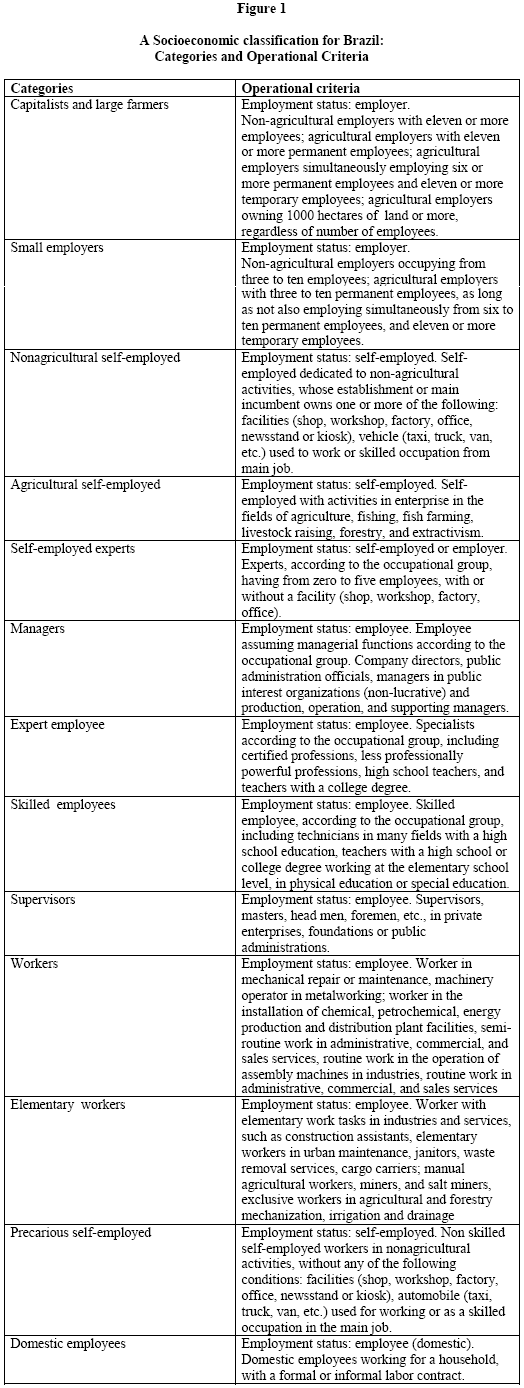
The social class variable. This study benefits from the theoretical contributions of Erik Olin Wright within the Marxist tradition of class analysis and its application to the compared investigation of "the effects of class" in contemporary capitalism. The class typology he elaborated for the analysis of contemporary capitalist society combines theoretical criteria for the property of capital assets, the varying control over qualification assets, and relations of authority within production (Wright, 1997). Understanding social structure in Brazil, however, poses its own difficulties. A socioeconomic classification for Brazil should reflect creative solutions to these difficulties in the drawing out of categories. The specificity of class structure in Brazil seems to materialize particularly in the production of enormous socioeconomic heterogeneity, in the hypertrophy of the self-employment segment, and in the constitution of exacerbated forms of destitution, within and without the world of waged labor – if not when as a result of the exclusion from the social system of production. Figure 1 shows the final outcome of this "creative solution" in terms of empirical categories and operational criteria used in the construction of the social class variable.
The variables set. Figure 2 lists all variables employed in the study and provides their respective operational definitions. The option for the racial category of "non-whites" and the use of logarithmic transformation of the dependent variable "main job’s monthly income" deserves a more careful explanation. In a preparatory approach, whose goal was to reach a final analytical perspective, the 2002 PNAD data suggested a minute salary advantage for blacks, compared to pardos, equivalent to 1.5%, at the significance level of 5%, with statistical control of the conditions of class, education, years of labor, years at the main job, geographic region, public/private sector employment, race, gender, and family position. Furthermore, in the analysis of the interaction between class and race, with the use of the three racial categories, the coefficients of the interacting terms for blacks become non-significant in almost all categories of class, except for one, signaling the non-existence of differences in relation to pardos (referential category).3 Given that the main purpose of the present effort is to validate a system of socioeconomic classifications, I chose to work with the white/non-white dichotomous variable for two chief reasons: the numerous evidences provided by the literature pointing to the prevalence of the white/non-white divide, and the statistical non-significance of almost all coefficients when blacks are considered in isolation. Finally, Brazilian Indians (0.2% of the population) and Asians (0.5%) were also excluded from the analysis.
]]>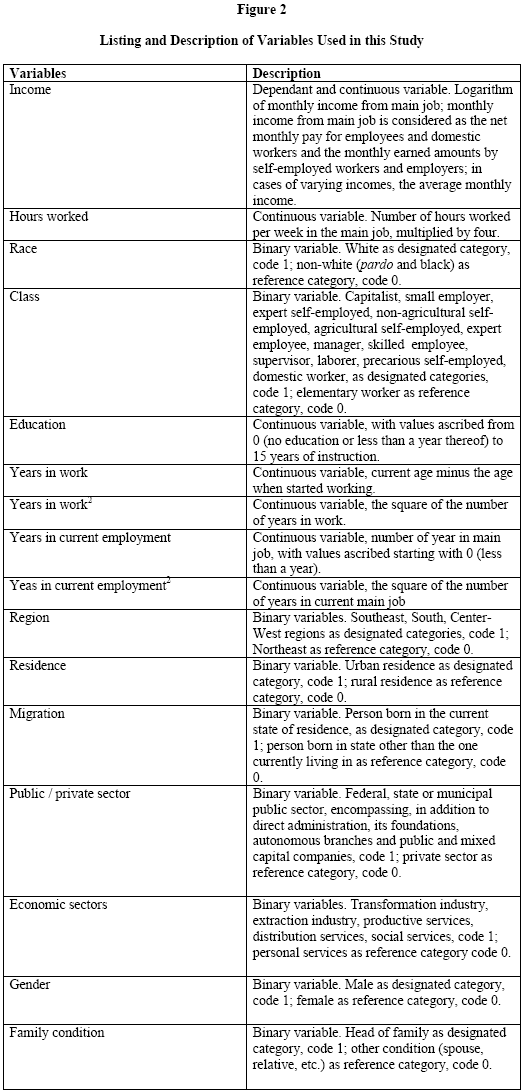
Since the socioeconomic classification was elaborated based on data on the main job, the dependent variable is the monthly income of the main job, rather than the income derived from all jobs or sources of income. I resorted to the logarithmic transformation of income, given the log-normal distribution of income in Brazil and the need to correct the accentuated positive asymmetry of the original data, which jeopardizes the superiority of sample averages as an estimating index for overall averages (Mukherjee et alii, 1998: 75). A chart depicting the normal probability of the Studentized residuals showed that income in monetary terms (reais) does not adjust to normal distribution.4 The option for logarithmic transformation can also be justified as it is considered the criteria of formal function which "explains the greatest proportion of variance in the dependent variable" (Dougherty, 1992:132). In the model with all variables, income in original monetary values (reais) yields a R2 of 0.343, while income submitted to the log transformation entails in an increase of R2 to 0.591, which represents a considerable improvement in the adjustment of the model to the available data (see model 7 in the Statistical Annex). A disadvantage of working with the log of income, however, is the exclusion from the analysis of all cases of zero income. This implies in the non-consideration of the categories of non-paid workers (7.4%), workers consuming their own production (4%), workers in constructions that benefit themselves (0.2%) and all other respondents stating an income of zero in a month. Using a semi-functional logarithmic form with a binary variable raises the question of the correct expression of the percentage impact of each binary variable on the dependent variable. I followed the recommendation of Halvorsen and Palmquist (1980) and Kennedy (1998:228) to calculate percentage impact according to the formula 100 [exp(B) – 1].
Methods. The importance of a sociological factor should not be viewed through the lenses of its "main effect." The moderating role of a variable, in relation to the effects on social life of other variables, equally attests to its sociological relevance. The use of interactive terms, in the context of a regression analysis, serves this purpose. The analysis was conducted with the construction of interactive or multiplicative terms between the qualitative variables class and race (Friedrich, 1982; Hardy 1993). The regression coefficients of the interactive terms among binary qualitative binaries, such as class and race, estimate the differentiating effect of belonging to a group X as a result of group category Z. The interactive terms are subject to interpretation, in this case, as the differentiated effect of race according to class, or as the differentiating effect of class according to race (Hardy, 1996: 36-37). This study employs the technique of OLS multiple regression in order to test the moderating effects of categories of class in the relation between race and income. Moderating relations pose the question of "when" and "for whom" a variable most strongly predicts a certain effect insofar as it affects the force or direction of the relationship between a predictor and a result. The conditional effect of a variable, that is, the dependence of this effect on the existence of another variable, amounts to considering the interactive effects among variables (Frazier et alii, 2004: 116). From this investigation’s perspective, race represents the focal qualitative independent variable and class the qualitative moderator variable. In the analysis of the variation in racial gap, according to class categories, I employed the strategy of "binary variable recodification," in which successive recalculations of the regression equation are made as to isolate the different combinations of race and class and to produce relevant statistics (Jaccard and Turrisi, 2003: 55-59). For this same purpose, the analysis explored the interaction between the employing sector (private / public) and race, applying the same technique to both cases. It is important to notice that the analysis incorporates two separate multiplicative terms instead of a three-leveled interaction, that is, a multiplicative term between class, race and sector.
Initially, our plan was to conduct the analysis through the application of multilevel regression model to the data. However, this model demands the comparison of a sufficient number of contexts so that they can be treated as observations and so that the variable variations at this level can be used to explain the coefficient variations at the micro level. The statistical power required to find inter-level effects depends on the number of groups or contexts. This number must be greater than 20, according to some, and 30, according to others. Results may vary according to the situation, but naturally it depends much on the strength of the effect being investigated, as well as on intra-class correlation, particularly in the case of estimates for groups and interactions between the micro level and the sphere of contexts (Kreft and De Leeuw,1998:123-126; Snijders and Bosker, 1999:140-54; Treiman, 2001:311-312; Hox, 2002:173-184).5 The investigation of class difference emphasizes the construction of a classification with a relatively reduced number of categories, something that runs counter to the statistical logic of multi-level models, which commonly demands more contexts in order to increase its statistical power. Given that the main goal of this study is the validation of the classification of the thirteen categories, there was no reason to choose a solution that could be statistically undermined. In addition, using class categories as groups in a multi-level model assumes that they constitute a sample taken from a population of groups and not categories per se which attempt to define a population (personal communication, Joop Hox). Since these categories possess a special meaning, the investigator is prompted to "wish to speak to the model within each of the special groups," therefore rendering "the fixed effects approach [OLS] […] more appropriate" (Cohen et alii, 2003: 566). Lastly, it must be said that different studies using multilevel models to assess the interaction between occupation and attributive factors, such as race or gender, do not find greater substantial differences compared with OLS regression analysis (Loeb, 2003; Grodsky and Pager, 2001; Haberfeld et alii, 1998).
ANALYSIS OF THE EFFECTS OF CLASS ON RACIAL INEQUALITY
A preliminary approximation to a class analysis of racial differences can be conducted simply by confronting the differences in average income among racial groups, according to class position. To this end, income expressed in the national currency (the real) is used with the purpose of creating a more realistic image based on the original reality of facts. This contrast represents an interesting approach, even if preliminary and simplified, since it allows for comparison with the results of the regression analysis. It is a known fact that the OLS technique of linear regression is an estimate of conditional averages of the dependent variable to certain values of the independent variables (Mukherjee et alii, 1998: 282). In this initial incursion I shall limit myself to identifying some more interesting empirical evidence. A more conclusive interpretation will be provided with the results of the regression analysis, which incorporate statistical control of other relevant variables and the presentation of the standard deviation of each estimate.
Table 1 shows that racial contrast is at its lowest within the capitalist class. This happens to be the only situation of a lower racial income gap in groups with high average incomes. As the amount of capital controlled decreases, as with small employers, racial differentiation manifests itself strongly. A similar pattern occurs within the non-agricultural self-employed workers who mobilize some capital or who have enough working qualifications so as to be self-employed. On its part, the difference among the agricultural self-employed workers is noteworthy not only due to the fact that it is the largest in the classification, but also because this category concentrates a large amount of Brazilian pardos.
]]>
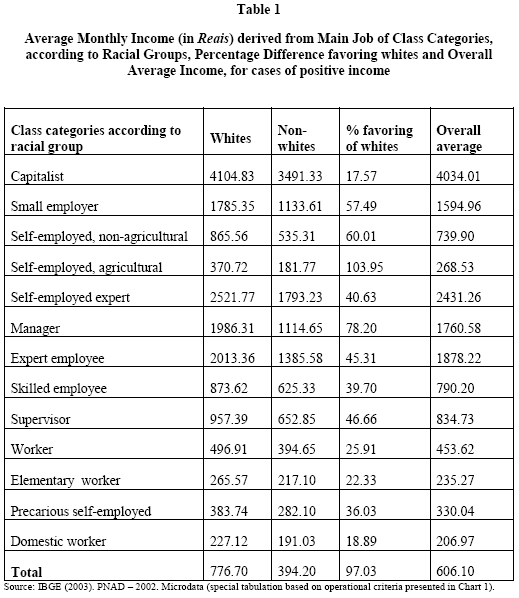
The differences are substantial in the core portion of waged middle-class jobs and, particularly, among managers, the second largest difference is registered. Expert employees, who have a greater average income, exhibit lower racial difference compared to managers, who have lower average incomes. In the classification based on the criteria of qualification/authority, the situation changes, as supervisors, who receive superior average incomes compared to skilled employees, display higher racial differences. Within the larger body of workers racial differences are at an intermediary level between the poorer wage-earners and skilled employees and supervisors, who have higher average incomes. The lowest differences are to be found among the poorest category of domestic workers and elementary workers. Those precarious self-employed, lastly, exhibit higher racial difference compared to the wage-earning proletariat. It remains to be found out, however, if this pattern will hold with the controls introduced by linear regression analysis.
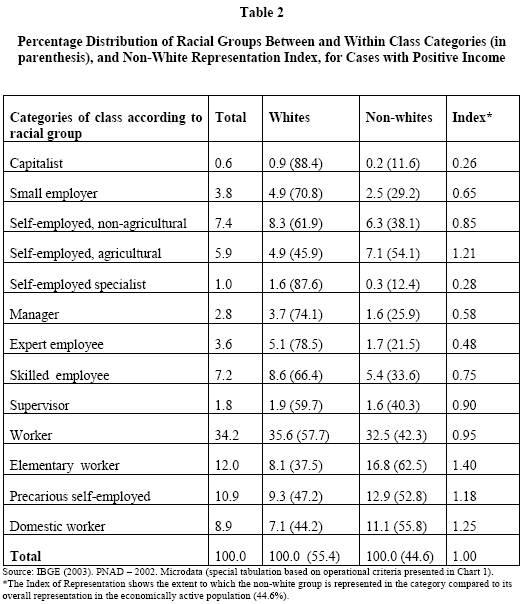
Another way of approaching the intersection between class and race, equally and complementarily important, takes into account the distribution of racial groups within and in between class categories which are unequally compensated for their work. The data presented in Table 2 shows that non-whites are at a position of significant disadvantage compared to whites in all positions that control economically relevant assets.6 The most significant distance occurs with capitalists. This gap is smaller within skilled employees and, particularly, within supervisors (a relatively small category in Brazil). The two racial groups come close to equivalence, in terms of internal distribution, in the large category of workers. Lastly, non-whites outdo by far whites in the poorest category of Elementary workers (which include manual agricultural workers), precarious self-employed and domestic workers. The distribution of racial categories follows a clearly configured class ordering.
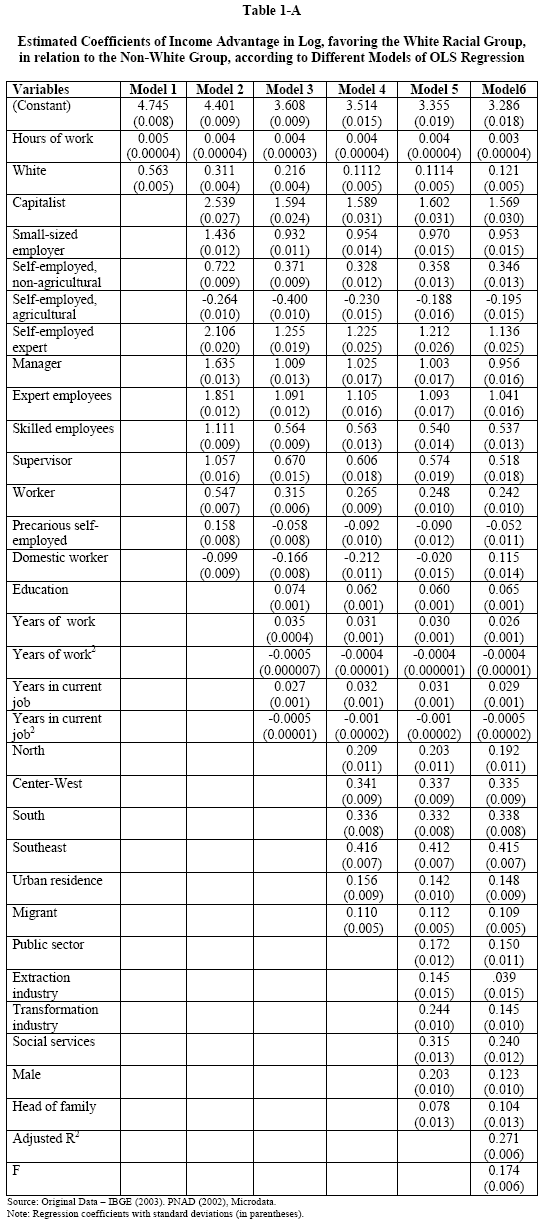
]]> The consideration of the effect of class on personal income, within the overall population and between racial groups, requires regression analysis, as it is worked out in Table 3. The last column shows the average income advantage enjoyed by whites and non-whites for belonging to the designated category, as opposed to the reference category of elementary work. It should be noted that these are net differences, which have taken into consideration the statistical control of other variables such as education, years of work, years in current main job, geographic region, urban / rural residence, migration status, public/private sector employment, economic sectors, race, gender, and family position. A regression model (not shown here) comprising only of socioeconomic classification and the control of working hours shows that the typology elaborated accounts for 41.5% of the variance of income submitted to log transformation, as per adjusted R2.
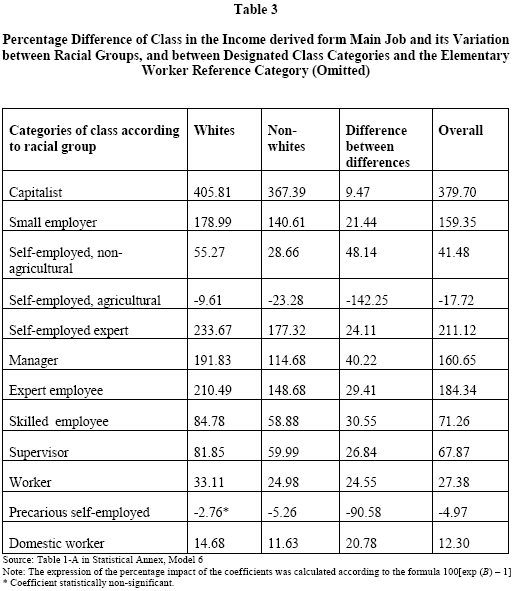
As expected, capitalists stand out. This category has the greatest advantage in income in relation to the (omitted) reference category. However, in addition to this, a clear ordering among the holders of capital assets can be noticed, with the advantage decreasing from small employers to non-agricultural self-employed workers.
Expert self-employed workers occupy the second most privileged position, somewhat below capitalists, being that their condition combines control over capitalist assets, as they can have up to five employees, with control over professional expertise. They are followed in their privileges, from a certain distance, by expert employees and managers.
Widening the scope of the working class, it is noticeable that qualification and, to a lesser extent, authority, make a difference, as shown in the situation of skilled employees and supervisors. The large body of workers, on their part, are distinguishable from the poorest segment of Elementary workers, domestic workers, and precarious self-employed. The latter seem to compose a similar grouping in terms of average income, albeit differentiated in terms of job market inclusion.
Observing the first two columns of Table 3, which shows the class differences within racial groups, the strength of the class component can be noted, for these discrepancies are markedly elevated in both groups of color, except among the poorest workers. In addition, inequality of race does not override differences of class, as this form of ordering remains practically unaltered by color separation.
Nonetheless, the consideration of socioeconomic divisions, according to color groups, shows the existence of a smaller income inequality among non-whites, compared to whites. Therefore it can be concluded that race has an effect on class. The contribution of race to reduce class inequalities is well accounted for when it is observed that class differences are greater among whites than in the white and non-white population (last column of Table 3). Discrepancies in the advantages between whites and non-whites, in turn, vary according to the socioeconomic categories, and can be observed in the third column of the same table. This assessment puts into relief the subject of interaction between these two forms of social division that are at the core of this investigation, and which will be discussed ahead using another approach to data analysis.
]]> The strength and composition of income racial inequality in Brazil. I now present the specific attributes, namely its strength and composition, of racial inequality in terms of income in Brazil, before directly approaching the interactions between class and race. This task will be carried out by estimating the non-accounted for percentage of racial inequality in a succession of models which include other factors with a significant impact on income and which may be associated with race divisions. This strategy allows to find out the main mediating factors in the production of racial inequality and to establish the direct, non-mediated, effects of racial divisions. Thus it will be possible to distinguish between racial inequality in terms of income as a result of unevenly distributed access to or allocation of positions, resources, or contexts that affect income among racial groups, and as a result of the unequal compensation given to different racial groups in the same social conditions.The results presented in Table 4 are those in which the regression coefficients have already been converted to effect measured in percentages in terms of the original unit of income. Table 1-A of the Statistical Annex presents the original regression coefficients alongside their respective standard deviations. It must be noted that in evaluating of the statistical significance of an effect, it is not enough to consider its magnitude. It is equally important to assess the magnitude in relation to the standard error of the estimate (Hardy 1993:50)
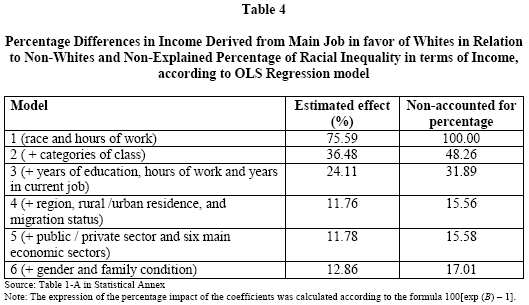
Model 1 serves as the reference of comparison in the evaluation of the magnitude and composition of income differences by race in Brazil. The difference favoring whites, which is of the order of 75%, shows the net weight of inequality associated to race (see Table 4).7 However, we must now proceed in order to find out the composition and conformation of this difference and how it is affected when other relevant income-determining variables are included in the regression.
Taking into account the focus of this investigation on intersections and interactions between class and race, categories of class were inserted in Model 2. The original effect is reduced by 50%, signaling the relevance of the intersection between both factors in Brazil. The disappearance of half of the original effect is due to the weight of the racial composition of the categories of class and expresses the disadvantageous distribution for nonwhites in those positions of class that are unequally compensated. In addition to other independent factors and their respective contributions accounting for of the racial gap, which we will explore next, the remaining non-explained income difference is actually the inequality that exists within class positions, associated to factors of internal differentiation relative to the categories of class, just to mention what can be expressed within the limits of an additive model.
Model 3 introduces statistical control for the differences in education, in terms of years of work and years in current job. From the neoclassical approach to human capital, these elements are considered manifestations of the individual’s productive attributes. However, years of work might possibly express a general effect of accumulation of assets during one’s lifetime. Years in main job might possibly be an expression of the labor relation among wage-earners, and of a "long lasting" competitive position in the market, among self-employed workers and employers. Education can be disassociated from individual productivity and can be understood as a selective or qualifying factor that facilitates access to jobs. Occupational structures and organization hierarchies, on their part, may possibly have a mediating and moderating role in the effects of education on income. The effect of education may depend on factors endogenous to the labor relation linked to the process of extraction of labor given the "incomplete" nature of the labor contract. However, I will not go any further in this debate, as this has already been carried out elsewhere (Figueiredo Santos, 2002). The fact is that in Brazil there is a particularly strong association between education and income mainly due to the great gaps in education, in which divisions of class and race play a part. A regression without statistical control for years of work and years in current job, not shown here, demonstrates that simply adding control for education reduces the racial gap to 27.51%. This represents an important reduction in the estimated effect, indicating the weight of inequality, particularly that of education, in the reproduction of the racial gap. However, the coefficients of years of working and year in current job, added up, result in a 6.3% increase in the expected increment in yearly income, which is a level relatively close to the figure of 7.68% shown in the coefficients of education (see coefficients for Model 3 in Statistical Annex; Model 6, which features more controls, exhibits a similar pattern). PNAD data from 1996 analyzed by Valle Silva, show that, during their productive lifetimes, white people achieve higher gains due to experience (years of work) than non-white people (Valle Silva, 2000:23). The uneven distribution of years of work and the capacity to "keep" the job may be interpreted as yet another facet of race division in terms of disadvantages of opportunities for non-whites.
Model 4 explores the role played by geographic distribution of racial groups, with important implications for income, as well as the role of the location of residence (urban/rural) and migration status. These factors reduce the non-accounted for variance of the racial gap to its lowest point. The variable " geographic region" on its own accounts for almost all of this considerable reduction, as it decreases the racial gap to 12.30%, as another regression without the two other controls confirms (not shown here). The higher concentration especially of pardos in the less developed states and in rural regions sets back the average overall income of non-whites, in such a way that the gap exists due to this uneven geographical distribution. As it can be observed in Models 4, 5, and 6, in terms of income, all regions considerably surpass the Northeast, the region, which has the highest percentage of pardos.
]]> Model 5 shows that, after statistical control for geographic region, both sector divisions do not contribute for an additional decrease in the overall racial gap. However, this model is based on the simplifying assumption that the racial gap would be the same between sectors and the differences in income according to sector are equal for whites and non-whites. This equivalency of effects represents a function of the model specification (Hardy, 1993: 25-26). The distinction between employment in public/private sector deserves careful consideration here. The public sector represents only 12.2% of the total of class positions, however the average income it provides is 16.18% greater than that of the private sector (0.15 in logs), as it is confirmed by the coefficient for "public" in Model 6, shown in the Statistical Annex. This difference is possibly due to the considerable size of categories such as precarious self-employed workers, domestic workers, and agricultural self-employed workers, all of which with average incomes lower than other categories, in the composition of the private sector. In addition, there is a smaller racial gap in the public sector, as will be discussed ahead.Model 6 shows that controlling for gender and family condition increased the racial gap. A regression analysis in which the control for gender was estimated without the condition in the family showed that this factor, by itself, accounts for most of the phenomenon, although the variable condition of head of family also contributes. A combination of two factors seems to explain how this happens, since the effect of race increases when the regression controls these dimensions. Man are the holders of most class positions, in addition to possessing higher average incomes, but racial differences are somewhat greater among women. Separately conducted regressions, with the addition of the interaction between race and gender, showed that racial differences in income favoring whites is equivalent to 12.52% in the masculine population, and it rises up to 13.31% in the female population. Women have increased their share in the job market in recent times and have increasingly reached privileged positions as managers and specialists, however this expansion has benefited particularly white women. More advantageous class positions, when women are able to occupy them, are in their majority controlled by white women (Figueiredo Santos, 2002:113-114). PNAD data from 2002 shows that in the female population there is more unevenness in racial composition in almost all of the more privileged categories of class and average income compared to the male population.8 As will be shown further ahead, these privileged positions exhibit greater racial gaps.
The moderating role of class position in the racial inequality of income. All models indicate that part of the net gap is mediated by the conditions of class, education, and geographic region, but also that there is also a persistent and significant direct disadvantage which is not mediated by these factors. Once established the existence and magnitude of the non-accounted for gap, from now on the focus of the analysis will shift to how the racial gap varies according to categories of class, which represents an interactive or specific multiplicative source of racial inequality.
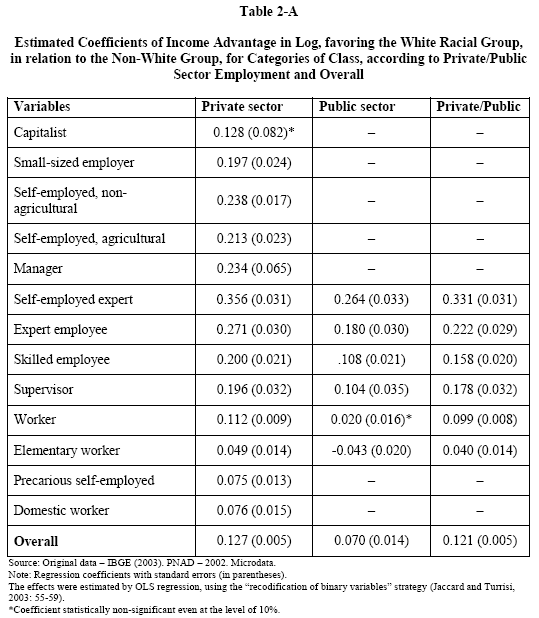
The estimates of the variations of the racial gap, according to the categories of class, distinguishe the private sector from the public sector (Table 5). Presenting the data thusly is part of an attempt to highlight a little-explored facet of the literature on this subject in Brazil. Nonetheless, this literature is relevant in terms of eventual interventions in public policy. The racial gap does vary according to class, as the present investigation strives to show, and it also varies according to sector, although the complex interaction between race, class, and sector cannot be estimated here given that it was beyond the scope of the investigation. In this sense, the racial differences registered in the categories that are distributed within the public and private sectors reflect an average difference.9
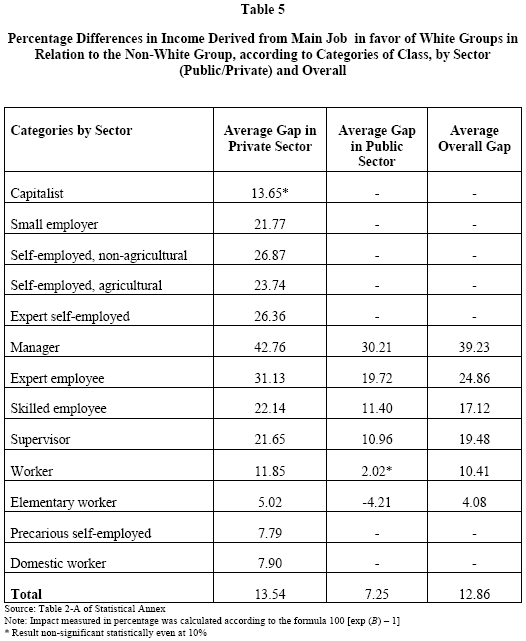
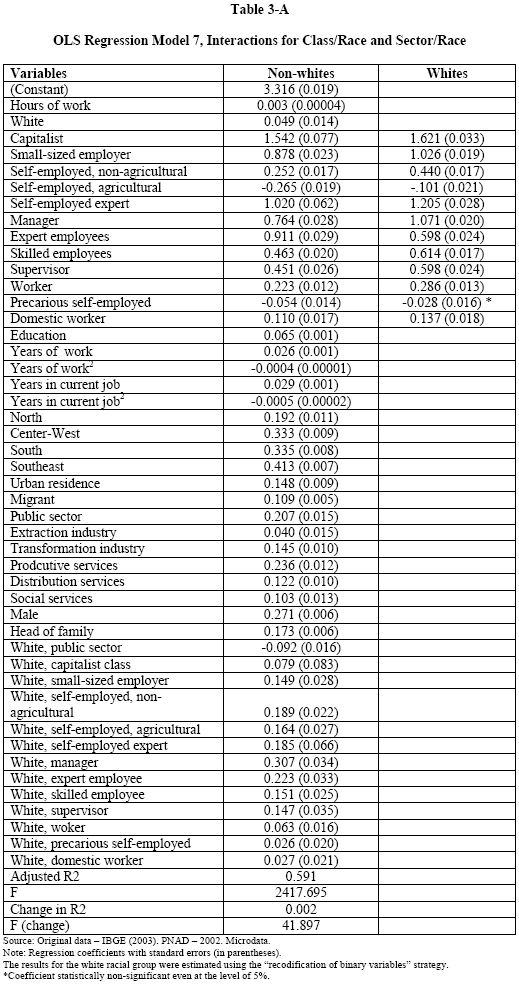
The coefficients of the racial gap were estimated, as explained in the methodological section, by means of a strategy that involved the "recodification of the binary variables," which implied the generation of one regression for each estimate, thus producing all the relevant statistics. Model 7 presents the bases of these estimates and the other regressions are derived from it, with the interest coefficients obtained through the recodification of reference categories of the relevant binary variables (class and sector). When interactive terms are specified in a regression equation "the coefficients for the original set of variables […] refer to comparisons involving the reference categories" (Hardy, 1993:36). In the situation depicted in Model 7 (see Statistical Annex), the coefficient for white, given the introduction of interactive terms between class and race, on one hand, and sector and race, on the other, corresponds to the income advantage of the white elementary worker (category of reference for class) in the private sector (category of reference for sector) over the non-white elementary worker. The average overall racial gap coefficient (private/public) for employees distributed throughout both sectors was estimated without the introduction of the interactive term between sector and race, although control for sector was included. In the case of categories of class that exist only in the private sector, the coefficient for this sector obviously represents their overall average.
The regression analysis of the capitalist class category, considering the interactions between class and race, proved to be the most challenging, as it revealed a statistically-non significant racial gap between white and non-white capitalists.10 This outcome of the regression, with the logarithmic transformation of the dependent variable, although seemingly disconcerting, would appear to be a logical consequence of the smaller differences in average income between racial groups in this category, as shown in Table 1. This difference disappears mainly due to control by geographic region, a situation in which non-whites are worse-off, given that they are concentrated in less developed regions with lower average incomes. Without control by geographic region a racial gap of 24% is noted favoring white capitalists, statistically significant at the 1% level, as shown by the results of a regression similar to Model 7, but with statistical control for regions added.
]]> Non-white capitalists represent only 11.6% of the capitalist category, although they account for 44.6% of all positions. This shows that there are many barriers to the access of non-whites to this condition of class. However, as this occurs, the condition of class seems to cancel out the effect of racial inequality. The process of income determination in a capitalist enterprise with eleven or more employees, according to the operational solution allowed by the available data is perhaps more "unpersonalized" and depends fundamentally on the amount of capital and the market’s atmosphere, such that the race of its owner does not affect the capacity of making profits. In addition, the greater amount of capital which is the case in larger companies might make the racial component less "visible" or, perhaps, affect how its owner’s "color" is perceived.The comparison between capitalists and small scale capital holders also proves clarifying. Racial differences surpass 21% among small employers and non-agricultural self-employed workers. The smaller amount of capital and the greater dependence on the owner’s direct involvement, and the implications on this in terms of less "depersonalization" of the activity concomitant with the owner’s greater visibility, causes the racial gap to reach a higher level. The racial gap among agricultural self-employed workers who own land assets does not stray far from 24%, being that they have one of the lowest average incomes among all those registered. This represents a form of dissociation between the racial gap and the average income.
Racial difference among self-employed specialists, a group which combines capital assets and expertise, reveals itself greater than that among other self-employed workers, but remains smaller than the difference among expert employees in the private sector. This constitutes a relevant contrast, which perhaps demonstrates that racial inequality is more pronounced in the context of job relations and in the workplace, rather than in market relations or in dealing with customers, which are the tasks that characterize the activities of autonomous specialists.
Middle-class wage paying jobs exhibit the highest levels of discrepancy in income in racial groups. Only about one fourth of these jobs are occupied by non-whites, and, furthermore, with greater relative disadvantages. The income gap favoring whites among expert employees reveals itself considerably large despite statistical control for education. Specialists have greater class privileges in relation to managers, but white managers, on their part, exhibit greater racial advantage over non-whites, a fact which reflects the more drastic relationship between race and authority in the workplace. The scale of the racial gap among managers brings attention to the strong "affinities" between authority and race (specifically whites) and the "critical" class role of managerial hierarchies in guaranteeing that the worker works as hard as possible. A hypothesis which explains the "logic" of this elevated racial gap among managers, in the context of interactions between class and race, is the idea that non-whites would be considered, as the result of a combination of racial ideology and economic calculation, less "adequate" for the execution of the "vital" function of presiding over human assets, in such a way that their access to such capacities translates into a wage "downsizing" practiced by employers.
These results, however, might be vulnerable to the problem of location heterogeneity for the medium strata, as it has been pointed out by Erik Olin Wright (1997:527). This is the case with the wide-ranging category of "managers". The manager of a medium-sized family enterprise and the manager of a large conglomerate are equally considered "managers." The high level of racial gap observed among managers, argues Wright, might not be the result of something particular regarding the mechanisms of income distribution among managers, but simply because the category is heterogeneous regarding this mechanism. In this hypothesis, this would be the result of differences in the allocation of racial groups within the management of large and medium companies or within the different levels of management, rather than differences in compensation between specific segments of this broad category which encompasses all sorts of managerial workers.
The obtained result raises a research problem that requires further investigation. To a certain extent, this is a perennial and inevitable problem inherent to working with heterogeneous classification systems with respect to interest mechanisms (Wright, 2004). The breaking down of the broad and all-encompassing category of managers in high and intermediate managing posts is partly the solution to this problem. Non-white managers are distributed in similar proportions between the high and intermediate managerial levels, excluding any effects of the racial composition of the category at this level of disaggregation.11 Furthermore, the specific racial gap estimates for these categories shows a racial advantage in income for the white group in relation to the non-white group. The advantage is of the order of 57.62% for high management as a whole and 69.34% for those in the private sector only. The intermediate managerial level, in turn, exhibits an overall racial gap of 35.53% and a racial gap of 37.71% for those in the private sector. These figures are very close to those registered for the general category of managers, as shown in Table 5. The additional data do not contradict the previous result, in fact they fundamentally show that the racial gap gains strength as the managing hierarchy ascends to more complex and higher positions.
The level of the differences is very close to 20% among skilled employees and supervisors who hypothetically make up a broader working class. The qualification components and authority, incorporated to working structures, even at lower levels of social power, clearly accentuate the effects of racial asymmetry.
In the large contingent of workers the general racial discrepancy corresponds to 10,41%, not too distant from the level verified in the private sector (11.85%), although the racial gap practically disappears within the public sector for this category since its value (2.02%) is statistically non-significant. This category’s racial profile is considerably close to the overall distribution of racial groups in the overall population with class positions, since among its members whites add up to 57.7% and non-whites to 42.3% (See Table 3).
Among the categories of poorer wage-earning workers the racial gap fluctuates between 5% and 8%, though it is slightly higher among domestic workers and lower among elementary workers, even when only those in the private sector are considered. The public sector plays an interesting supporting role in this category’s situation, helping to form the only context in which whites are at a disadvantage, due to the fact that the racial gap for this category of class is lower than the relative sector advantage of non-whites in the public sector. The added up effect of class and sector changes the direction of the racial gap, although this only applies for the limited population of elementary workers in the public sector. In this case, as can be observed in Model 7 (See Statistical Annex), the advantage of the elementary white worker in the private sector of 5.02% (0.049 in log), expressed in the coefficient for whites, will be converted into a disadvantage of -4.21% (0.043 in log) in the public sector, precisely due to the negative coefficient for white and public (-0.092 in log). The public sector has a minor role since the more significant variations between categories are caused by the class factor, as becomes evident in contrasting managers and elementary workers.
Those in the precarious self-employed category have a salary gap similar to that of other destitute workers. Self-employment, in these circumstances, does not seem to favor neither class advantages nor the racial gap.
]]> In relation to the impact of the private / public distinction, Table 5 shows that the public sector generates a secondary moderating effect, as it reduces the racial gap of those categories that enter the sector. Model 7 reveals that the advantage of being in the public sector, in relation to the private sector, is greater for non-whites (23%), as the coefficient for the public sector registers, than for whites (12.19%), as the sum of coefficients for the public sector and public sector whites indicates (percentage expression of the coefficients already converted). However, non-whites represent 41.1% of the public sector, a figure that is below its weight in the population with defined class positions (44.6%), which corresponds to a Representation Index of 0.92. The direct confrontation between the two racial groups, carried out by calculating the Relative Advantage Index, shows that non-whites, in comparison to whites, have a representation deficit in the public sector (index of 0.87) and a comparative distribution which approaches parity with the private sector (index of 1.03).12 Therefore, it can be said that there is racial inequality in the access to the public sector.
CONCLUSION
I conclude this analysis of the interactions between class and race with some general remarks on the subject. Managers and expert employees display the most accentuated racial gaps in all categories participating in the private sector. Supposedly, these job positions are taken and compensated for according to the established rational criteria of efficiency that guide capitalist enterprises. Results show, however, that the interaction between race and class produces a considerably different picture: the increasing relative quantitative value of "qualitative" racial differences among employees. The areas of privileged appropriation are also the sites more prone to display racial inequality. In a self-perpetuating cycle, this class differentiated racial advantage contributes to the consolidation of income gaps between categories of class and reinforces the reproduction of racial inequality. In other words, among these middle-class wage-earners, greater class advantages mean greater racial advantage and vice-versa, a trend which consolidates the double privilege enjoyed by those who occupy these positions.
The presented data also contains information on the class situation of supervisors and skilled employees. Based on the comparative income differences shown in Table 3, skilled employees and supervisors are closer to workers than expert employees and managers, a finding that supports the claim that this category can be included within a broader notion of "working class." A certain ambiguity in its condition, however, manifests itself in the interactions between class and race, for white wage-earners in this condition benefit more from race division.
The existence of a smaller racial gap between the categories of proletariat workers corresponds to Marxist theory expectations that, to a certain degree, the common condition of class exploitation restricts the impact of race division within the working class per se. The category of elementary worker shows that the greater the conditions of destitution in wage-paying jobs, the more homogeneous is the group in terms of the consequences of race division on income. In the opposite pole of the capitalist class, the condition of class engenders an even more leveling consequence since it renders the racial gap non-significant, albeit for other reasons. The elimination of the racial gap in this situation is due to the control of relevant capital assets and of income generating mechanisms typical of the capitalist class, which seem to render ineffective the "procedures" of racial discrimination, despite the fact that the racial motivations of agents remain in place. A further indication of this can be inferred from the fact that the racial gap become considerably noticeable among small employers, as in this case there is a decline in the amount of capital held.
An overall view of the obtained results shows that in Brazil the racial gap in favor of whites is present in almost all categories of class, however, its effect is significantly moderated by class conditions. This investigation has approached the combination of individuals and class positions as the result of a class allocation process. The variations in racial gap according to categories of class continue to occur despite the addition of statistical control for several allocation mechanisms, which can possibly account for the distribution of racial groups in class positions. The results equally show that racial differences in income, curbed by ascription to class, does not solely depend on average income levels. This investigation successfully demonstrated the relevance of such socioeconomic classification based on the concept of social class for the study of structural divisions in Brazil’s society and their impact on income. It also pointed to the importance of introducing the "criteria of class," by means of the advanced classification criteria, in the analysis of racial inequality in Brazil 13.
NOTES
1 This investigation was made possible thanks to a pos-doctoral scholarship granted by the Coordenação de Aperfeiçoamento de Pessoal de Nível Superior – CAPES and to the honorary fellowship I held at the Sociology Department of the University of Wisconsin-Madison. A draft of this article was presented at the Economic Sociology Program Research Seminar promoted by the Department on September 27, 2004. The presentation allowed me to collect valuable feedback from participants, particularly professors Erik Olin Wright, Jonathan Zeitlin, and Bob Freeland. Special recognition is owed to the collaboration of Prof. Erik Olin Wright, both for making possible my stay in Madison and for his detailed comments on my paper, pointing out the substantive relevance of the results obtained while also indicating research problems that require further attention.
]]> 2 NT: The term’s derogatory content has to a great extent waned during the twentieth century. Nowadays in Brazil, mulato is used as a fairly descriptive term to designate people with a skin color between white and black. Nonetheless, it has to be noted that black social movements are critical of such usage, as they deem the term pejorative.3 In this analysis, which includes all controls, only the coefficient for black expert self-employed workers was statistically significant at the 5% level, and exhibited the lower income advantage of black expert self-employed workers compared to the pardo expert self-employed workers.
4 The assumption of normality can be checked by examining the distribution of residuals calculated by a linear regression equation. The normal probability plot of the studentized residuals allows for a visual testing of the adjustment of the data to normal distribution. These residuals are calculated by dividing each residual by its estimated standard deviation which varies from point to point. (Norušis, 2003:229-230 e 262-266).
5 The intra-class correlation measures the extent of data grouping, that is, the degree of correlation or non-independence among a set of variables, by finding "the proportion of the total variance of a variable that is accounted for by the clustering (group membership) of cases" (Cohen et alii, 2003:537).
6 The exclusion of cases with zero income underestimates the participation of non-whites, particularly among agricultural self-employed workers, due to the weight of non-paid workers and of subsistence workers in agriculture (who end up consuming the products of their own work), in case these are included in the category. This underestimation, on the other hand, is equivalent to an overestimation of the distribution of non-whites among other categories. A more accurate distribution, which operates the reclassification of cases of non-paid workers and the inclusion of subsistence workers, is found in Figueiredo Santos (2004). It must be noted however that the distribution of the two racial groups among those with prominent class positions occurs in a proportion similar to the one measured in the overall population. Excluding a minute portion of Asians and Native Indians, the 2000 Census shows that, in rounded-off figures, whites correspond to 54% of the population and non whites add to 46% (Telles, 2003:47). The last row in Table 2 shows that whites represent 55.4% of constituted class positions, against 44.6% for non-whites.
7 An estimate from Model 1, which employed the natural logarithm of hours worked, yielded similar results (75.1%).
8 In the female population, whites account for 92% of expert self-employed workers, 88.85% capitalists, 79.1% expert employees, 71.4% supervisors, and 65% of non-agricultural self-employed workers. The only exception was the case of skilled employees, a group typically including middle level technicians and teachers, in which case white women represent 66.3% and white men 66.6%. White women represent 57.7% of the set of prominent positions and white men 54% in their respective populations.
9 This average difference occurs due to the fact that there were two separate estimated interactive terms instead of one interactive term with three levels, that is, class, race, and sector. There is a variation between categories of class by sector when the antilog is applied in order to assess the percentage impact, as the effect of this transposition varies according to the magnitude of the coefficient in log units.
10 The result is not statistically significant not even at the 10% level, i.e. when there is more than a 10% chance that it has been produced by a sample error. It has been established that in large samples such as the PNAD even the most trivial results can be statistically significant, which warrants the use of a significance level even lower than the standard of 5%. The problem would not be a result of the insufficient number of cases in the cross-examining of class and race for the category of capitalists, which could affect the estimate’s standard error, since the sample contains 102 cases of non-white capitalists and 780 white capitalists. The log functional form of income was employed in order to correct the strong positive asymmetry in income distribution. However, it is true that the use of the logarithmic form can possibly cause certain distortions in the interpretation of differences between groups. Hodson points out that it might be extremely difficult to undo the mixing-up of income returns and average income levels which occurs as the result of the employment of the logarithmic form therefore complicating the task of interpreting differences between groups (Hodson, 1985). Perhaps this warning would not apply to the present situation since the differences between groups here considered concern the differences between racial groups within the category of the capitalist class, whose internal asymmetry declines significantly when income is expressed in logarithmic terms.
11 High-level managers are fundamentally either directors (occupational codes 1210 to 1230) of companies with eleven or more employees or public administration managers; intermediate-level managing is composed of company directors with less than eleven employees, managers in public interest organizations (non-profit organizations etc), and production, operations, and support managers in the private sector. Non-whites represent 25.9% of managers; within the category they constitute 26.3% of high management and 25.9% of intermediate management. Linear regression controls the effect of private/public sector composition, but, for the record, it was noted that 69.5% of non-white managers are in the private sector, although white managers are even more concentrated in the private sector (74.8%), a figure more favorable to its racial group.
]]> 12 The Index of Representation shows how much a group is represented in a sector compared to its overall representation in the population of those that are economically active. The Index of Relative Advantage, on its part, measures the extent of representation of a racial group compared to another one, with previous control of the differentiated distribution of each group both in the specific sector and in the overall economically active population, Perfect representational parity equals 1 and the indexes vary up or down according to the direction of the unevenness (see Sokoloff: 30 and 69).13 The main results from this study were corroborated by new estimates which applied a Generalized Linear Model, with a Gamma distribution and a logarithmic link function to data from the 2005 National Survey by Household Sampling (PNAD/IBGE). The racial gap between white and non-white capitalists (0.7%) is statistically-non significant, but it reaches a higher level among small employers (19.88%) and non-agricultural self-employed (27.66%). Wage-earning workers have the smallest racial gap: workers (8.95%), elementary workers (2.46%) and domestic workers (4.04%). The middle class has a greater racial gap: managers (29.67%) and expert employees (25.44%). There is a white advantage of 25.42% among self-employed experts. Skilled employees (15.13%) and supervisors (13.49%) have an intermediate gap level among the wage-earning workers. The new results are discrepant for two categories: agricultural self-employed (38.56%) and precarious self-employed workers (16.70%).
REFERENCES
CASHMORE, Ellis. (1997), Dictionary of Race and Ethnic Relations (4th ed.). London, Routledge. [ Links ]
COHEN, Jacob, COHEN, Patricia, WEST, Stephen G. and AIKEN, Leona S. (2003), Applied Multiple Regression/Correlation Analysis for the Behavioral Sciences (3rd ed.). Mahwah, Lawrence Erlbaum. [ Links ]
DOUGHERTY, Christopher. (1992), Introduction to Econometrics. New York, Oxford University Press. [ Links ]
FIGUEIREDO SANTOS, José Alcides. (2002), Estrutura de Posições de Classe no Brasil: Mapeamento, Mudanças e Efeitos na Renda. Belo Horizonte/Rio de Janeiro, Editora UFMG/Iuperj. [ Links ]
___. (2005), Uma Classificação Sócio-Econômica para o Brasil, Revista Brasileira de Ciências Sociais, vol 20, n. 58, pp. 27-45. [ Links ]
FRAZIER, Patricia, BARRON, Kenneth and TIX, Andrew P. (2004), "Testing Moderator and Mediator Effects in Counseling Psychology". Journal of Counseling Psychology, vol. 51, n. 1, pp. 115-134. [ Links ]
FRIEDRICH, Robert J. (1982), "In Defense of Multiplicative Terms in Multiple Regression Equations". American Journal of Political Science, vol. 26, n. 4, pp. 797-833. [ Links ]
GRODSKY, Eric and PAGER, Devah. (2001), "The Structure of Disadvantage: Individual and Occupational Determinants of the Black-White Wage Gap". American Sociological Review, vol. 66, n. 4, pp. 542-567. [ Links ]
GUIMARÃES, Antonio Sérgio Alfredo. (2002), Classes, Raças e Democracia. São Paulo, Editora 34. [ Links ]
HABERFELD, Yitchak, SEMYONOV, Moshe e ADDI, Audrey. (1998), "A Hierarchical Linear Model for Estimating Gender-Based Earnings Differentials". Work and Occupations, vol. 25, n. 1, pp. 97-112. [ Links ]
HALVORSEN, Robert e PALMQUIST, Raymond. (1980), "The Interpretation of Dummy Variables in Semilogarithmic Equations". The American Economic Review, vol. 70, n. 3, pp. 474-475. [ Links ]
HARDY, Melissa A. (1993), "Regression with Dummy Variables". Sage University Paper Series on Quantitative Applications in the Social Sciences, n. 07-093. Newbury Park, Sage. [ Links ]
HASENBALG, Carlos, VALLE SILVA, Nelson do e LIMA, Marcia. (1999), Cor e Estratificação Social. Rio de Janeiro, Contra Capa. [ Links ]
HENRIQUES, Ricardo. (2001), "Desigualdade Racial no Brasil: Evolução das Condições de Vida na Década de 90". Texto para Discussão, n. 807, IPEA, Rio de Janeiro. [ Links ]
HODSON, Randy. (1985), "Some Considerations Concerning the Functional Form of Earnings". Social Science Research, vol. 14, n. 4, pp. 374-394. [ Links ]
HOFFMANN, Eivind. (1999), International Statistical Comparisons of Occupational and Social Structures: Problems, Possibilities and the Role of ISCO-88. <http://www.ilo.org/public/english/bureau/stat/download/iscopres.pdf>. [ Links ]
HOX, Joop. (2002), Multilevel Analysis: Techniques and Applications. Mahwah, Lawrence Erlbaum. [ Links ]
IBGE. (2003), Pesquisa Nacional por Amostra de Domicílios – 2002. Microdados. Rio de Janeiro, IBGE. [ Links ]
JACCARD, James e TURRISI, Robert. (2003), "Interaction Effects in Multiple Regression". Sage University Paper Series on Quantitative Applications in the Social Sciences, n. 07-072. Newbury Park, Sage. [ Links ]
KENNEDY, Peter. (1998), A Guide to Econometrics (4ª ed.). Cambridge, The MIT Press. [ Links ]
KREFT, Ita e DE LEEUW, Jan. (1998), Introducing Multilevel Modeling. London, Sage. [ Links ]
LAMBERT, Paul and PENN, Roger. (2000), Class Income Structures in Britain: Modeling Selection into Social Class to Respecify Human Capital Income Equations. Köln Conference of RC-33, Sociology International Association. [ Links ]
LOEB, Jane W. (2003), "Hierarchical Linear Modeling in Salary-Equity Studies". New Directions for Institutional Research, n. 117, Spring, pp. 69-96. [ Links ]
MASON, David. (1994), "On the Dangers of Disconnecting Race and Racism". Sociology, vol. 28, n. 4, pp. 845-858. [ Links ]
MUKHERJEE, Chadan, WHITE, Howard and WUYTS, Marc. (1998), Econometric and Data Analysis for Developing Countries. London, Routledge. [ Links ]
NORUŠIS, Marija J. (2003), SPSS 12.0 Statistical Procedures Companion. Upper Saddle River, Prentice Hall. [ Links ]
REX, John. (1983), Race Relations in Sociological Theory. London, Routledge. [ Links ]
___. (1986), Race and Ethnicity. Milton Keynes, Open University Press. [ Links ]
ROSE, David et alii. (2001), Toward a European Socio-Economic Classification: Final Report to Eurostat of the Expert Group. London/Colchester, Office for National Statistics/ISER, University of Essex. [ Links ]
SNIJDERS, Tom and BOSKER, Roel. (1999), Multilevel Analysis: An Introduction to Basic and Advanced Multilevel Modeling. London, Sage. [ Links ]
TELLES, Edward. (2002), "Racial Ambiguity among the Brazilian Population". Ethnic and Racial Studies, vol. 25, n. 3, pp. 415-441. [ Links ]
___. (2003), Racismo à Brasileira: Uma Nova Perspectiva Sociológica. Rio de Janeiro, Relume Dumará. [ Links ]
TREIMAN, Donald J. (2001), "Occupations, Stratification, and Mobility", in J. R. Blau (ed.), The Blackwell Companion to Sociology. Oxford, Blackwell. [ Links ]
VALLE SILVA, Nelson do. (1993), "A Situação Social da População Negra", in J. P. dos Reis Velloso e R. C. Albuquerque (orgs.), Pobreza e Mobilidade Social. São Paulo, Nobel. [ Links ]
___. (2000), "A Research Note on the Cost of Not Being White in Brazil". Studies in Comparative International Development, vol. 35, n. 2, pp. 18-27. [ Links ]
___ and HASENBALG, Carlos. (1992), Relações Raciais no Brasil Contemporâneo. Rio de Janeiro, Rio Fundo. [ Links ]
WESTERGAARD, John. (1995), Who Gets What? The Hardening of Class Inequality in the Late Twentieth Century. Cambridge, Polity. [ Links ]
WRIGHT, Erik Olin. (1978), "Race, Class, and Income Inequality". American Journal of Sociology, vol. 83, n. 6, pp. 1.368-1.397. [ Links ]
___. (1997), Class Counts: Comparative Studies in Class Analysis. Cambridge, Cambridge University Press. [ Links ]
___. (2002), "Class, Race and Gender". Lecture Notes. University of California, Berkeley, March. Manuscripts <http://www.ssc.wisc.edu/~wright/298lectures.html>. [ Links ]
___. (2004), Erik Olin Wright Comments on José Alcides Figueiredo Santos Paper. Research Seminary, Program of Economic Sociology, Sociology Department of Wisconsin-Madison University, September 27. [ Links ]
___. (2005), "Foundations of a Neo-Marxist Class Analysis", in E. O. Wright (ed.), Approaches to Class Analysis. Cambridge, Cambridge University Press <http://www.ssc.wisc.edu/~wright/>. [ Links ]
ABOUT THE AUTHOR
José Alcides Figueiredo Santos is a professor in the Social Sciences Department of the Universidade Federal de Juiz de Fora (UFJF). He is the author of Estrutura de Posições de Classe no Brasil (Belo Horizonte/Rio de Janeiro, Editora UFMG/Iuperj, 2002). (E-mail: josealcidesf@yahoo.com.br).
]]>