A inspeção do trabalho no Brasil*
L'inspection du travail au Brésil
Adalberto Cardoso; Telma Lage
Translated by Diane Rose Grosklaus
Translation from Dados - Revista de Ciências Sociais, v.48, n.3, p.451-489, July/Sept. 2005.
ABSTRACT
One aspect the literature overlooks on the effects of labor regulation of labor market efficiency is the degree of the legislation's effectiveness, i.e., its actual enforcement in daily work relations. Even the more sophisticated econometric studies (which take into account the effects of interaction between labor market regulatory institutions in explaining its dynamics) leave this central issue aside, namely enforcement versus non-enforcement of the law. Keeping this issue in mind, we seek to answer the following question in this article: given that the effectiveness of labor legislation depends on the interaction between the overall sanctions and the probability of the employer getting caught breaking the law, and given that the law's effectiveness is a decisive aspect for the real measurement of a country's labor costs, to what extent is the Brazilian labor inspection system designed to meet its objective, namely, to enforce the law?
Key words: labor legislation; labor inspection; construction industry
RÉSUMÉ
L'un des aspects négligés dans la littérature concernant les effets de la régulation du travail sur l'efficacité des marchés du travail est le degré d'action réelle de la loi, c'est-à-dire sa vraie portée dans les relations du travail de chaque jour. Des études économétriques pourtant relativement élaborées, qui tiennent compte des effets d'interaction entre institutions régulatrices du marché du travail dans l'explication de leur fonctionnement, ignorent la question centrale qui est l'obéissance ou non à la loi. Dans cet article on se pose la question: puisque la force de la législation du travail découle de l'effet d'interaction entre le montant des sanctions et les chances qu'a l'employeur d'être pris en faute; et puisque l'action effective de la loi est un aspect décisif pour une exacte mesure des coûts du travail d'un pays, dans quelle mesure le système d'inspection du travail au Brésil est pensé pour atteindre son objectif, qui est celui de faire respecter la loi?
Mots-clé: législation du travail; inspection du travail; travaux publics
]]> INTRODUCTION
Over the past ten or fifteen years in Latin America, renewed attention has been paid to evaluating the impact of labor institutions on labor markets and on the economy as a whole. One particular attitude has gained hegemony here, that is, recommending policies that invariably favor more flexible labor laws, with the idea of refueling economic growth, boosting productivity, and making Latin American countries more competitive and therefore better adapted to the demands of globalization. Yet experience has shown that such policies have achieved quite varied results, in numerous cases at a remove from original objectives1. Moreover, similar changes across diverse contexts have quite often yielded diverse outcomes and brought unexpected consequences, for one thing because they failed to take the complex nature of labor market institutions into account. Policy makers have further overlooked the fact that these institutions cannot be analyzed in isolation, ignoring their internal articulations, ambivalent roles, and the true extent to which labor laws are obeyed; after all, they are the product of a combination of historical and cultural factors not easily transferred from one country to another. These factors are almost never considered when uniform policies are recommended for different countries.
Because some of the problems derived from labor reforms have persisted, worsened, or triggered new ones2, more complex assessments of the advantages and disadvantages of labor institutions are needed: how well do they achieve efficiency and equity in markets in general, in economic performance in particular, and, above all, in protecting workers in a climate where productive restructuring breeds inequality, joblessness, and precarious "survival jobs"?
One of the questions neglected in the literature on how labor regulations impact labor market efficiency is just how effective the laws are. In other words, how do they actually perform when it comes to daily work relations3? Though there are more sophisticated econometric studies that do take interactions between labor market-regulating institutions into account when explaining their dynamics—such as Belot and Ours (2001, 2004)—these studies still leave this key issue aside, namely, observance or non-observance of the law. A given country's labor regulation system may be quite detailed and strict in formal terms yet prove very flexible in practice simply because employers can decide whether or not to abide by the prescripts of the law.
In 1947, the International Labor Organization (ILO) released Convention 81, regulating labor inspection in countries where labor relations have traditionally been regulated by law rather than contract (like Brazil, Argentina, and Mexico, for example). Ever since, the chances of getting caught and sanctioned for disobeying labor laws has depended first and foremost on the design of national labor inspection and surveillance systems4. In the Brazilian case, the system comprises three main agents: 1) the government, through the Labor Ministry (Ministério do Trabalho e Emprego), which exercises inspection power, and through the Public Labor Ministry (Ministério Público do Trabalho), which handles public civil suits in the defense of collective interests; 2) labor unions and civil society organizations; and 3) Labor Justice, which can hand down decisions ordering redress for the breach of labor rights.
This article examines the activities of the first of these agents (the government) and assesses inspection activities in terms of the efficiency of methods, efficacy in attaining intended goals, and effectiveness or scope. We are looking for the answer to a very direct question: Given that the effectiveness of labor legislation depends upon interactions between overall sanctions and the likelihood that an employer will be caught breaking the law and, further, given that the law's effectiveness is essential to obtaining a true measurement of a country's labor costs, to what extent has Brazil's labor inspection system been designed to meet its objective of enforcing the law? In answering this question, we look first at the opportunity structure available to entrepreneurs when they decide whether or not to abide by legislation. Sanctions for noncompliance are also analyzed. We then present a brief historical overview of the Brazilian labor inspection system. In the third section, we offer a detailed description of the system that reveals the structure behind inspection activities and its prerogatives and powers. Focusing on the system's material results, the fourth section evaluates its efficacy, efficiency, and effectiveness. In a summary of findings, our conclusion shows that while the system has improved, it still does not fully satisfy what is perhaps its greatest goal: to curtail the rate of illegal labor relationships in Brazil by expanding the number of companies and workers inscribed within the world of regulated work.
THE COSTS OF OBEYING OR DISREGARDING LABOR LAWS
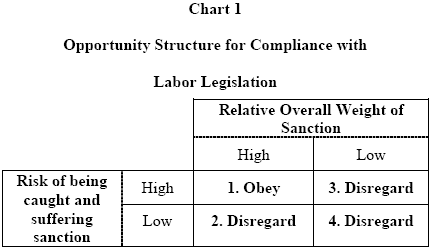
Strictly from the perspective of company management, whether or not to abide by labor legislation is a rational cost-benefit decision made by an individual entrepreneur. If the employer feels labor costs are very high, he may decide to run the risk of not paying them. This decision takes into account an integrated set of constraints. The risk is of course a direct function both of the employer's likelihood of being caught and of the applicable sanction — that is, the economic and sometimes personal costs. The simplified opportunity structure is presented in the chart below. The rows express an employer's risk of being caught breaking the law and of a sanction actually being imposed (high or low risk). Taking into account the costs of noncompliance, the columns reflect the relative overall weight of the penalty that will be imposed (likewise high or low).
]]>
The combination of these possibilities produces four typical responses: 1) the employer obeys the law, because he feels the sanction is heavy enough to warrant avoiding it, and the risk of getting caught and punished is also high enough to be credible (let's say, substantially greater than 50%); 2) the employer does not obey the law because the sanction for disregarding it is high but the chances of getting caught are nevertheless quite low (for instance, well under 50%); 3) the employer opts not to obey the law, because the risk of getting caught is high but he deems the sanction so small that it is more rational to pay it than labor costs; 4) lastly, the employer will once again ignore the law, because both the sanction and the risk of getting caught are low.
In this chart, please note that labor costs are implied in the amount of the sanction. Likewise from the perspective of business management, the weight of a sanction can be high or low compared to the monetary costs of abiding by the law. So the opportunity structure described above only makes sense when labor costs are deemed high enough vis-à-vis a firm's cash flow spreadsheet and projected profits, within a competitive market situation where other businesses face the same opportunity structure.
This schematic chart is helpful above all because it shows that the dominant strategy is noncompliance with legislation. Faced with high enough labor costs, rational entrepreneurs will tend to avoid paying these unless sanctions outweigh them and the likelihood of getting caught and sanctioned is credible enough. Any other combination of factors will encourage noncompliance. Thus, the decisive variable is the effect of the interaction between the cost of disobedience and the likelihood of being caught and punished. The literature on the relation between labor costs and labor market dynamics neglects this key aspect of entrepreneurial strategies, to wit, the effectiveness of the law as derived from an opportunity structure where the likelihood of getting caught is decisive.
What is the cost of breaking labor laws in Brazil? The country's network of legal protection for workers encompasses a variety of complementary mechanisms that can be set in motion at different moments during the employment relationship. A first level of control lies in the employer/employee relationship per se. In this instance, the employee himself is the "inspection agent," who can call the employer on his noncompliance (tardiness, postponement, or withholding of payments due). Examples include failure to pay: double for vacation not granted in timely fashion; double time for work on days of rest; time and a half during allotted breaks; 50% over the value of disputable payments (verbas incontroversas)5when these are not paid at the first hearing of a labor suit; and a fine equivalent to one month's wages for late payment of mandated severance pay (verbas rescisórias). Almost always related to the dismissal of a worker, these payments usually must be made at the time the labor claim is lodged.
We next analyze institutional inspection, which comes under the responsibility of the Labor Ministry, which is the agency empowered to find facts, issue Notices of Infraction, and impose fines on companies in breach of the law. In the chapter that defines the rights and duties of employees and employers, the Brazilian labor code (Consolidação das Leis do Trabalho, or CLT) lays out the penalties applicable in cases of noncompliance. Inspection activities fall within the realm of administrative law and are thus part of public law. The specific amount to be charged is established per worker and then multiplied by the number of irregularly employed staff; the amount goes up if the problem recurs. Chart 2 presents fines imposed for selected aspects of contract relations.
]]>
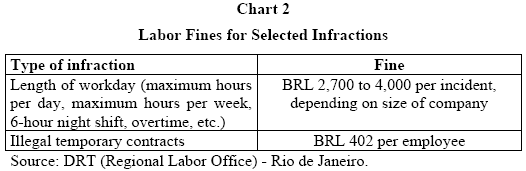
Let us take the workday as an example. A company with up to ten employees that fails to enforce the eight-hour day will be fined BRL 2,700, whether one or more of its employees is affected. If the firm is also in contempt of overtime laws, it will receive another fine in the same amount, and so on. In the case of repeat offenders, fines are doubled. Some activities are classified as criminal violations. This is the case of misrepresentation—for example, when an employee provides false information or an employer makes a fraudulent annotation on the employee's work card6. In legal and union circles, it is commonly accepted that fines are in principle reasonable and high enough to curtail breaches of the law, especially in small and medium enterprises. As stated earlier, the issue is determining how likely it is that the employer will get caught if he decides to ignore the law.
Sanctions for nonobservance of labor legislation can originate from several sources, not just the government. Under new production management models, for instance, in which the quality of the final product depends upon coordinating several firms within a productive chain, contractors can demand that any of their subcontractors abide by quality standards like ISOs, which contain stipulations about decent working conditions and, sometimes, remuneration7. Similarly, businesses operating on the international market have an interest in obtaining quality certification, which may have a positive impact on working conditions. International market standards also encourage firms to abide by the law. Governments have banned products from countries that use child or slave labor. They have accused countries who pay their work force poorly of "social dumping." They have demanded declarations of adherence to labor legislation before allowing companies to take part in public tenders. More and more distributors (supermarkets) are adopting fair trade standards with Third World countries, imposing non-tariff barriers by granting favored-nation status to countries that follow international norms. In some countries, like Brazil, large firms are required by law to have occupational safety and health systems in place, along with accident prevention committees. Unions can also play a decisive role in increasing the costs of noncompliance. When the collective interests of workers are disrespected, Brazil's Public Labor Ministry has the power to conduct administrative inquiries and sign "termos de ajuste de conduta," which are legally binding contracts between signatories. These incentives, however, are almost always aimed at market niches and hard to put in place throughout the economy. They usually apply to large companies, where unions have firm footing and the company's products and services are sold on the international market. The main agent of labor inspection in Brazil is truly the Labor Ministry, through its Regional Labor Offices, which we analyze in the next section.
A BRIEF HISTORICAL OVERVIEW
Just like the Labor Ministry, Brazil's surveillance and labor inspection system went through several phases during its history. Its origin dates to 1930, when the Getúlio Vargas administration created the Ministry of Labor, Industry, and Commerce. Even the Vargas era cannot be seen as a single phase, since all the machinery for inspecting and suppressing illegal labor and for encouraging company compliance was added only bit by bit, as new regulations were gradually created or old ones modified.
The literature reflects something of a consensus. It shows, in the first place, how businesses resisted the adoption of labor legislation gradually put in place by the Vargas administration8. Secondly, it suggests that although entrepreneurs were always resistant, they eventually adhered to regulations, in part because this suited capitalist accumulation (Oliveira, 1972) and in part in response to the governments in power between 1950 and 1964 (including the Vargas administration), which were more open to union demands.
The system of incentives for encouraging the formalization of labor relations was almost always limited to the imposition of fines to punish disobedience, which was reported by workers or, more often, discovered during unannounced visits by Labor Ministry inspectors. Under the Vargas dictatorship, however, employers were offered positive non-monetary incentives if they would agree to corporative order and regulation of the labor market. This meant, for instance, taking part in bipartite mechanisms to design industrial policy, access to public financing, and favored status in public tenders (Diniz and Boschi, 1976)9.
As we know, the system for labor market regulation did not meet its demise along with Vargas. To the contrary, following 1943 enactment of the CLT labor code, Brazil's norms for regulating relations between capital and labor were to prove enduring and to some extent pervasive on the urban labor market. In activities demanding regulated labor –that is, urban industrial employment — it is likely that the rate of formalized labor relations was already quite high in the 1950s, perhaps surpassing 50% (Lobo, 2005).
]]> The ILO's Convention 81, which addresses labor inspection in industry and commerce, was enacted by Legislative Decree in 1956 and promulgated in June 1957 by President Juscelino Kubistchek under Decree no. 41,721. Yet the first systematic regulamentation of this activity dates to 1965, when Presidential Decree no. 55,841 instituted the Labor Inspection Regulations (Regulamento de Inspeção do Trabalho)10. All evidence suggests that these regulations were enacted because Brazil's military governments needed to conform to the conventions and decisions of the ILO, which had published Convention 81 in 1947. It is no coincidence that in 1971, the Garrastazu Médici government denounced the Convention under Presidential Decree no. 68,796, which was revoked only in November 1987.The democratization of the 1980s made room for social agents to question inspection mechanisms. Law 7,347 (1985) authorized the Ministério Público (Public Prosecutor's Office), along with other public and civil bodies, to process "ações civis públicas," which are a kind of class action suit to protect collective and diffuse rights. Brazil's 1988 Constitution strengthened the Ministério Público's role in this arena, in thesis affording worker representatives a more efficacious way of intervening on behalf of their rights. Through the termo de ajuste contract, public and private agents agree that charges be suspended in exchange for a commitment to correct detected irregularities by a certain deadline. If this commitment is not met, the process by which the imposed fines are actually collected is accelerated, since the termo is an enforceable binding contract. The efficacy of this mechanism has yet to be assessed; for now, we have based our work on the fact that inspections have relied on fines as a means of pressure. However, sharply rising post-1979 inflation quickly eroded the real value of the fines stipulated in the CLT, and their monetary correction has always depended upon the changing political moods among players in parliament.
In the 1990s, labor inspection moved back onto center stage. The primary innovation was an attempt to make negotiation the main path to settling issues arising out of labor inspections. In July 1999, the Labor Ministry handed down a Normative Instruction (revised in 2001), which requires Conciliation Tables (Mesas de Entendimento) to be held whenever labor inspections do not lead to immediate redress by an employer. These Tables must be led by inspection heads or by inspection auditors themselves, when delegated this power by inspection heads. Auditors may summon other auditors to their Tables and may also convoke the unions or employer associations that represent the agents involved (although they are not required to do so). The establishment of a Conciliation Table must be reported to the Regional Labor Delegate. The Normative Instruction determines how long the Tables should remain in effect and defines other relevant procedures, but it allows inspection auditors freedom in conducting the work itself as long as the Regional Labor Delegate is kept informed. Although it has not yet been determined how these Tables may impact the system's efficacy, we will see that aggregate statistics on labor inspection have not changed much in recent years, except for those regarding collection of FGTS (Fundo de Garantia do Tempo de Serviço), which is a government-managed individual worker account, accumulated during the period of employment.
How the System is Designed
The current structure of Brazil's Labor Ministry is depicted in the organizational chart below, which shows how labor inspection fits into the Ministry's overall activities. The Office of Labor Inspection (Secretaria de Inspeção do Trabalho, or SIT) is one of four executive offices subordinated directly to the minister's office, making it part of the second echelon of federal government bureaucracy; its head is appointed directly by the minister. This office enjoys great prestige and is politically strategic, since it has branches throughout the country in the form of Regional Labor Offices (Delegacias Regionais do Trabalho, or DRTs). There is one DRT in the Federal District and one in each state (27 in all), divided into 114 branch offices throughout the country; these in turn have 480 service agencies. Answering directly to the minister's office, the DRTs are responsible for enforcing policies designed by the Office of Labor Inspection.
Table 1 shows the evolution of spending by the Labor Ministry in recent years, along with its participation in the General Federal Budget (Orçamento Geral da União) and in the overall ministerial budget in particular11. The Ministry receives a very small slice of the federal budget as a whole, which reached a top figure of 0.33% in 2003 (although data for this year have not been wholly finalized). Data also suggest a rise in the Ministry's share of the budget after 1998, the year in which its percent of total budget spending fell to an all-time low (0.14%). Its share of the general ministerial budget is also quite low in relative terms, having hit a maximum of 1.16% in 2003, or 7% if we include the Workers Fund (Fundo de Amparo ao Trabalhador, or FAT). Note that when the FAT is included, the Ministry's consolidated budget has risen in relative terms, climbing from 5.8% to 7% in nine years.
When analyzing these data, we must remember that social security is part of the overall federal budget and ministerial budget, in itself accounting for nearly half of the total ministerial budget and almost 14% of the federal budget. Excluding social security, the Labor Ministry received around 14% of the ministerial budget in 2003 and ranked fourth in the general budget, behind the ministries of Social Security, Health, and Defense but ahead of the Ministry of Education (the two have traded ranks several times in recent years)12. Something else that should be kept in mind is that while the FAT is managed by a broad board of trustees that comprises members of other ministries as well as representatives of capital and labor, most of its policies are designed directly by the Labor Ministry. The most important of these include the national policy on labor training, one of the flagships of the Fernando Henrique Cardoso administration's employment policy, along with unemployment compensation, which consumes the lion's share of FAT funds (Lemos, 2003).
]]> If we do an itemized analysis of the Labor Ministry's 2003 budget13, we see that 38% of funds were spent on personnel (both active and inactive). Expenditures on core activities, that is, investments themselves, did not reach 2% of the total. Of course, personnel payments constitute a significant portion of core activities, such as labor inspection, which encompasses the work inspectors do at companies. Furthermore, about 32% of layouts on core activities went to the Office of Labor Inspection in 2003. In 1995, the figure had been 22%. In other words, over an eight-year period, between one-fourth to one-third of investment outlays were aimed directly at inspection activities. Labor inspection thus occupies a special place in the Labor Ministry's organizational chart and its expenditures.Brazil's 1988 Constitution states that the federal government is responsible for organizing, maintaining, and conducting labor inspection activities. The current Labor Inspection Regulations are set out in Decree 4,552, from December 2002, which regulated Law 10,593 that same month and year. These recent standards reiterate Brazil's formal commitment to labor inspection, pursuant to ILO Convention 81. The new Labor Inspection Regulations introduced the term "labor inspection auditor" to replace "labor inspector" as the name for the inspection agent. A key novelty of these regulations is that they broaden auditor autonomy by subordinating them directly to the federal authority14. Lastly, the CLT includes specific labor inspection standards that are still in full force, including the value of fines applicable in the case of irregularities.
In other words, even though NGOs, unions, and organizations from civil society can lodge denunciations (Dal Rosso, 1997), labor inspection is a government activity subordinated to the Labor Ministry through its Office of Labor Inspection, as defined under law. The Office is divided into two departments: (i) Department of Labor Inspection, charged with planning and standardizing inspection activities, pursuant to labor legislation; (ii) Department of Occupational Safety and Health, which coordinates and defines parameters for inspections into the observance of occupational safety and health standards.
In accordance with ILO standards, the object of inspection is to promote compliance with legislation. The inspection auditor is entrusted with policing power that authorizes him "to issue notifications; issue construction embargos; close establishments, service sectors, machinery, or equipment; and, if necessary, issue Notices of Infraction, which is the first instrument, prior to levying administrative fines" (Silva, 2002). The inspection auditor proposes such measures to the regional delegate, who makes a decision and, if appropriate, determines the deadline for compliance15.
Inspections are conducted throughout Brazil, in all urban or rural private companies as well as at government-owned companies with employees on their payrolls16. In theory, offices of liberal professionals, philanthropic institutions, recreational associations, and other not-for-profit institutions with staff on payroll are subject to inspection, including households employing domestics. But we will see that this is not viable.
Auditors work within the geographic area covered by the service agency, branch office, or office to which they are assigned. They are given orders as to what firms should be inspected, but they may also undertake inspections at their own initiative. Inspection auditors are assigned to cover various areas within their district17 on a rotating basis, through a public drawing, with the caveat that they cannot visit the same area during two consecutive periods. A candidate for the position of inspection auditor must pass a civil service exam, which is open to individuals holding a college degree. If the candidate wishes to work in occupational safety or health, he or she must have completed some level of graduate studies at an accredited institution, in addition to passing the exam. The Regional Labor Delegate is a political appointee and not necessarily a career inspection auditor. Delegates are responsible for imposing fines, based on the Notices of Infraction issued by inspection auditors18.
Auditors are hired under the statutory Regime Jurídico Único, which means their wages are defined under law and job stability is guaranteed. According to Labor Ministry data, an inspection auditor who is just starting his career may earn as much as USD 2,490 a month, while the figure is USD 3,289 at the highest level in the job hierarchy19. These are approximate figures, since the amount actually received each month depends on individual performance as well as on the performance of the system as a whole. There are two bonuses on top of the regular wage: Fiscal Activity Bonus (Gratificação de Atividade Tributária, or GAT), equal to 30% of the auditor's base salary, or 25% of the highest base salary; and the Bonus for Increased Inspection and Collection (Gratificação de Incremento da Fiscalização e da Arrecadação, or GIFA), equal to 45% of the highest base salary for each position. One-third of the GIFA bonus reflects the auditor's individual performance while two-thirds reflects overall system performance. The federal government's four-year Pluri-annual Plans define the collection goals upon which the bonuses are based. This wage structure has a decisive impact on the efficacy and effectiveness of inspection, as we will see later.
In theory, a labor inspection is triggered by one of two complementary events: a denunciation is lodged or an address is randomly chosen in a raffle. Since Regional Labor Offices do not have many auditors, inspections are in fact determined primarily by denunciations, which are numerous enough to keep the inspection agenda full20. According to one inspection auditor we interviewed21:
]]> If the inspection prompts issuance of a Notice of Infraction, an administrative process is opened. When cited, the employer has ten days to present his defense. At the end of this time, an inspection auditor other than the one who filed the citation will examine the case, which consists of both the citation and the defense, or just the citation if the employer has not presented a defense. An official opinion is drawn up, which judges the charges as having whole, partial, or no legal merit. These documents are referred to the delegate or deputy delegate, who rules on them. If deemed without merit at this first level, the Notice of Infraction must be referred for analysis at a second level; if the case is again determined to lack legal grounds, it is dismissed. If it is found to have whole or partial merit, and the employer pays his fine within ten days after receipt of notification, he will receive a 50% discount over the stipulated amount. If the employer does not agree with the fine, he has ten days to appeal at the second level, but he must still deposit the whole amount in order for his appeal to be examined. If the fine is approved at the second level, this deposit becomes the payment; if the employer's appeal is ratified, money on deposit will be returned. If the employer neither pays the fine nor appeals the amount in question, the debt is recorded as collectible by the federal government, a task that will fall to the Office of the Attorney General of the National Treasury, through the Federal Justice. The entire administrative process should last sixty days at most, according to a 2002 decision under Brazil's Labor Inspection Regulations."Right now, the vast majority of inspections are the result of denunciations. The main denouncers are individual workers, but priority is usually given to denunciations by unions, the Ministério Público, and the police (in the case of work accidents). Although the vast majority of inspection activities are prompted by denunciations, it's impossible to respond to them all; we don't have enough staff. That's why, among denunciations made by individuals, we also usually place priority on those who identify themselves. Where possible, we can also organize a program to respond collectively to denunciations about the same company or productive sector" (interview conducted in August 2004).
According to the inspection auditors we interviewed, only small and medium size businesses generally pay their fines when a case is opened, which is a way of taking advantage of the 50% discount. Companies with in-house counsel usually appeal decisions. Appeals are first addressed at the administrative level. Once all appeals have run their course and the employer has refused to make payment, collection is handed over to the Office of the Attorney General of the National Treasury. It should be noted that this office is involved in collecting debts of a much greater amount than those in question here. According to Regional Labor Office staff, this means there is not much incentive to collect the fines and odds are high that the debt will be allowed to lapse. It is also worth remembering that once the administrative case has reached its end, the employer can appeal to the courts, where the whole process can be drawn out interminably.
The system is thus designed in consonance with ILO recommendations that mechanisms be in place to guarantee inspectors technical independence and create conditions in which they can fulfill their duties. Shortcomings in the enforcement of penalties notwithstanding, Brazil is much better equipped than some of its Latin American neighbors, such as Argentina and Mexico. In Mexico, inspection has two jurisdictions, one national and the other within the Federal District; the ensuing disputes over who has authority undermines the system's efficiency and efficacy. Even for higher-level staff like physicians and engineers, salaries top out at USD 750 for those working within the national jurisdiction and at USD 550 in the Federal District. There are only three computers for the inspectors, who also are not provided with vehicles for traveling to work sites. Furthermore, there are very few inspectors and the number has been falling sharply in recent years. While there were 388 within the federal jurisdiction in 1994, the figure dropped to 181 in 200422. In Argentina, inspectors are not required to have a college education; on average, they have completed 11 years of schooling (i.e., high school). Moreover, there is no career track within the civil service system and not all of the agents are protected by contracts offering job stability, contrary to ILO recommendations (Palomino and Senén, 2005).
INSPECTION OUTCOMES
Table 2 presents consolidated data on labor inspection in Brazil. The first point worth highlighting is the steep drop in the quantity of auditors between 1990 and 1995, a period when inspectors numbered fewest, that is, a little under 2,000. In 1996, the addition of 800 new inspectors pushed the figure up substantially, but it has been trending downward since. The second point worth noting is that variations in the contingent of inspectors do not seem to have any relation to the number of companies visited or workers reached. On the contrary, the year in which auditors numbered fewest (1995) was also the year in which the most companies were inspected, that is, over 420,000, with an average of 215 businesses per auditor. If we were to rely on these data (an issue we will discuss shortly), everything would actually indicate that the system became more efficient when there were fewer inspectors. This leads us to our third observation: inspections have gained a new look in recent years, reaching more workers at fewer companies, which means the average size of visited companies has grown, starting roughly in 1997. Fewer businesses being visited by fewer inspectors but encompassing more workers every year translates precisely into greater inspection efficiency, along with greater effectiveness, since more workers are reached.
A fourth significant point has to do with the efficacy of inspection activities, which is reflected in the number of Notices of Infraction, the number of workers registered as a result of an inspection, and the rate of company compliance with labor legislation. Once again, if available data are to be taken as reliable, between 16% and 30% of the companies visited were cited each year, which means that no fewer than 250,000 workers were registered a year as a consequence of inspection activities—that is, their employment relationships were formalized as of 1996 (in regard to this particular item, no data are available for prior years). Although not discernible from the table, 2001 was the year when inspection encompassed the highest rate of workers (2.92%), with an average of 1.17% for the period. The regularization rate — that is, the proportion of irregularities corrected following each inspection activity — has also risen significantly over these years, from 65% in 1996 to 84% in 2003. In short, these data would lead us to believe that the system seems headed towards a more streamlined, efficacious design when it comes to the regularization of labor relations.
We must read Table 2 cautiously, however. The system's apparent efficiency is belied by the paradoxical circumstance that only 1.17% of employment relationships were corrected through inspection activities, whereas 21% of visited companies were cited during the period in question (1990-2003). While the citation rate is very high (1/5 of all firms), the rate for regularizing employment relationships is very low (1.17% of the workers reached). This may be due to one of three things. First, it may be that not all workers at a given enterprise are employed irregularly, so that even if many workers are encompassed, only some will need to have their situations regularized. Second, it may be that irregular situations and citations occur mainly in smaller companies, which means fewer people are encompassed despite the high number of companies cited. Third, it may mean that labor inspection is focused primarily on concerns other than regularization of employment relationships, such as collection of FGTS funds or occupational safety and health. Taken as a whole, these three alternatives reflect an inspection system that restricts itself to the formal labor market. This argument becomes clearer if we simply read the data backwards. Let us assume that inspection is efficacious, that is, that any irregular employment relationship is always corrected as a result of inspection. In this case, if the relationships of only 1.17% of the workers encompassed were regularized, then the labor relationships of the remaining 98.83% were already regular. Throughout the 1990s, individuals working without a signed work card accounted for 35% to 45% of the wage labor market in Brazil. The inevitable conclusion is that the inspection system is targeting the wrong businesses, at least when it comes to this specific aspect of inspection, that is, the regularization of the employment relationship.
To put it in other terms, the market for wage earners without a signed work card stood somewhere between 10 and 15 million in the 1990s, according to data from the PNAD, an annual national household survey conducted by the Brazilian census bureau (Instituto Nacional de Geografia e Estatística). Since labor inspection encompassed twice this many, and since no more than 1.17% on average were found to be employed irregularly, we are led to the conclusion that inspections did not affect those 15 million wage earners who do not have signed work cards but the over 25 million who do, producing the extremely low regularization rate for the workers reached.
Moreover, it is likely that Labor Ministry data overestimate the universe covered as well as the efficacy rate of inspection, because the number of workers reached seems very high vis-à-vis the country's formal labor market, which ranged from 20 to 29 million between 1990 and 2003, according to Labor Ministry data. Since inspection seems to target large enterprises23, its average effectiveness—that is, the number of workers reached divided by the number of formal workers—would at times exceed 80% of the formal labor market24, which seems completely absurd given how everyone complains about the system's low efficacy and coverage.
]]> In the second place, the salary and bonus system for inspectors is based on how many workers are reached, on how many work cards are registered, and on the volume of FGTS funds collected. This system of targets encourages inspectors to overestimate both the efficacy of their work as well as their statistics. In the words of an inspection auditor from São Carlos:"In terms of productivity, a small company means very little to an inspector. In other words, the smaller the number of employees at a company, the smaller the ‘points' assigned by our evaluation system (upon which receipt of our overall salary depends). So if we inspect small companies, we have to work faster and faster. Since this is very hard, it's easier to issue a Notice of Infraction and go away without changing the company's situation (or leaving it worse). It's good to remember that the targets we must meet also contribute to this; we have to inspect a lot and fast. Whether or not detected problems are resolved doesn't seem to matter much" (interview conducted in August 2004).
In other words, the inspector's salary depends on performance statistics. The system thus offers incentives for focusing on large businesses. Furthermore, even when small businesses are inspected, issuance of a Notice of Infraction is not always followed by measures meant to correct the irregular situation. Lastly, as an inspection auditor in Rio de Janeiro stated, when more than one visit is made to a company under inspection, very often each trip is counted separately, thereby inflating statistics.
It should be left clear that the inspection targets mentioned by the auditor from São Carlos referred to FGTS collection. According to a 2004 Labor Ministry document, since 1996 collection goals have been defined by the Treasury Ministry as part of federal government targets and fiscal efforts. The inspection auditor from Rio de Janeiro cited earlier says that ever since that time, FGTS collection has been the main focus of labor inspection in Brazil.
Table 3 in fact shows that from 1997 on, at least 3% of total FGTS collection has been a consequence of inspections; in 2002, it came to nearly BRL 1 billion, or 4.3% of the overall total. This represented the equivalent of 60% of the Labor Ministry's budget for 2003 (BRL 1.6 billion). The table also shows that the efficiency of collection has been improving, with the average amount collected per Notice jumping from BRL 24,000 in 1996 to almost BRL 63,000 in 2002.
Considered in conjunction with the TREF shown in the previous table, these data strengthen the argument that the system is targeting ever bigger companies because of the incentives offered to auditors. The auditor from São Carlos said:
"Large companies are much more organized, and their response to the Labor Ministry is generally professional. In terms of documents, the company almost always has the legally required documents and programs in place already, and if a disagreement arises or even if some irregularity is noted during inspection, there will be dialog with the company; in other words, even if we decide to issue a Notice of Infraction, we know we'll be able to carry inspection through to resolution of the problem, which usually occurs by the deadlines set. And even if large investments are necessary—like when reforms, construction, or the hiring of new personnel is required—with a large company it's also a lot easier to turn to other resources like a Conciliation Table, encouraging agreements with the representatives of a given occupation, and so on."
As we see, inspecting larger companies is also more efficacious, for several correlated reasons: these firms are "more organized," they respond to the Labor Ministry in a "professional" way, they have the financial wherewithal to comply with demands and any citations (boosting inspector productivity), they do so "by the deadlines," etc. Everything conspires to place priority on inspecting these businesses over others, and this must be reflected in the improved rates of regularization noted in recent years.
]]> The focus on larger companies is also a consequence of the Labor Ministry's use of records biased towards formally established firms. The registry used for inspection purposes is drawn from the RAIS — Relação Anual de Informações Sociais (Annual List of Social Information) — with supplemental information derived from the Census Bureau's economic surveys and other sources, essentially covering the formal labor market. When contact with informal businesses occurs, it is primarily the result of denunciations. However, it would seem reasonable to suspect that the more precarious a labor market and the higher the joblessness rate, the lower the incentives for workers to denounce poor working conditions. A clear example of this constraint is illustrated by Rio de Janeiro's civil construction industry, which we analyze in the next section.
LABOR INSPECTION IN RIO DE JANEIRO'S CIVIL CONSTRUCTION INDUSTRY
What are the chances that a company will be caught breaking the law and then receive a sanction? In finding an answer to this question, the civil construction industry is a strategic sector. This type of work has traditionally been precarious, with high rates of illegality and self-employment. Furthermore, the industry has one of the highest labor accident rates in the country thanks to risky, hazardous working conditions25, routinely the object of inspection. We will assess two main features of the situation: the government's inspection power and the action taken by labor unions and employers as inspection agents or intermediaries. As central issues, we will address hiring and dismissal costs, along with recognition of the employment relationship in the form of a signed work card.
The Chances of Getting Caught
In Rio de Janeiro's civil construction industry, a labor inspection generally is motivated by one of two basic sets of circumstances: first, the commencement of works, when so-called condominiums26 must furnish the Labor Ministry, the union (pursuant to the collective convention), and City Hall with information on how long the job will take, what firms will participate in the condominium, the workers employed, etc.; second, if workers call a special phone number at the union and lodge a denunciation, which may be anonymous. The union receives 80 to 100 denunciations a month. Eight permanent teams of inspectors (or as many as fifteen, if all heads go out on inspections) work every day of the week, visiting jobs according to a previously defined schedule based on the screening and ranking of denunciations. There are now around 8,000 construction sites registered or known of in Rio de Janeiro. While it is true that it is hard to circumvent the legal obligation of formally registering a project with City Hall and the union in the case of larger, more visible jobs, a small building project, or reforms especially, cannot always be identified and therefore inspected.
Let us examine how the first mechanism works: visits at the start-up of registered jobs. An inspection director from the union told us that their visits do not occur on a surprise basis:
"We follow a regulated procedure. The big companies advise us at the beginning and end of the job; they file with the union and the Labor Ministry. Then, when a job is about to begin, we send out an ‘Orientational Technical Visit' letter to check whether anything is pending at that site and to reach those workers with the union board's work. We take our checklist, see what's pending, and give them five days to straighten out what needs to be straightened out. We go back, was it taken care of? Great. It wasn't? Then we send an official letter asking them to come here to the union for a Conciliation Table, comprising the union's director of that area and a representative of the team that visited the site with the notification in hand. And we try to bring the company's conduct in line with legislation and the collective labor agreement, while doing our best to avoid taking the matter to the Labor Court [Justiça do Trabalho]. We exhaust all possibilities for a negotiated settlement, because, in fact, we'd like to keep a partnership relationship going."
In this case, "regulated" procedure means three basic things: first, that the employer association has agreed with these inspection rules; second, that the companies are informed beforehand of the inspection; third, that there is an inventory of items to be inspected, which is of prior knowledge to the business — what the unionist called a checklist. This inventory is also a way of giving the company time to adapt to the rules (five days). If it fails to do so, a series of other negotiating procedures are initiated, beginning with a Conciliation Table at the labor union, where efforts are made to reach an agreement whereby the company will abide by the law and the collective agreement. Should this still fail to achieve the desired end, taking the matter to Labor Court is the last (and undesirable) resort.
]]> The key word for labor union leaders and the heads of employer associations is inarguably "partnership." This concept comes into play as part of the second mechanism that prompts inspections. In the words of the same unionist:"The other form of inspection is when a denunciation is made by a worker. Then we get the site's address, phone number — usually the companies are in our records — and we send an official ‘Orientational Technical Visit' letter. We let them know we're going to make a visit to provide orientation on occupational safety. We don't surprise them by just showing up. Because that wouldn't be in anyone's interest, right? What we want is that the workers' rights are respected, right? So, when I get there, I'll certainly get a look at the problem; whatever the worker denounced will show up. Now, we never say we went there because of some worker's denunciation, so we don't expose or jeopardize the worker" (interview conducted in July 2004).
Whether prompted by denunciations or an automatic part of job start-up, during a large share of inspections one member of the visiting team is from the employer association, known by the acronym SindusCon (for Sindicato da Indústria da Construção Civil). According to a SindusCon member we interviewed, this partnership is advantageous to both sides, because it is in SindusCon's interest to meet the requirements of occupational safety standards and thus reduce work accidents27. An agent of the Regional Labor Office also participates, though not always. According to unionists, this makes the visits more efficacious. The regional delegate has the power to shut down the job on the spot, if, as one leader said, there is "a major calamity, and the company doesn't want to fix it right then and there." Furthermore, since the delegate is the Labor Ministry's executive agent par excellence, his presence lends inspection teams more weight. Together with the presence of representatives of workers and bosses, his being there tends to hinder rather unorthodox or openly corrupt practices on the part of any of the three agents (at least in theory).
Since these words are from the discourse of leaders, we of course cannot take them at face value. The union does not maintain a reliable record of its visits or of resultant compliance with occupational safety standards and labor rights, data essential to accurately measuring improvements in inspection efficacy or effectiveness over time. In 2003, according to one leader, more than 300 new work cards were registered between March and June as a consequence of inspections, but there is no way of knowing whether this figure is high or low in historical terms. It certainly seems low given that the estimated number of informal workers surpassed 100,000 in 200228, or even given the 32,000 wage workers who have no signed work card. At the pace of inspections in 2003, it would take over 25 years to register all current wage earners with unsigned work cards, without even taking into account the new, non-registered employment relationships born each day in the civil construction industry. And nothing guarantees that an employment relationship registered today will still be so tomorrow.
Within the civil construction industry, a condominium's principal construction firm is almost never the largest employer, and employees are sometimes distributed across dozens of subcontractors. Inspection efficacy therefore depends upon the union's ability to reach the fringes of this web of outsourcing. With this in mind, unions adopt the policy of not negotiating with subcontractors but rather with the condominium's main firm. It is important that this procedure is part of the collection labor convention; in other words, it is up to the main company to ensure that their subcontractors abide by legislation and the collective agreement. This underscores what one business leader said and a judge seconded: consolidated jurisprudence — that is, that the main company has nondiscretionary responsibility for the others — ultimately forces it to exercise some form of oversight of subcontractors. Obviously, this is not always possible.
According to one inspection director, the chief obstacle to inspection work for both the union and inspection auditors is actually the scale of a business, that is, low capitalization. This is an efficacious economic obstacle because a heavy citation may make a company's operations unviable and lead to job cuts. Here we have yet another reason — on top of the institutional and legal incentives examined earlier — for inspections to take place chiefly at medium or large businesses. The choice does have its rationale. According to 2000 census data for the city of Rio de Janeiro, 64% of the slightly over 3,000 people who declared themselves employers headed businesses employing a maximum of 10. Based on Annual List of Social Information (RAIS) data for 2002 — which measure only those with jobs registered on work cards — firms with up to 10 employees accounted for 70% of all 3,156 formally registered companies; the figure rises to 82% if we include firms with up to 19 employees. However, the proportion of workers employed at companies with up to 19 employees was only 20.6%, according to the same RAIS. On the other hand, companies with 50 or more employees accounted for only 33.1% of the total but employed 61.3% of the labor force holding signed work cards. The odds of the union or the Labor Ministry conducting an inspection at a given company are greater, the greater the company's footing within the formal market — that is, the easier it is to find (when it has a telephone or address that can be traced somehow, in either the union or Census Bureau records). Consequently, we can assume it likely the union and the Labor Ministry are covering fewer than one-third of the firms that are really out there (considering both the formal and informal sectors), while nearly two-thirds of the employed labor forced represents a potential realm of action.
We can thus state that the chances of being caught for breaking the law are not zero in Rio de Janeiro's civil construction industry, nor are they very high, except in the case of large projects, large work sites, or projects in highly visible locations, for instance, when downtown buildings undergo reform. On a scale of 0 to 100, the chance of a large work site being inspected, after having been denounced, is 100. These odds fall as the size and social visibility of a project decrease. On the other hand, even if a denunciation has been lodged, the odds that the union or Regional Labor Office will inspect a small project undertaken by a small contractor (e.g., a reform, a country home, or even a home in the city) are nil, or nearly that. So the potential for an inspection is a direct function of the size of the job and the firms involved in it, and also of whether a denunciation is lodged. The key question becomes: What are the real chances that breaching a right will prompt a denunciation?
These odds are not randomly distributed across the working population. Some workers are more prone than others to come forward with a denunciation. This is a direct function of their knowledge of worker rights and an inverse function of their fear that they may end up losing their job, with workers weighing in the cost of being fired. When joblessness is high, even if a worker is only somewhat leery about stability, this may be enough to dissuade him from lodging a complaint, no matter how clear he is about worker rights. When the market is really bad, a worker's fear of losing his job may outweigh his confidence that his denunciation will remain anonymous (for example, if he uses the union's disque-denúncia — dial-a-denunciation — line).
The Chances of Being Punished
]]> In a labor dispute ensuing from a breach of rights, there are three main phases to consider, each associated with one specific institution: 1) The regulation of standards and inspection of company compliance, under the responsibility of the Labor Ministry; inspection itself encourages a business to conform to standards. 2) Defiance of or reluctance to abide by standards, which prompts the opening of a negotiation process at the union or Regional Labor Office, or at both; this process may be conducted by the Office or by the Public Labor Ministry, pursuant to its power to open civil inquiries and establish the legally binding contracts known as termos de ajuste de conduta. 3) If these instruments do not settle the issue, the parties in dispute will move to the judicial branch, that is, the Labor Court.The presence of the Regional Labor Delegate or another professional from the Office facilitates resolution via the first path, but understaffed Offices cannot respond to every call from the civil construction industry. So options 2 and 3 are almost always within the realm of possibility whenever an inspection takes place. According to leaders of both the union and the employer association, everyone's prime goal is to reach an understanding; this generally happens at Conciliation Tables (in the case of occupational safety fraud) or through the Civil Construction Industry's Initial Conciliation Commission (Comissão de Conciliação Prévia da Construção Civil, or CCP-CC). As in other cases, the CCP-CC is a mechanism that has come to serve as the first real setting for conflict resolution revolving around the existence of contracts and mainly contract rescission.
In the case of occupational safety and health issues, solutions are either found immediately, at the workplace, or settled at a Conciliation Table. The third option is almost always inefficacious. A union leader from the civil construction industry stated adamantly that the Labor Court and Public Labor Ministry are very slow, when you consider that a construction project may take from three months to a year, rarely extending for three years. In his words, "By the time the courts decide to take action, the job is over, you know?" Nevertheless, the same leader said companies usually respect occupational safety regulations because "nobody wants to get a bad name in the business, to be branded as working unsafely." Moreover, a non-negligible portion of formally established enterprises have ISO certification, whose parameters include occupational safety and benchmarking for accidents. We saw earlier that one director of the employer association shares the same viewpoint. And the labor leader added: "A big company that has certification will not accept subcontractors on its job if they don't follow the standards."
The problem of course are the large businesses that don't have certification and the small and medium-sized ones not inspected by the union because they operate on the informal market. In any case, both union and employer association leaders affirm that, thanks to the partnership they have developed in relation to this and other matters, occupational safety in Rio de Janeiro's civil construction industry has greatly improved in recent years — so much that by July of 2004 only one fatal accident had been reported for the year.
Unfortunately, it was not possible to access consolidated data on the evolution of work accidents in the civil construction industry in the city of Rio so that we could verify the statements made during interviews29. What is certain is that official data—which are always underestimated, in proportion to the degree of informal relations within a given economic sector30 — indicate that slightly more than 1,700 work accidents occurred in the civil construction industry in the state of Rio de Janeiro in 2000 (half of the state's population resides in the capital). Historically, this sector has made the biggest contribution to work accident statistics in the state as well as to the under-representation of these accidents in statistics.
When it comes to labor contract rights and especially contract rescission, the main mechanism for addressing disputes is the Initial Conciliation Commission. Its actions have a substantial impact on the costs of obeying or disobeying legislation, especially when the question is dismissal. These Conciliation Commissions comprise representatives of labor unions and employer associations. Under law, before any complaints are filed with the Labor Court, they must first go through a commission, if one has been set up within the company or union in the city in question. Like others, the civil construction industry's commission was soon transformed into a kind of labor court with no presiding judge to rule on cases. The following excerpt from an interview with a union leader who participates in the commission is enlightening in many ways:
"We have our Initial Conciliation Commission, where we discuss these issues too, like FGTS. Because a company sometimes wants to [make severance payments] but just isn't able to. So we advise the workers to enter into an agreement. This can be during dismissal or even while their contract is still in effect. […] Today these commissions have taken pressure off the Labor Court. Most of the companies that used to try to settle these agreements in court now do so through the commission. We've established a norm at the commission that no worker can receive less than 60% of what he has a right to. No agreement can be made for less than 60%. A norm defined by the union. Now if a worker wants to enter into a contract rescission, he's taking on that risk. He knows what his needs are; it's his money. If he says ‘no, I won't take less', what can you do? He worked for it; it's his right, isn't that true? So we show him the legal options so he can go to court and get it. […] All small entrepreneurs have the same standardized discourse, saying that the labor courts are paternalistic. Well, the labor courts sometimes sentence the employer to pay in twelve installments, with the first installment two months from now! With a father like that, I don't need an enemy! Our outlook is to let the negotiations take place so the issue doesn't go to court, so the workers don't end up losing out on their rights down the line. This is why the commissions were created, and the principle that 60% is assured first thing. […] We came up with this figure based on a calculation of what the worker earns. Because his indemnification can't be less than the wage he was earning. He has a right either to that level or more than that. That's the intention. […] Most of the time, it ends up at 60%. That's become the rule now; no company grants less than this" (interview conducted in June 2004).
It is worth examining certain points brought up by this union leader, starting with the fact that workers are ‘advised to enter into agreements', that is, to settle the matter through the commission and not the Labor Court. Of course, if a worker still wants to go to court, he has the right to do so, but the leader's words leave no doubt that the union does not want to see this solution. The worker will be on his own if he opts to resort to the courts. Second, it is clear that companies have also preferred to settle severance pay disputes through the commission and not the Labor Court. This preference undoubtedly has to do with the union's position that no agreement can be reached in which the worker receives less than 60% of the amount due. What is most striking is that the union leader presents this value as being in the worker's interest, since he would otherwise receive less through the Labor Court or perhaps receive it under disadvantageous terms, for example, in "twelve monthly installments." The Labor Court is painted as a place where the worker loses his rights, or has them granted under disadvantageous conditions.
This is undoubtedly an important incentive for employers not to abide by legislation regarding dismissals, since they know their ‘punishment' will be a Conciliation Table where agents lacking any enforcement power will have no problem accepting an agreement under which the bosses pay 60% of the value actually due. So it is clear the union's decision to opt for an out-of-court settlement rather than penalizing businesses that behave illegally has a bearing on the cost of breaking the law. There are no outside incentives or injunctions that would compel a firm to formalize contracts with their workers. If there really are any, they are internal ones — that is, the main company has an ISO or other qualification, and therefore forces its subcontractors to obey the law.
]]>CONCLUSION
Labor inspection in Brazil follows the standards defined by the ILO in 1947. Today, its supporting institutions are a little better equipped than ten or fifteen years ago. Information technology is used to handle and produce information, bureaucratic channels flow more smoothly, and labor inspectors receive regular training. There is a nationwide inspection system in place, with 27 Regional Labor Offices in all and a little over two thousand inspection auditors.
In formal terms, this institutional design would seem suitable for ensuring effective, efficacious, and efficient labor inspection: effective because it seems to reach a great number of workers as a proportion of the active labor force; efficacious because it improves labor relations and corrects illegal situations, like the non-collection of FGTS or non-signature of work cards; and efficient because it optimizes its resources, that is, the system spends about one-fourth of the Labor Ministry's investment resources, while its structure is more robust and its staff more numerous. Furthermore, inspection oversight procedures also seem well designed to deter fraud and diminish corruption. Similarly, defining stricter deadlines on the administrative processing of fines, for instance — which should take sixty days at most — is intended to discourage enterprises from finding ways to put off payment. In order to confront the legal processes that follow administrative ones, a firm must be able to rely on sound, dependable in-house counsel. This encourages small and medium businesses to abide by the law when inspected. Consequently, the system produces quite optimistic statistics on the results of labor inspection.
Here is where the trouble begins. In the first place, if we take these statistics at face value, labor inspections reach 80% or more of Brazil's formal labor market every year, or close to 50% of wage earners as a whole (i.e., workers with a signed card as well as those without). However, we have seen that a very small proportion of the potential target population actually receives the benefit of inspections. All indications are that the selective incentives offered by the system induce inspectors to cherry-pick businesses that in fact do not need to be inspected as far as proper registration of employment relationships because they are already abiding by the law. Thus, while inspection perhaps discourages regularly inspected entrepreneurs from sliding into illegal behavior in other areas as well, it does not seem capable of drawing into the system new agents whose operations are completely illegal and ergo invisible to the eyes of the Labor Ministry, whose records are almost entirely based on information provided by companies themselves on the Annual List of Social Information (RAIS).
The system's second limitation is its lack of material resources, something the impressive inspection statistics actually hide. Each year, the 2,000 some inspectors can choose from among two to three million formally established firms with at least one employee, once again according to RAIS data. This figures out to an average of 1,000 to 1,500 companies that can potentially be visited per auditor per year, or an average of five to seven companies per business day. The number of inspectors is obviously low, particularly because these calculations do not even include informal businesses. Accordingly, the Regional Labor Offices are challenged to respond to denunciations that cannot be covered by available staff. The system is not equipped to exercise one of its most essential prerogatives: surprise visits to businesses of any type or size. Instead, it depends upon the extent to which individual workers, or their representatives, are willing to or interested in denouncing illegal working conditions.
The answer to the question posed by this paper — What are the chances that an entrepreneur engaging in illegal practices will be caught and, if caught, punished or compelled to fix the detected breaches? — is that a gradation exists between two well-defined poles. At one end are the informal companies of any size that have no business registration and do not formalize labor relationships; in their case, the chances of being inspected are quite slim and depend solely on worker denunciation. Since the likelihood that workers will lodge such a denunciation is inversely proportionate to their fear of unemployment, the odds of their doing so decline proportionately in a more precarious labor market and when joblessness rates are high. This constraint was made quite apparent in our analysis of Rio de Janeiro's civil construction industry. At this end of the spectrum, we also find self-employed workers and liberal professionals, the latter generally employing one or two administrative helpers. In 2003, wage earners without signed work cards and self-employed workers (including liberal professionals) accounted for 45.8% of the economically active population, according to PNAD data. This portion of the population will not be reached by inspection, except by pure chance.
At the other extreme we find formally registered firms whose chances of being caught when engaging in illegal working relationships is directly proportional to the company's size. Small companies, with up to 20 employees, are rarely inspected because the system's selective incentives encourage inspection of larger companies as understaffed auditors are forced to limit how many firms they inspect. Our data and interviews suggest that the ‘magic' number of employees that ranks a business among those that may be inspected is fifty. Therefore, if a firm has fifty or more employees and is denounced for illegal practices, the odds are quite high that it will be inspected.
This is where the system's third important limitation comes in: the low rate of regularized employment relationships may reflect the fact that large enterprises have the material means to postpone solution of any irregularity well beyond the sixty-day legal limit for administrative processes. If an appeal is made, time limits are virtually suspended, because Brazilian courts are slow and a sentence can take years. This is why the labor inspectors we interviewed repeatedly affirmed that it is the small and medium businesses that end up paying fines or correcting improper labor relations when inspected. For them, the cost of taking legal action in order to postpone things can be too high. This may explain why 21% of inspected companies were cited whereas the rate of correction of irregular employment situations was only 1.17%. Large enterprises are either ‘more legal' or manage to avoid contractual obligations through judicial action.
Between these two poles lie most companies, though not the greatest proportion of employed workers. It is highly unlikely these firms will be inspected. They are formal companies with a substantial number of workers. Even if denounced, they will take advantage of loopholes in the inspection system to drag settlement out until the last minute legally possible. Here is a good place to point out the observation of one inspection auditor: that political influence plays a role in the appointment of Regional Labor Delegates—and these are the people who impose the fines. In any case, the odds that a company will be inspected are still directly proportional to the odds that its workers will denounce irregularities.
]]> In recent years, the federal government has sponsored public educational campaigns and advertised telephone numbers where anonymous denunciations can be made. The efficacy of these instruments can be measured not so much by how they curb the routine violation of labor rights but by their role in more dramatic situations, like the "reduction to a condition analogous to slavery" and the use of child labor. Three labor inspectors were recently murdered in the state of Minas Gerais during the exercise of their duties, apparently at the orders of a rancher who was using forced labor on his ranches and who had ties to a powerful local politician. Denunciations sprang up in Pará, Bahia, Pernambuco, Rio Grande do Sul, São Paulo, and other states, and it would appear that efforts to combat slave labor (used especially when a debt is owed) have been efficacious. The same can be said about child labor, which is being combated not only through inspection but also through minimum wage policies, almost all linked to school registration.Returning specifically to the question posed by this paper, labor inspection seems to be aimed at companies that are less likely to engage in illegal activities; the outcome is high effectiveness (many workers reached through inspection) but extremely low relative efficacy (the number of employment relationships that are regularized as a result of inspection activities). Still, the fines system and collection process have proven coercive enough to force smaller businesses to regularize their situation and to pay their fines. As always, however, larger companies can count on the legal system's inefficiency to find a way around legal compliance.
NOTES
1. A fine critical review of the literature on the impact of labor legislation in OECD labor markets can be found in Bertola, Boeri, and Cazes (1999), who argue that available evidence falls short of supporting the idea that more flexible labor markets are more efficient or more equitable. An analysis of data from several Third World countries leads Squire and Suthiwart-Narueput (1997) to the same conclusion. A fine study on how Brazil 's 1988 Constitution has failed to affect labor market dynamics in Brazil can be found in Barros et al. (1999). For opposing arguments, see Marques and Pagés (1998), Scarpetta (1998), and Heckman and Pagés (2000).
2. We refer to the growing precariousness of jobs and the ensuing impact in terms of social integration; wage differences by age, gender, or ethnicity; the subsistence living of groups that are highly vulnerable to unemployment, like young people; and increasing poverty among wage earners, all of which has been well documented in several research studies, such as Cardoso (2000), Cardoso Jr. (2000), Tokman and Martínez (1999), Egger (1999a, 1999b), Berry and Mendez (1999), and Guimarães (2002).
3. An exception to this is Squire and Suthiwart-Narueput (1997). There has been a longstanding debate in Brazil about labor legislation's actual effectiveness in daily work relations although not from the angle mentioned, that is, labor market efficiency. An excellent overview of the discussion on the true effectiveness of Brazil 's labor code (Consolidação das Leis do Trabalho) down through history can be found in French (2001:16-23; 35-45).
4. When this paper was written, Convention 81 had been ratified by 133 countries, Armenia being the latest on the list (December 2004).
5. Examples of indisputable payments include wages, the year-end bonus known as the "13º salário," vacation pay, and FGTS, in the case of formalized employment relationships; examples of disputable payments include: overtime, hazard pay, pay for working under unhealthy conditions, isonomia salarial (equal pay across public and private sectors), and other cases in which a labor suit requires that the worker prove his allegations.
6. Articles 197-203 of Brazil 's Penal Code spell out "crimes against labor organization." These have little bearing on the present study, given that the "Special Part of the Penal Code is a mirror image of Italy's Rocco Code, of recognized fascist inspiration," according to Nogueira (2000).
]]> 7. It is true that the opposite is often the case and actually typical of certain production chains, such as chemicals (Mello e Silva and Rizek, 1997), textiles (Costa, 2002), civil construction, and the manufacture of large home appliances like stoves and refrigerators (Gitahy, 1997). In the automotive industry, because of the serious accidents caused by poor quality control at subcontracted companies, the transfer of technological and quality standards has been improving labor relations on the far edges of the productive chain (Carvalho, 2001; Marx, Salerno , and Zilbovicius, 2003); however, this still has not been enough to force these subcontractors to abide by the law.8. Among others, see Werneck Vianna (1999), Tavares de Almeida (1978), Gomes (1988), Rodrigues (1977), Moraes Filho (1979), and French (2001).
9. Down through Brazil 's history, the inefficiency of its inspection system has been criticized countless times. In his analysis, French (2001) cites the small contingent of labor inspectors, their corruption, unequipped Regional Labor Offices, and the negative impact of inflation on the value of fines, to name just a few of the system's shortcomings. According to some authors, the same problems hold true even today (e.g., Cappellin, 2005).
10. Until then, labor inspection was regulated solely by the CLT and by normative instructions and decrees handed down by the Ministry of Labor and Social Security (Ministério do Trabalho e Previdência Social).
11. The data in this table reflect the actual budget expenditures for each year, corrected for total average annual inflation (deflator based on the National Consumer Price Index). Expenditures had been closed through September 2003 at the time these data were collected from the Chamber of Deputies web site.
12. The Labor Ministry's increased participation in the 2003 General Federal Budget was a bit artificial because of Supplementary Law No. 110 (2001), which mandated that the government indemnify holders of FGTS accounts for losses incurred due to earlier economic plans. These monies (BRL 1.7 billion) were sourced from the Workers Fund (FAT).
13. These data were taken from the federal budget, accessible at: http://www.camara.gov.br/internet/orcament/principal.
14. Decree 4,552/02 – Art. 3: "Labor inspection auditors are technically subordinate to the appropriate national authority in matters of labor inspection."
15. CLT – Decree law 5,452/43: Art. 161: "The Regional Labor Delegate, in view of a technical affidavit from the competent service demonstrating serious, imminent risk to the worker, may close an establishment, service sector, machinery, or equipment, or issue a construction embargo, indicating in his decision, made in timely fashion as demanded by the incident, the measures that shall be adopted in order to prevent labor mishaps."
16. When the employer is a government agency (i.e., the federal, state, or municipal government, "autarky," or public foundation), the inspection auditor is responsible if there are employees on staff—in other words, when there is a labor contract governed by the same legislation that governs the work covered in private contracts. Part government-part private companies and state-owned companies are subject to the private labor hiring regime and therefore to inspection.
]]> 17. Labor Inspection Regulations - Decree 4,552/02 – Art. 4: "For the purposes of inspection, the territory within each federative unit shall be divided into districts, and corresponding headquarters assigned." Regional Labor Offices (one per state) coincide with the districts mentioned in the article.18. Imposing fines is a non-discretionary act (ato vinculado), i.e., the delegate has the power and duty to impose a fine but does not have autonomy to block the course of the administrative process that is automatically opened by the filing of a Notice of Infraction. However, the Labor Ministry has the power to withdraw the process from lower administrative domains in order to examine it and make a decision.
19. Data from the Labor Ministry (2004:5), in July 2004 dollars.
20. A document from the Labor Ministry itself reads (2004:7): "The greatest source of information that, in compliance with the priorities laid out in planning, will guide inspection activities are the denunciations filed by labor unions, the Public Labor Ministry, other governmental and nongovernmental bodies, and workers themselves, who turn to Inspection Auditors from the Regional Labor Office daily."
21. In this section, we have relied on interviews with six inspection auditors from Rio de Janeiro, one from São Carlos (rural São Paulo state), and one deputy delegate from each state.
22. All information from Bensusán (2005).
23. This suspicion was strongly reinforced by one woman we interviewed, who bluntly stated: "It must be made clear that the Labor Ministry does not inspect the informal labor market. We know the streets are packed with informal workers, but inspection activities ignore this. We inspect companies, that is, organizations where it's possible to identify an employer and his subordinates."
24. In 1994, according to Labor Ministry data (RAIS), there were 23 million wage earners in Brazil with signed work cards, which is precisely how many workers were reached by inspections—thereby yielding 100% coverage of the formal market.
25. Brazil 's civil construction industry employed 3.8% of employees with signed word cards in 2000, according to RAIS, but it accounted for 7.4% of the work accidents formally registered with the Labor Ministry. Data available at www.mte.gov.br.
26. Created for each project (because each job is always undertaken by a different set of firms), "condominiums" are becoming common in the civil construction industry. In this context, the term refers to legal entities registered with the National Social Security Institute (Instituto Nacional do Seguro Social) that include employers not required to have a CNPJ number (Cadastro Nacional de Pessoas Jurídicas, or National Registry of Legal Entities) but who must nevertheless contribute to the Social Security Administration (Previdência Social). For example, this would include condo associations, employers of household help, short-term or intermittent employers (e.g., construction, reforms). At the completion of each construction job (a building, for instance), the legal entity responsible for it — that is, the condominium — ceases to exist.
]]> 27. Both the union and the association made it a point to emphasize the drop in deaths caused by work accidents in the civil construction industry in 2003 (three), comparing this figure with the year the new labor union board took office (seventeen).28. Estimate based on the 2000 census and projected based upon PNAD-2002 information for the Metropolitan Region of Rio de Janeiro.
29. A bibliographic research project by Mendes (2003) surveyed all theses and dissertations on health and labor in Brazil since 1950; it located only one master's thesis on the civil construction industry in Rio de Janeiro , and this was for 1987. The topic has not been studied by Brazilian scholars, even though the civil construction industry has always had the highest work accident rate in the country.
30. Wunsch Filho (1999) argues that productive restructuring has contributed to a drop in the number of work accidents in Brazil 's industrial sector. However, we believe that the most important cause is greater informalization of labor relations, which means fewer workers are covered by social security and, consequently, there is less official information on the accidents that actually occurred.
REFERENCES
BARROS, R. P., CORSEUIL, C. H. and GONZAGA, G. (1999), "Labor Market Regulations and the Demand for Labor in Brazil." Discussion Paper no. 398, Department of Economics, PUC-Rio. [ Links ]
BELOT, M. and OURS, J. C. (2001), "Unemployment and Labor Market Institutions: An Empirical Analysis." Journal of Japanese and International Economics, no. 15, pp. 403-418. [ Links ]
___. (2004), "Does the Recent Success of some OECD Countries in Lowering their Unemployment Rates Lie in the Clever Design of their Labor Market Reforms?" Oxford Economic Papers, no. 56, pp. 621-642. [ Links ]
BENSUSÁN, G. (2005), La Inspección del Trabajo en México: Diseño Legal y Desempeño Real. Paper presented at the seminar Labor Inspection and Labor Markets, MIT, January. [ Links ]
BERRY, A. and MENDEZ, M. T. (1999), "Policies to Promote Adequate Employment in Latin America and the Caribbean (LAC)." Employment and Training Paper no. 46, ILO, Geneva, Switzerland. [ Links ]
BERTOLA, G., BOERI, T. and CAZES, S. (1999), "Employment Protection and Labour Market Adjustment in OECD Countries: Evolving Institutions and Variable Enforcement." Employment and Training Papers no. 43. Geneva, ILO. [ Links ]
CAPPELLIN, P. (coord.). (2005), A Experiência dos Núcleos de Promoção da Igualdade de Oportunidades e Combate à Discriminação no Emprego e na Ocupação. Brasilia, ILO. [ Links ]
CARDOSO, A. M. (2000), Trabalhar, Verbo Transitivo: Destinos Profissionais dos Deserdados da Indústria Automobilística. Rio de Janeiro, Fundação Getúlio Vargas Editora. [ Links ]
___. (2003), A Década Neoliberal e a Crise dos Sindicatos no Brasil. São Paulo, Boitempo. [ Links ]
CARDOSO JR., J. C. (2000), Desestruturação do Mercado de Trabalho Brasileiro e Limites do seu Sistema Público de Emprego. Lecture presented at the 3rd Latin American Congress of Labor Sociology, Buenos Aires. [ Links ]
CARVALHO, R. Q. (2001), Relações Interfirmas, Governança e Desenvolvimento Tecnológico na Cadeia Automotiva Brasileira. Paper presented at the seminar The Automotive Industry in the Americas, Rio de Janeiro. Manuscript. [ Links ]
COSTA, M. S. (2002), Despotismo de Mercado: Medo do Desemprego e Relações de Trabalho em Contexto de Reestruturação Produtiva Brasileira dos Anos 90. Doctoral dissertation. Rio de Janeiro, IUPERJ. [ Links ]
DAL ROSSO, S. (1997), A Jornada de Trabalho na Sociedade. Brasilia, UnB. [ Links ]
DINIZ, E. and BOSCHI, R. (1976), Empresariado Nacional e Estado no Brasil. Rio de Janeiro, IUPERJ, 2 vols. [ Links ]
EGGER, P. (1999a), "El Desempleo de los Jóvenes en los Países Andinos (Colombia, Ecuador, Perú y Venezuela) Situación y Perspectivas," ILO Multidisciplinary Technical Team for Andean Countries, Lima, Peru. [ Links ]
___. (1999b), "El Mercado Laboral en los Países Andinos: Un Compendio de Datos sobre Empleo y Salarios." Working paper no. 121, ILO Multidisciplinary Technical Team for Andean Countries, Lima, Peru. [ Links ]
FREEMAN, R. B. (2000), "Single Peaked Vs. Diversified Capitalism: The Relation Between Economic Institutions and Outcomes." NBR Working Paper no. 7556, National Bureau of Economic Research, Cambridge, Massachusetts. [ Links ]
FRENCH, J. D. (2001), Afogados em Leis. A CLT e a Cultura Política dos Trabalhadores Brasileiros. São Paulo, Editora Fundação Perseu Abramo. [ Links ]
GOMES, A. de C. (1988), A Invenção do Trabalhismo. Rio de Janeiro, IUPERJ. [ Links ]
GITAHY, L. (1997), "Reconfigurando as Redes Institucionais: Relações Interfirmas, Trabalho e Educação na Indústria de Linha Branca." Educação & Sociedade, vol. 18, no. 61, pp. 228-253. [ Links ]
GUIMARÃES, N. A. (2002), Caminhos Cruzados: Estratégias de Empresas e Trajetórias de Trabalhadores. Livre-Docência thesis, USP, São Paulo. [ Links ]
HECKMAN, J. and PAGÉS, C. (2000), "The Cost of Job Security Regulation: Evidence from Latin American Labor Markets." Working Paper no. 430, Inter-American Development Bank. [ Links ]
LEMOS, A. H. C. (2003), Qualificação Profissional e Desemprego: A Construção Social de um Problema. Doctoral dissertation in Sociology, IUPERJ, Rio de Janeiro. [ Links ]
LOBO, V. M. (2005), Os Trabalhadores e a Política Social no Brasil. Doctoral dissertation, IUPERJ (in progress). [ Links ]
MARQUES, G. and PAGÉS, C. (1998), Ties that Bind: Employment Protection and Labor Market Outcomes in Latin America. Inter-American Development Bank. Manuscript. [ Links ]
MARX, R., SALERNO, M. S. and ZILBOVICIUS, M. (2003), The Automobile Industry in Brazil: Production Strategies and Best Practices in Supply Chain Management. Paper presented at EUROMA - POMS Joint International Conference, Como. One World? One View of OM? The Challenges of Integrated Research and Practices. Manuscript. [ Links ]
MELLO E SILVA, L. and RIZEK, C. S. (1997), "Algumas Observações sobre a Qualificação do Trabalho no Complexo Químico Paulista." Anais do XXI Congresso da ALAS, São Paulo, pp. 57-58. [ Links ]
MENDES, René. (2003), "Produção Científica Brasileira sobre Saúde e Trabalho, Publicada na Forma de Dissertações de Mestrado e Teses de Doutorado, 1950-2002." Revista Brasileira de Medicina do Trabalho, http://www.anamt.org.br/downloads/revista02.zip. [ Links ]
MINISTÉRIO DO TRABALHO E EMPREGO – MTE. (2004), Inspeción del Trabajo en Brasil. Brasilia, MTE. Manuscript. [ Links ]
MORAES FILHO, E. (1979) [1952], O Problema do Sindicato Único no Brasil. São Paulo, Alfa-Ômega. [ Links ]
NOGUEIRA, M. de A. (2000), "Os Crimes contra a Organização do Trabalho," in G. A. Vogel Neto (ed.), Curso de Direito do Trabalho. Rio de Janeiro, Forense. [ Links ]
NUN, J. (1969), "Superpoblación Relativa, Ejército Industrial de Reserva y Masa Marginal." Revista Latinoamericana de Sociología, no. 5, pp. 178-235. [ Links ]
OLIVEIRA, F. de. (1972), "A Economia Brasileira: Crítica da Razão Dualista." NovosEstudos Cebrap, no. 2. [ Links ]
PALOMINO, H. and SENÉN, C. (2005), La Inspección del Trabajo en Argentina. Paper presented at the seminar Labor Inspection and Labor Markets, MIT, January. [ Links ]
RODRIGUES, J. A. (1977), Sindicatos e Desenvolvimento. São Paulo, Símbolo. [ Links ]
SCAPETTA, S. (1998), "Labour Market Reforms and Unemployment. Lessons from the Experience of the OECD Countries." Working Paper no. 382, Inter-American Development Bank, Office of the Chief Economist. [ Links ]
SILVA, M. R. (2002), Inspeção do Trabalho. Procedimentos Fiscais. Goiânia, AB. [ Links ]
SQUIRE, L. and SUTHIWART-NARUEPUT, S. (1997), "The Impact of Labor Market Regulations." The World Bank Economic Review, vol. 11, no. 1, pp. 119-143. [ Links ]
TAVARES DE ALMEIDA, M. H. (1978), Estado e Classes Trabalhadoras no Brasil (1930-1945). Doctoral dissertation in Political Science, FFLCH-USP, São Paulo, 2 vols. [ Links ]
TOCKMAN, V. and MARTINEZ, D. (1999), "La Agenda Laboral en la Globalización: Eficiencia Económica con Progreso Social." Working paper no. 94, ILO Regional Office for Latin America and the Caribbean, Lima, Peru. [ Links ]
WERNECK VIANNA, L. J. (1999), Liberalismo e Sindicato no Brasil (4th ed., revised). Belo Horizonte, UFMG. [ Links ]
WUNSCH FILHO, Victor. (1999), "Reestruturação Produtiva e Acidentes de Trabalho no Brasil: Estrutura e Tendências." Caderno de Saúde Pública, vol. 15, no. 1. [ Links ]
]]> (Received for publication in February 2005)
ABOUT THE AUTHORS
Adalberto Cardoso is professor of Sociology at Instituto Universitário de Pesquisas do Rio de Janeiro – IUPERJ. He is the author of Trabalhar, Verbo Transitivo: Destinos Profissionais dos Deserdados da Indústria Automobilística (Rio de Janeiro, Fundação Getulio Vargas Editora, 2000) and A Década Neoliberal e a Crise dos Sindicatos no Brasil (São Paulo, Boitempo, 2003), among others (E-mail: adalberto@iuperj.br).
Telma Lage is professor of the Departamento de Direito da Pontifícia Universidade Católica do Rio de Janeiro – PUC-Rio (E-mail: tlage@iuperj.br).
* This paper is part of an international comparative research project coordinated by Graciela Bensusán, of the Universidad Autónoma Metropolitana, Mexico, and funded by both Mexico's Consejo Nacional de Ciencia y Tecnología (Conacyt) and Brazil's Conselho Nacional de Desenvolvimento Científico e Tecnológico (CNPq). In addition to Graciela Bensusán, we would like to thank Hector Palomino, Cecília Senén, and Rodrigo Figueroa (the other members of the international team), as well as Michael Piore, Richard Locke, Maria Ester Feres, Mara Hernandez, and Judith Tendler for their comments. We would also like to thank other participants at an international seminar on labor inspection organized by Bensusán and Piore at the Massachusetts Institute of Technology in early 2005, where a preliminary version of this study was presented. Lastly, our thanks to the two anonymous peer reviewers from Dados for their observations, which made a decisive contribution to the final version of the paper. Of course any errors are the sole responsibility of the authors.