Política antitruste e credibilidade regulatória na América Latina
Politique anti-trust et crédibilité régulatrice en Amérique Latine
Alexandre Gheventer
Translated by Enrique J. Romera
Translation from Dados - Revista Ciências Sociais, Rio de Janeiro, v.47, n.2, p.335-363, 2004.
ABSTRACT
This article aims to analyze the relations between the process of institution-building and the broader historical and social setting, and particularly the relationship between the intensity of pro-market reforms and greater autonomy for the antitrust body. Autonomy is crucial in a regulatory format aimed at generating credibility in the stability of rules and thus reducing the level of uncertainty to which economic agents are exposed. Correlations between the institutional formulas adopted in Latin America and the rates of economic freedom indicate that the broader institutional environment is taken into account when choices are made concerning the regulatory regimen and the framework of incentives.
Key words: antitrust; autonomy; Latin America; regulatory credibility; institutions; economic liberalization.
RÉSUMÉ
Dans cet article, on examine les relations entre le processus de formation d'institutions et un milieu historique et social plus large; en particulier, le rapport entre l'intensité des réformes en faveur du marché et la plus grande autonomie de l'agence anti-trust. L'autonomie est considérée une variable fondamentale dans un cadre régulatoire cherchant à créer de la crédibilité en ce qui concerne la stabilité des règles et, par là, à réduire le niveau d'incertitude qui touche les agents économiques. Le résultat des corrélations entre les formules institutionnelles adoptées en Amérique latine et des indicateurs de liberté économique permet de conclure que les choix à propos du régime régulateur et les structures d'incitation prennent en compte un milieu institutionnel plus large.
Mots-clé: anti-trust; autonomie; Amérique Latine; crédibilité régulatrice; institutions; libéralisation économique.
]]> INTRODUCTION
The issue of institutional design is critical for the definition of public policies. Depending on its features, it may stimulate opportunism, in the form of populism, regulatory capture or other specific interests, or favor actions converging with public interest.
In certain institutional settings, - particularly in Latin America, historically characterized by interventionism and corporatism – a strong trade-off takes place between regulatory credibility and control of the Executive over the state agencies responsible for regulation. Greater possibilities of regulatory exploitation oblige the Executive power to put stricter limits on - or at least show the market it would restrict - intervention instruments, which could typically have an influence on the decisions of the regulatory body, such as exonerations at any time and budgetary manipulation, among others, provided the target of generating greater credibility is part of the political agenda.
Different institutional settings stimulate organizations to obtain certain results. Under such a point of view, antitrust policies – however not essentially- meet either public interests or special interests1, through an institutional mediation that determines the rules of the game under which the players will operate.
The objective of this paper is to introduce some facts that may contribute to a better analysis of the undergoing relations between the process of shaping institutions and the wider historical and social environment, particularly, the relation between the intense market-oriented reforms and the greater autonomy of the antitrust agencies. Such autonomy is regarded as a core factor of the regulatory bodies, which seek to foster credibility in the stability of rules, so as to reduce the degree of uncertainty affecting economic players.
The goal of generating credibility is not a natural one. It emerged within the historical context of market-oriented reforms; however, institutional options may be different in different countries. Firstly, credibility is not obtained on the basis of a unique institutional solution because the type of institutional scheme adopted to meet that goal depends on the previous regulatory model. Secondly, the macroeconomic conditions that may support the creation of bodies capable of instituting credible commitments between the public sector and economic players may differ from nation to nation.
In the present paper is a comparative study on the autonomy of antitrust bodies in Latin America. However, before that, we briefly introduce antitrust experiences in USA, Europe and Latin America. Such experiences show that the objective of antitrust policies vary substantially according to the broader institutional setting. Alterations within such settings affect the cost efficiency of regulation, which results in alterations of institutional designs.
INFLUENCE OF INSTITUTIONAL DESIGN IN ANTITRUST POLICIES
The United States
]]> The antitrust policy was born in the USA more than a hundred years ago, when the Sherman Act was instituted in 1890, regardless of the fact that Canada passed its antitrust law shortly before. As Meyer (1985) observes, the origin of antitrust policies is related to the populist movement in the XIX century. After the Civil War, the North American economy underwent a deflationary and recessive period, which particularly affected the agricultural sector. Dissatisfied small farmers, traders and workers, displaced from markets due to the growth of the big corporations, united. Such dissatisfaction, due to agricultural policies at the time and to the privileged position of big corporations vis-à-vis small business – particularly the railroads and new trusts, such as Standard Oil – put a pressure on the State to implement policies favoring the unsatisfied groups.The Sherman Law was obsolete during the first few decades it was in vigor for various reasons: it was too vague, which permitted trusts to exploit legal loopholes in order to control industry (by means of forming holdings). The Supreme Court would not consider industrial production as trade, so that industry was not liable according to the terms of the law. Rather, the law was effective against labor unions – regarded as cartels – leaving corporations exempted. Consequently, the cartelization and monopolization processes deepened during the first years of the XX century. Trusts emerged in several industrial segments, such as petroleum (Standard Oil), cigarettes (American Tobacco), steel (U.S. Steel), biscuits (Nabisco), among others.
After years of republican rule, the Democratic Party took office again in 1912, which resulted in the strengthening of governmental capacity –legally and administratively – to impose restrictions on big corporations regarding anticompetitive methods. Two new laws were passed in 1914: the Clayton Act and the Federal Trade Commission (FTC) Act. The Clayton Act defined more accurately anticompetitive conducts by listing a series of activities considered illegal and obliging corporations to submit mergers and operations/agreements between competitors. In addition, the FTC was founded, an administrative agency especially responsible for carrying out investigations and adjudications as regards antitrust policies, which shared its competencies with the Antitrust Division of the Department of Justice (DOJ), responsible for carrying out criminal investigations. Other important laws added to the American antitrust legislation, such as the Robinson-Patman Law (1938), which prohibits price discrimination; the Celler-Kefauver Law (1950), which deals with vertical operations and restrictions; and more recently the Hart-Scott-Rodino Law (1976), which determines that mergers and acquisitions must be previously submitted to the DOJ and the FTC, in order to analyze the eventual anticompetitive effects of such operations before they actually take place.
The history of American jurisprudence shows that antitrust policies may vary due to changes in the political system. Up to the 1970s the FTC reacted quite aggressively against anticompetitive practices and operations. Up to that time the well-known expression "small is beautiful" prevailed. In the early 70s, important law suits were filed against IBM, Xerox, AT&T, and three big producers of consumption-ready cereals were brought to trial (Kelloggs, General Mills e General Foods), all of them accused of monopolization, among other charges.
In the late 70s Congress criticized the FTC due to a series of investigations and programs carried out, regarded as abusive. The Senate aimed at reducing funds or else extinguishing the body. Hence, the FTC put an end to the most controversial cases and started acting in a less interventionist manner. Weingast and Moran (1983) sustain that the FTC worked against the interests of the antitrust commission in Congress during the 70s. During the early 70s Congress systematically criticized the FTC for the lack of aggressive actions and supported a more active antitrust policy. Between 1976 and 1979, most of the members of the dominant coalition within the antitrust commission in Congress left such commission, which then modified its preferences.
During the Regan and Bush (senior) administrations, the goal of antitrust policies was economic efficiency, a clear pro-industry stand. Even if a merger entailed income transference from consumers to producers (by raising prices, for instance), it would be approved of provided it increased efficiency. However, such criteria were partially modified by the Clinton administration (see Lande, 1996). Microsoft was sued between 1994 and 1998, on charges of attempting to monopolize the market of personal computer operational systems and Internet browsers. In fact, there seems to be a close relation between the ruling party and antitrust policy goals: the conservatives tend to favor industry, whereas liberals tend to favor consumers.
Europe
The guiding principles of the European antitrust policy are defined in the articles 85 and 86 of the Treaty of Rome (1958) – the prohibition of agreements among companies and the anticompetitive effects deriving from abuse of dominant positions. The European Community's legislation on competition deals with operations and actions entailing supra national consequences. National European legislations were implemented after the Second World War, which generally followed the European Community legislation, including the U.K. The difference lies in the fact that European rules are to be applied whenever there are market effects among member States.
The European case is radically different from that of America. With few exemptions, as for instance England, economic liberalization progressed as capitalism developed. As Amato (1997) observes, for a number of reasons, the State influenced economic development enormously in the European continent, and stimulated cooperation rather than competition among national companies, so as to make domestic industry competitive – France, Germany and Italy are significant examples of this policy model. Even during the postwar period, this standpoint remained, that is, economic phenomena typifying a cartel might be regarded as positive, provided they meet public interests and the objectives of governmental organizations. Obviously, this historical heritage had a decisive influence on the orientation of antitrust European policies in the postwar era.
In Europe, antitrust legislation was based upon principles very diverse from those that guided American legislation on the same matter. As we have already seen, before the war, cartelization processes were regarded as a positive type of association, even stimulated and sponsored by the State. The most extreme case was the use of cartels by the Nazis in Germany in the 30s, as a way to wipe out the Jews. However, Germany was the first country in the Continent to pass an antitrust law (1957), probably under strong American influence; even so, the German government could review decisions taken by the antitrust body due to criteria based on national interests. Under certain circumstances, cartels may be considered as legitimate (the so called "crisis cartel"). Besides that, not every country adopts competition as the main decision criteria, such as France, where antitrust legislation intends to ensure economic and social balance. In many countries, such as Balgium (1960), Spain (1963), France (1977), Portugal (1983) and Italy (1990), antitrust legislation is a relatively new legal instrument.
]]> In the European Community, the idea of competition is also controversial. Although competition is an important value in the legislation in vigor, it is not exclusive, as its relevance is part of a broader goal, which is the formation of a unique market.It seems only natural that the pluralist nature of the North American society and the corporatist nature of the European societies exert an influence on antitrust policies. In a pluralist environment, politics is a process structured by the pressures of different interest groups, whereas in corporatism politics is the result of concerted actions. Besides, within a pluralistic setting, the State is a continuously changing process, deeply influenced by external pressures, rather than a player. However, in corporatism the State is regarded as another player just like the others, but supported by them, particularly by organized capital and labor. Nevertheless, it is a player capable of implementing its own policies.
Finally, the implementation of antitrust policies in USA and Europe was decisively influenced by the different historical circumstances, regarding the way such policies evolved. On the one hand, in Europe, for cultural reasons, private economic power has always been better accepted than in the USA; on the other hand, European antitrust legislation was ruled when most of the markets were already oligopolistic.
The results of such historical and cultural circumstances are antitrust policies that do not deny private economic power, but condition it to the general interests of industrial, regional and social purposes. The operations or agreements among companies that entail greater concentration are explicitly accepted, provided they meet the goals of such general purposes. The result is a more rigid legislation than that in vigor in the USA. Hence, the implementation of antitrust policies in a scenario structured through compromises among players (compromises based on more encompassing aims), paradoxically resulted in antitrust policies with greater autonomy, not as easily influenced by the pressure of interest groups, as is the case in the USA2.
Latin America
In Latin America the so-called imports substitution model prevailed, where the State necessarily played an important role as producer, with a significant participation of multinationals. Certain parallels with Germany and Japan may be traced, which are classic cases of late development, where monopolization and cartelization were stimulated in order to obtain economic surpluses, so as to narrow the gaps between these countries and the more developed ones, such as England and the USA.
For historical reasons, Latin American institutions are not the result of agreements among the various social players. Rather, they where created by the State as part of a late development strategy, which demanded concentration and centralization of capital. In such a context, social players face two restrictions: firstly, a society characterized by extreme social and economic inequality; secondly, low institutional consistency in the public sector, which permitted private interests to use the State for their own purposes; besides the historical fact of the State having been imposed previously to any social movement. Latin American corporatism, unlike the European, follows an organizational format imposed by the State, and was institutionalized previous to the consolidation of industrial capitalism and to any autonomous social movement.
Moreover, as State corporatism is characterized by an asymmetric distribution of decision making mechanisms in favor of the State, demands by social groups are absorbed through co-opting practices, which generate a number of regulatory policies, such as rent-seeking. On the contrary, in Europe corporatism regards arrangements made by players that have equal decision making possibilities, which enables the formulation of public policies based upon consensus.
Which is the role of antitrust policies in such an institutional context? Obviously there is no role to be played by such policies, or at the most, they play a symbolic role. Even in the 80s, a decade characterized by the crisis of the State as mediator of social distributive conflicts, due to the lack of economic growth and the unprecedented soaring inflation rates, the impact of decisions made by Latin American bodies was practically null. Simultaneously, in the 80s we find one of the fundamental previous conditions for the effective implementation of antitrust policies in the decade to follow: the substantial increase of State costs in offering corporatist policies, which weakened them. Thereafter, such policies were merely implemented as electoral tactics.
]]> RECENT DEVELOPMENTS OF ANTITRUST POLICIES IN THE WORLD — ANTITRUST DEREGULATION AND REGULATION
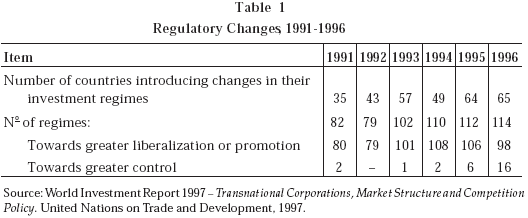
The 90s were characterized by fast liberalization processes, especially in developing countries. As governments facilitated a greater flux of direct foreign investment, significant changes took place regarding their regulatory structures. Also, a fast increase of bilateral investment treaties occurred.
Out of 65 countries studied by the United Nations Conference on Trade and Development – UNCTAD, in 1996, 55 were developing countries. One of the main changes that took place was the opening of previously protected industrial sectors to foreign investments. Particularly in Latin America, economic reforms implemented by most countries as of the mid 80s meant changing the traditional development strategy of the region – the imports substitution model – for a model of global insertion. This new strategy also meant an increasing number of regional and bilateral investment agreements. Out of the 53 bilateral agreements signed by countries in the Americas, 50 were negotiated during the 90s, and 37 were established between Latin American countries. Moreover, eight investment agreements were signed within the scope of regional or integration treaties. Thus, the inflow of foreign investment to Latin America over the last years has been decisively influenced by such treaties, which are still in their implementation phase in various countries.
The result has been an increasing inflow of foreign investment in the region. According to UNCTAD, such inflows are equivalent to circa 18.4% of the Gross Domestic Product – GDP, compared to 6.4% in 1980 and 11.6% in 1990.
The liberalization of foreign investment inflows contributed to strengthening of both the national markets' questioning power (poder de contestação dos mercados nacionais), and internal competition. In addition, some studies have positively associated transnational activities with industrial/market concentration (see, e.g., Davies and Lyons, 1996). Such association tends to be stronger in markets where competition takes place due to product differentiation and innovation, rather than prices. Transnational industries tend to overcome the disadvantage of operating in an alien environment by taking recourse to other advantages, such as cutting-edge technology, more advanced managerial or organizational practices and command over strong brands or marketing networks.
Increased participation of transnational companies in domestic markets, particularly regarding highly concentrated ones, mostly in the case of differentiated products with strong associated brands, has expanded the possibility of anticompetitive market behaviors, e.g. the formation of cartels or veiled collusions, acquisition of domestic companies with the objective of monopolizing or expanding market power or even predatory operations (e.g. by means of transferring prices of products and services between headquarters and branches, so as to sell those products with prices below their actual cost).
The process of global integration has resulted in a trend to implement laws on competition, in order to control eventual restrictive practices. According to UNCTAD, by 1980, les than 40 countries had passed competition laws. As of 1989, due to economic reform in Central and Eastern Europe, the number of such laws passed expanded rapidly. In Latin America, most of competition laws were passed in the 90s. In 1996, sixty countries had already adopted them.
]]> Seemingly, we could assume the existence of a direct relation between the introduction of competition laws and the substitution of economic models based on a high degree of State intervention for market-oriented regimes in developing countries. Evidently, opening the economy and privatization programs are just two of the many features that characterize a typical market-oriented regime. Anyhow, it is seemingly reasonable to admit a relation between the intensity and scope of pro-market economic reforms and privatizations on the one side, and the growing concerns about the efficient regulation of those markets on the other, which reflect in the elaboration and approval of competition laws.
REGULATORY CREDIBILITY: PRO-MARKET REFORMS AND AUTONOMY
The autonomy of the regulatory agencies is regarded as a crucial variable to ensure an efficient policy on competition defense. In a recent article (Jornal do Brasil, 8/1/1999, p. 4), Gustavo Franco sustains that during the 1993 debate on competition defense legislation, the team of the Ministry of Justice was more interested in creating an operational body to fight against "abusive prices", particularly with regard to the pharmaceutical sector, than in instituting modern legislation to promote competition.
Autonomy means that the agency will have the institutional capacity of making decisions and carrying them out (Przeworski, 1995:77). The term "autonomy" is close to signifying "bureaucratic insulation". According to Nunes (1996), bureaucratic insulation is the process of protecting the State team against interferences deriving from public or other intermediate organizations. When the Executive promotes the bureaucratic insulation of a particular body it seeks to protect it from inherent uncertainties in broader institutional spheres, as for instance, Congress, political parties or private demands, to ensure meeting governmental objectives considered as "technical" by the Executive.
In this sense, autonomy relates to the need of the State to create an operative atmosphere at a certain time, so that the body in question meets pre-established goals. The capacity of the State and the Executive's interest in generating such an operative atmosphere depend on structural, institutional and political factors.
The interest in making these bodies as autonomous as possible is related to problems deriving from the fast change towards a high degree of economic freedom. The lack of an efficient market regulatory agency, in an environment with a high degree of economic freedom, where direct State control mechanisms are supposedly weakened, might lead to instability and exacerbate the economic players' uncertainty, thus negatively influencing investment rates.
Regulatory credibility does not depend on greater or lesser interventionist antitrust policies, but rather on stable regulations and on the expectation that decisions made are not motivated by short-term political conveniences. An eventual interventionist antitrust decision or one favoring market behaviors and operations might or might not have political connotations. If the regulatory agency has a good technical reputation, its future decisions are more predictable, which per se would stimulate a greater inversion inflow. Regulatory credibility – which does not depend on the degree of market intervention by the agency – allows the reduction of investment risk spreads, thus reducing the cost of capital.
Autonomy is one of the crucial conditions to formulate a credible antitrust policy. The vulnerability of antitrust policies regarding external influences depends on the autonomy degree of the body responsible for formulating such policies.
Economic Liberalization and Degree of Autonomy of Antitrust Policies
]]> The economic freedom indexes elaborated by Gwartney and Lawson (2002) and Johnson and Sheehy (2002) are relevant criteria as regards the extent of success attained by political strategies for the implementation of market-oriented regimes. Due to the complexity of factors involved in the construction of such indexes, we will not discuss any further the methodology adopted by the authors. However, we will consider them as valid indexes for measuring the degree of freedom of economic regimes. According to Johnson and Sheehy, the lower the index, the freer the economy; on the other hand, according to Gwarney and Lawson, the higher the index, the freer the economy.Let us consider, as an initial hypothesis, that the more liberalized economies are, the more autonomous antitrust policies will be. The research carried out by the Global Competition Review – GCR is an available source about the degree of autonomy of competition-defense bodies. The methodology used by GCR established comparison parameters based upon six aspects of competition defense agencies: merger control, repression against anticompetitive practices, the qualification of the technical staff, adequate administrative procedures, the degree of independence of the authority and leadership. Each agency was scored from one up to five stars, as evaluated by the related user community. Such research is only a proxy of these bodies' performance as it is based on the expectations of professional associations (such as lawyer bureaus), which may vary significantly in different countries. Chart 2 shows the ranking of competition defense bodies as established in the research by GCR:
Despite its methodological limitations, this study shows indexes useful for this study. Japan for instance, deserved only one star, which was expected, taking into account its lack of tradition in this area. Various countries that have a longer liberal tradition (Canada, for example, passed the oldest antitrust legislation in the world) are part of the two-star group. Germany, with shorter antitrust experience than the USA, is the first country in the ranking with 5 stars.
Brazil is part of the three-star group. Actually, Brazilian performance is reasonable due to Gesner Oliveira's management, president of the Conselho Administrativo de Defesa Econômica – CADE, Administrative Council of Economic Defense (1996-2000), who deserved 5 stars in the item "Leadership". During both his terms of office, he showed a clear interest in promoting a competitive atmosphere (organization of seminars, exchange programs, etc.), as well as turning the activities of this body more transparent by means of statistically accurate annual reports, plus allowing electronic access of decisions and legal texts via Internet.
On the other hand, in the item "Independence" the Brazilian agency deserved only one and a half stars, so it is part of the group of countries whose antitrust bodies are less autonomous in the world, only standing behind Portugal. The terms of the evaluation are as follows:
"[...] in terms of independence, a point often made is that the Brazilian government is not seen to interfere directly in CADE's affairs, unlike the situation in some other Latin American countries. At the same time, CADE is seen not to antagonize the government. 'Gesner has been very careful', says a competition expert in a top São Paulo firm. 'For every decision he's made, he's also made political decisions about what the government will tolerate'".
]]> The analysis also regarded the division of responsibilities among CADE and another two bodies (Secretaria de Direito Econômico – SDE – Secretariat of Economic Law and Secretaria de Acompanhamento Econômico – SEAE – Secretariat of Economic Follow Up) as a factor negatively affecting the autonomy of the above mentioned Conselho Administrativo – Administrative Council.
Graphs 1 and 2 show the relation between the economic freedom index and the GCR index:
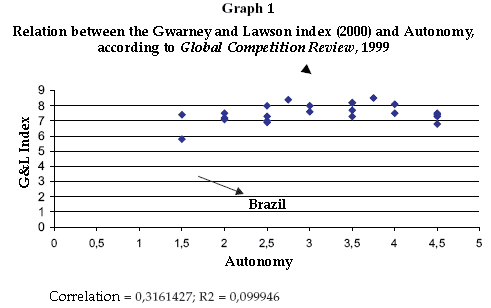
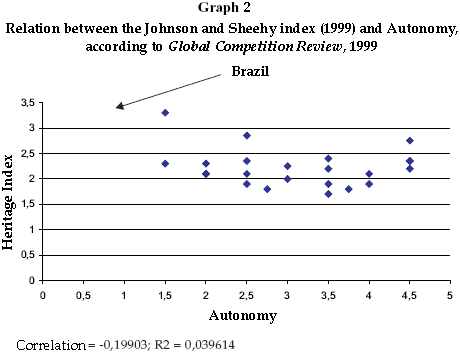
]]> It is worth remarking that these results, although not very significant, present the expected data. In both charts, Brazil appears as the country with the lowest degree of autonomy and the least favorable economic freedom indexes. The weak relation among variables does not invalidate the present hypothesis regarding countries undergoing a transition towards liberalized economies. Most of GCR samples are taken from highly developed and institutionally stable countries; a greater administrative flexibility is expected of these countries. Whereas, in countries of a corporatist and State interventionist tradition – such as Brazil and Argentina – autonomy becomes the most relevant variable to make the results of regulatory policies credible in the eyes of private economic players.
Degree of Antitrust Autonomy in Latin America
Presently, ten countries in Latin America and the Caribbean have legislation on competition defense (OAE, 1997): Argentina (1919, revised in 1946, 1980 and 1999), Brazil (1962, revised in 1990 and 1994), Colombia (1959, amended in 1992), Costa Rica (1994), Chile (1959, revised in 1973 and incorporated in 1979), Jamaica (1993), Mexico (1934, substituted in 1992), Panama (1996), Peru (1991, modified in 1994 and 1996) and Venezuela (1991). Besides, several countries, such as Bolivia, Ecuador, Honduras, El Salvador, the Dominican Republic, Paraguay, Guatemala, Nicaragua, Trinidad Tobago and Uruguay have discussed the future implementation of legislation on this matter.
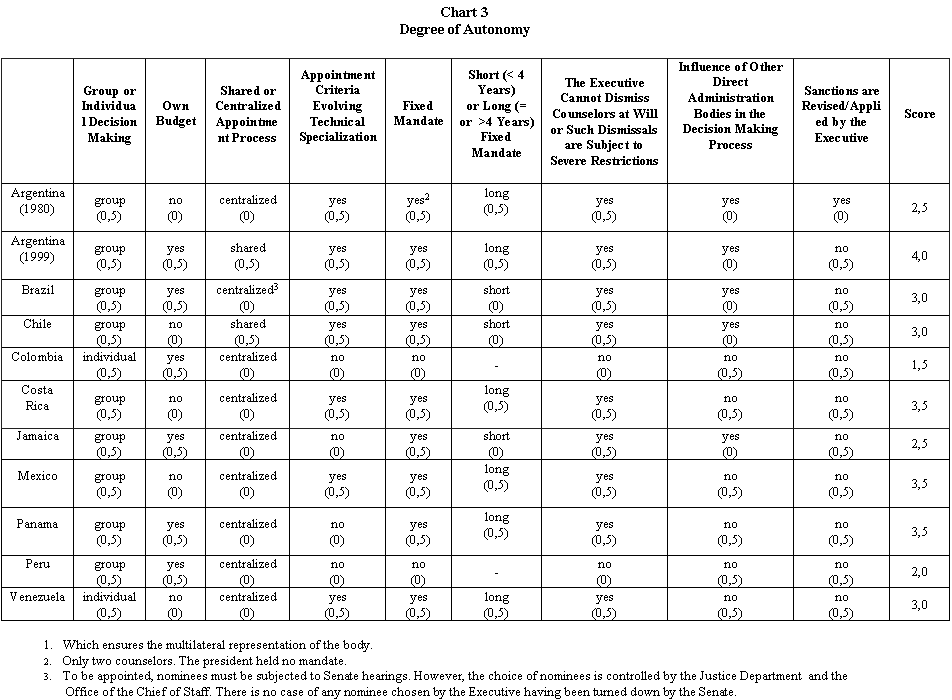
As GCR data do not include most of the antitrust legislations in Latin America, a regional index to rank the degree of autonomy of the existing agencies was elaborated. All Latin-American bodies are functionally independent, either under the format of superintendencies (Colombia and Venezuela) or commissions. The actual autonomy of such bodies, however, depends on other factors, and in this respect, institutional schemes are quite varied. Therefore, it was considered that the autonomy of antitrust policies depends on the following factors:
1st) Collective or individual decisions. Eight out of ten Latin-American competition defense agencies are commissions, and two are superintendencies. Hypothetically, commissions which by nature make collective decisions - enable greater decision-making autonomy, as it is more costly/ difficult for an individual (either public or private) to influence three or more decision-makers in a collective decision-making process, than when decisions are made by just one individual.
2º) Budgetary Autonomy. The existence of own funds reduces the agency's degree of subordination to the direct administration, which may influence the agency's decisions by threatening/promising to alter the budget. "Own funds" are not necessarily those derived from fees charged to audited/inspected companies, but rather funds that do not depend on a superior administrative body.
3º) Shared or centralized appointing procedure. A shared appointing procedure favors plural representation of interests and reduces the regulators' political involvement in the Executive Power. In almost all of the Latin-American governments (eight of them), the Executive Power controls the procedure of appointing regulators to the agency. In two countries (Chile and Argentina) institutional design ensures the representation of third-party interests in the agency,
4º) Appointing criteria include technical specialization. The requirement of technical specialization, that is, knowledge of the subject matter and reputation of regulators preferably chosen from diverse backgrounds (for instance, economists and lawyers), reduces the risk of capture and guarantees the social legitimacy of decisions made.
5º) Stability in office. This means that regulators are protected from dismissal threats as a means of persuasion regarding decisions taken. The following factors determine the stability of regulators commanding the agency: the existence of fixed mandates, their term of office and the degree of freedom the Executive may have to dismiss regulators. Fixed mandates with a reasonable term of office (at least as long as the presidential term of office), and dismissal cases determined by law, allow for the continuity of policies vis-à-vis eventual alterations in the political sphere.
6º) Influence of other direct administration bodies in the decision making process. The interference of executive administration on the agency's procedures –such as power to file lawsuits, carry out investigations, settle agreements, etc. – also reduces the agency's autonomy, as the regulatory body's authority to mediate and arbitrate conflicts may be put to question. As direct administration bodies are totally subordinated to the Executive and headed by individuals, the competition defense agency's final decisions may be conditioned by personal political preferences.
]]> 7º) Authority to impose sanctions. If, once thorough investigations and analyses of cases are carried out, the agency does not have the authority to impose sanctions regarded as necessary and determined by law, or even if sanctions are revised by other administrative bodies, the agency may lack institutional credibility.Chart 3 summarizes the results obtained:
The criteria to measure the degree of autonomy are quite simple. A value of 0.5 points was attributed to each of the items determining the autonomy degree of antitrust policies. The lack of any institutional features favoring such autonomy was scored zero. Finally, partial points were summed up, as shown in the respective column in Chart 3. The higher the score, the greater the autonomy of antitrust bodies. In fact, there is a certain regional dispersion regarding the autonomy of agencies responsible for formulating antitrust policies. Argentina, with a score of 4 points, tops the ranking with the most autonomous antitrust agency, whereas Colombia is at the bottom of the ranking with a score of 1.5 points.
However, it is worth remarking that the approach described above is inaccurate for three reasons. Firstly, some factors – such as the term of office – are more important than others in determining the autonomy degree of agencies. Secondly, there may be disagreements regarding the efficacy of legal texts in order meet certain goals. For instance, in Brazil technical specialization of regulators is defined as "notorious economic or legal knowledge", which is often judged as insufficient. Thirdly, legislation does not incorporate other important factors, alien to the legal text, which may also determine the agencies' autonomy3.
Autonomy and Economic Liberalization in Latin America
Are countries that have attained a significant degree of economic freedom more inclined to implement antitrust legislation? The Gwartney and Lawson index, due to be scheduled in five-year periods as of 1975, allows us to assess this hypotheses through time and in each country4. Those counties that have passed antitrust laws, seem to have undergone a process towards economic liberalization previous to the implementation of such legislation:
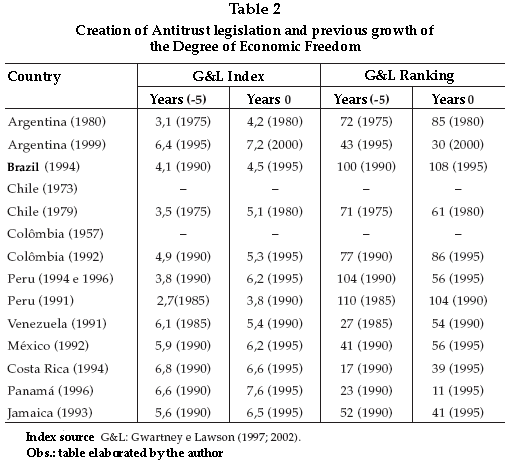
Year 0 is the closest index to the year of implementation of the legislation. For example, the five-year index closest to the year when antitrust legislation was implemented in Argentina, in 1999, is that of year 2000 (7,2). Year (-5) means the value of the previous five-year period, which in the case of Argentina, is the 1995 index (6,4); hence, we tested a correlation between the autonomy degree and the index closest to the year of implementation and the previous one (five years before). Possibly, the previous degree of economic liberalization exerts a stronger influence than that of the year when the legislation was passed, since institutions will be designed according to the previous parliamentary debate held as of the introduction of the bill and during procedures, in specific commissions.
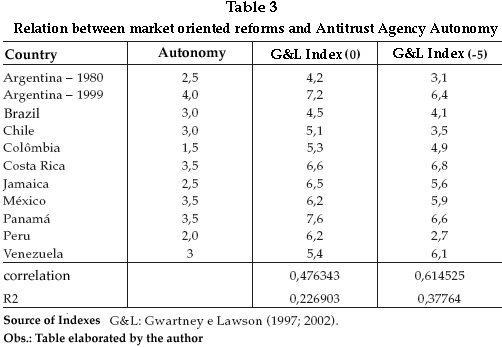
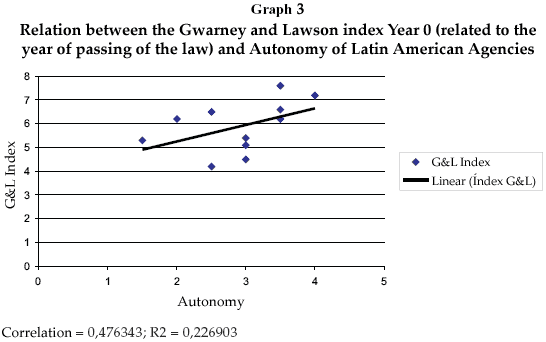
]]> In fact, the hypothesis that the relation between the degree of autonomy of the antitrust body and economic liberalization prior to the implementation of antitrust legislation shows significant results:Table 3 can be seen in charts 3 and 4, along their respective trend lines.
]]>
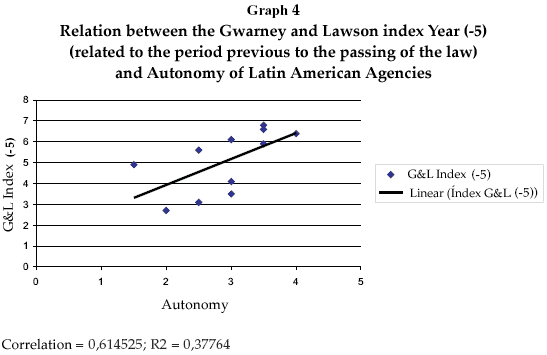
The data above allow us to conclude the following trend: the deeper the economic liberalization has been in a given country, the greater the autonomy of the bodies responsible for implementing antitrust policies. Each country tends to respond differently to the systemic pressure exerted by the process of globalization. We do not observe any institutional convergence favoring economic liberalization, or at least, the pace towards liberalization differs from country to country. Consequently, the dispersion of the autonomy degree of regulatory agencies meets previous expectations. In countries with a lower degree of economic liberalization, making regulatory bodies credible yields fewer advantages to the Executive, thus, giving these agencies more autonomy is less relevant.
The concept of economic freedom is based on the idea that the main function of government in free economies is to protect the right of property and the provision of public goods. The use of State power to determine what is to be produced or consumed, logically jeopardizes economic freedom. An efficient antitrust policy should not be restricted to effectively controlling private power, but also the pressures coming from inside the State itself, as these tend to threaten market players' freedom of production and consumer choice. Autonomy means isolating the antitrust body from external pressures on the decision making process, which will favor the making of more efficient decisions.
We do not sustain herein that the economic liberalization process is the only relevant factor determining the autonomy degree of antitrust agencies; if that were the case, the correlation between variables would be of greater significance. Firstly, countries tend to copy institutions that were successful in other countries. That is why, although with a certain variation, countries tend to adopt the American regulatory format, based on independent agencies. Secondly, the autonomy of the regulatory agency is also affected by the burden of corporatist heritage, the players with the power of veto of any alterations on policies, and even constitutional barriers and conjunctural factors.
CONCLUSIONS
In Latin America, antitrust regulation oscillates between conjectural or macroeconomic objectives and credible commitments to the private sector.
]]> Occasionally, governmental authorities use antitrust policies as an instrument of the Executive to threaten or retaliate against sectors of the economy that bear strong social impacts (Forgioni, 1998:133) – such as the fuel and pharmaceutical sectors, many times accused of "abusive prices" – which inhibits regulatory credibility.Data presented in this paper allow us to conclude that the adoption of regulatory regimes and incentive structures take into account the broader institutional sphere; particularly, the autonomy degree is the result of the balance between two opposite forces: the need to establish credible commitments based on rules between the private and public sectors – a necessary condition to stimulate private investment – and the governmental interest in manipulating decisions for political purposes. The ever more intense market-oriented reforms raise economic and political costs resulting from the lack of autonomy of agencies.
The correlation between the agencies' autonomy and economic liberalization is compatible with the thesis that institutional design is related to the competition of pressure groups. Reconfiguration of the institutional sphere towards a new public space, where direct intervention is substituted for other modes of intervention – of a regulatory nature – is the result of pressures exerted by the private sector to protect their investments. The developmental model, based on the protection of domestic industry tends to generate less political benefits in the context of globalization. As investments involve long-term contractual commitments, the autonomy of regulatory bodies conveys more security regarding future results, that is, revenues from capital invested will not be threatened by interventions of the Executive in the regulated segment.
The variable autonomy also depends on the previous institutional sphere. The ranking of competition defense bodies, elaborated by the Global Competition Review (Chart 2), mostly consists of Organisation for Economic Co-operation and Development – OCDE member countries. The institutional response of such countries to the globalization process, with few exemptions, has not been the creation of a regulatory model based on independent agencies, as shown in the weak correlation between economic freedom indexes and the autonomy degree of agencies in those countries (Charts 1 and 2). On the other hand, the correspondence between the liberalization process and the autonomy degree of agencies in Latin America is a lot more significant.

The quest for regulatory credibility by means of autonomous agencies, was the institutional formula adopted in Latin America. Other conditions regarding legal regulations, such as accountability, transparent institutions, stable and consistent political systems and neutral and independent Judiciaries - which are somewhat weak in the region – would also favor the establishment of credible commitments, regardless the autonomy degree of regulatory agencies. The interventionist and corporatist tradition negatively affect the investors' future expectations, which puts pressure on the executive so as to create institutions that reduce its capacity of intervention regarding regulatory policies.
Hence, in Latin America, autonomy is the most relevant variable to make the results of regulatory polices credible in the eyes of private economic players. Latin American States are regarded as weak institutions, lenient with complying with the law and incapable of withstanding pressure upon them so as to issue subsidies and provide protection. As the State is particularly vulnerable to political pressures, results tend to be very uncertain. There will always be uncertainty anywhere in the world. However, one thing is to deal with uncertainty when a set of rules is given – in this case, taking into account the field of action, players can distribute results in a probabilistic manner. A totally different situation is to operate in contexts where rules tend to be altered or disrespected – in such cases possible results cannot be deduced from the rules in vigor. In these contexts, autonomy provides players with a certain security against forms of expropriation and administrative willfulness.
]]>BIBLIOGRAPHY
AMATO, Giuliano. (1997), Antitrust and the Bounds of Power – The Dilemma of Liberal Democracy in the History of the Market. Oxford, Hart Publishing. [ Links ]
BAUMOL, William J. e ORDOVER, Janusz A. (1985), "Use of Antitrust to Subvert Competition". The Journal of Law and Economics, vol. 28, nº 2, pp. 247-265.
DAVIES, S.W. e LYONS, B. (1996), Industrial Organization in the Europe Union: Structure, Strategy and the Competitive Mechanism. Oxford, Oxford University Press.
ECKBO, B. Espen e WIER, Peggy. (1985), "Antimerger Policy under the Hart-Scott-Rodino Act: A Reexamination of the Market Power Hypothesis". The Journal of Law and Economics, vol. 28, nº 1, pp. 119-149.
FORGIONI, Paula A. (1998), Os Fundamentos do Antitruste. São Paulo, Ed. Revista dos Tribunais.
GWARTNEY, James e LAWSON, Robert. (1997), Economic Freedom of the World 1997 Annual Report. Vancouver, Fraser Institute.
______. (2002), Economic Freedom of the World 2002 Annual Report. Vancouver, Fraser Institute.
HAZLETT, Thomas W. (1984), "Interview with George Stigler". Reason, janeiro, pp. 44-48.
]]> JOHNSON, Bryan T. e SHEEHY, Thomas P. (2002), 2002 Index of Economic Freedom. Washington, DC, The Heritage Foundation.LANDE, Robert H. (1996), "Ascensão e Queda (Próxima) da Eficiência como Reguladora do Antitruste". Revista de Direito Econômico, nº 23, pp. 39-65.
MEIER, Kenneth J. (1985), Regulation – Politics, Bureaucracy, and Economics. New York, St. Martin's Press.
NUNES, Edson. (1996), Política e Insulamento Burocrático: A Economia Política do Desenvolvimento Brasileiro. Rio de Janeiro/Brasília, Zahar Editores/ENAP.
OEA. (1997), "Transnational Corporations, Market Structure and Competition Policy". World Investment Report 1997. United Nations on Trade and Development.
PRZEWORSKI, A. (1995), Estado e Economia no Capitalismo. Rio de Janeiro, Relume Dumará.
WEINGAST, B. R. e MORAN, M. J. (1983), "Bureaucratic Discretion or Congressional Control? Regulatory Policymaking by the Federal Trade Commission". Journal of Political Economy, vol. 91, nº 5, pp. 765-800.
1 Stigler considered that antitrust laws would intrinsically be of public interest (see Hazlett, 1984). Others, like Eckbo and Wier (1985) and Baumol and Ordover (1985) concluded that antitrust legislation tends to meet special interests. ]]>
2 It is not possible to comprehend the various phases of the American antitrust policy without understanding the role played by interest groups and lobbies in the American Congress and their insertion in both the Democratic and Republican parties.
3 The autonomous operation of the agency, also depends, for example, on the ideology of the political players.
4 The Johnson and Sheehy index introduces series only as of 1995.