Fédéralisme et conflits de répartition: lutte des états brésiliens pour des ressources budgétaires accordées par le gouvernement fédéral
Federalismo e conflitos distributivos: disputa dos estados por recursos orçamentários federais
Celina Souza
Translated by Deborah Neale
Translation from Dados - Revista de Ciências Sociais, Rio de Janeiro, v.46, n.2, p.345-384, 2003.
ABSTRACT
The article analyzes how states' representatives in the Brazilian Congress process and negotiate amendments to the federal budget on Congress' Joint Budget Committee. Amendments submitted by members of Congress from three selected States (Bahia, Ceará, and Paraná) between 1995 and 1999 are analyzed. The article challenges certain hypotheses concerning the role of amendments and argues that budgetary amendments and certain federal policies tend to accommodate tensions which arise in a federation marked by regional inequalities.
Keywords: federalism; fiscal federalism; federal budget; budgetary amendments; state delegation in the National Congress
RÉSUMÉ
Dans cet article, on examine comment les groupes de députés des États brésiliens mettent en place et négocient des amendements au budget fédéral au sein de la Commission Mixte du Budget du Congrès. On analyse les amendements proposés par les parlementaires de trois États – Bahia, Ceará et Paraná – pour la période 1995-1999. On discute des hypothèses sur le rôle des amendements tout en montrant que ceux-ci, ainsi que certaines politiques fédérales, contribuent au relâchement des tensions existant dans une Fédération marquée par des inégalités régionales.
Mots-clé: fédéralisme; fédéralisme fiscal; budget fédéral; amendements budgétaires; groupes de députés des États
]]> INTRODUCTION
In most countries, both public opinion and the electorate have been showing their disillusionment with their political systems and their representatives. In countries where democracy has recently been reinstated, the political system and elected representatives are seen as responsible for not living up to the expectations of democracy. Furthermore, the view that legislators only pursue their own interests, which, in turn, generate less universal and more opportunistic policies, has been gaining strength.
In parallel the academic mainstream has begun to challenge the capacity of macro-theories to explain the functioning of political systems. Under the broad label of neo-institutionalism (NI), different branches of the social sciences have started to emphasize the study of institutions and the processes of institutionalization in the mediation of interests and in collective action. NI always resorts to an intermediate level of analysis to understand and explain political and decision-making processes.
Despite following different paths and scopes, NI tries to address two fundamental issues regarding institutional analysis: what the relationship between institutions and political actors' behavior is and how the creation and transformation of institutions can be explained. This article attempts to address the first issue, furthering the discussion on the relationship between federalism as an institution and the behavior of certain political actors – state representatives in Congress – through analyzing how groups of representatives process and negotiate amendments to the federal budget on the Joint Committee on Planning, Public Budgets and Oversight, better known as the Joint Budget Committee - JBC. The article analyzes amendments to the budget proposed by elected representatives of three Brazilian states, Bahia, Ceará and Paraná, between 1995 and 1999.
Since the return to democracy and the promulgation of the 1998 Constitution, Brazil has become one of the most decentralized countries in the developing world as regards the distribution of tax funds and political power. Despite financial decentralization, however, states and municipalities continue to press the federal government for more resources to finance their projects. Furthermore, the states' debts have been federalized several times.
I have argued elsewhere, based on secondary sources, that the Brazilian division of national / federal resources works in such a way as to maintain the federal balance and to accommodate conflicting demands in a country with major regional inequalities. I have also argued that these inequalities have been historically accommodated by the Executive and by the federal government by promoting a division of public national funds which are subject to formal and informal rules (Souza, 1997; 1998)1. This is because the Brazilian federation has been designed in such a way as to adjust to regional differences through the negotiation of federal resources, based on formal rules, both legal and constitutional, that only marginally contribute to fiscal equity between states and regions. This leaves ample room for the adoption of informal rules2.
Negotiations based on informal rules have become more complex since the return to democracy because subnational leaders have gained bargaining power, making federal conflicts more complex. Obtaining more federal resources for subnational units has also become more difficult, due to the policy of fiscal adjustment. Furthermore, the Brazilian federation is no longer dominated by a few states but rather by a complex system of political and financial dependence among different levels of government, despite their uneven strength. It has been also characterized by strong regional disparities and by scarce mechanisms of fiscal equalization to make up for the historical economic and social asymmetries among regions.
It is in an environment influenced by redemocratization, fiscal constraints and regional imbalances that the dispute for federal resources takes place. An analysis of the amendments presented by members of Congress to the JBC and of the outcomes of certain public policies (such as the Unified Health Care System – UHCS (Sistema Único de Saúde – SUS) and the social security system) can help us to understand the distribution of federal resources and deepen our knowledge about how tensions that arise in the federation are accommodated.
In Brazil there are few studies that investigate the role of Congress in distributing federal funds3. During the military regime, the role of Congress, of governors and of mayors in defining and negotiating policies was secondary, although they played the role of masking the regime's lack of legitimacy (see Medeiros, 1986). This is partially why there were few studies on this subject which is only now attracting attention4.
This article attempts to contribute to the understanding of the behavior of state delegations in Congress in relation to the federal budget5. In fact, there is a need for more specific analyses, especially from a federal perspective, such as an analysis of the states both individually and comparatively focusing on where the competition for federal resources is most evident, namely the Joint Budget Committee.
]]> Bahia, Ceará and Paraná were chosen to test both the theoretical frameworks on which the research is based and the hypothesis mentioned below. These states were chosen because they are territories that share several common characteristics. Firstly, their political leaderships have managed to maintain, until recently, a great deal of control over the state institutions and the state decision-making process. This could indicate that the three states' delegations in the competition for federal resources would behave in a similar manner, based on a much-quoted argument that governors exert substantial influence over the state delegations in Congress. Secondly, the three states represent a sample, albeit limited, of two regions; the Northeast and the South, which have in recent years tried to upgrade their position in the economy and in politics. The three states have managed to achieve important relative GDP growth as compared to other states in recent decades. They are also considered the main players in what is described as the fiscal war among the states. At the same time, by selecting two states from the Northeast and one from the South, the sample captures Brazil's extreme regional diversity. Although the sample points to more similarities than differences between the three states in relation to their internal political dynamics, their representatives in Congress and on the JBC had different agendas and strategies, which will be further analyzed6.The study is based on the assumption that since the return to democracy and the promulgation of the 1988 Constitution Brazil has had a very decentralized political and tax system, even by international standards. States and municipalities, however, continue to press the federal government for more funds, for which the amendments to the budget are a window of opportunity. Although competition for scarce resources is guided by rules established by the JBC, the outcomes as regards budgetary funds transferred to these three states are quite different.
The article addresses three key issues:
a) Why federalism influences the negotiation of federal resources by state delegations on the JBC;
b) How the state delegations negotiate their demands within the JBC and what the results are; and
c) How tensions created by a federation with insufficient fiscal equalization mechanisms are managed.
Federalism is studied here both as an independent variable, that influences the behavior of Congress members, and as a dependent variable, that conditions the way in which budgetary federal resources are distributed.
The article challenges two existing hypotheses: one concerning the role of amendments in the federal budget and the other the regional distribution of federal resources. The first is that amendments lead only to negative results, since they constrain the adoption of universal policies, hence strengthening the tendency towards logrolling, "pork barrel" and the pursuit of private agendas among Congress members. The second is that regions that are less developed economically are disproportionately benefited by federal budgetary resources, due to their over-representation in Congress.
The hypothesis proposed here is that the design of Brazilian federalism never incorporated a pursuit for a greater fiscal equalization among its constituent units. This explains why Congress members have to build strategies that enable them to increase their states' quota of national resources. Hence there are formal (constitutional) and informal (case by case negotiations) distributive rules that enable the Brazilian federation to maintain its unity. Formal and informal rules (the latter found in several legislative and government decisions, including amendments to the budget) have encouraged Congress members, even those from wealthier states, to propose amendments. They do this not only to get reelected or to run for election for a subnational Executive position, but also to obtain more federal resources, given the inefficiency of formal fiscal equalization rules.
To build a hypothetical analytical 'model', Weaver and Rockman's (1993) proposal has been taken as a reference point. These authors examine public policies through the perspective of the impact of national political institutions on the structuring of the relationships among Congress members, interest groups, the electorate and the Judiciary. From their point of view, the federal system is taken as a veto point and as exogenous to the relationship between the Executive and the Legislature, which may result in incoherent policies. Their proposal, which is adopted here only as a guide to the behavioral analysis of state delegations within the JBC, implies, however, an implicit view of institutions as a set of interconnected knots through which actions can be blocked. I do not argue, however, that an understanding of the vetoing points in the decision-making chain (Immergut, 1996) and of the veto players (Tsebelis, 1995) should not be pursued but rather that by ignoring the specific aspects that shape the constellation of incentives and constraints conditioning the strategies of the political actors, something important may be lost in the analysis.
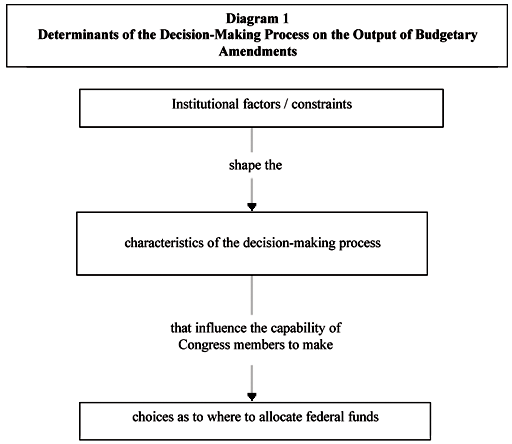
]]> Based on Weaver and Rockman's (1993) proposal, slightly modified to include an understanding of the behavior of Congress members, the hypothesis that I test is summarized in Diagram 1. The diagram maps the framework used for the analysis of the trajectory of amendments passed on the JBC.
The institutional factor / constraint considered here is Brazilian federalism, specifically fiscal federalism, which has insufficient fiscal equalization mechanisms among states and regions. One of the main consequences of this is that distributive conflicts are more intense. Furthermore, with the federal fiscal adjustment policy, there are fewer national resources to be distributed to accommodate regional tensions. As a result, conflicts within the JBC have also become more complex.
The analytical task, therefore, is to identify the links between federalism as an institution and the behavior of the state delegations on the JBC. This may lead to a better understanding of how demands for federal investment within state and local territories are inserted into the federal budget, as well as their outcomes. Attempts to understand how Congress members establish their networks on the JBC to defend their interests are also made. These networks generate extra-parliamentary relationships and sometimes they cross political parties –not because parties "do not matter", but because the JBC rules have encouraged cooperation among members of different parties that represent a given state. The rules also allow amendments from parliamentarians elected in other states.
Thus, this article highlights the role of state interests within the national Legislature by examining how tensions, conflicts and contradictions between conflicting interests across states are processed, negotiated and decided on within the JBC.
To interpret the "rules of the game"7 that affect the political actors' behavior, I make use of a theoretical framework that values the influence of institutional choices made beforehand on the development and outcomes of political decisions. These, in the end, also influence the functioning of the political system. One of the institutional choices that shapes the political system and the decision-making process is federalism. Initial, structural and normative choices, therefore, will have an effect on subsequent political decisions, such as the role of the amendments and of the JBC in minimizing regional cleavages and in accommodating distributive conflicts.
Based on the discussion of the hypothesis outlined above, I argue that amendments to the federal budget reflect the territorial disputes for federal resources in a country marked by regional inequality. These amendments also influence how regional disputes are negotiated. This challenges the two hypotheses mentioned above. The argument is based on the following findings: first, that collective amendments and amendments from JBC subcommittees are replacing individual amendments as a result of the changes introduced in the rules of the JBC. This finding contradicts the hypothesis that amendments simply promote logrolling, "pork barrel" and the pursuit of private agendas, because cooperation, or collective amendments, have been encouraged by the new rules of the JBC to the extent that they now prevail over individual amendments. It is important to stress that these new rules were introduced by Congress members themselves, hence they are self-binding rules Second, it is neither the most economically better-off states nor the least developed states that have been the main beneficiaries of the budget resources in per capita terms. The greatest beneficiaries have been the Center-West and the North regions, as a result of decisions taken by the constitutional framers, as will be discussed later.
]]> This article analyzes amendments to the federal budget proposed by members of Congress for the three selected states over the period 1995 to 1999. A total of 6,107 amendments were approved, representing 1.961 billion reais. The total amount of funds actually transferred to these states during the same period was 17.634 billion reais. Amendments accounted for 11% of the total funds distributed to these states. The amendments were grouped according to budgetary items, according to Congress member and according to party. Amendments proposed by state delegations, i.e., collective amendments, were separated from those proposed by individual parliamentarians8.The article is divided into four parts. The first explains the functioning of the JBC. The second analyzes the content of the amendments for the three selected states between 1995 and 1999. The third discusses the results and how they relate to the hypotheses mentioned above. The fourth presents the conclusions.
THE JOINT BUDGET COMMITTEE
With the promulgation of the 1988 Constitution, Congress re-acquired the right to amend the budget handed down by the Executive, making it an ideal locus for testing the hypothesis of this article. This right, however, has been criticized both in the literature and in the media.
In the literature on the theory of rational choice amendments by Congress members are termed "pork-barrel" politics, defined by Shepsle and Bonchek (1997:204) as "the appropriation of federal funds for inefficient projects that benefit individual congressional districts but offer little benefit to the nation as a whole". The authors state that the incentive for a Congress member to operate "pork-barrel" politics is that it represents an opportunity to gain votes in the next election. In rational choice theory, "pork- barrel" politics generate a cooperation paradox, since only the area or region receiving the funds benefits, at the expense of all taxpayers. In fact, Congress members would be better off without "pork"9. Although members of Congress have a strong incentive to try to protect the interests of their constituencies, they know that everybody would benefit if there was no "pork". Despite this, the practice continues. In this case, as pointed out by Shepsle and Boncheck (1997:206) the "cooperative dividend" of no "pork" projects is not stable "because politicians continue to have an incentive to use whatever influence they can muster to target projects for their states and districts".
This vision on the "perverse" consequences of "pork", however, is not found across all literature. Several political scientists, such as Elwood and Patashnik (1993), focus on the "other side" of "pork", mentioning its role in easing the negotiations between the Legislature and the Executive in the US and the advantages it represents for constraining expenditure since it does not generate broad or universal benefits, thus avoiding entitlements. Other studies show that in the US the efficiency of "pork" for the reelection of Congress members is more modest than that shown in the media (Bickers and Stein, 1996). Furthermore, in the Brazilian case individual amendments have been superceded by collective amendments, discussed at greater length below.
The JBC is the appropriate locus to test federalism as an institution. By bringing decisions on the allocation of part of federal funds into the arena of the Legislature in such a large and diverse country, the Brazilian political system has managed since the return to democracy to buffer these differences by giving Congress members the opportunity to minimize the financial shortcomings of the states that elected them. This mechanism also compensates for Congress' loss of its share of legislative function due to the Executive's right to issue Provisional Measures. Hence, although the federal Executive seems to have an excessive legislative role, due to the Provisional Measures, Congress is also constantly accused of exercising executive functions, through the distribution of funds to constituencies by amending the budget.
The JBC was created by the 1988 Constitution (article 166). Its regulation, including its functioning, organization and participation rules underwent several changes since 1995 after a Parliamentary Enquiry Committee investigated scandals on budgetary procedures.
The Constitution states that amendments are to be submitted to the JBC which analyzes and submits them to Congress' plenary. Amendments can only be approved if they: a) are compatible with the biannual plan and with the budgetary guidelines; and b) stipulate the source of fund to finance the amendment, admitted only reallocation among items of expenditure but excluding from reallocation resources earmarked for payroll, debt servicing and constitutional transfers to the states, municipalities and the Federal District.
]]> According to the rules of the JBC, amendments to the budget can be proposed by: a) individual members of Congress, who may present up to 20 amendments amounting to 1.5 million reais each (increased to 2 million reais in 2000) ; b) Senate and Congress permanent committees, with a maximum of five amendments; c) state delegation, which require the signatures of three-quarters of the deputies and senators (later reduced to two-thirds), with a maximum of 20 amendments, henceforth referred to as collective amendments; d) regional delegation, having a maximum of two amendments and requiring the approval of the absolute majority of the federal representatives and senators elected from the region; e) rapporteurs from thematic subcommittees within the JBC but only to correct technical or legal mistakes or omissions and/ or putting together various amendments; these types of amendments cannot propose new expenditure to the proposed budgetary bill sent by the Executive10.The rules on the functioning of the JBC and on the presentation of amendments can be changed annually. They were profoundly altered in 1995 in reaction to scandals exposed by a parliamentary enquiry into budgetary procedures. Until 1995 the presentation of a maximum of 25 individual amendments per Congress member was allowed. From that year onwards this number was reduced to 20. Other changes included the need for delegation meetings and public hearings and new rules creating incentives to rotate members of the JBC to avoid the prevalence of particular individuals or groups11. In 1997 it was decided that collective amendments would have priority over individual amendments and that each state could present up to 10 (later increased to 20) amendments and in 1999 a ceiling for each amendment was introduced. The JBC used to be divided into seven sectoral areas and in 2000 this was increased to ten.
Evidently, the JBC is not the only locus in which negotiations between the Executive and the Legislature, governors and mayors occur. Other equally important bargaining mechanisms stand out, such as: a) appointments for positions in the federal bureaucracy, in state-owned companies or in organizations that run parallel to the government, such as the administrative bodies of pension funds; b) the approval of state and municipal loans to be authorized by the Senate; c) the renegotiation of states' and large municipalities' debts which have been transferred to the federal government; d) the inclusion, at the end of the fiscal year, of amendments for the allocation of additional funds; e) federal financial support, through fiscal incentives and subsidized loans offered by federal agencies such as the Federal Economic Bank – FEB (Caixa Econômica Federal – CEF), the Bank of Brazil – BB (Banco do Brasil – BB), federal regional development banks and the National Social and Economic Development Bank – NSEDB (Banco Nacional de Desenvolvimento Econômico e Social – BNDES); and f) financial benefits for states and regions on other Congress committees, such as tax breaks for the establishment of car manufacturers in the North, Northeast and Center-West passed in 1997 and re-edited in 1999.
The JBC is the second phase of a three phase process and it is where amendments are proposed. The other phases are: a) negotiation between members of Congress, governors, mayors and the federal government for the inclusion of their demands in the budgetary bill sent by the Executive for Congress' discussion and approval; and b) the effective liberation of resources after budget approval, which is the most important phase in terms of results.
The possibility of amending the budget proposed annually by the Executive to the Legislature is one of the most important rights given to the Legislature since the return to democracy12. Also relevant is the President's right to veto amendments, though rarely exercised13. Why? Vetoing amendments can have an unnecessary political cost for the President given that the budget in Brazil is not mandatory but rather an authorization to spend. This means that bargaining for final liberation of resources takes place in the federal government before being effectively handed out.
The right to have the final word on the budget generated a paradox: it was Congress itself, during the writing of the constitution that decentralized financial resources to subnational levels of governments. This was done in reaction to the financial centralization of the military regime. By reducing federal funds, Congress members themselves restricted their capacity to allocate funds through amendments to the states and municipalities they represent.
Although on the initial years of the functioning of the JBC their members had more incentives to act individually, changes in the committee's rules since 1995 have made them behave more cooperatively, a point discussed later. These rules, which encourage cooperation, gained predominance over the rationale of the electoral system, which is often said to encourage members of Congress to act individually and to exercise little party discipline14. However, acquiring federal resources for their constituencies continues to be crucial for their political survival, especially for those who oppose the political coalitions governing their states15.
The JBC is composed of 84 Congress members – 21 senators and 63 federal representatives. Parties are responsible for appointing their members, as in other committees. During the period analyzed the PFL and the PMDB, parties that held a majority in Congress, had most seats, though all parties (or groups of parties) have the right to be represented. The number of representatives from the states of Bahia, Ceará and Paraná on the JBC is presented in Box 1.
]]>
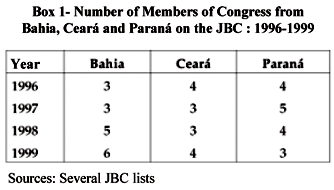
Since a party selects its representatives and no criteria restricting the size of the state delegation on the JBC exist, it is possible for states with smaller delegations to have more seats on the JBC as happened in 1996 and 1997 when Paraná and Ceará, with smaller delegations than Bahia, had more seats. This imbalance was corrected in 1999.
COMPETITION FOR BUDGET RESOURCES AMONG THE SELECTED STATES
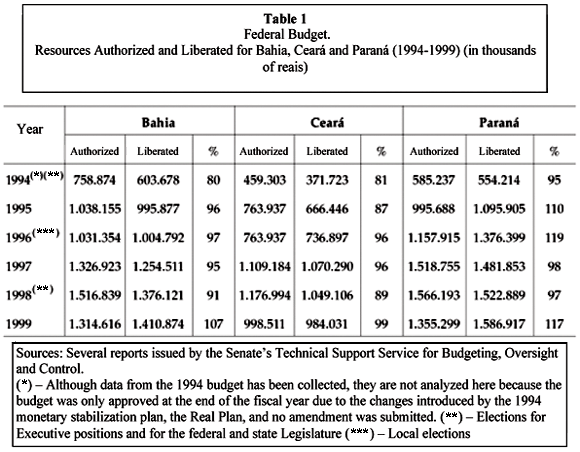
The three selected states, during the period analyzed enjoyed high rates of success comparing the amount of funds approved in the budget and the amount effectively handed over (see Table 1). As already mentioned, the approval of an amendment does not guarantee the actual liberation of funds.
]]> The role of Congress members on the JBC changed during the period analyzed. In the first years individual Congress members played a central role in presenting amendments. Later, however, collective amendments from state delegations surpassed these. During budget negotiations on the JBC, competition for resources occurs between members of Congress and/ or state delegations, representing the interests of their constituencies, of their financial supporters and of local/ state political leaders. Nevertheless, after final approval of the budget, disputes are played out in the ministries of the federal government and in state-owned companies.
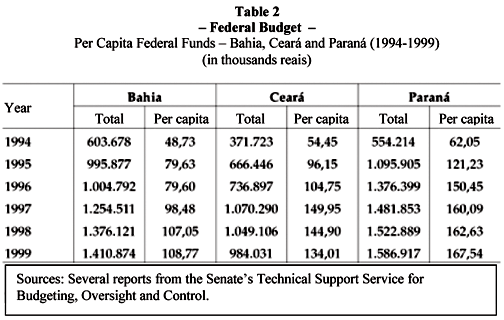
Table 1 shows that the federal government has fulfilled its agreements with Congress members, governors and mayors by releasing funds negotiated throughout the budgetary process. In other words, funds for subnational units were effectively distributed. Paraná has managed to receive more budgetary resources than the other two states, both in absolute and in relative terms (see Table 2). Furthermore, the average "success rate" for funds to Paraná was 106%, whereas it was 94% to Bahia and 91% to Ceará.
The data in Table 3 show that the volume of funds to which Congress members have access is small (the average is 11%) when compared to the total amount of funds allocated to each state.
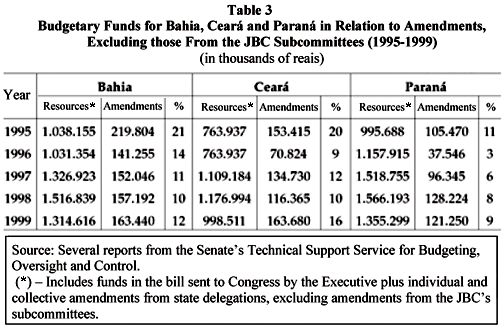
The figures presented in Tables 1, 2 and 3 challenge the hypothesis that less economically developed states are the greatest beneficiaries of additional funding from the federal budget. The state of Paraná obtained the greatest amount of funds, both in terms of funds effectively released and in terms of per capita values. Although representatives from Bahia and Ceará managed to get approval for a greater number of amendments than those from Paraná, the total amount of funds and funding per capita, as well as the "success rate" were higher in Paraná than in the other two states. In other words, although representatives from Bahia and Ceará managed to obtain more budgetary funds than what had previously been allocated, they had to submit more amendments than Paraná to increase their share (see Table 2).
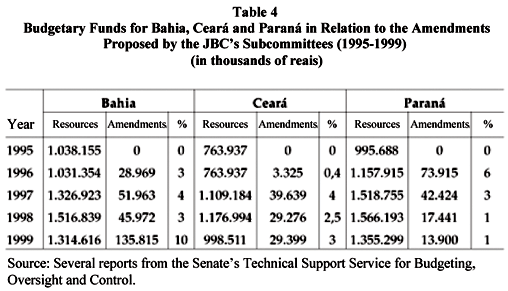
Table 4 shows that amendments submitted to the JBC by the subcommittees also increased. However, as mentioned above, these amendments are unable to increase the amount of resources, only correct mistakes or aggregate similar amendments16. As for the amendments proposed by these subcommittees, Bahia and Ceará were more greatly affected by corrections and groupings than Paraná in absolute terms, except in 1996.
In the following sections I analyze the performance of the states in question.
The Performance of Bahia
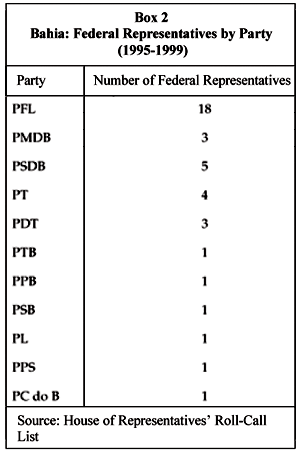
Bahia has 39 federal representatives in the House distributed among the following parties during the period analyzed (1995-1998):
]]>
The PFL had three senators during the period. In the 1994 and 1998 elections, it formed an alliance with the PTB, PPB and PL, giving the party a comfortable majority in both Houses. Although the PFL had a majority in the state's delegation, the same was not the case on the JBC, since the party competed against the PSDB and the PMDB for seats on the JBC. In fact, the balance between the PFL and the opposition parties on the JBC at the beginning of the period analyzed later came undone, and the PFL ended up taking control of the interests of the state of Bahia within the JBC.
In 1995 Bahia's representatives presented only four amendments to the budget, all from members of the PFL17 and no collective amendments were proposed. The authors of the amendments were members of Congress of little visibility and they all belonged to the group led by Antônio Carlos Magalhães – ACM. Those who enjoyed more visibility and had access to the federal Executive certainly found other ways to channel their demands and thus did not have to compete for the scarce funds of little magnitude as is the case of the amendments.
In 1996, when municipal elections took place and in contrast to the previous year, every delegate from Bahia presented amendments to the budget and, as in the previous year, Congress members with otherwise high visibility did not take much interest in budgetary amendments18. When amendments are analyzed according to party, one can see that although the PMDB and the PFL are responsible for the greatest number, all parties represented in Bahia, including the minority ones, such as the PT, PSB and PC do B, managed to get their amendments approved. Even the PV, which had no representation in the state delegation, presented amendments submitted by federal deputy Fernando Gabeira (from Rio de Janeiro). It is important to stress that despite the PFL's unrivaled control of the Bahia delegation in Congress, the PMDB managed to secure more funding through amendments (39%) than the PFL (34%). In 1996, before changing the rules encouraging collective amendments (passed in 1997), these already predominated over individual amendments among delegates from Bahia. This generated a paradox: if all representatives compete among themselves for the support of their constituencies and if amendments are crucial for their reelection, how can one explain the predominance of collective amendments? As individual amendments still had not prevailed over collective amendments, the most likely explanation lies in the PFL's control over other parties.
In 1997 the distribution of amendments by party confirmed the PFL's superiority and the PMDB's loss of room for maneuver. This shows that as control of the group led by ACM increased, so did its influence on the JBC19. Once again members of Congress elected in other states (Fernando Gabeira and Lindeberg Farias (PC do B/RJ) proposed amendments for Bahia. Amendments submitted collectively made up 60% of the total revealing the influence of the new rules adopted by the JBC. They also reveal the existence of the cohesion of the state delegation and the control of the largest party on the amendments.
In 1998, a year in which there were both state and national elections, the PFL's control within the JBC was reduced. However, the party still managed to approve 51% of its individual amendments, while the PMDB and the PSDB got approval for 12% but collective amendments continued to represent 60% of the total, reiterating the cooperative strategy.
In 1999 there were no changes in the profile of the members of Congress presenting amendments. In other words, amendments were still being proposed by representatives with limited visibility. The amendments by party confirm PFL's supremacy (half of its amendments were approved) with the PSDB a distant second with a 12% approval rate and the PMDB with 7%. Cooperation, encouraged by the JBC rules and the PFL's supremacy, meant that collective amendments accounted for 62% of the total.
In short, during the years analyzed, cooperation was standard procedure among Bahia's representatives in Congress; PFL's supremacy was consolidated in the state and within the JBC; and it was members of Congress with limited visibility who tended to get more funds approved through individual amendments20.
]]> The Performance of CearáCeará has 22 federal representatives who belonged to the following parties in 1998:
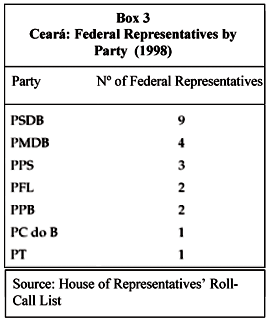
Its three senators belonged to the PSDB. These, together with the federal representatives from the same party, accounted for 55% of the state delegation. As in Bahia a group led by a single politician, Tasso Jereissati, of the PSDB, stands out.
In 1994 81% of the total resources authorized in the budget was actually handed over to Ceará (see Table 1), marginally above the 80% handed over to Bahia and far less than the percentage handed over to Paraná. Although the PSDB took part in the coalition that supported President Itamar Franco, the funds effectively received by Ceará in absolute terms were inferior to those passed to Paraná, then governed by the party to which the President belonged. One explanation for this could be that Ceará may have received resources from other sources; another is that political alliances do have an influence on decisions concerning federal budgetary funds. The most likely explanation, however, may be found elsewhere. In Ceará individual amendments prevailed over collective amendments during most of the period analyzed. This shows that a non-cooperative strategy prevailed among Ceará's delegation, therefore reducing chances of reaching agreements that might guarantee more budgetary resources.
In 1995 Ceará presented five amendments to the budget. As in Bahia, the authors of these amendments had little visibility and were not influential in policymaking. That same year Ceará did not negotiate any collective amendments; they were all presented individually.
In 1996 the ratio between the number of the amendments and the total amount of the budgetary funds destined to the state was lower in Ceará than in Bahia and much lower than in Paraná (see Table 1). As in Bahia, all Ceará's members of Congress presented amendments. Similarly, members of Congress elected by other states (José Augusto and Arlindo Chinaglia, both from the PT in São Paulo) also presented amendments that benefited municipalities in Ceará. Like in Bahia, the explanation for this is the need to provide additional funding for municipalities governed by the PT, which at the time was in opposition to the state governing coalition. Although the PSDB is the most important political force in Ceará, within the JBC competition between the PSDB and the PMDB was evident. This explains why individual amendments (52%) prevailed over collective amendments.
A dispute between the PSDB and the PMDB was also reflected in the allocation of resources to Fortaleza, the state's capital governed at the time by the PMDB in opposition to the PSDB. Of the three selected states, it was only in Ceará that the capital received high percentages of federal resources though amendments: 20% of the total funds in 1996 and roughly 12% in the other years. Salvador, Bahia's capital, received 12% in 1996 as a direct result of the mayor's strategy, while Curitiba, Paraná's capital, never received more than 1%.
]]> In 1997 the profile of Congress members presenting amendments followed a similar pattern: the main proponents were members with little visibility, and less than 1% of the amendments were collective amendments. This strengthens the argument that cooperation in Ceará was constrained by the polarization within the JBC of the PMDB and the PSDB.In 1998 the PSDB's superiority was confirmed. Its representatives managed to get approval for 53% of their amendments, against PMDB's 19%. That year, however, was the first in which collective amendments (67%) prevailed over individual ones. This indicates that the party that held the majority in state politics (the PSDB) had allowed for negotiation with its main opponent (the PMDB), and that finally Ceará's Congress members had decided that it was rational to cooperate, making use of collective amendments stimulated by the new rules. Three federal deputies from the PT in São Paulo (Eduardo Jorge, Telma de Souza and Marta Suplicy) got approval for four amendments for Ceará.
In 1999 the PSDB maintained its political hegemony, but its share of individual amendments was reduced to 47%, still far ahead of its main opponent (the PMDB) who managed to get approval for 19%. Once again, there were more collective amendments (78%) than individual ones, a percentage greater even than Bahia's. Alexandre Cardoso (PSB/Rio de Janeiro) got approval for an amendment for Ceará.
To sum up, Ceará only managed to make collective amendments viable in 1998 and 1999, although the PSDB had control of the state politics. Political power in Ceará was at that time polarized between the PSDB and the PMDB. This polarization was also reflected within the JBC. This polarization was demonstrated in the PMDB's efforts to obtain funding for Fortaleza, which was run by it21.
The Performance of Paraná
Paraná has 30 federal representatives who in 1998 belonged to the following parties:
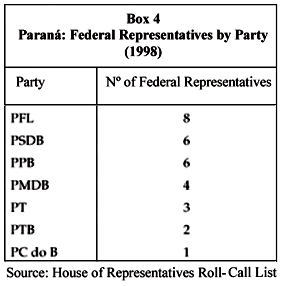
Of the three senators, one belonged to the PMDB, another to the PTB and the third changed party to join the PSDB. Unlike Bahia and Ceará, party representation in Paraná is more fragmented. No single party predominated (as in Bahia), nor was there polarization between two parties (as in Ceará).
]]> The amount of federal funds handed over to Paraná in 1994 reached 95% of the authorized resources (Table 1), a greater percentage than in Ceará and Bahia. This as well as Paraná's high "success rates" can be explained by the following. In terms of federal program funding, resources to finance health care receive most federal transfers through the Unified Health Care System – UHCS (Sistema Unificado de Saúde – SUS). As this program's scheme of resource allocation rewards productivity, states and municipalities with more efficient and technologically sophisticated health systems are those which receive the most federal funds. The UHCS, therefore, contributes to the concentration of federal funding in more developed regions. I come back to this point later.In 1995 Paraná presented six amendments; three from the PPB and three from the PMDB. There were no collective amendments in 1995.
During 1996 (an electoral year) the number of amendments increased but, unlike the other two states, the amount effectively handed over to Paraná was greater than the funds initially authorized (see Table 1). This presents the following paradox: Paraná was governed by Jaime Lerner, who at that time belonged to the PDT. The PMDB candidate for governor had lost the 1994 elections. How, then, does one explain why funds allocated to Paraná in 1996 and in other years were greater than those to Bahia and Ceará, both governed by political allies? Once again, part of the answer lies in the funding scheme of UHCS. Unlike the previous year, most members of Congress presented amendments. Despite this, the pattern in Paraná was the same as in Bahia and Ceará as regards the profile of the state representatives proposing amendments, namely those with the least visibility. Collective amendments dominated (99%), which partially explains the data in Table 1, revealing Paraná's excellent performance when compared to the two other states. In 1997 collective amendments, though still prevailing (52%), decreased.
In 1998 the PFL got the highest number of amendments approved, the PMDB lagged behind and the PSDB and PPB rose in importance. This shows that political power in Paraná is much more fragmented, both in Congress and on the JBC than in Bahia and Ceará. As in the other states, all the parties represented managed to get their amendments passed, although the PFL and the PSDB predominated (with 25% and 21% respectively). Paraná consolidated its cooperative strategy: collective amendments accounted for 60% of the amendments.
In 1999 the number of amendments according to party was evenly distributed among the main political factions in the state; the PFL with 25% of the amendments and the PSDB with 22%. Collective amendments (60%) continued to prevail over individual amendments, now also encouraged by the new rules of the JBC.
Members of Congress elected by other states did not present any amendments for Paraná during the period analyzed, showing that when the state's political representation is fragmented the support of parliamentarians elected by other states is not necessary.
In short, despite the fragmentation of political representation, cooperation always prevailed in Paraná, even before JBC incentives. Why is cooperation more advantageous to Congress members in the absence of single party control? It seems that, when political power is very fragmented, incentives for cooperation are greater22.
DISCUSSING A FEW HYPOTHESES
As mentioned before, amendments proposed by Congress members to channel greater resources to their territories and the competition in Congress for federal funds have been the subject of much criticism. This prompts need for further discussion of the two hypotheses mentioned earlier.
]]> The first is that budgetary amendments simply serve the personal interests of Congress members in seeking election for the subnational Executive or reelection for Congress. This is done, according to this hypothesis, by "pork-barrel" politics. However, it was Congress members themselves who decided to limit their own power (self-binding) to propose amendments by changing the rules of the JBC to encourage more cooperative strategies. This was a reaction to the findings of the Parliamentary Enquiry Committee that investigated budgetary procedures. As a result, collective amendments and those accruing from JBC's subcommittees began to prevail over individual ones, especially after 1997. This change shows that the preferences of Congress members can be changed, even if changes go against their self-interest.The second hypothesis is that federal spending benefits less developed states more given their over-representation in Congress. Such a claim must be investigated on two fronts: comparing federal spending for the five Brazilian official regions and comparing federal spending among the three selected states. As for the former, two articles of the Federal Constitution (articles 165 and 35 of the Transitory Disposition Acts) state that public spending must evolve towards a better regional and state distribution of federal funds. In other words, the constitution determines that greater fiscal equality should be pursued given the country's high levels of regional disparities. According to article 35, over the first ten years from the constitution's promulgation, federal spending should converge towards a distribution proportional to the regions' and the states' population. However, as shown in Table 5, this has not been achieved neither in absolute nor in relative terms.
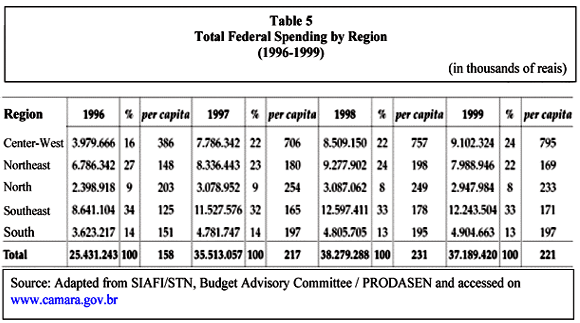
Federal spending in the regions is determined, of course, by several factors, including the construction of large infra-structure projects financed by the federal government. This does not, however, invalidate the argument that, in absolute terms, there was a tendency in the period analyzed towards a concentration of federal resources in the Southeast region (with São Paulo, Rio de Janeiro and Minas Gerais in the first places). Until 1998 the Southeast was followed by the Northeast, led by Bahia, and then by the Center-West. The South and the North regions are those that receive the least federal resources in absolute terms. Per capita spending, however, shows a very different picture, with the Center-West receiving the most and the North a distant second. This is because of the decision taken by the 1998 constitution makers to finance several public services using federal resources in the Federal District and to finance part of the payroll expenditure of the territories upgraded to the status of a state by the 1988 Constitution – Rondônia and Amapá23. Hence, the eternal conflict between members of Congress from the Northeast and the Southeast, who accuse each other of being federal resource "usurpers" (and who were also the main players in the conflicts in the Constituent Assembly for the distribution of public funds), is unfounded if spending per capita is taken into account24.
When federal spending includes the costs of the social security system, however, the distribution of federal resources tends to be less regressive, although concentration in the Federal District persists, as shown in Table 6.
]]>
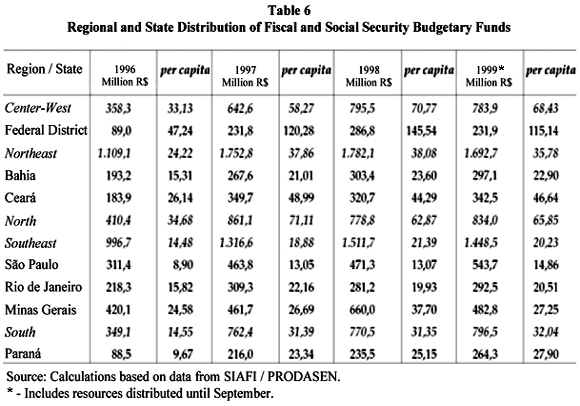
The second front is a comparison of spending among the three states. In this case, the data show that there has been a trend towards concentration of funds in the sample's most economically developed state, Paraná. The variable that seems to have the greatest impact is the design and the financing of the Unified Health Care System – UHCS. From the perspective of resource distribution of federal funds, health care lies in a privileged position, as shown in Table 7.
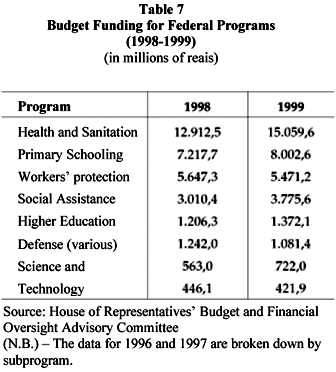
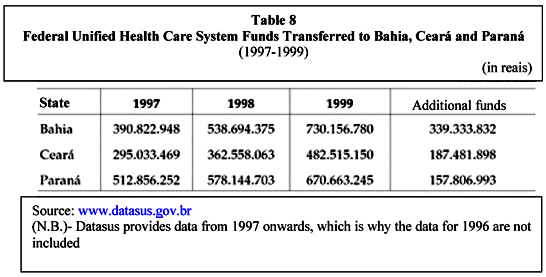
Table 8 shows the federal transfers for health care to the three states. In absolute terms, the funds allocated for Bahia increased more than those allocated for Ceará and Paraná. Transfers to Bahia overtook even Paraná in 1999. The reason for such an increase is the number of municipalities in Bahia which joined the program much later than those in Ceará and Paraná. In 1997 83% of Paraná's municipalities and 80% of Ceará's were already included in the program, compared to only 42% in Bahia (Arretche, 2000). In 1998 Bahia changed its policy radically and authorized 370 of its 415 municipalities to join the program. By 1999 it had authorized 390. Paraná, which in 1997 authorized already 332 municipalities, reached 399 by 1999, while Ceará, which had 148 municipalities in 1997 had increased that number to only 183 by 199925.
]]>
The three states, however, vary considerably in population size, GDP and income per capita (Table 9), showing the immense socioeconomic disparity between Bahia and Ceará, on the one hand, and Paraná, on the other.
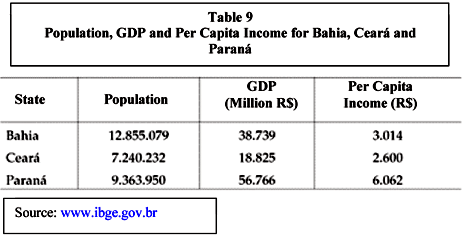
The UHCS, which provides basic health services (which are increasingly managed by local governments), also provides services that involve complex technology, hence the concentration of federal funds in more developed states. As Nascimento (2001) points out, this is because the criteria adopted to estimate the maximum financial limit for states and municipalities are based on their track record of spending on hospitalized patients and on outpatients. This works against poorer and more isolated territories. Furthermore, a minimum cost is determined for each procedure, also considering track records. This tends to favor the states with the greatest service capacity and most advanced technology.
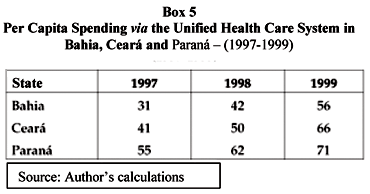
If UHCS funds are taken on a per capita basis, one can see (Box 5) that funds were more concentrated in Paraná and, despite transfers to Bahia almost doubling in three years, the most populous state in the sample still remains behind the other two in per capita terms. This is partially compensated for by the amendments for Bahia and Ceará mentioned above (especially the latter), which also allocated more resources to health care.
]]>
Funds for the social security system and the constitutional transfers to subnational governments also compensate for the general concentration of funds to the most developed parts of the country. In fact, there are mechanisms that inject more funds into the least developed regions. These are: a political mechanism, namely amendments to the federal budget; a public policy mechanism – the social security system; and a constitutional mechanism – the transfers that make up the State and Federal District Participation Fund and the Municipal Participation Fund.
In short, the federal budget's limited redistributive role has been further reduced by the way in which resources for the UHCS are distributed. The amendments proposed by members of Congress from Bahia and Ceará partially make up for this. Spending on social security benefits, however, shows that certain public policies are more efficient at balancing the distribution of federal funds among regions.
FINAL CONSIDERATIONS26
This article has analyzed certain ways in which a federation with severe regional imbalances works. In this federation several ways of influencing public policy and multiple power centers coexist. This provides the basis for varying practices within the relationships among competing power centers. It encourages the creation of vertical networks among states, municipalities and the federal government, as well as between the Executive and the Legislature. These networks widen inter-governmental relations and re-structure traditional ways of territorial power distribution in a federation.
These processes may be better understood from a neo-institutionalist approach. This takes JBC decisions, the empirical basis for this research, as having been influenced by institutional constraints that shape the decision-making process within the JBC.
In this study the hypothesis that political institutions shape the processes whereby decisions on the allocation of public funds are taken and implemented has been tested. It has also tested the assumption that these decisions buffer highly uneven fiscal, economic and social differences in the country.
]]> The analysis of the cases of Bahia, Ceará and Paraná confirm some of the arguments mentioned above and present the following common characteristics. Firstly, the most active representatives on the JBC in the three states are those who do not directly influence public opinion and policymaking. This suggests that more influential politicians use other mechanisms to gain access to federal funds. In the cases of Bahia and Ceará, both Antônio Carlos Magalhães and Tasso Jereissati had extraordinary control over their respective state delegations in Congress during the period analyzed. In Ceará, however, this control had a strong adversary within the JBC, the PMDB. On the other hand in Paraná political forces were more fragmented. Although there were some differences, Congress members from these states chose to act cooperatively in competition for scarce funds on several occasions. The intensity of this cooperation, as measured by the proportion of collective vis-à-vis individual amendments, was greatest in Paraná and Bahia than in Ceará. The reason for this seems to be that when political power is either very fragmented or highly concentrated, there are greater incentives for cooperation than when there is polarization, as in Ceará.Secondly, in both Bahia and Ceará a few amendments were proposed by representatives elected by other states, which shows that cooperation may occur beyond state boundaries. This did not occur in Paraná due to greater party fragmentation, which did not adversely affect the demands of minority parties.
Thirdly, federal resources contribute to the concentration of budgetary funds in more developed states. This is a result of the Unified Health Care System – UHCS and explains why funds to Paraná have always been greater than those to the other two states. This exacerbates regional imbalances as regards the distribution of federal funds.
Fourthly, and maybe the most significant finding of this research as regards its theoretical contribution, is the importance of incentives in shaping the outcomes of public policies and in guiding political actors' strategies. I am referring to the changes in the rules governing amendments. With the decision to prioritize collective amendments over individual ones, the former became more important, even from state delegations that had rejected them initially such as in Ceará's case. Another change in JBC rules occurred in 1999, limiting the number of individual amendments each member could propose. This was also responsible for the increase in the number of collective amendments as opposed to individual ones, as it stimulated cooperation even among representatives and parties that had resisted cooperation27. However, cooperation induced by institutional incentives may have reduced minority parties' room for maneuver in the state, as was the case of the PMDB in Ceará.
This article has also challenged some hypotheses related to the JBC decision-making process. What is normally tagged as the pursuing of individual agendas and as "pork-barrel" politics or is seen merely as strategies for electoral survival is interpreted not only as a way used by Congress members to shift funds to the territories they represent, but also as a way to make up for Brazil's inefficient formal fiscal equalization rules. Furthermore, with the changes in the JBC rules, the argument that rests on "pork-barrel" politics becomes even less relevant, as collective amendments now prevail28.
Looking back at the hypothetical analytical "model" presented earlier, the institutional factor/ constraint considered was Brazilian federalism, especially fiscal federalism rules that accommodate the country's historic regional inequality through the negotiation of additional federal funds for subnational units. One of the solutions found by political actors to overcome this constraint has been the chance given to Congress members, especially the less visible ones, to inject federal funds into their constituencies. This opportunity has determined some of the characteristics of the decision-making process within the JBC. The first is the representatives' self-binding, through the approval of rules that have encouraged cooperation. Furthermore, the decision-making process within the JBC has allowed the demands of parties that are not part of the state's governing coalition to be dealt with. This strategy (cooperation) also affects the government's capacity to make choices in the allocation of public funds. In other words, it increases pressure on the federal bureaucracy to release funds. The second characteristic is a result of a previous political decision, namely to maintain inequality among regions. This encourages Congress members to act in a strategic manner, i.e., using federal resources to minimize differences, although the resources at their disposal are relatively limited.
The JBC therefore reflects the "rules of the game" of Brazilian federalism. These encourage representatives to try to minimize the side-effects of inefficient or insufficient formal fiscal equalization rules. However, the design of certain public policies, such as the Unified Health Care System – UHCS furthers the concentration of funds in economically developed states/regions, while other policies, such as social security benefits, tend to promote greater regional equality though federal spending.
An understanding of the trajectory of Brazilian federation, marked by policies that perpetuate inequality but that soften this inequality with additional federal funds, gives an insight into what members of Congress try to maximize and why they pursue certain policies rather than others. In other words, the choice of using a theoretical framework that takes objectives, strategies and preferences as a subject of inquiry has the advantage of placing these issues in a wider context than that provided by theories based only on actors' self-interest. Institutions are not just another variable and it is not enough to say that they "matter". By trying to understand how institutions shape not only actors' strategies, but also their objectives, and how cooperative and competitive relations are mediated, one may shed some light on an understanding of national political institutions.
In conclusion the "rules do the game" as regards distributive conflict in a federation marked by regional inequality are likely to lead to gradual changes to counterbalance the timidity of fiscal equalization policies.
]]> BIBLIOGRAPHIC REFERENCES
AFONSO, José Roberto. (1994), Descentralização Fiscal na América Latina: Estudo de Caso do Brasil. Santiago, Naciones Unidas/Comisión Económica para América Latina y el Caribe. [ Links ]
AMES, Barry. (1995), "Electoral Rules, Constituency Pressures, and Pork Barrel: Bases of Voting in the Brazilian Congress". Journal of Politics, vol. 57, nº 2, pp. 324-343.
____. (2001), The Deadlock of Democracy in Brazil. Ann Arbor, The University of Michigan Press.
ARRETCHE, Marta. (2000), Estado Federativo e Políticas Sociais: Determinantes da Descentralização. São Paulo/Rio de Janeiro, FAPESP/Revan.
BEZERRA, Marcos. (1999), Em Nome das "Bases": Política, Favor e Dependência Pessoal. Rio de Janeiro, Relume Dumará.
BICKERS, Kenneth ; STEIN, Robert. (1996), "The Electoral Dynamics of the Federal Pork Barrel". American Journal of Political Science, vol. 40, nº 4, pp. 1300-1326.
BIRD, Richard. (1993), "Threading the Fiscal Labyrinth: Some Issues in Fiscal Decentralization". National Tax Journal, vol. 46, pp. 211-230.
BLUMM, Márcia H. N. (1999), Autonomia Política Local: As Relações entre o Poder Executivo de Salvador e o Congresso Nacional, 1993 to 1996. Master's Degree Thesis, Universidade Federal da Bahia.
BONFIM, Washington L. S. (1999), Qual Mudança? Os Empresários e a Americanização do Ceará. Doctoral Thesis, IUPERJ.
]]> BORGES, André. (2000), A Retórica da Eficiência: As Políticas de Ajuste Fiscal na Bahia. Master's Degree Thesis, Universidade Federal da Bahia.DESPOSATO, Scott. (2001), Institutional Theories, Societal Realities, and Party Politics in Brazil. Doctoral Thesis, University of California, Los Angeles.
ELWOOD, John; PATASHNIK, Eric. (1993), "In Praise of Pork". Public Interest, vol. 110, pp. 789-801.
FIGUEIREDO, Argelina e LIMONGI, Fernando. (1999), Executivo e Legislativo na Nova Ordem Constitucional. Rio de Janeiro, Fundação Getulio Vargas Editora.
____. (2002), "Incentivos Eleitorais, Partidos e Política Orçamentária". Dados, vol. 45, nº 2, pp. 51-91.
FRANCO, Gustavo. (1993), "Brazilian Hyperinflation: The Political Economy of the Fiscal Crisis", in M. D'A. G. Kinzo (ed.), Brazil: The Challenge of the 1990s. London, Institute of Latin American Studies/British Academic Press.
GALVÃO, Antonio Carlos et al. (1996), O Perfil Regional do Orçamento Geral da União (OGU) 1995 – Lei nº 8. 980/95. Brasília, IPEA.
GONDIM, Linda M. de P. (1998), Clientelismo e Modernidade nas Políticas Públicas. Ijuí, Editora Unijuí.
IMMERGUT, Ellen. (1996), "As Regras do Jogo: A Lógica da Política de Saúde na França, na Suíça e na Suécia". Revista Brasileira de Ciências Sociais, vol. 11, nº 30, pp. 139-165.
KUGELMAS, Eduardo, SALLUM Jr., Brasílio e GRAEFF, Eduardo. (1989), "Conflito Federativo e Transição Política". São Paulo em Perspectiva, vol. 3, nº 3, pp. 95-102.
]]> MEDEIROS, Antônio Carlos de. (1986), Politics and Intergovernmental Relations in Brazil, 1964-1982. New York, Garland.NASCIMENTO, Vânia B. do. (2001), "Interdependência e Autonomia na Gestão Pública da Saúde". Lua Nova, nº 52, pp. 29-69.
NICOLAU, Jairo. (1997), "As Distorções na Representação dos Estados na Câmara dos Deputados Brasileira". Dados, vol. 40, nº 3, pp. 527-545.
OLIVEIRA, Nelson de. (2000), "Sob o Manto da Concórdia: Bahia como Contrafação do Moderno", in N. de Oliveira et al. (orgs.), A Outra Face da Moeda: Violência na Bahia. Salvador, Comissão de Justiça e Paz da Arquidiocese de Salvador.
PEREIRA, Carlos ; RENNÓ, Lucio. (2001), "O que É que o Reeleito Tem? Dinâmicas Político-Institucionais Locais e Nacionais nas Eleições de 1988 para a Câmara dos Deputados". Dados, vol. 44, nº 2, pp. 323-362.
PINHEIRO, Vinicius C. (1996), "Inflação, Poder e Processo Orçamentário no Brasil – 1988-1993". Revista do Serviço Público, vol. 47, nº 1, pp. 141-164.
REGO, Antônio C. Pojo do. (1984), "O 'Lobby' Nordestino: Novos Padrões de Atuação Política no Congresso Brasileiro". Revista de Informação Legislativa, vol. 21, nº 81, pp. 349-372.
SAMUELS, David J. (1998), Careerism and its Consequences: Federalism, Elections, and Policymaking in Brazil. Doctoral Thesis, University of California, San Diego.
SANTOS, Fabiano. (2000), "Deputados Federais e Instituições Legislativas no Brasil: 1946-99", in E. Diniz, R. Boschi e F. Santos (orgs.), Elites Políticas e Econômicas no Brasil Contemporâneo. São Paulo, Fundação Adenauer.
SANTOS, Maria Helena de C. et al. (1997), "Governabilidade, Governança e Democracia: Criação de Capacidade Governativa e Relações Executivo-Legislativo no Brasil Pós-Constituinte". Dados, vol. 40, nº 3, pp. 335-376.
]]> SCHNEIDER, Aaron. (2001), Federalism against Markets: Local Struggles for Power and National Fiscal Adjustment in Brazil. Doctoral Thesis, University of California at Berkeley.SERRA, José. (1989), "A Constituição e o Gasto Público". Planejamento e Políticas Públicas, vol. 1, pp. 93-106.
SHAH, Anwar. (2000), Fostering Responsive and Accountable Governance: Lessons from Decentralization Experience, available at <http://www.federativo.bndes.gov.br>.
SHEPSLE, K. e BONCHEK, M. (1997), Analyzing Politics: Rationality, Behavior, and Institutions. New York, W. W. Norton & Company.
SOUZA, Celina. (1997), Constitutional Engineering in Brazil: The Politics of Federalism and Decentralization. London/New York, Macmillan/St. Martin's Press.
____. (1998), "Intermediação de Interesses Regionais no Brasil: O Impacto do Federalismo e da Descentralização". Dados, vol. 41, nº 3, pp. 569-592.
____. (2001), "Federalismo e Descentralização na Constituição de 1988: Processo Decisório, Conflitos e Alianças". Dados, vol. 44, nº 3, pp. 513-560.
TENDLER, Judith. (1997), Good Government in the Tropics. Baltimore, The Johns Hopkins University Press.
TSEBELIS, George. (1995), "Decision Making in Political Systems: Veto Players in Presidentialism, Parliamentarism, Multicameralism and Multipartyism". British Journal of Political Science, vol. 25, pp. 289-325.
WEAVER, Kent R. e ROCKMAN, Bert (eds.). (1993), Do Institutions Matter? Government Capabilities in the United States and Abroad. Washington, D.C., The Brookings Institution.
]]>GLOSSARY
PC do B – Partido Comunista do Brasil – Brazilian Communist Party
PDT – Partido Democrático Trabalhista – Democratic Workers' Party
PFL – Partido da Frente Liberal – Liberal Front Party
PL – Partido Liberal – Liberal Party
PMDB – Partido do Movimento Democrático Brasileiro – Brazilian Democratic Movement Party
PPB – Partido Popular Brasileiro – Brazilian Popular Party
PPS – Partido Popular Socialista – Popular Socialist Party
PSB – Partido Socialista Brasileiro – Brazilian Socialist Party
]]> PSDB – Partido da Social Democracia Brasileira – Brazilian Social Democratic PartyPT – Partido dos Trabalhadores – Workers' Party
PTB – Partido Trabalhista Brasileiro – Brazilian Workers' Party
PV – Partido Verde – Green Party
Received for publication in December 2002
Definitive version: July 2003
]]> NOTES
1. By formal rules I mean those that distribute public national funds through constitutional or legal rules, such as the state and municipality participation funds; and by informal rules those that, despite also involving the distribution of public funds, this distribution is not based on specific criteria, such as budgetary amendments.
2. Most of the so-called "mature" federations, such as Germany, Australia, Canada and Switzerland, have approved solid fiscal equalization mechanisms among states and regions. The US is an exception. On this subject, see Bird (1993) and Shah (2000). Thus, the existence of rules in the US and in Brazil that facilitate budgetary amendments which are rare in "mature" federations may be explained by the limited mechanisms of fiscal equalization. In other words, characteristics of fiscal federalism, and not just of the electoral or the presidential systems, may also explain why amendments are so important in these countries.
3. The following works are an exception. A pioneering work of Kugelmas, Sallum Jr. and Graeff (1989) analyzes Congress's role in the negotiation of the states' debt during the Sarney administration. Bezerra (1999) outlines the trajectories of Congress members in the distribution of federal funds in the tradition of social anthropological studies. Santos et al. (1997) associate the relationship between the Executive and the Legislature to the concepts of governance and governability. Ames (1995) and Samuels (1998) investigate the relationship between the federal representatives' amendments and their political future. Pereira and Rennó (2001) analyze what determines federal representatives' reelection. Figueiredo and Limongi (2002) investigate the participation of legislators in the 1995-1999 budgetary process. Finally, Santos (2000) analyzes the motivation of members of Congress in relation to their political careers.
4. More recently, research carried out by Figueiredo and Limongi (1999) have pioneered a reinterpretation of Congress's functioning after the 1988 Constitution.
5. There still are only a few studies that analyze the performance of regional/state delegations. These are Rego (1984), who studied the behavior of the representatives from the Northeast during the military regime, and Ames (1995; 2001), who analyzed the behavior of the representatives of selected states in certain roll-call votes in Congress.
6. Among the more recent works on the political trajectory of these states, see Ames (2001) on Bahia, Ceará and Paraná; Borges (2000), Desposato (2001), Oliveira (2000) and Souza (1997) on Bahia; Bonfim (1999), Gondim (1998) and Tendler (1997) on Ceará; and finally, Schneider (2001), on Bahia and Paraná.
7. By "rules of the game" I mean the constraints (limits) imposed on the actors for their strategic choices.
8. Amendments proposed by special and permanent Congress committees were excluded as it was impossible to identify their authors. Amendments destined to finance the legislative and the judicial systems were also excluded. The amendments of the subcommittees of the JBC received separate attention because they became more important during the period analyzed, and began to reallocate a greater amount of funds.
9. Following this rationale, the paradox of cooperation is even more serious in the US than in Brazil, because there the budget is mandatory. Therefore, the US Executive has little control over budgetary implementation. For this reason, this literature must be used carefully when applied to other countries. ]]>
10. The subcommittees are organized in broad functions/sectors or themes: State's Powers and Representation, Justice and Defense, Economics and Development, Agriculture and Land Policy, Infrastructure, Education, Culture, Science and Technology, Health, Social Security and Social Assistance, National Integration, Environment, Sports and Tourism, Urban Planning and Development.
11. Former representative João Alves, for example, was president and vice-president of the JBC for 16 years, both during and after the military regime. This long career was interpreted by Brazilian members of Congress as stimulating corruption, a view that contradicts that of many analysts, especially the so-called "Brazilianists", who point to a lack of incentive to reach seniority in Congress as one of Brazil's institutional problems.
12. This however, was not enough to give the researcher interested in budgetary issues the tools to analyze it. Research on the subject could only be done after inflation control. Another difficulty as regards budgetary analysis was the requirement that Congress members, when presenting their amendments, had to identify the respective sources of revenue that would fund them. This restriction was systematically dodged in the past, since members of Congress presented amendments creating fictitious additional revenues on the grounds that the Executive had underestimated the amount of tax to be collected. This was not totally irrational, considering the uncontrolled rates of inflation. According to estimates, this practice generated fictitious extra revenues amounting to roughly 3% of the GDP (Afonso, 1994:75). On the effects of inflation on the budget writing process in Brazil, see Franco (1993) and Serra (1989), and on the impact of inflation on the implementation of the budget, see Pinheiro (1996).
13. During the period analyzed and in the states of the sample, only one amendment from Paraná and one from Bahia were vetoed by the President.
14. The widespread perception that Brazilian members of Congress have little party discipline is not confirmed by data analyzed by Figueiredo and Limongi (1999) and Nicolau (1997). In a study dealing specifically with the Brazilian budgetary experience, Figueiredo and Limongi (2002) also challenge the thesis that electoral legislation influences the behavior of members of Congress.
15. Blumm (1999) shows how this was one of the strategies used by the mayor of Salvador, Lídice da Mata, to obtain funds for the city. Her administration was in opposition to the state government.
16. The amendments proposed by permanent Congress committees were insignificant during the period, which shows that competition for resources in Congress occurs almost exclusively on the JBC.
17. In Ceará and Paraná there were also few members of Congress who presented amendments in 1995, although the amount was significant when compared to other years.
18. Senator Antônio Carlos Magalhães (ACM), for example, presented an amendment that represented 1% of the total that benefited the state.
19. In 1997 ACM was elected president of the Senate and of Congress. His son Luís Eduardo Magalhães who died in April 1998 was appointed the government leader in the House of Representatives. ]]>
20. The research analyzed amendment data according to function, but since they were not relevant to the arguments put forward here, they are not analyzed in detail. In the case of Bahia, the sector to which priority was given was regional development and transport, with little emphasis on education and health care.
21. As regards the amendments classified by function, Ceará's state delegation gave priority to health care until 1998, one of the PSDB government's main marketing strategies. This trend came to an end in 1999, however.
22. As regards functions, Paraná's representatives showed two clear preferences: transport and health/sanitation.
23. Few studies analyze these data at per capita level and few include other federal spending in the states, such as constitutional transfers, social security benefits (including pension entitlements) and spending by state-owned companies. As far as I know, only one study gathered this information, but it was done only for the 1995 budget, including federal spending on constitutional transfers to states and municipalities that make up the States and Federal District Participation Fund and the Municipal Participation Fund, both benefiting less developed territories, and spending on social security benefits. Spending by state-owned companies was excluded. According to this information, the greatest per capita spending also occurred in the Center-West (R$ 1,460 per inhabitant), followed by the North, (R$ 597), the Northeast (R$ 357), the South (R$ 339), and the Southeast (R$ 283) (Galvão et al. 1996). Thus, when other spending items are included, such as constitutional transfers and social security benefits, per capita expenditure becomes less regressive. The Federal District's position, however, remains unaltered.
24. On the decision-making process regarding the distribution of tax funds during the drafting of the1988 Constitution, see Souza (2001).
25. Data supplied by the Ministry of Health's Office for Health Care Assistance.
26. This research is an initial step towards an understanding of the issues raised here. Its four-year database and its focus on three states just begin to shed some light on the processes analyzed.
27. The existence and the strengthening of cooperative mechanisms do not mean, however, that strategies for the approval of individual amendments do not exist. These are called "amendment baskets" and are negotiated between members of Congress. However, cooperative rules that had not existed previously not only were created, but were strengthened throughout the period analyzed.
28. One of the anonymous reviewers of this article suggested that this fact could be interpreted also from a Schumpeterian view. In other words, by implementing a strategy for reelection or for electoral survival, Congress members unintentionally minimize regional inequality. However, the argument put forward here is that, in the absence of efficient fiscal equalization mechanisms, Congress members adopt a strategy of proposing amendments rather than a strategy of concentrating their efforts on using other mechanisms.
]]>
* This research was financed by a grant provided by the National Scientific and Technological Development Council – CNPq. I am grateful to research assistants Márcia Blumm, André Borges, Alex Bruno and Cassandra Costa Pinto for their dedication and hard work during data collection and processing. I am also grateful to Mark Setzler, Vicente Palermo, researchers from the Politics Group at the Brazilian Center for Analysis and Planning and to the anonymous reviewers from Dados for their excellent comments and suggestions.
]]>